Blog Archives
Men in Black International (2019)
 Men in Black International is a perfectly fine movie but it’s hard not to feel the franchise going through the motions in an attempt to recapture the elusive magic that made the original 1997 movie the standout it was. This time we’re introduced to new agents and new agencies, with Thor Ragnarok stars Tessa Thompson and Chris Hemsworth decked out in black and on the hunt for rogue alien life forms in Europe and the Middle East. The two actors are charming and Thompson’s character is a great re-introduction to this hidden world, a woman who has devoted her life to finding and becoming a Man in Black. As we went from scene to scene, it felt like an MIB spy thriller evoking the undercover missions, arms dealers, shady informants, potential agency mole to expose, exotic locales, and crackling banter of that genre, and that’s something none of the sequels have done before. However, I also noted just how forced everything felt. What should be jaunty and droll came across as flat or overly exaggerated, trying to recreate the energy and style of the original but falling short. It feels like when someone is trying to retell a joke but has lost the rhythms that made it so amusing in the first place. The pieces are there but they don’t feel right. I also kept noting how it should be funnier. Many of the jokes are barely touched upon or developed for more potential. The set pieces are pretty humdrum and even the integration of the strange, otherworldly elements and aliens feels lacking. With that said, Hemsworth and Thompson remind you how winning an onscreen pair they are, and even with their charm kept at a lower, simmering level they are still enjoyable to watch. There’s a predictable storyline about an alien invasion and a predictable turncoat reveal, but it’s all played rather innocuously that it’s hard to get upset. Men in Black International is an intermittently amusing movie that’s hard to hate and hard to love. If you’re a fan of the series, or got a couple hours to obliterate, it should provide enough entertainment, but much like one of those handy-dandy nueralizers, you won’t remember much after.
Nate’s Grade: C+
Share this:

Dark Phoenix (2019)
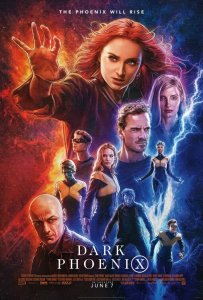
Dark Phoenix is the end of the X-Men as we know it. The franchise is arguably the reason that Disney bought Fox, to combine its Marvel properties under one creative universe, and hastened its ultimate demise. The franchise kicked off in 2000 when nobody knew what a Hugh Jackman was. Over the course of 19 years we’ve had ten total X-films (the original trilogy, four prequels, three Wolverine solo films — I’m not counting the two Deadpool entries) of varying quality. Dark Phoenix is longtime series writer Simon Kinberg’s debut as a director and was originally intended for a fall 2018 release before it got pushed back for extensive reshoots. There was even some doubt whether Disney would release Dark Phoenix or shunt it to its new streaming service (that’s my prediction for the long-delayed New Mutants, which released its trailer… in 2017). Ultimately this is the final X-Men movie, as we have known them for 19 years, and it’s the equivalent of a mayonnaise sandwich at room temperature: something nobody really wanted and delivered in a package not designed to satisfy.
In 1992, the X-Men are called upon by the president when the government is left with no other options. Charles Xavier (James McAvoy) watches over as shape-shifting Mystique/Raven (Jennifer Lawrence) leads the younger X-kids, Cyclops (Tye Sheridan) and Jean Grey (Sophie Turner) and Nightcrawler (Kodi Smit-McPhee) and Storm (Alexandra Shipp), into space to save some astronauts. A strange cosmic energy cloud zaps Jean Grey and supercharges her telekinetic powers. At first she feels more alive but is losing control and worrying her friends. After a tragic confrontation, she runs off to find Magneto (Michael Fassbender) while a mysterious alien woman (Jessica Chastain) seeks to gain the “phoenix” powers.

Thoroughly mediocre, Dark Phoenix is a pitiful ending to a franchise that kicked off the superhero era of the twenty-first century. This is a pretty sad ending to a franchise that has admittedly had more downs than ups (I’d say four of the ten X-Men movies have genuinely been good, two were fine, and four have been different levels of bad). What’s even more peculiar is this is Kinberg’s second attempt at the Dark Phoenix storyline, arguably the most famous in X-Men comics, and it doesn’t work — again. At least 2006’s The Last Stand had other storylines that presented topics of interest, like the choice over taking a mutant cure and whether this should be a choice after all. The problem with Dark Phoenix is that it’s nothing but Dark Phoenix with little variation but it doesn’t ever expand on the Dark Phoenix dilemma. Act Two of the film seems to consist of the same scene on repeat, where Jean Grey complains about her power struggles to some character, warns them, doesn’t want to harm people, and then something bad happens and more characters elect to try and murder her. It’s like watching the same TV show recycle the same plot but just changing the characters. It makes for a saggy mid section that loses momentum and cannot regain it. The last act feels like a different movie because… it is. Thanks to late reshoots, the final act is a series of clashes aboard a military train. There are some fun moments of mutant-power action, especially Magneto and Nightcrawler. It doesn’t make much sense to what came before (when questioned why Magneto is trying to save Jean after literally trying to kill her ten minutes earlier, he says, “I had a change of heart”) but the sequence is at least diverting and visually playful in a way the rest of the movie had been missing. By the end of the film, much of it feels rushed and little feels earned, especially the time you’ve spent watching it.
I’m going to declare that the villains in Dark Phoenix are actually the worst in the entire universe of X-Men movies. They’re aliens adopting human form and they talk… so… slowly… and in unshakable monotone. They’re an alien species that wants the powers of the super space cloud. That’s it. That’s all you get. I have no idea what attracted Jessica Chastain (Molly’s Game) to this role and almost feel like it must have changed at some point. She walks around in a zombie-like daze with a giant platinum blonde wig that makes her look like an albino. At no point are any of these aliens interesting. At no point do they present personalities. At no point does their overall powers become clear. They seem invulnerable to anything, except when the script needs them not to be, and their vaguely defined powers seem limitless. Because of the creative choices with Jean Grey and how she developed her Dark Phoenix powers, extra emphasis is placed on the villains to carry the burden, and they could be eliminated entirely and not be missed in the slightest. It’s genuinely hilarious to watch them walk so stiltedly and then break into a run. The best thing Chastain does is strut in stilettos while taking a dozen blasting firearms to the face.

There are just some weird moments in this movie. Apparently Charles Xavier watches the students have their beer blasts in the woods and also keeps a thermal heat analysis of them during these moments (“That student’s really hot… I mean… getting really hot…, uh…”). That’s so weird and possibly perverted. There’s a running clothing item with blood that never gets changed. You’ll listen to “whose blood is that?” close to ten times. It’s always been inherently goofy watching these trained actors make silly strained faces while pretending to do things with their mind powers. Except this movie it goes a step further. There’s a moment of goofy strain face versus goofy strain face while the actors thrust their arms out, and there’s a scene where Jean Grey only has one arm out and then, to power up, she throws out her second arm. That’s not how mind powers work. There are several character jumps that seem rushed and unearned, like Charles becoming a focal point of disdain amongst his fellow X-people over his catering to public relations. Everyone is so quick to jump on the murder wagon when it comes to Jean Grey, which makes me wonder if they never really liked her and have just been waiting for a good excuse to kill her. The seesawing public support on mutants can be extremely confusing. The action sequences are filmed in a very haphazard way with replenishing bad guys to be disposed. During key stretches of the movie, I didn’t know who was on screen, where they had come from, and what relations they were to one another until punches started being thrown.
Continuity has never been a thing the X-universe cherished, especially once you started throwing in time travel with 2014’s Days of Future Past. However, Dark Phoenix complicates matters with its disregard for the overall continuity. Firstly, I am not a fan of the idea that these prequel films all take place in separate decades. It worked with First Class which tied the cultural revolutions and changing mores to the characters and their selfI identity, plus the Cold War paranoia. It even worked for Days of Future Past being set in the early 70s, during the malaise of the optimism of the 1960s. That related to the character arc for Raven on her quest for vengeance and the individual versus society. But what did Apocalypse have to gain by taking place in 1983? What does Dark Phoenix gain by taking place in 1992? Plus it means that these characters have hardly aged in 30 years and in less than a decade James McAvoy and Michael Fassbender are going to look like Patrick Stewart and Ian McKellen (no offense to McKellen, but that’s quite a sudden, precipitous drop). Let’s even say the older movies are eliminated from the timeline after the reboot of Days of Future Past. Just in the LAST movie they established that Jean Grey had the powerful phoenix spirit and abilities within her, as it was the final push to topple the bad guy.
Allow me to get into more detail why this disregard is so troublesome and erroneous. Judging from the trailers and marketing, I thought Dark Phoenix was going to be an addiction metaphor, with Jean Grey embracing a self-destructive thrill that made her feel good even as it pushed others away and forced her down a darker path. Despite the ads emphasizing this aspect, the actual movie ignores this addiction metaphor for a cosmic illness she contracts. Kinberg and the filmmakers have dropped that Jean Grey had this power within her and have made her a victim of an external force from space. This is far less interesting because it makes the story of Jean as reactive from external forces taking over. Space clouds resembling a pink Parallax (the poop cloud monster from 2011’s Green Lantern) did it all. That’s boring.

Think of the stronger version already within reach that examined the power within her that Charles has been keeping limited thanks to withholding her memories of her parent’s deadly accident. Because she was denied this essential part of her past she was never able to process her trauma and work through it. The man she trusted, the father figure telling her how to best control her feelings and powers has been inhibiting her the whole time and manipulating her. That betrayal could reignite the power already within her, and her journey would be about self-discovery while also confronting the gaslighting by those she trusted. You could even go further and have Charles eventually revealed as a villain for psychically altering people’s memories and minds to his ideal of what is right. That’s the better movie. They might as well have gone all-out and ended with the destruction of the Earth and the death of everybody we know because why not? What we get with Dark Phoenix is a woman who glows a lot thanks to an inscrutable pink space cloud.
It’s hard for these talented actors to hide their disinterest; some have been eyeing the exits since the last film. I challenge every reader to look at the painting of Chastain’s face on the very poster, which to me reads loudly, “Let’s just get this thing done with.” Turner (HBO’s Game of Thrones) is the best thing in the movie and yet the screenplay doesn’t give her an actual character arc with depth. It feels like she has three or four stages in the movie where Kinberg just asks her to repeat the same note over and over. Many of the actors that have been here since 2011’s First Class feel like they’re on autopilot. It’s simply another level of mediocrity that ends up defining this disappointing movie.
If you asked writer/director Simon Kinberg, in private so he could be truly honest, whether he would have repeated what happens in Dark Phoenix as the very last X-Men movie, and I legitimately think he would say no. That’s the problem with the movie is that it’s a double dip that, surprisingly, doesn’t get better. The story is boring and repetitive, the action is bland, the characters are at the mercy of a story that has no interest in them, and the resolution does not provide any satisfying finality. It feels like the close of a weekly television episode that knows more is to come except it’s been cancelled. The X-Men movies have been at their best when they’ve been about something, when they’ve gone inside their characters and the conflicts of living in a society of oppression and prejudice and fear. The franchise lends itself to being more than spandex-clad superheroes fighting each other. The division between the good X-Men movies and the bad X-Men movies is wide and clear; nobody is going to put Logan and Apocalypse in the same grade. It’s easy to tell when the plots connect to character and have exciting themes to go with their exciting action sequences. Coming to a shrug-worthy series conclusion, I think I’d rather rewatch The Last Stand than the second go-round of the Phoenix saga. The X-Men ultimately go out with a whimper but that doesn’t take away from the greatness of the other films. It’s been nearly two decades, and I’m grateful for the ride, but it’s a shame it had to end this way.
Nate’s Grade: C-
Share this:

Godzilla: King of the Monsters (2019)
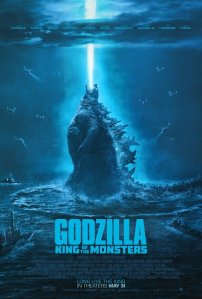 Godzilla: King of the Monsters is the sequel to 2014’s American re-launch, and the biggest complaint I had with that other film was how frustratingly coy it was with showing Godzilla. I wanted more Godzilla in my Godzilla movie, and King of the Monsters at least understands this need and supplies many of the most famous kaiju in the franchise, like Mothra, Rodan, and the three-headed King Ghidorah. The human drama is just as boring with characters I have a hard time caring about. Vera Farmiga plays a scientist who lost a child during the 2014 monster brawl in San Francisco. She develops a sonar device to communicate and domesticate the giant monsters (now totaling 17 plus). She and her teen daughter (Millie Bobby Brown) are kidnapped by eco terrorists that want to… destroy the world and leave it back to the ancient monsters? It’s a bit jumbled. I felt more for a monster than I did any living person. The plot does just enough to fill in time between the monster battles, which can be fun but are also lacking a few key items. Firstly, the sense of scale is lost. That’s one thing the 2014 film had in spades, the human-sized perspective of how enormous these beasts are. Also the fight scenes are shot in pretty dark environments that can make things harder to watch. There is a simple pleasure watching two giant monsters duke it out on screen, and King of the Monsters has enough of these to satisfy. It’s still a flawed monster mash but at least it sheathes the itch it was designed for, and if you’re a Godzilla fan and feeling generous, that might be enough to justify a matinee with a few of your favorite fifty-story pals.
Nate’s Grade: B-
Share this:

John Wick: Chapter 3 (2019)
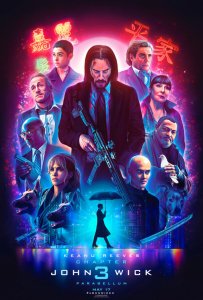 When we last left human killing machine John Wick (Keanu Reeves) he was on the run. He had just committed the cardinal sin in this world of professional hired guns — killing a protected man on safe ground. As a result, The High Table, which governs this ordered realm of trained assassins, has excommunicated Mr. Wick and placed a $15 million dollar bounty on his head. John is desperate for an exit and leans on old pals (Angelica Huston, Halle Berry) before coming home once again to face off against all the gun-toting wrath The High Table can offer.
Plenty of Hollywood action movies can elicit cheers and thrills, and John Wick 3 is definitely in that mix, but what sets it apart is the sheer number of “Oooo”s, “Oww”s, and, “Holy shit”s. Most other action movies have one or two moments that make you wince or make you shake your head in astonishment of something intense, gnarly, or self-evidently awesome. John Wick 3 is packed with these moments. There are numerous examples just in the opening action sequence. There’s one long extended fight where John uses whatever is at his disposal, including knives and shards of broken glass and mirror, to take down his mounting enemies, and then he pulls these deadly projectiles out of their bodies to use again in a pinch. By the end of this action sequence, my preview audience burst into applause. I can’t think of another movie where this happened especially in Act One. The movie has lots of standout action sequences and the good sense to let the audience enjoy the disciplined, imaginative fight choreography in full with long expansive takes. There are moments that are just incredible to witness, like John Wick utilizing a kicking horse to his advantage, or seeing the full take-down effect of whirling attack dogs in combat, and a two-on-one fight where every glass cage in sight must be smashed to bits. For action fans, the John Wick series is a simplified adrenaline shot where the director and star are working in unison to compose goose bump-triggering action cinema for the masses.
 Another hallmark of the series is its sense of macabre humor and the world building peculiarities. Amidst the wild carnage and bloodshed, there are moments that shocked me with how funny they were. I was almost in tears toward one baffling moment toward the very end. I loved that the chief antagonist, a samurai sword-wielding Zero (Mark Dacascos), can also be a fanboy. During a rare moment of downtime, he gets to gush and freak out that he’s actually interacting with the John Wick. There’s a new character played by Asia Kate Dillion (TV’s Billions, Orange is the New Black) who behaves like a peeved middle manager trying to get back on the next red-eye home. She’s the best new addition in Chapter Three. Don’t expect much from high-profile new faces like Angelica Huston and Halle Berry as their screen time is brokered into short segments. There’s a sequence where John combats trained soldiers in body armor, and so he has to constantly be reloading because it takes multiple precise shots to down the bad guys. It’s a smart way to escalate the stakes of the scene while staying true to its world, because who wouldn’t wear everything and the kitchen sink when being tasked with killing John Wick? I laughed out loud when Wick returned to an armory perturbed that he had to reload so soon, muttering to himself in agitation.
The action is relentless and all kinds of fun to watch but the movie starts to lose its momentum by the conclusion. Part of this is by the sense of lowered emotional stakes in its finale (more on that below) and another factor is its general plot-less nature. The entire story of John Wick 3 is the title character trying to outrun the people set out to kill him, jumping from one supposed safe landing spot to another. This works for a frenetic sense of pacing, knowing that any lag time will be minimal before the next kickass brawl. Because the movie rarely catches its collective breath, it can also feel like a mindless video game, with each new location a new level and with innumerable, faceless cohorts rushing in to be battled. The violence can be brutal but also feel a bit programmed, lacking some of the visceral dynamic realism of The Raid movies, the closest equivalent action franchise I can think of. There’s nothing here that challenges the brilliant set pieces and organic complications from the last Mission: Impossible movie. It’s a fun action franchise but it runs the risk of resting on its (considerable) laurels, feeling too same-y, and that can prove deadly. The clever fight choreography, sense of humor, and conviction of Reeves does enough to mask the negative effects of this artistic choice. This may affect people differently especially fans of the series, as lavishly produced action can be rewarding enough to ignore other pressing faults. For me, I was feeling as gassed as John Wick by the end.
 The further and further we get from the events of the original John Wick, the less emotional involvement the series seems to ingratiate, especially with its central baddies onscreen. Every dog-loving audience member was wiling Wick to get his vengeance in the first movie. We wanted him to get the bad guy in the sequel. Now it’s basically wave after wave of hired guns that he has to defeat, and without a better connection to that opposing force, the movie franchise runs the risk of losing any longstanding personal stakes. The bad guys are just interchangeable and only present to be dispatched. There’s no emotional victory or satisfaction for the audience if Bad Guy #12 gets toppled by the climax. The John Wick franchise is magnifying this accelerating problem; by making the conflict carry over into an additional movie, and now into another additional movie, the audience is getting further and further distance from the origin of this conflict, and thus its resolution becomes less of a desirable and satisfying goal and more a perfunctory endpoint. I would recommend the John Wick team review 2008’s Quantum of Solace to see a recent example of a big action movie hampered by overextending a thin storyline.
If you’re coming to John Wick 3 for another heaping of high-quality action, you won’t leave disappointed on that front. If you’re looking for signature moves, dark humor, and lots and lots of casual headshots, then you won’t leave disappointed. If you’re looking for a thrilling good time at the movies, you won’t leave disappointed. As a fan of the series, this was the movie I was wanting from the first sequel, dealing with the larger consequences of his rule-breaking life-and-death decision. As the third act ramped up for John Wick 3, I turned to my friend and said, “If this was the second movie, it would end right here.” Perhaps if you watch John Wick 2 and the third movie in short succession some of the problems would be smoothed out, namely a depleted sense of personal stakes and too little plot stretched over multiple movies and counting. I’ll happily continue watching further adventures of John Wick, though I’d be just as interested in an exploration of the world without its titular star. At some point it may be necessary to retire John Wick (Reeves seems to have lost a step, but he’s still like a hundred steps beyond most of us) and when they do, I hope this interesting and peculiar world is allowed to house further weird and exciting adventures. In the meantime, John Wick 3 will more than delight those action urges and sate the action appetites of its fans.
Nate’s Grade: B
Share this:

Avengers: Endgame (2019)
 This may prove to be the most difficult review I’ve ever written in my twenty years (!) of reviewing movies. How do I ever begin to describe the events of Marvel’s culminating blockbuster Avengers: Endgame without stepping too far into the dark and dangerous territory of the accursed spoilers? I thought it would be difficult talking about last year’s Infinity War considering the shocking plot events and general secrecy, but this concluding chapter to a 22-movie journey is even more secretive (the trailer accounts for only footage roughly from the first twenty minutes). I’ll do my best, dear reader, to give you the clearest impression I can of this unique experience while respecting your need to be un-spoiled. In short, Avengers: Endgame is unparalleled in our history of modern popular blockbusters because it needs to work as a clincher to a decade-plus of hugely popular blockbusters for the Marvel Cinematic Universe (MCU), and boy do they ever stick the landing.
The film picks up with our surviving Avengers picking up the pieces following the events of Infinity War, namely Thanos (Josh Brolin) eliminating half of life throughout the universe. The original six Avengers are all suffering through guilt, depression, and degrees of PTSD following their failure to defeat Thanos. Scott Lang a.k.a. Ant-Man (Paul Rudd) arrives after having spent time in the quantum realm and has a potential solution that will involve traveling through time to correct the mistakes of the past and bring everyone who vanished back to life. The remaining teammates assemble at the behest of Steve Rogers a.k.a. Captain America (Chris Evans), including Bruce Banner a.k.a. Hulk (Mark Ruffalo), Black Widow (Scarlet Johannson), Thor (Chris Hemsworth), Hawkeye (Jeremy Renner), Rocket Racoon (voiced by Bradley Cooper), Nebula (Karen Gillan), and War Machine (Don Cheadle). However Tony Stark a.k.a. Iron Man (Robert Downey Jr.) needs the most convincing, as he is most afraid of making things even worse and losing more people he feels are too precious to be casualties to their failures once again.
 The thing to know ahead of time is that Endgame is not for the casual fan. This is a long love letter to the fans that have pored over all 22 preceding films, not just a scant one or two. Infinity War was accessible to relative newcomers because of the structure and focus on Thanos as the main character, providing a self-contained arc that lead up to his finger-snapping triumph. It also benefited from the fun factor of simply watching a bunch of popular characters interact and team up for the first time in MCU history. Now that a majority of those characters have turned to dust, the emphasis falls back on the original core of the Avengers, bringing things full circle. In several ways, Endgame is about bringing to a close this mammoth project that began with Iron Man, this decade of storytelling ambition that has stretched out into multiple inter-connected franchises. If you love these characters, then Endgame is a movie made specifically for you. There is a long stretch in Act Two that relies upon a decent amount of fan service and sentimentality, but I don’t think either is an automatically negative attribute. Before we reach the finish line it’s important to take stock of how far we’ve come and this goes for the essential characters and their long arcs. There are several fun cameos strewn throughout and the filmmakers even take an interesting tack of trying to reclaim and re-contextualize the MCU movies that fewer people enjoyed. It makes for a filmgoing experience that is heavy in references, in-jokes, Easter eggs, and cozy nostalgia, which will confuse and frustrate those not well versed in this big world.
The other thing to know, especially if you’re a long-standing fan, is that there will be tears. Oh will there be tears. I lost count of the amount of times I was crying, which was pretty much on and off nonstop for the final twenty minutes. I was even tearing up for supporting characters that I didn’t know I had that kind of emotional attachment for. The film is done so well that the first third actually could play as the MCU equivalent of HBO’s The Leftovers, an undervalued and elegant series about the long-term recovery of those that remain in a post-rapture world. The opening scene involves a character having to go through the loss of loved ones via Thanos’ snap, and it’s brutal as we wait for what we know is coming, dread welling up in the pit of your stomach. The Russo brothers, the returning directing team from Infinity War, know what scenes to play for laughs (the line “That’s America’s ass” had me in stitches), what scenes to play for thrills, what scenes to play for fist-pumping cheers, and what scenes to play for gut-wrenching drama. They allow the movie to be an existential mood piece when it needs to be, actually dwelling on the repercussions of a life post-universe culling. There’s a character who frantically searches to see if a loved one was among the missing, and that eventual reunion had me in tears. With the three-hour running time, the Russos have the luxury of allowing scenes to naturally breathe. This might be the most human many of these characters have ever seemed, and it’s after recovery and grief. Needless to say, the conclusion feels very much fitting but also unabashedly emotional, unafraid of diving deep into its feelings. I sobbed.
 I was worried once the film introduced the time travel plot device that everything was simply going to be erased and invalidate the struggles that came before. The worst use of time travel is when it eliminates any urgency or danger, allowing an endless series of do-overs to correct the past. Fortunately, returning screenwriters Christopher Markus and Stephen McFeely (Civil War, Winter Soldier) realize that in order for there to be a reversal, a glint of a happy ending, there must be a cost or else it all meant little to nothing. There are finite events in the movie that cannot change (as of now) and losses that will be permanent (as of now, if they don’t want to cheapen the journey). People died with Infinity War but we all knew, at least when it came to its dreary conclusion, that it wasn’t going to be too long lasting, which allowed the communal grief to be short-lived. After all, there’s a new Spider-Man film coming down the pike two months from now, so it’s highly unlikely the teenage web-head will remain dead. However, with Endgame, the deaths serve as the cost for resurrecting the MCU, and they will be felt for years. The screenplay provides limitations to the time travel mechanics, though I don’t think the collective hand-wave to the nagging paradoxes was as successful as the movie thinks it was. The film barrels ahead, essentially telling you to forget about the paradoxes and enjoy the ride, focusing on the characters and remembering what is really important.
Suffice to say Downey Jr. is once again his charming, self-effacing, and enormously entertaining self. The MCU began with this man and his contributions cannot be overstated. He is the soul of this universe. Evans is compelling as the straight-laced inspirational figure who takes stock of what he’s sacrificed over the years, Hemsworth showcases a potent mixture of comedic and dramatic chops, Johannson is definitely the Avenger going through the “bargaining” phase to try and make things right and she has some subtle emotional moments that belie her desperation and guilt, and Renner makes a welcomed return in a way that made me appreciate Hawkeye like I never had before. Brie Larson does reappear as Captain Marvel but the movie smartly puts her back on the sidelines protecting the many other worlds in the universe needing assistance because of how overwhelmingly powerful she can become. Larson filmed her scenes for Endgame before her own solo movie, released a month prior, so forgive the different hair and makeup, Twitter nit-pickers. I will say there is one scene that is a bit convoluted how it gets there but is destined to make women in the audience cheer with excitement as the MCU says, “Hey, that whole ‘strong female character’ thing? Yeah, we’ve had all that for years, and here you go.”
 How does one properly assess a movie like Avengers: Endgame, a conclusion not just to an Infinity War cliffhanger but to a twenty-two movie prelude over the course of eleven years? The emotional investment in these characters, their journeys, has to come to something to be ultimately meaningful when it’s time to close the chapter on one massively ambitious story before starting the next. And there will be a next chapter; the MCU’s unparalleled financial success assures the fanbase they’ll have plenty more high-flying and wild adventures to come in the years, and more than likely, decades to come. Marvel had the unenviable task of wrapping up a major narrative in a way that would prove satisfying without devaluing the individual films and overall time investment. Hollywood is filled with trilogies that messed up their conclusions. Nailing the ending is just as important as getting things going right, because without a satisfying conclusion it can feel like that level of emotional investment was all for naught. Endgame reminds you how much you’ve grown to love these characters, what fun you’ve had, and genuinely how much you’ll miss these characters when they depart for good. It’s hard not to reflect upon your own passage of time with the ensuing eleven years, how you’ve changed and grown from the MCU’s humble beginnings in the summer of 2008. These heroes and anti-heroes can begin to feel like an extended family for many, and so fans desperately need the ending to do them justice. Avengers: Endgame is the ultimate fan experience.
Nate’s Grade: A
Share this:

How to Train Your Dragon 3: The Hidden World (2019)
 How to train your expectations for the concluding chapter in the How to Train Your Dragon franchise: step one, lower them. I was dispirited to discover what a disappointing final chapter The Hidden World comes across, especially considering the previous movies, including the 2014 sequel, are good to great. At its core it’s always been a tale of prejudice and family, dressing up a simple boy-and-his-dog story with fantasy elements. It also presents a world with danger and cost; even the fist film ended with the main character, Hiccup, losing a freaking foot. He loses his father in the second film. It’s a series that has grown naturally with heart, imagination, and a real sense of stakes. This is why I’m sad to report that the third film feels like a different creative team made it. The villain is a repeat of the second film, a dragon hunter with little to be memorable over. The plot is very redundant, stuck in an endless loop of capture, escape, capture, escape, etc. The addition of the new lady dragon is a perfunctory means to drive a wedge between Hiccup and toothless, his dragon. The lady dragon has no personality and needs rescuing too often. Her inclusion relates to a rather regressive emphasis on the need for coupling and marriage. The titular Hidden World amounts to a grand total of five minutes of screen time. The action starts off well involving the various colorful side characters but misses out on that sense of danger that defined the other movies. It feels goofy and safe and listless. How to Train Your Dragon: The Hidden World is a sizeable disappointment and coasts on the emotional investment of the first two movies. You’ll feel something by the end, sure, but it’s because of the hard work of others and not this movie.
Nate’s Grade: C
Share this:

Happy Death Day 2U (2019)
 On one hand I can admire the “who gives a damn?” ethic behind the sequel to Happy Death Day, a fun time loop of slasher cinema tropes. The original had some darkly comic edges but mostly played its premise straight in the realm of horror. The sequel doesn’t play anything straight. It’s completely bonkers and looking to turn anything into a joke. This provides a charming carefree sense of bravado; however, if you were a fan of the first film, it also might rub you the wrong way and seem overly flippant and messy. We get a science fiction explanation involving parallel universes as to why the time loops are happening, and now our heroine Tree (Jessica Rothe) is stuck in a parallel version of her looped day. The film sidesteps a Back to the Future 2 sense of repetition but doesn’t stray too far from the outlines of the original Happy Death Day, just with a few new surprises. The big question is whether Tree will return to her home dimension or stay as a tourist in this new dimension, a world where her mother is still alive but her boyfriend is with somebody else. As should be obvious, this hard choice isn’t really that hard considering that she could always still get with the would-be boyfriend again. There are some comedic sequences that borderline on farcical sitcom, like a montage of suicide set to Paramore’s “Hard Times” and a woman faking being a bumbling blind student, and too many of the plot complications feel artificial and random, especially the delays to return to the home dimension. The world can often feel constrained as well, like this bustling campus only comprises the same eight faces (and their bushy eyebrows). My biggest gripe is that the first act is completely superfluous and it presented a more compelling mystery, a student from a future trying to kill their past self to avert a crisis. That’s way more interesting than another dopey killer in the baby mask. Still, the movie never pretends to be anything other than a fun couple of hours with sprightly visual comedy and a terrific anchor in Rothe, a comic stalwart. Happy Death Day 2U gets more ridiculous as it goes and I hope it just keeps digging further, never finding its bottom.
Nate’s Grade: B-
Share this:

The Lego Movie 2: The Second Part (2019)
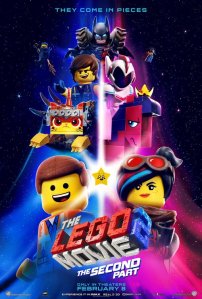 Everything might not be awesome but it’s still pretty great for this creative, heartfelt, and hyperactive family franchise that is better than it has any right to be thanks in part to returning writers Phil Lord and Chris Miller. It’s not quite as fresh and clever as the first go-round but it manages to better its predecessor in some key ways. Now that we know the colorful and zany antics of the animated Lego characters are also simultaneously the imaginative play of a real-world family, it provides a deeper thematic subtext with the unseen nature of siblings in conflict. I remember my own younger sister wanting to play with me and my toys, and me rebuffing her, and the film struck home some key emotional points about the inclusion of cooperative play. The different styles of play are on display as our characters are abducted by a shape-shifting space queen (voiced by Tiffany Haddish) who is determined to marry Batman and possibly rule the universe. A fantastic running joke is how transparently malevolent the queen is, which leads to an even better payoff. There are more songs and each is pretty well constructed, relevant to the story, and assuredly catchy, like “Catchy Song” used to brainwash people through pop, and a mournful version of “Everything’s Not Awesome” that becomes genuinely inspirational and uplifting by its climax. The life lessons are easily digestible and the sense of breezy fun is still alive and well. I was laughing throughout, sometimes quite hard, and the brother/sister subtext had me wondering if I owed my younger sister a decades-late apology for my behavior (sorry, Natalie). Lego Movie 2 is a worthy sequel that finds new and interesting ways to build off the irreverent original’s model. Bring on the Toy Story 3-style ending where our grown-up owner says goodbye to his childhood toys and friends. At this point, Lord and Miller can do anything and imbue it with wild wit, whimsy, and unparalleled mass entertainment (except Star Wars, I suppose).
Nate’s Grade: B+
Share this:

Glass (2019)
 M. Night Shyamalan has had a wildly fluctuating career, but after 2017’s killer hit Split he’s officially back on the upswing and the Shyamalan bandwagon is ready for more transplants. At the very end of Split it was revealed it had secretly existed in the same universe as Unbreakable, Shyamalan’s so-so 2000 movie about real-life superheroes. Fans of the original got excited and Shyamalan stated his next film was a direct sequel. Glass is the long-anticipated follow-up and many critics have met it with a chilly response. Shyamalan’s comeback is still cruising, and while Glass might not be as audacious and creepy clever as Split it’s still entertaining throughout its two-hour-plus run time.
It’s been 18 years since David Dunn (Bruce Willis) discovered his special abilities thanks to the brilliant but criminally insane Elijah Price (Samuel L. Jackson), a.k.a. “Mr. Glass.” David has been going on “walks” from his security day job to right wrongs as “The Overseer,” the rain slicker-wearing man who is incapable of being harmed (exception: water). He looks to stop David Wendell Crumb (James McAvoy), a.k.a. The Horde, a disturbed man inhabited by over dozens of personalities. David Dunn and Kevin are captured and placed in the same mental health facility as Elijah. The three are under the care of Dr. Ellie Staple (Sarah Paulson) who specializes in a specific form of mental illness with those who believe to be superheroes. She has only so many days to break through to these dangerous men or else more extreme and irrevocable measures might be taken.
 Shyamalan has a lot on his mind and spends much of the second half exploring the classical ideas of superheroes via Dr. Staple and her unorthodox therapy treatments. She’s trying to convince each man they are simply wounded individuals and not superior beings blessed with superior powers. Because the audience already knows the fantastic truth, I’m glad Shyamalan doesn’t belabor this angle and make the crux of the movie about her convincing them otherwise. The second act is something of a sleeping predator, much like the wheelchair-bound, brittle-bone Elijah Price. You’re waiting for the larger scheme to take shape and the snap of the surprise, and Shyamalan throws out plenty of red herrings to keep you guessing (I’ve never been more glad that convenient news footage of a new skyscraper opening meant absolutely nothing for the final act setting). Part of the enjoyment is watching the characters interact together and play off one another. The conversations are engaging and the actors are uniformly good, so even these “slow parts” are interesting to watch.
It’s fun to watch both Willis and Jackson to slip right into these old characters and conflicts, but it’s really McAvoy’s movie once more, to our immense benefit. Between a ho-hum character who has accepted his ho-hum city guardian role, and an intellectual elite playing possum, the narrative needs Kevin Wendell Crumb/The Horde to do its heavy lifting. McAvoy is phenomenal again and seamlessly transitions from one personality to another, aided by Dr. Staple’s magic personality-switching light machine. The command that McAvoy has and range he establishes for each character is impressive. He reserves different postures, different expressions, and different muscles for the different personas. I was genuinely surprised how significant Ana Taylor-Joy (Thoroughbreds) was as the returning character Casey, the heroine that escaped Kevin’s imprisonment in Split. She’s concerned for the well being of Kevin, the original personality who splintered into many as a means of protection from his mother’s horrifying abuse. I was worried the movie was setting her up to be a disciple of Kevin’s, looking to break him out having fallen under an extreme Stockholm syndrome. This is not the case. She actually has a character arc about healing that is important and the thing to save Kevin’s soul. There are in-Kevin personalities here with more character arcs than the other famous leads.
Shyamalan has been improving in his craft as a director with each movie, and stripping down to the basics for a contained thriller gave him a better feel for atmospherics and visual spacing with his frame. With Glass, the cinematography by Mike Gioulakis (It Follows, Us) smartly and elegantly uses color to help code the characters and the development of their psychological processes. The direction by Shyamalan feels a bit like he’s looking back for a sense of visual continuity from his long takes and pans from Unbreakable, which places greater importance on the performances and precise framing.
 I think the disappointment expressed in many of the mixed-to-negative critical reviews comes down to a departure in tone as well as the capitalization of being an Unbreakable sequel. Both of the previous movies in this trilogy were less action vehicles than psychological thrillers that emphasized darker human emotions and personal struggle. Shyamalan purposely grounded them, as much as one can, in a sense of vulnerable realism, which only made both of their endings stick out a little more. The movies weren’t about existing in a superhero universe but more so about unknown heroes and villains of comic-sized scale living amongst us every day. It was about the real world populated with super beings. Because of that tonal approach, Unbreakable was the epic tale of a security guard taking down one murderous home invader and surviving drowning. It was more the acceptance of the call, and part of that was getting an audience that had not been fed as much superhero mythos as today to also accept that secret reality hiding in plain sight. 18 years later, movie audiences have become highly accustomed to superheroes, their origins, and the tropes of the industry, so I was looking forward to Shyamalan’s stamp. I think our new cultural environment gave Shyamalan the room to expand, and Glass moves into a less realistic depiction of these elements. It’s not the gritty, understated, and more psychologically drawn dramas of his past. It’s more comfortable with larger, possibly sillier elements and shrugging along with them. There are moments where characters will just flat-out name the tropes happening on screen, with straight-laced exposition. It can lead to some chuckles. I think fans of the original might find a disconnect in tone between the three films, especially with this capper. They might ask themselves, “I waited 18 years for these characters to just become like other supers?”
And that refrain might be common as well, namely, “I waited 18 years for this?” While it’s inherently true that a filmmaker doesn’t owe fans anything beyond honest effort, an extended time between sequels does create the buildup of anticipation and the question of whether the final product was worth that excited expectation. Fans of Unbreakable might be somewhat disappointed by the fact that Glass feels like more of a sequel to Split. McAvoy is top-billed for a reason. Perhaps Shyamalan had more of a desire to foster the continuation from a recent hit than an 18-year-old movie. Whatever the rationale, David Dunn gets short shrift. After the opening segment, he’s being institutionalized but he’s not actively trying to escape. As a result, the attention focuses far more onto our two villains, and one of them doesn’t says a word until an hour into the movie. This further exacerbates the disproportionate emphasis on Kevin Wendell Crumb (and The Horde). As stated above, I think that’s where the emphasis should be because he has the most storytelling potential, and McAvoy is amazing. However, if you’ve been waiting 18 years for another face-off between Mr. Glass and the Unbreakable Man, then this might not seem like the special event you dreamt about. Shyamalan still has difficulty staging action sequences. The fights with David and The Beast are pretty lackluster and involve the same non-responsive choke hold moves. There are like half a dozen characters involved with the climactic showdown but half of them are bystanders waiting to be tapped in when the narrative needs them to console their fighter.
 I think the ending will also turn some people off for what it does and what it doesn’t do (I’ll avoid spoilers but will be speaking in vague terms this paragraph, so be warned, dear reader). The ending opens up a larger world that leaves you wanting more, even if it was only a passing scene acknowledging the resolution to the final actions. This holds true with an organization that you get only the smallest exposure to that adds to the deluge of questions seeking answers. It sets up a bigger picture with bigger possibilities that will ultimately be left unattended, especially if Shyamalan’s recent interviews are to be taken at face value. What Glass does not do is play with the implications of its ending and explore the newer developments. The ending we do get is indeed ballsy. I gasped. Shyamalan takes some big chances with the direction he chooses to take his story, and I can admire his vision and sense of closure. On the other end, I know that these same decisions will likely inflame the same contingent of disgruntled and disappointed fans.
Shyamalan’s third (and final?) film in his Unbreakable universe places the wider emphasis on the three main characters and their interactions. While McAvoy and Kevin get the light of the spotlight, there are strong moments with Elijah and David Dunn. There are some nifty twists and turns that do not feel cheap or easily telegraphed, which was also a Shyamalan staple of his past. It’s not nearly as good or unnerving as Split, the apex of the Shyamalanaissance, but it entertains by different means. If you were a fan of Unbreakable, you may like Glass, but if you were a fan of Split, I think you’ll be more likely to enjoy Glass. It might not have been worth 18 years but it’s worth two hours.
Nate’s Grade: B
Share this:

The Strangers: Prey at Night (2018)

Coming ten years too late, the inane sequel to The Strangers is a home invasion thriller that was so bad that I had to stop it five separate times to collect myself. It’s about a boring family that takes a vacation (?) to a trailer park (?) and is terrorized by mask-wearing strangers who insist on killing set to diegetic 80s pop music (?). Seriously, the music is part of the scene and these imbecilic killers almost have an OCD-level compulsion to have to listen to their kickin’ tunes when they’re kicking in heads. One killer literally won’t leave a car radio until he gets that exact right soundtrack. This is the only aspect of note in what is otherwise a thoroughly rote slasher film. At one point one of the killers is going to be unmasked and the film plays it up as great reveal? Who could it be? Oh, it’s nobody, because the anonymity is the point but the movie forgot. I paused this movie to give myself a break and only 20 minutes had passed! Here’s another example of the bad plotting: we have a teen girl kicked out of school for some rebellious, disciplinary action. Surely, you would assume, that in the final act, she will make use of this same skill to save herself, you know attaching a payoff to a setup. This never happens. It’s just one poorly executed attack sequence after another with nothing to offer but forced irony. It feels like random scenes that just stretch and stretch and it’s hard to even bother paying attention. The kills are lame, the suspense set pieces are dumb, and the attackers are boring. How the hell do these people get the jump on everybody? It’s like they can choose to make sound or not. Listen for the looming 80s soundtrack as a giveaway, people. The Strangers: Prey at Night is worth burying in the past.
Grade: D-


You must be logged in to post a comment.