Monthly Archives: July 2026
Masters of the Universe (2026)
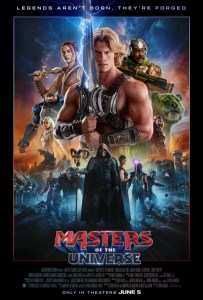 Masters of the Universe is an intriguing conundrum. It was a box-office failure upon release, as it seems few people wanted to venture out for a reboot of a 1980s Saturday morning cartoon that was created to primarily sell toys for Mattel. It was an expensive flop, and then upon its arrival to Amazon Prime and wide availability, the movie has since become one of the most streamed movies in Amazon history. I think I can explain this. The fan base for this franchise is dwindling with aging Millennials and few felt a big-budget remake was a necessary theater appointment, but in the privacy of your own home, and thinking back on the bad headlines and buzz, you might find yourself just like me, remarking, “I am actually digging this. Why were people so harsh?” It’s a candy-colored meta-fantasy adventure that rips Adam (Nicholas Galitzine) into the real world for some fish-out-of-water comedy, then reunites him back as an adult into his home world, Eternia, under the sway of the dark lord, Skeletor (Jared Leto). The tone is clearly inspired by Taika Watiti’s Thor: Ragnarok, keeping things breezy while side-stepping the more ridiculous elements with an eyebrow-raise. I actually enjoyed the explanation that the very simplistic names for the characters, such as Fisto and Ram-Man, were because Adam was a kid when he was deported and that’s what a kid would recall. The joke does run up to the line of excess, and it’s not alone, but I think overall the tone is so unabashedly fun that I could forgive missteps or annoyances. Under direction by Travis Knight, a man from the world of stop-motion animation, the big screen visuals are crisp, dynamic, and consistently making excellent use of the space of the frame, something I find that directors with animation experience really utilize better. There are nice character moments I appreciated (“Your dad’s gonna turn around any second and see… any second now…”), entertaining fights and locations, and maybe my favorite Leto performance in… years? He’s actually quite enjoyable as the contemptuous baddie. I never cared in the slightest for He-Man and the cartoon growing up, so I have no built-in nostalgia for this franchise, but even I found myself enjoying the characters, their comradery, and the confrontations. It’s hard not to be cheesy or goofy given the subject matter, but I think Masters of the Universe threads the needle as well as could be between reverence and irreverence. It may not be masterful but it’s plenty entertaining and fun and, certainly with lowered expectations, a perfectly fine way to unwind over two hours at home.
Nate’s Grade: B
Share this:

First Shift (2024)
 Notorious film director Uwe Boll is back, baby, from his semi-retirement. Not only that, he has stumbled upon a hit, something decidedly uncommon in the man’s multi-decade independent filmmaking career, especially since he faded from the outer rings of the studio system in the late 2000s. I’m writing this after the release of 2026’s Citizen Vigilante, another surprisingly popular movie for Boll, though popular with the worst people and for the worst reasons. I was unaware that Boll had shed his retirement, so now I’m catching up with some of his latest films, and 2024’s First Shift was his return splash. It’s a cop drama actually filmed in New York City, a bit of a change for the more threadbare and mercenary director. However, when this little movie debuted on streaming for Paramount Plus, it opened as the number two movie and stayed in the streamer’s top ten for an astonishing twenty weeks, nearly half a year. Clearly, this movie caught on with audiences and Boll has already planned two more installments, as well as a potential First Shift TV series. When I read this information I pumped my fist, not necessarily cheering for Boll’s success, not that I have anything against the man’s fortunes improving, but because all through my watch of First Shift I kept remarking, “This feels like Boll’s attempt at a cop show.” Lo and behold, that might have just been the plan all along, and considering Paramount is the home of a plethora of CBS long-running crime procedurals with little variation in their formula comforts, he might have struck gold.
The plot is fairly simple. Veteran cop Detective Deo Russo (Gino Anthony Pesi) likes to be alone, and then he gets assigned a new partner, Angela Dutton (Kristen Renton). He’s grumpy and cynical and she’s sunshine and optimism. He likes to keep to himself and she’s an open book, to go with her non-stop chatter. Over the course of their first shift, they’ll spend twelve hours traversing New York City, resolving various crimes including a mob hit and a personal episode of violence with Dutton’s family.
 After 29 Boll movies and counting under my watch, I must say that, to my full academic analysis, First Shift is actually mostly enjoyable. To a point. I’ll get to that later with some significant spoilers over the last twenty minutes. However, this is a crime thriller that eschews a sense of gritty realism for something far more breezy and light-hearted without being too flip or glib. The pervading feeling of the movie is just something familiar and nice, a soothing balm that tells you even when the officers are confronting a literal knife-wielding maniac, that things aren’t going to get too heavy. This is a world of cops and officials that seems ripped from the cozy confines of the network TV procedural, the world of NCIS, Bones, In Plain Sight, Castle, Hawaii Five-O, Monk. The crimes are never too grisly and the overall tone of the show is mirthful and suffused with bickering and snappy banter (“This city is my new home,” with the ready reply, “Your new home smells like piss.”) from a bunch of professionals more prone to rolling their eyes than getting into fistfights. It’s a distorted reality that’s ready-made for comfort viewing, and it mostly works. I enjoyed the introduction of the team from the typically been-there-seen-it-all boss, Lieutenant Walden (Tia Dionne Hodge), whose wisecracks actually got me to chuckle. I appreciated the unpredictable areas the banter could head, including both officers trying their best to define what a sexual act was named after a particularly popular Little Debbie treat could be. Most of all, I appreciated that Boll understood the tone he wanted and implemented it from the start. It’s such a light, pleasant feeling that I found my attention drifting, not because I was bored but because it was a familiar sensation that put me at ease.
That doesn’t mean everything snapped together with precision. For a movie just under 90 minutes, it feels a little stretched to get to that running time. The opening three minutes are devoted to watching Russo’s morning routine including making a protein shake. I kept waiting for some added detail, like he’s sneaking booze into his shake’s recipe, but alas, it was just a protein shake. There’s plenty of moments in the car with the cops that just feel like Boll was riding in the back and said, “Go on and improv,” and they just riffed for ten minutes and he cobbled together his favorite bits. It’s an ongoing impression throughout the movie, with scenes feeling a bit more loping in their rhythms, allowing certain scenes to feel aimless, drifting past the point being established. I didn’t mind so much because the stakes were low and the vibes were pleasant, but it did feel padded. Do we need to see an old man walking down the store aisles so extensively before he’s ultimately attacked? If this was designed in the TV procedural format, there would be a brevity to some of these plot points. I did find the behavior of Dutton to be a bit of a reach at points. Her posting of TikToks live from the station seemed rather unprofessional and something she’d be dinged for. It gives the impression of someone unfamiliar with the restraints of police work, which made me initially think Dutton wasn’t a transplanted cop from Atlanta but some civilian riding along for research, like with Castle, before that show long exhausted the premise of why a mystery novelist would be so indispensably integrated in the L.A. police force. The larger mob plot is also muddled, as there is an introductory scene establishing our Bad Guy getting back against an underling who betrayed him. However, before the end of the movie, this Bad Guy is hastily removed to introduce a different Bad Guy Boss. If this was the case, why didn’t we just begin with the man at the top if he’s the one who actually matters?
 Unfortunately, the last twenty minutes of First Shift are a sharp tonal disconnect that seriously harms the good vibes of the movie, and one that requires extensive spoilers, so if you seriously care about whether or not a Uwe Boll movie experience will be pure for you, skip ahead to the next paragraph, dear reader. Earlier in the movie we get a couple quick flashes of a bearded man growing in agitation. He seems to have some substance abuse issues and the deterioration of his marriage. It isn’t until the final act that his storyline really surfaces with clarity. This man happens to be Dutton’s brother, an Iraq War veteran suffering from PTSD and drinking. His wife is preparing to leave him and take away her son, his stepson, so what’s a mentally unstable man to do? He blames the stepson for poisoning the relationship with his wife, pushing her to leave, and he throttles the child and suffocates him with a pillow. He then also kills his wife and himself. Take a minute to catch your breath, reader. That’s a lot, and especially for a movie that had an entire storyline about taking care of an elderly man’s dog while he recuperates and tricking their commanding officer into buying the dog’s lavish lunch. This murder-suicide family annihilator plot is far too dark and serious for a movie that, thus far, had been more whimsical and light. It completely crashes the tone of the movie. It’s an attempt by Boll to trauma-bond his two lead characters, but it really feels more like a trauma dump for the audience. Both of the cops just blurt out their feelings and personal failings at high volume, speeding over the character development that should unite them. It’s clunky. It’s also an unwelcomed and miserably dour turn for a movie that cannot support that level of dire realism.
In the final minutes of First Shift, it cuts to additional footage and promises a Part Two, kind of like the end of Kevin Costner’s Horizon: Part One previewing a trailer for its forthcoming Part Two. We still have never gotten Horizon: Part Two and it’s been two years and counting since it was pulled from the release calendar. I don’t know if this was always the plan or Boll was adding an additional tease to capitalize on the unexpected groundswell of audience interest. In October 2025, Boll had officially wrapped New York City filming for the two sequels, titled First Shift: Vengeance and First Shift: Redemption, which seems a shame because Second Shift and Third Shift were right there. The TV series is still in development. In replicating the familiar, low-stakes, ensemble character workplace cop procedural, Boll might have stumbled upon a new echelon of success for his career. If he can reassert the tone that made the movie a successful if disposable innocuous cop procedural in movie form, then I think the First Shift sequels could be modestly entertaining. However, if the shocking downturn that the film takes in its climax is an indication of the direction ahead, then the good vibes might be dead after all. Still, for the man’s return to the world of cinema, First Shift is a cut above for Dr. Boll.
Nate’s Grade: C+
Share this:

Good Luck, Have Fun, Don’t Die (2026)
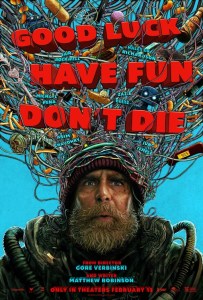 It’s been nearly a decade since director Gore Verbinski’s last movie, 2016’s A Cure for Wellness, and his dynamic visual style, impish sense of humor, and general prevailing oddness have been sorely missed in mainstream Hollywood. Here comes the creatively titled Good Luck, Have Fun, Don’t Die, which is accompanied by cheering children shouting he title whenever it appears onscreen. It’s a satirical sci-fi parable with its tongue firmly planted in its cheek. At 134 minutes, it plays like an entire season of Black Mirror episodes hung together with a wacky time travel adventure caper. Sam Rockwell plays The Man From the Future, actually his character name, though he looks like a scraggly hobo when he stumbles into a diner wrapped in trash and what appears to be a bomb. He uncorks a hyperactive speech informing the patrons he is from the future, that future is very bad thanks to technology, and he has come to this diner over 100 times previously because he is convinced within this eatery is some combination of the right people that will help him ensure this nightmare future never comes to be. Immediately, the screenplay by Matthew Robinson (The Invention of Lying, Love & Monsters) grabs you and refuses to let go, bouncing off the walls with ideas, gags, and manic energy mixed with trenchant commentary about the perils of technology in our crushing age of doom scrolling and diversion. Even better, the movie keeps shifting and surprising every so often. The structure is broken into a series of extended vignettes showcasing different members of the team and their personal back-stories, each treated like its own Black Mirror episode covering some different nefarious aspect of modern technology, from a school of student zombies addicted to their cell phones to a secret program that clones deceased children for the right price, though the government foots the bill if your kid was a victim in a school shooting. You can see the mordant tone and perspective of the movie. It gets dark but at no point is it suffocated by that darkness. Instead, Verbinski keeps things sure-footed and breezy, relying upon slapstick, goofy humor, sudden bloody violence, and layered revelations to maintain a consistent sense of entertainment. I don’t think there’s an emotional investment in the movie, and a very late revelation feels like a hasty attempt to force some in when that ship has sailed. I don’t mind that the film’s tone can be rather snide because its aim is strident anti-A.I. satire. It’s also easy to feel that many of the supporting players don’t get as much to do as they’re dragged along on this quest, especially after Zazie Beetz showed how capable she was as a formidable action heroine with They Will Kill You. Still, Good Luck, Have Fun, Don’t Die is a gonzo, violent, inventive, macabre whirlwind that invites the audience to laugh at the chaos and downturn of modern society. Hey, watching this screen is actually part of the solution, not the problem.
Nate’s Grade: B+
Share this:

Toy Story 5 (2026)
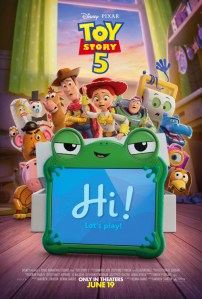
Every time Pixar resuscitates the storied Toy Story franchise, going on three decades now, I get a little wary of them upending the good will. The series had a perfect ending in the third edition in 2010, but being Pixar’s golden and most bankable franchise, it wasn’t allowed to remain an ending. I quite enjoyed the fourth edition in 2019 and consider it a fitting and poignant sendoff for Woody, if, of course, they could accept this as his settled ending. Now in 2026, here comes a fifth Toy Story, and my emotions are decidedly mixed, excited for the creative possibilities of another entry in Pixar’s flagship series and girding myself in anticipation of whether or not these fitting and earned endings are disturbed. Perhaps I’ve been overly protective of these endings, or perhaps it’s just a reflection of our modern IP-revivial cycles that studios cannot accept anything that makes money having finite story endings. Well, while I believe Toy Story 5 to be likely the weakest of the five films, it’s still a marvelous movie that elicited tears from my grown-up eyes on more than one occasion.
Now that Woody (voiced by Tom Hanks) has settled into a new life, the plucky leader of Bonnie’s toys has become the next cowgirl in line, Jessie (voiced by Joan Cusack). Life is good until Bonnie’s parents introduce an educational tablet device, Lilypad or “Lily” (voiced by Greta Lee). They want Bonnie to socialize more and make friends with the neighbors, something she’s having difficulty achieving. Bonnie becomes enthralled with her first smart screen, spending hours upon hours with it inches away from her unblinking face. Jessie sees the new tech as an enemy to traditional play time, as Bonnie’s toys have been chiefly neglected as she devotes all of her attention to this new shiny device. She plots to remove the Lilypad; however, Lily has her own ideas about what Bonnie needs, and it involves getting rid of the outdated toys of childhood so she can be better accepted by her more tech-adopting peers.

Right away, Toy Story 5 provides a meaningful reason for its own existence, examining the immersion of technology and in particular screen time into the development and maturation of children. It’s a substantial issue today for millions of parents, and a genuine worry about whether or not these magical electronic devices are helping or hindering childhood development. Are we building synapses with these games and social media apps or are we building a dependency and despondency when un-synched? It’s an age-old question over whether technology is facilitating growth or substituting for it, an especially pertinent question in the realm of education that ruling parties go back and forth with. This is a fabulous and thorny issue to explore in the Toy Story universe, and with co-writer/co-director Andrew Stanton (WALL-E, Finding Nemo) at the helm, there’s an assurance that all will be handled with wit and warmth (Stanton has co-written all five Toy Story movies, though this is his first directing credit). I actually think this movie utilizes its central premise better than Toy Story 4 did with the murky existential questions with Forky over what constituted play and thus was granted existence and consideration. Now, that movie transformed into a different and more emotionally resonant theme about broken toys still having purpose and dignity after being cast off from their owners, a disability empowerment message that was beautifully handled, so much so that I forgave the dropped exploration of thorny prior themes. With Toy Story 5, the question over the role of tech is front and center throughout.
At the core of this movie is the question of growing up and the malignancy of time. Lily wants Bonnie to be accepted and thus happy, and her reasoning is that these other toys are a detriment to this goal. In her view, they are dragging Bonnie down and imprisoning her in a juvenile state that her peers have already graduated from. For Lily, growing up is a process to be hurried, to become more like a “grown kid,” and thus more like everyone else on the block who has adopted tech and screens earlier in their lives. For Lily, Bonnie, even only at a mere eight years old, is already behind in her maturation process and she’s desperate to get her caught up. For Jessie, it’s about holding onto the status quo as long as possible. For three sequels now the movies have explored the nature of change, acceptance, and identity, and it’s still a wellspring of insight and emotional and intellectual relevance. Having Jessie be the primary protagonist of this sequel was a brilliant choice because she’s the toy who has been defined by abandonment issues. She’s been left behind by two other kids, first Emily and then Andy, and she’s afraid history is repeating with Bonnie’s dwindling attention now that tech has entered the home. There’s a clear parallel with the original Toy Story when Woody became jealous and insecure about the shiny new toy of Andy’s fascination, Buzz Lightyear (voiced by Tim Allen). Oh, and thanks to 2022’s Lightyear, we now know all these toys were the discount knockoffs of Chris Evans’ voice and that this original movie that Andy declared his favorite was not quite worthy of his adoration. Anchoring the major theme onto Jessie’s existing emotional attachment issues is smart, and it allows the fifth film to serve as a means of long-delayed closure for the cowgirl much as Toy Story 4 was a means of closure for Woody. It’s about confirmation that these relationships they build with their kids are not one-way, and that even after they end, and everything has an ending whether we like it or not, we know that they have mattered. No one, not even toys, wants to feel disposable.

I especially loved the imaginary play sequences in the film, highlighted by a different animation style. It’s painterly and with pastel colors, and it’s a great artistic choice to visually code the imaginary sequences from the standard reality. I loved how chaotic and silly these sequences were, converging escalating threats, dramatic twists, and ridiculous double crosses and resolutions, perfectly embodying the wild mind of a child in the midst of imaginary play. These little interludes were welcomed at every turn.
I did say Toy Story 5 was the weakest entry in the franchise, again no shame being a bronze medalist at the Olympics, so to speak, as you’ve gotten ahead of so many others to attain this honor. I enjoyed the lowered stakes of simply trying to tell a story about two factions fighting over what they felt was best for the mental well-being of a child. There’s something inherently sweet about a movie whose big goal is to just help a shy little girl make some friends. I do wish there was more persistent commentary on what screen-addiction has done to a generation of kids at an important time besides turn the neighborhood girls catty and mean. Bonnie, you are not the “weird kid” just because you prefer playing outdoors. At no point is Jessie really threatened with annihilation, and even as she’s lost she still finds a new and nurturing owner that could possibly even replace Bonnie. Because of those lowered stakes, the script can feel a little like an expanded TV episode where a character learns a valuable lesson. The supporting characters are sidelined with few exceptions. This is the second movie in a row that merely gives Buzz a jokey storyline, this time working up the courage to ask Jessie to be his wife. It’s more a recurring joke at his fumbling awkwardness. It feels like Pixar knew it was giving the character such a short shrift, which is why they also included an ongoing subplot of a group of Buzz Lightyear action figures bandying together to go searching for “star command.” Until finally tied into the action at the very climax, they’re a diversion that is never really as funny as it could have been. I will also firmly proclaim my stance that Woody should not have returned for this sequel. He offers little to the story, beyond to once again reflect upon how old he has gotten, which itself is just turned into a repeating joke. Woody’s involvement is wasted and his perspective isn’t different enough that some other toy, perhaps Buzz, could have fulfilled his role and left the former sheriff in retirement with Bo Peep.

Does Toy Story 5 upend the cherished endings of its predecessors? No, not really. Those endings still have meaning because the audience has invested relationships with these characters over thirty years. The latter sequels, in my mind, have served as closure vehicles for individual characters, and I think that’s a smart way to handle the franchise. Of course, I also think just telling original stories with new characters in this universe would be even more appealing, but the likelihood of that seems slim when Disney wants to sell another billion dollars in merch with their established and beloved characters. It’s probably naive to think this movie will ultimately be the franchise’s last, so instead I’ll just hold out hope that its ongoing quality will persist, and as long as Stanton and other Pixar brain-trust remember its innate and lasting appeal, I have a buoyant sense of hope that newer editions can still capture that initial magic that began in 1995.
At the conclusion of Toy Story 3, which I still gauge as the best in the series, it made me reflective and want to break out my old neglected toys, giving them one more hurrah of play. At the conclusion of Toy Story 5, it made me reflective, but I didn’t want to reach for any old toys and give them an extra dose of affection; it made me want to grab my toddler and soak up the time I have available with him, now, in this moment, while there’s a childhood to relish before it too vanishes at the mercy of time. This movie is all about the struggle over childhood, one side hoping to elongate it and the other hoping to rush through. From a different perspective, like a parent, it’s inevitably a losing battle, but it makes me reflect more on cherishing those moments while they are available. That’s pretty deep for a movie with a talking electronic poop assistant voiced by Conan O’Brien. Not too shabby, Pixar. Here’s your billion dollars.
Nate’s Grade: B+
Share this:

Moana (2026)
 If you’re a fan of the 2016 animated film Moana, then watch that again. If you’ve never watched the animated movie, then watch that instead. The live-action Moana is everything I have feared and dreaded when it comes to the assembly line of Disney live-action remakes. It is a carbon copy of the original, beat for beat the same story, the same jokes, the same visual shots, even the same character designs of the non-human characters. It’s all just worse. The lush colors and lively energy of the animated movie have been replaced by drab “realistic” colors, transparent green screens, and a performance from Dwayne Johnson absent the chaotic energy of his cartoon portrayal. The CGI animals, especially the chicken, looked terrifying. The songs are still great, the performance from our new Moana, Catherine Laga’ala, is pretty decent, though throughout the entire movie, even when it hit some strides of, “Well, this isn’t too bad,” it made me feel like I was watching a competent cover band play the hits of a much better and more famous band. It’s like the Moana Road Tour versus the real deal, and for many that could be plenty to provide sufficient entertainment, especially if you have a little one who has never seen any form of Moana. Then again, why start with the live-action one? Beyond being completely superfluous as the original is not even a full ten years old upon release, it’s just not as good in every measure. There’s not a single improvement, only artistic downgrades, and at such how far it goes creatively is actually very minute.
Nate’s Grade: C
Share this:

The Worst Way (2026)
 I was contacted by Melvin M. Claybrooks, the writer/director of an Ohio-made indie, The Worst Way, with a request for a professional review and constructive criticism on his debut film. I’m always happy to provide what I hope is a helpful and insightful analysis of people’s creative collaborations, as movies are so much work, and sometimes they work but, as often I’ve found in my many years sifting through Ohio-made indies, very often they might not. It’s good to analyze why. When the director told me his movie encapsulated the genre of “erotic psychological drama,” I’ll admit that part of me became a little wary. Perhaps it’s having a wife who has read plenty of books with varying levels of spice who refuses to read romance novels written by men, but I’m wary when men are the chief proponents of eroticism simply because the Male Gaze is long established to be a default setting after, oh, a century of movies. Still, I was willing to judge The Worst Way on its own artistic merits, hopeful that any initial genre misgivings might fade away. They never did.
The Worst Way is ostensibly a love triangle, so for better analysis, let’s focus on each corner of this messy relationship. First things first, our leading lady, Luna (Skyylie Jeter). Our introduction to her is with an opening party that parlays into some alcohol-fueled games of old, like Truth or Dare and Spin the Bottle. It’s somewhat curious that adults would gather to play these games in their, I’m assuming, twenties and maybe thirties, but hey, maybe it’s nostalgic. At this party, she meets Orlando (Shawn Johnson), who swears they’ve met fifteen years prior as teenagers (given that timeline, I’m assuming these characters are at least pushing thirty if not in their 30s now). He went by David then, and this reunion triggers old memories likely romanticized from being so long ago in the past. This is a fine setup, a man from her past has returned and they’re feeling one another out as to who they are as adults and whether they may still have a connection. Except the next scene has Luna going home to her drug-dealing criminal boyfriend, Ryan (Timothy Hightower). Again, this is a familiar setup for relationship dramas, the unfulfilled character tempted by someone new. Our helpful narrator informs us that Ryan and Luna’s relationship seems one of convenience. He supplies the drugs, they get high, they have sex, and things are fine. We’re told by our narrator that after Luna stopped using drugs, though, that she recognized the sex was not so good and her relationship was little more than transactional. Given all this, we can understand why Luna might be looking for a different man, especially one who presents himself with a fancy apartment and multiple investment properties. Oh, did I also mention that Ryan is abusive, has pulled a gun on her, choked her, and repeatedly threatened to kill her if she were to leave? This seems pretty clear-cut as far as where she will eventually go, maybe even enlisting Orlando to kill Ryan for her, like a modern neo-noir.
 Except that’s not what really happens. It’s confusing because her new option presents a multitude of reasons to leave, but she doesn’t. You could argue she’s afraid to leave, but the script is either trying to present a more nuanced portrayal of the psychology of leaving an abusive, controlling, predatory relationship, or it’s just muddled writing that loses sight of the character. Not only does Luna hem and haw over which man she should ultimately choose, she keeps giving Ryan more chances and incredulously defends him to her non-plussed friends: “He didn’t hit me, he choked me. There’s a difference.” Now, people are complicated and often don’t do what’s best for them. People often stick it out in toxic relationships, or are drawn to them, for a myriad of psychological and circumstantial reasons. Some people wrongly think they don’t deserve any better. Luna does not strike me as a person who feels her worth is less. This could be intriguing to explore, the contradictions of what we know we want versus what we know we should do. That can be the stuff of great drama and insight. I don’t think The Worst Way gets there. As presented, Luna is a bored woman with a high sex drive and a serious case of indecisiveness. You might end up screaming at the screen because this decision goes unanswered until the very end.
I’ll examine the merits, or lack thereof, of both paramours in my later paragraphs, but for now we’re focusing on Luna. Is she ultimately compelling to be our protagonist? Not really. Once Orlando appears, the story becomes a repetitive game of adult musical chairs, with her going back and forth to each man, swearing fidelity. Again, this can work in adulterous dramas, but it doesn’t feel like we’re getting to know Luna any better as a person. Maybe she enjoys the attention too much, and I think part of her enjoys the jealousies that she can instigate, which is why she refrains from making a choice. However, even as the movie escalates in its second half, Luna isn’t any more involved. Strangely, she becomes the third or maybe even fifth most prominent character in the last 40 minutes of the movie, as the story focuses its attention completely on the escalating war between Ryan and Orlando. It’s genuinely surprising how absent Luna is for much of the second half of the movie. To me, this feels like a tacit acknowledgement that there just isn’t enough going on with her character if she can be sidelined so readily. Given this, she comes across less like a fully-dimensional character and more like a plot catalyst to spur the men to fight. Thus the extensive attention paid to her pleasure feels more exploitative and effectively redundant.
 Let’s next examine the bad boyfriend, Ryan. There’s not a lot to go on here. He’s a dealer with rage issues and rampant paranoia, even if he has good reason to be paranoid. He’s a stock villain, written simply to provide a negative impression so we understand why she wants to leave. Except she doesn’t. Is he improving as a character? Does he have goals? Does he show different sides? Does he have a personal secret that he even keeps from Luna? No to all of that. He’s merely the Bad Boyfriend. He’s meant to be dumped for someone better, typically a more well-adjusted, thoughtful, and secure character. Now imagine in a rom-com or Hallmark movie or whatever relationship drama you want to recall, if that bad boyfriend character established early stuck around for the whole movie and our heroine was having a really protracted and exasperated time trying to make a decision. There isn’t enough here to justify his continued involvement and competition for her heart. It’s not even like he’s providing something Orlando cannot, like if their sex life was more passionate or adventurous. I suppose Ryan’s run-ins with law enforcement might provide a lift of danger and excitement for her, but that seems contrived. It’s no shock then when the violent man with jealousy and anger issues plots violent and angry retribution. The fact that he’s an ongoing competitor in this love triangle is baffling and really a further indictment on Luna as a character.
That leaves us with Orlando, who has a personal history tracing back to Luna’s teenage years. It seems he was her first everything, so she says. First love, first boyfriend, and the implication is also that she lost her virginity to him. It’s one of the movie’s better jokes that she can’t recognize him because he “looks so different” from the flashbacks because he was played by a different actor. Now a grown man, he seemingly has a cushy life-style built from a legitimate business. He’s not bad with physical intimacy either. And he doesn’t abuse her or threaten to kill her. Because this love triangle feels so unbalanced, I started wondering what sinister revelations could come from Orlando to make him less enviable. I started wondering if this swanky apartment he takes Luna to was actually his because he still works as a barber. No shame to barbers, but I doubt many people could afford that kind of place, and he tells Luna he has multiple investment properties, so is all this phony? Is this going to be like The Great Gatsby and his appearance of riches and status are a carefully constructed fantasy to win over the girl that got away from his past, someone he no longer really knows as an adult and now symbolizes more to be possessed? Not really. I wondered if maybe he was going to be too sexually transgressive for Luna. Their first encounter has him set a bowl on the floor below her while he services her. When she asks him why he did this, he shrugs, takes the bowl, and literally waters his houseplants with her sexual fluids. That is… something.
 Having three characters fight for romantic dominance when they should all go their respective ways isn’t a bad formula for a movie. However, the execution hinges on the audience finding these characters interesting, compelling, or at least there being enough surprises to keep us watching. I don’t know if The Worst Way can provide the rest in the wake of its unfulfilled lead trio. The screenplay involves too many scenes of characters talking through the circumstances, resetting the stakes and dynamics for an audience in case we might forget, the thing we complain about Netflix movies over. I would say that these are unnecessary recaps, but the editing can also be rather peculiar. There are several fake-outs, including a main character death that’s merely a dream. When you have characters repeating plot events without providing new insight, multiple characters sitting down to summarize the movie, and then you have multiple fake-out fantasies and dream sequences, then maybe this story isn’t quite as tight as it could be. The fact that you have a narrator means you should be able to skip the less important stuff, though it does raise the question how our narrator would know all these events if Luna wasn’t present for them, unless the whole thing was a fictional ruse.
Now I’ve gone this long into the review without talking about the production values because, as a low-budget indie film done primarily with local talent, there needs to be a sliding scale of expectations given the natural limitations of the production. Many of the scenes are composed exclusively as shot-reverse shot compositions with little coverage, likely for efficiency rather than as some grand visual design. The camera and lighting quality are perfectly acceptable. The sound design, also a repeated issue for many low-budget indies, is solid. I find that many shortcomings from a production standpoint can be forgiven if I’m simply hooked on the creative ingenuity, storytelling, or acting. Not every movie needs to look like a sleek David Fincher thriller. Some of the sets are quite good, like that swanky apartment with large windows of a city-wide vista (come to scenic Toledo!). I really liked the cutting back and forth from Orlando and Luna as adults to them as teenagers lying on the grass, faces illuminated by fireworks. That’s cinematic stuff, and I wish the film had played around more visually with its sense of memory. The main acting runs the gamut from stiff and limited to competent to promising. I found the best actor to be Hightower as our villain. He offers more degrees of pomposity meant to be lampooned that make his performance more entertaining. I actually think the movie’s last 40 minutes, where it abandons Luna’s perspective, is the most entertaining and successful part of the movie. While Ryan and Orlando are still characters with limits, their war of machismo has a tit-for-tat that feels like actual story progression. It’s also where the movie opens up several of Ryan’s friends as supporting characters, and I enjoyed them. I like that one of these guys is preaching caution. Another guy is promising to leave for good to live overseas with his girl, just after all this. At that point, I found myself more invested in Ryan’s buddies than anyone else in the movie, so it was kind of working for me.
 For me, there’s a narrow line between something being erotic and something being exploitative, but I suppose, much like sexuality, it really depends on what someone is looking for (the old adage “one man’s trash is another man’s treasure” can also apply to eroticism). Erotic thrillers had their heyday many decades ago and feel like a dated remnant of the past, but that doesn’t mean cinema must be chaste and lack any passion or sensuality. It is, after all, a medium for the senses. From my subjective perspective, the erotic nature of the movie just felt like slightly longer sex scenes that weren’t exactly sexy (remember the well-placed bowl for the man’s plants?) but then they weren’t exactly that memorably transgressive (except the plant thing, obviously) or button-pushing either. The emphasis on physical connection could have opened up these characters in meaningful ways, from what desire denied and desire fulfilled are doing to each of them. It’s just that when you place so much narrative emphasis on your main three characters in a romantic triangle, you’re making a bet that the audience is going to find these people interesting or at least the dilemma compelling. The Worst Way is far from the worst, and eager fans for something more daring or adult could potentially find some purchase here, but it was a drama that felt a little too underdeveloped with characters unworthy of your investment. Because of the limitations of the three main characters, as well as the lack of psychological analysis, I found them mostly just bodies on a screen, occasionally bumping into one another for violence or pleasure, but rarely ever compelling.
Nate’s Grade: C-
Share this:

The Furious (2026)
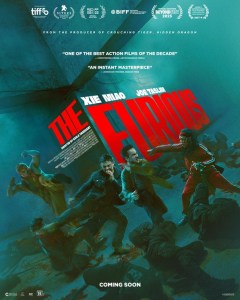 Sometimes you’re just looking for a movie that can knock you out with its bravura showmanship. I love action movies that let me better appreciate the work, with complex choreography and long takes that shows off the professionalism of the stunt performers and the brilliant choreographers. Fans of propulsive, intense, and acrobatic martial arts movies should have more than enough to satisfy with The Furious, a Chinese action movie that wipes the floor with the competition. The story is simple: a father trying to locate his daughter taken by human traffickers. That’s all we need for some truly bone-crushing fights and high-wire stunt-work, especially when you have two of the stars of The Raid. I was in heaven just watching the gloriously creative fights that were constantly shifting, making clear use of moves, countermoves, organic complications, and key uses of geography. I won’t pretend I was emotionally invested in this movie, but as long as people were getting punched or kicked in the face, then I was happy. I loved the big guy in overalls (Brian Le) and the different physicality he had while still being shockingly nimble. The camerawork by director Kenji Tanigaki, a stunt coordinator whose previous directing work is mostly comedic, is fluid and brimming with energy, easily ratcheting up excitement as various fighters continue to improvise and adapt. There’s a five-way fight in the climax that is awash in dozens of intricate moves, bodies dancing between one another to their unique rhythms, that it can become overwhelming to the senses. The Furious isn’t going to be for everyone as it’s quite simply a rehashing of genre thrills but with excellent execution, but if this is your genre, then you’re in for one sweet punch to the face.
Nate’s Grade: B+
Share this:

Citizen Vigilante (2026)
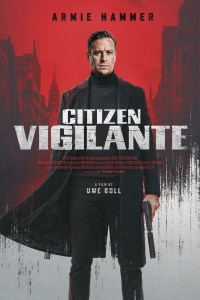 In 2016, notorious film director Uwe Boll announced his retirement from the movies, and for a while it seemed like it would stick. He settled into being a surprisingly successful restaurant owner and seemed comfortable with leaving directing behind. Still, as someone who had watched and reviewed 27 Boll movies and written over 48,000 words on the man’s oeuvre, I had my doubts. I even said in my review for the 2019 documentary about his career, “I also don’t think Boll will stick with his retirement. Much like Kevin Smith and Steven Soderbergh, other filmmakers who swore retirement, I think this period will be but a breath, a pause until Boll finds something that inspires him.” Well, it looks like what inspired him was making his own even-more-racist version of Death Wish. Originally titled The Dark Knight, until the lawyers got involved, Citizen Vigilante is Boll’s most prominent movie in nearly two decades. He’s actually injected himself into the culture wars and gained a whiff of relevancy that’s long eluded him. Citizen Vigilante is being hailed by rightwing audiences and pundits as “the movie woke Hollywood would never make.” Elon Musk posted the entire movie on Twitter, which is technically piracy. It became the number-one movie for digital platforms like Apple and Amazon. I’ve watched Citizen Vigilante and I can say with full confidence…welcome back to the Worst of the Year film lists, Uwe Boll. We’ve been saving a spot for you in your absence.
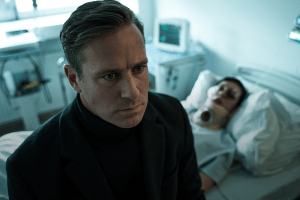 Michael Sanders (Armie Hammer) is an ex-Army officer living in “Europe.” Where in “Europe” you might ask? Unclear, though probably Germany. I raise this because the movie literally opens with a title card that just tells us we are in “Europe,” not a country or a city but the continent. In the opening minutes, we also see an immigrant stab a nice lady in the neck for no reason. The news informs us that immigrants and migrants have been coming to “Europe” and wreaking havoc, terrorizing God-fearing, tax-paying citizens with their foreign cultures, foreign languages, and depraved sensibilities. It’s in this setting that the people need a hero. It just so happens Michael stalks the streets of “Europe” as the Vigilante Citizen, finding those who have exploited the “European” systems of justice.
Let’s take three scenes that I think are emblematic of the thinking behind this whole endeavor as well as the impression of our problematic protagonist The first follows Michael as he heads to the hospital to talk with a survivor of rape and assault. However, on the way there, a trio of teenage hooligans board his bus and refuse to pay the fare, to the consternation of the beleaguered bus driver. Michael agrees to pay their fares and sits down beside them. He then lectures the trio of teens on macro-economics, explaining how their breaking the law and refusing to pay bus fare eventually contributes to a larger cost the rest of society has to pay. To no one’s surprise, the teens seem unimpressed, and later in the movie will be hilariously harassing one kid just sitting at a bench. These teen hooligan characters are so devoid of believability that they exist merely as an older generational boogeyman (“You can’t go out at this hour… there’s teens! And they have… attitude!”). Anyway, he ventures into the hospital and talks with the poor woman who was gang-raped and beaten. He asks her a series of questions about her attackers and says he’s there to seek justice. However, he purposely manipulates her by indicating the judicial process is slow and will require her to relive all of her trauma, and she doesn’t really want that, does she? Instead, he argues, he could provide his own justice on her behalf. To no surprise, she chooses the latter. Way to prey on this woman’s fears to be given permission to do what you really want to do, hurt bad people. Do you think he would have actually respected her choice if she chose to side with the court system? I doubt it. He might pretend to be serving unmet justice, but he’s looking for access to his blood-lust by any means. Another bewildering example of this is when he’s kidnapped a judge to lecture and execute, and to prove some point about the docility of innocents, he literally drives into oncoming traffic, forces a car to crash and roll over, and presumably kills an innocent motorist. What was that guy’s sin, huh?
 Another telling moment is when he’s walking the halls of a brothel, which literally looks like a general office hallway. Granted, since we’re in “Europe,” who’s to say that there couldn’t be an entrepreneur making unorthodox use of their building space? Regardless, he propositions one woman ($15 for sex and $30 for more than one position). They go into her office/bedroom and have at it. Now, I thought Michael was patrolling this location because the women were victims of sex trafficking and he was going to free them from their terror. I wasn’t expecting him to merely partake, and partake he does, though at no point does Michael ask her to role play cannibalism. However, during sex, he is distracted because he sees mold spots on the ceiling. He explains to her that this is a hazard from too much moisture, as if she’s the one in charge of the upkeep of the dwellings. He then reveals he’s actually the landlord of the building and he came for a “surprise inspection.” He then tells her that he will, indeed, pay her the thirty-dollars and flips her over for some more sex (you better believe this guy is into choking). What a modern gentleman. Despite his “generosity,” Michael is more concerned about the building upkeep than these women, again, who could be suffering from trafficking and lacking agency or the choice to leave. I guess since it might not be some immigrant responsible for their torment he’s decided to overlook this possible oppression.
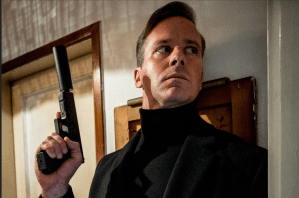
The last telling moment is when the police storm his apartment. Through a series of security cameras, he anticipates their imminent arrival and hides behind a metal shield with thin openings for two automatic rifles to stick their barrels out. He warns the armed officers that he understands they’re doing their duty but advises them to leave. They obviously do not. He then massacres them all from behind his shield wall, awkwardly handling each rifle with one arm, magically shooting every one of these officers. Then again these guys all stand in the open and do not move for cover, so maybe they weren’t the top of their class. They then send in more guys who also get massacred. Firstly, did these new guys not learn anything from the last batch of sacrificial offerings? Does nobody maybe just plan for a long-term siege and wait him out considering they know he’s stuck behind his little wall? The other telling aspect is that Michael shows no compulsion in killing these officers. He would say he warned them, but he also acknowledged they were doing their jobs, and for that he has declared they must die. So Mr. Law and Order doesn’t care so much about said law and order if it impedes his vigilante hobby. I would argue this fact should make the character less appealing to certain conservative audiences but after January 6th, perhaps taking their violent fantasies out on law enforcement when it stops them from doing whatever they want to do is their new definition of “backing the blue.”
 As a whole, I think all of these scenes really paint a picture as to the character of Michael, the self-styled Vigilante Citizen, who says he’’s the protector of the people, but I think he’s really more just a guy who likes violence and finds flimsy moral justifications to enact it. Still, that could have been somewhat interesting to explore as a character study, but that’s not what Boll is interested in. This movie transforms completely in its final twenty minutes into a dehumanizing and racist diatribe (spoilers to follow). He tracks one of the rapists down and it happens to be a teenager from the Middle East. So Michael decides to hold the entire family hostage and blames them all. What did this kid’s teen sister have to do with this? Or his mom and dad? Mom says her culture has conditioned her to blame these scantily-dressed European women for any sex crimes brought against them, but then is she not also a victim of bad thinking? Is she so irredeemable in her perspective that she could not change her mind over time? Should she be sentenced to death for having bad thoughts? If you open that up, where do you even stop? Michael coaxes the kid to call his friends and tell them to come over so they can be executed one-by-one, but what verification is there in Michael’s alleged hunt for justice? He’s shooting people as they arrive, some of whom he never even sees their faces, so how can he verify these are the culprits? What if some guy just walked in? What if one of these guilty teens brought along an innocent friend? Who’s to say that the Middle Eastern kid even sent the message to the correct people. Ladies and gentlemen, this ugly incident of mass execution by way of racism is the movie’s climax. It made me feel not just bad but scathingly unclean, especially knowing some will pump their fists in celebration, point to the screen, and holler, “Damn right my dude!”
This is only the second movie for Hammer since 2022’s Death on the Nile, the last time he graced a Hollywood studio production. Boll is known for welcoming actors on the fringes and people Hollywood has turned a cold shoulder to, so it makes sense for him to swoop up Hammer. And you know what? He’s as convincing as this sort of character was ever going to be. Hammer still has screen presence, and even though this is schlocky genre nonsense, the man still brings something to the role. I want to respect that but I also find it hard to respect a role that is so blatantly xenophobic wish-fulfillment propaganda.
 Considering the vile politics of Citizen Vigilante, and considering it literally ends with a dedication to the “thousands of murder and rape victims from immigrants,” it’s worth bringing up the question whether or not Boll believes any of the messages of his movie or if he’s merely pandering to people that do. Other critics have commented that Boll has had conservative leanings given some of his earlier films like Postal, and I must say, as the world’s leading expert on the cinematic offerings of one Dr. Boll, I disagree. Now, obviously I can’t look into the man’s heart and know what he truly feels about this subject, but now after watching 28 of the man’s movies, I feel like he’s at least a quirky neighbor that I’ve gotten to better know. This is the same man who made a movie about the genocide in Sudan (Attack on Darfur), the same man who lambasted the prison system for its abuses (Stoic), the same man who denounced the greedy fat cats of Wall Street (Assault on Wall Street), the same man who early in his career made a movie denouncing gun violence in schools (Heart of America), and the same man who crafted a nihilistic Vietnam War movie that condemned the very idea of war (Tunnel Rats), which still happens to be his best movie. Despite his recent output’s fascination with self-righteous spree killers (Rampage 1-3), I don’t think Boll really leans rightward. That brings up the alternative: this is a calculated grift aimed directly at racists. This I can believe, as Boll will chase after any audience that might provide him enough funding to move onto the next project and the next. Does that make the movie worse or does that make the movie a secret screed against this diseased way of thought? After all, the main character is a U.S. citizen living in “Europe,” making him… a violent and dangerous immigrant. I’m putting too much of my own thought into what is ultimately a thoughtlessly grimy vigilante thriller, but after 28 Uwe Boll movies, it’s hard not to pontificate. Unless you’ve been dying to see a certain selection of people die onscreen, steer clear of Citizen Vigilante at all costs.
Nate’s Grade: D-


You must be logged in to post a comment.