Category Archives: 2025 Movies
Run (2025)
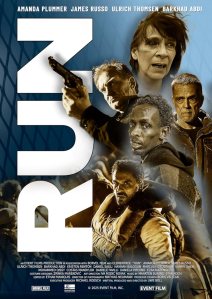
I’m going to do something I rarely if ever do, and that’s requesting a bit of homework before you delve further into this specific review. If you haven’t, please read my review for writer/director Uwe Boll’s 2026 grisly thriller Citizen Vigilante first. I’ll even provide the link. It doesn’t even have to be my review, though it would be appreciated of course. Familiarize yourself with this surprise xenophobic hit of a movie and then come back here to read about Boll’s 2025 effort, the generically-titled Run. It’s fair to gather an unfavorable opinion of Boll’s views on immigrants from Citizen Vigilante, which posits that thousands upon thousands of Europeans are being killed by merciless immigrants who refuse to assimilate with their poisonous cultures and attitudes, the kind of movie where a guy just slices a mother’s throat in the opening seconds while walking because why not? It’s a vile, disgusting movie that panders to the worst elements of the worst people, glorifying a racist vigilante that massacres an entire family for the sins of their teenage son. But I don’t need to remind you because, of course, you read that review. The discourse turned into an examination on Boll himself, appropriate since he was the writer and director and even dedicated the movie to the “countless victims of immigrant violence.” The most obvious interpretation was that Boll was beholden to this rotten anti-immigrant ideology. Perhaps he is. However, after having reviewed 29, now 30, of this man’s movies and written extensively about them and him, I had some doubts. It turns out Run is exactly why, as it stands as a stark refutation of the worst of Citizen Vigilante.
Forgive me, but I’ll be comparing Run and Citizen Vigilante throughout this review because I feel they are insightful mirrors for one another and demanding the comparative treatment. So, once again, if you haven’t yet, please read a Citizen Vigilante review so you’re caught up, dear reader. Thank you kindly.
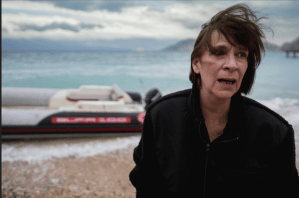
Run opens in a harrowing if familiar situation ripped from years of human interest headlines. We open on a boat heading out to sea. It’s filled with migrants from all countries looking to escape their home countries to avoid political persecution, imminent violence, or simply to start anew in a better place. They’re desperate people. They’re scared. They’re being exploited by the men in charge of the boat, whom we’ll learn later are charging up to $20,000 a person for their clandestine services. These men are also brutal when questioned and stab several of the people on the boat and throw them overboard. It’s grim and upsetting and this is Boll’s introduction for the audience to the plight of the immigrants. It already begs further questions of what they’re escaping if they’re willing to endure this terrifying trip.
The boat eventually does arrive onto the Italian coast (though really scenic Croatia) and from there the movie is split among an ensemble of storylines: 1) Anna (Amanda Plummer) is an ex-pat American who stumbles upon a pregnant immigrant, Selena (Hannah Balogun), hiding in the bushes after fleeing from the local police, and offers her refuge; 2) Ismael (Oscar-nominee Barkhad Abdi) is a Somali immigrant who has given everything to seeking political asylum and a new life; 3) Eddie (James Russo) and his daughter Julia (Kristen Retton) are American ex-pats and have run a business in town that has been going downhill and they’re running low on options to salvage their impending financial ruin; 4) a local police officer, Cappi (Daniel Sauli), struggling to do his best, watches over his aging mother who lives with him, and keeps up with the influx of immigrants in town; and 5) the pair responsible for the boat ferrying (Sammy Sheik, Michel Qissi) who are looking to get in good with a local mobster (Costas Mandylor).

From its opening scene amidst the boat, I found myself leaning a little closer to the screen, eager to see if this more empathetic approach would be met with sincerity throughout. It was! Run is a consistently compassionate examination about the modern-day immigrant experience, especially upon trying to work through the often byzantine system of bureaucracy to be counted and approved for asylum or migration status. It’s an open-hearted look that refuses to view these people as “invaders” or “vermin,” and instead looks at them as the desperate and vulnerable human beings they are. I thought that Run might follow a similar plot trajectory of 2007’s The Visitor, where our lonely, older, white American befriends an illegal immigrant, grows as a person, then has that person ripped away from the cruel indifference of the immigration and asylum system, only to learn a larger lesson through their personal experience. Run kind of follows that path but not as closely as I would have predicted. Selena gets taken by Officer Cappi around the 40-minute mark, not really enough time to fully develop the unexpected relationship between her and Anna. From there, the rest of her storyline is Anna trying to negotiate for the release of Selena by scrounging up thousands of dollars to bribe the local officials into letting her loose. There’s an engaging urgency and desperation there that can mirror what some of the immigrants experience as forces with more entrenched power, and the ability to abuse that power, are placed in opposition to freedom.
The American family is the mouthpiece for our more xenophobic perspective, but over the course of the movie Boll always showcases them as being in the wrong, as the angry assholes who have lost sight that even they were immigrants too. The cranky father figure, Eddie, says he served thirty years in the military and knows firsthand how “these people” behave. Anna calls him out, saying he should then acknowledge the potential culpability the U.S. government/military and other larger bodies could have in supplanting civil order/local autonomy for profit. The second half of the movie completely dumps all over Eddie’s worldview and refutes so much of Citizen Vigilante, down to its racist core premise, that I almost wanted to stand up and applaud. Spoilers ahead, but it’s worth it, trust me. At one point, a man hiding along the shore is discovered and in his panic he grabs a teen boy and holds him hostage, placing a machete under his chin. He just keeps screaming “I want free” in English and he looks completely spooked. He is also dangerous, as he slashes a guy in the face for getting too close. Sitting out to sea is the American family, and Julia gets an idea. She takes her speargun and swims out to the shore, coming up from behind the machete-wielding hostage scenario. She takes it upon herself to intervene and fires the speargun, which goes right through the immigrant’s chest, killing him. However, it also injures the boy being held hostage… and the boy dies. Julia is shaken up from the results, never intending to kill the boy, and yet her vigilante act caused an innocent boy to get killed. Then she’s taken by the police, ostensibly for a witness statement, but she’s arraigned instead for manslaughter. Beforehand, she’s been viewed as the more level-headed of her family, the one trying to assess their problems and deal with them. Boll sets her up as, for lack of a better term, “the good one” of her family, and then she does this, and not only that, she’s offended that she would even be charged with a crime. Her blithe entitlement and dismissal of her actions and responsibility is truly telling. Boll is indicting her sense of privilege at being able to float above consequences because she was white and well-intentioned even when it came to vigilantism. She tried her hand at being a vigilante and made the matter worse. Check that, Citizen Vigilante.

It gets even more explicit in the tragic finale (still spoilers, but it’s worth it). Eddie’s response to his daughter being arraigned for manslaughter is further evidence of his reactionary projections to scapegoat immigrants for all the ills of the world. Rather than legally disputing her arraignment or finding money for bail, he and his compadre fashion a stockpile of Molotov cocktails and ammo. They drive to the immigration/refugee shelter, and they mercilessly unload, killing innocent human beings for the crime of being on the other side of a fence. They murder dozens, and this murder isn’t covered in glory or tacit approval from Boll, it’s treated as an act of terror and doom. They even kill the local cops who are trying to put an end to their massacre, which shows how far their allegiance to law and order actually goes. I was reminded of Citizen Vigilante where the protagonist (Armie Hammer) also mows down room after room of police officers doing their job, bringing a killer to justice, though he at least says, “I know you’re just doing your jobs but please let me murder others with impunity.” It’s fascinating to me that the presented hero of one movie could just as easily be the presented villain of another movie without a change in their ideology. The fact that these movies are released a year apart from one another is stunning.
Lest you think I’m going to give Boll a pass because his film falls closer to a political ideology that matches my own way of thinking, there are still myriad issues plaguing Run. The storylines can feel arbitrary with how abrupt we jump from one to another and they don’t interconnect as much as they could, allowing for a wider berth of perspective shifting. The attention paid on the pair who steered the boat and them getting into the mob is completely underwritten to the point that they could have been eliminated. Some of the character choices can equally be arbitrary, like when Anna ushered Selena out of her home mere minutes before her brother is going to arrive and pick her up. Why not wait for confirmation before leaving the sanctity of the indoors? The local officer is initially presented as a down-to-Earth figure but then takes a villainous turn, being the one holding Selena hostage and insisting on the thousands of dollars as ransom. If he’s going to take this dramatic heel turn, we should spend more time with him dwelling on his actions, trying to justify them to himself, or even simmering in guilt and fear over how far he may have gone and can he salvage his integrity. The political commentary isn’t subtle in the least, though this does not bother me as we live in extremely unsubtle times. Still, having characters utter dialogue that’s clearly underlining the messages can be a bit much, like when a local official ruefully shakes her head and says, “I’m sorry. You did everything right but you’re going back home.” I also think it ends about three minutes later than it should. There’s a rather perfect ending moment that echoes the beginning of the movie and shows genuine character changes. Boll continues past that for questionable reasons, perhaps trying to establish the point that even if these immigrants find employment, they’ll still be looking over their shoulders in paranoia for potentially ever. Even so, the very ending scene is confounding.

I wouldn’t quite qualify Run as a good movie, or at last a traditionally good movie, but it’s actually okay, especially given the filmography of its writer/director. It serves as a possible eye-opener for audiences about the troubled experience many immigrants face in their desperate dash for a better life, and while giving voice to a plurality of political viewpoints and frustrations, Boll’s movie is always siding with the side of the poor, huddled masses yearning to breathe free. In a minor way, he has done justice to their stories. Now, that brings up a salient question regarding Citizen Vigilante. I concluded my review of that film theorizing that perhaps the movie was indeed a grift of Boll’s, serving up wish-fulfillment agitprop to despicable people who see the world through its hateful lens. I think Run is perhaps compelling evidence that my theory might be right. Here’s the rub: whether you’re genuinely racist or merely pretending to be, when you make racist propaganda, it still exists. You’ve still created harmful art that comforts the horrid beliefs of racists, and you don’t get a pass for that because you don’t actively believe in that ideology. You have still contributed to it. Boll doesn’t get a pass merely because I doubt he favors the xenophobic dogma of his vigilante murderer. He didn’t have to make it in the first place, or he could have made it a more explicit critique of the right-wing zealot who demonizes immigrants for any crime real or imagined. He could have done a lot more movies like Run. So, congrats Uwe, on making a fairly cogent and resonant political drama about immigrants. It’s a shame that your other movie about immigrants will overshadow this one completely. Enjoy that money.
Nate’s Grade: C+
Share this:

28 Years Later (2025)/ The Bone Temple (2026)
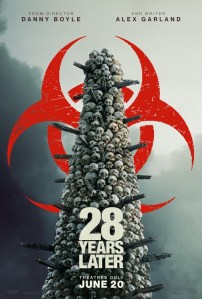 While not officially 28 years after its release in 2003, you’ll have to settle for only 23, comes a sequel to the zombie outbreak that kicked off a resurgence in zombie media in the 2000s. 28 Years Later is a far more experimental and meditative and genuinely surprising and surprisingly poignant sequel than I think many fans were expecting. They thought it was going to be more like a father/son (Aaron Taylor-Johnson, Alfie Williams) coming-of-age zombie hunt and weekend of survival. It is that, but it’s also a meditation on life, death, family, nature, and how we respond to grief. Director Danny Boyle returns, for his first film since 2019’s Yesterday, and screenwriter Alex Garland (Ex Machina, Civil War) returns, and together they provide a sequel that attempts to answer what society might be like growing up in this new dystopian world. The movie can get weird, with old movies and archival footage thematically mixed into scenes, Boyle’s camera in constant nervous anticipation, an active member of the hunt, and the use of an iPhone rig to provide Matrix-esque bullet time effects for zombie head shot splatter. Garland has also come up with some interesting zombie evolution over those ensuing three decades of development (granted I thought since the “zombies” were infected living people that you just had to wait them all out to die from dehydration). It seems like a father/son adventure thriller, and it’s quite good at being that, but then it transforms into something unexpected, giving mom (Jodie Comer) the spotlight as she confronts the reality of her physical and mental maladies. From there, the movie becomes this beguiling and thoughtful examination on grace and grief, on processing loss and finding a sense of stability in an unstable world. Ralph Fiennes appears late as a former doctor who seems a little crazy, the grave-keeper to an impressive monument built from thousands of human bones. It’s such a welcomed surprise for a movie replete with them, a movie that refuses easy categorization and wants to do something meaningful than just being a zombie action/thriller.
 Even more unexpected was an immediate sequel and continuation a mere six months removed from 28 Years Later‘s wide release. The Bone Temple is divided into two stories, both holdovers from the prior film. Spike (Alfie Williams), the son going on his own journey of self, has been conscripted into a weird and violent gang, The Jimmies, lead by Sir Lord Jimmy (Jack O’Connell), the twisted grown-up version of the child seen in the harrowing prologue to 28 Years Later. He’s a sadistic leader who also tells his followers he’s the son of Satan. Then there’s Dr. Kelson (Ralph Fiennes) who we initially thought of as menacing but becomes the most humane caretaker in this post-apocalyptic landscape. The two male figures serve as competing responses to unmitigated tragedy, one retreating to religion as a tool for meaning but it’s really exploitation and manipulation through violence and fear, and the other devoting himself to science and making the world just a little more liveable through empathy and trial and error. Dr. Kelson develops an unexpected friendship with one of the big Alpha zombies, “Samson” (Chi Lewis-Parry), after he discovers this behemoth, who was ripping spines out in rage fits in the previous movie, is seeking out relief through the doc’s morphine darts. Dr. Kelson ponders whether or not there is a chemical compound that could bring back the humanity to the infected. The difficulties with communication do not deter the good doctor, and these paths cross in a climax where the Jimmies come to think of Dr. Kelson as the Dark Lord himself. The movie is consistently interesting, further building out this new damaged world began in 28 Years Later. Nia DaCosta (Candyman, The Marvels) takes over as director and offers a more patient camera, forcing us to dwell in the moments, both horrific and moving. There are torture sequences, long demented monologuing, and questions over the tenacity of human connection despite incredible obstacles, and yet the movie is both more a straightforward horror-thriller than its predecessor and a more focused human drama about loss and holding onto one’s sense of dignity and empathy. It lacks the visual fireworks of Boyle’s style, and I found Sir Lord Jimmy to be more tiresome than interesting, but The Bone Temple is an effectively engrossing lateral sequel that slowly builds Garland’s world a little wider. Now I’ll actually have a third 28 Years movie to look forward to that hopefully won’t take 28 (or 23) years..
Nate’s Grades:
28 Years Later: B+
The Bone Temple: B
Share this:

Dust Bunny (2025)
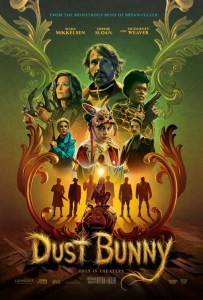 Bryan Fuller is one of those names in television that is spoken of like an institution, at least for geeks. The man is responsible for short-lived but beloved TV series like Dead Like Me, Wonderfalls, Pushing Daisies, Hannibal, and launching the new Star Trek Discovery universe as well as cracking the “un-adaptable” Neil Gaiman novel, American Gods, at least for its brilliant first season before he and co-creator Michael Green were jettisoned for cheaper alternatives. That’s the other thing about Bryan Fuller, he tends to wear out his welcome fast for such an eponymous show-starter. Whether it’s work habits or ego, or just butting heads with foolhardy execs, Fuller tends to get pushed out on his projects. That’s why a movie written and directed by Fuller has immediate and immense appeal. Here’s a singular vision from one of TV’s most unique creators, and he doesn’t have to fret about having to craft a season of storytelling. He just has to concern himself with 100 minutes of hopeful entertainment. Dust Bunny has a crackerjack premise, a great leading man, and some stylish flourishes and fun, and yet I walked away, after eight years removed from seeing a Fuller project, not feeling particularly swept away.
A ittle girl, Aurora (Sophie Sloan), hires a hitman (Mads Mikkelsen) to kill the monster hiding under her bed. Boom. Sold. Naturally, the jaded hitman who’s seen it all doesn’t believe the little girl. Now not only will he have to defend the little girl from a potential monster, he’ll have to fend off other hired guns and assassins trying to take out this kid because she “knows too much.”
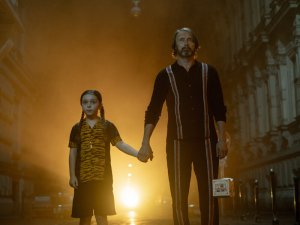 Given that hook, I thought that Dust Bunny was going to be a monster movie by way of a hitman movie, but really it’s much more of a glib and exhausting hitman movie with the idea of a monster until the final fifteen minutes of chaotic culmination. I thought there was going to be a much more compelling and charming relationship between the two characters, possibly forming a surrogate father/daughter relationship as they descend into a realm of danger even an experienced man of action is ill-equipped for. I thought Dust Bunny was going to be more of a Guilermo del Toro-style fantasia and instead it’s far more akin to those Tarantino ripoffs with a stilted attitude in place of stakes and originality. This is much more akin to flimsy style-over-substance dross like Gunpowder Milkshake or Polar (also starring Mikkelsen) than del Toro. This is far more of a hitman movie that occasionally remembers, oh yeah, there’s this whole fantasy/horror element that could make it stand out. There’s so much about our lead hitman having to worry about this little girl because she saw his face and can identify him. There are teams of other hitmen that want to bump her off, sent by his own handler, Laverne (Sigourney Weaver). As a hitman movie, it’s pretty dull because our hero is overpowered and under matched. At no point will you worry for his own sake, and plus, just sending disposable humans into the same apartment night after night is boring. I’ve seen those kinds of movies before, even the ones that are just self-infatuated style orgies of violence. What makes this movie unique is the freaking monster, and it doesn’t really take hold until the very end of the movie, not coincidentally the best part. At that point, Dust Bunny becomes a whimsical variation on Tremors, where the unwitting participants cannot touch the floor, lest they be eaten by a monster under the floorboards. It’s a lot harder to have your shootouts and fights while balancing on scarce end tables (what if the fantasy monster could really transform the floor into lava? Oh, the nasty possibilities).
If Dust Bunny was just an exercise in vacuous style, I might find some fleeting pleasures from it, but the whimsical tone takes the premise of an unorthodox fable and mutates it under insufferable irony. It’s the kind of movie that knows you’ve seen glib hitman movies before, and it’s playing into those expectations with an attempted ironic distance but instead it just comes across as annoyingly circuitous conversations. The pained banter became baffling as characters attempted to take what the previous character said and nothing while just pushing the conversation forward a millimeter. These are not funny exchanges. These are not examples of cutesy dialogue. It’s just maddening nonsense that runs in circles, and I found myself mentally tuning out whenever it kept repeating. For me, the dialogue was too irreverent for its own good.
 There’s a really engaging and imaginative movie on the outskirts trying to push on through. Having a little girl with a monster following her begs for further world-building and examination, let alone integrating the monster’s unique abilities and dangers. As it stands, all one has to do is stay off the floor during nightfall (a reintroduction of bedpans is an unfortunate must). Early on, it feels like the little girl is in real danger, as the monster literally lifts her bed off the floor and seems to try and shake her loose. Although throughout the daytime she still canoes around her lonely apartment on a giant hippo on wheels. I guess it’s a precaution or maybe she just wants to get better at apartment canoeing before nighttime when she really needs to make sure she can paddle. This is the last time you’ll feel she’s in actual danger. I wanted far less of the overtly stylish hitman antics and more of the perspective of a hitman thrust into a fantasy. Dust Bunny is a disappointing inverse, turned inside out, with a hitman movie with a different Big Bad. I’m not saying Fuller had to rely on staid fantasy storylines, like the girl is really some long-lost royalty to a hidden realm, never knowing her true identity and inheritance, and under attack from otherworldly forces wanting to usurp her throne. I mean I probably would have enjoyed that more, pushing our flinty hitman into entertaining fish-out-of-water fantasia rather than more hitman shootouts on repeat.
Dust Bunny was a frustrating experience for me from a creator that I frankly expected more from. Fuller’s always had a penchant for twee whimsy, genre blending, dark humor and the macabre, but I didn’t find his film debut nearly as cute and quirky as his television output. I found much of the tone grating and overly stylized, and while I’m sure the mannered directing is meant to better convey a fable, I impatiently grew tired of the minimalist sets, the repetitive deadpan dialogue, and the surprising lack of imagination. I wish the last act had been the whole movie. I can see fans of more malevolent 1980s children’s movies finding something to enjoy here, and over decades Fuller has certainly established enough of a fanbase to declare any entity a possible burgeoning cult movie. There are moments that made me reminisce about Jean-Pierre Jenuet (Amelie, City of Lost Children), but then I wondered what he would have done with this same premise and the comparison wasn’t so favorable any longer. I’m coming across too harsh because I wanted Dust Bunny to be much more given its premise and creative voice. There’s enough here that will qualify as passing entertainment for most viewers, especially for fans of twisted fairy tales. There’s just not enough here in execution to make me as eager for Fuller’s next feature film.
Nate’s Grade: C
Share this:

Avatar: Fire and Ash (2025)
 When Avatar: The Way of Water was released in 2022, it had been 13 years since a new Avatar movie, so the return to Pandora was a reminder about how immersive and captivating this world could be, and another reminder that writer/director James Cameron can deliver blockbusters of scale like few others. Now it’s been three years in between Avatar movies and the novelty is definitely missing. Fire and Ash feels in many ways like Avatar 2.5, a direct holdover of characters and plots languishing from the second film. Some of this continuity is a given considering it’s an ongoing series, but each movie should feel like it’s own complete story. Too many of the characters feel stuck in the same place we left them by the end of the second movie, which means it’s another sequel where Zoe Saldana’s Neytiri spends most of those three hours bereft and crying before getting into fighting mode in that last climactic hour. There’s a general sense of same-ness to this story, extending conflicts and character arcs from the second but forgetting to give them more to do. The Na’Vi teens feel disconnected from the larger storyline, off assembling aquatic allies. Primarily, Fire and Ash is the story of Spider (Jack Champion), the son of dead Quaritch (Stephen Lang), raised by stepdad Jake Sully (Sam Worthington), and pursued by the Na’vi clone of his biological father (also Lang). He undergoes a physical transformation that makes him the object of desire for the greedy humans exploiting the natural resources of Pandora. I just didn’t care about Sully child #5 (a.k.a. Spider) when he felt like a tag-along to the group anyhow. To base the majority of the emotional arc of the movie around him is a bold and unfortunately unsuccessful gambit. There’s also a flamboyant and unstable Na’vi antagonist played with magnetic allure by Oona Chaplin (Game of Thrones, Taboo). The character isn’t particularly interesting but the brash commitment of Chaplin and her high energy, especially in a movie where so many other characters are morose and dull, makes you draw a little closer every time she’s onscreen. Bringing the same villain back for a third movie in a row, while failing to explore the more existentially compelling questions of identity of a clone, is just boring. The visual spectacle of the world, the special effects, the different elements all mixing together into a stunning photo-realistic tapestry is still world-class and state-of-the-art. The plots of the Avatar movies have never been as groundbreaking as their special effects but they were serviceable, reliable, and sincere, and they followed plot formulas that worked. This time Fire and Ash feels too much like the cobbled together leftovers of the second movie, and with the longest running time of the series yet, the whole experience feels bloated and overburdened with tying up storylines and threads that felt mostly completed with Way of Water. This movie probably could have been condensed down into 45 minutes of additional footage for the second movie. Sorry, James, but this one was more listless than transporting.
Nate’s Grade: C+
Share this:

If I Had Legs I’d Kick You (2025)
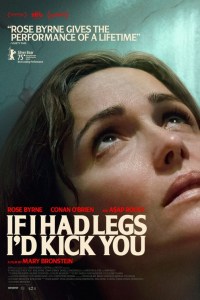
I have been told by numerous friends and other critics that If I Had Legs I’d Kick You falls in that dreaded entertainment zone of the “difficult watch.” These are usually made up of admired movies tackling challenging subjects in unflinching ways, movies that are easier to admire than love. I was girding myself to finally watch If I Had Legs (this will be the reference for the title from here out because, frankly, I’m too lazy to type out an extra three words every reference), I found it pretty despairing, especially for women, especially for parents of young children, and especially for those suffering or who have suffered through some degree of post-partum depression. This movie is a sensory immersion into the frazzled, anxious, and punishing existence of our heroine, just trying to catch her breath or get a break in a universe that seems cruelly engineered to only provide stressors. It’s a truly phenomenal movie giving bristling life to the perspective of writer/director Mary Bronstein (Yeast), with stylistic and surreal touches that reminded me of Charlie Kaufman or even Franz Kafka. The tragi-comic absurdity, as well as the unrelenting existential anxiety, is meant to provoke a primal, wince-inducing response, eliciting sympathy for the countless mothers coasting hour-to-hour looking for a little oasis of relief. If I Had Legs is one of those rare feel-bad experiences that I not only admire but I think I actually love.
Rose Byrne plays Linda, a forty-something woman being pulled in every direction. Her young daughter is suffering from a physical malady that requires her to have a feeding tube, and she needs to gain weight in order to have the tube removed, but the child can’t gain weight because she doesn’t want to eat, and this obstacle is compounded by the hospital telling Linda if the child doesn’t meet her goal weight, then it’s a reflection of neglect, and Linda herself will have to attend parenting classes. The child is also, let’s put this nicely, very high-maintenance and attention-demanding. There’s also Linda’s husband who is away at sea and generally unhelpful and curt whenever caught on the phone. Linda also has a therapist (Conan O’Brien) who is likewise generally unhelpful and seems disdainful even talking to her. Then the roof of her apartment explodes with a torrent of water, and now Linda and her daughter have to live out of a local motel, further exacerbating all of their personal problems. It’s forty minutes in when the movie reveals Linda’s profession and I genuinely gasped: she’s a psychiatrist with her own very demanding clients to counsel. It’s not easy being Linda, but then again, there are plenty of Lindas in the world just waiting to catch a break.
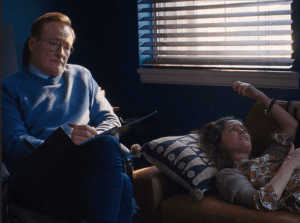
This movie is a lot. It’s a lot to process, and it’s very deliberately using disorienting creative decisions to test your limits. The sound design is an especially effective dynamic that raises anxiety. Bronstein never shows you the face of Linda’s daughter, at least not until the very end of the movie, and there’s a stark reason for this. Our identity is Linda, and this voice that keeps coming in, frequently interrupting, occasionally screaming, and often compounding the stress of her mom, is designed to be viewed as a primary source of agitation. We don’t see the daughter because in this vision she doesn’t exist as a character but more as a burden. We view the child as Linda perceives her. There’s a trying sequence where Linda’s client leaves her baby behind and vanishes, forcing Linda to cart around a crying baby while frantically looking for the mother. The soundtrack of a crying baby is like a direct line to your nervous system that something is wrong and all you want is for the child to be soothed, but it keeps going for nearly five minutes straight, with that screechy wailing eating away at you one cry at a time. I can readily imagine my wife watching this movie and just turning it off after ten minutes.
The movie is packed with these creative decisions, all designed to make Linda’s perspective that much more empathetic and exhausting. For those tut-tuting Linda viewing her daughter as a burden, I’d ask for some grace, but also the movie doesn’t withhold criticism from its protagonist. She can be selfish as she’s spiraling, even seeking comfort in bad places. It would be harder to endure if the perspective was purely Job-like, wherein Linda relentlessly suffers because the universe is indifferent, or God is unhappy and spitefully targeting this poor woman. It does feel like everything is going wrong, but that’s also because we’re anchored in Linda’s perspective. Seeing things from her daughter’s perspective would make for a fairly different movie, but that’s not what this movie aspires to be. It’s not meant to be balanced, it’s meant to convey a very specific viewpoint, and that perspective feels like everything is stacked against you. In one key moment, what my pal Eric Muller dubbed Byrne’s “Oscar clip moment,” she unloads on her therapist and desperately pleads for someone to just tell her exactly what to do, to have responsibility and uncertainty stripped from her life. She wants a clear direction and the relief of knowing what to do, something that is rarely so clear in the adult world. It’s hard not to feel for Linda in the movie unless you’re actively trying to reject the vision of the director. If I Had Legs is a movie deliberately designed to be overstimulating and upsetting, so it’s going to be a select audience willing to wallow in the discomfort for the insight offered. I can see plenty saying, “Yeah, I live this, so no thanks.” I get it. After becoming a parent myself, my tolerance for emotionally-draining media certainly lowered. However, I think there’s ample artistic accomplishment to be savored with If I Had Legs that is worth treading the discomfort.
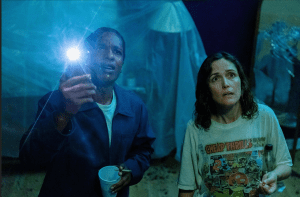
Byrne has been playing around the world of comedies since 2010’s Get Him to the Greek (a peak candidate for “most canceled cast” of the modern era, Byrne excluded) that I forgot how great she can also be in dramas. This is my favorite female performance of 2025. She is astounding. It’s smart to hire an actress of Byrne’s caliber, someone capable of finding the dark humor and exasperated guffaws of a life that feels like an assembly line of slaps to the face. The camera also rarely leaves her orbit, tacitly tying our sympathies, and it takes a lot to command the screen knowing your face is often going to be the measured focal point of every reaction to every slight and surprise and shock. She is the face of beleaguered motherhood, and it’s hard not to relate to at least a dozen moments of this nuanced and transcendent performance.
I don’t believe that If I Had Legs is unforgivably bleak; it’s certainly intense and agitating, but in order to make my finer point I need to spoil the end of the movie. However, dear reader, I truly don’t believe this is a movie that can be ruined through spoilers. So much of its appeal is the execution of such a specific vision, and to give one’s self over to that voice and its effect cannot be diminished through prior knowledge. It’s about the experience. Consider yourself warned, folks. Throughout the movie, the hole in Linda’s apartment ceiling becomes a sort of metaphor for her experience, an empty void. She dreams about losing herself inside the void, giving herself to the emptiness, and it’s easy to make a connection to darker impulses of self-destruction. This comes to a head at the very end, when Linda literally tries to run into the ocean to escape the troubles of her life, and the sea won’t have it, repeatedly throwing her back onto the shore. Even her attempt to escape ends up in tragic-comic slapstick. But it’s here where the movie switches gears, and we now see Linda’s daughter for the first time just as Linda is promising to be better for her. This changing of perspective effectively communicates Linda seeing her daughter, actually seeing her as a person rather than a nuisance, a peripheral voice of need and stress. The movie ends not on the harried breathing of Linda trying to calm down but on the hopeful smile of her daughter, and it might be misplaced optimism after a movie that feels plenty pessimistic, but I viewed this as a meaningful change. Even after all her struggles, even after her mistakes, there’s still the desire to do right for your loved ones, to improve.
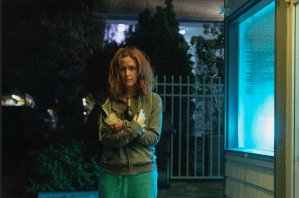
I originally wanted to do a double review, pairing If I Had Legs with Die My Love, the newest Lynn Ramsey movie that explores the inexplicable loneliness of post-partum depression with Jennifer Lawrence trying to reconnect with her body, her sense of self, and the world as it was and is. I felt beforehand that the movies would have the connecting themes of the difficulties of motherhood, and they do, but I feel both movies are so tonally different in approach and execution that they deserve to be judged separately. If I Had Legs I’d Kick You might just be that hard-to-stomach film-experience so many have warned about (don’t expect the hamster to last long), but it’s such a transporting, exhilarating, and deeply humane vision executed to a remarkable degree of vibrant life. It’s personal and yet easily empathetic. It’s an unflinching and unsentimental portrayal not just of motherhood but of the difficulties of maintaining sanity in a world that often feels indifferent to your needs. It’s a difficult movie to watch, yes, but that doesn’t mean it lacks value and impact. If you’re brave and willing to wade through the deliberate discomfort, If I Had Legs is a remarkably good bad time at the movies.
Nate’s Grade: A
Share this:

Five Nights at Freddy’s 2 (2025)
 I wasn’t a fan of the original 2023 movie based upon the insanely popular video game series that serves as an entry point into horror for kids. It didn’t work for me but I thought fans of the series would have fun watching the characters come to life in live-action. Now with the sequel, I don’t know anyone that could enjoy this dreck except for the most diehard of the Freddy’s fanbase. I’ve watched the movie and I couldn’t understand it. I read the Wikipedia summary and that didn’t clear it up. So much hinges on so many characters having peculiar responses and relationships to what are… killer animatronics powered by the spirits and literal corpses of murdered children. Why is this pizza parlor even still standing? These robots went on a killing spree in the first movie, and yet this lonely little girl misses her “friends” and runs away to see them again. This isn’t E.T. here, it’s a weird killer robot horror movie that seems to be making up its lore and rules as it goes, like one unending “yes and?’ improv game you’re desperate to tap out from. I guess there’s more killer robots this time, and some unintelligible distinction between the good bad robots and the really bad robots. I don’t know. I gave up trying to comprehend what was happening and felt like maybe I could just try and enjoy the minimal PG-13 scares and tension. The animatronic designs are solid. Wayne Knight (Seinfeld) appears as a villainous robotics teacher. There’s a marionette character that’s kind of sinister to watch. That’s about it, folks. It’s a fairly nonsensical waste of 100 minutes, and unless you’re steeped in the lore and history of the series, you too will wish that this town would just set fire to the whole parlor.
Nate’s Grade: D+
Share this:

Oh, Hi! (2025)
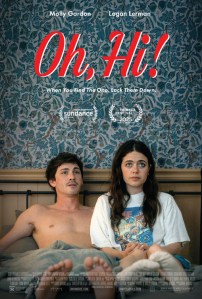 This feels like a charming rom-com by way of a 2010s no-budget mumblecore character-centric dramedy. Oh, Hi! follows a couple (Logan Lerman, Molly Hopkins) on a small vacation to the country to stay at an Air B&B farmhouse. They discover a closet full of bondage gear and get silly with it, strapping Lerman to the bed post. After their fun, it becomes clear there’s a dramatic misunderstanding between the couple. She thought they were an official exclusive couple. He thought they were non-exclusive and he says he’s not ready for any commitment. She leaves him in cuffs attached to the bed and promises that, in 24 hours, she can convince him to agree to be official boyfriend and girlfriend. I thought Oh, Hi! was going to be one kind of movie, maybe a kinky sex comedy (the comedic version of Gerald’s Game?), but it’s really more of a quirky relationship drama by way of kidnapping. The tone is balanced so you never feel the characters are at great risk, but it’s also hard to fathom how this turn of events will be an unorthodox relationship-builder (definitely a scenario that would play very differently if the genders were reversed). Oh, Hi! becomes more of a vehicle to reveal whether this couple should stay together or not, with Hopkins unleashing all of her romantic neuroses as a cathartic deluge. There is an organic escalation as more characters get drawn into this anxious scenario, but the movie loses its comic momentum in the last 20-30 minutes. There really is only so far you can go with this scenario, and when characters are reaching out to witchy spells to instill memory loss, we’re probably tapped out of ideas. Hopkins, who also co-wrote the script with director Sophie Brooks (The Boy Downstairs), is a charismatic find who elevates the comedy while still finding room to ground it in emotional vulnerability. Lerman can only do so much tied to a bed for most of the movie. It’s a fun little movie that finds some natural and effective comedy from its absurd kidnap-for-the-sake-of-the-relationship premise but it ultimately stalls out. Still, Oh, Hi! is full of small pleasures for a good while, from its ensemble, to its surprises, to the ever-shifting dynamic between the couple, and may prove worthwhile even for the commitment-phobic.
Nate’s Grade: B-
Share this:

Die My Love (2025)
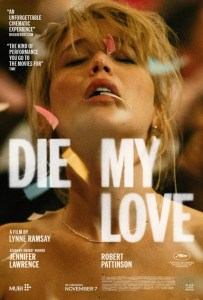 A new Lynne Ramsay (We Need to Talk About Kevin) movie should be a cause of celebration. She’s only directed three movies since 2002 and each is worth every ounce of your consideration. They’re typically genre-defying triptych character studies of people with deep reservoirs of pain and isolation, and so her latest, Die My Love, is a natural fit as it explores one woman’s headfirst descent into post-partum depression. Jennifer Lawrence plays our lead character Grace, a vaguely defined “writer” transplanted to rural Montana, living in her husband’s (Robert Pattinson) family’s old home, but in reality confined is the better term. Ever since her child’s birth, Grace has felt disconnected; from her body, from her feelings, from her husband, from her sense of self. This is a showcase for Lawrence to unravel in a stylistic manner that could feel deeply authentic to millions of women post-birth. She’s struggling to feel something as strongly as she used to, to lift her head above the stormy waters of depression that has engulfed her, and this can lead to some dangerous and impulsive outbursts, like throwing herself through a glass door just to feel something. Her husband is no help, who leaves for long stretches of time on business and tries to act like nothing’s wrong (example of reading the situation entirely wrong: thinking this woman needs a puppy – note, it will not end well for the dog). He also may or may not be having affairs with other women, it’s hard to say what exactly is literal reality here. Ramsay and her co-screenwriters have elected to make a movie more about evoking the feeling of our lead’s alienation and confusion. It’s less about plotting, which unfortunately also hampers the characterization, keeping Grace more of a symbol for accessibility. What she’s going through feels vivid and authentic but she rarely feels like a fleshed-out character rather than an archetype to examine. The same with the supporting roles, including Lakeith Stanfield as her neighbor who she may be fantasizing about or more, it’s hard to say. There’s plenty of unspoken commentary on mental illness and the unfair expectations thrust upon women, especially new mothers, but much of Die My Love feels like winding up Lawrence and setting her loose to make a scene. Make no mistake, she is very very good at being disconnected and angry and raw. There are some bold artistic choices throughout but ultimately, because I didn’t feel connected to the characters, by the end I felt more exhausted by the emotional tumult rather than gaining better awareness of her plight.
Nate’s Grade: C+
Share this:

Blue Moon (2025)
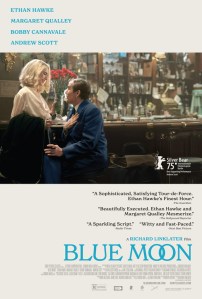 Ethan Hawke is transcendent in Richard Linklater’s Blue Moon, a glorified play set on the opening night of Rodgers and Hammerstein’s Oklahoma! on Broadway, except our star is Lorenz Hart (Hawke), the former lyricist and creative partner of twenty-five years for Rodgers (Andrew Scott). He’s nursing his gripes and hard-won insights at Sardi’s, commiserating with whomever might listen. This is a man who would talk himself hoarse. It’s a great showcase for Hart to expound upon his life, perspective, and desperation, whether it’s re-teaming with his former partner, hoping to get ahead of his alcoholism, the reason for Rodgers’ split, or the hope for love from a college girl (Maragret Qualley) who he’s so clearly projecting confused infatuation upon. Hawke is sensational as the troubled, egotistical, catty, funny, and clearly flailing musical genius who has accomplished so much but is so restless. There is so much to this performance, and each new conversation with someone at this bar feels like it’s unveiling a new dimension to our understanding of Hart, who can be convivial one moment and lacerating the next. I could listen to him prattle for hours. The subplot with the college girl infatuation has some obvious Lolita overtures, though it’s less lecherous middle-aged lust than an over-the-hill artist trying to feel important and wanted by somebody, even if he’s abusing his teacher-student relationship to achieve this (Hart was dealing with his repressed sexuality on top of everything). I found it illuminating in how someone as creative and cutting and incisive as Hart could be taken by his own self-delusions. Linklater lets the story take center stage and gives his stars the needed room to shine. This is that rare character study that finds its perfect lead and the best creative team to bring it to life. Blue Moon is one of the best movies of 2025 and I feel that Hawke’s career-best turn is the best male acting of the year.
Nate’s Grade: A-
Share this:

Nuremberg (2025)
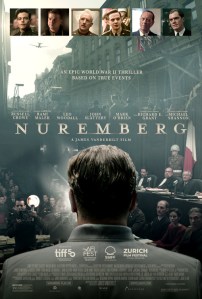 Taking an Oscar-winning courtroom classic and eliminating 40 minutes sounds like a surefire gamble, and while Nuremberg has its heart in the right place, bringing Nazis to justice, it cannot help but feel like a more shallow and rushed version of 1961’s Judgement at Nuremberg. That’s not to say different movies cannot exist from the same source material or true story, even in the shadow of famous stories. However, this version feels strangely perfunctory, condensing the worldwide judicial response to the horrors of the Holocaust into a simplified buddy movie about a psychologist (Rami Malek) who has to learn the hard way that maybe, just maybe, Hermann Goring (Russell Crowe) might not be trustworthy. It’s frustrating that the depth of this story and the plight of so many is reduced to one guy getting too close to his subject as well as having to learn the most obvious lessons about applied evil. Also, the culminating courtroom showdown, where so much hangs in the balance and Goring has been hyped as the most of challenging of cross-examination opponents, and it all resolves so easily, with a different prosecutor essentially using a cheat code to undo Goring’s pseudo-intellectual front. It’s quite a lot of buildup for a, “Wait, that’s it?” response, and much of the movie follows this same disappointing route. The acting is relatively good all around, with Crowe especially good as a chummy narcissist, and the production quality is sufficient to recreate its post-war period, but I couldn’t help but feel that I was missing out on a richer story. It’s so flattened out and self-important with its limited details to actually satisfy. The ending tries to draw a direct line to Trump today and I don’t quite know if it’s done the work. Nuremberg is one of those Important Movies that garners early Oscar buzz on paper, and then when people actually see it, falls away as an also-ran, mostly because it was missing a few too many important elements to resonate. It takes 130 minutes for Malik to learn that Nazis might not make good friends. You’ll probably know that already.
Nate’s Grade: C+


You must be logged in to post a comment.