Blog Archives
The Craft: Legacy (2020)
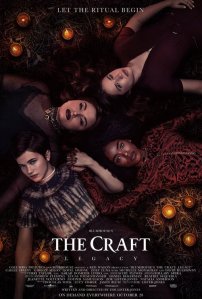 I don’t know who this new 2020 Craft is intended for and I don’t think the movie knows as well. If you’re a fan of the 1996 original, which has developed quite a reputation for many millennials, then I think you’re going to be relatively disappointed with this remake/reboot/sequel, whatever Blumhouse is calling this. By that description it should be evident that The Craft: Legacy has a bit of an identity crisis. It’s not exactly a remake because it retains so little from the original except in its witchy teenage premise, it’s not exactly a reboot because it doesn’t come together on its own for a new identity, and it’s not exactly a sequel because the only tangential connection to the original is tacked on in the literal final seconds of the movie. If it was trying to please fans of the original, it’s too lacking, and if it’s trying to chart its own course for a new generation of fans, well that doesn’t work either. As a result, it’s another PG-13 remake of an R-rated move that feels like it’s playing to a different crowd.
Lily (Cailee Spaeny, Bad Times at the El Royale) is the new girl at school. Her mother (Michelle Monaghan) is remarrying Adam (David Duchovny), a popular motivational speaker with three older sons of his own. She befriends a group of diverse teenagers when they suspect Lily might have the potential for special gifts. The girls try sending Lily a psychic message and then ask her to join their fledgling coven. The four of them combine their powers and promise to use their synchronicity for good to push back against the patriarchy.
 That narrative uncertainty of writer/director Zoe Lister-Jones (Band-Aid) seeps into every moment of the 97 minutes. You get a sense that Jones had a central topic she wanted to provide commentary and then a checklist of “witch stuff” to include that she wasn’t sure about. The activation of the powers in the original related to outcasts grabbing a power denied to them, getting even, going too far, learning some lessons, and then our protagonist having to topple her new friends and the danger they posed thanks to their new powers. With The Craft: Legacy, the magic feels like an afterthought to changing hearts and minds. We only really see one spell and its lengthy outcome where Lily makes her high school bully woke, and he stays that way and joins the girl group as their sensitive pal. This is, by far, the most interesting part of the movie, and yet there’s a larger implication that the movie ignores because it would place our heroines in an uncomfortable light. They’ve reformed the bully into a model citizen of a modern mature man who can admit his vulnerabilities, but they’ve also robbed him of agency and free will. Is this version of him what’s really hiding underneath, or is he simply being manipulated by their spell? This subplot gets more attention than any of the other witches combined. I don’t know anything about the other friends in the group, besides they take their witchy duties seriously and one of them is trans. They get assigned elemental powers later (Earth, Fire, Wind, Water) and that is more definite characterization than anything else. If you asked me what their names were or their defining personality traits I would be stumped.
After last year’s Black Christmas remake, it’s peculiar how closely The Craft: Legacy is following a similar formula. I applaud the diversity behind the camera and having female directors remake these stories for a new time and a new audience, and the concept of toxic masculinity as a threat to all women is potent and provides plenty to work into a horror/thriller dynamic. Yet Black Christmas had to go one step further by saying the evil fraternity that was preying upon women was secretly mind controlled by an evil magic goo of evil. It lets them off the hook. Now with The Craft: Legacy, we have an obvious villain as a symbol of toxic masculinity, and because he’s so obvious I kept waiting for him to be a more insidious foe, manipulating young men into a warped way of thinking about strength and virtue. However, this doesn’t happen. The antagonist feels like any generic abusive husband on any disposable Lifetime original TV movie. The topic doesn’t feel explored or nuanced for its big theme or cleverly matched up with the iconography of horror for extra genre commentary. What about the different sons? couldn’t they reflect different stages of his influence? Or the young and more innocent son, couldn’t he be a target of reprogramming? The movie doesn’t give us anything to really chart. It feels like much must have been left behind through several edits. If Jones and her team wanted to use their movie to make a pertinent statement on toxic masculinity, I was hoping for more than a relatively obvious, “It’s not good.” Even the Black Christmas remake gave its theme more consideration than this and talked about its generational impact.
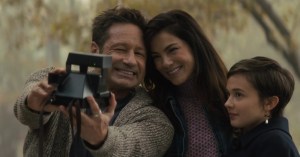 In the original, each member of the foursome has a backstory, a personality, a central conflict before and after developing her powers. While the conclusion was like Wicca X-Men, the rest of the movie was an effective high school drama with relatable characters. They were Catholic schoolgirls rebelling against their school and their families in the 1990s by practicing witchcraft. It was a statement. Now, the girls practicing witchcraft in a regular school during modern times just feels like an accepted experimentation from a culture that has become more tolerant, and that’s fine, but that means the movie has to provide other avenues to make new statements. The lackadaisical response to the supernatural really harms the movie. It makes it feel like the hook could have been anything. If the characters are given great power, use it sparingly, and then decide they might not be responsible enough so soon after, that’s simply boring storytelling. That’s the equivalent of a man finding a wish-granting genie, and then after the first wish where he asks for new pants he decides, “Oh, too much for me.” This is what I mean by The Craft: Legacy being too timid about being a supernatural horror thriller. It’s got the feminist perspective you’d expect from the underdog characters gaining powers, but it’s lacking a fundamental understanding or appreciation of its genre. It’s mostly confined to multiple nightmares and the occasional jump scare. The concluding good powers versus evil powers face-off is so awkward and cheesy that it deflates any good will earned.
The Craft: Legacy is a perfunctory remake/reboot that doesn’t seem interested in its characters, in its supernatural horror aspects (a sleepwalking brother that’s used as a jump scare and never explained?), or even in the exploration of its major theme on toxic masculinity. There isn’t much in the movie that is outright bad but there is nothing that shines either or proves to be memorable. The 1996 original isn’t exactly a genre classic but it looks so in direct comparison to this flat rehash.
Nate’s Grade: C
Share this:

Vampires vs. The Bronx (2020)
 Take Attack the Block and mix with The Lost Boys and you get a perfectly enjoyable B- kind of fun B-movie about a group of Bronx tweens combating blood-suckers gentrifying their neighborhood, and vampires too. It’s a pleasant experience that hankers back to enjoyable 80s ensembles and it maintains a sweetness without being sappy and an edge that feels appropriate for its age-range without getting too heavy or too simplistic. We follow our core characters as they investigate the would-be vampires, uncover their real estate schemes for the neighborhood, and then plan how best to thwart them. It’s a reliable formula but it works. I enjoyed Shea Whigham (Kong: Skull Island) as the vampire middleman, and I enjoyed how his own character arc as a subservient villain is tied into another teen’s arc about not following in the steps of his criminal older brother and rejecting people who only want to use you. That’s smart writing, finding room to draw parallels and connect the personal to the thematic. The lead kids all have their own personalities and problems and I enjoyed spending time with them as they bonded, bickered, and bandied together as a team. Their chemistry made them feel like real friends. The horror doesn’t really ever approach being scary or intense; when the vampires are in full teeth-baring mode, they seem more like the goofy, cheesy, cloaked figures from the TV soap Dark Shadows. It also feels like the movie runs a bit out of steam as it carries on into its final attack/assault on the vampire’s nest. Still, Vampires vs. The Bronx is a funny and light-hearted 90 minutes with likeable characters and an enjoyably relaxed supernatural caper. It’s not going to be too deep but you can tell the filmmakers care about these characters, the film’s genre influences, and telling an accessible adventure to kids.
Nate’s Grade: B-
Share this:

Evil Takes Root (2020)
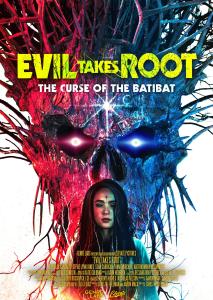 A new horror movie was filmed around Columbus, Ohio by a fledgling studio, Genre Labs, and a group of filmmakers who have made other successful Ohio thrillers and is now available for digital viewing on multiple platforms. Evil Takes Root is the most impressive looking and sounding Ohio indie I have seen yet. I mean this in all sincerity when I say it “looks like a real movie.” Even the poster art looks snazzy.
Dr. Thane Noles (Sean Carrigan) is still mourning the loss of his wife Mandy (Constance Brenneman) from mysterious circumstances (vague voice mail, hanging from a tree, black eyes, etc.). His daughter Sarah (Stevie Lynn Jones) is struggling with her grief and befriends a girl, Christina (Reagan Belhorn), going through a similar loss. Christina is desperate to bring her mother back and is doing the bidding of a supernatural presence to make this wish come true. The result is that Sarah becomes the vessel for this evil spirit, a Baitbat, a mythological figure from Philippines’ culture. Felix Fojas (Nicholas Gonzalez) is back in town to investigate the death of Mandy, the woman he still loves after an affair many years ago. Felix is a professor and a big believer in the supernatural, and he strongly believes evil is present and busy in Ohio.
 The production is glowing with professionalism that we associate with larger-budget studio ventures. Sure, you still slightly sense its lower budget in how much bang for your buck we get onscreen, but there are more than enough moments that impressed me from the technical aspects of moviemaking. The sound design is sensational. This has often been the biggest hindrance with local indies, and wow what a difference a professional sound design team can have on a horror movie. The creeping and scratchy noises of the Baitbat and its demonic intonations are unsettling and worthy of a few jumps. A great sound design team can goose any moment into being scarier. The spooky set pieces on their own weren’t imaginative or innovative but the sound design and photography elevated them. On the other side, this is a great looking movie, even with the drained color wash I usually dislike. Director and co-writer Chris W. Freeman (Sorority Party Massacre) knows how to make a horror movie with plenty of pleasing visual compositions by cinematographer Roy Rossovich (Union Furnace). Freeman is ready for a bigger stage, folks. There are a few instances of sweeping camera movements that made me go, “Whoa.” One involves a chase scene in the woods where naked witches run from their bonfire into the dark of the woods to kill an interloper, and the camera moves over the terrain with smooth velocity, and the way the fire illuminated the bodies as they went from one light source to another is simply stunning to watch. If it wasn’t for the topless women, I would expect a shot like that to be in the trailer. The focus levels, the way the camera movements enhance the frame and tension, even the use of a rain machine for mood, it’s all superbly impressive. The editing by Jason Heinrich and Jamie Marsh is great as well and makes the movie feel even more indistinguishable from Hollywood genre fare.
That impressive level of professionalism doesn’t extend to the story, sadly. Evil Takes Root is a very generic story told with very generic characters. I kept waiting for little moments to round them out, little moments to make me think differently about a character, to bring their conflicts into a new focus or coalesce their themes into the obstacles they’re confronting. I was simply looking for more personality than the five stages of grief at work. I can tell you what the characters do, as well as their larger plot designations, but I can’t tell you about who they are as people. There really isn’t one thing terribly interesting that any character does onscreen. They go about the discovery of the supernatural haunting, and then it’s concluded in a way that is anticlimactic in how easy it seems to be resolved. I read on another review that, according to the director’s commentary, that the movie underwent a troubled production and worked to fit footage that was shot many years apart. In that regard, it feels like a consistent product. I can’t see any obvious seams that show I’m watching a movie with significant scheduling gaps. Congratulations. But it also feels like any other small-scale Hollywood genre horror thriller, something like 2009’s The Unborn. Do you remember The Unborn? Do you remember it actually co-starred Gary Oldman? All that technical acumen put toward a mediocre story overstuffed with redundant characters (more on that below) and it’s a shame. The spooky set pieces are too short-lived and lack anything particularly memorable as well. Too much about this movie makes it burdensome to attempt to remember because it’s skating on generic and familiar tropes without leaving its stamp.
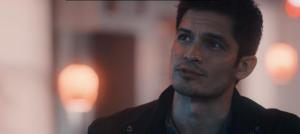 This is disappointing considering I haven’t really seen too many American horror movies tackle the mythology of the Philippines. There must be plenty of fun choices to select for a big screen fright fest and for a majority of Western viewers, it would be a new kind of monster. I desperately wanted to learn more about the Baitbat and what made this creature unique. However, we don’t even know what this malevolent creature is until literally the last ten minutes, and I have no idea why the filmmakers held that from the audience for so long. The Baitbat is the lone thing to better help separate this movie from the glut of other possession/demon movies, so I don’t know why you wouldn’t make it more of a feature and try and tap into that potential and history. The viewer needs to know specific rules related to this spirit and it’s only a hasty exposition drop at the very end where we learn what the spirit is and what it wants. Imagine The Exorcist if you never knew what was going on with Regan until the last ten minutes. The Baitbat is our chief antagonist. We need to know more and earlier in order to make the movie more interesting. The tree root-tenatcle design of the creature is creepy and lends itself well to low-light silhouettes, which makes sense why it was chosen for a cost-conscious production. Other wicked cool Philippines monsters deserving of horror spotlights include a manananggal, a creature that separates its torso to fly, and a tikbalang, a creature with the head of a horse, the body of a man, and the feet of a horse.
There is a shocking amount of redundancy in this story best exemplified by the glut of characters. We have two grieving fathers raising teenage girls, we have two men who loved the same woman who was killed in the opening scene, we have two spiritual figures trying to combat evil possession, we have two teenage girls struggling with their loss of their mothers, we even have three authority figures (doctor, cop, pastor) all inserting themselves into this strange case. There’s so much crossover with these characters and their comparative stories that I’m quite surprised the filmmakers didn’t do some serious collapsing to better prune their narrative. If you’re going to have such character redundancy, you would think you’d highlight their parallel journeys as well as whatever can separate them. This is done to some extent but the differences are usually superficially one-note and never really affect the plot. Take for instance the commonality between Felix and Dr. Thane Noles. Felix was the “other man” in an affair and never lost his feelings for Mandy, though she lost hers for him. Felix blames himself for Mandy’s death but he’s still hung up on her after nine years since their tryst. A smart screenplay would really dive into this character dynamic, two men who shared the love of the same woman, but each should be able to provide insight into creating a bigger picture of this woman. The kind of woman she was with Felix should be different than who she was with her husband, not necessarily better but different. This would then provide a bridge for both men to find a level of understanding through these trying circumstances, not bonding per se but each discovering a little more about the woman they loved, getting to learn something new in her absence. Unfortunately, the film leaves all this drama unfulfilled, using the shared love as merely an excuse why Felix sticks around and why Dr. Noles doesn’t quite like him. Why do we need two spiritual warriors too except for maybe some sort of Exorcist homage? Make these character points matter more.
 The same scrutiny could be applied to both daughters as well. Why do we need both girls vying for screen time and going through the paces of the same story? Because of the juggling, they drop out for long stretches of the movie’s 95 minutes, like right after Sarah gets possessed. You would think that lost time experience, as well as her involvement in a murder, would be an enticing thing to further explore. You would think a spirit taking over her body and getting more oppressive would be a natural escalation with urgency to watch. We’d witness Sarah freak out as she wakes up from more and more shocking behavior. It’s an easy story because it makes sense, watching our possessed schoolgirl lose her mind and body. However, Evil Takes Root only tags in Sarah when it wants to, and this means her ongoing development as a demon vessel is curiously left underdeveloped. In contrast, Christina is immediately the more interesting character because she has a hearing disability and a lingering resentment over her father. Christina is even willing to explore with dark arts to bring her mother back from the dead. Dear reader, I ask you why can these two characters not simply be combined? If one girl is stepping into the supernatural, why not have her as the own affected? Why do her actions need to be carried out on a different character who has a similar back-story but who happens to not personally involve the supernatural to try and bring her dead mom back? Why have Sarah volunteer at a hearing-impaired school when we could just follow Christina at that same school from the point of view of someone who is already hearing impaired? These are the central relationships and characters and yet they could have been streamlined or retooled for more concise and developed drama.
Evil Takes Root is a horror movie that makes me feel stuck in the middle of praise and shrugging. It looks and sounds like a professional movie with real technical acumen, but it’s also a lot of effort to tell a deeply generic story with deeply generic characters and no standout set pieces. The sound design, editing, cinematography, and spindly special effects are impressive and seamlessly blended together. The monster needed more screen time. Nobody should be ashamed to have this movie on their resume, though the screenwriters (the director and the producer) might not feel that same degree of pride. Perhaps the mediocre story is a result of the production problems trying to make dispirit pieces come together into a meaningful and cogent whole. I cannot say. Whatever the reasons, Evil Takes Root is a very good-looking yet methodically generic horror movie.
Nate’s Grade: C+
Share this:

The Babysitter: Killer Queen (2020)
 I very much enjoyed 2017’s The Babysitter from the very start. The characters had such vitality to them, Samara Weaving (Ready or Not) gave a star-making performance, and it was a wild ride while also having an emotional core with the relationship between the babysitter and her charge, a designated Satanic sacrifice. It was silly, clever, but also satisfying with its character dynamics, and it proved successful for Netflix so they felt, well, why not do it all again? The Babysitter sequel, subtitled Killer Queen, has a strong whiff of desperation trying to awkwardly rekindle the good times. The original writer, Brian Duffield, is not here as a writer but returning director McG is one of the credited writers, which made me wary. Sequel-itis plagues the story as our surviving teen Cole (Judah Lewis) gets into ANOTHER tight spot with ANOTHER group of Satanists looking to sacrifice him to make their dreams come true, and it also happens to also include the SAME supporting villains from the first movie. Even the cheeky onscreen titles go, “Again?!” Why must these killer Satanists only obsessed with this one specific kid as a sacrifice? Diversify your options, folks. It all feels more of the same but just not as good, not as memorable, and not as entertaining. It’s a low-investment movie, something where your ceiling of demands is already pretty generous, so if you enjoy comically over-the-top gore then there are a few moments that might make this sequel palatable. It’s a movie with a “so what?” attitude, adopting a flippant nihilism that makes the attempts at drama a little more forced and inauthentic when they occur, not that the comedy is much better outside the splatterhouse violence. The ending is also rather anticlimactic because it simultaneously involves a deus ex machina while also finding a way to be derivative of another very memorable ending of another Samara Weaving movie. I didn’t think a sequel was needed, and I wasn’t expecting much from a sequel, and I got about what I was expecting. The Babysitter: Killer Queen is a fast-paced and amenable work of cinematic junk food, a genre movie that might have enough genre elements to prove tasty, but by hewing so close to the original, Killer Queen feels more imitation than imagination, and it’s clearly inferior to the original.
Nate’s Grade: C+
Share this:

Mulan (2020)
 The new Mulan looked like something I’ve been begging for in this surging era of live-action Disney remakes, namely something different. I don’t need inferior live-action versions to shorter animated classics, and as Disney enters into a more modern trove of remakes, the courage to adapt becomes noticeably less. There’s a reason the 2019 Lion King was simply a sludgier, superfluous version that was beat-for-beat the same, and it’s called $1.5 billion dollars worldwide. People want their nostalgia as they remember it, thank you very much. The Mulan remake looked to be taking a different route; it eliminated the songs, the comic relief sidekicks, and overt supernatural characters. It was going to be more serious, more mature, and more action-packed, and I was all for it. The release was pushed back several months due to COVID and finally lands on Disney+ but at an extra cost. I would advise fans to wait. This new Mulan 2020 isn’t worth your time and it’s certainly not worth an additional $30 to be disappointed by.
Mulan (Yifei Liu) is a young maiden in old China who has trouble fitting into how society says a woman should behave. The Emperor (Jet Li) orders all families to supply one male into the royal army to combat Bori Khan (Jason Scott Lee) and his powerful witch, Xianniang (Gong Li). Mulan takes her family armor and poses as a man to take the place of her ailing father. She wants to serve but she’s also hungry for adventure, and over the course of her training, she will come to fully understand her real power.
 I knew within minutes that this movie was in trouble. In a flashback, we watch young Mulan chasing after a chicken, not listening to her father, causing havoc and consternation from neighbors, but then she effortlessly climbs to the roof of her neighborhood and then, as she falls off, is effortlessly able to recapture her balance and land perfectly like she was Spider-Man. From there, the first act tells us that Mulan is not just a super-powered being of high chi (think midi-chlorians and The Force) but also potentially the Chosen One (like Anakin Skywalker) and she must hide her real power to… not bring disgrace to her family? I’m sorry but this makes little sense. I understand the oppressive cultural expectations for women at this time and how women’s real value, as judged by their society, was through marriage and child-rearing. However, we’re now in a world of magic where living super-powered beings walk among us (mutants in X-Men), but rather than valuing this, it’s shunned because she’s a girl? That seems even more preposterous to me. The screenplay followed the Captain Marvel feminist theme and it’s about a woman finally coming into her own power, shunning the restraints, and embracing her full potential against the wishes of frightened men. If after reading all of this that sounds like a good start for a movie, let alone a live-action remake of Mulan, then have at it, dear reader. For me, this began as a thematic and tonal mess that didn’t get better. By making Mulan a super-powered being it eliminates her relatability and the stakes of the movie. She’s no longer an ordinary girl who struggles to do her best. Now she’s essentially a god who just has to turn on her powers and subdue easily outmatched opponents. That’s a significant loss and mistake.
If you were going to be a martial arts epic where characters have super powers, then be that movie and give me epic showdowns between epic warriors. Give me a heavy dose of magic realism and eye-popping imagery. Chinese cinema has plenty of examples of these kinds of movies in recent years. One needs to only start cycling through the filmography of Zhang Yimou for spellbinding supernatural martial arts epics like Hero and House of Flying Daggers and 2018’s Shadow. If you’re going to be a heightened world of extraordinary combat, then build your movie around that tonal decision and start from there. In Mulan 2020, people exist with amazing abilities but nobody treats this with the recognition it deserves. There appears to be a prevalent form of sexism as powerful men are seen as impressive but powerful women are seen as frightening and dangerous, often derided as witches. There was room for exploration of Gong Li’s (2046, Memoirs of a Geisha) character and the parallels with Mulan, both women feared for their powers and apparent threat to a hierarchy that wants to exploit them but not include them. My girlfriend was irate throughout the viewing and pointed specifically at the witch character and declared, “They’re going to give her a lame redemption story where she sacrifices herself at the end to save Mulan, and I will hate it.” And boy oh boy did she hate it.
 Alas, Mulan 2020 cannot sustain itself as a supernatural martial arts epic. As an action spectacle, every moment is shortchanged, which is not good when you have a whopping $200 million budget. The action consists of a handful of characters, at most, and only a short display of activity. There are no strong action set pieces and well-developed sequences that keep your excitement pumping. There is some acceptable fight choreography here and there but little to tickle the imagination or approach the poetry of something like Crouching Tiger, Hidden Dragon. I don’t know if director Niki Caro (Whale Rider, McFarland, USA) feels confident enough as an action director of big visual spectacle, and that uncertainty leaks throughout the finished film. Take for instance camera movements meant to be stylish but instead becomes perplexing. As our big bad villain and his crew ride toward the outer walls of a village, they leap from their horses and ascend the walls, and the camera shifts 90 degrees to follow the movement smoothly. That’s a good stylistic choice. Then mere seconds later, as they reach the top, the camera will abruptly shift again 90 degrees, then back again, but the characters haven’t shifted their stances or perspectives. Caro has taken a stylistic flourish that had meaning and seems to be hitting it again and again, but without the earlier context, it becomes confusing, arbitrary, and annoying, and it happens multiple times. Because the movie doesn’t fully embrace being a martial arts spectacle, when it does employ super human tricks, it runs the risk of being goofy. Mulan has several moments where she kicks flying arrows into her foes as if she was a soccer player setting up a wicked trick shot. I welcomed a martial arts epic version of Mulan but the filmmakers were too timid to commit.
There are several moments that left me scratching my head in the adaptation process. Take for instance Mulan deciding to take her father’s place. In the animated film, it’s a big moment and we watch her slice her hair with her ancestral sword, put on her father’s armor, and it’s treated like the big character-defining moment that the story demands. It’s like watching a superhero transform and suit up for battle. In Mulan 2020, this moment is denied to us and we skip to her turning around already in armor and riding off. Why? Why wouldn’t you want to savor and dwell in a moment of great drama and a turning point for the character? Likewise, late in the movie, once Mulan accepts her destiny and not to compromise her powers, she strips her father’s armor piece by piece and flings it off herself while riding into battle. I understand the symbolism of her stripping away the uniform of entrenched masculinity but two things: wasn’t this her family’s armor that meant something of value, and isn’t wearing armor a good defense in a battle? What’s the point of removing the supernatural ancestral elements from the animated film to simply give Mulan a flying phoenix that mainly serves as a cursor to point her in the right direction?
Let me open up one head-scratcher and how it could have been resolved. Mulan has a younger sister but her inclusion is practically meaningless. Mulan’s parents worry about her capability of being docile and husband-material, but they have the younger sister who will serve their needs. The movie doesn’t present the younger sister’s perspective. She’s just a bonus daughter. It’s a confounding creative decision but I think, with a little more shaping, it would have justified itself. This sister could have been resentful of her big sister, for being selfish and rejecting her eldest responsibilities that would protect their family. These duties now fall onto her with the added pressure of being the only daughter who has a chance of attaining a good marriage. This could and should cause friction between the sisters, a divide that can be healed over the course of the movie. Dearly missing from Mulan 2020 is the ability of its titular heroine to share herself. She doesn’t have her magic companions coaching her, so she has no audience to confide in. As a result, Mulan feels so impassive and inscrutable. My solution: she writes a series of letters to her sister to explain her actions as well as her day-to-day fears and hopes, and in doing so it opens up the Mulan character as well as provides an outlet where her sister can learn and relate to her. That would have worked, and it would have justified the younger sister in the narrative as well as provide Mulan herself with an ongoing opportunity for reflection, expression, and confession.
 Sadly, I also had serious reservations about lead actress Yifei Liu (The Assassins, Forbidden Kingdom) from her first moment onscreen as the adult Mulan. Her line readings were overwhelmingly flat. This may well be a byproduct of her speaking English as opposed to Chinese, and on that front, why couldn’t this movie have been entirely Chinese and subtitled? I understand Disney would view a foreign language version as less profitable but if you’re going for a more serious, more grown-up version of Mulan set in ancient China, how about trusting Americans to read? Regardless, Liu certainly has the right look to anchor a movie but her acting is too stilted. There are many actors who have great martial arts skills (Donnie Yen, Jet Li, Jason Scott Lee) that aren’t called upon. Why hire actors with great fighting capability and then give them precious little to show off? My favorite performer in the movie was Mulan’s father (Tzi Ma, The Farewell).
After watching Mulan 2020, I then re-watched the 1998 animated original, and my opinion of the live-action remake sank even lower. The animated film has it beat in every measure. The mixture of drama and comedy is deft, the emotional core of the character is fierce, and the supporting characters have distinct and discernible personalities, and the songs aren’t too shabby either. The villain is more menacing and has those very necessary moments to establish their villainy. The bad guys in Mulan 2020 have no memorable moments that make you go, “Oh, that’s a baddie.” Plus, the hand-drawn animation is beautiful and allows far more emotional expression for the characters, making it even more transporting but also engaging. If you’re a fan of the original, I cannot see how you will enjoy Mulan 2020, and if you paid $30 for that opportunity, I imagine you’ll be even more incensed. If it was going to be different, the new Mulan needed to fully embrace those differences and develop its new big screen story to be best suited as a martial arts epic for older viewers. If it was going to make Mulan a superhero, it needed to embrace this decision and heighten the world, mixing in fantasy foundations. The moments needed to matter and be a reflection of our heroine’s emotional journey. Mulan 2020 is a frustrating disappointment and another reminder for myself that live-action Disney remakes will rarely, if ever, even come close to recreating the charm and magic of their predecessors.
Nate’s Grade: C
Share this:

Bill and Ted Face the Music (2020)
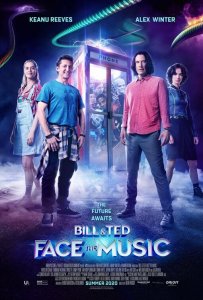 Bill and Ted might be one of the most inexplicable franchises in Hollywood. It began as a riff on 80s high school movies by writers Ed Solomon and Chris Matheson, taking the California surfer/stoner goofball supporting character staple and saying, “What if people deeply uninformed about history traveled through time?” 1989’s Bill and Ted’s Excellent Adventure movie was a comic delight, and Bill and Ted became unexpected icons, action figures, and even a Saturday morning cartoon. The 1991 sequel could have easily repackaged another escapade through time but instead it went a completely different, darker, and weirder direction. Bill and Ted’s Bogus Journey followed its characters through death, hell, heaven, and back again. It’s been almost thirty years since Bill and Ted left the pop-culture spotlight behind. What more challenges could you present? Bill and Ted Face the Music is a sweet sequel that explores the, dare I even utter the word, legacy of these cheery doofuses, and while it’s not at the same level as its clever predecessors, I was more than happy to take one last trip with these gents. Most excellent.
It’s been decades since Bill S. Preston Esquire (Alex Winter) and Ted Theodore Logan (Keanu Reeves) hit the big time with their band Wyld Stallyns but life hasn’t quite worked out how they imagined. They had been told their music would bring peace to the world, but they’re in their 50s now, fame now behind them, and they have yet to live up to those heavy expectations. Bill and Ted are struggling to still write that perfect, magical song, the one they were destined for, but both men have growing doubts over whether or not they can make it happen. Their adult daughters (Samara Weaving, Brigette Lundy-Paine) want to help and take the ole phone booth time machine for a spin, collecting famous great musicians throughout time to help collaborate with their dear old dude dads before all of reality unravels if that fabled song cannot be written.
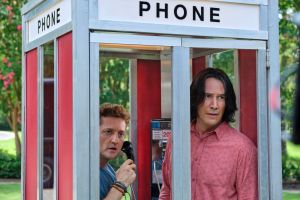 Just as Bogus Journey rejected being a lazy reprise, Face the Music inclines to chart its own path as a sequel rather than replicating the hits of old while also staying reverent to why people loved the originals. This is more a time travel movie, and the daughters even go on their own Excellent Adventure rounding up famous musicians through history as a B-story, but the main story is squarely on Bill and Ted facing off against themselves and their collective insecurities. When challenged, the Bill and Ted of present-day figure that they can skip ahead to the future and simply take the world-saving song from their future selves, who obviously would have written it by then. It’s a move the franchise has used before, relying upon future actions to take care of present problems, so it’s fitting for the characters but this is the first film to explore this as a negative. Bill and Ted are desperate and looking for an easy solution and skipping to the end will do that. However, their future selves are pathetic has-beens who have yet to write the ultimate song, and they resent their past selves for setting them up for failure. There are many face-to-face meetings between present and further future versions of Bill and Ted and their interactions become an adversarial tit-for-tat. I looked forward to each new pit stop with future Bill and Ted to see how their lives were and if they were still trying to set up the past Bill and Ted for a long-simmering retribution. The fact that this storyline has a genuinely sweet and even poignant reconciliation is a joyous addition.
Thankfully, Bill and Ted are still the same lovable, affable, and relentlessly positive dudes we’ve known and loved since the 1980s. I appreciate over three movies how much these guys legitimately appreciate and love each other. That’s one reason why it’s so enjoyable to hang out with these guys regardless of what their adventures entail. It would be easy for Bill and Ted to have become jaded in their old age, cynical from not fulfilling their hallowed destiny. They could have some animosity between the two of them that need to be buried in order to work together, rekindle that old magic, and save the world. But the screenwriters know who these characters are. Even when things aren’t going their way, they stay who they are, hopeful and supportive. I also appreciated how this translates to their relationships with their daughters, who clearly love their fathers and want to follow in their footsteps. They even refer to them as “dads” rather than “dad.” The conclusion rests on the daughters and fathers working together, and the positivity that radiates through their relationships allows the ending to reach a surprisingly emotional high for a family of good-natured goofballs.
 Face the Music is a bit overstuffed with subplots and characters, and I do wish there could have been some careful pruning to allow more room for the daughters. Bill and Ted’s wives, the princesses from Medieval England, have been recast again (Erinn Hayes, Jayma Mayes), and once again they are barely featured. There is an early conflict between the wives and husbands, and the prospect of losing them motivates Bill and Ted to save their marriages, but this conflict is entirely sidelined after the “end of the world” dilemma overtakes the plot. The wives are in their own subplot and also traveling through time or to parallel dimensions, though we never spend any time with them. There must be entirely cut scenes with them. Their perspectives could have been a whole other movie but they’re only an afterthought, as these characters have always been. Kristen Schaal (My Spy) appears as the daughter to Rufus (the late George Carlin), and we’re introduced to her mother, a deadly robot (Barry’s Anthony Carrigan) set to kill Bill and Ted for questionable reasons, the return of the Grim Reaper (William Sadler), plus all the assembled historical figures with the daughters. Also, just about every supporting family character makes an appearance too. It feels like too much, like the movie is constantly racing forward, juggling people and stories, when we didn’t need it all.
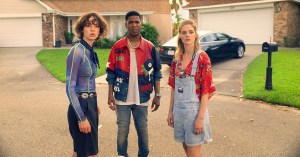
The daughters are more reflections of their fathers than independent characters. Each character, Thea and Billie, is a younger impression of their father and little else. They like the same music their dads like. They have the same goals their dads have. They have the same personalities their dads have. Both actresses are fun and Brigette Lundy-Paine (Netflix’s Atypical) does a wicked impression of a young Reeves, including adopting his sway-heavy gait, but I wish they had more to chew over. It seems cliché to make the central conflict of a third Bill and Ted movie an inter-generational one, where the fathers cannot relate to their daughters, and the four of them go on a fantastic journey that helps to bridge their differences and allow each side to better understand and relate. It might sound cliché but it could also have been compelling as well, and it would have elevated the daughters and their relationship into a primal position, rather than using the relationship with the near non-existent wives as the throwaway motivation for their call to action.
 It’s been quite a while since Winter and Reeves have played these parts, and while they both have clear affection for their characters, it’s not quite a seamless relaunch. Reeves (John Wick) has been playing hardass action heroes for so long that it feels like he can’t easily recapture goofball energy. His line deliveries can feel far more stilted and low-energy. Winter hasn’t acted onscreen since 2013 and has transitioned into being a documentary director. He delivers a more spirited performance and hits the comedy notes more effortlessly than Reeves, but the time apart from acting shows. Watching both men imitate their younger selves and going through the same shtick can have a different impact on the viewer. Hearing the same catch-phrases but with deeper, gravely voices isn’t quite the same thing and serves as a warning of the enterprise living in its own shadow. My pal Ben Bailey found an old Bill and Ted to be rather sad. I think that’s part of what Face the Music leans into (including its knowing title). They haven’t succeeded like they wanted. That weighs on them. Neither character is about to contemplate suicide but there is a sense of disappointment about how their careers turned out that they’re barely staying ahead of, which adds a melancholy dimension to these characters still falling back on what they know because it’s all that they know how to do. It’s not overpowering but it’s an acknowledgement of the loss of time.
Bill and Ted Face the Music is a charming, likable, and sweet-natured sequel that wraps up the franchise well, reminding fans why the Bill and Ted characters were so enjoyable from the start. In our COVID times, I’m finding it easier to shrug away some of the movie’s flaws, like its low-budget being noticeable, chintzy CGI special effects, and too many supporting characters on top of not integrating the daughters into the main action in a more significant fashion. It’s 90 minutes of laid back, light-hearted fun with actors and filmmakers who clearly love this franchise, and the screenwriters could have merely coasted and did no such thing. We didn’t need a third Bill and Ted big screen adventure but I’m happy that it still feels, even thirty years later, remarkably like Bill and Ted.
Nate’s Grade: B
Share this:

The Curse of Lilith Ratchet (2018)
 At its core, The Curse of Lilith Ratchet is a low-budget horror movie stuck between two paths of entertainment and sadly reaching neither. It could have been a genuinely good horror movie, one where its concept begets creative ingenuity, like a Lights Out or Final Destination, where the set pieces are well developed, the characters are interesting and meaningful, and there are pertinent themes linked to character to make the horror more immediate and impactful. Or it could have gone a completely different route and declared itself a schlocky horror movie, owning a trashy flair of fun while doling out exploitation elements of sex and violence to provide the prurient thrills of genre satisfaction. Unfortunately, Lilith Ratchet isn’t good enough to be legitimately good and it’s not knowingly bad enough to be particularly entertaining. It’s just another disappointing low-budget horror movie with too little thought given to its story and characters and horror sequences.
A group of friends steal a shrunken head belonging to the notorious Lilith Ratchet, a Civil War-era woman who murdered her cheating husband with an axe and was then killed herself. She would curse anyone who would say her name and attached nursery rhyme. Alice (KateLynn Newberry) and her pals offer the famous head to popular paranormal radio host, Hunter Perry (Rob Jaeger). He broadcasts from a dance club for a special Halloween show and brings in volunteers for a game of hot potato with the shrunken head (again, this is designed for an auditory medium, which doesn’t seem wise). The evil spirit roams the Earth, striking down in order those who held her shrunken head, and Alice scrambles for a potential way out.
 Here’s an example that hits both areas I cited above as it concerns that middle ground between well-developed horror and schlocky camp (mild spoilers I guess). Our first Lilith Ratchet victim, after the prologue, is abruptly run over by a car. This news does not reach his girlfriend, Lauren (Brianna Burke), until Alice delivers it in person, which seems beyond bizarre to me. Side note: cell phones do not seem to really exist in this universe. They do appear every so often, but when it comes to reaching others during times of crisis, or distributing key information, nobody picks up their phone to dial or text. They instead wait to hear face-to-face, and that consistent delay of communication breaks the tenuous reality of the movie. Writer/director Eddie Lengyel (Scarred, Mother Krampus 2) might as well have set the film during the 1980s or beforehand if modern technology matters so minimally. These characters are still talking about a popular radio show; not a viral podcast but, an alternative radio show. It doesn’t quite feel of today.
Back to my example, Lauren is informed her boyfriend has died. She retreats indoors to take a long bubble bath. She doesn’t exactly seem too broken up after her immediate response but hey we all grieve in different ways. Now, considering we’re dealing with a supernatural presence, why not take the form of the dead boyfriend? This would make the encounter more personal; the spirit could dig into Lauren’s suffering and perhaps any feelings of guilt, it would be an opportunity to open her more up as a character before her inevitable death, and it would simply be more interesting. Sadly, the film doesn’t go this route. Instead, she lounges in her bathwater and oblivious to the Big Scary Lady walking around the room. Then she’s violently pulled into the water and released, and this happens maybe four times. I don’t know about you but if I’m being yanked by a malevolent spirit in my bathtub, I’m getting out of that tub quick. Lauren leisurely tries to catch her breath. So, if we weren’t going with the more character-focused and developed death, then we should go for something memorable or truly horrifying. Instead, we get a woman being pulled under her bathwater and it happens three to four times. It’s not interesting and it becomes repetitious to the point of unintentional comedy. It’s also a bathing kill that veers away from T&A or anything too tawdry, which means it fails to register either as effective, engaging traditional horror and as schlocky, fun, campy horror. It just made me think of the obvious homage to Nightmare on Elm Street and then it didn’t offer anything more.
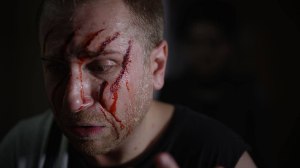 Even with its low budget, that didn’t consign The Curse of Lilith Ratchet to certain doom. The problems begin early when it comes to establishing its universe and its rules in a way that feels consistent and credible. The script requires plenty of sloppy exposition and a questionable structure of this information. We should know the rules of Lilith Ratchet early to play along. It isn’t until over an hour into the movie where the characters even piece things together. There are also scenes that have no need to exist or their placement is questionable. Do we need a scene where the characters chat with a local shop owner who warns them about his open “not for sale” display? If we cut that scene, then it presents the characters as more devious when they explain how they obtained the shrunken head. When we do get the Lilith Ratchet back-story, we get it twice, first when Hunter is presented with the shrunken head and then second on his paranormal radio broadcast. Why not condense this into one experience? Why not even open with the back-story, then pull back and reveal him on his radio broadcast, and then from there have the characters on his doorstep with the shrunken head, knowing from the broadcast he was a fan? That’s a cleaner structure. There is a weird plurality of scenes of people consoling Dylan (Roger Conners), but it’s always someone informing you after-the-fact about relationships. I didn’t know he was best friends with a murder victim, and now everyone on the street wants to console him like he’s an unofficial mayor of the city. It’s storytelling that’s trying to fill you in on significance after it matters. If you’re going to be late giving us information to understand the characters’ emotional states, don’t bother.
As a horror movie, there are too many moments that are expected. It feels like we’re running through the motions to include certain moments because they’re expected. The opening prologue introduces a threat and some mild gore, but the massacre of this sorority doesn’t have any larger ramifications for the entire story. We see some of the dead girls, which means that Lilith Ratchet can indeed take the form of the dead, but they don’t act too suspiciously. It’s simply a quick visual cue for the audience not to trust these onscreen women. If she can take this form, I wish she had done it more often, especially as people started getting dispatched. The opening also has what might be the funniest moment in the entire film. One of our sorority girls sees the evil spirit, runs upstairs, hides in her bathroom without locking the door, climbs into the shower as a meager form of protection, and this is even funnier because the shower is a clear glass door. I don’t know what she was expecting hiding behind a completely transparent cover in an accessible room. Are we supposed to ridicule this person? I don’t get the sense anything is done for laughs. Likewise, there’s a preponderance of jump scares in place of cleverly designed set pieces of terror. There’s nothing tailored toward Lilith Racthet’s personal history to make it her feel more than a generic haunt.
 The real star of the movie is Lilith Ratchet and the actress behind the spirit, Crissy Kolarik (Mother Krampus 2). It’s rare for a horror movie to not just create a spooky creature but to even create an affecting silhouette, something easily identified and quickly felt. Lilith Ratchet is a great looking creation. She’s in a flowing Gothic gown, her clawed fingernails stretched at her sides, her Victorian era hairstyle and pale face. It’s a creepy image and Kolarik has a really strong sense of poise and presence as she patiently stalks the sets, enough that I was reminded of The Nun, another immediately creepy specter with a clearly identifiable silhouette. The backlit moments that highlight Lilith’s shape also have an unsettling impact. I wish that this evil spirit had a more interesting story to utilize this actress and setup. While the movie never calls for her to do anything terrible different, Kolarik excels at being the big bad boo and glaring menacingly.
Under its DVD release title, American Poltergeist: The Curse of Lilith Ratchet is a bit misleading considering she’s not a poltergeist. Or a demon. Or much of a ghost really. She’s kind of a walking idea, a version of the Bloody Mary urban legend. This lack of clarity and personal alignment is symptomatic of the movie as a whole. It’s certainly not a bad looking movie for its reported $15,000 budget. It has professional lighting that establishes a mood and solid makeup and gore effects, and even the score can have its draw. The acting is acceptable even with characters absent goals, dimension, or general points of interest. I have seen far worse movies with far bigger budgets. What I’m getting at is that The Curse of Lilith Ratchet had effective and appealing technical merits and a capable cast that could convey dismay and confusion. It had a starting foundation that could have delivered had they been given a good and interesting story. Alas, the screenplay feels too unfocused, sloppy, overcrowded, and lacking in direction and escalation and personal stakes beyond the obvious. We’re talking about stuff like an extended sequence of hot potato with a shrunken head for a radio show. If you’re not going to make smartly designed scary sequences, then perhaps try your hand at making a campy, gory, silly, knowing movie. The tongue-in-cheek version of this movie could have been a blast. The Curse of Lilith Ratchet is a middling horror movie that just comes and goes, leaving little impression other than a lingering sense that somehow it should have been better.
Nate’s Grade: C-
Share this:

Palm Springs (2020)

I am a sucker for a clever time travel tale, or parallel universes, a sci-fi story where the creative ingenuity is front and center, and Palm Springs is a delightful new rom-com bursting with imagination. By this rate, most audiences should be familiar with the time loop formula, from comedy classic Groundhog Day to Source Code to Edge of Tomorrow to Netflix’s audacious series, Russian Doll. It’s a creative conceit that rests on building patterns and subverting expectations, allowing a writer an unparalleled opportunity to retell a story, pulling at the edges and getting to answer an assembly of “But what if?” questions. It builds out its world and makes it feel richer and more intricate, all the little stories and characters that might have been missed had there only been a single avenue. It requires a creative storyteller with a big imagination for details, but when done correctly, the time loop movie can be a wealth of satisfying payoffs and intriguing detours. Palm Springs deserves to be added to that list of hallowed time loop movies.
It’s the day of the wedding for Sarah’s (Cristin Milioti) sister. There’s one wedding guest that seems to stand out. Nyles (Andy Samberg) seems prescient on the dance floor, has a prepared speech that earns tears, and strolls through the reception like he owns it. Sarah becomes smitten with him and, against her better judgment, follows him into a mysterious glowing cave. She wakes up in her bed and relives the wedding day again, learning she too is now trapped in that 24-hour loop with Nyles. He laments that she followed him, having once encouraged another person to join him in the world of no tomorrows (a rueful Roy, played by J.K. Simmons). But with a partner, the many days have a new relevance, and Nyles and Sarah depend on each other, but is there a chance that they can escape or are they doomed to perform the Electric Slide forever?

Right away, you can tell that writer Andy Siara (TV’s Lodge 49) has given his story tremendous thought, and the fun of it is watching our main characters go through the process of discovery while learning more about each. The rules of the universe are straightforward; whether death or sleep, they will wake up back that fateful wedding morning. Nyles has felt trapped for so long and the prospect of another companion going through his same purgatory fills him with guilt, but he cannot help feeling a new purpose when he finds a partner for this weird world. Initially she’s looking for an escape, but then she opens up to the possibility to a life permanently on pause, without consequences, and how freeing this can be. Then the appeal dampens as we come to understand why this day is a personally painful one for Sarah and why she would be desperate to live another day, any other day. When she drops out for a solid stretch in the second half, you miss her just as much as Nyles and better realize what a great team they made. Palm Springs has plenty of fun with the possibilities (Nyles requests a quick death over a long drive to “beat the traffic”) but it doesn’t lose sight over why we should care about these people. It doesn’t really matter how the time loop began or whatever theory will end the loop. It’s the central relationship that will ultimately provide the emotional anchor, and it’s because of that attention that by the conclusion of Palm Springs I felt uplifted, buoyant, and happy (a mid-credits scene thankfully answers the one lose thread, providing an even more welcomed conclusion).
Make no mistake, this is a funny movie and I laughed often. Samberg (TV’s Brooklyn 99) and Milioti (Black Mirror) are terrific together and genuinely seem to enjoy one another. They have a combustible spark to them that reminded me of older screwball comedies. Having a willing partner allows Nyles to cater to different impulses but also pushes him to re-examine his perspective when he has someone new who sees the excitement in their unique position. However, except for Roy and his long drive from Irvine, they are hopelessly alone, unable to move forward, and the question arises can there be anything of significance without consequences? The screenplay has a natural dark streak with its humor, so even when things get heavy with existential quandaries, it doesn’t stop the movie from being smart and enjoyable. There are so many wonderful little payoffs, little running gags, and larger payoffs to be had with the time loop formula. It also hooks an audience by watching a character fail, and fail, and fail, only to succeed. Palm Springs is a romantic comedy that can be funny, romantic, and make me care.

Debut director Max Barbakow keeps the pacing swift and has fun playing with bold primary colors across the desert setting. The tone of the movie is delicate as it can go into silly revelry, like a surprise coordinated dance routine and a wedding outburst involving a bomb, into yearning romance, into heartfelt pathos, and then even the occasional stomach punch. For as rightfully beloved as Groundhog Day is, there’s nothing that comes close to feeling like an emotional gut punch. With Palm Springs, the time loop is given its sci-fi examination, the comedy is given is full exploration, but it’s the characters that matter most, and Barbakow prioritizes the right feelings at the right times. By the end, you feel sweetly fulfilled by these 90 charming minutes.
At first, I wondered why the Roy character was included except as a cautionary tale why Nyles would not want to rope someone else into his purgatory. But then as we visited with the older man, I realized, as he does, that he’s meant to symbolize the change in perspective (mild spoilers to follow). The family that he couldn’t stand before his loop-life has now become his personal oasis. He’s grown in appreciation and love of his family bonds. He is the example for Nyles about how one can personally grow and change when given dedication and enough time to see it through. It’s a nice moment, and while Simmons (Whiplash) is always wildly entertaining when he’s bulldozing over others, giving Roy a poignant sendoff made me feel like he was a much more integral character and his earned wisdom was its own special reward.
Palm Springs is a great detox of movie, with enough sunny comedy and winning romance to make you smile and enough tortured existential drama to provide substance. Everyone involved, from the writer to the director to the cast, is having a blast and it’s fun to join in the good times. When it comes to time loop cinema, Palm Springs is a respite of entertainment and smartly developed and richly realized execution. Find it on Hulu and kick back.
Nate’s Grade: A
Share this:

The Old Guard (2020)
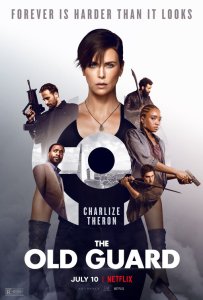 What do you do with an action movie where the action is actually the least interesting part? The new Netflix film, The Old Guard, is based on a comic book series by Greg Rucka (Whiteout) about a mercenary squad staffed with immortals through the ages. Lead by Charlie Theron, whose character Andy traces back to at least the Medieval period, leads the team and sees promise in their newest recruit, Nile (Kiki Layne, If Beale Street Could Talk), a U.S. soldier who is shocked to discover she can come back to life. It’s through this new recruit that we get an introduction to the hidden world of immortals and their hidden history, and it’s these flashbacks that I found the most entertaining aspect of the entire two-hour movie. Watching Theron swing a Viking battle axe is a lot more fun than watching her stalk corridors with a gun. There’s also some great little moments that show an attention to developing the characters and their psychology. Andy has a centuries-old love that was trapped in a suit of armor and thrown into the sea. Besides the fact that drowning is horrifying, imagine dying, then reviving, and then drowning again and again, every few minutes, for an eternity. Wow that is a new level of horrifying. Each of the characters has an interesting history and some degree of dimension, and it’s these soul-searching conversations that I enjoyed the most as they discuss the costs of living forever. However, it’s not quite forever, because immortal heroes have an obvious problem about holding stakes, so at some point the immortals will lose their healing ability, though they don’t know when. It’s something, but it feels more arbitrary, and the super smarmy pharma CEO villain (Harry Melling) is a non-starter as a threat. The action sequences almost feel like a chore, like the filmmakers are checking boxes instead of using them to advance the plot in meaningful and exciting ways. The action isn’t bad but just mundane, lacking memorable set pieces or engaging complications. Even their use of taking punishment is under-utilized in the design. Simply put, a movie with this kind of premise and with Theron as your lead should be more exciting. I loved Mad Max: Fury Road. I loved watching Theron lay waste to goons and gangsters in 2017’s Atomic Blonde, a movie built around her physical capabilities and smartly constructed action set pieces. However, the action we get with The Old Guard lacks the same transformative ability and fight choreography. It’s just thoroughly fine, at best, and I kept wondering if they were saving themselves for a big finish. Sorry to disappoint, it’s just more office hallways with limited gunplay. The energy level is lacking and the music choice throughout the film affects this as well, with the same kind of downer tracks playing again and again. I would rather have spent these two hours listening to the immortal stories around a campfire.
Nate’s Grade: C
Share this:

The Ninth Gate (2000) [Review Re-View]
 Originally released March 10, 2000:
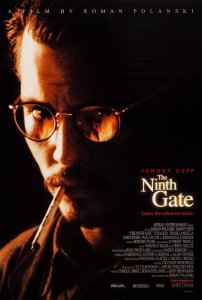
The latest from old school horror pioneer Roman Polanski is a dark and brooding thriller that is… very long and brooding. What begins with noir charm and decadence grows thin by the movie’s over-bloated running time – giving new definition to the term “tedium.” The visuals are grim and noirish, but hang forever. Half of the movie is seeing Johnny Depp walk from Point A to Point B; and then the other half is watching him light up a cigarette usually already with drink safely in hand. Depp plays a librarian that doesn’t play by all the rules, or something or other. He’s set out to authenticate the last three books of a Satanic worshiper only to discover they lead to a path of devilish power. By the time Ninth Gate reaches its climax at an Eyes Wide Shut-style group gathering the audience has already hopelessly lost feeling in their ass. The vague ending is a cop-out after what the viewer is forced to go through to finally find out the secrets of these special 15th century books/doorstops. When it’s not carelessly lingering The Ninth Gate has some interest to it, but too often than not, it just rolls ahead forgetful of the audience that paid to come see it.
Nate’s Grade: C-
——————————————————
WRITER REFLECTIONS 20 YEARS LATER
Times sure have changed for famous director Roman Polanski. He’s been filming movies entirely in Europe for years since he fled the United States to escape prosecution for rape charges. He even won an Academy Award in 2002 for The Pianist, though he wasn’t present to accept naturally. However, in a post-Me Too realm of improved scrutiny over the bad habits of bad men with power and influence, Polanski hasn’t had a movie with notable names since 2012’s Carnage. He’s made a few foreign-language films since but his sphere seems notably smaller, more confined, and more shut off from the industry and actors and moneymen that want to work with the famous director. They’ve even attempted to get him extradited back to the U.S. again. All of this cannot help but color re-watching The Ninth Gate, especially when it already plays upon memories of Polanski’s own Rosemary’s Baby. I wondered if this movie might actually be better twenty years later, and for a while I was feeling like my young film critic self was perhaps a little too quick to judgment. However, upon recent viewing, this is still a long and boring misfire.
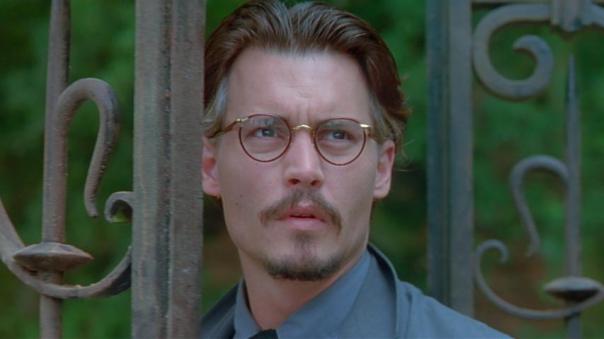
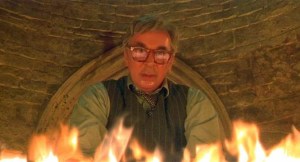 The premise is slightly intriguing until you realize what it exactly entails. Johnny Depp’s character, Dean Corso, is a rare book evaluator and unscrupulous profiteer. He’s been hired by wealthy magnate Boris Balkin (Frank Langella) to authenticate a book reportedly co-written by the Devil himself and, if real, has the ability to summon Old Scratch to boot. Hey, we got something there for an intriguing horror movie that delves into the occult. And for perhaps the first act, The Ninth Gate works well enough to establish its mood and its central conflict. Then it just kept going. And kept going. And that’s when you realize that much of this movie involves one man traveling to different chateaus and other European estates to simply look at books. There are three copies of this rare Devil-penned tome, so Dean Corso is traveling to at least two different locales simply to compare and contrast books. I don’t think I’m fully articulating just how boring this can get. Imagine a significant other sitting beside you and deep in thought with a dense textbook. Imagine watching them read and make the occasional verbal noise. That is The Ninth Gate. Watching people read is boring, especially when it’s done repeatedly. There are MULTIPLE scenes of simply watching Depp look over a book while music plays. Film is a visual medium, and reading is inherently an internal function unless adjusted in context. It’s not like he’s deliberating over whether to send a text to a special someone, what the personal correspondence means to his concept of his family, it’s a man compare old books for a job. It’s not like he’s obsessed over this book for years or is a true believer of its power.
Some of this might even be permissible if the stodgy 133-minute film wasn’t so tediously repetitive (spoilers to follow). Corso is paid to authenticate the book but every person he encounters that knows a little about this book ends up dead. The book dealer he has stash the book? Dead. The old man with the second copy who says he’ll never sell his book not even if his life depended on it? Dead. The old lady expert with the third copy who despises Boris Balkin? Dead. By the time that wheelchair-bound woman is found to be repeatedly running into a wall, and upon further inspection has her tongue hanging out her mouth in an unintentionally goofy sight, the plot structure of The Ninth Gate has entered farce. Dean Corso doesn’t seem terribly alarmed by any of this or observant of an obvious pattern of events. He has several run-ins with goons and a mysterious blonde woman (Emmanuelle Seigner) that follows his every move. He seems comically oblivious to the danger all around him. Part of this is the repetitive plot structure where over an hour of the movie follows Depp going to a place, discovering one minor addition of information, finding that person dead, being chased, then repeating. It takes over an hour simply to note that there are minute differences in the engravings in the three copies of the devilish book. Then it simply shifts into a game of who can capture all the copies, which it should have been from the start, and would have introduced a very necessary sense of urgency from a prosaic script. Another reason for that general turgid feeling is that Depp seems to be sleepwalking through this performance absent emotion. Even Polanski himself complained.
 This is a movie about a special book that can unleash the powers of the Devil, so why is the finished film so boring and frustrating to sit through? It has rival cults and business tycoons fending for ownership over that power. At least it does in theory. The fact that there are competing interests should have been a substantially larger element of the movie. Once Lena Olin’s rich widow character sleeps with Dean Corso to get the first copy back, she disappears from the narrative until the very end, where she’s dispatched without any intervention from her assembled cult of would-be Satanists. Seriously they just stand by and watch a guy strangle her to death and jump at the word “Boo!” They were never a threat even if they were responsible for one part of the mysterious stalkers. The other stalker, our ever-present blonde, will literally float at times and come to kung-fu kicking rescue, which made me snort out loud. It just comes across so goofy. Her identity is clearly in a supernatural answer but the movie never fully explains who she is, what her real motivations are, her allegiances, and even what the ending is supposed to mean. After 133 minutes, it’s egregious that Polanski doesn’t provide a conclusion that feels even fleetingly conclusive. The whole movie is a mystery that moves with irritatingly incremental steps that leads to one big shrug.
I can see the appeal of the idea of this story but I don’t see the appeal of making The Ninth Gate as is, beside visiting some fabulous locations in Portugal and Spain. Why get an actor of Depp’s caliber if he’s going to read on camera and not worry about his encroaching danger? Why does this movie need 133 minutes to set up a plot that could have done it in 100? I think Polanski was eager to revisit the old school horror of his early works and didn’t sweat the details. Mysterious castles of old. Dangerous strangers. Cults. The Devil. Book authentication. Okay, maybe not that last part. I suppose one could charitably say Polanski is trying to establish an unsettling mood with patient-yet-paranoid camerawork and a story that feels unhurried. It feels to me like Polanski doesn’t know what movie he wants to make and is in no rush to get there. The most overtly horror moments fall into self-parody. That’s really where the movie errs for me. It takes great horror story elements and says instead of running with cults and the Devil, what if we focused more on the slow authentication of dusty old books? Not their power or meaning or value to devious men and women, but on whether they are real. That would be like finding a treasure map and then trying to make sure the ink was authentic for its era rather than, you know, hunting for treasure.
My original review twenty years ago is a bit harsh and angry, though I can understand why especially after such an anticlimactic ending. I would say the movie is more than watching Depp walk from Point A to point B, though to be sure that is heavily represented onscreen. I might even slightly raise my letter grade but the criticisms still stand as stated. Even twenty years later, with a fresh set of eyes, The Ninth Gate is a disappointing story that says too little and takes too long to do so.
Re-View Grade: C


 nathanzoebl
You must be logged in to post a comment.