Blog Archives

Whipped (2000)

The ailing problems with Whipped aren’t with its inept acting, writing, and direction, though those do add up. The true problem is that Whipped isn’t just a bad movie as say Battlefield Earth; no my friends, Whipped is a viciously ugly movie, the type of which that force you to take an hour long shower afterwards.

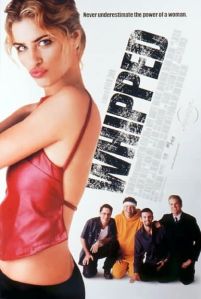
The story of Whipped unspools over a familiar diner with four friends bantering over female conquests, misogynistic games and chest pounding, and general nastiness. Our core of characters the usual stereotypes with the supposedly sensitive one, the yuppie Wall Street kid, the playa’ etc. Writer/director Peter M. Cohen tries his darnedest to raise eyebrows with vulgarity and raunch, but minus any wit, just making it seem shallow and inane, which is a perfect description of Whipped in any kind of masochistic nutshell.

The three guys eventually fall head over heels for the same woman in Amanda Peet. Eventually these crass individuals all learn some kind of lesson when Peet plays each of them for the same kicks the men derive. Is this supposed to be a feminist statement in the end of a movie so full of hatred for women that it could have been In the Company of Men minus the quality? Whipped is billed to expose the politics of dating but what it perceives as breaking new ground and insights in dating we all learned many years ago, some of it on the schoolyard playground.

Whipped has such ugly contempt for basically anything living as we carry along with the four pathetic human examples. The humor is dead-on-arrival and horribly bad. The acting is so amateurish. Yet Cohen gets the worst for his flat and lifeless direction.

Whipped may prove not to be the worst movie of this year already full of its fair share of bad, but I defy anyone to discover a film that is more ugly, spiteful, and horribly uncomfortable to sit through.

Nate’s Grade: F

Loser (2000)

Jason Biggs came to fame by getting sexual healing from pastry and Mena Suvari for coming up roses besides Kevin Spacey. So now the two American Pie graduates embark on college in Loser, the latest offering by classic teen comedy director Amy Heckerling (Fast Times at Ridgemont High, Clueless).

Loser tells the tale of a self-describe outcast Paul (Biggs) who ventures out of a rural town to the big bad city of New York for college education. Before he leaves he confides to his family his fear that everyone will be “like on Seinfeld.” Upon Paul’s arrival he’s deemed a laughable dolt by his fratboy roomies and even forced to live in an animal shelter. Paul has a difficult time adjusting to the new world until he meets a kindred spirit in the intriguing Dora (Suvari) one day in class. Dora herself is a struggling student not fitting in easily. She even has a secret tryst with her professor played by Greg Kinnear.

All of the characters in Loser other then its leads are one-dimensional cartoons. Paul’s dorm mates start off as mean-spirited brats but then unsettlingly become attempted date rapists with plans involving roofies. Am I the only one bothered that their actions are never dealt with but glossed over? Dora’s relationship with Kinnear only cheapens the intelligence of her character. From the beginning he is a smarmy jerk (as are most in Loser) whose most romantic line consists of “Would you please sit there and just not talk.” What woman wouldn’t fall for someone like that?

Loser is no outright loser though. It does have its funny moments and starts off well enough. Paul and Dora are sweet characters that keep our interest. Kinnear plays a snide jerk well. But somewhere in the middle Loser shifts from what it could have been into what it reluctantly is.

Biggs and Suvari are the only nice people on screen, and it makes little sense that in a world of hipsters that these two would put up with all of their abuse and not see one another. It’s obvious that they should be together except to them, so it’s just a matter of time before they hug and kiss. The movie is basically a waiting game to see when Suvari is going to wise up.

Heckerling has been a strong force for many an influential teen comedy but her latest effort seems like she lost interest somewhere within. Loser had the possibility of being the Clueless for the not-so-in-crowd but instead mimics the title far more than intended.

Nate’s Grade: C

Chicken Run (2000)

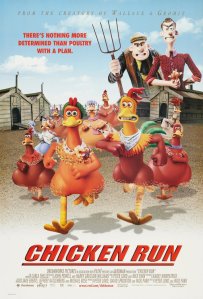
I strongly urge everyone out there if ever given the opportunity to see this movie. Do not confuse Chicken Run as a “kids only” affair while you yourself sneak into something “better.” This movie is easily the best movie of this lackluster summer of commercial perpetual bile, and possibly one of the better if not best films of the year. It’s no secret I have an affinity for animation and the claymation choices of directors Nick Park and Peter Lord, of Wallace and Gromit fame, give the characters real emotion. I can just look at one of the chickens in the eye and feel emotion that I couldn’t get seeing many Hollywood films. The cinematography and animation is lush, vibrant, and breathtakingly beautiful. The story is fresh, wonderfully hilarious, and even touching. The voice artists are terrific, with Miranda Richardson pulling out as my favorite for her delightfully vile Mrs. Tweedy. Treat yourself to one of the very few decent movies this summer and see the incredible fun of Chicken Run, and if you still feel conflicted it has Mel Gibson in it. And if you still feel bad you can say you got lost on your way to the rest room.

Nate’s Grade: A

Reviewed 20 years later as part of the “Reviews Re-View: 2000” article.

The Road to El Dorado (2000)

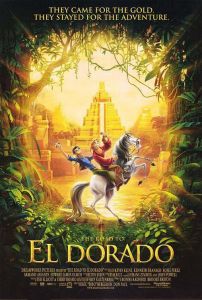
Tulio (Kevin Kline) and Miguel (Kenneth Branaugh) are two 16th Century Spanish con men who somehow speak in English accents and appear to have a secret gay relationship. I calls ’em as I see ’em people. Through a strange comedy of errors the boys end up marooned on a far off land with a horse in their possession as well as a mysterious map. The map leads to the unfold treasures of the mysterious fable of the city of El Dorado. They partner with a saucy native (Rosie Perez) with hips bigger than shoulders and a pining to be taken away.

Dreamworks has scored big with previous strong ink and paint outings, but El Dorado seems to be a disappointment. At times the banter between Kline and Branaugh is lively and humorous but the energy is never sustained for long. El Dorado lulls unexpectedly quite often. Katzenberg created the very successful Disney animated formula, and still sticks by it regrettably. The Iron Giant showed originality can work, so why is no one listening?!

The animation is surprisingly shoddy at times. The contrast between 3-D and 2-D animation is easily noticeable, unlike the work in Prince of Egypt. Perez seems miscast, what with her Puerto Rican accent, and close to all the characters are poorly underwritten, even the damn horse.

Elton John and Tim Rice buddy up after their successful pairing with the Diz blockbuster The Lion King to unleash wave after wave of senseless drivel. None of the monotonous songs are memorable, or even downright humable. After seeing these pop regurgitation it’s easy to see that everyone makes a bad step. Consider this one.

El Dorado is an animated attempt toward the bumbling road pictures of Hope and Crosby, but this tank is too low on gas for the entire trip.

Nate’s Grade: C+

Fantasia 2000 (2000)

The first updating of long gone Walt Disney’s dream anthology hits the IMAX screens in a resounding fury of classical music and first rate animation. Like its predecessor though, it’s uneven in its quality. Some segments are more impressive or creative than others. In the 2000 redux the best of the best would be characterized by “Rhapsody in Blue,” a Gershwin blues number brought to stunning life by characters of simplicity yet definition. The animation on each is commendable and different from the next segment to follow it. “The Sorcerer’s Apprentice,” the only segment from the original to be included, shows its wrinkles and grain more than ever when blown to IMAX’s wide canvas. The standout, to me anyway, was clearly the final segment closing the just-over-an-hour animated orchestra called “The Firebird.” The imagery and animation are so sleek and beautiful that I thought I was going to break down by how stupendous the artwork was. This is a tale that leaps from the screen and lets you share some of the beauty with it – further enhancing the festival of the Mouse. Without these stand alone segments this ballet of song and ink would be rather adequate and nothing more, but with the addition of these two marvelous segments it becomes something worthwhile… at least for 20 minutes. Hey, it’s the most exposure classical music will get on the youth of today.

Nate’s Grade: B

Down to You (2000)

The latest sacrifice to almighty gods that are the teenage market with wide pockets arrives and proves not only is the teen comedy dying, it is having its grave danced upon. And with eight inch heels worn by the fiend known as Down To You.

Want an old-fashioned love story? Boy gets girl, boy loses girl, boy tries to get girl again, and boy gets girl. Pretty old and pretty much nothing more to Down to You, minus the addition of two porn stars and a nymphomaniac. The story is the same well-beaten path where they keep the leads as far away from each other and just let ’em loose at the end. Everyone hugs and we can all go home. Geez, I’ve seen more substance in a bag of fat-free potato chips.

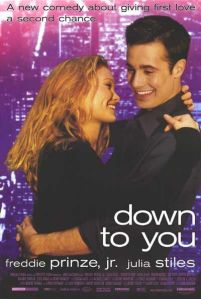
The movie is very uninteresting and rather pointless as it drones on. Freddie Prinze Jr. can smile all he wants to but I’ll still never believe he’s a down on his luck college coed. At least he’s out of high school in this one. Everything in this movie has a recycled feel to it, so much so that some environmentalist group should confiscate this entire movie. People, it’s that bad. Imagine every cliché, expanded character stereotype, redundant joke, and you still have no idea how bad this script is. What the writer/director believes is quirky and cute falls closer to annoying and irresponsible.

The rest of the actors are faceless unknowns that you might as well search for on the back of a milk carton. Julia Stiles and Freddie Prinze Jr. have zero chemistry between them and are either bickering or blushing in embarrassment. Doesn’t sound like a good relationship worth a dozen flashbacks to me. Stiles at least puts forth an effort but Prinze just runs through the motions of another teen flick for his resume and comes off as nothing more than a mannequin with a goofy grin.

I stand and make a plea; please for the love of God end this Hollywood fascination with high school romantic comedies. It might have been cute to start out with but this trend has run its course. The only way the madness of teen romantic comedies will end is if the teens themselves stop supporting them. Wise up America. Take action! If this comedy is supposed to be about the school of life I’d say it overslept its class.

Nate’s Grade: C-

Reviewed 20 years later as part of the “Reviews Re-View: 2000” article.

Toy Story 2 (1999)/ Princess Mononoke (1999)

There is a false prejudice circulating the land of merry movie goers as they skip from one theater to the next. This assumption is that animation is a kids only event, that’s it’s something to appease the screaming masses under three feet of height. Lately movies are giving more credit to the cause that animation can be a wonderful escape and isn’t just for the kids.

Animation can take people to worlds that otherwise could not have existed, and so is true with Princess Mononoke the 1997 Japanese import with a fresh English dubbing. Mononoke speaks of the battle between harmonious nature and forging industrious man. Often the film displays such scenes of visual passion that it seems like an animated love letter to those wishing to venture out to find it. The story is vivid and non-judgmental, you see the stories and reasons behind both warring forces and not everything is easily black and white. The English dub does not distract from the overall enjoyment as many professional actors yield their vocal talents to this masterpiece. Princess Mononoke leaves a spellbinding impression of intense ecological thought and aching beauty. The best anime has to offer.

At the other end of the animation spectrum lies Toy Story 2, the kid friendly three-dimensional quest of action figures and plush dolls. What is amazing about Toy Story 2 is how it not only matches its ground breaking predecessor but even surpasses it both in visuals and story. Story is packed with sly humor not just for kids, and it contains a poignant message about mortality and what one seizes with the opportunities they are given. The animation is mesmerizing and the humor is fast and fierce. Toy Story 2 proves that not all sequels are bad ideas.

Fresh from the gate are two examples of the great gifts animation has to offer. Couple these with the wonderful The Iron Giant, a ferociously funny South Park movie, an okay Tarzan, and the upcoming Disney redux Fantasia 2000 and it appears to be a solid time for animation. Go out and see some.

Nate’s Grade: Both movies A

Dogma (1999)

In a time where simply having faith in anything, let alone religion, is scoffed at, Kevin Smith daringly and passionately expresses his personal search for answers and understanding. But while the zealots decree Dogma as blasphemy, what they truly miss is the biggest commercial for faith and God that American audiences have seen in decades of cinema.

The story of the religious epic causing all the hubbub begins with a pair of fallen angels (Ben Affleck and Matt Damon) spurned from the pearly gates of Heaven and banished to Wisconsin. One discovers a re-dedication of a church imploring a little used Catholic practice of plenary indulgence allowing whoever to enter through the church’s arches to have their slate cleaned of all sin. The two seize this opportunity of a dogmatic loophole to sneak back into heaven. The only slight problem is that by doing so they reverse a decree of God and disprove the Almighty’s unfallability, and thus will wipe out all of existence. The voice of God (Alan Rickman) recruits a lapsed Catholic named Bethany (Linda Fiorentino) for a Holy Crusade to halt the scheming angel’s plans for the good of the universe. Along the way she is aided by two unlikely prophets (the dynamic duo of Jay and Silent Bob), an racially discredited 13th Apostle (Chris Rock), and a shapely strip-teasing muse (Salma Hayek) as they engage with demons, seraphims, angles, and all sorts of celestial “who’s who” to stop the end of existence.

Smith’s direction has taken strides since the point-and-click days of his earlier works; however, there’s still an awkward flatness to his framing and action. Fiorentino plays the role of a grounded character well. Rickman as the bitter Brit shows why he can still take anyone toe-to-toe for acting chops. Affleck and Damon have terrific chemistry together and play off one another for great comedy. Jason Mewes has never been funnier as the terminally stoned and foul mouthed Jay. Rock shows he can restrain his abrasive personality. Salma shows… well she shows she can dance. Jason Lee as an air conditioning-adoring demon and George Carlin as a used car salesman type Catholic Cardinal are so commanding in their presence and excellent in their performances that it’s a sin most of their scenes were cut during editing. Even Alanis Morrisette works as a humanly childish God. She’s given no lines but expresses great feeling and humor anyway.

Dogma is rambunctiously hilarious and a never ending joyride of fun as it jumps from jokes about demons made of excrement to “Buddy Christs” to insightful and sensitive thoughts on religion. Rarely does it bore even with the large plot it must always keep in successive movement. The only drawback Dogma suffers from is the amount of religious points it desires to make. The characters will reach a subject, chat, then directly move on to the next. The sporadic nature can easily keep an audience’s head spinning, but is brought back down to gentle rest from Smith’s Divine wit and sharp writing. Some of the opus’ many characters appear for only brief stretches as Hollywood’s A-list battle for valid screen time among each other.

Smith is not one to shy away from controversy, or his quota of sexual innuendos and profanity. But the protestors for this film attacking its vulgarity are beyond missing the point; Dogma is reaching people the church hasn’t and can’t. It may be an audacious tweaker of a flick, but ultimately it’s bringing up religion into open debate and discussion amongst the masses where there was none before. And isn’t that in itself glorifying some type of achievement?

It would do well the opponents of Dogma to venture into a darkened theater sometime to see the movie and realize it is a humorous affirmation of faith and beliefs. The story of a crisis of faith is relatable to a society too jaded and cynical. Smith’s wrestle with theology is the public’s gain, and his halo only glows a little brighter for having the courage to do so.

Nate’s Grade: A-

This movie also revisited and analyzed in the article, “1999: The Greatest Year in Film? A Review Re-View.”
Being John Malkovich (1999)

I think I’ll simply surmise the emphasis of this review in one opening sentence: The most refreshingly and exhilarating original movie in years. MTV music video chief royale Spike Jonze directs a modern day fable that is a hallucinatory trip through the looking glass and into man’s thirst for celebrity. While Malkovich is stuffed with enough brilliant gags to kill the Austin Powers franchise, it is also a deeply articulate and insightful piece about the longing for love and fame. The movie is often thought-provoking while side-splitingly hilarious.

I will not spill one lick of Charlie Kaufman’s plot to ensure the viewing audience the pleasure of astute surprise, and there is plenty. Malkovich is the first film in a long time to have just as many unexpected twists and turns in the final 30 minutes as it does in the first 30 minutes. The acting is wonderful consisting of John Cusack’s greasy puppeteer loser, to Cameron Diaz’s frumpy animal loving wife, to Catherine Keener’s man-eating ice queen, to even a wonderful inspired parody of John Malkovich as himself playing himself.

Being John Malkovich isn’t afraid to tackle weighty subjects such as gender identity or the hunger to be somebody, but it never looks down upon the characters or the audience but instead treats each with nurturing respect. The movie is a breeze of fresh air in a field cluttered with too many formulaic fluff appealing to mass audiences and consumer goods. Malkovich is destined to become a cult classic and deservedly so. The flick is a spurt of creative madness bordering on genius that one wonders how it ever made it into release with today’s society and studio heads. God bless you Spike Jonze and you too Charlie Kaufman. Fare thee well.

Nate’s Grade: A

Fight Club (1999)

Fight Club is a movie that will kick you in your teeth. It’s the adaptation of a sort of anarchist handbook by David Fincher, the man who gave us the grisly masterpiece Se7en. Fincher’s latest re-teaming with Brad Pitt is a disturbingly gritty tale of politics and violence.

Ed Norton plays our un-billed narrator through the harrowing tale of fascist propaganda and anti-social behavior. Norton dwells in a world of cubicles and consumerism. He meets Brad Pitt’s Tyler Durden on a flight and the two instantly connect. Norton moves in with Pitt into something resembling the Munster’s house once his own apartment has exploded. Pitt and Norton find the therapeutic realization through fighting. These fights grow larger and build up into clubs where all the guys are fighting to get in to get their head slammed on concrete. These clubs start turning into neo-fascist soldiers of fortune as they try to ambitiously grow and destroy the reality of consumerism. It kind of spins out from there and never returns back.

David Fincher’s direction is ultra slick and highly stylized. He is one of the most lavish and intriguing visual artists of this decade. He really knows how to pump out excitement and vivid hypnotism from striking images and tones strewn apart every inch of letter-boxed form. Norton has the same commanding presence and magnetic performance that he flashed so brilliantly in last year’s American History X. Norton is the one that runs the emotional gambit and shows just how it should be done. Brad Pitt takes on a role none have seen (Does anyone remember Pitt splicing porn images into children’s films with Legends of the Fall?) and once again proves there’s a calculating and superb actor behind the pretty face. Helena Bonham Carter goes leaping against type to play the bumbling Goth love interest with such charm and humor. And Meat Loaf will really surprise as a pathetic breast enhanced friend to Norton.

Fight Club speaks to a world where men feel they have been robbed of what has historically defined them; a world with Oprah, The English Patient, and self-help groups telling them to cry, be kind, rewind. All of the social consciousness has made some men feel less like their upright ancestors. So Fight Club‘s proposition is that to freely express your emotions you need to either be pummeled into ground round or be the one doing the pummeling. The notion is a tad laughable. Fight Club is a flick with so much on its mind to say that it brisks from topic to topic sometimes not dwelling as much as it could. The twist ending is unnecessary and is something that truly comes out from left field.

Fight Club has been criticized for its promotion of violence, but if anyone actually sees the film the violence is gruesomely repellent. No kid is going to walk out of this and think it would be cool to start a Fight Club in their local suburb. The movie is an interesting mirror to our always-on-the brink commercial society, and its push toward a kinder gentler civilization and its effects on the male psyche. Despite some oddities at the end and some fascistic rhetoric, Fight Club is an exciting blend of suspense, action, and dark humor. Go ahead and break the first rule of Fight Club – tell your friends about the adrenaline kick this movie is.

Nate’s Grade: A

This movie also revisited and analyzed in the article, “1999: The Greatest Year in Film? A Review Re-View.”