Wildwood (2026)
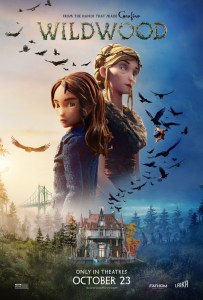 Every time Laika releases a new feature film, I consider it an event. Over the course of five movies since 2009, there’s only been one dud in the bunch, 2019’s Missing Link, and the rest have been great to all-time great. Short of the Aardman crew, they’re also the only reliable production company still making stop-motion animated movies, a dying art form in an era of streamlining and streaming. These movies by their nature take a long time, but Wildwood has taken even longer than most. Starting from the 2011 release of the source material, a children’s book by Colin Meloy, the lead singer of the indie folk-rock band, The Decembrists, the movie has been in some form of development over the course of 15 years, recording the vocal artists during the early months of the COVID 19 outbreak. This has been a long time coming and waiting for the technology to catch up with the ambition of bringing this fantasy adventure to startling life. While I have some quibbles over world-building and plotting, Wildwood is undeniably special.
In the strange realm of… Portland, Oregon, Prue McKeel (voiced by Peyton Elizabeth Lee) would prefer to hang out outside rather than babysit her two-year-old brother, Mac. Her parents are very protective and warn about the dangers that the outside world poses. She meets up with her classmate, Curtis (voiced by Jacob Tremblay), a nervous and talkative child, and the three of them head for a playground. While distracted, little Mac is abducted by a murder of crows and taken into the forest nick-named the Impossible Wilderness. It’s up to Prue and Curtis to find her baby brother and survive the unknown.
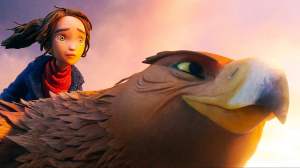 It should go without saying but the animators at Laika are nothing short of movie magicians. That old-fashioned stutter-step movement of stop-motion animation has been eliminated to the point that the medium is now as fluidly smooth as traditional hand-drawn animation. Given the time-sucking nature of the medium, many stop- motion features have very static cameras, because to involve camera movement means having to time it with all the other microscopic movements within the intended shot. It’s one more complexity in an artistic medium that is defined with back–breaking labor. I was stunned that Wildwood has so much camera movement and dynamic shot compositions, so much so that it felt like it was directed as a three-dimensional animated movie (note: I know it’s already three dimensions but you know what I’m referring to so don’t get too pedantic with me, dear reader). There are striking sequences where the camera will move like any other movie, or rack focus shots that changes our perspective within a scene; the kinds of immersion and activity we don’t expect from stop-motion animation, and that’s before the grandiose epic climactic battle as well as a hurricane of ivy that truly amazes the senses. It’s become staid to simply proclaim the genius of the animators, how much subtle life they can inform through movement, how much emotion they can perform with essentially action figures. The elasticity of the faces really struck me with this movie, how the flesh looked more human-like and translucent rather than hard plastic gel. I was amazed at the subtle animations involving mouths and teeth, how they would pull at the edges to reveal such little additional degrees of emoting to a line or a moment. I know all animation is time-consuming and often eye-popping, but there’s just something about the tactile nature of stop-motion animation that I find so much more astonishing to witness and become immersed within.
The story of Wildwood feels definitely influenced by the 1980s of children’s fantasy and novels that allowed things to go a little dark, like Return to Oz or Secret of NIMH and, of course, Labyrinth, also about a pre-teen girl looking to save her baby brother from an otherworldly dictator. This is Laika’s first PG-13 movie and the violence can feel harsh without feeling gratuitous. There was one sudden strike of violence that took my breath away, and the results stuck. Like other fantasy adventures, there’s a child learning more about herself, the world, but also learning that adults don’t always have the answers and are just as fallible as everyone else. The supporting character of Curtis has an equally compelling character arc, a nerdy kid who is socially awkward who’s thrown into a universe of struggle that he’s obviously ill-suited for, and yet he adapts, finds points of courage, but still doesn’t change who he is. Minor spoilers, but early on he calls himself a pacifist who doesn’t want to engage in violence, and in the climactic battle, he is forced to use violence to save a life. This harsh necessity of action versus inaction isn’t played in some heroic moment of triumph, with the character exhaling in satisfaction over his capability. He meets the moment with horror. He recognizes the necessity but is still aghast at the results. That’s because what he believes is firmly rooted in his conception of who he is, and even thrown into a fantasy realm, he doesn’t lose sight of his convictions even as he grows as a person. That’s refreshingly nuanced.
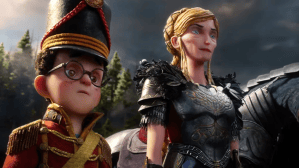 I appreciated how the villain is given degrees of complexity that provide explanation for her single-minded resolve. Alexandra (voiced by Carey Mulligan) too is a victim of the vice-grip of grief, unable to fully move on from the untimely death of her son until his bones can be found. It lays groundwork for a hostility against the forest, against the powers of nature, the environment she feels she needs to clear in order to locate the hidden remains of her only child. There’s something very raw about that, about being denied even the body of her lost child, and wanting that closure. In the evocative, nearly dialogue-free opening, we learn of her desperation and ache, using dark magic to bring her child’s spirit into a mechanical doppleganger. I’m surprised she didn’t continue tinkering with this process of robotic replacements, each of them eventually discovering the horrible truth and determining that death is a better alternative. She’s ultimately an example of what grief can do to a person, how it shuts out everything else, and she serves as a cautionary tale for our heroine, whether she might go down a similar path if she never recovers her abducted brother. She functions as a parallel for Prue without being overtly obvious. I really enjoyed Mulligan’s vocal performance as well, which has an edge to her voice throughout without giving way to larger histrionics. You can hear the pain in her every word, and the animators do a fantastic job of expressing this as well. I appreciate villains who see themselves as the real hero in their own story, who have genuine reasons for their motivations, and who can even teach our heroes some hard-won life lessons. Although it takes Alexandra too long to realize the availability of blood from “a child of magic.”
By the time the film settles into its final climactic act, if you had told me this was the most expensive movie ever made, I would believe you (the actual reported budget of $100 million is still a fraction of what Pixar spends). The level of ambition in the staging is staggering. It’s hard for me to even fathom the hours put into the minute details of this large-scale battle put to screen, with hundreds of figures in different points of articulation amidst the stages of battle. When Prue slides into the middle, I could feel my heart beating faster and my anticipation build. Oh, they really are going to go right into the thick of it with the animation. The scale of it is truly stunning, and the reality that you know each figure, each item, was moved incrementally by human hands and photographed for a fraction of a second, then reset, makes the breadth of the artistic achievement even more amazing. Dear reader, allow me to get into a sentimental digression here. Stop-motion animation is a hard medium to work in, demanding and challenging and, most of all, slow, and to witness this climax and the level of detail and scale dazzles me and genuinely inspires me. It’s a clear demonstration of the passion and talent of the dedicated artists all working together to bring to stunning life this work of art, and it just makes me think about the collective value of art for our culture and ourselves, how necessary it is. During the early months of COVID lockdowns, when people needed an escape and something to nourish them, they turned to movies and television and music and books and stories. We turned to art when we needed it. We will never stop needing art, the way that we make sense of ourselves, the world, and our palace within it, and if we can occasionally have a work of art as mesmerizing as Wildwood, then we’ve done well. By the end of its 130 minutes, it’s easy to feel the immeasurable love and passion many artists have imbued with this project.
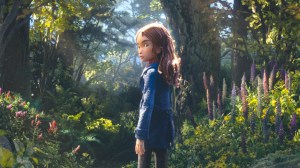 However, there are some storytelling flaws that hold Wildwood back from being its best version. For a fantasy universe that we drop into, by the end it still feels rather messy and under-developed. The different factions of characters feel piled on rather than as organic extensions. There are indigenous peoples forcibly removed from their lands fighting to regain their homes. What’s the history or connection they have to the land? Is there a spiritualism or power they have that gives them an advantage? There are talking animals but there doesn’t seem to be a distinction between them beyond the coyotes that have taken up arms as Alexandra’s muscle. Why did this one group turn against their animal brethren? There are hoity-toity aristocrats but no larger sense of a kingdom than one building. How are the humans maintaining a government, or even independent productivity, when a displaced governess is deposed and regaining her power? There is a small farming community of animals and humans living in harmony, an aspect not really explored as being so different from the other locales. Then there’s the revelation that Alexandra can venture into the outside world to enact small miracles, and if that’s the case, why isn’t she pulling in outside technology or resources that would provide a new balance of power? If what she’s looking for is a “child born of magic,” why hasn’t she gone full Elon Musk and just traveled the land seeding future children through her powers of magic? Surely that would increase the odds of success. None of these questions destroys the reality of Wildwood, but enough of them make it feel like the world hasn’t been sufficiently developed to have its own set of internal logic and rules that prove satisfying. I also found the characters for the most part to be under-developed as well, kept as more archetypes than honing with the attention they deserved.
Even though not everything worked for me, I’m eager to re-watch Wildwood in the near future because I’ve found, with rare exception, that Laika’s movies grow on me with more viewings. I was initially admirable but reserved with 2016’s Kubo and the Two Strings but after multiple viewings I now consider it to be a remarkable movie with stunning visuals and stirring emotional resonance. It’s quite possible that with some distance and contemplation that Wildwood would follow a similar path. I can also say my emotional investment in the movie was a bit personal as the three human children, Prue and Curtis and baby Mac, matched my family of little ones exactly, even down to similar physical appearances, so I found myself feeling more for these characters thanks to the wonders of psychological projection. Wildwood is a marvel of a movie that I presently wish had just spent a little more time on fleshing out its world and its intricacies and conflicts to make the fantasy realm feel more unified than ramshackle. It’s certainly worth seeing and cherishing even if it may not click fully with the individual viewer. The fact that something this ambitious and beautiful exists after 16 years of loving toil is its own miracle. We need more movies like Wildwood to remind us of the escapism and necessity of impassioned art.
Nate’s Grade: B+
Share this:


Posted on October 29, 2026, in 2026 Movies and tagged action, amandla stenberg, angela bassett, animated, awkwafina, book, carey mulligan, charlie day, drama, fantasy, jacob tremblay, jake johnson, laika, mahershala ali, richard e. grant, supernatural, talking animals, travis knight. Bookmark the permalink. Leave a comment.


Leave a comment
Comments 0