Blog Archives
Fatale (2020)
 There were many bad judgements when it came to developing Fatale, the first being that this erotic thriller was worthy of any sustained effort. I’m all for a guilty pleasure genre outing, and we’ve had enough distance from the heyday of erotic thrillers that a re-examination could be due, especially in light of the Me Too era. I was wondering if Fatale was going to present its chief crazy lady, played by two-time Oscar-winner Hilary Swank, as the one who was right all along, and instead of endangering the nervous husband Derrick (Michael Ealy) she was really protecting him. Or maybe the movie was going to posit that Derrick’s perception of events was biased and built upon false assumptions and he was the real villain. Or maybe the Fatal Attraction-esque plot (Swank’s loft even resembles Glenn Close’s abode) would have more commentary on the fact that our resident crazy stalker was a police officer targeting a black man. I was holding out hope there would be something, anything to separate this movie from the glut of junk, but alas, it is merely a better assembled mobile of junk you’ve already seen far too many times in other questionable movies. There is nothing to surprise, to subvert your expectations. It’s depressingly predictable. Amazingly, the writer is David Loughery, who also wrote Obsessed, Lakeview Terrace, and The Intruder, which suggests he’s perhaps copying and pasting and re-arranging familiar story elements at this point. I didn’t care about the plight of Derrick because the movie wants me to see him as a “nice guy” but he’s really a dolt who doesn’t deserve our sympathy. Swank (The Hunt) is badly miscast as a seductress. She comes on so strong so fast that I thought the movie was aiming for self-parody. The fact that Swank is listed as a producer further confounds me. I’m sure she felt playing a sultry villain would be fun, but Swank’s performance needs to go bigger to leave the orbit of an otherwise forgettable and boring genre exercise that wastes everyone’s time. Fatale deserved to be filled with no names and occupy a Cinemax slot between the hours of three and four A.M.
Nate’s Grade: C-
Share this:

The Midnight Sky (2020)

The Midnight Sky is really two sci-fi survival movies in one. In 2040, the world is experiencing a planet-killing ecological disaster. A team of astronauts, lead by a pregnant Sully (Felicity Jones), is returning from a multi-year mission to check if a moon of Jupiter is habitable. On Earth, Augustine (George Clooney with a Santa beard) is the lone scientist left at an Arctic research station. He has cancer and sees his life as having run its course, that is, until he finds a small girl (Caoilinn Springall) who missed being evacuated. They band together to brave the wintry, poisonous elements to travel to another outpost to better communicate with the returning astronauts and possibly secure an escape from this dying world. It sounds like it should be a very exciting and interesting movie. There are even sinking ice floes, space walks amidst deadly asteroids, and Augustine having to stop at points lest he overtax his frail body. In practice, the movie isn’t so much exciting as it is ponderous, grasping for a larger philosophy and existential meaning that seems entirely elusive. We’re treated to several flashbacks of a young Augustine (different actor but still voiced by Clooney) that seem superfluous until a grand reveal that made me audibly groan so loud I thought my neighbors would complain. I kept waiting for the relevancy between the stories to be demonstrated, and when it happened it was not worth the two-hour wait. The realization was so hokey that it retroactively made me dislike the movie’s moments that had been working earlier. As far as direction, this might be one of Clooney’s strongest turns as a visual storyteller, even if he borrows liberally from other recent sci-fi movies, notably Gravity, The Martian, and Interstellar. There are moments of stark beauty and terror. Ultimately, the whole movie amounts to a sad man taking stock of his life and legacy (is he a metaphor for the Earth? Is the Earth a metaphor for him?), and I’m still wondering how something this glum could also be so maudlin. The pacing is another issue. I was always eager to jump to the other storyline to see what they were doing (a cinematic “grass is greener” mindset). The acting is fine and I wish I could have spent more time getting to know the crew of this space mission (including Kyle Chandler, Demian Bichir, David Oyelowo, and Tiffany Boone) or conversely gotten to feel more of bond between Augustine and his near-mute charge that felt like it was providing insight into this man. Looking back, there’s a reason for some of the stilted characterization, but having an excuse for why your characters aren’t better developed is like preparing an excuse why you did something self-sabotaging. The rest of The Midnight Sky doesn’t better compensate for this storytelling choice, and so the movie feels too dull, frustrating, opaque, and overly manipulative, aided and abetted by Alexandre Desplat’s sappy score. No more than the sum of its parts, you can soon watch The Midnight Sky on Netflix and fall asleep to it on your own couch.
Nate’s Grade: C+
Share this:

Tenet (2020)
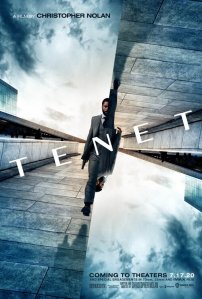 As my girlfriend described, Tenet is a headache disguised as a movie. I can agree about the confusion and irritation from trying to make sense of a 150-minute movie that almost defies you to even keep watching. From the opening sequence, my head was hurting from trying to make sense of everything and deduce meaning and connection. Christopher Nolan’s movie was set up to be the savior of the summer, a thinking man’s blockbuster with such size and scope that people would come back to the newly opened theaters to get a taste of the summer they missed because of COVID. It didn’t work out that way and Tenet’s box-office disappointment contributed to the recent decision for its parent studio to release its entire 2021 slate of movies onto its streaming service (nobody should risk their life to go see the Tom and Jerry film). Tenet has too much going on for me to call it a bad movie, but it also has too much going on for me to call it a good movie.
Protagonist (John David Washington) is recruited by a secret organization that is trying to thwart a cold war from becoming hot between the future and the past. Neil (Robert Pattinson) explains about “reverse entropy,” about effect before cause, and that there are machines that can allow people to reverse their direction in time. It’s less jumping through points than it is hitting the rewind button. A Russian oligarch (Kenneth Branagh) and his wife (Elizabeth Debicki) may be the key to preventing a future catastrophe or one that hasn’t happened yet or has already happened. It’s time travel so the tenses can get confusing. That’s not the only thing that’s going to likely confuse you.
 At around the half-hour mark, it felt like every character was talking past me, like they had no intention of being accessible. It is practically maddening to be in a conversation where everyone is talking above your level, relying upon lingo and references you are unfamiliar with, and you can try your best to grasp the basics of context clues to try and decipher a base level of understanding, and then, when you think you have things together, they start talking backwards. That is Tenet in a nutshell. It is a mystery how Nolan expected general audiences to even want to keep up with this. I’m not one of those people that needs my story spoon-fed to me, and I welcome challenging storytelling that rewards multiple viewings. However, the problem with that gambit is that if you require your movie to be seen a multitude of times to be understood, you better guarantee anyone will want to watch it a second time. I’m certain I’ll better understand Tenet with another watch and that I’ll find even more little clues to celebrate the exquisite cleverness of Nolan, but I don’t want to re-watch this any time soon, if possibly ever.
Nolan has been here before with 2010’s Inception, a movie that could have been confusing from its very conception given a heist upon four levels of dreams each with their own sense of linear time. Early on, Inception was also confounding, but slowly Nolan opened up his world, allowing the audience to adjust to a learning curve and process the information we needed to be set by the time the big heist got underway. Even after, we had mysteries and complications to be solved. It was a complex puzzle with layers but it was accessible. I thought early into Tenet we would be following a similar track, and I kept waiting to adjust to the learning curve, for things to gain a momentum. There needs to be rules, a demonstration of the rules, and then we proceed. I guess I understood things on a general level, stopping the bad guys from somehow destroying the world, and special turnstiles that make you go in reverse time, and there’s a palindromic plotting emphasis that becomes a late justification for 90 minutes of mostly boring blather with the occasional set piece. For the purposes of further clarity, I even read the Wikipedia plot summary to fill in the gaps of my personal comprehension, and it didn’t really assist beyond confirming for me that I understood the broad strokes of an otherwise confounding movie. It’s hard not to feel like Tenet is more an expensive, globe-trotting experiment for Nolan than a movie intended for mass entertainment. Again, I’m not deriding Tenet because it’s ambitious. I’m deriding it because it’s indignant of a potential audience.
I cannot stress enough that every time characters began speaking, I liked Tenet less. If somehow the movie had eliminated all dialogue, it might have worked better. It’s not like Nolan’s scripted words offer much comprehension anyway. It feels like the dialogue is nothing but impenetrable riddles about scientific jargon and vague pronouncements often given to too cute dialogue about the nature of time. There were points I just wanted to scream. Of course there were other moments I was straining just to try and understand what was being said. Tenet is another example of Nolan’s self-sabotaging sound design where he makes the volume of characters speaking subsumed to the volume of sound effects and score. It becomes another hindrance to try and understand an already confusing and aggravating movie experience.
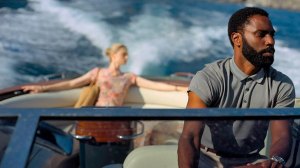 Another factor that made Tenet a slog was the lack of any emotional engagement. Nolan has often been criticized for being a cold filmmaker, one more beholden to the intricacies of his origami-styled plots and surprises. I think this is often an unfair charge but he’s certainly a filmmaker known for his preference for plots that take ownership of character. You would not confuse a Christopher Nolan blockbuster for some mumblecore indie. Even in a movie with as much plot groundwork as Inception, Nolan provides an emotional core with the story of a man literally haunted by the ghost of his wife and his grief over his own culpability for her demise. The climax even involves him having to finally let her go in order to save the day. With Tenet, we get nothing. There’s an abused wife and while I don’t want to watch her get threatened and attacked by her husband, that’s not exactly the same as providing an emotional anchor. She’s, at best, a supporting player. The world-saving stakes are all you’re going to get. I didn’t care about Protagonist as a protagonist, and I didn’t care about Tenet as a secret organization, and I didn’t even like spending time with these people. These characters are boring, but the movie thinks by keeping them moving fast enough, or talking nonsense long enough, that you will fail to notice.
I’m not even fully cognizant of the benefits of inverse time. You can travel backwards and watch people go in reverse but is this really a practical application of technology? Reverse fight choreography can be cool, like people doing reverse flips, and it can also look extremely silly with punches exchanged that look too fake and people scooting on the ground like child trying to break dance. For me, it’s a toss-up whether watching characters run in reverse is surreal and dreamlike or just plain goofy. I guess one could reverse and then un-reverse, more or less traveling back to a point in the past and going forward from there. This means you’ll have to live those extra days, weeks, whatever the time difference, but it also seems to indicate that you must do everything you did before because you have already done it. If this is the case, why bother going back in time if you’re just indebted to doing the same things all over again? Why take a test again when you have to give all the same responses to the same questions? It feels like Nolan wanted to try and make a time travel movie that isn’t quite a time travel movie, so he settled on people running backwards. There is an intriguing disorientation at work when Nolan really plays with the physics of reverse time, but I don’t think this core idea ever fully comes together in a satisfying manner.
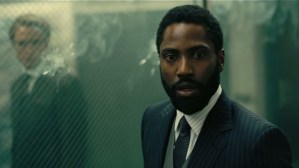 The last hour of Tenet does liven things up as we have two large action set pieces that play out with patience and an expansive scope. This is Nolan’s spy action-thriller. A high-speed heist on the road leads to a car chase with reverse cars to combat. It’s the only action sequence where the audience has a good understanding of the mini goals. Even an earlier art heist resulted in raising questions of credulity (“If the security system sucks out all oxygen, and they’re triggering this, why have they not come prepared with their own oxygen tanks?”). The high-speed heist and ensuring chase sequence flat-out works and is pretty cool. The conclusion involves two teams of soldiers, one going forward in time and one going in reverse, and that has such amazing potential for an intricate and exciting culmination of action. Imagine a character going back and forth and jumping from their unique perspectives to aid and inform each team. Unfortunately, in execution it comes across as jumbled chaos. Again, I imagine there are details and parallels I would notice more with a second viewing but I doubt when that will happen. For a movie essentially about time travel, it feels like Nolan has put more careful thought into trying to make his movie a palindrome than trying to come up with engaging and cool things to do with time travel action.
Christopher Nolan is one of the biggest names working today, a man whose risky, expensive blockbuster projects get greenlit because of his artistic audaciousness. You would never want a Nolan movie to simply play things safe. He seems at his most comfortable when it’s playing around with chronology and audience expectations of what moments have meant. There is a reverse palindromic feature to this screenplay I do admire from a writer’s perspective. However, knowing it takes a confounding 90 minutes to get to that reveal means that you’ve had to endure 90 minutes of protracted set up and with characters that are, at best, glib archetypes, empty suits, and guns with people attached to them to occasional bark orders or say confusing terminology. It makes for a very frustrating and at times disengaging viewing experience, one I even contemplated retreating from. I’m glad I stuck it out but cannot say it was worth the time and ensuing headache.
Nate’s Grade: C
Share this:

Promising Young Woman (2020)
 “I’m a gentleman,” says a man at his bachelor party, trying to bashfully turn down any sexual antics with the women paid to entertain him and his friends for one boozy night. He’s also trying to indicate he’s “not like those other guys” and genuinely respects women. He gets it. “Well,” says the woman in the shiny fetish outfit, “I’ll have you know in my experiences that ‘gentlemen’ can often be the worst.” This line summarizes Promising Young Woman, a revenge thriller in a post-Me Too era that is unsparing to all those who would proudly say, “Well, I support women.”
Cassandra (Carey Mulligan) was the top of her class at med school. Then her best friend was sexually assaulted at a party while she was inebriated, which allows the university to paint her as guilty and the accused as blameless (“What do you expect when you get drunk?” kind of victim-shaming). Years later, Cassandra has never been the same. She poses as a drunk at clubs and waits for her knight in shining armor to take her home, and often these modern men of chivalry prove to be creeps looking to take advantage of women and in needing of some harsh medicine.
 This is a movie that walks a fine line to stay out of the shadow of becoming just another exploitation film with a higher gloss. I was yelling at the screen early about the choices men were making with susceptible women in their care. Admittedly, it plays upon that icky genre and taps into our inherent feelings associated with it as well as vengeance thrillers, and writer/director Emerald Fennell (TV’s Killing Eve) smartly subverts our expectations and loyalties. We want Cassandra to achieve her righteous vengeance regardless of the moral or psychological effect it has upon her because vengeance is satisfying. We want to see bad people who have escaped punishment suffer, but Fennell challenges the audience to see how far we’re willing to go for this goal. There are moments where it appears that Cassandra is going to go the extra step to antagonize her targets, and this might involve facilitating other innocent women into potential danger. It’s a sharp turn that asks the audience how badly they want to hold onto that righteous sense of indignation. Do all ends justify the means? Now I won’t confirm whether or not Cassandra follows through for the sake of spoilers but this is one very knowing movie about how to make its audience uncomfortable. Obviously, dealing with the subject of sexual assault and predatory men, it should be uncomfortable because of the nature of the subject, but Fennell has a wicked sense of when to twist her audience into knots. She doesn’t let anyone off the hook easily and that includes her heroine and those close to her. Nobody looks clean here. It makes for a truly surprising experience. When I say that Promising Young Woman makes some bold choices, it really makes some bold choices. There were points I was sighing heavily and others where I was stunned silent. It brought to mind No Country for Old Men. The commitment that Fennell has to her excoriating artistic vision is startlingly provocative and effective.
One early scene stood out to me and let me know that Promising Young Woman was going to have more on its mind than bloodshed. Cassandra is walking home from a night out in her same soiled clothing and eating a sloppy hotdog with ketchup running down her body. A group of construction workers watch her and begin yelling from across the street, harassing her with unwanted sexual advances while they yuk it up. Cassandra stops, turns her head, and simply stares them down. She doesn’t glare at them or shout at them; all she does is look in silence. The workers get quiet very fast and then after several seconds they become angry and defensive, uncomfortable from her attention, and they walk away insulting her. Didn’t they want her attention? Weren’t they boasting? By merely drawing her focus onto these men and making them mildly reflective of their behavior they became uncomfortable and elected to leave. This scene only plays out for like twenty seconds and yet it serves as a symbol for what Fennell has planned with the rest of her thriller. She is going to take what you want and make you re-examine it with a fresh perspective that might just make you rather uneasy and disgusted with yourself.
The first half of the movie establishes a routine that explains what Cassandra has been doing since dropping out of med school. She’s never been able to move on from the trauma of her past and so she seeks out new potential perpetrators to inflict pain upon or scare straight through tests. By the second incident, we adjust to her formula and lie in wait for Cassandra to strike back. She’s the smartest person in the room and it’s deliciously enjoyable to watch her enact her plans. This avenging angel routine runs into a roadblock when she reunites with a friend from med school, Ryan (Bo Burnham), a pediatric surgeon. They share a meet cute that involves Ryan drinking a coffee that Cassandra has spit into as a declarative sign of his interest (trust me, I’m making it sound far creepier than it plays onscreen). They go on several dates and have a palpable romantic chemistry together. This is aided by Fennell’s excellent dialogue, which can be cutting when it needs to and also supremely charming when it wants to be. It’s a peculiar rom-com but on its own terms, including unashamedly reclaiming a forgettable Paris Hilton pop song with full sincerity. At this point, Promising Young Woman is sizing up a choice between following vengeance and following romance. It’s a formulaic fork in the road and Fennell completely understands this, as she’s also testing the audience how much they are willing to sacrifice to see Cassandra check off her guilty names. This storyline doesn’t feel like a cheap alternative either. I liked Ryan and Cassandra together. However, Fennell stays true to her poison-tipped plans and this storyline becomes another chapter in her larger thesis on the condemnation of “boys will be boys” rationalization.
 There is another scene worthy of being hailed because it goes against your and the character’s expectations (some spoilers). Cassandra tracks down the lawyer responsible for defending the university and discrediting her friend once she came forward with her rape accusation. Alfred Molina (Spider-Man 2) is this man and he’s quite antsy because he has been waiting for months for a visitor he anticipated would inevitably arrive. He’s been let go from his firm after having what they refer to as a “psychotic break” and what he refers to as a crisis of conscience. He’s made a career over sliming victims’ reputations, a fact he confesses has been made infinitely easier by modern technology. “We used to have to go digging through the trash,” he says, “But now all we need is one picture on Facebook of the girl at a party and you’ve got jury doubt.” Cassandra is taken aback by how eager this man is, not for absolution which he believes he will never earn, but to be punished. It’s not like a weird fetish but a genuine accounting of what he feels he deserves. It’s a short scene but it challenges Cassandra and the audience about the potential of redemption and forgiveness. This is what she wants after all, people to account for their part in the injustice that happened to her friend and to make amends for their guilt.
Mulligan is ferocious and on another level with this performance. She’s listed as a producer so I assume she had a personal connection with the material because she feels so aligned with the character that she can make you shudder. Mulligan has been an enchanting and empathetic actress since her breakout in 2009’s An Education, the source of her lone Oscar nomination. I’ve never seen her quite like this before. She has a natural sad-eyed expression, which made her perfect for Daisy Buchannan in the new Great Gatsby. With this role, she’s taken those natural sad-cute instincts and carved them out and replaced it with bile. Mulligan gets to play multiple false versions of Cassandra as she adopts disguises and personas to dupe her prey. This also makes the viewer subconsciously question which version they see is the real Cassandra. Is it a distortion upon a distortion? How well can we ever get to know this woman? I think Mulligan is most deserving of her second Academy Award nomination for this bracing, incendiary turn.
This is Fennell’s directorial debut and it will not be her last time in the director’s chair. Her command of pace and visuals can be sneaky good, framing figures to squeeze in potent symbolism as well as ratchet up tension and discomfort. The visuals can also be comedic poetry, like the opening images of men in khakis gyrating and thrusting on a dance floor. She also demonstrates supreme restraint where needed. The sexual assaults of past and present are never visualized but they are not mitigated either. She also has a tremendous ear for music. This soundtrack is sensational from the club bangers to the old timey country ditties. It feels as exceptionally selected as any Wes Anderson or Quentin Tarantino movie soundtrack. The score by Anthony Willis is deeply emotive with its use of strings and cello. They deliver a cello cover of Britney Spears’ “Toxic” and it’s as if the filmmakers made this choice specifically for me.
 If there is one slight downside, I’d have to say many of the supporting characters are under developed. There are plenty of famous faces in this enterprise, like Adam Brody, Laverne Cox, Clancy Brown, Connie Britton, Max Greenfield, Chris Lowell, Jennifer Coolidge, Christopher Mintz-Plasse, but most of them are deposed for a scene and then vanish. It starts to feel like a series of guest appearances from actors as they’re passing through town. Alison Brie (Happiest Season) has a longer and slightly more nuanced part as a former college friend who betrayed Cassandra when she needed her most. This character, along with Birtton’s school dean, illustrate that just because you happen to be a woman does not automatically mean you will be a helpful ally. I view it less as a snide “girls can be bad too” equivalency and more an indication just how insidious and prevalent rape culture can be and condition people into gross excuse-making complacency. I will say that it was nice to have Clancy Brown play a normal dad role and he was sweet too.
Beware, men of the world, the next time you size up a pretty young thing who looks meek and helpless. Promising Young Woman wears the skin of an exploitation movie but it’s so much more. Fennell has created a tart, twisted, and powerful film that is coursing with righteous fury. It’s a female revenge vehicle but with far, far more ambition than simply providing tingles to baser instincts. The artistry here is special and transforms the iconography of exploitation movies into a contemplative and jolting experience. Promising Young Woman is a definite conversation-starter and the first thing you might say upon its conclusion is a breathless exclamation of, “Wow.”
Nate’s Grade: A-
Share this:

I’m Your Woman (2020)
 I’m Your Woman does for the gangster/crime genre what You Were Never Really Here did for the loner revenge thriller, namely demystify popular tropes and find a humanity often missing below the surface. We’ve been inured to gangster cinema for decades and love following the criminal antics of bad men without fully thinking about the collateral damage on the periphery of their story. I’m Your Woman imagines a typical crime story but from a very human perspective, focusing on the wife who has to deal with the confusion and fallout from her husband’s misdeeds. It’s a refreshing and modern take that works as moody paranoia thriller just as much as it does a subversion of them.
It’s the 1970s. Jean (Rachel Brosnahan) is married to a man who she knows does some very bad things. One day Eddie (Bill Heck) comes home with a baby that he declares is theirs. Where did this baby come from? Jean cannot say but she chooses to raise this child as her own son. Another day, her husband goes out with some friends and never comes back. One of his associates barges into her home in the middle of the night, bloodied, and tells her that Eddie is gone and she needs to likewise be leaving in a hurry. He tasks Cal (Arinze Kene) to drive Jean and her baby out of town, watch over her, and wait until the heat dies down or everyone else just ends up dead.
 And with that, the movie is off to a gallop and Jean doesn’t know what’s happened to her life, only that it’s bad, and she doesn’t know where her husband may be, or even if he’s alive, but she’s told that people will be coming for her to get to him or to punish him, and so she must be whisked away in the middle of the night into hiding. We as the audience are left very much in the dark with Jean, and this precious little information allows us to very strongly feel her paranoia and anxiety. Every scene when she’s been left alone and sees a car coming closer, every knock on the door, it raises the suspense because your mind, like hers, is questioning everything. Admittedly, some will find this to be rather boring and a lacking perspective, but I thought the approach of director/co-writer Julia Hart (Stargirl) was to highlight the perspective of a character often taken for granted and forgotten in gangster cinema and its celebration of doomed antiheroes. We’re used to criminals neglecting their molls, and I’m Your Woman declares its allegiance right in the title. We’re on the run with this woman, trying to make sense of the plight as we go, and being trapped in a position of limited information is an intriguing and relatable dash of realism.
There are violent outbursts from time to time, but much like You Were Never Really Here (the two of these movies would make a good double-feature, folks), the violence is far from glorified and often denied to the viewer. Much of the violence is depicted off-screen and we watch Jean stumble upon its awful consequences, again linking up with the perspective of a bystander to the careening violence and mayhem from her romantic attachment to a life of crime. There’s a mass shooting inside a club that is deeply unnerving because of our limited perspective. We’re tethered to Jean and hear the off-screen gunshots getting closer, the screams of civilians, and the camera keeps running without a cut as she dashes down a long corridor but cannot find an exit. She ducks into a phone booth and we watch armed men pass by. She waits and makes her escape, tripping over bleeding bodies, and the camera continues in one ongoing take. It’s nerve-wracking but it also denies us coherency or clarity which makes it so much scarier (I was having visions of what people might have gone through with the Pulse nightclub massacre). Given its subject, there are moments of sudden, shocking violence but often it’s to disorient us and not as some delivery system of satisfaction. It would be very easy to follow a more traditional formula for Jean where being thrust into fending for herself turns her into a steely killer that lays waste to the men hunting her as finds her own means of authority. That was essentially the plot of last year’s The Kitchen, a fairly mediocre and disappointing movie about threatened mob wives. That’s not this movie. Jean doesn’t become a ruthless mob boss. She certainly attains an agency that she didn’t have at the start of the film and a well-earned resilience, but she’s always a grounded, frantic, and relatable person trying to keep their wits and not serve up a witty retort.
 Because much of the movie involves the protagonist in wait and picking up small pieces of information to reform her sense of self and her dire circumstances, the digressions had better be worth it. I fully believe I’m Your Woman is going to be a divisive movie and it will entertain likely as many people as it leaves cold. I found the small digressions to be interesting and doing their part to strip away the movie world heroics and trappings, allowing people to simply act like recognizable people. There are little things that stand out, like a kind neighbor simply recognizing how exhausted a new mother looks, or a method of soothing a baby passed down from father to son, or the discussion of making a child laugh being the clincher for parental ties. There’s a lovely moment halfway through where Jean and Cal are stopping at a café. She delivers a monologue about her unexpected child, about her inability to carry a pregnancy full-term, about her prior miscarriages and her divining what that means about her involvement in crime, and it’s one of those moments where it feels like a character is just baring their soul. Jean is so vulnerable, so remorseful, but also so lost yet hopeful of what being a mother could mean for her, a title she says she tries to downplay but had really been her heart’s desire. I enjoyed getting to spend time with Cal and those he links Jean up with later. There’s a found family aspect of dislocated people trying to navigate the hand they’re dealt without pity or commiseration. When the movie stops to take a breath, that’s when it kept solidifying its growing authenticity for me.
Brosnahan (The Marvelous Mrs. Maisel) is a fine anchor. She has to constantly be alert and anxious, as well as exhausted, so even when she’s at rest her character can never fully be rested. It means that even during the quiet moments alone, Bosnahan is giving the viewer a terrific sample of non-verbal acting prowess. I appreciated that Jean isn’t stupid. She’s ignorant insofar as she lacks crucial knowledge, but throughout I’m Your Woman she responds to potential threats and suspicions in ways you would hope and avoids more than a few disasters. Brosnahan also has an easygoing chemistry with Kene (How to Build a Girl) that makes them a winning team.
I found I’m Your Woman to be a refreshing take on crime stories by re-examining life from a character very often left behind while the men run their schemes and accrue their violent demise. It’s an interesting character study of a gangster’s moll and what living with the consequences of a bad marriage can involve. There’s terror and bloodshed but it never feels sensationalized or glamorized. Our heroine proves herself capable of surprising those who discount her, but that doesn’t mean she transforms from a scared, confused, and desperate person into an action hero. The filmmakers have brought a reflective and humanist take on the gangster genre, and your appreciation will likely also benefit from familiarity with the genre and its tropes. If you’re subverting expectations, knowing those expectations is somewhat essential to the desired effect. I’m Your Woman is worth your time if you ever wondered about the life of so many of those underwritten, possibly stock supporting roles in a gangster movie and asked about their interior lives.
Nate’s Grade: B+
Share this:

Cast Away (2000) [Review Re-View]
 Released December 22, 2000:
Strand Tom Hanks on a desert island for years? Sounds too good to be true to many a disgruntled movie goer. Such is the state in Cast Away, Robert Zemeckis’ existential meditation on man, nature, FedEx and their product placement checks, and of course… volleyballs.
Hanks is yet another everyman, except he’s a real stickler for time and order as a FedEx supervisor. His girlfriend (Helen Hunt) is pushing for marriage but hey – they’ve got all the time in the world, right? So Tom boards a FedEx flight headed for the South Pacific that hits a nasty collision with a powerful storm. The plane goes down abruptly in what is likely the most terrifying plane crash ever performed on film. Hanks washes ashore onto a mysterious deserted island after drifting alone in the vast ocean. Without civilization and without human contact he must start all over just to survive the day. So becomes the odyssey of Island Tom.
Cast Away hits one out of the park with its near dialogue free middle act with Tom’s first days upon his new island home. Hanks struggles to do everyday things from finding food to creating a makeshift shelter. As Hanks goes through these daily troubles the audience is with him every moment and learns as he does. Cast Away‘s middle is fascinating to watch. After a few days some packages from the crash wash ashore including a volleyball that Tom turns into his best friend. “Wilson” is Hanks’ companion and is totally understandable how one would branch out for contact under the circumstances. Plus, Wilson’s a dynamite celebrity of his own right now.
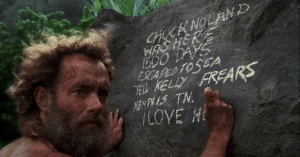 Hanks’ acting is his usually above average output, but his whole role seems more like a showcase for his method acting than the acting itself. The first half of Cast Away was shot then they took a year off so Hanks could become scruffy, thin Caveman/Unibomber Hanks. The transition is fun to watch and remarkable for an actor to devote himself completely to their role. But the part itself, and Hanks’ show, seem more spectacle than substance. Helen Hunt pops up in the beginning and end proving that she can somehow manage to be in every film in December. Pretty much the next actor in the film would be… well, a volleyball. Cast Away is basically a one-man show.
Despite a wonderful middle Cast Away is suffering from the opposite syndrome of Saving Private Ryan: strong middle, weaker beginning and end sandwiching it. Our opening plays like an extended commercial for FedEx, complete with the dazzling FedEx package POV cam (coming soon!). The end plays like a thank you card to FedEx. The ending also suffers from extreme let-down from multiple climaxes that don’t end the film but just give way to another climax. By the time the movie does end you’re exhausted.
Zemeckis lends a skilled hand toward the direction, the script plays to the strengths of the tale good enough, and Cast Away has its moments but becomes too heavy-handed at certain periods. Still, the volleyball is good. Go for the volleyball.
Nate’s Grade: B
(For fun, count the amount of times FedEx is mentioned or seen in the film. Hell, do it with this review too. I’ll even help you out – FedEx, FedEX, FedEx, FedEx, FedEx, FedEx, FedEx, FedEx, FedEx, FedEx, FedEx, FedEx, FedEx, FedEx, FedEx. Oh fun.)
——————————————————
WRITER REFLECTIONS 20 YEARS LATER

Twenty years later, Cast Away feels almost like finding a message in a bottle of another time, a time when director Robert Zemeckis was routinely making great movies, and when Tom Hanks ruled the box office and awards circuit (he has only been nominated for one Oscar since Cast Away, in 2019 for playing Fred Rogers). It’s also a movie that reminds you that despite all else that concept is king. It’s an especially easy movie to watch, and its middle portion is so beautifully clear and accessible that any group of people could keep up and find the island plot thrilling and fascinating. There are long, long portions where the only dialogue spoken in the movie is between one very harried man and a volleyball he has adopted as his only friend. Cast Away is in many ways a textbook example of elegant visual storytelling and also an example of the limitations of emotional engagement when there’s not much else going on but survival.
Please don’t get me wrong, I was mesmerized during the island portion of this movie, which makes about 80 minutes of an otherwise overly long 140-minute movie. When it’s Chuck Noland (Hanks) stranded on a deserted island and having to think step-by-step for shelter, food, and basic care, I was hooked. I was thinking each step of the way, learning and applying that new knowledge base with the main character, and it’s just an imminently enjoyable formula to witness a character work through problems and triumph under extreme circumstances. I felt the same thing with 2015’s The Martian, which was dubbed “Cast Away on Mars.” It even goes back to arguably the first novel, Robinson Crusoe, following one man and his wits and will alone on a perilous island. Very often the protagonist in these man-versus-nature stories is a stand-in for all of us, representing humanity’s quest to conquer the elements and prove our collective mettle to the universe. There is an immensely satisfying pleasure watching storytelling that is precise, efficient, and clean, imparting the necessary information to build onto the next scene and for each setup to expand your understanding and trace to the next payoff. Screenwriter William Broyles Jr. (Apollo 13, Planet of the Apes) deserves more plaudits than he has been given. The island portion of Cast Away is beautiful and near brilliant. Each moment builds so naturally. You learn the geography of the island, the mini goals of cracking open a coconut, building a fire, turning the FedEx trinkets into valuable tools of adaptation, it all builds and at your own pace.
 When we make that four-year time jump, Zemeckis definitely wants it to be a showstopper moment and it is earned. The camera slowly pans to linger on the image of Chuck, much more tan, gaunt, and with a beard that I wrote in 2000 could rival the Unibomber. It’s such a striking image coming right after an unexpected time jump. That’s Tom Hanks, one of the members of Hollywood royalty, and he looks so different from his earlier, schlubby everyman self. The sight is also a stark reminder of Hanks’ physical dedication to the role. He spent a year losing 50 pounds and growing out his scraggly beard. The entire film production went on hiatus and Zemeckis shot an entire other movie released in 2000 (the unremarkable What Lies Beneath). His performance is genuinely great and perhaps more deserving of the Oscar that year than eventual winner Russell Crowe for Gladiator. It’s a performance that is more than a Method physical transformation. His terror, elation, and worry are readily apparent onscreen. It’s a one-man show so you better not get complacent because the audience has nothing else to hold its attention than watching your face, your expressions, your tumult. Not everyone can share the screen with a volleyball and make you feel something when that ball drifts away.
It’s all the rest of Cast Away that can’t quite add up. The first act is mostly establishing Chuck as a figure fated for grand ironic punishment, a workaholic taskmaster who has all the time in the world and nothing more to do but sit with his thoughts. The first act establishes his Before life for our contrast, so we know what he will be leaving behind, and this only really works when the final act rolls around to offer the After period. Now we check in on these minor characters and what four years have done for their lives, how they mourned and moved on from Chuck, and how they’re handling his miraculous re-appearance. You could make an entire movie about a woman whose former love comes back years later after being presumed dead and how this shakes up her current relationship and her own mental sense of self and yearning. That’s a tremendous amount of internal struggle to sift through. Except, with Cast Away, Chuck has lost something but it doesn’t really feel like he’s lost much. Our only time spent with Kelly (Helen Hunt) is during the first act, and while he holds onto her memory and she ostensibly serves as a motivational force for him to get off the island, it’s not felt by the viewer. So when we learn she’s married and a mother, it doesn’t feel so tragic as it does mundane. Life carries on.
 By then it’s too late to make Chuck a more substantially interesting character. The point of interest was watching his survival on the island. Back at home, he’s just another guy, and there isn’t enough from an emotional standpoint to make him compelling. It’s not about him trying to readjust to a society he was ripped away from, catching up on lost time, feeling like a man who was in a coma and now has to pick up everything he’s been asleep for. These characterization shortcomings don’t become more notable until after Chuck gets rescued. Beforehand, I was caught in the immediate physical danger and conflicts of survival, but once we’re off the island, we’re just left with some guy. He hasn’t gone through a radical internal synthesis through his time on the island. He’ll probably be fine and live a normal life. The movie literally leaves him at a crossroads and sets up a handy romantic consolation for him. Does the audience really care which road Chuck takes from here? I doubt it. Chuck stops being interesting when he is saved.
Cast Away really was the last even semi-great movie by Zemeckis. He spent the bulk of the 2000s making animated movies using state-of-the-art motion capture technology. He’s since retreated back to live-action after his mo-cap experiments became too costly for studios. Strangely, Zemeckis has taken to remaking documentaries into entirely unnecessary dramatic features (2015’s The Walk, 2018’s Welcome to Marwen). The passion and pure filmmaking chops that placed Zemeckis as one of the most exciting filmmakers in Hollywood seems to have dimmed. Watch 2016’s Allied and tell me you feel passion. It’s like his interests in the technical side of filmmaking have swallowed his drive and creative expression as a storyteller. With Cast Away, it’s a return to basics of pure visual storytelling and Zemeckis excels so strongly. It makes me mourn what could have been considering Zemeckis abandoned live-action filmmaking, his own lost decade chasing after animated movies that felt like 3-D theme park rides. This is a man responsible for two of my favorite movies of all time (Back to the Future, Who Framed Roger Rabbit?) so I’ll always have hope that I can see glimmers of the same artist that delighted me.
Looking back at my original review from 2000, I’m becoming more and more proud of my younger self and his ability to analyze and articulate his film criticism. It’s a little fun to read words I wrote twenty years ago about a movie and nod along and go, “Right on,” with the same agreement to this day. I don’t want to get ahead of myself and say this was a shift in the complexity of my film reviews, but my major points still stand in 2020 as they did in 2000. Apparently, FedEx did not pay a dime for product placement, though the company reaped financial rewards for years after the exposure. They even made a Super Bowl ad in 2003 that provides a further epilogue where Chuck (Hanks again) finds out the one package he refused to open just had all these handy tools that could have saved him. Cast Away is still an invigorating movie today, even if that only amounts to 80 of its 140 minutes.
Re-View Grade: B+
Share this:

Alan and the Fullness of Time (2020)
 I don’t think I’ve come across a movie with a title as curious in recent years as Alan and the Fullness of Time. This Ohio-made indie was created for a predominantly Christian marketplace so, fairly or unfairly, I went in expecting more emphasis on the message than the storytelling. I figured the titular “fullness of time” would be a larger lesson about using the time God has given you, seizing the day and such, or maybe even related to time travel (no such luck). What I got certainly felt like it was far from the fullness of its own meager running time and ideas.
Alan (Brooks Harvey) is a normal teenage boy except he isn’t. His parents belong to a Christian sect that has for generations plotted to protect a special savior. Alan wants to live a normal life, hanging with friends and going to parties, but he is thrust into a war between heaven and hell. After an attack at home, Alan is on the run to learn about his identity and accept his destiny.
This movie is maddeningly unclear in just about every aspect of storytelling. It feels like you’re watching a Mad Libs version of a story with missing blanks where there should be essential information. It seems like Alan is a classic Chosen One archetype along the lines of a Christian Harry Potter or Percy Jackson. Writer/director Markus Cook (The Deceived) repeatedly reminds the viewer how important Alan is in the larger scheme and how special he is but this is never fully explained except in very general terms meant to apply to any person watching, contributing to the idea that every life is important. That works as a comforting message but it doesn’t work explaining why Alan alone is so special. Likewise, if he’s so special and in hiding, why was he allowed to leave the house or go to a public school? The character would be far more compelling if he was a recluse not allowed to leave the house because his parents were overly protective with good reason. Sending the Chosen One that demons are looking for to a public school just seems careless (not an indictment on the quality of education). For that matter, why do these demons even bother waiting to attack? The Act One break involves demons attacking Alan’s parents and forcing him on the run, but if they’ve already infiltrated his school and are posing as his friends, why are they waiting? These are the kinds of things that add up and make a plot feel careless and under developed, and it starts early and often with Alan.
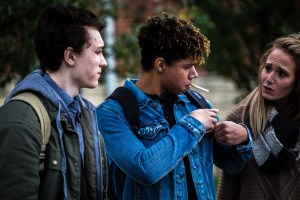 This lack of clarity extends beyond the first act and muddles so much of the conflict and characterization. After Alan’s parents are harmed, why does he not go to the police? What reason would he have for hiding at his school? He doesn’t know his fellow students were demons, at least not in a fully confirmed way of this hidden world of monsters. For that matter, why is Alan on the run and there is national media attention given to what happened to his parents? What reason does he have to not resort to the police? It would make far more sense for the demons to frame Alan for the violence at his home. That way he would have a reason not to turn to the authorities and make him feel more isolated and hunted. He would be limited seeking out help and refuge. This would also better explain why anyone even remotely cares about finding this kid from a media standpoint. I can’t imagine round-the-clock media updates on where the son of one crime has been if he is not clearly the chief suspect. Alan spends much of the rest of the movie learning about his parents’ hidden life and his own part in a larger war, but the world-building is far too vague for a story involving hidden conspiracies of good guys and bad guys. I think the movie is presenting an alternate world where some Christianity is outlawed by the government but this too is flagrantly unclear. Are these people being persecuted for their beliefs? It doesn’t feel like it onscreen aside from a few snarky comments from Alan’s teenage peers about his perceived boring life (and remember, they were really demons). Regardless, there is a branch of the NSA (or some other acronym) that is being run by a a centuries-old demon with Jedi mind trick powers, and yet even this is unclear too. What are the rules here? What are the limitations? What are the objectives? What are the stakes? If you’re presenting a “hidden world” story with powerful creatures and faith as a weapon, then we need a lifeline to grasp.
Alan is a fairly boring blank of a character. He’s angry because he keeps moving schools and feels like he doesn’t fit in, but once he’s on the run Alan becomes a receptive set of ears for people to fill him in on the power of faith, God, and his divine place in the world. Will Alan triumph? You know the answer but I can’t exactly explain it beyond him simply having more faith. Frankly, this character is not interesting enough to warrant a franchise. Even his vague powers as a Chosen One are not interesting enough to warrant further adventures. The most interesting character, by far, is Weston (Lucas Bentley) and he could have been cut completely from the narrative. He’s introduced early, apparently trying to escape to… the Chinese border for… reasons I’m still unsure about from the opening that literally begins with footage and audio of 9/11 (this inclusion is never fully earned and, at best, quite tacky). He was part of the same splinter group that Alan’s parents belong to, but Weston lost his faith after his wife was killed. He seems like he’s on a redemptive arc, the old gunslinger being called into one last battle to save a youth and find something worth fighting for. This doesn’t exactly happen but this setup made Weston the character I knew the most about, who had the most accessible struggle, and who could have easily been the lead perspective of the movie rather than the vacant Alan.
I think the filmmakers were going for a combination of an indie Christian YA character and their own version of a Jason Bourne spy thriller (you better believe I’m trademarking the term “Jesus Bourne” for future franchises). This would not have been the first indie to treat a Christian protagonist as a fugitive being hunted down for their beliefs, an externalization of a self-persecution complex I’ve never personally understood when a majority of Americans identify as some form of Christian. This scenario plays into the fears of its ready-made audience and it at least also provides a ready-made story for danger and intrigue. Rarely, however, have I seen a Christian indie that seems so taken with providing the “other half” of a Bourne movie, and by that I mean the desk jockeys clacking keyboards. With every Bourne movie, there is the Chief Chaser and his or her team of NSA agents manning banks of computer terminals and tracking down the whereabouts of our target. In normal spy thrillers, these moments provide scene changes and exposition, but they can also ratchet up tension as we, the audience, know how much closer these antagonists are getting to our hero. With Alan and the Fullness of Time, there are numerous check-ins with the agent half of this pursuit but it never raises tension or provides helpful clarity about the world or this agency. Part of this is because the boss Malkam (no first name, just… Malkam) is established as supernatural too early. Do the other agents know they’re working for a demon? Detective Lowell (Brittany Picard) pushes back occasionally saying they are misusing their government office, but nobody else seems to give much mind. I even think the end involves a siege of a church with literal gunshots and people killed, but again, the movie is too vague to clarify whether or not this escalation and the consequences made much sense.
 It’s not like there wasn’t room to better develop this story, its world, the history and lore, and the characters. Alan and the Fullness of Time clocks in at 82 minutes, but for my online screening, the first three was an introduction by the lead actor, and if you wanted to discount opening credits and a minute of closing credits before a mid-credits sequence (why?), that means that Alan is actually approximately 76 minutes of material. There was more than enough space there to better flesh out, well, anything. If it was a concern about budget limitations, I don’t fully accept that because budget doesn’t limit how well you write for characters and conversations. The movie concludes with “Alan will return” and the promise of a sequel with a very Percy Jackson-sounding string of subtitles, Alan and the Rulers of the Air. If I had paid good money to watch this movie, I might be chuffed that the movie wants to carry over into a sequel when they didn’t even have enough material for 76 paltry minutes.
The dialogue can often be painful and stilted. For an action movie, there isn’t very much action. Most of the scenes from the Act One break onward are people chatting in cars, people chatting in churches, people chatting in homes, people chatting on the street. That would be great opportunities for the needed clarity and characterization lacking. It doesn’t help when these conversations include clunkers like, “At least we have that in common – dead parents. At least half of mine.” Dear reader, that line made me outwardly wince in pain. At another point the villain shows up with armed guards and says, “This is real lead and real brass, and they will pump you full of it.” Alan says he doesn’t have time and another character says, “Time has you, Alan. It has all of us. And it’s squeezing.” In reference to his school friends, who I remind you were demons that harmed his parents, he says, “They’re not my friends anymore.” Well, that’s good to know given the circumstances. Alan turns on a turncoat and says, “You sold me out. No wonder you can’t call us family.” I was a little worried about the implications of the line, “If you can pray, then you can fight.” At the conclusion, a character asks Alan how to teach her how to fight, and he hands her a bible, and we cut to credits. These are just the examples that stood out to me of bad dialogue. If we’re left with these characters and their thoughts, it is apparent that the filmmakers just were not equipped to provide them with appealing words to speak.
I don’t blame the performers because it feels like they were all following the same poor direction. Everyone in this movie is so subdued that I thought they would slip into a coma. This is intended to be a spy thriller, a chase movie, a world where demons can take human form and hunt the Chosen One, and nobody seems to be acting like it’s urgent. This does a tremendous disservice to establishing and maintaining tension. It completely saps the energy out of the movie. If the characters aren’t anxious or worried, then why should we be watching them? It’s too early to land a verdict on Harvey as an actor as this is his debut. I hope the future adventures of Alan provide the actor a better showcase and more energy. I want to single out one actor who was only onscreen for a few minutes but left quite an impression. In a movie filled with vague evildoers that seem too low-key, Kira Wilson (The Right to Remain) is definitely felt as the spooky principal to Alan’s school. She has a fun malevolence that is missing from the other bad guys and I can tell the actress is enjoying her wicked side. We could have used more of her.
 I will credit the filmmakers for making a film that looks and sounds like a professional movie. The cinematography by Josh Bedsole doesn’t have a lot of focus depth but it looks crisp. The persistent hand-held camerawork provides an extra dose of energy to the proceedings and is another reminder of the film’s aspirations to be its own Bourne-style escapade. It’s a low budget movie, all things considered, but it doesn’t feel glaringly so that it’s distracting or compromising. The best part about the movie is the score by Josh McCausland and Jake Halm that adds excitement when it’s not being felt otherwise from the writing and direction. At points the electronic-infused score even reminded me of the work of Trent Reznor and Atticus Ross.
Alan and the Fullness of Time doesn’t really justify your own investment of time. When you don’t provide enough explanation for your world when it’s different, when you don’t make it clear what the rules and limitations are, and when you don’t produce relatable and engaging character arcs, then you’re not really making a movie and more so making an inaccessible puzzle for the audience to piece together for their own fledgling entertainment. Alan and the Fullness of Time is not exactly an audience-friendly movie, despite the fact that its core audience will likely ignore its storytelling pitfalls because it admires its core message. I can feel the lack of storytelling finesse, as if the filmmakers shrugged and said, “It only has to be good enough to get us the next one.” I’ll even admit that the clips for the upcoming sequel look much more enticing and action-packed, but I haven’t been given enough from the first movie to hold out faith the second will deliver. This could have been Jesus Bourne, people.
Nate’s Grade: C-
Share this:

Run (2020)
 With Run, now available through Hulu thanks to COVID, we follow Chloe (newcomer Kiera Allen) as she yearns to leave home for college. She was born with multiple physical maladies and has been living at home in her wheelchair. Her mother, Diane (Sarah Paulson), tends to her needs but runs a tight ship, holding Chloe to a high academic standard. One day, while looking for college returns, Chloe finds a prescription for her mother that she denies is hers. This causes Chloe to investigate the myriad of medications she’s on and her mother’s cagey behavior. She comes to one conclusion: she is being held prisoner by her own mother.
I don’t consider it a spoiler to confirm that Run is exactly the movie it assures you from its start. Because the movie was so early and upfront about its distrust with the mother, part of me began to wonder, after watching so many Hollywood thrillers over the years, if I was being set up into false complacency. I began theorizing what a late twist could be, how we’re being lulled into one perspective so maybe the final twist would be that the big bad mom is actually the hero. This is not the case at all. There are later revelations that clarify just how disturbed and committed Diane is as a doting mother, but the core relationship dynamic is the same from the get-go. That means that Run might not have much going for it other than as an escape thriller. It’s not going to give you deeper insights into life with mental illness or physical disabilities, nor is it going to channel some relatable struggles with motherhood. It’s about a crazy woman holding a teenager captive and the great obstacles that teenager must overcome to reach freedom and safety. That’s all the movie has to offer but under the guidance of its filmmakers it does so with finesse.
 Let Run serve as a prime example of how you can take a simple story and create a lean, mean thriller that provides doses of satisfaction and triumph. The focus is so condensed that writer/director Aneesh Chaganty (Searching) can provide set piece after set piece to demonstrate his skills in suspense. The first act involves Chloe learning of her alarming state and getting confirmation that her medicine and ailments might not be true. From there, the next two acts are a series of planning escapes and escalating attempts at escape. There is a lovely sense of fulfillment in watching smart characters intelligently think their way through challenges. I recently re-watched 2015’s The Martian and was reminded how enjoyable it can be to just watch smart people smartly confront problems. Chloe is a formidable young woman with obvious vulnerabilities to overcome, but she has a sharp mind for science and can act like a plucky Zoomer MacGyver. It’s resolutely fun to watch her overcome her challenges. Each new set piece and setback presents a challenge and her thinking is logical and capable throughout. Even when the plot isn’t much more than a series of escape attempts, every time I wondered to myself how exactly Chloe was going to get through the next dilemma and admiring her as she persevered.
The photography, editing, and score work nicely in tandem to raise the level of suspense. The command that Chaganty has over all facets of filmmaking to serve a common purpose is impressive. It’s the same kind of assured vision he displayed with 2018’s Searching where the film screen was confined to the parameters of a computer monitor. As with that earlier inventive thriller, Chaganty has an innate understanding of how to make his moments matter, where every twist and turn has a connection to what came before it so it all feels of a whole. That is essential especially for a filmmaker working within a thriller genre. If you can tell even the simple stories well, where the pieces connect with perfect precision, and ratchet up tension efficiently no matter the scenario, then you’re already operating at an extremely high level. Given his first two entries, I would watch any movie, especially a thriller, that has Chaganty’s name attached.
 This is primarily a mother-daughter two-hander in terms of acting, though Paulson is off-screen for long portions. After several Ryan Murphy TV series, including Netflix’s Ratched, I’ve come to automatically assume I should be wary of whatever character Paulson is playing. This role is well within her unstable wheelhouse and she gets to better shine in her increased desperation in the second half when Diane no longer has to pretend to be sane. Her doting manipulation and intense mood changes can be quite creepy. The real star is Allen in a very physical performance. There is much the young actress has to communicate non-verbally, from her distress and paranoia to her doubts and fears and righteous anger. Plus all the crawling. She’s great, and I fully imagine this will be the start of Allen’s promising career as she finds even more high-profile roles to demonstrate her talent.
If you’re a fan of slick, intelligent, and sneaky fun thrillers, and why wouldn’t you, then seek out Run (not to be confused with the TV series of the same name on HBO in 2020). It’s well honed, well developed, and smartly constructed to deliver enjoyable thrills and payoffs for viewers. It might not have more on its mind than entertainment but that’s fine when the movie is this well done.
Nate’s Grade: B+
Share this:

The New Mutants (2020)
 The story behind The New Mutants is decidedly more interesting than the movie itself, the last of the twenty-year span of Fox X-Men movies. There was a three-year gap in between trailers for this movie, an adaptation of a Marvel comics series and fronted by co-writer and director Josh Boone (The Fault in Our Stars). It was originally supposed to come out in 2017, and then it was delayed with the rumors that Fox wanted to push for a more prevalent horror angle. There were rumors of extensive re-shoots, possibly half the movie, and then the Disney merger effectively froze the post-production process, and then the rumors were that the film was removing all the elements to tie it into the X-Men universe, to stand on its own. Apparently, all of this speculation and the talk of re-shoots was a lot of hot air and the finished film is what was originally back in 2017, before the X-Universe imploded with the great Disney takeover. Because of the many years of delays and gestating rumors, The New Mutants became a strange artifact of another time and fans began anticipating how bad it might be and whether they might ever really see it. Finally released at long last, The New Mutants is only aggressively mediocre and thoroughly boring.
Danielle Moonstar (Blu Hunt) wakes up in a strange asylum. She’s the only survivor from her reservation where something powerful and supernatural attacked. The medical facility is run by Dr. Reyes (Alice Braga) and secluded in the country. It’s also kept under a force field until the mutant patients make breakthroughs on their paths to processing their trauma and controlling their volatile powers. Rahne Sinclair (Maisie Williams) is from Scotland and was hunted as a demon by religious extremists. Illyana Rasputin (Ana Taylor-Joy) was terrorized by Slenderman-like intruders as a young girl. Roberto de Costa (Henry Zaga) accidentally burned his girlfriend alive. Sam Guthrie (Charlie Heaton) lost control in his town’s coal mine and is responsible for several deaths, including his hard-working father. Together, they uncover the sinister forces keeping them trapped and confront a powerful menace from the past to gain their freedom.
 Even with years of curiosity and anticipation, once it got started, I found myself nodding off during The New Mutants. This is because the script by Boone and Knate Lee (Kidnap) is predicated on predictability. Of course, you know exactly what will be revealed about this so-called helpful medical facility. Of course, you know who will be revealed to be part of that conspiracy. So then we wait for the obvious plot turns and bide our time for close to an hour with each mutant experiencing their own It-style scary encounter with a trauma of their past. Since we have four additional supporting players, each contributes a PG-13 studio spooky set piece until we reach our most obvious reveal about who is responsible for their worst nightmares coming to violent fruition. Seriously, just having read the above, I guarantee that the majority of you can figure out all the spoilers I’m dancing around. This is the kind of movie that quotes the “two wolves” metaphor (“Inside every person are two wolves…”) though the internal animal is changed into bears to align more with Danielle’s native culture. Makes me wonder if every person has two of different animals fighting for dominance within them (“Inside every person are two really irritable ducks…”). This metaphor is hammered home multiple times so you better believe it’s going to relate to our final climax. Normally, I would cite this as smart screenwriting, layering in setups and connecting theme to a personal confrontation. The showdown though is so goofy and the final villain free of personality, because ultimately the final villain is a symbol, an idea, and that is too vague and prone to basic platitudes on fear and responsibility.
The characters are also a major flaw for The New Mutants. It feels like somebody was trying to follow a formula of popular teen movies and sticks with the stereotypical stock roles but gave it a slightly modern twist. Our lead character is indigenous. There’s a chaste lesbian romance. There’s a level of diversity here even if fans of the comics also have expressed insult at possible white-washing of a Brazilian comic character’s ethnicity. At its core, the characters are still the same high school cliche roles: the Mean Girl (Illyana), the Outcast (Rahne), the Tomboy (Danielle), the Jock (Roberto), the Poor White Trash (Sam). It’s not too difficult to imagine The Breakfast Club faces being reapplied into these familiar roles onscreen. They even have a cheesy “cutting loose” montage when their authority figure is away that might remind you of that John Hughes classic. Worse, the characters just aren’t that interesting, each defined by their past that figuratively and then quite literally haunts them. This leads to some intriguing moments of them reliving horror but no sequence makes any character more interesting. The fears don’t provide further insight. Illyana might be the most annoying character of the group. She’s immediately pushy, malicious, racist, and her combination of powers just doesn’t make any sort of sense (teleportation and a disappearing arm sword, huh?). The boys are boring but Danielle is just as boring as our lead. The only character with a spark of possibility is Rahne and her push against religious harassment. If you’re going to be trapped in a contained thriller with a group of super-powered teens, could they not be more interesting than this sullen lot of underdeveloped high school cliches?
 For a movie that was supposed to be something different, it’s the flashes of horror that made me wish the extensive Fox re-shoots had been real. As a mystery or an action movie, The New Mutants isn’t going to be able to compare to the highlights of its fabled franchise. The action at the end feels rushed and sloppy. However, it could have found a tidy place for itself as a more adult horror movie within the broader X-Men fold. The spooky set pieces don’t have much to them because they’re meant as passing torment, reminders of negative feelings rather than extended sequences. They can be eerie and made me wish we could dwell further with this. A horror movie in a confined space with teenagers with powers they didn’t fully understand or couldn’t control, I can see the possibilities there aplenty. That’s what makes it all the more disappointing how predictable Boone and the filmmakers go with their one-off genre riff. The creepy Slenderman creature design is actually good, though I don’t really know if they are real in this world or a figment of Illyana’s childhood imagination. I don’t really know much about the rules of The New Mutants, so when it takes its turns, I was mostly shrugging and saying to myself, “Well, okay then.” Why do these super powered and angst-ridden teenagers never attempt to overthrow the one woman who patrols this otherwise empty facility? I watched Roberto repeatedly wash a giant soup vat in the empty kitchen when he could have been plotting escape. Who is consuming that much soup on a regular basis between the six of these people?
In short, The New Mutants was not worth its unceremonious three-year wait. It’s a middling super hero movie with flashes of potential, especially when it could have been something so different and new than any of the previous X-Men flicks. The movie is so easily predictable that I’m shocked more effort wasn’t put into its scary set pieces to better compensate. There are more twisted accents in the movie than genuine twists and genuine scares (your ears may bleed). It’s barely 85 minutes long and you feel like it’s gasping for breath by even that modest run. It never quite feels like the concept of a horror movie set with super heroes was ever really well imagined. If this is the actual preferred version Josh Boone always had in mind, it still manages to feel incomplete and underwhelming in execution. It’s not exactly a good comic book movie, or a good horror movie, or even a good movie. Thus ends The X-Men. Rest in peace.
Nate’s Grade: C
Share this:

Unhinged (2020)
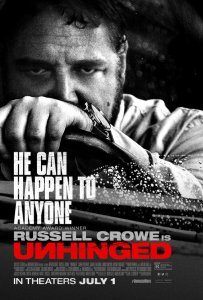 Russell Crowe (The Nice Guys) plays a deranged motorist with a serious case of road rage in Unhinged, an otherwise forgettable if competent thriller only notable for Crowe’s unnerving performance and as the first widespread movie in theaters after the COVID spring shuttering. It boggles my mind that enough people would rush out and risk personal safety to see this movie but I guess people can be desperate for a return to normalcy. In Unhinged, young mother Rachel (Caren Pistorius) is late dropping off her teen son to his school. She enrages Crowe in a traffic altercation and from there he plots her abject suffering for his twisted vengeance. Crowe’s character, simply labeled “Man,” is the wrong person to anger. The opening sequence involves him popping pills and then murdering his ex-wife and setting her new home ablaze. He’s an unstable psychopath who feels wronged by women and looking to hurt them for these perceived slights. He’s irredeemable, though the movie thinks it’s making him more “complex” with its slapdash attempts at back-story. The problem here is that Crowe’s antagonist is too powerful and omnipresent and our protagonist keeps making stupid decision after stupid decision. Even after her friends and family are threatened, or worse, she doesn’t seem to be making smart decisions, like involving the police or reaching for help. There’s a contrived reason to rob her of her cell phone but then she just gets a different phone, so why even bother? Even as she’s being hunted down by a guy who is sweating toxic masculinity, it can be strangely hard to root for Rachel because of the annoying bad decision-making. Also, her own back-story is weak. She’s going through a divorce and also might be bad at meeting deadlines, which relates to what later? The thriller sequences are serviceable but uninspired. Crowe is the only real reason you should watch Unhinged. He could have gone on auto-pilot for a standard paycheck psycho villain role and instead becomes truly terrifying, settling into a twangy American accent and leaving you wondering when his anger will snap. He’s at his scariest when he’s trying to sound reasonable or thinks he’s sounding reasonable. There’s a strange coda where Rachel withholds honking her horn after she almost gets run into by a speeding driver. The movie treats the concluding moment like a learned lesson but it feels more like bizarre victim shaming. She should have honked her horn at this driver, who was in the wrong, and she deserved to honk her horn originally with “The Man” for his vehicular infraction. She shouldn’t have to withhold her response out of fear that he other driver might overreact and seek out her friends and family and murder them. What a strange lesson for Unhinged to be imparting for its audience.
Nate’s Grade: C+


You must be logged in to post a comment.