Blog Archives
Fateful Findings (2013)
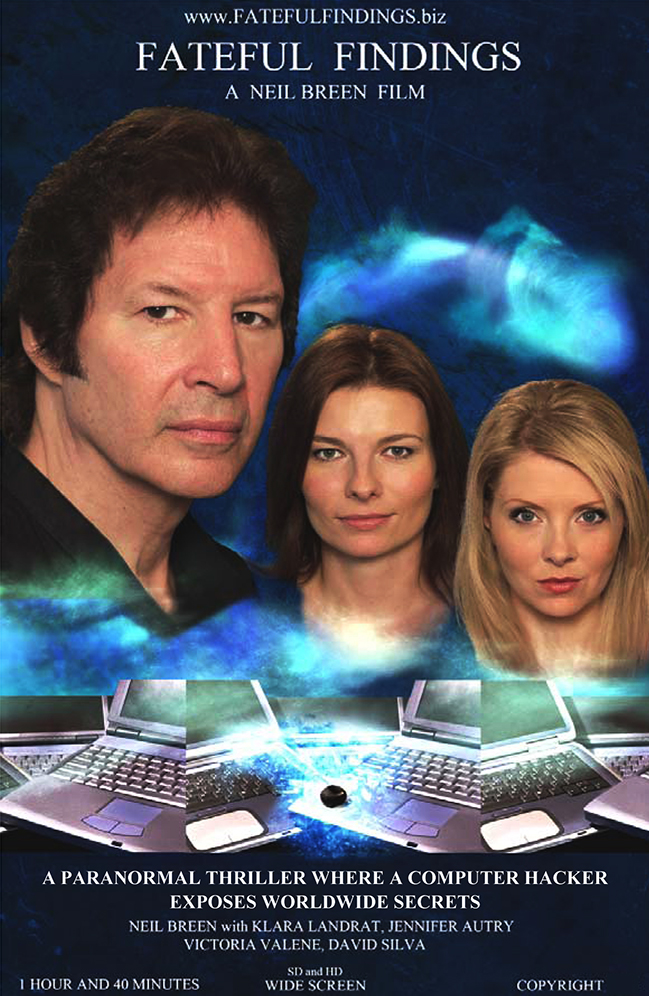 Ever since the ascent of Tommy Wiseau’s The Room atop the dung heap mountain of midnight movie fare, the world has been avidly searching for the next so-bad-it’s-amazing film. There have been several contenders over the years, most of which were amusing, such as Troll 2 or the original Birdemic, but some of which made you consider the value of life itself, such as 2009’s After Last Season. Oh, that one still makes me wince. Don’t even see that one. But as a lifelong lover of all things cinematically terrible, thanks in part to growing up on a healthy appetite of Mystery Science Theater 3000, I am compelled to seek out the worst of the worst. The Room is one of my favorite movies of all time; my love for it knows no heavenly bounds. I have to sniff out anything that comes remotely close to replicating that wonderful experience.
Enter Las Vegas realtor and architect Neil Breen. According to a Deadline Hollywood report from October 2013, Breen wrote/directed/produced/starred/edited/and just about everything else a little bundle of love called Fateful Findings. He sent it out blindly to distributors looking for any takers. It just so happens one bit, and now Fateful Findings is gearing up for a nationwide release specifically targeted at the midnight movie crowd that made The Room the sizeable cultural hit it is. Like Wiseau’s accidental masterpiece of cinematic miscalculation, Breen’s film is awash with bizarre directing choices, curious line readings, painful acting, subplots that come and go as they please, a lack of resolution, characters that behave more like aliens than human beings, odd camera framing and compositions, and, naturally, an ending that must be seen to be believed. For fans of woefully bad cinema, there’s a lot to dig in and I’ve got my knife and fork. First, I want to describe four of my favorite things about Fateful Findings and Breen.
 1) “It’s a magical day!”
The film opens with an eight-year-old boy and girl waking through the woods, coming across a magic mushroom (not that kind). The mushroom disappears, revealing a jewelry box, and inside is a black rock. “It must mean something,” young Dylan lets the audience know. Young Leah then says, twice, “It’s a magical day!” Oh, but if that wasn’t made abundantly clear, she also writes it in a notebook and shows it to the audience. But this opening scene isn’t done with its magic. We flash forward many years to an adult Dylan (Breen), who looks at least ten years older than the adult version of Leah (Jennifer Autry). Prepare for the sudden time jump shock. Anyway, Dylan and Leah never saw each other again after that magical summer that is… until she’s invited to a family barbeque. Why is this stranger, and her then fiancé, invited to a limited family engagement? Anyway, the way that these two people reconnect is that adult Leah bumps into adult Dylan and drops, what for it, the SAME notebook. It falls magically open to the SAME page, revealing the SAME message: “It’s a magical day!” Apparently she still carries that notebook around everywhere she goes and has never written in it since that fateful day. Who doesn’t bring a 30-year-old notebook with them to a barbeque?
2) “It was the Rolls Royce that hit ‘em. I saw it. I’m a witness.”
Also in the first ten minutes, we watch adult Dylan get creamed by a Rolls Royce. The speeded-up sequence itself is just hilarious to watch, especially since the car appears to be going rather slowly in the previous shot. Anyway, Dylan recovers in a hospital thanks to the black rock reviving him (make note when the EMTs arrive and their lagging sense of urgency). The collection of rubberneckers gathers at the accident scene, including one gentleman who, God bless him, foolishly attempts a British accent out of the blue, reciting the above line. I’m sure it would have been in question since the one car resting right next to the injured man is covered in his blood (how much did that cost to rent and splatter a car like that?). It’s at the hospital where Dylan unknowingly meets the adult Leah for the first time. She’s a doctor and pronounces Dylan “semi-comatose.” How is that a thing; can you be semi-pregnant? After his miraculous revival, Dylan leaves the hospital and re-enters his home, taking a shower. His wife, Emily (Klara Landrat, a former model), steps into the shower with him and happily embraces her man. Except beforehand we see a shot of his feet in the shower and blood is profusely streaming down his leg. Remember, all this is from a head wound, so how much does his head have to be bleeding to get down his leg? The shower is filled with blood, Dylan’s bandages are blotted red, and she steps inside. Gross. What kicks this entire sequence even higher in hilarity is that Dylan’s facial bandages actually cover his ENTIRE mouth and nose with no indentations for him to breathe out. When he detaches the oxygen mask, you’ll see there’s nowhere for him to actually breathe. Damn you, Obamacare!
 3) “No more books!”
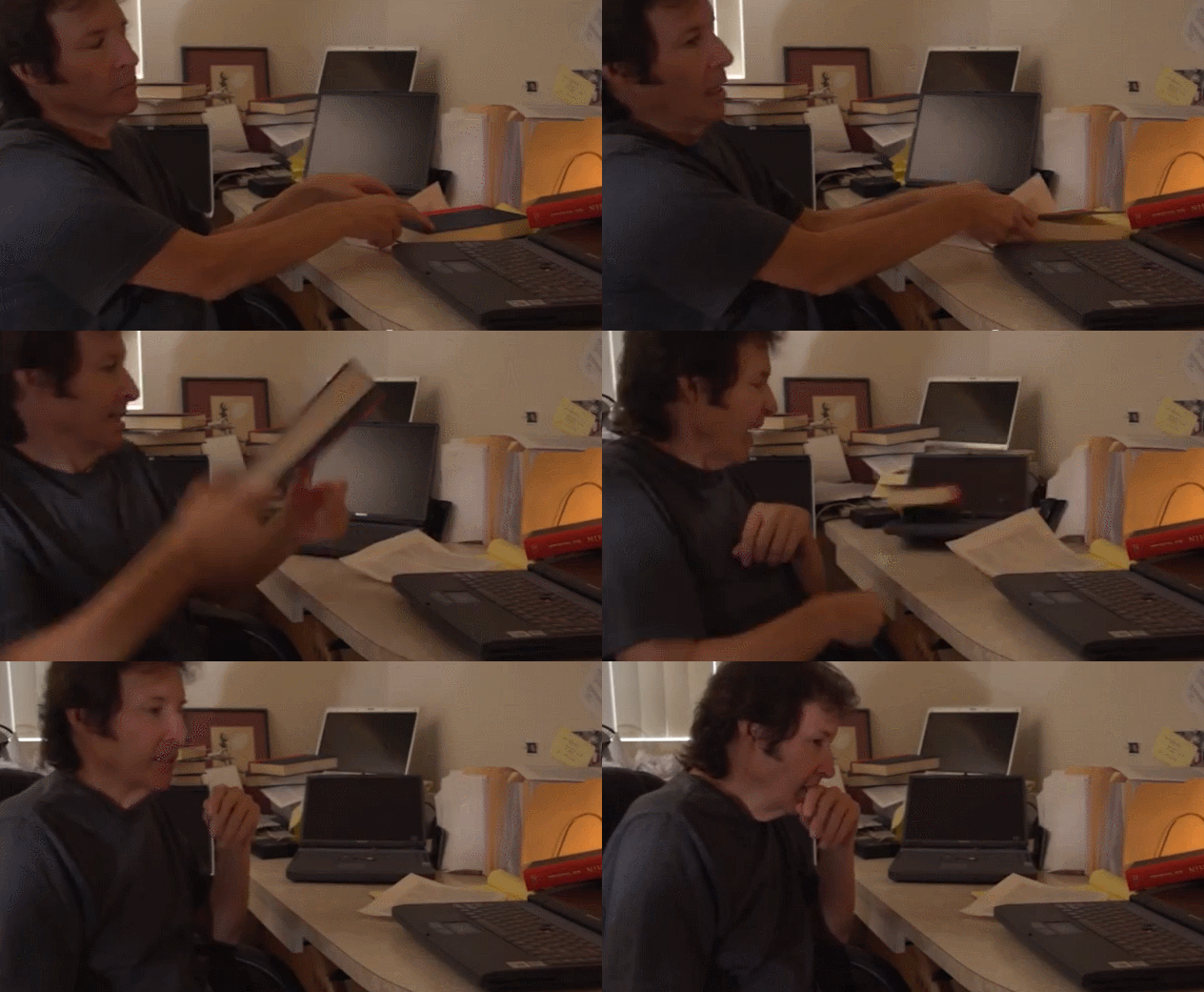
Once home, we learn that Dylan has a Master’s degree in computer science but became a successful novelist, a fact he seems almost disdainful about. This dichotomy is illustrated by the fact that Dylan has four laptops out at all times, none of which are ever really turned on. Why four? Why not? He pounds away, literally, trying to complete his next book, but when his temper arises, he almost always takes it out on the poor laptops. This is a very abusive film when it comes to laptops. My favorite moment is when Dylan is holding a cup of coffee and it looks like he’s going to spill it on that laptop. It’s a ten-second sequence that leaves you on the edge of your seat, finally ending in an even greater comic punchline. At another point, Dylan throws two books into two laptops before holding back his incalculable rage onto a third laptop. The only way people communicate is by throwing things in this film. You could turn Dylan’s tortured mistreatment of laptops into a drinking game.
4) “I can’t believe you killed yourself. I cannot believe you killed yourself. I can’t help you out of this one.”
I won’t go into detail about the context of this quote, to spare some spoilers, but it illustrates the habit of actors repeating lines of dialogue ad nasuem. The dialogue itself is rather plain, so it’s weird that Breen and company feel the need to keep repeating themselves, as if we’re missing some deeper hidden meaning. We’re not.
Breen has described his film in interviews as a genre-bending psychological thriller, and while some of those elements may be present in the faintest, most diluted distillation, the man’s movie is really the long story of two marriages coming apart. Dylan’s marriage with Emily hits the skids when she gets addicted to his pain medication, but neither person seems to treat this as the serious development it is; what makes this worse is that Dylan enables her addiction. He keeps getting her the meds when he clearly no longer needs them. It seems once his childhood sweetheart re-enters his life, Dylan just forgets he has a wife. The other marriage consists of Dylan’s bickering neighbors, Amy (Victoria Valene) and Jim (David Silva), and they really have no impact on the greater plot whatsoever, and yet Breen’s film wastes so much time on their story. They’re unhappy. He wants sex. She doesn’t. Eventually in the heat of the moment Amy does something impulsive and very criminal, and the movie treats it like any nominal plot moment. A vital witness to this crime doesn’t bother speaking up until fifteen minutes later in the film, as if they just had some nagging chores to do before alerting others about a serious crime. Perhaps Jim and Amy are, in some twisted perspective, Breen’s idea of comic relief (Jim’s exaggerated “drunk” movement, throwing drinks on one another, etc.), but for a movie that is nonstop comic blunders, what difference does it make?
 And then there’s the supernatural story that permeates the edges of the film, popping in from time to time to remind you during the marital discord that, oh yeah, there’s a mysterious ghost or something or other. The supernatural stuff begins muddled and unexplained and never really clarifies. It’s thanks to the black rock, which Dylan refers to as a cube, that he’s able to survive being hit by the car. If that’s the case, then I don’t think I’d ever let that sucker out of my pocket. I’d glue it to my hand. Inexplicably, the rock also gives Dylan the ability to transport himself through walls, though he only does this once and never explains how he knew. The way we know something “magical” is happening is when a little puff of grey vapor appears onscreen. Is it a spirit, a malevolent force? Does it have anything to do with this stupid book that keeps haunting Dylan? I feel like Breen is patterning himself after the work of David Lynch, except that Lynch’s films, which can consist of weirdness for weird’s sake, have cohesion, a vision. Fateful Findings has the occasional supernatural entity, but it’s rarely examined, and then we’re off to the next subplot as if spinning a board game wheel. Then the supernatural angle, which is only barely toyed with, and with such peculiar indifference, is abandoned and the movie wholly chases after another storyline.
The movie’s final focus is on Dylan’s super secret hacking uncovering all sorts of vague secrets and corruption from governments and corporations (“As president of… The Bank…”). Throughout the film, Dylan keeps mentioning this but it never seems terribly significant, at least judging by the characters’ actions. It isn’t until the very end where Breen spends more than a passing interest in this subplot, because we have more important storylines to feature, like Ally (Danielle Andrade), his neighbor’s teen daughter, inexplicably trying to seduce him. It comes out of nowhere and is just as quickly pushed aside (I also wonder how old Ally is supposed to be). Allow me to thread an analytical narrative to make sense of these dispirit storylines. Assessing the film, it sure comes across like Breen’s attempt to bolster his sense of self. In every scenario, people treat him as a treasured human being, he’s at the center of a diabolical conspiracy, he’s gifted with magic powers that separate him from normal men, all women want to seduce him, and then in the end he’s the one who makes the world a better place by exposing corruption. It sounds like a hero complex to me. Even acts that deserve harsh scrutiny, like his enabling of his wife’s addiction or his blasé attitude about carrying on an affair, are ignored. In this universe, Dylan is always right, always desired, always respected, and always special.
 The production has a hard time hiding its obvious shortcomings, sometimes hilariously so. It becomes clear very early that most of the film was likely shot in Breen’s home, which is fine except it also unsuccessfully doubles as other locations (the blinds are the big giveaway). The worst is the hospital room, which mostly consists of a bed and three oxygen canisters. What hospital room is going to have carpet? So much of the movie takes place in Dylan’s home office, with that plethora of laptops, that you’ll start to memorize the home layout. In the opening, with Dylan and Leah as kids, we’re shown modern-day vehicles and then flash forward at least 35 years. Could Breen not have shot the scene with some older vehicles? Then there are Dylan’s two therapist’s offices. The first one is the guy who keeps prescribing pain meds. Perhaps to communicate his overall incompetence as a doctor, Breen stages all of the therapy scenes in a conference room with both men sitting as far apart, at either end of the long conference table. What better way to foster patient intimacy? He also magically switches jackets in the middle of one session. The second therapist operates in what looks like a closet, and the only thing we see are two folding chairs. She may not really exist, or was in on the unexplained supernatural conspiracy, so perhaps the old lady therapist didn’t feel like putting that much effort into decoration.
The technical abilities of the Fateful Findings crew are, to be expected, less than stellar. The editing is another clumsy detraction, namely that Breen and his TWO other editors let their scenes meander several seconds longer than where they should have cut, giving the film a loping feeling. It’s like each person is counting mentally when to respond to the dialogue, and when one person finishes the film holds, counts as well, and then cuts. There are slow pans that add nothing to the film but space in between lines of dialogue. I don’t need rapid-fire cuts for what is essentially a domestic drama, but why the hesitant editing? Is it just a sneaky way of inflating the film’s running time? Even Breen’s staging of the camera can often be confounding. For whatever reason, the film often features camera shots of people’s feet or people very carefully cut off at the head, meaning their heads are not visible. It happens enough and for such nonessential scenes that I started to wonder if Breen found himself an Ed Wood-esque solution for not having his same actors for the scenes he needed them for. Beyond a Tarantino-size foot fetish, I don’t know why there are so many shots of feet. At least Breen is not as inept in his visual staging as the makers of After Last Season, a movie so bad it’s just bad beyond measure. Breen knows enough to adequately stage his scenes, which makes his choices all the more curious.
The acting is generally terrible across the board, occasionally breathtakingly bad. Let’s start with Breen himself, who is fairly listless and deadpan throughout. He raises his voice but rarely does he change how he’s responding. He’s aloof and strikingly self-serious at the same time. Breen’s command of his actors is limited to directing them to just ham it up. Most of the actors will exaggerate facial expressions and physical movements, providing more drama. Landrat is trapped by her storyline too early, and so she succumbs to the screaming wife with an Eastern European accent. Autry does no better, looking uncomfortable in every moment onscreen. The worst actor in the movie, easily, is Valene, who squawks in the same pained sing-songy manner with every line with nasally incredulity. The best performance in the film may belong to the mysterious old lady therapist who may not really exist. And yet, she’s the most grounded.
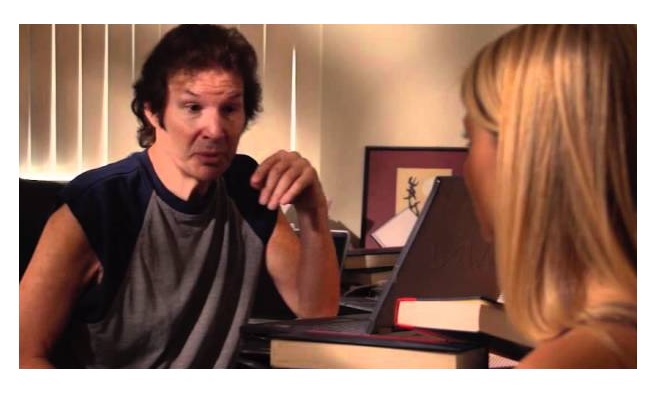 Making the film seem even more alien is Breen’s chaste sense of human sensuality. One of the adjectives on the poster describing the film is “passionate,” but you have to wonder if Breen was just too uncomfortable, or perhaps his female actresses were, to make the onscreen passion a bit more palpable. The very way people kiss in this movie is so chaste. They lean in, pecking each other slightly on the lips, as if one was kissing their grandmother goodbye rather than engaging in uncontrollable passions. They were doing hotter fake kissing in 1940s Hayes code era Hollywood (check out Hitchcock’s Notorious and tell me that Cary Grant-Ingrid Bergman kiss still isn’t hot today). Breen’s passions are so modest and contained. Take for instance a scene of passion directly following a spat between Dylan and Emily, one where she threatens to leave him. Apparently that revved up their engines because they start tearing apart one another’s clothes and doing their chicken peck kissing. Breen, as is his usually fashion by this point, knocks over several laptops and throws papers into the air for what feels like a solid minute. Whenever disrobing one of the actresses, be it tearing of clothes or the more gentlemanly “unbuttoning” method, he always stops above his ladies bosoms, allowing a hint more cleavage but nothing beyond. It happens enough that it starts to become a noticeable artistic choice, as is his consistent framing of topless women sleeping face down on their beds. It gives just enough of a glimpse of partial nudity without revealing more (all four main actresses will go partially nude at some point in the film). This puzzled me because I was certain the only reason these actresses were selected is because they likely accepted a part where they would eventually display their physical assets. They’re not here because they can act, that’s for sure.
In fact, the only nudity in the entire movie belongs to Breen himself as he bares his behind while stumbling out of his carpeted hospital room. If you dare look closer, you’ll see the end of his gown catches the end of the hospital bed just so, allowing the flap to stretch and display Breen’s posterior. Either this was a one-time thing and Breen said, “why not?” or, and I think, given the nature of hero complex evidenced, this is more likely, that they kept shooting the scene until the flap caught and proudly displayed Breen’s rump. I suppose in the Garbage Bag Room (a reoccurring dream/nightmare in a space literally lined with garbage bags), there is a nude woman accompanying him, but she’s tastefully composed and likely a body double for Autry. For a man who looks visibly uncomfortable even kissing women, let alone disrobing them, it defies logic that Breen would acquiesce to his own nudity in his own film.
But the question that must be asked of all craptacular movies is whether it is the right kind of bad, the kind made with sincerity in equal measure with its incompetence. It’s one thing to make a bad movie and another to make it purposefully, chasing after the ever-hungry midnight movie crowd, looking to cash in with some canny filmmaking ineptitude (Birdemic 2, people). From everything I’ve gathered via Breen’s interviews, he’s legit. He even has previous movies to his name and I can only hope those will see a wider release. Breen’s film hits that so-bad-it’s-good sweet spot of derisive entertainment enjoyment. I was laughing just as many times as I was shaking my head. However, as a connoisseur of crap cinema, I must say that The Room maintains its throne. Breen’s film is a bit too lackadaisical in its nonsensical plotting and starts to feel redundant, and I’m not just talking about the oft-repeated dialogue. There is a finite level of bad to this film whereas The Room is a thousand brushstrokes of terrible. Breen’s film marvels but it may also test your patience at turns, unless you’ve been drinking heavily.
 Fateful Findings is awash in terrible decision-making, to the world’s benefit. Breen and his team have put together a movie that is baffling, ridiculous, and greatly entertaining. From the dropped subplots, repeated laptop abuse, inauthentic human behavior, hazy plotting, laughable special effects, chaste human interaction, strange feet-heavy framing, and that ending, oh the ending is just comedy gold; there’s a little something here for every discerning ironic viewer of bad movies, though the film does lag and repeat its offenses enough that it feels stretched and redundant. I’d say, amongst the spectrum of recent bad midnight movie fare, it’s probably just below Birdemic. I don’t know what the repeat value will be for Breen’s film, or whether it will catch on with audiences like Wiseau’s unexpected success. I can’t even say whether I really want to watch it again, but I will, and with a gathering of friends, and likely with the added benefit of some adult beverages. If Fateful Findings is playing at a theater near you, by means see it and bring your pals along for the fateful experience. It will make you think. Mostly about laptops.
Nate’s Grade: F
Entertainment value: A
Share this:

Her (2013)
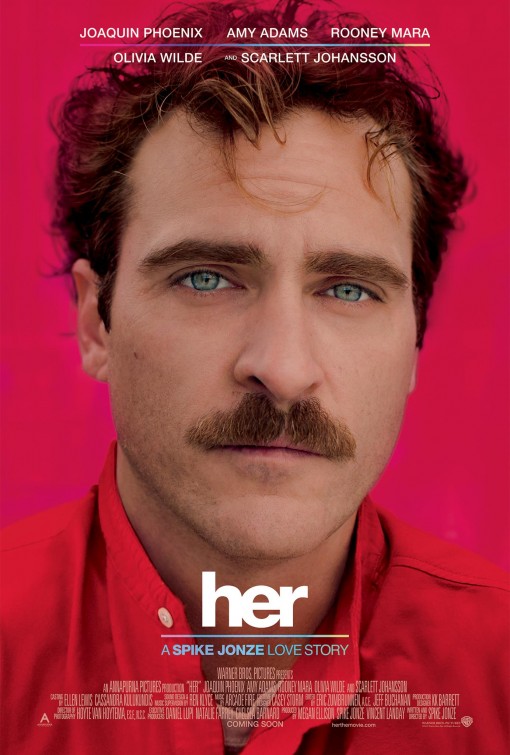 It’s been several years for Spike Jonze since he escaped the turmoil around Where the Wild Things Are, an ambitious adaptation that ran afoul with studio execs over the oppressively sad tone (I agreed with the execs). He’s one of the most stylish visual directors working today, but Her is something very different for the man. For starters, it’s a film Jonze wrote himself; no collaboration with Charlie Kaufman this time. It’s also a pared down love story, focusing heavily on two characters and their exciting and emerging union. There are no visual tricks, no gimmicks, no overt special effects, nothing to distract from the central relationship commanding the screen. It’s a different kind of film from Jonze but one that’s just as brilliantly well made as his best. Her is a beguiling winner.
Theodore (Joaquin Phoenix) is a man struggling to get his life back together. He’s a star at his job where he writes other people’s personal letters for them, but he’s a sensitive soul still refusing to sign the divorce papers from his ex-wife, Catherine (Rooney Mara). He doesn’t want to lose that part of his life. After watching an ad, Theodore buys a new computer operating system (OS) that promises to be the most lifelike possible. He pops the software onto his computer and, voila, the voice of Samantha (Scarlett Johansson) emerges, chipper, helpful, and compassionate. Theodore is a new man with her assistance, and soon they grow even closer together on a romantic scale. Theodore and Samantha embark on the greta unknown together, but can a relationship work when it’s with a voice in your computer.
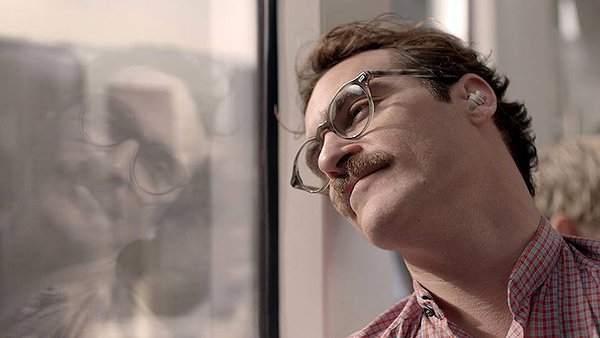 It’s been weeks since I first watched Her and I keep thinking back upon it, turning it over in my mind, finding more and more to like about this captivating little movie. It’s a tenderhearted and poignant movie that also manages to have something to say about human connection. And this really is a love story, and an engrossing one at that, despite the fact that it’s man and machine. The romance between Samantha and Theodore is never looked down upon, marginalized, the setup to some punch line about how nerd can’t get dates with real women. You think the film might go there, and then Theodore’s co-workers just shrug when the truth comes out and treat his relationship like any other. I suppose you could make all sorts of analogues, but they are unnecessary because Samantha truly feels like another person. She’s given complexity, curiosity, impulses, and, yes, as voiced by the husky-voiced Johansson, an alluring edge. Because she’s a disembodied voice minus form, theirs is a relationship built upon intellect, conversation, personality, and a burgeoning connection, though they do cover the sex part as well. In fact, the climactic (pardon the pun) vocal exploration is simultaneously awkward, funny, heartfelt, and yes, even a little sexy, and the music crescendos to give it even more oomph. Samantha is learning just as much about herself as Theodore is. Their relationship is opening both of them up to the possibilities they might never have sought. In that respect, Jonze’s film falls under that sweet spell all engaging romances achieve where our spirits are lifted and we swoon along with the onscreen coupling.
I’ve found it tricky to talk about Her at least in describing the premise to other people; comparing Samantha to Siri has helped rather than just referring to her as an “operating system.” One concern I had was that Jonze was just going to deliver the premise in a very expected manner and Her would serve up more of the same. But he doesn’t. While this is a light science fiction film, it is extremely well developed and thought out. Jonze has taken remarkable care to flesh out his story and enrich the not too distant future world. It felt like a world that could reasonably exist. I enjoyed the fact that there were so-called surrogates for hire, people that would serve as the physical embodiments of the OS personalities, providing a different kind of encounter, one meant to converge intimacy with touch. I could see these people existing if this were the future. Even better, Jonze takes great care to develop the central relationship between his lovers, so that every unique complication is given some form of respectful coverage. They discuss the limitations but not just what you would assume. Yes Samantha has no body, but she can also be in many places at once, doing many things at once, and simply will outlive all her carbon-based life form companions. Can they make this last? Even with the technological component, old problems can rear their head, particularly jealousy, like when Samantha begins communicating with other OS personalities. Then there’s Theodore’s lingering divorce with his wife, a woman who can stir up old feelings and doubts. Without giving too much away, the end manages to be hopeful, melancholy, expected, and satisfying.
 Jonze also manages to slide in some subtle jabs about the state of communication and connection. There’s an early shot where Theodore is riding a train and everyone on board appears to be talking except that they’re all talking to their OS, each person an isolated unit. Theodore’s job also seems like a perfect social commentary as well as a clever conceit for a man who has unsurpassed skill with words but difficulty with the flesh-and-blood interaction. It works directly with the theme of the film. I also find it humorous, and a bit subversive, that Theodore has long-standing relationships with clients. He’s been writing letters for certain couples for years going all the way back to their first meeting. Think about that, this couple’s communication and courtship rest upon the words of an intermediary paid for his services. These people could go their entire lives thinking their partner is the author of such wonderful, heartfelt, observant words. That’s the dearth of honest communication plaguing human relationships, but it’s not a new problem. We’ve all ducked hard conversations. Many of us would love to have someone come in and do the dirty work while we sit back and reap the rewards. But a relationship built upon deceit or convenience will ultimately fall apart, or, in this new age of technological isolation and greater deception, will it?
Jonze’s direction seems invisible, like we’re dropping in on these characters and peaking on their lives. The overall technical aesthetic of Her is a clean, simplified look and feel for a love story that manages to be new and familiar. The production design has an eye-catching degree of colors, which bathe the film in a consistently dreamy, gauzy aura, echoing the screenplay’s warm heart. The score by the Canadian alternative band Arcade Fire is low-key but just as vulnerable, resonant, and special as the characters in the film. It’s mostly pared down piano trinkles but the reoccurring motifs stick in your head, elevating Jonze’s film. When Samantha takes up composing songs to express her sum total feelings of a moment, capturing a snapshot of a particular time as she refers, it’s nice to have talented musicians able to bring this to life.
Phoneix (The Master) gives such a tender, vulnerable performance that you worry that he’s going to be crushed by life. He has this remarkable way of making you want to hug Theodore, like he’s this sad puppy that just needs a good home. There are moments in the film where just one perfectly executed crinkly-eyed crooked smile tells me everything about this character. Phoenix plays his character as a good-hearted, amiable, and deeply romantic individual, and the sheer strength of his performance will knock you back. Theodore has such great pools of empathy, and a poet’s soul, which allows him to excel at his job but it also makes relationships hard. A relationship takes work, and Theodore may have not been up to the labor, as his ex-wife argues. Personally, I found a lot of striking points of similarity with the character and I think others will as well. Who hasn’t, in a moment of dark-clouded funk, wondered if they’ve reached the apex of their emotional experiences, that everything will somehow be lesser variations? Who hasn’t feared that they somehow tapped out on their ability to love as powerfully as before? As Theodore is picking up the pieces of his life, trying to determine his new sense of self, we’re learning alongside him exactly how Samantha is changing him.
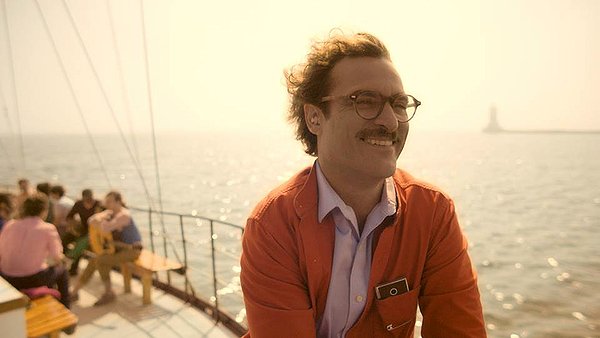 Before this movie, I would have said a Johansson (Don Jon) performance minus her body would be a travesty, but damn if she doesn’t give a performance that is worthy of the Oscar buzz. It’s easy to understand why Theodore falls for Samantha, and you will too. Johansson has never been this winsome and loveable but she’s far more than some idealized Super Girlfriend to be placed precariously on a pedestal. She’s learning too, making choices, some of them bad, and exploring the consequences. The depth of emotion she’s able to convey with a character only heard audibly is impressive. Samantha is a fully formed character that wants to be treated as such, and Johansson give her all the shadings of a living being. She’s inquisitive, funny, curious, but also eerily human in her mannerisms, like when she uses short breaths when feeling awkward even though she has no use for breath, obviously. Johansson is so easily sultry, voice included, but Samantha is not relegated to some high-tech toy, some quirky sexual fantasy. She feels real, which is why their relationship feels genuine and so moving and charming.
Who knew the most affecting love story of 2013 would involve a man and his computer? Her is an insightful, touching, and rewarding movie that hits you on many levels, satisfying all of them. It’s a smart film that explores the various complications of its premise while widening its scope further, it’s heartfelt and humble as it approaches relatable matters of love and loss and feeling adrift, it’s sweetly romantic while at the same time being tethered to reality, finding a perfect balance, and at its core it’s the tale of two people, one human and one mechanical, that find happiness in one another. People will likely pick the movie apart to search for personal messages from Jonze about his own divorce from filmmaker Sofia Coppola in 2003. Maybe that stuff is buried in there, but Jonze has crafted something far more applicable and enjoyable. Her is an openly romantic film that doesn’t shortchange heartache, and it posits that love is love no matter whom it’s directed at. Her is an extraordinary sort of movie and one I plan on revisiting again. Give this unconventional romance a chance and you may be delightfully surprised.
Nate’s Grade: A
Share this:

Thor: The Dark World (2013)
 Loosely based off the Norse mythology, Marvel’s hammer-wielding hero isn’t exactly the easiest character to relate to even as a superhero. Thor is a god after all. Not to be outdone, the man is also royalty, next in line to be king, so he’s in a special class of privilege. And yet 2011’s Thor was a pleasant surprise, a superhero movie that didn’t take itself too seriously, had modest aims, and embraced its sci-fi fantasy mélange. It was a movie where the sillier it got the better it worked. Now Thor: The Dark World, a.k.a. Thor 2, is ready to dominate the fall box-office and prove that Joe and Jane Popcorn can cheer for a pagan god.
Following the events of The Avengers, Loki (Tom Hiddleston) is taken back to his home world of Asgard and put in prison. Loki’s brother, Thor (Chris Hemsworth), is trying to get back to Earth to reunite with his love, scientist Jane Foster (Natalie Portman). Thor is being groomed for the throne of Asgard by his father, Odin (Anthony Hopkins). Meanwhile, the nine worlds are nearing a convergence and dimensional gateways are opening, including one that infects Jane with an ancient biological weapon, the aether. The aether was used as a weapon by the dark elves, a race of creatures that was long ago defeated but its general, Malekith (Christopher Eccleston), has been dormant and in hiding. Alterted, he assembles his surviving army to attack Asgard, kidnap Jane Foster, retrieve the aether, and destroy all life in the universe.
 Thor is still a second tier character when it comes to Marvel superheroes (the guy just isn’t that interesting) but his franchise has, in only two starring films, become the most interesting. The scope of the Thor movies seems infinite. Whereas the other Marvel heroes are Earthbound and straightforward, Thor transports an audience to all sorts of alien worlds/cultures/conflicts, all of which open up more tantalizing storytelling avenues. Nothing seems out of place in a setting such as this, and so the surprises are more satisfying. I thought the best parts of 2011’s Thor were the Asgard moments, less the strained fish-out-of-water comedy of Thor assimilating on Earth. Thankfully, almost all of Thor 2 takes place off Earth save for a rousing, creative, inter-dimensional hopscotch of a climax. The realm of Asgard is given suitable scope thanks to the screenwriters and first-time feature film director Alan Taylor, who worked in TV for years. Taylor’s notable work on HBO’s Game of Thrones is probably what got him this gig, and his vision with fantasy is given significant breadth here. The Thor universe is an interesting mix of fantasy and sci-fi, reminiscent of Star Wars, and Taylor provides the necessary sweeping visuals, exciting action, and glorious shirtless close-ups we come to expect from our fantasy vistas. I was consistently impressed with Taylor’s command of visuals and shot selection, particularly how the man was able to juggle the various tones and needs of the script while still keeping an exposition-heavy film fun and light.
With rainbow bridges, dark elves, and enchanted hammers, thank goodness that Thor 2 keeps a steady and welcome sense of humor, never getting too serious even with the end of existence on the line. This jovial tone is refreshing when properly executed and contributes to the overall fun of the picture. We’ve had such sturm und drang when it comes to our superhero movies, particularly last summer’s Man of Steel misfire. I appreciate a dark and gloomy superhero tale like Nolan’s Batman films, or a satirical swipe like the original Kick-Ass, but we need stories that fit with their tone. When it comes to Thor, he’s still saving the world, rescuing his damsel, but the attitude, while on its face regal and serious, is anything but. The Thor movies accept the absurdities of its setting and just shrugs, plowing along. And now with Jane on Asgard, the fish-out-of-water comedy gets a different perspective. She gets to meet Thor’s parents (awkward) and an Asgardian who has a thing for the hunky Norseman (double awkward… I’ll stop the 90s catch phrases now). Thor 2 also gives Jane Foster much more to do, placing her front and center as a person integral to the stability of the universe. During the snazzy climax, she gets to run around and contribute in a meaningful manner. The there’s the plucky Kat Dennings (TV’s 2 Broke Girls) who gets to rattle off one-liners like a pro, many of them grounding the elevated levels of silliness. Much of the humor comes from the cocksure characters and their quips, particularly Loki.
And that’s as good as any place to interject my notion that Thor isn’t truly the main character in this film, despite what the title preceding the colon may lead you to believe. That honor goes to Loki, the greatest villain in any modern Marvel movie by far. He’s got the clearest arc in the movie, going through arguably the most personal pain, coming to a crossroads, and his conclusion certainly sets up sizable ramifications down the road for the presumptive Thor 3. Played by Hiddleston (War Horse), the character draws you in, even when he’s throwing his self-aggrandized temper tantrums you want to spend more time with him. He’s far and away the most developed and interesting character onscreen, and Hiddleston has such a gleeful malevolence to him that makes the character all the more electric and unpredictable. Thor 2 is really the story of Loki coming to terms with his life’s choices, the choices his adopted parents made, his sense of self and birthright, and moving forward, becoming his own man again. This is why Thor 2 ascends another entertainment rung by tying Loki into the main story, forcing him and Thor to work together against a common enemy.
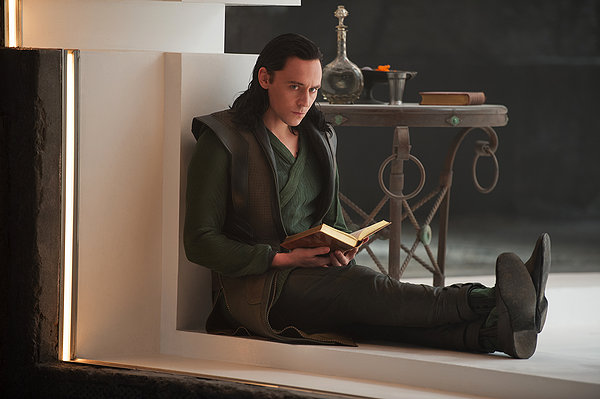 In a film dominated by a charismatic Loki, it’s no wonder that Thor 2’s real bad guy falls woefully short. Malekith is a confusing and altogether lackluster antagonist in every conceivable way. He has no personality to him; he’s simple-minded with the goal of eradicating the universe. I don’t know about you, but my bad guys better have a pretty good reason for destroying the universe since they kinda live there too. This is one of the lazier villain plot devices because it has no nuance, no shading. Apparently before there was a universe there were dark elves. I don’t want to get caught in a chicken-egg paradox here, but was there a universe before the universe, cause I look at the universe like existence’s garage. The cars inside may change but the garage was standing before it all. Anyway, Malekith wants to destroy all life because he wants to, because certainly you’d think there would be enough space in space. He’s not even that threatening or given any particular advantage beyond some firepower. It’s no wonder that Loki runs circles around this chump in the villain department. Eccleston (Unfinished Song) is not at fault. The heavy makeup he’s under smothers the actor’s ability to polish this terrible character.
The rest of the acting fares better. At this point, we know what we’re getting with Hemsworth (Snow White and the Huntsman) as the title character. He’s a sturdy leading man with just enough appeal to satisfy, though part of it is that Thor is just dull as a hero. He was more entertaining when he was cocky and irresponsible. Portman (Black Swan) holds her own though the romance between her and Thor feels more forced. Hopkins (Red 2) strikes the right mix between regal and camp. While their roles aren’t exactly integral, it’s nice having a superhero movie stuffed with great actors like Idris Elba, Ray Stevenson, Adewale Akinnuoye-Agbaje, Clive Russell, and there’s even an amusing appearance by Chris O’Dowd, who effortlessly oozes charm (take note, Thor).
This a superhero movie that separates itself by its sheer sense of fun. Thor: The Dark World takes what worked in the previous movie and provides more of it. The campy, silly Asgard stuff is given even more time, the mischievous sense of humor is renewed, the fantasy worlds given more depth and better action/effects, and fan favorite Loki gets a big starring role this time with extra brotherly bickering. It’s not the best superhero movie, nor is it the best Marvel film of recent years, but Thor 2 knows what kind of movie it wishes to be and how to best achieve this. It’s a loopy, droll, and rather imaginative big-budget superhero film, while still finding ways to be somewhat generic with its overall plotting and character turns. While the action is suitably epic, it’s the character interactions that are the most enjoyable aspect. It seems excessively lazy to say that if you enjoyed the first Thor, you’ll probably enjoy the second one as well, but there it is. Perhaps next time the storyline won’t be as convoluted and we can get even more Loki. Barring that, I’ll accept additional Chris O’Dowd screen time.
Nate’s Grade: B
Share this:

Ender’s Game (2013)
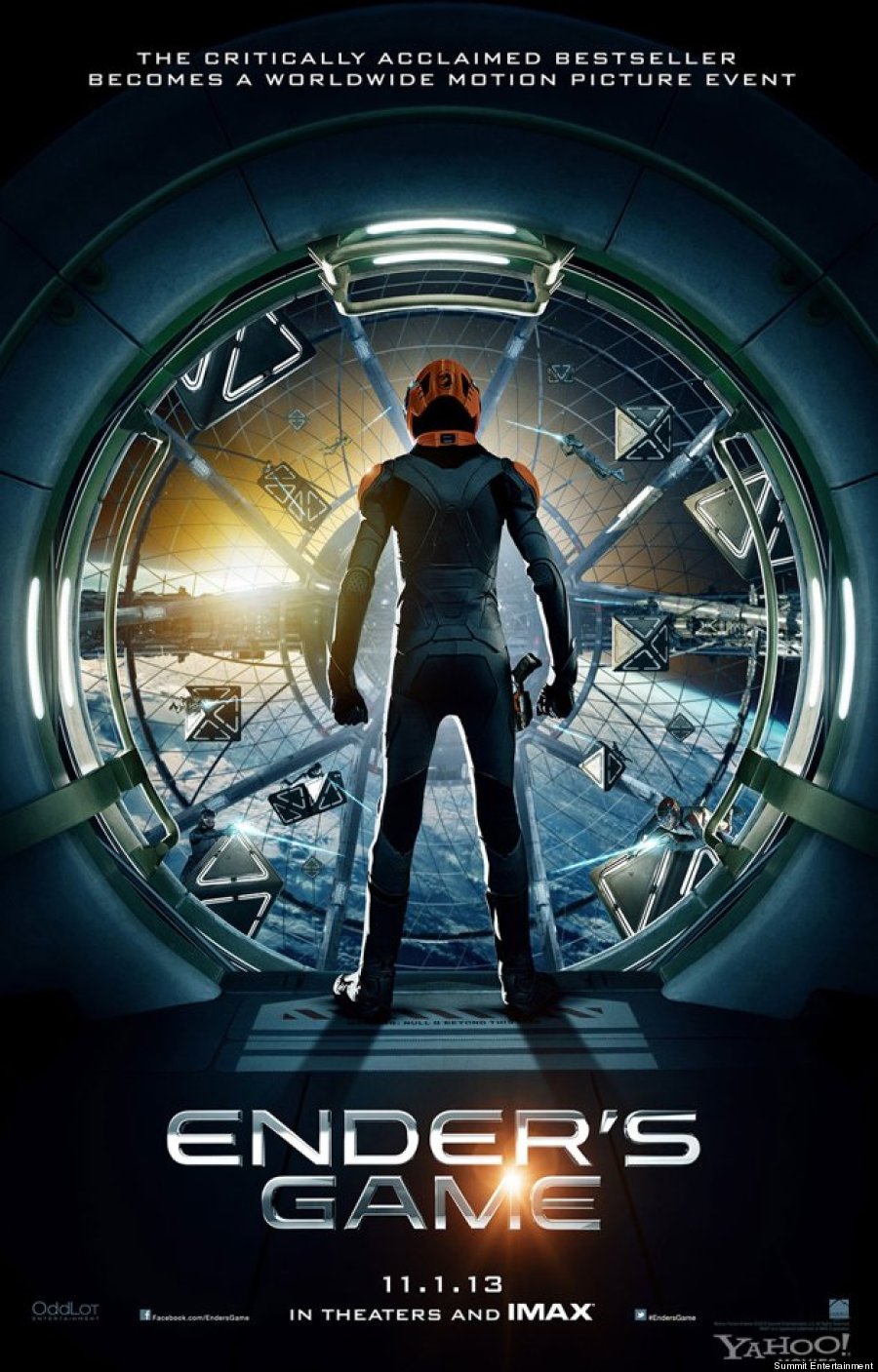 Honestly I know more about Ender’s Game thanks to the swirling rabble about boycotting the film thanks to author Orson Scott Card’s homophobic personal views. I didn’t even know this book existed until I heard about the movie. With my cloud of ignorance, as well as some lingering worries that the director of X-Men Origins: Wolverine was at the helm of this expensive would-be franchise, I was pleasantly surprised at how entertaining I found the movie. It’s set in a future where children are culled and trained to be super soldiers against an alien race that has been in seclusion after a failed invasion of Earth. The emphasis is on strategy and manipulating your opponent, which leads to many military training sequences. At one point I wondered, “Is this whole story going to be training sequences and zero-gravity laser tag?” It’s not, thankfully, but even those sequences are fun. Writer/director Gavin Hood does an excellent job of fleshing out this world while giving enough time in between the games to also flesh out his ragtag group of characters. There’s something inherently satisfying to watching a team come together, and the film has plenty of small payoffs. The visuals are astounding to soak up. The zero gravity fun, backlit by the stars, is dazzling. The acting is strong across the board, with special appreciation that Harrison Ford has a good role that he’s actually well suited for. The pacing does start to slag toward the third act, mostly because the plot feels like an escalating series of games, until it’s not. There’s a measured degree of ethical ambiguity and contemplation to the film that’s admirable. Whether you plan on boycotting Ender’s Game or not, it’s a successful, thrilling, and visually engaging sci-fi flick that deserves to be seen at some point.
Nate’s Grade: B+
Share this:

Gravity (2013)
 Director Alfonso Cuaron spent over four and a half years developing his latest film, Gravity. The tale of two stranded astronauts had to invent technology to fully realize Cuaron’s zero gravity vision, carefully programming precise camera movements into a room full of LED flat screens to orient the harnessed actors and light them properly. It could have gone stupendously wrong in so many ways. Instead it’s the biggest leap forward in movie technology since 2009’s Avatar and surely one of the best science fiction films since 2006’s Children of Men, Cuaron’s last movie. It is a thrilling, awe-inspiring, astonishing, illuminating, and altogether brilliant film. Films like Gravity are the reason we go to the movies.
High above planet Earth, astronauts Mike Kowalski (George Clooney) and Ryan Stone (Sandra Bullock) are repairing the Hubble telescope when a field of satellite debris crashes into their shuttle. Both of the astronauts are adrift in space and have to maneuver to the safety of a space station. The debris storm circling the Earth is gathering size and force, and these two are running out of oxygen and safe places to hide.
 Gravity is one of those movies that you feel like ordinary English adjectives do it a disservice. I can refer to it and visually resplendent, awe-inspiring, and borderline transcendent, but my words will ultimately prove fruitless, because the experience of Gravity is beyond description. This is the reason we go to the movies, to be amazed, to feel something new, and Cuaron has taken the next great leap forward in technical moviemaking while also retaining the artistic soul of an engaging thriller. You could simply view Gravity as a visual feast and be content, or you could view it as a harrowing survival thriller and be content, or you could view it as Cuaron’s spiritual exploration on the perseverance of life against all odds (more on this later). Any way you shake it, it’s hard to come away from Gravity being disappointed, though I know with every lofty word of praise I inject that the bar is set even higher in audience expectations.
From a visual standpoint, Cuaron has crafted a truly immersive film going experience that puts you in the center of the action. The signature long takes amaze just as much as the visuals, both of which give you the sensation of what it’s like to be in space, weightless, free-floating, and oh so vulnerable at a moment’s notice. It’s been almost 45 years since Stanley Kubrick’s 2001 showed the visual poetry of zero-gravity acrobatics, and the sheer visual still has plenty of potency left. But coupled with Cuaron’s blinkless long takes, the illusion is rarely broken, especially in the first twenty minutes, which establishes the stakes and the reality of survival in space. Ignoring all aspects of the plot and acting, you could sit through the entirety of Gravity and find it a sumptuous, invigorating experience purely from the cutting edge special effects. There is a real sense of majesty to the views from space, overlooking our blue orb, the vastness of it all. It would be overwhelmingly beautiful if it weren’t also simultaneously terrifying. Space, much like nature itself, has an indifferent cruelty to it, and Cuaron does an exceptional job of presenting both the grandeur and the inherent dangers of space.
My nerves were racked throughout those tense 90 minutes of intense orbital activity. As a thriller, Gravity is a very well constructed setup with pristine execution. Each problem is dealt with in the immediacy, the unique particular of space allowing us a new perspective on the survival/disaster thriller model. First she has to stop floating. Then she has to get more oxygen. Then she has to get to a more safe location. Then she has to get back home. It may sound like not enough little plot pit stops but each one is pivotal and a remote respite from jeopardy. The wholeness of space is so complete that it feels like the odds are forever stacked against Stone. I was breathless through many of the suspense sequences, nervously tapping my feet, urging the onscreen characters onward. Cuaron and his son, co-writer Jonas, make it clear early the steps of her journey, and each feel like a natural result of the dire changing circumstances. The accumulative debris is given a 90-minute countdown for return, so we’re always wary that Stone will be caught back in the orbiting mass of projectiles. The sense of peril is kept on high and doesn’t relent, leaving you feeling like every nerve is spent by the conclusion. It’s a top-notch thriller that doesn’t involve the use of a single gun or car chase.
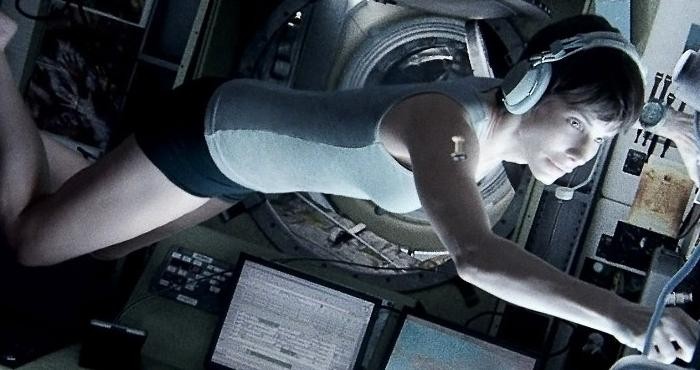 If there is one complaint, I suppose it could be over the somewhat thin back-story and characterization of Stone. I don’t know what a medical officer is exactly doing in space fixing the Hubble telescope but oh well. Cuaron keeps the audience firmly stuck in Stone’s predicament; we do not cut away to any flashbacks of life on Earth, and so it makes fleshing out a central character notable difficult. People don’t usually open up into revealing monologues while they’re trying to fight for immediate survival. She’s got the standard tragic back-story, losing a daughter, but for me this was enough to work with. I don’t necessarily need Stone to be a thriving, complex, emotionally nuanced character because my empathy was already there as soon as the peril began. I wanted her to survive because she was a person; I didn’t have to relate to her on a deeper fundamental level to root for her survival. There are some nice late scenes where Stone reflects on the existential crisis, on knowing her imminent death, on the fog she’s been trapped within since her daughter’s accidental death. Bullock (The Heat), in her best performance to date, is able to pull you in. If faced with your imminent end, how would you attempt to make peace of things, let alone stranded away from all human contact? It’s a strong awards-caliber performance and while her character isn’t given much development, she still has an arc, and I think there’s a greater thematic link with her crossing.
I’m no fan of Terrence Malick (Tree of Life, To the Wonder) but I understand people’s assertion that the man is a film theologian, making the theater a borderline religious experience for his faithful fans. In my eyes, Gravity has an unmistakable spiritual subtext that it can be viewed in different directions. Firstly, it’s hard not to feel an overpowering sense of awe when taking in the sheer magnitude and beauty of the incalculable universe. But then there’s Cuaron’s opening text that prefaces how outrageously impossible life in space is, contemplating all the harsh realities. And yet, here we are. Whether you chalk that up to something religious like God or just the fortune of the cosmos, it’s still a remarkable journey. The evolution of Stone is also reminiscent of that of life on Earth. When she finds refuge in the space station, she removes her suit, curling up in a fetal ball, while the camera centers her and she slowly rotates. The womb imagery is obvious but still effective. There’s also a third act assist that seems like direct divine intervention by most accounts. Then, spoilers, as she lands on a hospitable planet, she emerges from the sea, triumphant, taking her first steps onto land. Triumphant against all odds, against the cruel vacuum of space, life proves to be the winner. Again, whether you ascribe this to a creator God or a wonder of lucky evolutionary forces, it’s hard to escape Cuaron’s spiritual subtext tugging away at you, making the personal survival of Stone a greater analogue for the genesis of mankind and the emergence of humanity.
This is one of the few films I would recommend seeing in 3D. Cuaron has spent four and a half years translating his vision to the big screen and you’ll do yourself a disservice if you don’t see Gravity on the biggest screen possible. It is a film experience to be savored that will not measure up when you are forced to watch such outsized splendor on your puny home TV. This is an expertly made thriller, a visually transcendent, cutting-edge trip to space, and a revitalizing time at the movies. It’s as awe-inspiring as it is terrifying. It’s bursting with stimulation for the senses as well as a reawakened sense of spirituality, of something greater to be thankful for. I am in awe of Curaron as a filmmaker and I am in awe of his finished product. It was worth the wait. Now I hope I never have to wait another seven long years again before I see the words “directed by Alfonso Cuaron” again.
Nate’s Grade: A
Share this:

The World’s End (2013)
 The third in the Cornetto trilogy, the series of loving homages to genre films that end up transforming into those films, written by star Simon Pegg and director Edgar Wright (Scott Pilgrim vs. the World), is so self-assured, so witty, and so stylish, but it’s also the best film Wright has done. While my heart will always bleed for 2004’s Shaun of the Dead, it’s something of a revelation how everything comes together so magically in The World’s End. Every joke, every sight gag, every offhand reference, it somehow is all tied up together or has some greater narrative connection, like the names of the 12 pubs on a pub crawl reunion that discovers an alien invasion. The dialogue is packed with layered humor, with choice bon mots like, “That’s why I drink out of a crazy straw. Not so crazy now, huh?” and, “Or selective memory like that one guy… who? Oh yeah. Me.” Given the previous films, Shaun and 2007’s Hot Fuzz, I knew this would be a funny movie, but I was unprepared for how emotionally adept it is. The characters are given surprising depth and pain and anger, mostly stemming from Pegg’s screw-up alcoholic character desperately trying to relive the good times. The writing is so textured that the characters come across like actual people, and the twists and turns, while entertaining, are far more emotionally grounded than in any previous Wright movie. There is real pain and atonement for these fallible characters, which makes us root for them even more against the robot invaders. Pegg and Nick Frost are terrific again. The action is frenetic and inventive, the laughs are frequent, and the characters are so fully realized that The World’s End isn’t just the best film in a stellar, pop-culture savvy trilogy, it’s also one of the best movies you’ll see this year.
Nate’s Grade: A
Share this:

Elysium (2013)
 With the subtlety of a sledgehammer to the face, Elysium is a sci-fi action movie with more on its mind than pyrotechnics. It’s writer/director Neill Blomkamp’s follow-up to 2009’s out-of-nowhere hit, District 9, a film so good that the Academy even nominated it for Best Picture that year, a rarity for a sci-fi flick. The apartheid allegory of District 9 was pretty straightforward, but Blomkamp and company found inspiring and fresh ways to tell a rousing story that worked in tandem with its social commentary. Elysium takes the haves and have nots to an admitted extreme.
IIn 2153, the rich have left Earth for a floating space station known as Elysium. It’s a luxurious paradise where technology can miraculously zap people to complete health. Secretary Delacourt (Jodie Foster) is in charge of Homeland Security and protecting Elysium from the less desirables that want to break in. Those “less desirables” would be the inhabitants of Earth. The planet has become an overcrowded, dirty, impoverished slum; Earth as third world. Max (Matt Damon) is an excon working a factory line for a sneering corporate bigwig (William Fichtner) struggling to leave behind a life of crime. His childhood friend, Frey (Alice Braga), works as a nurse at a hospital, but she’s got her own worries, namely a terminally ill daughter. After an accident at work blasts Max with radiation, he has five days to live. If he can just make it to Elysium, he can be cured. The problem is that Delacourt is shooting down spaceships trying to land on Elysium, including ones filled with women and children. To get off planet, Max needs to help in a heist, but it’s prized codes that could lower the defenses of Elysium and make anyone (ANYONE!) a citizen, thus available for medical treatment. To make sure this doesn’t happen, Delacourt relies on a rogue mercenary, Kruger (Sharlto Copley), a crazed madman who leaps at the chance to do dirty work. The hunt is on for Max.
 The socio-political commentary isn’t terribly veiled here, and maybe that’s because now Blomkamp has bigger targets than South Africa’s governmental policy. I didn’t have a problem with the fact that the inhabitants of luxury are portrayed as all white and that the denizens of the impoverished Earth are mostly non-white minorities (if minorities dominate a future Earth, when do they become majorities?). It’s clear that Blomkamp intends for Elysium to represent the United States. The poor who break through into the Promised Land, many to give their children a better life, or a life at all, only to be deported back to a slum, are clear stand-ins for contemporary immigration, notably Latin America. This is all fine by my book, though I can already hear the persecuted cries of some conservative commentators. It’s not as refined a commentary and that’s fine, not every message needs to be subtle, but I want more with my message than a simple rich vs. poor allusion. We never get to see what the people of Elysium are like, nor what most of that world is like beyond wide idyllic imagery. Fichtner’s character does a good job of symbolizing the callousness of an elite, but then he’s just one guy. The difficulty of maintaining a working wage is given the most care in the film, but much of the higher thinking takes a backseat for the third act movie heroics. The shift is acceptable but it makes a thin development of socio-economic commentary that much thinner.
When it comes to action, Blomkamp certainly knows how to stage a scene to get your pulse racing. The only problem is that there isn’t terribly much action to Elysium, or at least methodically sustained action to satisfy. You always feel like you’re getting a taste of something cooler down the road but it never fully materializes, much like the exoskeleton suit. It looks cool, it provides some progression, but it doesn’t lead to much. What does it accomplish? It allows him a port into downloading the Elyisum codes, but so could anything else. If anything, the metal exoskeleton seems like more of a hindrance, dragging Max down with extra weight and bulk. It pains me to say that the cool exoskeleton, such a prominent marketing feature, could have easily been eliminated as well. The best action in the movie is a heist in the middle that manages to juggle a team of good guys, a team of bad guys, a mark, and a deep sense of urgency for the score. It’s terrific and makes fun use of Blomkamp’s inventive future weapons. The rest of the film is mostly a series of chases, many of which are well orchestrated but only flirt with long-lasting action satisfaction.
The third act on Elysium is an entertaining and noisy conclusion, except Blomkamp sets himself up for limitation. Some spoilers to follow so tread carefully, reader. Elysium gets taken over by Kruger and his team as a defacto coup… except, well there are only three of them. We don’t even get to see them train the robot sentries on enemies or the populace of Elysium. I really don’t know how far-reaching their hastily staged coup is going. We want Kruger to be the big baddie that Max has to fight right before the cusp of the climax, but when there are only two other dudes who aren’t making great use of their fancy resources, it feels too boxed in and restrained. The action is fun while it lasts.
 Another niggling concern is the glut of side characters and their side stories that don’t feel organically integrated into the hero’s story. The flashbacks to Max as a kid could have been completely wiped out. They don’t add more information to the story and feel a tad too hokey for the movie. Sister Saintly Nun espouses wisdom and promises Max will be destined for one great thing in the future (could I settle for two “kinda good” things?). The bigger distraction is Frey and her sick kid, a.k.a. the Angelic Sick Child, you know, the type that feels so at peace with things and with no worry. This is a staple of the movies. Her only purpose in the narrative is to goad Max into making a bigger sacrifice, to think of others, not that beforehand the guy was displayed as being particularly selfish. Then there’s Max’s friend Julio (Diego Luna) who serves little purpose other than to carry him out of the occasional scene and to, of course, be sacrificed to drive the hero forward to achieve his goal. There’s a middleman who arranges for people to get identities that will be read on Elysium, if they get on there safely first. The villains are also pretty one-dimensional in their stock villainy: Kruger a sociopathic killing machine and Delacourt a tyrant. None of these characters leave much of an impression to make you want to take time away from the main story arc. Worse, many of them feel vaguely characterized and are clear plot beat generators rather than people. Maybe Max would be better off as a loner.
The acting is also all over the place. The worst offender is Foster (Carnage), who weirdly over enunciates every syllable in an affected future accent. She also seems to bob and swivel her head a lot as she talks, as if the Oscar-winning actress really had to go to the bathroom but was holding it at bay to complete her takes. Damon (Promised Land) is a reliable action hero but realistically, it’s a little curious that the main character would be, by all accounts, white. It makes much more sense for the savior of planet Earth to be like those left behind, but then I don’t really want to wade into deeper racial subtext than necessary. The real treat of the movie is Copley (The A-Team) who is having a ball playing a sword-wielding psycho killer. He provides a notable spark whenever onscreen, bringing a menace that makes you tale notice. Again, I just wish there was more to the character than his vague back-story and bunt motivations.
Despite what has seemed like a fairly negative review from the start, Elysium still a good movie but beware higher expectations forged from District 9’s unique alchemy. There are a lot of familiar plot beats here and everything from the characters, to the action, to the world building feels like it could have been pushed further. It feels like they took the freshness of District 9 and applied it to a more tired-and-true blockbuster formula. Blomkamp drops us into an intriguing world but I wanted more of just about everything. More with the characters, more with the plot, more with the socio-political commentary, more with the ins and outs of this future world and its inhabitants. The ending is also a bit jubilantly naïve given the powers of the Powers That Be. Really, a keystroke sets everything back to scratch. Again, I’m being more critical than I intend to be. Elysium is quite an entertaining movie with great visuals and Blompkamp is certainly a visionary auteur to praise, but it’s hard not to feel a smidge of disappointment with the man when you know what he’s capable of, even with a perfectly fine movie.
Nate’s Grade: B-
Share this:

The Wolverine (2013)
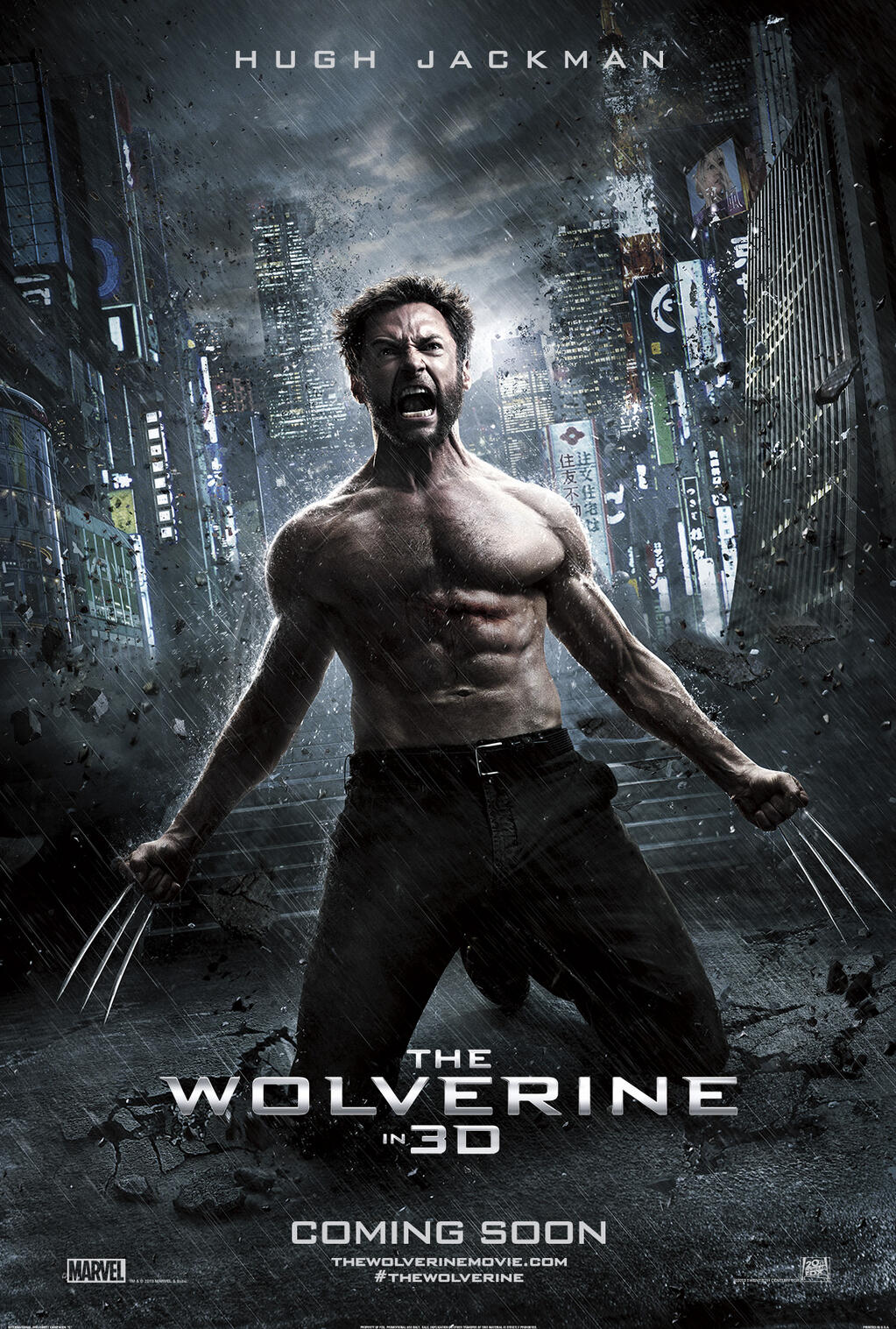 For a character universally beloved by comic and movie fans, Wolverine has fallen on some hard times. It’s hard to find too many supporters for either 2006’s X-Men 3: the Last Stand or 2009’s X-Men Origins: Wolverine. He had a fun cameo in 2011’s retro X-Men First Class, but other than that we’ve gone almost a decade without a respectably good movie starring Wolverine. It looked like Darren Aronofsky was going to be the answer to that drought of quality. The Black Swan director, who worked previously with Jackman on the intensely personal The Fountain, spent six months developing a Wolverine film set in Japan. Then Aronofsky dropped out, making this the second superhero franchise he missed out on (he was tapped to reboot Batman before Christopher Nolan landed the job). James Mangold (Knight and Day, Walk the Line) stepped into the director’s chair and now we have the directly titled semi-sequel, The Wolverine. It’s a step up quality-wise but even that comes with qualifiers.
Many years after the events of X-Men 3, Logan (Hugh Jackman) is living a solitary life amid the Canadian wilderness. He’s looking to lay low and he’s haunted by visions of his lost love, Jean Grey (Famke Janssen), the woman he was forced to kill to save the world. Yukio (Rila Fukushima), a mutant with the ability to foresee people’s deaths, finds him for her employer. He’s invited to Tokyo at the request of a wealthy and dying businessman, Yashida (Hal Yamanouchi). Back during World War II, Logan saved Yashida’s life, shielding him from the atomic blast that wiped out Nagasaki. Yashida has an offer for Logan. He can make him mortal again and take away his advanced healing ability. Thanks to a sketchy mutant, Wolverine loses that ability and goes on the run to protect Yashida’s granddaughter, Mariko (Tao Okamoto), from gangs and rival businessmen.
 Benefiting from low expectations, The Wolverine is a solid summer superhero tale that’s more interesting in its divergences from… summer superhero movies than it is when it follows that basic script. I appreciated that here is a superhero movie that actually doesn’t have to be wall-to-wall action. It allows a story to take place. Now, that story has its problems most certainly, but at least it has room to breathe. Also, there are barely any mutants in this movie at all. Excluding the title character, we get two super-powered mutants though neither really has a power that lends itself well to combat. I appreciated that there was hardly any gunplay at all in the movie. Mangold allows the hook of Wolverine, the hand-to-hand combat, to flourish amidst teams of adversaries following the ways of the samurai. I also appreciated the lack of familiar faces. While Jackman and Janssen will be recognizable to fans, I doubt too many others have a deep familiarity with a wide selection of Japanese actors. Then there’s an excellent post-credits scene that sets up the forthcoming X-Men universe crossover, Days of Future Past, arriving summer 2014. For all of these reasons, and some decent action, I’d say The Wolverine is worth seeing especially by fans burned by the character’s last two starring ventures.
With that said, this is a movie that still feels like it has problems that stop it from reaching its potential. The crux of the plot hinges on Wolverine losing his healing ability, thus becoming mortal. I understand that it’s hard to make an indestructible man vulnerable, but his friends and loved ones aren’t. The loss of powers doesn’t seem to raise the stakes because there isn’t a noticeable difference in the dude’s actions. He still acts the same except he recoils a bit longer from punches. The guy gets shot a bunch of times and stabbed and even clings to dear life atop a bullet train (more on this later), but he never really seems fazed. There’s also the nitpicky comic book nerd criticism that, if removed of his healing ability, there’s no way his body could sustain an entire skeleton made of metal. I’ll overlook it. This storyline seems even weaker when Wolverine (spoilers) gets his powers back for the third act (is that really a spoiler?) so he can fight the giant bad guys. The movie needs him back at full strength. It doesn’t feel like much was accomplished narratively or with the character to rob him of his invulnerability. That storyline could work, as it has in the comics before, but it just doesn’t seem like the ramifications are really explored beyond the surface.
Then there’s also to the issue with how cluttered the plot is with characters. There are far more characters in this than necessary, many of whom contribute very meagerly or could have been combined. The entire Yashida corporate storyline is just overburdened. There’s Mariko’s gruff father, there’s her mysterious boyfriend, there’s her would-be fiancé who works as a justice officer, there’s a snake-like mutant who really doesn’t add anything but poison samples. And you don’t really care about any of them. Whenever the story takes too many steps from its core (Wolverine protecting Mariko, getting his power back) is when the movie loses your interest. The final showdown and the participant involved should also be obvious, especially since Yukio point blank tells the audience about a red herring. Speaking of Yukio, I think she was easily the best addition to the movie. She forms a buddy relationship with Wolverine, a notorious loner, and watching them spar is just fun. Plus she’s a badass with a soul. Her mutant power also curses her with knowing how every loved one, every dear friend, every family member will die. She must see it, live it, all the while knowing what is to come. And that’s all you ever see – people’s deaths. That is some heavy stuff, and the movie treats it with sincerity, showing how haunted Yukio can be with these unsolicited peaks into the future. I would have greatly preferred more screen time for Yukio, who ducks out for far too long for my tastes. Plus the actress has a very striking, unique look to her. I don’t know if there are plans to continue her character into Days of Future Past, but I hope they do.
 Then there are moments that strain credibility even for a summer superhero movie. It’s funny, because if you’re being entertained, your brain will ignore these moments. Well there’s one action sequence that stands out that seems to break every law of physics. I know we’re dealing with mutants, I know we’re dealing with superheroes, and I know it’s a summer action movie, but my God this bullet train sequence just does too much. There is a fight scene between Wolverine and a standard Yakuza thug atop the speeding top of a bullet train zipping by at 300 miles per hour. It’s actually the most memorable action piece in the film, but it’s also memorable for wrong reasons. Wolverine is using his claws to pin himself to the top. The Yakuza thug is using a standard knife. Are the tops of the bullet train this easily penetrable? I’d worry, Japanese commuters. Then they hop over signs and ledges, still landing atop the train. This isn’t a Western with a locomotive that one could feasibly keep their footing atop. This is a train going 300 miles per hour. You think you can jump onto something going that speed and keep your balance? Think you can hold onto something while you speed at 300 miles per hour? How can a human arm maintain that sort of physical exertion? It’s too ridiculous to enjoy. If the rest of the movie had a similar over-the-top tone, then this sequence would be acceptable. However, The Wolverine plays itself so seriously that moments like this truly negatively stand out.
Jackman (Les Miserables) is a perfect fit for this character. I agree with my friend and colleague Ben Bailey; while the X-Men movies have faltered in quality, Jackman never has. He’s played this role six times now and it’s still a pleasure to watch. There is a question of how much longer the man can keep this up, though. Even at 45, the man can still get jacked with the muscles; just look at Stallone, or don’t. The real problem is presented in the mythology of the character developed in the first Wolverine solo outing, namely that the man is close to immortal. He doesn’t stop aging; he just ages very slowly. This is the same problem with twenty-somethings playing vampires, or Arnold as a timeless robot (why would they make slightly older looking models?). Age catches up to all of us, though Jackman’s own constricts the use of the character in the future. Regardless, this man can play this part until he’s in a nursing home and I’ll be happy.
There are elements that work, particularly Wolverine’s thematic relevance to the samurai of old and the feudal system of honor, and I enjoyed his buddy relationship with badass-in-training Yukio. The action is serviceable, there are some sweeping visuals with referential touches to Kurosawa, and Jackman is still a strong and capable hero. There’s just so much more this film could have been. The setting could have been fleshed out, the characters pared down to essential storylines, and the plot of Wolverine losing his powers could have actually mattered rather than just play out like a momentary setback. There’s just as many things I enjoyed as I didn’t, so this is a tough call for me. The Wolverine is clearly a step above the previous two movies, but those were both fairly bad films, the solo one poisoning the well for future X-Men solo bids. If you enjoy the character and want something slightly different but recognizable, then The Wolverine will pass the time acceptably. It’s hard for me to work up much passion for this film, and I’ll be surprised if any hardcore fans feel otherwise. Here is a superhero movie that lands right dead center between bad and good. I suppose most would call that mediocrity, but given how poor X-Men 3 was and Origins, I think I’ll call it progress.
Nate’s Grade: B-
Share this:

Pacific Rim (2013)
 Pacific Rim is director Guillermo del Toro’s (Hellboy, Pan’s Labyrinth) giddy ode to the great monster movies of his youth, and if you’re fond of men in suits and large-scale cardboard destruction, then this movie is definitely for you. The word “awesome” seems too inadequate to describe the rock ‘em sock ‘em action of this picture. This is likely the most realistic and serious this concept will ever be realized, with a gargantuan budget and some top-notch special effects. del Toro, already something of a god in fanboy circles, will get his chiseled bust alongside Joss Whedon. Pacific Rim is a transporting blockbuster that doesn’t pull its punches, at least when it’s dealing with robots fighting monsters. If this is why del Toro dropped out of directing The Hobbit then I think it’s a good trade off.
In the near future, a rift opens at the bottom of the Pacific Ocean that opens a gateway to another dimension. Through this portal, giant horrifying monsters the size of skyscrapers appear to wreck havoc on coastal cities. The monsters, known as kaiju, take a whole lot of work to go down. “To battle monsters, we had to make monsters, “ say a character in the prologue. The world unifies and responds with a program where two people pilot giant mechanical robots known as jaegers (yes college kids, you read that right). These pilots are psychically linked via a process known as the Drift; they work in tandem, sharing one mind. Raleigh (Charlie Hunnam) is a former jeager pilot recovering from the loss of his co-pilot/older brother in battle. Stacker Pentecost (Idris Elba) recruits him back to the final days of the jaeger program, a defense that has fallen out of favor with world leaders once the kaiju started winning again. Stationed in Hong Kong, Raleigh is looking for a new co-pilot and by all accounts it seems Pentecost’s diminutive assistant, Mako Mori (Rinko Kikuchi), is the best candidate, though Pentecost won’t allow it. Add some wacky scientists (Charlie Day, Burn Gorman) and an underground monster parts trader (Ron Perlman). The last days of the beleaguered jaeger program are all that stand between mankind and annihilation from giant beasts.
 It’s undeniable how well Pacific Rim taps into your inner ten-year-old, the kid who crashed his toys together imagining larger-than-life battles. Truthfully, if I were ten years old, I’d likely declare Pacific Rim the greatest movie of all time, that is, until I saw one with boobs in it. Conceptually, this feels like just about every anime brought to life, and fans of anime, as well as monster movies in general, should be in heaven. It’s so much fun to watch but it also doesn’t get lost in the cacophony of special effects like many modern blockbusters. del Toro has a wonderful way of showcasing his action without losing track of the scale or the destruction. Unlike Man of Steel, we have city-wide devastation that feels like devastation. Giant monsters are a state of life for the world and so is the day-to-day anxiety that one’s coastal existence is about to be in ruins. The movie doesn’t get bogged down in post-9/11 solemnity, but at the same time I appreciated that del Toro makes his violence feel significant and the loss feel real.
The action onscreen is often exciting and screenwriter Travis Beacham (Iron Man 3) employs a nice system of escalating the stakes by applying a category system to the kaiju, rating them on a 1-5 scale. It provides a natural progression of opponents. Plus, besides the inherent excitement with the premise, Beacham and del Toro drop us into the middle of this story, years after the jaegers have fallen out of favor as a means of defense, thus providing another hook – underdogs. Our heroes don’t just control giant fighting robots, they are also underdogs and have to prove their mettle to dismissive authority figures. I was hooked.
del Toro has always been a man who can create living, breathing worlds that you just want to explore, and Pacific Rim is the same. I loved immersing myself in the minutia of this world, learning the different fighting techniques of the robot designs, the cultures that harvest the kaiju bodies (there are monster groupies as well), the rock-star status of the jaeger pilots, and most of all, the Drift. Psychically linking the pilots is an ingenious way to add to the emotional investment of what are otherwise fairly clichéd character types. They have to be in synch mentally, which requires a whole other level of trust and connection. The tragic back-story of Raleigh is given even more weight knowing that not only was he witness to his brother getting eaten alive by a giant scary monster, he was psychically linked and felt his brother’s overwhelming fear and pain. That would definitely shake me. The Drift also provides a unique way to include back-story without feeling like forced exposition. Seeing Mako’s horrifying childhood survival account is quite affecting, but it works even better knowing this is also a chance for Raleigh to understand and bond with her. That sequence, Mako as a child, is stunning, staying with her pint-sized perspective as she tries to outrun a ferocious monster bearing down on her. It slows things down and allows the true terror of the situation to seep in. Beacham and del Toro have put a great amount of thought with how this world operates, and it’s appreciated as seemingly every detail adds to a richer big picture.
Naturally, the special effects are just about every positive accolade you can put together. It’s a CGI heavy film that doesn’t look like a cartoon; something Michael Bay’s Transformers have difficulty overcoming. The robot designs aren’t overly busy. In fact, the main robot reminds me a lot of Metroid’s Samus suit (anybody?). The monsters are all a bit too similar in design though. They all start to bend together making it hard to differentiate them from one another, especially when they’re supposed to be getting bigger and badder. Part of my lukewarm reception with the monster designs, besides from del Toro’s sterling past reputation when it comes to creature designs, is that so many of the epic fight scenes happen with some level of visual obfuscation. They fight at night, they fight in the rain, they fight in the fog, they fight underwater, but rarely will they fight in a setting where you can clearly focus on the fighters. This very well could be a budgetary decision, allowing less work for visual effects artists so they can cover the scope of del Toro’s imagination. Still, it’s hard for me to compose an argument that a $200 million-dollar movie needed just a bit more money to properly show off the goods.
 When it’s not wrecking havoc onscreen, the story can drag and you’ll notice how thin the characters are developed. It’s another reluctant hotshot and learning to get over a personal tragedy, trusting a new co-pilot, and taking stern advice from a begrudging father figure. That doesn’t mean they don’t work within the framework of the story; Hunnam (TV’s Sons of Anarchy) is solid if unspectacular, Elba (Thor, TV’s Luther) is the universe’s most authoritative badass, Day (Horrible Bosses) and Gorman (The Dark Knight Rises) provide a nice array of comic relief, and Kikuchi (Babel, The Brothers Bloom) makes for a formidable upstart hero. The character roles are familiar and thinly sketched but they come together in a satisfying manner, each contributing to the mission, and each finding a moment to make you care. When the fate of the world is at stake, it’s hard not to feel some investment in our ragtag assembly of heroes. With that being said, you will still feel drag in the middle, waiting for the next attack and for our heroes to suit up and do what they do best. The extended second act involves denying Raleigh and Mako the opportunity to do what we all know they need to do – man a jaeger. It can get restless as we keep getting roadblocks to something that seems inevitable. It’s akin to waiting too long for John Reid to accept his outlaw status in The Lone Ranger. I will give Beacham and del Toro extra credit for not leaving themselves open for an immediate sequel. Also, do stay through the credits for a nice treat.
I can easily recommend Pacific Rim with minor reservations, and if giant fightin’ robots and monsters is your thing, then the reservations won’t even matter when you get a movie this entertaining, fun, and skilled at providing the gee-whiz factor. I wish all summer movies were this fun. I was squealing with glee watching a giant robot drag a cargo ship across the streets of Hong Kong, gearing up to beat down a huge monster. The movie is packed with little moments like that. As with other del Toro productions, the world feels nicely realized, lived in, and sprawling with detail, even if the monsters all start looking the same (monster racism?). The plot does suffer a bit when it refocuses on the humans, but then again what plot wouldn’t suffer when it takes you away from giant robots fighting aliens? Pacific Rim isn’t the first of its kind. Besides the anime, Godzilla, and even Power Rangers influences that spring to mind, there have been numerous movies that follow a similar premise of Giant Thing A squaring off against Giant Thing B. What sets Pacific Rim apart is del Toro’s innate ability to channel your childlike glee at the concept, turning something monstrous into something fun while still giving respect to the weight of the moment. This is not a dumb action movie. del Toro’s sprawling artistic sensibility takes on summer blockbuster filmmaking and shows you how it can be done right for optimal effect without making your brain hurt. Now I need round two.
Nate’s Grade: B+
Share this:

Man of Steel (2013)
 I think I began my review for 2006’s Superman Returns the same way but I don’t care. Does Superman have any relevant appeal in today’s society? I understand being a moral pinnacle has been his MO from the start, and I understand that today’s generation likes its heroes dark and broody and tortured. I know you can make Superman into an interesting figure (the man just celebrated his 75th anniversary, so there have to be some people who identify), though it is a bigger challenge, surely. I think taking a darker tack can be achievable but needs finesse. Christopher Nolan and David Goyer, having fashioned the highly successful Dark Knight trilogy, seem like a formidable pair to shepherd a darker Superman into the twenty-first century. Combine that with director Zack Snyder (300, Watchmen), and you’re guaranteed a pretty movie. Where does Man of Steel go wrong?
You know the drill at this point: Superman a.k.a. Clark Kent (Henry Cavill) was originally born on the doomed alien planet Krypton. His biological father, Jor-El (Russell Crowe), sent his son to Earth with the hope that he could survive and achieve great things. Raised by Jonathan and Martha Kent (Kevin Costner and Diane Lane), he then accepts his destiny to be mankind’s protector, butting heads and flirting with dogged reporter Lois Lane (Amy Adams). Except now Superman has the entire genetic code of Krypton’s history (?) transported into him via a “codex” (whish resembles a charred baby skull). General Zod (Michael Shannon), imprisoned off planet when Krypton was destroyed, is determined to retrieve that code and start his race anew. He and his crew travel to Earth and demand superman turn himself in, or else Earth will suffer.
 Where this movie gets into deep trouble is that it fashions Superman into an inactive loner, turning him into a super bore. He has such superhuman strength at his command but his doubtful dad has taught him that humanity would lose its mind if he revealed himself. And so Superman goes through half this movie hiding his super ability. He actively avoids conflict and confrontation. It’s basically the same formula as the Incredible Hulk TV show, where Bruce Banner would drift from town to town, warning others not to make him angry, then mournfully have to leave yet again. He can’t help himself save lives but, in flashback, dearly departed dad admonishes him for it (Clark: “Should I just have let them die?” Pa Kent: “Maybe.”). I think the isolation the character endures is essential to understanding his heavy burden, but at the same time this was compensated by Clark Kent, Superman’s opportunity to blend in with the natives, assume a frail phony identity, and to flash some much needed personality. In Man of Steel, he doesn’t become Clark Kent, news reporter, until the very last scene. It’s not a movie about a man becoming Superman but Clark Kent, experience-free reporter.
Two of the chief complaints about Bryan Singer’s 2006 Superman movie were that it was too reverent to its source material, namely the Richard Donner films, and it lacked sufficient action. Well, both of those issues are tackled in the very opening of Man of Steel. Goyer reworks plenty of Superman mythology from a science fiction angle, and so we get stuff about alien invaders, genetic bloodlines, clone baby labs, teraforming, and all sorts of spaceships. The characters keep referring to Superman as “the alien,” and dad worries that the knowledge of his super son will upset people’s worldviews about humanity and God (have no fear, there’s still messianic imagery to sledgehammer you with). I’m fine with Goyer playing fast and loose with Superman’s history but his alterations need to have solid reasoning. Nolan played around with Batman’s history and it worked because, in the context of the world and characters he developed, it fit. Does Jor-El riding a dragon like a live-action Heavy Metal fit? Does a billion people’s DNA transposed into Superman’s cells fit? Do Superman’s actions during the quite controversial ending fit? Does Clark’s stepdad, Jonathan Kent, willingly dying in a tornado fit? Does Lois Lane immediately knowing who Superman is, before he even adopts the Clark Kent disguise, fit? I doubt it, though it still could have worked. However, Goyer’s script is a mess structurally, preventing the story from gaining serious traction. First, we start with twenty-something minutes on Krypton, which could be condensed in half, then we slam into the present and this new formula appears: present, flashback, present, flashback, present. That happens for another twenty minutes. Then there’s 40 minutes of Superman dithering as the reluctant hero. Then the last hour plus is a nonstop barrage of meaningless action that squeezes out room for character growth.
I’ll credit Snyder and company for likely tripling the action quotient of any previous Superman movie (maybe even all of them combined), but I never thought such action would be so boring. Oh sure, it delights for a while with advanced special effects and Snyder’s eye for visuals, but the action sequences drag out far too long. A long action sequence? Isn’t that what you’re always demanding, critic Nate? Well anonymous and theoretical detractor, yes, I enjoy a well-developed and sustained action sequence. The problem with action sequences is that they have to matter. They have to accomplish something even if it’s just there are less enemies or the hero got from point A to point B. There has to be, at bare minimum, something that is accomplished. Sadly, this is not the case with the action in Man of Steel, which is why the sequences drag and feel like they are twice as long as their already bloated length. There’s a brawl between two evil Kryptonians and Superman and after a whole 10-15 minutes of sparring, the bad guys get on a ship and leave. Come on, Zod has like a crew of twelve henchmen. Can’t one of them at least die in a preliminary battle? Worse, the final confrontation between Zod and Superman could just as easily been eliminated. They punch and yell and punch and yell and stuff gets all smashy, but by the end of the fight, nothing has substantially changed, except the foundational surroundings (more on that below). Having two invincible beings punch each other for a half hour is not engrossing. For a lengthy action sequence to work there need to be complications, organic to the situation, and the stakes should escalate. James Cameron and Steven Spielberg are masters at crafting escalating action. J.J. Abrams is pretty good himself. Even Michael Bay has his merits. I don’t know whether to lay the crux of the blame on Snyder or the screenplay he had to give life.
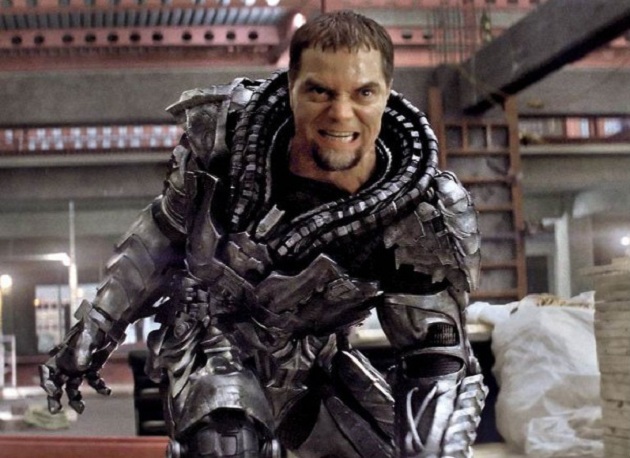 As the plodding action continued to pound me senseless, I was left to seriously ponder just how epic the scale of Superman’s collateral damage truly is. At one point, when Supes is fighting in the small-town center of Smallville, he tells the residents to, “Stay inside. It’s not safe.” What then proceeds to happen is a fight that rips up almost all the pavement in town, takes down a helicopter, a few fighter jets that crash in town, exploding, as well as a train car, plenty of ricocheting gunfire, and debris everywhere. But have no fear because those citizens stayed away from the windows and locked their doors! More than likely they are dead. The concluding clash in Metropolis is like 9/11 times eight. I counted three different skyscrapers that came tumbling down, and this is after the Krypton gravity field has ripped up the city and smashed it to dust, as well as missiles exploding around the city and Zod’s various spaceships. Then there’s the fight where Zod and Superman are blasting through just about every high-rise office building, and even when they collide outside it creates such force that buildings crater. They even fly into space, destroy a satellite, which then comes down as fiery debris that rains down on poor Metropolis. The final plan to foil the bad guys involves, get this, opening a black hole above a major city. It’s not like that sounds as if it will have catastrophic blowback.
The 9/11 imagery is unmistakable and I don’t care if it has been 12 years now. Couldn’t Superman at least react to the desolation he was causing? I really hope some enterprising soul via the Internet tallies the number of estimated deaths because I sincerely believe it would reach into the millions (Update: Ask and ye shall receive). Superman decimates the city and I thought less about the gee-whiz factor of the special effects and more about the innocent lives being lost amidst the CGI devastation. It looks like an atomic bomb went off. Perhaps a sequel will start with Lex Luthor rebuilding Metropolis.
And that’s the problem when you try and make sense of Man of Steel’s more realistic, grounded approach. This is a Superman that came of age in the 80/90s. While touches like young Clark experiencing sensory overload with his powers, like a scared autistic child, are clever and nice avenues toward relatability, you still have to square the more bombastic, over-the-top, and downright stupid moments that clash with that refined tone of greater realism. Nolan wanted Batman to exist in a recognizable world, so it makes sense that he and Goyer would attempt to do likewise with DC’s other champion. The prospect of an invincible alien among us is a potent source for some thoughtful and topical drama. It’s just not going to happen when Superman can demolish cities without blinking an eye or when anyone else fails to register the scale of this tremendous trauma. We don’t even have outside reactions or opinions to the earth-shattering revelation that we are not alone in the universe.
Then there are just the little things that annoyed me. Jonathan Kent dies in an effort to save the family dog. This comes off as lame, especially when Superman could save dad but has to hold back, per pa’s wishes, so as not to expose himself. Except, by the end, when the United States accepts Superman, doesn’t this invalidate all of Pa Kent’s worldview? If so, then the man died for nothing. Also, General Zod wants to transform Earth into Krypton. Except… on Earth all Kryptonians have godlike powers. Wouldn’t the man just want to keep that? Also, why does Zod never dispatch more than two Krypton lackeys to fight Superman? He has all these godlike warriors and decides to just keep them locked away in his spaceship. That just doesn’t make sense from a tactical standpoint. Also, Pa Kent tells his son to do his best to blend in, but in one scene bullies harass Clark as he’s reading from Plato. Yes, because your typical teenager can’t rip himself or herself away from the likes of Plato. Careful: Plato is a gateway read to Epicurus. Then there’s the overbearing product placement. Usually I give movies a pass if they’re not obnoxious with product placement; however, Man of Steel stages entire action sequences so we can get long-lasting looks at the logos for Sears, 7-11, and IHOP: “This callous destruction brought to you by the good (surviving) people at Sears.”
 Cavill (Immortals, TV’s The Tudors) sure has the look for the part. He’s appropriately bulky but because the role is too often inactive loner, always holding back, that makes his performance somewhat bland and more reticent than necessary. Part of this is also that Snyder has historically been a poor actor’s director. You can tell throughout the film as talented, Oscar-nominated and winning thespians like Crowe and Shannon will just give off deliveries, little tinny trills that clunk, moments that a director should have stepped in for. Shannon (Take Shelter, Premium Rush) is one of our best working wacko actors, but even he comes across as a bit too unrestrained and stiff, especially when he has to scream “I will find HIM” half a dozen times in a row. I thought Zod’s second-in-command played by German actress Antje Traue (Pandorum) had more personality and better moments. Adams (The Master, Trouble with the Curve) is a good choice for a plucky Lois Lane, especially one sharp enough to see through Clark’s disguise. The movie is packed with good character actors like Laurence Fishburne, Harry Lennix, Christopher Meloni, Michael Kelly, Richard Schiff, Mackenzie Gray, and two actors from Battlestar Galactica. That’s nice. The best actor in the movie is Dylan Sprayberry as teen Clark.
Snyder’s reworked Superman for our modern age just doesn’t cut it as popular entertainment. Its misshapen structure, heavy with exposition, doesn’t provide enough space for the characters to develop, and the general edict to make Superman an inactive loner on the fringes of society is a surefire way to keep an audience at bay. The CGI-heavy action sequences feel like they go on for an eternity, straining and struggling to keep your attention because the stakes fail to escalate or have consequences outside ridiculous amounts of collateral damage to rival the worst of Mother Nature. The over-amped sci-fi reworking tries to make a clean break from the demands of Superman’s mythology, and while some revamps work, most feel needless and ham-fisted, like Pa Kent’s somewhat pointless death. But the worst charge is that the movie is just too boring. I know people have levied this charge against Superman movies in the past, particularly the 2006 Singer film that I will still stand by my positive review for. Man of Steel is a good looking movie for certain, often a great looking movie, but all those pretty pictures are for naught because of a flawed approach and overindulgence with tedious action sequences. Given its box-office riches, I expect this Superman retread will garner the sequel that Singer’s film did not. I just hope the next chapter in the new adventures of Superman experiences a Dark Knight-level rise in quality.
Nate’s Grade: C+


You must be logged in to post a comment.