Blog Archives
Pete’s Dragon (2016)
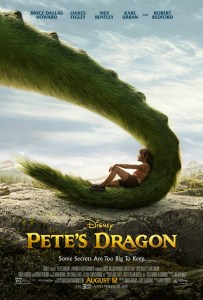 I have no personal love for the original 1977 Pete’s Dragon. I thought you, dear reader, deserved to know this morsel. I never felt a sense of wonder from the animated dragon creating mischief while a town tried to rid itself of an orphan and a bunch of hillbillies sang an ode to child abuse (it was a different time?). Disney has gotten into the self-cannibalizing habit of dipping into its own past and remaking its animated hits for a new generation of moviegoers. It worked splendidly with last spring’s Jungle Book, and the new version of Pete’s Dragon is further proof that when Disney aligns the right artist with a vision and gives them latitude to express that vision, rewards are generously reaped. This is a delightful, heartwarming, and enchanting summer movie that got me crying.
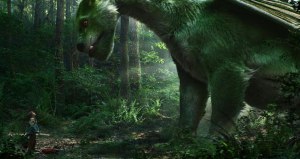
Pete (Oakes Fegley) is a young boy who lives in the wooded reservations with one very special friend, a furry green dragon he has named Eliot. He’s been living in the woods for six years after Eliot rescued him following a car accident that claimed the lives of Pete’s parents. One day a park ranger, Grace (Bryce Dallas Howard), comes across Pete and brings him back into town for medical evaluation. He’s a mystery child, a bit feral, and demands to return home into the woods. Grace incites Pete into her home and her family, but there are worries about the boy acclimating to society. All the while Eliot is looking for his best friend and mournful that they might have to part ways after all.
 Pete’s Dragon is a simple story but this is not a detriment to its ultimate effectiveness. Rather the filmmakers take care to treat this childhood fable with enough heart and earnest emotion that the movie feels fully developed to its aims. The characters and their journeys aren’t exactly revolutionary, but I didn’t mind at all. This is an old-fashioned family film told without irony and set in a nondescript past that adds to the universal appeal of its message. It’s elegantly simple but there are poignant themes running under the surface, namely an unmistakable level of melancholy with Pete’s process of growing up. This feels like Disney’s version of Spike Jonze’s Where the Wild Things Are, a movie that examines the hard but necessary transitions of childhood and the acceptance of a sort of loss among the fantastic. This movie isn’t consumed with a dour interpretation of childhood as an oppressively hellish existence of misunderstanding (I didn’t connect with Where the Wild Things Are if you couldn’t tell) but it does acknowledge a loneliness of being absent a family to call your own. Pete’s life with Eliot is filled with boyish excitement and adventure but he knows he can’t hold onto that world much longer, and this realization magnifies the remaining time with Eliot. From start to finish, Pete’s’ Dragon is bursting with warmth and resonant emotions.
I was unprepared for the emotional wallop that this film delivered. Not since perhaps Pixar’s Up has a movie so effectively triggered my sympathies in its opening ten minutes. In a beautiful yet tastefully restrained sequence, Pete becomes an orphan and is rescued by Eliot, and the vulnerability and compassion of this moment already had me tearing up. Full disclosure: I’m a sucker for the “boy and his dog” stories, and while Eliot is a special dragon by design he is, at his core, a rendition of man’s best friend. Their relationship is one of love, companionship, and protection. They’re a pack. When Eliot spots Pete cozy in a family house, he’s crestfallen but accepts that a placement in the human world is where Pete belongs. And then at the end after a fraught situation, Pete instinctively runs to Eliot and leaps into his arms, and Eliot takes him in, holding him dearly, and it was at this point that I couldn’t stop the flow of tears even if I wanted to. Happy tears, people. The takeaway of the film is the formative bonds of family and the need to reach out for that nourishing companionship. While it’s highly emotional, it’s all earned and avoids cheap maudlin, manipulative theatrics, short of one extended sequence of Eliot’s capture.
I never would have expected such an old-fashioned yet preternaturally charming movie from the team responsible for the somber indie Western Ain’t Them Bodies Saints. Director/co-writer David Lowery is locked-in with its goals and finds ways to build its characters through small, cumulative actions. The film also has a marvelous sense of place as get a strong feel for everyday life in this foggy Pacific Northwest environment. Contributing to that sense is a terrific soundtrack of low-key folk songs that thrum with a lovely homespun gentleness that taps into the earthy magic of its setting. The score strings-heavy by Daniel Hart is perfectly attuned to the emotional rhythms of the film without becoming overbearing. The photography is often gorgeous and the editing near invisible with how effortlessly it presents its story with room to breathe. There’s a standout sequence that highlights just how well all of these individual elements come together to form a greater whole. Pete escapes from the town’s hospital and desperately runs outside. He is dazed by the activity of the modern world and the geography of the town, and the residents of this town are just as dazed about Pete, a wild child exploring his alien surroundings. He hops aboard a school bus and the children inside are amazed at Pete’s daredevil antics. The chase sequence is set to the Lumineers’ “Nobody Knows” and it builds upon the sense of discovery, community, and mutual awe. It’s a wonderful sequence that develops patiently.

Part of the success of the movie is also due to the skill and implementation of the special effects team. Eliot is a cuddly creature you want to take home with you yet he can still be intimidating under the right circumstances. He’s on screen a lot but his magical qualities don’t diminish. This is one highly communicative dragon and it’s easy to empathize with him (those exquisitely emotive canine eyes help). There’s a tenderness to him that convinces the audience early on to take a journey with Eliot and see what happens next.
The human specimens are heartfelt and enjoyable as well. Ostensibly the main character, his name is in the title after all, the role of Pete rests on the tiny shoulders of actor Oakes Fegley, and he aces the part, tapping into the rougher, wilder edge while also selling the dramatic moments in a clear relation to his interpretation of the character. The next main character is Howard (Jurassic World) and she’s quite good. She gives a maternal performance that doesn’t go overboard while still allowing her to come across as an independent, thinking woman with her own desire for proof of the fantastical. She has several tender moments with Fegley. The actors all perform ably. Even Wes Bentley (TV’s American Horror Story) works well in the movie, and when was the last time that could be said? Karl Urban (Star Trek Beyond) is enjoyably hammy as the villain who’s not much of a villain. I wish Redford (Captain America: The Winter Soldier) was in more scenes because his grandfatherly presence is so enjoyable to watch and he so easily slides into the part.
Disney is two-for-two when it comes to 2016 live-action remakes of its old catalogue, and if The Jungle Book and now Pete’s Dragon are any indication, then bring on the remakes. The original Pete’s Dragon was never a memorable or enjoyable film for me, so there was already much to improve upon, which is what the new version does in every way. It’s poignant, heartwarming, earnest, and bursting with feeling. It’s a simple story told exceptionally well with artistry and grace. There’s a dash of indie flavor to the mainstream filmmaking. I think this movie will appeal to people of all ages, grown ups that are looking for some magic in their movies, as well as families looking for a movie that will entertain children but won’t rot their brains. It’s fortunate that we can end such a mediocre summer at the movies on a high note, and Pete’s Dragon is a wonderful infusion of the old and new, magic and reality, heartache and triumph. It’s a movie dripping with purity, and one that demands to be seen and hopefully cherished.
Nate’s Grade: A-
Share this:

The BFG (2016)
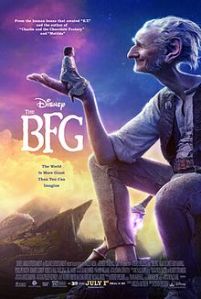 Roald Dahl is the kind of highly imaginative, inventive, and subversive children’s author that makes one wonder why more of his books don’t end up as movies. Charlie and the Chocolate Factory is the best known, and there’s Fantastic Mr. Fox, Matilda, James and the Giant Peach, and the rather spooky for kids 90s film, The Witches (it at least spooked me as a kid). For such a prolific author, it’s a little curious he has so few film credits. Steven Spielberg is one of the most successful directors of the modern era, so if anyone could wrangle Dahl’s wondrous worlds onto the big screen, he should. The BFG should be a transporting experience brought to vivid life with cutting-edge technology. All the special effects in the world, however, can’t solve a raft of nagging script problems that manage to take the fantastic and make it boring and predictable.
In 1980s London, little orphan Sophie (newcomer Ruby Barnhill) is abducted one night when she spots a giant blowing a mysterious trumpet into the windows of sleeping children. Fortunately for Sophie her captor is the BFG (Mark Rylance), which stands for Big Friendly giant, and he’s a vegetarian, having sworn off the bone-eating habits of his nastier giant peers. In Giant Country, the BFG collects and cultivates dream particles, concocting special mixtures that he then shares with sleeping children. The other giants bully and snidely dismiss the puny BFG. Sophie and the kindly BFG must work together to stop the larger giants from going back to London and dining on innocent children.
 The BFG has some pretty big friendly problems when it comes to its misshapen plot structure and its alarming lack of urgency or escalation. We’re all familiar, consciously or unconsciously, to the three-act story structure at this point, which is the principle formula for screenwriting. The BFG gets started pretty quickly, abducting Sophie and taking her to the land of giants by around the 15-minute mark, and from there the movie seems to take a leisurely stroll. I can’t really tell you where the act breaks are because the movie just sort of luxuriates in the meandering interaction between the BFG and his human pupil. There’s the initial threat that the other cannibalistic giants will discover her and this threat pops up in a handful of set pieces where Sophie has to constantly find new hiding places. Unfortunately, this threat never really magnifies or changes. She might get caught, and then she doesn’t. She might get caught, and then she doesn’t. There’s a repetition to this threat with our antagonists at no point getting more threatening. This is and a lack of a narrative motor make the movie feel rudderless, plodding from one moment to the next without a larger sense of direction. And then the third act comes (spoilers), presumably, when Sophie and the BFG travel back to London to try and recruit the Queen of England’s (Penelope Wilton) help. This sequence includes an extended breakfast that it punctuated by the memorable climax of watching the Queen fart and her little corgies fly around the room powered by their flatulence. It has to be the climax because what follows certainly doesn’t follow. Within five minutes, the BFG leads the Brits back to the land of giants and they restrain and airlift all the other giants in shockingly easy fashion. It’s a victory that feels relatively hollow because of its ease. These giants were never much of a threat to begin with, which is why we spent more time deliberating over dream ingredients than a retreat from man-eating colossuses.
Another aspect of Dahl’s novel that falls flat on screen is his verbal gymnastics and witticisms. It just doesn’t work with actors repeating the words without the text in front of your eyes. Listening to the BFG talk for any extended period of time is like being stuck with a crazy person muttering to him or herself. I would estimate that at least 60% of the BFG’s dialogue is folksy malapropisms. It’s not endearing and grows rather tiresome, especially with the unshakable stagnation of the movie’s plot. And so we get scene after scene of a big CGI creature talking verbal nonsense. Are children going to be entertained by any of this? Are they going to be engaged with the giant’s gibberish or will they find it one more impenetrable aspect of a movie and a story that seems to keep the audience at length? I couldn’t engage with the movie because it never gave me a chance to invest in what was happening. The BFG is a gentle soul and shouldn’t be bullied by his giant brethren, but that doesn’t mean I’m going to automatically love him. I didn’t.
 For a Spielberg movie this feels oddly absent his more charming and whimsical touches. There are scant moments where it feels like Spielberg is playing to his abilities in this fantasy motion capture world, like exploring the underwater land where the BFG gathers his dream ingredients, and in the narrow and messy escapes Sophie has not to be caught. It’s a shame that the creative highs of Spielberg in full imagination mode are too often absent the rest of the movie. He too feels like he’s coasting, allowing the technology and the fantasy setting to do the heavy lifting. The land of the giants is a bit too underwhelming as far as fantasy worlds go. It’s simply too recognizable except for slight peculiarities, like “snozcumbers.” It’s not an enchanting location and we’re not given enchanting characters, and with the little narrative momentum or escalating stakes. I experienced a lot more fun and whimsy from Spielberg’s other major mo-cap movie, the nearly forgotten 2011 Adventures of Tintin. The action sequences especially had such a lively sense of comic brio and imagination that was pure Spielberg. I get no such feeling from The BFG. If you told me that Robert Zemeckis had made this movie I wouldn’t have blinked. I don’t know if Spielberg was hoping to recapture that E.T. magic with screenwriter Melissa Mathison (who passed away in 2015) but this isn’t close.
I will credit the special effects department for the amount of work put into Rylance’s BFG visage, which looks eerily like the Oscar-winning actor. The range of the facial expressions is another sign that mo-cap performances are just as legitimate as live action flesh-and-blood performances. I can admire the technical feats of the character while not exactly feeling that much enjoyment from that character. The interaction between the computer elements and the real-life elements could be better, most bothersome with little Sophie interacting with the giant’s giant personal things.
I was left wondering whom The BFG is supposed to appeal to. I think kids and adults will be bored by its slow pace and stagnant, minimal stakes, weird and unengaging characters and their annoyingly impenetrable speech habits, and the overall lack of charm and wonder. It’s saying something significant when the most mesmerizing part of a fantasy movie is watching the Queen of England, her dogs, and a room full of her royal servants violently fart green clouds of noxious gas. That was the one moment in my screening where the kids in the room seemed to be awake. Otherwise the BFG character must have calmly put them to sleep with his prattling gibberish. It’s not an insufferable movie and there are fleeting moments of entertainment, but they drift away like a memory of a dream. There just isn’t enough going on in this movie to justify its near two-hour running time. Not enough conflict, not enough world exploration, not enough character bonding, not enough whimsy, and not enough entertainment. It feels too lightweight to matter and too dull to enchant. The BFG could have used more farts. That would be a sign of life.
Nate’s Grade: C+
Share this:

Finding Dory (2016)
 Victims of their own meteorically raised expectations, there’s still never been such a thing as a “bad Pixar” movie, and yet that doesn’t stop a growing lower tier from emerging, mostly the non-Toy Story sequels. I was wary about their latest, Finding Dory, mostly because I wasn’t completely enamored with its predecessor and also because it felt like writer/director Andrew Stanton was resorting to safe territory after helming the high profile flop, John Carter. It’s an amusing, cute, and effortlessly beautiful movie to watch but the threadbare plot reminds me of those direct-to-DVD sequels that were born from many a Disney animated classic from the 1990s. This is simply a story that didn’t need telling, much like Monster’s University, Cars 2, and The Good Dinosaur. This narratively fishy fish tale is firmly in that lesser league of Pixar cinematic adventures. I laughed here and there and there are some emotionally resonant moments as Dory looks for her missing parents, but so much of the plot feels transparently utilitarian, moving pieces around, and without the imagination and wonder the original provided. Hank the octopus feels less like a fully defined character and more a merchandizing opportunity. The majority of the plot takes place at a marine park, which limits the discoveries. Where are the narrative payoffs and economical storytelling of Stanton’s masterpiece, WALL-E? There’s an emotional lesson during the third act that would have hit harder had the filmmakers had the courage to see it through. I was picking up a heavy parallel with Dory and raising children with special needs. I would imagine much like the brilliant Inside Out that parents might get more out of the film’s emotional relationships than children. Finding Dory is fun and difficult to dislike, what with its loveably optimistic lead character; however, it does too little thematically to separate itself from a sea of imitators.
Nate’s Grade: B
Share this:

Warcraft (2016)
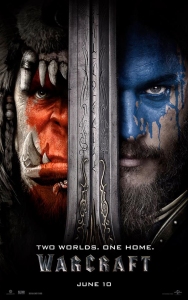 It’s been a long five years since we last saw a movie directed under the name Duncan Jones. He’s not just the son of David Bowie (R.I.P.) but also a talented and nimble director of science fiction thrillers with a rewarding intelligence and visual acumen. Moon and Source Code are two strong entries for anybody’s resume. After flirting with Hollywood franchises for a while, Jones latched onto a personal project, spearheading a Warcraft film adaptation based upon the popular online multi-player role-playing game that boasts over 12 million subscribers. Jones has gone on record saying he is a Warcraft player himself. He co-wrote the script and embarked on a long development process working with heavy use of special effects and actors in motion capture to bring to life the otherworldly fantasy races. It’s been a tumultuous road for the expensive final product, and Warcraft, as a movie, is proof that some concepts are best left to your home computer.
The orc race is in need of a new home because their old world is dying. Their leader, a wizard named Gul’dan (Daniel Wu), uses magic to open a portal to the peaceful world of Azeroth. The orcs invade and plunder although one orc, Daruton (Tony Kebbel), is wary of the motives of his leaders. He’s looking for stability rather than constant conquering. He finds an unlikely ally with Anduin Lothar (Travis Fimmel), a human warrior serving King Wrynn (Dominic Cooper) and his sister, Lady Taria (Ruth Negga). The humans seek help from their own wizard, the Guardian Medvih (Ben Foster). Someone must be collaborating with the orcs to allow the inter-dimensional portal to open. Medvih’s apprentice, the mage Khadgar (Ben Schentzer), teams up with Lothar to investigate and find a way to thwart the oncoming orc invaders.
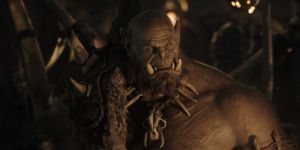 Unless you are a fan well versed in the lore and characters of the popular online game, Warcraft will leave you sputtering to construct cohesion from what seems like a lot of incidents without explanation, connective tissue, and a compelling reason to engage with this fantasy trope mess. It felt like every third page of the screenplay was ripped out of the shooting script; things merely just happen without proper setup and development. All of a sudden this character will be evil, or that character will have some prized piece of knowledge, or these two characters will be a romantic item. Things just happen in this movie and they are far too rarely given the context necessary to matter. This is less a story than a collection of ideas scattered onscreen. Take for instance our protagonists, or what you would assume are the protagonists, a pair of capable warriors trying to prevent mass causalities on both sides of the human/orc war. Except the orc character never really translates as an effective parallel to his human counterpart. You would naturally think they would be equal in significance as they try and steer their two warring sides to making less destructive decisions. I can’t tell you anything about the worlds we’re spirited to and from. We got elves and dwarves and mages and wizards and portals and dark magic and good magic and guns that feel entirely out of place in this universe and all sorts of names we’re expected to keep up with. There is little that leaves an impact, and after a while the movie ends up becoming the metaphorical equivalent of cartoon characters that run in place while the interchangeable backgrounds alternate behind them. Besides the fact that sometimes a guy wears a crown to help you realize he’s king, or a guy flashes a ball of energy in his hand, you’re left on your own to interpret the characters and why they are meaningful. The plot is simple, orcs versus humans and bad warmongering leaders at fault, but it’s the deluge of underdeveloped characters, subplots, and world building that make what was once simple hard to understand. I couldn’t tell you why anything was happening. There is no way the casual moviegoer will be able to keep up with the speed that Warcraft hurls information at them without careful setup and meaning. You need an instruction guide to make this stuff accessible.
Fantasy is a naturally transporting genre of storytelling but unless you actually develop and explain the worlds, the inhabitants, and perhaps some of the cultures, you’re destined to feel like a stranger bumbling through a most foreign and unfriendly place. Warcraft does a terrible job of making its worlds feel lived in, never mind accessible. Every new location should tell us more about the world and its characters, their interactions and conflicts, differences and similarities. This is just bad storytelling, people. Ultimately, it doesn’t matter where any of these locations are because they don’t impact the plot. The only story is about the conflict between the orcs and humans, but this could happen anywhere. There are some “important” characters on both sides of this battle but good luck trying to engage with any of these characters. The human characters are bland. I didn’t care about anyone and gave up trying. Cooper and Negga are both considerably more entertaining and effectively utilized on AMC’s Preacher. It takes an hour just for Warcraft to finally establish the relationships between its various stock characters.
It’s the orc characters that showcase the most humanity, and credit goes more to the special effects artists and motion capture actors than the screenwriting. I appreciate how the movie devotes time to both sides of the conflict and finds figures of honor, and its best representation is Durotan. Kebbell seems like an actor who really feels a sense of freedom with mo-cap performances (he was excellent as the simian villain Koba in Dawn of the Planet of the Apes). I initially thought the creature design of the orc, what with their hulking underbites, was going to be hard to render emotive performances, but there were glimmers where you could witness the shadings of the actors beneath the underbites. It’s an impressive technical feat considering the obstacles that all parties had to overcome. Sadly, this only further exposes just how shoddy the storytelling is considering the technology was capable. Darotan is a loving husband and father who is leery of his leaders intentions, but this too is just a means to serve the ultimate ends of the plot. There isn’t a thoughtful moral anti-war argument to be had here. As a whole, the orcs are a rather personality-free race of creatures. Sure they talk a big game and have some curious decorative flourishes (tusk piercings!), but to this Warcraft layman, they come across like any other barbarian group. Early on I was mentally thinking of the Klingons from Star Trek and then I concluded that this was an inappropriate comparison because Klingons have memorable personality and culture.
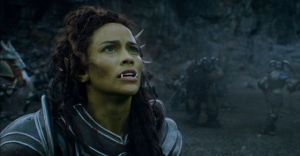 The actor who gets my greatest sympathy is Paula Patton (Baggage Claim) as the half-orc/half-human outcast, Garona. First of all, given the immense physicality of the orcs, I imagine any form of fornication with a human would prove highly fatal. It would be like an elephant mating with a labradoodle. Trapped between the two groups, Patton is painted green and given a lesser underbite that is reminiscent of snake fangs. When realized on an actual person, as opposed to a creation from the realm of computer effects, it’s not terribly convincing. Patton tries her best to speak all her gobbledygook lines of dialogue but the reverse vampire fangs make it awfully difficult for her to properly enunciate. She looks too ridiculous to be an effective character, and the fact that she is pushed into a romance with a human without any sense of setup beyond the universal law that pretty people should be together with pretty people is deflating. Why does the only female character of significance have to be shoved into a romantic subplot? Your poor poor jaw muscles, Paula Patton. At least you didn’t have to wear a metal bikini. Yet.
With all of this stated, Warcraft is not a horrible movie, and credit for that should go to Jones as a director. In the same token, Jones is also the co-writer so I guess he also deserves blame for the storytelling shortcomings. Jones very smartly limits his camera movements. Character will move within the frame but usually the camera point is fixed, which allows the focus to be more attuned to what exists within the frame. This is especially helpful during battles and with the multitude of CGI elements. This stylistic choice allows the film to be more visually immersive. The fighting sequences do get a tad repetitive as one guy with a sword or club runs at another guy. I saw Warcraft in 3D at my screening and I might actually recommend people see it this way, which is something I hardly ever do. It’s not that the 3D elements will compare to the experiences of modern standard-bearers like Life of Pi or Gravity, but it’s a pleasurable experience and the presentation of the visuals is crisp. I was worried about the usual effect of the glasses darkening the onscreen image and this was not the case at all. From a purely visual standpoint, Warcraft is worth watching at least once. The special effects vary between photo-realism and extended video game cut scene, but overall the visuals are colorful and fun and easy to discern. When the action heats up, you’ll be able to cleanly follow what is happening to whom. If only this same clean precision had been applied to the half-baked screenplay.
I will admit I have never played a single minute of the Warcraft game. I am not familiar with any of the worlds, characters, or races beyond what I have watched from other more popular fantasy films and series. I am not coming at this movie from the perspective of a fan who has been eagerly awaiting the holy grail of video game movies. If you’re willing to look past its flaws, mainly its bereft characterization and haphazard plotting, then I’m sure there is a forgivable and sporadically entertaining movie here. As a man who has reviewed over 20 films directed by notorious video game adapter Uwe Boll, this is no unbridled suckfest. However, it’s still too limited for its own good. The visuals can be immersive but the story is certainly not, and there are numerous points where the movie just actively forgets that an audience requires servicing. You need to introduce us to the characters, allow us to get a sense of who they are, their internal and external battles, their relationships with one another, their significance to the plot, and relevant history and culture as it relates to the larger story. In a rush to visit all the different game settings, the movie’s screenplay zips along when it should be building its narrative. At times it feels like a travelogue with very exotic locals. Warcraft is a repository of incidents and events, almost as if it were awaiting a user to plug in and control the storyline and provide the meaning. It’s no unmitigated disaster but I don’t believe this was worth the five-year price for Jones.
Nate’s Grade: C
Share this:

Pan (2015)
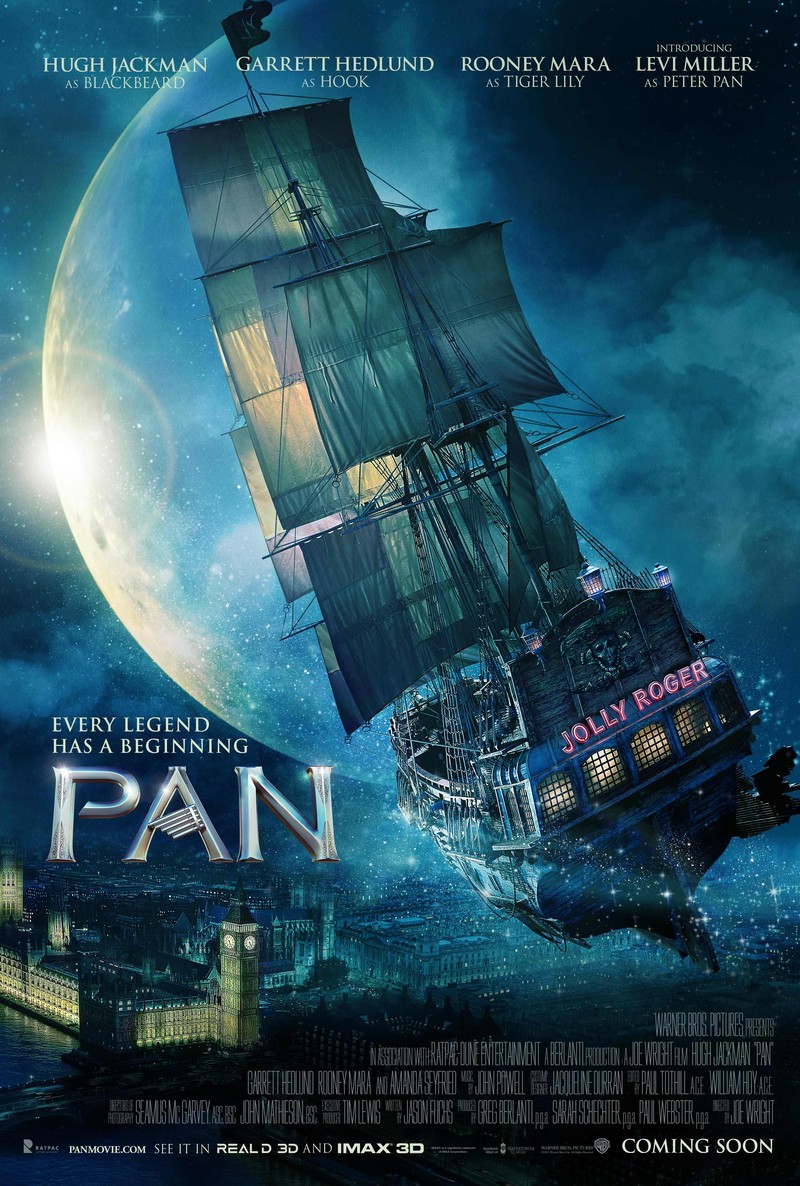 Reminiscent of the Patton Oswalt bit concerning The Phantom Menace, often fans rarely need the “before” when it concerns the characters they love; did anyone really need to know what Peter and Hook were up to before they became mortal enemies? Pan attempts to tell the story before we know it about how Peter Pan became the character we know. It was originally planned for a summer 2015 release and was pushed back until the fall, ostensibly for more time to finish visual effects. the studio, Warner Brothers, pulled a similar move with Jupiter Ascending, and we know how that turned out.
Peter (Levi Miller) is an orphan living in London during World War II. He and a few of his best parentless pals are abducted in the middle of the night by a group of pirates and their flying pirate ship. He’s taken to Neverland to work in the mines belonging to Blackbeard (Hugh Jackman), who has an addiction to fairy dust. During a scuffle, Peter discovers he has the ability to fly, though he can’t exactly master it. There has been a prophecy that The One would be able to fly and they would topple Blackbeard. Peter and another miner, James Hook (Garrett Hedlund), escape, finding their way into the land of the “natives,” which includes Tigerlily (a miscast Rooney Mara). The “Pan” has been prophecized to help lead their people and discover the bridge into the world of the fairies, and Blackbeard won’t stop until he finds the source of his pernicious pixie smack.
 Who exactly is Pan intended for or what story needed to be told prior to our introduction to the world of Neverland? The first act sets the stage for the miscalculated tonal mishmash that never truly settles: we jump from a cruel orphanage, with Peter comically plucky, to the horrors of the London bombing during the Blitz, to a bunch of pirates kidnapping the orphans (tacitly with the approval of the evil head nun running the orphanage), and from there we’re whisked away across space to a mine of slave workers digging for pixie dust minerals who serenade their pirate slave lord with the lyrics to Nirvana’s “Smells Like Teen Spirit” for… some reason. Is this a movie intended for younger children and families? Is it intended for teenagers? The tone veers wildly, sometimes within the same scene, going from serious and gritty to colorful and ridiculous. It’s a campy experience that makes me wonder who exactly was supposed to enjoy an attempt to open the Peter Pan mythos, a world that is generally shallow.
At no point does Pan justify its existence beyond a flimsy corporate attempt to take a familiar world and expand upon it for sweet franchise money. When you get down to the world of Neverland, at least as represented on film, what exactly is there? There are pirates, “natives,” mermaids, and fairies, and that’s about it. They all kind of exist in their own individual movie that fails to blend together, making the new groups of characters feel like little more than a new theme park attraction before moving on to the next autonomous ride. The fantasy figures themselves just aren’t that interesting because there just isn’t much to them beyond superficial descriptions. I suppose then that this would allow plenty of opportunity at world building to take these familiar staples and give them greater depth, and that’s Pan’s biggest missed opportunity. Far too often, the movie feels on Fantasy autopilot and what we’re given is the old clichés of the Great Prophecy and the Chosen One meant to bridge worlds, etc. the events in the film do little to explain how Peter became Peter Pan, besides learn to fly. The problem with the prophecy trope is that it robs characters of agency in place of just accepting their capital-D destiny.
You learn nothing new about Peter or Hook as people, and the nods to the greater Pan lore are annoying at best with how unsubtle and clunky they are. The movie doesn’t even lay the groundwork to explain what conflicts will eventually drive Peter and Hook apart. Peter is a bland hero who is defined by the mystery of his absent mother and her own lineage. He’s special because his mom was special and if he just believes hard enough then perhaps he can be even more special. It’s pretty simplistic stuff. The references to the Pan lore always seem to stop the movie dead in its tracks. The relationship between Peter and Hook isn’t explored in any capacity other then they appear to have both escaped together and been running side-by-side. It’s a relationship not out of bonding but out of sheer proximity. The concluding lines are literally Peter saying, “We’re going to be friends forever,” and Hook replying, “What could possibly go wrong?” Oh my goodness is that one hacky groan-worthy wink to the future.
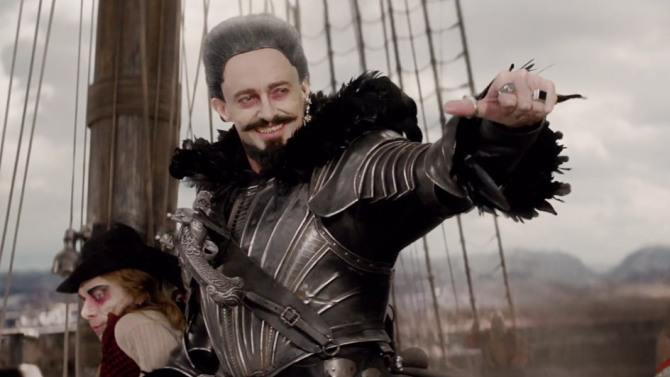
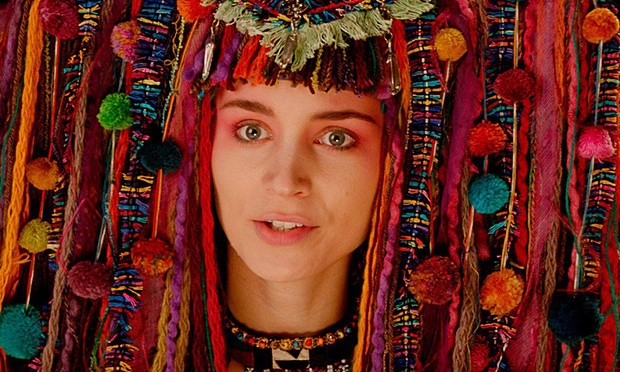 Pan is made serviceably watchable from director Joe Wright and the campy performance of Jackman. Wright is a premier visual stylist in cinema though his artistic instincts can lead him to try and smash as many ill-fitting square pegs as he can into round holes, last evidenced by the 2012 Anna Karenina adaptation that made all the world a literal stage. The visuals are often splendid to behold and Wright has a wonderful feel for color hues. The final act feels climactic and visually alive in ways the movie doesn’t even deserve, and Wright’s vision, weird as it can be at points (Nirvana?) gives the movie an energy that keeps its worth an initial viewing. For a movie filed with fantasy realms, I enjoyed the scenes in the orphanage and with the wicked head nun the best (is she knowingly selling the boys into slavery on a magic pirate ship or is it just extreme negligence on her part?). The other aspect that at least held my attention was Jackman. In a movie filled with bland and the occasionally bizarre performance, Jackman offers an anchor to lean upon. It’s not a good performance by normal circumstances but it provides a sense of life and feels in place. Hedlund (On the Road) is amazing in just how strange his rakish Harrison Ford-esque performance persists. Why didn’t anyone tell him to stop? His speaking voice fascinated me and I spent the entire moving trying to figure what it sounded like and my best description is Heath Ledger’s impression of Al Pacino.
While not being a colossal disaster of artistic self-indulgence, Pan is a disappointing and mostly tedious experience because of its failure to capitalize on expanding upon the Neverland universe and exploring what should be formative experiences to central characters. If this was going to be a crazy artistic romp then it needed to be crazier. If you’re going to have two brief anachronistic songs, then do more or at least draw in more influences from other timelines. If you’re going to be a straight-laced pilot for a budding fantasy franchise, at least give us more flights of fancy and wonder. Make us fall in love with this world or at least some of the characters. Instead Pan uses the audience’s pre-existing association with the characters and the environment in place of doing anything meaningful with a story. Peter becomes Peter Pan, so he doesn’t have to be a character he just has to be the pre-Pan Peter. The same for Hook and Smee and Tigerlily and that’s really the only characters worth mentioning until those Darling children come visit. I thought I was going to ridicule Pan with the glee I had taking apart Jupiter Ascending but I couldn’t muster much effort. It didn’t feel like the Pan filmmakers did either.
Nate’s Grade: C
Share this:

Inside Out (2015)
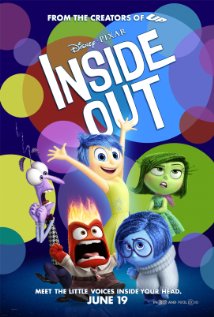 It feels immeasurably satisfying to finally have the Pixar we all fell in love with back and running. There’s been a sharp decline in the company’s quality since 2010’s Toy Story 3. Did we really need a sequel to Cars and a prequel to Monster’s Inc.? It started to look like Pixar was steering away from the kind of bold and brilliant storytelling that had earned its audience trust. With Inside Out, Pixar tackles the intricacies not of the secret world of toys, bugs, monsters, or sea life, but of the human brain itself and our embattled emotions, finding new ways to wow us once again and remind us just how magical the right combination of story and storyteller can be. Inside Out is a luminescent piece of filmmaking, brimming with intelligence, imagination, and it is powerfully moving while also being deeply relatable and entertaining. In looking inward, Pixar has found the path out of their recent rut, and Inside Out is a shining example of their ingenuity.
Inside 11-year-old Riley is a complex world. Five primary emotions help oversee her day-to-day functions; they’re the caretakers of Riley. Joy (voiced by Amy Poehler) is the effervescent leader of the bunch, along with Sadness (Phyllis Smith), Fear (Bill Hader), Disgust (Mindy Kaling), and Anger (Lewis Black). These five are entrusted with Riley’s well being and her memories. Riley’s core memories, the moments that make up who she is, help to form personality islands: honesty, hockey, goofball, and family. Riley and her family have recently moved from Minnesota to San Francisco, and Riley’s having a hard time adjusting. Her parents don’t know what’s happened to the daughter they knew. Sadness seems to be “tainting” Riley’s memories, and Joy tries her best to keep Riley happy at all times. Joy and Sadness get accidentally sucked away wrestling over Riley’s core memories. They’re sent to the outer reaches where the aisles of long-term memories are vast. The two emotions have to work together to get back to headquarters before the remaining emotions convince Riley to run away from home.
 Even just reading that again, it’s easy to see how complicated this movie can be with its world building and internal logic, and yet under the guidance of director Pete Doctor (Up) and his writers, the movie is at no point confusing. Pixar once again does an amazing job of guiding you through a new world and its various parts, all while expanding and complicating this environment while staying true to its internal logic and keeping an audience properly oriented. I can’t imagine many screenwriters would be able to tell this story while still being as clearly understood. The simplicity of the story, the ease to follow along, the natural development and connection of the storylines and characters coming together, is the greatest credit one can offer. It’s ostensibly a buddy adventure film like many Pixar tales, with the unlikely team of Joy and Sadness having to find their way back to headquarters and learning important life lessons along the way. It’s also a smart way to explore the various other elements at work in Riley’s brain. It’s not just an interesting descent but each new station further opens up Riley as a character. Her subconscious (and fear of clowns), her dream theater projections, her working abstract concepts, all tie back together in satisfying ways. Though the greatest side character is unquestionably Riley’s former imaginary friend, Bing Bong (voiced by Richard Kind). He’s wandering around her memories, and at first you have your suspicions, but then you realize, like the other characters, that he just wants what’s best for Riley. Coming to terms with the fact that Riley has moved on, and his time, while cherished, is now left behind, is a complete character arc, and that’s for a comic side character. Oh, and if you’re like me, Bing Bong’s conclusion just wrecked your tear ducts.
You know you’ve watched an impactful film when even thinking back on moments starts the process of tears welling in your eyes. It’s somewhat strange to think about characters as ephemeral as emotions and imaginary friends and the like, but they really work on two levels: the emotions themselves are exaggerated figures with distinct points of view but they also better inform the whole of Riley. There’s a depth there that gets even more impressive the more you analyze the creative process. What’s also impressive is the vital message of the movie, which is that growing up is hard and that being sad is okay. Seriously, the journey of Joy is to accept that being sad isn’t necessarily an emotion to minimize but a vital part of being human and an essential process. Much of the conflict that drives Riley is her avoidance of being sad, her postponement of accepting her real feelings and accepting that San Francisco is not going to be like her old home. It’s also a realization that to be a fully functioning person, you have to own the sadness in life. When Riley eventually unburdens herself of all her troubles and fears, and the tears flow, that’s when the healing can begin, and that’s when her parents swarm in for the group hug, and even now my eyes are starting to water. Damn you, Pixar.
 Don’t be mistaken by my words thus far, Inside Out is also a wonderfully funny and inventive comedy. The sense of discovery with the movie is alive and well, and each new revelation of Riley’s inner mind adds to the fun. The jokes are consistently paced. The vocal cast is expertly chosen and each emotion gets some good jokes. There’s a terrific running gag about a catchy jingle that the memory workers just enjoy kicking back and forth for their own impish amusement. The film dives into other minds other than Riley’s, including both parents trying to communicate during a family dinner meant to soothe their daughter. It doesn’t lean too heavily on tired gender stereotypes when it comes to the differing thought processes of men and women, which is a relief. During the end credits, we zoom into the mind of a schoolteacher, a bus driver, and a dog and a cat, and it’s an enjoyable way to leave the theater and gather yourself emotionally. The greatest comic asset is Joy, particularly as voiced by Poehler. As fans of TV’s Parks and Recreation can attest, Poehler can make insufferable optimism endearing, tip toeing around what should be annoying and instead finding stronger comic rhythms. If you’re looking for the closest thing to an antagonist, it’s Joy who got the whole mess started and yet we don’t ever really side against her. Part of that is because she’s not doing what she does as some weird power play but because she wants what, she thinks, is best for Riley. The other part is because Poehler is such a skilled vocal performer.
If I had to find some point to quibble, the world isn’t as beautifully realized in a visual sense as other Pixar classics. I think this was a deliberate decision to ground what is such an unusual environment into something a little more familiar and less flashy. I also don’t think that Disgust seems as well articulated as a necessary emotion. She’s well played by Kaling but her application seems lacking in comparison to the other four main emotions.
It’s remarkable that the summer is still young and already we have two instant classics in theaters; first Mad Max: Fury Road and now Pixar’s Inside Out. I’m still riding high from my screening, but I’d feel safe to call this a top-three Pixar film. I wouldn’t even begrudge those who cite it as their best. Far more than a big screen version of the 90s comedy Herman’s Head (anybody remember this one?), this is an exceptional animated film that will appeal to all ages but, I suspect, hit adults even harder than their little ones. It’s a wonderfully poignant film about the struggles of growing up, of holding onto your past definitions of yourself, of accepting the full barrage of emotions, including the necessity of sadness. It’s relatable in many aspects and this further compounds its power. It’s dazzling with its creativity, it left me cackling with laughter (a superb Chinatown reference almost had me fall out of my chair), and it left me weeping at various points. Inside Out is a return to form. This is the Pixar we remember.
Nate’s Grade: A
Share this:

Cinderella (2015)
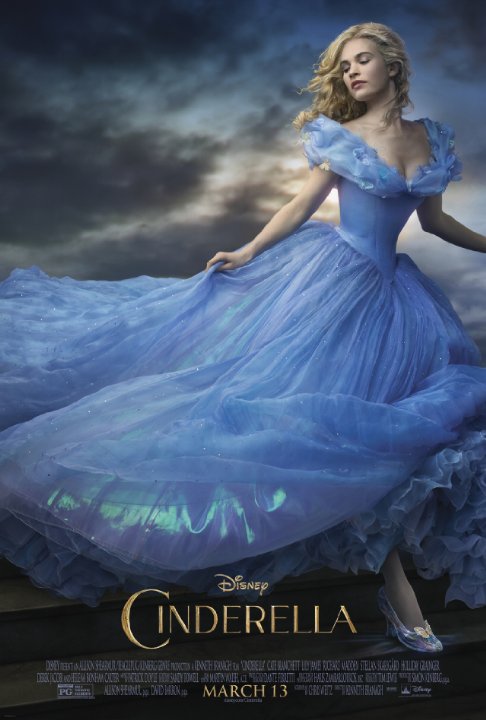 What is it about old stories that we enjoy so much? I pose this question after watching a commercial for the TV movie, Killing Jesus, based upon Bill O’Reilly’s best-selling novel. While it’s based upon a popular book, what can possibly be told with this newest rendition of the death of Jesus that hasn’t been shown a thousand times in other movies? There was even a movie that was released in theaters last year, Son of God, which covered the same territory with equal reverence. There’s something to be said for good stories and the universal appeal of the familiar, but why do people constantly pay more money for new renditions of the same old same old? That question leads me to Disney’s live-action Cinderella, a fairly faithful and warm-hearted rendition of the oft-told tale. I can’t exactly muster many reasons for an audience to dust off their best glass slippers and run out to the theater, but if you’re looking for the comforts of old and some family-friendly entertainment, then Cinderella will charm with its modest and achievable goals.
Cinderella (Lily James) is the titular put-upon heroine suffering under the cruelty of her two stepsisters and her new Stepmother (Cate Blanchett). Cinderella thinks back to the advice her mother gave her at a young age, to always be “kind and courageous.” One day she rides off into the countryside and comes upon a handsome man who just happens to be the Prince (Richard Madden). He’s smitten with their exchange and convinces his father to open the royal ball to all members of their kingdom, in order to see his special someone once more. His adviser (Stellan Skarsgard) is against such matters because he wants the Prince to marry for a political alliance, not for love. Cinderella is forbidden from attending the ball by her Stepmother, but luckily she has a Fairy Godmother (Helena Bonham Carter) who, with a pinch of magic, will make sure Cinderella attends in style and steals the Prince’s heart. None of this should be rather new to you, dear reader.
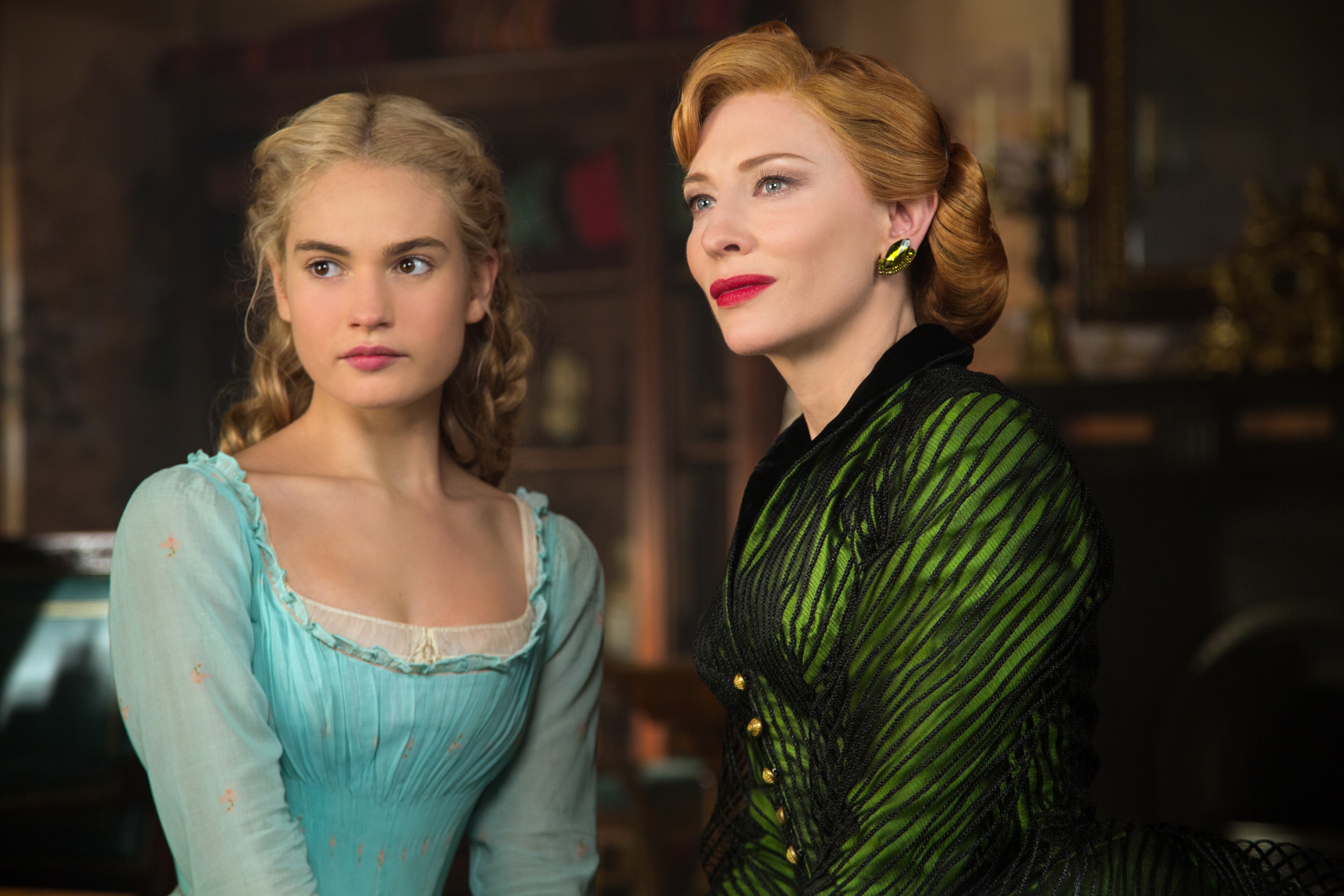 The first aspect of Cinderella I enjoyed was how it attempts to ground the story without losing a sense of magic to the proceedings. It’s still a fantasy film under director Kenneth Branagh (Thor), but there’s a concerted effort to place these characters in a world that resembles more of our own than the animated landscape from Disney’s original 1950 classic. Thankfully, half the movie isn’t spent with anthropomorphic mice wearing clothes and escaping the clutches of a house cat. There are a handful of helpful mice but at least they don’t talk and are mostly kept as cute accessories rather than co-stars. The reality of Cinderella’s hardships, especially after the death of her parents, is given an appropriate degree of solemnity. I also appreciated that the Prince is given an entire character to portray, one where his pursuit of a bride is placed in a political context about the security of his kingdom. He’s pressured to marry several available ladies for various political reasons, but he’s smitten with the girl he saw in the woods one fine day. The movie also succeeds in advancing a stronger, more developed relationship between Cinderella and her Prince. Instead of love-at-first-sight, they interact before the ball, and there is terrific chemistry between James and Madden (HBO’s Game of Thrones). There’s also a rather nice subplot between the Prince and his father (Derek Jacobi) that opens up their relationship. It’s a subplot that could have just as likely never existed and yet there’s something touching about the love shown between father and son. These moments, and the care to develop them, allow the characters to feel like flesh-and-blood people and to charm us all over again.
Another tilt toward greater narrative realism occurs with the villains, played by Blanchett (Blue Jasmine) and Skarsgard (Thor 2). While she’s still an arch villain, the treacherous Stepmother, who has no actual name, is given a generous treatment by Blanchett and especially writer Chris Weitz (The Golden Compass). The movie actually attempts to articulate her position, one where a woman of her age is left with few options to secure her family’s stability after the death of a husband. She clearly knows how society sees her waning value and Blanchett does a good job of casting that bitterness in way that you’re still reminded why she’s so furious and devious. I was so pleased I wanted more. I wanted the Stepmother to break down and admit that Cinderella is proof that her father will never love the Stepmother the same as Cinderella’s mother; she’ll always be second place to a ghost, and Cinderella is a constant reminder of this. Blanchett is also deliciously dishy as the wicked stepmother every moment she’s onscreen. Skarsgard can’t compete with the main attraction, but he provides an interesting secondary antagonist as he schemes behind the scenes to ensure the Prince marries a specific maiden with a reliable family name. He’s seemingly devoted to strengthening his kingdom, and he can’t let something as important as a marriage securing an alliance to fall aside because the Prince happens to be in love with a commoner. The extra dose of political intrigue is further attempt to ground and humanize the fairy tale, and it mostly succeeds.
 That’s not to say that the movie is without its fantasy pleasures. It is still a Disney movie about a famous Disney princess, and as such it maintains a bouncy, exuberant tone that keeps the heavier moments of drama from getting too heavy. Carter (Les Miserables) works wonders as the Fairy Godmother; she’s only in the movie for a solid ten minutes but she makes every second count. She has a silly nature that provides a welcomed jolt of scatterbrained comedy. Carter is clearly having a ball of her own with the role. The magical coachmen and assorted helpers supply extra cuteness. I also appreciated the quick fix of just creating a spell so that Cinderella’s step-family doesn’t recognize her at the ball. However, I never understood why all the artifacts of magic disappear at midnight but the shoes are left behind. Are they not magic too? Maybe only one of them happens to be magic and that was the one left behind. As presented, the shoe fitting is merely a ceremony rather than the missing clue toward finding the absent Cinderella.
So with all that said, does the new live-action Cinderella justify retelling what is one of the most retold stories in cinema history? I’d conclude a mild affirmative. It’s a charming adaptation that develops its characters with greater attention to detail, providing flights of fancy but also further humanizing the good guys and the bad. It’s no a deconstruction of the fairy tale, nor is it a revision, but it’s a faithful attempt to take what works but ground it in a slightly more realistic context, and it works. It’s at turns magical and touching and fun and buoyant and heartwarming. The casting all around is excellent, with every role impeccably chosen. Blanchett and Carter are great fun, and James and Madden have a winning chemistry. The technical merits are up to the same challenge, as the costumes and set design are gorgeous. Of course the aims of a new Cinderella movie are modest. Even if it benefits from a reworked attention to detail, we’re not reinventing the wheel here. It’s still the same story with the same major plot beats and the same ending we’ll all expect from the moment the Disney logo appears onscreen. The greatest achievement of Branagh’s Cinderella is that it makes you ignore these impulses. You find yourself once again returning to a familiar world and enjoying it all again.
Nate’s Grade: B
Share this:

The Hobbit: The Battle of the Five Armies (2014)
 With all respects to Ice Cube’s would-be family series, the subtitle of the third Hobbit film could have been “Are We Done Yet?” Originally planned as two films, the prequel series based upon J.R.R. Tolkien’s novel was expanded to three, and it’s clear what motivated this decision. Each Hobbit film has made at least $900 million dollars, but goodness has it padded an already bloated series beyond repair. The best part of the second film, which looking back is the best in the new trilogy, Smaug the dragon, is gone in the first ten minutes. What follows is a pointless and tedious series of events, mostly CGI armies crashing into other CGI armies. It’s hard to find much to care about after six plus hours especially when it amounts to squabbles over treasure. It’s also bothersome that the antagonist for a solid hour is Thorin who adopts… gold madness suddenly, and then loses it just as suddenly and as contrived. You can feel the weight of all this filler trying to stretch what amounts to a protracted resolution into a full-blown movie. The battles are relentlessly soulless and have lost any weight to reality. There’s one standout action sequence involving a crumbling tower acting as a makeshift bridge. Beyond that, get ready for overlong battles involving lots of fake soldiers and monsters. With no larger goal in motion, you’re just waiting for the bad guys to die so we can go home. While Battle of the Five Armies is the shortest film in the series, it’s still about 120 minutes longer than it needs to be. The business of the Hobbit has affected the artistry of The Hobbit, and only Tolkien apologists would lap up the extra time in Middle Earth.
Nate’s Grade: C+
Share this:

I, Frankenstein (2014)
 Why wouldn’t Frankenstein’s monster (henceforth referred to as Adam) be the focal point in a war between heaven and hell? And why wouldn’t the angels really be gargoyles and live in cathedrals? And why wouldn’t the demons be trying to get their demony hands on Dr. F’s book on reviving the dead? And why wouldn’t we jump ahead 200 years to modern-day, where “Adam” should be a rotted corpse? Transparently an attempt to replicate the surprisingly enduring Underworld franchise, this secret supernatural war is a lame monster movie disguised as a lamer superhero film. It’s also absurdly idiotic in just about every capacity, as if no department had any communication with one another. Aaron Eckhart grumbles and trudges his way through this awful mess but you can feel his disdain for the entire enterprise. It’s not even deliciously campy, choosing to try and re-envision the classic monster in a modern and realistic setting. The action sequences are mundane when they’re not incoherent. I, Frankenstein feels like a movie version based upon the video game of some other source material. It’s loud and inept and campy but mostly outrageously dumb. I can’t wait to watch someone else in Hollywood recycle this cheap plot setup for a desperate supernatural franchise (“Okay, the Creature from the Black Lagoon finds itself in the center of a war between centaurs and…”). When people talk about the dregs of Hollywood, and the echo chamber of stripping away creativity, let I, Frankenstein be a prime example of the worst of us.
Nate’s Grade: D
Share this:

The Boxtrolls (2014)
 Another delightful film from the creators of ParaNorman, the whimsical Boxtrolls is another stop-motion treasure that plays just as well for children as it does adults. The fanciful world follows the industrious title creatures that have wrongly been demonized as villains. Snatcher (a tremendous Ben Kingsley) has much to gain by stirring up boxtroll fears, and if he captures them all he’ll finally be allowed to join the town’s inner circle of muckity mucks. We follow “Eggs” a boy who has been raised by the boxtrolls since he was a baby and his re-emergence with the world above ground, notably with the help of a morbid little girl, Winnie (Elle Fanning). The world building is confident and well developed, the storyline finds nuanced ways to be touching and deliver serious messages about peer pressure, assimilation, and the ways which we judge ourselves and whether those are even of merit. But the main draw is the glorious animation, so fluid, so lively, and a landscape that makes full use of color and light and shadow. It’s an immersive experience that your eyes don’t want to blink for fear of missing something. The plot is droll and expertly sequenced with its variety of character and comic asides. The vocal cast does a terrific job, notably Kingsley and a hilarious Tracy Morgan. The film can get a little spooky for young children but should still be comfortable viewing. The Boxtrolls is further proof that the animation house Laika is operating at near-Pixar peak levels of brilliance and deserve the benefit of the doubt with any future films.
Nate’s Grade: A


You must be logged in to post a comment.