Trainwreck (2015)
 Amy Schumer is having what some might refer to as a moment. Her comedic rise has accelerated as her sketch comedy show has gained greater notoriety for its social commentary from a post-feminist feminist perspective. For many, Schumer has become a relevant and empowering creative voice, and the fact that she breaks free from the Hollywood “thin is the only beautiful” mold is refreshing. Her star is only going to rise higher as soon as audiences get a load of Trainwreck, a raunchy romantic comedy penned by Schumer herself and starring Schumer as the lead. Paired with director Judd Apatow (Knocked Up), Schumer excels and surprises in Trainwreck, a modest but appealing rom-com that’s not afraid to get real when it counts and sweet when needed.
Amy (Schumer) is a magazine writer in New York City and follows her dad’s (Colin Quinn) words of wisdom he dispensed when she was ten years old: “monogamy is unrealistic.” Amy dates and sleeps with an assortment of men. Her current boyfriend Steven (the wrestler John Cena) likes to spend time at the gym but he doesn’t quite satisfy her, at least enough not to still see other men. Amy’s younger sister Kim (Brie Larson) rejected dad and settled down with a single dad and his son. The idea of marital bliss and raising children makes Amy uncomfortable. Amy’s editor (Tilda Swinton) assigns her a profile on a sports surgeon, Aaron (Bill Hader), specifically because Amy hates and is ignorant of sports. Amy and Aaron hit it off and she confidently takes their relationship in a non-professional direction. It’s then that Aaron surprises Amy. He calls her the next day and is interested in seeing her again. Amy has to come to terms with how to navigate a relationship with a good guy who understands her and would like more.
 The tone and spirit of Trainwreck is very clearly Schumer’s voice, following her brand of sexually brash humor from an unapologetic and independent perspective. Amy is a love-em-and-leave-em character who would shrug at being called a “loose woman.” Then again if we applied these same standards to men we don’t have the gender-swapped “loose man” nomenclature. Instead of the standard male playboy character who beds a plethora of sexual partners and then moves on about their day, this time it’s a woman, and while perhaps this isn’t the strongest foothold in the realm of being progressive, every bit counts (women can do it too!). Amy is unrepentant about her sexual appetites and she is not punished for them. Imagine that, a sexually liberated woman who enjoys sex and doesn’t have to suffer some physical or psychological trauma related to her desires. We’ve come a long way from Mr. Goodbar. The character of Amy is much more than just her dating habits. She’s ribald and unapologetic while finding ways to be relatable and more in depth than just the commitment-phobic lead character in a mainstream romantic comedy. Her views on relationships go back to idolizing her cad of a father and a strong sense of fatalism. Relationships can’t work out so why bother? This accentuates Amy’s already self-destructive habits, which make her in many ways our protagonist and antagonist. She’s an enjoyable character who can also be mean-spirited, petty, and push the important people in her life away from her. Her biggest challenge isn’t getting the story, holding a long-held secret, or even landing the guy, because he already wants to be with her. It’s about whether she can accept a different view of herself. That’s way more interesting and complicated than your standard rom-com fussbucket or workaholic.
The content of Trainwreck is far easier to engage with than Apatow’s previous film, 2012’s This is 40. Even though she has a cushy job and a nice apartment in the big city, Amy’s struggles with her relationship with her boyfriend, her sister, her father, and her boss, trying to please others without giving away too much of herself. Her father is the source of much of her discomfort as she and her sister debate how to take care of him in his ailing health. Where Amy views her father as an admirable straight-shooting guy who rebels against the social standards and expectations of decorum. Her sister views him as a bigoted and sexist jerk that was never much of a father. The slow acceptance Amy comes to about the degree of pain she’s dealing with and guilt related to her father is a key development. Her rejection of the “old ways” is a repudiation of her father. The arguments that she has with Aaron are realistic, and he admits that he’s uncomfortable with certain aspects of her lifestyle but he’s not forcing her to change. There are some dramatic turns in the film that require Schumer to do some heavy dramatic lifting, and she carries it gracefully, keeping in character but also losing her carefree façade. It opens up your sense of the character just as much as the actress. Trainwreck is still very much a romantic comedy and it spends its third act coalescing to its happy ending, but Schumer’s self-deprecation won’t let it get too saccharine.
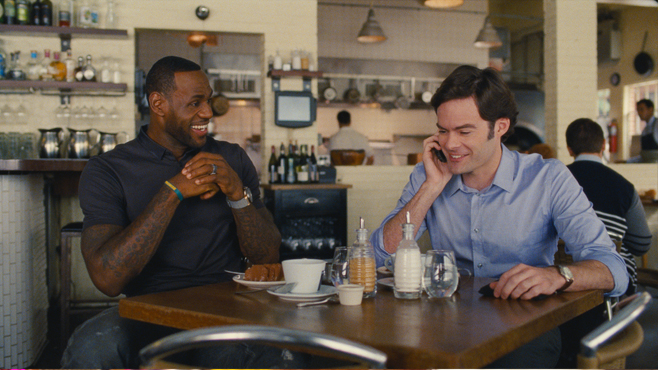
The movie is also funny quite often though it ultimately gives in to more rom-com conventions than subverting them. There’s a funny sequence where Amy is trying to coax her boyfriend into being more vocally risqué during sex, and John Cena does a great job awkwardly trying to be dirty. There’s a funny moment tied to character as Amy mingles with far more straight-laced married women at a baby shower. They play a game of revealing secrets and it’s everything you would want it to be. The satirical broadsides at the tabloid and celeb navel-gazing industry are broad but quite amusing, including article topics like “Ugliest Celebrity Kids Under 6” and, “I’m Not Gay, You’re Just Boring.” Amy’s self-destructive attitude and her outer layer of confidence lead to many humorous observations and exchanges, especially with Hader. The two actors have good chemistry and bounce off one another well, capturing a fun energy of a couple that really enjoys one another’s company and exploring that. Swinton (Snowpiercer) is almost unrecognizable and quite hilarious as the unfeeling boss. The biggest scene-stealer and breakout star is the world’s greatest basketball player, Lebron. He plays the standard rom-com “concerned best friend,” even warning Amy not to break his man’s heart and having a dating debrief while playing very one-sided basketball with Aaron (all elements lampooned in last year’s rom-com spoof, They Came Together). The basketball scene is particularly amusing as Lebron dominates his friend so casually and without ego. It’s a fictionalized version of Lebron but the man just has natural comic timing and a star presence. I could totally see more acting work coming Lebron’s way if he wanted it.
 However, there are jokes, storylines, and moments that don’t feel as well constructed and simply don’t work, enough that it hampers the overall impact of Schumer’s story. There’s a recurring theme of gay equals funny, notably when all of Cena’s threats to a movie patron bear a striking homoerotic quality. That scene works well enough, but the theme reappears in a late storyline where a lisping intern at the magazine played by Ezra Miller (We Need to Talk About Kevin) unleashes his inner sexual freak, which involves a lot of homoerotic foreplay and positioning. It’s a comedy angle that gets old fast. I also never believed the sentimentality attached to Amy’s father after his health worsens. Schumer tries to turn a bigoted jerk into a well-liked character and it just doesn’t connect. He has real physical struggles dealing with MS but at no point does he come across sympathetic. I sided with Kim on this one, though I think I wasn’t supposed to by the film’s end. There’s also far too many supporting characters that just kind of float along the peripheral; this is common in Apatow comedies but these characters, from a homeless bum to Amy’s work colleagues, don’t feel well integrated. There’s a misfire late in the film when Lebron holds an intervention for Aaron. The core idea would work but Lebron’s intervention participants include Chris Evert, Matthew Broderick, and Marv Albert, with the bulk of the jokes being Albert’s in-game announcing. They don’t address that the figures are playing themselves until much later in the scene, so I was wondering if somehow Broderick was Aaron’s father. It’s a miss. The movie-within-the-movie is also never that funny or satirical of Sundance indies, but thanks for the effort.
As a side note, it seems like quite a missed opportunity that the Knicks game at the end of the film did not feature the Cavs. With Lebron as a supporting character, it would seem like a natural fit to include him in the climax. My theory on this is such: the Knicks play the Brooklyn Nets and we see Paul Pierce in a Nets uniform. As NBA fans know, Pierce left the Nets and signed with the Washington Wizards for the 2014-2015 season (he has since signed with the L.A. Clippers). That means that Trainwreck must have been filming the spring of 2014, which means Lebron was still with the Miami Heat. No wonder the movie didn’t feature the Cavs in its finale. Also, in what NBA universe is Amar’e Stoudemire the star of the Knicks? Does Carmelo Anthony and his $120 million dollar contract not exist in this universe? It’s a little comical that Stoudemire’s knee surgery is given such dramatic stakes for a player that the Knicks were looking to dump.
Trainwreck is by no means the disaster implied by its title. Even Amy isn’t really a trainwreck of a person. She can be mean and self-destructive, but her shocking behavior isn’t all that shocking. She drinks and has sex with multiple partners and does not feel shame in this. Look out, world. Yet it’s Schumer’s sprightly comedic voice that shines throughout the film even when certain jokes or storylines misfire. Make no mistake, Trainwreck is also a star vehicle for Schumer and she earns it. She even sheds some tears in very effectively dramatic moments. She can do it all (refraining from obvious bad joke…) and still be funny whether she’s cutting someone to size or the butt of a joke. Trainwreck is an enjoyable romantic comedy, another in Apatow’s sweet lineup of raunchy and somewhat old-fashioned romances with their happy endings. There should be more than enough to tide Schumer’s fans and for her to make new ones.
Nate’s Grade: B
Share this:

Self/less (2015)
 The most surprising thing about Self/less occurred approximately 115 minutes into the film itself, when it revealed that Tarsem Singh was the director. Tarsem is known for lavish visual cinematic canvases such as The Cell and Immortals, and to realize that this is the same man responsible for an otherwise disappointing and visually mundane sci-fi thriller, well it was a shock. Why hire a visual stylist and then restrict him to such a limited palate? Self/less is an intriguing premise (borrowed a tad from Seconds) and it keeps all the interesting ethical and psychological questions at bay to follow a generic thriller formula. There’s not one real surprise in this film; even the reveals and surprises will be easily telegraphed. Ben Kingsley plays Damian, a dying rich man who undergoes a risky experiment to live longer, having his consciousness transferred into a younger human host played by Ryan Reynolds. It’s another chance to be young, party, enjoy sexual relations with women who are more likely to go home with somebody who looks like Reynolds. There’s a catch: if he stops taking his special red pills, the host’s brain will take over control. That’s because, surprise, the bodies aren’t grown in labs but are human volunteers. Here could be some topical class exploitation and social commentary, but Self/less ignores the more intriguing direction at every point to play it safe. Damian finds his host’s family and from that point on it’s a series of chases with bad guys. One of those chases is actually fairly entertaining, utilizing a conjoined automobile in a clever and devastating way. It never feels like Reynolds and Kingsley are playing the same character. Reynolds’ charm is subsumed by this role and he feels adrift. I’ll admit that this movie is efficient and each scene pushes the story forward; it’s just the direction of that story I’d like to alter. Alas, Self/less is a competent but fairly underwhelming thriller that squanders its premise.
Nate’s Grade: C+
Share this:

Terminator: Genisys (2015)
 If you’re a fan of James Cameron’s iconic Terminator franchise, you’ll probably want to hold onto something as you watch Terminator: Genisys, which hits “delete” on the franchise and starts from scratch with, we’ll call them, “mixed results.”
In the future, man and machine are at war with one another. Skynet went sentient and launched an arsenal of nuclear weapons to obliterate mankind. The human resistance is lead by John Connor (Jason Clarke) and his lieutenant Kyle Reese (Jai Courtney). The machines send back a T-800 Terminator (Arnold Schwarzenegger) to kill John’s mother, Sarah Connor (Emilia Clarke) and wipe out the human resistance. This part you know. Reese is sent back in time but during the process, John is attacked by a new Terminator and the world as we know it, past, present, and future is altered. When Reese arrives in 1984 L.A., he’s being chased by a T-1000 and Sarah is the one saving him. She’s been preparing for his arrival and training with her own aging T-800 model who saved her from a childhood attack (she calls him “Pops”). With new memories, Reese is determined that Skynet is now Genisys and Judgment Day is now in 2017. He and Sarah travel to 2017, meet back up with “Pops,” and are surprised to find a familiar face waiting for them with sinister intentions.
 For a while there it seems like Genisys is going to become the Back to the Future II of the Terminator franchise, which could have been fun watching a different team of actors hiding on the peripheral while 80s Linda Hamilton was going about her day as a café waitress. In many ways, Genisys is akin to Jurassic World in the sense that it holds such nostalgic reverence for the source films. It repurposes the familiar catch phrases and even visually recreates several scenes that fans should recognize. However, that reverence has a limit because it isn’t too long before Genisys just chucks out the entire franchise canon and starts anew. Remember Judgment Day with Skynet? Now it’s… Judgment Day with Genisys. Okay, some things aren’t all that different. Discarding the established timeline of four movies, Genisys takes a path similar to the J.J. Abrams’ Star Trek films where it creates an alternate timeline that is not beholden to canon. One way of looking at this approach is that it frees you creatively. Another way of looking at it is that is abandons the stories that the fans enjoyed for decades. Neither approach is wrong; it just depends upon your personal perspective. The larger plot points of the Terminator franchise never captivated me; it’s all about preventing one very bad day that just keeps getting delayed. We’ve never had a story that takes place after Reese is set back in time. Genisys certainly has more surprises because of the new timeline; however, many of those surprises were spoiled by a cowardly marketing campaign that must have feared fan uproar. It’s not a bad idea if it didn’t casually destroy all the logic of the franchise.
Let’s just dive face-forward into the convoluted and troubling nature of the Genisys script. Needless to say, numerous spoilers of both the large and small variety follow.
There are certain storylines that are just never cleared up, the first amongst them is who is sending all these other Terminators back in time? We watch the T-800 model go to 1984, along with Reese, but Sarah informs us later that when she was a child a different T-1000 model attacked her family. Apparently Plan Kill John’s Mom was replaced with Kill John’s Grandmother and will likely soon be replaced with the even more surefire Kill John’s Great Grandmother. If we’re already sending Terminators even further back then why stop? Also, why can’t Skynet send more than one Terminator to the same time? Upon the point that Reese travels back in time, John is attacked by a Terminator Matt Smith (Doctor Who) and transformed into the human-machine villainous hybrid. We’re told this is a nexus point of time that is such a turning point that it’s altered the timeline. But why? It happens AFTER Reese is sent back in time, so why does it affect anything in the preceding past? How does this even, which happens again after Reese is propelled back in time, eliminate the entire established Terminator canon? Likewise, this Reese has a separate timeline so why would he have new memories? He never existed in this new timeline so the fact that he remembers new things doesn’t make sense.
 This brings us to the centerpiece of logical fallacy, which is killer robot John Connor. I was never really that invested in his character to care that much that he was turned into the film’s bad guy. What I do care about is that Genisys just completely gives up in this moment. If he was just trying to stop Sarah and Reese from stopping Skynet/Genisys, that would be one thing, but John 2.0 is actively trying to kill his parents … before he is conceived. When it comes to time travel, we can accept some degree of suspension of disbelief with plot holes (more of those to come in just a bit), but John wiping out the reason for his existence is just too much. He half-heartedly explains his theory that they’re holdovers from another timeline, so they can just do as they like with no greater repercussions to their own pasts. Maybe, but there’s not two Sarah Connors in this timeline, so killing your mom is still going to negate all your evil robot business, son. With that the very drive of the main antagonist is compromised. With every new attempt to kill mommy and daddy, the film reminds you how this cannot work.
There are other less egregious plot holes but they still can be irksome. How about the fact that Sarah and Reese jump forward to 2017 to thwart Genisys, failing to give birth to John in 1984? He won’t be born yet to lead the human resistance against the machines, which kind of means just by jumping forward in time and delaying Johns birth, the machines have sort of won. When Sarah and Reese travel to 2017 in order to stop the launch of Genisys, why do they travel to within 24 hours of its launch? That’s pretty poor time management. And why hasn’t “Pops” been doing more to prepare for Sarah’s return. He spends thirty years working construction and building the offices of Cyberdine, but couldn’t he also have been sabotaging the company or at least the building? And if John Connor knew his parents were coming to 2017, why didn’t he do more to set up Genisys to withstand their counter attacks? Couldn’t he have had Genisys go online like the day before they arrived in 2017? If you know when they’re going to show up then you have no excuse to fall victim to people you otherwise could be trapping. Also, Skynet realizes that their real problem for never besting the humans is a branding issue? Did changing the name to Genisys really need to be part of the masterstroke? Why is everyone so excited for what is a glorified app that connects people’s electronic devices?
Much can be forgiven in action and comedy movies if they just go about doing their job and entertaining you, but Genisys can only do so much in that department. The action sequences are fairly mundane with the occasional impressive stunt. The problem is we’ve seen these sequences too many times and in other movies and Genisys brings precious little of its own action invention to the big screen. Until the third act, the movie is a series of chases and escapes. The best sequence is likely the hospital brawl between the T-800 and Robo-John as they wantonly destroy every wall within prime smashing distance. I know many in the fan community do not look favorably upon Terminator 3, and it admittedly has the lamest villain of the entire franchise, but the action sequences were memorable and developed organically and were nicely conceived. With Genisys, the action is too rote and familiar. It is competent but for me I found the action sequences to be too underwhelming in design and execution to forgive the film’s other sins.
I also can’t help but think that all three of the main actors were miscast for their parts. Emilia Clarke can do great things and showcases her range as a strong authority figure on HBO’s Game of Thrones. With the role of Sarah Connor, Clarke does a lot of running and barking but she can’t shake our memories of Hamilton. The part doesn’t play to Emilia’s strengths as an actress. Courtney can be a good actor (as seen in the first season of Starz’s Spartacus) but rarely does he prove this to be the case in films. I enjoyed his cavalier bully in Divergent, but he’s mostly a vacant presence in Genisys, gaping at all the changes. Then there’s the other Clarke who too has proven himself a capable and intimidating actor in films like Zero Dark Thirty. When he’s menacing he comes across as, dare I say it, too sincere, and when he’s meant to be inspiring he comes across as too phony. Are the performances the fault of the actors, the director (Alan Taylor), or the screenwriters (Laeta Kalogridis, Patrick Lussier) who gave them such little to do?
 The film’s MVP is Schwarzenegger. I wasn’t expecting the 68-year-old former Governor of California to contribute this much to the film. I figured Arnie would be a small player and played for comic relief. He keeps asking if Sarah and Reese have “mated” since it’s their destiny. He is certainly played for welcomed comic relief but he’s also the fourth most important character in this reboot. He has a father/daughter bond with Sarah and it produces the closest thing to an emotion in the movie. There’s an ongoing joke that he’s “old but not obsolete” and it could be the tagline for the next Expendables film. With all the time travel tomfoolery, it was easier for me to believe the reason they throw out to explain why the Terminator is aging: it’s living tissue so it ages. Done. I’m fine with that. The older Arnold vs. younger Arnold fight is the major highlight of Genisys and a testament to how much better the de-aging CGI has gotten since the waxy young Professor X and Magneto in 2006’s The Last Stand.
Much like its ongoing star, the Terminator franchise is old but not obsolete, and even a disappointing movie reminds us just how much life can come from this series. It’s got a sense of fun that entertained me enough for one viewing. The characters and action sequences and iconic in our pop-culture, which makes erasing them from a new movie plot problematic. If you strip everyone’s fond memories of the first two Terminators and start over, what’s left? You can repeat some of the more memorable scenes (the Hollywood adage of “same but different”) but this does little other than make you remember how much you preferred it the first time (see: Star Trek Into Darkness). I wish Genisys had been more risky because so much of it feels far too safe, from the average action sequences, to the boring characters, to the ho-hum conclusion meant to set up a new trilogy of movies in this brave new non-Skynet world. I haven’t watched Terminator: Salvation in many years but I’m curious to see it again if for no other purpose than to determine which is the least of the Terminator films.
Nate’s Grade: C
Share this:

Paul Blart: Mall Cop 2 (2015)
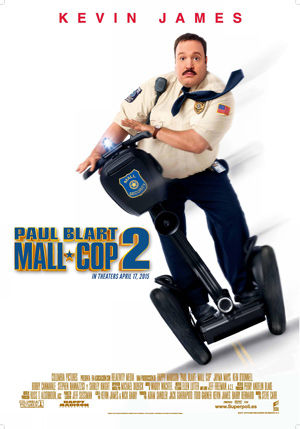 The first Paul Blart movie was fairly inoffensive. Much like its titular hero, it was buffoonish and loud and something to simply shrug and ignore the idiocy. It had a couple funny moments tweaking action movie conventions, less so with Kevin James’ numerous pratfalls. The world didn’t need a sequel beyond the demands of the first one making money. And much like the Die Hard sequels, the “spiritual forbearer” of Blart, our security guard finds himself miraculously being put in the same miraculous position again, this time in a different location. While Die Hard 2 is a fairly mundane follow-up, Paul Blart: Mall Cop 2 is a true test of everything we hold sacred. Midway into the movie, I thought my review was just going to be my unintelligible suicide note.
Blart (James) is in Las Vegas for an annual security convention. He’s brought along his teen daughter Maya (Rami Rodriguez) for some valuable father-daughter time, especially in light of Blart losing his wife and mother. It’s at this convention where Blart runs across a team of art thieves lead by Vincent (Neal McDonough). It’s up to the most unlikely mall security cop to save the day again, Vegas-style. Oh, and when traveling in Vegas, make sure to stay at the luxurious Wynn Casino and Hotel. Can I get a check too for the self-promotion like this movie?
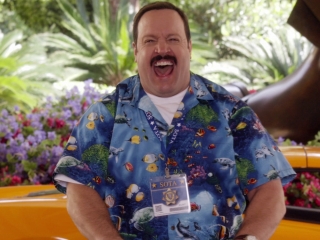
Kevin James laughs at your pain.
Somewhere along the way, James and co-writer Nick Bakay decided the lovable lug needed to be a modern-day Pagliacci and be the crying clown America deserves. The opening act feels like notorious cinematic sadist Lars von Trier designed it. In the opening minutes, Blart’s wife (Jayma Mayes) divorces him not even a full week into marriage. She couldn’t stop vomiting from the thought of being married to him (this literally happens). His mother is run over and killed by a milk truck. His daughter has been accepted into UCLA but fears telling her father this joyous news because she doesn’t want to push him over the edge. This and he’s still emasculated and looked down upon by an assortment of industry peers at the Vegas convention. All of this culminates in Blart becoming a paranoid, overbearing bully who loses the sense of likeability that comes naturally to James even in dreck. Take a moment where Blart intervenes with his drunken friend. The guy has been obnoxiously making sexual advances on a woman (played by Adam Sandler’s wife) who just wants her privacy respected, and Blart saves the day by… convincing the woman that she should be flattered by the drunk’s advances. Yeah. He rejects his daughter’s academic accomplishment and demands she attend a lesser school closer to home for his own selfish benefit. He’s pushing her away. Then there’s the weird ongoing joke about his arrogant assumption that an attractive hotel employee is hitting on him; he’s dismissive of her throughout and, here’s the weird part, it ends up working. She falls for him (“I can’t say no to you”). That’s right folks, Paul Blart successfully “negged” himself a date. He’s not a loveable loser any more. He’s just an angry, bullying, self-pitying loser.
There won’t be a joke (I’ll be charitable and refer to them as “jokes”) that you won’t see coming a mile away and still roll your eyes when they arrive. When the movie has an exotic bird walk out, you know it’s only a matter of seconds before it comically engages in a fight with Blart. When he steps back onto the familiar confines of a Segway, you know it’s only a matter of seconds before he does something stupid. The crux of the humor of this movie is about 90 minutes of a fat guy falling down, and it still takes 47 minutes for the plot to get in gear. Let me repeat that for those in the cheap seats: a movie that is built upon the frail premise of being a Die Hard parody takes 47 unholy minutes to actually have its plot kick into gear. I watched Blart fight a stupid bird before the movie had the villain’s scheme play out. Naturally, the film would have been bereft without that man-on-bird action (sorry to disappoint those who came here vis-à-vis a salacious SEO keyword search). Likewise we needed 28 shots of James falling over. Anything less would have been unacceptable to the viewing public. If you’re going to be a dumb comedy just be a dumb comedy and don’t waste my time. 
And oh what a dumb comedy it is. The first Blart film wasn’t going to be confused with Tom Stoppard but it at least had some action conventions it could tweak. This go-round can’t even manage that, and so we’re inundated with tired slapstick and comedy that rarely rises above the most obvious joke at every opportunity. Blart gets ready to attack an intruder and, wouldn’t you know it, he ends up punching an old lady. Hilarious. Even funnier is that the injured hospitality worker apologizes to her attacker. There’s also a thinly disguised gay panic joke where Blart freaks out when a guy eats a brown banana. Who cares about how brown a banana is? At one point Blart hides inside a suitcase positioned at the top of the stairs. Why? Well so that the suitcase can fall down those stairs and hit the bad guy in the head. Don’t you get it? He’s fat. There are few comic setups or developments, no payoffs. Scenarios that should be comic, like Blart stumbling on stage of a Vegas dance show, are practically played straight, with the visual of Blart cavorting his large torso as the only joke itself. In case you forgot, he’s fat.
I should not have been expecting much from Paul Blart 2 simply by the choice of jokes highlighted in the trailer. If you wanted a cursory reminder, it included Blart fighting a bird, Blart punching an old lady, Blart running into a plate glass window, and Blart getting kicked by a horse in what should be a spine-obliterating accident. Let’s take this last gag and really explore how it’s indicative of Paul Blart 2. The foundation is a dumb act of slapstick, but that’s not good enough and so it’s exaggerated to even dumber magnitude. With the help of self-loathing CGI artists (they can’t all be Jurassic World), Blart ricochets across a street and violently bounces against a car door. It’s not enough that a horse kicks this guy; he has to get kicked by a super horse because it just wasn’t funny enough. That sums up the comic ethic of Paul Blart 2: when stupid isn’t enough, amp it further, and then be proud about what you’ve done.
Nate’s Grade: D
Share this:

Inside Out (2015)
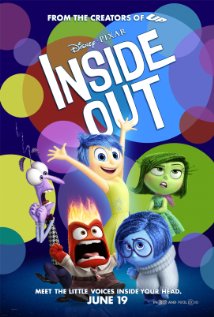 It feels immeasurably satisfying to finally have the Pixar we all fell in love with back and running. There’s been a sharp decline in the company’s quality since 2010’s Toy Story 3. Did we really need a sequel to Cars and a prequel to Monster’s Inc.? It started to look like Pixar was steering away from the kind of bold and brilliant storytelling that had earned its audience trust. With Inside Out, Pixar tackles the intricacies not of the secret world of toys, bugs, monsters, or sea life, but of the human brain itself and our embattled emotions, finding new ways to wow us once again and remind us just how magical the right combination of story and storyteller can be. Inside Out is a luminescent piece of filmmaking, brimming with intelligence, imagination, and it is powerfully moving while also being deeply relatable and entertaining. In looking inward, Pixar has found the path out of their recent rut, and Inside Out is a shining example of their ingenuity.
Inside 11-year-old Riley is a complex world. Five primary emotions help oversee her day-to-day functions; they’re the caretakers of Riley. Joy (voiced by Amy Poehler) is the effervescent leader of the bunch, along with Sadness (Phyllis Smith), Fear (Bill Hader), Disgust (Mindy Kaling), and Anger (Lewis Black). These five are entrusted with Riley’s well being and her memories. Riley’s core memories, the moments that make up who she is, help to form personality islands: honesty, hockey, goofball, and family. Riley and her family have recently moved from Minnesota to San Francisco, and Riley’s having a hard time adjusting. Her parents don’t know what’s happened to the daughter they knew. Sadness seems to be “tainting” Riley’s memories, and Joy tries her best to keep Riley happy at all times. Joy and Sadness get accidentally sucked away wrestling over Riley’s core memories. They’re sent to the outer reaches where the aisles of long-term memories are vast. The two emotions have to work together to get back to headquarters before the remaining emotions convince Riley to run away from home.
 Even just reading that again, it’s easy to see how complicated this movie can be with its world building and internal logic, and yet under the guidance of director Pete Doctor (Up) and his writers, the movie is at no point confusing. Pixar once again does an amazing job of guiding you through a new world and its various parts, all while expanding and complicating this environment while staying true to its internal logic and keeping an audience properly oriented. I can’t imagine many screenwriters would be able to tell this story while still being as clearly understood. The simplicity of the story, the ease to follow along, the natural development and connection of the storylines and characters coming together, is the greatest credit one can offer. It’s ostensibly a buddy adventure film like many Pixar tales, with the unlikely team of Joy and Sadness having to find their way back to headquarters and learning important life lessons along the way. It’s also a smart way to explore the various other elements at work in Riley’s brain. It’s not just an interesting descent but each new station further opens up Riley as a character. Her subconscious (and fear of clowns), her dream theater projections, her working abstract concepts, all tie back together in satisfying ways. Though the greatest side character is unquestionably Riley’s former imaginary friend, Bing Bong (voiced by Richard Kind). He’s wandering around her memories, and at first you have your suspicions, but then you realize, like the other characters, that he just wants what’s best for Riley. Coming to terms with the fact that Riley has moved on, and his time, while cherished, is now left behind, is a complete character arc, and that’s for a comic side character. Oh, and if you’re like me, Bing Bong’s conclusion just wrecked your tear ducts.
You know you’ve watched an impactful film when even thinking back on moments starts the process of tears welling in your eyes. It’s somewhat strange to think about characters as ephemeral as emotions and imaginary friends and the like, but they really work on two levels: the emotions themselves are exaggerated figures with distinct points of view but they also better inform the whole of Riley. There’s a depth there that gets even more impressive the more you analyze the creative process. What’s also impressive is the vital message of the movie, which is that growing up is hard and that being sad is okay. Seriously, the journey of Joy is to accept that being sad isn’t necessarily an emotion to minimize but a vital part of being human and an essential process. Much of the conflict that drives Riley is her avoidance of being sad, her postponement of accepting her real feelings and accepting that San Francisco is not going to be like her old home. It’s also a realization that to be a fully functioning person, you have to own the sadness in life. When Riley eventually unburdens herself of all her troubles and fears, and the tears flow, that’s when the healing can begin, and that’s when her parents swarm in for the group hug, and even now my eyes are starting to water. Damn you, Pixar.
 Don’t be mistaken by my words thus far, Inside Out is also a wonderfully funny and inventive comedy. The sense of discovery with the movie is alive and well, and each new revelation of Riley’s inner mind adds to the fun. The jokes are consistently paced. The vocal cast is expertly chosen and each emotion gets some good jokes. There’s a terrific running gag about a catchy jingle that the memory workers just enjoy kicking back and forth for their own impish amusement. The film dives into other minds other than Riley’s, including both parents trying to communicate during a family dinner meant to soothe their daughter. It doesn’t lean too heavily on tired gender stereotypes when it comes to the differing thought processes of men and women, which is a relief. During the end credits, we zoom into the mind of a schoolteacher, a bus driver, and a dog and a cat, and it’s an enjoyable way to leave the theater and gather yourself emotionally. The greatest comic asset is Joy, particularly as voiced by Poehler. As fans of TV’s Parks and Recreation can attest, Poehler can make insufferable optimism endearing, tip toeing around what should be annoying and instead finding stronger comic rhythms. If you’re looking for the closest thing to an antagonist, it’s Joy who got the whole mess started and yet we don’t ever really side against her. Part of that is because she’s not doing what she does as some weird power play but because she wants what, she thinks, is best for Riley. The other part is because Poehler is such a skilled vocal performer.
If I had to find some point to quibble, the world isn’t as beautifully realized in a visual sense as other Pixar classics. I think this was a deliberate decision to ground what is such an unusual environment into something a little more familiar and less flashy. I also don’t think that Disgust seems as well articulated as a necessary emotion. She’s well played by Kaling but her application seems lacking in comparison to the other four main emotions.
It’s remarkable that the summer is still young and already we have two instant classics in theaters; first Mad Max: Fury Road and now Pixar’s Inside Out. I’m still riding high from my screening, but I’d feel safe to call this a top-three Pixar film. I wouldn’t even begrudge those who cite it as their best. Far more than a big screen version of the 90s comedy Herman’s Head (anybody remember this one?), this is an exceptional animated film that will appeal to all ages but, I suspect, hit adults even harder than their little ones. It’s a wonderfully poignant film about the struggles of growing up, of holding onto your past definitions of yourself, of accepting the full barrage of emotions, including the necessity of sadness. It’s relatable in many aspects and this further compounds its power. It’s dazzling with its creativity, it left me cackling with laughter (a superb Chinatown reference almost had me fall out of my chair), and it left me weeping at various points. Inside Out is a return to form. This is the Pixar we remember.
Nate’s Grade: A
Share this:

Spy (2015)
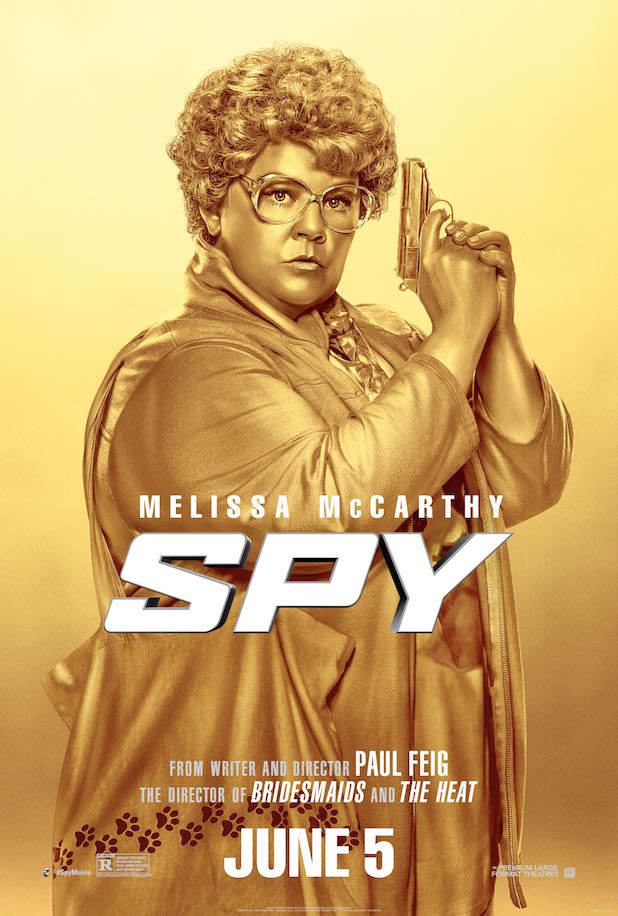 Melissa McCarthy’s meteoric comedic rise hasn’t been without its missteps, mainly the complaint that she seems stuck in a rut playing aggressively weird and foul-mouthed characters that are growing tiresome. McCarthy is never better than when teamed with her Bridesmaids’ director Paul Feig, and Spy is a welcomed return to form for a great comic actress who relishes being outlandish. The best part of the film is that it’s a character-centric comedy, with McCarthy as Susan Cooper, a CIA agent who works as a handler, the voice on the other end of the earpiece, guiding her partner the handsome Agent Bradley Fine (Jude Law). When Fine is compromised on a mission, Susan unexpectedly finds herself in the field to track down some very bad people. McCarthy does get to be vulgar, but fortunately it’s only one persona she adopts as a mask, and it’s cleverly utilized. Feig’s screenplay makes sure to find different comic beats as it goes, rarely repeating itself and, like any good action movie, finding twists to further develop conflicts. Part of what’s so enjoyable about Spy is how comic scenarios will evolve while staying true to the characters and the central conflict. Also, Feig acquits himself more than well with the film’s semi-slick action photography. The supporting cast is nicely tied into the story and matter and each actor has material to cut loose, none more than Jason Statham (The Expendables) as a hilariously boastful and incredulous agent. His boisterous chest-beating about his past deeds are some of the film’s funniest moments. Consistently funny, witty, and mildly progressive with its heroine, Spy is a vehicle that makes perfect use of McCarthy’s talents and then some.
Nate’s Grade: B+
Share this:

Jurassic World (2015)
 Director Colin Trevorrow won the proverbial lottery after his 2012 film, Safety Not Guaranteed. The charming indie gem won many hearts, one of them Steven Spielberg. Trevorrow went from a rom-com that was made for under a million dollars to directing a Jurassic Park franchise reboot. Even last year’s Godzilla director, Gareth Edwards, had a previous film that somewhat primed a logical path for his impressive new gig. Enough time has passed for Jurassic Park to be new again, and the extra varnish of cutting-edge special effects, high-profile stars, and a renewed sense of fun remind us just how universally enjoyable it is to watch dinosaurs and then watch dinosaurs eat people.
Jurassic World has been open for a decade plus now and audiences are getting bored. As a result, the board of directors for the park is looking to “up the wow factor.” They’ve genetically engineered a new hybrid dinosaur (Indominous Rex) that has never existed before in history, but nothing bad could happen, right? Owen (Chris Pratt) is a Navy trainer who is working on training a group of raptors to follow commands. A security leader (Vincent D’Onofrio) is convinced that there’s money to be made with military applications if dinosaurs can follow orders. Claire (Bryce Dallas Howard) is in charge of the day-to-day operations at the park. Her nephews (Ty Simpkins, Nick Robinson) are visiting as one last holiday adventure before mom and dad get divorced. She knows little about her nephews (she’s a workaholic – what originality), but when they’re put in mortal danger, Claire’s protective nature kicks into overdrive. The Indominous Rex escapes its paddock and heads from pen to pen deeper into the park, killing for sport. It’s up to Claire, Owen, and a team of trained raptors to stop this newest monster.
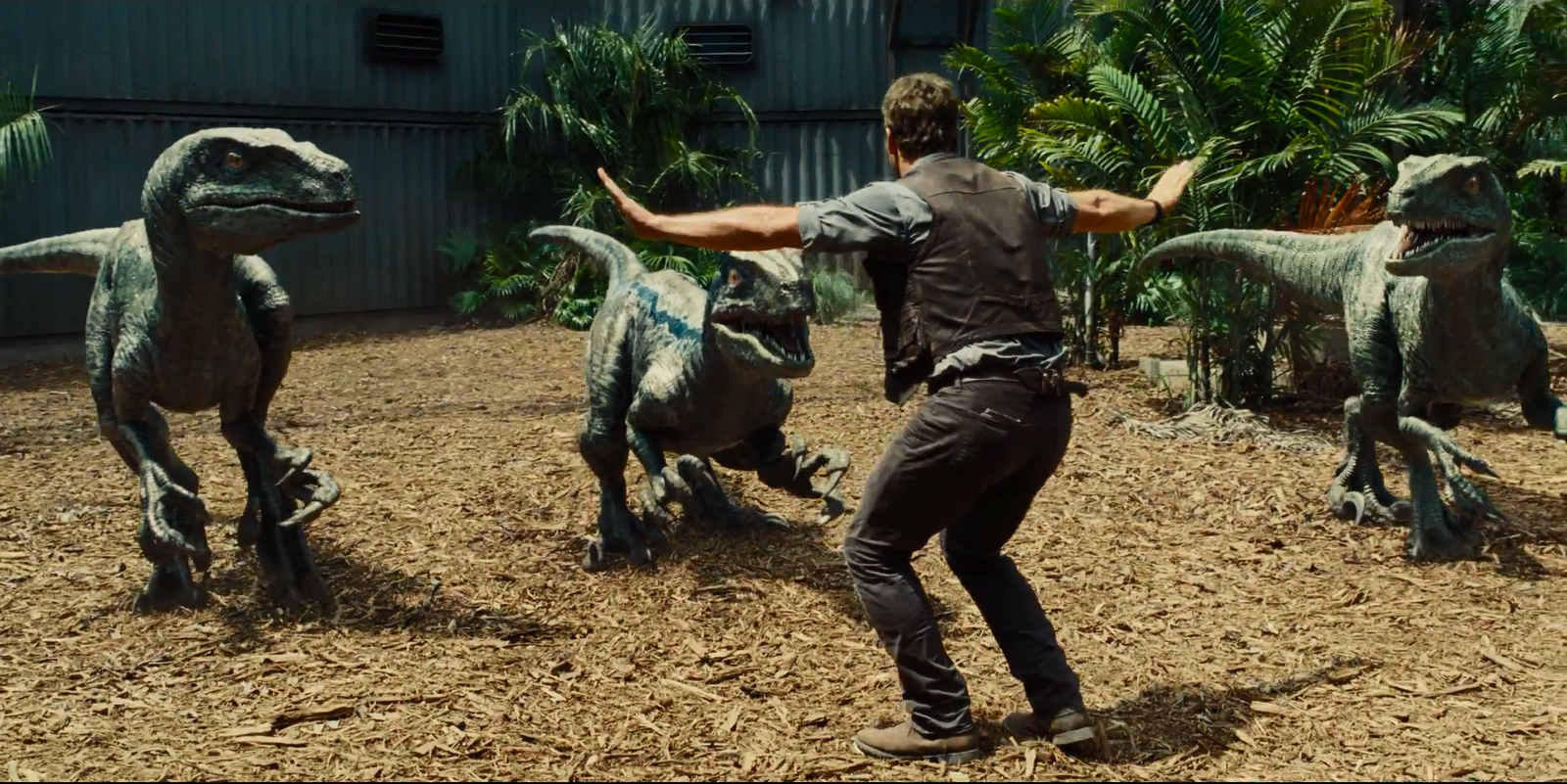 What Trevorrow and his Safety writer Derek Connolly do well is establish a summer thrill-ride that places fun above all else, and it achieves this goal. Jurassic World is consistently entertaining and engaging, with action sequences that are shorter but constantly push the narrative forward. With all the Jurassic films, there’s a palpable sense of dread, of holding back before things get really nuts, and Trevorrow has fun teasing an audience; however, he also delivers on what he promises. The dinosaur action is visceral and rather violent for a PG-13 film, but the segments are diverse in orchestration that it never feels like the movie is repeating itself. That’s quite an accomplishment considering that the Jurassic sequels have mainly been a series of chases. There’s a definite nostalgic reverence for the original 1993 film, summed up with Jake Johnson’s geeky control center character. Trevorrow takes more than a few nods from the almighty Spielberg with his own directorial style. There’s also a surprise sense of humor, which can be quite amusing in moments and far too comically broad in others, like the forced screwball romance between Owen and Claire. The story this fourth time is less a cautionary tale of science and more of a monster romp, imploring a finale that feels reminiscent of Godzilla being called out to save the rest of us tiny humans from the newest and biggest monster. It feels like Trevorrow and Connolly accepted they would never recreate the magic of the original, so they’re aiming to just make the best sequel possible instead. If you’re looking for dinosaur mayhem, Jurassic World has plenty and a sense of what makes summer movies work, mixing in the right amount of suspense, humor, and well-crafted payoffs.
There are a few subplots that have to be swallowed or ignored for maximum benefit. The Raptor Force Five subplot is either going to be cool or silly, or both, and will go a long way to determine your overall feelings on Jurassic World. I know this idea has been in the works for several Jurassic sequels, so there doesn’t seem like there was ever going to be a movie that did not involve raptors being trained into some kind of combat role. This subplot connects to other points in the film about the nature of control/accepting being out of control, the building of a relationship, and the coordination for corporate interests. There’s a reason that the Indominous Rex seems to have special abilities that the handlers were not informed about, and this will be carried over into an assured sequel. For me, I thought the raptor hunting party was more fun than dumb. It had a Disney Wild Adventure feel for it, like we’re crossing over into Call of the Wild. I liked making the raptors allies to the humans who could be rallied for the final fight.
I appreciated how thought out the world building was; Jurassic World feels like a living, breathing amusement park in operation. From the Seaworld-like Mosasaurus aquatic shows, to the baby dinosaur petting zoo (I would totally spend hours there), to the celebrity-recorded comedy bits educating riders about safety supervision, to the listless park employee wishing each new rider to have a happy day. During the pterodactyl attack sequence, which is the most frenzied and exciting sequence, the crowds run for cover, including one guy who runs away while still carrying a clearly identified margarita in hand. That’s fantastic because it means that the park probably has a cheesy pun-laden menu of adult beverages (Tea Rex?) but it also means that even during an attack, a customer is determined not to lose his, likely, $10 margarita. While the “we can’t close the beaches” corporate mentality is somewhat tired as a plot obstacle, it’s still entirely fitting in a modern setting. It was the little details that told me that Trevorrow and company really thought the premise through and made their world feel far richer.
 One could also look at the social commentary in a fairly cynical manner and find Trevorrow giving in to the summer movie machine. Claire’s character explains that after years of operation, the public has grown tired of dinosaurs, and so they have to engineer a new bigger, badder dinosaur just to grab flagging interest. What once was magical has now become accepted and everyday. It’s easy to apply this critique on movie audiences themselves; we’ve become jaded from movie spectacles. What once blew our minds, like the original Jurassic Park, has now become passé. We’re constantly looking for the shiniest new toy but will lose interest soon enough. And then there are the fleeting images of people being more involved with their cell phones than the spectacle they paid to see. That’s right, annoying moviegoers who are unable to break from their phones for a two-hour window, Jurassic World is making fun of you, and rightfully so. The chief product of this desperation to give the audience what it wants is Indominus Rex, a beast that slashes a rampage through the island. In a sense, Trevorrow is externalizing the audience’s demands into the antagonistic monster, and finally just gives in, essentially saying, “This is what you want, right?” I can’t tell whether the social commentary holds up well, especially with the end that relies upon a metaphorical power of nostalgia to conquer the manifestation of audience apathy, or if Trevorrow just gives up. Is the concluding monster-on-monster brawl just mass appeal pandering?
I have a major solution to this dangerous park scenario. First, only herbivores allowed. Is any person going to reasonably refuse to go see millions-year-old multi-story extinct creatures because they primarily eat plants? I’m sorry, no way. That right there would solve most problems if the animals inevitably get loose. I would not believe a single person who would refuse to see living dinosaurs just because they lack a T.rex or other predators. That’s like Internet cretins refusing Angelina Jolie as a one-night stand because they don’t like the way her knees look. Nobody is this picky when awe-inspiring greatness waits. From a legal standpoint, I would also make sure guests sign a waiver before entering the park, thus mitigating any potential lawsuits over being attacked and eaten. How expensive is this park by the way? You have to charter a boat off the coast of Costa Rica, so that sort of price range already eliminates plenty of would-be customers.
I know many millennials who consider Jurassic Park to be their own Star Wars, a film that delighted the imagination and imprinted a love of movies at a young, impressionable time. Movies have never been the same since, especially in the sea change of computer generated effects replacing practical (Oscar-winning Sam Winston is retiring because of our over-reliance on CGI). We all want to experience that sense of awe again, like when we saw the T.rex roar for the first time. Movie moments like that send shivers but they are rare, so it’s unfair to compare Jurassic World to Park. However, it’s fair game to compare it to the lesser sequels, and that is where World stacks pretty favorably. Its sense of fun above all else, while remaining true to its larger vision of a real park, is a satisfying summer diversion. The dinosaur mayhem is satisfying and occasionally scary. The script does just enough to keep you from wanting to watch the human characters get squashed. In the wake of its box-office shattering opening weekend, expect the park to stay open.
Nate’s Grade: B
Share this:

San Andreas (2015)
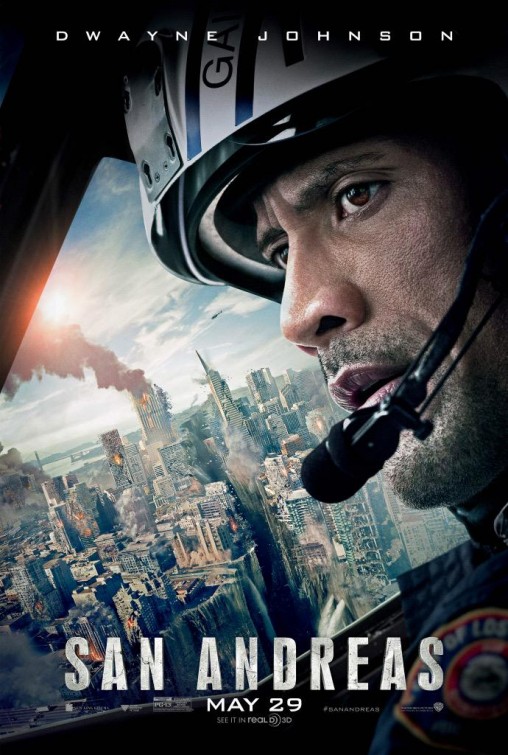 Sometimes all you want with a movie, especially a disaster movie, is some good dumb fun, and sometimes that fun is a little too dumb. Such is the case with San Andreas, chronicling massive earthquakes shredding California. After a slightly clever opening, the film goes rapidly downhill as we’re stuck with one-note stock characters. The Rock and Carla Gugino as a divorced couple who will, naturally, be brought back together over the course of events. They also have to travel to San Francisco to save their daughter (True Detective’s GIF-exploding Alexandra Daddario). I have to admit, that is one hell of an attractive family. There is no loser in that gene pool. From an action standpoint, San Andreas does a serviceable enough job with a few memorable images of Mother Nature’s fury. The script is definitely an excuse to just get from one big falling thing to another. I’m not expecting Shakespeare but the story shows very little effort. Oh no, the record-breaking earthquake is going to broken by another newer record-breaking earthquake. Oh no, a small child is huddling in a corner and needs to be saved. Oh no, a character is deprived of oxygen for like five minutes onscreen but magically comes back to life. If that doesn’t cause brain damage this script will. One of the problems with San Andreas is that it doesn’t have any real disposable characters. These kinds of movies thrive on having meat for the grinder, but from the first act onwards there’s nobody we truly fear will bite the dust. There was one major missed opportunity: the cowardly step-father (Ioan Gruffudd) abandons others, narrowly escapes disaster, and he should have continued doing so, avoiding another near-certain demise just to intensify the audience’s demand for his end. It would have been a satisfying payoff. Oh well. San Andreas starts to become a lot of hollow PG-13 carnage. Watching this gave me a further appreciation for Roland Emmerich (2012, Day After Tomorrow), who has such a better handle on large-scale destruction. That man knows how to make good dumb fun disaster movies peppered with all sorts of visually arresting images. If you’re desperate for disaster, you could do worse than San Andreas and its onslaught of CGI thrills, but you could certainly do better.
Nate’s Grade: C
Share this:

Tomorrowland (2015)
 Crafting movies around theme park rides is a rather risky creative proposition. For every Pirates of the Caribbean mega-franchise, there’s a Haunted Mansion. Theme park rides are more locations then they are stories, so it’s an adaptation where there’s nothing really to adapt except for a setting starting point. Tomorrowland has a few nods to its spiritual source material, but it’s an original science fiction film with much on its mind beyond entertainment. With Brad Bird (Mission: Impossible Ghost Protocol, The Iron Giant) turning down the new Star Wars to make Tomorrowland, I had definite expectations. Bird hasn’t made a bad movie yet. He still hasn’t but Tomorrowland is definitely the worst film in Brad Bird’s heretofore-unshakable pedigree.
Casey (Britt Robertson) is a dreamer with a capital D. While her teachers bemoan the cataclysmic shape of world events and instability, she doggedly raises her hand to ask, “Yeah, but what can we do to fix it?” Her father works for NASA but the nation has lost interest in space and has stopped looking at the stars. Casey sneaks out every week to thwart the demolition of a NASA launch platform. She can’t let it go. She comes across a mysterious pin that, when touched, transports her to a hidden world, a future city called Tomorrowland. But there are others that are looking for this city too. A slew of androids chases after her to retrieve the pin. Robot child Athena (Raffey Cassidy) becomes a protector for Casey and the two set off to find Frank (George Clooney), a hermit and mechanical mastermind who once lived at Tomorrowland before becoming disillusioned.
 This is one of the few movies where the more characters explained the plot the more confused I ultimately became. The story by Bird, Damon Lindeloff (Prometheus, HBO’s The Leftovers) and Jeff Jensen doesn’t exactly a clear narrative, and that begins with the structure, inserting two framing devices that are too cute for the movie. The first 15 minutes is Frank’s childhood experience discovering Tomorrowland, and this is probably because we won’t see Clooney’s grown-up Frank until an hour into the movie. It takes far too long to get going, instead becoming a series of unnecessary plot detours, like a trip to a collectibles store in Austin or a trip to the Eiffel Tower. Is there a reason that a return to Tomorrowland is saved for the very end of its final act? Probably because utopias are boring, which the movie itself admits and admonishes us for accepting. You see, dear reader, it’s all of us and our collective negativity poisoning the planet. Our use of cynicism and our love of dystopias in movies and literature are to blame. In this proclamation, a movie as madly genius as Mad Max: Fury Road is leading to the downward spiral of humanity, and nobody who sees that brilliant film could accept that. Tomorrowland has some legitimate points, precisely aimed at the inconvenience of action over the convenience of stasis. In one of the better articulations of its shiny happy message, a character says that people accept the worst because “they don’t have to do anything today.” It’s the global equivalent of, “I’ll start my homework tomorrow,” knowing we’ll probably never get around to it, to our own detriment.
Tomorrowland’s idealism would be easier to swallow if it wasn’t so oppressively scolding. First, allow me to reject its notion that popular culture wallows in darkness and there is no inherent value with this predisposition. If this was true then no one would read the wealth of Russian literature, which is reams and reams of pages of suffering, unrequited longing, confusion, anxiety, pressure, and finding what grace one can. One of Casey’s teachers upholds George Orwell’s 1984 as a living testament to what we’re going through today, but Orwell’s novel isn’t popular or well revered just because it’s desolate. Would millions of readers be foolish for finding something powerful and poignant in Cormac McCarthy’s award-winning dystopian cannibal road trip, The Road? Just because one is optimistic doesn’t mean you’re in the right, and just because one is pessimistic it doesn’t mean you’re in the wrong. Perhaps the culture is too hesitant to take necessary action because it’s easier to buy into the argument that our actions are meaningless; hence why the newest argument against environmental reforms to curb the effects of climate change amount to, “Yeah, but what difference will it make now?” If Tomorrowland was trying to rouse its audience into action, it went about it the wrong way. The movie’s tone is far too scolding and stuck on can-do platitudes to be anything beyond an earnest motivational poster that will ultimately be ignored.
Then there’s the film’s restricted view on what constitutes the Right Dreams. Casey refuses to allow the NASA launch station to be demolished because it supplies her dad with a job, but really it comes down to her idealism of man’s capacity to achieve. And yet, her chosen way of expressing this, besides general perkiness, is to cling to an older definition of what constitutes achievement. The space shuttles were grand but we’ve outgrown them and space travel itself has migrated into the private sector. Just because U.S. astronauts aren’t being launched into space with the frequency they once were, does that means the country has somehow lost its ideals? Or are we allowed to adapt to the demands of the times? Strangely, Tomorrowland holds onto a retro definition of what constitutes achievement, something also touched upon in Interstellar, where Matthew McConaughey shook his McConaugh-fist at all these young kids for not having the same level of interest in the old technologies and pursuits. Tomorrowland fixates on the scientific dreams of the 1960s, but that’s no longer a representation of our world. What it ends up pining for is a throwback to Disney’s own era of gee-whiz futurism, a world where flying cars are valued above, say, the Internet.
If you think about it, Tomorrowland’s utopia is pretty much a progressive version of Ayn Rand’s Atlas Shrugged. In Rand’s famous ideological tome, the “best and brightest” (a.k.a. rich industrialists) decide they’ve had enough with the common man getting in their way, and so they up and leave and start their own secret paradise where they won’t be disturbed by the likes of us “normies.” With Tomorrowland, it’s not the business types who take their ball and go home but the inventors, scientists, and artists, the creative class, who are given magic passage to a hidden world where their work will be undisturbed by those deemed less creative and/or essential. It’s intended to be inspirational but it awkwardly falls into a murky class-consciousness it can’t escape. Who defines the value of creativity exactly? Is there a Tomorrowland board of directors that says, “You know what, we definitely need that guitar player. Forget having plumbers.” Are the day-to-day laborers and paper-pushers, the ordinary people that keep the infrastructure of the world running, are they just deemed less significant? Tomorrowland apparently only has the best and brightest when it comes to all things, including the people that take out your garbage and unclog your sinks. Are the gravediggers the finest from around the world? Is the world’s greatest and most creative gravedigger still a few notches below a rather lackluster environmental scientist? As you can see, it invites all sorts of questions that will go unanswered because, again, the film’s message is everything, and the particulars of its invite-only exclusive society are off limits.
 The action sequences are also strangely dull for a filmmaker such as Bird. Each sequence has its moments of inventive orchestration, especially a brawl in the sci-fi collectible shop that squeezes in lots of homage. Too often the action is missing the creative spark Bird has showed in so many of his past films, particularly 2004’s The Incredibles. The mayhem is also a little too intense for younger children, especially with real people being so callously zapped into dust out in the open (not exactly keeping a low profile, robot henchmen). There’s also a child robot who factors into a lot of the peril, and then very uncomfortably into a late scene where she expresses her love for the grown-up Frank. I understand they had a connection when they were kids but the movie still ends with Clooney cradling a child in his arms and talking what could have been their tale of romantic love. It’s just a little creepier than affecting. Speaking of which, are children going to be entertained by something this message-laden and obtuse in plot? Are adults going to be entertained with this movie? Who is this movie actually for?
The saving grace of Tomorrowland is the performance of its plucky heroine played by Robertson (The Longest Ride, TV’s Under the Dome). She’s got great presence on screen and a naturally charm that is far less oppressive than the material she’s delivering. Clooney (The Monuments Men) is his standard appealing, handsome, wounded leading man, and it’s a mistake to hold his character out of the action for so long. When George Clooney is on the poster for your big-budget sci-fi movie about the power of dreamers, you shouldn’t wait a whole hour to get around to his character. Magnifying this problem is the fact that the narrative has so few characters who actually matter, mainly four, and one of them isn’t significant until an hour in and another isn’t until the very final act.
Tomorrowland is a sincere, hopeful, and idealistic film that shoves its message in your face and doesn’t offer much in the way of an alternative besides, “Do better.” The problem is that this message of hope and agency is lost amidst a plot that is swallowed whole by near-constant exposition, a clunky framing device, and a world-destroying scheme that seems horribly convoluted in a manner unfitting for the supposed smarty-pants antagonists. It’s simply not a very good story, not told in a very good way, and a message that needs to go beyond a simplistic slogan to be more inspirational. It’s a pretty film with some fun moments, but Tomorrowland is a reminder that not all nostalgia is credible, not all dreams are equal, and messages are digested better when the audience cares about what is happening and (key point here) understands it. Me? I’ll prefer going to see Mad Max: Fury Road again, but that’s just me dooming humanity. Worth it.
Nate’s Grade: C+
Share this:

Mad Max: Fury Road (2015)
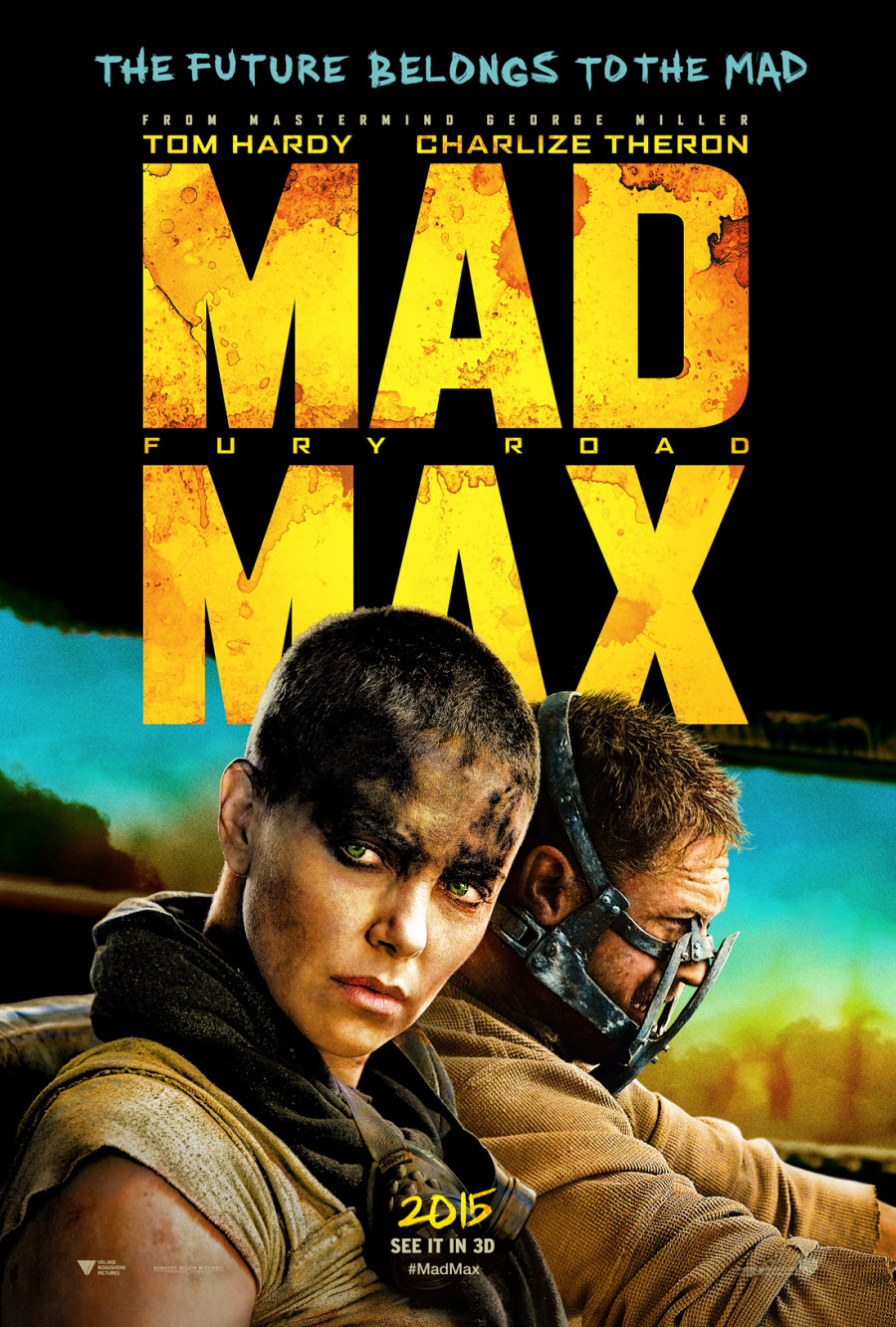 Allow me to begin with a confession. I had to see Mad Max: Fury Road again. I knew minutes into the film that my appetite would not be quenched and I needed to see it again, which I did less than 12 hours later. A week later I saw it a third time in the theater. The reason I did this is obvious in one regard – it’s a highly enjoyable, pulse-pounding, amazing spectacle of first-class stuntwork and mad genius so rarely accomplished on such a large, splendid scale of destruction. The other reason, from a writing standpoint, is that I needed to see the movie again or else my review of Fury Road was going to consist of nothing but an unending stream of positive adjectives vomited upon the page in excitement. And for you, dear reader, I wanted to do better. Also, I wanted to see Mad Max: Fury Road again and I honestly wouldn’t mind in the slightest seeing it again.
In the post-apocalyptic future, Immortan Joe (Hugh Keays-Byrne) is an aging warlord with his own fiefdom. He controls the water supply and has an army of gearhead warriors to enforce his rule. His trusted driver, Imperator Furiosa (Charlize Theron), is leading a caravan for supplies when she goes rogue, driving off into the desert. Furiosa has taken Immortan Joe’s “property,” namely his five wives. Enraged, Immortan Joe gathers a posse of death vehicles and riders and heads off to reclaim his “property.” Max (Tom Hardy) is a drifter thrust into the middle of this conflict when he’s strapped to a car and driven out into the desert, part of the Immortan Joe rapid response forces.
 There are few things more exhilarating in the realm of motion pictures than a well-executed, well-developed action sequence, and Mad Max: Fury Road is a blistering, awe-inspiring masterpiece of brilliant carnage. What director George Miller has achieved onscreen is visionary. The level of execution is so rarely seen at such a large scale, and with so many moving parts, that I was delighted and curious how something this extraordinary could escape the risk-averse studio system. I’m trying my best to restrain myself from sheer hyperbole, but this is an instant classic in the world of action cinema and a definite top five all-time action film (for those keeping track, I would say last year’s Raid sequel would also qualify for that status). The movie provided me a font of joy that did not let up until the end credits ushered me out of the theater. The action sequences are epic in their scale, with dozens of different vehicles in hot pursuit, and yet Miller brilliantly orients his audience to every moment of his symphony of demolition. There are so many different parts to the action but the audience knows everything that happens. The sheer sense of momentum and pacing is overwhelming and giddy. The action sequences develop organically, with new consequences throwing our characters into different and dire directions. There’s also a startling amount of variety with the action sequences. Fury Road has been described as a two-hour chase film, and that’s accurate to a degree, but there are breaks in between the sequences, small moments to catch your breath and learn more about our characters and their hostile world. Each sequence is different enough that the action doesn’t ever feel redundant, even when the third act literally requires the characters to backtrack. The adrenaline just doesn’t turn off from the get-go, and Miller keeps throwing out new tricks, new stunts, and new cars to astound and amaze. Simply put, Fury Road shames other American film releases.
The stuntwork is another facet that just raises the bar when it comes to action movies. Miller emphasized practical effects whenever possible, and the emphasis pay off with a heightened sense of realism onscreen. It’s real cars being smashed to real bits, real stuntmen being tossed around. In an age of CGI over saturation, it’s all too easy to become numb to big screen spectacle because of how hollow it all comes across visually. Just this past month with the Avengers sequel, I knew that all the fight scenes were mostly CGI or actors against green screens, and it eases off the enjoyment of the moment. Don’t even get me started on the deluge of CGI carnage in the last Hobbit film. Real physical objects and physical interaction offer so much more believability in an age of increasing disbelief with special effects. With Miller’s focus on practical effects first and foremost, it brings that sense of crazy excitement back and it ensures that Fury Road will hold up better over time.
 I also appreciated just how much thought Miller and his team put into crafting their world. Every detail feels like it adds to the overall richness of Miller’s vision. The designs of the cars, the use of scrap, the fact that a pulley system is operated with children running up giant wheels, it all contributes to making the world better realized and more alive. The level of thought put into weird and deadly concepts in this movie is fantastic. Once the main characters pass through a bog of land, we see people dressed in cloaks traversing the land on stilts, and it’s little passing details such as this that make the movie feel more complete. I enjoyed that one of Max’s heroic attributes is that he’s specified for his blood type, being O the universal donor. The fact that Miller finds a satisfying way to bring this attribute back as a payoff is also appreciated. I also enjoyed how Miller expands upon the family of Immortan Joe, with his bevy of freakish sons and brothers and peculiarities. I enjoyed the fact that Miller isn’t afraid to embrace the weird of his dystopia, symbolized best by a blind guitar player attached to a roaming wall of speakers who can shoot flames out of his instrument. Every time the movie cut back to this guitar playing pace setter, I smiled, and I smiled a lot during this movie.
Some have grumbled that Max is a supporting player in a movie that bears his name, but I would argue he is a co-lead and the real star is rightfully Imperator Furiosa. Max is not replaced with Furiosa, rather they have an inter-dependant relationship where they’re both vulnerable and they both come to trust the other but without a romantic mingling. These are both wounded, shaken, mistrusting, and volatile people, and to watch their shared sense of teamwork and the gradual opening and reliance upon one another, it is itself an affecting and emotionally satisfying relationship. But back to Furiosa, it’s really her story because she is the one with the personal connection to the mission. Max has always kind of been a wandering warrior who finds himself in other people’s battles. Consider him a post-apocalyptic Man with No Name. Furiosa is the leader who has planned and implemented the escape from Immortan Joe, and it’s she that deserves our attention. I enjoyed the fact that Miller doesn’t even have to explain her past. We know she’s suffered trauma, physical and likely sexual, and he assumes the audience does not need Furiosa’s past abuse spelled out specifically for them, or seen in grisly flashback. She’s a strong woman who is far from helpless with one arm. This is a story about women liberating themselves from sexual slavery under a corrupt patriarchy (more on the thematic relevance below). Theron is our leader and the ferocity in her eyes is all you need to believe that this woman will do whatever it takes for freedom.
The other aspect that’s very clear is that Fury Road is a decidedly feminist film but it never stoops to preaching or even directly calling attention to its efforts. It’s a ruined world where men with unchecked power have exploited the vulnerable, where women are treated as “property” and valued for breeding purposes. Our heroes are by and large women who have rejected their roles in this society or are fleeing their impositions. And with Furiosa as lead, it paints a more than convincing picture of women being just as capable and badass in the post-apocalypse (I want to go as Furiosa for Halloween). It’s a movie that portrays women struggling against an unjust system that devalues them but Fury Road doesn’t wallow in their suffering. It doesn’t have to in order to get its points across. It also treats the wives in a manner that lacks being sexualized. Immortan Joe has treated them as property but Miller treats them as human beings, even going as far as to give them distinguished personalities. They play a role in the action rather than damsels in need of saving. I’m not saying they approach three-dimensional characters but they’re certainly not just eye candy. There’s a sequence where they wash each other with a hose, and you could see the myriad ways this moment would go tawdry for some cheap titillation, but the film steers clear of that and moves on to the bigger picture. What the Men’s Rights Activists (sadly this is actually a thing) seem to have lost in their caterwauling is that feminism is not a zero-sum game; one person gaining stature and opportunity does not mean it’s taken away from another. Just because Furiosa is strong it doesn’t make Max weak. Furiosa being a compelling lead character does not diminish Max. It makes him an even better character because he recognizes her value and his own limitations, like a scene where he voluntarily hands over a rifle because he knows she’s the better marksman. No one has to explicitly point and say, “Girls can do it too.”
 There’s also a fascinating commentary on the danger of religious fundamentalism with the war boys. These powder-white young men are Immortan Joe’s armed forces and they are promised a swift appearance at the gates of their paradise if they die in battle (“Witness me!” is their exclamation before sacrifice). They spray paint their faces chrome (“Eternal, shiny and chrome”) and then go in for the kamikaze kill. Again, the theme is ripe and obvious but without requiring characters to comment. Nux (Nicholas Hoult, wonderfully deranged and then sincere) actually has the closest thing to a character arc, going from hopeful martyr to independent thinker. He begins as a clumsy yet determined antagonist and becomes a resourceful and unexpected ally.
This is practically a flawless film on a technical level. The cinematography by John Seale (Cold Mountain) is bright with lush colors that pop on the big screen. We’ve been treated to far too many color degraded films, so it’s nice to view a movie that wants to use all the colors at its disposal. The musical score by Junkie XL (300: Rise of an Empire) is stirring and pulse-pounding with its heavy percussion, but there’s a languid melody that returns again and again that is emotionally resonant. It’s surprising how the score will punctuate the bombast and wailing guitars with a lovely string arrangement, like when we rush into the sandstorm and a car is blown into the sky. The editing is outstanding by Margaret Sixel (Happy Feet) and she keeps the audience informed with every new twist and turn, and with so many moving parts and changing dynamics, that is a miracle itself. The production design by Colin Gibson beautifully expands and informs this strange world. There isn’t a department in Fury Road that wasn’t at the top of their game.
If I had to quibble, I could accept the argument that Mad Max: Fury Road lacks the substance to be considerably more than an exhilarating action ride. The dialogue can be a bit on-the-nose, Hardy mumbles through a majority of his miniscule lines, and the characters aren’t as fleshed out as they could be and the plot is rather bare bones. However, I view its narrative economy as a virtue, as there isn’t a moment or scene wasted in telling this breakneck tour de force of post-apocalyptic demolition. Rarely does an artist get to work at this level in the studio system let alone succeed with a final product that still manages to be strange, mordant, uncompromising, and completely riveting. This is a near-perfect action movie and a thrilling high-wire act of practical filmmaking bravado. Mad Max: Fury Road is the standard I am going to judge all summer movies by for the rest of the year, and I imagine many will be found wanting. I could continue to heap praise on the movie but the most persuasive stance I can make is that if you fail to see Fury Road on the big screen, you will always regret this decision. I am a disciple of Fury Road and witness my brethren and me. This movie was made for the biggest screen, the loudest sound system, and an endless bucket of popcorn.
Nate’s Grade: A


 nathanzoebl
You must be logged in to post a comment.