The Visit (2015)
 For the past ten years, M. Night Shyamalan has been a figure of piñata-whacking derision, and yet the man has consistently been at work on films big and small. You would think a decade of duds would lead to Shyamalan being unable to direct more than a junior high theater production, and yet people like Will Smith were specifically seeking him out to direct inevitably terrible movies like After Earth (oh is that one bad). The association has been burned into our minds: Shyamalan and bad movies. Is it even possible for a man whose name has become a punchline to turn his career around? A low-budget lark like The Visit allows Shyamalan the freedom of risk. If he fails, he’s only made one more bad found footage horror movie in a near infinite sea of them, and the budget number isn’t one that will bankrupt his generous producers. Perhaps it’s through the benefit of low expectations cultivated over ten grievous years of filmmaking, but The Visit is a modest little thriller that has enough suspense and campy humor that it works, mostly. I walked out of the theater generally satisfied and entertained, which are two attributes that haven’t been associated with Shyamalan films since… Signs? Goodness, that was back when Mel Gibson was a box-office titan.
15-year-old Becca (Olivia DeJonge) and her 13-year-old brother Tyler (Ed Oxenbould) are visiting their grandparents for the first time. Becca is a budding documentary filmmaker and brings her camera along to make a movie about the five-day visit. Nana (Deanna Dunagan) and Pop Pop (Peter McRobbie) live deep in the woods of rural Pennsylvania (the local police force consists of one guy). Everything is warm and cozy until it’s nighttime and Pop Pop insists that, for their safety, the kids stay in their rooms after nine o’clock. The strict rules and forbidden areas of the home encourage the kids to go exploring. Their grandparents may just be more than weird and old.
 The premise is deceptively simple and yet perfectly relatable and dripping with potential. I heartily enjoyed the fact that for a solid two acts, The Visit is a horror film where the horror elements are old people. Nana and Pop Pop both display fraying mental states, and Nana has an unusual trance-like state that kicks in once the sun goes down. I was expecting something supernatural or vaguely related to fairy tales to emerge to explain the overall weirdness and creepy affectations, but it never does. For most of the movie, the ravages of aging provide the scary business, and I think that’s great. Telling the story from the perspective of Becca and her camera also reinforces the cross-generational peculiarities, where the elderly and their older system of rules and way of life seem even more alien and alarming. Shyamalan, to his credit, does a fine job of coming up with suspense sequences built around his premise. Watching Becca and Tyler debate opening their bedroom door at night, especially after a series of unsettling scratching noises, is a well developed moment that revs up the audience imagination. Of course they shouldn’t open that door but boy do we want them to and discover what is going on. The performances from Dunagan and McRobbie hint at something menacing lurking below the surface but in a casual way. Nana asking Becca to literally crawl inside the oven to clean it is the kind of memorable what-the-hell moment that makes a horror thriller.
The offhand comments from the grandparents and their occasional erratic behavior are also played for laughs thanks to the camp factor of the actors. There is a clear absurdity to the scares and tension, and Shyamalan smartly embraces this. The Visit encourages you to laugh. Apparently, Shyamalan delivered three different edits of the movie: one pure comedy, one pure horror, and one a mixture of the two. The horror/comedy edit was the one released to theaters, and the film is better because of the inclusion of its offbeat humor. Without it, the movie would risk being too serious. To be fair, the movie isn’t making fun of dementia or ridiculing the elderly just because they’re out of touch. When the kids first see signs of Nana and Pop Pop getting confused, they behave very compassionately, like when Pop Pop dresses for a costume party he doesn’t know anything else about. Strangely enough, my theater was mostly populated with people over the age of 50, which made me wonder if they were duped into what kind of movie they were seeing or relished the chance to be seen as the scary boogeyman to teenagers.
 Which leads me to the point of the review where I discuss the parts of The Visit that don’t work quite as well. I don’t think Shyamalan knows how to write for teenagers because Becca is far too precocious for her age (using terms like “elixir” and “mise-en-scene” as everyday vocabulary) and Tyler is just downright annoying. There are three separate incidents of Tyler free-style rapping and it’s about as successful as you would expect, though it provides me amusement thinking about Shyamalan writing free-style raps for a thirteen-year-old white kid from the suburbs. My engagement with The Visit was more tethered to a general sense of morbid curiosity than a concern for the teen characters. I would have been perfectly fine if the teens didn’t make it out alive. I knew that was never going to happen because of the PG-13 rating, which does put some limitations on just how far out there Shyamalan can go. Though it doesn’t limit a scant shot of elderly nudity used for comic purposes. There is a great reveal that leads into the third act that ups the stakes, but it also shifts the movie into a more definitive slasher territory, and a PG-13 rating is going to further limit that territory. There are plot holes (a disabled laptop Webcam; the fact that they don’t have cell phone service but can Skype with their mom) and several mysteries are short-lived and anticlimactic (What’s in the shed? Oh, it’s just soiled adult diapers – incontinence!). Like many found footage movies, the movie fails to justify or incorporate this forced narrative device. Becca is a teen with two cameras and yet she stages them so counter-intuitively. For her first meeting with her grandparents, she sets down the camera and then runs into the distance to hug them. Would it not make more sense to get a closer shot of this first meeting? The found footage structure also provides a coda that frustratingly undercuts the climax of tension and replaces it with a sentimental monologue. It makes sense as a movie-within-a-movie but it’s a poor choice to end a horror/comedy that just hit its peak with an unnecessary and tonally-unwarranted resolution meant to warm the heart.
Shyamalan has a long road ahead to atone for his cinematic sins, and while I wouldn’t call The Visit an outright success, the movie succeeds more often than it fails. I think more could have been done to subvert and push the premise further, but the limitations of the rating and the found footage structure keep the movie from getting too crazy. There are some well-drawn suspense sequences and the use of campy humor is a strong asset that allows the shortcomings to be more forgivable. It’s the best Shyamalan movie in over a decade, which is really saying everything you need to know. Who knows? Maybe the comeback starts here with a tiny horror movie with rapping kids and dirty Depends. Stranger things have happened in Hollywood.
Nate’s Grade: B-
Share this:

The Last Five Years (2015)
 It’s a musical about the beginning and end of a five-year relationship, and each partner is starting at a different point and meeting in the middle. If that sounds confusing, The Last Five Years will do little to better orient you, the audience, on its criss-crossing narrative-leaping timeline. Anna Kendrick is Cathy, who is traveling from the breakup of her marriage to the moment she met her eventual husband. Jeremy Jordan is Jamie, who is traveling the more linear path of infatuation to marriage to his divorce from Cathy. Neither character is particularly that involving though their eventual conflicts that lead to their parting of ways are more relatable than I was expecting since Jamie becomes a publishing phenom. I was looking for parallels with the song pairings, since we switch from a Cathy song to Jamie song, but the more I listened the more the narrative structure felt like an unjustified gimmick. Director Richard LaGravenese (Beautiful Creatures) feels like he was rushed to complete this film because much of the camerawork feels lacking, losing track of the characters in their long takes. Could he afford to do more than one take? There isn’t so much a sense of style or expanding into the medium of film. It feels like LaGravense was grabbing what he could. But that’s not the biggest problem. The biggest problem is that for an entirely sung musical (there may be like two lines of spoken dialogue) none of the songs are particularly memorable. Even minutes after finishing the film, I could not for the life of me hum one tune. To be fair the music isn’t offensive to the ears, but it falls within this vanilla middle ground that plays like it should be background noise rather than featured music. Kendrick and Jordan do a serviceable job singing these bland songs, but when your movie is wall-to-wall with music that doesn’t engage or register, it’s the equivalent of a comedy being unfunny. The Last Five Years is a movie musical that is decidedly pleasant and deadly bland.
Nate’s Grade: C+
Share this:

The Man from U.N.C.L.E. (2015)
 Guy Ritchie’s big screen reboot of the 1960s TV show is the right kind of fizzy summer escapist entry that goes down smooth and entertains with just enough swanky style to pass the time. The Man from U.N.C.L.E. is equal parts spy thriller and straight-laced genre satire, hewing closer, and more successfully, to a marriage between Ritchie early cockney gangster flicks and his big-budget Sherlock Holmes action franchise. It’s often fun and surprising at how well it holds its tone between comedy and action; it almost feels like a screwball romance with guns and bombs. The trio of leads, Henry Cavill as the American agent, Armie Hammer as the KGB agent, and Alicia Vikander (Ex Machina) as the German asset, make an engaging group with plenty of conflicts to explore. It’s surprisingly more character-based than driven by its action set-pieces. Cavill shows far more life and personality than I’ve ever seen from him on screen. Vikander and Hammer have an amusing chemistry together and the movie allows them to roughhouse without pushing either character in a direction that feels too safe. Their series of will-they-won’t-they near misses will drive certain portions of the audience mad. The movie gets into danger when Ritchie and his co-screenwriter Lionel Wigram get too cute, especially with a narrative technique where the movie doubles back or highlights action that was in the background at least four times. The world of this movie is also another asset, as the period costumes, soundtrack, Italian locations and production design are terrific and further elevate the swanky mood. It’s an ebullient throwback that serves up enough entertainment with its own cock-eyed sense of throwback charm.
Nate’s Grade: B
Share this:

Little Boy (2015)
 I was expecting to bury Little Boy in an avalanche of negativity once I found out a late plot point that made my jaw drop. This inspirational Christian independent film is set during World War II and features a pint-sized moppet, Pepper (Jakob Salvati), whose only real friend is his father (Michael Rapaport), who is now serving in the fight in the Pacific. He’s told that through the power of belief he can accomplish great things, and well, he really wants his dad to come home. So through the power of belief he causes… the dropping of the atomic bomb (WWII aficionados will recognize the nickname of the bomb). I was waiting for the moment and amping my sense of dread and moral outrage. A funny thing happened on the way to a nuclear bomb detonation, and that is that Little Boy is a fairly agreeable and effective family film that conveys a message with a welcomed degree of ambiguity and complexity and tolerance. This is a Christian-themed film about the power of belief but at no point does it make explicit whether it’s coincidence or the power of Pepper channeling God. Part of Pepper’s list of good deeds given to him by a priest (Tom Wilkinson) is to befriend a Japanese neighbor who returned home from an internment camp. The movie shows how casual these small-town folk indulge in racism and bullying. The Japanese man is also an atheist and I was legitimately astonished that the movie never makes a judgment about this. He’s treated as a complex man with his own system of thinking, and he’s not viewed as lesser or wayward because of his lack of belief in a higher power. Little Boy is no God’s Not Dead. The melodrama is well paced, the acting is solid if a bit heavy on long bouts of weeping, and the movie undercuts what normally would be the inspirational apexes with harsher reality. The bomb is dropped, and Pepper is initially celebrating until he discovers the total horror of Hiroshima. His “wish” may have even backfired with his father getting further punishment in a POW camp. While I still find the development tacky, I have to reluctantly credit the filmmakers for refusing to pander in a style that removes the complexity and ambiguity of real life. It’s still a movie and it still has a rather predictable albeit emotionally earned ending, but Little Boy might just be one of the biggest surprises of this year for me at the movies.
Nate’s Grade: C+
Share this:

Fantastic Four (2015)
 Few movies have had such a prominent stink of negativity attached to them as Fox’s Fantastic Four reboot, a movie that is already being considered amongst the worst superhero movies of all time. Director Josh Trank (Chronicle) was given the freedom to go darker, emphasize more science fiction, and select a cast of respected actors rather than bankable names. Then came rumors of aloof and secluded behavior on set from Trank. Then came rumors that Fox and producer/co-writer Simon Kinberg (X-Men: Days of Future Past) effectively shuttered Trank from his own movie, reshooting 40-minutes of a 90-minute film to salvage the wayward production (get ready for plenty of stuff in trailers not to be in the finished film). Not quite the room-clearing disaster of rampant speculation, the new Fantastic Four is a superhero movie that never really gets started and has constant battles with tone, characterization, and plot. It seems like the real villains of the movie are the Fox executives who signed off on the “gritty, gloomy” rendition and then interfered when they got too scared, managing to undercut the original vision, muddy an already messy film, and make things even worse. The behind-the-scenes drama is easily more interesting than anything that happens in this movie.
Reed Richards (Miles Teller) is a science genius recruited by Dr. Storm (Reg E. Cathey). Reed invented a makeshift teleporting device as a young child with the help of his friend, Ben Grimm (Jamie Bell). At Dr. Storm’s lab, Reed works with Storm’s children, Sue (Kate Mara) and Johnny (Michael B. Jordan), and a morose computer programmer, Victor Von Doom (Tony Kebbell). The group transports to another dimension but is attacked by a strange green energy cloud. Victor is left behind. The surviving foursome exhibits unique abilities. Reed can stretch his body. Sue can turn invisible and create force fields. Johnny can fly and set his body on fire. Poor Ben is a hulking rock monster. Reed promises to find a way to reverse what happened to them, but the re-emergence of Dr. Doom puts the fate of the entire world at risk.
 It should be of little surprise that Fantastic Four feels like two different movies awkwardly and inarticulately smashed together. For the first hour, the movie follows the path of our heroes and their contraction of their powers. Rather than the gee-whiz fun of getting superpowers, the characters view themselves as freaks, their bodies turned against them, and their colleagues deeply afraid of them. It’s a far moodier antidote to the vicarious thrills of gaining special abilities. There are some effective sequences that channel David Cronenberg’s The Fly and Scanners, and it’s these brief moments where you feel Trank’s vision connect the most. Doom walking down a hallway and making heads explode, in a PG-13 way, is horrifying and cool. The problem for Trank, and the movie as a whole, is that this first hour still isn’t a very good movie. It takes far too long for these characters to get blasted by green space goo and become supers. The setup is so protracted and needless. Did we need to see how these characters came together? Did we need to see their childhoods? It’s not essential to see the team come together when we can already start from that point. In a sense, it reminded me of how needless I felt Pixar’s Monsters University was; did we need to see how these colleagues became friends? Despite this action-free opening half, the screenplay could have fleshed out the four main characters to justify the added time, but it’s hard for the movie to justify much.
These are some of the most boring and underdeveloped characters in recent comic book lore. If these versions of the Fantastic Four existed in the 1960s, they wouldn’t have made it to issue number two. Reed is smart. Sue is smart too but also standoffish (and adopted). Johnny likes fast cars. Ben is tough and loyal. Victor is a pessimist who called dibs on flirting with Sue. That is really about it, folks. Ben disappears for most of the film, called in to make the trans-dimensional jump because Reed feels like Ben deserves to be there since he helped create an early prototype with Reed. Actually, let’s talk about that scene. It’s a high school science fair yet the only other displays we see are clearly for much younger children, and yet Dr. Storm is visiting an all-ages school science fair to groom talent? That seems weird. Why does Dr. Storm not make the same offer to Ben, who helped Reed design and build his early teleporting machine? Regardless, Reed leaves his childhood pal behind with Ben’s abusive family. That’s because he’s a good friend. Then, once the horrible transformations occur and Ben gets the worst of it, Reed runs out on him again. Sure it’s in the pursuit of finding a cure, but who’s to say he couldn’t do that in the already constructed government super science lab? Sue doesn’t even go on the first trans-dimensional voyage; it’s just a boy’s club. Sue spends more time in this movie staring at computer screens and looking intently than any action. It’s probably for the best, though, because the scenes of her flying around in a bubble made me think of Glinda the Good Witch. I’m not a Kate Mara fan. I’ve found the majority of her performances to be stilted, but even I can admit she’s given nothing to do here but move her eyes from the left to the right and inform Miles Teller about Portishead, a band that’s only 20-plus years old. It’s sad but the most interesting part of Johnny is that a black actor, a point that caused certain more irritable fans to foam at the mouth at the adaptation, is playing him. If these super heroes aren’t going to be super until halfway through the movie, they better be interesting characters. They are not even close.
 It’s with the return of Dr. Doom that the Fantastic Four makes its inept transition into the second movie, the one reshot by the producers and the studio. In an implausibly fast amount of time we’re given our villain of the movie and he sets off to open a black hole to destroy Earth because… we’re self-destructive? So humanity is self-destructive so Doom is going to destroy humanity? I would also like to know exactly how Doom survived for over a year in the alternate dimension when it clearly looks like there is nothing of substance for miles, unless green goop is edible. Did he just lose the need to go to the bathroom? Doom’s powers are rather nebulous, which makes it even less interesting when the Fantastic Four decides to, get this, work together to beat the bad guy. For a movie that hasn’t had one action sequence until its final act, now our characters must band together to stop Doom and his giant flashing blue light black hole thingy. The special effects are pretty undistinguished and hard to read at times. I’d also like to remark how hideously this other dimension looks. It’s all rocky crags and dark clouds; it’s like a less successful timeshare for the residents of Mordor. It doesn’t quite look like the paradise that Doom describes it as (the brochure lied to us!). This jumbled conclusion feels so ham-fisted and rushed, a villain and a typical world-destroying fate that must be thwarted at the last minute. Things just sort of happen rather than storylines finding payoffs, and then it’s all sort of over and the resolution echoes the very end of Avengers: Age of Ultron, even with the credits cutting off the vocal iteration of the title heroes. It’s so transparently different in tone, sloppy in development and execution, and so quickly introduced and resolved, that the whole conclusion comes across as forcibly laughable.
At the end of watching the dire Fantastic Four reboot, I felt more sympathy for Josh Trank. He still deserves blame for helping to conceive and develop such a misshapen story and squander his actors. After three duds and whatever you want to call the 1994 Roger Corman adaptation, it feels like maybe this franchise is just cursed. Maybe these characters are too dated and their powers are too silly. Then again we know that these characters can work in the format of a movie because a good Fantastic Four movie already exists, and it’s called The Incredibles. It doesn’t seem like anyone is going to come away completely clean from this misfire and financial flop, especially now that Trank and executives are engaging in a P.R. blame game. Fox was hoping for a rekindled franchise. Now they may be hoping to work out a deal for Marvel to buy back the rights to the characters. I would have been interested to see the full vision of what Trank was going for, especially since the one scene that feels most adamant is the best sequence in an admittedly mediocre superhero film. At least the movie would feel cohesive. It probably wouldn’t be good but at least it would be committed to trying something different. Instead, the movie tries to be different from the superhero blockbusters populating the landscape and then, at the last minute, tries to follow their lead and become one of them, becoming its own misshapen and poorly developed blob. It’s not the worst superhero movie in history (that honor still has to belong to the atomic bomb of taste, Batman & Robin), but even achieving sustained mediocrity is too much to expect.
Nate’s Grade: C-
Share this:

Entourage (2015)
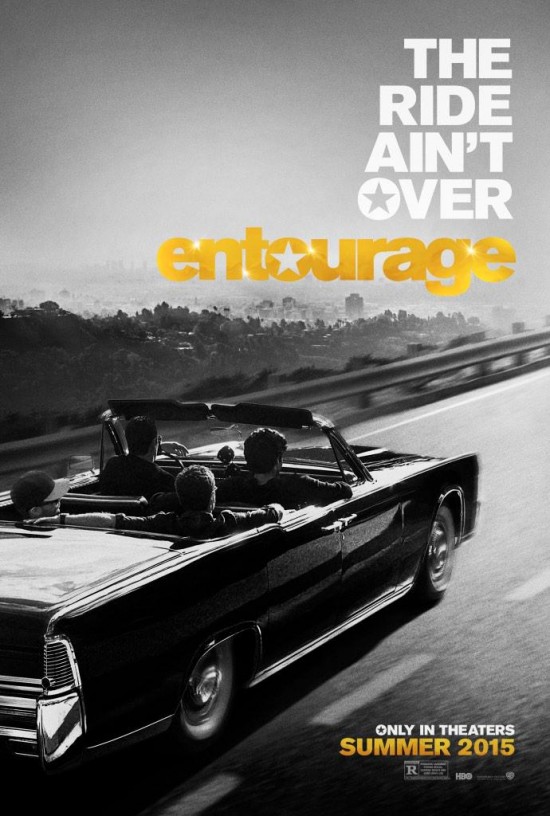 When Entourage first aired on HBO in 2004, it felt like a fun peak behind the glamorous world of Hollywood. A group of four friends were doing their best to navigate the land of dreams while staying true to themselves. For the first four seasons, Entourage felt fresh, fun, and engaging. And then it kept going for another four seasons, overstaying its welcome and proving to have worn out all credible story material several seasons before it went off the air in 2011. Creator Doug Ellin just didn’t want to leave the party, enough so that four years after finally leaving he’s back with his boys, co-writing and directing an Entourage feature film, answering all of the burning questions left unanswered. Does Ellin justify the move to the big screen, especially when you realize that the TV show already had gratuitous nudity and celebrity cameos?
Vincent Chase (Adrian Grenier) is nine days removed from his honeymoon where he and his wife decided they really weren’t meant to be, so they amicably split but not before having awesome sex one last time (oh yeah!). Back on the scene, Vinnie is hungry to direct and his debut is a $100 million adaptation of Jekyll and Hyde starring Vinnie and his older brother/desperate actor, Johnny Drama (Kevin Dillon). The problem is that Vinnie feels he needs more money to finish his masterpiece before he can show it to the studio. Ari Gold (Jeremy Piven), formerly Vinnie’s agent and now the head of the studio, has a lot on the line if this movie is a hit or a flop. He checks in with a financier for more money but the Texan moneyman insists his son Travis (Haley Joel Osment) go along to Hollywood and act as go-between. It’s not long before Travis is demanding drastic changes to Vince’s movie (oh no!). Here to help is Turtle (Jerry Ferrara), who works a business and a romantic angle with MMA fighter Ronda Rousey, and Eric (Kevin Connolly, who is weeks away from becoming a father with longtime girlfriend Sloan (Emmanuelle Chirqui). Can Vinni save his movie? Can Ari save his job? Can Turtle seal the deal with Ms. Rousey? Can these bros get any bro-ier (oh yeah)?
 The plot of the movie is almost insulting with how little conflict there is and when there is any how easily it all wraps up into lazy wish fulfillment. The main conflict of the film is that Vinnie wants more money for his directorial debut, even after blowing through $100 million. He needs just a pinch more for his movie to be able to be complete. Rather than having a disaster on their hands, which would be far more interesting and provide a wealth of conflicts with how to salvage what is there, the biggest perceived problem with Vinnie’s debut is whether it will be a box-office blockbuster and earn awards. Everyone sings the movie’s praises, though the concept sounds ridiculous and the little footage we see looks ridiculous as well. A Jekyll/Hyde DJ who fights “the system” and spreads his magic elixir at his club concerts… does that sound like the formula for Oscars? If Entourage were still functioning as an industry satire, there might be added commentary on how something so flatly terrible would be hailed as an awards darling, but entourage stopped being a satire midway through its television run. It’s just a consistent reward system for characters that stumble from one good thing to another. Even though Vinnie has never directed before everyone can’t help themselves but talk about what a superstar he is and how great the movie will be. Will he get tons of money, acclaim, and have sex with an attractive woman, or will he get tons of money, acclaim, and have to wait to have sex with another attractive woman? What a pressing conflict for a feature film. With that established, it’s no wonder then that Travis makes such an ineffectual antagonist. I was actually enjoying his hostility toward Vince and his dumb movie. Eric might have wanted to punch him in the face but I wanted to pat him on the back.
Another significant problem is that these guys are just too old to be going through these same tired arrested development routines. I think it says everything about Entourage the TV show that after eight seasons the characters were basically the same people except each had become more successful. Their shtick was already getting tiresome on TV. Flash forward four years, though the movie takes place months after the end of the TV show, so that means we’re in 2012 I think. Anyway, these guys should have accumulated some sort of personal growth as characters and they just haven’t. Except for Turtle’s weight loss, which becomes a running joke, it feels like they’re all the same. This is also featured in the Eric/Sloan relationship, which was an exhaustive subject on the TV show. As the series ended, they were together and having a baby, and as we pick up with the movie they’re, shocker, apart again just so they can get back together. The inevitability of this storyline offers a glimpse at what Ellin felt he had to squeeze in for Eric, which amounts to sleeping with two hot women and having a crazy mix-up. When it appears like there will be actual conflict here and Eric will be held accountable for his behavior, the movie instantly shrinks away and lets him off the hook. Every character’s interaction with women is regrettable, as women are served up as easy comforts. Ronda Rousey at least takes a stand but then retreats yet again under the supposed charm of these dolts.
The humor is low-grade and often missing, substituting references and celebrity cameos for well-developed comedic scenarios. There’s some humor in how self-deluded these guys are, especially the increasingly unhinged antics of Johnny, but they’re far too bland to generate consistent laughs. Except for Johnny, the other guys aren’t even given opportunities for comedy, which makes their storylines all the more painful. Do we really need to see Turtle’s courtship of Rousey, and what does she see in this guy? None of the cameo appearances are even used beyond just a ten-second-reference point with no greater impact than on the ten seconds of that very scene. Take for instance the cameo of Mark Wahlberg and his hometown buddies. He’s an executive producer on Entourage the TV show, based upon his own experiences coming to Hollywood. He’s shilling his own reality TV show he produces in the move based upon his old HBO show. That’s like product placement/plug inception. The problem is that Ellin has confused cameos as punch lines, which was also an issue with the original show. Just because I see someone famous doesn’t mean there’s a joke attached. Oh look, it’s Pharell and he’s wearing that big hat. Thanks for showing up, Pharell. Now go cash that check, you won’t be required for any other work on this set. Scene to scene, it feels like some sort of party that the filmmakers expect you to be grateful for attending. It’s not even a fun party.
 The most entertaining person is the movie is still Ari Gold and Jeremy Piven has always played him to the hilt, winning multiple Emmys in the process. I desperately wish this was more Ari’s movie, or told more from his studio perspective, because he’s the infinitely more interesting and entertaining character than the super relaxed and super boring Vince. Even though Ari’s vulgar outbursts have grown tiresome, he’s still the most exciting character because he’s transparent about his passion but also, more than any other character in this expanded TV universe, he works for his goals. Ari doesn’t just sit by and let good stuff fall into his lap, he’s working all angles to get the desired outcome, and that’s always more interesting than watching the life of a vacant actor go from great to even better. The subplot with Ari’s former assistant Lloyd getting married feels like setup for a comic set-piece that never materializes. It does, however, provide a cameo for George Takei to officiate the wedding. Hooray, more cameos.
If you were a fan through all eight bro-tastic seasons of the TV show, chances are you’ll probably find the movie easy-going and enjoyable. If you’re like me and grew tired of their boorish antics, the repetitive humor and plotting, and the casual misogyny, then a big-screen version where the boys get to continue their ways and get more rewards, where everything works out for everyone, will be highly fatiguing. Entourage the movie doesn’t aspire for much but its stunted ambitions and minor conflicts never allow the movie to be anything other than a particularly meandering and dull extended episode. Much like the main characters, it has confused mediocrity with success and being amiable with being interesting. Ellin said in interviews that he hoped this would be the start of an Entourage trilogy of movies. Thanks to the low box-office returns, at least I can credit America with stopping that plan. If this is indeed the last ride for Vince and the boys from Queens, well they went out pretty much like they did four years ago, and isn’t it great to still be a rich white guy in Hollywood? Oh yeeeeeah. Oh yeeeeeeah.
Nate’s Grade: C
Share this:

Mission: Impossible — Rogue Nation (2015)
 Not as outlandishly crazy as the Fast and the Furious series, not as beholden to tradition as the Bond series, the Mission: Impossible series doesn’t get the same notoriety but I’d declare it the most consistent and best action franchise going today. Each new film is a distillation of their director’s strengths, keeping things fresh, and the mainstay is Tom Cruise in prime action hero mode and risking his life like a madman. While not as dizzyingly entertaining as 2011’s Ghost Protocol, Rogue Nation is another fun and action-packed spy thriller with terrific and memorable set pieces. The plot involves Ethan Hunt (Cruise) and his team on the run, again, as their agency is shut down for its reckless methods. A rival agency known as The Syndicate is plotting political assassinations, so Hunt and his team (Simon Pegg, Jeremy Renner, Ving Rhames) must work along the fringes to save the day. The newest addition is Swedish actress Rebecca Ferguson as a mysterious ally and antagonist for Hunt. She’s smart, formidable, and not treated as a romantic interest or overly sexualized (progress). After Alicia Vikander’s superb performance in Ex Machina, and now Ferguson’s steely turn, it’s quite a booming year for Swedish imports. The series’ star is still Cruise and his cavalier treatment of his 50-year-old body in the pursuit of the daredevil stunts. The opening with Cruise attached to the outside of an ascending cargo plane is a stunning image jolted by the charge of realism. An underwater vault break-in is wonderfully developed. The snazzy car chases, motorcycle chases, and foot chases all benefit from Cruise being front and center. Say what you will about the man but he’s a movie star. The biggest problem with Rogue Nation is much like Ghost Protocol in that it peaks in the middle. The last act takes place entirely in London and it just can’t compare with what came earlier, which leaves the movie lumbering to a close with its rather substandard villain. Even with a less than stellar conclusion, Rogue Nation is another entertaining, fun, and thrilling action movie that would be the best the summer has to offer if it weren’t for the highs of Mad Max.
Nate’s Grade: B+
Share this:

Me and Earl and the Dying Girl (2015)
 In many ways Me and Earl and the Dying Girl feels like the perfect specimen that was programmed and brought to life in some mad scientist Sundance film lab. It’s got a hip point of view, a meta commentary on its plot and the directions it doesn’t take, style to spare with lots of self-aware camera movements, and even Wes Anderson-styled intertitles and colorful visual inserts, including stop-motion animation. It’s about two amateur filmmaking teenagers, Greg (Thomas Mann) and Earl (R.J. Cyler), who befriend Rachel (Olivia Cooke) who happens to have terminal leukemia. The movie has a good heart and it deviates from convention with its storyline, though it has to stop and add narration to point out how it does this, like it demands a pat on the back for not being a “typical cancer weepie.” The big problem is that we’re stuck with the perspective of Greg, who is the least interesting character and just trying to stay invisible. He has a low opinion of himself and his friendship with Rachel will somehow make him a better person. Earl and Rachel are both tragically underwritten but valiantly played by their actors. The annoying aspect is that Greg makes everything about him and so does the movie. The supporting parts are broadly portrayed and fit awkwardly with the larger setting, like Greg’s overenthusiastic teacher, Rachel’s lush of a mother who seems one drink away from committing statutory rape, and Greg’s mom, who forces Greg to hang out with Rachel, even though they were acquaintances at best, because the plot demands it. The script by Jesse Andrews, based upon his YA book, sets up the completed tribute film as an emotional climax that cannot be met, and the abstract movie results prove it. This is a likeable, funny, and entertaining indie with a sense of style and wit. It’s good, but it could have been better. I wish the “Me” had been removed from its title.
Nate’s Grade: B-
Share this:

Not Cool (2014)/ Hollidaysburg (2014)
 Last year, Starz aired a reality TV series called The Chair. Produced by actor Zachary Quinto and Project Greenlight breakout Chris Moore, the aim was to give two different directors the same script, the same budget, the same shooting city, and the same access to resources to see what kind of movies they would create. The public would vote on a winner and the winning filmmaker would earn a $250,000 prize. Film is a director’s medium, and both of the chosen participants, Shane Dawson and Anna Martemucci, were allowed to rewrite the script, likely to the dismay of screenwriter Dan Schoffer. Dawson has built a following of millions making comedy shorts on his YouTube channel. Martemucci has written one other film and has professional ties to Quinto. Over the course of one winter in Pittsburgh, both Dawson and Martmeucci shot their films under the extra scrutiny of the reality show cameras. Whatever their TV portraits may have been, the work stands on its own. Dawson made the sex comedy Not Cool and Martemucci made the coming-of-age drama, Hollidaysburg. They are two quite different films, but are they any good and should The Chair be considered a success?
Scott (Dawson) is home for Thanksgiving break from his first year at college. In high school he was prom king and a big deal. Life since hasn’t been that easy. His girlfriend, Heather (Jorie Kosel), dumps him after a spontaneous hookup in a public bathroom. His father is closing the family’s record store. His sister, Janie (Michelle Veintimilla), might not graduate on time from high school. And then Tori (Cherami Leigh) accidentally hits him with her car. The two have history: Scott was responsible for Tori’s cruel nickname, “Tori the Whore-y.” Not having any of it, she lays in to him and unleashes years of anger, and then the two of them have sex. They try and pass it off as a one-time deal but they both can’t stop thinking of the other person. Tori’s pal Joel (Drew Monson) is determined to have sex with his high school crush, Janie. He agrees to help her with her schoolwork for a prime opportunity to make her fall in love with him. As Joel and Scott chase after their resistant love interests, they have to decide how far to go.
 I was completely unfamiliar with Dawson and his YouTube fame before seeing his film, and after watching Not Cool I wish I had remained in blissful ignorance. To call Not Cool unfunny is too kind. It is aggressively unfunny, going above and beyond to shock and appall. By no means am I a prude when it comes to crass comedy, but you have to put effort into it just like any other style of telling and developing jokes. You don’t just blurt out something vulgar repeatedly and confuse that for comedy construction. I knew I was in trouble when the movie resorted to projectile vomit within two minutes. Dawson’s direction consists of telling his actors to go as broad as possible; they feel like over-the-top cartoons engaging in shouting matches. A Thanksgiving dinner with Scott’s family feels like an insane asylum was evacuated. It’s fine that Not Cool doesn’t approach a relatable reality, but it needs to have some internal grounding that makes sense. It also needs to be funny. Much, much funnier. After ten minutes I had to stop the movie and gather pen and paper to start noting the unfunny and off-putting misogynist jokes on display. Let me make this clear: characters can be unlikeable and have non-P.C. POVs, but when the film itself seems to be adopting a tone and perspective that allies with ignorance and intolerance, that’s when a movie can become increasingly uncomfortable. Dawson’s interpretation of the script is rife with jokes that are homophobic, xenophobic, slut shaming and in general anti-women, and, I repeat, they just aren’t funny:
In response to dad’s new girlfriend (who is never mentioned again) being named Anastasia: “With that name she’s either a Disney princess or a stripper.” Fresh.
Janie relates how her sexist teacher is flunking her, which Joel responds with, “I’m surprised he didn’t give you an ‘A’ for those tit-ays.” Ugh. Just ugh.
“Tori the Whore-y? You look kinda good now. You know that nick-name might not be ironic anymore.” Because Scott is the arbitrator of what is acceptable attraction, therefore Tori should now have a sense of self-worth because he has deigned to find her of interest. This is later reiterated when Scott tells her, “You’re beautiful. You always were.” Thanks, now that you said it Scott it must actually be true.
Joel: “The only thing hotter than Leonardo DiCaprio is a retarded Leonardo DiCaprio in a sexy diaper.” What? I don’t think he ever wore a diaper in What’s Eating Gilbert Grape?. And Janie’s response is equally baffling: “That shit makes me so wet.” Huh? Watching an actor play a mentally handicapped child makes you sexually aroused?
To quickly wrap up this detour, let me highlight the most egregious stab at humor in the entire movie. During the film’s climax, his horny ex-girlfriend sexually assaults Scott. Tori sees this and, oh no, miscommunication. Scott explains he was raped and it was not consensual. The party’s host quietly walks over to a dry erase marker board that says, “Rapes at this Party.” He erases the zero and writes a “one” on the board, then goes back to partying. Let that sink in. The board was prepared for some sense of inevitable rape, and yet once it happens, the host carries on. That’s offensive on a number of issues.
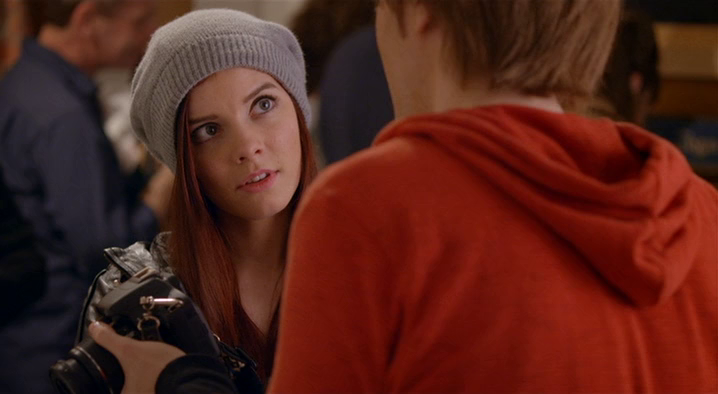 These scenes and lines are merely par for the course in what is ultimately a coarse and misguided comedy that is stocked with vile characters. Scott is served up as a figure that needs to get past his hubris, but the movie treats him more of a hero who the other characters just can’t help but love. It’s hard not to feel like the film is made to flatter Dawson as an actor. Within minutes of meeting Scott again, Tori says, “Would I have sex with you? Probably.” No one can resist his appeal, certainly not Tori’s family. Tori’s mother is practically begging to jump on top of him. When the character’s defining moment of humility and growth is cutting his Justin Beiber-like hair, it’s a failure. Tori is written in such an inconsistent fashion. She’s supposed to be all about negativity and hates everything in the world, but then she transforms into a Manic Pixie Dream Girl for Scott’s cutesy scavenger hunt. Leigh does a credible job with the character but she’s a half-formed assortment of quirks and messages meant to push Scott along. Dawson errs considerably by casting himself as the romantic lead. It further exacerbates Scott’s flattering portrayal, but really Dawson is just not a good enough actor to carry a film. But a lead role wasn’t enough, and Dawson appears as several female supporting characters in drag. The appearances stop the movie dead in its tracks. The characters are also just lame mouthpieces to blurt lazy inappropriate comments, especially a popular girl who just keeps calling people names at the top of her lungs. It is deeply unpleasant.
The worst character in the entire film is Joel. This guy is obsessed with having sex with his high school crush, who is still in high school while he’s in college, by the way. She has clearly and consistently stated that she does not have feelings for him, but what’s a woman stating her decisions going to matter to this guy? Joel’s pursuit of Janie is just insanely creepy. He mimes preforming cunnilingus on her. He stalks her online profiles to mine useful personal information. He enlargers and decreases a picture of her face on his phone and narrates the experience like she is giving him oral sex. At every point he treats her as a sex object. Even after a night out, where she wears a dress he picked out for her after trying it on himself and fondling himself in expectation (!), she tells him she doesn’t feel the same way, and he still forces the situation. It’s gross and at no point is Joel and his behavior held up to criticism. He’s rewarded for his “virtue” by having Janie pimp out all her promiscuous friends onto him. What makes the character even more repulsive is just how annoying Monson’s performance comes across; he’s going for faux bluster but it’s more like misplaced entitlement. If this storyline had ended with Joel murdering her while weeping and slow dancing with her corpse, you wouldn’t be that surprised.
 As the previous two paragraphs should indicate, there is certainly a point of view that emerges from the movie, one that trumps the heterosexual white male at the top and looks with derision on anybody that falls outside that definition. It feels like every joke is at someone’s expense. In the opening minute, an overweight woman tweets a picture of herself as a skinny model. I suppose it’s funny because she’s misrepresenting herself but it feels like the joke amounts to, “Ha, she’s ugly and fat.” But those who are conventionally attractive still don’t get off easy. Tori is slut shamed as a whore in high school, lead by Scott, and this is merely excused as the behavior of a loveable scamp. Janie’s friends are treated like idiotic sluts. Tori’s gay friend is defined by his flamboyance and obsession with sex. Disabled people are apparently hilarious just because they’re disabled and different. Tori’s older sister is blind and it’s funny because she accomplishes things… but she’s blind. I suppose the joke is that she shouldn’t have a successful life. There’s a woman at a party in a wheelchair (confession: I know this actress) and the joke is she’s doing normal activity. There’s one black character in the movie that is a homeless man who devours his own feces. At one point, his genitals are also used as a laugh. There’s also the characters’ flagrant and casual use of the word “retarded” to describe anything repulsive. The hoary stereotypes and unfunny portraits blend together, creating a mosaic of intolerance masked as comedy. Dawson’s sense of comedy is fairly puerile but it’s also offputtingly mean-spirited and denigrating.
Dawson makes too many fatal mistakes as a director for Not Cool to survive. Casting himself in the lead was a mistake. Appearing as female supporting characters was also a mistake. Excusing the bad behavior of his male characters, and rewarding them, was a mistake. Catering the humor to make fun of anyone that doesn’t classify as a heterosexual white male was a mistake. Relying solely on gross-out gags without better comic development was a mistake. Trying to earn a heart late into the film was also a mistake. After watching jerks behave like creeps with their inflated sense of entitlement, I don’t care if they maybe have feelings. Directing his actors to be heightened caricatures was a mistake. In short, Not Cool is a comedy graveyard of mistakes and bad decisions. I’m sure there will be people that find something to enjoy here, who laugh at the easy juvenile humor. I even laughed a couple times. There was a visual gag with a smuggled watermelon that was simply inspired. I think Dawson didn’t want to stray too far from his YouTube persona and the tone of his videos, lest he upset his fan base of millions, but what works as a three-minute YouTube short doesn’t translate to a feature film. Not Cool is proof enough that an overabundance of energy and cheap vulgarity does not compensate for a deficit in storytelling and execution. Not Cool is just not good.
 Going far in the other direction is Hollidaysburg, a modest coming-of-age drama that patterns itself after the mumblecore movement of indie cinema. Director Anna Martemucci definitely takes a more restrained approach to her interpretation of Dan Schoffer’s screenplay. She has some problems of her own but on a whole Hollidaysburg is the more promising and well-executed movie. It’s more sophisticated, better articulated, heartfelt, and comes far closer to achieving something worthwhile.
Right away you can tell a difference. We begin once more with Scott (Tobin Mitnick) and his girlfriend, Heather (Claire Chapelli), breaking up in the middle of sex, but they keep at it. It’s not exaggerated for extra laughs; the situation itself naturally draws them. The character isn’t made the butt of the joke either. It’s a much more encouraging opening than projectile vomit. Scott is also dumbstruck when he discovers his family home is days away from being emptied and sold. He reconnects with high school acquaintance Tori (Rachel Keller) and the two sleep together impulsively. As they’re trying to make sense of possible feelings, Heather is seeking out some company, anybody, and settles on her pot dealer, Petroff (Tristan Erwin), who happens to be buds with Scott. He’s wary of stepping over some kind of friend code, but in his efforts to get Heather out of her funk, Petroff starts to form a romantic interest he can’t help.
The focus is on our foursome of young, curious, and emotionally free-falling characters stumbling for some sense of personal identity. The theme of the film is about stasis versus change. Heather reasons that their long-distance relationship is not meant to be, and that it’s better to check out early. She’s also disillusioned by college, an experience that she had hoped would be remarkable at pointing her life in the right direction. Scott is quite literally saying goodbye to his childhood and his prior sense of who he was. His task for the holiday weekend is to pack the last of his childhood things in his old room so they can be sent to Florida. He won’t be returning to Pennsylvania likely, which is what Tori is also wrestling with. How far does she let herself get attached to something that could never happen? The two of them dance around their attraction and unconventional courtship. There’s real uncertainty about their possibility as a couple that’s palpable. Then there’s Heather’s sense of ennui that might just be a symptom of depression. She feels like she’s in a fog and that college is not the gateway others perceive it to be. Petroff is trying to juggle his role as friend and potential more-than-friend, and even though he has no real obligation to Scott on this one, he is trying to be deferential and sensitive. Before the breakup, he didn’t even consider Heather a friend. Now they’re getting to know one another on a much more personal level. The foursome is likeable, complicated, flawed, and pleasant to be around, enough to excuse some of the movie’s genial pacing.
 There are assorting supporting characters, notably siblings to Scott and Tori, but they are complimentary and better inform the story. Scott’s older brother spends the entire film trying to recreate his father’s recipe for pumpkin pie. It’s just the sort of concept that is slight enough to be fun but also lead into a dramatic character payoff. The dialogue feels attuned to the natural speech rhythms of human beings while still being entertaining. Scott and Tori’s initial reunion revolves around her keeping watch to make sure he doesn’t have a concussion after she hit him with her car. It’s a cute scenario that’s played with the right flirty tone that nicely sells the emergence of their romance. The humor isn’t as loud and underlined as Not Cool, and that’s to its benefit.
Your enjoyment of Hollidaysburg (named after a city in Pennsylvania) will depend mightily on your personal tolerance for the observational, delicate human comedies of the mumblecore genre. Sometimes derided as affluent navel-gazing, the often-DIY subgenre can have its own hardscrabble charm and touch upon relatable themes and conflicts that transcend their often self-indulgent characters. There’s also a stronger sense of realism in how fleshed out these worlds feel, and so I have enjoyed mumblecore primarily because of the combination of well-developed characters, emotional truths, and sincerity. I acknowledge a movie about a bunch of teenagers sitting around, mingling, smoking pot, and making life decisions is a harder sell than, say, sex comedy shenanigans. The difference is that you feel the care put in by Martemucci. She cares about these people and makes you start to care as well, or at least be interested. But if you’re not on the same wavelengths, one person’s observational is another person’s doddering.
While technically better on just about every level, Hollidaysburg has its own issues. The character arcs for Scott and Tori are rather nebulous. I’ll credit Dawson with this, in Not Cool the characters’ arcs were front and center and there was a progression. With Hollidaysburg, Scott is vaguely defined by his past but he doesn’t go into many details, failing to indicate how he’s undergoing some sort of high school hangover as he adjusts to a bigger pond. He’s uncomfortable with the discovery of how close Heather and Petroff have gotten, but this character turn doesn’t get developed enough to matter, instead coming across as a somewhat manufactured conflict break. Likewise Tori is looking to redefine herself in college but finding it harder than she anticipated. By the end of the film, her closing voice over quotes John Updike about being reborn every day, and how reassuring she finds this reflection. You could make the argument that through her romantic tryst with Scott, she’s better accepted the notion that she will define herself as she pleases, but I don’t even know if that approaches the conclusion. The two characters with the more clearly defined arcs are Heather and Petroff, and they’re on a relatively straightforward path where their biggest obstacle is hiding their emerging feelings from their mutual friend who would be hurt.
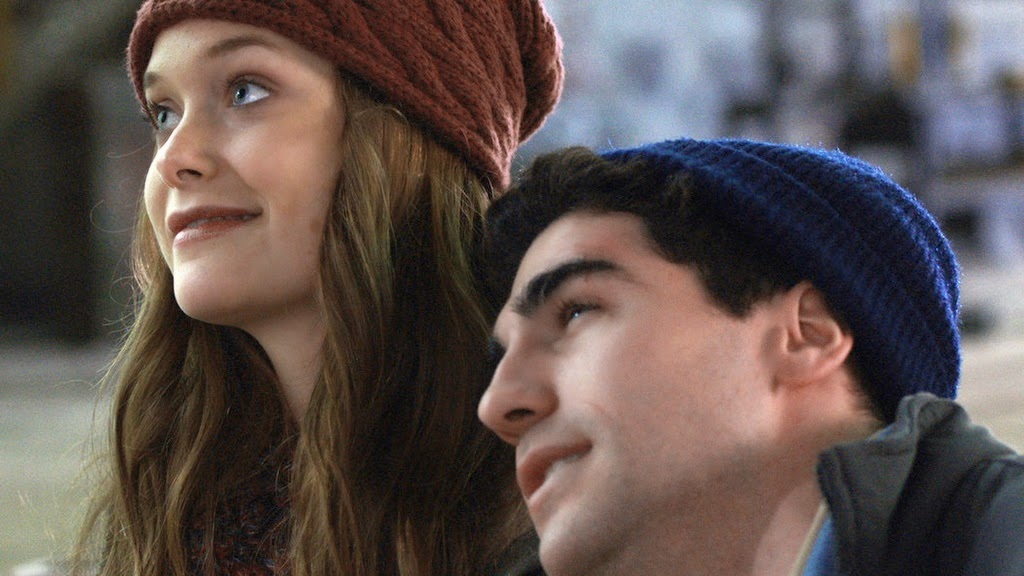 I don’t necessarily know if I’d call The Chair a success. The fascinating premise has given birth to very different movies, but in the end one of them is an aggressively unfunny comedy and the other is an acceptable coming-of-age mumblecore entry. It’s hard to call either a rousing success. Not Cool is an abysmal comedy that is overly reliant on witless shock humor to substitute for storytelling basics. Dawson makes a slew of bad decisions, mostly playing to ego or his built-in audience, but I’ll say at least he goes for it. Martemucci certainly comes across as the more promising filmmaker; her film is better on a technical level and her handling of actors is far defter. At the same time, her aim is lower with her goals and her character arcs less defined. I suppose you could argue the hazy arcs tap into the characters trying to better find themselves but I won’t. Hollidaysburg is clearly the better film but Dawson’s legions of fans came to his service, and in the fall of 2014, Dawson was declared the victor by a majority of public voting. I purposely wanted to watch the finished movies before delving into the TV show so my feelings toward the filmmakers would not influence my reviews. Usually Project Greenlight was at its best when things were falling apart for its fledgling filmmakers, and I imagine the same level of entertainment will be had with The Chair. My foreknowledge will create a delicious dose of dramatic irony, as I know what all these efforts will lead toward. In my head I’ll likely be thinking, “Not worth it.”
I’ll add to this double-review after watching the series for any additional thoughts on Dawson and Martemucci as filmmakers and human beings.
Update: After having watched all ten episodes of The Chair, I can say neither director comes off terribly well. Martemucci is indecisive, poor with time management, and loses the big picture, but she’s far more open to collaboration and criticism. Dawson knows what he wants, is decisive, but is also quite thin-skinned and defensive and hard-headed to criticism. He seems incapable of thinking outside the bubble of his fanbase. He also has a far higher opinion of many elements of his film that I found awful, but that isn’t surprising. What’s surprising to me is that established producers could read Dawson’s script and watch the final movie and say, “Yeah, this is good.” Not everyone did though, as I discovered Quinto and another producer were so appalled by Not Cool that they elected to take their names off of it. They did not want to be associated with that material, which Dawson has trouble seeing as more ugly than standard “raunchy teen sex comedy” stuff (it is uglier, Shane). The funniest part for me was a tattoo parlor owner who discovers Dawson’s YouTube resume after she agreed to let him film in her parlor. She doesn’t want her shop’s name visible and associated with what she feels is racist, sexist, unfunny jokes. She even chastises Chris Moore about it. It’s like this one tattoo shop owner spoke as the prophet of me and all other home viewers and those who endured the awfulness of Not Cool. Congratulations for telling it like it is, Pittsburgh small business owner.
Nate’s Grades:
Not Cool: D
Hollidaysburg: B-
Share this:

Ant-Man (2015)
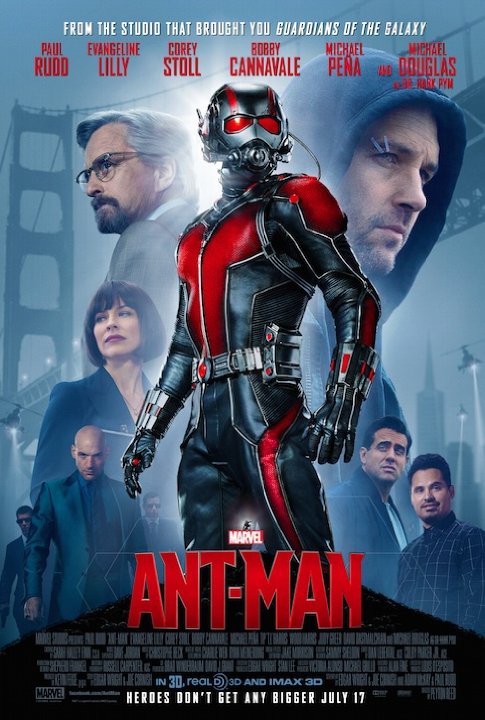 For the longest time it looked like Ant-Man might be the first dud of the runaway successful Marvel cinematic universe (MCU), a film franchise that was practically printing money at its leisure. It’s a strange setup and the man responsible for the movie even existing, writer/director Edgar Wright (Scott Pilgrim vs. the World), walked away six weeks before cameras were going to roll. Wright was a big fan of the character and has been working on and off on a screenplay with Joe Cornish (Attack the Block) for the past eight years. Before there was an MCU, there was Wright pushing for Ant-Man. I’m pretty sure Marvel execs weren’t thinking the relatively unknown character was worth sinking money into, but Wright kept pushing. I was far more excited for an Edgar Wright superhero movie than I ever was for Ant-Man, and then it all went away. Neither side has spilled too many details but it appears the divorce was a result of “creative differences,” which is odd since Marvel approved Wright’s script through eight years of development. Several directors were auditioned and Peyton Reed won the spot. The fact that Marvel has gained a rep for being a formula-driven creative committee and they literally hired a director with a film credit called Yes Man is an irony I don’t know that fully sank in. If Marvel was going to miss, this was the film. A funny thing happened in the ensuring year. Ant-Man is a visually engaging, energetic, and funny superhero caper that stays fun from start to finish and is a more entertaining movie than Avengers: Age of Ultron. Didn’t see that coming.
Scott Lang (Paul Rudd) is a master cat burglar just finishing the end of his prison term. Lang was punished for a “cool crime,” stealing millions a large corporation had illegally bilked form customers and returning it to the very victims, but it makes it hard to secure gainful employment. Scott falls back with his old crew, lead by his pal Luis (Michael Pena), and break’s into Hank Pym’s (Michael Douglas) safe. Expecting cash and jewels, Scott is disappointed to only find a weird looking suit, which he takes anyway. Hank observes Scott and communicates with him about the power of the suit. The wearer can shrink down to the size of n ant with the push of a button in the glove. Hank needs a protégée to wear the suit now that he’s too old. His estranged daughter, Hope (Evangeline Lilly), is working for Darren Cross (Corey Stoll), a scientist close to breaking through on replicating the amazing shrinking formula of Pym’s. As soon as Cross cracks the code, he’s going to sell the technology to the highest bidder (hail HYDRA). Hank must convince Scott to become the Ant-Man and sneak inside Cross’ secured workshop and steal his technology before it gets in the wrong-er hands.
 Arguably weirder than last summer’s Guardians of the Galaxy, which had a talking tree and space raccoon amongst its main characters, Ant-Man is the hardest property to sell by Marvel yet, and it smartly aims its sights lower and succeeds with the modest goal of just being a fun and enjoyable time at the movies. It helps that the movie doesn’t take itself too seriously and has characters pointing out the absurdity of its premise and developments, but not past the point where it would be detrimental. Let’s face it, a guy who can shrink down to ant-size isn’t that weird when you consider the applications, especially in espionage. The filmmakers do an admirable job of selling a superpower that pales in comparison to most other heroes on the market. However, the weirder power is that Scott has the ability to communicate and control ants via brainwaves. That seems like the even bigger superpower but it also begs the question, why simply ants? Of all the animals or living creatures who could be harnessed with this technology, we go with the tiny ones. There may be an explanation in the history of Ant-Man comics I’m missing but that doesn’t matter when we’re talking about the execution of the movie. The guy is able to control different species of ants with his mind. He is no Ant-Man but the Ant-King. Anyway, I think this power could be much more effective applied elsewhere. The ants are Scott’s friends and he has to train himself training them, getting them to coordinate and assist him properly, or else… there’s not much else at stake because they’re expendable. Perhaps their queen could have eaten Scott if he were unsuccessful.
On its surface, this movie should not work and is too goofy and insubstantial to engage, and yet that’s precisely what appealed to me. Not every superhero film needs to be averting a cataclysm that will destroy the planet. If the stakes feel big to our characters, and if the audience cares, then the stakes feel plenty big for us too. Scott simply foiling the corporate bad guy to be in a better position to see his daughter, that’s workable. Then the storyline is told through a heist, one of cinema’s most enjoyable plot mechanics. Heists are programmed for audience pleasure because it requires teamwork, which utilizes our cast in different and fun ways, it brings plenty of conflict and complications, and it lays out its steps one-by-one and provides a series of payoffs with the completion. It’s a tribute to Reed and the filmmakers that the heist portion of the film isn’t even the most fun part of the story. The majority of the middle is Scott coming to terms with the suit, his powers, his relationships in his life, and the mission. There’s probably one too many training montages (yeah, you get those sugar cubes you ants!) but the pacing is so breezy and the sense of fun so palpable, I didn’t mind. The use of humor never diminishes and Rudd is such a charismatic anchor for the movie, and yet he’s actually somewhat underplayed. He has it within him to be much funnier, but I guess he had to dial it down to effectively be seen as an action hero, hence the presence of newfound abs.
I didn’t have a lot of hope for the film once Wright left but I have to credit Reed for what he has achieved. It’s impossible for me to divorce myself from Wright’s involvement, and what kind of kinetic fireworks he would have birthed, but Reed manages to make Ant-Man come alive visually. Reed’s prior history shows an affinity for comedy but the films have never needed to be visually stylish, though I’d argue my super not-guilty pleasure Bring it On had an above average sense of visual spunk. Still, Ant-Man is a consistently visually immersive film that manages to find new perspectives. Scott’s first foray as a shrunken Ant-Man is an entertaining adventure through the dangers of a house party. The action sequences in miniature are treated just as we would expect a large-scale superhero epic to be treated, and then Reed pulls back at times for prime comic effect, like a battle atop a train that’s really just a child’s toy set. The visuals grandeur is patterned after the typical Hollywood action epic but the movie pulls back repeatedly to remind us how silly everything can be. The small world perspective opens up the movie in its storytelling and definitely in its action choreography. Because the Ant-Man has super strength when small, it behooves him to shift between small and human sizes when fighting. We’ll watch Scott race across the barrel of a gun in one second and then full-sized and hurling a security guard through a plate glass window the next. It provides a new sense of dynamism to basic fisticuffs. Reed takes advantage of the visual possibilities of his pint-sized super hero, like a clever battle that takes place entirely inside the contents of a briefcase. I chose not to watch this film in 3D, as my preferred option, but this is one I would almost consider going 3D. The shrunken worlds use a lot of macro photography to maximize the effect of depth.
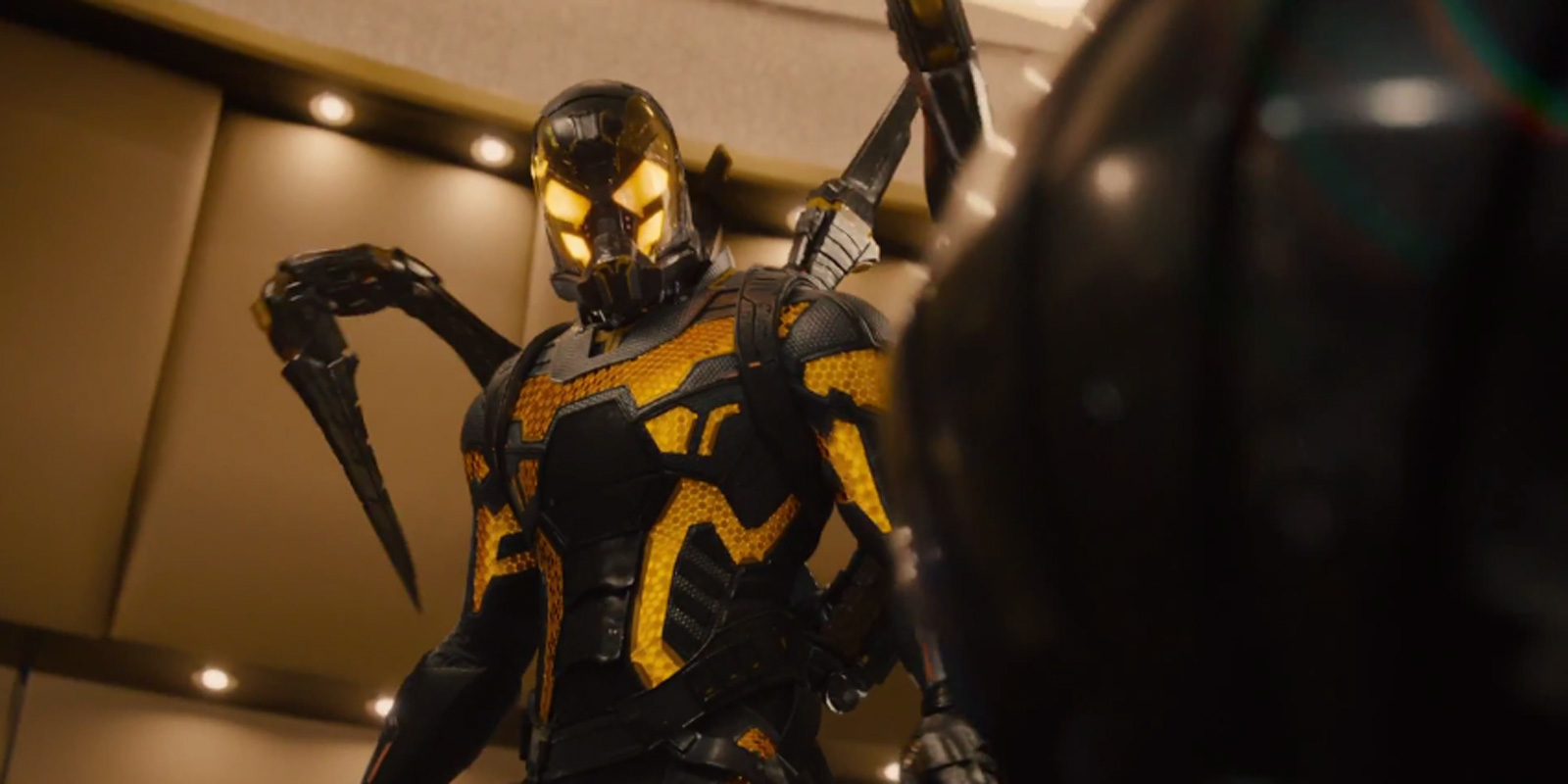 The cast also seems to be perfectly attuned to the comic rhythms of the story and several supporting players make the most of their moments to shine. Pena (Fury) is hilarious as the easily excitable friend given to lengthy diversions when retelling his tales of intrigue. The two instances where Pena breathlessly recaps what so-and-so said to so-and-so are two of the most playful and comically fulfilling sequences in the movie. I also enjoyed the fact that he’s always making waffles for his friends but this is never overtly commented upon. While Pena provides another dose of humor, the heart of the movie is really the father-daughter relationship, and it’s nice that Lilly (The Hobbit: Battle of the Five Armies)’s character is given such prominence. She resents Scott because she feels like by every right she should be the Ant-Man; the movie presents the two like bickering rivals fighting for the approval of a father figure. Hope’s credible grievances with her father are treated with weight and her reconciliation is given as much screen time as Scott’s training, pairing the two more as equals. Douglas (Last Vegas) is a warm and welcoming presence as a mentor working through his regrets late in his life. The de-aging CGI effects are amazing early on, showing a 1989 version of Douglas that looks pristine. He looks like he just stepped off the set of Ruthless People. The only weak point is Stoll (TV’s The Strain) but that’s because his underwritten villain is just too generic to blend in amidst all the colorful characters and comic mayhem.
It’s impossible to watch Ant-Man and not try to imagine what it would have been like had Wright remained as its director. Wright’s presence is still felt in stretches and he and Cornish are still the top-billed screenwriters, with the addition of Adam McKay (Anchorman) and Rudd himself performing a rewrite. I’d love to one day read what Wright’s full script was like and what Marvel eventually decided they could not abide. Whatever the case may be, the Ant-Man that made it to the big screen across the world is a surprisingly entertaining and spry piece of work. Reed provides a nice dash of visual flavor without losing its sense of the comedy or drama, Rudd is effortlessly charming, and the structure provides plenty of payoffs. Above all else the movie maintains a sense of fun and a lightness in an arena too often overwrought with doom and gloom. I don’t imagine there will be any Ant-Man sequels soon since the character is rather limited, but expect to see Rudd popping up in other MCU titles (he’s already been spotted filming Captain America 3). Ant-Man is a fun diversion but even Marvel knows not to push its luck too far.
Nate’s Grade: B


 nathanzoebl
You must be logged in to post a comment.