Blog Archives
Mank (2020)

In 2003, director Peyton Reed (Ant-Man, Bring it On) recreated the “no-sex sex comedies” of the 1960s starring Doris Day and Rock Hudson, with Down with Love. It recreated not just that era in time but also the hokey filmmaking techniques of its time, including green screen for rear projection as the characters drive. It was a big homage to older Hollywood and a celebration of its outdated filmmaking and storytelling. But was the movie ever more than one elaborate homage? Did the film have any other reason for being than imitation? What about Gus van Sant’s shot-for-shot remake of Hitchcock’s Psycho? This is what I thought of as I watched David Fincher’s highly anticipated new movie, Mank, a surefire awards contender about Herman Mankiewicz as he writes early drafts of his career masterpiece, Citizen Kane. Fincher goes to a lot of trouble to recreate the look, feel, and sound of Mank’s creative era, but by the end I had one clear summation in mind: Mank is David Fincher’s Down with Love.
Herman “Mank” Mankiewicz (Gary Oldman) is washed up and he knows it. It’s 1940 and he’s worn out his welcome at the movie studios he used to be a screenwriting titan, heading story departments and adding witty, sardonic patter to dozens of studio pictures. He was a favored guest of newspaper tycoon William Randolph Hearst (Charles Dance) and a friend to his wife Marion Davies (Amanda Seyfried), an actress who got a boost from her high-profile marriage. Now he’s on the outs of the industry that has grown tired of his antics. Enter 24-year-old radio wunderkind Orson Welles (Tom Burke) who personally wants to work with Mank. Welles has been given full creative control for his feature film debut and wants to make something big. He tasks Mank with writing the first draft and Mank turns to the people he knows best to skewer.

I was not expecting my blasé reaction to a Fincher film. It’s his first movie in 6 years (Gone Girl) and I think maybe his least compelling movie of his career. I’m not going to say that The Game or Panic Room are more artistic movies than Mank, steeped in the Hollywood studio system and lovingly recreating a faded era of bigwigs and big mouths. However, I will resolutely claim that either The Game or Panic Room are more entertaining. I doubt I’ll ever watch Mank again in my life. Thanks to the convenience of Netflix streaming, I watched the 130-minute movie over the course of two days but I was starting and stopping throughout. At one point I found myself zoning out and realized I had missed the importance of the scene and had to rewind to watch again. Dear reader, this was not my expected response at all. Why did I find the movie so lackluster? I think it comes down to the fact that it doesn’t really give you any more insight into Mank, the old studio bosses, the life and allure of filmmaking, the ascending industry of motion pictures and their prevailing cultural dominance, or even on Hearst or intriguing behind the scenes struggles with Kane. You’re just witness to history and not actively digesting and assessing it. In all honesty, you would be better off watching the Oscar-winning documentary The Battle Over Citizen Kane or the underseen 1999 HBO TV movie RKO 281 (starring Liev Schireber as Welles and John Malkovich as Mank). Either of those two other movies would give you better intrigue and insight into the men and their legacies.
The character of Mank comes across so superficially like he’s just a catty, booze-soaked genius who is only good for a cutting retort and vomiting on your floor. I cannot state enough how uninteresting the character of Herman Mankiewicz comes across during this movie. He’s exactly the same from beginning to end and it gets rather tiresome. Even his first moments, where every dialogue response has to be pithy or setting up a later pithy remarks, can grow tiresome. It’s as if Fincher has made Mank one of his own characters in one of his own movies. He’s certainly not an unblemished protagonist. He has all manner of self-control problems, from his drinking to his mouth to his gambling to his general impulsivity. There should be drama here especially as he composes what every character tells him is “the best thing you’ve ever written.” I think part of the reason that I never really warmed to this character is that it never feels like anything really matters to him. Sure, he has his liberal values and trumpets causes and spats but I didn’t feel like I ever really knew Mank as an actual person. He’s too flippant, too passing, and too pleased to remain that way that spending an entire movie with this portrayal becomes exasperating.
The screenplay by Jack Fincher (the late father of the director) jumps back and forth between the framing device of Mank being cooped up in 1940 and writing Kane and his earlier experiences in Tinseltown through the 1930s. The framing device is unnecessary and boring. Mank’s relationship with the personal secretary (Lily Collins) tasked to write his dictation is just a dull storytelling device, another person in the room to give Mank a foil to launch his wit, and also, naturally, to remind him just how great a writer he can be. The 1940 Mank doesn’t feel like he’s gained any more wisdom or remorse. The flashbacks, accompanied by typewriter screenplay headlines, never fully coalesce into a clearer picture of the times. There is a lengthy subplot involving muckraking writer Upton Sinclair (literally played by Bill Nye “The Science Guy”) running for California governor, but all it does is establish that the studio heads are on one side of the ideological spectrum and Mank is on the other. There’s some conflict, yes, for him to continue working with these fat cats, the antithesis of his socialist politics, but it’s such a lengthy segment that I kept waiting for more relevance or life lessons. Then there’s a guy who might or might not kill himself and I’m supposed to care. The screenplay feels more like a series of anecdotes that jumps around a bit too much to really offer an insightful portrait of its star.

It also doesn’t help matters that Fincher’s film is part revisionist fantasy about the creation of Kane. This discredited theory stems from film critic Pauline Kael’s 1971 book, Raising Kane, where she proposed that it was solely Markiewicz and not Welles who wrote Citizen Kane. That is true… for the first two drafts. There were five drafts afterwards leading to production. It’s very true that much of the sturdy foundations were laid in place from Mank and his connections to Hearst and Davies (though Mank swore his portrayal of Davies was not intended to be her but the media version of her). It’s also true that Welles would shape and revise what Mank had begun and improve upon an already great start. There are plenty of articles to be read to better educate on the subject, or you can watch The Battle Over Citizen Kane, but the idea that Welles wanted to steal unearned credit and that Mank is some artistic martyr has not held up to decades of re-evaluation after Kael’s initial publication. There really is an interesting story how many ground-breaking rules Welles and Mank and cinematographer Gregg Tolland broke to tell their great American movie, and how revolutionary the movie was and continues to be so modern. You don’t have to resort to revisionist fantasy to tell the story of Mank and Kane, especially when the portrayal of Mankiewicz isn’t exactly notable to engender my passionate outrage.
Another bizarre choice is that Mank sidesteps the real blowback from Citizen Kane. Hearst was a powerful man and using his considerable influence to sabotage the movie. RKO Pictures was offered a sum to sell the film and bury it so it would never be seen. Hearst used his newspaper empire to discredit and defame Welles and his collaborators, but the genius of their work was too much to ignore and was nominated for nine Academy Awards in 1941 including Best Picture, Best Director, and Best Actor. It lost to How Green Was My Valley (the Crash of its day) and only won a single category, Best Original Screenplay. To turn the opposition against Hearst and the powerful mechanisms of capitalism into a squabble with Welles over sole ownership of a collaborative work just seems petty and insulting. Again, there is real drama and real backlash to Kane’s domestic release. Welles was never given complete control again and Mankiewicz faded back into alcoholic obscurity and eventually died in 1953 at age 55. There was much more that Mank could have gone into as a film and yet it just dragged through scene after scene of characters entering rooms, saying pithy remarks, and exiting rooms. More was required.

Oldman (Darkest Hour) is a reliable actor and can be enjoyable as Mank but he’s also victim to the overall tone and limited characterization. His performance is too smirky and self-satisfied, like the character knows he’s going to serve up the perfect one-liner waiting in his mouth at every turn. It’s also a little weird that Oldman is even older than Mank was after he died but Mank’s wife (Tuppence Middleton), who was the exact same age of Mank, is played by a woman almost 30 years younger than Oldman. I see some things from the old system still remain. I thought the two best actors in the movie were Dance (HBO’s Game of Thrones) as Hearst and Seyfried (First Reformed) as his wife, Marion Davies. Dance very much is modeling Hearst like a living king holding court, and Mank is his favorite jester, and the malevolent authority just under the surface is always noticeable, always on the cusp, a powerful man ready to act upon his power. Seyfried gets to reclaim Davies as a character and showcase her not just as a smart actress, who would act “dumb and silly” when she got ahead of herself with Hearst, but as a loving and supportive spouse. She’s goofy, humble, loyal, but also multi-dimensional, far more than the low-class, lonely wannabe opera singer Charles Foster Kane destroys his marriage over that she represented. If anyone deserves to be nominated for an Oscar for Mank, it’s Seyfried and the way she can breathe depth and life so brightly into her role.
Give the tremendous filmmaking pedigree of Fincher, there are obvious technical pleasures to admire. Mank is a stunning recreation of the old studio system, and there is an enjoyment simply watching this world come back to vivid life. The costumes and lavish production design are impressive. Knowing how mercurial Fincher can be as an artist, whenever you’re watching a crowd scene, I think about how long it took to stage every specific element. Fincher is rarely rivaled as a big screen visual stylist with his compositions and camera movements. There’s a gorgeous montage where Mank awaits the gubernatorial election returns and the imagery comes together like a Renaissance painting, reminding the viewer why Fincher made such a name for himself as a music video director in the 80s and 90s. Fincher also adopts much of the technical style of Mank’s era including a sound design that sounds like it’s crackling and humming constantly and “cigarette burns” in the top corner to denote reel changes. Atticus Ross and Trent Reznor produce a score that is jaunty, jazzy, and period appropriate, a big detour from their ominous, fuzzy, electronic-heavy scores we associate with them. It’s a whole lot of effort to make a painstaking homage of an older era but what does the movie offer outside of this homage? I don’t think much. If you’re a fan of Old Hollywood and Citizen Kane, you may get more out of Mank, but if you’re looking for insight and entertainment into the men and the movies beyond stylistic imitation, retreat to the real deal.
Nate’s Grade: B-
Share this:

Hillbilly Elegy (2020)/ Feels Good Man (2020)
 Hillbilly Elegy is based upon the memoir by JD Vance and in 2016 it became a hot commodity in the wake of Trump’s surprising electoral ascent, with liberals seeing it as a Rosetta Stone to understanding just how so many working-class white people could vote for a billionaire with a gold toilet. The movie, directed by Ron Howard (Apollo 13) and currently available on Netflix, follows an adult JD (Gabriel Basso). He’s a Yale law candidate forced to go back home to Middletown, Ohio after his mother Bev (Amy Adams) lands in the hospital for a heroin overdose. It’s 2011, and Bev has been fighting a losing battle with opioids for over a decade, costing her a string of boyfriends and jobs. JD’s homecoming isn’t quite so rosy. While he can take comfort in fried bologna sandwiches and his sister (Haley Bennett), the town is not what it once was. The factory has closed, poverty is generational, and his mother is one of many struggling to stay clean. In flashback, we watch MeeMaw (Glenn Close) take in the young JD (Owen Asztalos) and raise him on the right path. JD must decide how far the bonds of family go and how much he may be willing to forgive his mother even if she can never ask for help.
The subtitle of Vance’s novel was “A Memoir of a Family and a Culture in Crisis,” and it’s that latter part that got the most attention for the book and critical examination. Many a think piece was born from Vance’s best-selling expose on the hardscrabble beginnings of his personal story along the hills of Kentucky and the Ohio River Valley and his recipe for success. Given his libertarian political leanings, it’s not a surprise that his solutions don’t involve a more interventionist government and social safety nets. According to Vance’s book, he saw poverty as self-perpetuating and conquerable. It was the “learned helplessness” of his fellow Rust Belt inhabitants that Vance saw as their downfall. For me, this seems quite lacking in basic empathy. You see these people aren’t poor because they’ve been betrayed by greedy corporations, indifferent politicians, a gutted infrastructure and educational system in rural America, pill mills flooding Appalachia with cheap opioids, and a prison system that incentivizes incarceration over rehabilitation. For Vance and his like-minded fellows, upward mobility is a matter of mind over matter, and these working-class folks have just given up or won’t work as hard as before.
 Now, as should be evident, I strongly disagree with this cultural diagnosis, but at least Vance is trying to use his own story as a launching point to address larger points about a portion of America that feels forgotten. The movie strips all of this away. Screenwriter Vanessa Taylor (The Shape of Water) juggles multiple timelines and flashbacks within flashbacks as Vance follows the formula of prodigal son returning back to his home. The entire draw of the book, its purported insights into a culture too removed from the coastal elites, is replaced with a standard formula about a boy rediscovering his roots and assessing his dysfunctional family. At this rate, I’m surprised they didn’t even time it so that Vance was returning home for Thanksgiving.
Removed of relevant social commentary, Hillbilly Elegy becomes little more than a gauzy, awards-bait entry meant to uplift but instead can’t help itself from being overwrought poverty porn. If we’re not looking at the bigger picture of how Appalachia got to be this way, then Vance becomes less our entry point into a world and more just an escaped prisoner. Except the movie doesn’t raise Vance up as exceptional and instead just a regular guy who pulled himself up by his bootstraps through will and family support. I’m not saying he is exceptional, I don’t know the man, but this approach then ignores the reality of why so many others just aren’t following his footsteps of simply trying harder. Without granting a more empathetic and careful understanding of the circumstances of poverty, Howard has made his movie the equivalent of a higher-caliber Running with Scissors, a memoir about a young man persevering through his “quirky, messed up family” to make something of himself on the outside. This reductive approach is meant to avoid the trappings of social commentary, and yet in trying to make his film studiously apolitical to be safer and more appealing, Howard has stumbled into making Hillbilly Elegy more insulting to its Appalachia roots. Systemic poverty is seen as a choice, as people that just aren’t trying as hard, that have given up and accepted their diminished fates. Never mind mitigating economic, psychotropic, and educational circumstances. I imagine Howard wanted to deliver something along the lines of Winter’s Bone, unsparing but deeply aware of its culture, but instead the movie is far more akin to a sloppy compilation of Hallmark movies and catchy self-deprecating bumper sticker slogans. Seriously, about every other line of dialogue feels like it was meant to be on a T-shirt, from “Where we come from is who we are, but we choose every day who we become,” to, “There are three types of people in this world: good Terminators, bad Terminators, and neutral.” Well, maybe not that last one. The insights are fleeting and surface-level, with vague patronizing along the fringes.
The personal story of J.D. Vance takes the center stage and yet he’s the biggest blank of characters, and what we do get isn’t exactly that encouraging. I think we’re meant to engage with his triumph over adversity, but he has such disdain for his background while clinging to it as an identity, and this intriguing dichotomy is never explored. Vance as a character is merely there. His awkward experiences relating to the rich elites are just silly. He calls his girlfriend (Freida Pinto) in a panic over what fork to use at a fancy dinner table, as if this perceived social faux pau would be the difference between getting a law firm gig. He’s supposed to feel like an outsider, both at home and away, unable to escape his past that defines him, but the movie doesn’t even make Vance feel alive in the present. Most of the movie he is just there while big acting takes place around him. He listens to the life lessons bestowed upon him, good and bad, and it makes him the kind of man that when he grows up will join Peter Thiel’s venture capital firm, so hooray? I sighed when the movie established the stakes as he needs to get back in time for his big lawyer job interview, a literal family vs. future crossroads. The movie treats its frustrating main character as a witness to history rather than an active participant, and his personal growth is what? Coming to terms with the limitations of his mother? Accepting himself? Leaving them all behind to survive? I don’t know. There is literally a montage where he gets his life back on track, starts getting better grades, ditches his no-good friends, and heads out into the world. This could have been a better articulated character study but instead Vance comes across as much a tourist to this downtrodden world and eager to return to safer confines as any morbidly curious viewer at home.
 I simply felt bad for the actors. This is the kind of movie where subtlety isn’t exactly on the agenda, so I expected big showcases of big acting with all capitals and exclamation marks, and even that didn’t prepare me. I watched as Amy Adams (Vice) worked her mouth around an accent that always seemed elusive, with a character that veered wildly depending upon the timing of a scene. Almost every moment with Bev ends in some alarming escalation or outburst, like when a new puppy ends with Bev declaring she will “kill that dog in front of you,” or a ride back home descends into a high-speed promise of killing herself and child out of spite. This woman is troubled, to say the least, and her addictions and mental illness are what defines the character. With that guiding her, Adams is left unrestrained and usually screaming. There’s just so much screaming and wailing and crying and shouting. It’s an off-the-mark performance that reminded me of Julianne Moore in 2006’s Freedomland, where a usually bulletproof actress is left on her own in the deep end, and the resulting struggle leans upon histrionics. Was I supposed to feel sympathy for Bev at some point? Does the movie ever feel sympathy for this woman who terrorizes and beats her child? The broad portrayal lacks humanizing nuance, so Bev feels less like a symbolic victim of a larger rot of a society abandoned and betrayed and more a TV movie villain.
Close (The Wife) disappears into the heavy prosthetics and baggy T-shirts of MeeMaw, but you could have convinced me the character was a pile of coats come to life. Truthfully, MeeMaw is, by far, the most interesting character and the story would have greatly benefited from being re-calibrated from her painful perspective. She’s the one who bears witness to just how far Middletown has fallen since her and PawPaw ventured as young adults with the promise of a secure new life thanks to the thriving factory. She’s the one symbolizing the past and its grip as the present withers. She’s the one who has a history of abuse only to watch her daughter fall into similar patterns. Think of the guilt and torment and desire to rescue her grandson for a better life and save her family. That’s an inherently interesting perspective, but with JD Vance as our mundane lead, MeeMaw is more a slow-walking curmudgeon taken to doling out profane one-liners and grumpy life lessons. Close is easily the best part of Hillbilly Elegy and deserved more attention and consideration. A moment where she clings to JD’s high-scoring math test like a life raft is heartfelt and earned, more so than anything with JD.
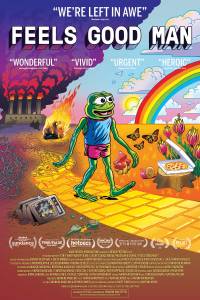 Another slice of America that feels forgotten and angry is on display with the documentary Feels Good Man, a.k.a. the Pepe the Frog documentary. Who is Pepe? He’s a cartoon frog created by Matt Furie as part of a comic series of post-college ennui between four friends. The character was adopted by the commenters on the message board 4Chan as their own symbol, and as their memes spread and became more popular with mainstream suers, and that’s when the 4Chan warriors had to do something drastic to save their favorite frog. They began transforming Pepe into a symbol of hate in order to make him toxic for outside use, and then the irony of their attempts at reclamation faded away and Pepe became a real symbol for Neo-Nazis and white supremacists. The character is currently listed on the Anti-Defamation League’s list of symbols of hate. The movie explores this evolution and de-evolution of Matt Furie’s creation and serves as a cautionary tale about the scary shadows of Internet culture and the nature of reclaiming meaning and intent with art.
Firstly, is there enough material here for a full-fledged documentary? We’re talking about a cartoon frog filling up the memes of Internet trolls. Is that enough? I think so, though I wish the movie shed even more critical scrutiny upon the 4Chan fringes of the Internet that have become a toxic cesspool of alienation and recrimination. These are people that self-identify and celebrate their social isolationism. The acronym N.E.E.T. stands for NOT Employed, Educated, or Trained and is adopted by many as an odd badge of honor. We even see home video footage of people sharing their personal lives in cluttered, trash-strewn basements. These are people electing not to engage with a larger functioning society and yet also feeling hostile to those that choose otherwise. Maybe it’s all a big joke to them, so why even bother; maybe it’s a defeatist mentality that plays upon social anxiety and learned helplessness. Maybe it’s just a noisy, nihilistic club that doesn’t want anything for themselves other than to disrupt others. The interview subjects from the 4Chan community are few but offer chilling peeks into this subculture. They see the world in terms of a very high school-level of social hierarchy, and the people who are pretty, successful, and having sexual relationships are the “popular kids” keeping them down. I think in terms of a Venn diagram, that incels and these NEET freaks are a flat circle. It almost feels like Vance’s cultural critiques of his poor Appalachia roots syncs up with the disenchanted 4Chan kids. This self-imposed isolation and self-persecution stews into a hateful mess of resentment. It’s not a surprise that several mass shooters have partaken in 4Chan and 8Chan communities.
 This scary subsection of Internet culture has been left to fester and it went next level for the 2016 presidential election. The trolls recognized their own sensibilities in Donald Trump, a candidate whose entire presidency seemed on the precipice of being a bad joke. The alt-right celebrated the man and used Pepe as a symbol for Trump’s trolling of norms and decorum, and the 4Chan message boards became an army of meme makers to steer Internet chatter. It’s hard to say what exactly the cumulative effect of these memes and trolling efforts achieved, in addition to the successful efforts of Russian hackers and a media environment that gave Trump billions of dollars in free airtime, but the 4Chan crowd celebrated their victory. “We memed him to the White House,” they declared. From there, Pepe became a synonymous symbol of a newly emboldened white supremacist coalition and any pretenses of ironic detachment dissolved away.
The rise and mutation of Pepe makes up most of the movie, and it’s certainly the most fascinating and scary part of Feels Good Man. However, there is a larger question about the ownership of art and interpretation that the movie presents without conclusive answers. Symbols are a tricky thing. They’re not permanent. The swastika wasn’t always associated with Hitler and Nazis. A pentagram has significantly different meanings depending upon a Wiccan and conservative Christian audience. Feels Good Man examines Furie as a humble albeit slightly naïve creator. He’s a nice guy who just can’t get his head around what has happened to his creation. How far does the artist’s intent go when it comes to credible meaning? At one point, Furie tried stemming the negativity by killing off Pepe in a limited comic, but it didn’t matter. The 4Chan followers simply remade him as they desired because at that point Pepe was their own. He has been built and rebuilt over and over again, that no one person can claim interpretative supremacy. Furie’s version of Pepe might be gone but there are millions of others alive and well. This gets into the nature of art and how every creator in some regard must make amends with letting go of their creation. Once it enters the larger world for consumption, they can steer conversations but art can take on its own life. The last third of the movie follows Furie taking action to enforce his copyright law to push back against the more outlandish uses of Pepe the frog, including from InfoWars’ Alex Jones, the same man who told us the government was making frogs gay for some unexplained conspiracy. Jones makes for a pretty easy villain to enjoy seeing defeated, and the conclusion of the movie involves dueling taped depositions between Furie and Jones over intellectual trademarks and free speech. It makes for an easy to navigate victory for Furie to end the movie upon, but is this larger war winnable? I have my doubts and I don’t think the trolls of the darker reaches of the Internet are going away.
I also want to single out the beautiful animation that appears throughout Feels Good Man, giving a visual representation to Pepe in a manner that’s like trying to give him a say in his own intent.
 So, dear reader, why did I pair both of these movies for a joint review? I found both of them as investigations into a sliver of America that feels forgotten, left behind, stuck in ruts outside their control, and resentful of a changing culture they see as exclusive to their hard-hit communities. I thought both Hillbilly Elegy and Feels Good Man could provide me, and others, greater insight into these subcultures and perhaps solutions that can make them feel more seen and heard. The problem is that Elegy doesn’t provide solutions other than “pull up your bootstraps” and Feels Good Man involves a destructive coalition that I don’t want better seen and heard. Both movies in their own ways deal with the nature of how very human it can be to retreat to their safe confines of people who too feel ostracized, hurt, and overwhelmed. I have pity for the people of the Rust Belt, the hillbillies experiencing generational poverty and hardships, though “economic anxiety” is not simply a regional or whites-only worry. I have less pity for the basement trolls of 4Chan trying to celebrate school shooters because it’s somehow funny. I’m amazed that so many talented people were part of Hillbilly Elegy and had such high hopes. For all of its full-tilt screaming, the movie is thoroughly boring and formulaic. Given the nature of an elegy, I was expecting Howard’s movie would be more considerate of its people, but their humanity is lost in this pared-down characterization, and the tragedy of society failing its own becomes an inauthentic Horatio Alger story of the plucky kid who went to Yale and became a real somebody. Feels Good Man might not be the best documentary but it feels more authentic and owns up to its inability to answer larger questions about human behavior, art, and interpretation. Both of these movies will prove horrifying to watch but only one is intentionally so.
Nate’s Grades:
Hillbilly Elegy: C-
Feels Good Man: B
Share this:

Trial of the Chicago 7 (2020)/ Borat Subsequent Moviefilm (2020)
 Two new movies have been released for streaming, both coincidentally starring Sacha Baron Cohen, and both are highly political, one by design and the other through fortuitous circumstances of history regrettably repeating itself, and both are simultaneously everything you would expect from their creative forces and worth watching in our tumultuous times.
The Trial of the Chicago 7 is a courtroom drama depicting the injustices applied to a dispirit group of anti-war activists who were charged with inciting a riot at the 1968 Democratic National Convention. The various men of different backgrounds and affiliations had their reasons for being there to protest, whether it was building public support to end the Vietnam War, to gain personal publicity, or to get laid, and tensions mounted inside and out the group as the police plan to send a message, harassed protesters, and in one amazingly prescient moment, remove their badges and name tags to then inflict state-sanctioned violence. This is an Aaron Sorkin movie through and through, and his second offering as a director after 2017’s Molly’s Game, and the best thing about the Oscar-winning wordsmith is that watching one of his movies feels like you’ve just downloaded a complete syllabus. The sheer audacious density of information can be overwhelming, but when Sorkin is able to get into his well-established rhythms, the actors feel like wonderful pieces in an orchestra playing to its peak. The real-life story of the activists has plenty of juicy drama and intriguing characters and intra-group conflicts breaking open, mostly between the divided poles of political leaders Tom Hayden (Eddie Redmayne) and counter-culture prankster Abbie Hoffman (Cohen). Bobby Seale (Yahya Abdul Mateen, HBO’s Watchmen) could have gotten his own movie and suffers many of the worst indignities as a member of the Black Panthers who was grafted onto the case in order to make the rest of the indicted men seem scarier by association. The consistent interference by the trial judge (Frank Langella) is shocking. It’s so transparently biased, racist, and unprofessional that I have to believe that many of these anecdotes actually happened because otherwise they seem so absurdly prejudicial that nobody would believe this happened. For a movie with such a sizeable cast of trial litigants, lawyers on both sides, friends and family, and maybe every police officer in Chicago, it’s impressive that Sorkin is able to provide so many with great Sorkin moments, meaning those grandstanding speeches, cutting one-liners, and intensive cross-examination. Not everyone is on the same level of importance. Several of the Chicago 7 are merely bodies on screen, two of the guys serve as little more than a quip-peddling Greek chorus. You sense there’s more being left out to fit into a crammed yet tidy narrative that plays to our demands for satisfying character arcs, reconciliation, and a morally stirring final stand. As a director, Sorkin doesn’t distinguish himself but he lets his meaty script and the performances of his actors get all the attention. The editing, like in Molly’s Game, can be a bit jumpy but it’s to serve the sheer size of information being downloaded during the 129 minutes. The political parallels for today are remarkable and a condemnation of our modern times. The Trial of the Chicago 7 is an invigorating and, at points, exhausting film going experience that can feel like a retro, overstuffed special episode of The West Wing. It’s everything you should expect and want in an Aaron Sorkin courtroom drama, so if you’re already in that anxious camp then this Netflix original will be preaching to the overly verbose choir.
 Secretly filmed over the past year, Sacha Baron Cohen reprises his outlandish Borat character to once again lampoon people’s not-so-hidden prejudices, anti-Semitism, xenophobia, and misogyny, which seem to have only gotten worse since the first Borat movie in 2006. The flimsy story follows international journalist Borat returning to America to help improve the standing of his home nation Kazakhstan by offering his daughter Tutar (Maria Bakalova) to the Trump administration. It’s really just a platform for Cohen to adopt a series of disguises (his Borat is too recognizable) and dupe some rubes while exploiting their ignorance and patience. Much of the entertainment comes from the cringe-inducing interactions of how far Cohen and Bakalova will go, marveling at their improvisational skills and also dreading what lines they might cross next. I was laughing fairly consistently, though the schitck naturally won’t be as funny the second time around, even with a 14-year gap in movies. I was really impressed by Bakalova and her own commitment and quick-thinking, keeping pace with a pro like Cohen and really stealing the show because Borat can’t go out in public as before. There are some outrageous moments that work, like Cohen imitating a country singer leading an anti-masking crowd into a singalong with ridiculous verses, and some that simply don’t, like an ongoing stretch where Bakalova explains the appeal of masturbation to a gaggle of deadly silent Republican ladies. Sometimes the comedy seems so broadly caricatured that it’s questionable whether its helpful or harmful, especially the anti-Semitic tropes that Cohen embraces as means of satire. Saying something outrageous to an outraged or shocked party isn’t quite enough. When compiling these hidden camera comedies, they thrive on the oxygen given to them by the targets of the prank. If they don’t really engage, it can feel a bit tired and desperate. I’d say the ratio of hits-to-misses is about half and half but the movie has enough big moments to keep fans happy. The most notorious moment has already been widely disseminated through social media and serves as the climax of the movie, strangely both as the high-point of pranks with big names but also as the emotional catharsis. Tutar poses as a foreign journalist and interviews Trump surrogate Rudy “America’s mayor” Giuliani, who drinks, goes into a hotel bedroom alone with Bakalova, and then lays on the bed while slipping his hand down his pants (like a gentleman does). Borat realizes he doesn’t want to offer his daughter to this creepy, sleazy man and rescues her because he truly does care about her. Borat 2, or Borat: Subsequent Moviefilm, takes a scattershot approach to satire and squarely aims at the science-denying MAGA crowd celebrating the excesses of their leader (who doesn’t sound that different from Borat, come to think of it). It might be more admirable in intent than execution but the new Borat can provide a few belly laughs and a more than a few groans as Cohen attempts to make American funny again.
Nate’s Grades:
Trial of the Chicago 7: B+
Borat: Subsequent Moviefilm: B-
Share this:

Vampires vs. The Bronx (2020)
 Take Attack the Block and mix with The Lost Boys and you get a perfectly enjoyable B- kind of fun B-movie about a group of Bronx tweens combating blood-suckers gentrifying their neighborhood, and vampires too. It’s a pleasant experience that hankers back to enjoyable 80s ensembles and it maintains a sweetness without being sappy and an edge that feels appropriate for its age-range without getting too heavy or too simplistic. We follow our core characters as they investigate the would-be vampires, uncover their real estate schemes for the neighborhood, and then plan how best to thwart them. It’s a reliable formula but it works. I enjoyed Shea Whigham (Kong: Skull Island) as the vampire middleman, and I enjoyed how his own character arc as a subservient villain is tied into another teen’s arc about not following in the steps of his criminal older brother and rejecting people who only want to use you. That’s smart writing, finding room to draw parallels and connect the personal to the thematic. The lead kids all have their own personalities and problems and I enjoyed spending time with them as they bonded, bickered, and bandied together as a team. Their chemistry made them feel like real friends. The horror doesn’t really ever approach being scary or intense; when the vampires are in full teeth-baring mode, they seem more like the goofy, cheesy, cloaked figures from the TV soap Dark Shadows. It also feels like the movie runs a bit out of steam as it carries on into its final attack/assault on the vampire’s nest. Still, Vampires vs. The Bronx is a funny and light-hearted 90 minutes with likeable characters and an enjoyably relaxed supernatural caper. It’s not going to be too deep but you can tell the filmmakers care about these characters, the film’s genre influences, and telling an accessible adventure to kids.
Nate’s Grade: B-
Share this:

Enola Holmes (2020)
 I’m shocked this isn’t the pilot for a new series, and maybe it one day will serve as such, because Enola Holmes is such a sprightly, effervescent, enjoyable rehash of the classic sleuth but this time from the girl power point of view of a younger sister. Millie Bobby Brown (Stranger Things) shines as the headstrong, quirky, loquacious Enola Holmes setting off on her own adventure to find her missing mother (Helena Bonham Carter) and to push against her older brothers Mycroft (Sam Claflin) and Sherlock (Henry Cavill) and their perceptions of what is appropriate for a lady. The best moments are when Brown gets to showcase her pluck and grit, proving presumptions wrong, and winning fans along the way. There is nothing new about this kind of movie where a young woman fights against sexism and proves herself capable and heroic. It’s a tried-and-true formula that works because, with enough polish, an underdog is always going to draw in the audience to watch them triumph over their doubters. Add a dash of feminism to boot and bake as necessary (not a joke on feminism, mind you). The actual plot is secondary to the situational mishaps and character bickering, which is good because there isn’t really a mystery to uncover. Enola gets pulled into protecting a young royal on the run from a wealthy family benefactor that wants to make sure he doesn’t live to collect his inheritance. Their interaction adopts a screwball romance sort of tone, which provides Brown ample opportunity to be sunny, exuberant, and overall delightful, a side rarely seen as the somber, alienated Eleven. I enjoyed the stylistic asides and visual inserts to better showcase Enola’s hyperactive thinking and sleuthing, borrowing a page from the new Benedict Cumberbatch Sherlock TV series to visualize the processes of rapid-fire thought in a pleasing and amusing manner. Cavill is perhaps the most dashing Sherlock put to screen and provides a suitable establishment stand-in of accepted masculinity and intelligence that serves as contrast for what Enola is pushing against. Given that almost all the main players are attached to ongoing Netflix series (The Witcher, The Crown) I feel like we should expect more adventures down the line with the irascible Enola Holmes, and with a bubbly Brown seizing the mantle, that’s fine by me.
Nate’s Grade: B
Share this:

#Alive (2020)
 It’s a Korean zombie movie but the lean survival storytelling of #Alive could be universal. We follow one man during the outbreak of a zombie plague. He’s stuck in his apartment several floors above the ground and watches from on high, safe but trapped and on his own for food and other life-saving necessities. The movie is very easy to follow and is practically wordless for long stretches, relying upon clear and concise visual storytelling to be able to follow one man’s plight under the worst of circumstances. There is an easy pleasure about watching a character in a tough spot think their way through step-by-step. It worked with that beautiful middle hour of Cast Away and it works here with #Alive. Eventually, he befriends a woman across the courtyard and they rely upon one another from afar as partners in survival. The last third of the movie is much less interesting as characters make a big decision and it feels like a mundane episode of The Walking Dead, one of those middle of the season episodes. It’s not a bad sequence of events but it’s just not as interesting as the survival story beforehand. It becomes more like any other zombie movie. There isn’t anything terribly unique about #Alive except for its contained thriller perspective, so when the movie jettisons that, it can’t help but feel like it’s losing whatever helped make it compelling for so long. I went in thinking it was going to be more satirical, especially from its poster of our protagonist leaning off his balcony to hold a selfie stick, but any social satire is so slight too be fairly non-existent. If you’re a zombie fan or a fan of contained thrillers with high-concepts, then #Alive is a thrilling, enjoyable, and relatively satisfying 90 minutes. It may be derivative but that doesn’t mean that filmmakers with a specific vision and the creative ingenuity to see it through can’t make old stories worthwhile again.
Nate’s Grade: B
Share this:

The Babysitter: Killer Queen (2020)
 I very much enjoyed 2017’s The Babysitter from the very start. The characters had such vitality to them, Samara Weaving (Ready or Not) gave a star-making performance, and it was a wild ride while also having an emotional core with the relationship between the babysitter and her charge, a designated Satanic sacrifice. It was silly, clever, but also satisfying with its character dynamics, and it proved successful for Netflix so they felt, well, why not do it all again? The Babysitter sequel, subtitled Killer Queen, has a strong whiff of desperation trying to awkwardly rekindle the good times. The original writer, Brian Duffield, is not here as a writer but returning director McG is one of the credited writers, which made me wary. Sequel-itis plagues the story as our surviving teen Cole (Judah Lewis) gets into ANOTHER tight spot with ANOTHER group of Satanists looking to sacrifice him to make their dreams come true, and it also happens to also include the SAME supporting villains from the first movie. Even the cheeky onscreen titles go, “Again?!” Why must these killer Satanists only obsessed with this one specific kid as a sacrifice? Diversify your options, folks. It all feels more of the same but just not as good, not as memorable, and not as entertaining. It’s a low-investment movie, something where your ceiling of demands is already pretty generous, so if you enjoy comically over-the-top gore then there are a few moments that might make this sequel palatable. It’s a movie with a “so what?” attitude, adopting a flippant nihilism that makes the attempts at drama a little more forced and inauthentic when they occur, not that the comedy is much better outside the splatterhouse violence. The ending is also rather anticlimactic because it simultaneously involves a deus ex machina while also finding a way to be derivative of another very memorable ending of another Samara Weaving movie. I didn’t think a sequel was needed, and I wasn’t expecting much from a sequel, and I got about what I was expecting. The Babysitter: Killer Queen is a fast-paced and amenable work of cinematic junk food, a genre movie that might have enough genre elements to prove tasty, but by hewing so close to the original, Killer Queen feels more imitation than imagination, and it’s clearly inferior to the original.
Nate’s Grade: C+
Share this:

Cuties (2020)
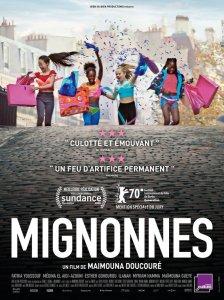 A new Netflix movie is tearing through the Internet, igniting accusations of glorifying child porn, accusing Netflix employees of pedophilia, and triggering some to even cancel their subscriptions. Even if you’ve never watched Cuties you have probably heard something about it through the controversy that has inflamed innumerable conversations and condemnation. Cuties is a French drama that follows a young 11-year-old Amy (Falthia Toussouf) as she embarks on a new school. Her religious Muslim family has set her up for one way of life, but the popular girls at her school look so much more free, fun, and wild. The “Cuties” dance team dreams of stardom, envies the older teen dance team, and emulates salacious dance moves from videos. It’s easy to see why the movie has generated its controversy and it’s understandable why many people would ever refuse to watch it based on subject matter alone. No matter the artistic merit, watching kids behaving this way, and the natural discomfort it produces, can be too much to endure. However, for those willing to give Cuties a chance, I do think it has some artistic merit as it tells, what is essentially, a familiar story of a youth going down a wayward path of temptation and rebellion.
There are three standout moments to me in Cuties that exemplify what writer/director Maïmouna Doucouré was going for as well as the commentary attached to the controversy. I’ll be going into spoilers to discuss these scenes and why I think it adds up to a whole that has more thoughtful intentions than exploiting children for cheap buzz and leering perversion.
 1) Early on, like around the ten-minute mark, Amy is dancing and hides under her mother’s bed to not get in trouble. Her mother walks around with the Great Aunt and she overhears their conversation and learns some upsetting news. Her father, who is away and yet to move back with the family, will be marrying a second wife and bringing her home. The mother is trying to put on a brave face and play her part, calling relatives to dutifully inform them about the development, but she is clearly devastated and wracked with emotion. She feels replaced and inadequate and harmed by the man she loves, and Amy registers the pain and degradation her mother is going through on a deeply personal level, and this is what serves as motivation for her later actions. When she’s making new friends and wearing crop tops and pushing her boundaries, it’s not just a young Muslim girl who wants to escape the conservative trappings of her culture; it’s a young girl who is looking to rebel and stick it to her father. Her sense of a woman’s place in this family is to be subservient to the man and his authority, and she’s angry with him, angry at causing her mother pain, angry at viewing her as a collectible, and angry at what she views is a culture that restricts her to a life she does not want for herself but worries may not have a choice. Again, this isn’t a judgment on all Muslim families but merely the relationships within this one. This overheard phone call is such an immediately powerful scene with such an emotional wallop that I was tearing up. Amy’s motivation is more complex than simply wanting to dress provocatively. She’s rejecting a fate that could as easily befall her, and in doing so, a viewpoint on women.
2) There is a moment where the girl gang is just hanging out in the woods and laughing. One girl, Coumba (Esther Gohourou), finds a deflated condom on the ground. Not thinking anything of it, she blows it up like a balloon and the other girls freak out. They declare that their friend is now tainted, gross, and possibly exposed to AIDS. Coumba, who was the loudest and most outspoken joker among the group, is frozen in embarrassment. She didn’t know what it really was because she’s simply a child. She had no real conception, and now that reminder and the embarrassment and the hysteria from her friends is making her feel so small and humiliated. She’s desperate for her friends to excuse this misstep, to be accepted by her peer circle once again, and she meekly defends her ignorance. A single tear rolls down her cheek and this scene was a fitting reminder for me that the filmmakers have never forgotten that these girls, no matter how they dress and how they act, are still very much children. They talk about sex and porn but through an uninformed understanding of the larger meaning and context let alone sense of anatomical accuracy. It’s because they’re still children! This moment was further confirmation for me that the filmmakers had not forgotten that their subjects were to be presented thoughtfully. These 11-year-olds aren’t to be sexualized, just like teenagers shouldn’t be either, no matter how eager these young people are to jump ahead in maturity and be seen as desirous and incendiary.
 3) The last scene of the movie involves the father’s wedding, a moment that mother and daughter have been dreading. Amy has run away from her dance team’s big show and made her choice, choosing to return to her family and as a support for her mother. She reminds Amy that she does not have to attend the wedding but Amy is determined to be there, knowing fully what it means for her mother and the larger implications for her family. Amy must decide what to wear for the festivity and stares down the traditional dress her Great Aunt had brought. Amy looks at her skimpy dance outfit, a guaranteed attention-seeking statement if she were to wear it to her father’s wedding ceremony. Instead, she chooses a middle path and simply wears a comfortable sweatshirt and some blue jeans. She rejects the restrictions of her family’s conservative culture, she rejects the extremes of the dance troupe, and she starts to form her own sense of self. She sidles into a game of jump rope and the camera pans up, and as the camera moves so too does Amy, locked into the camera shot, rising above the world, and she’s smiling so broad that her face seems to glow with happiness, a relief and joy she hasn’t felt in some time. By the end of this tale, our heroine has rebelled, overstepped, learned something about herself, and now seems a little surer of who she wants to be as a young woman charting her life in France. For me, this conclusion reaffirms the intentions of the filmmakers and commentary that those feelings of discomfort were on purpose.
With that being said, there were of course scenes that made me feel deeply uncomfortable, and I would question anyone who didn’t feel the same. The Cuties’ final dance is shockingly adult. Children should not be behaving in this manner but, and I again I stress this, that is the point of the movie. The audience at the dance competition does not approve of the tween twerking; they boo, they make disgusted faces, and one mother attempts to cover her baby’s eyes. “THIS IS TOTALLY NOT A GOOD THING,” Doucouré’s film is vociferously pronouncing. When the girls are simply dancing, her camera favors wide angles or framing that doesn’t ogle their bodies. Often dances will be seen as a whole or with shoulders-and-up framing. Whenever the girls film their dances, the camera adopts the intended lascivious emulation they seek, lingering more on butts in shorts and their attempt at sensual gazes they’ve adopted from Instagram influencers and aspiring models. It’s icky but it’s only a sampling compared to the in-your-face final dance performance. What I’m trying to articulate is that the portrayal of these young girls letting loose is more tasteful than the detractors have given Cuties credit for. I’ve seen scuzzy teen-centric movies (notably by Larry Clark) where the camera was continuously fetishizing its teenage subjects as a default setting. Cuties isn’t that until it really wants to grind its cautionary message into your horrified face as you try to shield your eyes.
 I had a student ask why did it have to be 11-year-olds, why couldn’t the same message have been told through slightly older figures, maybe 15 or 16-year-olds, and I didn’t have an answer. Maybe because we’ve already seen “teens go bad” movies with 16 years-olds (Kids), or even presumably 13-year-olds (Thirteen), and maybe Doucouré felt she needed to go younger to be different, or push the envelope, or to grab attention from an increasingly blasé public. Maybe the filmmaker felt we needed to go to an age before puberty so it’s less a “becoming a woman” transition and more a constant of being acknowledged as a child. I cannot say. At its core, Cuties doesn’t have to be a story that is told from a particular age because it’s a formula that we’re familiar with and it embodies universal themes of acceptance, isolation, rebellion, and belonging. It’s a better movie than the alarmist defenders of childhood virtue claim (funny how these same defenders seem so quiet in supporting a president who literally bragged about spying on tween girls while they changed clothes, but that’s another discussion). I would also advise these same critics to look up how many season Toddlers and Tiaras ran for on TV. This is not the best movie. If you’ve seen enough teen movies you’ve likely seen this story already, but Cuties is a perfectly fine movie with enough artistic merit and social commentary to potentially make it worth sitting through the obvious discomfort. I can completely understand if any person would choose to pass on this movie but it would be better if more people actually gave it a chance before sharpening those pitchforks.
Nate’s Grade: B
Share this:

I’m Thinking of Ending Things (2020)
 I expect strange from a Charlie Kaufman movie; that goes without saying. I also expect some high concept turned inward and, most importantly, a humane if bewildered anchor. His other movies have dealt with similar themes of depression (Anomalisa), relationship entropy (Eternal Sunshine), identity (Being John Malkovich), and regret from afar (Synecdoche, New York). However, no matter the head-spinning elements, the best Kaufman movies have always been the ones that embrace a human, if flawed, experience with sincerity rather than ironic detachment. There’s a reason that Eternal Sunshine is a masterpiece and that nobody seems to recall 2002’s Human Nature (ironic title for this reference). 2015’s Anomalisa was all about one man trying to break free from the fog of his mind, finding a woman as savior, and then slowly succumbing to the same trap. Even with its wilder aspects, it was all about human connection and disconnection. By contrast, I’m Thinking of Ending Things is all about a puzzle, and once you latch onto its predictable conclusion, it doesn’t provide much else in the way of understanding. It’s more a “so, that’s it?” kind of film, an exercise in trippy moments intended to add up to a whole, except it didn’t add up for me. I held out hope, waiting until the very end to be surprised at some hidden genius that had escaped me, for everything to come together into a more powerful whole, like Synecdoche, New York. It didn’t materialize for me and I was left wondering why I spent two hours with these dull people.
A Young Woman (Jessie Buckley) is traveling with her boyfriend Jake (Jessie Plemons) to meet his parents for the first time. It’s snowy Oklahoma, barren, dreary, and not encouraging. In the opening line we hear our heroine divulge the title in narration, which we think means their relationship but might prove to have multiple interpretations. It only gets more awkward as she meets Jake’s parents (David Thewlis, Toni Collette) and weird things continue happening. The basement door is chained with what look like claw marks. People rapidly age. The snow keeps coming down and the Young Woman is eager to leave for home but she might not be able to ever get home.
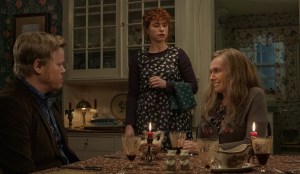 The title is apt because I was thinking of ending things myself after an hour of this movie. Kaufman’s latest is so purposely uncomfortable that it made me cringe throughout, and not in a good squirmy way that Yorgos Lanthimos (The Lobster) has perfected. Kaufman wants to dwell and drag out the discomfort, starting with the relationship between Young Woman and Jake. She’s already questioning whether or not she should be meeting his parents and their inbound conversations in the car are long and punctuated by Jake steering them into proverbial dead ends. He’s a dolt. You clearly already don’t feel a connection between them, and this is then extended into the family meet and dinner, which takes up the first hour of the movie. I’m Thinking of Ending Things tips its hand early about not trusting our senses and that we are in the realm of an unreliable narrator. Characters will suddenly shift placement in the blink of an eye, like we blacked out, and character names, professions, histories, and even ages will constantly alter. The Young Woman is a theoretical physicist, then a gerontologist, then her “meet cute” with Jake borrows liberally from a rom-com directed by Robert Zeemckis in this universe (my one good laugh). Jake’s parents will go from old to young and young to old without comment. All the surreal flourishes keep your attention, at least for the first half, as we await our characters to be affected by their reality, but this never really happens. Our heroine feels less like our protagonist (yes, I know there’s a reason for this) because her responses to the bizarre are like everyone else. The entire movie feels like a collection of incidents that could have taken any order, many of which could also have been left behind considering the portentous 135-minute running time.
There are a lot of weird moments and overall this movie will live on in my memory only for its moments. We have a lengthy choreographed dance with doubles for Jake and the Young Woman, an animated commercial for ice cream, an acceptance speech directly cribbed from A Beautiful Mind that then leads directly into a performance from Oklahoma!, an entire resuscitation of poetry and a film review by Pauline Kael, talking ghosts, and more. It’s a movie of moments because every item is meant to be a reflection of one purpose, but I didn’t feel like that artistic accumulation gave me better clarity. There’s solving the plot puzzle of what is happening, the mixture of the surreal with the everyday, but its insight is limited and redundant. The film’s conclusion wants to reach for tragedy but it doesn’t put in the work to feel tragic. It’s bleak and lonely but I doubt that the characters will resonate any more than, say, an ordinary episode of The Twilight Zone. Everything is a means to an ends to the mysterious revelation, which also means every moment has the nagging feeling of being arbitrary and replaceable. The second half of this movie, once they leave the parents’ home, is a long slog that tested my endurance.
 Buckley (HBO’s Chernobyl) makes for a perfectly matched, disaffected, confused, and plucky protagonist for a Kaufman vehicle. She has a winsome matter of a person trying their best to cover over differences and awkwardness without the need to dominate attention. Her performance is one of sidelong glances and crooked smiles, enough to impart a wariness as she descends on this journey. Buckley has a natural quality to her, so when her character stammers, stumbling over her words and explanations, you feel her vulnerability on display. After Wild Rose and now this, I think big things are ahead for Buckley. The other actors do credible work with their more specifically daft and heightened roles, mostly in low-key deadpan with the exception of Collette (Hereditary), who is uncontrollably sharing and crying. It’s a performance that goes big as a means of creating alarm and discomfort and she succeeds in doing so.
I know there will be people that enjoy I’m Thinking of Ending Things and its surreal, sliding landscape of strange ideas and images. Kaufman is a creative mind like few others in the industry and I hope this is the start of an ongoing relationship with Netflix that affords more of his stories to make their way to our homes. This is only the second movie he’s written to be produced in the last decade, and that’s far too few Kaufman movies to my liking. At the same time, I’m a Kaufman fan and this one left me mystified, alienated, and simply bored. I imagine a second viewing would provide me more help finding parallels and thematic connections, but honestly, I don’t really want to watch this movie again. I recall 2017’s mother!, an unfairly derided movie that was also oft-putting and built around decoding its unsubtle allegory. That movie clicked for me once I attuned myself to its central conceit, and it kept surprising me and horrifying me. It didn’t bore me, and even its indulgences felt like they had purpose and vision. I guess I just don’t personally get that same feeling from I’m Thinking of Ending Things. It’s a movie that left me out cold.
Nate’s Grade: C
Share this:

Project Power (2020)
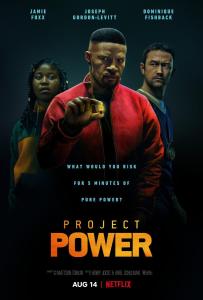 The appeal of Project Power is immediate with its premise, which stirred a bidding war before finally ending up with Netflix. Take a pill and become a super hero for five minutes. Every person has a unique power and won’t know what that entails until they swallow that pill. However, there is also a risk that your body has a negative reaction of the exploding kind. I can see why studios would be all over that, on top of the fact that it plays into established popular cultural tropes, it still gets to be an original property. The finished film, on the other hand, leaves much to be desired, and I’m convinced that this hot commodity script went through a gauntlet of rewrites and producer interference, each new obstacle dimming and diminishing what made Project Power an exciting and compelling idea from inception. Well the concept is still interesting, and its relatively grounded sci-fi world has genuine potential, but the movie falls flat and is far too generic to be special.
Drug dealers are flushing New Orleans with a super pill that activates fantastic powers, though only for five-minute integrals. Frank (Joseph Gordon-Levitt) is a local police officer who secretly keeps a stash of the pills for himself, to juice up to take on the escalating criminals. His supplier is Robin (Dominick Fishback), a teenager looking for a better life, who comes into contact with the mysterious and volatile Art (Jamie Foxx). He’s a man on a mission and working his way across the streets to go from supplier to supplier, working his way up the criminal food chain until he can confront the authority behind the super pill creation and distribution.
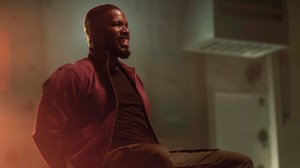 The premise by debut screenwriter Mattson Tomlin (The Batman) is tantalizing and makes every pill its own “what if?” scenario. I’m unsure whether or not the risk of bodily explosion occurs for every person or simply those whom the drug doesn’t agree with. I think it would be more interesting if every person stood some chance of risk. I talked about it with my girlfriend, if there was a pill that granted super powers but it also ran the chance of death, would you take it? We both answered, “Of course.” Who wouldn’t want to be a super hero, even if it’s only for five minutes? Naturally, much like within the X-Men universe, not every super power is on the same level of being useful. There’s a guy who grows extra bones, which serve as spikes attached to his body. I guess that’s something. It reminded me of the unfortunate mutant in X-Men 3 who could grow porcupine quills from his face (he even managed to coax someone near him to kill them). With such a momentous shift in human evolution, and through the angle of drug addiction, you would think Project Power would be the early steps of a complete re-examination of a changing society and the forces falling behind to try and catch up. This should be a big deal, and yet it never feels that way in this world. Super-powered criminals aren’t running rampant. One invisible guy robs a bank naked and it’s comedy. Nobody seems too panicked or bothered. It weirdly feels like everyone has already not only accepted this reality but compartmentalized it. If one city has a new super drug, would it not stand that others in neighboring cities and states and countries would also desire it? Should this not be dominating the news?
The characters are remarkably generic. Our heroes include a beat cop who “doesn’t play by all the rules” and goes on a secret mission to root out this drug conspiracy, a young black woman who wants to be an aspiring rapper while she’s slinging drugs, and a military veteran who was subjected to experiments and is desperate to find and save his kidnapped daughter. We’ve seen each of these archetypes in a thousand other action thrillers, and the fact that Project Power doesn’t give us any more than this is stunning. With some minute personal details, I have laid out everything we know about the three main characters in this movie. That’s it. It’s like each character was checking an archetype box and then was forgotten to be fleshed out. The worst is Art, a character that is coasting on Foxx’s attitude and charisma but is otherwise completely vacant. The kidnapped daughter storyline is maybe the most boring motivation that a protagonist could be saddled with. He might as well be a video game character from 90s-era titles, a military man who was betrayed by his government, experimented upon, given dangerous new powers, and now he’s striking out to save his daughter. It’s so bland and generic and boring. None of the major characters exhibit an interesting personality quirk, flaw, desire, or a point to make them more interesting than if a new nameless character had suddenly taken over from the background.
 This extends to the villains as well. Their evil schemes are too vague and they’re just as generic and bland. The villains are also far too easily defeated, which drains any threat from their machinations. Without memorable or effective villains, Project Power limps to a finish, lacking the needed payoffs of our heroes triumphing over their foes. Does anyone care when Art defeats a secondary antagonist that is introduced far too late in the final twenty minutes? It’s too late to be introducing a Big Bad in the movie that is meant to be savored when vanquished. It’s not satisfying when the bad guys are dumb or nebulous or too easily beaten. I felt more antipathy with a bearded henchman than I did with any of his superiors. This is such an easy thing to do, establish a worthy opposition with personality and menace, a force that an audience will feel a sense of accomplishment and fulfillment over their eventual defeat. Make the villains matter. Regrettably, the villains in Project Power are just as generic and underdeveloped as the heroes.
Directors Henry Joost and Ariel Schulman have dabbled in many genres, first documentary (Catfish), then found footage horror (Paranormal Activity 3 and 4), then youthful thrillers with social media satire (Nerve), and now super hero action cinema. The versatility is to be commended, and they certainly infuse plenty of energetic style into Project Power. The special effects are pretty good when the powers are somewhat visually chaotic, like a drug dealer who becomes the Human Torch, running through ignitable room after room, while the camera zips along, lovingly documenting the rippling flames and embers. The camerawork and lighting can definitely provide jolts of excitement and engagement when the storytelling falters. However, there are moments that should have been avoided, like violent acts presented in unclear ways, perhaps trying to avoid a harsher rating that it ultimately got anyway. Another sequence is from the point of view of a dying woman trapped inside a container, and the action from the other side of the glass is almost completely obscured. The woman’s suffering seemed so overboard that it reminded me of that poor assistant lady who had a more gruesome death in Jurassic World than its actual villain. It’s a misplaced stylistic touch. A villain takes the drug and turns into a giant CGI troll, like something from 2002’s Chamber of Secrets and is goofy and misplaced. For a movie that is trying to be gritty and somewhat grounded, a giant CGI troll is a blunder. Joost and Schulman are currently attached to write and direct a Mega Man movie next, and I imagine this was a trial run for super-powered androids blasting one another to dust.
The Project Power playbook is pretty familiar and underwhelming in its creativity and development. The concept is there but the movie too often feels content to settle for less, trading in stereotypical heroes, vague villains, and muddled action sequences goosed with flashes of style to mask their lack of personal stakes and imagination. The scope of the movie is too frustratingly myopic and under-developed, like a nascent pilot for a TV series that provides impressions with a latent promise of getting back to storylines later. Except later will never arrive. Project Power (even the name is generic) is a super hero movie that feels like everything you’ve already seen before. It’s far less than super.
Nate’s Grade: C


You must be logged in to post a comment.