Blog Archives
Deadpool 2 (2018)

It took the leaked release of the Deadpool test footage, and the ensuing enthusiastic fan response, before Fox finally decided to invest in a big screen, R-rated superhero movie. The result was 2016’s Deadpool, a huge smash and proof that a lucrative audience will turn out for more adult-oriented, outrageous, grisly versions of comic book movies. Because of Deadpool, we finally got an R-rated Logan that proved to be an outstanding swan song for Hugh Jackman’s iconic hero. Now Deadpool is getting the spotlight he has earned with a big, splashy summer release, but with success come expectations. Can it live up to the ever-increasing hype? In short: if you were a fan of the original, you’ll be happy enough, because Deadpool 2 isn’t much more than the sum of its zany parts.
Wade Wilson a.k.a. Deadpool (Ryan Reynolds) is killing bad guys for hire and considering starting a family with the love of his life, Vanessa (Morena Baccarin). Trouble emerges when Cable (Josh Brolin) travels from the future to kill a rebellious, troubled young mutant teenager, Russell (Julian Dennison), who will one day grow up to be a monstrous villain. Deadpool reaches out for help and forms an elite squad of determined heroes, notably the luck-assisted Domino (Zazie Beetz). Can Deadpool save the kid, save the day, save the future, and save himself from incessant fourth wall breaks?
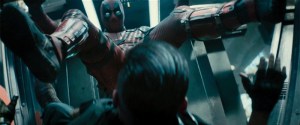
I was worried that a Deadpool sequel would fall into some of the same detractions that a Guardians of the Galaxy sequel did, and this is still applicable. Deadpool, much like the original 2014 Guardians film, was a breath of fresh air and a far looser, weirder, funkier super hero movie with a nose-thumbing, prankish attitude. We didn’t know what to expect from a Deadpool movie and now we do, and with that knowledge comes an anticipated formula of checklists to adhere to, and so any resulting sequel will invariably feel less fresh. It happened with Guardians of the Galaxy vol. 2 so to compensate James Gunn concentrated on fleshing out secondary characters into people you might shed a tear over. Deadpool 2 doesn’t bother because Deadpool 2 doesn’t take anything really seriously. That’s one of the hallmarks of the series and also one of the aspects that holds it back. There can never be a sense of stakes with a gleeful, fourth wall-breaking cartoon of a character who bounces back like Wile E. Coyote. The sequel introduces a sense of stakes with a startling turn in the first ten minutes of the movie, but by the end, even that will be corrected so that the Deadpool universe returns to stasis. The limitation of the Deadpool universe is that nothing feels meaningful or even ambitious. The movie wants to be a cheeky, transgressive good time and it achieves this single goal.
The appeal of Deadpool 2 is still its comedic voice and unpredictability. The laughs will be frequent and there are some subversive and unexpected directions that fully take advantage of the R-rating and the anarchic, nasty comic spirit of the franchise. The formation of the X-Force team and how their first big mission plays out had me howling with laughter. The meta humor commenting on the nature of super hero movies, as well as the film industry in general, begins with the very opening image (a nod to another successful R-rated super hero movie of last year) until the very last moment where Deadpool goes back in time to prevent some stinging cinematic grievances (there is no post-end credit scene, so you can skedaddle early). This is clearly the role Reynolds feels a spiritual kinship with, and his caddish, charming, persistent persona makes the perfect conduit for the film’s vulgar insanity. Whether it’s spitting insults, splashing in over-the-top violence, or making odd observations about the similarities between the songs from Frozen and Yentl, Deadpool 2 is first and foremost a bloody, depraved meta comedy.

Director David Leitch (Atomic Blonde) steps in for the departing original film’s director, Tim Miller, and continues his hot streak of stylish, action thrillers. Leitch has shown a propensity for staging intense action sequences to best showcase intricate choreography. With Deadpool 2, the most exciting moments are when the camera and editing allows the audience to fully appreciate the creativity of the choreography and stunt team. A shot of Cable leaping over the speeding caravan about to smash into him brings on a well-earned wow. Coming from that bruising world, I’m continually impressed with how Leitch approaches his action and finds organic points to develop and complicate matters. The prison caravan attack is the action peak with well-constructed, parallel lines of activity to follow and collaborate upon. It’s our first taste of Deadpool and X-Force versus the might of Cable. The characters enter the fray at different points and get separated from the runaway caravan, which keeps the momentum going. While the comedy is prioritized, Deadpool 2 can still unleash enough exciting, silly, and satisfying action.
The biggest additions to the sequel are an adversary and an ally, and both leave a favorable impression while still making you wish that Deadpool 2 had done more with them. Brolin (Avengers: Infinity War) bulked up considerably to play the gruff cyborg from the future, and his super serious, macho straight man provides a terrific comic foil for Deadpool, much like the stuffy Colossus in the first film. Brolin’s character is a capable fighter with a pretty streamlined back-story (shades of Looper abound) but it’s hard not to feel a little disappointment with how he’s ultimately utilized. He’s a great asset that feels put away for too long. Zazie Beetz (TV’s Atlanta) has a fun introduction especially as it relates to her mutant power, great luck. Deadpool scoffs at this as a power, and “being deeply un-cinematic,” but Domino proves otherwise as she’s able to dodge split-second danger in grand, complicated, Final Destination-like circumstances. Every time she’s onscreen, Domino brings a curiosity quality to the movie, and it’s usually something imaginative and fun. Beetz has an innate spunky energy, which makes it sad when the movie often asks her to be dour and dismissive. It’s taking such a lively character and constricting what makes her amusing and unique.

The biggest thing holding back the film, besides a general sense of “more of the same” or its inherent lack of stakes, is that the entire storyline is built around saving a mutant teen…. and I kind of hated the kid. My first impression was not good and it didn’t get much better from there. Part of it may be that Russell is meant to be an angry, obnoxious teenager, and maybe part of it is the generally grating performance from Dennison (Hunt for the Wilder People), but I could not care about this kid. Unfortunately, a lot of thematic emphasis is placed on saving the soul of this one annoying, wayward teenager. He’s supposed to be a point of redemption for Deadpool and a promise to be fulfilled, but my pal Ben Bailey came up with an instantly better revision. Instead of introducing this new teen character who will one day grow up into a super villain that slaughters Cable’s future family, why not have it be Negasonic Teenage Warhead (Brianna Hildebrand)? We already have an investment in her character and it would provide a better, more personal sense of stakes for the story. Plus, Hildebrand (Tragedy Girls) is actually a good actress.
If you were one of the many fans who enjoyed the irreverent antics of the first Deadpool, then you’ll enjoy Deadpool 2 as it’s more or less the same movie with a slightly limited freshness date. These movies are fun, funny, and ridiculous, but they’re also good for little else than a wicked good time, and that’s okay. There isn’t much ambition to be anything more than an irreverent satire on super heroes with edgy humor and explosive violence. The running theme of the sequel questions what Deadpool has to keep on going, and he’s told it’s one very specific F-word: “family.” I think it’s a different F-word, namely “franchise.” Fox (Disney?) will need the services of the merc with the mouth for an extended engagement as long as audiences do not tire of the same studio brand of naughtiness reheated with a few different ingredients added per revisit.
Nate’s Grade: B
Share this:

Tragedy Girls (2017)
 I wanted to enjoy Tragedy Girls. I really did. There’s a good starting point with a story about two self-involved teenagers who turn to murder to raise their social media profiles. I like the lead actresses, Alexandra Shipp and Deadpool’s Brianna Hildebrand, and the film has a quirky sense of style by co-writer/director Tyler MacIntyre. The opening is even great where Hildebrand purposely lures a lover to his sacrificial death in order to trap a familiar slasher film-styled villain. Where it all goes wrong is that Tragedy Girls doesn’t have enough substance or commentary to outweigh its arch nihilism. The message is very flimsy (millennials are shallow, social media is harmful) and the film wants you to revel in the girls’ violent, gory murders but also be repelled by them. It’s a sisterhood of slaying. There are some interesting story ideas that don’t feel better attended. The girls are clumsy at their murders and luck into some absurd Final Destination-worthy kills, but the film doesn’t embrace this concept and makes them untouchable. They kidnap a local serial killer in the opening and demand he train them, but the guy refuses and is shoved to the side for almost the entire movie, stranding another interesting possibility. The high school characters are thinly designed and unworthy of their demises, though that’s also the point. Tragedy Girls doesn’t earn its candy-colored nihilism. It ultimately left a bad taste in my mouth and I found it off-putting and empty. It thumbs its nose with prickly devil-may-care attitude but without anything to really say.
Nate’s Grade: C-
Share this:

XX (2017)
 XX is the first horror anthology comprised entirely of female writers and directors. That’s the most noteworthy thing for this relatively disappointing movie. None of the four main segments are that interesting and several don’t really have endings. The first segment has the most potential, “The Box,” about a child that stops eating after getting a peak inside a stranger’s wrapped gift. The family joins him one by one except for the mother. That’s it. There’s no resolution, one moment of shocking gore, and the rest is straightforward maternal ennui. The second is from musician St. Vincent (née Annie Clark) called “The Birthday Party” and it’s not really horror so much as it is dark comedy with a heaping helping of slapstick. Melanie Lynskey (Togetherness) is an overextended mother who discovers the dead body of her husband on the morning of their daughter’s birthday. She has to go to elaborate measures to hide the body while still juggling all the responsibilities others expect from her. It’s amusing in spurts but is often too obvious. The third segment “Don’t Fall” is the most professionally realized and has some nasty special effects, but it’s nothing more than another throwaway entry in the teens-meddle-with-forces-in-nature-and-are-swiftly-punished subgenre. It’s the shortest segment so that helps too. Finally, Karyn Kusama (Jennifer’s Body) writes and directs “Her Only Living Son” which intends to flip the script on the Rosemary’s Baby scenario. The segment reveals its secrets slowly, which makes it a more engaging short to digest. However, it too ends on a perfunctory note. I know there are many talented female filmmakers out there biding their time, waiting for their chance to show their mettle in genre filmmaking, an area that skews heavily male. That’s what makes XX so frustrating. There has to be better material and better filmmakers out there who would kill for this kind of showcase. Maybe next time (XX2?).
Nate’s Grade: C
Share this:

Raw (2017)
 Justine (Garance Marilliier, looking like a Gallic Rooney Mara) comes from a family of vegetarians and veterinarians. She’s entering a famed veterinary college as a legacy and her big sister, Alexia (Ella Rumpf), is already established among the school hierarchy. The incoming students are mercilessly hazed and Justine is forced to eat meat against her will. This moment unlocks a secret craving within her that consumes her. She starts looking at her fellow students less as dinner dates and more as dinner.
For the first half of Raw I thought I was watching a French nouveau version of Carrie. The first half of the movie is dominated by the pressures, and in particular, the cruel hazing from the upperclassmen at the college. The hazing is extreme, rampant, and omnipresent, with every older classmate throwing around his or her sense of privilege and bullying the freshmen candidates. It’s the kind of harassment and abuse we’ve seen in other stories relating to fraternities and sororities where institutions of power abuse others because they were abused and so on and so on, normalizing the cruelty. However, those are organizations that are elective and enclaves among a larger campus. With Raw, it appears that every upperclassman is part of this system of hazing, meaning there is no escape if the young candidates want to continue their education. The professors seem complicit in their negligence, and Justine even has one professor who hilariously criticizes her for doing too well in class. He says her good scores are depressing the other students, possibly making them become worse doctors. The overall impression of this scholarly environment is one of sickness and exploitation. There’s even a culminating “class picture” where they are bathed in buckets of (pig?) blood. With this sort of build-up, I was anticipating that when Justine got her crazy cravings that the movie was going to set up some tasty just desserts for these sadistic upperclassmen. I was looking forward to these mean people getting killed and eaten to service Justine. Perhaps that’s the American version of what this movie would become, or my own preferred version with the established first half, but that’s not the movie Raw ends up becoming.
 Stuck somewhere between body horror and weird compulsion, Raw falters trying to stake its own territory. It’s definitely structured like a coming-of-age/sexual awakening story except said awakening is connected with cannibalism. That’s an excellent starting point for some cringe horror but Raw gets too lost in its dreamlike atmospherics. We explore rave-like revelries, hedonistic escapades, and the allure of the unknown. The best part of the film is the deterioration of Justine’s inhibitions as she gives in to her inner carnivore. There’s an obvious carnality metaphor here (college is a time for experimentation) and there’s a clear entertainment factor in watching a meek character assert herself. Her character gets lost in the oblique mystery that leaves a lot of unanswered questions and unclear motivations. One minute our heroine is rejecting the pressure of her peers and the next she’s nibbling on a severed finger. Her downward spiral doesn’t feel adequately developed as she’s immediately caught in the swirl of campus hazing. The progression feels phony. Outrageous things happen without a tonal grounding, and so it feels more like David Lynch dream logic. I could better accept this drifting quality if the movie had more plot to offer. At the halfway mark, once big sis makes her major personal reveal, the movie generally stalls. The plot doesn’t advance, the characters don’t really deepen, and we’re getting variations on the same things from before. The body horror elements don’t fully feel integrated as well. Justine has breakouts of hives and rashes, presumably from eating meat, though this comes and goes. She doesn’t ever seem too fraught over what she may be becoming, but maybe that’s just being French.
Writer/director Julia Ducournau certainly has talent and a natural way of handling her actors, but her film debut is just trying too hard. The constant crimson color scheme is heavy-handed to convey the protagonist’s frayed state of mind. The symbolism is also just as obvious. The suppression of darker, more animalistic desires is an intriguing concept, except several of the jumps in character development, or debasement, happen while Justine is unconscious. This provides a “what did we do last night?” air of mystery but it also hinders the character growth on screen. It’s like the movie is trying to have Justine sleep through her character development. It’s too bad because there are fascinating pieces and ideas that emerge like flotsam in the wake of Ducournau’s tale. The second half has the potential to become a bizarre sisterly bonding story. How far is each sister willing to go to help the other and to cover up for her actions? Will there be a rivalry when they target the same man? These kinds of questions could have further explored their relationship, but alas it was not to be. You’ll never know how the sisters are supposed to feel for one another throughout the movie. The characters are pretty thin to begin with and then Ducournau introduces a new element to provide added dimension and then lets it slip away. Back to shock value and obvious metaphors.
 Here’s an example how Raw gets too caught up in the sensations of the moment, the allure of its images, which admittedly are a key part to horror. There’s a scene where Justine is dancing in front of a mirror. She’s wearing her sister’s clubbing dress, an article of clothing she had earlier been disdainful over. Now she sways to the beats of a rap song and applies lipstick to her pert lips. She then gazes lustfully at her reflection and leans into the mirror, kissing it and herself. And then she does this for another minute, going in for like four more kisses, as if one wasn’t sufficient. We get the idea pretty early, about Justine’s emerging new self, her carnal cravings, and yet Ducournau keeps going, convinced that redundancy is required to satisfactorily convey obsession.
Raw is also somewhat notorious on the festival circuit for its shock value. Reportedly people were fainting or leaving in droves from the content of the movie. I think this hyperbolic response is overblown. There is a fair bit of gore in the movie but it’s almost all animal related. If you’re an animal lover, watching corpse after corpse might be too much. I certainly averted my eyes more than once during a dog carcass autopsy. The human gore is surprisingly minimal though bloody. By far the most squirm-inducing part of Raw didn’t involve cannibalism at all but a homemade Brazilian wax that gets a little too close for comfort for all involved. At least I now know what my tolerance level will be like for the eventual European coming-of-age horror film set at a waxing station.
While watching Raw with my friend Ben Bailey, we would occasionally turn to each other after a shocking or gratuitously exploitative scene and say, “It is a French movie.” When characters strip for casual nudity, or start chowing down on human remains, or frolic in blood-soaked clothing, we’d say, “It is a French movie.” This turned into a game, ultimately with us imagining a climax involving a cannibalistic ménage à trios. “That,” we remarked, “would be the ultimate French movie.” Raw is a seductive and intriguing movie that has enough surface-level pleasures for devoted horror hounds. Unfortunately, it feels like the least interesting version of this story and premise. There are interesting pieces here to be certain. I just wish someone else had assembled them.
Nate’s Grade: C+
Share this:

The Belko Experiment (2017)
 An efficient B-movie with a crazy high body count, The Belko Experiment is just about everything I wanted. The residents of the Belko office in Bogata, Columbia are informed by a disembodied voice that if they do not kill two people in the next 30 minutes, there will be further casualties. Everyone thinks it’s a joke until four people’s heads explode (the company placed “tracking devices” in them in case they were kidnapped). The office workers are now informed that if they don’t kill 30 people in the next two hours then 60 will die. The typical breakdown in order and moral relativism follows, although perhaps a bit too quickly for our main antagonist to assume his role. The bigger surprises for me were what Belko was lacking. There isn’t any real satire of office politics, corporate subcultures, or even capitalism and American culture. There is also only one office-specific kill, which is a real creative shame. I was expecting the Belko-ites to take their office supplies and turn them into post-apocalyptic-styled weapons. There is also much more implied gore and violence than you would expect; it’s certainly a bloody film, but it seems oddly restrained. I was expecting some level of commentary to provide further substance, but it was merely a well-developed, kill-crazy B-movie. With that being said, The Belko Experiment held my attention early with its foreboding clues that something wasn’t quite right, and it does a great job of visually identifying about twenty characters for us to follow through the stages of carnage. Writer James Gunn (Guardians of the Galaxy) definitely relishes his return to his horror roots, like a refresher on how awful human beings can be to one another. He purposely subverts our expectations at several points, though sometimes he’s hitting the same beat too often. Even the mostly satisfying ending provides as much of an explanation as you would require for a premise that has no serious rationalization. The Belko Experiment is like a Twilight Zone episode given extra length and extra violence. It does just enough with its attention-grabbing premise and familiar setting to justify a casual viewing if one has a certain taste for Battle Royale meets Office Space.
Nate’s Grade: B
Share this:

Logan (2017)
 The Wolverine solo films have not been good movies. The 2008 first film was widely lambasted and while it made its money it was an obvious artistic misfire. The second film, The Wolverine, directed by James Mangold was an improvement even though it had its silly moments and fell apart with a contrived final confrontation. The Wolverine movies were definitely the lesser, unworthy sidekick to the X-Men franchise, and this was a franchise that recently suffered from the near abysmal Apocalypse. Mangold returns for another Wolverine sequel but I was cautious. And then the cheerfully profane Deadpool broke box-office records and gave the Fox execs the latitude needed for a darker, bloodier, and more adult movie that’s more interested in character regrets than toy tie-ins. Thank goodness for the success of Deadpool because Logan is the X-Men movie, and in particular the Wolverine movie, I’ve been waiting for since the mutants burst onto the big screen some seventeen years ago. It is everything you could want in a Wolverine movie.
In the year 2029, mutants have become all but extinct. Logan (Jackman) is keeping a low profile as a limo driver and taking care of an ailing Charles Xavier (Patrick Stewart) south of the border. Xavier is losing his mind and a danger to others with his out-of-control psychic powers that need to be drugged. Caliban (Stephen Merchant) is also helping, a light-sensitive mutant with the ability to innately track people across the globe. Logan is ailing because his healing power is dwindling and he can’t keep up with the steady poison of his adamantium bones. A scared Mexican nurse tries to convince Logan to help out the little girl in her care, Laura (Dafne Keen, feral and a better non-verbal actor). She’s an angry, violent child and built from the DNA of Logan. She too has unbreakably sharp claws and a healing ability. Bounty hunter Pierce (Boyd Holbrook) is trying to recapture the runaway merchandise/science experiment, capturing Caliban and torturing him to track his prey. Logan goes on the run with Xavier and they try to make sense of what to do with Laura, a.k.a. X-23. They’re headed north to Eden, a hypothetical refuge for mutants to sneak over into freedom in Canada, and along the way are deadly hunters who aren’t afraid of leaving behind a trail of bodies to get their girl back.
 It feels like it shouldn’t haven taken Jackman’s reported final outing for the execs to realize that a guy with freaking knives attached to his hands might be a concept that would work in the more grisly, more adult territory an R-rating creatively affords. It’s about time this man got to fully use his claws, and it was a joyous explosion of violence and gore built up for fans such as myself for a long time coming. It feels like Fox has been planning for this event as well, as if they stationed a production lackey to devise all sorts of grotesquely fun ways that Wolverine might skewer his competition in bloody beauty (“Finally, your preparation will not be in vain, Ronald”). There’s one scene in particular where a bunch of armed henchmen are psychically frozen in place and Logan struggles to move past each, and we get to anticipate just how each one will be viciously stabbed. For a series that has shied away from overly gory violence, Logan certainly celebrates its new opportunities with bloody glee. The fact that the first word spoken is an f-bomb and there’s a gratuitous moment of drunken sorority girl boob flashing is like the producers trying to directly communicate to the millions of ticket buyers and saying, “Hey, we’re sorry it took so long. Hope it was worth the wait.” Oh dear reader, it was worth the wait.
It’s not just the action that’s invigorating but the emotional core of the film is deeper and more compelling and ruminative than ever before, and finally these great actors are given material to deliver great performances worthy of their talent. Stewart and Jackman have never been bad in their respective roles even if and when the movies have been. They just have never been called upon for much more than genre heroics, anguish, and pained moral dilemmas. With Logan, both actors are finally given meaty material that affords nuance and ambiguity, and they are excellent. Charles Xavier is losing his battle with Alzheimer’s and ALS, which is a major concern when his mind is considered a weapon of mass destruction by the government. He’s going through his own end of life deliberations (“You’re waiting for me to die,” he groans at Logan) and it brings out a far different Xavier than we’ve ever seen, even with the youthful cockiness from James McAvoy. This is a cranky, defiant, and doddering Xavier, someone who is barely outpacing his sense of grief, guilt, and depression. There’s a tragic back-story we only get a glimpse of but it’s suitably devastating for a man who has devoted his life to others. He’s looking for a few last moments of grace and looking to hold onto something by journey’s end.
 Thanks to his healing ability and the star wattage of Jackman, there was little fear that anything serious would ever befall Wolverine in his many previous film appearances. Sure bad things happened to him and he lost plenty of female love interests, but you never feared that he wouldn’t be able to ultimately handle himself. That’s not the case in Logan, which opens with a Wolverine who has clearly lost more than a step or two. He’s tired, rundown, and his adamantium skeleton is slowly poisoning his body. His healing powers are slowing down and he’s not as berserker fast and agile as he used to be. For once there’s an uncertainty attached to the character and a vulnerability. This turn greatly increases the intensity of the fight sequences and the greater stakes of the drama. The comparisons of the samurai were rife in The Wolverine and now the comparisons to the aging, lone gunslinger are ever-present in Logan. He’s drawn into a conflict that he was not seeking and he’s found a little bit of his remaining humanity and compassion to do right in the face of overwhelming odds and near certain destruction. There’s a subtle moment that the film doesn’t even dwell on that stuck with me. It’s after an accident, and in the thick of confusion, Logan is trying to save his mentor but he’s also worried that Xavier will think he betrayed him. “It wasn’t me,” he repeats over and over, not wanting this man to suffer more. It’s a small moment that doesn’t get much attention and yet it really spoke of their relationship and the depth of feeling during these fraught final days. This is the first Wolverine movie that feels like the characters matter as human beings just as much as purveyors of punching and kicking (now with gruesome slashing at no extra cost). Jackman showcases more than his impressive physique this go-round; he delivers a wounded performance that’s built upon generations of scars that he’s been ignoring. It’s the serious character examination we’ve been waiting for.
I also want to single out Merchant (Extras) who gives a performance I never would have anticipated from the awkwardly comedic beanpole. He even gets a badass moment and I never would have thought Stephen Merchant would ever have a badass moment in life.
Mangold’s film plays as a love letter to Western cinema and uses the genre trappings in ways to further comment on the characters and their plight. This is a bleak movie. It’s not a dystopia. In fact it resembles our own world pretty closely with a few technological additions; automated machines and trucks, the common knowledge that mutants have been wiped out like the measles. Knowing that it’s reportedly the end for Stewart and Jackman playing these characters, I was anticipating the film to strike an elegiac chord. His past and legacy are catching up with Logan. He becomes an unlikely guardian to Laura and explores a fatherhood dynamic that was never afforded to him before. The unlikely partnership, and it is a partnership as she’s a pint-sized chip off the block of her tempestuous father, blossoms along a cross-country road trip for a paradise that may or may not exist, while desperadoes and powerful black hat villains are out to impose their will upon the weak. This is explored in a leisurely pit stop with a working class family (welcome back, Eriq La Sale) that welcomes Logan and his posse into their home. We get a small respite and learn about greedy landowners trying to pressure them into giving up the family farm. It’s completely reminiscent of something you might see in a classic Western of old, just transported to a new setting. There’s even an extended bit where Laura watches 1953’s Shane on TV, and when those final words come back in expected yet clunky fashion, I’d be lying if they didn’t push the right emotions at the right time.
 But when it comes to action, Logan more than satisfies. The action is cleanly orchestrated by Mangold in fluid takes that allow the audience to readily engage. The film doesn’t go overboard on the Grand Guignol and lose sight of the key aspects of great action sequences. There’s a refreshing variety of the action and combat, and the action is framed tightly to the characters and their goals. It makes for an exhilarating viewing. If there is anything I would cite as a detriment for an otherwise incredible sendoff, I think the movie peaks too soon action-wise. The emotional climax is definitely where it ought to be (tears will be shed whether you like it or not) but the third act action doesn’t have quite the pop. Also, while Holbrook (Narcos) is an entertaining and slyly charismatic heavy, the villains in the movie are kept relatively vague as is their overall plan. The vacuum of villainy is kept more one-dimensional, which is fine as it allows more complexity and character moments to be doled out to our heroes, but it is a noticeable missing element.
One of the best attributes I cited from last year’s Captain America: Civil War is that the full weight of the character histories was felt, giving real emotional stakes to all the explosions and moralizing. When our characters went toe-to-toe, we felt a dozen films’ worth of setup that made the conflict matter. Logan carries that same emotional weight. We’ve been watching Wolverine and Professor Xavier for almost two decades and across nine films. These characters have gotten old, tired, and they carry their years like taciturn gunslingers looking for solitude and trying to justify the regrets of their lives. It’s a surprisingly emotional, serious, and altogether mature final chapter, one that provides just as many enjoyable character moments and stretches of ruminative silence as it does jolts of gritty, dirty, hard-charging action and bloody violence. It’s as much a character study as it is a superhero movie or Western. I cannot imagine this story as a watered down, PG-13 neutered version of what I saw on screen. This is a movie for adults and it pays great justice to the characters and the demands of the audience. The final image is note-perfect and can speak volumes about the ultimate legacy of Wolverine and by extension Xavier and his school for gifted youngsters. Logan is the second-best X-Men movie (First Class still rules the roost) and a thoughtful and poignant finish that left me dizzy with happiness, emotionally drained, and extremely satisfied as a longtime fan.
Nate’s Grade: A-
Share this:

Kingsman: The Secret Service (2015)
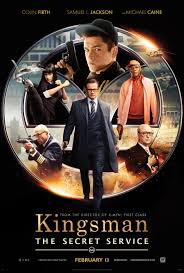 Director Matthew Vaughn’s Kingsman: The Secret Service is my favorite James Bond movie. It’s everything you’d want in a spy thriller while charting its own edgy direction. It’s a combination of Bond and My Fair Lady, and I never knew how brilliant that combination could be until Vaughn got his hands on the graphic novel source material. Newcomer Taron Egerton lays on plenty of star-making charm as a spy-in-training under the guidance of a dapper gentleman brawler Colin Firth. The spy hijinks are fun and stylish but what Vaughn does just about better than any other big-budget filmmaker is pack his movie with payoffs small and large so that the end result is a dizzying rush of audience satisfaction. The action sequences are exhilarating, in particular a frenzied church massacre made to appear as a single take. I never would have thought of the tweedy Firth as an action hero, but he sure plays the part well. There’s also an awesome villainous henchwoman who has blades for legs, and the film makes fine use of this unique killing apparatus. Kingsman explodes with attitude, wit, dark surprises, and knowing nods to its genre forbearers. Vaughn is a filmmaker that has become a trusted brand. He has an innate ability to fully utilize the studio money at his disposal to create daringly entertaining movies that walk to their own stylish beat. This is a cocksure adrenaline shot of entertainment that left me begging for more.
Nate’s Grade: A
Share this:

Deadpool (2016)
 Deadpool is easily the most fan service of comic characters, so it makes sense that his big screen spotlight is a movie that feels a fan service movie. The “merc with a mouth” is a character that doesn’t take himself seriously and neither does his big screen adventure, which is the biggest appeal of an otherwise standard super hero formula hiding under waves of winking irony, crass humor, and gleefully bloody violent mayhem. Ryan Reynolds plays Wade Wilson, a hired gun that undergoes a risky experimental treatment by a shady black ops organization to cure his terminal illness. It makes him generally indestructible with a rapid healing ability but his flesh is also horribly scarred and Wade is afraid his girlfriend Vanessa (Morena Baccarin), a hooker with a heart of gold, will reject him. Even in the opening credits, you know this isn’t going to be a typical super hero movie. The time is ripe for a film that knowingly ridicules the tropes of the super hero film industry, and Deadpool scores some big laughs when its making fun of itself and its super peers. The dark humor can often surprise with how go-for-broke it can get, like Wade and his Vanessa’s flirty one-upsmanship of hypothetical sexual trauma. There’s a clever montage of Wade and Vanessa’s romantic history told through sexually-specific holiday celebrations, and the inclusion of a couple of low-rent X-Men provides a comic foil for Deadpool to bounce off from. The action is fun and the movie is entertaining from its opening credits to the now-mandatory post-credits bonus. Reynolds is spiritually attuned with the irreverence of the anti-hero, finally plugging into a part that makes full use of his charm, motor mouth, and physicality. Deadpool’s runaway box-office success (grossing more than any X-Men film and on at least half the budget) will hopefully allow Hollywood to feel comfortable allowing their less than family-friendly comic titles to stay true to their intentions. Then again maybe they’ll just take all the wrong messages and think that audiences just want to hear more swearing from people in spandex. Deadpool is a super hero movie that prioritizes fun over everything else, and while it may not be for everyone, at least it’s trying to be for someone different.
Nate’s Grade: B
Share this:

The Human Centipede 3 (2015)
 Sometimes as a critic I seek out the worst of the worst so you don’t have to, America. And you really owe me big time for sitting through all 100 torturous minutes of the regretful-in-every-aspect horror… “comedy,” Human Centipede 3: Final Sequence. I’ll confess that horror is a genre I’ve grown to enjoy and I genuinely liked the first Centipede film, finding its premise near ingenious and that writer/director Tom Six developed his horror grotesquerie in a way that turned it into an accessible survival thriller with some gonzo edges. The sequel was pretty repulsive and the third film, with the hopeful promise of being the “final sequence,” is even worse. This is a horrifying endurance test not unlike Tom Green’s abysmal lone directorial affront, Freddy Got Fingered. It is that bad. Scenes just seem to go on and on and exist for no purpose. It’s like Dieter Laser was just told to do whatever he wanted as long as he yelled as loud as he could and based his performance after the Looney Tunes cast. It’s cheap vulgarity masquerading as edgy provocation; it’s transparently lazy and insufferable. It’s not funny no matter how weird or loud or garish or bloody or dumb it gets. The premise is basically an insane prison warden (Laser) is going to create his own human centipede, the biggest ever, linking over 100 inmates. Ignoring the escalation of all the Centipede sequels, it’s a facile plot device and it doesn’t even happen until the very end. Until that awful reveal, you will have to endure, no a better word is survive, extended “comedy” bits like Laser sticking his tongue out and roaring in orgasm while his secretary (Bree Olsen) is forced to felate him while others are in the room. The movie is trying so hard to be shocking and irreverent that you can see all the pained efforts. It’s tedious and boring. Human Centipede 3 is 100 minutes of pathetic flop sweat that could more or less end with the throwaway punchline, “The Aristocrats!”
Nate’s Grade: F
Share this:

The Revenant (2015)
 Which do you value more, verisimilitude or narrative? If you’re looking for an intense, immersive filmgoing experience that’s just as harrowing as it is beautiful, then perhaps The Revenant is your movie. If you are looking for characters and a story to engage with, then maybe it won’t be. Leonardo DiCaprio plays the real-life frontiersman Hugh Glass who was mauled by a bear and left for dead by his companions. He miraculously survives and tracks down those who betrayed him for some frontier justice Under the unyielding vision of director Alejandro Gonzalez Innarito (Birdman), the movie opens up its scary world with an exhilarating sense of detail. Inarritu favors lots of natural light and long, gorgeous tracking shots, which creates a spellbinding sense of realism. The attacks and escapes and moment-to-moment survival communicate the remarkable dangers of this natural world. The cinematography by Emmanuel Lubezki is flawless, using light and camera placement to stunning effect. However, The Revenant (meaning a person who has come back from the dead) is a series of beautifully rendered moments delicately stretched over a ponderous running time of 157 minutes. There’s just not enough plot events to fill that running time, so to compensate Inarritu gives way to some Terrence Malick (Tree of Life) impulses that try for philosophical poetry but miss. DiCaprio is getting plenty of plaudits for his demanding role, and he’s quite good and visceral (and no, he does not get raped by a bear). I was more impressed with Tom Hardy, who plays the target of Glass’ fury. Hardy imbues depth into his antagonist, and while you won’t exactly be rooting for him to get away you can see the guy as more pragmatist than mustache-twirling rogue. He even has an interesting back-story surviving being scalped that informs his decision-making. Much of the film is watching Glass endure physical hardship after physical hardship, which may grow wearying for many audience members, especially those most squeamish. When it’s firing, The Revenant is a magnificent and stunningly realized survival thriller with sprinkles of engaging human drama. The problem is that there isn’t enough to go around for its running time.
Nate’s Grade: B


You must be logged in to post a comment.