Blog Archives
Passion Play (2011)
 You would think that a movie where a jazz musician (Mickey Rourke) gets in trouble with a mobster (played by Bill Murray!) and while on the lam he discovers a girl (Megan Fox) with angel wings working in a circus sideshow would be interesting. How could you go wrong with all those interesting elements? Mobsters, circus freaks, angels, Mickey Rourke! Well Passion Play found a way, a triumph of failure. This would-be parable just sleepwalks from scene to scene, rarely making much of its fantastical sci-fi elements. Fox swears she’s no angel, just a girl born with bird wings, and people let this be a conversation ender. Rourke’s character is a pathetic coward who nets little empathy. Not reverent or weird enough, Passion Play was the passion project of writer/director Mitch Glazer but the movie feels devoid of anything approaching passion. The actors seem bored, the romance between Fox and Rourke is a non-starter, and the lame ending borrows a page from An Occurrence at Owl Creek as a last-ditch attempt to interject some meaning into this unholy mess. The only reason I can foresee (sober) people watching this is for the mistaken belief that they might glance upon some heavenly nudity from Fox. Sorry boys, the gal keeps her purity. The entire production is just so wrong-headed and listless; I can’t even work up a good dose of bile to proclaim its utter inanities. This is a terrible, silly, puzzling, dopey movie made even worse by its pseudo-intellectual twist ending.
Nate’s Grade: D
Share this:

The Change-Up (2011)
 For once, I’d love somebody to construct a body-swap movie where the characters realize the tropes and clichés of the body-swap pictures, a parody of the genre. It’d be nice if the characters instantly accepted their situation and knew that they would each have to learn some form of a life-lesson before changing back, and they tried to falsely engineer these saccharine life-lessons. Then it would be fun if they rented all the body-swap movies to write down notes and pointers on how best to deal with their unusual situation. Then, and here’s the best part, both body-swap participants realize that they prefer their new situations. They reject turning back and simply enjoy the whims that come with their new existential home. They reject learning life-lessons and simply make the best of things. For a brief second, I thought The Change-Up might be that very movie but no such luck.
Dave (Jason Bateman) is a business-obsessed lawyer working his way to make partner in his firm. His wife, Jamie (Leslie Mann), and his three children, including twin babies, are neglected at home. Mitch (Ryan Reynolds) is a struggling actor/womanizer who inexplicably is best friends with Dave. After a night at a bar, the fellas relieve themselves in a public fountain. The fountain lady statue obviously has taken offense and thus curses the both of them. The next morning, each awakes to discover they are in different bodies. The business guy has to act like a jerk! The jerk has to act like a business guy! And then there’s the matter of Jamie, who Dave/Mitch has strictly forbidden Mitch/Dave from sleeping with. Complicating matters further, the fountain has been moved by the Atlanta parks department and lost in bureaucratic limbo.
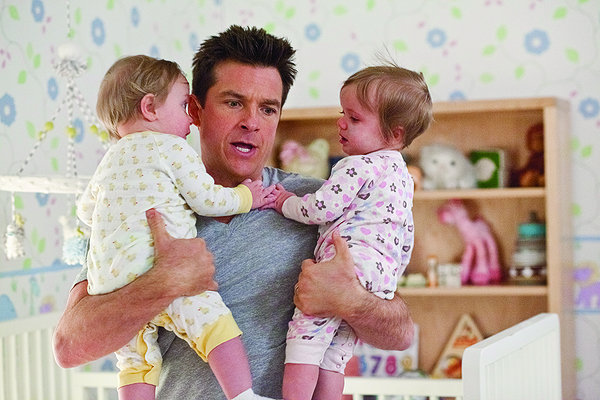 I knew I was in trouble by the first minute of the grossly unfunny Change-Up. Not only do we suffer a poop joke so early, we have to witness a baby firing a stream of fecal matter into Dave’s open mouth. That’s just a taste of the unpleasantness that follows. The movie plays like an exaggerated, sophomoric cartoon written by children. It seems to exist in the same broad universe of 2009’s abominable rom/com The Ugly Truth. What I wrote for that movie could easily apply to The Change-Up: “It’s questionable whether the comedy even reaches juvenile levels. It’s tasteless and piggish, but the weird part is that it comes across as knowledgeable on the subject of sex as a ten-year-old kid who just discovered his dad’s secret stash of Playboys. It talks about the right stuff but does so in a clueless manner. It’s like an exaggerated randy cartoon that chiefly plays to a male fantasy.” I’m not opposed to raunchy sex comedies. However, I am opposed to sex comedies that can’t figure out how to be funny without relying on easy gags. There’s a difference between gross-out humor and simply being gross, though I don’t believe this film knows what that difference is. So we’re treated to an over-the-hill porn star, some anal defilement, a voraciously sexual nine-months pregnant lady, even more poop jokes, and 90 minutes of penis discussion. There’s one actually interesting section where the guys debate the moral ambiguity of body-swap sex. Is it really cheating if Dave/Mitch is in somebody else’s body? What is Mitch/Dave to do if his wife wants to have relations? Sadly, this lone moment of interest is crushed to death by more penis jokes and then forgotten. Reynolds (Green Lantern) and Bateman (Horrible Bosses) try to stay above the fray, fighting the good fight, but even they succumb to the unfunny script and disjointed direction.
After being a distasteful cartoon for so long, the film wants to be dramatic. It wants to be emotional. Tough break, Change-Up, because you cannot have it both ways. The dramatic parts ring resoundingly false, a last-ditch attempt to class up what is a deeply unclassy picture. The tonal shifts are jarring and land with crashing thuds. It’s mostly because these characters are deeply unlikely, particularly the Mitch persona. He’s not just some brash, rude individual who sidesteps social mores, no this guy is downright sociopathtic. He’s egotistical, mean-spirited, and constantly boorish to every person in Dave’s life. He’s cruel to the daughter, he tells Dave’s wife that she’s not attractive, and then there’s the babies whom he treats like a couple of rag dolls to toss around. At one point, Mitch/Dave is on the phone and the kids are left to get in trouble with the kitchen. We’re not talking about getting messy with food, we’re talking sticking their tiny hands in a spinning blender, throwing knives, and licking electrical outlets (it’s like the Roger Rabbit cartoon that opened that flick). Instead of getting off the phone immediately, he continues talking and casually tends to the troubled tots per potential disaster. He teaches Dave’s daughter “violence is always the answer.” Mitch is an unrepentant jerk, and even when Bateman plays Mitch he’s still irredeemable. Am I supposed to feel sorry for this obnoxious guy just because his dad thinks low of him? I think low of him. I detest him. Therefore, when Mitch/Dave is having his Big Emotional Catharsis, it seems facile and hollow. We can generally find a point of likeability for uncouth characters, but not Mitch. As presented, this character has no introspection and few redeeming qualities, so why do I want to spend nearly two hours with this person? You’d think Dave would be the “nice guy” alternative, but he’s smarmy and neglectful too. Besides the “family man/pussy” and “playboy/prick” designations, the characters aren’t different enough to warrant a change of scenery.
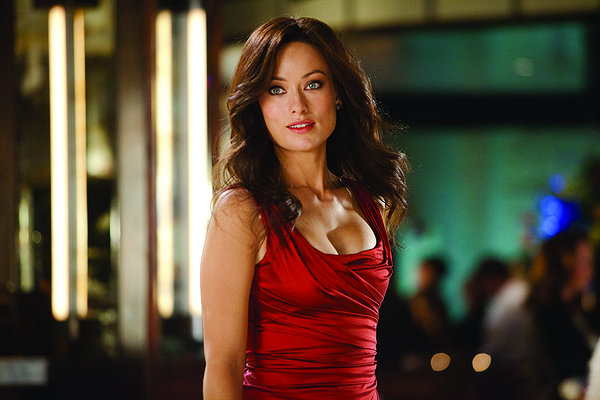 The Change-Up has the single most bizarre moment of any film this calendar year, and it has nothing to do with the metaphysical mechanics of body swapping. Wilde (Cowboys & Aliens, TRON: Legacy) at one point gets rather frisky and takes off her clothes, the last piece her brassier. Mitch’s hands cover her breasts for most of their onscreen freedom except for a handful of side angle shots where Wilde’s breasts are out and ready to greet the audience. Except those are and are not Wilde’s breasts per se. The in-demand actress had pasties to cover her nipples. The pasties were then digitally removed in post-production and replaced with CGI nipples. Let me repeat that for the slower among you – CGI nipples! It was some guy’s job to spend weeks painting nipples onto Olivia Wilde’s breasts. When I see nudity, can I trust that it’s real, or was it doctored by some computer technicians who are laughing at me the whole time? What is happening to this world when it makes me distrust the very sight of breasts?
The Change-Up is a mean-spirited, objectionable, nasty, classless, clueless comedy that’s tonally all over the place. The characters are unlikable, the comic setups are cartoonishly drawn, and the dramatic shifts are flatly false. What’s even worse is that the movie just seems downright hostile toward women. Just because it has a scene where Mann gets to vent the frustrations of the put-upon wife/mom doesn’t mean women are given a fair shake. I’d be more forgiving if the vulgar comedy was ever funny. The Change-Up erroneously believes that having characters say dirty words or inappropriate remarks is the same as comedy. It can be a component of comedy but rarely does it work as a whole substitute. The jokes fall flat, the drama feels forced, and the characters range from nitwits to jerks to deviants and back to jerks once more for good measure. Why would anyone subject themselves to nearly two hours with these people? I just felt bad watching this movie. The Change-Up makes humanity look like a species that deserves an extended time-out.
Nate’s Grade: D+
Share this:

Harry Potter and the Deathly Hallows: Part Two (2011)
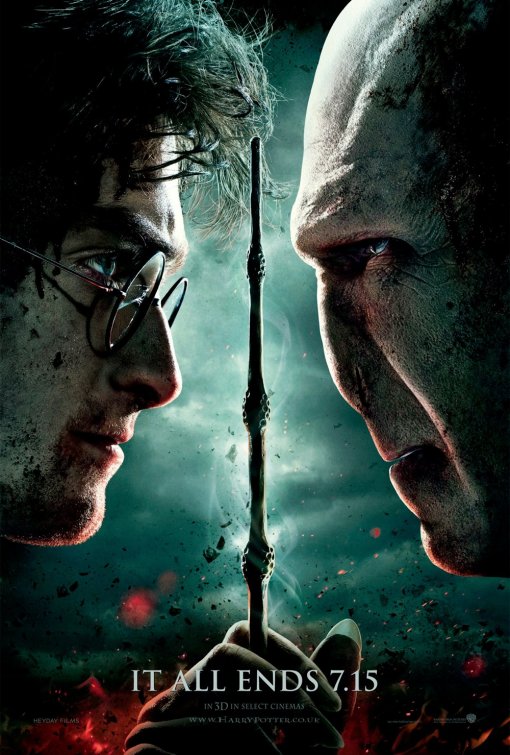 While not the best film in a series spanning ten years, part two of the final chapter of Harry Potter is a solid, satisfying close that’s fittingly grandiose but also sneakily emotional at points. The plot finally gets simplified once all those silly magic items are found, and what we have is a war at the Hogwarts School of Magic between good vs. evil. The action sequences are the best in the film’s series and some very dark events take place, including the deaths of many characters, some children, though too many critical deaths occur off camera. Harry (Daniel Radcliffe) faces off against Voldermort (Ralph Fiennes) for the fate of the world, and after the protracted, wearisome setup of Part One, it’s a relief to say that the final film moves like it’s on fire. There’s very little downtime and a great pull of urgency to the flick. So what if Ron (Rupert Grint) and Hermoine (Emma Watson), Harry’s best pals since the start, are completely forgotten and useless in the movie’s final hour. The focus is all on Harry and his messianic sacrifices. Alan Rickman shines again, showing a depth of emotions not available to Snape until the character’s final revelations. In fact, there needed to be more Rickman, but I can lay this same charge with every film. I wish the resolution, spanning forward 19 years, would have slowed down a bit and accept the paternal/maternal changing-of-the-guard as the emotional payoff billions of people have been waiting for. Harry Potter and the Deathly Hallows: Part Two is a thrilling, gratifying capper to a series that, while to me was never as magical as the Potter die-hards have claimed, was, over eight movies and almost 20 hours, an enchanting franchise that stayed consistent in quality and entertainment. Here’s to you, Potter. Now maybe I can finally stop hearing people badgering me about how the books were better.
Nate’s Grade: B+
Share this:

Dylan Dog: Dead of Night (2011)
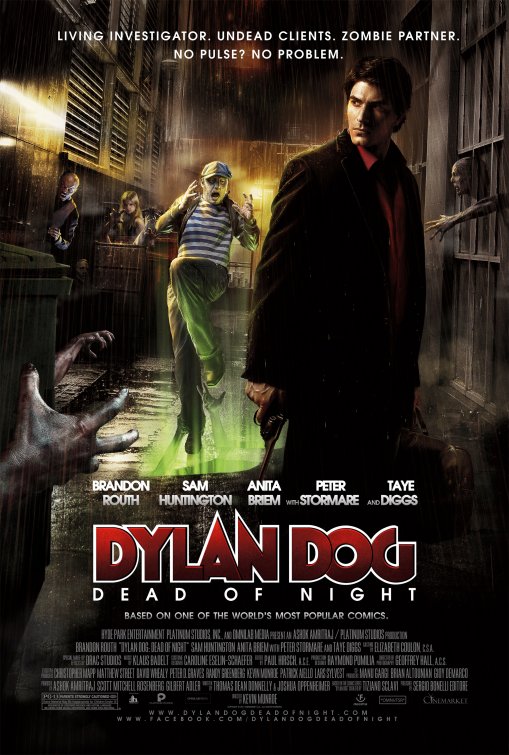 Cheap in just about every aspect, Dylan Dog is a monster noir that turns out to be one dog of a film. The conceit of a private detective for the monster world is a pretty keen idea and one that could certainly have fun skewering genre conventions. But this movie is not clever, not in the slightest. It’s a lousy detective story where Dylan Dog (Brandon Routh) investigates a murder victim (death by werewolf) that threatens to break the shaky peace between the vampire and werewolf families. The story flounders and even messes up its limited flashes of comic potential, like Dylan’s partner adjusting to life as a zombie (maggot burgers, yum). Dylan Dog is a rather uninspired horror comedy with little scares, little intentional laughs, and a critical lack of imagination. It’s got legions of supernatural creatures and a noir setting to play with, and this is the best they could do? Director Kevin Munroe (TMNT) cannot hide the shoddy budget and shoddier special effects. Routh (Superman Returns) is a likeable guy but he delivers every single line in the same wooden style mistakenly believed to be hard-boiled. What was the last good PG-13 horror comedy that didn’t involve Tim Burton? The rating kneecaps the movie’s darkness, which means the monsters don’t seem too monstrous. Everyone seems to take a cue from the undead and just acts resoundingly bored. Dylan Dog is one shaggy mess.
Nate’s Grade: D
Share this:

The Muppets (2011)
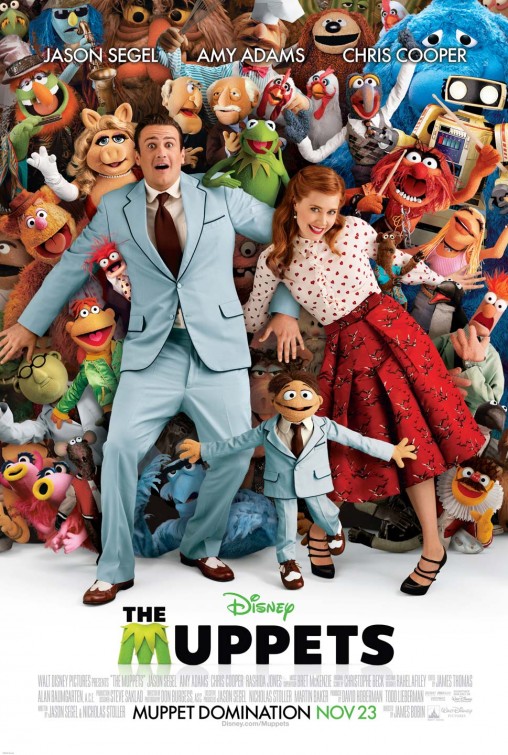 You’d hardly expect the duo behind the raunchy, R-rated comedy Forgetting Sarah Marshall to be the saviors of the Muppets, the famous puppet crew that has been languishing since their last big screen outing, 1999’s underwhelming Muppets in Space. Actor Jason Segel took a meeting with Disney after the Jim Henson Company did some puppet work for Sarah Marshall. He just point-blank asked them what their plans were after acquiring the Muppets. They had nothing. Segel and Nicholas Stoller (Get Him to the Greek) put together a script and, lo and behold, the two self-described Muppet enthusiasts were given the opportunity to bring new life to the classic creatures. The Muppets is just about everything a Muppet lover could ask for and will be sure to entertain a new, younger generation of fans with the Muppets core brand of silliness and sweetness.
Set in the town of Anywhere, Gary (Segel) and his girlfriend Mary (Amy Adams) are planning a trip to Los Angeles. She’s hoping that he’ll finally propose to her in the scenic city of angels. There’s one catch: Gary’s brother Walter is coming along too. Oh, and Walter is a Muppet. Walter is obsessed with the Muppets ever since he watched their TV show in the 1980s. The show was an escape for a kid who felt… different. Walter is anxious to visit the Muppet studios, but the studio is in disarray and the Muppets have all gone their separate ways. Tex Richman (Chris Cooper), what else but an evil oil barren, plans to buy the Muppet studio and tear it down. Walter, Gary, and Mary must seek out the Muppets to rescue the old studio, and the only way to raise enough money in time is to put on one more rendition of The Muppet Show.
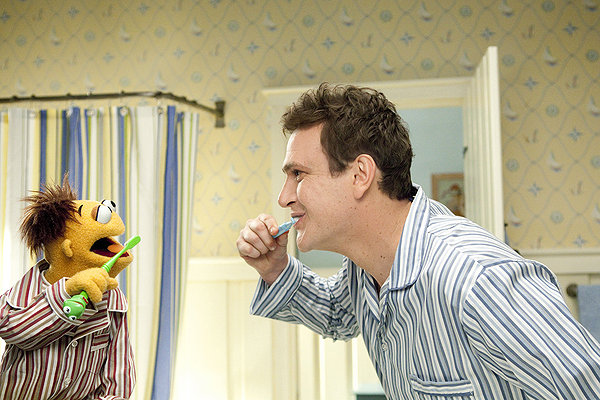 The Muppets is a refreshingly retro and charming vehicle that reminds you of all those warm and fuzzy feelings you had for this crew. It’s unironic, innocent, sweet and wholesome in a way that doesn’t make you gag but self-aware and silly enough to continuously be clever. When a big song-and-dance number breaks out in the town of Anywhere, once the stars have left the townspeople collapse in exhaustion. The gang decides it’ll be quicker to “travel by map,” so we cut to a map and see a red line charting onward. Muppets will regularly break down the fourth wall, with Fozzie commenting on a sudden explosion, “Wow, I didn’t think we had that in the budget.” Tex Richman actually verbally articulates “maniacal laugh.” The group gathering is sped up when the character 80s Robot suggests streamlining the rest in a montage. It’s not the kind of jokes that will make your sides ache with laughter but it pins a smile to your face from beginning to end, although Chris Cooper’s out-of-nowhere rap number left me in stitches. The very question of whether the Muppets can fit into our snarky, over-caffeinated, self-indulgent culture is addressed. Segel and Stoller have found a way to reenergize the Muppets for a new generation while staying true to what makes them special. My friend Eric Muller said watching The Muppets was like “getting an oil change for your soul.” He couldn’t be more right.
Watching the movie, I’m awash in feelings of nostalgia for Jim Henson’s finest creations. Segel is an unabashed Muppets fan and the movie is a celebration of the TV show that inspired him; the TV show is lionized for its inspiration to children. Because of that heavy helping of nostalgia, Muppet fans will feel like their spirits have been lifted. Those who had a mild curiosity about the Muppets will probably just scratch their head and call the film pleasant. The movie’s goal is rather huge: to make the Muppets relevant again. However, the vehicle for this goal, the old puttin’ on a show routine (Mickey Rooney has a cameo!), can feel slight. Also, the Disney product placement can be a bit annoying at times. Really, thanks for reminding us once again about how poor Cars 2 was thanks to a billboard advertisement. The movie isn’t in the same league as Henson’s troika of Muppet movies from the 1970/80s, but Segel and Stoller’s efforts should be a delight for Muppet fans waiting for the triumphant return of their favorite characters. You may find yourself unconsciously singing along to “Rainbow Connection” at the close of the film.
One aspect that is never spoken openly about is the fact that Gary and Walter are brothers, a human and a Muppet. I was expecting some throwaway reference to Walter being adopted, or maybe there could even be a funny sit-down where Walter is given the devastating familial news. We see a montage of the two brothers growing up, and while Gary shoots up like a weed Walter remains at the same height through the years. Does this mean that Muppets attain maturity at a faster rate? That Muppets are fully formed at birth? The mysteries of the universe are left undisturbed.
The music is cheerful and eminently hummable. Recent Muppet outings in the 1990s tried to keep the musical comedy formula going, but the result was some rather tin-eared musical numbers. I challenge anyone to be able to recite more than a few bars from Muppet Treasure Island (my favorite of the three), Muppet Christmas Carol, or Muppets from Space. To everyone’s good fortune, this newest Muppet incarnation has Bret McKenzie, one half of the daffy Flight of the Conchords, supervising the songs. You can instantly tell the musicianship has been raised considerably. The opening number “Sing a Happy Song” is a catchy and bouncy track, putting the audience in the right kind of upbeat mood. “Man or Muppet” is a ballad where Gary and Walter must confront their identity crises. It’s played completely straight, which makes the song even funnier as it builds into a crescendo of self-actualization: “If I’m a man that makes me a Muppet of a man.” There’s also a G-rated performance of Cee-Lo Green’s famous f-bomb kiss-off song, this time performed entirely by chickens. And the aforementioned rap by Chris Cooper is just astoundingly random, and not that bad either. The funny and cheerful music greatly adds to the overall enjoyment of the film.
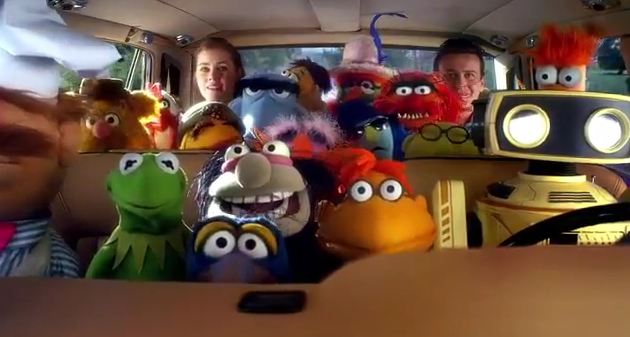 Segel (I Love You, Man) is pretty much a big goofy human version of a Muppet. He’s a winning presence, much like Adams, who slides right back into her adorable Enchanted-flavored M.O. The two actors are a near perfect union of humans who capture the ineffable “Muppetness.” The multitude of celebrity cameos makes for some fun sightseeing (Jack Black has the most extended stay, not by choice). “Hobo Joe” might be my favorite of the cameos. But while the new characters are the initial focus, the emphasis on the film is rightly placed upon the classic Muppets. Kermit and Miss Piggy and the gang are back and the film’s entire plot is essentially their reunion. That means we get wonderful sequences rediscovering the Muppet team, like getting the gang together for a heist. These characters need one another; the bonds are undeniable. It’s actually touching when the Muppets speak candidly about how much they need one another. Fozzie has fallen on hard times especially. Kermit’s mournful song about losing touch with his old pals includes the line, “Was there more I could have said?/ Now they’re just pictures in my head.” While the film’s goal is to really just gather the Muppets back together, you’ll be glad that this goal is accomplished. You will be amazed how much you feel for felt.
The Muppets is a triumphant return to form and rekindles the fondness fans have felt for Jim Henson’s lovable creations. Thanks to Segel and Stoller, and the whimsical direction of Flight of the Conchords director James Bobin, the Muppets is a delightful, charming, and heartfelt family film that will give you a serious case of the warm fuzzies. The songs are catchy, the jokes are amusing, the pacing is swift, and the movie is fun from the start. As a Muppet fan, it left me with a smile pinned to my face the whole time. Like the big screen Simpsons movie, the universe of the Muppets is too big for 90 minutes, so naturally some favorites will be shortchanged when it comes to screen time. Since Disney paid half a billion dollars for the Muppets, I’d expect they plan on making use of the property. After this splendid relaunch, one can only hope that we won’t have to wait too long for the next Muppet movie.
Nate’s Grade: A-
Share this:

Breaking Dawn: Part One (2011)
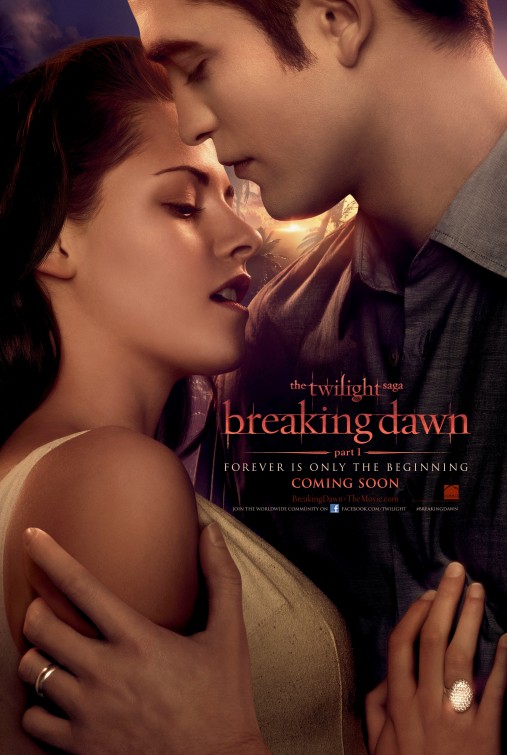 Taking a cue from the blockbuster film franchise of our age, the Harry Potter series, the producers and studio heads decided to split the final Twilight film into two separate movies. Yes, for you cheerless, unfortunate males dragged along to author Stefenie Meyer’s estrogen-drenched soap opera, hoping to be done with Bella Swan and her sparkly vampire boyfriend, well your pain soldiers onward another year. If Breaking Dawn: Part One is any indication, we’re all in for a world of hurt come November 2012.
Wedding bells are ringing for Bella Swan (Kristen Stewart) and her undead boyfriend, noble vampire/undead heartthrob, Edward Cullen (Robert Pattinson). Bella’s persistent demand to be turned into a vampire is finely about to come true. She wants to stay human a bit longer, to savor her last days on Earth before sipping blood through a bendy straw. Her always-in-second best bud, Jacob (Taylor Lautner), is worried for Bella’s well being. The wedding is like a fairy tale and Edward sweeps his new bride away to a tiny island off of Rio de Janeiro, where the housekeepers illogically speak Spanish. The couple makes the most of their time alone, and by this I mean they have sex (I refuse to believe this couple would play chess in their newlywed downtime). Edward withholds any second rounds of sex, fearing he’ll seriously harm his bride (he destroyed the bed in mid-copulation). No matter because Bella gets pregnant right out of the gate. We’re told this is impossible, yet her half-human/half-vampire fetus is rapidly growing inside momma’s belly. The baby is also destroying its host, eating away Bella’s body. Edward demands to kill the baby but Bella will have none of it. She’s going to deliver this baby even if it kills her. If it does kill her, then the truce between the werewolves and vampires will be broken, and Jacob’s feistier tribe mates will be knocking down the Cullen doors looking for some tasty vampires to chomp.
 Director Bill Condon, he of Dreamgirls fame and an Oscar-winner for 1998’s Gods and Monsters, goes hog-wild with the emotions, fittingly reminiscent of the life-and-death swings of emotional polarity that orient a teenager’s life. Condon plays all of the ridiculous melodrama straight. It successfully channels the feelings of teenage angst and obsession, much like the first Twilight film. This Teutonic exhibit of buzzy hormones is like catnip to the Twilight faithful. Finally, they get what they’ve been waiting for, and Condon and screenwriter Melissa Rosenberg delay that gratification even longer. This is the longest wedding I’ve seen on screen since The Godfather. It takes up about 45 minutes of the movie. The protracted walk down the aisle literally takes longer than the rest of the ceremony combined. I can already envision thousands of young girls asking for the “Bella dress” when their time down the aisle comes. At no point does the movie address the fact that the “groom’s side” probably are all absent a heartbeat (“Hmm, extreme paleness? Are you with the bride or the groom? I’m at a loss.”). That’s a missed comedic opportunity. What’s with the wedding guests played by name actors like Maggie Grace (TV’s Lost, Taken)? Did they hire recognizable actors for one-line bit parts? They better have larger roles in the second feature. Under Condon’s direction, the film looks marvelous, and even the long-awaited love scene has some discernible heat to it that will give teen girls “funny” dreams for the next few months. Condon’s also helming the next and final film, so I can at least say it’ll look swell.
This last film was broken into two parts due to the mountains of money the studio would make. It surely wasn’t for some sort of artistic necessity. The plot of BD: Part One is stretched mighty thin. It’s no joke that the wedding and honeymoon takes up half the running time. The baby drama is handled so amateurishly, and the plot ramps up the incubation time so that everything happens too fast for the audience to adjust to how stupid everything truly is. The first half of the movie is free of meaningful conflict. It’s just concerned with payoffs. From everything I’ve read online, and from female friends who have partaken of the series, BD: Part One pretty much covers most of the plot of the 400-page book. What’s left? I would totally give the series a pass if the second movie started with Bella, hair a knotted mess, holding a shrieking baby. Edward sits at the table, drinking. “When are you gonna get a job?” she yells. “When are you gonna stop being a bitch?” he retorts, then gulps down a swig of booze. This domestic downer of an ending would almost make the whole series worth sitting through. Truthfully, as the teaser during the end credits advertises, if Michael Sheen (Frost/Nixon) has a larger part in BD: Part Two, it automatically becomes, sight unseen, the best movie of the series. Thus is the awe-inspiring power of Michael Sheen.
This has long been a silly franchise filled with poorly veiled messages that seem less empowering to teenage girls than reassuring to their parents. Long a heavy-handed message about abstinence, the characters finally get to have sex, after they’re properly married of course (does God really object more to vampire-human relations or when it occurs?). And you better believe the moment Edward and Bella eventually do the deed is a moment that teen girls, and their mothers, around the nation have been anticipating for three long, hard years. The buildup to the carnal climax is a rapturous release for the audience of Twi-hards; my theater felt like it exploded in pubescent hormones and giggling as soon as the proverbial train entered the station. Speaking of euphemisms, I find it telling that not a single character ever refers to sex as, well, “sex.” They keep dancing around the term, referring to it as indistinct pronouns like “this” or “that” or the slightly more specific “honeymoon activities.” It’s like the characters can’t talk about a mature topic without a case of the giggles. There’s even a scene where Jacob talks about Bella’s forthcoming tangle between the sheets, openly, and with alarm: “You’ll kill her,” he tells Edward. He doesn’t kill her but he does leave bruises all over her body. Bella assures her new husband that he’s not to blame, arguing, “You just couldn’t control yourself.” What kind of irresponsible message is that sending to teenage girls? But after enduring three movies of “save it until marriage,” the message is made even clearer when Bella, after one bout of sex, gets pregnant. Boom. Bella breaks the news by saying, “The wedding was 14 days ago, and my period’s late.” Edward stares dumbfounded and replies, “What does that mean?” Apparently, after graduating from high school 200 times just for kicks, Edward must have been absent every damn time for sexual education (“Condoms go OVER? Oh! This whole time I thought they went UNDER, you know, to hold everything in.”).
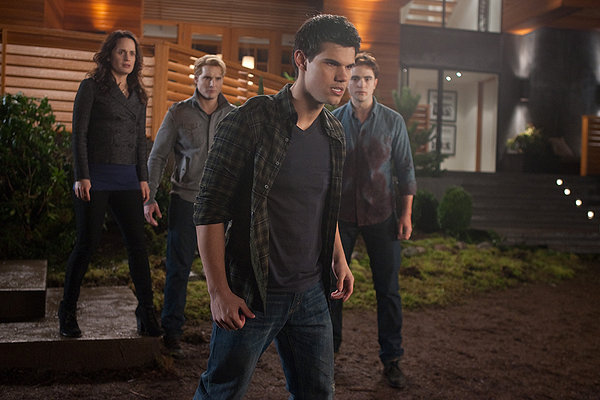 It’s here where the movie awkwardly shifts into a relentlessly pro-life message on legs. I’m not against movies presenting messages, but when a movie is as narratively empty and transparently padded as BD: Part 1, then the movie just gets swallowed up by the clumsy message. It doesn’t matter that Bella’s unborn hell spawn is literally killing her, sucking her dry from the inside out, she’s going to have this baby no matter what, even if she dies in the process. Okay, Meyer, we get it. Here’s a question for the world: can anyone really tell that much difference between emaciated Kristen Stewart and her normal self? She always appears a little sickly and hollow-eyed, but maybe that’s just me. The baby is basically the only conflict the movie presents and it happens so late in the film. Thanks to a fast gestation period, the demon fetus is determined not to wait until Part Two to make its grand entrance. Now that Bella is preggers, she’s become instant buddies with Rosalie (Nikki Reed, a long way from Thirteen), and the two of them begin a war against non-gender pronouns (its vs. he/her). The baby conflict would be more interesting if it was a tad more ambiguous, but the fact that it literally is killing Bella, not to mention its monstrous possibilities, and yet she persists to give birth is less characterization and more stubbornness. If Bella’s worried she’ll never have another chance to have a flesh-and-blood daughter, then explore this. Otherwise it makes Bella look blithely cavalier with her own life.
It’s here where Meyer and the Twilight franchise, already deliriously high on teen angst, goes off the charts into weirdo territory (some spoilers will follow). Never mind where the werewolf boys (and a girl) manage to find new clothes after they destroy them after each beastly transformation, we’ve got far weirder moments to process. There’s a vampire C-section via biting. There are giant wolves communicating via growling telepathy and bad CGI. There are Bella’s completely batshit names for her child; if it’s a boy she wants to combine Edward and Jacob’s names because that’s not awkward (“See, son, you’re named after the other guy I could have slept with but decided to just string along instead.”). And if it’s a girl she wants to combine her mother’s name and Edward’s mother’s name forming the atrocious “Reneesmee.” Excuse me? That makes “Apple” seem as traditional as apple pie. No one tells Bella these names are horrific because she’s pregnant, naturally. I imagine all the characters broke out into laughter as soon as Bella left the room to go puke into a bucket. Easily the weirdest and dumbest thing in the history of the Twilight franchise occurs as a contrived deus ex machina and a tidy solution to Jacob’s eternal, annoying pining. Jacob is determined to slay the monster he believes responsible for killing his unrequited love, Bella, but then he looks into those cute little baby eyes and… swears devotion to this newborn babe. He “imprints” on her, which means that they are meant to be together, and thus the werewolf/vampire truce holds. “Of course,” Edward intones, “Imprinting is their number one law. They cannot break it.” Of course! This reminded me of the scene at the end of the second Harry Potter movie where a phoenix comes from nowhere and cries into a wound (“Of course, phoenix tears can heal anything,” Harry informs while I was physically smacking myself in the head). Doesn’t anyone else find this whole plot development creepy? Jacob can’t have the mother, so he’s going to have the baby? And he’s got to wait 18 years if he wants their coupling to be legal on top of that. I think a messed up name is the least of this kid’s worries.

- Does she look like a healthy person? This is pre-baby succubus.
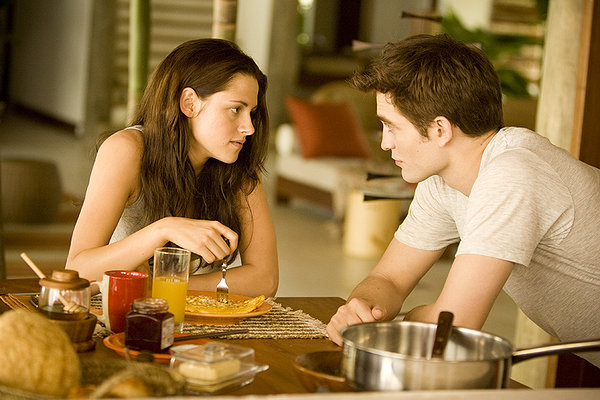
It all comes down to the heroine of the franchise, Miss Bella Swan (sorry, Bella Cullen now). I just don’t get what all the fuss is about. To me, Bella isn’t worth the effort. She’s never really been anything close to a fully formed character. Bella Swan has always defined herself by having a boyfriend, and when he was gone it was about pushing her friends away and moping until she finally found a new guy. She has zero self-identity, no center, she is an empty shell, there is no there there. She’s a cipher, meant for the teenage readership to plug themselves into her place. I won’t restate my theory that the Twilight series is glossed-up pre-teen wish fulfillment, but there you have it. Yet there are sneaking moments where Bella seems almost shockingly… human. Her anxious montage of preparation before her first night of sex is relatable and sympathetic (what outfit to wear? Shave the legs? What kinds of makeup?). Too bad this relatable side of her character vanishes all too quickly. Before Bella defined herself by her boyfriend and now she defines herself by her baby. She’s still the same whiny, selfish, morose, and cruelly manipulative Bella, though. She can’t let Jacob alone; she has to continue stringing him along, bringing him into inappropriate personal matters. Jacob’s always been a bit of a control freak who seems to spout quasi-rapist dialogue (the classic “You love me, you just don’t know it yet.”), but the guy’s always gotten a raw deal as far as I’m concerned. Betrothed to a baby is not a worthwhile parting gift. I worry that young, impressionable girls are going to look at Bella as an influential figure. If these same gals want a literary heroine they could truly look up to, they should feast their eyes on Katniss Everdeen, proactive and laudable star of the Hunger Games and forthcoming movie of the same name.
The three actors have been playing the same character notes for so long that they could all just go on autopilot and collect their paychecks. Stewart (Adventureland) is less annoying than she has been in previous films. I’m trying not to take out my disdain of her character on the actress, who I’ve genuinely liked in pre-Twilight projects (even her Joan Jett performance was pretty decent). Pattinson (Water for Elephants) seems to shrink into the background for this movie. There are a lot of long, ponderous, somehow meaningful stares between the two, with the soundtrack trying to communicate emotions that the screenplay has failed to do (a little more variety on the soundtrack next time, fellas? I think I tuned out after the twelfth melancholy piano ballad). Luckily, Pattinson does have something of a screen presence to go with those abs. Unfortunately, the same could not be said for Lauthner (Abduction). The young buck, formerly of Shardkboy fame, just cannot act. He has a nostril-heavy manner of expressing emotion that makes you wonder if he’s about to blow your house down. It’s telling that within mere seconds of the film beginning, the guy rips off his shirt, the peak of his acting abilities. I suspect it will not be long before Lautner and his six-pack and sitting at home, unemployed, and indulging in a different six-pack.
 Breaking Dawn: Part One is certainly not intended for critics of the book and film series or really any audience member lacking ovaries. But I think that even the most ardent Twi-hards will walk away giggling at the silliness of the overripe melodrama. I try not to be out rightly dismissive of the whole series, but the bad characters, bad plotting, and questionable messages make it hard to continue bending over backwards to find slivers of quality to support. I get the appeal of the series, the fact that Bella Swan is a cipher to exercise frothing teenage wish fulfillment, but that doesn’t excuse the movies from being so bad. This isn’t the painful abomination that was 2009’s New Moon, but it’s come the closest. Only the promise of more Michael Sheen makes me hopeful that BD: Part Two will be better than its predecessors. When you’re talking about an obscenely popular moneymaker, quality becomes secondary to delivering a product that is recognizable to the demands of the screaming fans. BD: Part One is less a payoff than a warning. There is more to come, and if you thought Bella was intolerable before just wait until her vampire growing pains.
Nate’s Grade: C-
Share this:

Immortals (2011)
 Director Tarsem Singh has only made two movies but is widely regarded as one of the finest visual artists working in the film medium. He’s made tons of commercials, which is apt because his first feature, 2000’s The Cell, felt like the world’s longest perfume ad. While amazing in its design, the movie was incredibly stupid. I haven’t seen his other feature, the more personal work The Fall, a movie that nobody wanted to make. It’s probably because they regrettably saw The Cell. Now the guy seems downright prolific, with a Greek mythology action movie in release and next year an update on the Snow White fairytale, the first shot in the Great Snow White Duel of 2012 (Kristen Stewart stars in the other, next summer’s Snow White and the Huntsman).
In 1200 B.C., King Hyperion (Mickey Rourke) is marching an army across Greece, laying waste to city after city. He’s looking for the mythical Epirus Bow, believed to be the only weapon capable of unleashing the titans, who were imprisoned after a war with the Olympian gods. Mankind’s only hope is Theseus (Henry Cavil), a strapping young lad born into low class. His real father is Zeus (Luke Evans) who keeps tabs on his spry son by posing as a wise old man (John Hurt). Phaedra (Freida Pinto) is a virgin oracle, a priestess who has been granted prophetic visions. Theseus rescues her and other prisoners of Hyperion. Together, they must find the bow and convince their countrymen to fight against the overwhelming forces of Hyperion. In the meantime, Zeus has sworn death to any god who interferes in the affairs of man and helps Theseus on his important quest.
 One word I feel accurately that sums up the experience of watching Immortals is… “viscera.” This movie is obsessed with filming the destruction of human bodies in the most gloriously beautiful ways possible. The violence and gore are given an intensely operatic boost. One moment involves a god zips around the slow-moving mortals, smashing one head after another with his humongous war hammer. The scene plays out at a slower speed, allowing the explosions of glistening blood and skull to fill the screen, each a mesmerizing fireworks display of human goo. The visuals are often a balletic, phantasmagorical, Grand Guignol display of human carnage. When you watch this at home, you may need a squeegee to clean your TV. It’s mesmerizing to watch, getting lost in the painstaking yet sumptuous visuals, even when it’s buckets of spaltterific gore. There’s one scene involving a sledgehammer that’s guaranteed to make every male in the theater uncomfortably cross his legs. The final image is also memorably striking – the sky filled with thousands of battling titans and Olympians, suspended high in the air and hacking and slashing away (Grecian weather report: 50 percent chance of blood showers. Bring an umbrella).
Tarsem never skimps out when it comes to the look of his movies. Immortals looks like a living Renaissance painting; the director of photography should be credited to Caravaggio. Unlike Tarsem’s earlier films, this movie does not take place within the realm of imagination, but that doesn’t hamper the movie’s aesthetics. Taking a cue from the golden-hued Greek/Roman epics of recent year, notably Zack Snyder’s 300, the film exists in a heightened reality. We’re dealing with mythology after all (more on the specifics of that later). The iconic imagery of Greek mythology is all there, stunningly realized in lavish CGI and a production design that is frequently jaw dropping. The action sequences are resolutely exciting, with special mention for the climactic gods vs. titans battle. The gods, decked out in spiffy gold armor and capes, bounce off the walls aided by Matrix-style moves and slice and dice their wicked immortal brethren in creatively gruesome ways. It’s a thrilling sequence that almost makes you forget the movie’s catalogue of sins.
The movie plays fairly fast and loose with the Greek lore. The Theseus of legend was mainly known for slaying the ferocious Minotaur, the guardian of a great labyrinth. His father was Poseidon, not Zeus. Some versions even have Phaedra falling in love with Theseus’ son from his first wife (Theseus was a busy boy, taking after his father). These details, and more, may seem inconsequential but if they’re going to be so loose in the adaptation, why even bother keeping the name Theseus? Immortals does have an interesting albeit brief bit where the Minotaur is seen as a human warrior wearing a bull mask made of barbed wire. Short of the gods and titans, there isn’t any depiction of the supernatural occurring on Earth. The monsters and mythic creatures are absent, leaving some Greeks to question the validity of the gods. The movie takes an unexpected twist early by declaring, in a self-serious tone, that immortals can… die. It seems that the gods just discovered one day that they could kill each other. I would have liked to be there for that discovery (“Yeah, go ahead and lick that electrical socket.”). The film lays out that the titans and the gods were one in the same, it’s just that the winners of the battle of the heaven called the losers “titans.” If they’re the same then why do the titans act like feral monkey creatures and look like ashen, Hindi gods (no disrespect, one billion Hindus)? Have they simply gone wild after being locked away in such a unique prison? When they fight, the titans move at the speed of mortals, not gods. I also believe the titans were supposed to be considerably larger.
 But as enchanting as the visuals are, there are still the other senses that are criminally malnourished. The screenplay by brothers Charlie and Vlas Parlapanides is about as bare-bones as you can get. It’s your basic hero’s quest, trusting young stud Theseus with finding a magic item and stopping a bad man. If that sounds plainly generic then congratulations, you’ve seen more than one movie with men in togas (Animal House does not count). Mysterious parentage? Check. Close relative that dies early to spur vengeance motivation? Check. Noble sacrifices by members of his team? Check. Eventual intervention of the gods? Check. What I just described could also have been the plot for 2010’s joyless Clash of the Titans remake. What’s up with Zeus and these noncommittal gods? He refuses to get directly involved in the affairs of man, but if King Hyperion releases the titans (should have gone the long route and unleashed the Kraken) then the Olympians are jeopardized. It seems like they have an interest in giving Theseus a mighty assist. The magic item, a bow that creates unlimited arrows when plucked back, is pretty much a forgotten relic. It gets used, I kid you not, exactly three times in the entire movie. All of this fuss over a super weapon that the characters can’t be bothered to utilize. They’d rather fight it out with a traditional bronze sword. What exactly does it mean to be immortal when even the gods can die? King Hyperion says he’ll be immortal by essentially raping a nation of women, keeping his bloodline alive for centuries (the Genghis Kahn defense, your honor). But if having kids is being immortal, I think we’re setting the bar pretty low.
The Phaedra character is so underwritten that she almost comes across as a parody of the role of women in these guy-heavy action spectacles. As portrayed, Phaedra is the definition of convenience. She doles out a prophetic vision to save the day, provides some grade-A eye candy thanks to the splendor of Pinto (Slumdog Millionaire), and even casually slips into Theseus’ bed for a deflowering (sorry guys, it’s clearly a body double). She will be haunted by visions of the future until the moment she loses her virginity. Let’s stop and think about this. Having one member of your team be able to SEE INTO THE FUTURE seems like a decisive tactical advantage. I understand the lure of a naked and willing Pinto, but Theseus needed to think beyond the needs of his little Greek. In an abrupt and off-putting turn, Phaedra is never really dealt with in any capacity after this seismic bout of lovemaking, nor do she or Theseus talk about what has transpired. She just provided some casual sex while the hero was recuperating and then checked out. Her major prophetic vision of Theseus and Hyperion joining sides is also just forgotten, turning out to be a letdown.
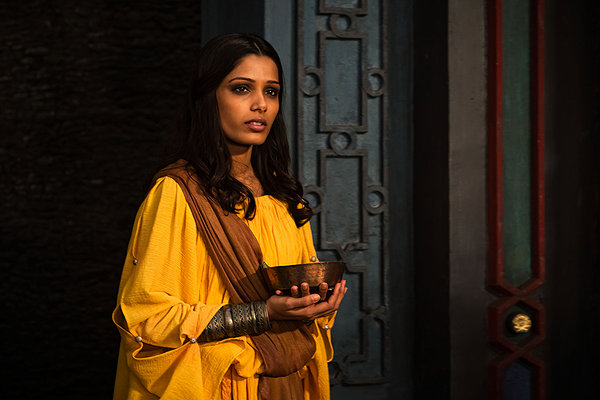 The actors were basically hired for their visual appeal, and to that end they succeed. Cavill (TV’s The Tudors), tapped to wear Superman’s cape in 2013 by Zack Snyder, is suitably buff and hunky. His performance is rather flat, no matter how many times he makes his eyes go big with anger. In contrast, Rourke (Iron Man 2) will chew whatever scenery he can find. His flamboyantly costumed villain at one point seems to wear a lobster claw on his head. He wants to punish the gods because they refused to intervene when Hyperion’s wife and child were slaughtered. When the gods do intervene to save Theseus, that’s when the character should go off the rails. Rourke just plays it in the same sleepy menace. Pinto gets to stare off into the distance regularly and pray. It’d be a stretch to say that the material challenges any of these actors.
Immortals is a testosterone-soaked action movie that feels like it minored in Art History. The production design, CGI, and practical special effects, all attuned to the extraordinary vision of Tarsem, makes for a brilliant looking movie with several sequences of memorable carnage. But we entered the age of “talkies” since 1927, and Immortals suffers when it concerns dialogue, story, characterization, and acting. The movie is a pretty loose adaptation of Greek mythology, falling back on a rote hero’s quest and leaving plenty of narrative dead spaces for the visuals to fill in the interest. Even a movie as visually resplendent as Immortals can only go as far as its story will allow. In this case, Immortals might just be the best-looking piece of borderline mediocrity you’ll ever see in your life.
Nate’s Grade: C+
Share this:

Season of the Witch (2011)
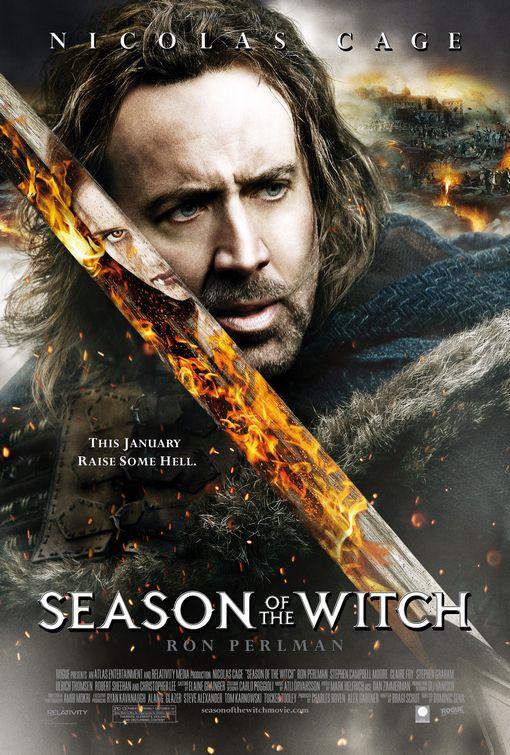 No actor has amassed a higher output of spotty choices than the reigning king of the paycheck film, Nicolas Cage. The man has a habit of appearing in mediocre trash, only notable because a star of Cage’s stature is participating. He’s in late Marlon Brando territory and Cage hasn’t even hit 50 (or blown up to 300 pounds). Every now and then he’ll make a movie that reaffirms how talented an actor he can be, like Adaptation. or Bad Lieutenant: Port of Call New Orleans. But mostly what we associate with Cage nowadays is tic-filled performances, exuberant weirdness, funny hair, and bad movies, two of which are so bad they’re skipping theatrical releases this year (Trespass and Seeking Justice). Season of the Witch will do nothing to change this association.
During the 14th century Crusades, warriors Behmen (Nicolas Cage) and Felson (Ron Perlman) are the best killing machines the Church could hope for. They desert their positions after becoming disillusioned with the Crusades. The duo ventures into a city where a girl (Claire Foy) has been chained in a dungeon. In an airtight piece of impenetrable logic, she’s being blamed for bringing the plague. Behmen and Felson, along with a former knight, a priest, and a young upstart, are tasked with bringing the girl to a monastery where she can be properly dealt with. This secluded monastery is the only place left with a copy of a rare manuscript that contains a spell that will end the pestilence. They put the girl in a cage with wheels and get rolling to that monastery, though not everyone is convinced that the girl is a witch.
 For the first ten minutes, you swear you’re watching a buddy comedy transported to the era of the Crusades. Cage and Perlman are in the front lines of “God’s army” but they’re trading competitive quips like, “You take the 300 on the right. I’ll take the 300 on the left,” and then they preposterously debate who is going to buy post-battle drinks while in the heat of battle. They’re literally slaying enemy soldiers and would rather be arguing over who buys. It’s like they have no attachment to anything happening. This opening Crusade sequence takes us through 12 freaking years of battle locations, but it’s only at the final battle that Cage and Perlman come to the realization that women and children might also be getting slaughtered as they siege city after city. It’s at this point that they get on their moral high horses and stick it to the Catholic leaders: “I serve God, not you. This is not God’s work.” Why did it take them 12 years of fighting to figure out that innocent people may die when you lay waste to cities? Naturally this epiphany only happens after they kill off a European looking innocent. The opening sequence is meant to introduce us to these characters, but it jars the viewer in mere minutes. These guys don’t feel a part of their place or time, and it only gets worse from there. Their nonchalant anachronistic behavior makes the movie seem like a Hope and Crosby vehicle.
This is one thunderously boring movie, putting me to sleep three separate times. I had to rewind what I had missed, and each time I came to the conclusion that I really had missed nothing at all. The problem with the plot is that it makes a mystery pretty obvious. The group is carting around a teen girl in a cage. You’d think this would be something of a conversation starter, perhaps even an opening for a critical analysis of the Inquisition and religious fanaticism at this perilous time. Nope. The whole of the Bubonic Plague is being blamed on a teen girl and nobody seems to bat an eye at this. Sure there’s a few passing references to how killing is wrong (again, remember this took at least 12 years of slaughter to sink in), but the movie’s central storyline seems to shift to a “Is she really a witch?” query. Judging from what kind of film this is, you’d probably be safe betting on “yes” and, well, you’d be partly right. The reason this is no spoiler is because it’s revealed at like halfway through the movie. The girl’s chief defenders suddenly jump on the “burn her” bandwagon. Strange things are following the troupe, so it’s pretty obvious who is at play. However, the girl is no witch but is inhabited by a demon, which seems like splitting hairs. When the super cheesy CGI demon/gargoyle shows its face, the creature actually speaks English but in a really speedy and comical voice that makes it hard to be taken seriously. An earlier cut of the movie did not involve this dumb CGI demon but the girl herself. At least that route would have saved the producers some money and unintentional laughter.
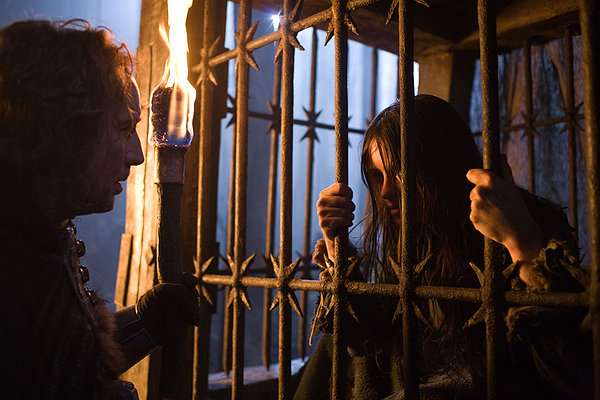 The movie should be far more entertaining, even in a dubious fashion, than it finally is. Season of the Witch flirts with some messages (religion can exploit, women were unfairly persecuted) and silly genre elements amidst a Medieval setting (witches, demons, plague). That sounds like the makings for a campy treat but that treat never materializes. The boring plot lumbers, with the company encountering some setback that picks off their numbers one by one. It’s hard not to feel the drowsy effects of the dull repetition. They encounter killer wolf creatures. Then they encounter a rickety rope bridge, and you better believe that there are rotting boards and fraying ropes. Who keeps building these rope bridges that appear in so many movies, and why do they keep getting hired after continually doing substandard work? Do the regulators get fat payoffs from the rope bridge lobby?
The road to the monastery is a long trek and the movie’s momentum seems to lag with every step. There should be more internal conflict rather than this superficial “killing is wrong” moral that every warrior seems tormented with. The premise should be a ripe opening for a discussion on the perversion of religion for political and personal gain, for the abuses of power, for the archaic view of women as subhuman beings who will seduce men to destruction. There’s even a priest along the way to provide a counterpoint. But alas, Season of the Witch goes hog wild for the cheesy supernatural spooks and even at that it fails miserably.
As of late, the saving grace in a Nicolas Cage paycheck movie is a gonzo performance and some wacky hairdo. We don’t even get that much with Season of the Witch. Cage is oddly subdued throughout the whole movie despite all the swords and witchery. Even his hair is subdued. Without Cage’s typical nutty antics, the movie loses any chance of entertainment it might have ever hoped to have. The shame is that Cage and Perlman both have an easygoing chemistry. You like the two of them together; you just wish they had a better reason to trade insults and one-liners.
Far from bewitching, this movie is ponderously dull. It misses camp by a mile and just lands on mediocrity. There’s nothing about this movie that will stand the test of time, good or bad. This is the definition of a paycheck movie. It flirts with going darker before it settles on a messy monster-heavy ending. The special effects are cheesy, the scares are cheap, the plot is repetitious, the characters feel wrongly transplanted from a modern movie, and Cage sleepwalks through his role. I can’t say I blame him. Season of the Witch put me to sleep and I only had to put up with it for 90 minutes.
Nate’s Grade: D+
Share this:

Rango (2011)
 It’s Chinatown remade with anthropomorphic desert creatures. It’s a Western by way of Hunter S. Thompson. It’s a loving parody of cinema’s wide canvas. It’s one of the most wild, anarchic, oddball animated films to ever be released by a major studio, and it is stupendous. Steeped in weirdness and bravado, Rango has a playful and occasionally macabre sense of humor that kept me in stitches. Director Gore Verbinski (the Pirates of the Caribbean flicks) translates his visual verve into a animated movie that dazzles the eyes with its magnificently drawn features as well as the pointed personality in every stroke. This is a movie with character, not to mention some pretty entertaining characters (including talking road kill). Johnny Depp delivers an idiosyncratic vocal performance for a household lizard that finds himself pretending to play sheriff for a town in need of a hero. When you think Rango will fade into familiar territory, or easy moral messages, the film keeps surprising, forging its own unique path. This is a lively, peculiar, and overall enchanting animated film that’s suitable for families but may well play better for adults with eccentric tastes. I’m still scratching my head, and celebrating, how something like this slipped through the system.
Nate’s Grade: A
Share this:

Red Riding Hood (2011)
 In risk-adverse Hollywood, everything old is new again, so why not remake classic fairy tales for a modern audience? After all, there’s no rights fee. While we’ll have to wait on the competing Snow White films until 2012, Twilight director Catherine Hardwicke unleashes her stylized retelling of the Red Riding Hood tale, titled easily enough, Red Riding Hood. This messy and incompetent movie may cause you to run away screaming into the woods all the way to grandmother’s house.
In a small village on the crest of the big bad words, Valerie (Amanda Seyfried) is betrothed to Henry (Max Irons), a hunky blacksmith that comes from a family of high standing. She’s rather run away with Peter (Shiloh Fernandez), the town’s resident moody guy who’s also her childhood friend. Valerie’s family is ostracized due to past indiscretions, so her grandmother (Julie Christie) lives in a cottage off in the woods. Valerie’s mother died when she was young and she’s been raised by her father (Billy Burke) and her step-mother (Virginia Madsen). This happy hamlet is gripped with fear after a series of violent wolf attacks. Father Solomon (Gary Oldman) ushers into town with a proclamation that he will find the wolf and slay it. But he clarifies that they are hunting for a werewolf among the townsfolk. During one attack, Valerie discovers that she has an odd telepathic link with the wolf, which makes her further question her identity. Naturally, this makes the town fear her and offer her as a red riding sacrifice. But who is the wolf and what is his or her plan with Valerie?
This is a disaster of epic fairy tale proportions. Red Riding Hood attempts to reshape the oft told tale into a palatable mix of sex and violence for today’s pre-teens (teenagers will surely be bored by this), somehow forgetting that the original tale is filled with macabre violence. The filmmakers have tried to make Red Riding Hood (RRH) hip to a younger generation; this ain’t your granny’s fairy tale, yo. But they’ve really turned the simple story into a lumbering, idiotic, grating, and nearly impenetrable movie. This youthful infusion of hollow artifice and misplaced attitude, as well as a fumbling attempt at ill-conceived edge, makes the movie a metaphorical bratty teenager. You get tired of its taxing nature and empty posturing. It’s trying to be cool with last year’s catalogue. Hardwicke is using every tool at her disposal to appeal to an easily bored teenage demographic, so the movie takes several sidesteps that are only justifiable because someone might think they are cool. The musical score includes grating, churning anachronistic electric guitars. It feels like your neighbors are throwing a party and the music occasionally drifts over. These visual and narrative flourishes only remind you how desperate and out-of-tune this whole lousy production is.
 Screenwriter David Johnson (Orphan) takes the familiar woodland frolic and turns it into the world’s worst Agatha Christie-styled guessing game. The wolf is now a werewolf and then the town undergoes a witch-hunt that would make Arthur Miller wince (“I saw Goody Red with the wolf”). It’s here that the movie preposterously attempts to become some sort of important statement on, I kid you not, the war on terror. Solomon brings a metal elephant that he sticks prisoners in to soften them up. He also lights a fire below the belly of the elephant to expedite the process of getting the truth out of a suspect. Solomon’s status as a cleric has to serve as some sort of biting criticism of church authority, especially after he wants to get an inquisition going. I appreciate the wholly misguided attempt at topicality and commentary, but this was not the movie to make statements. Anyway, the plot is convoluted and every scene seems to just further dilute the clarity of the narrative. The movie just descends into a manic game of “Guess the Wolf.” We literally go through just about every speaking part at some point as a potential werewolf suspect. That means every bit part is given due consideration, including the mentally handicapped child. I actively wanted the wolf to be the mentally handicapped kid just for the awkward discussions of what to do next (“We can’t kill the wolf. He’s… special.”). Red Riding Hood works so hard to make like 8 characters look alternatingly guilty. The town seems to be populated by red herrings and not people.
Red Riding Hood is a neutered horror movie and a rather bloodless romance; there’s a lack of blood pumping with either. For a movie about a killer wolf there is precious little blood or wounds even considering some people are mauled to death. It seems the filmmakers had a choice of going with mild gore or mild sensuality to stick the PG-13 landing and erred on the side of hormones. The romantic elements are kept at a pre-teen simmer. For only they will blush at the more suggestive elements, including the table-dance-in-slow-mo shimmy dancing that the town seems to favor during their festivals. At one point Peter unties one of Valerie’s bodice strands. To be fair, in mythical land/mythical time setting, that’s probably like their equivalent of third base. The romantic triangle is desperate to ape the Twilight model, and the male characters are pinup pinheads. They occupy types, one being the brooding “darker” guy who Valerie really wants to be with, and the other is a nice guy from a proud family (sound familiar, Twi-hards?). The movie goes to shoddy lengths to keep these two at odds, when it appears that, like Bella Swan, our Valerie is one flower not worth the trouble of plucking. It’s hard to get involved in a romance when you’d rather watch every participant getting eaten by a wolf.
 “What big eyes you have” is something of an understatement when speaking about the saucer-eyed Seyfried (Letters to Juliet). She gets to make good use of her ocular abilities, though who knows if it’s acting or just expressions of disbelief about what kind of movie she is trapped inside. Seyfried does her whole blasé shtick, which makes the character feel more like an annoying know-it-all even when she admittedly knows nothing. Oldman (The Dark Knight) inhales scenery at a dangerous pace, acting ferociously over-the-top and unrestrained. It’s like he’s trying to channel a wolf in his performance. At least he’s entertaining to watch, which cannot be said for the movie as a whole. Irons (Dorian Gray) is bland but Fernandez (Skateland) is laugh-out-loud awful at a few points. Clearly talking is not this guy’s strong suit. Neither is emoting. The weirdest part of Red Riding Hood is merely seeing Madsen’s face. Clearly this woman has undergone plastic surgery since her Oscar-nominated turn in 2004’s Sideways. She almost resembles a gentler looking Mickey Rourke at certain unkind angles. Another famous face goes to sad lengths to alter her looks to be seen as acceptably good-looking in ageist Hollywood.
Red Riding Hood is a tragic misjudgment on the part of just about everyone involved. The screenwriter thought he must have been making a serious allegory, Hardwicke thought she was making a wild and witchy cousin to Twilight, and the producers thought they were making a film that had genuine appeal. They were all categorically wrong. The reworking of the fairy tale elements is mostly mundane. She gets a red cloak from her granny but otherwise this story might as well just be about a girl and a werewolf. It’s not an imaginative update or a clever reworking, this is just a dumb werewolf story with extra dashes of Twilight for seasoning. The key to unlocking the Red Riding Hood story is not by introducing a sterile love triangle. This hyperactive hodgepodge mistakes setting for atmosphere and a high number of characters for mystery. I was astounded as I sat and watched this movie; turn after turn it veers wildly in tone and execution. I haven’t even talked about the special effects for the wolf, and there’s a reason I am leaving that unsaid. Red Riding Hood is a movie 12-year-old girls might fawn over. If you find yourself outside that marginal demographic, then you’ll likely find this movie to be an irritating, nonsensical, dopey, pitiful bore. You can stuff that in your picnic basket, Red.
Nate’s Grade: D


You must be logged in to post a comment.