Blog Archives
Split (2017)
 It’s hard to even remember a time when writer/director M. Night Shyamalan wasn’t a cinematic punching bag. He flashed onto the scene with the triumviri of Sixth Sense, Unbreakabale, and Signs, what I’ll call the Early Period Shyamalan. He was deemed the next Spielberg, the next Hitchcock, and the Next Big Thing. Then he entered what I’ll call the Middle Period Shyamalan and it was one creative and commercial catastrophe after another. The Village. Oof. Lady in the Water. Ouch. The Happening. Yeesh. The Last Airbender. Ick. After Earth. Sigh. That’s a rogue’s gallery of stinkers that would bury most directors. The promise of his early works seemed snuffed out and retrospectives wondered if the man was really as talented as the hype had once so fervently suggested. Then in 2015 he wrote and directed a small found footage thriller called The Visit and it was a surprise hit. Had the downward spiral been corrected? With a low-budget and simple concept, had Shyamalan staked out a course correction for a mid-career resurgence. More evidence was needed. Split is the confirmation movie fans have been hoping for. An M. Night Shyamalan movie is no longer something to fear (for the wrong reasons), folks.
Split is all about Kevin (James McAvoy), a man living with twenty-three different personalities in his head. One of them, Dennis, kidnaps three young ladies, two popular and well-adjusted friends (Haley Lu Richardson, Jessica Sula) and the introverted, troubled teen, Cassie (Anna Taylor-Joy). The girls wake up locked in a basement and with no idea where they are and whom they’re dealing with. Kevin takes on several different personas: Barry, a fashion designer, Hedwig, an impish child, Patricia, a steely woman devoted to order, Dennis, an imposing threat undone by germs. The altered personalities, or “alters” as they’re called, are preparing for the arrival of a new persona, one they refer to as simply The Beast. And sacrifices are needed for his coming.
Right away you sense that Split is already an above average thriller. This is clever entertainment, a fine and fun return to form for a man that seemed to lose his sense of amusement with film. The areas where Split is able to shine that would have normally doomed the Middle Period Shyamalan are in the realms of tone, execution, and ambition.
 Very early on, Shyamalan establishes what kind of feeling he wishes to imbue with his audience, and he keeps skillfully churning those sensations, adding new elements without necessary breaking away from the overall intended experience. You’re meant to be afraid but not too afraid. It’s more thriller than outright horror. There is a level of camp inherent into the ridiculous premise and in watching a grown man act out a slew of wildly different personas populating his brain. Shyamalan swerves into this rather than try and take great pains to make his thriller a more serious, high-minded affair. His camera lingers on the oddities, allowing the audience to nervously laugh, and he allows McAvoy extra time to sell those oddities. It’s especially evident in the introduction of the Patricia alter ego, where McAvoy uses a lot of faux grave facial expressions to great comic effect. Shyamalan no longer seems to fear being seen as a bit silly. Shyamalan even knows in some ways that he’s making a genre picture and an audience expects genre elements or the reversal of those elements. At one point, Dennis insists that two of our girls strip to their underwear because they’re dirty. I shook my head a bit, believing Shyamalan to sneak in some PG-13 T&A. Except it’s just enough for some trailer clips. Shyamalan’s camera doesn’t objectify the teen girls even after they run around in their skivvies. He doesn’t have to indulge genre elements that will break the film’s tone. He also doesn’t have to overly commit to being serious. He can be serious enough, which is the best way to describe Split. It treats its premise and the danger the girls are in with great seriousness, but the movie still allows measures of fun and intended camp. The cosmos themselves don’t have to be responsible for all of time’s events to click together to form his climax. It can just be a young woman trying to escape a psycho thanks to her wits and her grit.
Execution has also been a nagging problem of the Middle Period Shyamalan (affectionately his Blue Period?). I may be one of the few people that thought 2008’s Happening had some potential even as is if another director with a better feel for the material and less timidity embracing the full possibilities of an R-rating had been aboard. With Last Airbender and After Earth, both movies were exceptionally bad from a number of standpoints, but Shyamalan’s botched execution of them made the anguish all the more realized. You walked away from both disasters and openly wondered why Shyamalan was given such large-scale creative freedom and at what point the producers knew they were sunk. With Split, Shyamalan has pared down his story into a very lean and mean survival thriller anchored by a mesmerizing performance from McAvoy. The story engine kicks in very early, mere minutes into the movie. The man doesn’t even wait the usual ten minutes or so before introducing the inciting incident. This Shyamalan has no time to dawdle, and the rest of the movie lives up to this pacing edict. It’s efficiently plotted with the girls in a position of discovery and learning their surroundings, the different alters, and how to play them against one another. Each piece of info builds upon the last. It’s a survival thriller where you think along with the characters, and their decisions make sense within the internal logic and story that Shyamalan commands. There are scattered interruptions from our subterranean terror, mainly exposition from Kevin’s shrink and some hunting flashbacks from Casey’s childhood with her father. I figured they would show Casey to be similar to the feisty heroine from You’re Next, revealing her as a fiendishly clever and capable survivalist that the villain underestimates to his great peril. It’s not quite that but the flashbacks do serve a purpose, a very dark purpose, and a purpose that could lead to some very uncomfortable personal implications others may interpret.
 Shyamalan’s ambition has often exceeded his reach when it came to his post-Signs oeuvre. The man never seemed like a great fit for the fantasy and sci-fi blockbusters that Hollywood was hoping he’d sprinkle his “Spielberg scion” magic all over. The number of moving parts seemed to overwhelm and his worst instincts took over. To be fair, Shyalamlan is also to blame as his ego became inflated and he started chasing after his cinematic windmills convinced he was creating great works of art. In Lady in the Water, he inserted himself as the writer that will eventually save all of mankind. That’s a step above arrogant. And he reserved time in that fishy-woman-out-of-water misfire to literally eviscerate a crotchety film critic because the man obviously held no grudges. My point is that when Shyamalan’s stories got too big so did his sense of himself. He lost limitations and people reeling in his excesses and wayward plotting. Even Shyamalan’s early successes are smart examples of how to get the most bang for your buck. Unbreakable is his “comic book movie” and that has like one fight scene. Signs left most to the imagination. Shyamalan has always been a better filmmaker when he holds back and embraces the limitations of his situations, finding more resonant creative solutions. Shyamalan has blossomed under the Blumhouse model, a factory for cheap high-concept thrillers in the $1-10 million range. With that kind of minimal budget, it forces Shyamalan to be very economical with his filmmaking and very meticulous with his storytelling. It worked for The Visit and it especially works with Split. This is a movie that emphasizes its strengths, storytelling and performance, and a large-scale budget is not essential for those elements to flourish. You want to know Shyamalan’s cameo this time? It’s a computer tech literally billed as “Jai, Hooters lover.” We’ve certainly come down from savior of the human race, and it’s a welcomed sign (no pun intended).
The movie would be so much less without the intensely captivating performance from McAvoy (X-Men: Apocalypse). A character with multiple personalities totaling twenty-three, with twenty-four on its spooky way, must be an actor’s dream. McAvoy loses himself in the sheer playfulness of the part. The characters are distinct down to his poise, posture, the way he carries his body, subtle facial expressions or movements that he’s keyed into specific altered personalities. It’s a lot more than silly voices. It’s a shame that this kind of performance will never really get the recognition it truly deserves. This is an Oscar-worthy performance from McAvoy as he transforms himself again and again. The man finds several different ways to be creepy and menacing, never overdoing the same note. It’s an astonishing chameleon-like performance and definitely deserving of future awards consideration, and we’re in the general cinematic dumping ground of January. I would like to also call attention to Taylor-Joy (The Witch) and her resourceful and thoughtful performance. She’s playing a scared and scarred young woman but a fighter worth rooting for who rises to the many challenges. She’s a Final Girl you can love.
Split is a solid and atmospheric thriller with a killer crazy performance by James McAvoy. The movie flies by, drawing you into its clutches, and the ongoing twists and turns feel organic. There really isn’t so much a twist ending as a culmination of flashback implications. The end has an uncomfortable implication in its resolution, but that’s the worst of it. As long as his head doesn’t get too big, I could welcome Shyamalan cranking out fun mini-budget thrillers in the Blumhouse model. It could be the beginning of a, dare I say, Shyamassaince. I’m sorry (I’m not sorry).
Nate’s Grade: B+
Share this:

Silence (2016)
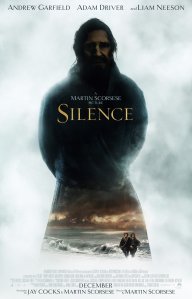 A nearly three-hour movie about Portuguese Jesuit priests facing persecution in 17th century Japan and struggling with the personal demands and costs of their faith sounds like a hard sell for your casual moviegoer. It may seem even stranger coming from the likes of director Martin Scorsese. This is a deeply personal film and perhaps the greatest movie about the nature of spiritual faith, both good and bad, I’ve seen. Two priests (Andrew Garfield, Adam Driver) sail to Japan in 1635 to find their mentor after hearing he has renounced his ties to Christianity and taken up a Japanese wife. Christianity has been outlawed and those caught practicing the religion can be turned in for 100 pieces of silver, and a priest for 300 pieces. The repression forces Christian converts to make difficult choices, especially when their refusal to recant their faith causes suffering for others. The Inquisitor (Issei Ogata) is a fascinating figure who argues that these misplaced missionaries never understood Japanese culture and that this foreign religion simply cannot flourish. The meaning of individual faith is explored beautifully with existential highs and lows. When the priests come across a village of secretly practicing Christians, it’s a powerful example of the goodness of faith, as these people are nourished body and soul, empowered. They can also finally confess their sins and garner a clean slate. However, much of the film is about the internal struggle to retain one’s faith in the seeming absence of confirmation. The priests are eventually caught and ordered to apostate, and their ongoing refusals are met with harder and harder challenges to bear. It’s an ongoing process for many people to square the concepts of a loving God and the horrors and general torment that do not merit said God’s intervention. At one point one of our priests, shaken by his experiences, asks if he is merely praying to silence. In some regard, I think the movie is about coming to terms with the fact that faith is often a relationship with a silent partner. Silence may be the greatest spiritual epic about doubt. It feels like a thriller at times and also the most Christian movie at other times. It puts the simplistic tripe starring the likes of Kirk Cameron to shame. Scorsese’s camera is unmistakably his and the movie is often dazzling to just experience. The pacing is very much a slow burn but the historical context felt increasingly intriguing for my tastes. Ogata is the real star of the movie, embellishing his antagonist with a magnetic power. Every time he was off screen I wished for his return. Silence is not going to be a movie for everyone or for many. It’s too long and airless, but it’s a deeply serious, deeply meditative, and deeply searching film about the power of belief and the price we pay to hold on.
Nate’s Grade: B+
Share this:

Live by Night (2016)
 With only three films, Ben Affleck has successfully reinvented himself as one of Hollywood’s most talented directors when it comes to adult crime thrillers. It’s not just his superb directing chops; the man also serves as producer, lead actor on most films as well as a screenwriter, and Affleck’s ability to write flawed yet deeply human characters within genre parameters has accomplished actors flocking to work for him. Beyond his 2012 film Argo winning Best Picture, Affleck has gotten three different actors supporting Oscar nominations (Amy Ryan, Jeremy Renner, Alan Arkin). He’s an actor’s director and a man who knows how to satisfy an audience hungry for authentic genre thrills and interesting characters. His latest film is an adaptation of Dennis Lehane’s novel and is Affleck’s most ambitious film yet and it’s gorgeously brought to life. There’s still plenty to like and entertainment to be had with his Prohibition era gangster flick Live by Night, but it’s also unquestionably Affleck’s weakest film yet as a major director.
 Joe Coughlin (Affleck) is a hardened WWI veteran who says he came back to Boston as an “outlaw” (he seems to turn up his nose at being called a “gangster”). Joe settles into an easy life of crime with the local Irish gang lead by Albert White (Robert Glenister). Unfortunately, Joe’s lover, Emma Gould (Sienna Miller), happens to be White’s main squeeze. Joe and Emma sneak around and carry on their relationship without proper discretion. Their secret is found out, Emma is dealt with, and Joe escapes with his life, serving a prison sentence and then enlisting in the Italian mob under local boss Maso Pescatore (Remo Girone). Joe is sent to Tampa to manage the rum-running business, starting his life over. The area is ripe for expansion and it isn’t long before Joe is making friends and enemies over his exploits. He falls in love with Graciella (Zoe Saldana), a fellow criminal with a working operation of Hispanic bootleggers. Joe warms to a local police chief (Chris Cooper) and his daughter, Loretta (Elle Fanning) a girl who experiences the darker side of vice and becomes a troublesome born-again leader. All the while Albert White has relocated to Miami, and the specter of vengeance looms just within reach.
It’s a Prohibition gangster flick and Affleck makes sure to check as many boxes as he can when it comes to audience expectations for a pulpy hardboiled action drama. The production design is aces and the cinematography by Robert Richardson (The Hateful Eight) is beautifully composed with its use of light, shadow, and framing. There are shots of violence that are exquisitely rendered so as to be their own art, like a man falling down a stairwell with a Tommy gun blasting above bathed in light. The production details are a sumptuous aspect that Affleck and his team put supreme effort into to better make their movie transporting. The action sequences have a genuine delight as they pop. A shootout throughout the grounds of a mob-owned hotel is an exciting climax that finds fun ways to provide genre thrills. The rise-and-fall structure of the story, mingled with a simple revenge motivation, is a suitable story vehicle for the audience to plug into. There are fun characters, fun moments, and sizzling action, all decorated in handsome period appropriate details. While Live by Night has its share of flaws, a dearth of entertainment is not one of them.
Tone and coherency end up being Affleck’s biggest obstacles he cannot overcome. It’s somewhat of a surprise considering his other directorial efforts brilliantly melded several genres while telling invigorating stories. I think the main fault is a screenplay trying to do too much when more streamlining was optimal. The specific goal that sets Joe in motion is a bit hazy and fails to provide a larger sense of direction for the arc of the tale. Affleck’s previous films were rock-solid in crafting overarching yet specific goals that propel the scenes onto a natural narrative trajectory. With Gone Baby Gone, it’s finding the missing girl. With The Town, it’s getting closer to a bank employee without having that relationship discovered by his cohorts. With Argo, it was rescuing the hostages. With Live by Night, it’s mostly getting vengeance against Albert White, though we don’t know how. In the meantime, we have episodic incidents failing to register connective tissue or at least a cause/effect relationship where it feels like a natural order of organic conflicts. The opening act in Boston that sets up Joe’s tragic love, jail time, and enmity with White could be removed entirely. I’d miss the thrilling 1920s car chase, which is also unique in that it’s the first period car chase I can think of that utilizes the mechanical limitations of the vehicles for extra tension, but it’s at best a moment of flash. Having the story pick up with Joe putting his life back together in sunny Florida would have been a cleaner entrance into this world for an audience. Once Joe ingratiates himself into this new world, the audience has to play another game of character introductions and assessing relationships and the balance of power. It feels a bit redundant after having our previous act pushed aside to reboot Joe’s world.
 It feels like Affleck is trying to corral so many historical elements that he loses sight of the bigger picture. Joe’s criminal path seems comically easy at times as he builds a fledgling empire along the Floridian west coast. First it’s the law and then it’s the KKK and then it’s religious revivals that need to be dealt with. Each incident feels like a small vignette that observes the historical setting with an angle that will be perfunctorily dropped in short order. The conflicts and antagonists don’t feel sufficiently challenging and that lessens the intended suspense. When Joe is dealing with the KKK, it feels like he’s restraining himself out of politeness rather than a series of organic restrictions. The elements and tones don’t really seem to inform one another except in the most general sense, which leads to the film lacking suitable cohesion. It’s easy then for Affleck to overly rely on stock genre elements to provide much of the story arrangements.
The characters have difficulty escaping from the pulp trappings to emerge as three-dimensional figures. Graciela gets the worst of it, proving to be a capable bootlegging criminal in her own right who loses all sense of personality, agency, and import once she becomes romantically entwined with our hero. It’s as if she erased herself to better heal his broken heart. How kind of her. The religious revival element is ripe for further examination but it’s kept at a basic level. We’re never questioning the validity of Loretta’s conversion and sudden celebrity. Chris Cooper’s pragmatic lawman has the most potential as a man trying to keep his morals amidst the immoral. The character isn’t utilized in enough interesting ways that can also flesh out his dimensions, and his conclusion suffers from that absent development. The characters serve their purpose in a larger mechanical sense but they don’t feel like more recognizable human beings.
Affleck’s innate talent with actors reappears in a few choice moments, just enough to tantalize you with the promise of what Live by Night could have been. The standout moment for me is a sit-down between Joe and Loretta where she unburdens her self-doubts. This is a woman who has been preyed upon by others, had her hopes dashed, and is trying to reinvent herself as a religious leader, but even she doesn’t know if she believes that there’s a God. The scene is emotional, honest without being trite, and delivered pitch-perfect by Fanning (The Neon Demon). It’s the kind of scene that reminded me of The Town and Gone Baby Gone, how Affleck was deftly able to provide shading for his characters that opened them up. Miller (American Sniper) has immediate electricity to her performance and reminds you how good Affleck is at drawing out the best from his actors. British TV vet Glenister is so good as a villain that seems to relish being one that you wish he were in the movie more. He has a menace to him that draws you in closer. Maher (The Finest Hours) is a memorable cretin who you’ll be happy to be dealt with extreme prejudice. There isn’t a poor casting choice in the film (hey Clark Gregg, hey Anthony Michael Hall, hey Max Casella) except possibly one, and that’s Affleck himself. I know part of the reason he selects his directing efforts is the possibility of also tackling juicy acting roles, but this time he may not have been the best fit. He’s a little too calm, a little too smooth, a little too out of place for the period, and his director doesn’t push him far enough.
 A strange thing happened midway through, namely how politically relevant and vicariously enjoyable Live by Night feels specifically for the year 2017. It’s a movie largely sent in the 1920s with characters on the fringes of society, and yet I was able to make pertinent connections to our troubled times of today. After a contentious presidential election where many feel that insidious and hateful extremist elements are being normalized and emboldened, there is something remarkably enjoyable about watching a murder montage of Klansmen. The Tampa chapter of the KKK takes aim with Joe’s business that profit from fornicators, Catholics, and especially black and brown people. They’re trying to shake Joe down for majority ownership but they’re too stupid, blinded by their racist and xenophobic ignorance, to accept Joe’s generous offers, and so they can’t help but bring righteous fury upon their lot. There is something innumerably enjoyable about watching abusive bigots brought down to size with bloody justice. I could have seen an entire movie of Joe and crew tearing through the Florida chapters of the KKK and just cleaning out the rabble. This sequence whets the appetite for what comes later. Without going into specific spoilers, the climax of the movie involves the put-upon minorities rising up against their bosses who, like the Klan, felt they were too powerful, too indispensable, and too clever to be seriously threatened. In its own way, it’s like a dark crime actualization of the American Dream. Unpack that if you will.
Live By Night is Affleck losing the depth of his world to its surface-level genre pleasures and they are indeed a pleasure. This isn’t a bad movie by any measure, only one of slight disappointment because it had the markings and abilities to be much more than the finished product. The tonal inconsistency and storylines provide episodic interludes and enticing moments, whether in action or acting, but they don’t blend together to form a more compelling and impressive whole. It’s a gangster movie that provides the gangster genre trappings but loses sight of what makes the characters in these movies so compelling, the moral complications, shifting loyalties, the impossible positions, and enclosing danger. I don’t think you’ll sweat too much over whether the main character will come out on top, which somewhat hinders the intensity of the action. When your movie is more predicated on those genre thrills than character or story, that’s an even bigger hindrance. It’s a fun world worth visiting but it doesn’t have the staying power of Affleck’s better efforts.
Nate’s Grade: B
Share this:

Moonlight (2016)
 What Moonlight achieves is both something different and familiar and amounts to nothing less than watching the birth of human identity on screen. The film chronicles three formative experiences at three different times of a man’s life, each serving as its own one-act play examining our protagonist and his tortured sense of self. The results are breathtaking and deeply immersive, allowing the formation of a human being to take place before your eyes in such magnificent artistic strokes. This is a sensitive, sincere, beautiful movie that serves as an indie coming-of-age tale sliced into three significant parts. I was completely under its sway within ten minutes, finding its perceptive perspective and nuances to be convincingly naturalistic. I felt like I was watching a documentary of a young black man’s life told with ferocious realism, or at least a loosely fictionalized version of a life informed by fully authentic personal experiences. It’s a somewhat ineffable quality for slice-of-life movies but they live or die on whether the film carries an unforced sense of realism, telling larger truths with small details, each piece coming together to make the world and the character feel fully formed. Moonlight pulls you immediately into its orbit thanks to its authentic drama and observations.
The three segments compliment one another as they build toward a young black man’s understanding of his homosexuality. We’ve seen movies before where characters undergo sexual awakenings and from gay perspectives; it’s practically a cottage industry unto itself in independent film. However, rarely have we seen this story from people of color. The expectations of accepted masculinity are entrenched at a young age, where “Little” (Alex Hibbert) is chided by, among others, his own mother Paula (Naomie Harris) for the “swishy” way he walks. It goes without saying that being gay is not exactly widely accepted in the Miami projects of the 1980s. This conflict of what makes a man is wonderfully symbolized with Juan (Mahershala Ali), an unexpected father figure that takes “Little” under his wing along with his girlfriend, Teresa (Janelle Monae). The kid wants to know how he can know if he’s gay because it’s certainly something he doesn’t want. Juan doesn’t pressure the boy or make big speeches about what it means to be a young black man in America. Instead, he tries teaching him to accept himself and provides an alternative home that serves as a refuge during his mother’s long absences and crack-withdrawal tirades. There’s a lovely moment where Juan teaches “Little” how to swim, and it’s touching in how recognizably father/son the activity is, how much trust is involved and vulnerability, and how the film doesn’t need to oversell the subtext. Juan definitely becomes the father figure that Chiron lives up to for the rest of his life. This first segment is dominated by their relationship but also Juan’s sense of responsibility. He’s making a living through selling drugs, including to “Little”’s own mother. In a very memorable and heated moment, Paula angrily calls out Juan for thinking he would make a better parent given the moral culpability of his own actions to her habit.
 The second segment zooms ahead to when Chiron (Ashton Sanders) is a teenager in high school and subjected to hostile bullying. The schoolyard taunts from his youth have morphed into something more ferocious and toxic, as a collection of bullies torments Chiron and looks to rob him of his personal connections to others. The central focus on the middle segment is about the growing relationship with Kevin (Jharrel Jerome), the childhood friend who Chrion crushes on. Their closeness takes a leap one fateful night that Chrion will always remember. It’s an awakening and a confirmation of self, and it’s only after having this fulfilling outlet cruelly taken from him that Chiron finally lashes out, with lifelong repercussions. It’s an explosion we can see coming and one that feels fully set up. The second segment feels more familiar because of the age range and it’s the one with the dawning of sexual realization, a story situation we’ve seen before. What elevates it is that it’s a fairly direct carryover from the beginning segment, which means the personal issues have magnified for Chiron. His relationship with his mother has become even more frayed as he’s grown, and what once was name-calling and questions over his maturation has become confirmed. Her addiction has become even stronger and she’s harassing her own son for whatever meager money he’s given from Teresa, his surrogate mother figure. Chiron is struggling to make sense of his feelings in an upbringing lacking support and clarity. You could examine the conclusion of this segment as an empathetic cautionary tale, as we see the years of abuse and measured choices that lead to that confrontation.
The final segment is where Moonlight transforms into a late blooming unrequited romance that should steal your heart if it’s still functioning. “Black” (Trevanta Rhodes) is a fully-grown adult that has seemingly followed in the footsteps of Juan in a life of low-level crime. He’s hardened both emotionally and physically. The muscles will provide an intimidation factor missing during his youth if anyone questions his sexual leanings. He’s burrowed into himself and the role he feels he must accept, but all of that changes the instant he gets an apologetic and searching phone call from Kevin (Andre Holland). Now working as a chef at a diner, Kevin reaches out to his old friend though even he can’t fully explain why. This reawakens “Black”’s longing and he works up the courage to travel back to Miami to surprise the friend who meant so much to him. Their reunion is treated like the culmination of a romance that you may not have realized had you completely. After two segments of setup and years apart, you may find yourself projecting your thoughts to the screen, trying to compel these two men together. It’s an extended sequence that moves at a gradual pace, a fitting tempo for a character racked by insecurities and suppression. By going forward he’s taking a big risk, putting himself out there, and we desperately hope “Black” finds a sense of support. It’s the segment where “Black” finds resolution with the major conflicts that have defined his life, and the climax of the movie is a deeply tender moment where an emotionally reserved man reaches out to another and lets his firmly fixed guard down in the process.
 I don’t usually go into such a detailed plot synopsis with my reviews because I like to hit the basics and let the readers experience the story for themselves, but the pleasures and artistic triumphs of Moonlight are in how fully immersed and felt the movie becomes. By telling the story in three noteworthy sections, Moonlight provides an impressionistic statement about the formation of personal identity, specifically a young man growing up black and gay in a hostile environment to both. The movie also blows apart the argument made for 2014’s Boyhood about how truly necessary it was to watch one young actor play the same part for 14 years. Here we have six different actors playing two different characters at three different points in time and the impact is no less great. Here is a movie that doesn’t need a gimmick to have a larger emotional impact on its audience.
Director/co-writer Barry Jenkins has a marvelously fluid and natural feel for his camera, swinging around the parameters of a scene to make the world feel more charged with energy. Jenkins is a born filmmaker and knows how to squeeze the most out of his scenes with gorgeous cinematography and an eclectic musical score that feels traditional with classical orchestration like churning strings layered and rearranged into something arrestingly new and yet still personal. There aren’t many overly stylized choices, rather Jenkins tells his story with uncommon poise and treats one man’s life like an opera, like the greatest story never told on film, like a life of complexity worth the deep dive. There’s a classical lyricism to the presentation that reminded me of the works of Todd Haynes (Carol). There’s one scene where Paula is strung out on crack and finds her son in the middle of a joyous high. Her face fills the frame, absorbing all of Chiron’s world, and her euphoria is inter-spliced with jarring speed ramps in editing, meant to convey the mania and peace that pumps through her veins in this fleeting moment. It’s a stylistic device that isn’t overplayed and has genuine purpose. Jenkins is restrained from self-indulgences and keeps every aspect focused on reflecting the inner life of his lead.
The very talented company of performers makes the movie even more powerful. Ali (Hidden Figures, Luke Cage) is creating serious awards buzz and it’s deserving, though every actor in this movie is deserving of notoriety. Ali plays a man trying to do right by his own sense and he lets you see the troubles that wash over him. Should he insert himself into this young boy’s life? Is he in a position to set an example? Ali has such paternal strength and tenderness while still displaying doubts and regret, hardly deifying this found father figure. Harris (Spectre) is wonderfully horrifying and heartbreaking in her role and has some big moments that convey her given completely into desperation. She’s offended that others would deign replace her but does little to reclaim her title of mother and provider. Holland (Selma) has a world-weary smooth sense of wisdom to him, and his unassuming charisma helps unlock his friend’s true feelings. The three actors who portray “Little”/Chiron/”Black” are each exceptional, giving different performances and interpretations, further supporting Jenkins’ artistic thesis.
 Moonlight is a beautiful film told with such delicate care and a resounding sense of authenticity and personal detail. It swallows you whole and leaves you with the impression of a human life observed with tenderness, intimacy, empathy, and grace. It’s about the people and experiences that help guide us onto the paths we take, and while there’s a sense of heartache as we think of what might have been, there’s also the serenity of accepting what has been and what can still be. Jenkins proves himself a superb talent who doesn’t lose sight of his artistic goals with extraneous artifice. There’s a lilting, lovely lyricism to the movie that elevates Chiron’s life into feeling like poetry. This is a life we so rarely get to see given such an artistic and honest examination without condemnation or judgment. It’s the story of a man embracing his identity and overcoming isolation and suppression. This disadvantaged young man is worth your emotions, your sympathies, and your attention. Moonlight is an alluring and heartrending film that manages to be deeply personal and universal at the same time. It’s sublime.
Nate’s Grade: A
Share this:

The Handmaiden (2016)
 I’m glad there’s still a filmmaker at the talent level of director Park Chan-wook (Oldboy) dedicated to making genuine Gothic romance with style and reverence. The Handmaiden is a ravishing, enrapturing, and momentously engaging movie with dark delights, startling depths, palpable romance, simmering tension, and high-wire twists and turns that keep redefining the story. The absurdly talented filmmaker takes a novel set in Victorian England and adapts the setting to 1930s Korea during the time of Japanese occupation, a fascinating and little-known time period for a Western audience. A poor orphan Sook-Hee (Tae-ri Kim) is pressured into a scheme to trick the wealthy Lady Hideko (Min-hee Kim) into being admitted to an insane asylum, her family riches sold. From the opening minutes, The Handmaiden produces immersive drama that pushes the central characters into consistent conflict to achieve their varying goals. They’re constantly at odds with one another and themselves. There’s even tension between those who hold onto their Korean culture and those who adopt the culture of their oppressors, namely Lady Hideko’s perverse and treacherous uncle. Sook-Hee grows an unexpected affection for her mistress, and this includes a burgeoning attraction that the movie communicates with serious sensuality. The passionate lesbian sex scenes are, if anything, a tad restrained from what I was expecting from Chan-wook, and they’re definitely far more restrained and absent the male gaze than the still excellent Blue is the Warmest Color. I felt the same carnal desire the characters were discovering, a feat worth celebrating for still staying true tonally without veering into tawdry exploitation. More than the sex or the top-notch technical aspects, it was the characters that hooked me and refuse to relinquish. The deepening relationships and the subtle shifts of loyalty, perception, and desire make what is essentially a twisty and twisted chamber-play into world-class drama. You think it’s one kind of movie, and then it flips the script, and then it does it again, each time opening wider this mysterious, dangerous, and invigorating world. My one quibble is that the final twenty minutes feels unnecessary and self-indulgent, Chan-wook finally scratching a few violent tendencies he had been keeping as veiled up to that point. The Handmaiden is a ridiculously entertaining movie that is handsomely mounted, wonderfully acted by its leading ladies, and a romance worth losing your self over. Plus, there’s also the sex.
Nate’s Grade: A-
Share this:

Fences (2016)
 There’s something about plays turned into movies that bring out the best in actors. Usually they provide meaty characters with flaws and big personalities, which lend themselves to big performances that touch upon every emotion in an actor’s kit. Fences is based upon August Wilson’s Tony-winning play set in 1950s Pittsburgh. It follows the fractious household under the indomitable influence of Troy Maxson (Denzel Washington, also serving as director). He’s a complex man prone to bold protestations and morally righteous fury, but he’s also deeply imperfect, hypocritical, and consumed with self-doubt over whether or not he has done right by his family. He’s a man trying to still assess his place in the world and what is owed. Troy’s older brother (Mykelti Williamson) has been mentally incapacitated from his war service and Troy has been living off of his brother’s wages. Troy’s oldest son doesn’t feel like he ever had a father, Troy’s youngest son wants to devote a future to sports, which Troy adamantly refuses, still nursing a grudge over his failed potential that was never capitalized in his mind. Then there’s Troy’s wife Rose (Viola Davis) who tries to keep her blended family together though Troy’s actions will test the boundaries of her devotion and affection. As expected, the performances are outstanding, lead by Washington and Davis reprising their Tony-winning roles. When these two sink into roles worthy of their caliber, it’s a pleasure just to sit back and watch the high-class mastery. Washington lights up the screen with the overwhelming power of his performance; you feel like your ears are pinned back by the sheer volcanic strength of his acting. Davis has her moments and she tears your heart out when she lets loose on a life of compromises to sustain her husband. The characters are so multi-layered with such plentiful history and generational conflicts. Every actor gets his or her moment to shine and do an excellent job under Washington’s direction. The movie is little more than a filmed version of the stage play, and the pacing is a bit loquacious for being almost two and a half hours, but Fences rises on the sheer power of its performances with expert actors giving all of their considerable skill to bring these fascinating people to vivid life.
Nate’s Grade: B+
Share this:

Nocturnal Animals (2016)
 Fashion designer Tom Ford made a big splash with his debut film, 2009’s A Single Man. It was a gentle and introspective character study of a middle-aged gay professor determined to end his own life. It was lush, full of feeling, and anchored by a deeply humane performance from Colin Firth. In short, it is everything that his follow-up Nocturnal Animals is not. This is a movie overflowing with vacant artifice that is mistaken for profundity.
Susan (Amy Adams) is an art gallery owner and living a posh life with her second husband, Hutton Morrow (Armie Hammer). She gets an unexpected present in the mail from her ex-husband Edward Sheffield (Jake Gyllenhaal). He’s sent her his newest manuscript, a departure from his usual works. It’s dedicated to Susan. With Hutton away on business, and philandering with a mistress, she dives into the story. It tells the story of Tony Hastings (also Gyllenhaal) and his wife (Isla Fisher) and teen daughter (Ellie Bamber) traveling through west Texas. They run afoul of some contemptuous locals lead by the sadistic Ray (Aaron Taylor-Johnson), who kidnaps Tony’s wife and daughter. Left for dead, Tony teams up with a terminally ill police officer, Bobby Andes (Michael Shannon), to hunt down Ray and make him suffer for his crimes. As Susan continues reading, she goes through a mixture of emotions trying to determine what her ex-husband is trying to communicate to her within the subtext and metaphor of his sordid story.
 I grew increasingly restless with Nocturnal Animals because it failed to justify its excessive dawdling and vapid artistic pretensions. This is a movie that doesn’t really know what it wants to be so it dabbles in many different genres, none of them fully convincing or worth the effort. It’s a high-gloss erotic thriller, it’s a gritty exploitation film, it’s a morally compromised revenge thriller, and it’s a subtle relationship drama amidst the upper crust of the L.A. art scene. It’s none of these. It’s two primary stories, neither of which justifies the amount of time spent on what amounts to so little. The worst offender is the frame story with Susan, which amounts to watching Amy Adams read for two hours. She takes a lot of baths and showers in response (symbolism!) but most of the cutaways and time spent with Adams is to merely watch her react. It’s like she’s a nascent studio audience handcuffed to tell us how to feel with her reactions. Would you have known that you should feel bad during onscreen death if we didn’t cut back to Susan also feeling bad and concerned? It amounts to emotional handholding and it’s grating, also because Susan is an terrible character. She’s conceited and thinks she is owed better, which is why her mother successfully pressured her to dump Edward, a man well below her self-styled station in life. Her second marriage is crumbling apart and part of her sees Edward’s out-of-the-blue note as a potential romantic rekindling. That’s right, this is a person who reads a revenge opus that may be all about seeking cosmic vengeance against her, and she thinks to herself, “Ooo, I think he like likes me after all.” Her self-involvement is rewarded in the end but the ambiguous ending is more just missing in action. Ford’s film just peters out and leaves you hanging, just like its heroine.
Edward’s manuscript is easily the best story and even that is only by default. It’s an easier story to get involved with because of the simple story elements that naturally draw an audience in, namely a revenge fable. The initial altercation with the family and Ray’s crew lasts almost a half hour. Specifically the roadside confrontation itself is a solid ten minutes and it just goes round and round, repeating its overdone sense of menace. I wasn’t dreading the horror to come but more so getting impatient for it to be over. Without depth to the characters or escalating stakes and complications, it all just amounts to a Texas hillbilly repeatedly threatening a cowering family for ten solid minutes. The vengeance in the second half of the movie is just as predictable and too drawn out. Edward schemes with Bobby Andes to take justice into his own hands, but the movie takes far too long to reach its predictable conclusion, which still manages to be so drawn out that I was screaming at the screen for the inevitable to finally happen. When the movie ended I felt a rush of relief to go along with my general sense of perplexity.
Nocturnal Animals has the illusion of highbrow art mixing with lowbrow thrillers but it lacks the substance of the former and the courage of its convictions for the latter. Ford’s mercurial taste in costuming and set design shows in every moment with Susan, as the sets feel exquisitely designed and the cinematography designed to encapsulate this. It’s a good-looking movie but there’s not enough under the surface. It’s all empty window dressing to disguise the vapid whole at its center. Let’s tackle the opening credits, which will most certainly capture your undivided attention. It’s a foursome of overweight women dancing naked and in slow motion, their large bodies bouncing and jiggling to the self-serious musical score. Eventually it’s revealed that these women are part of an installation exhibit in Susan’s art gallery, and that’s when you get a tip-off just how hollow and attention seeking the movie will be. The gallery consists of overweight women lying face down on raised platforms. That’s it. No wonder her gallery isn’t doing that well (note: not a fat-shaming comment but more a comment on the lazy application of its sense of “art”). You get a sense that Ford comes most alive in the scenes where he can arrange figures and images, not so much the demands of storytelling.
 I can already hear supporters saying I just don’t get it; no, I got it because there’s very little to understand with Nocturnal Animals. It’s a story-within-a-story so we’re already training our brains to look for parallels but they aren’t obvious so they’ll be more metaphorical. I kept waiting for it all to tie together in a substantial way by film’s end, and sorry but it just doesn’t (spoilers ahead). Edward has a whammy of a day when he discovers 1) his wife is pregnant, 2) she’s aborted his child, and 3) she’s in the arms of her new boyfriend, and he discovers all of this standing in the rain for further symbolism. He has a grievance against Susan, though we’ve been suspecting it for some time. His manuscript is a revenge thriller about a family murdered and how a weak man finds the strength to seek justice and retribution. The parallels are fairly obvious there, and the fact that there are only so many characters in the story-within-a-story means there are few options to play the analogue guessing game. I’ll just claim that Ray is meant to represent Susan since he/she is the murderer of Tony/Edward’s family. There’s a reason that Tony’s family all share Susan’s red hair. He dedicated the book to her, after all, and said she was who made it all possible. From there you could argue whether Tony represents Edward’s real past, weak and remorseful, whereas Bobby Andes is meant to represent how he wishes he could be, decisive and strong (end spoilers). That’s about all the parallels you’re going to find because the story-within-a-story only involves a very tiny number of characters. There just isn’t much to go on here and yet Ford’s movie stretches and drags and just keeps going until it reaches its predictable destination. There isn’t any more depth here than straightforward avatars and even those are lean.
I was debating a question with my friend Ben Bailey while we watched this movie, and that’s whether the stakes are removed somewhat when you know that a storyline within a movie is fictitious. Knowing that Tony is a pretend person, does that eliminate some of the tension and investment in his storyline? I recognize this is a distinctly meta question considering that a majority of film characters are fictitious by nature, but I do think there’s a different set of standards for the people of the story-within-a-story. I don’t remember feeling less for the characters in A Princess Bride, The NeverEnding Story, or Adaptation. My only conclusion is that I just did not care a lick for any of the characters in Nocturnal Animals, whether they were fictional or twice fictional. They didn’t deserve my attention just because pretty people were playing them. They didn’t deserve my attention because Big Bad Things caused them to experience Big Emotions. Combined with the ponderous plot and the emaciated substance, the dull characters and the overwrought acting they inspire are a recipe for audience detachment. I can’t help but shake my head as other critics trip over themselves to shower this film with overly enthusiastic plaudits. Nocturnal Animals is a tiresome exercise in lazy symbolism, patience-demolishing pretension, and emptiness masquerading as contemplation.
Nate’s Grade: C-
Share this:

Hidden Figures (2016)
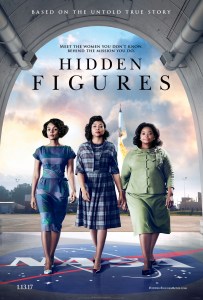 After the end of 2012’s Red Tails, I said to myself that those men of history deserved a better movie. By the end of Hidden Figures I was thinking the same thing for the unheralded African-American women of NASA in the 1960s Space Race. It’s an inherently engrossing story that the public knows precious little about, and the biggest problem with director/co-writer Theodore Melfi’s (St. Vincent) film is that is rarely breaks free from its formula for feel-good mass appeal. Rather than allowing us to absorb the complexities of the three women featured (Taraji P. Henson, Octavia Spencer, Janelle Monae) the movie wants us to just know about their struggles over injustice and inequality. That’s a fine starting point but rarely do these women become fully fleshed out. They’re kept as symbols, put-upon figures, and less as people. That allows them to have their Big Acting Moments where they uncork a snappy retort to institutional prejudice that is the kind of stuff meant for Oscar clip packages. Henson is given the most significant part but even her math genius feels like a crude Hollywood extrapolation of a stereotypical movie nerd. Monae was the one who left me most impressed with her feisty attitude and swagger. It’s all a pleasing and moderately entertaining package but the presentation and artistically stilted character development hinder the movie’s message. I would have preferred a documentary on the same subject, something that would allow further depth as well as the direct testimony of those women involved. I believe Henson’s character is still alive and in her 90s, so there’s no time to waste. Hidden Figures is a safe yet still appealing biopic that hits some of the right notes but lacks greater ambition. Not all films have to try and redefine their genre, but when you’re giving the titular hidden figures of history their much-deserved spotlight, maybe a little more effort is deserving and necessitated.
Nate’s Grade: B
Share this:

Passengers (2016)
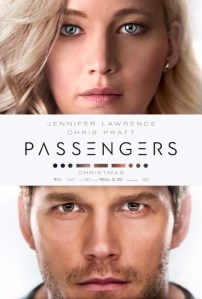 Reading the raft of reviews for director Morten Tyldum ‘s (The Imitation Game) new sci-fi movie Passengers, you would think the movie must have killed somebody’s mother. The resoundingly negative press stems from a an early plot development that critics have decried as offensive, disgusting, misguided, misogynist, and even “Titanic in space.” After having seen this controversial film, I feel like some of the moral outrage is overblown, or at least purposely ignoring complexities and context. Passengers is a movie that makes you think and feel and my feelings were more than billious invective.
Jim Preston (Chris Pratt) is a passenger onboard the Avalon spaceship as it hurtles across the galaxy toward the colony of Homestead II. It’s a gigantic, sleek, and powerful vessel and the trip is expected to last 120 years. Except Jim was awakened early. 90 years too early. His hibernation pod short-circuited and he’s unable to go back to sleep. He’s destined to live out his life and die alone before any of the approximately 5,000 other passengers awakens. The Avalon is large and lonely, save for a handful of robotic and holographic guides, notably an android bartender named Arthur (Michael Sheen) who advises Jim to accept his circumstances and find enjoyment. One year later, binging on exotic food, playing video games for hours, and living without rules has lost its appeal enough that Jim is considering suicide. Then he sees the sleeping face of Aurora Lane (Jennifer Lawrence) and is awestruck. She’s beautiful but she symbolizes more. She’s a journalist and he reads all of her works, admiring her courage, sense of humor, ambitions, and determination. He feels like he’s falling for her and wishes she were awake. Jim asks Arthur, “What if you were stranded on a desert island and had the power to wish somebody else there? You wouldn’t be alone anymore but you’d be stranding them.” Arthur’s response: “Jim, these are not robot questions.” Jim decides to purposely wake Aurora, because if he didn’t there wouldn’t be much of a movie left. He hides his culpability and welcomes her to this new grim reality and they find solace with one another. The truth hovers over their heads but it’s not the only danger for Jim. The Avalon is experiencing a wealth of small technical glitches that cascade into bigger problems. If Jim and Aurora don’t stumble upon an answer, all 5,000 people onboard could perish far from home.
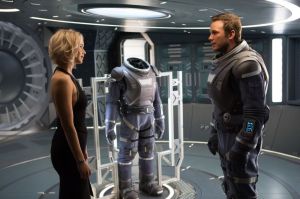 While far from flawless, Passengers has plenty at play to engage an audience on different levels, be they intellectual, ethical, or science fiction thrills. The premise is strong from the first minute onward and screenwriter Jon Spaihts (Prometheus, Doctor Strange) has an astonishingly imagintive command of world building. The first act is one of discovery for Jim and the audience, and Spaihts provides plenty to discover that fits within the logical future. Jim sends out a video recording asking for help and then learns it will take 18 years to be sent to Earth and another 30 years to get the answer. It’s a nice moment that brings some science smarts to the proceedings. Colony planets are the next big corporate venture, and I appreciated the little touches that made this future world feel all the more plausible and authentic. Jim is a lower-class skilled laborer and will owe a percentage of his life’s earnings to pay for the voyage (sound familiar?). There’s also a class system alive and well, as Jim is denied the more delicious food and beverage breakfast items because he is not a Gold Star passenger. Beyond these little touches, Spaihts delivers a remarkably efficient story structure. The emphasis shifts in half-hour segments just long enough to fulfill a plot purpose before moving on to a natural transition. The rich contours of the Avalon are explored with plenty of built-in mysteries like what’s on the other side of the crew door. It’s a story implanted with strong mystery elements to smoothly guide the intrigue of an audience. The small scenes open up to wider scenes, and every set on the Avalon fulfills a purpose either emotionally or with suspense. I was definitely hooked and wanted to learn more about the ins and outs of this brave new world. Tyldum impresses with how easily he translates his visual prowess into the realm of large-scale science fiction. The set design by Guy Hendrix Dyas (Inception) is immaculate and had me begging to visit as many locations as possible aboard the Avalon. The many designs are more than just clean, sterile surfaces; there’s craftsmanship and personality in the rococo symmetry. I also greatly enjoyed the very intentional Shining visual motif of Arthur’s red velvet bar.
The film’s selling point is the relationship between its mega-watt stars, and Pratt (The Magnificent Seven) and Lawrence (Joy) deliver on their end. You could do far worse than spend 90 years with some of Hollywood’s most effortlessly charming, gorgeous, and self-effacing actors. Pratt and Lawrence seem to exist on a similar goofy yet spirited plane, and it works toward their eventual courtship. There’s a cute scene where Jim quizzes Aurora on her observational reasoning, guessing real aspects about several sleeping passengers. Jim is a man who feels out of place on Earth, looking to build anew, and Aurora is looking for an adventure worthy of a great story to equal her famous father’s literary works. It’s a fascinating question of whether a person would willingly jump forward in time 250 years, as Aurora plans to when she returns to Earth (if there still is an Earth). You’d be severing all tethers to human relationships from your past and also the world as you conceived. The characters aren’t the most in depth, and “Aurora Lane” is definitely a name that’s one step removed from being downright Jetsonian, but it’s the exceptional situation that makes them compelling to watch. How does one court the only other waking human being on a ship of thousands? What if Aurora happened to be gay? It’s a Last Man on Earth scenario that has been explored many times on TV and the big screen but there’s still something inherently interesting about the premise. I also enjoyed the care they build for their only other companion, Arthur the loyal bartender and confidant.
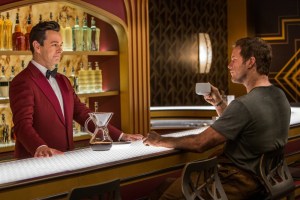 Whether you see the movie as a parable about the horrible things people do when confronted with despair or as a fantasy for unchecked misogyny will depend upon if you view the problematic relationship as morally wrong but potentially empathetic or only irredeemably creepy. “You murderer!” Aurora accuses Jim when she discovers the awful truth, and she’s right. Jim has robbed her of a future and taken away her choice. I like to consider myself a relatively enlightened and progressive chap but I’ll admit I that I can only see things through my own white heterosexual male lens, so your mileage may vary. When Jim falls in love with Aurora from researching her background and pouring over every word she’s written in print, this may be the telltale sign for an audience. If you view it as a more heightened equivalent to falling in love through correspondence, an unrequited love fueled by missed chances, then perhaps you’ll still be onboard. However, if you view Jim’s love as the equivalent of falling in love with a coma patient (Pedro Almodovar’s Talk to Her?) and projecting feelings onto an unresponsive woman without agency, then this is a romantic paean that you’ll associate more with a horror movie.
There are several great and touching one-sided romances in the annuls of film, and I viewed Passengers as a higher concept rom-com where the misguided man (it’s usually the man) is hiding a secret about the murky circumstances surrounding the start of their relationship (like a She’s All That in space). That’s a fairly cheeky assessment of what could also effectively be dubbed a Stockholm syndrome romance, as Jim is the one responsible for kidnapping her from her planned future. I’ve read lots of ink from critics decrying this movie as an offensive, deeply flawed film. I think Passengers effectively communicates the full implications of Jim’s choice. It wants us to wade into that ethically troublesome pool with Jim. It doesn’t pretend he’s the good guy, though that judgment can be read too easily. It says Jim is a human being in a unique setting and that he made a selfish choice. There’s a complexity there I think is going ignored in a rush to moral indignation. I honestly think most people if given similar circumstances would make the same selfish decision. That’s not a lazy excuse but it is empathy, and empathy does not require comprehensive endorsement to still exist in some form or other.
With that being said, the movie certainly stacks the deck in Jim’s favor for some sort of redemption and/or forgiveness. The very fact that we have an actor as handsome and charismatic as Pratt shows the movie’s intentions. It’s not like Steve Buscemi was the one who woke up Jennifer Lawrence, and now that I’ve just written that sentence I’d be seriously interested to see that version of this story. I think that audience sympathies might be different for a more ordinary, homely man awakening a woman who, by conventional dating standards, would be out of his league on any planet. I think an audience might be more apt to interpret a lecherous angle to Jim’s actions if the part wasn’t so young and generally appealing. The opening act is the Cast Away section of the story that follows Jim’s discovery and isolation for a solid year, and it does much to engender good will for an audience, enough that his actions waking up Aurora force us as well into the uncomfortable ethical muck. “He was a drowning man, and he’ll grab onto anyone to save himself if he could,” is the only real overt effort at approaching apology.
 This premise is strong enough that different angles could have been explored. What if we only spent the opening ten minutes establishing Jim and his life on the Avalon? The awakening of a second passenger would serve as the inciting incident but the movie would purposely hide behind the plausible theory that she woke up by accident, by the same mysterious malfunction that Jim will relate. It would also provide a longer period of time for Jim and Aurora to develop together. Then the Act Two midpoint would be the reveal of Jim’s involvement and the fact that he had been awake far longer than he initially told her, perhaps with the original opening half-hour cut down to a few impressionistic flashback bits to communicate the stark loneliness and desperation. We would be just as shocked as Aurora. It’s here that the movie could completely become a horror movie, with Jim chasing her down through the empty space station. Maybe she even finds a locker with other women he woke up that were then murdered because they too found out too much. Then she has to take him down or else he will keep repeating this murderous behavior until he gets his perfectly submissive Eve. Admittedly, that takes the movie in an entirely different, albeit still interesting, tonal direction.
Passengers seems to bounce back and forth between existential horror movie and broadly romantic soap opera. It doesn’t always mix but I enjoyed the collision of ideas, tones, ethics, and discomfort, at least before it rumbles into a third act that becomes a series of life-and-death action set pieces. It’s not that Passengers goes slack in its final act; the visuals are consistently engaging as the spaceship shuts down piece by piece. When the gravity goes, Aurora’s swimming pool water becomes a floating prison, endangering her life. It’s a terrific moment even if it only serves as momentary suspense. There was always something to keep my interest with Passengers, from the world itself to the mysteries to the ever-changing script to waiting for the awful truth to finally hit about Jim’s misdeeds. Ultimately your opinion of this movie will be entirely based upon your view of how the movie handles Jim’s decision and its aftermath. You may view the movie as a fiendish masculine fantasy that strips away a woman’s right to consent or as an empathetically challenging, morally dubious drama with a relatably selfish choice that requires real consequences and introspection. Pratt and Lawrence are winning actors even if they might not make the most winning couple. Passengers is engaging science fiction made with pristine technical care and a smart screenplay that layers mysteries worth unwrapping. I hope more audience members decide for themselves rather than turning up their noses thanks to the staunchly negative critical reviews reeling with offense. There’s more here than given credit and I feel Passengers is a journey worth taking for fans of large canvas science fiction that still demand a personable entry point.
Nate’s Grade: B
Share this:

Rogue One (2016)
 In the opening text crawl for Star Wars Episode IV: A New Hope, it says, “During the battle, Rebel spies managed to steal secret plans to the Empire’s ultimate weapon, the Death Star.” Disney, in its infinite wisdom to cash in on every potential resource of its lucrative cash cow, has decided to devote a whole movie to that one sentence in that initial crawl. I can’t wait for each sentence to get its movie. Rogue One: A Star Wars Story (in case you’d forget) is the first film outside of any of the trilogies and much is at stake. Not just for the rebels but for Disney shareholders. If a wild success, expect future tales coming from every undiscovered corner of the Star Wars universe. And if Rogue One is any indication, that’s exactly the kind of artistic freedom needed to blossom.

Not actually in the finished film.
Jyn Erso (Felicity Jones) has plenty to rebel against. Her father (Mads Mikkelsen) was forced against his will by Orson Krennic (Ben Mendelsohn) to work on a fiendish death machine for the Empire. Jyn’s father is responsible for designing the Death Star. Jyn is broken out of imperial prison by Cassian (Diego Luna) for the Rebellion. They want her to track down her father, find out whatever she can about this new fangled Death Star, and if possible, retrieve the plans on how it might be stopped. Her mission will take her to the ends of the galaxy to reunite with her father and to provide hope to the Rebellion.
Finally after many films we finally get a war movie in a franchise called Star Wars, and it’s pretty much what I wanted: a Star Wars Dirty Dozen mission. It’s thrilling to go back to the height of the resistance against the Evil Empire and see things from a ground perspective with a skeleton crew working behind the scenes. We may know the future events of those Death Star plans but we don’t know what will befall all of these new characters. Who will make it out alive? The open-and-shut nature of this side story in the Star Wars universe brings a bit more satisfaction by telling a complete story. This film will not have to wait for two eventual sequels years down the road in order for an audience to form a comprehensive opinion. I welcome more side stories like Rogue One that expand upon the fringes of the established universe and timelines, that establish colorful new characters and tell their own stories and come to their own endings, and hopefully don’t feature any more Death Stars (more on this below). It seems like it was ages ago that major studio tentpoles just attempted to tell a single, focused story rather than set up an extended universe of other titles to nudge along their respective paths. Director Gareth Edwards (2014’s Godzilla) is less slavishly loyal to the mythos of the series than J.J. Abrams. His movie doesn’t feel like flattering imitation but its own artistic entry. The cinematography is often beautiful and the natural landscapes and sets provide so much tangible authenticity to this world. Edwards has a terrific big-screen feel for his shot compositions and achieving different moods with lighting. He knows how to make the big moments feel bigger without sacrificing the requisite popcorn thrills we desire.
 Rogue One has to walk a fine line between fan service and its own needs. While it’s fun to see Darth Vader on screen again voiced by the irreplaceable James Earl Jones, it’s also a bit extraneous other than some admittedly cool fan service. We don’t need to see Vader clear out a hallway of Rebel soldiers but then again why not? It’s the same when it comes to the inclusion of cameos from the original trilogy. Some are minor and some are major, achieved through the uncanny valley of CGI reconstruction. Gene Kelly may have danced with a vacuum cleaner and Sir Lawrence Oliver and Marlon Brando both appeared as big floating heads after their deaths, but this feels like the next step beyond the grave. There’s a somewhat ghastly feel for watching a dead actor reanimated, so your sense of overall wonder may vary. The cameos are better integrated than the Ghosbusters ones.
There’s a great cinematic pleasure in putting together a team of rogues and rebels. The characters on board this mission have interesting aspects to them. Chirrut Imwe (Donnie Yen) is a blind warrior and aspiring Jedi. He feels like he stepped out of a great samurai movie. He uses his connection with the Force to make up for his lack of visual awareness, and Chirrut demonstrates these abilities in several memorably fun instances. There’s a world of back-story with Saw Gerrera (Forest Whitaker), a dotty wheezing warrior who is more machine than man at this point. Whitaker gives an unusual performance that reminded me of a kindlier version of Dennis Hopper in Blue Velvet. The reprogrammed robot K-250 (vocal and motion-capture performance by Alan Tudyk) is a reliable source of catty comic relief and I looked forward to what he was going to say next. The first 40-minutes is mostly the formation of this group, and it’s after that where the movie starts to get hazy. We know how it’s all got to end but the ensuing action in Act Two feels a bit lost. This may have to due with the reportedly extensive reshoots that were done last summer to spice up the movie (much of the earliest teaser footage isn’t in the finished film). I’d be fascinated to discover what the original story was from Chris Weitz (Cinderella) and just what rewrites Tony Gilroy (Michael Clayton) performed so late into its life. For much of the second act, the characters feel a bit too subdued for the life-or-death stakes involved, and that translates over to the audience. We travel to different locations throughout the first two acts but I can’t tell you much about them other than some intriguing mountainous architecture. The plot is a bit too undercooked and still obtuse for far too long, requiring our team to bounce around locations to acquire this person or that piece of information. Rarely do the characters get chances to open up.
 It all comes together in the final act for a 30-minute assault that makes everything matter. It’s a thrilling conclusion and the movie finds a way to keep escalating the stakes, bringing in powerful reinforcements that force our Rogue One crew to alter their plans and placement, while still clearly communicating the needs of each group and the geography as a whole of the multiple points on the battlefield. It’s what you want a climactic battle to be and feel like where each player matters. It’s also a welcome addition to the Star Wars cannon, as we’ve never seen a beach assault before. It feels like a new level that was unlocked in some video game, and that’s no detriment. The ending battle has different checkpoints and mini-goals, which allows for the audience to be involved from the get-go and for the film to jump around locations while still maintaining an effective level of suspense. Many of these characters make something of a last stand, and you feel the extent of their sacrifice. I read in another review that the reason Jyn and her rogues win is because they accept that they are replaceable, and Orson Krennic fails because he made the mistake of believing himself irreplaceable. I think that’s a nice summation about the nobility of sacrifice. I won’t get into specific spoilers but I was very pleased with the ending of the film even though it’s not exactly the happiest. It feels like a fitting ending for the darker, grittier Star Wars tale and it provides earned emotional resonance for the setup of A New Hope, which this movie literally rolls right into.
With as many fun and potentially interesting characters aboard for this suicide mission, it’s somewhat surprising that they are also the film’s weak point. Beyond simple plot machinations like Character A gets Character B here, I can’t tell you much more about these rogue yet noble folks other than their superficial differences. Take for instance the Empire turncoat, pilot Bodhi Rook (Riz Ahmed) What personality does he have? What defines him? What is his arc? What about Cassian? He’s supposed to secretly assassinate Jyn’s father if given the chance, but do we see any struggle over this choice? Does it shape him? Does his outlook define his choice? Can you describe his personality at all whatsoever? What about the villain, Krennic? Can you tell me anything about him beyond his arrogance? What about Baze Malbus (Wen Jiang), who carries a big gun and is close friends with our blind wannabe Jedi. Can you tell me anything about this guy beyond that? Even our fearless leader, Jyn Eros, feels lacking in significant development. She wants to find her father, get vengeance, but then changes her mind about sacrificing for the greater cause of hope. Many of the character relationships jump ahead without the needed moments to explain the growth and change. The original trilogy was defined by engaging characters. When you have a ragtag crew of six of seven rogues, you better make sure each brings something important to the movie from a narrative perspective, and not just from a pieces-on-the-board positioning for action. Look at Marvel’s Guardians of the Galaxy for tips. If this was going to be a powerful and emotionally involving war movie, the characters needed to be felt deeper. All too often they get lost amidst the Star Wars debris and then they become debris themselves. Ironically enough, Rogue One has the reverse problems of The Force Awakens, a movie that benefited from engaging characters but sapped from an overly familiar and cautious story. It’s telling when my favorite character, by far, is a sassy comic relief robot.
 Let’s talk about the Death Star in the room, namely the fact that over the course of eight Star Wars movies there have been Death Stars, or the construction thereof, in five of them (63% rate of Death Star sighting). We need a break. You can cal it a Star Killer Base whatever in Force Awakens but it’s still a Death Star in everything but name. I can’t even put a number to the amount of money it cost the Empire/First Order to build these things, plus the review process to try and correct design flaws that never seem to get corrected. At this point it feels like this model just isn’t cost-efficient for its killing needs. What about a more mobile set of multiple mini-Death Stars? I hope that the filmmakers for the new trilogy (Rian Johnson, Colin Trevorrow) refrain from putting another similar planet-killing space station-type weapon into their movies as we’ve had enough. However, the use of the Death Star in Rogue One was perfectly acceptable because it already fit into the timeline of the first film. I also greatly appreciated the clever retcon as to why the Death Star had its fatal flaw. It took a bothersome plot cheat from 1977 and found a gratifying and credible excuse. Now when Luke blows up that sucker it’ll have even more resonance.
Rogue One is a Star Wars adventure that feels like its own thing, and that’s the biggest part of its success. By being a standalone story relatively unencumbered by the canonical needs of hypothetical sequels, the movie opens up smaller stories worth exploring and characters deserving a spotlight. This is an exciting and entertaining war movie, and the kind of film I want to see more of in this multi-cultural universe. It’s not a faultless production as the lackluster character development definitely hampers some audience investment. I wish more could have been done with them before they started being permanently taken off the board. While Rogue One is looking to the past of Star Wars it still makes its own independence known. I hope this is the start of a continuation into exploring more of that galaxy far far away without the required additions of every Skywalker and Solo in existence. It’s a far bigger universe and it needs its close-up.
Nate’s Grade: B


You must be logged in to post a comment.