Blog Archives
The Dead Don’t Die (2019)
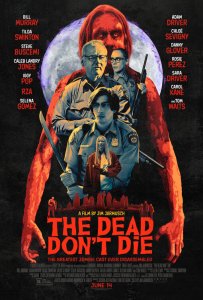 If you’re a Jim Jarmusch fan, you can probably stop reading now. I encourage you to continue but I don’t know if anything will be of help for you from here on out because, frankly, I don’t understand you. Jarmusch is a longtime staple of indie film and I’ve watched three of his films (Only Lovers Left Alive, Broken Flowers, Ghost Dog) and disliked all three to varying degrees, and that’s fine. There are plenty of hallowed names in filmmaking that are just beyond me, like Terrence Malick and Nicolas Refn, but I can at least partially understand what the fans of those auteurs value, an immersive visual, sensory experience at the sacrifice of narrative and coherency. When it comes to Jarmusch, I just don’t understand the appeal whatsoever. This is a man who found a way to make vampires crushingly boring, and now he finds a way to do the same with zombies. The Dead Don’t Die is the widest release of his career and it might be the worst movie I’ve seen in a theater all this year. It certainly feels like the longest.
In a sleepy small Ohio town, the police force consists of Chief Robertson (Bill Murray), Ronnie (Adam Driver), and Mindy (Chloe Sevigny). They’re going about their typical day, warning Hermit Bob (Tom Waits), listening to the alarmist worries of Farmer Frank (Steve Buscemi), and picking up supplies at the hardware store run by Hank (Danny Glover) and Bobby (Caleb Landry Jones). There’s a traveling group of students, lead by Zoe (Selena Gomez), as well as a group of kids in a juvenile detention center. Then the dead come back and small-town life will never be the same.
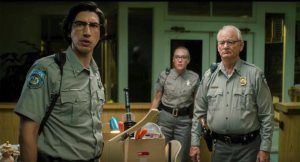 Anyone walking in expecting a zany comedy from the premise and cast, not to mention marketing materials, will be sorely disappointed, because what The Dead Don’t Die better resembles are the humorless anti-comedies of late-night Adult Swim blocs. It’s not so much that there are jokes, it’s more the absence of jokes, and somehow that might be the joke? The humor is stuck in one mode throughout the film. A character will slowly say something understated or obvious (Example: “That’s not good”) and then the reaction of others will be delayed, and then after that nobody will say anything for several painful seconds later. That’s about it, folks. It’s hard to find humor with that. The deadpan jokes are too obvious and too uniform to really strike any potent comedy targets. The consumer “satire” is brittle to the point of breaking. Various zombies will shamble around and say one-word items of whatever was important to them, ranging from “Coffee,” to, “Fashion,” to, “Chardonnay.” It’s like the one-word utterances are the entire joke (Hey, this dead guy liked fishing, isn’t that a riot?). It’s not satire and it’s not funny. How about the characters of Rosie Perez and Tilda Swinton being named Posie Juarez and Zelda Winston? Is that the kind of humor that sounds appealing? How about Tilda Swinton flexing a samurai sword to slice and dice the undead. Is that supposed to be cool? Is it supposed to be funny? Is it supposed to be funny that it’s trying to be “cool”? What is anything?
Later, the film inserts a new comedy element with meta asides where people seem to know they’re in a movie, and yet again the jokes are obvious and uniform, except now it’s even lazier, relying upon the meta recognition to simply stand in the place of a joke. If anything can happen in the small town, especially toward its crazy end, then why do these things have to happen? Or better yet why don’t better things happen? Because of the deadly pacing it makes every attempted bad joke feel that much more unbearable.
This movie is only 105 minutes but it felt so much longer. the pacing not just as a whole but scene-to-scene and even line-to-line from conversations is deadly still. Every moment feels stretched out but it doesn’t ever feel like you’re going anywhere. Characters will be introduced and given meet-cute moments and little indicators they might be significant players later, and then we’ll just find them dead. Other characters will be introduced and then never leave their locations, having no bearing on the larger story. It’s rare that I could honestly say there are entire supporting swaths of this movie that could be cut completely and not impact the story at all. It makes the many storylines we hopscotch across feel like they don’t matter and are generally wasting our valuable time.
 Then there’s the ending where Jarmusch just instructs Tom Waits to unleash a torrent of narration bemoaning how society deserves whatever downfall it incurs and that we’re all just zombies anyway. It’s so clumsy and overbearing and unearned after an entire movie where the cultural criticism amounted to a racist saying he doesn’t like his coffee black and then pointedly staring at the only black man in the movie. Even if we got more moments like that I might say some of the ending vitriol is justified, but the commentary gets muted in the middle until Waits has to finally tell us what the point is. There are scant political and environmental references but they feel like tossed asides themselves.
I don’t blame the cast for any of this although I can’t say what on the page must have seemed attractive. Murray is always going to be an amiable screen presence and Driver is a fun partner, slipping into a skillful deadpan and straining to find humor where there is precious little. Everyone feels wasted on screen because even if you’ve never seen these actors before you know, instantly and instinctively, that they have been far better.
The Dead Don’t Die is further proof that I am not a Jim Jarmusch fan. I can’t fathom how someone can actually be a fan of this writer/director. I was tempted to walk out at several points but I held in there. The jokes are too obvious and barely jokes, the pacing is awfully slack, and the whole movie is reprehensibly boring. Even when it has moments of weirdness it finds ways to make it boring. The structure does little to nothing with a large ensemble of very good actors. The movie and premise had potential. The idea of a zombie outbreak in a small town where everybody knows everybody is ripe for comedy and tragedy. Ultimately The Dead Don’t Die feels like one egregiously long in-joke that the audience isn’t privy to. The joke’s on us, folks.
Nate’s Grade: D
Share this:

Late Night (2019)
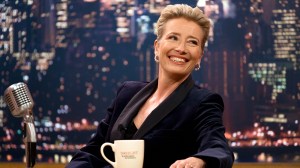
 Late Night follows the fictional long-running TV talk show host Katherine Newberry (Emma Thompson) who has been informed by her network exec that his current season will be her last season. She will be replaced and the show will be retooled. Along comes Molly (Mindy Kaling), an aspiring comedy writer who works in a chemical plant. She’s hired on the spot to serve as a token and offer more diversity in Newberry’s all white, all-male writers room. She has to find herself, find her voice, stand up for herself, and try to get the show to change with the times if it’s going to potentially survive the eager network axe.
For fans of the inner workings of show business, and the ups and downs and push and pull of creatives, Late Night was made for you. I’ve always been fascinated by the nuts-and-bolts of creative ventures in the entertainment industry and especially a writer’s room where people hash out ideas, build out a storyline, and generally bring our TV to life. I enjoyed the short-lived show where Jim Rash would interview different TV showrunners about their writer’s room processes and how they would resolve creative decisions. It’s one reason I loved HBO’s The Larry Sanders Show, a deeply satirical and self-deprecating look at the bowels of Hollywood. So if you’re like me and enjoy the inner workings of creative people working in tandem, then Late Night is already starting on fertile ground for you. Kaling’s world is informed by her years of television writers room experience, as well as running her own show, and that experience better informs the reality of Late Night, from the joke-writing process, to the wariness of content that may push away sponsors, to the means of staying relevant in a vastly changing landscape of how people get their media and entertainment. You feel Molly’s sense of triumph, and disappointment, when her first joke is placed into the monologue and then removed. The movie feels informed and real to its tiniest detail, which makes it all the more interesting.
 The film is consistently funny because Kaling is writing with such a sharp grasp of her characters. Right away the dynamic between Katherine, a cynic with an acid tongue, and Molly, an idealist but a novice who is pushing for reforms, establishes so much wonderful conflict and eventual resolution. It’s universally enjoyable watching a character come into her own, transform the lives of others for the better, and to have characters who butted heads form a mutual friendship and understanding. That’s all present, but with Kaling’s command of writing the characters come first. They drive the story, and while the destination is rather predictable with this sort of thing, that doesn’t make the journey any less satisfying. The character of Katherine Newberry is interesting because she’s a woman who has established her own perch in late night, but she’s still older, white, and from an elitist, privileged bubble. She’s stuck in the middle, which makes her such an interesting character to explore and push into new territory. Kaling has mined some talk show headlines for her story’s drama and it doesn’t feel cheap. Past mistakes are given weight and force characters to reckon with them in a way that acknowledges the extent of the ramifications and the people that have been hurt. Kaling also has a generous sense of writing for her supporting players, giving many a small moment to make an impression and enough for serviceable secondary character arcs.
There’s a definite message afoot with Late Night and it goes about it in a way that makes it far more accessible — as entertainment. Rather than dragging out a soapbox, the movie does the smarter ploy by demonstrating why a homogeneous writers room of the same kind of voice/perspective can be limiting and potentially regressive. Molly is the long-overdue change agent to the show, to the characters, and to the old ways of thinking of what television, and by extension the entertainment industry, had to be simply because it had always been that way. The film’s sense of advocacy for representation is strong and a central tenet, but this doesn’t get in the way of telling a good story with enjoyable characters. By demonstrating through its tale, Kaling has smartly packaged her movie as an empathy test designed to expand the perspectives of its audience, to get them to think how difficult it may be for a woman, let alone a woman of color, to find work in her chosen field. It’s the kind of movie you could take your grandparents to and have them nod along in approval.
Allow me to get a little personal here as I reflect on the topic of representation. I think recognizing one’s self and one’s stories is a huge deal. The power of empathy is potentially endless but that doesn’t mean that all stories need to be told from the familiar template of a straight white dude encountering conflict and change. With good storytelling, anybody can feel for anybody’s plight, but that doesn’t mean that those in the industry should stop trying to give voice to others who have historically been marginalized. TV, and particularly late night TV, is something of a boy’s club and needing more women. A recent analysis on late night TV concluded, with the exception of TBS’ Samantha Bee, that the typical late night talk show writing staff is only one quarter female. More people deserve more opportunities to shine because we, as a society, benefit when we have a plurality of stories from a plurality of voices and perspectives. It makes us all better.
 During the summer of 2018, I wrote a rom-com Web series (The Spirit Inside Me) that was told from the perspective of a bisexual woman and dealt with an eventual romance with another woman. You better believe I consulted with my queer friends to make sure every script didn’t feel like it had been written by a straight dude. Then we started to make it a real thing throughout the fall and winter of 2018/early 2019, and the mission statement of the series, and for me, was to try and get as many women involved in the production as we could. There were nine total episodes and I wanted to try and line up as many female directors as possible (if able all of them would be directed by women). Our show was from a feminine perspective, concerning an unorthodox LGBTQ relationship, and I wanted a feminine perspective to imbue as many facets of the production as possible. We put out notices for crew and emphasized that we were looking for women first. You would have thought I had just insulted people’s mothers the way some men responded back. They told me this was “reverse discrimination” and insulting and that the best talent should win out. I dismissed these whiny grievances and continued to seek and hire women. I know many women, even in our small community of filmmaking, don’t get as many opportunities as men. I wanted to give them those experiences. I felt it would make our series better and, personally, it just felt like the right thing to do because I could. With the show currently in editing (stay tuned!), it’s actually one of my happiest decisions as I really enjoyed seeing several women rise to their opportunity and shine. I’m not writing this to pat myself on the back or seek woke plaudits. This is such a slight example of mine over the overwhelming obstacles women face breaking through in a male-dominated industry that doesn’t want to share, but I felt it was worth sharing, dear reader.
Late Night was a movie that kept me smiling and feeling good all over. It warmed my heart, it made me laugh, and it gave me a group of characters to latch onto that earned my affections. Thompson is tart and witty and wonderful. Kaling is lovable and charming and hopeful. They make for a dynamic, combustible combination. Late Night is a fine example about the benefits of diversity, representation, and empathy, and it’s also a cute and funny movie that will make you happy by the time the credits roll. Tune in.
Nate’s Grade: B+
Share this:

Men in Black International (2019)
 Men in Black International is a perfectly fine movie but it’s hard not to feel the franchise going through the motions in an attempt to recapture the elusive magic that made the original 1997 movie the standout it was. This time we’re introduced to new agents and new agencies, with Thor Ragnarok stars Tessa Thompson and Chris Hemsworth decked out in black and on the hunt for rogue alien life forms in Europe and the Middle East. The two actors are charming and Thompson’s character is a great re-introduction to this hidden world, a woman who has devoted her life to finding and becoming a Man in Black. As we went from scene to scene, it felt like an MIB spy thriller evoking the undercover missions, arms dealers, shady informants, potential agency mole to expose, exotic locales, and crackling banter of that genre, and that’s something none of the sequels have done before. However, I also noted just how forced everything felt. What should be jaunty and droll came across as flat or overly exaggerated, trying to recreate the energy and style of the original but falling short. It feels like when someone is trying to retell a joke but has lost the rhythms that made it so amusing in the first place. The pieces are there but they don’t feel right. I also kept noting how it should be funnier. Many of the jokes are barely touched upon or developed for more potential. The set pieces are pretty humdrum and even the integration of the strange, otherworldly elements and aliens feels lacking. With that said, Hemsworth and Thompson remind you how winning an onscreen pair they are, and even with their charm kept at a lower, simmering level they are still enjoyable to watch. There’s a predictable storyline about an alien invasion and a predictable turncoat reveal, but it’s all played rather innocuously that it’s hard to get upset. Men in Black International is an intermittently amusing movie that’s hard to hate and hard to love. If you’re a fan of the series, or got a couple hours to obliterate, it should provide enough entertainment, but much like one of those handy-dandy nueralizers, you won’t remember much after.
Nate’s Grade: C+
Share this:

Aladdin (2019)
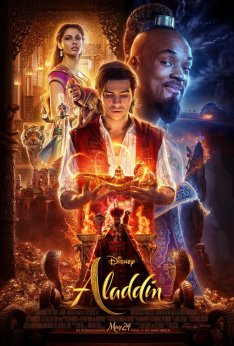 I walked away from the new live-action Aladdin feeling less agitated than I did for the 2017 Beauty and the Beast, and I’m trying to determine whether that was because this was a better interpretation or simply because my expectations have now been calibrated to know what to expect from these remakes, namely an inferior version of an animated classic. I’ve written about it before, recently with Dumbo, but the problem with the recent spate of live-action Disney releases is that they are too new, too beloved, and thus the audience is beholden to their nostalgia and resistant to dramatic changes from those original movies. The audiences demand fidelity over creative liberties. Without much attempted change, the finished versions end up feeling like big screen cover bands, going through the motions imitating the famous predecessor but ultimately reminding you how much more you’d rather be watching that original. I felt it with the 2017 Beauty and the Beast and now I’ve felt it again with the 2019 Aladdin.
The plot should be familiar to anyone who grew up with the 1992 classic. Aladdin (Mena Massoud) is an orphaned street thief (“street rat”) who runs into Princess Jasmine (Naomi Scott), a woman yearning to have a life on her own terms rather than being sold off via marriage. The evil advisor Jafar (Marwin Kenzari, a surprise highlight) is after a special hidden treasure, a long-lost lamp said to house a wish-granting genie. Aladdin is entrusted on this mission, gets trapped, and meets Genie (Will Smith), a boisterous figure trapped by the laws of the lamp. He must grant his new master’s three wishes, with some limitations. Aladdin wishes to become a prince and impress Jasmine, but he must withhold the truth, or so he feels. What rich woman could fall in love with a poor theif with nothing to offer but his heart?

So does the new Aladdin bring anything new and improved? It does sport a more feminist-friendly message and a more active Jasmine, who wishes not to simply be a free-minded princess but her people’s sultan, taking on the responsibility of leadership. It’s a nice addition that makes her more integrated into the story and developed. Unfortunately, Jasmine is also the recipient of the newest songs and they are, in a word, dreadful. They have little life to them or are crushed to death by simplified intentions, like when Jasmine storms around in a quasi-dream sequence belting how she won’t be silenced by the sexist men of her kingdom (the song is called… “Speechless”). It’s a pretty tuneless number and it doesn’t help that the entirety of it feels screamed at the audience. The portraits of Arabs aren’t terribly improved. Thirty years later and much of the story is still built around rather stereotypical depictions of heroic and villainous Arabic figures, though the movie seems to also be influenced by neighboring Bollywood. It just feels like there were some areas the filmmakers could have updated in the ensuing 27 years, but perhaps again they were too hesitant to not anger their core audience of fans.
Guy Ritchie (Snatch, King Arthur) was a strange choice when he was tapped to direct and, having seen the finished product, he shows no feel for musicals whatsoever. It’s a surprising realization considering his background in action and crime movies, genres that likewise rely upon a heavy understanding of choreography, use of screen space, editing, and furthering plot with action. It’s apparent very early, by the time we segue into “One Jump Ahead,” that this is going to be a tepid experience devoid of a sense of energy and style. Ritchie isn’t a bland director even in his bad movies, but his Aladdin feels like a for-hire gig where he has mitigated any stylistic flourishes. Aladdin is also a mystifying 38 minutes longer than the original cartoon and yet feels far more rushed. Even the song numbers feel like we’re speeding through them. The signature showstopper “A Whole New World” feels less than revelatory as we quickly traverse the city at night, muddy colors making the magic carpet ride less than magical. The entire movie feels weirdly paced and awkwardly developed, rushing to hit familiar plot points and yet paradoxically taking longer to do so. I’ll say that it doesn’t feel like a movie that runs over two hours long.

There is a middle portion of Aladdin becomes something like a fantasy version of Hitch, a romantic comedy where Smith was playing the confident wingman to an awkward foil. This is the only part of the film that feels like it’s settling down and giving the characters time to develop in a more organic fashion. The interplay between Aladdin and the Genie is entertaining and Smith puts his smooth charm to maximum effect during this sequence. The filmmakers even add a love interest for the Genie himself played by Nasim Pedrad (Saturday Night Live), and this allows him to put his own advice to the test and stumble in the game of affections as well. It’s quite reminiscent of Hitch but it made me smile and laugh more than any other part. It also felt like the one portion of the film where it was staking out its own identity and utilizing the talents of its own cast. I wish the entire movie had been retrofitted to be an Arabian Hitch of old.
Nobody can replace Robin Williams’ iconic performance as the Genie, but Smith is a mighty fine choice for a replacement. His effervescent charm cannot be killed but it can be dulled, and too often the new Aladdin feels like it’s misusing the man’s many natural talents. Smith has a very shaky singing voice, and I was wincing in the opening minutes as he began to warble “Arabian Nights.” Oh no, I feared, what have we gotten ourselves into? Smith is no stranger to musical performances but his career is in rap, so I was expecting the Disney folk to re-imagine several of the songs with a more contemporary hip-hop angle to play to his strengths. They do not. The best performance is easily “Prince Ali” with its propulsive drive that Smith stakes full command of like the head of a drumline, slowing the tempo down and asking for participation from the sultan in order to ramp things back up. It’s a fun moment and made me wish the songs (with brief additional lyrics by the team behind The Greatest Showman) had been allowed to stray further and discover new angles that make better use of this version of this story. Also, the special effects make his blue genie look horrifying and should have been scrubbed as soon as somebody first saw him as a blue Shrek creature.
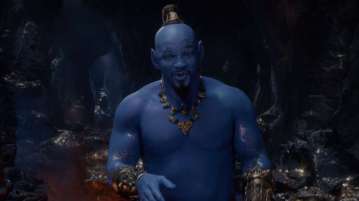
The highlight performer for me was Scott as Jasmine, an actress that first caught my attention as the Pink Power Ranger in, what else, the big-budget Rangers reboot. She demonstrates the most range and has an immediate presence; her Jasmine seems to be holding back, always wary, always assessing, and knowing more than she lets on. It feels like a more politically astute figure that can still give in to carefree moments of jubilation. Her singing is also pretty good even if she’s saddled with the worst solo songs. It’s not her fault that her onscreen lover seems to have better chemistry with Smith than her.
The new Aladdin does have some of its own virtues. The costumes are gorgeous and the sets are carefully crafted, making the world feel lavish and real and often stunning. Smith is still a charming performer and Scott feels like a great pick for a character given more agency. I enjoyed that Jafar is given a new character inferiority complex about being second best, and this is better used to fool him into his downfall. Even a less accomplished rendition of great sings reminds you that they are still great. Likewise the story is so well constructed that it’s hard to completely mitigate its delights and payoffs. The 2019 Aladdin is everything you expect from it, though possibly less, and it never truly justifies its own existence. There are moments to tantalize what a slightly different big screen revitalization could have been, like its rendition of Hitch. If you’re a super fan of Aladdin, it might be enough to get you over the rough spots. However, if that’s your starting point, I would advise staying home and just watching the superior and shorter version.
Nate’s Grade: C
Share this:

Detective Pikachu (2019)
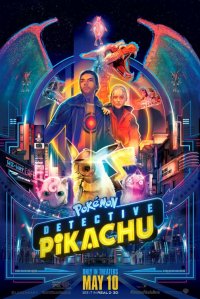 This may be my least useful review in my career as a critic but I’ll try my best when it comes to Detective Pikachu. I’m not a Pokemon fan. It came to popularity as I started high school and was generally after my time. I can state unequivocally that this movie is not made for people like me, and that’s fine. I imagine fans of the long-running television series and games will be delighted to see this world brought to life with great care and top-notch special effects. I sat through the 105 minutes slightly amused but feeling no strong feelings one way or another. It’s a pleasant enough movie with decent world building and a predictable plot (taken verbatim from the game of the same name apparently). It’s charming enough for an outsider but offers not much else. It feels like a PG-Deadpool Ryan Reynolds attached to a Who Framed Roger Rabbit?-style universe where Pokemon and humans interact normally. No one ever seems to fully articulate how the Pokemon battles are essentially dog fighting and that they’re enslaving these creatures for blood sport, but it’s not like I was expecting that commentary either. In a world of living monsters, the human characters are a bit boring. Justice Smith’s character is annoying and inconsistent. He seems a bit oblivious to how much he remembers about his missing father, which is more curious with some end reveals. Bill Nighy appears as the most obvious villain. Suki Waterhouse is here as a shape-shifting hench woman. The real draw is Reynolds as the voice to a Pikachu looking to pick up the pieces of its lost memory. The humor is brisk and has more hits than misses, even if the aim is somewhat low. Detective Pikachu is a family-friendly comedy that will likely please the hardcore legion of Pokemon fans and leave the rest of us shrugging our shoulders and saying to ourselves, “Well, that was a thing.”
Nate’s Grade: B-
Share this:

Long Shot (2019)
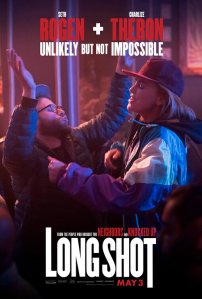 Secretary of State Charlotte Field (Charlize Theron) is preparing for the moment she feels her whole life has been leading up to: a presidential run. the current president (Bob Odenkirk) has decided not to run for a second term and wants to endorse her. Charlotte and her team of dogged, loyal assistants (June Diane Raphael, Ravi Patel) are sifting through ways to improve her negatives as a candidate, and that’s where Frank Flarsky (Seth Rogen) comes in. He’s an activist journalist that has just been fired and he also happens to personally know Charlotte; she was his babysitter. He comes aboard her campaign with the condition that she really fights for what’s important and not cave to the powerful lobbies and interest groups. He rewrites her speeches and the two of them grow closer together, bonding over their past and a possible future, not just as president but as boyfriend-girlfriend. They must keep their feelings a secret for the time being. If the press found out it might kill her candidacy before it ever really began.
The film’s biggest strength is the emphasis with the leading characters and the crackling chemistry between Rogen and Theron. It’s a fairly familiar dynamic between the more buttoned-up personality learning to cut loose and the more wild and impulsive personality learning a degree of self-restraint and responsibility. And to be fair Long Shot does pull from this familiar foundation for a starting point with its odd couple dynamic. However, it goes further by making their differences more attuned to politics and compromise. Fred is unwilling to back down for the things he knows are right and would rather have nothing than a watered-down version of the important issue he had been fighting for. Charlotte is more the political animal and used to working with others, including scoundrels and morons, in order to affect change. She’s about incremental, pragmatic change for the greater good and he’s about ideological purity as a moral imperative. This isn’t just a small character quick either; it’s a defining conflict between both characters and a subject that gets further examination as Charlotte confronts the realities of running for president and the many compromises of self and vision may or may not be needed.
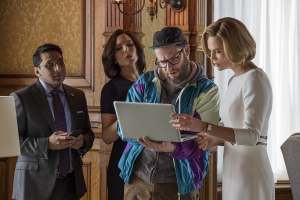 Being a woman running for president is an obstacle course of having to deal with latent sexism and other people’s expectations of what is socially appropriate. Charlotte is going to be judged harsher for the same behaviors men will be excused for; this isn’t a new observation by any means (apply your favorite double standard here) but the film makes you understand the pressure and scrutiny that befalls her at every turn. It defines her character, which is why finding someone she can unwind with and be her true self away from the cameras is such an understandable and desirable escape valve. She’s running to inspire little girls that they too can be president but at she also has to assess the cost of how much she’s willing to hide or lose from herself in order to get across that finish line, and if she does, what will be left? That’s the role for Alexander Skarsgard, the Justin Trudeau-like Canadian prime minister, who represents what is left of a person after bowing to opinion polls. Again, this isn’t new material, especially as anyone who can recall the 2016 presidential election will recall the questions of physical and mental fortitude that only seemed attached to one candidate and not as much the other. What this political reality does is provide a relevant substance for the romance and comedy portions of the film, making the characters feel more human. When Fred is articulating just what he must do to serve as a secret boyfriend for Charlotte, and a potential future they would have, you can hear his heartbreak with each new syllable. You also realize that he shouldn’t have to endure that and maybe these two are destined not to be together because of how unfortunate our politics and media environment have become.
Rogen and Theron are a blast together and have a fun rhythm they play off each other for unexpected comedy beats. His mellow vibes and good-natured joviality, as well as general awkwardness around people in power, are a nice fit with her sterner self. The best parts of the movie are just watching both of these actors enjoy their company. I won’t say that the romantic spark became overly apparent but what was undeniable was how well they paired as an onscreen buddy duo. With each new movie and every different role, Theron proves she’s one of the best actors of her generation. She can kick your ass, she can make you cry, she can win your heart, she can make you bust a gut. In short, Charlize Theron can do anything. She has several disarmingly funny moments, like when she’s high on ecstasy and pulled into an international crisis and has to maintain her cool. Rogen could easily fall back on his ease playing the oafish, insecure, crass characters of his past, but he does a fine job imbuing his charm, energy, and authenticity with Frank. Rogen is an anxious and generous scene partner who typically elevates his costars, and he and Theron as so good together that it sells their romance even better than the writing.
 Thankfully, Long Shot is consistently funny and bases much of its humor on the characters and their needs and developments. The movie isn’t just a retread of the incredulous fantasy of some ugly dude successfully romancing a beautiful woman. We’ve already had this dynamic explored in another Rogen comedy, 2007’s Knocked Up (in another universe where Katherine Heigl’s career didn’t stall, I could have seen Long Shot serving as an unofficial reunion for her and Rogen). There are jokes to be had about the unbelievable nature of this central romance and Rogen’s overall appearance, and that’s expected. What made me happier was that these wisecracks served a purpose to highlight how professionally damaging this potential relationship could be for Charlotte’s chance of winning office. They didn’t just feel like gratuitous put-downs. The joke emphasis is heavily tilted in favor of our two leads but there are nice moments with the supporting cast, like Raphael’s constant passive-aggressive comments, Bob Odenkirk’s buffoonish sense of betrayal with TV being turned against him, Randall Park’s frankness, and Skarsgard’s awkward and obsequious flirting. I don’t think the filmmakers fully knew what to do with O’Shea Jackson Jr. and provide some last-minute character shading that felt clumsy.
Long Shot follows the Judd Apatow rom-com formula closely and demonstrates that if you get funny, talented people together, provide them solid characterization and realistic conflicts, you can produce a winning romantic comedy that matters. Rogen and theron make an excellent team, the political content is savvy without getting too far into the weeds, and the romance is sweet and agreeable, with two genuinely enjoyable people coming to realize what they would be willing to risk for the other person. Long Shot is a reliably funny, bawdy, and heartwarming little movie with a little more on its mind than gross-out comedy set pieces. It’s worth seeking out this summer. I’d happily vote Theron for anything, especially if she was running for elected office as Furiosa. That’s a candidate that get results.
Nate’s Grade: B
Share this:

Avengers: Endgame (2019)
 This may prove to be the most difficult review I’ve ever written in my twenty years (!) of reviewing movies. How do I ever begin to describe the events of Marvel’s culminating blockbuster Avengers: Endgame without stepping too far into the dark and dangerous territory of the accursed spoilers? I thought it would be difficult talking about last year’s Infinity War considering the shocking plot events and general secrecy, but this concluding chapter to a 22-movie journey is even more secretive (the trailer accounts for only footage roughly from the first twenty minutes). I’ll do my best, dear reader, to give you the clearest impression I can of this unique experience while respecting your need to be un-spoiled. In short, Avengers: Endgame is unparalleled in our history of modern popular blockbusters because it needs to work as a clincher to a decade-plus of hugely popular blockbusters for the Marvel Cinematic Universe (MCU), and boy do they ever stick the landing.
The film picks up with our surviving Avengers picking up the pieces following the events of Infinity War, namely Thanos (Josh Brolin) eliminating half of life throughout the universe. The original six Avengers are all suffering through guilt, depression, and degrees of PTSD following their failure to defeat Thanos. Scott Lang a.k.a. Ant-Man (Paul Rudd) arrives after having spent time in the quantum realm and has a potential solution that will involve traveling through time to correct the mistakes of the past and bring everyone who vanished back to life. The remaining teammates assemble at the behest of Steve Rogers a.k.a. Captain America (Chris Evans), including Bruce Banner a.k.a. Hulk (Mark Ruffalo), Black Widow (Scarlet Johannson), Thor (Chris Hemsworth), Hawkeye (Jeremy Renner), Rocket Racoon (voiced by Bradley Cooper), Nebula (Karen Gillan), and War Machine (Don Cheadle). However Tony Stark a.k.a. Iron Man (Robert Downey Jr.) needs the most convincing, as he is most afraid of making things even worse and losing more people he feels are too precious to be casualties to their failures once again.
 The thing to know ahead of time is that Endgame is not for the casual fan. This is a long love letter to the fans that have pored over all 22 preceding films, not just a scant one or two. Infinity War was accessible to relative newcomers because of the structure and focus on Thanos as the main character, providing a self-contained arc that lead up to his finger-snapping triumph. It also benefited from the fun factor of simply watching a bunch of popular characters interact and team up for the first time in MCU history. Now that a majority of those characters have turned to dust, the emphasis falls back on the original core of the Avengers, bringing things full circle. In several ways, Endgame is about bringing to a close this mammoth project that began with Iron Man, this decade of storytelling ambition that has stretched out into multiple inter-connected franchises. If you love these characters, then Endgame is a movie made specifically for you. There is a long stretch in Act Two that relies upon a decent amount of fan service and sentimentality, but I don’t think either is an automatically negative attribute. Before we reach the finish line it’s important to take stock of how far we’ve come and this goes for the essential characters and their long arcs. There are several fun cameos strewn throughout and the filmmakers even take an interesting tack of trying to reclaim and re-contextualize the MCU movies that fewer people enjoyed. It makes for a filmgoing experience that is heavy in references, in-jokes, Easter eggs, and cozy nostalgia, which will confuse and frustrate those not well versed in this big world.
The other thing to know, especially if you’re a long-standing fan, is that there will be tears. Oh will there be tears. I lost count of the amount of times I was crying, which was pretty much on and off nonstop for the final twenty minutes. I was even tearing up for supporting characters that I didn’t know I had that kind of emotional attachment for. The film is done so well that the first third actually could play as the MCU equivalent of HBO’s The Leftovers, an undervalued and elegant series about the long-term recovery of those that remain in a post-rapture world. The opening scene involves a character having to go through the loss of loved ones via Thanos’ snap, and it’s brutal as we wait for what we know is coming, dread welling up in the pit of your stomach. The Russo brothers, the returning directing team from Infinity War, know what scenes to play for laughs (the line “That’s America’s ass” had me in stitches), what scenes to play for thrills, what scenes to play for fist-pumping cheers, and what scenes to play for gut-wrenching drama. They allow the movie to be an existential mood piece when it needs to be, actually dwelling on the repercussions of a life post-universe culling. There’s a character who frantically searches to see if a loved one was among the missing, and that eventual reunion had me in tears. With the three-hour running time, the Russos have the luxury of allowing scenes to naturally breathe. This might be the most human many of these characters have ever seemed, and it’s after recovery and grief. Needless to say, the conclusion feels very much fitting but also unabashedly emotional, unafraid of diving deep into its feelings. I sobbed.
 I was worried once the film introduced the time travel plot device that everything was simply going to be erased and invalidate the struggles that came before. The worst use of time travel is when it eliminates any urgency or danger, allowing an endless series of do-overs to correct the past. Fortunately, returning screenwriters Christopher Markus and Stephen McFeely (Civil War, Winter Soldier) realize that in order for there to be a reversal, a glint of a happy ending, there must be a cost or else it all meant little to nothing. There are finite events in the movie that cannot change (as of now) and losses that will be permanent (as of now, if they don’t want to cheapen the journey). People died with Infinity War but we all knew, at least when it came to its dreary conclusion, that it wasn’t going to be too long lasting, which allowed the communal grief to be short-lived. After all, there’s a new Spider-Man film coming down the pike two months from now, so it’s highly unlikely the teenage web-head will remain dead. However, with Endgame, the deaths serve as the cost for resurrecting the MCU, and they will be felt for years. The screenplay provides limitations to the time travel mechanics, though I don’t think the collective hand-wave to the nagging paradoxes was as successful as the movie thinks it was. The film barrels ahead, essentially telling you to forget about the paradoxes and enjoy the ride, focusing on the characters and remembering what is really important.
Suffice to say Downey Jr. is once again his charming, self-effacing, and enormously entertaining self. The MCU began with this man and his contributions cannot be overstated. He is the soul of this universe. Evans is compelling as the straight-laced inspirational figure who takes stock of what he’s sacrificed over the years, Hemsworth showcases a potent mixture of comedic and dramatic chops, Johannson is definitely the Avenger going through the “bargaining” phase to try and make things right and she has some subtle emotional moments that belie her desperation and guilt, and Renner makes a welcomed return in a way that made me appreciate Hawkeye like I never had before. Brie Larson does reappear as Captain Marvel but the movie smartly puts her back on the sidelines protecting the many other worlds in the universe needing assistance because of how overwhelmingly powerful she can become. Larson filmed her scenes for Endgame before her own solo movie, released a month prior, so forgive the different hair and makeup, Twitter nit-pickers. I will say there is one scene that is a bit convoluted how it gets there but is destined to make women in the audience cheer with excitement as the MCU says, “Hey, that whole ‘strong female character’ thing? Yeah, we’ve had all that for years, and here you go.”
 How does one properly assess a movie like Avengers: Endgame, a conclusion not just to an Infinity War cliffhanger but to a twenty-two movie prelude over the course of eleven years? The emotional investment in these characters, their journeys, has to come to something to be ultimately meaningful when it’s time to close the chapter on one massively ambitious story before starting the next. And there will be a next chapter; the MCU’s unparalleled financial success assures the fanbase they’ll have plenty more high-flying and wild adventures to come in the years, and more than likely, decades to come. Marvel had the unenviable task of wrapping up a major narrative in a way that would prove satisfying without devaluing the individual films and overall time investment. Hollywood is filled with trilogies that messed up their conclusions. Nailing the ending is just as important as getting things going right, because without a satisfying conclusion it can feel like that level of emotional investment was all for naught. Endgame reminds you how much you’ve grown to love these characters, what fun you’ve had, and genuinely how much you’ll miss these characters when they depart for good. It’s hard not to reflect upon your own passage of time with the ensuing eleven years, how you’ve changed and grown from the MCU’s humble beginnings in the summer of 2008. These heroes and anti-heroes can begin to feel like an extended family for many, and so fans desperately need the ending to do them justice. Avengers: Endgame is the ultimate fan experience.
Nate’s Grade: A
Share this:

Missing Link (2019)
 The stop-motion animation wizards at Laika have made some of the most charming and visually impressive movies of the last few years, including The Box Trolls, Kubo and the Two Strings, and ParaNorman. They’ve built up enough trust that I will see anything that they attach their name to. Missing Link is probably their least successful big screen effort yet, though that still means it’s only perfectly fine rather than great-to-amazing. It’s a heartfelt buddy comedy about a Bigfoot creature (voiced by Zach Galfianakis) that seeks out mentorship from a dashing adventurer (Hugh Jackman). It’s a sweet story but not fully emotionally engaging because the characters are fairly simplistic. There isn’t a lot of depth here and, surprisingly, more crass jokes aimed at a younger audience than their earlier output. From a visual standpoint, it’s beautiful with vibrant colors and fluid animation that has become indistinguishable from CGI nowadays. The action set pieces, usually appearing at a regular clip with each new location change, are fun and have their clever moments, like a capsizing ship that reminded me of the spinning Inception hallway. It’s an amusing, lower tier animated movie for Laika, but I’m worried that there might not be more of these movies the way they’re going at the box-office. Laika was treading financial water with excellent movies, and anything “less than” seems like it could possibly tip the independent animation production company over for good. Missing Link is a cute, mostly harmless, mostly entertaining movie that just doesn’t have the same ambitions and level of execution that previous Laika films have had. With that being said, it’s still worth a watch on the big screen for any animation aficionado.
Nate’s Grade: B
Share this:

Shazam! (2019)
 It seems like the secret to the success of the DC movie universe is making fun, lower stakes adventures with the characters the public has the least knowledge about. Shazam actually begun as a “Captain Marvel,” and now comes on the heels of the MCU’s Captain Marvel. We follow Billy Batson (Asher Angel), a teenage orphan trying to find his missing mother. He stumbles into a wizard’s realm and is given a special power whereupon he turns into a square-jawed, broad-shouldered superhero (Zachary Levi) by saying “Shazam.” What follows is like a superhero version of Big and it’s goofy, charming, and reminiscent of an 80s Amblin movie, where children’s movies were allowed to be a little creepy and weird. The movie is light, cheerful, and heartfelt with its doling out of family messages to go along with the slapstick and personal growth. It’s very much envisioned from a young boy’s fantasy perspective of being a super-powered adult, where the first things to be done include buying beer, going to a “gentleman’s club,” in between testing out bullet invulnerability and flight. Levi (TV’s Chuck) is excellent at playing an adult version of a kid. I was initially dismissive of his casting but he’s perfect for this part. There’s a satisfying sense of discovery for Shazam and his excitable foster brother (Jack Dylan Grazer) that doesn’t get old. The movie is more concerned with how the superpowers are affecting Billy’s relationships and sense of self than any larger, planet-destroying danger. The film even sets up its villain (Mark Strong) by giving him a decent back-story and opening the movie to explain his crummy family. It’s not a three-dimensional villain by any means but the attention given to make him something more is appreciated. The other foster kids in Billy’s new family are more archetypes but amusing, and their involvement in the final act raises the joy level of the finale. Shazam! is a movie where people are genuinely excited to be superheroes or associated with them, and that gleeful, buoyant revelry is downright infectious.
Nate’s Grade: B+
Share this:

How to Train Your Dragon 3: The Hidden World (2019)
 How to train your expectations for the concluding chapter in the How to Train Your Dragon franchise: step one, lower them. I was dispirited to discover what a disappointing final chapter The Hidden World comes across, especially considering the previous movies, including the 2014 sequel, are good to great. At its core it’s always been a tale of prejudice and family, dressing up a simple boy-and-his-dog story with fantasy elements. It also presents a world with danger and cost; even the fist film ended with the main character, Hiccup, losing a freaking foot. He loses his father in the second film. It’s a series that has grown naturally with heart, imagination, and a real sense of stakes. This is why I’m sad to report that the third film feels like a different creative team made it. The villain is a repeat of the second film, a dragon hunter with little to be memorable over. The plot is very redundant, stuck in an endless loop of capture, escape, capture, escape, etc. The addition of the new lady dragon is a perfunctory means to drive a wedge between Hiccup and toothless, his dragon. The lady dragon has no personality and needs rescuing too often. Her inclusion relates to a rather regressive emphasis on the need for coupling and marriage. The titular Hidden World amounts to a grand total of five minutes of screen time. The action starts off well involving the various colorful side characters but misses out on that sense of danger that defined the other movies. It feels goofy and safe and listless. How to Train Your Dragon: The Hidden World is a sizeable disappointment and coasts on the emotional investment of the first two movies. You’ll feel something by the end, sure, but it’s because of the hard work of others and not this movie.
Nate’s Grade: C


 nathanzoebl
You must be logged in to post a comment.