Hamlet 2 (2008)
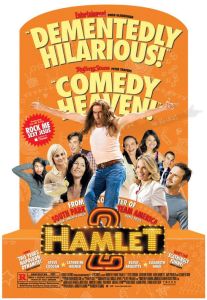 Believe it or not, there actually is a sequel out there about William Shakespeare’s most famous play concerning family dysfunction. Author David Bergantino surely doesn’t feel that he can improve upon the Bard’s classic Hamlet, but Bergantino is a writer who doesn’t cower from a challenge, like where to go next when all the main characters are dead. That’s why Bergantino took it upon himself to write Hamlet II: Ophelia’s Revenge (no joke). Apparently modern students at Globe University are playing out a family squabble very similar to anyone that has taken a high school literature class. The synopsis over at Amazon.com says it better than I could ever hope:
“When he unexpectedly inherits a creepy old castle in Denmark, Cameron tries to put his worries behind him, inviting his girlfriend and college buddies along on an overseas trip to check out the gloomy fortress. The plan is to get some serious partying done. Too bad nobody counted on the ghost of a drowned girl rising from her watery grave with vengeance on her mind! Now the only question is: to die or not to die?”
In the wake of Hamlet 2, a popular comedy at the Sundance Film Festival, I pity Bergantino. The man is going to be the Leif Ericson of pointless Shakespeare sequels: forgotten by history at the original pioneer. The film Hamlet 2 follows the miserable life of Dana Marschz (Steve Coogan). He teaches drama at a Tucson, Arizona public school and barely gets paid. His wife (Catherine Keener) is anxious to get pregnant and convinced Dana is shooting blanks. The couple is so poor that they have to rent out their home to a boarder (David Arquette). His drama class has two very WASP-y pupils (Phoebe Strole and Skyler Astin), but the rest are disinterested Hispanic students bused in from another school district. The school’s theater critic chides Dana’s laughable productions of Hollywood movies, like Mississippi Burning and Erin Brocovich. Then comes the news that drama has been slashed from the school budget. The pint-sized theater critic tells Dana to try something original to save the drama department. The answer? Hamlet 2. Thanks to a time machine, and Hamlet’s new best buddy Jesus Christ, the pair can go back and save everyone who previously perished.
 Hamlet 2 is Coogan’s show and the British comic makes his character endearing sad-sack. His character is pathetic and subject to all sorts of personal humiliations, and yet Dana is so earnest that it makes it hard not to empathize with his exploits. Coogan has a wild leer to him that gives the character a manic edge of desperation. He’s a gifted comic but he’s used to playing smug, droll characters, and Dana Marschz is the exact opposite of that mold. Coogan’s many breakdowns and bouncy spirit give the material an extra lift. He works hard for every laugh. It’s a shame, though, that he sort of disappears into the background during the staging of his infamous play.
So what is the comedic point of view with Hamlet 2? Are we to laugh at Dana and find him a buffoon? Well if that’s the case, then why serve up a musical finale that’s actually worthwhile and completely hilarious? The production values are pretty extravagant given the money limitations on the characters. Not only that, it’s so bonkers that I wanted to just watch Hamlet 2 on stage and not cut back to life outside. I wanted to luxuriate in the inspired craziness of a musical that involves time travel, Shakespeare, Albert Einstein, the song “Raped in the Face,” the devil, the Gay Men’s Chorus, lots of father issues, and Jesus moonwalking over water. That’s way more interesting than the ho-hum characters interacting backstage. In truth, the play’s the thing and it’s way too short for my liking. The performance serves as the film’s payoff, so I wanted to get every crazy kernel of shameless joy. The “Rock Me Sexy Jesus” song is irresistible and I haven’t been able to get it out of my head for days. It’s so bouncy and fun and melodic. I’ll be walking along and then I’ll start humming the damn thing. I doubt that I will come across a catchier original song in movie this year. Hopefully those bigwigs in the Academy will realize the tune’s musical merits and give it a nomination it rightfully deserves.
Then is Hamlet 2 a parody of all those treacly teacher inspiration movies, the kind that seem to always be populated by tough minority kids who just need someone to take the time and break through to them? Well Dana constantly refers to Hollywood movies like they’re documentaries, and even a whole class lecture concerns Dangerous Minds. When he accidentally injures a student, Dana jumps at his students being alert and offers in summation, “Yes it was stupid but it was theater.” The movie takes some shots against the likes of Dead Poet’s Society and Mr. Holland’s Opus, but ultimately Hamlet 2 becomes yet another inspirational teacher movie. Dana is able to rally his students to the cause of theater, prejudices are broken down, and certain students take charge of their young lives. It’s all so predictable, and predictability blunts edginess and can destroy comedy. The only true genre tweak seems to come when standoffish Octavio’s background comes to light. He’s not the underprivileged wannabe gangster but a bright kid whose been admitted to an Ivy League school early. And his parents don’t object to the play because of “ethnic narrow-mindness” but because they think it’s poorly written.
 Like Dana’s students, the film never seems to match its potential. The concept is great and so is having a main character who is inspired by theater but profoundly inept at teaching it. Dana lacks talent but can it be made up for with such big-hearted enthusiasm? There is plenty of ripe material there, but Hamlet 2 doesn’t seem to fully realize the comedic possibilities. Watching Dana fight administration officials in the name of the arts is worthwhile conflict but it’s rarely funny. Keener seems wasted as Dana’s passive-aggressive wife. An ACLU lawyer (Amy Poehler) is a great political target, especially as she fights in the name of bad art, but she appears too late in the film to be really capitalized. The climactic staging of Dana’s masterwork is another example of not fully thinking out the comic potential of a situation.
Here’s a perfect example: Elisabeth Shue appears in the film as herself, actress Elisabeth Shue. She’s quit the acting business and taken residence as a nurse in Tucson. What exactly is the joke here? Is it that Hollywood has the habit of spitting out aging actresses? Dana’s students have no idea who Shue is. Is it self-parody? If it was self-parody then the filmmakers needed to give Shue more of a personality. She’s appears infrequently and beams a nice smile but that seems like the only demand, though I must admit always in her nurse outfit, a nice visual gag. If Hamlet 2 had spent more time in revision it would utilize the comic possibilities of integrating a real-life actress playing herself in such a remote city.
Ultimately, I don’t know what to make out of Hamlet 2. It’s a marginally funny and entertaining venture that celebrates the power of the arts, which is a noble cause. Coogan straps the production on his back and carries it as far as he can go. There are some decent laughs and the closing 15 minutes is a giddy blast. However, the movie often feels flat and simply odd, missing potential punchlines and settling for second-rate comedic situations. The crafty premise afforded better material then what eventually comes across onscreen. The whole thing also feels like a mild retread of Waiting for Guffman. But take heart, because Bergantino is not about to lose the spotlight just yet. He also has written A Midsummer Night’s Scream: Hamlet II (I have no idea where the two stories connect but that’s the genius of it). It’s only a penny at Amazon.com. Get it while you can. Or don’t. Preferably, don’t.
Nate’s Grade: B-
Share this:

Pineapple Express (2008)
 There’s something to be said about a comedy that requires an audience to puff illegal substances in order to fully be entertained. Somewhere along the line the Judd Apatow comedy unit went down a wayward track with the stoner comedy, Pineapple Express, an amiable goof of a comedy at best. The premise is solid, two stoners (Seth Rogen and James Franco) witnessing a murder and on the run. Rogen and Franco have a great rapport with one another that translates to plenty of good vibes and humor (Danny McBride steals the show as a seemingly indestructible low-rent drug dealer). But the movie veers off into action territory with bloody violence that really harshes your mellow, man. Pineapple Express never really settles on a consistent tone, so when the movie fully transforms into a strained guns-a-blazin’ action caper, the comedy has totally vanished. The realistic violence is intended to get the laughs. When people get shot, it’s ugly, and when ear lobes get blown off it’s just plain gross. There’s no room for humor in the third act and the action is lazy and uninspired. If Rogen and his writing partner Evan Goldberg (who scripted the much funnier Superbad) were aiming to create an action parody, then they didn’t push nearly hard enough. After the movie ended, I thought back to last year’s superior action parody, Hot Fuzz, which had a consistent tone and packed jokes as hard as punches. As a sober moviegoer who has never inhaled any such wacky tobaccy, Pineapple Express just kept eluding me. The movie is too slipshod, too misshapen, and it completely goes up in smoke by the end.
Nate’s Grade: C+
Share this:

Tropic Thunder (2008)
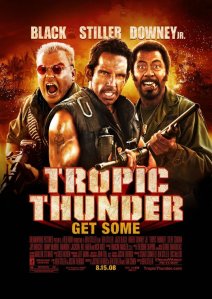 Ben Stiller has been kicking around the idea for Tropic Thunder for nearly 20 years. It took a lot of time to get the script in fighting shape, but the time was well worth it. Tropic Thunder is tasteless and occasionally appalling but it is also wickedly, deliriously funny.
Set inside modern-day Vietnam, Hollywood is filming another epic war movie but this one’s in trouble. It’s over budget, behind schedule, and the first-time director (Steve Coogan) can’t control his actors. Tugg Speedman (Stiller) is a fading action star looking for another hit. Jeff Portnoy (Jack Black) is a crass comedian who’s after some real acting credibility. He’s also addicted to heroin and worries that people will only ever see him as a funny man who farts. Kirk Lazarus (Robert Downey Jr.) is a five-time Oscar-winning actor who, thanks to makeup and a lot of hubris, is playing the film’s African-American sergeant. Alpa Chino (Brandon T. Jackson) is a rapper breaking into acting and is steamed that the Hollywood producers gave the sizeable black role to a white guy.
The director is at his wit’s end and being bullied by producers back in America. He is advised by “Four Leaf” Tayback (Nick Nolte), the Vietnam vet whose story the film is based upon. Tayback says to get real emotion and real fear that the actors should be stranded in the jungle without their precious handlers and demands. So the director takes Speedman, Portnoy, Lazarus, Alpa, and newcomer Kevin Sandusky (Jay Baruchel) in a helicopter and out into the wild. Trouble is, the actors have been left in the middle of an actual drug war, except they think it’s all apart of the script.
 Tropic Thunder is all things to all comedies. It could be tagged as being a bit incoherent but that’s because the movie has so much going on. It’s a sharp satire of Hollywood moviemaking and the raging egos of actors, it’s a send-up of Vietnam war movies and their bloody clichés, it’s a fairly worthwhile action film, and it’s a stupendously politically incorrect comedy with plenty of crude humor mixed side-by-side with genuine wit. It’s a comedy that has the potential to leave you aching from slapstick humor one second and biting satire the next. This feels like a complete comedy and not merely a series of sketches. Every character has an arc, some great moments, and each actor brings something different and something wonderful to the fray. This is clearly Stiller’s greatest achievement as a director.
The focus of Tropic Thunder is all over the place, and no one is safe from Stiller and his co-writers Etan Cohen and actor Justin Theroux. This is a brutal insider satire that plays it broad and loud. There are great jokes that ridicule the pomposity of the entire movie industry and the pitfalls of celebrity as a whole. I loved the jabs at celebrities going overseas and adopting children like they’re souvenirs. The movie has caught flak from disability groups that are mad about the movie’s liberal use of the term “retard.” I don’t want to say these people are missing the point of satire, or the fact that an R-rated comedy should offend on some level, but the joke is clearly on Hollywood and how movies exploit those with mental handicaps under the guise of telling their harrowing and inspiring stories. Movies have long been chronicling the adventurous lives of those with disabilities, which also has the side effect of making these people seem less like, well, just people. In the film, Speedman stared in a movie called “Simple Jack” about a mentally challenged boy who thinks he can talk with animals. Then the character has to pop up later in the film, complete with hysterical dialogue that blows apart just how exploitative these movies are (“I’ll see you in my head movies, but this is one head movie that makes my eyes rain”). It’s performed in just the right tone to make you laugh at the industry and the individual and not because of any disability.
The way the film establishes character back-story is genius. Tropic Thunder introduces all four major characters through fake commercials and trailers, like Grindhouse. The trailers are hilarious and a great way to kick off the movie. Stiller stars in a sinking action franchise where the world keeps being overtaken by fire (“Now, the one man who saved the world five straight times — will have to do it again”). The action franchise’s idea is to just reverse the scenario and, as sequels do, make everything bigger. Black’s trailer revolves around an obese family of super flatulent idiots all played by Black. The sequence is constant farting but it’s so over-the-top and pumped with contempt for lame-brained Hollywood comedies. The best trailer is the one that gives us Downey Jr.’s character, the esteemed Kirk Lazarus. Set in an Augustine monastery around the Middle Ages, Downey plays a monk who finds that he must conceal his inflamed passions for another man of the cloth (a figure I won’t spoil). Think of it as a 12th century Brokeback Mountain, and Stiller and company know exactly where to hammer Hollywood: the go-go eye stares, the hesitant naughtiness, and the ridiculous marketing angles – the title is inexplicably Satan’s Alley. The opening collection of fake trailers serves as perfect comedy bon mots for the feast that is to follow. They whet your appetite and may be the greatest opening 10 minutes of any comedy in memory.
 Downey Jr. gives an unforgettable performance comprised of sheer brilliant comedic bliss. I loved every second he was onscreen and I fully expect the man to get an Oscar nomination for his work here. Now, the role of a Method actor playing a black actor naturally presents a tightrope that needs to be walked just the right manner to maintain a satiric tone that doesn’t turn ugly. Let me state clearly that blackface is never funny. It is repugnant and Hollywood has a rather depressing history with the unsavory practice (Gene Kelly and even Bing Crosby sadly did it). Tropic Thunder is not a Stepin Fetchit-style minstrel show where Downey makes eye-rolling racist stereotypes. The joke is not that Downey is playing a black man, the joke is that he is such an arrogant and egotistical actor that he thinks he can play anyone. Besides, Jackson chides him throughout the film for his unorthodox portrayal, which tells you where the filmmakers stand. Downey elevates every scene he steps into and gives a performance, like the film, that is densely layered with comedy. He never breaks character even when the cameras aren’t filming and even when he’s alone. He’s two steps removed; channeling a performance as a heralded Australian actor playing his idea of a 1970s black male. When Alpa derogatorily drops the N-word, Lazarus slaps him and then begins a speech with, “For over 400 years they have been using that word to keep us down,” and ends it reciting the lyrics to the theme song from The Jefferson’s. In that span of time, Downey takes you along on every stop in the dense, hilarious mind of Lazarus.
While the rest of the actors don’t ascend to Downey’s heights (years ago this would have doubled as a drug reference), the ensemble of Tropic Thunder works together smoothly and they help make the film so much more enjoyable. Black is great when he’s trying to be seen as a “serious” actor when they are filming. I love his rushed and hushed line deliveries. But he’s even funnier after going through the wringer of heroin withdrawal. A sight gag involving Black digging through his speedo had me in stitches. Stiller is playing his usual dimwitted blowhard but propels the plot forward. He knows exactly how to oversell for laughs, like when he’s being riddled with bullets in dramatic slow-mo or when he’s playing Simple Jack. Baruchel is a nice counter foil to the uncheck bravado and craziness of the other actors. Jackson has fun voicing his mounting vexation with Lazarus. Coogan and Nolte provide good small moments, and Danny McBride steals his scenes as a pyrotechnic special effects expert that wants to “make Mother Nature piss her pants.”
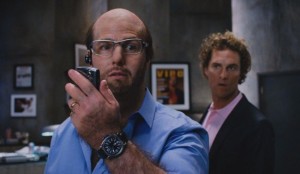 By now you’ve likely heard all about Tom Cruise’s small role in the movie as an irate, bald, fat, extremely hairy studio executive. It’s nice and amusing but I could have done with something different. Downey is unrecognizable in both physical appearance and through his speech; he fully inhabits a character that fully inhabits characters. Cruise, on the other hand, is instantly recognizable even with glasses, a paunch, and a shiny dome. It’s Tom Cruise playing a profane asshole but the joke wears thin. Cruise either needed to do something different or just be seen less, including his hip hop dance moves. And yet, Tropic Thunder has a running joke about Hollywood taking its beautiful A-listers and thinking that, through the power of makeup and superficial physicality, they can play any role. We’ve had a streak of Best Actress Oscar winners that have won accolades by stripping away their beauty and packing on the pounds (check out Charlize Theron in Monster). It seems like even the pretty girls are getting the ugly girl roles now; what’s a homely actress to do nowadays? So, in a way, Tropic Thunder is making fun of this line of thinking, that fat suits and some makeup are the great equalizer, but then it has Tom Cruise more or less falling into the same trap. He puts on a fat suit, a bald cap, but it’s still him and you hear Tom Cruise in every utterance. Maybe it would have been funnier if Cruise were playing a parody of himself since he is a studio executive at United Artists.
Tropic Thunder is a wildly funny movie that takes no prisoners when it comes to its sprawling satire. Stiller and company cut down the self-absorbed lifestyle and mentality inside the film industry and insecure actors. The film really shares the spotlight and each actor provides something different and welcome, and there isn’t a weak link in the bunch. Downey Jr. gives a brilliant comedic performance that will be long remembered. The movie is rude, crude, stupid, smart, and all over the place thanks to such a broad comic canvass. It took many years for Stiller to finally get Tropic Thunder off the ground but the wait was worth it. This is a rare comedy that eels loose, hits hard, and may warrant multiple viewings just to catch all the jokes-within-jokes. This is a movie with plenty on its mind, perhaps too much, but I wish more comedies were as well executed and skillful in their gags about gas passing.
Nate’s Grade: A
Share this:

Postal (2008)
 I feel very strange at this moment. I may need to consult a physician. I’m undergoing an altogether new and confusing sensation. You see, I’m hesitant, almost embarrassed to admit this, but I finally found a Uwe Boll movie that I, well, don’t hate. In fact, I was laughing with Postal and not derisively at it. I would never have guessed that a social satire co-written and directed by Boll, which begins with hijackers flying a plane into a large skyscraper, is actually intentionally funny. That’s not to say that the outrageous, violent, and messy film is verifiably good, but for the first time I feel like Boll is genuinely progressing as a filmmaker and may prove that he can craft a competently entertaining movie in the future. And if you know anything about Boll, that statement is akin to going from crawling to flying an F-14 fighter jet blindfolded while constructing a birdhouse out of Popsicle sticks.
The slapdash plot takes place in the small town of Paradise, Arizona. Postal Dude (Zack Ward, TV’s Titus, Bloodrayne II) is a guy who gets pushed around by life. His fat wife is cheating on him constantly, he’s bullied by rednecks that live in the neighborhood trailer park, and he can’t find a job to escape. He’s looking for any way out. His uncle Dave (Dave Foley) has started a doomsday religious cult of disenfranchised hippies. The IRS is currently targeting him and needs a quick money fix. Uncle Dave and Postal Dude scheme to steal the lone shipment of “Krotchy” dolls, a doll that resembles male testicles that is highly in demand (the Chinese shipment capsized and the crew all died, but luckily the dolls were saved). Also looking to snatch the dolls is a terrorist cell that includes Osama bin Laden (played by Jewish actor Larry Thomas, best known as the Soup Nazi on Seinfeld). The plot isn’t important per se, but you will find yourself openly questioning why respected actors like J.K. Simmons and Seymour Cassel are doing in this mess.
 I think Boll has finally found a genre best suited for his cinematic interests. Setting Postal in the wacky comedy world has a freeing effect for Boll: he doesn’t have to adhere to any form of logic. His other movies usually suffered through continual lapses in thought and deed. With Postal, Boll can be as silly as he wants and not have to worry about disrupting his narrative. It should be no surprise then that Postal contains the best acting ever seen in a Boll movie. The good German has always had a seemingly inability to control his actors or provide any helpful direction, but finally he has found a genre that will work with actors giving unrestrained performances that are figuratively all over the thespian map. Shockingly, Ward and Foley both give quite good straight-laced comedic performances (nothing can prepare you for Foley’s generous dose of full-frontal nudity).
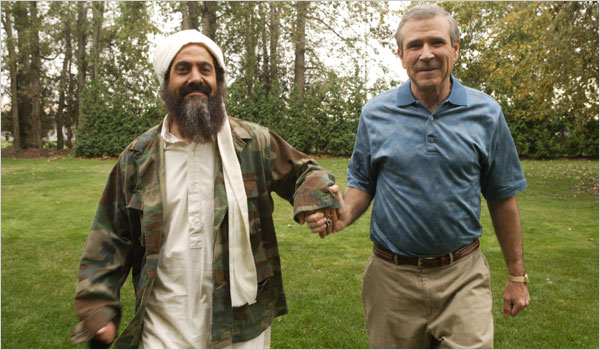
Boll stuffs a lot of extreme elements into his movie, including Islamic terrorists, Osama bin Laden frolicking hand-in-hand with President Bush, inbred rednecks with garish teeth, sex scenes with the morbidly obese, crass racial stereotypes, sexual abuse gags, the media’s opportunism in response to tragedy, an ending that takes a page from Dr. Strangelove, a mentally handicapped martyr, and much more. The movie’s aim is to offend and it has many targets. Boll is no insightful political satirist but even he finds humor in the absurd. The movie is blunt and belittles everyone. Postal skewers religious fundamentalism/apocalyptic yearnings on all sides. There is one sequence where Ward is pinned down by rednecks, Islamic terrorists, and crazy cult followers. He tries appealing to their hearts and establishing common ground. “Well,” one of the terrorists says, “We all hate the Jews,” and then everyone nods solemnly. That’s funny. It’s not deep or biting but it is funny in setup and delivery. I give credit where it’s due. Postal takes some seriously demented detours that take advantage of the wacky, anything-goes atmosphere.
The movie’s jokes hit high and low but some of them definitely stick. The concept of our main character caught in a shootout at the welfare office is given a wicked twist when he crawls along the incapacitated victims looking to trade up a better waiting number. There are comedic riffs hat actually work. Postal isn’t clever or scathing, and is hardly subtle or nuanced, but I could honestly see Postal developing a small cult following, one removed from the cult following already built around bashing Boll.
 Here is a list of moments that made me actually laugh: using a man in a vegetative state bound in wheelchair as a stepping stone to help climb a chain-link fence, Foley and Ward arguing decimal placements, watching Mini-Me actor Verne Troyer pushing a suitcase bigger than himself across a long shot, the fact that Osama bin Laden casually walks around in broad daylight to underscore the nagging fact that the man is still at large, the concept of using a cat as a silencer for a gun (fear not animal lovers, the cat lives), a “God shelter” in case of rapture, Osama attending a workshop on leadership styles and having his credit card declined, a character’s dying attempt to discover if he’s gay or merely bisexual, and the insane religious prophecy involving Troyer and 1000 horny monkeys. That last one is almost inspired in its sheer lunacy. The best part for many will be when Uwe Boll appears onscreen as himself. He admits he finances his crummy movies via Nazi gold and then, no kidding, the actual creator of the Postal video game appears and shoots Boll in the groin. For many, this is a vicarious moment to be savored.
Postal could have worked even better had Boll had a more consistent tone. Simply put, being offensive and shocking and wallowing in bad taste does not guarantee being funny. Watching a truck run over a baby carriage isn’t funny because it’s shocking. Without greater context or setup, it’s the equivalent of a tired and morose “dead baby” joke: tasteless but lacking any humor. And yet here are more missed comedic opportunities that Boll fails to capitalize upon. The missed comedic opportunities mount (Islamic terrorists eventually descend upon a redneck trailer park and … nothing?). Some jokes teeter but then hit a wrong note and become uncomfortable. Watching a black police officer (Chris Spencer, Bloodrayne II) brutally murder an Asian driver is not funny. Seeing a montage of children being massacred by stray gunfire is not funny and has no hope of being funny. When the movie utilizes realistic violence, it must walk a very delicate tone to spring laughs from darker territory. Realistic violence by itself is not funny because brutality is hard to milk for laughs.
Boll will drift and lose his comedy momentum. The highly publicized opening sequence is actually kind of funny. Two terrorists have hijacked a plane but then have second thoughts after they realize there are discrepancies about the number of post-martyrdom virgins. They begin to then analyze the gaps in theology and decide to turn the plane around and head to the Bahamas instead. With this segment Boll has taken a politically sensitive subject and given it a twist. Where the segment goes wrong is not when the passengers storm the cockpit and cause the plane to crash, this serves as irony. Where the segment goes wrong is when it cuts to a window washer atop a skyscraper and we watch the plane come closer and crash into a fiery blaze. The view doesn’t serve as any comedic punchline and places the viewer in an uncomfortable position of not only reliving 9/11 but also reliving it from a hapless victim’s perspective. It’s one example of a misstep that ruins the joke. By the film’s end it has turned into an incoherent bloodbath.
 Not to kill Uwe Boll with praise, but Postal is also his best looking movie to date. The shot compositions are framed well, there is actual camerawork that gives off a slight Coen brothers’ vibe, and the cinematography by Boll staple Mathias Nuemann is crisp and clean. This is a good-looking movie that works within its limited budget and locations.
Postal wasn’t given much of a chance out of the gate. It has been sitting on a shelf for over a year, it was dumped into a small number of theaters opening the same weekend opposite the slightly higher profile Indiana Jones sequel. Boll arranged a free screening of the film and a majority walked out after the opening segment involving the hijackers. Postal is a bizarre and distasteful movie that relies too heavily on shock tactics and the idea that offensive equates humor. There are holes, inconsistencies, shallow satire, and many missed comedic opportunities, and yet, in spite of everything, I laughed at several points. This is Boll’s most intentionally entertaining movie to date. While it may sound like heresy, I would rather watch Postal again than the much more commercial and critically lauded Pineapple Express.
It feels like Boll is actually progressing as a filmmaker, however, I make this statement under the caveat that the confines of the wacky comedy genre forgive lapses in content. But I may not be alone. Boll submitted his flick to the Hoboken International Film Festival and actually won. Boll was named Best Director and the film was awarded Best of the Festival, which is a category based upon audience votes. Perhaps it’s just my lowered expectations with any Boll production, but Postal almost works; not quite but almost. And that’s a tremendous leap forward for a man whose movies have made me retire synonyms for “stupid.”
Nate’s Grade: C
Share this:

The Dark Knight (2008)
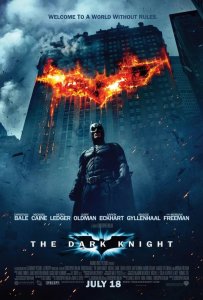 In 2005, Christopher Nolan’s reboot of the Batman series was a critical and commercial success. Gone were the campy and opulent sequences of old and the nipples on the Batsuit felt simply like a bad dream. Nolan served as director and screenwriter and brought serious psychological depth to his story and characters. As a life-long Batman fan, I loved it and wanted a sequel immediately with the exact same people responsible. The Dark Knight has been overshadowed by the passing of actor Heath Ledger, a gifted young actor nominated for a Best Actor Oscar for 2005’s Brokeback Mountain. He’s gone from gay cowboy to the criminally insane, and it’s all anyone can talk about. The buzz on Ledger and The Dark Knight is deafening and I am about to join that joyous chorus. This is a movie for grown-ups and makes lesser super hero adventures look downright stupid.
Bruce Wayne (Christian Bale) is dealing with the repercussions of his choice to assume the masked identity of Batman. He’s cracked down on Gotham City’s mobsters, and in their desperation they have turned to a crazed anarchist that likes to wear strange makeup. The Joker (Ledger) promises to return Gotham back to its old ways but even he knows this isn’t possible. “You’ve changed things,” he tells Batman. “There’s no going back.” The Joker wants to break the will of Batman and Gotham City and sets up elaborate and disturbing moral dilemmas that push many to the edge. His purpose is chaos, which isn’t exactly what the Mob had in mind when they subcontracted his services. Bruce must rely on his trusted butler Alfred (Michael Caine) and company tech guru Lucius Fox (Morgan Freeman) to help him combat a man that “just wants to watch the world burn.” Gotham also has a new district attorney, Harvey Dent (Aaron Eckhart), who is willing to put his name on the line to clean up the city. He’s butting heads with Lt. Gordon (Gary Oldman) because of Gordon’s secrecy and his reliance on Batman to do the things the law won’t allow. Dent wants to prosecute mobsters and is willing to put himself in jeopardy. He believes Batman is waiting for men like him to take the baton. Bruce’s old squeeze Rachel Dawes (Maggie Gyllenhaal replacing Katie Holmes — upgrade) has fallen for Dent. He’s an emotionally available man who wants to do good. Naturally, Dent and Rachel will becomes targets of the Joker.
 First off, believe the hype because everything you’ve read and heard about Ledger’s performance is the gospel truth. The actor vanishes completely underneath the gnarly latex scars, stringy hair, and smeared makeup. He transforms into this menacing figure and he makes Jack Nicholson look like a circus clown in comparison. He’s creepy and funny in a totally demented and spooky way, but he almost comes across like a feral creature that enjoys toying with his prey. Ledger fully inhabits his character and brings a snarling ferocity to the role. The Joker is given no back-story and he takes a macabre delight in crafting differing versions of his sordid past depending upon the audience. Ledger’s Joker is like a mixture of sadist and intellectual, of Alex from A Clockwork Orange and Hannibal Lector; he finds a way to get inside your mind and unleashes torment. There’s a great scene where he’s left alone in a holding cell with a police officer. The Joker taunts the man, getting little reaction from the trained lawman, but then he hits a nerve. The Joker asks how many of his friends, his fellow officers has he murdered. He then rhapsodizes the finer points of using knives instead of guns because guns are too quick. With knives he can see who people truly are in the final moments of existence. “So in a way, I know your friends better than you ever did,” he tells the officer. “Would you like to know which of them are cowards?” This triggers the officer to break his protocol and play into the Joker’s scheme. I’m not ready to say Ledger’s performance overtakes Javier Bardem’s Anton Chigurh (No Country for Old Men) as the most menacing villain of late, but Ledger certainly will make your skin do more than crawl.
Ledger gives a performance worthy of posthumous Oscar consideration. Toward the end of the film I found myself lingering on sadness that, well, this was it. This is all we are ever going to get of the Joker, such a fabulous character, but even more, this was the last full performance we are ever going to get from Ledger. His unnerving performance will stand the test of time when it comes to haunting screen villains, and I’m sure the actor had many more incredibly performances left in him before he passed away.
 The Dark Knight has less in common with other superhero series and should be considered a modern crime drama. It has more in common with Heat than with Spider-Man. Even compared to Nolan’s excellent Batman Begins, this is the first Batman film that feels like it occurs in a real city in our own reality. In Batman Begins, we had the CGI ghetto that happened to be conveniently where all the city’s scum lived, an ancient league of ninjas that wanted to wipe an entire modern city off the map, and then a super microwave that zapped water molecules in the air. Even though it was the most realistic Batman yet, it still had some fantastic elements that kept it from feeling fully believable. This newest Batman adventure feels more like a real city and a city that is being torn apart. You get to see a lot of Gotham City’s moving parts and different social circles and then see the Joker tear them apart. The knotty screenplay by Christopher Nolan and his brother Jonathon is dense and packed with subtext and ambiguity not seen in the likes of other spandex-clad super hero movies. This isn’t a super hero movie so much as an enthralling crime thriller with better gadgets.
Whereas Batman Begins focused on the psychology of a man that dresses up in a costume and fights crime, now the attention turns into examining the impact of Batman. There has been escalation, just as Gordon hinted at the close of the last film. Batman has stepped up law enforcement and now Gotham’s criminal element has placed their trust in a psychopath that promises results. This is a movie about symbols and ideals and about the tenets of civilization. The movie presents an arsenal of mature questions and rarely gives absolute answers. Batman I supposed to be a hero but does he play by the law? Can he make decisions that no one else can? Batman believes in the goodness of others and serves as a symbol for the city to stand up against corruption, but can Batman be corruptible? Does he have a breaking point? Is implanting hidden surveillance and spying on 30 million people in the name of security overstepping? Is it acceptable to cross a line if your enemy crossed it first? The Joker lives at the other ideological end and believes that human beings are selfish and will eat each other when the chips are down. He devises disturbing social experiments that test the limits of ordinary citizens and how far they are willing to go out of self-interest. The Joker is an anarchic force that seeks to tear down civilization itself, and that is a far more interesting and devastating plot than vaporizing water molecules with ninjas. When the movie covers the tired “we’re one in the same” territory that most super hero flicks hit (the Joker responds to Batman with, “I don’t want to kill you. What would I do without you? You complete me.”), it even makes sense given the psychological and philosophical complexity at root.
And oh boy, is The Dark Knight dark. This flick racks up a body count that could compete with movies usually involving some cataclysmic act of nature. The Joker’s unpredictable nature, and the dark twists the film plumbs, creates an atmosphere where you dread anything happening at any time, and mostly bad things happen. Batman must come face to face with his limitations and the realization that his actions, no matter how altruistic, will have negative consequences. This is not a movie for young children. If any parent buys their child a Joker doll and takes them to see this movie then expect years of therapy bills down the line. Much of the violence is implied but the overall effect is still chilling. It’s difficult to call The Dark Knight a “fun” movie. Batman Begins was fun as we followed Bruce Wayne tinker and become his crime-fighting avenger. This movie watches much of what he built get taken away. The movie makes gutsy decisions and for a super hero movie, let alone a summer blockbuster, and this is one decidedly dour flick where no character ends in a particularly pleasant place, especially poor Harvey Dent.
 Speaking of Mr. Dent, while Ledger is deservedly getting all the buzz and plaudits, Eckhart’s excellent performance is going unnoticed. Dent gets just as much screen time as Batman and is the white knight of Gotham, the man unwilling to break the boundaries of the law to merit out justice. Like Batman, he serves as a symbol for Gotham City and its resurrection from the stranglehold of crime. Batman fights in the shadows and serves as an anonymous vigilante but Dent is the face that can inspire the city. That’s what makes his transformation into Two-Face all the more tragic. You really do care about the characters in this movie, so when Dent turns on his principles and seeks out vengeance you feel a weighted sense of sorrow for the demise of a truly decent man. Eckhart and his lantern jaw easily sell Dent’s idealism and courage. After his horrific transformation, Eckhart burrows deep enough to show the intense hatred and mistrust he has even in fate. He gives a terrific performance that plays a variety of emotions and does justice to them all.
The rest of the cast, just to be mentioned, is excellent yet again.
Nolan has also stepped up his directing skills and delivered some high-intensity action. His first foray with Batman had some dicey action sequences that suffered from choppy editing, but he pulls back his camera lens and lets the audience see the action in The Dark Knight. The explosive high point is a long car chase where the Joker tries to attack an armored police car via an 18-wheeler truck. The police look for safe detours to escape the Joker’s line of fire, and when Batman surfaces with the sleek Batpod motorcycle thing get even cooler. What makes the sequence even better is that all of the peripheral characters behave in semi-logical ways, meaning that your secondary cop characters are respectable decision makers. Nolan also shot several sections of the film in IMAX, which boasts the highest resolution possible for film stock. The panoramic views of Batman atop buildings are breathtaking and may strike vertigo in some moviegoers. The movie looks great and it delivers the action goods but it’s really more of a tense thriller with more tiny moments of unease than an out-and-out action flick with gargantuan explosions and blanket gunfire.
Despite the undeniable brilliance of The Dark Knight, the movie is rather exhausting. After a decent 45 minutes of establishing the characters and setting up the stakes, the movie is essentially two hours of climax after climax, and you will be perched on the edge of your seat and tense until the end credits crash onto the screen. It’s exciting and overwhelming but you will feel wiped out by the end of the movie. There are a lot of characters and a lot of subplots and while I’m thrilled the movie has so much intricacy it also makes it hard for the film to come to a stop. The climax with Two-Face and Gordon’s family also feels misplaced. At a tremendous 2 hours and 30 minute running time, The Dark Knight will test your endurance skills in the best way.
 I honestly have no idea where Nolan and crew can take the story now. The Dark Knight seems unlikely to be topped. This is an intense, epic crime thriller with a labyrinthine plot that is packed with emotion, subtext, philosophy, penetrating open-ended questions, and genuine nerve-racking tension. It’s hard for me even to think of this movie as a super hero flick despite that fact that it’s about a billionaire in a rubber suit. This is an engrossing modern crime drama that just so happens to have people in weird costumes. Nolan and his brother have crafted a stirring addition to, not just the Batman canon, but to cinema as a whole. Ledger’s character is the driving force behind the film, the man that makes everyone else react, and his incredibly daring and haunting performance will stand as a last reminder of what talent was lost to the world when he passed away. I for one will be amongst the throng crying out for Oscar recognition but not just for Ledger, for The Dark Knight in general. And I may not be alone. The Dark Knight is currently breaking every box-office record imaginable and seems destined to finish as the number two highest grossing movie of all time, steadily behind James Cameron’s Titanic. If the Academy is looking for a way to shore in better ratings for the Oscars, it might seriously consider nominating The Dark Knight in some key races. It certainly deserves recognition.
Nate’s Grade: A
Share this:

Mamma Mia! (2008)
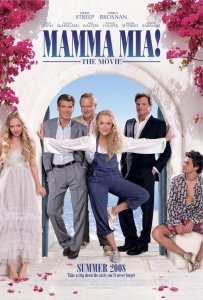 Mamma mia here we go again. This movie is going to be a middle-aged woman’s dream come true. It boasts a cast whose median age is in the mid 50s, one former yet still dashing James Bond, lots of good vibration getaway vibes, songs by a pop group whose heyday was over 30 years ago, and a heaping helping of girl power. In short, Mamma Mia will entertain the same mixture that made Sex and the City a monster hit, notably middle-aged women, teen girls, and gay males. I’ve seen the stage show and enjoyed it, as have millions of others around the world, but the movie fails to capitalize on reaching a broader audience. Mamma Mia is content to serve the faithful and delivers a less than satisfactory product. The world of cinema is not the best place for this material.
Raised all her life on a Greek island in a Mediterranean paradise, Sophie (Big Love‘s Amanda Seyfried) is getting married. Her disapproving mother, Donna (Meryl Streep), runs a hotel and has raised her daughter by herself. Then one day Sophie goes through her mother’s diary and discovers she has three possible fathers, Harry (Colin Firth), Bill (Stellan Skarsgård), or Sam (Pierce Brosnan). She invites all three to the island to vet her real father. In agitated response, Sophie invites her old gal pals Rosie (Julie Walters) and Tanya (Christine Baranski) to help her during this paternity crisis. Over time old loves will be rekindled, new love will bloom, and there will be a lot of singing.
 Let Mamma Mia stand as a future testament as to why you do not generally let someone helm a film when they have no film experience whatsoever. The creative talent behind the hit Broadway musical refused to grant anyone in Hollywood the rights to their worldwide sensation. So the stage director, Phyllinda Lloyd, is now also the film’s director, and oh my goodness was not the right choice. Her film inexperience shows with every second. The movie just doesn’t look right from beginning to end. There’s a noticeable “off” sensation due to Lloyd poorly shooting her scenes, editing her scenes, and directing her actors. I kept wanting, through sheer force of will, to nudge the camera angles, to change the composition a tad to make them more visually appealing, because Lloyd shoots the movie in bland static angles with minimal coverage. Mamma Mia looks so amateurish and fussily so, like Lloyd is purposefully thumbing her nose at the art of cinema. Lloyd also doesn’t bother to place any choreography in her scenes, and her actors just sort of spin and sway to the music like they were dancing in front of a bedroom mirror. It’s remarkable that a movie with so much riding on it looks so shoddy.
Presented in the reality of a stage, Mamma Mia is a shallow but fairly fun time. The movie version transports the musical into an actual Greek locale, which, to knock Lloyd yet again, she makes no real use out of (she mostly shoots her actors against rock faces and under harsh, glaring sunlight). What works on stage, when presented under the pretenses of the real world, comes across as incredibly cheesy and goofy beyond all relief (get a load of the high-stepping snorkerlers). The song and dance numbers, the character interactions, the sitcom generic plot (ripped off from 1968’s Buona Sera, Mrs. Campbell), they all start to transform into camp and beg for mockery. All of a sudden the entire island turns into a Greek chorus and provides backup during the impromptu singing. It’s strange and comes so late that it never feels properly established. The characterization is pretty slim, and once the movie establishes its characters it pushes the petal to the floor. The plot whizzes by in a whirlwind of one Abba song after another, with minimal breaks in between just to change setting and barely elbow the characters forward. I don’t think the actors had any chance to breathe in between the song numbers because I know I could barely exhale before another song assaulted my senses with forced giddiness.
But here’s the odd thing. The film is so silly and played to constant high-energy capacity that after a while Mamma Mia begins to wear you down. You may begin to smile, you may begin to clap, but you’ll be guaranteed to start humming the incredibly infectious tunes. Mamma Mia is essentially an Abba jukebox with a third-rate story strung along for the ride. As a story, it leaves much to be desired, but as a musical experience it makes you realize how glorious those Abba songs are. They’re like perfect pop bundles that somehow make you feel better even if the lyrics are more bittersweet than you realize at the time. The 18 Abba songs showcased, along with a few others during a weird curtain call sing-a-long, will certainly lift your spirits just as long as you concentrate more on the music than on the often-forced context.
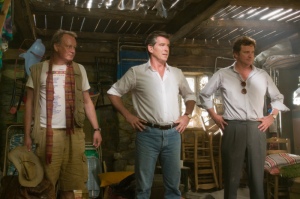 The actors are better than the material, clearly. Streep is her generation’s finest actress but she tries too hard to convince you of the great girl-power fun she’s having. The singing, on the other hand, is all over the map. Streep and Seyfried have the strongest voices of the bunch, which is good considering they also have the most musical numbers to sing and twirl to. Neither has a particularly sensational voice but then again they certainly distance themselves from their pitiful peers. Most of the other actors just have droning vocals but Brosnan, oh boy, I have to congratulate the man for having the courage he does. You feel embarrassed for the guy; I mean this is James Bond here. I found myself turning away whenever he opened his mouth, not wanting to look the man in the eye. Every time he started singing my theater crowd of Mamma Mia faithful began snickering and giggling. I almost feel so bad that I should send the guy a card saying, “Sorry about the singing, but hey, you’ll always have the paycheck.”
The real audience for a Mamma Mia movie is the fans of the Mamma Mia theatrical show, and the movie is tailored to their interests. The big screen version isn’t interested in converting new fans, hence the amateurish direction and disregard for reaching out for broader appeal. Mamma Mia the movie is pretty much a less zippy and ten times goofier version of the stage show except with bad singing. If that sounds like a fun evening out, then by all means enjoy. This is a mess of a movie and not a terribly good movie at that, and yet the power of those Abba songs will inject enough goodwill that you will forgive some of the movie’s transgressions. Some. Pierce Brosnan’s singing is something that cannot be forgiven nor forgotten.
Nate’s Grade: C+
Share this:

The Wackness (2008)
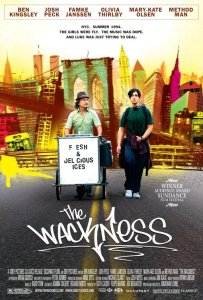 Every Sundance Film Festival seems to coronate new talent and new films that never seem to materialize once they step outside of the happy bubble of festival life. It happened with Happy, Texas, with Tadpole, with Hav Plenty, with Primer and numerous others that never managed to get started with the public. At the 2008 Sundance film festival, the biggest buzz followed the documentary American Teen and The Wackness. Writer/director Jonathan Levine’s coming-of-age tale won the Audience Award for Drama and boasts shimmering visuals, formidable actors, and a hip soundtrack. Too bad the drama gets the least attention in that package. I suspect The Wackness will be yet another Sundance buzz flick that, while well made, fails to leave a mark on mainstream crowds (here’s hoping more for American Teen).
Luke (Josh Peck) has just graduated from a New York City high school and is winding down the summer before he moves on to college. He has a unique summer job: Luke sells marijuana out of an ice cream vendor’s box. One of his clients, Dr. Squires (Ben Kingsley), is a therapist. He trades therapy time to Luke for pot. The two of them form an unanticipated bond and Dr. Squires makes it a point to see that Luke is making the most of his youth. Luke is smitten with the doc’s stepdaughter, Steph (Juno‘s Olivia Thirby, gratifyingly authentic), and determined to lose his virginity and find love before the summer fades away.
 The strength of The Wackness is in the unexpected father/son relationship that forms between Luke and Dr. Squires. Kingsley is sensational in his role and provides all the pathos and unexpected discoveries that the coming-of-age genre is associated with. I think that’s what’s most interesting about Levine’s film, is that Kingsley is going through all the coming-of-age moments reserved for teenage protagonists. Dr. Squires and Luke form a surprising and deep relationship where they learn from each other. Luke learns to talk about his life’s sadness and make it a part of his life, instead of sweeping it under a proverbial rug. Dr. Squires learns to re-embrace life and to kick his heavy supply of pharmaceutical prescriptions. He is coming of age at middle age. He even gets to second base with an Olsen twin (Mary-Kate is only in the film for two scenes and an estimated five minutes). Most of all, Dr. Squires needs a friend and Luke fulfills this desperate void. Kingsley is funny, pathetic, and the real star of The Wackness.
My main problem with The Wackness is how familiar it all comes across. It follows the coming-of-age model down to the end, so a savvy audience is going to realize that Luke will fall in love, get his heart broken, stand up for himself, and gather a bit more wisdom by the time the end credits roll. You’ve seen this movie played in a thousand different ways before, and now The Wackness makes it 1001; you will essentially know every beat of this story before it happens. The film doesn’t break any new ground and doesn’t manage to provide much commentary or lasting insight while it comes of age. The screenwriting fails to hide what disinterests Levine. So we get quick glimpses of Luke’s home life and I swear in every one of them his parents are just yelling. That’s all Levine is interested in, setting up one ten second shot of Luke overhearing his parents shouting again and again. Dr. Squires’ wife (Famke Jannsen) gets the same kind of treatment. She gets a cursory amount of screen time to glower and that’s about it. I can tell Levine is only interested in his three main characters (Luke, Dr. Squires, Steph) but then why does he not concentrate on them further and scuttle what he feels is wasted time?
The Wackness is awash in pointless nostalgia. The movie is set during the summer of 1994 for no real reason. The time setting doesn’t impact the film in any manner except for some digs at Mayor Giuliani’s policies (he was only in office for sixth months or so when the film opens). Levine dishes out pop-culture references like the 8-bit Nintendo game system, old chunky GameBoys, Kurt Cobain’s suicide, mix tapes, and lots of rap music. The Wackness is an ode to mid 90s rap music and Luke is a lover of acts like A Tribe Called Quest, De La Soul, and some up-and-coming guy named The Notorious B.I.G. The soundtrack is also meant to convey good nostalgic vibes of a simpler time only — 14 years ago. Setting the film in 1994 is a lazy attempt to cover the lapses in screenwriting with cozy audience nostalgia. And is there anything really culturally transcendent about the summer of 1994?
 Peck may have lost like 100 pounds since he was fat comic relief on a Nickelodeon kids show, and he’s marginally handsome, but this kid needs some more practice before he’s a dramatic actor. I understand that his character gets stoned often and, as a typical teenager, is trying to pull off a too-cool-for-the-world-“whatever” attitude, but he seems freaking catatonic. He’s too aloof for his own good. His acting is dry and monotone and he feels like he’s constantly zoning out. Again, I understand that this works with his stoned persona but Peck is hardly ever convincing in the part and his acting shortcomings rob the role of a greater level of sympathy. A great actor can make you like a character that eats babies and kicks puppies, or the other way around, but Peck is not that actor. I believe that part of The Wackness‘ failure to connect and elevate beyond its genre trappings is due to Peck’s poor performance. He’s just kind of boring character and, to borrow a term from our pals on the other side of the pond, a bit of a wanker.
As a director, Levine has a playful and visually appealing look for the film, bathing it in arid tones to echo the hot summer days. The cinematography is a character all its own, giving the film a colorful and lively flair that makes every scene worth watching even if the script fails to do likewise. Levine has a handful of clever visual tricks up his sleeve, like a middle finger that moves through a crowd of New Yorkers at rapid speed before finding and dialing a pay phone. Levine has definite talent as a director and it shouldn’t be long before Hollywood comes knocking and plucks him away to make The Fast and the Furious 8: The Search for Curly’s Gold.
The Wackness feels like a coming-of-age film that goes through the motions. The main character is stoned to the point of comatose and he’s a rather boring protagonist, made even duller by Peck’s lackluster acting ability. Writer/director Levine flexes enough visual artistry to make him a talent to watch, however, his screenplay is too familiar with little personality or flavor to stand out against the pack. The movie looks good, it sounds good, and Kingsley is certainly good, it’s just a shame that it isn’t his movie. Steph tells the mopey Luke that all she sees is the goodness life has to offer and all he sees is “the wackness” (you can go home happy to understand the title). I guess I similarly be accused of focusing on the “wackness” of The Wackness because it’s certainly not a bad movie. It just happens to be ordinary. Though it does have some torrid Kingsley-on-Olsen Twin action. I suppose that isn’t too wack.
Nate’s Grade: C+
Share this:

Hancock (2008)
 Hancock is perhaps the first movie that looks at the consequences of being a super-powered do-gooder. I’m not talking the self-doubt or placing your loved ones in danger. I’m talking about money. A super hero can rack up super amounts of damage to a city, and the titular character often causes millions of dollars in destruction as he sloppily combats crime. In some ways, the super hero is more costly than the criminals. As you can imagine, the public at large isn’t too taken with Hancock (the film misses the opportunity to have neighbors worry their property values will plummet if Hancock moves into town). It’s too bad that Hancock, the film, doesn’t stay as original.
John Hancock (Will Smith) is a disgruntled man. He likes to drink, sleep, and keep to himself. Unfortunately, people keep bugging him for help. This may have something to do with the fact that Hancock is a man with the abilities of a super hero. He can fly, has incredible strength, and appears to be physically impervious, but that doesn’t stop criminals from emptying their guns at him. One gang learns firsthand the anger of Hancock when they destroy his whisky bottle. The city doesn’t know what to do with the world’s lone super being because he causes so much destruction. Ray (Jason Bateman) is a PR man fighting a losing battle to convince major corporations to donate supplies to needy countries for free. Hancock saves his life one afternoon and Ray decides to use his skills to give the irritable super hero an image makeover. He’s going to use Hancock to help change the world for the better. The plan to reform Hancock involves sending him to prison and waiting until the city begs for his assistance with rising crime. Ray’s wife, Mary (Charlize Theron), is wary of her husband’s super hero project. She just wants to live a quiet life with regular meatball madness dinners with her family.
 I think I’m already starting to get sick of super heroes and there’s still more to come this summer. There are several good ideas rolling around inside Hancock, but at a scant 92 minutes there’s little time to develop them. The movie takes off in a mildly satisfying manner but then botches the landing.
Smith’s considerable charms at put at odds with a character that resembles an ornery bastard. It’s a bit of a wink to the audience because no Hollywood studio would let the most popular international movie star release a super expensive summer movie where he begins and ends as a total jackass. The film seems to be tailor-made to Smith’s strengths, which still include his ability to naturally command attention and likeability. The idea of a lone super hero who drinks heavily, destroys personal property, and whom the public vocally dislikes is a sound idea and allows Smith and the filmmakers to explore certain realities not seen in other super hero flicks. The public griping over the methods Hancock chooses to save the day seems rather believable, especially when those methods usually involve heavy-duty collateral damage consequences. I like the idea that every time Hancock lands from flying he takes chunks of concrete or tar with him. There are several interesting ideas that come from the conflict between society and a super hero who would rather sleep off a hangover. I think the idea of paring a disgruntled super hero with an idealistic PR man is a great concept, benefited by Bateman’s sterling comic abilities fine-tuned from Arrested Development (where he also romanced Theron). I really enjoyed the interaction between Hancock and Ray. For a decent 60 minutes, Hancock is a passable super hero excursion lifted by Smith and Bateman’s chemistry.
Hancock starts with some promise but then goes in a completely different direction for its third act (let me just say this: there’s a reason they’ve been hiding Theron from any advertisement). The film also overplays its hand early. When Hancock and Mary first meet they hang on to each other, then she looks at him suspiciously and continues to, then she says some very leading dialogue that is a bit on-the-nose. All an audience needs is one award, penetrating look to understand that something is up. Hancock ends up feeling pulled in too many directions. It begins as a sly satire on super heroes and is mostly confined to jaunty comedy, but then the movie gets dramatic and grim and a bit hard to follow. The film begins as a jokey riff and then gets gritty, finding room to fit in mythology, religious questions, age-old racism about interracial dating, and a terribly clunky villain (Eddie Marsan) who breaks out of jail so that he can seek improbable vengeance against an immortal. Hancock’s origin is muddled and as preposterous as most other super heroes. The third act shift seems to drain all the fun out of the movie and it gets too serious, too confusing, and too convoluted (what’s the distance rule here between super people?). Hancock ultimately has too many chefs in the kitchen and becomes a mess.
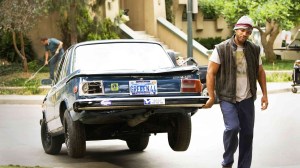 I’m sad to say but director Peter Berg really whiffs with this movie. His visual style is a hindrance to the film. I recently re-watched his first action film, 2003’s The Rundown, and Berg was able to craft stylish, highly playful action sequences without shaking the camera all over the place. A tripod served the film’s best interest and Berg tailored his visual style to the material. I expressed worry with his previous film, 2007’s The Kingdom, that Berg has become locked in to his handheld docu-drama style that bobs and weaves around his actors and employs numerous quick cuts and odd angles. His erratic style can improve and assist narratives but it can also hamper the storytelling. Nothing is really gained by Berg filming his tender moments at obtuse angles, extreme asymmetrical close-ups, and a hovering camera. It feels like a style completely unsuited for the material. I would have liked to fully watch the action sequences and enjoy the clever tweaks on the genre. Berg is an imaginative and underrated director, but his jittery docu-drama style he has embraced can also make his films seem cobbled together and overly rushed and, potentially, half-assed.
Hancock is much like the title character. It means well and wants to help but an audience can’t help but grumble about its methods. The concept of a super hero that is rejected by the people he saves is a subject ripe with subtext that could explore meaningful and insightful glimpses about guilt, the weight of expectation, the desire for human affection and acceptance, the frustration to be understood, the questions of personal responsibility and loyalty, and rejecting or heeding the call to do better. Hancock does not delve into any of these potent psychological areas. That’s fine, as long as the film delivers top-notch popcorn thrills and makes me forget about its wasted potential. Sadly, Hancock fails to deliver. The special effects are generally sub-par, the story misfires, and the whole film begins with promise but ends up turning into a mundane mess. Berg’s aesthetic doesn’t square with the material. Smith is still as charming as ever and will always be a genial presence onscreen, but Hancock turns into a movie that feels like a super hero hangover itself.
Nate’s Grade: C+
Share this:

Wanted (2008)
 Wanted isn’t so much a movie as a fetish vehicle for teen males, with sexy cars, sexy guns, and sexy tatted-up Angelina Jolie, daring the predominantly male audience to decide which is sexiest (I am not a car aficionado nor a gun person, so I’ll say that Jolie easily outpaced her competition).
Wesley (James McAvoy) is a pathetic office drone that sweats out his days never raising his voice. His best friend is constantly screwing Wesley’s bitchy girlfriend, his boss constantly harangues him into panic attacks, and, saddest of all, a Google search results in nothing for Wesley Gibson’s name. He tells us he has done nothing with his life. This all changes when a mysterious woman named Fox (Jolie) tells Wesley that the father he never knew has just died. Not only that, Wesley’s father was one of the world’s greatest assassins and he might just be a chip off the old block. Wesley is recruited into The Fraternity, a thousand year-old organization whose membership includes the best-trained killers. Sloan (Morgan Freeman) is the leader who assigns the targets. He gets his orders, literally, from the Loom of Fate, a weaving loom that writes binary letters via stitches. The Loom of Fate decides whom the planet would be better off without. Fox and her cohorts train Wesley to accept his destiny and avenge his father’s murder.
 The movie fails to establish any form of internal logic or continuity, so anything preposterous suddenly becomes accessible. That means people can jump from one skyscraper to another, you can outrun a moving train, cars will do the damndest things, and that you can curve a bullet simply by rotating your hand and shutting off that little part of your brain that says, “This is defying all laws of physics.” For some reason, people are able to shoot bullets down in mid-air as a defensive maneuver but they rarely take aim at the person, surely a bigger and slower target. It’s like The Matrix outside of the Matrix with no reason for being Matrix-y. The idea is that these super assassins have super hearts that beat like 400 times faster, which pumps more blood and allows their senses to heighten. This somehow allows them to slow down time, zoom in on subjects, and react extra fast. It doesn’t make any sense but then again this is a movie where the killers are taking orders from the Loom of Fate. While I’m on the topic, really, a loom that stitches targets in binary code? Isn’t there an easier way for fate to decree who should be bumped off than someone scrutinizing the stitch work of a rug? What happens when it lists a name with more than one owner? How many “John Smiths” must be killed to secure that the correct Mr. Smith has been erased? My father thought the Loom of Fate was the most bizarre and interesting aspect of the movie.
Despite the freewheeling action, there is something decidedly depraved about fully embracing Wanted. The premise of awesome killers demands awesome carnage, and Wanted dishes out violence as an act to be savored and glorified. Wesley’s self-actualization is linked with getting better at making others suffer, and in the end the film advances a questionable message to follow suit. The movie exists in a hyper-realistic video game universe devoid of consequences. I can see future news reports of idiot teenagers playing their own deadly game of curving bullets (they may have to establish a Wanted category for the Darwin Awards). But yet the most disconcerting feature of Wanted is its dismissive nature toward human life. I’m not even talking about the assassin premise, though trained killer flicks usually work better when the pros have some sort of personal code. Wanted is a fetishistic worship of human bodies being taken apart in loving, gory detail under the auspices of being “cool.” Innocent life barely merits a half-hearted shrug. When Wesley and Fox bring their fight on board a train the eventually force the vehicle off a cliff, and the movie makes no mention of all those innocent people plummeting to their doom. That would get in the way of the film being “cool.”
With all that said, Wanted can feel like a high-octane rush to the senses. This film is soaked in adrenaline. The stunt work is astounding and the action is ramped-up to ridiculous levels. I say ridiculous because the film never establishes any form of internal logic or continuity, but I also say ridiculous because the action can be tremendously exciting and embellished with stylistic flourishes. Wanted is a slick and imaginative action movie, and the fact that it often dances with satisfaction makes me sick for enjoying it so. Summer is the perfect opportunity for empty calorie movies with style to spare, and Wanted is a five-course meal of glossy, disposable artifice. Director Timur Bekmambetov previously directed the Russian vampire films Night Watch and Day Watch, but Wanted is a giant leap forward in budget and sheer scope. Life inside this man’s head must be crazy. He takes the outlandish and makes it seem common.
 The story is rather derivative and smashes the plots of Fight Club and The Matrix together, proving that not only were screenwriters Michael Brandt and Derek Haas alive in 1999 but they were also furiously taking notes. The whole notion has been done to death, a loser who secretly harbors superior talent and ability waiting to be realized. It still proves to be a popular and mostly pleasing storyline because it taps into a universal desire to be special. Brandt and Haas aren’t so much constructing a story as they are constructing a series of eye-popping moments. There is very little substance beneath all the fireworks (stand up for yourself and slay your antagonists?). Normally I’d take issue with a film’s trashy vapidity; however, when that film happens to be so good at being so good looking.
McAvoy is rather believable when he plays the dweeb eking out a miserable existence. He knows how to play meek and anxiety-riddled while maintaining a vulnerability that stops his character from coming across as a figure of annoying inaction. He sure gets beaten up a lot and I’m not quite sure why this is supposed to make him more inclined to join The Fraternity, but then again it hasn’t stopped thousands of college males from wanting to join their own fraternities. McAvoy is less believable when he suddenly transforms into a super soldier, like a pint-sized Rambo. Jolie relies on her exceptional sex appeal in lieu of acting, which is fine with me. It’s good to see her in a role where she can fully make use of her physical talents. Freeman is essentially in the Samuel L. Jackson role and even gets a chance to drop an MF-bomb.
Wanted is a crazy cool and mostly crazy action thriller that is more than a little sick in the head. Its video game universe covets beautiful bloodshed and exquisite carnage. It’s rather depraved and morally questionable not in approach but in execution (no pun intended, well maybe). Wanted is a gory, profane, darkly humorous action movie that secretes adrenaline with every frame. The imagination on display is impressive but you may wish that it had been used for better purposes.
Nate’s Grade: B
Share this:

Mongol (2008)
 Genghis Khan can’t be all bad. The Oscar-nominated foreign film Mongol dares to show the little known softer side to the man that conquered most of the known world in the early 13th century. The film follows the rise of Temudjin (Tadanobu Asano). Mongol has the look and feel of epic adventures of old, the type of stuff Hollywood was churning out at four-hour lengths in the 1960s. The cinematography is excellent and sweeping, the real-life filming locations add great authenticity to the tale, and the acting is universally strong, especially Asano and his stalwart and attractive wife, Börte (Khulan Chuluun). Even though Asano is Japanese he makes a much more convincing Genghis Khan than John Wayne (I advise everyone to skip 1956’s The Conqueror). Most of the film concerns Temudjin’s relationship with his wife and his blood brother, Jamukha (Honglei Sun). Eventually he must defeat his powerful blood brother and consolidate the Mongolian people. The interpersonal relationships between the three principles are surprisingly deft and full of insight. For a two-hour film detailing the life of Genghis Khan, the movie doesn’t resort to many battle sequences. The combat is exhilarating and stylish without ever becoming self-conscious. I read that Mongol is intended to be part one of a trilogy following Genghis Khan, so perhaps there will be more military strategy and battles once he steps off his home turf.
The movie lost me somewhere in its languid middle and never fully regained my attention. The movie starts off well, ends decently enough, but man the time in between gets terribly repetitious. Temudjin is captured. He escapes. He’s captured. He escapes. His wife is captured. He rescues her. I have no idea if all the events the film portrays are necessarily historically accurate as depicted. Even if they are, the filmmakers could have provided a stronger through-line to connect the events and provide a better sense of overall direction. Mongol is certainly a good film but it’s not great. It even feels a tad pre-programmed, like it was constructed for a U.S. audience that has grown accustomed to the likes of Braveheart and other bloody history epics. I’ll keep a passing notice on whether Mongol Part Two (the rise) and Mongol Part Three (the fall) improve upon Part One.
Nate’s Grade: B


 nathanzoebl
You must be logged in to post a comment.