Author Archives: natezoebl
My Son Hunter (2022)
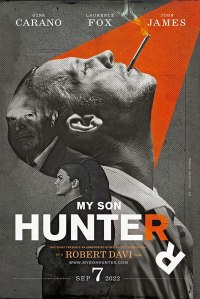 I’ll never understand the pathological obsession people have with Hunter Biden and what may or may not be on his laptop. This fixation on President Biden’s son seems so unshakably quixotic, hoping that with each new murky examination somehow, magically, there will be impropriety and criminality if you only look right. This dogged obsession with, at best, a tertiary figure to the true target of conservative ire reminds me of the crackpot theories concerning Vince Foster, a deputy White House counsel who took his own life in 1993. It was ruled a suicide by five investigations, and yet there are still enough people that are unsatisfied with this provable reality and want to see something more nefarious, more suspect, and simply more. Surely Vince Foster must have been assassinated by the Clintons, and especially Hilary, because he knew too much. It’s nonsense but to some it’s the only thing that makes sense. Such is the same with the Hunter Biden laptop, which some have deluded themselves into thinking could have been the difference maker between a President Biden winning by eight million more votes and a second-term for Trump. It’s difficult for the rational mind to fathom how many ordinary voters would truly care about a presidential candidate’s son’s liaisons, especially when that person is a private citizen and not employed in government.
I figured it was only a matter of time before a rapacious conservative media bankrolled a Hunter Biden Laptop Movie, and it seems only natural as Breitbart’s first foray into narrative filmmaking. The movie takes a lot of style and attitude notes from the latter films of Adam McKay, borrowing liberally from the mixture of documentary and cheeky fourth-wall breaking motifs from The Big Short and Vice. I’ll admit it makes for a slightly more entertaining movie, and My Son Hunter wasn’t the complete disaster that I had dreaded. It’s still not a good movie, by far, and its points are leaden and misleading at best and downright false and speculative at worst, but I’d rather watch a conservative movie that attempts to ape better filmmakers. Trying and failing is at least better to watch for 80 minutes than simply preaching to the converted and not even trying.
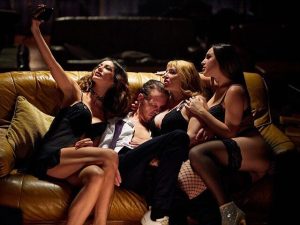 Hunter Biden (Laurence Fox) is drifting through life, parties, and may be the biggest hindrance to a would-be President Joe Biden (John James). Hunter left his laptop at a repair shop but thankfully the media refuses to cover the story, instead downplaying it as a possible Russian disinformation campaign in the last weeks before the 2020 presidential election. Joe can’t have anything go wrong so close to his possible big victory, but Hunter, at least in this not-at-all biased interpretation, seems like a walking catastrophe waiting for his next landmine.
Before even discussing the filmmaking merits, let’s tackle the chief purpose of this movie, which is to defame Hunter Biden and by association Joe Biden. It’s not exactly breaking news that Hunter Biden has lived a troubled life. The man has been upfront about his own struggles with addiction; he wrote about it openly in his own 2021 memoir. Watching Hunter snort anything within reach, party with hookers, and hang out with lowlifes just feels gratuitous because it’s the same characterization over and over. That’s all the movie covers for its first 30 minutes, Hunter partying with strangers and strippers (but still in a demure way where nobody, even before passing out on the floor, removes their clothes). It feels like we’re wallowing in a man’s degradation and it’s unseemly because the intention is not meant to be empathetic. The target audience watching this won’t likely care about Hunter genuinely getting better as a person. That’s not what this expose is for, trying to better understand his humanity and vulnerability. This is merely a roundabout way to taint Joe Biden, a figure too boring by himself, so the critics have to settle for Hunter and his salacious escapades and work on grimy guilt by association.
I can hear some griping that the movie presents Hunter in a more sympathetic light, at least early, with him recognizing his own screw-up nature but feeling powerless to rise above. He also talks about the grief of losing his mother and sister at such a young age, as well as his older brother in 2015. However, any pretense of humanizing goes out the window once big daddy Joe arrives, and Hunter becomes a sniveling sycophant who shrugs his way through life, not just aware of his nepotistic privilege but fully comfortable with his participation in corruption and graft. Any introspection is abandoned and it makes any prior introspection appear phony. It’s hard to square the Hunter in the beginning who talks about the wounds of losing his mother with the Hunter who complains that his dad never supports his art, complete with cutaway to his finger painting. There’s an entire six-minute stretch where Hunter is lectured to, by his stripper named Kitty (Emma Gojkovic) who just happens to be the estranged child of Christian missionaries, about China’s concentration camps for its Uyghur population, and he stares slack-jawed, as if he hasn’t kept up with the news in years (the reprehensible concentration camps for Muslims have been well-documented by the mainstream media). This Hunter is merely a stand-in for vague political corruption, an irredeemable naif that is only meant to make his father appear worse, and that’s also why now that Republicans have won the House, you’ll see a lot more of Hunter Biden’s name in 2023 because, obviously, investigating his previous business handling as a private citizen is the cure for inflation and higher gas prices.
 So what does the movie profess to expose, especially so that had this evil laptop of incriminating evidence been properly adjudicated, then Donald Trump, the most unpopular president in the modern era, would have easily won re-election? It’s a rehashing of what led to Trump’s first impeachment in 2019. Hunter Biden was on the board of a Ukrainian energy company, Burisma, and he most definitely got that position because of his name, and of course this is the only instance in the history of the world where that has happened before to the scions of the rich and famous. When Jared Kushner, who actually worked in Trump’s White House, was offered over two billion dollars by the Saudi royal family upon leaving his taxpayer-paid position, I’m sure it was completely for his unparalleled expertise on Mid-East diplomacy. Anyway, this Burisma position was already investigated internally by the State Department for conflicts of interest, and the Ukrainian prosecutor that Joe Biden pressured to be removed as VP was not threatening to investigate Hunter. This prosecutor was corrupt and refused to investigate Russian-backed assets; he even refused to investigate Burisma. There was no inappropriate arm-twisting to protect Hunter or Joe Biden, as thoroughly debunked during the 2019 impeachment trial. It’s all pretty established, but that doesn’t matter to its target audience, the same group who keeps desperately re-shaking a disparate collection of incorrect election anecdotes to produce a bigger picture like one of those pesky Magic Eye pictures that only “true American patriots” can properly see.
That’s really the majority of the specific accusations against Hunter. It impugns his associates, like Devon Archer who was sentenced for defrauding a Native American tribe in 2022, but too many of the accusations are broad and reaching, much like the Burisma condemnation. Biden did invest in shares of a Chinese technology company, Face++, as part of a larger portfolio, and China has reportedly used this technology to surveil citizens it’s looking to persecute. This is not great, but I wonder how many other venture capitalists have holdings with connections to other similarly sundry applications, especially with technology. I’m not excusing this, I’m just saying this “a ha!” accusation isn’t quite the deathblow the movies seems to assume. If it was, it wouldn’t need a character to literally explain the context of why this is so damning. The larger accusations of bribery and funneling ill-gotten monies back to daddy Joe are weak too, no matter how many times the movie adds titles to tell us, “This really happened” (but it didn’t). So many of these accusations are like Burisma, where it’s a purposely misconstruing of events and a deliberate ignoring of context or corroborating information that would deter their argument.
Hunter Biden isn’t the world’s greatest businessman by any measure. He’s also not the world’s most infamous criminal who fails to be held accountable because of his cushy connections. Hunter Biden hasn’t even been banned from operating a non-profit in New York state because he used a kids-with-cancer charity like a personal piggy bank (sorry, that was Trump’s children). Let it be known by this self-professed progressive, if Hunter Biden is guilty of a crime then prosecute him. Put him in jail. I don’t care. He doesn’t deserve special treatment. But at the same time, if he’s just a guy with problems, he doesn’t deserve this crazy level of unbridled antipathy.
 Following the McKay model, characters will stare directly into the camera for comedic effect, to add additional commentary, like when the movie flatly states, “This is not a true story… except for all the facts.” Of course, the screenwriters have a harder grasp of those stubborn facts. These are the same writers of The Obamagate Movie, which proposes to expose the “Deep State conspiracy to undermine the Trump administration and the fake Russian collusion narrative.” Again, facts are stubborn things, especially when the end of the movie laments when, oh when, will truth matter over lies and the powerful be held responsible for their corrupt actions (were these people just willfully hibernating during the scandal-a-week Donald Trump presidency?). The attempts at humor are often juvenile and stupid, like an opening scene where Hunter has a psychic conversation with a tiny dog while he’s high on drugs, and this is after a cartoon graphic of Hunter’s heart pops onscreen. The jabs against Joe Biden are mostly of the creepy hair-smelling and loony grandpa variety with groan-inducing malapropisms (“Nothing can threaten my erection;” see instead of “election” the dumb man said “erection”). The movie also squeezes in other conservative grievances, like opening with a Black Lives Matter protest and admonishing the media for its portrayal. I think having one of the protesters working as a stripper (to pay off her college loans, she tells us) is meant to be some insult to liberal protestors or even higher education. The same with having a stripper announce her pronouns. Is this the nightmare world the liberals all demand when even the people sleazy men pay to get naked would inform us of their preferred pronouns? I’m surprised they went the entire movie without a trans joke.
I don’t know why Fox (Inspector Lewis, White Lines) would agree to portray Hunter Biden. He doesn’t exactly resemble the man. He looks like a more gaunt version of Ebon Moss-Bachrach (Girls, The Bear). Fox provides the best reason to watch the movie because he’s not acting like he’s in lazy agitprop. Give credit where it’s due, the man gives a dark journey-of-the-soul kind of desperate sheen to this man, that is, until the script just turns him into a shrugging and sulking man-baby. Gina Carano (The Mandalorian) makes a brief appearance as a Secret Service detail to the Bidens, who never missed an opportunity to snidely confide to the camera about how much she loathes these men. John James (Dynasty) doesn’t work as Joe Biden at all, but he seems like he could have been a Sopranos-style goombah goon character reference for Paulie Walnuts. Many of the Eastern European actors who the production utilized from its Serbia filming site seems to have been dubbed over, so I don’t know how much criticism to offer Golkovic as Kitty, the stripper who also happens to be a former lawyer too. She’s a Swiss army knife of uses, including the intended moral uprising the filmmakers would like to believe they can engender.
 I’d like to conclude as a reminder why journalists believed that the Hunter Biden laptop story, which broke in the final weeks of the 2020 election, and was teased by none other than Rudy “Hand down my pants” Giuliani, would be met with skepticism. For an election about competency, a national COVID response, and basic human empathy, it seemed awfully strange that Hunter Biden’s name was coming up again so late, and once more from Giuliani, the man who was caught meddling in American diplomacy so that he could strong-arm Ukraine into pushing a sham investigation to slander Joe Biden. It was all just a bit too convenient, and especially when there wasn’t any corroborating evidence at the time, just one business shop’s word that, no for real, this must be Hunter Biden’s legit laptop. In the end, I doubt any voters could have been persuaded by the laptop, and those that were would have voted for Trump already. Nobody cares about Hunter Biden. And nobody should care about this silly and slimy movie trying to make him into the new conservative obsession. Go after Joe Biden for policy reasons, go after him for his age, but his son? In Joe terms, that’s baloney, man.
Nate’s Grade: D
Share this:

Smile (2022)
 Smile was not initially intended for a theatrical release. The $17 million-budgeted horror thriller had been intended as a streaming exclusive for Paramount Plus, but after the movie tested so well, its parent company thought why not try a theatrical run? They even hired real actors to creepy stand still grinning outside Good Morning America or behind home plate for baseball playoffs. Then the movie made over $200 million worldwide and possibly began its own franchise. Not bad. After having finally watched Smile, I can understand why it became a word-of-mouth sensation. It’s thoroughly unnerving and a horror film that just knows its fundamentals.
Dr. Rose Cutter (Sosie Bacon) is a clinical psychologist with her own trauma. As a child, she discovered her own mentally ill mother’s body after she had overdosed on pills, and this has spurned Rose to try and help others suffering from depression and mental illness as a career. She encounters one very frantic young woman, Laura (Caitlin Stasey), who fears she is in danger. She says she keeps seeing… smiling people, people that aren’t there, and she was told today was her last day to live. Sure enough, the woman struggles and then stands, eerily smiling, and casually slices her own throat in front of Rose. While she tries to shake off the disturbing burst of violence, Rose is starting to see Laura again, smiling that same eerie smile, and this propels Rose to investigate the origins of this curse that leads each victim to take their own life.
 There isn’t much in the way of deeper themes or social commentary here, though I suppose you could find some pieces about how we stigmatize mental illness or that the curse has to be spread through witnesses of trauma. Smile isn’t an example of elevated horror and instead it’s just a well-constructed, well-developed horror movie that knows what to do to properly get under your skin. The premise reminded me of the indie breakout in 2014, It Follows, where there is a curse with very specific rules for passing it along, and new chains can be created or broken depending upon the duplicity of the person (see also: The Ring). I liked thinking of the curse as a puzzle, and my wife was able to jump to a conclusion before the movie as far as how to possibly break the curse, going against the assumptions of Rose and her ex-boyfriend police detective, Joel (Kyle Gallner). Much of the second half of the movie is this discovery period, untangling the longer history of the curse, implicit with this is that each new occurrence involved a violent suicide and an observer. I suppose maybe there is some theme possibly attempted about the shared nature of trauma, how it unpredictably spills out before us and is tricky to be cleanly contained. After establishing the pattern with the curse, now it’s time for our protagonist to wonder if she can beat the odds. I appreciate that writer/director Parker Finn provides plausibility to make her efforts credible. My issue with the latter part of It Follows was why the beleaguered teens would have thought that they could electrocute an invisible phantom and kill it when it was otherwise unfazed by bullets.
As a straightforward horror thriller, Smile knows what it takes to make you squirm and jump. It taps into something universal: smiling, without careful context, is often very creepy. It’s not a world-breaking observation and yet its simplicity is part of what makes it all so effective. Very often, the movie will anticipate the audience’s dread, feeling out that something is about to go off the rails or a jump scare might be approaching, and it will deliver in a different direction. Much like James Wan’s Conjuring movies, the film also has a firm handle on setups and payoffs, establishing a situation and then letting the audience simmer in dread. There was one moment where Rose was instructed to turn around and look behind her by a voice that no longer seemed so helpful, and the drawn-out response was deliciously squirm-inducing. There was another moment that I knew a jump scare was coming, it was literally walking towards Rose, and I kept thinking, “Okay, here comes the startle,” and then the movie brought it but in a way that still surprised and elated me. Given the nature of the curse messing with its victim’s mind, you might start to anticipate what Rose sees and hears is not to be trusted, and there are a few fake-outs too many. Thankfully, the movie doesn’t just rest on one spooky trick. There’s a children’s birthday party that manages to tie a few plot elements together in a masterfully traumatizing manner. When Smile does start revealing more about the design of its monster, that’s when my wife started averting her eyes more often and muttering “No no no” to herself. Some of the imagery is prime nightmare fuel, and I applaud Finn’s innate ability to scare the hell out of an audience.
 Some action movies and horror flicks are best described as thrill rides, an experience that exhilarates and delights and doesn’t offer much more by the end than the experience, and that’s perfectly acceptable. Not every movie has to be one with deeper meanings or breaking the mold in a way that no filmmaker has ever achieved before. Sometimes just having a good time from a well-constructed thrill ride is sufficient for a fun and diverting viewing. Smile is that film, a horror/thriller that is cleverly focused and developed to garner every goosebump. I will also say that I incorrectly thought that this movie was PG-13, and that was quickly disproven by the intensity and disturbing nature of its violence. I can’t say why I always thought that this was a PG-13 movie, maybe because of its instant box-office success, but it definitely doesn’t soft pedal its intense atmosphere and disquieting nature. It takes a lot to scare me, and Smile made me sit on the edge of my seat and perfectly dread the next moment, that is, when I wasn’t averting my eyes like my wife and trying to forget its nightmarish imagery.
Nate’s Grade: B+
Share this:

Rosaline (2022)
 Rosaline is a new romantic comedy in the vein of the meta Rosencratz and Guildenstern are Dead, playfully re-imagining Shakespeare’s doomed romance in a much more light-hearted rom-com tone. For you see, dear reader, Rosaline (Kaitlyn Dever) was the young woman who Romeo (Kyle Allen) was infatuated with… until he met Juliet (Isabela Merched), and then it was all Juliet 24/7. Rosaline is the spurned lover trying to regain her former boyfriend with the help of a handsome suitor and her gay best friend, Paris (yes, the one supposed to marry Juliet away from Romeo in the end). Rosaline is a delight for several reasons, chief among them the quick-witted screenplay by the Oscar-nominated pair Scott Neustadter and Michael H. Weber (The Disaster Artist, 500 Days of Summer) and the eminent charms of Dever as a forward-thinking, snarky, exasperated woman bumping against her society’s demands. Dever makes every joke that much better and is so charmingly diffident. We may know the story of Romeo and Juliet, but the fun of the movie is how it subverts our expectations or presents goofy answers around the peripheral of the main story, like how Rosaline was manipulating actions from afar, sometimes unintentionally. The tragic tone is replaced with something much more cheery and amusing, and that might irk diehard fans of the Bard. I found it to be a winning and irreverent low-stakes re-invention of a literary classic, elevated by charming performances and a beguiling and clever screenplay (I’m giving credit more to the screenwriters than the source material novel, as it had many one-star reviews on Good Reads). For fans of Shakespeare adaptations with a feminist twist, check out Rosaline and fall under its star-crossed spell.
Nate’s Grade: B
Share this:

Don’t Worry Darling (2022)
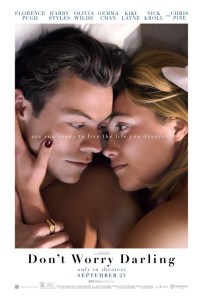 By now, you’ve likely heard all about the gossip-churning headlines from behind the scenes of Don’t Worry Darling, which eclipsed everything else about the movie and is, sadly, the most interesting thing about an otherwise flawed Stepford Wives retread. There were scandalous rumors of affairs, rumors of actors uncomfortable with affairs, rumors of actors refusing to take part in publicity for the movie, which motivated legions of online super sleuths to analyze every social media missive to the finest point to discover hidden messages and meaning. There was even a point where the Internet debated for a week whether or not Harry Styles actually and actively spit upon Chris Pine at the Venice Film Festival (both actors deny this happening). Looking back, it was a wild time, a bit silly, and far out of proportion for the actual movie we eventually get with Don’t Worry Darling.
Alice (Florence Pugh) is living the perfect 1950s life – OR SO SHE THINKS. Her husband, Jack (Harry Styles), leaves with the other men for work in the desert facility owned by Frank (Chris Pine). The wives of the community diligently tend to the household chores, gossip poolside, and have a full-cooked meal and drink in hand for their returning breadwinners. Alice begins seeing disturbing visions she cannot explain, and another wife (Kiki Layne) starts acting up, trying to warn her, and men in red suits seem to pounce whenever someone steps out of line. It’s a lush suburban community designed by Frank, meant to be the sparkling, hopeful epitome of the American Dream, but it might be a nightmare instead as Alice investigates.
 Don’t Worry Darling is a fleetingly entertaining movie with big ideas but it doesn’t know how to handle them and what to say beyond its obvious points. Immediately in the movie, you’ll know something is wrong with this idyllic community. The Stepford Wives is an obvious comparison point, so I kept waiting for the movie to pivot from this predicted influence, to go a separate route or go deeper, making its commentary meaningful for today’s world. Unfortunately, the movie never does move beyond this influence, nor does the movie go deeper than to easily castigate its men for wanting to control their women and remodel them as dutiful, cheerful, robotic housewife throwbacks to the halcyon age of 1950s Boomer nostalgia. It’s all too surface-level for a movie about superficial men wanting to unburden themselves of having to live up to the expectations of women. There’s plenty that could have been said about the pernicious forms of toxic masculinity festering around the darker corners of society and the Internet, the rise of fragile men in the alt-right and incels and trolls, and their angry, entitled, self-loathing feelings toward women projected into harassment. This movie only merely glances at its touchy subject. The commentary is too basic, leveling men want to dominate women and erase their agency and identity for their own satisfaction, the same points from The Stepford Wives in the 1970s, which was a direct response to the feminist movement challenging traditional gender roles in the home. I won’t spoil the exact means of what this false reality is for Alice and the others, but suffice to say, it leaves a lot more questions for me than answers (Has nobody reported any of these women missing? Their friends and family? Why have such potentially deadly stakes? Why would modern men fantasize about six-decade-old Boomer nostalgia?).
In short, this reality is false, and the screenplay by Katie Silberman (Booksmart) and Carey and Shane Van Dyke (The Silence) makes it known immediately, so the story is structured with our foreknowledge in place. It becomes a game of how long before Alice puts together her conclusion and which strings she chooses to pull and what blowback from the established order that demands ignorance and obedience. There just isn’t enough intrigue here. In The Truman Show, the protagonist gradually began to doubt his reality but each suspicious peculiarity added to a better sense of the larger picture, and since it wasn’t until halfway through that we saw “the other side” of Truman’s manufactured world, the audience too was learning about this facade and all the effort to keep it hidden. Don’t Worry Darling has a repeated motif of Alice seeing confusing images of her and the other wives in a stark Bubsy Burkeley-esque musical number, but why? What does this reveal about the inner workings of the reality behind the reality? It’s not even made clear what it relates to literally, so it must be a metaphor, but it’s again too obvious and heavy-handed. I understand all the women are learning and practicing dance, but to what end does this serve? I needed further rules established about this secret society so I had more of an understanding of what was at stake as Alice begins to test her boundaries and put others in danger. The conclusion is also ludicrously short-sighted, just a matter of crossing a magical line, like a kid touching base in tag, and that’s before a segment of self-awakening that made me wonder if Alice had miraculously become Neo. It’s the kind of conclusion that feels way too easy and unfulfilling, attempting a note of “what happens next?” ambiguity but really feeling more unsatisfyingly incomplete and empty.
 Even though Don’t Worry Darling is flawed, Wilde’s directing is still an asset. She’s clearly having fun playing in a much different genre than 2019’s Booksmart, and the thriller elements are achieved by the eerie contrasts that Wilde finds to highlight of this hidden prison. The sunny cinematography and retro production design are sharp, and the musical score by John Powell (How to Train Your Dragon) has an off-kilter but electric charge to it, often working in hums and stutters to better accentuate the horror atmosphere creeping into this would-be paradise. Wilde even captures the speeding cars in the desert with a certain thrilling aplomb. Much publicity was made about the portrayal of the sex scenes within Don’t Worry Darling, namely, with a woman behind the camera, that they focus on feminine pleasure, a feature often lacking in a male-dominated field built upon the sizzle of the male gaze. I’ll agree that both scenes put more focus on Alice, also our main character so perhaps there’s that, but knowing the full context of the story, it seems more than a little misguided to purposely emphasize feminine pleasure. Also, it’s hard for me to actually believe these kinds of self-involved, parochial men would prioritize giving pleasure to their partner. This detail seems in conflict with the larger thesis.
Thank goodness for Florence Pugh, a refrain every viewer repeats with every movie co-starring the Oscar-nominated actress. Pugh (Black Widow) ably carries this movie on her back. Her performance has more nuance than the character writing provides, and it’s enjoyable to see her challenge the imposition of authority and push back. It’s yet another emotionally heavy role with several scenes of sobbing and screaming, and Pugh is one of the best actors when it comes to expressing the heights of emotional distress without overdoing it into histrionics. As my wife said by the end of the movie, Pugh deserves to star in a feel-good, chippy rom-com after all the grueling emotional work she’s endured in many of her more prominent roles.
 Harry Styles (Dunkirk) doesn’t fare as well, dwarfed by his scene partner. There is one moment where he has an emotional breakdown in his car that is nicely portrayed, a mixture of pity and guilt and pure cowardice, and Styles really nails it. However, his smooth hunky husband persona works well enough, enough so that it’s hard for me to see someone like Shia LeBeouf, who Wilde originally had cast in the role, working as intended considering his more intense presence would make you doubt the man’s intentions almost immediately. I wish somebody gave Chris Pine more to do in this other than smugly smirk in the background (admittedly his “being in the background” of one scene was an uncomfortable oddity that demanded further exploration).
There are things that genuinely work with Don’t Worry Darling, moments that dazzle and excite, technical elements that elevate the material, and performances that stick, but it all comes down to a disappointing and underdeveloped script that cannot figure out what to do with its messy themes. It’s too obvious where the movie is headed given its heavy thematic similarities to The Stepford Wives, but it could have taken that familiarity and reapplied it to today’s Internet-age misogyny preying upon female autonomy, but it doesn’t. It could have also fleshed out the particulars of its fraying world-within-a-world to better feel complete and intriguing and meaningful, but it doesn’t. It could have presented a compelling hero’s journey of Alice pushing back against formidable opponents, but it doesn’t do that. It could dress down these bad men and make them account for their misdeeds, but it doesn’t really. It’s a mystery with an all-too obvious answer, with the exception of the exact circumstances behind the pretty facade, and not enough substance and commentary that pushes beyond simple social moralizing. I guess ultimately the movie is much like its own gilded reality: pretty to look at but lacking much below the surface.
Nate’s Grade: C
Share this:

The Good Nurse (2022)
 I was recently having a conversation about how there seems to be fewer high-profile serial killers today, at least compared to the ignoble heyday of the 1970s-1990s, the kind of men, and yes, it’s almost always men, who fascinated millions and inspire countless books, movies, podcasts to detail the heinous details of their twisted and ritualistic crimes. I recall reading an article that proposed the rise of serial killers during that time period might have had something to do with the prevalence of lead paint and lead poisoning in homes before it was finally phased out in 1978. It seems like it would be harder to be a serial killer in the modern era, where almost every person has a device to call the police, or document your behavior, and submit it for the public record. Of course, we also have far more mass shootings and spree killers, so it’s not like things are perfect. I thought about this while watching The Good Nurse on Netflix, based on true events following a nurse in Pennsylvania who may have ultimately taken 400 lives before he was finally apprehended. How does a serial killer operate in the modern world? With help from lawyers.
Amy (Jessica Chastain) is a nurse working the night shift and trying to raise two young girls on her own. She suffers from a heart defect and keeps her ailment hidden for fear she will be fired before she crosses the period where she can earn health insurance from her job. She’s stretched thin, overworked, exhausted, and anxious, and that’s when Charlie Cullen (Eddie Redmayne) comes into her life. He’s a new nurse for their hospital, comes highly recommended, but then… patients start coding and dying and Amy can’t explain it. Somehow insulin is getting into their systems, and she begins to suspect Charlie is the culprit, and from there she works with law enforcement to investigate Charlie’s mysterious past work history and assemble a credible legal case of guilt.
 It’s obvious from the start Charlie is guilty, and thankfully the movie doesn’t drag this reveal out, even choosing in its long take opening to demonstrate one of his dispassionate murders. This is less a story about whether this person is in fact the actual killer and more a story about how to nab the killer, and the methodical, detail-oriented case work reminded me especially of 2015’s Best Picture-winner, Spotlight. Likewise, we already knew the Catholic Church was covering up sexual crimes from its priests, so it was more a story about the people responsible for bringing them to justice and how they worked their case. It’s a similar and similarly engrossing formula for The Good Nurse. Uncovering Charlie’s past, his way of avoiding crimes is eerily and infuriatingly reminiscent of the Catholic Church just reshuffling its dangerous priests from parish to parish. The prior hospitals that employed Charlie will not talk about him because to do so will open them up to legal liability, so instead they simply fired him for specious reasons and allowed him to gain employment at another hospital, repeating his deadly patterns. To get more involved, or to investigate further, would be financially deleterious to the hospitals, so they looked the other way. A post-script tells us that none of the hospitals that employed Charlie Cullen were ever criminally charged for their role in perpetuating the death this man left behind. The Good Nurse smartly understands that pinning down one villain is easy, but indicting the system is an even bigger story, and one that rightfully earns every ounce of viewer condemnation and outrage. The lawyers representing these hospitals are just as culpable for these preventable murders.
Much of the movie follows Amy’s personal investigation, dovetailing with two detectives (Nnamdi Aomugha, Noah Emmerich) trying to put together the meager crumbs that the hospital is offering after its own six-week-late internal review that necessitated contacting the police about the “irregularity” in a patient’s death. Each has key pieces, Amy with the inner workings of the hospital system and nursing expertise, and the detectives with the shady background report on Charlie, and it’s an exciting turning point when they join forces. From there, the movie reminded me of Netflix’s sadly cancelled series Mindhunter, where two FBI agents profiled America’s most notorious serial killers to learn insights about the patterns of pathology. It was also a series about talking, about trying to draw these dark men into confession, and the subtle manipulations necessary to get the key pieces of information desired. Amy brings hard evidence that her co-worker is stealing insulin but it’s not enough, and she questions how far to put herself in the middle of this investigation, especially since her daughters have grown close to Charlie.
 The direction by Danish filmmaker Tobias Lindholm (A Hijacking, A War) is very aligned with the fact-finding tone established the screenplay by Krysty Wilson-Cairns (1917, Last Night in Soho). The camera work is never flashy, preferring longer takes from unobtrusive angles, but without fully adopting the impatient edits docu-drama verisimilitude approach many directors would follow to better capture the reality. The directing is very methodical, cerebral, and restrained in the best way to enhance all of these elements from the story. It’s also not a surprise when you recall that Lindholm directed two episodes of Mindhunter’s first season. It’s the kind of assured direction that often gets ignored in award season but it’s the kind of direction this movie needed to better succeed in tandem with its slow-building, fact-finding mission. It’s not dispassionate, it’s deliberate.
Redmayne (Fantastic Beasts) is an actor I’ve been critical of with some mumbly, tic-heavy past performances, but he’s genuinely good and unnerving for how “normal” he comes across while holding back just enough in his eyes to make you want to take a cautious step back at various points. His role is the more internal one, and the character becomes an incomplete guessing game of how much of what you see is the real Charlie Cullen. Is the kind, compassionate Charlie who helps Amy’s daughter learn her lines for a school play, while encouraging her repeatedly, the real version of this man? Is the evasive man who bursts into sudden and shocking moments of emotional outburst the real version? Is it some semblance in between, and how does one square the difference? The movie’s focus isn’t on unpacking the psychology of this bad man (the title is not a reference to Charlie but of Amy) but on the hard-nosed efforts to finally bring him to justice. Because of this there aren’t as many showcase moments for Redmayne, but he genuinely made me jump during his bigger moments. His Midwestern accent also sounded a lot like (a non-Bostonian) Mark Ruffalo to my ears, further cementing the connections to Spotlight.
The real star of The Good Nurse is its story, given careful examination and worthy condemnation to the forces that allowed a mass murderer to continue his trade for years. When finally asked why, as if there can ever be a satisfying revelation for why bad people do bad things, Charlie can only shake his head and respond, “They didn’t stop me.” He kept killing because the hospital lawyers shuffled him around, protecting their own rather than innocent victims who place their faith in the hospitals and their staff to follow the Hippocratic oath and “do no harm.” The Good Nurse is an appealing movie for fans of true-crime and investigative procedurals. It stays focused on the human cost of those preying upon others, whether they be serial killers masking their misdeeds or corporate lawyers protecting profits and liability over human suffering. It’s a good movie and a good reminder that the over-worked, underpaid nurses are legit heroes.
Nate’s Grade: B+
Share this:

Black Adam (2022)
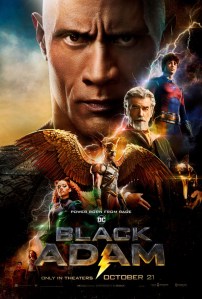 Dwayne “The Rock” Johnson has been eyeing a superhero costume for over eight years. He’s been attached to a Black Adam project since 2014. The character is best known in DC comics as a villain for Shazam, although the mythology and rules of that universe get some revisions under this new vehicle. Johnson plays a Middle Eastern godlike figure who shuns being a selfless champion of the little people. If you’re an easy sell for superhero movies, there’s enough visual bravura and smash-em-ups to at least sate your appetite for CGI fisticuffs. By the lowered standards of the DCU, this is a thoroughly average movie. It has a certain childlike Saturday morning cartoon appeal that doesn’t try too hard to be taken seriously and goes about its business with a workmanlike degree of efficiency. The action is easy to follow and the obsessive slow-mo style feel like comics splash pages come to vivid life. I liked the warm, golden color palate and Mid-East setting as distinguishing features. There is an audience for Black Adam, I am certain, but it’s also getting harder to just accept average superhero movies given the glut of superhero cinema. The hero’s journey of this would-be villain becoming more a grumpy antihero is rote and predictable, including a really lame villain to make Black Adam look less bad in comparison. I didn’t care about big CGI demon goon fighting for control of a magic throne. The character arc is supposed to be about agency and responsibility, but it gets reduced down to a morally simplistic “I guess I won’t kill all the bad guys all the time” re-evaluation. The plotting and structure is also misshapen; the entire first half of the movie feels like the second half of some earlier movie we missed out on. The fighting can also get annoyingly repetitious. The Justice Society has two major members, Pierce Brosnan as Dr. Fate and Aldis Hodge as Hawkman, and the rest are afterthoughts, as if the producers leveraged including more big screen debuts in case the central character wasn’t enough of a draw. Anyway, the Justice Society and Black Adam go through half a dozen fights and I just got bored by their bickering. The premise of a Middle Eastern superhero, a champion for the Muslim world, would be a radical idea worth exploring the geopolitical ramifications, especially the fears this could raise in conservative and twitchy Western societies that this could be seen as akin to a superhero arms race. That direction might veer away from the intent of the character but that’s also the far more interesting story. Still, it’s The Rock as a superhero, and his enormous charisma can carry even an ordinary action movie to greater heights.
Nate’s Grade: B-
Share this:

Barbarian (2022)
 It’s rare for a movie to be truly surprising, which is why I would suggest if you’re unfamiliar with Barbarian to try and go in with as little advance knowledge as possible. This is a movie that delights in upending its audience and making them reconsider what they previously thought, re-examining characters and situations with new key pieces of evidence, swapping allegiances and sympathies. It begins ordinarily enough with a young woman, Tess (Georgina Campbell), arriving at her Air B&B rental with a mysterious stranger (Bill Skarsgard) already there claiming it’s his rental. He invites her inside, and she hesitates but follows, and from there the night will go down as one to remember, if she survives it. The joy of Barbarian is how it keeps changing its gears, leaving the audience guessing what could possibly happen next, and the movie will make some remarkable tone and time jumps. Writer/director Zach Cregger (part of the comedy troupe The Whitest Kids U’Know) has made a Jordan Peele-esque leap into the realm of horror with starting results. Cregger really knows his genre goods, and his camera will elegantly frame his visuals while letting the dread compound, as we nervously anticipate what’s to come, often the result of investigating something we know will only lead to bad ends. For a low-budget indie horror movie, the photography and production design work wonders at building suspense and unease. The lingering flaw of Barbarian is that it’s a surprise show, a haunted house ride that doesn’t have much more to it than the entertaining yet finite experience. I don’t think there’s much in the way of re-watchability and many of the plot and thematic elements feel too timidly explored, ladled on haphazardly when they could have earned far more attention, especially with the reveals in the second half. Still, if you’re looking for a delightfully unpredictable and squirm-inducing horror movie that delivers on the WTF moments, then Barbarian is ready for you, whether or not you’re ready for its many deranged detours.
Nate’s Grade: B
Share this:

Satanic Soccer Mom from Ohio (2022)
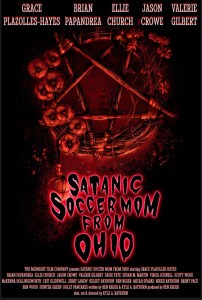
When you have a catchy title like Satanic Soccer Mom from Ohio, you know you have to deliver the goods. This gleefully schlocky suburban satire horror comedy (how many more adjectives you want?) is the follow-up from director/co-writer Kyle Rayburn, an unabashed genre enthusiast. I was granted an advance copy to review this new Ohio-made indie and I’ll try to remain as objective as possible, dear reader, despite the fact that Kyle is one of the nicest men on Earth and even allowed me to film an episode of my rom-com Web series in his own home. Satanic Soccer Mom from Ohio is more low-key than you may be expecting. Its chill vibes and relaxed, ironic humor are more indicative of a stoner hangout movie than something with demon figures and threats of damnation. I think plenty of viewers could latch onto the fun, weird wavelength of an undemanding silly comedy, although there are places I wish Satanic Soccer Mom had gone even further with its spirited sense of creativity.
Annie (Gracie Hayes-Plazolles) is trying to hold it all together in suburban Ohio. Her husband won the lottery and then vanished, and her suburban community is awash in gossip and speculation about what has happened to him. Annie is trying to raise her two kids alone, keep ahead of adult responsibilities like bills and soccer practice shuttling, and holding back from snapping at the clucking hens of the neighborhood, the Karens, lead by chief Karen Green (Valerie Gilbert). It all changes when she accidentally summons a horned demon, Balthazar (Brian Papandrea), who is willing to grant her three wishes at a price, as per proper Faustian bargains.
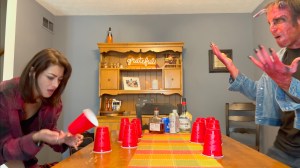
There is a breezy charm to Satanic Soccer Mom from Ohio, a casual, shoulder-shrugging amiability that invites you not to think too hard about the proceedings and just have fun, and if you can connect on that wavelength, then the meandering nature can also be part of that unexpected charm. It’s easy to see the works of Kevin Smith as a reference for Rayburn, but I was also reminded of the hangout cinema of Richard Linklater, where you adjust to the rhythms of characters and their daily lives and interactive camaraderie. Of course, nobody had their boobs literally fall off in Linklater’s world (though there’s still time yet), but it’s that same relaxed tone and feeling that permeates Satanic Soccer Mom. There’s something most amusing about populating your movie with fantastic creatures but keeping a deadpan sense of mundane reality. It’s one of the reasons I enjoyed the short-lived Adult Swim series Your Pretty Face is Going to Hell, a workplace sitcom set in an office literally in hell. If done well, the surprising triviality of the fantastic setup provides its own sly sense of humor. I enjoyed that the movie didn’t have apocalyptic stakes but instead illuminated conflicts very relatable to many: getting over a painful relationship, struggling to juggle the responsibilities of adulthood, fitting in but also knowing when to push back and assert your independence. Having the duplicitous neighborhood Karens be a bigger pain for Annie than an actual demon is a fun reversal. Same as Annie wasting her magically granted wish on ordinary adult requests, like a never-ending cup of iced coffee. The unblinking, roll-with-the-punches attitude of the characters made the movie entertaining even when little was going on from a plot standpoint, and that’s a big boon for an 80-minute indie.
I consider Satanic Soccer Mom from Ohio to be a silly buddy film, and it improves greatly once Balthazar becomes entwined in Annie’s domestic drama. This is also because Papandrea (Feaster Sunday) is the funniest performer in the movie. I loved the bickering dynamic between Annie and her demonic little helper. They reminded me of squabbling siblings, cemented even further during a contentious and competitive game of Mario Kart. This is also the key character dynamic for the movie, the ordinary in conflict with the extraordinary, the protagonist suffering and the relief with the strings attached. The movie is never better when these two are sharing the screen. Plazolles-Hayes (Night Work) has a spunky Parker Posey energy to her, an incredulity to her wide-eyed stares and eyebrow arches that feels earned. She’s the straight woman in a series of crazy developments, and Plazolles-Hayes doesn’t get lost in the craziness. Papandrea is a natural hell-raiser, a mischievous performer who makes the most of his material and elevates it with a grinning desperation that makes it all funnier, like a failing comic on stage. Balthazar is also highly engaging when he’s pretending to be a “normal human,” and his obvious, schticky delivery and mannerisms reminded me of Vincent D’Onofrio’s physical performance in Men in Black. I can still recall the moment he was trying to quickly hide from Annie’s children and just lifted whatever objects were near to badly obscure him (“What are you… four?” Annie berates him). The casual shade Papandrea imbues the line, “Okay… sinner,” is simply award-winning comedy. It’s also a diverting commentary that Annie gets along better with a demon than most humans, though I’m sure there are many among us who could relate. It endears Annie to the audience and proves how unflappable she is despite her troubles, worldly and other-wordly.
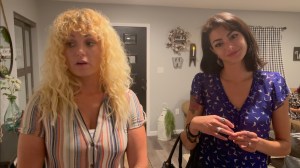
I also want to mention a few other performances that made the most with their screen time. Gilbert (Straitjacket) is so amusingly self-satisfied without becoming a full-blown suburbanite caricature of “Midwest nice.” I especially enjoyed the few moments she dropped the act and revealed the curdled reality behind her sweet-smiling facade. Virgil Schnell (Night Work) is hilarious with how transparently desperate he is to be with another woman, even willing to whip off his shirt to help a woman clean up a slight dab of spilled wine. Ellie Church (Harvest Lake, Jessie’s Super Normal Regular Average Day) is well-acquainted with low-budget horror and provides a welcomed sense of easy-going camaraderie for Annie as her lone friend in town.
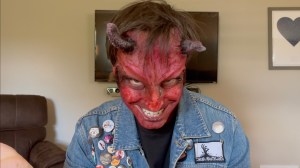
As one of those who previously watched Rayburn’s first film foray, 2019’s Men in Black-meets-True Blood caper, Night Work, I can see definite growth as a filmmaker. Both movies were made on shoestring budgets (only $5,000 total) and filmed primarily on a iPhone camera, though the low-budget look isn’t a big point of detraction for either movie. You can’t judge a small indie movie made for $5000 and filmed on the weekends by the same technical standards of bigger movies. You have to accept some tech shortcomings, like the absence of dynamic lighting or polished audio or complex camerawork. There’s very little visual coverage in Satanic Soccer Mom, many scenes composed of a closed shot-reverse shot circuit of edit choices, but it took me out of the movie only sparingly. The rough-around-the-edges DIY aesthetic can provide its own micro-budget charm too, and Rayburn and co-writer Ben Reger (Night Work) are aware enough to write around technical limitations and emphasize ideas and quirky character interactions. He even has a character joke in narration, “That’s what we could afford to show you.” Rayburn is also smart to cast well and get out of the way of his actors. The ensemble feel like they’re gelling on the same comedic wavelength, which is harder to do than most would think, and thus each performer feels in concert no matter the wild turns. The makeup effects for Balthazar are stylish and effective on a budget, and his whole denim jacket and button-heavy attire and punk rock attitude reminded me favorably of Viv from the short-lived but brilliant British comedy TV series The Young Ones, formative to my own burgeoning sense of humor.
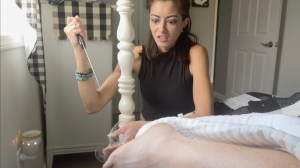
However, even with the emphasis on the ideas, there are enough moments that left me wanting more. I can understand some viewers feeling cold to its blase tone with its fantastical characters. Some viewers will not be able to get over the fact that a woman has a demon wish-granting service and the creativity only goes so far, mellowing in shallow waters for its own good vibes. With all the wish-granting, reality-altering possibilities that a demon represents, it can be something of a letdown for the wishes to be so mundane and minute. One of Annie’s wishes is for her (minor spoiler warnings) to be able to go out in town and pretend to be someone else, so she magically transforms into a different actress (Nickii Rayburn, the director’s wife, so good husband points there) for one raucous night. I can understand that this wish gets at Annie’s distaste for the oppressive negativity of her town, but couldn’t she just have gone to a different bar in a different town where nobody would know her? She could also just wish for the idiots in town to forget about her. It’s the same for why Annie even chooses to hang out with the Karens if she despises their company so much. I understand why the scene exists from a plot standpoint, as another contrast between Annie and the suburbanites she doesn’t fit in with, but then why even bother spending time with these women? There are engaging character aspects with Annie that feel only briefly touched upon, chief among them her complicated feelings about being abandoned by her husband. There’s a nice moment where Balthazar confirms her suspicions and Plazolles-Hayes gets to emote, finally able to process a key point of grief, and it’s one of the few genuine dramatic moments of the movie. However, without prolonged comedy set pieces, the movie would have benefited with more scenes like this for balance. The movie coasts a bit too long without a larger plot direction, so it can feel very scene-to-scene. Then the end includes multiple deus ex machinas, which can make the preceding problems feel too slight.
While I chuckled throughout, the comedy felt too subdued and too easily satisfied creatively. I’m surprised, given the premise, that there aren’t really comedy set pieces. I suppose there’s one, Annie and her pal getting stoned and attending craft night with the Karens, but that’s it. Much of the humor is ribald banter, so much will rest upon the quality of the dialogue writing. It helps having such sharp contrasts for conflict. I laughed throughout but kept wanting the movie to go further, to build off its gags and complications and peculiar turns. One of the dunder-headed Karens flippantly remarks about what could have happened to Annie’s husband, saying, “become a horse man,” and this would have made a fine opportunity to have her continue this weird fantasy tangent, accidentally revealing her own strange sexual kinks, something to separate her from the herd and then shame her back into social submission. That could have been a running gag. Or Bathazar’s one runty horn being a source of insecurity, something he has to defend (“I’ll have you know, plenty of lady demons have referred to my horns as ‘more than adequate.’”). There’s a truly wonderful random gag about the Karens raising money for “Saxophones for the Homeless,” and I was pleading for a visual representation of this concept, with a homeless man shrugging at the useless gift. I often wish there were comedy scenes and jokes that pushed beyond the first idea, taking one joke and finding a deeper, more belly laugh-inducing bit rather than settling for a passing chuckle. I’m talking about scenes where Annie gets stoned and giggles, or the inclusion of a record scratch sound effect to really ensure that a punchline landed and was meant to be unexpected. I wish Rayburn and Reger demonstrated as much confidence with all their jokes as they do their final gag involving an angel and the selected color of her wings (it’s definitely a memorable exit).
Two movies in and Rayburn is starting to establish a penchant for establishing weird and wild worlds with goofy, profane characters, rich in crude banter and crazy ideas, but worlds that I wish to explore further. Satanic Soccer Mom from Ohio is an amusing and charming movie, especially if one can gel with its overall amiable tone and forgive the inevitable technical shortcomings. I’m far more forgiving of tech issues than I am with narrative and comedy shortcomings, because those are strictly on the creative brain trust fully developing their story potential and exploring the possibilities of their funny. It’s hard not to feel like Satanic Soccer Mom is a solid first draft of a story and could have benefited from a few more passes and polishes to really punch up the comedy and better explore the character dynamics. That stuff isn’t budget dependent. Again, it’s easy to feel the passion everyone had for this project and especially the good times. We need movies that can provide that level of entertainment, no matter their flaws, and Satanic Soccer Mom from Ohio is likely going to be the most feel-good buddy movie ever with this title.
Nate’s Grade: B-
Share this:

Halloween Ends (2022)
 If you’re a fan of the hallowed Halloween horror series, I can understand why Halloween Ends can be a disappointment, since it dramatically steers away from the formula that has carried this franchise since its beginning. However, if you are like me and find Michael Myers to be one of the most boring slasher killers, and too much of the slasher genre to be rote and repetitive, then this movie might actually be something of a welcomed surprise. Ends might be the least Halloween movie since the third film, the failed 1982 sequel that tried to establish life outside of the hulking menace that is Myers, and then the series shortly retreated back to its familiar bloody formula. Ends might be the least amount of screen time Myers has ever had in any film in the franchise, excluding the third movie; he doesn’t even get his first kill until almost an hour in.
The 2018 reboot was a mixed bag of a horror movie but it ended on the strongest note, with three generations of Strode women fighting together to end their torment. Unfortunately, the series had to continue because the 2018 movie made so much money for the studio, so we’ve been given two rather perfunctory sequels. It’s clear director David Gordon Green and his co-screenwriters, including actor Danny McBride, didn’t really have a desire to continue, and so they spent the sequels exploring other avenues of Haddonfield. I wasn’t a fan of 2021’s Halloween Kills, but the subplot about the mob of scared citizens becoming vigilantes was at least something new and added to a larger understanding of the trauma of this terrorized community. I can say the same with Halloween Ends, namely that the things that were most unexpected and tertiarily related to Myers were what I enjoyed the most. Halloween Ends is messy and disjointed but at least it’s interesting even as it strains to justify its existence and even seems slightly disdainful as well.
It’s Halloween time again in Haddonfield and the citizens are still psychologically recovering from the events of the prior year, as featured in Halloween Kills. Nobody has seen Myers since he killed Laurie’s (Jamie Lee Curtis) adult daughter. In fact the Myers’ estate has been demolished, at long last, and the town is trying to move on from yet another massacre. Laurie is trying to transition into domestic territory, watching over her granddaughter Allyson (Andi Matichak) as she works at an urgent care center. The real star of the movie isn’t Laurie but Corey (Rohan Campbell), a teenager who accidentally killed a child he was babysitting years ago. Corey is a pariah in town as he tries to get his life back on track, with the meager options that Haddonfield offers for someone with his baggage. He is befriended by Laurie, who introduces the lad to Allyson, and the two instantly connect as outsiders unfairly maligned by their town. These star-crossed lovers get more complicated when Corey begins to tap into his darker impulses and discovers the location of a recuperating Michael Myers. How far will he go?
Because Myers is such a colossal bore as a character, so readily deemed pure evil as to remove anything remotely interesting, I was grateful that Halloween Ends chooses to be something else for most of its running time, precisely the evolution of a killer. Characters that are just born as soulless evil don’t require much in the way of understanding or back-story. This movie decides to spend the majority of its time setting up a protégé figure for the big bad boogeyman, so much so that you could cut the scant Myers appearances in his subterranean lair and make the first half of this a completely different movie. It’s proof that Green and his screenwriters weren’t just coasting from creative inertia of delivering the same-old same-old. There is an actual story here that wants to explore elements of the franchise that have been dormant and chronicle how a young man can fall onto a dark path and lose himself. It’s the appeal of the dark side, and it’s personified in one young man’s journey. It’s the serial killer origin structure, and it mostly works. I was far more interested in Corey than anything else happening in Ends. The prologue establishes him as misunderstood and an outcast, blamed for an accident that nobody seems to think was actually an accident. It’s about how the ailing town treats this young man and how he tries to reform after tragedy, only to be met with suspicion and resentment. Getting to know Corey’s limited world and watching him succumb to his darker impulses, it’s like a little side story that you never would have known existed in the larger Halloween universe so often dominated by the endlessly wheel-spinning Laurie vs. Michael drama. I’m not going to say that the screenplay was nuanced and populated with three-dimensional characters, and the pacing of Corey’s descent is indeed rushed, but I appreciated the efforts to try something different.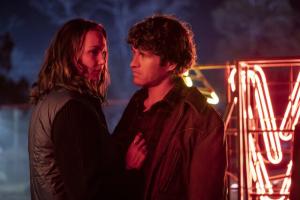
Another issue I have is that first-half Laurie and second-half Laurie feel like two totally different characters. This version of Laurie Strode feels like a completely different character from the prior two Halloween movies that shaped her as a grizzled, obsessive, survivalist loner. This version is making awkward meet-cute small talk in grocery stores and burning pies she’s determined that her granddaughter will eat because of nascent Strode family traditions. Who is this woman? I know some time has passed from the previous movie, but where is the response or lingering grief over the loss of her daughter, the same person she spent years preparing to defend herself against the return of Myers and then was killed by him anyway. For all the weight given to this passing, it feels like an afterthought and that is bizarre. It’s as if Laurie’s daughter never existed for all the impact that her murder has on this story. Once Corey and Allyson become a romantic pair, that’s when something clicks over with Laurie and she recognizes the danger this boy represents, and then she becomes the overly protective mother (granted, her instincts are correct, but the characterization is blah). There was potential to explore the continued strained relationship between the different generations, but Allyson mostly comes across as the naïve child who just wants to run away with her dreamy new broody boy. Had the characterization for Laurie and Allyson been more coherent, and meaningfully tied to the past events in the new trilogy, I think it would have better aided the aims of the Corey examination.
Say what you will about the Halloween series stretching things out over its two lesser sequels, but Green and company add a definitive end note to their title. The degree to which the movie seeks definitive closure is almost comical. It feels like Green is saying to the studio, “Okay, this time it’s really, really over. There is absolutely no coming back from this. That’s it.” This sequence of finality goes so many steps beyond confirming its ending that I began to chuckle to myself at the absurdity of the movie telling its audience that this is the serious end. We go beyond beating-a-dead-horse territory into making the dead horse into a vase that is then shattered, and then the pieces thrown into a fire, and then the ashes launched into space. Of course, all of this will depend on the box-office viability of the movie and whether or not its parent company wants to squeeze even more money from the 40-year franchise (maybe an H50 in 2028?). After all, picking and choosing specific sequels to eliminate from franchise canon has become more popular, as evidenced by the 2018 movie blinking every sequel out of existence for its timeline, so all of these would-be definitive events can just be erased as easily by another sequel. That’s the nature of popular horror: everybody dies but nobody ever stays dead for long. 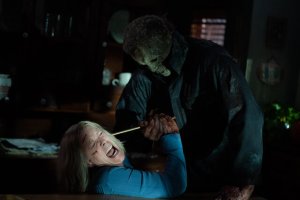
As slasher thrillers go, there’s probably not enough going on here to appeal to your baser desires, as there is no real memorable or gruesome kill. As a character study, there’s not enough careful development and plotting to reward exploring an offshoot to this universe. It’s fascinating to me, at best a middling fan of the Halloween series, how this sequel seems to simply not care about being a Halloween sequel, hence the shelving of Myers for so long, as well as the inconsistent characterization of Laurie and lack of follow-through, and the shirking of extensive gore and terror. I loved the strange detail that the friend group that bullies Corey aren’t a group of roided-out jocks but… marching band geeks (granted, with unchecked privilege). I loved how the movie goes above and beyond to persuade its conclusive ending, even closing out on the “Ends” of the title. You can almost feel certain degrees of disdain that Green and company have to create this added content, a misshapen denouement to the better climax in 2018. I guess there’s nothing stopping anyone from pretending these sequels are non-canonical, and it’s likely only a matter of years before the studio does the exact same thing to reignite the series. Halloween Ends is a strange, frustrating sequel that struggles to be a Halloween movie, for better or worse.
Nate’s Grade: C
Share this:

Catherine Called Birdy (2022)/ Sharp Stick (2022)
Lena Dunham is a controversial creator, even more so since the conclusion of her hit HBO comedy Girls back in 2017. I’ve been a fan of her creative voice from the very first episode of Girls, and I appreciated how well she could write self-involved, self-destructive, myopic characters and her directing instincts as well, all at the age of 25. From her zeitgeist-tapping TV success came Lena Dunham the brand, the industry, and with that her feminist newsletter, book deals, personal appearances, and a perennial case of foot-in-mouth syndrome. It makes it more difficult to carry that fandom when the figure says cringey things like she wished she had had an abortion to better understand the plight of those who have. Some of the early criticisms against Dunham were simply mean-spirited, like gross insults regarding her body and her penchant for nudity on her own TV series, as if women don’t exist who resemble Dunham’s shape. However, with each new public example of bourgeois entitlement, I began to wonder whether Dunham’s satirical skills at sizing up self-involved characters was maybe a little less satirical. I’ve been curious what creative projects Dunham would gravitate to next. Her first was Camping, a short-lived 2018 remake of a British comedy that was cancelled after one season. But aside from producing some more HBO shows, and occasional acting appearances like in Once Upon a Time in Hollywood, Dunham has been relatively silent. And then in 2022, she had two new movies as writer and director. I thought it would be telling to review them both together, as they share many similarities, and as further insight into Dunham as an artist still exploring her voice.
 Sharp Stick was released first, though only a couple months before Catherine Called Birdy. Both movies are coming-of-age comedies about young women finding their place in a world that is all too ready to package them into tidy offerings for male desire. Both movies are about their plucky heroines pushing social boundaries and being exploited by lustful men, but one of these films is far better developed, more charming, and with clear ideas and consistent commentary. In short, watch the delightful Catherine Called Birdy and skip the rather dulled Sharp Stick.
Catherine Called Birdy is based on the 1994 children’s book by Karen Cushman and modeled as a young girl’s diary from thirteenth century England. Catherine (Bella Ramsey) is the only child of the lord of a small village. Her mother (Billie Piper) has suffered five miscarriages or stillborn births, and her spendthrift father (Andrew Scott) is bewildered at what to do with his headstrong daughter. She’s 14 and rejecting her father’s assembly of suitors, as he tries to marry her off and recoup some money to stabilize the family’s looming debt. Catherine narrates her very important year where she starts her period, hides it, and learns about love and life and finding her place.
Right away, I was taken with the sprightly energy and strong personality of our narrator, who would prefer to go by Birdy, thank you very much. We open with her literally slinging mud with the neighborhood kids and laughing and wilding out, enjoying the thrills of being young. The contrast of the movie will hinge upon the distinction of what is childish and what is mature, as these youngin’s are thrust into adult roles because society says that as soon as they can menstruate, they are ready to be married off and become baby factories. Birdy is angry with her mother for continuing to try and have children, especially after the painful recuperation of burying sibling after sibling. She resents the idea of being a mother, and especially so early into a life that still feels bound by the stirrings of being a child. Girls should be allowed to be girls, she demands, and by that she means running around, talking with her friends, and absent the pressures and limitations of adulthood. She’s defiant against the larger Medieval system of valuing women for their fertility. Dunham is smart enough to frame the movie in credible terms. It’s not like Birdy, through her tenacity, is going to overthrow an entire centuries-old system of gender norms, but the story is positioned in more personal terms, in breaking through to her father to see her on her own terms rather than as a convenient investment portfolio. That’s more achievable and will be more gratifying for us because of what winning him over will mean.
 The movie is also fast-paced and funny, with Birdy’s casual and catty observations delivered in quick succession. In some ways this reminded me of a Medieval version of 2011’s Submarine, another charming indie coming-of-age movie with an eccentric pop-culture obsessed teenage weirdo. There’s Medieval covers of contemporary pop songs strewn throughout for a youthful energy, and lots of onscreen titles and graphics that have their own jokes. The disconnect between Birdy’s viewpoints of the world and the common ways of thinking provide snarky commentary and plenty of progressive attitude. It’s a constant entertainment to watch this precocious little lady tweak the gender and social norms, riling up buffoonish and fragile male psyches. She’s an upstart, and there’s joy in watching her upset those in power and privilege, though she too is reminded of her own privilege considering she is the daughter of the lord and not merely some dirt-poor peasant. If it wasn’t for the sharp character-focused writing, Ramsey’s performance wouldn’t achieve the same comic and emotional heights.
Ramsey was a supreme scene-stealer on Game of Thrones, so much so that producers turned a one-scene part into a multi-season role, even giving her a badass death scene. Ramsey is the anchor of Catherine Called Birdy and perfectly in tune with her character’s feisty yet limited worldview. She’s such a winning character and represents our more modern worldview chaffing up against the very real reality of Medieval life. In some ways, she’s a case study in having to grow up too soon, and surely not the only woman to have done so. Ramsey is heartfelt and hilarious and headed for stardom (she’ll be co-headlining the HBO Last of Us series along with Pedro Pascal).
 Attaching the audience to this character is a rewarding experience, and Dunham as screenwriter has balanced the adaptation of going from a first-person diary-based narrator into a film world where we can get outside viewpoints that complicate and challenge our perceptions. I appreciated the widened scope of the narrative. It’s not just the women who are expected to perform their social duties. Birdy’s beloved older uncle, George (Joe Alwyn), is definitely in love with Birdy’s best friend, but that marriage will not do. He’s expected to marry from an established pecking order to better protect his family. There’s a village boy who is also clearly gay but will never be allowed to marry whom he loves, again emblematic of plenty of people who would be left behind in this system. Sophie Ookonedo (Hotel Rwanda) appears as a widowed noble lady who speaks about the freedoms she enjoys having “played the game” and waiting her turn, speaking to a possibility for Birdy working within a broken system. She’s savvy but graceful, with the hint of sadness just on the outer edges of her words. Birdy’s mother, Lady Aislinn (Piper), is similar, hoping to make the best of limited options, and trying to ready her daughter for a life she knows she will be ill-prepared for. It’s what any parent feels, trying to ease your child for the reality to come while still holding onto their innocence as long as possible. She has some heart-rending moments especially during a difficult childbirth scene, and it’s that moment that really showcases Birdy’s father, Lord Rollo (Scott). Until this point, her father has been frustrated by his impetuous daughter, but it’s this moment where she, and by extension us, see the depth of his caring for his family. It’s wonderfully played by Scott, and it reminds us that even the stooges and fools of this world have their own hidden depth.
Catherine Called Birdy is also something of a Game of Thrones reunion, pairing Ramsey with David Bradley, Dean-Charles Chapman, Paul Kaye, and Ralph Ineson. It’s like Dunham used the HBO series as a quick casting cheat sheet since she’s already seen them in a Medieval setting. Special mention to Russell Brand (Death on the Nile) who also just kills it in one scene as a confused and easily swayed suitor. I would have loved more appearances from this man but having him continually foiled by Birdy and never learning from his gullibility.
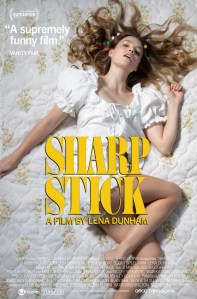 Moving onto Sharp Stick, an original story from Dunham, you can see points of similarity immediately, framing the narrative around the self-discovery of Sarah Jo (Kristine Forseth). She’s 26 years old and still a virgin, a point she feels more uncomfortable about because of how open her half-sister Treina (Zola’s Taylour Paige) and mother (Jennifer Jason-Leigh) are about their own sexuality and their many paramours. Sarah Jo has her sights set on Josh (Jon Bernthal), a seemingly kind stay-at-home dad taking care of his special needs son that Sarah Jo babysits. If she’s going to lose her virginity to someone, she wants it to be him, but with this comes consequences as well as a steep learning curve for Sarah Jo on the realities of intimacy.
My issue with Sharp Stick is that it feels far more dawdling and confused about what it wants to say and explore with its brief 86-minute running time. This feels more like a handful of ideas or short story beginnings that Dunham inartly smashed together, and the proceeding movie has moments of levity and insight but is overall too messy and shambling and underdeveloped. Let’s start off with the main character who I would have assumed was a teenager by the way that she was acting. When the script tells me she is 26 years old, I was flabbergasted. She was behaving like a much less mature adult, not to say 26 is the height of maturity or that everyone matures at the same speed. Still, Sarah Jo comes across as very naïve and infantilized about adult relationships and human sexuality, which is confusing considering how open her family is about sex and pleasure. It’s not like she’s growing up in a conservative or repressive environment. She’s literally helping her sister record twerking videos for her social media account. The chief reason I think Dunham made an explicit reason for aging our protagonist 26 was to remove some of the ickier consent issues from coming-of-age stories about inappropriate relationships between underage teens and adults (American Beauty, Towelhead, The Diary of a Teenage Girl). She wanted to preemptively remove those criticisms, and so she made Sarah Jo 26, and she also had her uterus removed, something meant to make her seem more adult, at least on paper. Except this is the most childish 26-year-old I may have ever seen. The problem is that Sarah Jo’s naivete has shackled her character, so her sexual awakening feels more akin to a teenager’s than a mid-twenties adult.
Update: I did some research and discovered that Sarah Jo was originally written to be autistic, which would explain more of her social awkwardness. Dunham reached out to an expert on compassionate representations of autism and physical intimacy but then reportedly cancelled on her. I guess she just decided to make Sarah Jo neurotypical but didn’t change anything else. Needless to say, this was not the best decision and its impact is all over the oblivious sense of naivete that pervades the character and her choices.
 I found it hard to take Sarah Jo that seriously as a character, as her education seemed to be obvious and a little too arch and twee in delivery for the rest of the movie. Once she has her sights set on Josh, Sarah Jo looks to Internet pornography to learn about what she may do to better please her partner. She is titillated by watching porn but less from the simple carnal activity and more from her fixation on one very commanding actor, played with nonchalant exuberance by Scott Speedman. Sarah Jo studies the annals of porn and creates a colorful construction-paper-heavy checklist of sexual acts she would like to experiment with, and she even alphabetizes it. It’s stuff like this that paints Sarah Jo as being infantilized. It’s not like we were shown her penchant for arts and crafts or taking larger tasks and breaking them down into cutesy checklists before. She even starts soliciting men online to better help her check things off her list, although this doesn’t come to any danger beyond a few lackluster men not living up to her expectations. And that’s the big takeaway here, that what porn promotes is more fantasy than reality, that actual intimacy between consenting adults is its own very different thing. This is too simple a revelation to rest the entire movie upon wuthout a more in-depth character, which Sarah Jo is not. Again, it’s confusing because this character will seem like she is ignorant to the world of sexuality and yet her family is so direct. The Sarah Jo character feels like she’s been ported from another story about a sheltered wallflower learning about her body and her pleasure versus how she’s been told to act to better turn on men.
I don’t fully understand what the entire storyline with Josh was meant to add up to. He’s her first sexual experience, and while he’s awkward and hesitant, he eventually gives in to this young woman’s ego-stroking infatuation, and then they embark on an affair behind the back of his pregnant wife (played by Dunham). I’m going to go into spoilers to better assess this storyline, so be warned dear reader. He eventually confesses to his wife about the affair and breaks down into tears, apologizing and saying he couldn’t help himself, and the moment is squarely to make us see Josh as a pathetic loser. His tears are performative, and he’s throwing around shifty excuses like that he did it for them. He admonishes himself but it’s not contrition we see but manipulation, meant to provoke forgiveness or at least mitigation of his actions by his wife. That’s when she shakes her head and talks about the many, many other women that Josh had had affairs with, proving that this tryst was not out of character. In fact, this seemingly “good guy” dad is actually a creep. Okay, but then Dunham’s character stays with him and they continue living their lives, obviously with the absence of Sarah Jo now. She even returns to them to yell to Josh that she’s getting much better at sex, like she will win him back as a lover. I suppose Dunham was setting up Sarah Jo’s object of desire being less than her expectations and instead as another scuzzy and coddled man-child. That’s fine. But then why does Sarah Jo still seem so determined to win him back? It’s like she hasn’t learned from this.
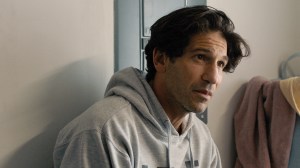 There are moments that work in Sharp Stick, little pieces that click together with insight or well-honed character writing. I enjoyed Sarah Jo’s mom going into full monologue mode to describe how she met and fell in love with Treina’s father. When Sarah Jo asks about her own father and her story about meeting him, her mom just shrugs and says her dad was just some guy. The disappointment is palpably felt. I also appreciated that children with special needs are presented in a straightforward and un-stigmatized fashion as just being kids. I thought the conclusion with life advice from Speedman was a great scene-stealing deluge of wisdom from the most unexpected place. I just wish it felt more earned for Sarah Jo and her awkward personal odyssey.
Dunham hasn’t directed a movie since her indie breakout in 2010, Tiny Furniture, and now she has two movies within weeks of one another. Catherine Called Birdy is the much stronger outing, allowing Dunham to adapt her voice and talents into a PG-13-firendly universe while still keeping her sharp wit and attention to character detail. Sharp Stick, in contrast, feels like several ideas that never fully coalesce, and the messy decisions with the main character makes the entire enterprise feel strange and lacking better-earned wisdom from her journey. After six seasons of Girls, I’ll always be intrigued about a new Dunham creative project, but they are not all equal. Catherine Called Birdy is Dunham flying far above the routine criticisms about her writing and her perspective, as well as showing her adaptability in an unfamiliar setting. Sharp Stick, sadly, is a reconfirmation of those criticisms and the sloppy execution of bigger ideas.
Nate’s Grades:
Catherine Called Birdy: B+
Sharp Stick: C


You must be logged in to post a comment.