Author Archives: natezoebl
Food Inc. (2009)
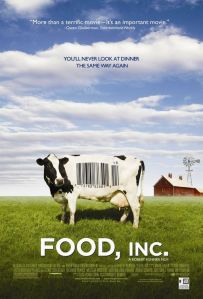 Food Inc. is informative and occasionally jarring, but unless you have no common sense and/or political acumen, nothing here should seem like much of a surprise. The food industry, like most, is about finding faster, cheaper ways to turn higher profits, so it seems natural that the fast-food style system would be integrated into industrial factories. Our current eating lifestyle as a nation is unhealthy and heading toward disaster. But this is old news. Food Inc. makes a mostly compelling case except when it comes to organics. An organic farmer addresses the argument that worldwide organic farming cold never feed enough people, and tosses it aside as “specious.” I’m sorry, global hunger is not a specious argument, and Food Inc. glosses over the facts that organic farming requires a massive amount more land to produce crops, it only uses natural fertilizer which means its more prone to breaks of E. Coli, and, most damning, is more prone to infection because they only use natural pesticides, ignoring decades of scientific improvement, which naturally makes their crops more prone to being wiped out by insects. Which billion people get to be told their hunger doesn’t matter? The film’s most interesting section is when giant food companies control a market and squeeze the legal system to keep it that way, like Monsanto’s near 90 percent hold on soy beans. They hire former military men to spy on farmers and scare them. They engage in frivolous lawsuits because they can afford the legal fees, but a poor farmer can’t, so they admit guilt and settle. The Monsanto dismantling of family farms is scary, way scarier than the hidden camera footage of animals at a slaughterhouse (it’s sad, I’m not a monster, but as long as it’s humane, does a cow really care how it dies?). Food Inc. is an interesting, galvanizing little documentary that makes several good, albeit familiar, points.
Nate’s Grade: B
Share this:

Wolrd’s Greatest Dad (2009)
 The name Bobcat Goldthwait doesn’t exactly make you think accomplished filmmaker. Goldthwait is best known for his screechy, nervous voice utilized in animated features and the hallowed Police Academy series. But he’s also a writer and a director. His first effort was 1991’s Shakes the Clown, starring Bill Murray as an inept bank-robbing clown. Then he wrote and directed a 2006 movie called Sleeping Dogs Lie that centered on the romantic foibles of a woman who, on a whim, once gave her dog oral pleasure. I can’t see Hollywood touching that one with a ten-foot pole. These sort of unconventional, risky artistic concepts might prepare you for Goldthwait’s newest black comedy, the ironically titled World’s Greatest Dad.
Lance Clayton (Robin Williams) is an underappreciated man. His teenage son, Kyle (Daryl Sabara), hates him. He cannot find anyone interested in published his many manuscripts. His colleagues think little of him, students don’t attend his poetry class, and his quasi-girlfriend, Claire (Alexie Gilmore) is showing more interest in Mike (Henry Simmons), the new hunky, successful English teacher that got a story published in the New Yorker on his first try. Then everything changes. Lance comes home to find his son dead of auto-erotic asphyxiation. He rearranges the body and writes a suicide note, attempting to spare his son from being mocked in death. But then the school hacks into the police system and prints Kyle’s suicide note. The entire school is awash in grief and discovers what an insightful, troubled young man Kyle was. They all want to know everything they can about Kyle, and suddenly Lance has found an outlet for his writing.
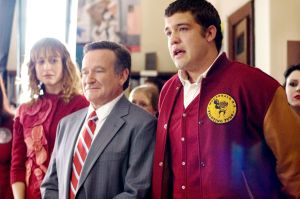 The movie satirizes grief culture with sharp acuity. Kyle’s classmates all react with horror and look back with extreme rose-colored glasses. Suddenly their fallen peer has transformed from the kid nobody liked into the wounded soul that touched all their lives. Bullies reexamine their behavior, girls that never would have given him the time of day now immortalize Kyle, and the faculty that wanted to expel him now wishes to rename the library in his lasting memory. This warm, fuzzy gauze of grief is Goldthwait’s target. He is satirizing how people turn tragedy into hypocritical attitude shifts. He ridicules the easy revision of history under the guise of collective sympathy. Not every youth is necessarily taken before their time. Not everyone was going to grow up to contribute selflessly to society, making the world a better place to live. Not every youth is deserving of canonization. Some people are just jerks from beginning to end, and Goldthwait proposes we do a disservice when we whitewash reality in the name of kindness and good taste. The only person who can see through this wave of hypocrisy is Kyle’s only friend, Andrew (Evan Martin), who doesn’t remember his crabby buddy being deep, articulate, or remotely smart.
Goldthwait’s screenplay is seriously dark and twisted but it’s also routinely hilarious, notably utilizing a deranged sense of irony. Lance uses his own son’s death as the vessel to become a respected writer. He uses his own dead son as his literary pen name. For once in his life, Lance now has an insatiable and adoring audience for his writings, and to top it all off they won’t dare be critical. Lance is manufacturing his son’s legacy and gaining unbeknownst critical praise. That’s fairly dark and fairly amusing stuff. It’s also funny that Kyle’s death has a greater positive effect on the community than Kyle being alive. The school rallies together and students use the death to justify personal growth. The fake journal of Kyle’s touches and enlightens, which further pumps up Lance’s ballooning ego and sense of purpose. At one point, a talk show host raises the question of whether it’s better to be a good person or thought of as a good person, and this gets to the heart of Lance’s dilemma. His actions are morally questionable. What started as an effort to protect his son’s dignity has morphed into personal gain. Is the world a better place because of this false rendering of Kyle? Is the lie better than the ugly truth? Is the lie justifiable? I honestly never expected to be confronted with tricky ethical questions while watching a movie made by Bobcat Goldthwait.
This is the best work Robin Williams has done in years, which I understand might not be saying much considering his recent slate of brain-dead family comedies. He hasn’t shown this much restraint, and talent, since his 2002 World Tour of Evil that included One Hour Photo and the masterful Insomnia. Williams drops every pretense of his well-known manic funnyman shtick and plays an actually subdued character. Lance is beaten down by the disappointments of his job and fatherhood. Williams effectively coveys the exhaustion of a man who repeatedly fails to connect with his brat of a boy. He doesn’t know what to do; the kid is practically a sullen stranger in his own house. Williams endures such slights and misfortunes with deadpan humor and sarcasm and the audience actually vaguely sympathizes with him through much, if not all, of the second half. Williams is mostly reactive and can come across like a calculated straight man to Goldthwait’s cracked-out script. You feel for the guy when he can capitalize on his son’s death and you practically want him to get away with it all.
Sabara has grown up considerably since being the chubby little tyke in the Spy Kids movies. It’s amazing how much you will detest his character. This kid is perverted, repugnant, obstinate, and just plain idiotic. He hates music (“All music? You hate all music?”), he hates movies, and he dislikes pretty much everything other than extreme pornographic fetishes. Kyle is a nightmarish child with no redeeming value. He had to be in order for the satire to work.
 World’s Greatest Dad is a misanthropic hoot of a movie but that doesn’t mean it is without flaws. Goldthwait has yet to prove any particular style or vision behind the camera. His direction isn’t a distraction by any means but it mostly just presents the story in an unobtrusive fashion. He also has the annoying habit of using music selections as a storytelling crutch. He?s prone to using several songs that describe the onscreen drama to a literal level. For a script as biting and clever, it’s disappointing that Goldthwait feels the need to use songs to spell out his implicit drama. This being satire, by nature the characters are mostly going to be thin. The classmates are little more than a cross sectional representation of high school stereotypes, ready to slide in for a joke. Other side characters are weak due to being underwritten or dropped. Claire is a shallow love interest flitting from suitor to suitor, offering little more than a conquest. Mike works as a foil to Lance but then is completely forgotten about in the second half. There’s one interesting scene where Mike, Lance, and the principal are all golfing and the roles are reversed, Lance is the confidant and respected colleague and Mike is jockeying for approval. But that’s pretty much the last you’ll ever see his character in a meaningful way other than taking up space in the background.
In the end, World’s Greatest Dad is not a comedy that will leave your sides aching or seams in need of stitching. It’s dark and disturbing but unlike the earlier Observe and Report, this movie actually provides an entry point for empathy. It’s provocative and twisted but it never pushes the audience out of the story. The intriguing setup is explored with careful consideration. The characters manufacture a false love for a kid that was all but ignored, and everyone is worthy of scorn to some degree. Even Lance is worthy of derision considering he’s exploiting sympathy to find the success that has eluded him his entire life. But Williams’ performance and Goldthwait’s sharp screenplay keep the film grounded amidst its satirical targets. Most surprising of all, there’s a a sweetness that emerges from this film’s black core. Lance regains a sense of humanity and purpose, and so do we due to his journey. Golthwait has come up with an unusual, morbid, and cynical comedy that manages to be somewhat life affirming by its final reel. I can’t believe I?m saying this, but I believe Bobcat Goldthwait is establishing himself as a strong comedic voice in the world of film. I eagerly await the next movie by the guy who did all the funny voices in Police Academy.
Nate’s Grade: A-
Share this:

Fired Up! (2009)
 Written by four different writers under the combined porn-like pseudonym “Freedom Jones,” this movie about football guys going to cheer camp to score with the limber ladies is… watchable. It’s a silly male fantasy with 30-year-olds posing as high schoolers, the characters are all genre archetypes, and it ends up becoming an unbelievable romantic comedy, but it also feels like a throwback to the juvenile sex comedy buddy movies from the 1980s. The dialogue has a lot more zip and humor than I ever expected. Everything turns into a quip, in a substandard but less hyper literate Diablo Cody style. The main actors have fun spitting out the dialogue, and Fired Up! Is funnier than it has any right to be. At the same time, there are plenty of easy gags around homo-eroticism and a PG-13 atmosphere feels too tame for this kind of material. I don?t hate myself for liking this movie because it’s a step up from its cheer competition, but at the same time I’m not dumb enough to classify Fired Up! as anything more than a quizzically entertaining passer of time.
Nate’s Grade: B-
Share this:

Big Fan (2009)
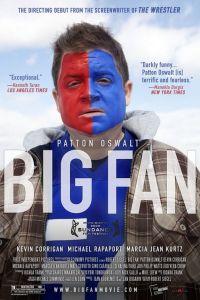 The directorial debut from the screenwriter of The Wrestler follows another down-on-his-luck loser. Patton Oswalt gives a surprisingly dark and affecting performance as Paul, a 35-year-old tollbooth worker that still lives with his mother. Paul’s life is devoted to his favorite sports team, the New York Giants. He spends his evenings meticulously planning his call-in statements to the nightly sports radio show. He’s so devoted to his team that when Paul gets brutally beaten by his favorite Giants player he blames himself. The player gets suspended and the Giants start piling up losses, and Paul can’t deal with the crushing guilt he feels. Big Fan is an intriguing exploration of how absorbed people can get with fandom; I always thought it a bit odd when people refer to a team’s accomplishments with “we” like they had something to do with it. Paul’s fragile world is coming apart and he breaks down with it. Obviously, Paul has a few screws loose in order to make him unpredictable, which gives the last twenty minutes some serious unease. Paul goes undercover as a Philadelphia Eagles fan (his disgust at putting on the enemy jersey is palpable) to hunt out his gloating sports radio nemesis Philadelphia Phil. Big Fan is occasionally funny in an under-your-breath kind of way, but really it’s more of a small-scale psychological study on a hapless individual whose religion is sports and who feels he has sinned before his almighty God. At a mere 86 minutes, the movie doesn’t press too hard into the twisted psychology, nor does Paul leave much of a dent as a character as the film doesn’t make judgment on his obsessive behavior. This isn’t as poignant as The Wrestler, pure and simple. Yet, Big Fan is buoyed by a strong performance by Oswalt and some interesting insights into a flawed fan willing to go all the way for his team.
Nate’s Grade: B
Share this:

Baby on Board (2009)
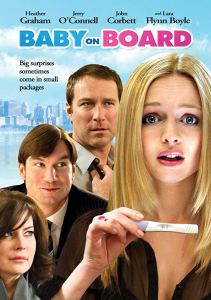 This is such a loathsome comedy that you feel the actors compelling you to put them out of their collective misery. It?s Heather Graham’s second pregnancy comedy in two years, except in 2008’s Miss Conception she wanted to get pregnant. Has Graham become the new face of the ticking biological clock? Graham is a perfume exec who gets in the family way. And how do we reveal this big news? By extended farts and projectile vomit. Stay classy. Instead of approaching an impending baby seriously, the film uses the pregnancy as an inane romantic comedy wedge. Graham’s hubby (Jerry O’Connell) doesn’t think it?s his because he “double bags it.” She thinks he’s a cheater. Their misunderstandings are predicated on the idea that nobody ever stops to say anything that might clear the air. This stuff is beyond sitcom level contrivance. Then the film becomes a battle of the sexes debacle as neither side wants to give in and leave the home, so we?re treated to a montage that zooms through EIGHT MONTHS of pregnancy. This is a comedy with no real feel for pacing, tone, setup, or context. The actors crank it up like they’re bouncing around in a farce, when this is really just a witlessly vulgar Knocked Up knock-off. The director (by the guy who made a movie trying to go on a date with Drew Barrymore) doesn’t so much deliver the jokes as pronounce them dead. This is a vacuum of funny with awful jokes, awful acting, awful attempts at being bawdy, and an even worse sentimental transformation at the end. This is without a doubt one of the most disastrous, abominable comedies of late and should have been terminated at the early script stage. Watch the trailer and spare yourself the agony. Even the trailer can’t help but indulge in a fart joke. The trailer, for god’s sake.
Nate?s Grade: D-
Share this:

Race to Witch Mountain (2009)
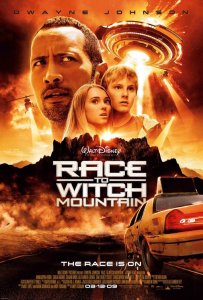 Does anyone ever fondly recall, let alone even recall, the 1975 original children’s film, Escape to Witch Mountain? This remake is Disney-fied in all places. It’s a lackluster kiddie adventure with more special effects, car crashes, and one-liners. Dwayne “The Rock” Johnson cements his tight grip on the family film genre; I really like this guy as an action hero and as a charismatic comedic actor, but being a wisecracking chauffeur to monotone yet strikingly Aryan-looking space aliens isn’t cutting it. The little green pre-teens need to get back to their ship and escape the clutches of government agents and an alien killer. This is one of those movies were everyone leaves their brain at home. This is the kind of movie where everybody is profoundly stupid and easily tricked. You’d think space aliens and intergalactic travel and psychic abilities would be met with more than incredulous jokes. Regardless, Race to Witch Mountain is devoid of fun, wonder, and excitement despite a decent effort by the assorted cast. This is lazy, by-the-numbers stuff masquerading as quality family entertainment. Families and children deserve coherent stories with actual characters and action sequences that feel like they matter. The only thing that really matters in Race to Witch Mountain is the fact that nobody will remember this movie in 35 years time, allowing Disney (or whatever alien/robot/alien robot overlords run the show at the time) to follow through with another thoughtless, mechanical remake.
Nate’s Grade: C
Share this:

Adam (2009)
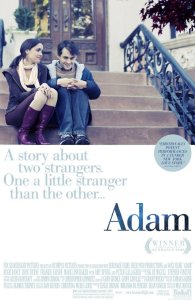 It’s a romantic comedy with a quirk. Adam (Hugh Dancy) has Asperger’s syndrome, a higher-functioning level of autism that makes social interactions difficult. Lucky for him he?s handsome enough that his new neighbor (Rose Byrne) falls for him anyway. What follows is mostly standard romantic comedy stuff, with boy and girl feeling each other out, except Adam has trouble with figurative language and implied speech. The movie works on a low-key cuteness as it hits all the conventional plot destinations, but then it charts its own path for an ending. I give credit to writer/director Max Mayer for bucking formula and following his convictions, refusing to tie everything together so easily. With that said, the Asperger’s portrayal seems to go into an extreme, Rain Man-level of social disability. Adam is crippled with fear even to leave his home; he is a slave to routine. Dancy is a sympathetic lead, though he’s overly reliant on his character’s quirks. Adam isn’t a freak or some delicate flower needing to be protected from the rigors of reality, and I think the movie would have benefited from a broader look at Adam’s ongoing lifelong struggle with his brain. Mostly, audiences are served up a sweet if somewhat plain romance with an extra dash of eccentricity, but not enough to rock any rom-com sensibilities. It’s a non-threatening alternative to the genre.
Nate’s Grade: B
Share this:

Humpday (2009)
 There’s a definite squeamishness out there when it comes to the idea of men expressing intimacy. Brokeback Mountain proved even liberal Hollywood wasn’t ready to anoint a movie about two gay dudes secretly getting it on. There will be large portions of people that will refuse to give a movie like Humpday a chance simply because of its premise: two guys plotting to have sex. It’s not a dirty movie by any means, nor does it get graphic with details or conversations. But the movie exactingly explores the uncomfortable relationships men have with expressions of romance. Humpday is also extremely funny in that pained, awkward sensibility, and I challenge the squeamish to give this charming indie a shot at love. If it makes it any easier for people to take (SPOILER ALERT) they don’t actually go through with it.
Ben (Mark Duplass) is living a comfortable existence with his wife, Anna (Alycia Delmore). Then one day his old friend from college, Andrew (Joshua Leonard), unexpectedly visits. Andrew has lived a Kerouac-like existence on the road as an aspiring artist. The two guys catch up on old times and Andrew invites Ben over to a party. He ditches his wife, and her pork chops, for the party, which turns out to be hosted by a group of free-love artists. The alcohol-fueled conversation lands on Humpfest, the annual amateur pornography festival held in Seattle. Ben and Andrew come up with their own entry idea: two straight guys that will have sex. “That’s beyond gay,” somebody says. Both men refuse to back down. Ben books a hotel room. The only thing he has to do now is tell his wife about Andrew’s “art project.”
 Humpday explodes male sexual insecurities better than any film since 1997?s Chasing Amy. Each man refuses to back out of having gay sex because they don’t want to be seen as less masculine. It’s masculinity brinksmanship, willing to go all the way to prove superior heterosexuality through a homosexual act, and it?s nothing short of brilliant. Neither Ben nor Andrew wants to “puss out” on their big moment. But neither of them really wants to go through with it either, which leads toward tremendous amounts of awkward comedy. Writer/director Lynn Shelton has fashioned a scenario that is hilarious but also subtlety heartfelt; many films deal with the bromance of heterosexual love, but Shelton pushes it to the limit. These two guys do care about each other, and you can see their camaraderie as they recount old stories and open up to one another, and in the end they might be willing to go to the extremes for their friendship, whatever the consequences may be.
Both Ben and Andrew have deep-seated insecurities about their personal lives; Andrew wants to live a free-spirited artistic lifestyle but is really too scared to fully commit, and too “square” for abandoning all sexual inhibitions like some of his casual artsy pals; Ben has a house, a job, a wife, and feels defensive about his life choices, particularly the idea that he’s settled down and giving up. Both men are also insecure by sexually adept women, so it may be natural that they seek the company of each other for solace and mutual understanding. The final act, where the two friends meet in a hotel room for their big night, is a slice of awkward comedy heaven. They haven’t worked out any logistics, locations, warm-ups, anything, and watching them verbally hatch a game plan is hilarious and oddly touching in equal doses. They really don’t know what they’re doing and why they’re there.
The actors have a naturalistic feel because, as I’ve found, the dialogue was almost entirely improvised. They shot in chronological order so to build from conversation to conversation, and you can feel the character dynamics strengthen and deepen. Duplass (The Puffy Chair) has a great, wide fake smile that hides a lot of anger and dissatisfaction. He’s sort of a schlubby everyman that we can empathize with even as he moves forward with his participation in the “art film.” Leonard (The Blair Witch Project), and his scraggly beard, effectively conveys a man weary about where his rugged life has led him. He is also hiding behind a guise, the guise of being a nonconformist that chooses to have no earthly ties, but bit-by-bit you see that Andrew is tired of disposable human connections. Leonard and Duplass feel like life-long friends. Then there’s Delmore, who really is the wary, incredulous voice of the audience. She too comes across as realistic under the circumstances, and her reaction when she discovers the true purpose of the “art project” is volatile, yes, but also surprisingly reflective. The three leads never feel like actors; the illusion that these are real people is never broken even given the peculiar circumstances of the premise.
 What I really appreciated about Humpday is that every moment feels genuine and every scene has a point. I was amazed that Shelton and her small unit of actors had made it so that every conversation had purpose; there is so little fat to this screenplay. Each scene reveals something new about a character or pushes the narrative forward toward its uncomfortable climax, and each moment never breaks the reality of the story. Given these characters and the amiable direction they follow, Humpday is believable. I suppose it might be easy to dismiss it as another entry in the fly-on-the-wall “mumblecore” film series gaining traction in independent cinema, but Humpday is really more an observational character study that examines male relationships and the sexual politics of being a “man’s man” in today’s world of sexual liberation. There is a nuanced perspective on human sexuality here that I may be erroneously crediting to Shelton simply because she is a woman. It helps to have a more mature, open-minded perspective about the complexities of human behavior for this story to succeed, and I think a female presence behind the camera affords that luxury. There is commentary below the surface; however, Humpday can be entirely enjoyed as a surface-level comedy of an awkward heterosexual showdown.
I find it interesting that the original theatrical poster only featured the two shirtless guys eyeing each other, and with a pink background no less. The DVD cover has inserted Anna between the two guys and gone with the more boy-friendly blue background cover. I think this tiny detail is another reflection of just how uncomfortable the subject matter is for many people. Humpday is an insightful, perceptive little character study that feels real and honest, while at the same time the movie doesn’t allow sexual politics to become the headline. The movie remembers to be funny, often, and any discomfort is worth it.
Nate’s Grade: A
Share this:

Terminator Salvation (2009)
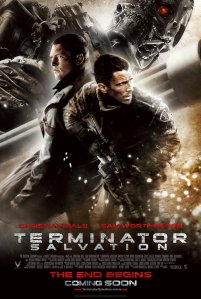 The fourth Terminator movie ultimately comes across as a lifeless enterprise. It’s set during the war between man and machine, which means John Conner (Christian Bale) is leading the human resistance, as was prophesied. He must stop those crafty machines from finding and killing Kyle Reese (Anton Yelchin), who is destined to be sent back in time and become Conner’s father. The storyline focuses a lot more attention on the mysterious man Marcus (Sam Worthington), who isn’t so mysterious because they give away in minutes that he’s a machine. But he’s a thinking machine that reclaims his humanity, or whatever. The point of this movie is to make some cool action sequences and not step on the toes of the previous movies. Director McG (Charlie’s Angels) has a few nifty visual tricks up his sleeve, but this is one soulless machine just going through the Action Blockbuster subroutine. The character development is nil, the story is muddled, the machines are dumb, and Bale forgoes any normal kind of speaking voice in favor of growls and hissing. The throwbacks to the other movies can be fun (a 1984-aged Arnold!) or agonizingly lame (shoehorning in famous quotes like, “I’ll be back”). The movie is competent and has one or two exciting chase sequences, but that is simply not good enough coming from this storied action franchise. Terminator Salvation plays out more like Transformers, where the robots are big and bad and loud and sort of dumb. I guess that sums up the movie pretty well.
Nate’s Grade: C+
Share this:

Up in the Air (2009)
 Up in the Air is the kind of movie that slyly sneaks up on you. This charming comedy is much like George Clooney’s character, a man paid by cowardly bosses to fire their employees. He’s so good at his job that his skills appear effortless, but at the same time he can take heavy subject matter and make you feel better and thankful afterwards. The topical backdrop of corporate downsizing and layoffs could produce plenty of easy pathos, but Up in the Air works expertly on several layers; it’s a brisk, clever comedy with revealing repartee; it’s an adult romance that blissfully lets them behave like mature adults; and it’s a moving character piece about people realizing what they have gained and lost due to their lifestyle choices. When Clooney is fighting back tears from a crushing disappointment over being overlooked to walk his sister down the aisle, it may be the most compactly perfect moment of acting in his career. Throughout director Jason Reitman’s script (he co-wrote the adaptation of Walter Kirn’s 2001 novel), the human element is debated in our technological age. Clooney’s young cohort (Anna Kendrick) wants to simplify by firing people over the Internet. What is the cost of losing our human connection? Reitman doesn’t resort to a stolid happy ending, which is somewhat of a relief. The movie doesn’t present easy answers or pretend that life can be tied up with a bow. Up in the Air is a bristling comedy with an understated emotional current running alongside. It’s racking up tons of awards and deserves many of them, though I won’t get t the point of calling this the best film of 2009. However, Reitman has delivered another deeply entertaining, charismatic, and involving comedy that sprinkles in potent human drama.
Nate’s Grade: A


You must be logged in to post a comment.