Blog Archives
Unhinged (2020)
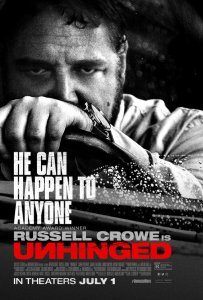 Russell Crowe (The Nice Guys) plays a deranged motorist with a serious case of road rage in Unhinged, an otherwise forgettable if competent thriller only notable for Crowe’s unnerving performance and as the first widespread movie in theaters after the COVID spring shuttering. It boggles my mind that enough people would rush out and risk personal safety to see this movie but I guess people can be desperate for a return to normalcy. In Unhinged, young mother Rachel (Caren Pistorius) is late dropping off her teen son to his school. She enrages Crowe in a traffic altercation and from there he plots her abject suffering for his twisted vengeance. Crowe’s character, simply labeled “Man,” is the wrong person to anger. The opening sequence involves him popping pills and then murdering his ex-wife and setting her new home ablaze. He’s an unstable psychopath who feels wronged by women and looking to hurt them for these perceived slights. He’s irredeemable, though the movie thinks it’s making him more “complex” with its slapdash attempts at back-story. The problem here is that Crowe’s antagonist is too powerful and omnipresent and our protagonist keeps making stupid decision after stupid decision. Even after her friends and family are threatened, or worse, she doesn’t seem to be making smart decisions, like involving the police or reaching for help. There’s a contrived reason to rob her of her cell phone but then she just gets a different phone, so why even bother? Even as she’s being hunted down by a guy who is sweating toxic masculinity, it can be strangely hard to root for Rachel because of the annoying bad decision-making. Also, her own back-story is weak. She’s going through a divorce and also might be bad at meeting deadlines, which relates to what later? The thriller sequences are serviceable but uninspired. Crowe is the only real reason you should watch Unhinged. He could have gone on auto-pilot for a standard paycheck psycho villain role and instead becomes truly terrifying, settling into a twangy American accent and leaving you wondering when his anger will snap. He’s at his scariest when he’s trying to sound reasonable or thinks he’s sounding reasonable. There’s a strange coda where Rachel withholds honking her horn after she almost gets run into by a speeding driver. The movie treats the concluding moment like a learned lesson but it feels more like bizarre victim shaming. She should have honked her horn at this driver, who was in the wrong, and she deserved to honk her horn originally with “The Man” for his vehicular infraction. She shouldn’t have to withhold her response out of fear that he other driver might overreact and seek out her friends and family and murder them. What a strange lesson for Unhinged to be imparting for its audience.
Nate’s Grade: C+
Share this:

The Craft: Legacy (2020)
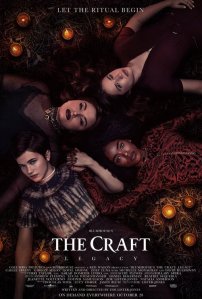 I don’t know who this new 2020 Craft is intended for and I don’t think the movie knows as well. If you’re a fan of the 1996 original, which has developed quite a reputation for many millennials, then I think you’re going to be relatively disappointed with this remake/reboot/sequel, whatever Blumhouse is calling this. By that description it should be evident that The Craft: Legacy has a bit of an identity crisis. It’s not exactly a remake because it retains so little from the original except in its witchy teenage premise, it’s not exactly a reboot because it doesn’t come together on its own for a new identity, and it’s not exactly a sequel because the only tangential connection to the original is tacked on in the literal final seconds of the movie. If it was trying to please fans of the original, it’s too lacking, and if it’s trying to chart its own course for a new generation of fans, well that doesn’t work either. As a result, it’s another PG-13 remake of an R-rated move that feels like it’s playing to a different crowd.
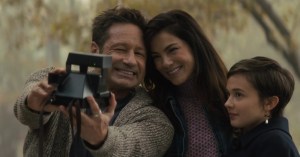
Lily (Cailee Spaeny, Bad Times at the El Royale) is the new girl at school. Her mother (Michelle Monaghan) is remarrying Adam (David Duchovny), a popular motivational speaker with three older sons of his own. She befriends a group of diverse teenagers when they suspect Lily might have the potential for special gifts. The girls try sending Lily a psychic message and then ask her to join their fledgling coven. The four of them combine their powers and promise to use their synchronicity for good to push back against the patriarchy.
 That narrative uncertainty of writer/director Zoe Lister-Jones (Band-Aid) seeps into every moment of the 97 minutes. You get a sense that Jones had a central topic she wanted to provide commentary and then a checklist of “witch stuff” to include that she wasn’t sure about. The activation of the powers in the original related to outcasts grabbing a power denied to them, getting even, going too far, learning some lessons, and then our protagonist having to topple her new friends and the danger they posed thanks to their new powers. With The Craft: Legacy, the magic feels like an afterthought to changing hearts and minds. We only really see one spell and its lengthy outcome where Lily makes her high school bully woke, and he stays that way and joins the girl group as their sensitive pal. This is, by far, the most interesting part of the movie, and yet there’s a larger implication that the movie ignores because it would place our heroines in an uncomfortable light. They’ve reformed the bully into a model citizen of a modern mature man who can admit his vulnerabilities, but they’ve also robbed him of agency and free will. Is this version of him what’s really hiding underneath, or is he simply being manipulated by their spell? This subplot gets more attention than any of the other witches combined. I don’t know anything about the other friends in the group, besides they take their witchy duties seriously and one of them is trans. They get assigned elemental powers later (Earth, Fire, Wind, Water) and that is more definite characterization than anything else. If you asked me what their names were or their defining personality traits I would be stumped.
After last year’s Black Christmas remake, it’s peculiar how closely The Craft: Legacy is following a similar formula. I applaud the diversity behind the camera and having female directors remake these stories for a new time and a new audience, and the concept of toxic masculinity as a threat to all women is potent and provides plenty to work into a horror/thriller dynamic. Yet Black Christmas had to go one step further by saying the evil fraternity that was preying upon women was secretly mind controlled by an evil magic goo of evil. It lets them off the hook. Now with The Craft: Legacy, we have an obvious villain as a symbol of toxic masculinity, and because he’s so obvious I kept waiting for him to be a more insidious foe, manipulating young men into a warped way of thinking about strength and virtue. However, this doesn’t happen. The antagonist feels like any generic abusive husband on any disposable Lifetime original TV movie. The topic doesn’t feel explored or nuanced for its big theme or cleverly matched up with the iconography of horror for extra genre commentary. What about the different sons? couldn’t they reflect different stages of his influence? Or the young and more innocent son, couldn’t he be a target of reprogramming? The movie doesn’t give us anything to really chart. It feels like much must have been left behind through several edits. If Jones and her team wanted to use their movie to make a pertinent statement on toxic masculinity, I was hoping for more than a relatively obvious, “It’s not good.” Even the Black Christmas remake gave its theme more consideration than this and talked about its generational impact.
 In the original, each member of the foursome has a backstory, a personality, a central conflict before and after developing her powers. While the conclusion was like Wicca X-Men, the rest of the movie was an effective high school drama with relatable characters. They were Catholic schoolgirls rebelling against their school and their families in the 1990s by practicing witchcraft. It was a statement. Now, the girls practicing witchcraft in a regular school during modern times just feels like an accepted experimentation from a culture that has become more tolerant, and that’s fine, but that means the movie has to provide other avenues to make new statements. The lackadaisical response to the supernatural really harms the movie. It makes it feel like the hook could have been anything. If the characters are given great power, use it sparingly, and then decide they might not be responsible enough so soon after, that’s simply boring storytelling. That’s the equivalent of a man finding a wish-granting genie, and then after the first wish where he asks for new pants he decides, “Oh, too much for me.” This is what I mean by The Craft: Legacy being too timid about being a supernatural horror thriller. It’s got the feminist perspective you’d expect from the underdog characters gaining powers, but it’s lacking a fundamental understanding or appreciation of its genre. It’s mostly confined to multiple nightmares and the occasional jump scare. The concluding good powers versus evil powers face-off is so awkward and cheesy that it deflates any good will earned.
The Craft: Legacy is a perfunctory remake/reboot that doesn’t seem interested in its characters, in its supernatural horror aspects (a sleepwalking brother that’s used as a jump scare and never explained?), or even in the exploration of its major theme on toxic masculinity. There isn’t much in the movie that is outright bad but there is nothing that shines either or proves to be memorable. The 1996 original isn’t exactly a genre classic but it looks so in direct comparison to this flat rehash.
Nate’s Grade: C
Share this:

Dancer in the Dark (2000) [Review Re-View]
 Originally released October 6, 2000:
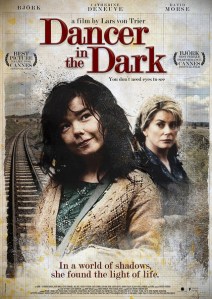
Lars von Trier’s latest shaky video opus is likely the most unique movie going experience you’ll have all year. Dancer in the Dark is a clever, heartfelt, and achingly beautiful tale of sorrow and redemption. Dancer stars Iceland’s version of Madonna in the elfin Bjork. She plays Selma, quite possibly the nicest but also most stubborn person in the world. She’s an immigrant in 1960s America working long and odd hours to ensure that she can raise enough money for her son. You see Selma is slowly going blind but continuing to work so she can make sure her son will not have to suffer the same inherited illness. So she works late on heavy industrial machinery causing accidents as her condition worsens all to stop her son’s genetic curse she will give to him. Selma’s escape has always been musicals. In life she hears music in unusual places and visualizes life stopping to burst out into a vibrant fully choreographed musical number. Selma’s life continues to degenerate along with her vision as events pile on worse and worse until they all come crashing together.
Dancer in the Dark is no picnic in the park. The movie is haunting but incredibly depressing. Lars von Trier’s previous film (Breaking the Waves) was another wrenching drama with good people going through rough times with no fraction of light at any end of a tunnel. His jerky handheld video work is back capturing the life of Selma and seemingly framing it in a more realistic sense. The video images are edited to look like a documentary and the whole feel is one of raw power. You aren’t merely watching a film, it’s like you are in it witnessing the actions from the sidelines. The escapist musical numbers are shot in glorious still film to contrast the drab realism of video. The colors are bright, the faces are happy, and the cinematography is a wonder to envision.
 Bjork soars and delivers what should be an Oscar-caliber performance. I never knew the queen of alt-rock had such emotive powers. Selma’s innocence is keenly expressed in Bjork and her glassy eyes. Her love for her son is no more evident then all the suffering and tragedy she goes through. All of the suffering and tragedy could be avoided – except her son would not be helped.
The ensemble around Bjork work fantastic magic as well. Peter Stormare is a sad figure trying to just get a glimpse of Selma’s attention. David Morse is a down-and-out policeman who is Selma’s landlord and in need of some cash. He’s afraid to tell his bourgeois wife they’ve run empty with money. Catherine Deneuve turns in the brightest supporting performance as Selma’s co-worker and friend Kathy. She’s torn between trying to stop Selma from continuing on her acts that could cause her harm and helping her along her determination. A great scene as example of her care for Selma is when the two of them are in a theater watching an old Hollywood musical. At this point Selma is completely blind and can’t see what’s going on, so Kathy takes Selma’s palm and dances her fingers in correlation with the actions on screen to Selma’s delight. A simple scene yet so elegant and beautiful.
Dancer in the Dark is a wonderful piece of original film making that gives us the escape of hope and the crush of despair. Selma’s love of musicals and their role in life is perfect symbolism for discussion. Dancer will leave you with a distinct feeling by the end credits. Whether it’s sorrow or bewilderment Dancer in the Dark is a film not to miss.
Nate’s Grade: A
——————————————————
WRITER REFLECTIONS 20 YEARS LATER

I knew going back to my first Lars von Trier film was not going to be a pleasant experience, and oh what an understatement that turned out to be. von Trier has compared himself to a Nazi, his intense methods have driven his actors to the brink, including Dancer in the Dark’s Bjork who swore off the entire profession of acting after her experiences working with him. I am not surprised by this response because his movies have famously followed a formula of a woman being tortured by men, by society, by forces outsider her control, and then she suffers for two hours and dies, a victim of the cruelty of the universe. Repeat. It’s a formula that I’ve since grown weary of and after 2018’s The House That Jack Built I contemplated not watching another von Trier movie again. He just can’t help himself and his nihilistic, heavy-handed impulses handicap his genuine artistic abilities and the merits of his storytelling. Back in 2000, it all felt relatively new. von Trier was the biggest name of the Dogme 95 movement, a Danish collective of filmmakers who swore to adhere to digital video and other aesthetic rules to better replicate reality as it was, ripping away the glossy artifice of Hollywood fantasy. von Trier was subversive, provocative, and exciting, and since then I’ve broken free from the von Trier spell. I was questioning whether I would share Requiem for a Dream or Dancer in the Dark with my girlfriend, who had seen neither, and in hindsight I’m glad I picked Requiem instead (think about that, yikes).
Dancer in the Dark is a powerful experience and one that is unfortunately smothered by von Trier’s heavy hand. It’s easy to root for Selma (Bjork), a Czech transplant in small-town 1960s America (the movie was filmed in Sweden because von Trier is afraid to fly). She already has so much going against her: 1) she’s a woman, 2) she’s an immigrant, 3) she’s poor, 4) she’s suffering from a degenerative disease that will rob her of her sight. Even worse, her son will suffer the same fate unless Selma raises enough money for an operation. She takes on extra work at her factory, even if she’s not exactly qualified, and she’s a hopeful yet stubborn woman who says what she means, earning friends who will champion her. She’s also a lover of old-fashioned Hollywood musicals, as they presented an escape to her as a little girl growing up in poverty. America was the land of opportunity, where everyone dances all the time, sings their hearts out, and gets the girl or the guy by the conclusion of the finale. That dichotomy, between reality and fantasy, and all the cultural and psychological commentary within, is the strongest aspect of the film and a peak of ambition that von Trier never really got close to again with his later punishing dramaturgy. The first musical number doesn’t come until 45 minutes into the movie, and by that time we have had our heroine, her plight, and the first markers of a looming tragedy efficiently established.
 Jeff (Peter Stormare), a lovesick co-worker who shows up every day to maybe drive Selma home, cannot understand musicals, saying people just burst out into song and how unrealistic this is, and Selma agrees, but for her it’s wonderful. She hears music in the world around her and it gives her life, especially as her vision deteriorates. As injustice after injustice falls upon her, Selma uses extravagant musicals as an escape, where everyone is a friend waiting to jump into the number and work together. A common refrain she sings is “there’s always someone to catch me,” referencing the choreography of musicals where the dancers frolic together but it’s also her request to the universe for a little help, for someone to catch her when she stumbles and provide that level support a woman of her means and background lacked in this landscape. The musical numbers staged by von Trier have a chaotic energy to them, assembled from dozens and dozens of sporadically placed cameras. They feel like a burst of imagination while keeping an improvisational feel; less drilled than managed. The first musical number “Cvalda” is a delirious daydream where Selma imagines the various sounds of the work machines creating a percussive symphony and she’s a Mary Poppins conductor. After Bill (David Morse) dies, she retreats to “Scatterheart” to make sense of her actions, with her son telling her she only did what she had to do and Bill rising from the dead to beg her forgiveness. When she’s in solitary confinement and can’t hear any sound, Selma goes into despair. She shouts the lyrics to selections from The Sound of Music to bring music back into her isolated world. Even on her march to execution, Selma copes by turning the “107 Steps” to the noose into a song. Her last words are her singing her final goodbyes to her off-screen son, so until the end musicals were how this woman chose to compensate for the rotten luck of her life. And oh boy was it ever rotten.
There’s one scene in the second half begging for symbolic unpacking where Selma is in the middle of her trial and the prosecution calls a famous Czech film actor and dancer to the stage. It’s none other than Oscar-winning theater legend Joel Grey (Cabaret) and his character doesn’t know who Selma is, even though she told the court she had been sending money to him (she listed her son’s account for his operation under a pseudonym to not risk it being derailed). This famous actor starred in movies in her native Czechoslovakia and crossed over to American cinema. He was an idol for young Selma and another figure to encapsulate the promise of America. Then as he’s testifying on the stand is when Selma drifts back into another rendition of “In the Musicals” and Grey joins her in tapping, and he confesses, “I didn’t mind it at all / That you were having a ball / at my musicals / And I was always there to catch you.” He understands and empathizes. This scene alone is just packed with so many layers of metaphor and projection and symbolic subtext and commentary and you could probably write an entire Master’s thesis on its myriad meanings. At its best, that’s Dancer in the Dark, when von Trier is using the language of musicals to subvert their form, to lay commentary on the un-reality is a rejection of the cruelty of real life, of finding order in disorder, finding community amid a nest of selfish vipers competing for dominance. It’s when von Trier uses our understanding of musicals to really make us think about the associations and contradictions that makes this movie a stirring and sometimes sensational experience.
 Alas, the artistry is seriously wounded by von Trier’s heavy-handed approach to all drama. This has become even more pronounced after where von Trier has obliterated the entire world (2011’s Melancholia) and ruined a four-hour movie with a last-second dumb joke of an ending (2014’s two-part Nymphomaniac). Subtlety is not one of the tools von Trier prefers to dabble with. It’s a shame because he’s a natural storyteller when it comes to establishing vulnerable characters in fraught scenarios and slowly raising the temperature, organically transforming allies into enemies and friends into abusers. This is done very well in 2004’s Dogville as well, a movie I would argue both plays into and succeeds his tortured-woman formula of drama and political allegory. I would say Dogville is his second-best film precisely because I was expecting another unrelentingly unjust ending for another anguished woman. However, where a lighter touch could accomplish his points, von Trier instead brings out a bazooka. Selma’s deadly encounter with Bill happens at the halfway point in the film. From there there’s still another 65 minutes of her suffering to drag out to preposterous proportions. We go through the trial, her cross-examination, her willfully keeping secrets that will only make her look guilty to maintain a promise to a dead man, and then there’s her visitations in jail, her appeal, her rejection of her appeal because the costs will empty the fund’s for her son’s operation, the realization of her impending execution, the march to the execution, her being bound to a board because she cannot stand straight because she’s so scared, her rejection of the hood, her last song while she waits for the governor’s call, and then her abrupt death. There were several points where I was just pleading, “Enough already,” because it was so thoroughly exhausting.
Selma is served to be a martyr of an unjust system that looked suspiciously on immigrants, and Selma elects to accept her fate because anything less would endanger losing what she has set up for her son’s well-being. This woman takes all this punishment and that’s the story, America. That’s the story of America, America. That’s what von Trier is getting at, but the 140-minute movie is so overdone and so drawn out to obsess over the wrongs inflicted on this poor woman that it unintentionally blunts the message. The second half becomes a passion play where we watch our poor Selma elect to accept tragedy and self-sacrifice and endure all the injustices. It’s harrowing and upsetting but would still be so if we didn’t spend half of the movie dwelling on a litany of examples of her fated misery. I’m sure others will argue the crushing nature of the injustice is meant to convey for the viewer the feeling of aggravation and outrage. I would agree that outrage is sought, but when von Trier doesn’t let up, it tilts into overwrought self-parody.
 Dancer in the Dark resonates as strongly as it does because Bjork gives every ounce of herself in this performance. She was originally just going to write songs but von Trier chased her for a year to convince her to also star as the lead. There are moments of awkwardness where it feels like maybe she’s confused in the scene with what her lines are supposed to be, but then her lack of polish is revealed for its true strength. It’s a deeply, deeply felt performance, stunning in how raw and empathetic she gets, subsuming herself into the character and her tribulations. You don’t see the craft so much here as you do sheer, undiluted passion and ferocious naturalism. She doesn’t hold anything back and gives the best performance in any von Trier movie. In my mind, she had been nominated for a Best Actress Oscar that year but this was not the case; she was only nominated for Best Original Song (“I’ve Seen It All”) where she wore her famous swan dress that became a go-to punchline. She was, and continues to be, an eclectic artist and a really weird person, but man could she be a tremendous actress given the right circumstances. It’s a shame that von Trier’s sadistic directing style lead her to quit the entire profession.
Looking back on my original review, I remember seeing Dancer in the Dark with my freshman pal Kat Lewis, who was just the biggest Bjork fan you could find in all of Ohio in 2000. We were both floored by the movie, and Bjork, and cited it as uniformly brilliant. With twenty years of distance, I can say some of the ironic commentary of undercutting musical escapism feels too easy now, seeking credit for daring to ask, “Hey, what if musicals weren’t so happy, huh?” It’s still a worthwhile subversion to explore but simply presenting it as a subversion isn’t enough for a satisfying thematic focus. It’s funny that the moments that stood out to me as an 18-year-old, like Catherine Deneuve dancing her fingers on Selma’s palm to communicate the onscreen dance routine she can no longer see, are the same ones that stood out to me as a 38-year-old. Good writing will still make itself known and felt. There’s plenty to admire and, paradoxically, enjoy about such a depressing movie, but von Trier’s inability to self-edit and hold back his condemnation of humanity is what truly oppresses his movie.
Re-View Grade: B
Share this:

Trial of the Chicago 7 (2020)/ Borat Subsequent Moviefilm (2020)
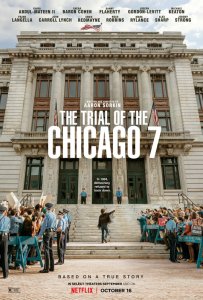 Two new movies have been released for streaming, both coincidentally starring Sacha Baron Cohen, and both are highly political, one by design and the other through fortuitous circumstances of history regrettably repeating itself, and both are simultaneously everything you would expect from their creative forces and worth watching in our tumultuous times.
The Trial of the Chicago 7 is a courtroom drama depicting the injustices applied to a dispirit group of anti-war activists who were charged with inciting a riot at the 1968 Democratic National Convention. The various men of different backgrounds and affiliations had their reasons for being there to protest, whether it was building public support to end the Vietnam War, to gain personal publicity, or to get laid, and tensions mounted inside and out the group as the police plan to send a message, harassed protesters, and in one amazingly prescient moment, remove their badges and name tags to then inflict state-sanctioned violence. This is an Aaron Sorkin movie through and through, and his second offering as a director after 2017’s Molly’s Game, and the best thing about the Oscar-winning wordsmith is that watching one of his movies feels like you’ve just downloaded a complete syllabus. The sheer audacious density of information can be overwhelming, but when Sorkin is able to get into his well-established rhythms, the actors feel like wonderful pieces in an orchestra playing to its peak. The real-life story of the activists has plenty of juicy drama and intriguing characters and intra-group conflicts breaking open, mostly between the divided poles of political leaders Tom Hayden (Eddie Redmayne) and counter-culture prankster Abbie Hoffman (Cohen). Bobby Seale (Yahya Abdul Mateen, HBO’s Watchmen) could have gotten his own movie and suffers many of the worst indignities as a member of the Black Panthers who was grafted onto the case in order to make the rest of the indicted men seem scarier by association. The consistent interference by the trial judge (Frank Langella) is shocking. It’s so transparently biased, racist, and unprofessional that I have to believe that many of these anecdotes actually happened because otherwise they seem so absurdly prejudicial that nobody would believe this happened. For a movie with such a sizeable cast of trial litigants, lawyers on both sides, friends and family, and maybe every police officer in Chicago, it’s impressive that Sorkin is able to provide so many with great Sorkin moments, meaning those grandstanding speeches, cutting one-liners, and intensive cross-examination. Not everyone is on the same level of importance. Several of the Chicago 7 are merely bodies on screen, two of the guys serve as little more than a quip-peddling Greek chorus. You sense there’s more being left out to fit into a crammed yet tidy narrative that plays to our demands for satisfying character arcs, reconciliation, and a morally stirring final stand. As a director, Sorkin doesn’t distinguish himself but he lets his meaty script and the performances of his actors get all the attention. The editing, like in Molly’s Game, can be a bit jumpy but it’s to serve the sheer size of information being downloaded during the 129 minutes. The political parallels for today are remarkable and a condemnation of our modern times. The Trial of the Chicago 7 is an invigorating and, at points, exhausting film going experience that can feel like a retro, overstuffed special episode of The West Wing. It’s everything you should expect and want in an Aaron Sorkin courtroom drama, so if you’re already in that anxious camp then this Netflix original will be preaching to the overly verbose choir.
 Secretly filmed over the past year, Sacha Baron Cohen reprises his outlandish Borat character to once again lampoon people’s not-so-hidden prejudices, anti-Semitism, xenophobia, and misogyny, which seem to have only gotten worse since the first Borat movie in 2006. The flimsy story follows international journalist Borat returning to America to help improve the standing of his home nation Kazakhstan by offering his daughter Tutar (Maria Bakalova) to the Trump administration. It’s really just a platform for Cohen to adopt a series of disguises (his Borat is too recognizable) and dupe some rubes while exploiting their ignorance and patience. Much of the entertainment comes from the cringe-inducing interactions of how far Cohen and Bakalova will go, marveling at their improvisational skills and also dreading what lines they might cross next. I was laughing fairly consistently, though the schitck naturally won’t be as funny the second time around, even with a 14-year gap in movies. I was really impressed by Bakalova and her own commitment and quick-thinking, keeping pace with a pro like Cohen and really stealing the show because Borat can’t go out in public as before. There are some outrageous moments that work, like Cohen imitating a country singer leading an anti-masking crowd into a singalong with ridiculous verses, and some that simply don’t, like an ongoing stretch where Bakalova explains the appeal of masturbation to a gaggle of deadly silent Republican ladies. Sometimes the comedy seems so broadly caricatured that it’s questionable whether its helpful or harmful, especially the anti-Semitic tropes that Cohen embraces as means of satire. Saying something outrageous to an outraged or shocked party isn’t quite enough. When compiling these hidden camera comedies, they thrive on the oxygen given to them by the targets of the prank. If they don’t really engage, it can feel a bit tired and desperate. I’d say the ratio of hits-to-misses is about half and half but the movie has enough big moments to keep fans happy. The most notorious moment has already been widely disseminated through social media and serves as the climax of the movie, strangely both as the high-point of pranks with big names but also as the emotional catharsis. Tutar poses as a foreign journalist and interviews Trump surrogate Rudy “America’s mayor” Giuliani, who drinks, goes into a hotel bedroom alone with Bakalova, and then lays on the bed while slipping his hand down his pants (like a gentleman does). Borat realizes he doesn’t want to offer his daughter to this creepy, sleazy man and rescues her because he truly does care about her. Borat 2, or Borat: Subsequent Moviefilm, takes a scattershot approach to satire and squarely aims at the science-denying MAGA crowd celebrating the excesses of their leader (who doesn’t sound that different from Borat, come to think of it). It might be more admirable in intent than execution but the new Borat can provide a few belly laughs and a more than a few groans as Cohen attempts to make American funny again.
Nate’s Grades:
Trial of the Chicago 7: B+
Borat: Subsequent Moviefilm: B-
Share this:

Love and Monsters (2020)
 Imaginative, quirky, and monstrously fun, Love and Monsters is a winning sci-fi monster movie and more evidence to the unique amusements provided in full from a Brian Duffield (Spontaneous, The Babysitter) story. In the near future, after blowing up a world-threatening asteroid, the ensuing chemical debris causes many lizards and insects to grow to world-threatening sizes, killing a majority of the population, and forcing the survivors to live underground in vaults. Our hero is Joel (Dylan O’Brien), a very Jessie Eisenberg-esque guy who isn’t so good at survival skills in this new world. His group looks at him like he’s a helpless kid who can’t defend himself. Joel discovers that his teenage crush, the girl he’s been writing letters to, is alive and he pledges to make the 80-mile trip on the surface to reunite with her. The resulting journey can be episodic but each section is impactful, each monster encounter is different and contributes to a fuller understanding to the world, and the character arc finds ways to surprise you, like when it acknowledges that Joel’s foolhardy romantic gesture is exactly that, him not fully accepting how the world has changed both he and the object of his desire. That sparkling creative voice of Duffield’s is alive and well throughout. His worlds feel well thought out, lived in, crazy but with purpose, and his characters are often teenagers with pointed attitude but they feel like characters rather than mouthpieces for overt stylized dialogue and pithy banter. O’Brien (The Maze Runner) is an interesting choice and gets to be far more neurotic and physically comedic than I’ve ever seen him. He’s an underdog that’s easy to root for. There are moments of wonder, moments of unexpected empathy, moments of suspense and terror, and plenty of moments of comic bemusement in the face of this crazy world. Joel befriends a very Woody Harreslon-esque father (Michael Rooker) with an adopted daughter in tow (the Zombieland character dynamics are pretty apparent but not a major detraction) and they form an enjoyable fractured family to help Joel become a better survivalist. I loved a small moment with a beaten down robot helper that manages to be sentimental as well as subverting sentimentality. The conclusion feels like a Walking Dead episode but it brings together many of the dangling storylines and proves satisfying for the character’s arc, a better understanding of the creatures in this world, and for Joel’s sense of self and community. The special effects are amazing for a movie that shockingly only had a tiny $28 million budget. Love and Monsters is a movie that makes the most of its time and money to tell a bigger story but one with enough wit, heart, and personality to draw you in and leave you happy for more post-apocalyptic monster adventures. All hail Duffield, king of spry and accessible quirk within the Hollywood system.
Nate’s Grade: B+
Share this:

Requiem for a Dream (2000) [Review Re-View]
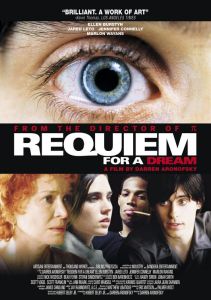
Released October 6, 2000:
Rarely does a movie today affect you that when the end credits roll you’re left silent and unable to speak. Requiem for a Dream is an unforgettable and intensely harrowing experience. You can’t take your eyes away from it. Afterwards you’re left in disarray and unable to think straight for most of the day.
Requiem chronicles the lives of four individuals and their spiraling addictions and missed choices. Harry (Jared Leto) is a small time coke dealer along with his friend Tyrone (Marlon Wayans) who can’t help to taste their merchandise and eventually end up broke again. Harry has gotten into the habit of routinely pawning his elderly mother’s TV set for some quick cash to score with. This happens so often that the pawn broker has a special folder for Sarah Goldfarb (Ellen Burstyn) and her televison. Harry is in love with his more positioned girlfriend Marion (Jennifer Connelly). She’s given an annual allowance of money from her wealthy folks to spend in her own fashion, but she’s denied love or attention. It’s between these four main characters that we will go through hell with.

Ellen Burstyn shows her grace with age and utterly blows your mind with her jaw-dropping performance as the lonely and strung out Sarah. Sarah has no husband anymore or a son to look after. She is alone and old, and those are two bad ingredients. She lives in an apartment complex overlooking the decaying ruins of Coney Island. Sarah has a different addiction than her child, she is addicted to food and is overweight. One day she mistakes a random junk phone call as her ticket to appear on television. She daydreams about gliding across the stage in her red dress that she doesn’t be able to properly fill anymore. With her elderly peers aflutter she tries her best to stick to a diet to fit into her slender dress. When the temptation becomes overwhelming she consults a friend’s doctor for some special “pills” to suppress her appetite.
Harry and Tyrone are embarking on their own dealing dreams to eventually move up the ladder and score some pure coke. Marion and Harry experience their love through simultaneous shoot-ups that space them out and turn them into romantic philosophers. Harry speaks of great dreams he has and the yearning to be something. Tyrone is haunted by thoughts of himself as a child and disappointing his sweetly loving mother who was proud of her son no matter what.

The film starts off in the summer and we are in the good times for all four characters. Harry and Tyrone are successful and racking up profits. Sarah has an unusual amount of energy through her prescribed pills and feels good about herself when she sees actual results as the pounds begin to melt away. Marion dances in her love of Harry and is ambitious with plans for her own design store. Things never are as good as they are again. Fall rolls along and Tyrone and Harry lose their money and lose their ability to secure drugs to sell. Sarah is noticing her pills are not having the same effect they were earlier and decides to ignore guidelines and take them like M&Ms. Marion starts to lash out at Harry’s ineptness at scoring and begins to tear at their relationship. She gets pushed to the brink to score that she resorts to the practice of using her body to secure what she needs. This isn’t even the beginning of how dour and horrible events will become for these four.
One of the strengths of Reqiuem is the treatment of these characters. The film shows sympathy for them and their situations but never condone them. Harry and Sarah are a family that have much love between them they just don’t know how to express it. When Harry discovers his mother is on essentially speed when he pays her a visit he’s left a shattered and crying mess. Only an injection into his veins in that cab ride saves him from his emotions. The relationship between Harry and Marion is initially seen as puppy love or people brought together through a love of drugs, but there are moments where you see the true beauty they have. In the end when Harry is out of state and dramatically in the need of hospitalization he calls Marion just as she’s doing her make-up for a “special” get-together. In a hushed tone she asks when he will be coming home, to which he responds in a mix of pain that it will be soon. She then so sincerely and beautifully asks if he can come back today – to which through an array of tears he agrees. Her sincerity and emotion in this sequence is a powerful glimpse at the love that does exist between the two of them. The second time I watched this film I started crying at this moment.

Burstyn is the stand-out star and if she doesn’t at LEAST get an Oscar nomination then that is the most unjust crime of them all. It’s been some time since her roles in The Exorcist and Alice Doesn’t Live Here Anymore but she still shines like a true gem. She magnificently portrays Sarah’s descent into madness and chemical dependency and leaves us with a chilling and haunting figure. Leto and Connelly show that they aren’t merely pretty faces and deliver their best performances of their lives. Both show incredible warmth and emotion.
Requiem was directed and adapted for the screen by Darren Aronofsky who gave us the head trip that was Pi. Here he uses camera trickery like speed up and slowed paces to show Sarah’s journey through her drugs. Other items include cameras mounted on the actors, split screens, and hyper edits to show the process of every drug shoot-up. His camera moves and tricks are never out of place though, as many gimmicky video director’s are. Each effect has a specific purpose. Aronofsky brilliantly uses a scene where Leto and Connelly are lying in bed besides one another but split screen to show the closeness they can strive but the distance that still exists. While each talks we see shots of the other’s hand carefully caress the other’s body. It’s a scene that’s as powerful as it it thematically romantic.
The tragedy of this is this film has been rated NC-17 by the MPAA and of course anyone who sees it knows the exact scene. The film is being released unrated by Artisan because NC-17 is a commercial kiss of death. The shame is this movie needs to be seen. Make it mandatory in schools. DARE isn’t working but this film will. No one with an urge to use drugs will have that same urge after seeing this harrowing film.
Nate’s Grade: A+
——————————————————
WRITER REFLECTIONS 20 YEARS LATER
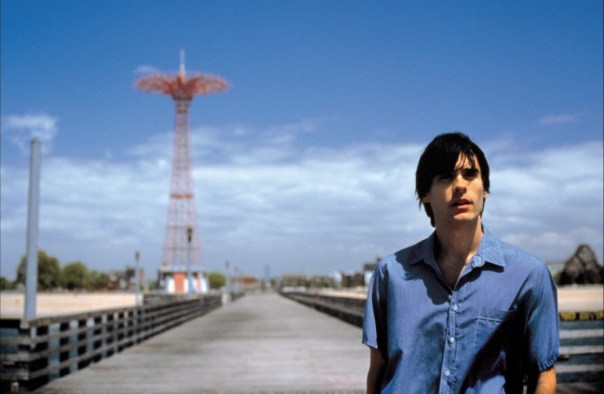
Requiem for a Dream was a seminal event for me. It floored me when I originally saw it during the fateful fall of 2000. I can still vividly recall wandering out into the daylight after the movie and feeling like a zombie, just left to walk aimlessly and mumble to myself. I remember my friend Kat Lewis and I were unable to even articulate sentences other than, “Wow,” and, “Ooof,” for like an hour as we processed the drug-fueled descent into madness and hell. It was a movie that struck me dumb and left a mark. I became a lifelong fan of writer/director Darren Aronofsky afterwards and haven’t been disappointed with his movies yet (his 2014 biblical epic Noah is criminally underrated). At the end of 2009, I declared it the second-best film of the decade. Requiem for a Dream is the kind of movie you can admire for its craft and crushing emotional impact but also one you may never want to watch a second time. I haven’t gone back to it for at least 15 years for that same reason, the hesitation to get back into the morass and experience the tumultuous tumble all over again. Except when I did sit and re-watch it for my twenty-year review, I was amazed how many moments felt strikingly familiar. I was anticipated specific actor inflections (“I’m lonely. I’m ollllld”), gestures, and even sound cues. It was a strange experience because it was like re-awakening dormant memories I had papered over. I thought I had forgotten the movie but, in reality, I must have watched it enough in those early 2000s days to commit so much to memory. I was afraid to dive back because of the depressing subject matter that I expected to rightfully wreck me. Instead I experienced a different sort of awakening, and that was my question whether the movie’s highs might be over inflated and whether the younger version of myself was dazzled by a movie with more evident problems.
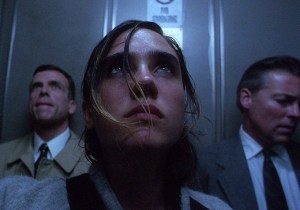
This is not a subtle movie in the slightest, not in subject matter, form, or style, and I’m sure that was part of what 18-year-old me so valued. It’s a movie dripping with style and wild imagination with how best to visualize the elation and instability of drug abuse. The editing by Jay Rabinowitz (8 Mile, The Tree of Life) is abundantly hyperactive, amassing over 2,000 cuts over the course of only 95 minutes (an average “non-Michael Bay” film running the same length has maybe 700 edits). It is all deliberately overwhelming to convey the frenetic energy of the junkie, and the repetition of edits and structures creates visual routines that Aronofsky then escalates or deconstructs brilliantly, using the language of film to immerse the viewer in this world and blend our senses together into a rapturous contact high. It’s not hard to see the inspiration for Edgar Wright’s own hyper-kinetic visual style here. The entire movie becomes a visceral reflection of the characters’ physiological state. The photography by Matthew Libatique (Black Swan, Iron Man) can be alienating, disquieting, but also vibrantly alive and excitedly inventive. This is the first feature film I can recall that used Steadycam cameras and attached them to the actors so that as they moved through their world they remained our stable focal point. It’s such a great and unsettling convergence of perspective. We are attached to the actor close-up. The musical score by Clint Mansell (Black Swan, Moon) is instantly iconic thanks to its sense of foreboding and the central haunting theme from the Kronos Quartet that was used in a thousand trailers afterwards because it’s that gob-smackingly, recognizably brilliant. These talented men were the essential wingmen for Aronofsky to achieve his beautifully horrible vision.
The 90s indie scene and well into the early 2000s was an audacious time that pushed the limits of film style, reshaping our sensibilities of what movies could accomplish, and Aronofsky is a world-caliber stylist. After two low-budget indie films, it’s clear why Hollywood came knocking and offered the man many high-profile titles like rebooting the inactive Batman franchise. There are entire complicated setups devoted to capturing single shots, and there are so many stylish choices that come flying that part of the appeal of the movie is simply lying in wait for what Aronofsky will deliver next, like a magician that keeps you asking for the next trick and the next trick. Some highlights include Sara (Ellen Burstyn) being taunted by her fridge and the hunger pangs she feels, including a delusion where the household appliance comes alive like a monster from an early Peter Jackson horror flick. The use of split-screen is stunning to convey coordination and also disconnect. There’s a lovely scene where Marion (Jennifer Connelly) and Harry (Jared Leto) stare at one another, their fingertips stroking different portions of their bodies, and the editing jumps around from close-up inserts to their slightly disjointed alignment face-to-face. It’s both sensual and romantic. They’re close but also far away. This is the kind of move that attaches a camera to a bungee cord and throws it off the rooftop just for a couple second shot of free fall. It’s the kind of movie that seems to test every visual and audio setting of cinema. I admire the sheer gusto of Aronofsky as a filmmaker and his drive to push himself and his story to the limit.

However, at a super-charged 95 minutes before end credits, Requiem for a Dream is just too much. Its sledgehammer approach to drama had an odd effect on me as a 38-year-old versus than as an 18-year-old. My younger self was dazzled and left profoundly affected and devastated. My current self felt empathy for the suffering of the characters but I wasn’t emotionally connecting with them in the same way I did back in 2000. After some reflection, I think this is because the movie is just trying so hard that it feels like it’s speaking in nothing but exclamation marks, all capital-D drama, that it has its own numbing effect. Things do get considerably worse for our quartet of characters as they go through hell, but because the pacing is so amped, speeding along to get to its next fix, it doesn’t ever let the movie breathe and linger before hitting you again. It’s so fast-paced that the tone becomes more overtly theatrical, and I found myself less able to connect with the characters on a deeper and meaningful level. The limits of characterization were really felt with my recent re-watch, and the love story of Harry and Marion, which felt tragic for me in the early 2000s, now feels empty. Maybe that was the point and it took me decades to see it through, that the two of them are caught under the spell of infatuation but cannot fully grow together from a co-dependent relationship built around self-destruction. Or maybe they’re just underwritten tragic bohemians. The only character that really gets worthy consideration and nuance is Sara. If the movie had slowed down, or even been 20-30 minutes longer, I think it would have more room to make its drama felt in a way that didn’t feel so anxious to the point of bordering on desperation. There are points where Requiem for a Dream feels like an overblown indie version of an after-school special on drugs.
The real heart of the movie is with Burstyn who delivers a career-best performance (she lost the Best Actress Oscar that year to Julia Roberts). Sara Goldfarb is the kind of person everyone might know, an older retiree who feels overlooked, afraid of pushing too hard against a son she can’t control, and someone who wants to feel special one more time in her life. She doesn’t see herself as an addict and the movie portrays her struggle as being analogous to the cocaine and heroin abuse of the other users. Sugar, caffeine, starch, red meat, all common items that can be just as addictive to the brain and body, and Sara’s struggles to lose weight are relatable and take on a horrifying transformation after she starts using prescription drugs as a quick solution. Burstyn is the definition of heartbreaking here and that’s even before she starts popping pills. She delivers one hell of a monologue about her sad state of needing something, anything to cling onto to give her life a glimmer of needed hope. It was the moment that made me instantly recognize the levels of sadness we’re working with. I enjoyed the little burst of happiness she felt when the other neighborhood ladies admired her for her chance of being on television. for her, this was everything. Burstyn goes through a physical transformation, from padded body suits to emaciated and sweat-stained (this is a very very sweaty movie; you can practically taste the grime coating the actors). She’s unrecognizable by the end. Burstyn is so devastatingly good as her character literally loses her mind, becoming one of those crazy people on the street. You feel such a reservoir of grief knowing what drugs have done to demolish this woman’s identity and transmute her into a living phantom.

The social commentary isn’t prevalent, beyond the universality of personal addiction, but it has one major critique and it’s the indifference of the system to those in need. Three of these characters are living through poverty and limited means of self-sufficiency. Marion has a trust fund but has to jump through hoops to maintain it, including at different points selling her body. When Sara visits her doctor to inquire about possible medicine, he never looks at her once and quickly writes her a prescription. When she’s admitted to a psychiatric ward, the orderlies barely even view her as a human being and threaten her with physical harm if she will not swallow her food. The ward doctor can clearly tell she’s not of sound mind but gets her to “sign” her permission for dangerous, experimental electroshock therapy. These are bureaucrats, professionals, and people of means that simply don’t care. The institutions of this country are geared to let people down, to slip between the cracks, and the supports are insufficient. In this regard, Requiem for a Dream is a condemnation for the system and its lack of real compassion.
The closing montage of degradation is so gut-punching, so expertly edited together for maximum symmetry, and so disturbing that I can completely understand if nobody would ever want to watch Requiem for a Dream again. Early on, while re-watching this movie alone, I thought, “My girlfriend would really be intrigued by this and appreciate the style and verve,” and then by the end I reconsidered whether or not it all might be too much to endure. You feel a little dirty by the time it’s all over. I think this time, in 2020 as opposed to 2000, it was too much for me because I was feeling less attachment to the characters and more removed from their drama because everything was so operatic and going by so fast. The movie still has so much technical and artistic ambition to drop my rating too low, but this is not the near-perfect A+ movie I highly regarded in my youth. This is not the second-best films of the 2000s. It’s still a good movie and one that will be felt and remembered long after. It’s hard to shake off its effect which are still felt even if you have difficulty engaging with the people beyond a general level of human empathy. My original review consisted of mostly reciting the plot, an aspect of my reviews I’ve tried to steer away from. I hate reviews that are 80 percent plot synopsis and then only a paragraph or two of critical analysis and deliberation. Requiem for a Dream is still a powerful and immersive movie that masterfully uses the full gamut of film tricks as its disposal. While it might not be a personally-defining movie for me any longer as an adult, it still was for years in my youth, and while it shattered me and left me a shambling mess, it also made me realize just what movies can do.
Re-View Grade: B+
Share this:

Spontaneous (2020)
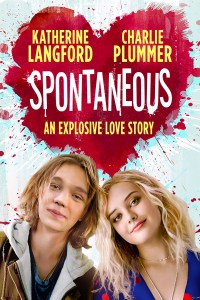 Spontaneous is a movie that grabbed my attention immediately, made me laugh quickly, and then made me fall in love over the course of its explosive 100 minutes. The more I think back about this bizarre little movie, based on the YA novel by Aaron Starmer, the more affection I have for it and its messy accomplishments. Writer/director Brian Duffield has been one of the most exciting screenwriters for years, penning highly inventive stories that have a distinct, vivacious comedic voice that leaps off the page and smacks you across the face with how good it is, and then you ask for more (check out The Babysitter for the closest representation of what a Duffield screenplay delivers; skip the sequel though). This is Duffield’s debut as a director and I feel like he’s a natural fit for the quirky, blood-soaked material. Spontaneous is a dark comedy that can also make you feel something because it doesn’t simply treat its characters as disposable punchlines.
So the senior class of Covington High School has a serious problem. They’re spontaneously exploding. Nobody knows why, nobody knows who will be next, and even after a government quarantine, the answers aren’t any clearer. Mara (Katherine Langford) just wants to live to grow into a badass older lady who lives on the beach with her best friend Tess (Hayley Law). Her dreams of a life after graduation might never come true. Dylan (Charlie Plummer) introduces himself to Mara and they begin a tender courtship, falling in love during a precarious time where either of them could explode and soak the other in gore and viscera. Can these two crazy kids make it and grow up when their own bodies might betray their fleeting happiness?
 Almost instantaneously I was drawn into the romance between Mara and Dylan, and I enjoyed deeply how each helps to shape the other, finding a sincere connection in the most extreme and unexpected of circumstances. Their budding romance dances with tragedy and dread as we worry over the fate of our lovers; surely, with this horrific premise, they won’t end happily ever after, or could they? Every time another student exploded, I winced. I laughed a few times, I’ll admit, because the context can become darkly hilarious and absurd, but it’s also a natural human reflex to relieve tension. Each one of these kids is a potential suicide bomber and they don’t know it. It’s sudden and something that you, even as a viewer, will never get used to. What you will do is start to dread who is next and whether that explosion sound was someone you liked. With an omnipresence of tragedy, it pushes the characters to make the most of their potentially short lives and that brings a greater significance to their next steps, the little attempts to “feel like an adult,” to reach for their desires, and to declare who they are while they are still standing to do so. It takes the coming-of-age setup and deftly dials up the emotional stakes.
Make no mistake though, Spontaneous is an uproariously funny movie. We’re primarily seeing the world from the perspective of Mara and her narration and occasional fourth-wall breaks. There are some fun asides where other characters take over narration duties, but this is chiefly her movie and she’s delightfully odd, prickly, and worthy of our attention. Duffield’s screenplay is brimming with wit and the conversational banter flows with such a confident cadence, all while not being overly mellifluous and self-satisfied. I adored just spending time with the characters because I was anticipating what they would say and do next. The social satire is present but not as substantial as I would have thought. The film trades in familiar stereotypes we’ve come to associate with high school movies, yet it can take some interesting detours, like when the football team cheers in support about their fellow player for coming out as gay. This is a high school movie mixed with a horror movie, where a big party to cut loose could become the latest crime scene. Most of the adults are simply scared and don’t know what to do, and that helpless vulnerability extends outward and keeps going. Just because you may be older doesn’t mean you know what you’re doing. I cackled plenty from the physical humor, slapstick gross-out gags, but when Duffield wanted to be serious, you better believe I shut my trap and pulled up the blanket.
 I think it’s worth acknowledging, and I don’t consider this a real spoiler, that the cause of the spontaneous combustion is never resolved. There is no explanation, and if that’s a deal-breaker for you then I think you’re prioritizing the wrong parts of what Spontaneous is offering. It doesn’t really matter why it’s happening because the movie isn’t a scientific mystery. As much as it might seem bizarre to declare, this is far more than the “kids blown into bloody bits” movie. It’s not about what is happening per se but how it emotionally affects the characters. The unknown bodily explosions could serve as a gory metaphor for modern-day threats of school shooters, terrorism, or even our current pandemic (pick your metaphor, anything really works). Students don’t know who will be next, when their time will be up, and an anxious pall hangs over their day-to-day lives as they trudge onward trying to regain a sense of normalcy during a troubling and uncertain time of numbing trauma. That’s really the core of the movie, the response to inexplicable trauma. Some characters maintain a blasé, nihilistic attitude, questioning whether their minute remaining time has value. Others look at the random threat of exploding as a motivator to overcome the obstacles that kept them from achieving their goals, ignoring social hang-ups and personal misgivings. It’s the proverbial kick that Dylan needs to finally talk to the girl he’s been crushing on. He elects to live with his remaining time on this planet, no matter how brief, and elects to be happy, which is about one of the bravest things a person can do. That’s why the combustible student body doesn’t need an explanation, and to be fair what possible explanation would ever have been truly satisfying (“Oh, we all just ate too many carbs. Huh.”)?
If she hadn’t already established herself from Netflix’s somber soap 13 Reasons Why, this would have been a star-making role for Langford (Knives Out). She’s captivating from her first moment onscreen when she discusses the mundane details of her day at school right before the girl in front of her explodes. Her sardonic and spiky attitude permeates the movie and gives the film an energetic jolt, amplified by Duffield’s stylish flourishes that reminded me at points of Edgar Wright with how playful and involved the visual transitions could get. Our leading lady is a force of nature, and after enough time, you can understand why Tess wants to be her bestie, why Dylan would fall in love with her, and why other students would be afraid of Mara. There are moments where Langford can be silly and diverting, like dressing in mourning over the 2016 election, and others where she feels like she’s harnessing the totality of youthful feminine rage (I loved a late declarative statement directed at our current president) to be a symbol. The “same old” just isn’t going to cut it when the stakes are this high. Langford isn’t just the too-cool gal spitting pithy insults from a safe distance. There’s some heavy-duty existential drama here that she carries while through the prism of her eccentric teenager’s attitude. Her romance with Plummer (All the Money in the World) is sweet and affecting and feels entirely genuine.
 Sticky, sweet, and wickedly funny, Spontaneous is obsessed with death, the uncertainty of knowing when your time is up, and yet I came away feeling ultimately uplifted and moved. There are some jolting moments, both funny and heart-breaking, and Duffield wants you to take the time to feel the full experience of being young and angry and hopeful and anxious and in love and feeling weird. In a disastrous year of worldwide calamities, Spontaneous is a bright spot, and given the bloody premise, that should tell you everything you need to know about the year 2020. This is a delightful, heartfelt, and surprisingly mature teen drama that also happens to have people bursting like balloons. Duffield even touches upon the profound at points, which is hard to do with any filmmaker, let alone one playing with these crazy genre elements. Spontaneous is a coming-of-age drama with equal parts ache and warmth, gallows humor and personal insight. Find this movie, devote 100 minutes of your time, and wear a poncho if necessary.
Nate’s Grade: A
Share this:

Enola Holmes (2020)
 I’m shocked this isn’t the pilot for a new series, and maybe it one day will serve as such, because Enola Holmes is such a sprightly, effervescent, enjoyable rehash of the classic sleuth but this time from the girl power point of view of a younger sister. Millie Bobby Brown (Stranger Things) shines as the headstrong, quirky, loquacious Enola Holmes setting off on her own adventure to find her missing mother (Helena Bonham Carter) and to push against her older brothers Mycroft (Sam Claflin) and Sherlock (Henry Cavill) and their perceptions of what is appropriate for a lady. The best moments are when Brown gets to showcase her pluck and grit, proving presumptions wrong, and winning fans along the way. There is nothing new about this kind of movie where a young woman fights against sexism and proves herself capable and heroic. It’s a tried-and-true formula that works because, with enough polish, an underdog is always going to draw in the audience to watch them triumph over their doubters. Add a dash of feminism to boot and bake as necessary (not a joke on feminism, mind you). The actual plot is secondary to the situational mishaps and character bickering, which is good because there isn’t really a mystery to uncover. Enola gets pulled into protecting a young royal on the run from a wealthy family benefactor that wants to make sure he doesn’t live to collect his inheritance. Their interaction adopts a screwball romance sort of tone, which provides Brown ample opportunity to be sunny, exuberant, and overall delightful, a side rarely seen as the somber, alienated Eleven. I enjoyed the stylistic asides and visual inserts to better showcase Enola’s hyperactive thinking and sleuthing, borrowing a page from the new Benedict Cumberbatch Sherlock TV series to visualize the processes of rapid-fire thought in a pleasing and amusing manner. Cavill is perhaps the most dashing Sherlock put to screen and provides a suitable establishment stand-in of accepted masculinity and intelligence that serves as contrast for what Enola is pushing against. Given that almost all the main players are attached to ongoing Netflix series (The Witcher, The Crown) I feel like we should expect more adventures down the line with the irascible Enola Holmes, and with a bubbly Brown seizing the mantle, that’s fine by me.
Nate’s Grade: B
Share this:

#Alive (2020)
 It’s a Korean zombie movie but the lean survival storytelling of #Alive could be universal. We follow one man during the outbreak of a zombie plague. He’s stuck in his apartment several floors above the ground and watches from on high, safe but trapped and on his own for food and other life-saving necessities. The movie is very easy to follow and is practically wordless for long stretches, relying upon clear and concise visual storytelling to be able to follow one man’s plight under the worst of circumstances. There is an easy pleasure about watching a character in a tough spot think their way through step-by-step. It worked with that beautiful middle hour of Cast Away and it works here with #Alive. Eventually, he befriends a woman across the courtyard and they rely upon one another from afar as partners in survival. The last third of the movie is much less interesting as characters make a big decision and it feels like a mundane episode of The Walking Dead, one of those middle of the season episodes. It’s not a bad sequence of events but it’s just not as interesting as the survival story beforehand. It becomes more like any other zombie movie. There isn’t anything terribly unique about #Alive except for its contained thriller perspective, so when the movie jettisons that, it can’t help but feel like it’s losing whatever helped make it compelling for so long. I went in thinking it was going to be more satirical, especially from its poster of our protagonist leaning off his balcony to hold a selfie stick, but any social satire is so slight too be fairly non-existent. If you’re a zombie fan or a fan of contained thrillers with high-concepts, then #Alive is a thrilling, enjoyable, and relatively satisfying 90 minutes. It may be derivative but that doesn’t mean that filmmakers with a specific vision and the creative ingenuity to see it through can’t make old stories worthwhile again.
Nate’s Grade: B
Share this:

Antebellum (2020)

Antebellum was originally supposed to come out in the spring and yet it only feels even more relevant today in the wake of months of protests over police brutality, the removal of Confederate monuments, and whether or not black Americans can attain justice in an imperfect system. Antebellum has also been flagged with overly negative reviews and accusations of being just another movie that exploits the horror of slavery for cheap thrills. After having seen the movie, I feel perplexed that so many of my critical brethren could not connect with the film and its finer points on the world we lived in and the world we live in today, inextricably linked.
Eden (Janelle Monae) is an enslaved woman surviving on an eighteenth-century Southern plantation run by Captain Jasper (Jack Huston) and the mistress of the land, Elizabeth (Jena Malone). Then there’s Veronica (Monae) who looks identical to Eden and lives in modern-day. She’s an author and academic speaker on social oppression and politics. How these two women are related, as well as past and present, will be revealed over the course of 100 minutes.

Antebellum is divided almost equally into 30-minute thirds, and it’s the structure that helps to aid in its mystery while also stiffling its larger implications. The first third is watching a plantation and the horrors of slavery; however, there are clues that something strange is happening. Little touches, character responses, a tattoo that seems too eerily modern. From there, we jump forward to the next third with what appears to be the same Eden, this time as a featured academic author. From here, if your mind is similar to mine, you’re attempting to bridge this connection and uncover how the past and present have become entwined. Is Veronica experiencing a deeply felt dream? Is it time travel? That was my guess before starting the film based upon the advertisement. I thought it was going to be a story about horrible racists from America’s past kidnapping black Americans to enslave. It’s a sci-fi angle that can make the material feel fresh, as there are more things to say other than the obvious and profound statements that “Slavery was terrible,” and, “It should never be forgotten or mitigated of its horror.” I also think it would serve as a rebuttal to those who ignorantly argue, “It was so long ago, why does it still matter? Get over it.” The past, in that instance, is literally ensnaring the present and forcing citizens to relive generational trauma. It’s that final third where Antebellum reveals what it really has been all along, and it’s a surprise but it also makes sense in the world that its meant to represent, leaning into a contemptible degree of human avarice that reminded me of HBO’s Westworld. It’s a fitting revelation and, as one would expect, the final third charges into an emotional catharsis as we watch Eden/Veronica fight for her freedom at last.
However, and this is a word I can already tell I’m going back to repeatedly to qualify my reservations, once the Big Reveal is known I wish we could have spent far more time dwelling in the implications of what exactly it means. I won’t spoil what exactly that reveal is but it’s definitely something that has plenty of social and political commentary and a reflection of our modern times and the injustices that have only been further highlighted this year. It’s such an interesting angle that I almost wish the filmmakers had re-prioritized their movie. Rather than structuring to best serve a mystery with a Shyamalan-style twist, it could have had its Act Two break be its inciting incident, revealing its twist as the starting point for the real terror. As a viewer, while I enjoyed the mystery and portentous mood of the movie, it presents a potent storytelling avenue that is far more compelling than the first two-thirds, but by then it’s too late. It works as context for the behavior and setting we’ve seen, both past and present, but Antebellum strangely suffers from trying to be too clever when a more straightforward version could have better tapped into its full dramatic and political commentary potential.

I was intrigued early on and came away genuinely impressed with the technical skills of debut writer/directors Gerard Bush and Christopher Renz. The photography is often stunning and that goes for their visual compositions as well as their specific camera movements. The opening scene involves a tracking shot that starts from the front of the plantation facade, and that’s the best word, all prim and proper and beatific in appearance, before swooping behind and into the slave quarters to see the ugly reality behind that illusion. I didn’t feel like the filmmakers were simply using the backdrop of slavery as cheap genre exploitation. I felt their intentions were good. The horror of slavery isn’t downplayed but it’s also not overtly recreated just to add an easy splash of violence or terror. The movie relies more on implications, like Eden sleeping next to the plantation owner every night or an enslaved man finding his wife’s necklace in a charnel house among a scattering of ashes. The implication of the larger horror is there without having to be explicit. I’m reminded of the abrasively negative condemnations of Netflix’s Cuties insofar as people seemed to be missing obvious artistic intent. These are challenging and uncomfortable movies but movies with something to say, and Antebellum is not just a simple rehash of slavery tropes to turn black people’s historical suffering into slapdash slasher pulp.
Monae (Hidden Figures) is strong throughout and continues to build her case as a leading lady. She must register her fear in subtle ways without going into larger histrionics, but she maintains a quiet strength that keeps your eyes glued to the screen. Her time spent in the present, as the author calling out aging racist ideology, is bold and confidant and serves as a counterpoint to the woman we’ve experienced on the plantation. We know that woman is still inside Eden. Monae has a late scene set in slow-motion, with the music swelling, that simultaneously feels badass, uplifting, and like an American Valkyrie blazing against unchecked Confederate revisionism.

Antebellum is better than its reputation and offers more from an artistic standpoint than hitting the same points and rehashing the same traumas of the past. It’s a movie built around its mystery when I feel like it had much more it could have said with restructuring and more time spent after its final explanations. As a mysterious thriller, it’s tasteful, thematically involving, and technically impressive. It doesn’t even use the N-word once, which could be decried by some as unrealistic but also a sign of the filmmakers’ good faith to not merely use a shameful historical legacy for base titillation. It works as a thriller with more on its mind. However, and this is my last usage of that word, it’s that mind I was more intrigued by. Antebellum is a B-movie with A-level ambitions but a story structure that keeps it stuck as a well-polished B-movie.
Nate’s Grade: B


 nathanzoebl
You must be logged in to post a comment.