Blog Archives
Woman of the Hour (2024)
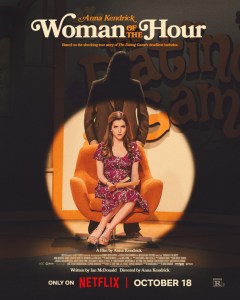 I never knew there was an actual serial killer that appeared on a 1978 episode of The Dating Game, and that he actually won. That’s a killer hook. The problem with Woman of the Hour, Anna Kendrick’s debut as a director, is that there isn’t really a movie here as presented. Because the game show segment can only last so long, we get the creepy first date, that never happened in real life, and watch Kendrick playing our lucky lady with mounting dread. A moment where the killer requests that she re-read the phone number she hastily gave him by memory, because she should know her number, is terrifically tense, as is the scene of him following her to her car. The problem is that this first date can only last so long, just as the cheesy TV game show segment can only last so long, so the movie has to provide extra back-story to fill the time. We get several past encounters with the killer’s unfortunate victims, all played quite unnervingly and seriously. The woman of the hour is less Kendrick getting her fleeting spotlight on TV, and an anecdote to impress people at parties for the rest of her life, than the survivor who eventually leads to the killer’s arrest. Amazingly, at the time of his TV appearance, he was on the FBI’s Most Wanted List but there wasn’t a searchable database, so he clumsily got to keep committing murders, including while out on bail. It’s a harrowing story, but is it one best told through the gimmick structure of the game show appearance? If you were going this route, perhaps best to treat the material like a slow-burn stage play, starting with the first date, and watch in real time as it gets awkward and our heroine begins to have her suspicions that this man does not mean her well. Instead, the game show segments are goofy and broad and the least important moments in the stretched-thin film. There might be a movie with this subject, but I’m not sure that Woman of the Hour is it.
Nate’s Grade: C+
Share this:

Tarot (2024)
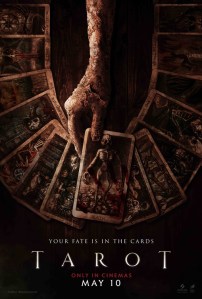 In the long line of horror movies about dumb teenagers stumbling onto curses, Tarot might be one of the most ineffective and ridiculous. First off, tarot readings are so detailed and specific, while also being vague to most of us unfamiliar with what you can find on the playing cards. This means the movie must constantly remind the viewer what the fateful readings were as well as the spooky imagery. Also, being a PG-13 movie, means that the terror is kept more on a psychological bullying level, where the teens have to “face their fears” but they’re not terribly personalized. One girl finds herself in a magician’s performance for ghouls and literally hides in a box only to be sawed in half. What was the personal fear there? Stage magicians? One guy is in a subway station and comes across a newspaper with his face on it and the headline, “You Die Today” (who says print media is dead…. wait a second). This is one of those movies that suffers because the rules of the curse are sketchy at best. We don’t know the escalation or how the teens might beat it. However, I wanted to almost applaud in amazement when the script practically plays an Uno Reverse card on its angry spirit (“If she’s killing everyone because they got their horoscope read, what if WE read HER horoscope to HER, huh?!”). The entire enterprise feels transparently like some studio exec optioned the concept of a tarot deck and said, “You know, make it haunted or whatever.” Unless you’re desperate for some derisive entertainment chuckles, skip Tarot.
Nate’s Grade: D+
Share this:

It’s What’s Inside (2024)
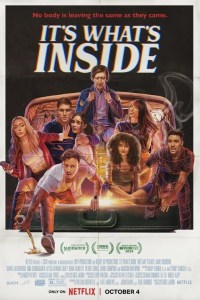 This sneaky little movie is exactly what I’ve been asking for from low-budget genre cinema, where creative ingenuity and imagination are the dominant forces to offset budget limitations. It’s What’s Inside is ostensibly a body swap movie between a group of friends stuck in a mansion overnight. A device allows eight people to swap into other hosts, and it plays as a silly party game early, before writer/director Greg Jardin increases the stakes. People pretend to be someone else and then explore that freedom, which usually means having affairs and getting a little too comfortable in other people’s bodies. Then there are… complications, and watching the characters frantically debate their new challenges and limitations with growing mistrust, exasperation, and betrayal makes for a delicious 90 minutes of surprises. Because there are multiple rounds of body-swapping, and eight starting characters, Jardin takes particular points to better clarify identities, from characters wearing Polaroids to a red-tinted sort of x-ray showing the real characters underneath the confusing physical surface. All of it helps, though I still had to ask who was really who quite often. I think watching it a second time would make it more coherent but also give me even more appreciation for Jardin’s slippery, shifting screenwriting. Here is a movie with rampant intrigue and imagination to spare, that maximizes its creativity to tap the body swap as an illuminating and destructive device to explore secret insecurities, desires, jealousies, and dissatisfaction in a friends group. It’s a wild trip, elevated by energetic and helpful editing, where the ideas are the main feature. It might not be much more than a bad overnight stay with bad people but It’s What’s Inside is top-notch genre filmmaking. It’s what’s inside the movie that matters most, its big imagination and fulfilling execution. Greg Jardin, you have my full attention with whatever movies you want to make from here on out.
Nate’s Grade: A-
Share this:

Rebel Ridge (2024)
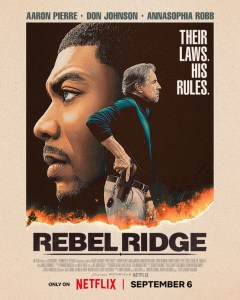 It only took minutes for me to be both engrossed and enraged by Rebel Ridge, the latest film from Jeremy Saulnier, a master of genre elevation. The scene begins with Terry Richmond (Aaron Pierce) riding his bike down a country road. A police cruiser appears behind him impatient to get around, and eventually the officer decides to use his vehicle to ram the bicyclist off the road. Afterwards, the officer tells Terry to stay on the ground and, upon a search of his belongings, discovers a stack of cash. Terry explains he cashed out his ownership in a restaurant and he’s on his way to do two things: buy a truck, and post bail for his cousin who was recently arrested for a minor drug possession. The police confiscate the money, accuse Terry of being involved with a drug conspiracy, and tell him that if he wants to fight for his money back, he’ll need to hire a lawyer and petition the court. Oh, and also the casual racism of the police officers is galling. With just his opening scene, Saulnier and his actors have made me feel vivid emotions and given me an underdog who I’m pulling for, a man who will come to serve as an honorable wrecking ball to this small-town police force who think they are above the law as it suits them. Saulnier’s movie tackles pertinent social topics with great care and detail, but it also delivers a masterful and satisfying action-thriller that knows how to entertain first and foremost rather than just incite.
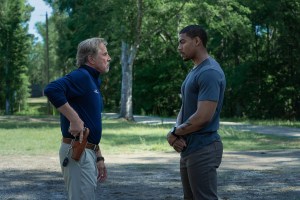 There are some serious criminal justice topics here dealt with unusually convincing clarity and accessibility, and that proves to be the ethos of Rebel Ridge, a message movie that knows it needs to be a movie first and a good one. Saulnier’s prior film work just oozes with dread and menace, though Blue Ruin and Green Room and even 2018’s Hold the Dark, by far the lesser work, dwell in bleak human outlooks. Very bad things will happen to people who stumbled into situations beyond their control, and usually by the end of the movie, there’s no recompense and we’re left to wonder about the empty cost of suffering. With Rebel Ridge, it feels like Saulnier has taken an assignment, like Netflix said to make one of your movies with your level of craft and thought, but also make it so the underdog is a badass and wins. I suppose one could argue that it’s turning a formula meant to defy convention back to convention, but by providing a crusader, we’re given a champion to root along that we can share confidence with. Terry isn’t invincible, some fearless behemoth who goes unopposed at every turn. He’s a formidable force but he’s also one man fighting against the forces of injustice and one black man fighting against racist white men in authority (superbly epitomized by Don Johnson’s good ole’ boy chief). Even with the power at his disposal, there are still limitations, which still makes the movie thrilling even if we ultimately suspect good might win out at the end. There’s nothing wrong with a triumphant ending as long as the work before establishes it as a fitting conclusion; tragedy and misery are not somehow more meaningful endings just because they are more serious or subversive. More people will learn valuable lessons about civil asset forfeiture and bail reform from this movie because it has a stirring and accessible story for a mass audience. The genuine thrills allow the messages to prosper.
And what thrills there are. There’s a staggeringly taut sequence where Terry is racing against time to get his cousin’s bail money deposited to prevent him from being transferred to prison. He’s checking the clock, looking down the small courthouse hallways, waiting for the officers he indisposed to come rushing back to arrest him. If only he can get this money deposited first. Saulnier does his own editing and creates a masterful sequence that left me nervously tapping my foot and awaiting the worst. The later confrontations with the police have a deeply satisfying turnabout, as these bullies come to realize far too late that they picked on the wrong man. Terry is an ex-Marine who taught martial arts and hand-to-hand combat to the Corps, but the most dangerous weapon he has is his mind. He’s constantly thinking about plans and implementation and adaptation. He’s intimidating already, but then when he starts to adapt, the sheer force of what this man is capable of makes him that much more incomparable. Even as a man on a mission, he’s still one black man fighting against a system of entrenched power that doesn’t like to bend when it comes to compromise or imposed oversight. He’s still got institutional power against him, and in one of Sauliner’s other movies, he probably would end with Terry winning a Pyrrhic victory but with the system ultimately standing, readjusting to maintain its dominance against further reforms. Here, that may still be true in a larger sense, but at least this one man can make a difference and bust a few racist bullies.
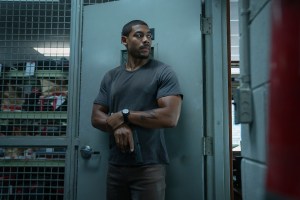 This experience wouldn’t be nearly as awesome without the commanding presence of its leading man. Pierce has had some noteworthy roles in Krypton and The Underground Railroad (he was also the amazingly named rapper “Mid-Sized Sedan” in M. Night Shyalaman’s Old). Originally, John Boyega (Star Wars: The Rise of Skywalker) was the lead role of Terry but Boyega bowed out weeks into filming in 2021 reportedly for “creative differences.” I cannot fathom any other actor in this role now that I have seen how thoroughly magnetic Pierce comes across. He’s a future star in the making and this should serve as a showcase for Hollywood. I like Boyega as an actor and have since 2011’s Attack the Block, but Pierce is a far more intimidating presence and likely candidate for action retribution. I cannot overstate how much better this movie is because it found the perfect leading man for its hero. Saulnier’s excellent command of the genre and tension is made even more compelling because of Pierce being our vehicle for comeuppance. His smooth intensity beautifully amplifies Saulnier’s percolating dialogue, finding the exact right tone and presence to make the challenges to power feel oh so combustible.
I wish the second half of Rebel Ridge was as perfectly structured and executed as that first scene. The second half gets a little lost in the details of its overarching small-town conspiracy. The momentum of the movie starts to slag a bit, and the clear connection of cause-effect plotting gets bogged down. There’s still important revelations and you get nice moments from the likes of James Cromwell as a judge and Steve Zissis as a courthouse clerk trying not to make waves within a system he acknowledges is unjust. The real significant supporting character is Summer (AnnaSophia Robb) as a lawyer with a past of drug addiction that she’s still trying to put behind her to earn back parental rights to her kids. She’s a good foil for our crusading hero, and her storyline also smartly allows for more social-political tangents to be hit about the difficulty of addicts and ex-cons to try and start over in the workforce. I wish she was more involved in the climax, as she’s relegated to being mostly a damsel needing to be saved after she proved so capable and cunning throughout the rest of the movie assisting Terry. The second half just isn’t as strong as the first half because the movie overextends with its conspiracy and history without the same tremendous clarity and urgency that drove the first hour of Rebel Ridge. The ultimate conclusion, while still satisfying, lacks the fireworks that we crave. It’s more a race against time and hoping that certain elements finally stand up against the corrupt police forces. It’s a solid ending, enough for a catharsis that Saulnier so rarely allows, but it’s not quite the release we might want, and maybe that’s the ultimate point.
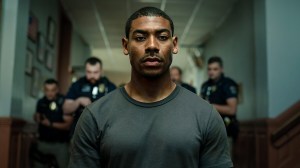 Rebel Ridge is a great genre movie that flirts with true excellence. It’s Jeremy Saulnier’s most accessible and crowd-pleasing movie, an action-thriller that executes its sequences of tension and retribution with as much care as it incorporates its Big Ideas for viewers to think over. Genre movies have long tackled relevant social and political topics, sometimes in ways that are far more meaningful and impactful than message movies that get bogged down in didactic dogma. But if you can link a relevant social issue to a story that grabs us and makes us want to inch closer to the screen, something that links a larger problem to a personal story, then you’ve found an accessible illustration that people will actually want to see. Rebel Ridge stands out among the Netflix house of action movies and proves that even a mainstream Saulnier can deliver the goods. Just because he’s working with a more conventional formula doesn’t mean that he hasn’t put thought and care into his characters and action. Rebel Ridge may leave you wanting a little more with its ending, but what it supplies is so engaging and entertaining that I’m happy to report Saulnier hasn’t lost his edge. Keep ‘em coming like this, Jeremy.
Nate’s Grade: B+
Share this:

Alien: Romulus (2024)

I will maintain that over the course of forty years that there have been no bad Alien movies. While 2017’s Alien Covenant gets the closest, I think each of the four Alien movies from 1979 to 1997 are worthy of praise for different reasons. The Alien franchise is unique among most sci-fi blockbusters in that each of its movies feels so radically different. The groundbreaking first movie is the hallowed haunted house movie in space; the 1986 sequel set the foundation for all space marine action movies, with Sigourney Weaver earning a Best Actress nomination, a real rarity for any sci-fi action movie; the much-derided third film from 1992 is much better than people give it credit for, and while flawed it has really intriguing ideas and characters with a unique setting and a gutsy ending; the fourth film from 1997 might just be the most fun, going all-in on schlocky action and colorful characters. Each of them is different with a style and tone of their own, and each is worthy of your two hours. Enter director/co-writer Fede Alvarez’s Alien: Romulus, meant to take place between the fifty-year time span between Alien and Aliens. It was intended to be a Hulu streaming movie but got called up to the big leagues of theatrical release, and while it has some underwritten aspects and clunky fan service, Romulus is another worthy sequel for a franchise that admirably keeps marching to its own beat.
It’s 2142 and life on an off-world colony isn’t exactly the adventure advertised. It’s a mining colony that’s slowly poisoning its huddled masses. Rain (Cailee Spaeny) has just finished her two-year contract only to be informed by her greedy company that, because of worker shortages, she’s locked in for another two years of indentured servitude. She’s also in charge of her adoptive brother, Andy (David Johnsson), a malfunctioning android that her late father reprogrammed. An ex-boyfriend comes back into Rain’s life with a plan: there’s an old derelict research station that they can scavenge and retrieve the cryo chambers, which can make long-term travel to a new life in a new system a possibility. There’s also a catch: they need Andy because only he can open the ship’s locked gates. The ragtag crew flies out to the derelict ship orbiting a ringed planet and, of course, discovers far more than they bargained for as the ship, of Weyland-Yutani origins, is crawling with face-hugging fiends just waiting for new faces.

Despite my grumbles, I found Alien: Romulus to be a very entertaining new entry that had the possibility of genre greatness. The setting and central character dynamic are terrific. The Alien franchise hasn’t exactly been subtle about its criticisms of multi-faceted corporations and their bottom-line priorities, but it’s even more effective to see the dinghy world of this mining colony. It’s a bleak existence of dystopian labor exploitation and you get an early sense of the desperation that motivates the characters to flee at any opportunity. Eventually, the evil corporation’s big plans for the “perfect organism,” a.k.a. the xenomorph, are to replace the depleting labor force. Humans, it turns out, aren’t built to work in space long-term, and the human cost is felt effectively in Act One. Another key part of what made the movie so immediately engaging for me is the sweet surrogate brother-sister relationship between Rain and Andy. He’s vulnerable, an older android model who needs some repairs, but he’s loyal and kind and loves pun-heavy jokes. This central relationship hooked me and gave me something to genuinely worry over as things get more dire, and it’s not just the scary aliens. Once onboard, Andy uploads the programming of a different android, and the competing objectives make him become a different person, all wonderfully played by Johnsson, who was supremely appealing in Rye Lane. While literally every other character is remarkably underwritten (this one doesn’t like robots, this one is pregnant, this one is… Buddhist?), the genuine bond between Andy and Rain grounded me.
Romulus also has some sneaky good set pieces that kept me squirming in my seat or inching closer in excitement. Alvarez (Don’t Breathe, Evil Dead) can concoct some dynamite suspense sequences and knows how to draw out the tension to pleasingly anxious perfection. This is the best Alien movie yet to really sell the danger of the springy face-huggers. There’s a taut sequence where the humans have to slow their movements to walk through a face-hugger minefield lest their spike in temperature alert the deadly creatures. There’s another later sequence that ingeniously utilizes space physics to escape the xenomorph acid blood. I loved how well it was set up and then the fun visuals of zero-gravity acid blood. The practical effects make for lots of great looking in-camera effects, and the production design is incredibly detailed while achieving a chilling overall mood of dread. Alvarez leans upon the visual frameworks of Ridley Scott and James Cameron, as who doesn’t, but finds ways to make his Alien movie his own. I really appreciated the dedication to the sprawling vistas of space, like extended shots outside the ship that really translate the sheer majesty and terrifying scale of space. The last-second threat of demolition is made all the more arresting by crashing into the rings of the planet. I think most people confuse a planet’s rings like it’s some kind of water vapor when instead it’s like a crowded highway of debris.
However, there are some misguided nods toward fan service that go overboard and become groan-inducing. There’s a fine line between homage and back-bending fan service, and Romulus skirts over occasionally into the dangerous territory, given over to references to the other movies that lack better context to make them anything more than contrived callbacks. Take for instance a triumphant killing of a xenomorph where a character utters, “Get away from her,” which itself would have sufficed, as any Alien franchise fan knows this reference point. Then the character continues, in an awkward pause, almost stumbling over the words and translating the awkwardness directly for us, as they add, “…You bitch.” Why? Why would this character need to say this exact same line (although, timeline-wise, this is now the first use of the phrase as Ripley is still in hypersleep)? The moment doesn’t call for this specific line; it could have been anything else, but they made it the line we all know from Aliens. There’s also the familiar ending where the characters think they’ve won and, wouldn’t you know it, there’s one more tussle to be had with a xenomorph who has snuck onto the escape ship. I’m less bothered by this continuation as it’s almost a formula expectation for the franchise at this point, though keeping Rain in her sleeping undies for the final fight seems like another unnecessary nod to the 1979 original. They even tie back the mysterious black goo from the Engineers via Prometheus, though as a vague power-up when, if I can recall, it was a biological weapon of mass destruction, but sure, now it’s a power-up elixir.
But the worst and most misguided act of fan service is where the movie literally brings a performer back from the dead (some spoilers ahead, beware). When Rain and the gang stroll through the derelict company ship, they discover the upper torso of a discarded android, like Ash (Ian Holm) in the original Alien. Not just like Ash because for all intents and purposes it is Ash, as the filmmakers resurrect Holm (who passed away in 2020) and use Deepfake A.I. technology to clumsily animate the man. This isn’t the first instance of a deceased actor brought back to screen by a digital double, from Fred Astaire dancing with a mop to Peter Cushing having a significant post-death supporting role in 2016’s Rogue One. Here’s the thing with just about all of these performances: they could have just been a different actor. Why did it have to be Grand Moth Tarkin (Cushing) and not just any other obsequious Empire middle manager? With Alien: Romulus, why does it have to be this specific version of an android when it could have been anyone else in the world besides the dearly departed Holm? I just can’t comprehend why the filmmakers decided to bring back Holm in order to play A DIFFERENT android who isn’t Ash but might as well be since he’s also been torn in half. Why not have the android be another version of Andy? That would have presented a more direct dichotomy for the character to have to process. The effects reanimating Holm are eerie and spotty at best, apparently built from an old scan from The Lord of the Rings. It’s just a distracting and unnecessary blunder, the inclusion of which can only be justified by trying to appeal to fans by saying, “Hey, remember this character? Even though he’s not that character. Well. Here.” We used to readily accept other actors playing the same character before the rise in technology. Nobody watching The Godfather Part II wondered why Robert DeNiro wasn’t a slimmed-down Marlon Brando.

As an Alien movie, Romulus starts off great and settles for good, but it still has several terrific set pieces, its own effectively eerie mood and style, and a grounded character dynamic that made me genuinely care, at least about two characters while the others met their requite unfortunate ends. It doesn’t have the Big Ideas of a Prometheus or the narrative arcs of Aliens, or even the go-for-broke schlock of Alien Resurrection, but Romulus delivers the goods while also feeling like its own movie, a fact I still continue to appreciate with the Alien franchise. It’s an enjoyable genre movie that fits in with the larger franchise. I wish some of the clumsy nods to fan service, especially the resurrection of a certain character, had been reeled back with more restraint to chart its own course, but it’s not enough to derail what proves to be a winning sequel.
Nate’s Grade: B
Share this:

The Village (2004) [Review Re-View]
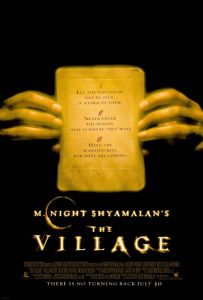 Originally released July 30, 2004:
When saying director names you can play a fun little game of word association. Someone says, “George Lucas,” and things like big-budget effects, empty storytelling, and wooden dialogue come to mind. Someone says, “David Lynch,” and weird, abstract, therapy sessions dance in your head. The behemoth of word association is M. Night Shyamalan. He burst onto the scene with 1999’s blockbuster, The Sixth Sense, a crafty, moody, intelligent thriller with a knock-out final twist. Now, though, it seems more and more evident that while The Sixth Sense was the making of M. Night Shyamalan, it also appears to be his undoing. His follow-up films, Unbreakable and Signs, have suffered by comparison, but what seems to be hampering Shyamalan’s growth as a writer is the tightening noose of audience expectation that he kowtows to.
With this in mind, we have Shyamalan’s newest cinematic offering, The Village. Set in 1897, we follow the simple, agrarian lives of the people that inhabit a small secluded hamlet. The town is isolated because of a surrounding dense forest. Mythical creatures referred to as Those We Dont Speak Of populate the woods. An uneasy truce has been agreed upon between the creatures and the villagers, as long as neither camp ventures over into the others territory. When someone does enter the woods, foreboding signs arise. Animals are found skinned, red marks are found on doors, and people worry that the truce may be over. Within this setting, we follow the ordinary lives of the townsfolk. Ivy Walker (Bryce Dallas Howard) is the daughter of the towns self-appointed mayor (William Hurt), and doesn’t let a little thing like being blind get in the way of her happiness. She is smitten with Lucius (Joaquin Phoenix), a soft-spoken loner. Noah (Adrien Brody), a mentally challenged man, also has feelings for Ivy, which cause greater conflict.
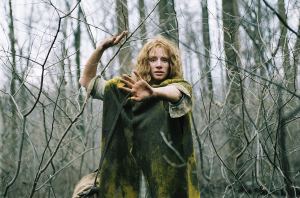 Arguably, the best thing about The Village is the discovery of Howard. She proves herself to be an acting revelation that will have future success long after The Village is forgotten. Her winsome presence, wide radiant smile, and uncanny ability to quickly endear the character of Ivy to the audience. She is the only one onscreen with genuine personality and charisma, and when shes flirting and being cute about it you cannot help but fall in love with her. And when she is being torn up inside, the audience feels the same emotional turmoil. I am convinced that this is more so from Howard’s acting than from the writing of Shyamalan. She reminds me of a young Cate Blanchett, both in features and talent.
It seems to me that Shyamalan’s directing is getting better with every movie while his writing is getting proportionately worse. He has a masterful sense of pacing and mood, creating long takes that give the viewer a sense of unease. The first arrival of the creatures is an expertly handled scene that delivers plenty of suspense, and a slow-motion capper, with music swelling, that caused me to pump my fist. The cinematography by Roger Deakins is beautifully elegant. Even the violin-heavy score by James Newton Howard is a great asset to the film’s disposition.
So where does the film go wrong and the entertainment get sucked out?
What kills is its incongruous ending. Beforehand, Shyamalan has built a somewhat unsettling tale, but when he finally lays out all his cards, the whole is most certainly not more than the sum of its parts. In fact, the ending is so illogical, and raises infinitely more questions than feeble answers, that it undermines the rest of the film. Unlike The Sixth Sense, the twist of The Village does not get better with increased thought.
Shyamalan’s sense of timing with his story revelations is maddening. He drops one twist with 30 minutes left in the film, but what’s even more frustrating is he situates a character into supposed danger that the audience knows doesn’t exist anymore with this new knowledge. The audience has already been told the truth, and it deflates nearly all the tension. It’s as if Shyamalan reveals a twist and then tells the audience to immediately forget about it.
 Shyamalan also exhibits a problem fully rendering his characters. They are so understated that they don’t ever really jump from the screen. The dialogue is very stilted and flat, as Shyamalan tries to stubbornly fit his message to ye olde English vernacular (which brings about a whole other question when the film’s final shoe is dropped). Shyamalan also seems to strand his characters into soap opera-ish subplots involving forbidden or unrequited love. For a good hour or so, minus one sequence, The Village is really a Jane Austin story with the occasional monster.
The rest of the villagers don’t come away looking as good as Howard. Phoenix’s taciturn delivery seems to suit the brooding Lucius, but at other times he can give the impression of dead space. Hurt is a sturdy actor but can’t find a good balance between his solemn village leader and caring if sneaky father. Sigourney Weaver just seems adrift like she’s looking for butter to churn. Brody is given the worst to work with. His mentally-challenged character is a terrible one-note plot device. He seems to inexplicably become clever when needed.
The Village is a disappointment when the weight of the talent involved is accounted for. Shyamalan crafts an interesting premise, a portent sense of dread, and about two thirds of a decent-to-good movie, but as Brian Cox said in Adaptation, ”The last act makes the film. Wow them in the end, and you’ve got a hit. You can have flaws and problems, but wow them in the end, and you’ve got a hit.” It’s not that the final twists and revelations are bad; it’s that they paint everything that came before them in a worse light. An audience going into The Village wanting to be scared will likely not be pleased, and only Shyamalan’s core followers will walk away fully appreciating the movie. In the end, it may take a village to get Shyamalan to break his writing rut.
Nate’s Grade: C+
——————————————————
WRITER REFLECTIONS 20 YEARS LATER
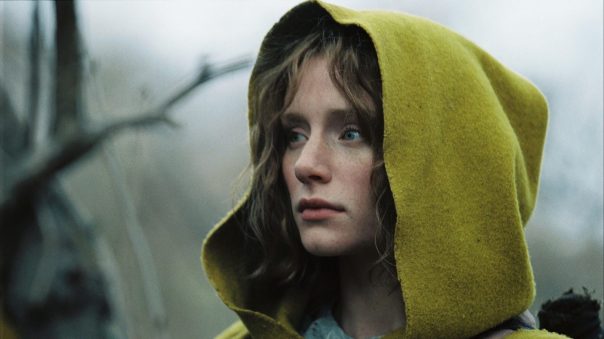
Usually in the M. Night Shyamalan narratives, 2004’s The Village is where the cracks first started to show in the filmmaker’s game. While 2000’s Unbreakable didn’t exactly reach the box-office successes of The Sixth Sense and Signs, it still earned $250 million worldwide and was definitely ahead of the cultural curve, introducing a grounded superhero story before the oncoming wave of superhero cinema. No, it was The Village that started the questioning over whether Shyamalan’s need for big twist endings was hampering his creativity. While still earning almost the exact same box-office as Unbreakable, The Village was seen with more hesitation, a cautionary tale about a filmmaker, as Matt Singer recently put it, flying a little too close to the sun. From here, Shyamalan entered his down period, from 2006’s Lady in the Water, to 2008’s The Happening, and the big-budget sci-fi misfits of 2010’s Last Airbender and 2013’s After Earth. This was the beginning of the general public becoming wise to Shyamalan’s tricks.
The real kicker is that, twenty years later, it’s clear to me that The Village is two-thirds of a good-to-great movie, ultimately undone by the unyielding desire to juice up the proceedings with an outlandish twist ending. For that first hour, Shyamalan has done a fine job of dropping us into this outdated community, learning their rules and restrictions, and gradually feeling the dread that the old ways might not protect them from the monsters just along the boundaries. There’s an efficiency and confidence to that first hour, with carefully planned shots that establish key points of information, like little girls panicking at the sight of a red flower and burying it in the ground before going back to their chores. The cinematography is elegant and moody, and the violin-soaring score by James Newton Hoard is a consistent emotive strength. The first encounter with the monsters roaming around the town is fraught with tension, especially as our one character holds out her hand waiting for her friend/love interest to return. The cloaked monsters are also just a cool design, with their long claws and porcupine-like frills extending from their hides.
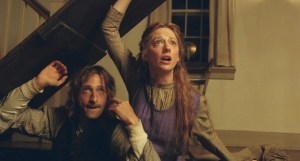 The greatest strength is Bryce Dallas Howard (Jurassic World) as our surprise protagonist, Ivy, daughter of the community founder, Edward Walker (William Hurt). Howard had made small cameo roles in her father’s films, but she was cast by Shyamalan after he watched her perform on stage. She is spellbinding as Ivy, a woman of great vulnerability and strength, of integrity and charisma. The scene where she sits down on the porch beside Lucius (Joaquin Phoenix) and dance around the edges of flirting is sensational, and when she talks about seeing people’s colors, or auras, and then smirkingly whispers, “No, I will not tell you your color, stop asking,” in the same breath, I defy anyone not to fall in love with her like poor Lucius. This simple love story actually works well. Lucius is an introverted man given to great emotions he doesn’t know how to fully express, which pairs nicely with the chatty and ebullient Ivy. The protagonist shift works wonderfully as well. For the first hour we believe we’re following Lucius as our main character, especially since at this point Phoenix’s star power was rising and Howard had none. Then, with the sudden sticking of a knife, Lucius is taken down and the movie becomes Ivy’s story and her quest to save her beloved. Her cry of not being able to see Lucius’ color is a well-coordinated punch to the gut. This is an example of a rug pull that really works, elevating the stakes and presenting the real star, the girl so many have overlooked for one reason or another, who will be our hero when we need her most.
But then it all falls apart for me once Shyamalan reveals two twists: 1) the monsters are not real, merely costumes the adults wear to enforce their rules through fear, 2) the setting of this village is not 1897 but modern-day, with the villagers living in a secluded nature preserve. Apparently, Edward was able to gather enough violent crime victim relatives to begin this experiment in “returning to our roots.” He served as an American History professor, so who better than to create a thriving community? You know how to establish safe drinking water there, my guy? How about cabin-building? I assume one of the elders must have had some wealth as it’s revealed later, via Shyamalan’s onscreen cameo role, that the government got paid off to stop having airplanes fly over the nature preserve. I actually kind of hate this twist. It feels the most superfluous of all Shyamalan’s fabled twist endings. I was genuinely enjoying the movie and how it was spinning up until this point, but Shyamalan cannot leave well enough alone. I get that Shyamalan is crafting an allegory for the War on Terror and the constant anxiety of post-9/11 America, replete with color codes meant to serve as warning signs. I get that we’re meant to find the town elders as villains, keeping their community repressed through the fear of convenient monsters. The lessons are there to dissect, but I’m disappointed because I was enjoying the allegory on its literal level more than its intended themes. It’s also because I feel like the twists overburden the movie’s charms.
 Another reason the twist really falters is that it creates all sorts of nagging questions that sabotage whatever internal logic had been earlier accepted. Adults deciding to break free from modern society so they can start their own secluded LARP community can work as a premise, but it requires a lot more examination that cannot happen when it’s slotted as a concluding twist. Imagine the kind of determination it would take to retreat from modern society and rekindle an agrarian life from hundreds of years ago. That means abandoning all your family, friends, the comforts of modern-day, and the sacrifices could have been explored, but again, it’s just a twist. There are present-day communities, most famously the Amish, that shun the technological advances of modern society to retain an outdated sense of homespun culture and religious community, but often the members have grown up in this culture already. Regardless, retreating into the woods to start your own 18th century cosplay is a commitment, but when you know all the adults are in on this secret, why are they staying in character at all times? When it’s just two adults talking to one another, why are they keeping to their “characters” and talking in that antiquated jargon and syntax? Is it collective Method acting? Is it a sign they’ve ref-ramed what they consider normal? Have they gone so deep that their muscle memory is to say “thee” and “thou” vernacular in the mirror? They went through this elaborate facade because they lost people in the “real world,” but human impulses, violence, and accidents can occur in any community, no matter if you got cell phones or pitchforks. It starts to gnaw away at the tenuous reality of the scenario, a reality I was accepting until the late rug pull.
It also eliminates some of the stakes of Act Three when Ivy travels beyond the boundaries and may face the wrath of the monsters. It’s maddening that Shyamalan reveals the monsters are not real, mere tools to scare the children into obedience, and then has a supposed suspense sequence where Ivy stumbles upon a thicket of red flowers, the dreaded color the monsters hate. But wait, you might recall, there are no monsters, so then why does it matter? When you realize that her dad could just have taken a hike and driven to a drug store to gather medical supplies, without the supernatural threat keeping them confined, it kind of seems silly. Here you were, worried about the fate of this blind girl, when there’s no reason she had to even venture into this danger because one of the adults could have performed the same task without risking their big secret. I know they think Ivy’s blindness might uphold their secret, but why even risk her possible danger from falling down a hill she couldn’t see or a rock that twists her ankle? Her dad would rather have his blind daughter venture into the woods than do this trek “to the next town” himself. At the same time, her personal journey outside the community is robbed of the supernatural danger and it also re-frames the father as someone burdening his blind daughter with a task he could have achieved. He says she has the power of love and that will guide here, but you know a compass could also help. You could make the argument that maybe his guilt was eating away at upholding such a big secret, maybe he wanted to get caught, but I don’t buy it. Edward argues with his fellow elders that it is the next generation that will keep hold to their traditions and ways of life, and they must ensure this survival. That doesn’t sound like the perspective of a man wishing to break apart the close-knit community he helped build.
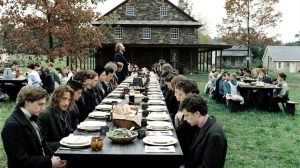 What to make of Adrien Brody’s mentally challenged character, Noah? He’s living in a time that doesn’t know how to handle his condition, but he’s also set up as a quasi-villain. He’s the one who stabs Lucius out of jealousy that Ivy favors him. He’s the one who breaks free, steals a monster get-up, and antagonizes Ivy in the woods. He also falls into a pit and dies alone. I don’t really know how to feel about this character because I don’t think Shyamalan exactly knows what to do with him.
Having recently re-read my original 2004 review, I’m amazed that I am sharing almost the exact same response as I did with my younger self. Even some of the critical points have similar wording. My concluding summation still rings true for me: “It’s not that the final twists and revelations are bad; it’s that they paint everything that came before them in a worse light.” You can rightly tell an allegorical story about people rejecting modern society and living a secluded and hidden life. You can rightly tell a story about adults posing as monsters to keep their children in line and obedient. However, if you’re going to be telling me that story, don’t supply an hour’s worth of setup that will be damaged from these revelations. After The Village, it was a steady decline for the filmmaker once dubbed “the next Spielberg” until 2017’s stripped down thriller Split, anchored by a tour de force performance from James McAvoy. It’s frustrating to watch The Village because it has so much good to offer but ultimately feels constrained by the man’s need to follow a formula that had defined him as a mass market storyteller. This was a turning point for Shyamaln’s fortunes, but the quality of The Village has me pleading that he could have shook off the need for ruinous twists and just accepted the potency of what was already working so well.
Re-View Grade: B-
Share this:

In a Violent Nature (2024)
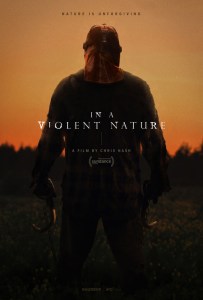 In a Violent Nature is going to be a very trying movie by design. Its entirety follows its very Jason-esque supernatural killer in near real-time as he goes through the woods and eventually kills several unlucky locals and partying teenagers. That means it’s several long sequences of watching the back of this hulking zombie killer walk through the woods and eventually get closer to victims. The actual kill scenes have some impressively nauseating gore, which might serve as a reward to the audience for enduring the lengthy walking. Seriously, this guy perambulates like a boss. He walks. And walks. And walks. Occasionally, he’ll kill someone in gruesome fashion, but most of his journey, and by extension the movie’s journey, is tagging along on his extensive nature hike. Is that going to be interesting to the average horror fan? Probably not. It’s designed to wear down your patience. The filmmakers clearly understand what effect their creative choices would have, and they went through with them anyway. It’s not like writer/director Chris Nash is lacking in style. His segment in 2014’s The ABCs of Death 2, “Z for Zygote,” is ingeniously horrifying. There is a great moment here where our killer’s hand is reaching toward the screaming face of his soon-to-be victim and then Nash performs a match cut with the same hand, now dripping with blood, reaching out for a desired necklace moments later. It’s quick and also subversive, denying the viewer our first opportunity at onscreen violence. This is a movie that works primarily in the realm of denying its target audience what it wants, and that is kind of fascinating to me. I don’t know if it’s enough to make me declare In a Violent Nature as good, but this movie seems destined to work on a different level than good/bad.
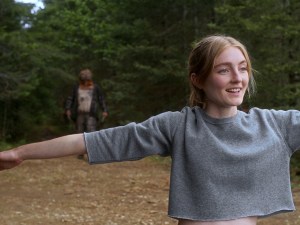 And yet, the movie invites a deeper contemplation through its very experimental nature. We’re walking side-by-side with this undead specter as he tromps through the woods looking to reclaim his special token, and it’s boring by design. I hate using that as an excuse because the movie does get rather tedious at parts, and yet it challenged me to engage more with the movie on an intellectual level, to examine its deliberate creative choices. Just about every slasher movie is designed around the clockwork killing of its easily disposable characters, usually dumb teenagers, by some powerful malevolent force. However, just about every slasher I can recall places the viewer in the perspective of the dumb teenagers engaging in dumb teenager antics, usually drinking and trying to engage in premarital sex. Let’s not pretend those characters are generally any more nuanced or well written than the villain stalking them. Instead of spending all our time with these character archetypes and the occasional pop-in from the villain, it’s reversed. It’s the dumb teenagers that pop-in while we’re on the journey with the slasher fiend. Does it make the kills hit harder because of the long stretches leading up to them because we see how many close calls there have been? Because this guy is trying his best? I don’t know, but the cries of In a Violent Nature being unbearably tedious makes me reflect on whether tedium is, by nature, part of the slasher genre, and perhaps we’ve all ignored the formula because of regular intervals of blood and boobs. Are dumb teenagers that much better company than a silent brute going for a walk?
It was around the halfway point where I began to question whether this approach was causing me to develop empathy for our supernatural killing machine. The back-story is tragic, being a young child tricked by kids he thought were his friends, only to plunge to his death from a water tower. Children can be cruel, and if this was one’s ever-lasting memory of human interaction, then I would understand coming back as a murderous revenant. He also didn’t ask to be brought back to life. The dumb teenagers stole his mother’s necklace and his goal is to simply reclaim it. Yes, he’ll kill plenty of people that had nothing to do with bringing him back, collateral damage from messing with forces that humans should never mess with. He’s just on the hunt for his dear departed mother’s keepsake. In essence, he is looking for the item to return back to the land of the dead, to end being pulled back into corporeal existence. When you look at that context, every dead teenager becomes one step closer to finding that necklace and going back to his eternal slumber. Perhaps our big bad is suffering and looking for that pain to cease. When you’re quite literally walking beside this figure for the duration of the movie, it sparks a personal reflection whether you may be unexpectedly developing empathy. Is it simply projection and all proximal, spending all this time with only one character? Is this a human byproduct of wanting to imbue emotional depth to characters for our sense of engagement? I cannot say. When you walk a mile, or more accurately several, in another (dead) man’s shoes, maybe you start to see the world in his weary, irritable perspective and want that big nap back.
 I have no idea how each viewer will respond to In a Violent Nature. I was wrestling with different mixed feelings, including boredom. I don’t think traditional fans of traditional horror will find the long slog worth taking its time to smell the proverbial flowers. I imagine most will grow restless, antsy, and maybe even angry, and that response is entirely valid and understandable. The novelty of watching the killer stalk his future victims in real time can be one of those ideas that, upon execution, feels better as a short film than as a feature experiment. I admire the gusto of embracing this approach and flipping the slasher script into what amounts to an unorthodox nature documentary between predator and prey. It’s an interesting approach that invites ongoing textual analysis with the genre, the depiction of the characters and their tired archetypes, as well as what makes these movies worth our time and passing investment. Likely there will be more people that shrug and deem In a Violent Nature a dull bore, but I’m also positive there will be people who find themselves unexpectedly thinking and feeling things they didn’t anticipate. Ultimately, it’s a movie I can begrudgingly admire more than engage with, but I appreciate taking the familiar and presenting it in a way we’ve seldom witnessed before.
Nate’s Grade: C+
Share this:

I Saw the TV Glow (2024)/ The Watchers (2024)
 I Saw the TV Glow is a strange experience by design, a hallucinatory ode to early 1990s television, coming of age sagas, feeling out of place in one’s own body and mind, and on a Lynchian dream logic wavelength that few filmmakers occupy. From a plot standpoint, Owen (Justice Smith) is a shy kid who looks up to an older girl at school, Maddy (Bridget Lundy-Paine), and they share a love for the TV show The Pink Opaque, a tween-aimed horror series in the vein of Goosebumps or Are You Afraid of the Dark?, which ultimately might be real after all. This movie exists more on a slippery emotional plane than on its story sense. Writer/director Jane Schoenbrun (We’re All Going to the World’s Fair) has created an allegory for self-actualization and self-acceptance through a love of 90s nostalgia and that transitional time of being young and just seeing the cusp of what adulthood promises for the good, the bad, and the mundane. The recreation of the SNICK-era television is perfect, and I loved the little glimpses of these horror monsters taking on new nightmarish incarnations. I wanted the movie to explore its premise more, that this old TV show might be real and posing a danger that only they would uncover. It’s really more a pathway for the characters to explore their selves, what animates them, what confuses them, what provides a sense of community. It’s a movie about the perils of loneliness and finding an outlet, a life raft, whatever that may be, and for Owen it’s this TV show. He connects more with this world than the real one, and when he revisits it later as an adult, it doesn’t live up to his memory. It’s a weird movie but it’s designed for weird kids, or weird adults who used to be weird kids, who found kinship through weird media. It’s a slow and provocative experience that asks you to give yourself over to its vision, but Schoenbrun also makes that engagement quite accessible. While existing as a clear trans allegory, I Saw the TV Glow is open to any outsider who felt unsure of themself and their body and their place in the universe. It’s about obsession and the price of holding onto said childhood obsessions, even if they prove disappointing in your adulthood. It doesn’t offer any general answers or catharsis and is kept on the slowest of slow burns. I began daydreaming of the less arty version of its spooky premise, but that’s simply not going to be this movie. I Saw the TV Glow is impressively personal and surreal and obtuse, but by the end I was hoping for a little more of a foundation to hold onto and its ideas to be fully realized.
Nate’s Grade: B
 The expansion of the M. Night Shyamalan creative dynasty has begun. While based on a 2022 novel by A.M. Shine, The Watchers is brought to us primarily by Ishana Shyamalan, who makes her feature directing debut and adapted the screenplay. It has a buzzy premise that feels at home in a Shyamalan movie, namely a young woman (Dakota Fanning) who stumbles into a strange location with captive people telling her she cannot leave or her life will be in danger from monsters. The group of survivors have to “perform” for their unseen watchers, staring into a two-way mirror inside a closed room. There are certain rules that are hazy and unevenly applied: don’t go out after dark, never turn your back to the mirror, don’t go into the creatures’ subterranean dwelling. This poses an intriguing mystery for a while as the movie unpacks and reveals more about this world and the creatures. However, The Watchers ultimately cannot help feeling like an over-extended episode of a sci-fi anthology TV series like Black Mirror or maybe even Shyamalan’s own Apple Plus series Servant (Ishana wrote and directed several episodes). There just isn’t enough here. The revelations do not sustain our emotional and intellectual investment. Once it’s revealed what the monsters are, I kept waiting for extra levels of twists and turns, and there really aren’t any. Once we settle into Act Three, the movie becomes more or less about housekeeping and gaining acceptance. The whole reason the protagonist is on her journey is to deliver a bird in a cage, and every time this thing keeps appearing even so late into the movie, while she’s running for her life but cannot forget about the caged bird, I felt like laughing. It’s a case of inelegantly finding a way for the visual metaphor (the bird is her!) to continue being tied to the plot after it long stopped making sense. Likewise, there are cutaways to the captives watching a Love Island/Big Brother-stye reality TV show, but little is made as far as commentary on communal voyeurism, so they just come across as little odd comic asides. The movie loses some serious momentum once we get to the convenient info dump sequence (a Shyamalan family favorite: scientist vlogs) and you realize there are no more tricks to deliver. It’s disappointing that a movie with such potent folklore atmosphere becomes a lackluster variation on The Village.
Nate’s Grade: C
Share this:

The Ministry of Ungentlemanly Warfare (2024)

This is my kind of Guy Ritchie, leaning into the pulp sensibilities of genre movies with style, swagger, and cheek, and The Ministry of Ungentlemanly Warfare is his grand ode to the WWII men-on-a-mission capers. While reportedly based upon the recently divulged secret files of Winston Churchill, the heavily fictionalized account of Gus March-Phillips (Henry Cavill) assembling a team of experts to blow up Nazi plots treats the men like super heroes. For the first hour or so, the movie is rollicking, with the team mirthfully mowing down Nazis at a steady pace, chumming it up, and having a fine time. It’s only after that midpoint where some of the movie’s flaws start to drag and become more apparent. First of all, an extended mission of getting close to a Head Nazi (Til Sweiger) and abscond with some ships off the coast of Africa makes for a very labored stay but without much fekt in progression or complication. I was feeling wanderlust to get moving. Next, the entire team feels unstoppable to the point of becoming boring. They never break a sweat fighting and casually plow through their enemies, so the entertainment value of the slaughter begins to ebb when it all feels too easy for too long. You can do an entire movie of Nazi destruction from the hands of an unstoppable force, like Sisu, but the bloody appeal of that movie is its creative carnage. We needed more variation in the action and set pieces. These gents have no formidable adversary, no overwhelming odds, and no real bouts of bad luck to thwart them. Alan Ritchson (TV’s Reacher) is a hulking mountain of a man, and he has such poise and charisma to be the breakout character, and Ritchie just fumbles it. Ritchie has excelled in the past with easily imbuing striking and memorable personality and conflicts with his Cockney crime larks, and I was missing more of that peppy style and unique flavor. Don’t get me wrong, The Ministry of Ungentlemanly Warfare has great promise and entertainment value, but it unfortunately creates its own ceiling, stalling in the second half and failing to develop intriguing challenges to test its underwritten crew.
Nate’s Grade: B-
Share this:

The Strangers: Chapter 1 (2024)
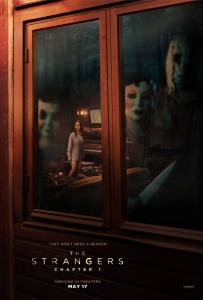 The most terrifying part of The Strangers: Chapter 1 is during its closing seconds, as text appears to inform all of us woeful viewers: “To be continued.” Oh no. Chapter 1 is intended to be the first in a new trilogy bringing back the essential concept of the 2008 home invasion thriller, that the masked attackers have no agenda, no motivation, and are being sadistic silent tormentors just because. The explanation, “Because you were home,” was a key revelation to the original, and here this famous line gets re-worked and has the same clumsy impact as Madame Web trying to reword that Spider-Man oath (“When you take on the responsibility, great power will come“). Not that the dialogue is the strong point of this thriller, with clunky expositional lines as nakedly transparent like, “Today is the third day of our three-day road trip around the country,” followed by, “Or our five-year anniversary.” It’s in the annoying, “Yeah I work here too” kind of lazy exposition. But you’re here for the scares, of which Chapter 1 has precious few because I think these are the most unimpressive and lackadaisical home invaders I’ve ever seen. I think the Wet Bandits might give these goons a run for their money (I’d watch Kevin take on The Strangers). Much of the movie is spent waiting, or checking places around the cabin, sometimes while one intruder plays the piano for ambience. One could make an argument they’re toying with their prey, but I would counter that I just don’t think they’re good at their whole enterprise. It doesn’t help that the main couple are so boring and undeveloped and I found it hard to fear for their well-being. As far as memorable scares or set-pieces or ingenious obstacles or overcoming said obstacles, it’s a big miss on all counts. A home invasion scenario can be exciting and terrifying, and it can be delicious fun to turn the tables on the attackers. This movie has so little that even the core ideas feel stretched beyond their breaking point. It’s hard to even feel much reverence for the original here, as The Strangers: Chapter 1 feels more like the steady, unrelenting squeezing of all IP for any possible drops of renewed audience interest. If this is what Chapter 1 has to offer, please spare us the rest. Fun fact: if you want to know what director Renny Harlin (Die Hard 2, Cliffhanger) has been doing lately, well here’s your underwhelming answer.
Nate’s Grade: D+


 nathanzoebl
You must be logged in to post a comment.