Blog Archives
The Purge (2013)
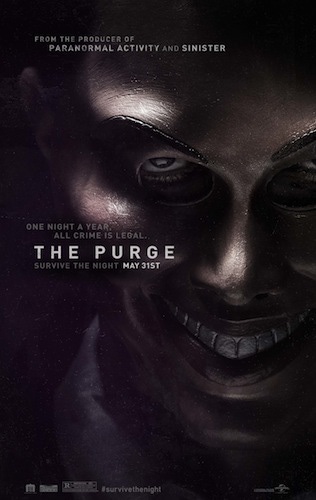 Sci-fi cautionary tales have been an outstanding way to provide commentary for contemporary anxiety. Rod Serling, Charles Beaumont, and the recently departed Richard Matheson were masters of this. A movie can make you think as speculative fiction while still following a thriller/horror blueprint to entertain the masses. And so writer/director James DeMonaco (Assault on Precinct 13, The Negotiator) wades into these waters with The Purge, a home invasion thriller that has a premise that, on the surface, might make you scoff. In 2022, the United States has practically solved unemployment and crime thanks to a nifty little holiday known as the Purge. Every year, for a twelve-hour window, law is rescinded and so are emergency services like police and firefighters. For those 12 hours, good American men and women are allowed to engage in just about every sort of crime up to and including murder. It’s designed for people to release all their aggression and darker impulses, thus allowing for a safer, happier 364 and a half days a year.
James Sandin (Ethan Hawke) is the top salesman when it comes to hardcore home security systems, the kind with the thick metal doors over your windows and doors. He lives in one of those finely protected homes with his wife, Mary (Lena Headey), and children, Max (Max Burkholder) and Zoey (Adelaide Kaine). They’re prepared for a long night behind barricades. Then a wounded black man (Edwin Hodge) runs through the cushy neighbor, crying desperately for help. Charlie offers him refuge inside the Sandin abode. Shortly after, a group of masked vigilantes, led by a lad who looks like Patrick Bateman, knock on the Sandin home. The bloody ma is their “bait,” and these angry folk demand he be returned to them, or else they will be coming in and sparing no one.
 This high-concept thriller is a well-crafted suspense piece, with several well-developed sequences that squeeze out tension. The premise involves some mighty suspension of disbelief but you’d be surprised how easy it is to accept and move on. The kids provide dissenting voices, mostly Charlie, and we get a lean history of the Purge and all the information we need to go forward, at least for this night. I liked how it’s become a common passing greeting to say “Stay safe” to people on the day before the Purge. Little details like that make the world feel more thought out. I like that engaging in the Purge is thought of as one’s patriotic duty. There are some tantalizing moments of dread as well, like a neighbor sharpening his killing tools outdoors. But really the movie comes down to its suspense, broken up into a series of different goals. James wants to protect his family and return the “bait,” but first he needs to find him and subdue him. Charlie wants to save him and get to him first. It’s your standard people-groping-in-the-dark kind of picture, but when given a strong sense of urgency and some good actors, it can be plenty suspenseful. DeMonaco does a fine job of making sure his story doesn’t get too confusing, tasking the audience with keeping track of too many participants. So when we have Zoey’s bad boyfriend (Tony Oller), he’s dealt with before the manhunt begins. When the home invasion kicks in, the manhunt is over. When it looks like Zoey is heading straight for the stranger, it’s a storyline that culminates very quickly. There’s a good sense of clarity throughout The Purge, which aids the effectiveness of the thrills.
For the first half of the movie, things snap together well enough that you just accept the premise and its implications, forgoing the nitpicks that wait. It isn’t until the third act where you start to disengage from the film and pick it apart. As a cautionary tale, it has some interesting ideas about class warfare; the main villain is right out of Ayn Rand’s Objectivist playbook. But the ideas and moral commentary fade as the movie becomes more a standard, albeit effective, suspense thriller. I really appreciated the argument that unemployment is so low because the Purge takes care of the sick, homeless, and poor and disadvantaged, those chiefly who cannot defend themselves and are easily targeted. It’s an eerie extreme that doesn’t feel too many steps removed from the last presidential election where Republican primary debate audiences cheered the hypothetical death of the poor. But then the nitpicks do come and once they do it’s like a rushing tide that cannot be stopped. Why do people have stockpiles of guns but no bulletproof vests and gear? Why wait for the bad guys to get in when you and your armed, well-defended family in your home fortress can preemptively strike? Why would you order the Sandin family to return your “bait” and then turn off their power? Doesn’t that make it much harder? Why would killing your girlfriend’s father win her over? Do you think she’s really still going to be your girlfriend after that? How big is this house that people get lost in it constantly? Who hides under the bed in this day and age? And, when hiding from intruders who wish to kill you, why in the world would you keep your flashlight on?
It’s late in this last act that the film tries to go one step too far. The home invasion commences, the struggles are pretty dandy to watch with some creepy imagery, and then DeMonaco has to go beyond that, introducing a secondary set of antagonists that at once feel obvious and poorly set up. The family asks, befuddled, why these new antagonists are doing what they’re doing, but they, and you, will not get a straight answer. It’s really designed to be shocking and little else, and so it feels tacked on and unnecessary. The last ten minutes of the film fumble the momentum of the movie. It’s a stumble at the finish line and leaves some lingering doubt as you assess the effectiveness of the whole movie.
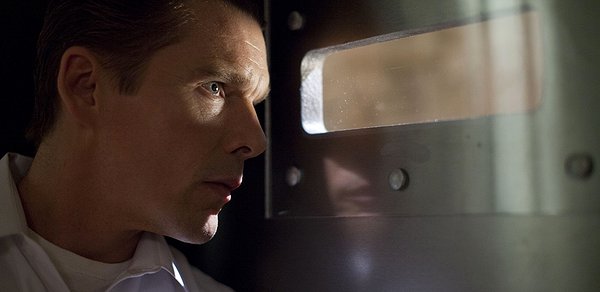 So the premise begs the question: what would you do with a lawless 12-hour window? I think most human beings would be too timid to embrace their animal side. Morals and ethics factor in, naturally, but really I think it’s just good old fear, the fear that anyone else can snuff you out with impunity, and engaging in the Purge also makes you a target. I think most people would probably try and engage in heists, but then the bank would be crawling with twenty different heist teams squabbling over who gets the loot. The banks would also surely increase their security astronomically.
The premise, while intriguing, also permeates with scads of ambiguity. Purge hours are from 7 PM to 7 AM, but what if you’re in the midst of committing a crime and go over the window? To use the bank robbery example, what if you get the money but fail to leave the bank by 7 AM, or even have? At that point, are you considered a criminal? Does the money go back to being counted as stolen goods or if it was pilfered during Purge hours it doesn’t count? Then there are the psychological ramifications of said Purge. If your neighbor raped your wife, Scott-free, you cannot tell me that vengeance isn’t going to play a key part in next year’s Purge. Seeing that face every day, acting “neighborly” while knowing what happened, plotting, waiting, and while the rapist neighbor prepares for the attack as well. Actually, that sounds like a pretty decent sequel (you can have that one for free, Blumhouse). How much Purge-related violence is just retaliatory vengeance? How do people stay in this country? If I as rich and could afford a super pricy security system, perhaps I’d rather take a weekend getaway to Canada instead. Or just stay for good.
The Purge is an effective little thriller until it isn’t, which thankfully only unravels in the concluding ten minutes or so. Until then, DeMonaco gooses his film with enough scares and thrills to justify a sitting, leaving an audience mostly satisfied until they exit and start to pick the film’s nature apart. I would have liked a bit more moral inquiry, political commentary, and some headier looks into these New Founding Fathers running the country, but I was satisfied with the suspense thriller I got. It’s modest, proficient, and well developed with its suspense, so I can’t be too picky. Then again, with this premise, The Purge could have been a lot more than what it is, a lot more disturbing and a lot more contemplative. But I’ll settle for effective and call it a day.
Nate’s Grade: B-
Share this:

White House Down (2013)
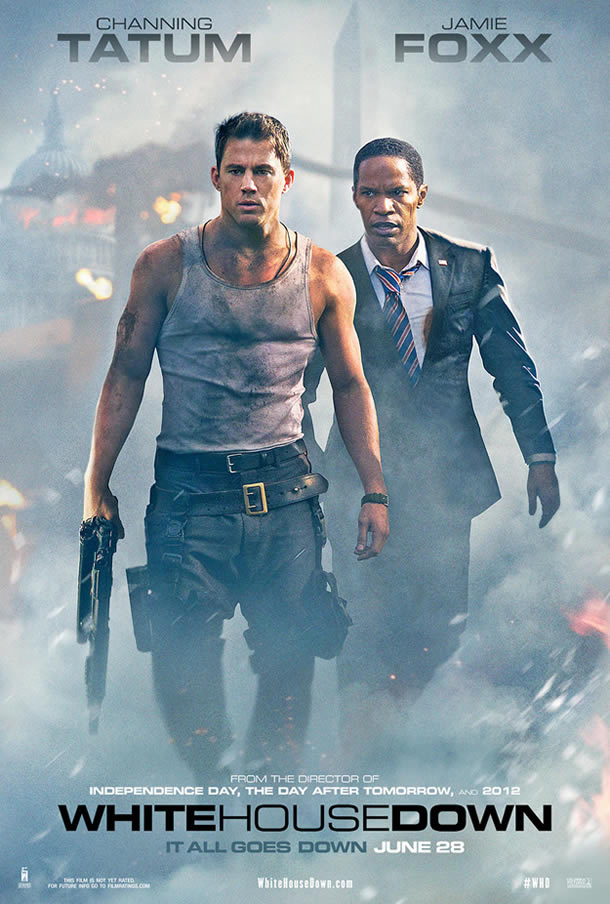 Director Roland Emmerich, the maestro of the dumb fun blockbuster, is never going to get the credit he deserves but the man is something of a mad genius when it comes to putting together spectacle-rich, low-calorie but still satisfying summer entertainment. Take White House Down, the second of 2013’s Die-Hard-in-the-White-House movies. It’s really more of a buddy film contained to that famous structure. It’s not a smart blockbuster by any means but it makes up for any and all flaws with its sheer overpowering sense of fun. Stuff gets blown up real good, the action is brisk, and there are satisfying payoffs for story elements that felt like they were, at first glance, merely thrown together. You may walk away surprised at how much you’re enjoying the comedic interplay between Secret Service agent Channing Tatum and president Jamie Foxx. Plus it’s fun to see the president in on the action instead of merely as a hostage, like the earlier Olympus Has Fallen. In direct comparison, I’d have to say White House Down is the better of the two movies, both in payoff and action. It’s nice to have a movie that’s just fun to watch, that goes about its blockbuster business with precision, supplying a few decent twists, and giving us heroes worth rooting for and action sequences that are well developed and that matter no matter how ridiculous. Emmerich movies are blissfully free of self-serious malarkey, though his weakest hit, 2004’s Day After Tomorrow, got a bit preachy. His movies know what they are and know the demands of an audience. What I needed this summer was a movie designed to make me cheer the impossible. White House Down is a romp.
Nate’s Grade: B+
Share this:

World War Z (2013)
 No movie this summer has had such a dark cloud of bad buzz like Brad Pitt’s World War Z. Based upon Max Brooks’ 2006 novel, it’s a global zombie action adventure that Pitt, as producer, has developed for years. He hired director Marc Forster (Finding Neverland, Monster’s Ball) and after a very protracted shoot, according to reports, neither was on speaking terms. A Vanity Fair article highlights the fascinating challenges World War Z endured, the biggest being a third act that, while filmed, did not work. The movie’s release date was pushed back twice, from summer 2012 to December 2012 to finally summer 2013. That sort of talk usually raises critic hackles, anticipating a bomb that all parties are trying their best to salvage some investment. It’s something of a small miracle then that the finished film actually kind of sort of mostly works. It still feels lacking and under developed but World War Z is not the fiasco many had feared.
Gerry Lane (Brad Pitt) is an ex U.N. inspector pulled back into the field to do nothing less than possibly save humanity from the undead. The world is under siege by a new sort of pandemic, one that reanimates the dead. Gerry and his family barely escape Philadelphia alive and find refuge on a U.S. aircraft carrier offshore. Gerry bids his family goodbye and zips around the globe looking for Patient Zero. If he can crack the mystery of how it all began perhaps mankind can develop a cure.
 For fans of the book, it’s best to come to terms with the fact that the only thing World War Z has in common with its source material is the fact that there are zombies. There is one reference to Israel’s response to zombie rumors, but that’s it. Believe me, I know the book is excellent but allow me to play devil’s advocate here. Would a strict adaptation of Brooks’ book work as a movie? Perhaps, but it takes place years after the titular World War Z. I understand the producers’ wishes to set the movie in the middle of the crises, adding urgency and an immediate sense of suspense. Once you go that route, there are certain limitations to your storytelling. Unless you were going to go the Crash-style ensemble route, you’re going to need a central character/hero to tie it all together, and that too limits your storytelling options. Gerry can hop around the globe but we’re still only following one man’s personal experiences. While in the air, we see in the distance below a mushroom cloud rising. Who detonated an atomic bomb and why? We never know, and it’s that sort of in-the-moment fog of war madness that helps the movie operate. I enjoyed watching the small moments of society breaking down. Factoring in all that, I’d say that the big-screen edition of Brooks’ book is a passable starter, an appetizer that gets you hungry for more.
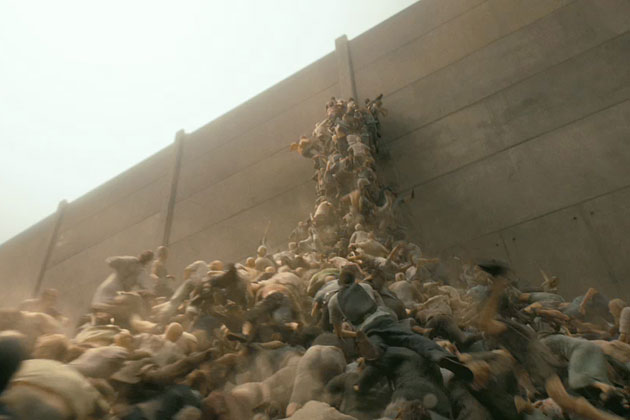
This movie is one of the first global-scale zombie outbreak films I can recall. Usually the zombie subgenre is told in confined spaces, remote locations, intimate settings. Danny Boyle had some larger London set pieces with 28 Days Later but that was still a film about dark corridors and small places. The scale of World War Z is what sets it apart. There is a degree of fascination watching the world come apart, and watching it fall apart in so many places adds to that. Gerry hops from one hotspot to the next in his quest and we watch as each new location goes to hell. It gives a greater sense to the dire threat out there. In the information age, and with Gerry’s U.N. connections, he can get global reports, and to learn that nowhere is safe helps maximize the pandemic threat and sense of urgency. I didn’t even mind Forster’s decision to present the teeming armies of the undead like there were a swarm of bees, rolling and tumbling over one another, forming formidable human pyramids. It’s a fairly spooky image and relates back to the nature-undone alchemy that makes zombies tick, plus it gives an extra sinister edge to the zombies. High-walled structures are not the sanctuaries we might have assumed. The true terror afforded by zombies, beyond the fact that the monster is us, is its inevitability; it doesn’t matter what you do, they will get you. There are more of them, and they don’t require food, water, sleep, and have only one goal. Adding to that sense of doom I think is a good move, and the raging sea of human bodies also helps Forster keep the PG-13 rating the studio dictated. I didn’t really miss the blood/gore, though one sequence where Gerry slices off a soldier’s infected arm seems a bit too clean and precise.
I criticized Forster’s skills directing action after 2008’s deeply disappointing Bond misfire, Quantum of Solace. The man showed no real feel for action sequences. Perhaps the man found a greater appeal to World War Z because there are some genuinely thrilling action and suspense sequences here and Forster deserves credit. The Israel sequence degenerates at a horrifying speed, and I loved the touch of caged passageways being erected through streets as a last-second defense from falling zombies. The initial stop in South Korea is at night and in the rain, thwarting Gerry and his team from seeing too far into the distance. It makes for a rather suspenseful sequence that makes good use of darkness and cover. The zombie actors in this movie deserve some recognition. They really get into all their clicks and clacks and add some creepy authenticity to the proceedings. Then there’s the airplane attack, zombies on a plane, that is all over the film’s advertising blitz. It’s a rather entertaining sequence, though one can’t help but provide some class subtext when the first class passengers barricade themselves while the coach passengers are torn apart. I still think Forster would be more at home with smaller dramas but he shows much more prowess for larger material.
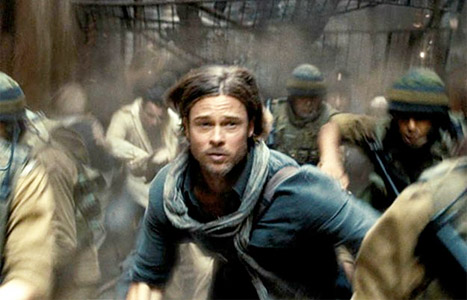 The reshot third act, thanks to added writers Damon Lindelof (TV’s Lost, Prometheus) and his pal Drew Goddard (The Cabin in the Woods), drastically scales down the scope of the pandemic. After two acts of all-out global chaos, we retreat back to the zombie film roots: a small, secluded place. The third act is almost like its own little separate movie. Partly because it’s something different, more horror/suspense than action, as well as being in the confined space, but also because Lindelof and Goddard do a fine job of structuring this concluding chapter. When Gerry gets to a World Health Organization outpost in Wales, he has a simple goal: get from one end of a lab to another. Oh, there are zombies all over the lab. Its narrative simplicity, as well as the clear focus, is a satisfying way to close out a movie that was sort of all over the place. Forster seems to really enjoy the suspense setups that he gets to have fun with in the third act, things like ducking around corners, avoiding zombie detection. The very end provides a ray of hope for humanity… until you fully think out what the consequences are for that hope (the first line of defense shall be hookers). Anyway, it sets up a sequel where mankind can begin fighting back. How do I know this? None other than Gerry’s closing lines are: “This is only the beginning. This war isn’t over.” A bit of hope on Pitt’s part as well there.
And yet with the world falling apart and Pitt our savior, I found myself from the outset very emotionally unengaged with the film. Pitt’s performance is perfectly suited for the material. It’s just the whole family man angle that doesn’t work. I understand it gives Gerry some personal stakes in doing his job but wouldn’t, I don’t know, saving the world be enough when it comes to motivation? It’s your standard reluctant hero’s tale, but the family stuff just kept dragging down Gerry’s character. To begin with, a man looking like Brad Pitt who voluntarily makes pancakes for his kids every morning… sounds like the stuff of fantasies for many. However, it almost keeps him away from his mission, the greater good, and there’s actually a sequence in South Korea where his family literally endangers Gerry’s life by making a phone call. Then the movie keeps cutting back to their existence on an aircraft carrier like I have equal interest in this storyline. One storyline involves Gerry flying the world over and escaping zombies. The other storyline involves whether Karin and the kids will be kicked off the ship. Which would you rather spend time with an as audience member? I didn’t really care about Gerry’s sad wife, played by Mireille Enos from the sad TV show The Killing. I had more invested in the Israeli soldier (Daniella Kerteesz) Gerry teams up with. My father even wanted them to run off together by the end and ditch Karin. I won’t even speak to the awkward storyline where Gerry’s family unofficially adopts a Hispanic kid after his parents die. If only those poor souls had listened to the knowledgeable white man who they took care of.
 The big-screen version of World War Z bears little resemblance to the book of the same name, and that’s okay. Some adjustments are necessary in adapting, like bringing the actions of the story into the present, centering on a major character. As a book fan, I was somewhat disappointed in the unfulfilled potential presented, but as a movie fan I’m more disappointed by the film’s overall execution. There’s a lot of money in this production, the most expensive zombie film of all time, and a lot of talent on both sides of the camera. And yet after even pulling off a mostly effective ending, World War Z is more middling than it ever should be. Brad Pitt is saving the world from zombies; that should be enough, but it’s not. The movie shows flashes of intelligence, of socio-politico commentary, of something greater, but those moments are fleeting and ground down to make way for a mass-appeal action blockbuster. There’s nothing wrong with those sorts of movies (Roland Emmerich does them exceptionally well), but World War Z doesn’t have the brain-headed flair to pull it off. It’s thrilling, in spurts, interesting, in spurts, and entertaining, in spurts, but it fails to coalesce into something truly worthwhile. My allegiance to the book, as well as zombies in general, guarantees I’ll be there for more if World War Z spawns sequels. Hopefully there will be more because there are so many great stories from the book yet to be told (namely, everything).
Nate’s Grade: B-
Share this:

After Earth (2013)
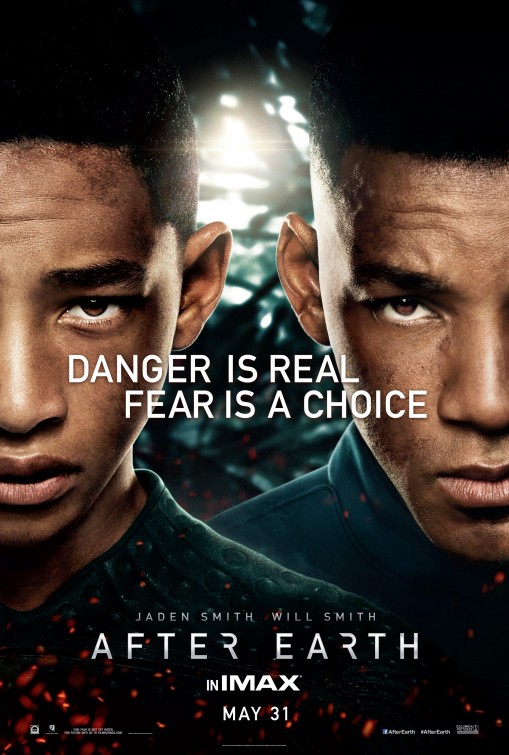 Rare is the movie that just seems to fail at every level of filmmaking, from writing to direction to pacing to casting to production design to logic to, well, you name it (perhaps the craft services were the exception to the rule). Director M. Night Shyamalan’s After Earth is one of those exceptional, big-budget passion project failures that just mystify on every account, making you scratch your head and wonder who could possibly be passionate about something this utterly terrible? I’m reminded of John Travolta’s 2000 sci-fi Scientology-ode, Battlefield Earth, for a comparison that comes close to approaching After Earth’s star-powered ineptitude (this movie also has plenty of vague Scientology references as well). While I doubt this will kill anyone’s careers associated, though it probably eliminates some good will for the Smith clan, it definitely piles more dirt on the grave that was Shyamalan’s film career. Enough preface, let’s get into the meat of why After Earth is one of the worst sci-fi films in years.
In a sloppy bit of exposition, we’re told that humans left planet Earth after we made it too unsustainable. The human race then colonized an alien world except that the indigenous aliens weren’t too happy about this. The aliens made a space monster, known as an Ursa, which would track and kill human beings by sniffing out their fear pheromones. Cypher Raige (Will Smith) rises in the ranks of the Ranger corps because he has the unique ability to “ghost.” Because the man does not register fear he is able to sneak around the Ursa as if invisible. His relationship with his teenage son, Kitai (Jaden Smith), is strained at best. Dad has been gone a long time and has high standards for his boy; the kid has to refer to him as “sir” even at the dinner table. Father and son are traveling through space when their ship crash-lands on good old Earth. Cypher’s legs are broken and he entrusts his son to make the trek to send out the distress call. The dangers of Earth, we’re told, have only magnified since humans left, and the Ursa onboard their ship has escaped.
Oh boy, where to even start with this one?
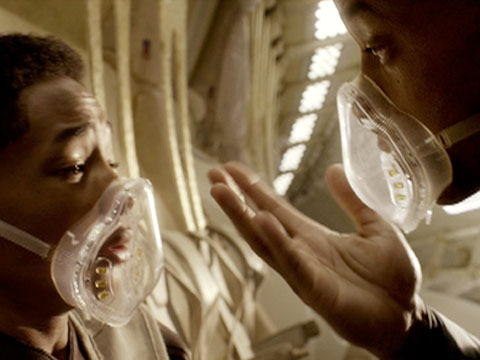 I’ve got a great idea, let’s take one of the world’s most charismatic actors and then turn him into a stone-faced hardass, terse with words of encouragement, and mostly sidelined so that his son can go on his stupid hero’s journey. I suppose Smith deserves some credit for stepping outside his comfort zone to play against type, but that praise only matters when the portrayal works. Smith is arguably miscast in his own passion project. That’s because this was really a $130 million dollar birthday present to his son, trying to use dad’s star power to establish Jaden as a star. It’s less a movie and more like a product launch. On its face, I don’t really have an issue with this. Nepotism has been alive and well in Hollywood for over 100 years and those in power have been producing vanity vehicles for their beloved for even longer. What I chafe at is that the finished product is so lacking and unconvincing. Jaden was cute in 2010’s The Karate Kid remake, a movie that was far better than it ever should have been. Unfortunately, After Earth came at that special time in his life known as puberty, so he gets his lanky, squeaky-voiced, awkward growth stage forever captured on film. Thus when he gets into a huff, squeals at his dad, and then become the world’s most improbable super warrior by film’s end, it mostly brings about snickers. You don’t buy a second of this character’s ascent to hero.
Let’s tackle the ultimate elephant in the room here, namely the involvement of Shyamalan. This is his first project he didn’t conceive; Smith himself came up with the story and personally hired Shyamalan. Who deserves more of the blame? There’s a reason why the marketing for After Earth has not breathed a word about Shyamalan’s involvement. In my theater, when the end credits appeared and it opened with Shyamalan’s director credit, the guy behind me remarked, “Well, that figures.” His sense of dissatisfaction now had a tangible culprit. It’s almost become a joke how much of a critical punching bag Shyamalan has become as a filmmaker. The man has genuine talent but it’s five duds in a row (I am counting The Village) and not even the world’s most bankable star could have saved this movie. As anyone who witnessed the atrocious Last Airbender can attest, Shyamalan is not a filmmaker who works well with a big special effects canvas. I’d suggest that Shyamalan, besides taking some time off, which may be a self-prescribed death sentence in Hollywood, find a smaller project to foster, perhaps something more personal and intimate. Nobody except the sadistic enjoys watching once-promising talents keep hitting a brick wall. Then again, people also dislike having to pay for terrible movies, especially when the director of said terrible movies keeps getting the opportunity to deliver more disappointment.
The plot, which Shyamalan is credited as a co-writer for, is so dull that I found myself almost falling asleep. You would think father and son surviving crash on a hostile alien world would be packed with survival thrills and excitement. You’d be wrong. It’s as if Shyamalan takes a page from Smith’s ranger character, and just goes about its business in the most thankless, ho-hum, undeterred manner. When we have characters that don’t react to the danger they’re in it has the misfortune of feeling less real, less urgent, and less dangerous. This was a problem with The Matrix films when Neo became a super being because then the stakes evaporated. It’s hard to sympathize with characters that don’t reflect the reality of their setting. With that said, so much of this script is just Kitai running off and running into different animals. He meets baboons. He meets a tiger. He meets an eagle. He meets a slug. Scintillating stuff. Such ambition. If this is what the execution was going to be like, why didn’t Smith and Shyamalan just make the planet an actual alien world? It would certainly open up the storytelling options. Or they could have gone in the opposite direction, setting this survival tale on a modern Earth. That would probably have made it much more relatable and resonant and also far cheaper.
 The character back-story is also woefully familiar and just as ineffective. Before it even happened, I knew that there would have to be some tragic personal history so that Kitai could overcome his past. We’re given some cringe-worthy moments of flashbacks to the family’s happier times, when Kitai’s older sister Senshi (Zoe Kravitz) was still alive. It’s a plodding and contrived plot device for the father to preposterously blame his son for, who was like seven years old at the time. I kid you not, during one of these oh-so-necessary flashbacks, Senshi tells dad she got a copy of Moby Dick and a boy let her hold it. Dad doesn’t get it, though I don’t know if this is meant to be some lame sex joke. This back-story is ladled in with no real logical connection to events. All of a sudden, Cypher will be thinking about his broken leg and then, whoosh, we’re thinking about Moby Dick.
There’s also the issue of its tenuous grasp on reality. I know this quality is a give-and-take depending upon the tone of the sci-fi film, but After Earth is so drearily self-serious that it becomes even more unbearable when it so clearly conflicts with credulity. This movie’s big message that it pounds into your head repeatedly is that fear is a choice, fear is not real, and that fear is a hindrance for mankind’s progress. This is nonsense. Fear is what kept our ancestors alive rather than trying to play with larger predators. Fearlessness is a great way for your species to end. You know an animal without fear? Lemmings. The fact that the movie has to literalize this conflict in the form of a fear-smelling alien monster is just beyond absurd. Let’s keep this literalizing-of-theme going; maybe next the aliens will fashion a monster that smells intolerance or illiteracy. Why are these aliens even genetically creating a monster to do their dirty work? If they have the superior scientific prowess to create a gnarly beast, I’m pretty sure they can take care of mankind. On top of this assertion, why would you make a beast that is effectively blind and only reliant upon one sense and then you limit that one sense to “fear”? Why not just have the alien monster smell human beings? That seems to make a lot more sense.
What also buggers my mind is the fact that, according to After Earth, everything on the planet has evolved to kill humans. First, I don’t think substantial leaps in evolution work in meager thousand-year spans; secondly, these evolved creatures are really just slightly larger versions of familiar animals, which doesn’t really make much sense either; and lastly, if humans have been off planet for a thousand years, how did these animals evolve to kill something they no longer have any interaction with? Then there’s the fact that the Earth drops rapidly into freezing temperatures overnight, for no good reason. How do all those plants survive? As an extension, Kitai’s super suit is just a prime example of a poorly developed idea that just as easily could have been abandoned. He has a special leotard that changes to his environment. We’ll watch it change colors though we’re never given any worthwhile reason why this is happening. However, Kitai’s suit will not shield him from Earth’s sudden temperature drops. So he’s wearing this super suit that adjusts to his environment… except temperature? If you’re going to present something all super scientific and then give it such obvious limitations, then you never should have introduced it in the first place. This is an ongoing theme with the film.
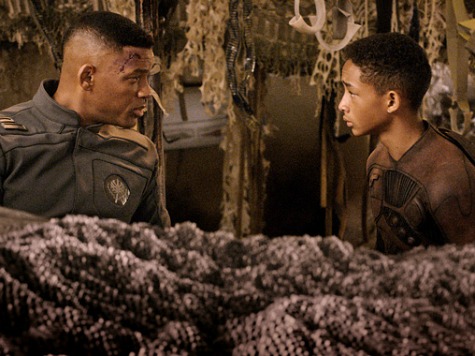 Then there are just nit-picky things like my total distaste for the production design of this movie. The spaceships look so chintzy. They have plastic flaps separating sections, like what you’d see in an office building when there’s construction. The spaceship interiors, as well as home interiors, also look like some bizarre mix of honeycomb and bamboo. I’m all for thinking outside the box when it comes to futuristic design, but this is just stupid. One of the great possibilities of sci-fi is to capture our imagination with out-of-this-world visuals, the unfamiliar, the spectacle of the alien. If your spectacle is good enough, it can even save a so-so movie, like last year’s Prometheus. Being stuck on Earth, only slightly different, emphasis on slightly, fails to deliver anything visually that will captivate an audience too often settling into boredom. Apparently After Earth looks pretty much like Earth except for Mount Doom popping up. The special effects are also lackluster and the score by James Newton Howard will try and trick you at every turn into thinking what’s happening onscreen is a lot more interesting than it is.
If you value your entertainment, please ignore After Earth. It doesn’t even work from a derisive enjoyment angle. The movie is lethargic and unimaginative to its core. It’s predictable at every turn and underwhelming throughout. The plot consists of the most boring father-son team in recent memory and a hero’s journey that feels false at every step. This big-budget star vehicle doesn’t work when its star doesn’t have the intangibles to be a star, nor does it help when the story is so poorly developed. The science feels boneheaded, the characters are dreary, the pacing sluggish, the spectacle clipped, and the world building to be bland. The shame is that this premise, even this exact same premise on a future Earth, could have easily worked as a suspense thriller. Smith seemed more interested in building an After Earth enterprise, since companion books were commissioned, and extending the reach of the Smith family empire. Making a good movie, it seems, was secondary. Being fearless also has its disadvantages.
Nate’s Grade: D
Share this:

Now You See Me (2013)
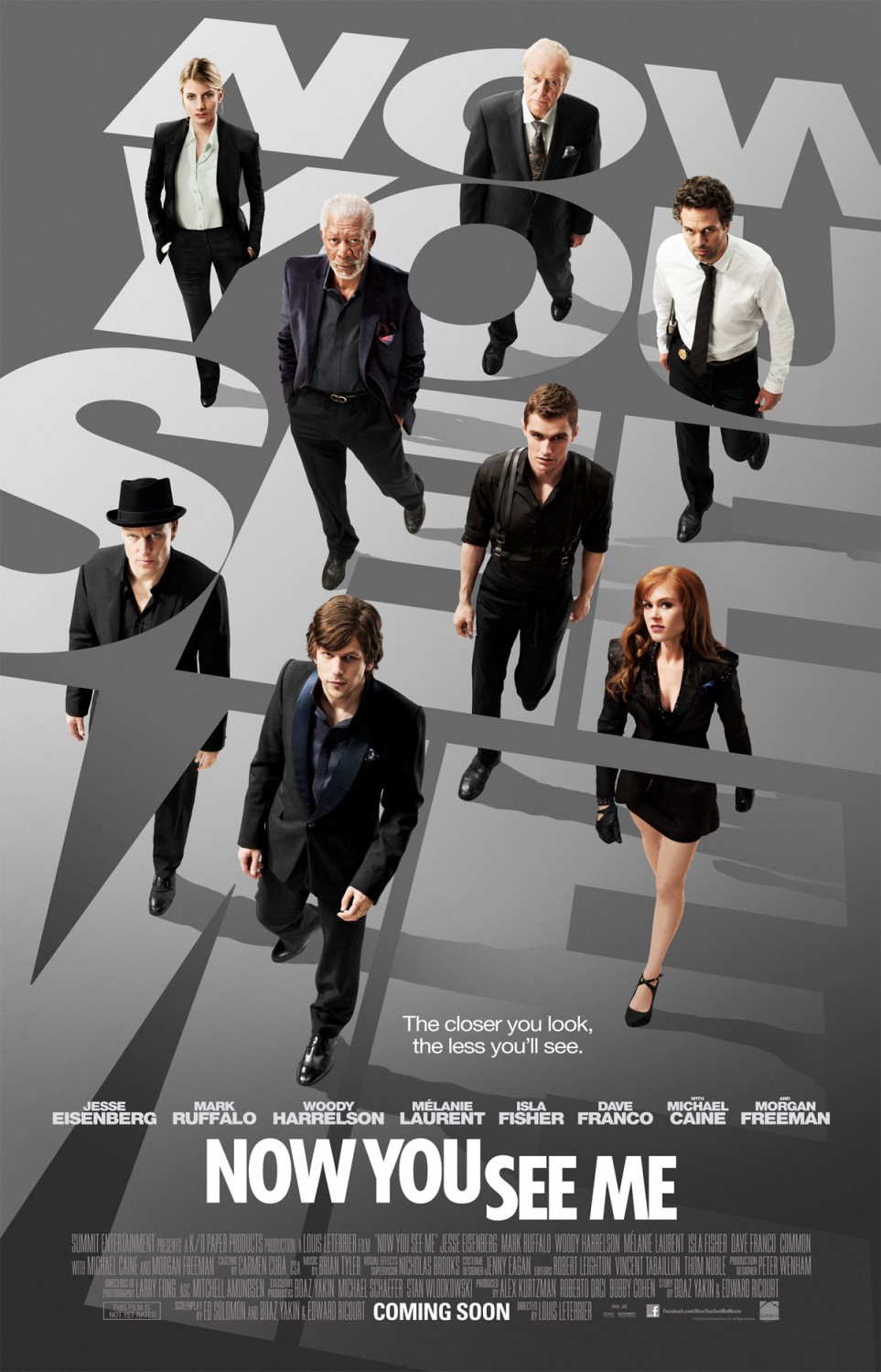 Everybody loves magic, right? At least the prospect of being surprised and delighted. Now You See Me takes something everybody loves (magic) and mixes it with a genre everybody loves (heist movie) and has already profited from the results at the box-office. Mix an ensemble of actors, though all of them white, and look over in this direction for a diverting, entertaining, and ultimately frustrating film that is too breezy to hate.
Four different magicians (Jesse Eisenberg, Woody Harrelson, Isla Fisher, Dave Franco) have teamed up to form a super team, The Horsemen, and they’ve taken Vegas by storm. A year into their reign, the insurance magnet and casino owner, Arthur Tressler (Michael Caine), is sitting pretty with his investment until the Horsemen turn their targets on him. With each new fantastic trick, the quartet fleeces the shady businessman of his money, returning it to wronged parties and the public at large. FBI Agent Dylan Rhodes (Mark Ruffalo) and Interpol Agent Alma Dray (Melanie Laurent) are tasked with finding the magical fugitives and figuring out their greater scheme. Just as one of the magicians notes, every time they think they’re one step ahead, they’re actually three behind.
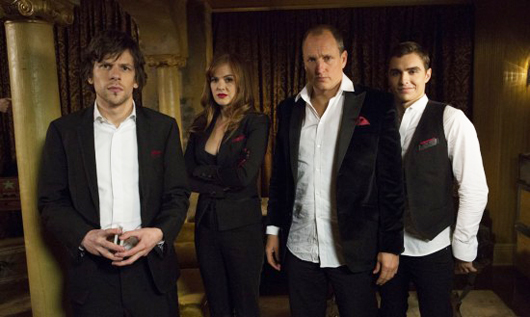 Let’s begin by admitting that the premise of a group of magicians performing heists is excellent. Seriously, on that alone I’d be hooked. Wouldn’t an Ocean’s 11-style movie about a group of magicians working a big score just be awesome? There’s so much fun to be had with such a breezy premise and for the most part Now You See Me lives up to its breezy potential. It works in segments, presenting a magical set piece, watching it unfold, and then unpacking it, sort of like a reverse heist sequence. It provides a bite-size moment of satisfaction, and then the movie goes off and repeats the process. The Horsemen elude the police and we start to get a broader sense of their aims, namely a slice of class warfare vigilante justice. There’s a genuine thrill to watching smart, talented types outfox their antagonists, and Now You See Me is no different. Under Louis Leterrier’s (Clash of the Titans) direction, the results are fast-paced, constantly shifting and surprising, and so cheery in tone that it’s hard to fault the movie for its lack of substance. Here is an example of a summer movie that’s just fun to watch. It taps into the desire we all have to be fooled, the same willful disbelief we process when watching magic or movies themselves, the modern artistic equivalent of magic. For a solid hour-plus, Now You See Me is a diverting and entertaining action thriller.
There are only a handful of traditional action sequences in the movie as most of the thrills are comprised of the illusions and some foot chases. I do want to single out a great moment, namely a magic fight where Jack Wilder (Franco) runs al over an apartment subduing police officers with magic. At first he relies on stealth to get the drop on them, but then the guy resorts to what is practically magic kung fu, using his sleight-of-hand to disarm his attackers. He then uses playing cards and flash paper at his disposal. I only wish that Rhodes, Wilder’s main adversary in the scene, tried to fight fire with fire, so to speak, and make use of the magical accessories in comical matters. The scene’s imagination reminded me of the final confrontation in Who Framed Roger Rabbit? where a selection of toon-specific tools were brought back for a unique showdown.
But with most magic acts, the good times start to fade once you find out how the trick is done. What hampers Now You See Me from being a stronger movie is a convoluted third act that goes to great preposterous lengths to explain the source behind the Horsemen. It’s pretty much who you’d assume it would be but I’ll still refrain from spoilers. Suffice to say, it’s an ending that doesn’t really work especially since it’s one of those reveals that makes you think back and question ordinary scenes. The movie muffs the landing, relying on twists to satisfy what was really just a high-concept heist movie. Another issue I had with the film is how quickly it marginalizes our would-be Robin Hoods of magic. After about the 45-minute mark, the Horsemen get sidelined as supporting characters and the movie is almost entirely told from the perspective of Rhodes. I understand there’s got to be some narrative discipline so that we don’t know the protagonists’ tricks before they perform them, but if I’m going to stuck with the dogged cop then make it his movie from the start. Compounding this problem is that the Horsemen, through no fault of the actors, barely register as characters. The actors are given one-note, and in the case of Fisher (The Great Gatsby) it was Woman, and that’s it. We see them as they perform their tricks and their daring escapes, but that doesn’t count as character development. In this regard, it’s less bothersome that these poorly conceived people get sidelined but then you stop and think that the only character you actually feel some interest in is Laurent’s Interpol agent.
 My suggestion for any possible future installments (Now You See Me Again? Now You Don’t?) is to focus more on our core team of magicians rather than their mysterious benefactor. I would also stress less time spent talking about The Eye of Horus or whatever through-the-centuries secret club of magicians the film was hinting at. I liked that, while completely elaborate and with endless fortune in preparation, that the illusions still had some tenuous foot in reality, that the magic tricks could be done in a somewhat recognizable world of ours (ignore the hologram junk). I strongly feel that even hinting about secret magical orders is just a step too far, breaking the film’s credulity, and taking what was fun and making it silly. I was worried before seeing the movie that the magic, as advertised, was going to be too supernatural. I was relieved that there wasn’t going to be a late reveal where some character rolls their eyes, probably Eisenberg, sand says, “Well, yeah, magic is real. Stupid.” When you’re playing around with larger-than-life figures that deal in theatricality and misdirection, I think it’s paramount not to get too carried away, failing to ground your movie for the audience.
If you’re looking for a fun time out at the movies, Now You See Me will serve its purpose well enough until it begins to fall apart by the end. You may find yourself looking back and the earlier mystery and thrill of the unknown will dissipate upon reflection, leaving you with little. It’s fun while it lasts but when it’s all over you’re left with substandard characters and an overly convoluted plot that doesn’t satisfy in the clinch. Magicians-plan-heist is such a juicy premise that I hope someone else makes better use of it. I would still love to see that movie, only well developed and giving me characters to actually care about. Now You See Me is as substantial as a magic trick itself but it’s an inoffensive, carefree, and mostly fun ride at the movies, though I think so much more could have been done with this concept and this budget. For a $75 million dollar magic trick, I want a better result.
Nate’s Grade: B-
Share this:

The Iceman (2013)
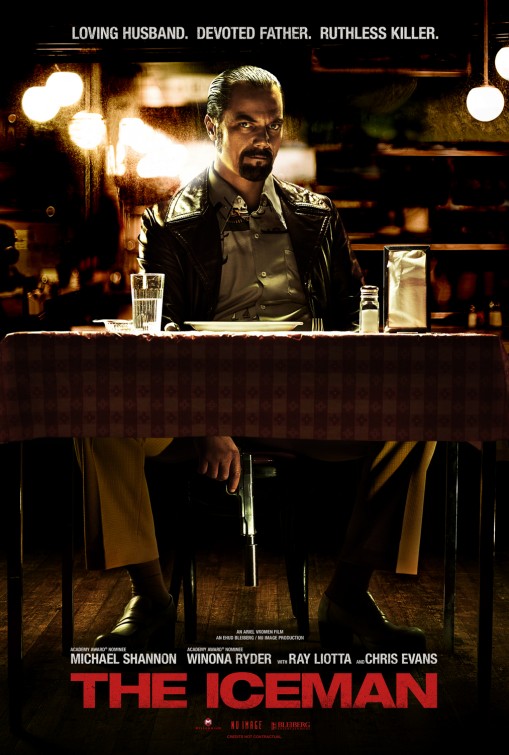 We’re fascinated by hired killers. Chalk it up to morbid curiosity or perhaps perverse, secret wish fulfillment, but we’re all titillated a tad by the murderous for hire. The Iceman is all about Richard Kuklinski (Michael Shannon), who worked as a contract killer for the mob from 1966 to 1988. He’s estimated to have killed over 100 people. A mob middleman (Ray Liotta) is impressed that Kuklinski shows no fear with a gun in his face, and so the guy gets hired to rack up the bodies. At the same time, Kuklinski has a wife (Winona Ryder) and two daughters, all of whom have no clue what daddy does for a living until he’s finally brought to justice.
The main issue at play with The Iceman is that it’s trying to draw out a character study for a rather impenetrable person. It’s hard to get a solid read on the character of Richard Kuklinski. The compartmentalizing of these two very distinct lives is a fascinating psychology to explore, one I wish the filmmakers had spent a majority of the screen time upon. The internal justifications, struggles and compromises would make for an excellent and insightful look into the psychology of killer rationalization. However, I don’t know if this movie would even be possible from this subject. Kuklinski is by all accounts a pretty detached guy. There just doesn’t seem like there’s a lot to him. His circumstances are interesting, beaten into an emotionless cipher by his father, brother to a fellow sociopath, and trying to make a reasonable life for himself while keeping his inner urges at bay. The sociopath-tries-to-make-good storyline is reminiscent to fans of TV’s Dexter, and there’s plenty of room to work there. It’s an intriguing contradiction, the man who cares for so little protecting his family. In the end, we don’t really get a sense of why beyond the illusion of the American Family that Kuklinski wants to hold onto, to make himself seem normal, to prove to his family he could break free from their influence. Even typing this I feel like I’m giving the film more depth than it actually illustrates. Even though he tries to play the part of devoted family man, we rarely see any evidence of devotion. He provides, yes, puts his kids in private school, but he puts his family at risk and doesn’t seem to have affection for them as much as propriety. They are his things and nobody will mess with them. Your guess is as good as mine if he genuinely loves any of them.
 Too much of the film gets mired in standard mob clichés. This guy upsets that guy; this guy wants the other guy dead. It all becomes the focal point of the movie, Kuklinski getting caught up in, essentially, office politics. Even the true-life details of the grisly methods of death feel like wasted potential for a better story. He goes on a job, he botches a job, he gets let go, so to speak, he strikes up a new partnership with another contract killer, Mr. Freezy (Chris Evans in a bad wig). That last part could have been a movie unto itself, watching an odd couple of hitmen plan, execute, and then dispose of their targets. The Iceman nickname comes from their process, freezing the dismembered corpses for months so that coroners cannot get a read on when the bodies were slain. While Evans is entertaining, this entire portion of the movie could have been eliminated, its bearing on the plot minimal. Likewise, the movie has several small roles populated by recognizable actors, which become a series of one-scene distractions. Kuklinski goes out on a hit and it’s… James Franco. Then there’s Friends actor David Schwimmer as a sleazy, ponytailed, nebbish mob screw-up. Stephen Dorff has one moment as Kuklinski’s angry, desperate, murderous brother in prison. The actors are all fine, with the exception of Franco, but many of them are just another reminder of the film’s disjointed attention.
I mentioned in Pain and Gain the notion of portraying true-life criminals as sympathetic figures, and the queasy nature of this complicit interpretation. The Iceman never really tries to make Kuklinski sympathetic or some form of an antihero, and I think the movie is better for it. One of the earliest moments in the film is Kuklinski slitting the throat of a guy who harassed him and defamed his lady. This is BEFORE the guy is even hired as a contract killer too. It seems like when the guy can’t murder he becomes a worse family man. Even in the end, he’s testing a new batch of cyanide on the neighborhood cat. The movie presents Kuklinski as he is, though you’ll be forgiven for feeling some initial pings of sympathy when you seem him try and protect his family. Granted his family could also very well use protection from him.
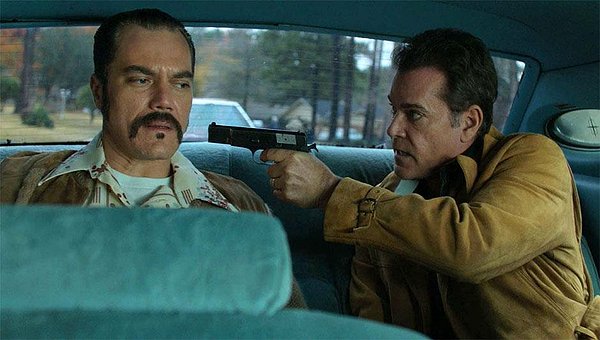 Shannon’s (Premium Rush) performance is what keeps you watching. There are few actors who are as intense as this guy, though I’m used to seeing him play unhinged psychos bouncing off the walls. Kuklinski is just as troubled as his other roles but he’s all reserve, steely nerves, and anger that eventually bubbles over into violent rage. Shannon is still such a good actor that even with a thin character, or at least thin characterization, he can be completely compelling to watch onscreen. One of the more peculiar, inconsistent elements of the film is Shannon’s constantly-changing facial hair. I think I lost count at about nine or ten different facial topiary variations. There were times where it will be different in consecutive scenes. I guess that’s a tipoff of a time jump, but his morphing, period-appropriate facial hair also became a point of amusement.
What makes The Iceman so disappointing in retrospect is how much potential it seems to squander. There’s a great story to be had with a contract killer by night and a family man by day. That contradiction, the struggle, the psychology is all rich material to work with. It’s just that Kuklinski is not necessarily that guy; he’s not too deep, at least not in this version, and his killer work problems are just not that compelling. If this is what the filmmakers were going to do with their real-life subject, then they might as well have just used Kuklinski as inspiration. Take the best parts and then compose a different lead character, someone more emotionally transparent or relatable or just plain old interesting. Just because it’s a real story doesn’t mean you’re indebted to telling every true facet of it, especially when a better story is within sight. Shannon is a terrific actor and does his best to make the film worth watching, but from distracted plotting to unmet analysis and emotional exploration, it’s hard to walk away from The Iceman and not feel a bit chilly.
Nate’s Grade: C+
Share this:

House at the End of the Street (2012)
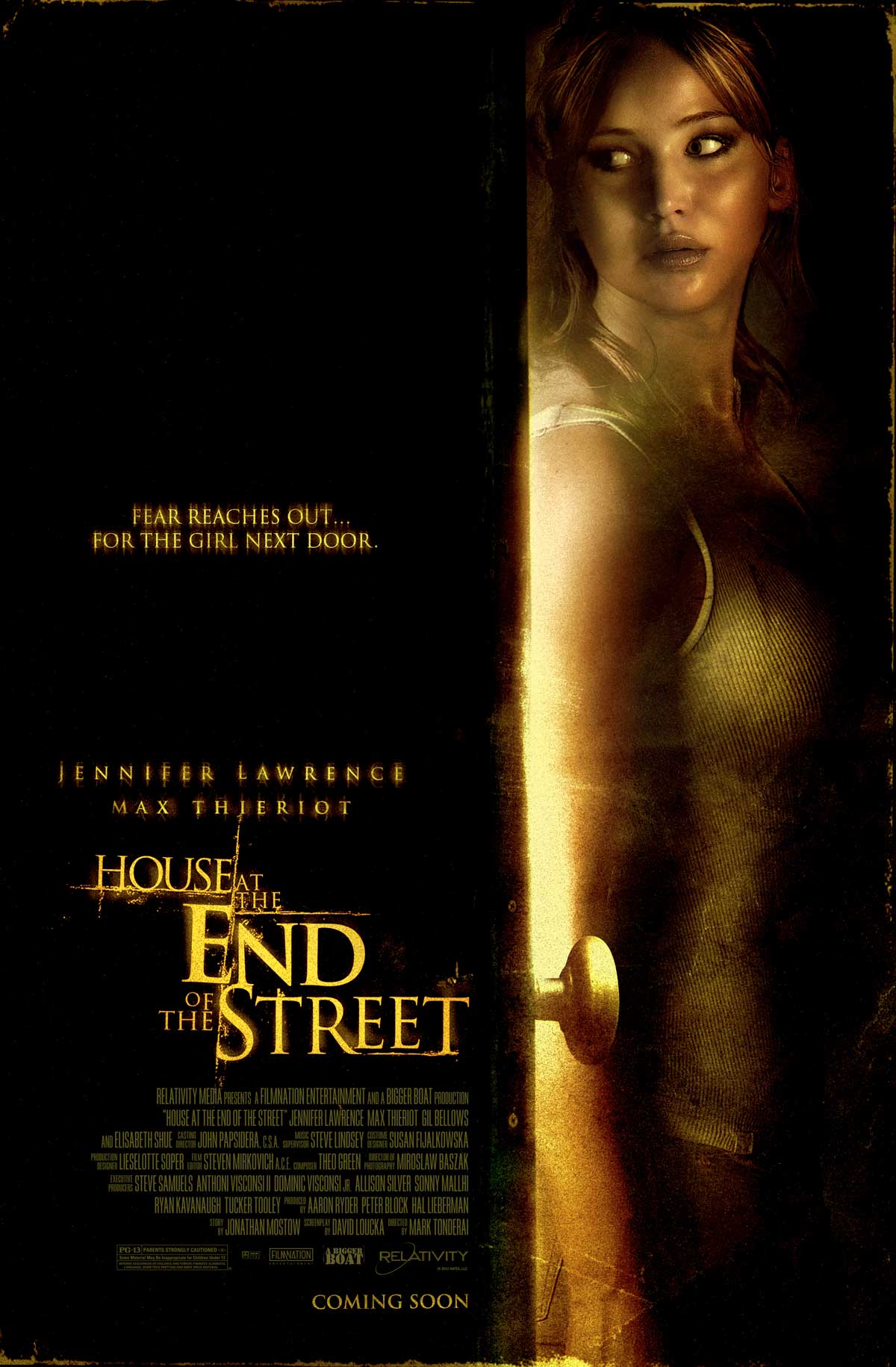 As readers will attest, I am a fan of actress Jennifer Lawrence. Some of my pals might say limiting the word to “fan” is being too modest on my part, but I don’t want to alarm anyone. I think she’s a terrifically talented actress and her Best Actress Oscar was well deserved for a film I unabashedly adore. With all of this being said, good actors can still make really bad movies, and that’s what we have with the stillborn horror flick, House at the End of the Street, referred to by marketing by the Twitter-friendly acronym HATES. That seemed like a tip-off, didn’t it? The problem is that for a good hour this movie is more of a drama than a horror movie, and everyone in town seems to be jerks to this guy in town whose sister murdered his family. Apparently him still residing in town lowers their property values… for some reason. I think it wants to be a psychological thriller, but even giving it that much credit assumes there’s some degree of competent execution. It’s not scary, the twists should be easily telegraphed to anyone with a modicum of sense, and Lawrence’s presence is just downright questionable. Why did she agree to do this? What about this clunky script, with its obvious padding to its “shocking” revelation, appealed to this woman? I suppose with her fast ascent to the top of Hollywood, Lawrence now has the clout to never again star in something as drecky as this would-be thriller. Then again, if she does, it’ll be by choice. Or a fat paycheck.
Nate’s Grade: C-
Share this:

Trance (2013)
 Danny Boyle is a director that can make anything watchable. The man made an entire movie about a dude trapped under a rock and it was spellbinding. With that in mind, he does his very best to turn the trippy, Inception-like crime thriller Trance into a workable, watchable experience for the audience. The main issue is that the movie is so busy that once it slows down you realize there really isn’t anything going on. James McAvoy plays an art auctioneer who stashed a valuable painting during a heist. He undergoes hypnotherapy by Rosario Dawson so the crooks can determine where the loot resides. The premise allows for plenty of fake-outs, and you’ll be conditioned to doubt just about everything you see on screen. The film does a nice job of applying that doubt to the characters as well; the good guys may not be so good and the bad guys may not be so bad. With Boyle’s hyperkinetic visuals and some fast-paced editing, Trance is serviceable in the moment, but when the characters literally spell out everything you realize how shallow the movie is as well as these characters. The lone truly memorable moment is a scene where Dawson jets off to a bathroom, we hear an electronic buzzing, and she comes out fully nude, presenting herself as a shaven offering. The fact that this relates to an actual plot point is practically incidental. The movie isn’t as smart or as fun or as entertaining as it thinks it is, and I wish Boyle had taken advantage of dream/mind mechanics and gone crazier with his visuals. Still, if you’ve got a couple hours, some low expectations, it’s worth at least one watch.
Nate’s Grade: B-
Share this:

Olympus Has Fallen (2013)
 Remember in the late 90s when studios seemed to develop similar projects every few months? In 1997, we had two volcano movies (Volcano, Dante’s Peak), and in 1998 we had two animated bug films (Antz, A Bug’s Life) and two asteroid action flicks (Deep Impact, Armageddon). With the wealth of unproduced screenplays, there’s definite merit to different writers coming up with similar concepts independent of one another. Now in 2013 we have two action movies that, boiled down, are essentially Die Hard in the White House. The first out of the gate, Olympus Has Fallen, is an entertaining action vehicle that reminds me of the 90s Jerry Bruckheimer era of big explosions, big body counts, and irony-free pleasures.
Mike Banning (Gerard Butler) is a top Secret Service agent still reeling from his inability to save the President (Aaron Eckhart)’s wife (Ashley Judd) in a freak accident. He now provides security at the nearby Treasury Department, the President afraid to see Mike’s face and be reminded of his loss. Then one sunny day, a cargo plane fires on D.C. citizens, armed terrorists assault the White House, and North Korean nationalist Yang (Rick Yune) has taken the President and his cabinet members hostage. The Speaker of the House, Trumbull (Morgan Freeman), has ascended to America’s Commander in Chief and he has to navigate tricky issues like how to save the president. Luckily, they have a man on the inside. During the firefight, Mike scrapped his way inside the White House. Now it’s one man versus a bevy of terrorists and nationalists.
 The overall execution reminds me of the heyday of mid 90s action cinema, with its mixture of the ridiculous played completely sincere. It doesn’t really matter that North Korean terrorists are able to take down the White House so easily. Sure we can nitpick the very prospect of a large foreign aircraft getting so close to D.C. before getting intercepted, and only with two fighters at that. But if you can tuck away that nagging voice reminding you of the implausible nature of everything, then Olympus Has Fallen is a serviceable action thriller. Every fifteen minutes or so our hero has a new mini-goal to accomplish. It keeps things fresh and holds your attention away from analyzing the sillier elements (Gatling guns atop the White House?). The debut script by screenwriters Creighton Rothenberger and Katrin Benedikt follows the Hollywood blockbuster blueprint down to the smallest detail. Of course there’s another blueprint it mirrors, namely that of Die Hard. Beyond the premise of one man left to his wits in a hostage standoff, there’s also the moment where the bad guy poses as a good guy to the ignorance of our hero, there’s the failed outside tactical use of force, and the bond forged between the man on the inside and the link outside, whom isn’t given the level of respect deserved. That’s not just an application of the Die Hard premise to a new setting (like Air Force One or Under Siege), but a sampling of the very plot beats from Die Hard. Then again if you’re going to steal then steal from the best.
There’s a certain throwback bravado vibe going on here that makes it all easier to swallow. It’s got big silly action sequences and some in-your-face jingoism (a character, when faced with the notion of execution, literally starts reciting the Pledge of Allegiance), enough that Michael Bay would be misty-eyed, but treating the subject matter with such thoughtless swagger makes the reality easier to accept. Having D.C. attacked, civilians mowed down, national monuments crumbled, and the White House in ashes, well you’d naturally think back to the very real horrors of 9/11, and you may shudder. By embracing the implausible nature of the action and achieving a tone that prioritizes popcorn thrills, Olympus Has Fallen dances around pitfalls of exploitation and simply becomes another big, dumb, but enjoyable action movie. I say this without a hint of derision or irony.
I haven’t been a fan of Antoine Fuqua as a director. He can compose a good looking movie, but Shooter, Tears of the Sun, and King Arthur were enough to convince me the man could not properly stage exciting action. I think perhaps the limitations of the setup brought out the best in him because there are some genuinely gripping action sequences on display here. Also, the man does a fine job of establishing the geography of his action and presenting a surprising variety. Fuqua, aided with the shifting script, makes sure that the audience never gets bored. Sure there are storylines that don’t exactly work, like Mike finding the First Son, a character never heard from again, but the movie keeps changing shape, getting bigger, and finding enough satisfying payoffs. This is an effective, serviceable “turn off your brain” action movie, and it does enough right that you don’t fret about turning that brain back on until the end credits. The R-rating also ups the ante, providing bloodier and brutal escalation to what should be life-and-death stakes. If you’re going to give me “Die Hard in a…” then you best make sure your movie doesn’t wuss out. You’ll recognize plenty of action movie tropes and clichés, but the action is worthwhile and the plot constantly moving that you simply don’t mind.
 It’s nice to see Butler (Playing for Keeps) find a role that plays to his, admittedly limited, strengths. His character is your standard tough guy with a tragic past, haunted by the life he couldn’t save, looking to make amends and forgive himself. It’s probably the fact that the role has so little to it that Butler is able to slide effortlessly into gruff action star mode, a preferential place (though I prefer the man to be bearded as well). The rest of the movie benefits from actors who are far better than the material: Freeman, Eckhart, Melissa Leo, Radha Mitchell, and Angela Bassett. They all provide better-than-average performances for this type of movie. Even Dylan McDermott (TV’s American Horror Story) gets room to shine. Rick Yune (Ninja Assassin, The Man with the Iron Fists) makes for a very sinister bad guy. The part is Generic Antagonist #301, but Yune finds fun ways to enjoy the menace, soak it up without hamming it up. He transforms a generic villain into a dude you want to see righteously toppled.
After last fall’s updated Red Dawn (scrubbed free of invading Chinese forces) and now this, I must ask if North Korea has become the go-to military enemy for American action movies. Olympus Has Fallen takes the added step of never having the government of North Korea involved or approve, like the terrorists are acting on their own. We wouldn’t want to upset the government of North Korea; that’s what Red Dawn is for. But does anyone really view North Korea as a credible military threat? They are seen as a rogue nation, yes, and they claim to have nuclear arms, so they should be taken seriously, but does anyone realistically think we’ll wake up tomorrow and be conquered by North Korea? I suppose this criticism lies more with Red Dawn than Olympus Has Fallen, a movie that only needs a handful of dedicated foot soldiers rather than an invading army. I also find it laughable that the only thing holding back North and South Korea from war, in this fictional scenario, is the presence of about 28,000 U.S. troops. Also, if these events played out as they do, who doesn’t think that the U.S. would respond with military action against North Korea? We started a war with Iraq and they weren’t even responsible for the actions of a handful of terrorists. I guess the North Koreans are the new Hollywood Boogeymen.
With a hook of a premise, some exciting action, and more than a few borrowed plot beats from Die Hard, it’s still a pleasant surprise at how entertaining Olympus Has Fallen works. It’s a movie that simply does enough right to justify watching. Its action is good enough, its plot is familiar enough but offers enough forward momentum, its actors are good enough, and it does enough right to quell potential boredom. I appreciated its throwback feel to the mid-90s action movie, a time of elevated popcorn thrills and powerful bravado, all without a hint of irony no matter how ridiculous things got. It lands on shakier ground when it tries to become a rah-rah kind of patriotic rally, but I’d be lying if I denied the certain pleasures of watching a Secret Service agent take out the bad guys on his turf. Time will tell how the second Die-Hard-in-the-White-House movie will fare, but if you’re looking for big and dumb but enjoyable, Olympus Has Fallen is like a summer popcorn film only in March.
Nate’s Grade: B
Share this:

The Impossible (2012)
 On December 26, 2004, an underwater earthquake triggered one of the deadliest tsunamis on record, devastating coastal cities along the Indian Ocean. Over 230,000 people are believed to have perished from the waves and resulting damage. The Impossible tells the harrowing and ultimately inspiring true-story of one family and their vacation from hell. We follow Marie (Naomi Watts) and Henry (Ewan McGregor) as well as their three sons, from oldest to youngest, Lucas (Tom Holland), Thomas (Samuel Joslin), and Simon (Oaklee Pendergast). They’re vacationing in Thailand for the holidays and then the tsunami hits, separating Marie and Lucas from the group. They are swept away by the punishing waves and Marie is badly hurt. Henry is desperately searching for his loved ones, Lucas is desperate to get his mother proper medical attention, and there are thousands just as desperate and just as in need.
It’s nigh impossible to watch this movie and be unmoved. It’s not very subtle when it comes to its themes and messages, but man is it ever effective. The family struggle could have easily descended into melodrama with a sappy, maudlin reunion, punctuated with swelling music to hit you over the head. It’s a fairly simple story with little to its plot. The family gets separated and then they desperately search for one another and, surprise, they reunite. It is after all based on a true story and they all lived, so there’s that. It’s the startling level of realism, the exceptional performances, and the poignant moments of human kindness and grace that suckered me in big time. I was an emotional wreck throughout this movie but in the best way possible. I cried at points, sure, but my tears and my emotions always felt genuinely earned. There’s no doubt that this is one manipulative movie. It knows what strings to pull, what buttons to push, and it does so with finesse. Last year I decried Extremely Loud & Incredibly Close for being overly manipulative and overdosing on false sentiment. However, with this movie, my investment was never in jeopardy. I was completely absorbed by the story and felt great empathy for the array of characters as they persevere. The horror of that 2004 tsunami is told in one small story, personalized, and giving an entry point for an audience to engage without feeling overwhelmed by the magnitude of destruction and death.
 Let me go into further detail about that wall of destruction, given astonishing, terrifying realism. The recreation of the tsunami ranks up there as one of the most frightening sequences I’ve ever seen in film. It’s a solid ten minutes of chaos, and you will feel the frenzy of that chaos. You’re put in the middle, floating along with mother and son as they helplessly try and cling to one another. The scope of the disaster will leave you gasping. I know they must have used sets and water tanks but I’m left stupefied how it all came together to look so seamless. It sounds macabre to compliment the marvelous recreation of mayhem, but director Juan Antonio Bayona (The Orphanage) and his team have turned disaster into world-class drama. It’s not just the powerful waves as well, there’s the field of debris just under the surface to contend with. When the first wave hits Maria, we experience her complete disorientation. The sights and sounds are blurs, the water oppressive, and the debris sudden, jolting, unforgiving. It’s the closest any person would ever truly want to get in the middle of a tsunami.
The majority of the film is about the family coming back together, and while their reunion is indeed a tearjerker, I found the film littered with many small moments that just soared emotionally. When a disaster of this magnitude hits, I’m always struck by the wealth of human kindness and cooperation that emerges in response. There’s something deeply moving about helping your fellow man in need, even if you cannot understand his or her language. Maria is aided by the Thai locals who do not treat her differently because she’s a white woman. She is just another person in need.
Whenever disaster strikes, we think of the people who plunge into the middle as heroes, but simple acts can be just as comforting and thoughtful. There are small moments of kindness, like lending a stranger your cell phone to call home, that speak volumes. In that one instance, Henry is so distraught, the weight of everything hitting him as he tries to put it into words, and his call is abrupt and somewhat incomprehensible thanks to his rising emotions. Henry is urged to call back, not to leave it at that, to leave his relatives dangling with such precious little and the alarm in his voice. So he’s given the phone again, and in a more measured demeanor, Henry is able to talk about the situation and promise to find his wife. It’s such an everyday gesture made invaluable to Henry. There’s a woman talking to Thomas about the stars in the sky, how we don’t know which are dead but they continue to live on, and the subtext is a bit obvious but it’s still heartfelt. Then there’s Lucas’ mission of organizing the triage center, scouring the grounds looking for missing family members. He takes it upon himself to make a difference rather than sitting idle. It’s that human connection in the face of adversity that proves most uplifting.
 Watts (J. Edgar) gives a performance of tremendous strength and fragility. The tenacity and resilience she has to keep pushing through is remarkable. She’s so strong but vulnerable at the same time, showing you the fine line she walks to stay above the fray for her child. She endures great physical trauma, a gnarly gash in her leg peeling off like tree bark. Then there’s the emotional burden of trying to be a mother to a child desperately in need of a sturdy parent. Watts could have readily played to the heights of the emotions, resorting to hysterics, but the quiet strength of her character makes her underplay the burdens she endures. She can’t simply just break down. You don’t get a true sense of the toll she has suffered until her life-and-death struggles at the very end.
The supporting team around Watts also deserves accolades. McGregor (Salmon Fishing in the Yemen) has several heartbreaking and heartwarming scenes, striving for hope. Lucas has to rise to maturity when his mother is wounded, protecting her, supporting her. Acting novice Holland rises to that challenge with great courage, though there are moments that still remind you he’s only a boy, like when he bashfully turns his back upon seeing his mother’s exposed breast. That awkward, indecisive moment where a young boy doesn’t know how to handle the sight, seeing his mother so exposed and vulnerable, is quite effective. The other actors who round out the family (Joslin and Pendergast) are quite superb as well. The family feels like a cohesive, loving unit, and every performance feels believable.
The Impossible is based upon the true experiences of a Spanish family, and yet the onscreen family we follow is white, so what gives? It’s not surprising for Hollywood to whitewash a story to appeal to a wider audience. Should we have any more sympathy for this family’s plight because they are white? Would we feel less if they were Spanish? I think the perils and victories would be the same regardless of language or ethnicity.
Watching the unflinching and stunning events in The Impossible, you will likely shed some tears, be they from horror, sadness, or happiness at the family’s reunion. While the ending is never in doubt, the movie has plenty of other potent and poignant small moments to keep your emotions safely stirred. It’s a visceral experience that will shock and exhilarate. There were moments where I felt like I had to cover my eyes. But The Impossible is not disaster porn, ogling over the suffering and endurance of the misfortunate. It’s as much about the response to tragedy as it is the wallop of that cruel tragedy in 2004. The perseverance, the open-hearted help of one’s fellow man, the strength of human connection, the long ripples of kindness, it all comes together to form one compelling, often moving, and quite memorable film experience. Add some formidable performances, top-notch direction, and tremendous technical achievement, and The Impossible is a rousing drama that speaks to the best of us even in the worst conditions (think of it as the antithesis of Ayn Rand’s philosophy). It may be manipulative, it may be somewhat straightforward, and it likely climaxes too soon, but when the results are this powerful and emotionally engaging, then I’m happy to have my buttons pushed.
Nate’s Grade: A-


You must be logged in to post a comment.