Blog Archives
Deepwater Horizon (2016)
 Peter Berg is becoming the go-to director for inspirational true-life thrillers following the heroic exploits of everyday Americans thrust into danger. It began with Lone Survivor, it will continue this year with the Boston bombing drama Patriot’s Day, and in between there is Deepwater Horizon about the oil rig drillers and the culminating explosion that lead to the worst environmental disaster in U.S. history. It’s a sober and reverent movie, with Berg and his screenwriters taking great care to educate the audience on the science of drilling, the technology, the geography of the floating rig, and just exactly why things went as badly as they did that fateful night. The windup lasts about half the movie but that’s because when the explosion hits there isn’t much plot left (the movie is barely 100 minutes). Deepwater Horizon becomes a full-tilt disaster movie by that point with Mark Wahlberg stalking hallways and looking for injured survivors. The tension prior to the blown pipeline can get genuinely powerful, and the action that follows is suitably rousing as the rig resembles a snapshot of hell. Flames and heat consume the rig and escape seems nigh impossible. The sound design is sensational. The characters are mostly stock roles, with Wahlberg as our blue-collar everyman, Kurt Russell as the irritable boss fighting for his workers, and John Malkovich as the villainous penny-pinching BP representative. Malkovich’s campy performance almost needs to be seen to be believed. It’s like he’s visiting from another planet, the garbled Cajun representative. The lack of politics and curiously narrow focus (nothing about Halliburton, nothing about BP consequences, no environmental effects) does hamper any greater impact the film could have had. It’s a respectful slice-of-life drama that humanizes some of the lives lost that day but only by keeping to formula and stock action character development. It’s like a Towering Inferno-style Hollywood disaster movie, except one that treats its subject with stiff-lipped seriousness. In this new docu-action sub-genre, Berg and Wahlberg are kings.
Nate’s Grade: B
Share this:

Sully (2016)
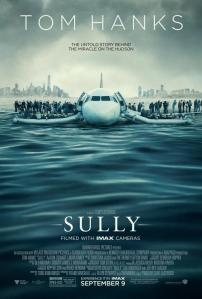 I think I had the same initial thought that most did when they saw the news that there was going to be a movie about the Miracle on the Hudson airline pilot: where exactly is the feature-length story? The flight itself lasted only about 200 seconds before landing on the river, and the sequence is thrillingly recreated and held off until halfway through the movie. The hero in the cockpit, Sully (Tom Hanks), is consumed with ensuring each and every last passenger is accounted for. When he gets the news that all survived, he can finally allow himself to breathe, to take in the full magnitude of the events, and it feels like a cleansing moment of deep emotional catharsis for him and the audience. But what’s the movie here? Apparently the NTSB and the airline insurance companies are disputing whether Sully could have safely landed the plane back at an airport instead. It’s exactly the kind of flimsy, manufactured conflict that sets itself up for moral grandstanding and a courtroom confrontation where our heroes will be vindicated, and we get all that. Sully’s unexpected spotlight wears on him as he feels like an ordinary citizen not worthy of the term “hero.” No other plane has successfully landed in water without a loss of life, so I’m sorry pal, but you’re a hero, even if you think you were just doing your job. Hanks is suitably low-key and humble and strong and emotionally resonant, though he was better on just about every front with Captain Phillips. The direction from Clint Eastwood is respectful without going into hagiography. The overall message is one of uplift, widening the focus from Sully to other heroes in New York City that day that came together to help others. It’s a moving message without having to resort to melodrama. At a mere 96 minutes, Sully gets you in and out and provides a solidly entertaining glimpse at the people who rose to the challenge when needed most. It’s a well-made movie that goes as far as it can without trying your patience.
Nate’s Grade: B+
Share this:

Blair Witch (2016)
 As is mandatory with all reviews, let us acknowledge the tremendous impact of the original Blair Witch Project, a full-borne cultural event that tapped into the zeitgeist. It was a rare indie movie that curated a must-see reputation and became a blockbuster. The found footage format was highly influential afterwards as were its low-fi thrills, community interactivity, viral marketing, and experimental construction. I remember having heated arguments with people about whether the movie was indeed real or a work of fiction. I pointed to the TV once and said, “Look, the actors are promoting it on MTV.” Naturally imitators followed suit and the studio looked to eagerly turn a curiosity into a franchise. 2000’s hasty sequel Book of Shadows was quickly rejected and just as quickly the Blair Witch phenomenon had slipped away. It remained dead until this summer. Director Adam Wingard (You’re Next, The Guest) and frequent screenwriting partner Simon Barrett had recently made a horror movie called The Woods, but at 2016’s Comicon the secrecy was finally dropped. It was a sequel to The Blair Witch Project, filmed in secret J.J. Abrams-style. It was a stunt that worked, and once again there was life in this franchise. This will only last until people see the new Blair Witch, a monotonous, confused jump-scare haven that’s too indebted to the original and discards anything interesting it stumbles onto.
Sixteen years after three backpackers went missing, footage has been posted that possibly shows one of these backpackers, Heather, still alive. James (James Allen McCune) is now an adult male and determined to find out if his sister is alive. Lisa (Callie Hernadez), a film student and maybe James girlfriend, tags along to record James’ hunt for the truth into her graduate thesis. Their friends (Corbin Reid, Brandan Scott) come along for the adventure into the woods, as well as a conspiracy couple (Wes Robinson, Valorie Curry) responsible for posting that new footage. The conspiracy couple leads them into the woods and it isn’t long before people get lost, tempers get heated, and strange disturbing noises materialize from the never-ending night.
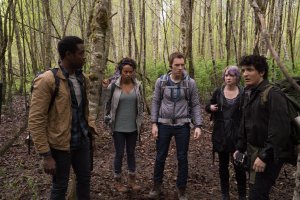 Much can be forgiven if a scary movie delivers the spine-tingling goods, and standing in the shadow of one of the biggest horror hits of all time is no easy proposition. It’s too bad then that Wingard’s Blair Witch is far more tedious than terrifying. I didn’t fall under the spell of the 1999 original but I could appreciate its slow-burn efforts and execution, which relied upon a lot of unsettling dread left to audience imagination. With the 2016 reboot, the filmmakers have upped the ante but don’t have patience. There are over six different jump scares, each punctuated by a loud, often shrill scream. At one point there are three in a row in a succession of mere minutes, enough so that a character provides a meta dose of commentary by saying in exasperation, “Why do people keep doing that?” Calling attention to the annoying trait doesn’t make it better. The sound design is also, in a word, amplified. It sounds like Bigfoot or a dinosaur is tearing through the woods and wrecking havoc. It was enough that I hoped the movie would just reveal the Blair Witch never existed and instead it was some other sizeable monster of legend. I’ll give Wingard credit for the found footage cinematography not being self-consciously overdone. The characters have an incredible stash of cameras, from GoPros to flying drone cameras, which makes the editing less choppy and the movie easier to watch.
There are exactly two scenes that unnerved me. One is the sheer numbers of an expected item upon waking up, the immense quantity and variation in size providing an eerie sight as it fills the screen. The other is a late sequence that involves squeezing in a tight space, which allows Wingard to employ some nice claustrophobic tension. Short of these two moments, and they are mere moments, the movie was boring me so profoundly that I considered just leaving, and I’ve never walked out on a movie before. It felt like it was going nowhere fast with characters I didn’t care about and without any relevant suspense. The found footage filming elements are even used to enhance the jump scares with sudden visual and sound glitches amplifying the tired attempts to constantly startle its audience. This is a movie more concerned with startling its audience than scaring it.
When the movie does start to tantalize your interest, it’s like a mirage that soon vanishes and you’re once again left in your dire predicament. Getting lost in the woods is not interesting minus interesting aspects. However, finding out that time is operating at a different level, now that’s interesting. The characters set their alarms for seven A.M. but it’s still dark out. The possibility of the Blair Witch manipulating time to trap hikers was the first moment in this entire movie that made me sit up in my chair. It took the movie in a different direction that demanded my attention, and it opened up the possibilities of what had been a rather lifeless enterprise up that point. Show me this movie. Alas, it’s an aspect that is quickly shoved aside and largely forgotten even with the timeline of events regarding the footage. There’s a scene where the stick figures directly communicate a powerful connective relationship, and yet this too is never touched upon again. There’s a new threat introduced that takes the movie in a body horror direction and raises questions about whether the woods themselves can become alive. It’s another intriguing moment that culminates in what promises to be a memorable gross-out image, and instead it too peters out and then unwisely abandons the body horror angle. It’s almost like the movie is so single-minded in its path that it ignores the intriguing and preferable detours.
Wingard and Barrett are trying to expand the Blair Witch mythology but their reboot operates on the assumption that there is even a base to work upon and that its audience is familiar with heretofore unspoken rules that appear arbitrarily and randomly. This reboot operates in a world that acknowledges the release of the first Blair Witch movie, yet nobody seems to be any different from this. Obviously James is different having to lie with the legacy of the movie, but why venture out into the woods on a whim of hope to find his long-lost sister who vanished 16 years ago? Does he think she’s just been living off squirrels and twigs in the ensuing time? Why doesn’t James try and question who edited the footage from his sister into a narrative? Why doesn’t he try suing the film production for profiting off his family pain? Why hasn’t Burkitsville, Maryland become a counter-culture tourist destination from taking ownership over its supernatural legend, much like Salem or Roswell? The town should be swamped with adventurous backpackers who want to live the experience. The much maligned Book of Shadows did far more to discuss the reality of the Blair Witch phenomenon and the tenuous hold on reality that the Internet age was ushering in. Wingard’s version eschews this world-building context for narrative immediacy. James wants to find his sister, he gets a clue that she might be out in those woods still, so they all go into the woods. Once the conspiracy theory couple insert themselves onto the trip it seems odd that we’ve ignored the larger context of the legend, instead rehashing how the Blair Witch died.
 As things begin to fall apart in the second half, the events start to feel arbitrary and poorly defined. There’s a sequence during the climax that I’ll try my best to describe with some discretion but be warned, folks (spoilers): the remaining characters eventually find that same shack in the middle of the woods, though the exact number of floors seems unclear. The witch looks to finally confront our characters, though why she/it waited until this moment is also unclear since she/it seems to be entirely overpowering. That’s when a character declares, with no prior guesswork to arrive at this conclusion, that they have to stand in corners and as long as they don’t turn around and look they will survive. And this works. It’s not explained why this Raiders of the Lost Ark closed-eyes routine is somehow the secret to supernatural survival (ignorance is bliss?). When the character unleashes this tidbit it’s treated like the audience knows the rules of the Blair Witch universe, and we sure don’t. At no point has a larger system been established, so when characters start spouting rules it feels like the movie is making it up as it goes. This don’t-look-back trick is played out almost to a comical effect, which culminates in the rising question of whether a character is going to backwards walk out of the whole stupid forest. The muddled world building (time dilation, voodoo sticks, tree monsters?) makes it feel like the doomed characters are ultimately trapped in a half-finished screenplay.
I was honestly expecting more from Wingard and Barrett after their previous genre collaborations. These guys know the underpinnings of enjoyable genre filmmaking and how and when t upend the conventions and expectations, zigging when others would zag. I felt these two would be able to take a studio gig like Blair Witch and find something new, something interesting, and certainly something scary with the property. I regret to say that this Blair Witch might be new but it sure fails to be interesting or scary. The characters are meaningless and interchangeable and boring. Their decisions are often illogical and stupid. The scares are stacked too high in favor of cheap jump scares, and the movie lacks the patience to develop its tension and horror. It can’t even properly establish rules for the audience to follow. It’s like the filmmakers are being upfront with their lack of faith in their final product. I think the key missing ingredient is, surprisingly, humor. Both You’re Next and The Guest balance along a delicate tonal line that can veer into macabre comedy any moment to lighten or heighten the tension. There are no (intentional) laughs to be had with this retread into the woods. I think the newest Blair Witch has done the unthinkable: it’s redeemed Book of Shadows.
Nate’s Grade: C-
Share this:

Rampage: President Down (2016)
 In the close for my review of the awful 2014 hostage thriller Rampage: Capital Punishment, I was fairly prescient with a concern that sat in the pit of my stomach:
“I fear Uwe Boll thinks that there is a level of audience attachment to his spree killer that simply doesn’t exist. He’s not an anti-hero, he’s not a revolutionary, he’s not even an engaging character by any generous metric and that’s because he’s just a stand-in for tedious ideology. He’s a mouth and a trigger finger, and that’s all Bill (Brendan Fletcher) is, in no compelling manner. I worry that Boll will continue to insert Bill into new settings, have him round up some innocent people, and then we’ll watch him sputter for an hour about whatever cultural and political misdeeds are currently bugging Boll. I worry that the promise of “Capital Punishment” inherent in the title will really just lead to a third Rampage film with this promise actually, finally, followed through. Generally, I just worry that the world will have to suffer more abuse from further appearances by Bill, the world’s most irritating psychopath who loves to hear himself talk.”
Flash to 2015, and Boll and Fletcher are pushing a Kickstarter to raise funds in order to make a third (and final?) Rampage movie that will be guaranteed to be “the film we want to make, and you will want to see.” It seems that the requested $56,000 was to fund a climactic action sequence that would “leave the streets of Washington ruined, in a sequence more explosive than anything scene before in the Rampage trilogy.” It did not meet its target goal, and Boll’s response was titled, “F you all.” Those discerning folks of the Internet couldn’t stop Boll and his ridiculously misapplied love and devotion to the Rampage series, and so my dire warning has come true. The only good thing about Rampage: President Down is it might be the merciful end of this merciless franchise.
 Bill Williamson (Fletcher) has come out of hiding and made big news. He assassinates the United States’ president, vice president, and Secretary of Defense, and inexplicably goes back into hiding in the woods. FBI agents Vincent Jones (Ryan McDonell), James Molokai (Steve Baran), and Murray (Scott Patey) are on the hunt to find out who is responsible, and they’re shocked to discover Bill is alive and well. Not only that he’s a new father, sneaking in visits with his child and baby mama (Crystal Lowe, a Boll acting reappearance stretching all the way back to 2000’s Sanctuary). Bill is making one final stand and has deadly plans for the government agents looking to bring him to justice.
As much as the subtitle was misleading from 2014’s Capital Punishment, with a picture of the U.S. Capitol building that was never featured, this one may prove to be even more of a misleading promise. President Down makes it sound like the president is under immediate threat, and he was, at the ten-minute mark. At that point Bill has taken out the president, the vice president, and even the secretary of defense, which means they must have had the absolute least qualifies team of Secret Service agents. It’s never explained how exactly he accomplishes this feat or whether suspicions creep toward the Speaker of the House (line of succession, folks). You would expect the entire nation to be on high alert, that a manhunt would be under full swing with every agency utilizing very even means to capture the culprit and bring them to justice. If you worried about the NSA spying on people and the defense department’s predilection for of drone warfare, just imagine after a wave of high-profile assassinations at the top of the executive branch. And yet the frantic world of political instability is manifested by two or three mediocre FBI agents who then, when successfully identifying THE U.S. PRESIDENT’S KILLER, go at it alone and miserably. This world lacks any sense of urgency and any sense of reality. The only reason a writer would bump off the U.S. president in the story is to deal with the consequences, and weirdly the consequences almost feel entirely unrelated. The FBI is tracking Bill but they could have been doing that already after he murdered over 100 people. Oh, I’m sorry, he was so remarkably clever that he faked his own death. There is no real chaos at least as it pertains to the movie’s plot. We hear offhand news broadcasts about the world spiraling out of control, possibly nuclear attacks on ISIS. It’s all pretty vague. However, our characters just go about their duty like it was a boring Tuesday. What’s the point of toppling the president if it isn’t significant to the story?
The movie suffers from a plot that struggles to fill out a feature-length running time, stretching this manhunt and then providing a climactic confrontation that doesn’t so much feel climactic as it does a relief from the prior crushing monotony. The first hour is built around the FBI agents getting tracking down Bill but there’s no reason this manhunt even needs to be as long as it is, and that’s because of the contrivance of the magic facial recognition software. If you’re going to through in that device, it might as well find him immediately rather than stretch out this storyline and have to reboot the system to reach the inevitable recognition. It’s delaying what everyone already anticipates, so why wait? The manhunt isn’t even that interesting because it’s watching three stock FBI characters stare at computer screens and occasionally engage in their own political debate. I think one of them might have been a mole who was sympathetic to Bill, but I can’t say for certain because the copy I watched had German subtitles for the onscreen texts. If this is the case, and it might not be, then revealing this mole at the half-hour mark is far too early and robs the film of greater mystery and suspense. This isn’t The Departed. There’s far too little that happens for the first hour. Finally, once the FBI agents raid Bill’s cabin, something does happen, and it’s slow-mo combat and explosions. Why did only two agents try and take down America’s most prolific murderer? Why does the FBI not send out a drone and just blow up the entire area? The ensuing action is pretty pointless. Boll also opens the movie with a flash-forward of this cabin assault, which confuses the timeline of events but also pads out his otherwise meager running time. There’s not enough plot here to justify a feature film and adding more Bill rants is not the answer.
 The biggest problem with this series has been twofold: the empty void of its central protagonist and the lack of cohesive or, at times, even existent commentary. I reiterate what I said in my Capital Punishment review: “Bill is no different than your garden-variety college freshman that thinks they have suddenly come across amazing psychic insights into the rotten core of humanity after one political science class. I do find Bill’s moral championing of stricter gun control laws to be somewhat comically disingenuous.” Boll thinks he’s really saying deep things through his mouthpiece but his sputtering diatribes lack direction and articulation. It’s like making a trilogy of movies about the guy who yells at passing cars. Bill chastises the media and his online followers for losing sight: “You’re obsessed with violence. You focus on my body count rather than what I was telling you.” Gee, has there ever been a spree killer that enacted radical social change? I’m fairly certain Martin Luther King Jr. wasn’t gunning down innocent people for trivial crimes as practicing yoga (that freaking happened in Capital Punishment! — not the MLK part).
Bill is an attention-seeking hypocrite with a healthy martyr complex and an oversized ego, but where is he really fails is that he’s boring. There’s not one interesting thing about this guy even after three full movies. Boll tries to give him depth through the hackneyed addition of Bill becoming a father with a… fan? It’s not really explained, and Bill does fall into what comedian Paul F. Tompkins dubbed “new dad” sotto voice. Does having a child in this world cause him to reflect? Does it change his perspective? Does it make him think of the hundreds of fathers and mothers that he took from this Earth? There are no insights provided at all except that he occasionally cries. The entire baby mama storyline is a pathetic attempt to humanize a remorseless killer, but it’s even more pathetic as a last-ditch attempt to inject some semblance of life into this empty vessel.
The other major issue that goes directly back to the start of this terrible film franchise is that the violence lacks any sort of relevant commentary. The movie isn’t bereft of social commentary but it’s a messy shotgun blast without a clear direction. Boll has a lot of anger directed at government overreach with modern surveillance and he also takes time to re-litigate the Iraq War and ethically murky War on Terror. There are points to be made here, relevant, searing, and eye-opening points, but Boll cannot focus his thoughts beyond ire and brimstone. I think he wants Bill to be a wake-up call but for what exactly? He points to vague things about income inequality and the rights of the people being taken away, but there’s a dangerous opaque quality to these charges, especially when the end result is that The People are stirred to take up arms and become spree killers. Is random murder of innocent human beings the solution to income inequality? At the conclusion of the movie, a news anchor informs us that George W. Bush, the CEOs of Microsoft, GE, and Facebook have been murdered by The People, along with the likes of singers Rihanna, Taylor Swift, and Britney Spears (hey girl, you still got it). Regardless of what you think about their music, do these people deserve to be the first against the wall in a revolution? That seems pretty petty and a wasted grievance.
 Boll’s misguided view of his lead character can best be summarized by Bill’s baby mama. She’s tear-stricken to discover news that her man has been declared dead by authorities, and she takes great umbrage at their choice of vocabulary: “He wasn’t a terrorist! He was just doing what needed to be done!” It’s fortunate I wasn’t drinking something at the time of this dialogue line because it would have been spat all over my computer screen. What an immensely asinine rationalization. Of course this dude is a terrorist! He literally terrorizes the nation, mowing down dozens and dozens of innocent people, rising in infamy with a record-breaking body count of wreckage. This guy is a definition of a terrorist, although I guess he’s not Middle Eastern of Muslim and so might not fit the profile for some. The revolution was only one yoga-practitioner away from being realized, we just never knew about it before (non-terrorist) St. Bill.
I’ll never understand why Boll hitched his wagon to such a depraved and empty central figure. With the first Rampage film I wondered if Boll was trying to understand the disaffected angry male voice out there, to try and put the audience in the shoes of a human being who would commit horrifying acts of butchery as a means of lashing out against a system that made him feel inconsequential. That wasn’t Rampage, a nihilistic and tiresome exercise in shock value that was mistaken as commentary. The 2014 sequel only reinforced the flaws of Bill and his rise-up manifesto, and once again Boll’s story dawdled with contrived false tension until an explosive climax that lingered on the violence, celebrating the carnage. If Bill wants to complain about the people’s love of violence he might want to direct his fury at his own director. With President Down, Bill is dead and his message has inspired the populace to take control of their lives via the conduit of indiscriminate murder and terrorism. I think the message may have gotten a tad lost along the way. The Rampage films were never good movies but they were even worse intellectual exercises, and I worry about people who charitably refer to them as the “good Boll movies.” They’re not, and as one of the world’s foremost experts on the catalogue of Boll, I can legitimately say he has made some almost-good movies (Attack on Wall Street and Tunnel Rats). I beg audiences not to give Boll an easy pass. If this is the end of the franchise, it goes out with a whimper and no lasting impression beyond angry, misplaced rhetoric and violent nihilism masquerading as social commentary. Follow the lead of the Kickstarter folks and steer clear of this mighty mess.
Nate’s Grade: D
Share this:

Don’t Breathe (2016)
 Alex (Dylan Minnette), Rocky (Jane Levy), and “Money” (Daniel Zovatto) are a team of burglars that use security codes to break into homes. They steal materials under $10,000 to keep them below larger charges. The trio hear about a visually impaired Gulf War vet (Stephen Lang) and his thousands of dollars he keeps inside his home. The naive burglars break into his home and sneakily search for his stashed cash, but the Blind Man (that’s how he’s credited) is a far more formidable victim than they ever could have imagined, and he’s keeping his own secrets that may be worth killing for.
The suspense in Don’t Breathe is deliciously developed and tautly executed, taking a premise that sounds silly on paper and wringing every juicy suspenseful morsel out of it. The crux of this movie is dramatic irony wherein the audience knows more than the characters, and once the Blind Man is activated, so to speak, it becomes an intense game of hide and seek with the audience in on the game. Director Fede Alvarez (Evil Dead) and company have established the layout and geography of the game space, the various rooms and hallways and hiding places, and we spend significant time in every location. A haven one minute might be endangered the next, and the way out or at least a momentary escape from immediate danger might be upstairs or downstairs, or in the walls. An essential part of effective suspense is fearing what happens to your characters, and Don’t Breathe achieves this often with clever setups. There’s one scene where a character falls out a window and lands unconscious on a skylight. The glass begins to crack underneath his weight, and then we see the Blind Man in the room below, anxiously looking for his target. Then there’s also the Blind Man’s attack dog, which you forget about and then pops back up, providing a new threat that changes the dynamics of the moment. The suspense sequences change up so frequently that there’s always something new going on every few minutes. The movie’s attention even seems to alternate between Rocky and Alex and their personal obstacles when separated. The technical merits are present without being overly flashy and self-indulgent. An opening tracking shot inside the house nicely establishes the general layout of the space. Alvarez doesn’t rush his suspense set pieces either, showcasing a wonderfully natural feel for teasing out the tension to make his audience squirm in their seats. With the variety of the suspense set pieces, their clever development, the clear understanding of the geography and stakes, and a swift pacing that doesn’t allow the audience to catch its own breath, Don’t Breathe is a small-scale case study in exactly how to maximize your premise for the most entertainment.
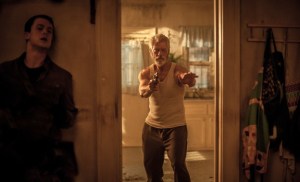 Don’t Breathe packs a punch and this is aided by how streamlined and clean the narrative proves to be, whittling down all unnecessary plot strands. I hated the Money character. He brought nothing to the burglary team besides perhaps some muscle (and a firearm), but I was worried that the movie was going to drag out his inevitable demise. Clearly Rocky and Alex were going to be the main participants and that meant that Money was the most expendable, and given the small number of characters, I worried he wouldn’t be given his merciful end until long into the movie. Well Alvarez must have heard my worry because Money is killed very early on, sparing the audience from dragging out the inevitable. I was appreciative but it also raised the stakes with the two remaining characters because now nobody was obviously next in line for death. A dead Money actually proves more useful than a living Money for the characters. I also appreciated that the movie didn’t dawdle when it came to setting up its trio of burglars and their goals. They’re breaking into the Blind Man’s house at about the 15-minute mark. There’s also no concerted effort at layering in larger social commentary. The economically depressed Detroit setting works to communicate the desperation of the characters, their desire to escape their trappings, and it also provides a tidy explanation for why the Blind Man can drag an unconscious girl by her hair down the middle of the road without alarm (it’s the opening image, so chill spoiler-phobes). This is not a movie that has larger things to say about The Way We Live Now, and to pretend otherwise would be a waste of valuable time. Also, having three white characters serve as the social commentary for Detroit’s ailments would seem rather tone deaf and ill advised.
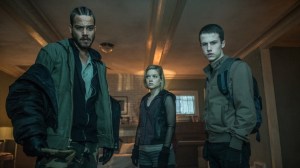 I think if the Blind Man had been a complete innocent that the movie would have been even more interesting as it forces the audience to test its loyalties and choose sides. As my friend Ben Bailey said upon leaving the theater, once they introduce a third act twist involving the Blind Man’s true goal, he ceased having any sympathy and “just needed to die.” I’ll concur mostly, but man I fell out of favor with our trio of young burglars and the best way I can explain is by making an analogy to the Howie Mandel prime time game show, Deal or No Deal. Contestants would randomly choose briefcases hoping that they contained low amounts of money, furthering the odds that their briefcase would contain a larger and joyous amount. It’s really just a game of odds and averages. It’s mildly fun but with every contestant there was a breaking point for me, a point where they really should have cashed out but instead chose to go forward against unfavorable odds. Once a contestant crossed this imagery point of no return in my mind I was rooting for their downfall (probably to just confirm that I was right all along). Horror movies are the same, and once the main characters make too many stupid decisions, then my sympathies generally gravitate elsewhere. With Don’t Breathe, the young characters have multiple opportunities to escape the house but make too many bad choices. They want to keep the stolen money above their own lives, and after the third missed chance I felt my loyalties wavering. Their first mistake was when they were casing the man’s house in broad daylight and see him walking his dog. Hello, here’s a golden opportunity to break into the home where you know he and his pooch will be absent. Why wait when they’re both back at home and needing to be dealt with? If the Blind Man had been an innocent, or even if they had simply omitted the insidious third act twist, I would have been rooting for this visually impaired war veteran to smite these punk-nosed kids but good.
Earlier this year Netflix debuted Hush, a home invasion thriller featuring a deaf protagonist. Now we have Don’t Breathe with a blind man trying to thwart home invaders. Let’s continue this trend: Don’t Taste, about a man that has to flick his tongue out to sense his hiding home invaders, or Don’t Smell, a pulse-pounding race-the-clock thriller where a scent-disabled man must match wits with attackers while his home, unbeknownst to him, fills up with carbon monoxide. It’s an easy punch line but credit Don’t Breathe for taking its potentially silly premise and treating it with deadly seriousness while still knowing how to have fun with its audience. There are several moments designed to get an audience to jolt or groan, and it all contributes to a skillful, above average experience at the movies that wears down your nerves. The film is terrifically tense, well developed, well paced, and not too stupid, veering in new directions and upping the ante with new twists to amplify the stakes. If you’re looking for a solid way to close out was has been an otherwise mediocre summer movie season, give Don’t Breathe a chance, sit back, and try to keep up with the fun.
Nate’s Grade: B+
Share this:

Lights Out (2016)
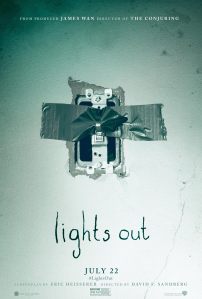 When it comes to horror, concept is king, but what’s just as important is fully developing that concept to meet its potential, and that’s where Lights Out succeeds. This is a low-budget horror movie that taps into a primal fear of the dark with a supernatural entity named Diana that can only be seen outside light sources. Thankfully, director David F. Sandberg smartly thinks of fun and interesting ways to play with this concept, like Diana disappearing in bursts of muzzle fire and a frantic, life-saving use of a car alarm. There’s a great suspense sequence where an off screen light from a flickering neon sign, switching off and on steadily, sets up audience expectations and lingers, drawing out the fear. The editing is terrific. There’s also a surprising subtext tackling the issue of mental illness and depression, as Diana, the malevolent spirit tethered to Maria Bello’s character, only seems to appear during the rougher patches of her life, and Diana fights against Bello getting “better” which weakens her existence. Theresa Palmer (Warm Bodies) settles in as a capable heroine that genuinely cares for her younger brother in danger from her mother and her “friend.” I cared about the people in this. The movie also subverts some genre clichés and treats its handful of characters with credibility. While the very end leaves some questionable final statements on mental illness, Lights Out is an elevated B-movie that takes its fun premise and executes it with aplomb. It’s worth 90 minutes in the dark.
Nate’s Grade: B
Share this:

The Infiltrator (2016)
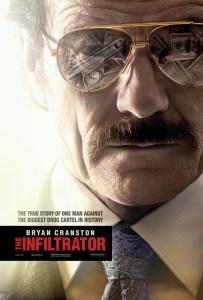 In the mid 1980s, Pablo Escobar and his cartel were responsible for billions of dollars worth of narcotics filtering into the United States. It’s the kind of work that can fill up Robert Mazur’s (Bryan Cranston) career. He works as a Florida Customs agent but his specialty is going undercover for his assignments. He’s called out of retirement with the promise of striking high in the ranks of Escobar’s ring of lieutenants. Mazur’s partner, Emir (John Leguizamo), uses an unreliable informant to start the new identity, and so Mazur poses as a money laundering expert who offers his sundry services to the Colombian cartel. After blurting out that he has a fiancé in lieu of accepting a prostitute’s services as a very 80s way of saying “thank you,” the agency must now provide him with a fake wife, played by rookie agent Kathy Ertz (Diane Kruger). The two have to rely upon one another in a world of criminals and murderers who would have no gutting them.
My main feeling once The Infiltrator had come to its natural conclusion was that everything about this movie should have been better. It’s a terrific premise as we follow the undercover travails of a man trying to stay one step ahead and keep his dual lives separated, invariably having them bleed into one another especially as danger escalates and his cover may be blown. Then you add an untrained partner and the conflict magnifies from there. Then you have Mazur work his way up the food chain to the major lieutenants of Pablo Escobar. This movie should be exploding with dramatic irony, weighty decisions, and magnificent suspense, but it’s really not. So why not?
 One reason is that the movie whiffs with its modest ambitions, namely in its shallow character study of Mazur and the lingering effects of pretending to be a very bad man. Going undercover has to be one of the most stressful jobs in law enforcement, and living two different lives has to have a noticeable psychological impact, eating away at our protagonist and affecting his relationships and sense of self. That doesn’t happen with The Infiltrator as the few glimpses we get of Mazur’s home life are mostly harmless check-ins. A red light is installed in his home to mean a secret special phone line. You would assume that some family situation has to draw out conflict from this scenario, maybe Mazur’s little girl answering the phone before he can reach it. Nothing of consequence happens with daddy’s special red light phone. The family, absent anything important to do but wait at home, becomes a drag on the narrative and doesn’t even fulfill what you would assume would be its primary service: contrast. In the world of The Infiltrator, sex, money, and drugs are rampant, but our protagonist is unaffected. He remains the same character from the beginning of the story to the end. We don’t really learn more about him other than he is skilled at going undercover. We don’t see any particular toll on him psychologically. We don’t feel the threat of what he’s going through because the movie doesn’t pretend it matters enough.
Going undercover with the Medellin Cartel should provide endless suspense scenarios. This movie should be rife with conflict, and yet it consistently finds deflating, coincidental outs to save its characters. As a good screenwriting rue of thumb, it’s acceptable to use coincidence to put your character into greater danger. It’s not a smart idea to use coincidence to save your character from danger. Example: in Donnie Brasco, a man approaches Johnny Depp’s character and clearly refers to him by his agency name, implying working together with the FBI. That’s a good use of coincidence. With The Infiltrator, Mazur’s secret recording in his briefcase is discovered by a mid-level cartel operative, for once it feels like Mazur is vulnerable. Then the movie quickly dispatches with this guy for a rash explanation and so he takes his secret to his grave. There’s another moment where Emir’s informant is about to squeal to some very bad people, with Emir in the room sweating bullets, and he too is wiped out before sharing his privileged information. The movie is filled with these frustrating solutions just when it seems like tensions is developed. The entire appeal of the undercover mob movie is the twists and turns to hide the real identity and make it out alive. I’m genuinely dumbfounded how much of this movie just skates by with little regard to drawing out effective tension.
I think I can crystallize just how poorly The Infiltrator handles its many threads of conflict with one great example. Kathy and Robert Mazur are fake getting married according o their cover stories, so what else does a fake bride-to-be do but seek out her fake husband’s tuxedo that he wore decades prior upon his real wedding to his real wife? Why does Robert need to wear the exact same tuxedo? Can his office not afford to rent a new one that likely more accurately represents his fitting size? Even if this cost-cutting measure was plausible, why must Kathy be the one to pick it up, and from Mrs. Mazur? It’s contrived and forced conflict to shove these two characters together, so that Mrs. Mazur can ask pointedly, “Are you sleeping with him?” Rather than say nothing, or dismiss the assertion, Kathy provides what has to be the most irritating and obfuscating answer: “I think you know the answer to that.” Does she? The film seems to think there is a simmering sexual tension between Kathy and Robert Mazur, but it never materializes. I guess we’re just supposed to assume a sexual tension. This scene is a pristine example of characters operating at a sub-level of intelligence because the movie wants to force contrived drama when there is already plenty of organic drama being ignored.
The last third of the movie is built around the relationship that Mazur and Kathy form with Robert Alcaino (Benjamin Bratt). With an actor of Bratt’s stature, you’d be lead to assume his character will have a significant amount of screen time; however, The Infiltrator also boasts blink-and-you’ll-miss-them performances from Amy Ryan and Jason Isaacs, so maybe not. Bratt’s character is a family man and we’re treated to several scenes with him and his wife. It’s meant to engender sympathy so that when the end comes around we can feel some conflicted emotions. Except this is another area where the screenplay cannot live up to its aims. At no point did I feel sympathy for this mobster. He’s a “family man” and we even see him with his daughter… in one scene who asks to sleep over at a friend’s. Robert preaches about the importance of trust and family in that typical way that all thinly veiled mobsters do in movies, and he even cooks, which is another personality trait I’m sure we’ve never seen in a film about mobsters. The entire last act is predicated on our undercover duo feeling guilt over setting up Robert and his family in an eventual sting, and this guilt feels entirely manufactured.
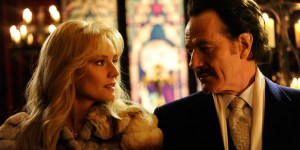 Cranston (Trumbo) is the real draw here and it’s easy enough to see how alluring the undercover gig is for an actor of immense talents. In the opening scene we get a sense of Mazur on the job, digging deep into a seedy drug dealer lounging in a bowling alley and making passes at the waitresses. It’s a meaty introduction that whets your appetites for the different personalities that Cranston will have to draw from on his next assignment. Cranston is routinely entertaining to watch but I couldn’t help but feel underwhelmed at what the film was asking him to do and what I fully know he’s capable of delivering. It’s like hiring a world famous chef and asking him to fix your plumbing. The other actors don’t distinguish themselves in their fleeting scenes except for Kruger (Inglorious Basterds) and Joseph Gilgun (TV’s Preacher) as a convict that Mazur likes to have pose as his driver/muscle. In the case of both actors, you wish that more had been made with their dynamic to the mission.
The Infiltrator is based on a true story and I assume that what I see on screen closely echoes Mazur’s real exploits and predicaments, but somewhere along the way the filmmakers lost track on what made this story tick. The psychological aspects are barely touched upon, the family conflicts are given careless lip service, the suspense sequences are clipped, under developed, and often solved by convenient coincidence, and the characters are too shallow to grow out from their stock roles. I know these are real human beings for the most part but they don’t feel anything more than genre archetypes. The Infiltrator does enough at a serviceable level of entertainment that it might pass some viewers’ lower threshold to fill an empty two-hour window. With all of its ready-made suspense possibilities and internal and external conflicts, this real-life story should be far more compelling than the one we’re given, which settles too often. It’s a genre movie masquerading as a character study except it’s blown its cover.
Nate’s Grade: C
Share this:

The Shallows (2016)
 Let me take a moment to dispel an expectation amplified by the movie’s first trailer: The Shallows is not the Blake Lively Butt movie you may have imagined. It would not be uncommon for this kind of setup to indulge in the forays of exploitation cinema, but aside from a few shots of Lively on her surfboard, The Shallows is surprisingly free of anything that would constitute leering T&A. Lively even wears her swimming vest to stay warm for the far majority of the movie. I cite this because I want to congratulate the movie on its accomplishments but also assure those wary from the trailer that The Shallows is much more than a tawdry genre movie with a bikini-clad blonde in sexy peril.
After losing her mother to cancer, Nancy (Lively) drops out of school and runs off to Mexico to retreat from her cruel reality. She finds a hidden beach few others know about but was a special place to her dearly departed mother. Nancy takes her surfboard out and happily soaks up the beautiful scenery. Her respite from reality is broken when a shark bites her in her thigh. Panicked, she finds refuge on a small rock sticking out of the water, though vulnerable to high tides. Nancy has to use all her strength and wits to observe the shark and her surroundings and make an escape before her injury gets too bad.
 The Shallows is an excellently paced and plotted survival thriller that keeps its audience involved from the start. I greatly enjoy survival thrillers that think step-by-step with the characters in their on screen predicaments, and every move made in The Shallows follows a logical progression that is intellectually satisfying. It helps that Nancy is a med school dropout and thinks through how best to keep herself alive with the tools that she has. She uses a pair of earrings as sutures. She uses her swimming vest as a tourniquet. She uses her watch to time the seconds it takes for the shark to swim in a perimeter. She is a smart and able heroine who assesses the situation in a manner that makes her a strong protagonist we root for until the very end. It’s also a smart device to have her calmly narrate her desperate medical improvisations as if she were treating a patient, a role-playing exercise meant to make her more objective and to ease her fear. It also provides a credible reason for Nancy to talk out loud. There’s also a seagull that Nancy bonds with, an injured bird marooned on the same small strip of rock. The bird deserves second billing as it has more screen time than any other human short of Lively. It’s not exactly a Wilson-kind of relationship necessity but if you’re like me you’ll feel enough bouts of dread and distress whenever that dumb bird is placed in dangerous scenarios.
Screenwriter Anthony Jawswinski (Kristy) makes every part of his story in play, and he even provides acceptable answers when plot holes do seem to appear. Take for instance my biggest initial question: why is this shark so obsessed with Nancy when it has a massive whale carcass to feast upon? I have a similar complain in all sorts of movies where the predator gives up the larger meal for the possibility of the smaller meal (the new King Kong and Star Trek both come to mind). Why give up a guaranteed food source? I could successfully ignore this plot hole for the most part since it’s essential to the conflict of human vs. shark, and then the script produces an answer. She’s in its feeding ground; this isn’t about food, this is about territory. That’s fair. I felt a similar quibble when this one seagull never flew away from Nancy’s rock. It makes sense to give her a companion to at least allow some one-way dialogue. Then it’s revealed the bird as a separated shoulder and is flightless, stranded too like its new friend. This presents a mini-goal for Nancy to accomplish and provides an accomplishment to carry her over. The only plot hole that stuck was Nancy explaining she’d just hail an Uber to get home from this secret beach in Mexico. I don’t think hey have many drivers in the area, lady. I was impressed with Jawswinski’s ability to develop his conflicts and utilize his surroundings. Every item introduced in this small location will be used at some point. Making use of previously introduced materials produces a string of payoffs, ensuring more fun.
 The technical elements are stunning, adding extra impact to the well-crafted suspense. Director Jaume Collett-Sera (Non-Stop, Run All Night) really draws out the tension, letting an audience simmer in discomfort. I know a movie has me when I start nervously tapping my leg, anticipating something bad at any moment. I was tapping often with The Shallows. The initial first strike is chaotic and frightening, leaving Nancy the morbid option of climbing atop a rotting whale body for momentary safety. Then there’s timing the shark’s laps to determine how much time she has retrieving floating items from her rock. We’re given the setup and Collett-Sera nicely goes from there. Even the requisite “chatting with the family” scene meant to impart enough exposition for our character’s starting point is given some flash thanks to onscreen graphics. The cinematography is absolutely gorgeous, especially the prolonged underwater sequences. If it wasn’t for the perturbed killer shark this could work as a vacation ad for this Mexican beach (it was really filmed in Australia). The editing, the music, the special effects, it all blends seamlessly together to construct a thrilling and stylish summer movie.
I’ll admit that there was a long dry spell for Lively after her mesmerizing turn in 2010’s The Town, enough so that I wondered if she was just coasting for good. Then with last year’s underrated Age of Adaline she reminded me there’s a capable actress here. It’s a one-woman show and Lively does a terrific job of anchoring her character while playing to all the shrieks and startles of the genre requirements. Her depleted mental and physical state is effectively communicated and her surge of purpose in Act Three is infectious. Her tearful “final message” in case she didn’t make it had me almost dabbing my eyes. It’s heartfelt and sorrowful without being too corny. There is an actual character here and a performance that treats her seriously and not merely as a tasty afterthought. There are far worse people in Hollywood to be stuck on a rock with than Bake Lively.
In a summer of disappointments, I’ll gladly take the simple pleasures of a contained thriller that’s as well developed, exciting, and as satisfying as The Shallows. It’s smart, often suspenseful, and boasting great technical accolades to make this harrowing survival drama all the more immersive and enjoyable. There is an escalation of tension and director Collett-Sera keeps the audience oriented throughout the terror so we know exactly what the stakes are of every life and death decision. It taps into a primal fear of humans versus Mother Nature in a way that feels smothering. Lively anchors the film and provides a thinking heroine who can also get the job done when the action calls upon her. The ending confrontation gets a little extreme and curiously vindictive for an animal, but by that point I was enjoying the movie far too much to argue. The Shallows isn’t too deep but it’s the kind of slickly produced and developed B-movie that I’ll happily indulge.
Nate’s Grade: B+
Share this:

The Purge: Election Year (2016)
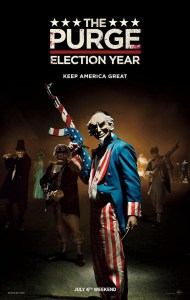 What once seemed like a premise fit for ridicule has become a franchise I actively look forward to now and swallow whole any incredulity. The Purge: Election Year is something of a lateral move from its predecessor, Anarchy, as it’s not an improvement but it’s still a fun and thrilling entry that provides just enough satisfying gonzo political commentary to temper its action. Finally with the second movie I got the Purge movie I wanted, experiencing the event itself outdoors, and Election Year continues this trend. We follow a small group of minority characters trying to survive the night, escaping from one location to another as they encounter a menagerie of weird, murderous citizens trying to make America great again. A presidential candidate (Elizabeth Mitchell) wants to do away with the barbarous Purge practice, and so this makes her a top target during that 12-hour free-for-all. Her head of security, and lone source of protection after an ambush, is played by Frank Grillio, returning from Anarchy and reminding you early and often just what a great action hero he can be. I enjoyed the ongoing shaping and texture of writer/director James DeMonaco’s kill crazy world, whether it was “murder tourists” coming over to America to experience consequences-free killing, the idea of a religious ceremony deifying purging, and even stuff I know is pure trailer candy, like an all-girl gang dressed in creepy masks, princess dresses, and chainsaws. There is some seriously unsettling imagery and moments, though the presence of a white supremacist hit squad dilutes some of the film’s tension simply by being a constant antagonist chasing down our heroes. There aren’t as many new set pieces to further illuminate the depravity of this world as there was with Anarchy. Still, there’s more than enough nasty bite in this franchise. How is this franchise not been turned into an open world survival video game yet? I wonder why everybody just automatically wants to murder during the Purge. I would just probably cheat on my taxes (don’t audit me IRS for this statement!).
Nate’s Grade: B
Share this:

The Conjuring 2 (2016)
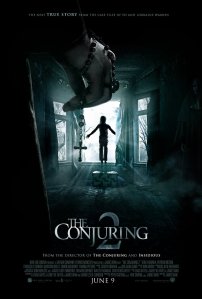 Horror is one genre where sequels rarely if ever satisfy. Usually the repetition is mind numbing and what was once scary has been eradicated. The true signs of great horror is the dread of what’s coming next, and to this end James Wan has shown tremendous skill at playing an audience and their fears. The Conjuring 2 isn’t quite the thrilling success that its predecessor was but it still upholds the best parts of what made the first movie frightening. We follow the Warrens once more, the husband and wife paranormal investigators, and this time to England where a malevolent spirit is haunting a family. One of the few miscues is delaying the meeting of the Warrens with the beleaguered family to almost an hour, pushing the running time to a needlessly overblown 133 minutes. The movie seems to be stretching out the ghost set pieces. Fortunately, Wan knows exactly how to build tension and let it simmer. The demon nun imagery is effectively unsettling, and there’s a brilliant sequence where Mrs. Warren (Vera Farmiga) has to slowly pull a light cord, all while the portrait of the demon nun hangs visibly in the dark. It’s a small scene that explains in full the clever construction of the whole. It sets up the parameters, develops them, and then lets the audience dread what it knows is coming. These are not cheap scares or lame jump scares but genuinely earned terror within a carefully constructed atmosphere. It might not be as good as the first one but The Conjuring 2 is still plenty good, which by default makes it possibly one of the greatest horror sequels of all time. Let’s hope the demon nun spinoff goes better than Anabelle.
Nate’s Grade: B+


 nathanzoebl
You must be logged in to post a comment.