Blog Archives
Saw VI (2009)
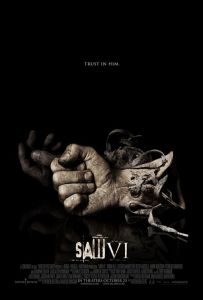 I checked out on Saw 4 and Saw 5 feeling like this horror series had grown stagnant, plus its central villain was killed off by the conclusion of the third movie. I thought the series wouldn’t go on for much longer, and oh how wrong I was. Jigsaw (Tobin Bell) has a second apprentice now fulfilling his departed master’s bidding, capturing even more people and trapping them into the franchise-favorite death traps. This means that there are yet even MORE recorded messages and vast, abandoned warehouses out there. FBI Agent Hoffman (Contas Mandyor, an amazingly horrible actor) has taken up the contrived contraption mantle. Of course it’s all preposterous and overly gory, but that never stopped the series before. Saw 6 boasts the franchise’s fourth director (the editor of all the previous movies just graduated to the big leagues). But this is mainly a franchise built around the hardened desires of its fans, indoctrinated in the gospel of gore. As I said before with Saw 3: “Just like the collapse of the Final Destination franchise, these movies started big but then bottomed out when their audiences had the rules memorized. At that point the only thing left is curiosity in what fiendishly outlandish ways people will get horribly killed.” This pretty much still holds true.
The real interesting draw for the sixth entry, and the only reason I drifted back in curiosity, is because Saw 6 is the weirdest participant yet in the current health care debate. The victims in this installment are health insurance employees. The people in charge of deciding who live and who dies are now put through morally challenging, queasy challenges. It’s a lot harder to kill somebody deliberately rather than by omission, by denying coverage or finding a loophole to get out of paying for a perfectly reasonable, and much needed, procedure. There’s a macabre enjoyment in watching health insurance officials put through Jigsaw’s battery of tests, though some of his victims seem pitiable — one guy is thrown in just because he’s a smoker (I suppose Jigsaw didn’t consider giving the guy a nicotine patch first). The main character going through the funhouse of horrors is an insurance company CEO (Peter Outerbridge) who has his mathematical equation about who earns coverage put to the test. Jigsaw is exacting vengeance after the CEO denied him coverage on an experimental treatment for cancer. It’s easy to see what side of the issue Jigsaw is on; he says that insurance companies put profits over human lives and get in the way between doctors and patients. This is a Saw movie even Michael Moore could cheer. I wish at the recent health care summit on Capitol Hill that the president had said, “Gentlemen, we’ve heard what the Democrats had to say about health care, we’ve heard what the Republicans had to say. I’d now like us all to see what Saw 6 has to say on the matter.”
 The story again is cut into two halves: the health insurance CEO going from death trap to death trap, and Agent Hoffman trying to stay ahead of the FBI investigation into the new Jigsaw killer. Guess which is more interesting? The FBI agents in this movie are those classical trained bumbling FBI goons that always come in late, take things over, and properly muck everything up. These people are lousy detectives and even worse at hiding their suspicions about Hoffman. It’s no surprise then that he manages to outsmart these idiots when Hoffman is, in fact, a dolt. This is not a smart man. Case in point, he’s using the severed thumb of a dead agent (Scott Patterson, apparently on Hoffman’s trail for the previous two films) to mark up bodies and frame the guy. Problem is that he’s framing a dead man, which means Hoffman has a really small window of plausible time to make this frame credible. It’s not going to work months later when the FBI wonders how a dead agent keeps kidnapping new people and putting them through hell. Then again, given the intelligence level of these onscreen agents, I’d assume that the FBI would blame zombies.
The apprentice aspect has always been the worst part of this series. I do not care whatsoever about the ins and outs of how Jigsaw set up his traps and who helped build the damn things. This isn’t some Discovery Channel series. I don’t need to watch the behind-the-scenes look at the grisly garage of doom. Just like the third Saw film, this is another entry that wants to play around with the bigger Saw picture. Scenes are introduced that retroactively alter the Saw timeline of events, causing characters to grow different motivations. I swear, the Saw movies all start to feel like they’ve been built from the rotting leftovers from each previous and less effective movie.
The only thing of note as far as acting goes is that the opening player (Tanedra Howard) won a VH1 reality show competition for a spot in this movie. Ladies and gentlemen, we now live in an age where people will compete for the luxury of being the first to cut open their insides in the SIXTH movie of a flagging horror franchise. You don’t want to know what they’re willing to do for a spot in the next flick.
 The draw of this franchise are its clever yet queasy death traps where the audience can place itself in the victim’s position and wonder what they would do given the life-and-death circumstances. How far would we all go to live? Well, in Saw 6 the traps aren’t that fiendish or memorable. The best one involves a group of six insurance actuaries (experts at finding loopholes to deny and cancel coverage) tied to a carousel with a shotgun pointed at them. One by one they swing by the kill zone, making it the most proverbially deadly game of musical chairs ever. Even better is the fact that the CEO is given the opportunity to “save” two on the carousel from the shotgun blast, so they each start screaming little arguments why they are worthy and their peers are not. It’s a neat little pressure-cooker of a scene, especially when one guy on the carousel realizes he’s the last to die. The thing slowly reels back around as he uses his final seconds to demand that the CEO look at him (“You look at me when you kill me!”). That defiant little moment manages to pierce through the ponderous personal growth edict the series has foolishly heralded as its purpose. The rest of the death traps are just cruel and labored and not nearly as interesting. You ca only watch people singe their skin on hot burners so many times before the body begins to involuntarily yawn.
Saw 6 is certainly no better than the other movies but neither is it worse. It’s the topical subject matter that makes this the only Saw movie worth a dubious look after the first flick. It taps into a populist rage against insurance companies that makes it vicariously satisfying and truly bizarre. It would be questionable to say that the franchise has recaptured any sort of creative juice, but I wouldn’t mind catching a future Saw film take on other big issues plaguing our country. Imagine Saw tackling predatory lending and the negligible banking industry resisting reform tooth and nail. Wait until the heads of Goldman Sachs and AIG get a load of Jigsaw.
Nate’s Grade: C
Share this:

Final Destination 4 (2009)
 I felt that this franchise was creatively exhausted after the third film in 2006, and I see no reason to change that opinion. The fourth film has the added feature of being in 3-D, which means you get the luxury of having entrails exploding in your face. I watched the movie in the limits of two dimensions, which may be why I wasn’t thrilled having every other visual thrown at the screen. Regardless, the cruelly elaborate deaths are the draw. This is a horror movie built from the inside out, finding the thinnest of tissue to connect all the gory gross-out moments. A documentary set in writer’s room for a Final Destination movie would be more interesting than the finished product. It seems like the producers aren’t even trying any more; the one-note characters exist in a world bereft of adults, cops, media, and anybody with a brain. The film doesn’t waste any time on characters because they’re all just meat for the grinder. The film does, literally, the bare minimum just to move the plot along to the next fiendish death trap (this flick has a franchise record 11 death sequences). At one point, a character says, “Don’t make fun, but we Google-ed ‘premonitions,'” and then they explain the rules of the series like somebody handed them a manual. Later, the teens celebrate because they think they broke death’s chain, and I’m yelling at the screen, “That hasn’t worked for three movies, you stupid kids!” They’re all running through the same worn-out patterns that the audience already knows by heart. The big question is whether the gruesome death sequences deliver the goods. Flaming escalators and killer car washes? Clever or desperate, you be the judge. For me, the fun of this franchise was killed long ago when it gave over to the cynical bloodlust of its target audience. Since Final Destination 4 made the most money out of any of the previous films, expect more entrails in glorious 3-D.
Nate’s Grade: C-
Share this:

New Moon (2009)
 Admittedly, I am not a fan of the Twilight series. I have never read one of the books but I didn’t hate the first Twilight movie. I thought it kind of worked on its own merits even if it wasn’t for me. However, New Moon is a crushing bore and a mess.
Bella Swan (Kristen Stewart) is celebrating her eighteenth birthday with her vampire boyfriend, the 119-year-old Edward Cullen (Robert Pattinson). She accidentally cuts her finger and the sight of blood sends one of the Cullen vampires crazy with instinct. Edward concludes that his love would be safer without him. He bids her goodbye and promises, “This is the last time you will ever see me,” forgetting that there are two more books to go. Bella is heartbroken and spends months in a stupor. She finds solace with Jacob (Taylor Lautner), her friend of many years. Jacob’s people are indigenous Native Americans to the area, and he holds a secret as well. Turns out that Jacob is a werewolf. Now Bella has to decide between a vampire or a werewolf (does a Frankenstein monster enter the romantic fray later?). Edward mistakenly believes that Bella has died, so he too wants to die and will seek execution at the hands of the illustrious Vultari, the ruling vampire clan in Italy. Bella must decide between her two loves.
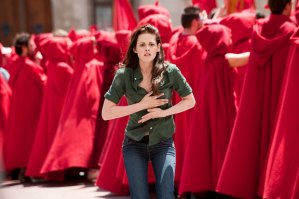 I can precisely indicate where everything goes wrong for the abysmal New Moon — the character of Bella Swan. For the majority of this sequel, I didn’t just detest and dislike her I downright hated her. I hated her. I understand her appeal to the millions of Meyer’s literary acolytes, but man does she come across as a self-centered, casually cruel, messed up girl who spends most of her time being whiny, mopey, and sulky. It’s not just that she has a guy interested in her, it’s the absurd notion that every man cannot get enough of this sullen gal. As presented in New Moon, Bella is such a dour and lifeless personality. I cannot see whatsoever why she is worth such effort. This criticism may be tracked all the way to Meyer’s source material, making Bella absent in defining character dynamics expressly so pre-teen readers can insert themselves as the character and swoon over being the object of universal desire. It is insultingly thin wish fulfillment that this girl has every man, vampire, and werewolf fighting over her in the Pacific Northwest. After Edward leaves, she shuts herself out and rejects all her friends. We see in one camera pan that she spends literal months in a stupor. I understand that teenagers think everything is the end of the world, but she and Edward were together for, what, a few months? Then again, heartache is something that knows no exact time frame for healing, so consider this but a quibble. Bella seems to push others away except when she needs a set of ears to whine.
It is post-Edward where Bella becomes insular, self-centered in her pursuit of danger placing herself in stupidly reckless scenarios, and hurtful. Where Bella really infuriated me is her treatment of her lifelong friend, Jacob. Obviously the big guy has a thing for his her and she knows this, which allows Bella to string Jacob along for almost a whole movie. She leads this little doggie along, teasing him with a “Maybe I will be with you, maybe I won’t” dance that becomes irritating and rather loathsome. Jacob is a swell guy who has looked out for Bella from day one, accepted her coupling with a vampire, sworn enemy of werewolves, and he’s been the best listener to all her self-involved drama. Plus this guy is ripped and has hip flexors that could cut glass. And he is there for her and didn’t abandon her like Edward. So Bella toys with her self-described “best friend” until she can hear the word “Edward” and then she can think about nothing else, even after months of complete separation. I understand that Edward has the sexy, brooding, bad boy appeal, where women think they will magically be the key ingredient to change the troubled man for the better. But on the flipside, Jacob thinks he?’ the key ingredient to finally get Bella to commit to a healthy relationship, and he gets screwed. Seriously, what’s the worse thing about dating a werewolf? You may have to take him for more walks. I suppose this makes me sound like I’m on Team Jacob, as the fans call themselves. I’m really on Team Bella Deserves to be Alone.
 I don’t want to sound unduly harsh. I don’t necessarily have an inherent dislike for characters that make bad decisions or who are, at their core, unlikable. I could forgive the sins of Bella Swan if she had even a hint of subtext. Bella Swan is a void of personality. I cannot recall if this was the same with Twilight, which I haven’t seen since I watched it on opening day in the theater a year ago.
What also sinks New Moon is how it repeats the same plot from Twilight. Once again Bella feels alone, she finds comfort in a boy that says they can’t be together, this intrigues her and pushes her into action, she’s warned of danger, and then finally she settles in with a pseudo relationship with a supernatural stud who makes blanket promises like “I’ll always protect you,” and, “I’ll never let anything happen to you.” It’s not complex folks; Meyer is just feeding pre-teen girls their fantasy of a male romantic interest. Because of this repetitious plot structure, very little of substance happens during the overlong 130 minutes of New Moon. Bella kinda sorta almost gets involved with a werewolf, there’s some lousy Romeo and Juliet allusions, and thanks to a delightfully hammy Michael Sheen (Frost/Nixon, The Queen), we learn a little bit about what makes Bella special to the world of vampires (it’s telling that her “specialty” is her lack of reaction). Beyond that, this is two hours of posturing and some gratuitous beefcake shots of shirtless men. My theater was sold out and packed with the Twilight faithful who swooned when they saw Edward strutting in slow-mo and openly hollering in approval when Jacob first whipped off his shirt. For supernatural creatures, they do more brooding than anything.
Director Chris Weitz (The Golden Compass, About a Boy) replaces Catherine Hardwicke to steer the second movie. I actually think Hardwicke had the right sensibilities for this franchise and she brought a youthful, rambunctious spirit that gave the first film a teenage synergy that made the romance feel pulpy. Weitz does away with this and makes the movie feel more ornate and chaste and dull. The execs spent major money to film in Italy for the vampire Volturi clan, but as near as I can tell some sets would have done the trick. Note to filmmakers: if you spend money to film in an exotic location, show it. As far as I can tell, Weitz was hired because of the bump up in special effects for this picture. Gone are goofy vampire baseball sequences and now we have cheesy wolf battle sequences, which come across like a less refined version of the polar bear brawl from Golden Compass. The special effects have improved but that doesn’t mean they?re good.
 This isn’t exactly the kind of movie that asks for much from its actors, and screenwriter Melissa Rosenberg distills Meyer’s text to the point that the actors pout and yearn. Stewart is an actress I have liked for years since Panic Room, so imagine how I would feel about the Bella character with a less capable actress. Pattinson is absent for almost the entire movie and it’s hard to say that his presence was missed. The best actor of this weird love triangle is Lautner who at least seems to have some fun with his role. He has an amiable spirit that penetrates all the gloom. He’s come a long way from being Shark Boy in 2005?s The Adventures of Shark Boy and Lava Girl.
The plot is a shadow of the first film, and the main character is annoying and hard to sympathize with, there?s so little of consequence that happens, it?s way too long, and, oh yeah, did I mention how much I disliked Bella Swan? At this point, the Twilight franchise is a juggernaut that cannot be contained (as I write this it’s poised to make over $70 million on opening day) and the Twi-hards will find the movie to be catnip, swooning at the visualized male sex objects. For anyone outside the cult of Twilight, the movie version of New Moon will fail to communicate the appeal of the series. The movie feels bloodless. Twilight is like a tedious soap opera scrubbed clean of teenage hormones. I think I’ll stick with HBO’s True Blood, a more nuanced, adult, sexy, and just plain fun series following vampire-human love. Bella could learn plenty from Sookie Stackhouse.
Nate’s Grade: D+
Share this:

Harry Potter and the Half-Blood Prince (2009)
 Not every film franchise gets to a sixth installment, although Police Academy and Friday the Thirteenth managed to. After over twelve hours of storytelling, is it even possible for non-fans to enter the Harry Potter world (only an idiot would begin a film series at number six)? I am a willful Muggle to this universe. I am content to wait for the movies, and it drives the readers nuts. “The books are so much better,” they all say. Then they tell me what was left out of the movies, and honestly it’s usually a good thing. Harry Potter and the Half-Blood Prince echoes the increasing darkness of the later books by author J.K. Rowling, but now I can finally walk out of a Potter film and know, without a shadow of a doubt, that the book must have been superior. Half-Blood Prince is a film adaptation that spends too much time in all the wrong places.
Lord Voldermort (Ralph Fiennes, seen only for literally a split-second) is back with a vengeance, and his followers, Death Eaters, are branching out and attacking the Muggle world as well. Headmaster Dumbledore (Michael Gambon) has asked Harry (Daniel Radcliffe) for help in recruiting a former Hogwarts professor. Horace Slughorn (Jim Boradbent) used to be an esteemed potions professor, and one of his bright students was none other than a young Voldermort (Hero Fiennes-Tiffin, Fienne’s real-life nephew). Dumbledore and Harry explore liquid memories that belong to the Dark Lord in hopes of learning how to defeat him. In the meantime, the kids are under attack not by Voldermort but by hormones. Harry’s friend, Ron (Rupert Grint) and Hermione (Emma Watson), are secretly in love but neither has the heart to say something. Ron uses his star Quidditch status to “snog” with the eager Lavender Brown (Jessie Cave), who’s infatuated with Ron. This infuriates Hermione and she seeks comfort in a studly student herself. Harry is starting to feel his heart go pitter-patter for Ron’s sister, Ginny (Bonnie Wright), which requires Harry to be very delicate in negotiating the “Can I snog your little sister?” portion of male friendship. Oh yeah, and apparently Harry is also using a potions textbook that used to belong to some whiz kid known as the Half-Blood Prince.
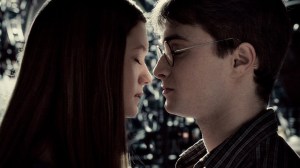
 The further I get away from Half-Blood Prince the more certain I am that it is the least involving film of the series. The plot is somewhat nebulous and unclear, and so much of the story is dominated by boring teenage romance. I understand that Hogwarts is swimming in hormones, but these kids spend the whole time making shifty doe-eyes at each other than doing anything substantial. That makes for a boring romance, and when the movie is dominated by this stuff for two hours it doesn’t make the movie too engaging. I understand that the Ron/Hermione courtship has been setup for some time, but it takes forever to move even incrementally closer to that coupledom. The Harry/Ginny material is lacking at best. She’s such an empty presence and they do so little with her character that I have no idea what would warrant Harry’s affections. There is no spark, no heat, no sexual tension, and no interest. I was actually relieved when Half-Blood Prince drops practically every storyline with twenty minutes left. Seriously, these plotlines aren’t resolved or capped or even addressed, they just don’t exist once Harry learns the word “horacrux.” And let’s talk about that subject just for a moment. Dumbledore lures Professor Slughorn back to Hogwarts so Harry can learn Voldermort’s secret of eternal life, a secret that Dumbledore already knows because he’s been taking leaves to locate and destroy Voldy’s horacruxes. I felt detached and disenchanted throughout Half-Blood Prince.
There are other plot holes and irregularities, and I wonder if writer Steve Kloves (who took the fifth movie off) is merely serving up 153 minutes of plodding prologue for the big finish. The drama is becoming more static and the supporting characters of previous installments reappear and do little but stand with hands in their pockets; they have nothing to do. The flashbacks to Voldermort as a child reveal relatively nothing new; only indicating her was a creepy kid. The two action sequences squeezed in are not from the book, meaning Kloves was trying to add some excitement to what is a rather sleepwalking storyline. The action sequences mean little; the opening attack on London’s Millennium bridge offers some nice sights but little consequence, and the destruction of the Weasely house comes across like Kloves was grasping for greater conflict. Too much of his film is the young love foibles with the occasional sideways glance at Draco (Tom Felton) brooding in the shadows. The ending, with its notable death, still strikes an emotional cord but it also comes across as rushed and without depth and resolve.
 What is the significance of the Half-Blood Prince in this adaptation? The mysterious figure was good in potions class and his old textbook helps Harry in class. That is it! The late reveal of the identity of the Half-Blood Prince is so incidental and off-the-cuff, that the actor practically has to say, “Hey, remember that whole Prince thing like an hour ago? That’s me. Yep. So see ya.” It’s such an indifferent plotline handled with such indifference. I had to ask my Potter-versed wife why Rowling would even bother naming the book after such a minor, irrelevant plot footnote. Kloves’ adaptation feels lost and mostly like filler.
So why does a slower, less coherent, less interesting Harry Potter rank better than the first two films? Because director David Yates takes an artistic step forward and this addition has style to spare. Returning to the Potter director’s chair, Yates has a stronger feel for the world and creates striking film compositions with the added help of noir cinematography by Bruno Delbonnel (Amelie, Across the Universe) and the foreboding production design by Stuart Craig. The sets have a grand Gothic appeal and help compensate in tone for what is lacking in the screenplay. The opening bridge attack allows for soaring flights through London and then into the magic world, and it’s a great opening visual rush. The memory flashbacks have splendid visual artistry to them as we watch inky brush strokes coalesce into solidified images. It’s a fantastic special effect and it is welcomed every time. This isn’t one of the more special effects heavy installments but the effects are as good as ever especially when seen through Delbonnel’s lens.
It’s interesting to have watched the three main actors grow up in their roles, which also gives them the ability to revert to autopilot when the movie lags. In the Half-Blood Prince, the trio burrows back into previous acting episodes. Radcliffe gets talked to a lot so much of his acting in this jaunt seems to involve intense bouts of nodding. He does have one sequence of exaggerated comedy when he swallows a luck potion, and the actor feels delightfully unrestrained. Grint gets the most screen time he’s had in ages and continues to dial up the daffy humor. As I stated with my review of Order of the Phoenix, I think Watson began as the best actor of the trio and is now on a fast-paced downward slide. Her character gets to experience jealousy and heartache, and Watson shows some ability to convey mixed emotion. The most interesting actor of all the kids is Felton, who I found to be surprisingly empathetic. He’s tortured over his fate, a mission given to him by the Dark Lord. He’s torn apart by moral indecision and a sense of duty. That’s way more interesting than watching Ron and Hermione try to make each other jealous. Why didn’t Kloves devote more time to the anguish of Draco? That’s where the drama is. There just isn’t much room for character growth and acting in the rest of Half-Blood Prince. The best acting award goes to Broadbent (Moulin Rouge, Hot Fuzz). He conveys the regret of Slughorn with every manner and gesture. His sad, poignant confession is oddly the emotional highlight in a movie that includes a momentous death later.
 Harry Potter and the Half-Blood Prince feels like a half-hearted adaptation, with way too much time spent on tepid teen romance. This is the most visually arresting Potter film next to 2004’s Prisoner of Azkaban, but it just fumbles the storytelling. The sixth film is too often boring and inconsequential. Too much of the film feels like it was purely made for the die-hard Potterheads, and if any Muggles have questions of clarity they are required to seek out a friend to ask. This is just sloppy writing. It feels like everyone is just busying themselves before the sprint to the big finale. We’re just about at the end of the long winding road that is Harry Potter, though I’m sure the fact that the producers are splitting the final book into two movies likely will not mean that the individual movies can finally have a two-hour running time. Half-Blood Prince would have greatly benefited by being shorter, more precise, and more significant; the 16-year-old romantic squabbles seem so slight in the backdrop of Voldermort and his army on the rise. I’ll give everyone the benefit of the doubt, but this is not a Potter venture I’ll likely return to again. It just doesn’t measure up when it comes to movie magic.
Nate’s Grade: B-
Share this:

Transformers: Revenge of the Fallen (2009)
 Transformers: Revenge of the Fallen pretty much sells itself. More giant freaking robots. That was enough to make the first movie a worldwide blockbuster. My own teenaged brother-in-law, when he first saw the first Transformers movie, declared it his favorite live action film. Director Michael Bay completely empties his creative cupboard into a bladder-unfriendly two and a half hour endurance test. It’s too bad that that cupboard was bare when it came to story.
Sam (Shia LaBeouf) is headed off to college, and he’s leaving behind his girlfriend Mikaela (Megan Fox) and robot guardian, Bumblebee. Optimus Prime and the other Autobots have been working with the U.S. government to hunt down Decepticons around the globe. There?s a war on the horizon, and weasely U.S. bureaucrats want the Autobots to take a hike. Sam discovers a tiny shard from the super Cube, which was the source of life for the alien robots. His brain is zapped with an alien language that will lead him to a secret location to a secret ancient machine. The Decepticons want this info and chase after Sam and Mikaela. The biggest bad of them all, The Fallen, is sitting at home waiting to return to Earth and exact interstellar vengeance. The Fallen was foiled in 17,000 B.C. by the Prime family line, and only a Prime can kill him. The Decepticons resurrect their leader Megatron and go about trying to snatch Sam, kill Optimus Prime, and destroy man’s planet.
Bay has been condemned for his erratic ADD-shooting style, and this was the first film where I really felt pounded and punished. To contest that this movie is just “a popcorn summer movie” is just making excuses. What the hell was going on? The movie is simply a blur of colors and noise. Transformers 2 is entirely incoherent, both from a story standpoint and simply from a visual standpoint. Bay at least pulls back his camera so that the audience can identify the fighting robots easier this time; this time it’s not like deciphering scrambled porn. It’s the rest of Bay’s characteristically bombastic display of carnage that suffers. Bay is a man that doesn’t know the meaning of the word “small,” and so nonstop explosions and massive destruction litter the movie. Sam is always running or riding in his car to escape. At one point, Sam and his posse hide in a campus library only to have the building turned into cinders (showing Bay’s opinion on what books are really good for). But what exactly is happening? Why does it matter? What are the obstacles? Everything is way too busy and accomplishing so little. Half of the movie consists of the human character running and screaming. It’s excessively excessive and taxingly so.
 A strong example of the film’s incoherence is the 40-minute climax set amidst the pyramids of Egypt. At no point does Bay establish the geography or bother to let the audience follow along. The stakes and parameters have not been made adequately understandable. Ordinarily, in large action sequences there will be different groups of segments and we’ll watch each progress. Here we disjointedly cut back and forth between the groups but I have no idea what?s going on, where the characters are, where they need to be, and what is stopping them. Megatron calls down 13 different evil Decepticon robots to take part in the climactic battle but Bay never introduces these new figures; they get no setup to explain each of their unique weapons systems or general appearance. We see them only at a distance walk through wafting smoke clouds. So when they do pop into battle in quick blurs it’s just another point to be confused about. If you’re like me, you can only endure so much confusion before your brain just gives up. Bay is a fantastic visual stylist, but his action sequences are poorly developed and poorly staged. He needs to check out The Hurt Locker and take notes. Transformers 2 is nothing but non-stop careless mayhem. For what it?s worth, the special effects are incredible at every stop.
The highly ramped-up action would have been acceptable if we knew what the hell was going on and we actually cared about the story. Transformers 2 makes the first film look like poetry in comparison. The story for this movie is simply atrocious and it’s made worse by the merciless attempts at comedy. This movie is stuffed with tin-eared exposition, so our only break to try and assess what the hell we just saw is when the characters take a breather and rapidly spout more plot vomit. It’s like listening to a homeless man shout nonsense for an hour. After a while you just tune out the crazy. If the Decepticons can construct a robot that has the ability to take human form, why the hell aren’t they doing this all the time? Why aren’t they infiltrating government offices instead of prancing around colleges in hot pants? Why in the world would an 18-year-old boy leave the mega hot Megan Fox and his TALKING ROBOT CAR? Why would anyone leave these two to live in a dorm and shower in flip flops? What universe does this college that Sam attends exist in? The place is crawling with leggy, waif-thin bombshells. The movie doesn’t even resort to college stereotypes; there isn’t a single gal that doesn’t look like a magazine cover girl. The Fallen is kind of like the evil leader of the Decepticons and he’s, what, confined to sitting in his robo La-Z-Boy on his home world like Archie Bunker? Get up and do something. The Transformers fought ages ago amidst man?s loin-clothed hunter and gatherer ancestors but leave no record? You’d think some caveman type might consider that worthy of painting on a wall. Why is Megatron even in this movie? What was the point of bringing him back alive if he’s just another lackey to The Fallen guy? Why does no one consider turning over Sam to the Decepticons if it could save the planet? In the big Egyptian battle sequence, where is the Fallen the whole time? He just kind of lazily shows up at the end. Also, ancient robots made a special key to jumpstart an ancient planet-destroying machine, but then we are informed when Sam visits, no joke, Transformers heaven that this key does not work unless the holder has earned the right to use it. It’s like some high tech moral barometer. Why didn’t these alien robots say anything about this? It would have spared a lot of time and energy trying to make sure the Decepticons never got a hold of it. How does a dead human end up going to robot heaven anyway? Does that mean there’s a robot God? Was robot God created by our God? Is there a robot Devil? Does Bay do the work of the robot Devil?
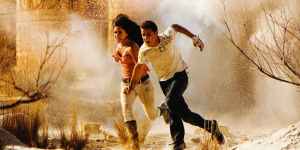 This time the comedy is puerile and embarrassing. The jokes make this movie tonally feel like a cartoon strictly for snickering adolescents. In the span of 150 minutes we’re given dogs humping twice, a tiny Transformer humping Megan Fox’s leg, Sam’s mother going berserk from ingesting pot brownies, a Transformer testicle joke (why would a robot even need genitals?), and let us not forget John Turturro in a thong. The humor aims low and still finds a way to be even worse. To save you the trouble, I am going to spoil the only two good jokes in this self-indulgent, bloated mess. Here there are, enjoy:
1) Sam is at a frat party, and it’s a frat party unlike anything ever seen unless modern fraternities can afford expensive interior decorators. One unamused frat guy asks Sam what he’s doing. Sam responds, “Going out to get you a tighter shirt.” The frat guy’s flunky clarifies: “There isn’t a tighter shirt. We checked.” I laughed. Sue me.
2) Sam and the gang at one point talk to a Transformer that’s thousands of years old. Apparently the guy is being housed at the Smithsonian Museum, which means that this is the second summer movie that is trying to inform the public that there’s something weird over at the Smithsonian. The old Transformer even has a robot cane, which is too bizarre. He rambles about the old days like Grandpa Simpson, and then finally gave this gem: “My father was a wheel. The first wheel. You know what he could transform into? Nothing! And he did so with honor.” This made me want to think about a period Transformers costume drama, where they exist as textile steam engines and phonographs and Model Ts. Would that not be a vastly more entertaining movie?
Despite all the painfully juvenile attempts at comedy, by far the biggest eyesore would have to be Bay’s Sambot twins, Mudflap and Skids. To say that these two irritating robots are politically incorrect does not go far enough. It’s one thing to reflect a cultural or ethnic stereotype, and it’s another thing entirely to keep digging deeper and deeper. These robots talk in eye-rolling faux gangster street talk, one of them has a big gold tooth, and these robots admit to being illiterate. It’s practically breathtaking to watch how racially insensitive and appalling these characters become. It’s essentially a robotic minstrel show. I’m surprised Bay stopped short of having Mudflap and Skids eat a big bowl of watermelon. This got me thinking about what other highly insensitive Transformers characters that didn’t make the cut over these two. Was there an Asian bot that turned into a car that didn’t drive well? Was there a Jewish bot that chided Optimis Prime to settle down and quit running around with those shiksa sports cars (“You know those aren’t her original parts?”). Bay can dismiss these characters as merely dumb robotic comic relief, except for the fact that these two bumbling, detestable heaps of scrap metal are never, ever funny.
 The actors have little impact in this type of movie. I like LaBeouf (Eagle Eye) but he’s got little to do but stretch his legs. Fox became a star thanks to the previous Transformers flick, and she hasn’t gotten any less attractive. Amazingly enough, she manages to lose more clothes the more she runs in slow-mo, allowing the male audience members to follow the nuance of her bouncing breasts. She’s clearly not the next Meryl Streep but this girl deserves more than being wordless arm candy. Many words have been spilled about the quasi-racist twin robots, but I’m disappointed that people aren’t as equally up in arms over the film’s blatant misogyny. Women don’t seem to exist in the Michael Bay world, only parts and pieces of women. They are all like Alice, the robot programmed to do nothing else but seduce the men. All of the special effects and noise just overwhelm the other actors. The robots themselves have no personality to offer, good or bad.
Transformers: Revenge of the Fallen is an obnoxious block-headed mess that feels like it’s being made up as it goes along. It’s sensory overload without a lick of sense, clarity, wit, and general entertainment. This sequel takes everything that was good about the first Transformers film and undermines it, and it takes everything that was awful and magnifies that awfulness. The first Transformers movie was fun. This is just work to sit through. Apologists will try and rationalize their disappointment, decrying anyone who hoped for something more than a big dumb summer blockbuster about rock’em, sock’em robots. Bay wants to show you everything and as a result you rarely get a chance to process little in this movie. There is absolutely nothing more than meets the eye here. It’s all arbitrary and tedious and it goes on for what feels like an eternity. It’ll make a gazillion dollars at the box office but will anyone remember a single moment from this exhausting junk? Make sure to bring the earplugs and aspirin in abundance.
Nate’s Grade: C-
Share this:

Angels & Demons (2009)
 Angels & Demons works better as a movie. It is a better movie than The Da Vinci Code, but since I found that film to be one of the worst of 2006 you should know this is not high praise.
Professor Robert Langdon (Tom Hanks, with a better haircut) is the world?s foremost expert on ancient symbols and texts, which is why the Vatican recruits him for a very important mission. The Pope has recently died and Vatican City is in the middle of the cardinals deliberating who will be the newest leader of the Roman Catholic Church. Four of the cardinals, top candidates for the Pope position, have been kidnapped. The Illuminati, a centuries-old secret society, says that a cardinal will die every hour, from 8 PM to 11 PM, and then at midnight Vatican City will be destroyed. The Illuminati was made up of followers who felt the church was rejecting science, and so we?re told that in the 16th century the Catholic Church responded reasonably by branding the Illuminati followers and executing them. 400 years is a long time to wait for revenge. To make matters worse, antimatter was stolen from the CERN facility in Switzerland and placed somewhere within Vatican City. The battery holding the antimatter is scheduled to die about, conveniently, midnight, and the antimatter will result in a huge explosion (science note: antimatter is real but it is entirely harmless and not combustible). With the help of Carmenlengo Patrick McKenna (Ewan McGreggor), acting church leader until there’s a new Pope, and particle physicist Vittoria Vetra (Ayelet Zurer), Langdon must race against time to save the Catholic Church.
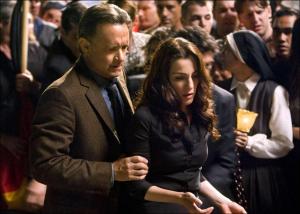 The time element gives the movie a sense of urgency that was missing before, and a kidnapping plot provides a firm structure and supplies more chances for action than unraveling a 2000-year old church conspiracy on the divinity of Jesus. The plot of Angels & Demons works out like a high-stakes scavenger hunt, shuttling Langdon across the many sights of Rome to find the next clue. However, the narrow timeline of killing a cardinal on the hour every hour makes for some tight squeezes, both for Langdon and the cardinal-killing man. I never understand why the villains give themselves such a small window to work with. I know the whole “dead cardinal every hour” thing has a nice ring to it, but is it wholly practical? There’s all that driving around Rome and the Vatican, which has got to be crowded since millions are awaiting news about a new Pope. Beyond this, why must Langdon and crew always show up to a site with like five minutes before the cardinals will be murdered? Are they stopping to get subway sandwiches in between? The timeline and plot setup provide more action sequences that make the movie fleetingly entertaining in spurts.
What doomed the Da Vinci Code movie was not the endless blather, though that certainly bored me to tears, but the fact that the film wanted to have its cake and eat it too — it wants to be a brainy thriller but get away with hokey thriller shortcomings. Angels & Demons suffers more or less the same killing blow. The flick wants you to shut your brain off and swallow these trite lapses in judgment and reality, forgiving the movie for zero character development and polluting the narrative with stupid genre stock roles, but then it also wants you to pay close attention and activate your brain to untangle the origins of symbols, conspiracies, and church doctrine. Angels & Demons introduces the idea of a ticking clock so it’s a far better paced affair than the previous film, but the movie still finds ways to get bogged down. Once again, Dan Brown’s novel has been adapted to a series of chases and sit-down chats, although this time Langdon does a lot of speed walking while he dishes out the minute history of church doctrine and architecture. To borrow from my own review of The Da Vinci Code: “You can?t be a brainy thriller and fill the story with hokey moments and lapses in thought, and likewise you can?t be an enjoyably straight forward thriller if you bookend all your action sequences with talky sit-downs to explain the minutia of your story.”
These stories are just meant to work better on the page than on screen. Puzzles and word games work when the audience can take a moment to pause but film is a medium of images and cannot simply go dead waiting for the audience to posit a guess. Movies don’t have time for you to chew things over. So then the puzzles just devolve into waiting for Langdon to explain everything, which he will do at great length. This can get tedious at a rapid rate. Langdon is less a character in this movie and more a walking, talking encyclopedia of exposition. He is robbed of anything that could be charitably described as characterization. Symbol decoding just does not work on the big screen, and Langdon is an expert whose profession is limited in application. I can’t foresee too many instances where a top-notch symbologist will be needed at a moment’s notice. Sure, it’s nice to get a history lesson and see plenty of those swell ancient churches, even if the filmmakers had to recreate them as sets because the Vatican refused them entry to film, but what point do these Dan Brown thrillers serve as movies? There is an intriguing discussion between science and the role of the church somewhere in this movie, but good luck finding much to stir your intellect. I confess never having read one of Brown’s tomes, including the super colossal mega-selling do-it-all Da Vinci Code, but surely the man deserves a better fate than to have his works die on the big screen as lamentably lame thrillers.
 There are no characters in Angels & Demons, only stock roles and suspects. Langdon’s female sidekick (Zurer,Vantage Point) serves no other purpose but to translate Latin and Italian. Really, if Langdon is a scholar on the conspiracies revolving around the Catholic Church then perhaps he should put in the time and money to learn the language. The Vatican police are there as escorts and little else. Stellen Skarsgård (Mamma Mia!) serves as the chief of the Swiss Guard, the Pope’s security team, and Armin-Mueller Stahl (Shine, Eastern Promises) is a German cardinal running the ongoing recounts for a new pontiff. Both men are presented as sly, untrustworthy suspects. Stahl’s character routinely dresses down McKenna as well, saying the young pup in the collar is not fit for church hierarchy. It?s not much to go on but the “characters” are just figures that occasionally get in the way of the film’s long-winded art history tour.
I think a lifetime of watching movies has just made my mind too analytical to be surprised by the twists in these kinds of dead weight thrillers. I?m already thinking ahead from the first minute and I don’t think I’m alone. When we are introduced to two characters, one gruff and unhelpful and one kindly and overly helpful, it is rather obvious which character will be revealed as being treacherous to provide the biggest jolt. Does anyone still suspect that Hollywood would produce a pointedly obvious evil suspect and then have it actually be that person? Not in today’s class of Hollywood thriller. You see kids, today’s Hollywood thriller is more concerned with piling on the twists than constructing a story that sticks together upon reflection, which is why many a Hollywood thriller simply falls apart as a jumbled mess by the time the end credits roll. Sometimes the endings sabotage everything logically that happened before. For an example of a textbook modern thriller, go rent the French film Tell No One and marvel at how the movie manages to be mysterious without being ludicrous. Angels & Demons doesn’t quite suffer from this screenwriting malady, but the essential evil plot by the eventually revealed evildoer is the most convoluted, ridiculously complicated scheme I have seen since that terminal 2005 thriller, Flightplan.
Director Ron Howard is able keep the film moving, almost distracting the audience away from the plot holes, but Angels & Demons is an adaptation that was doomed to fail from the start. The film plays like a lecture on tape with the fast forward button stuck. I might find more of the blitzkrieg of acts and anecdotes more intriguing if I could verify that they were all accurate. This is a thriller that wants to be seen as smart, so it empties exposition without haste, but it also wants to get away with narrative cheats common in your direct-to-DVD idiotic thrillers. You cannot simultaneously tell me to engage my brain and then a second later tell me to shut it off, sorry. Angels & Demons would have been better served without the Illuminati conspiracy and just plunged fully into the debate about bringing religion into the modern age, the friction between science and religion. Any substance the movie does present ends up being window dressing to an average potboiler mystery. This isn’t an awful movie but it never rises above “acceptable waste of time.” Hanks and Howard will probably be back in due time with the movie version of Brown’s upcoming new novel, The Lost Symbol, which will be released in September 2009. I just hope the duo, and screenwriter Akiva Goldsmith, have learned enough from their mistakes. I myself have little faith.
Nate’s Grade: C
Share this:

The Mummy: Tomb of the Dragon Warrior (2008)
 The Mummy: Tomb of the Dragon Emperor, the third film in the once popular Mummy franchise, is facing an uphill battle. It’s been a long seven years in between films and some, like myself, would argue that the franchise is already creatively exhausted. This stuff is the brainchild of writer/director Stephen Sommers (Van Helsing), who decided he would rather make a movie based upon an action hero than rehash mummies (see you this summer, G.I. Joe: The Movie). In comes director Rob Cohen who has given the world such cinematic abominations like XXX, Stealth, and The Fast and the Furious. Surely this was the proper artist to re-energize a semi-dormant franchise. The results are about as unexceptional as you’d expect.
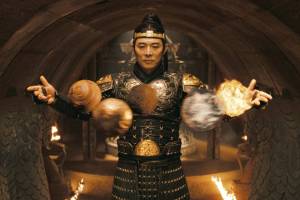
In 1947, Rich O’Connell (Brendan Fraser) and his wife Evie (Maria Bello, replacing Rachel Weisz) are in retirement from adventure seeking. They live at a palatial estate. Their son Alex (Luke Ford) is in college except they do not know that Alex is really surveying ancient tombs in China. The lad has stumbled across the massive tomb of Han (Jet Li), China’s first united emperor. Han was a ruthless warlord that conquered all. He punished Zi Juan (Michelle Yeoh) for falling in love with one of his generals and not the mighty emperor. Zi Juan managed to cast a spell on the evil emperor that trapped him in metal. And he sat undisturbed in his tomb for 2,000 years until Alex came along. Eventually the spirit of Han is released and some Chinese military officials wish to serve their departed emperor. Han is seeking the location to Shangri-La to bathe in the pool of immortality, and then he will awaken his army and continue his quest for world domination. The Far Eastern exploits bring the O’Connell family unit together to save the world yet again.
 The first film was a cheesy, campy tongue-in-cheek adventure that managed to be consistently entertaining. The second film retained the same fun and humorous atmosphere, though it subscribed to the “bigger is better” theory of sequels and ramped up all the action to a cartoonish degree. Seven years later, the third Mummy movie is a complete bore. Tomb of the Dragon Emperor feels like two movies sewn together; ancient Chinese warlords and treasure-hunting archeologists do not come across as a good fit. The terracotta warriors are a great source for an imaginative tale, but this is not it. So Emperor Han has mastered the elements of fire, water, earth, metal and wood (when did wood become an element? I don’t see that one on the periodic table) and the guy can also turn into giant monsters like a three-headed dragon. The writers of this Mummy entry have goofed by making the villain too powerful. Yeah he can be slain by a magic sword (there’s always something magic-y) but this is a foe that can control oceans, water vapor, clouds, rain and snowstorms, ice shards, and that’s just with one element. I must confess that I cannot fathom Han getting too much use from the wood element. On top of that, he can transform at will into ferocious creatures, so what is the point of turning back into a tiny human? Why would anyone fight hand-to-hand when you could fight as a 30-foot monster of your own design? The problem with making the villain too powerful is that when they do not take advantage of their clear advantage, then the villains just look stupid. “The Dragon Emperor” looks stupid for fighting as a 5′ 6″-sized man instead of a killer dragon. Which would you fight as? At least the Mummy from the other films had limitations.
Even worse than being incomprehensible and dumb, none of the action sequences are thrilling or exciting. The action sequences are fairly sub par, resorting to shootouts and the occasional car chase. At least a car chase through the streets of Shanghai during Chinese New Year takes advantage of the location, allowing Rick and Evie to use firecrackers like missiles. The martial arts work is poorly choreographed and poorly presented thanks to some butchered editing. This is one of the worst edited big-budget films of recent memory. Tomb of the Dragon Emperor seems to be making it up as it goes. There are moments where characters will state where they need to travel to and then in the next second they’re preposterously there. Someone talks about the path to the hidden land of Shangri-La and then the next moment, hey, there they are. How did these places remain hidden for centuries? Very little makes sense in this movie. I’m not asking for complete believability in a film involving immortal bad guys and ancient spells, but at least let me able to follow along. I felt like I could tag along with the first two Mummy films and I had fun to a certain degree, but this time I felt like I was being dragged. I won’t even go into great depth about the appearance of yetis except to reveal that there is a moment where one yeti dropkicks a Chinese soldier over a gated wall and another yeti raises his arms straight in the air, signaling in football terms that it is indeed “good.”

Rachel Weisv not pictured.
Once again it all comes down to an all-out CGI battle between Han’s CGI army and the CGI zombie opponents buried under the Great Wall of China. The second Mummy movie ended in a similar fashion, and frankly I’ve become bored with the CGI armies clashing en masse unless I’m emotionally invested in the story. The effects work isn’t too fancy either. Most of the CGI creatures look flimsy and there’s nary a sense of wonder for a movie dealing with awesome supernatural forces.
The cleverest moment in the entire film involves the departure of Rachel Weisz. The Oscar-winning actress decided that she had had enough rumbles with the undead and bowed out of reprising her character of Evie. Smart move, lady. The film opens with Evie reading to an audience from her adventure novel based upon her encounters with a certain mummy. A woman asks her if the book’s female heroine is based upon the real-life Evie. She closes the book, smiles, and says in Bello’s first close-up that, “No. I can honestly say that she is a completely different person.” It’s all downhill from there for Bello, whose terrible British accent veers wildly to the point that she sounds like eight different kinds of Brits inhabiting one mouth.
The Mummy franchise is not where I go looking for parental drama. I understand that the 2001 Mummy sequel introduced Rick’s son, but why did this movie need to be set so far ahead in the future? The only reason this movie is set in 1947 is so that Alex can be like a twenty-something adventurer. The Mummy Returns was set in 1933 and Alex was eight years old, so by use of basic math he is now 22. There is no other prominent plot point, character revelation, or action set piece that relies on the date being 1947. Okay, so we’ve arbitrarily aged the kid, so surely the film will present some parental dilemma. Nope. The closest the movie gets to capitalize on Alex’s advanced age is pushing Rick to acknowledge his son’s accomplishments. The film’s idea of exploring family dynamics is a passing statement about making sure to express your love. Nothing is really gained by inserting the familial connection between Rick and Alex, who just as easily could have been a non-blood related character.
 The inherent issue with an older Alex is that Fraser and his son look about the same age. Fraser has remarkably aged very little over the course of nine years since the first Mummy movie; sure there’s a few facial lines and a hardness that wasn’t there, but this man clearly looks like he is in his late 30s. Alex looks like he’s in his mid-twenties and the actor, Ford, is actually only 13 years younger than Fraser. It just doesn’t work at all. It looks like Rick and his younger kid brother, not his son. But lo, I think I have figured out the true reason behind position Alex as a younger, dashing version of Rick O’Connell, dispatcher of mummies. Fraser’s three-picture deal was fulfilled by this mediocre movie. If the producers want to have further mummy and non-mummy escapades, they have targeted Alex as their leading man of derring-do.
I like Fraser, I like him in these kinds of movies, but even he feels like he’s running out of gas with Tomb of the Dragon Emperor. The location switch from Egypt to China fails to give the franchise a new kick. The Chinese martial arts material bookends the movie and seems out of place, let alone poorly designed. Jet Li must have had a great time cashing his check because the kung-fu master appears for like 15 total minutes as himself. The lackluster action, questionable plotting, cardboard characters, and dearth of enjoyment make this a sequel a potential franchise killer. The tongue-in-cheek energy and cheesy fun of the other movies is completely absent. You can forgive stupid when it’s fun, but stupid and boring is a deadly combination for a huge effects-laden action movie. Hopefully The Mummy: Tomb of the Dragon Emperor will serve as proof that bad jokes, bad visuals, bad editing, bad plotting, and bad accents do not somehow go vanish because of lingering goodwill from previous films. This is one movie that should have stayed buried.
Nate’s Grade: C-
Share this:

Hellboy II: The Golden Army (2008)
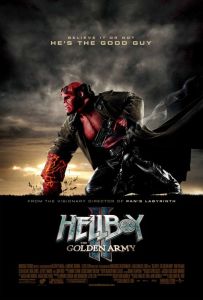 I disliked the first Hellboy, dubbing it the second worst film of 2004. The fact that I enjoyed the sequel is nothing short of shocking. Honestly, I think this mumbo jumbo is easier to swallow when it’s more fantasy based than science fiction based. I can accept an alternative magical world filled with elf princes, troll markets, and tiny “tooth fairy” creatures that act like piranhas with wings. Nazis and Zombie Rasputin trying to open a portal to giant squids? Hellboy II is even more imaginative and far more enjoyable. Writer/director Guilermo del Toro has refined the world and makes sure his story follows the rules it sets, which means that while the plot gets crazy it doesn’t feel cheap. I actually had some fun with Hellboy II and del Toro knocks out some pretty crafty action sequences. As expected, the makeup and creature designs are impeccable, which may explain why I had more fun watching the various magical creatures than following Nazis and slime wolves in the first flick. The lithe Angel of Death is particularly startling, with a head like a fried calzone and eyeballs dotted along expansive bird wings. This is a film that feels much more confident about its identity, thanks in part to getting rid of the rookie main character from the first film and focusing on the big red guy. If del Toro ever makes a third Hellboy film, I can honestly say I’ll be highly intrigued to see what weird wonders he cooks up. This statement is astounding considering I felt that there was only one 2004 film worse than the original Hellboy.
Nate’s Grade: B
Share this:

The Sisterhood of the Traveling Pants 2 (2008)
 The ladies that inhabit The Sisterhood of the Traveling Pants 2 are not the same group of gals that charmed the pants off of me in the 2005 original film. This time the foursome is feeling some strain because they’ve all graduated and moved onto insanely ludicrous positions. Tibby (Amber Tamblyn) is making movies at NYU; Lena (Alexis Bledel) is studying art at the Rhode Island School of Design; Bridget (Blake Lively) is assisting with an archeological dig in Turkey; and Carmen (America Ferrera) is at the Brown theater department where she gets the lead in a summer production. Let’s face it, these are not the down-to-earth girls that were presented before. Was it too much to ask that one of the girls have a modestly plausible scenario? The drama is again split into two camps, the petty and comedic (Lena must choose between boyfriends, Carmen has to practice her lines) and the melodramatic (Bridget still has to deal with her mom’s suicide, Tibby has a pregnancy scare). The movie doesn’t work this go-round because every beat of the plot is wholly predictable (of course the guy Lena flirts with in art class will end up being the nude model), and much of the conflict is just inane. The characters act in stupid and contrived ways because the plot demands it. Sure the condom broke but can’t Tibby get the morning after pill at least? Sisterhood 2 also packs a baby birth, reunion between granddaughter and the grandmother she never knew existed, and a climactic trip to Greece for some serious girl power. It’s drama overload and lacks the notable sincerity of the first film.
Nate’s Grade: C
Share this:

Rambo (2008)
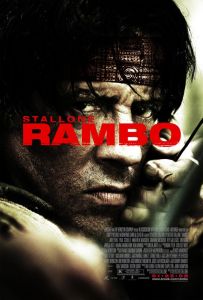 Count me as one of the many who were surprised at how effective Sylvester Stallone was when he dared to make a sixth Rocky movie. That 2006 swan song was an effective and somewhat emotional return for a character that had been dormant for over 15 years. Now Stallone is trying to work his resurrection magic yet again. Rambo was the epitome of the 1980s action star as he laid waste to vast stretches of enemy armies. What few remember is that Rambo’s first film, 1982’s First Blood, is actually more of a psychological drama about a Vietnam War veteran coping with adjusting to life back home. The action only comes at the end and a grand total of four people perish. Stallone had bigger plans for the character, I suppose. Just as he did with Rocky, Stallone has brought back an old character now with an older face.
John Rambo (Stallone) has been living outside the Burma (now known as Myanmar) border in Southeast Asia. He’s commissioned by a group of missionaries, including pretty blonde Sarah (Julie Benz), to transport them upriver into Burma. They want to do aid work, but Rambo says that Bibles cannot help a country overrun by men with guns. Eventually, all those Christian missionaries are kidnapped by a ruthless warlord. Rambo teams up with a group of mercenaries to go back and rescue them. A lot of people die horribly in the process.
Do we need another Rambo movie? The first one was linked to the Vietnam War, the increasingly cartoonish sequels involved John Rambo going back to Vietnam and then going to Afghanistan to help take out the invading Soviets. Perhaps the figure of Rambo should be added as a footnote to Charlie Wilson’s War. But the world has changed and the notion of a one-man army taking out the trash seems a tad ludicrous when a modern enemy isn’t a clear, identifiable source. Stallone wisely returns his scarred soldier to the jungle, back to where atrocities are going down in international lands. In some manner, Rambo becomes like a wishful force for justice, and instead of Vietnamese and Russian soldiers being shot out of jingoistic American glory, it’s Burmese military warlords that meet their makers. Stallone even opens the film with real archival footage of the Burma military junta committing violence acts. The bad guys feel real and relevant, which makes it partially more fulfilling when Rambo meets out his own brand of punishment.
 The dialogue is sparse and kept to an expository minimum. This is for good cause. Ladies and gentlemen, allow me to perfectly showcase for you why it is a blessing that Rambo is as dialogue-free as possible. This exchange happens early in the film and is a glimpse into the philosophical rumblings of one, John Rambo.
Sarah: Really? If everyone thought like you, nothing would ever change.
John Rambo: Nothing does change.
Sarah: Of course it does! Nothing stays the same.
John Rambo: Live your life cause you’ve got a good one.
Sarah: It’s what I’m trying to do!
John Rambo: No, what you’re trying to do is change what is.
Sarah: And what is?
John Rambo: Go home.
That’s the kind of dialogue you hear during fake audition scenes in movies, where the aspiring actors are saddled with ponderous drivel. There is some discussion over whether it is right to take a life. You get an idea of Stallone’s worldview when he has the pacifist preacher eventually kill his fellow man out of survival. After the twenty-five minute mark or so, Rambo essentially becomes a silent movie with added grunts.
The plot is as thin as possible; it’s essentially a rescue mission stretched to 90 minutes. Of course Rambo is a brutal and bloody action flick, but man is this thing tremendously gory, and it’s war gore so that means bodies being blown to bits. I’m somewhat awed at the sheer variety of ways bad guys have giant holes punched in them and through them. Limbs go flying, blood soaks the ground, heads go rolling, insides spend more time on the outside, and bodies are ripped apart. The blood and guts splatter the screen so much that sometimes even the camera can’t escape. There’s so much carnage that you may be advised to wear a poncho if you sit close to the screen. According to the Internet Movie Database, Rambo has 236 onscreen kills and that averages to 2.59 killings per minute. It’s a viscerally violent flick that can become occasionally entertaining, if you can stomach other people’s stomachs exploding in your face. In the end, though, the violence is just another bloodlust high that completely dissipates once the movie concludes, and you?re left with nothing of value. It’s somewhat fun while it lasts, but once it stops Rambo is an empty exercise. Then again, if you’re hungry for lean, mean action, and only action, then Rambo will certainly provide the gory goods.
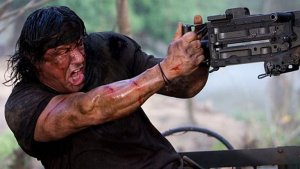 Stallone has somewhat re-energized his career by going back to the well. Rambo isn’t as nuanced as that big palooka Rocky, but the taciturn man of action suits Stallone. After a 20-year absence, Stallone eases back into the character and gives him a satisfying weariness, as solitary life has taken its toll. You won’t find me specifying the accomplished feats of acting in this movie because most of the acting is the equivalent of running and falling down, though perhaps not in one whole piece. Credit must be given to the 61-year-old Stallone, who still appears physically agile and spry when he could be cashing a Social Security check. Benz (TV’s Dexter, Saw 5) spends most of her time wailing through tears. It must have been exhausting for her tear ducts and her lungs.
Rambo is a movie that doesn’t pretend it’s anything but a grisly, masculine action flick. The story isn’t anything remotely involving and I doubt that Rambo was a character that needed to be reawakened. However, as a meaty old school action film, it aims to satisfy in the moment. Stallone does what he does well. It should be noted that the Myanmar military government has naturally banned this latest Rambo entry but rebel factions have actually used the film as a source to renew the spirits of the oppressed. They have even taken to using some of the dialogue as rallying cries. To think after all these years Rambo could still have an effect on the world. That’s more amazing than any of the creative carnage within the 90 minutes of Stallone’s rumble in the jungle.
Nate’s Grade: C+


You must be logged in to post a comment.