Blog Archives
Atlas Shrugged: Part II (2012)
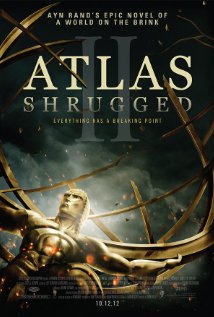 You’d think after the horrible and horribly boring Atlas Shrugged: Part One that a promised Part Two might just disappear into the ether. If only we could have been so fortunate. Ayn Rand’s cautionary opus about the evils of big government is given another creaky adaptation that fails to justify its existence. I feel like I could repeat verbatim my faults with the first film. Once again we don’t have characters but mouthpieces for ideology, an ideology that celebrates untamed greed. Once again the “best and brightest” (a.k.a. world’s richest) are disappearing and the world is grinding to a halt without their necessary genius. Does anyone really think if the world’s billionaires left in a huff that the world would cease to function? The assumption that financial wealth equates brilliance seems fatally flawed. Once again it’s in a modern setting where America has gone back in time to value railroads. Once again the main thrust of the inert drama is over inconsequential railway economics. Once again people just talk in circles in cheap locations. Once again the government agencies are a bunch of clucking stooges, eager to punish successful business. Once again Rand’s Objectivist worldview is treated as gospel and value is only ascribed to the amount of money one can produce. This time we have a slightly better budget, a better director, and some recognizable actors like Samantha Mathis, Esai Morales, Ray Wise, Richard T. Jones, and D.B. Sweeney as the mysterious John Gault. The story transitions to a ridiculous government mandate that include such incomprehensible edicts like making sure no one spends more money than another person. Can you imagine the paperwork involved? This woeful sequel will only appeal to Rand’s most faithful admirers, and you probably don’t want to hang out with those people anyway. There’s your clue: if you see someone carrying a copy of Atlas Shrugged: Part Two they either lack taste or are far too generous with movies. If there is indeed a concluding Part Three, it will be further proof that Rand’s market-based screeds are not accurate. The market has already rejected two of these dreadful movies.
Nate’s Grade: D
Share this:

A Good Day to Die Hard (2013)
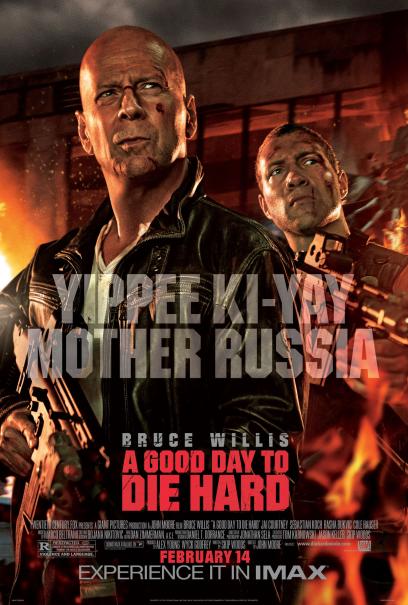 A Good Day to Die Hard, the fifth entry in the series, is clearly, on all fronts, the worst movie in the franchise. I suppose this shouldn’t come as that big of a surprise. Most fifth movies are not seen as peaks in creative achievement (I will go to my grave singing the praises of Saw 6, one of the few late sequel successes). I’m sad to report but Die Hard 5 is just a lousy action movie trying to get by on the good will of its famous heritage.
John McClane (Bruce Willis) is visiting Russia to find and help his estranged son, Jack (Jai Courtney). Dad thinks his boy is in trouble with the law but really Jack is a CIA agent working undercover to prevent a nuclear arms sale. A Russian political figure is promising to go public with his findings of corruption, and the man falls under the protection of John and Jack McClane. Father and son must dodge all sorts of danger and maybe, just maybe, they’ll bond over the experience of shared peril.
All of the story and character problems would have been forgivable, or at least mitigated, if this movie actually delivered the goods when it came to its action sequences. Sadly, Die Hard 5 is just thundering mediocre from start to finish. No, I take that back. In the last five minutes of the movie, it has one action development that is unexpected and interesting and different, and that’s when John McClane drives a truck out of the back of a helicopter to drag down the chopper. I repeat, this lone moment of action interest occurs with about five minutes left until the end credits roll. That’s a whole lot of gristle to get to something good. Until this point, Die Hard 5 is replete with car crashes and explosions and noisy exchanges of gunfire, but what does it all add up to? It’s like it has familiar action elements we’d expect in this sort of adventure, but it never seems to know what to do with them. Great action takes advantage of geography, moves the story forward, and escalates with natural complications. Most of Die Hard 5 is repetitious fights or shootouts in lazy locations (oh look, another warehouse-type building!). There’s a car chase through the streets of Moscow that should be exiting, but instead it just stays the same as it began. It’s two cars smashing into others. The final action takes place at the Chernobyl nuclear site, and yet it could have been just any other unwatched warehouse. I never thought I’d ever go to a movie with “Die Hard” in its title and be bored… by the action.
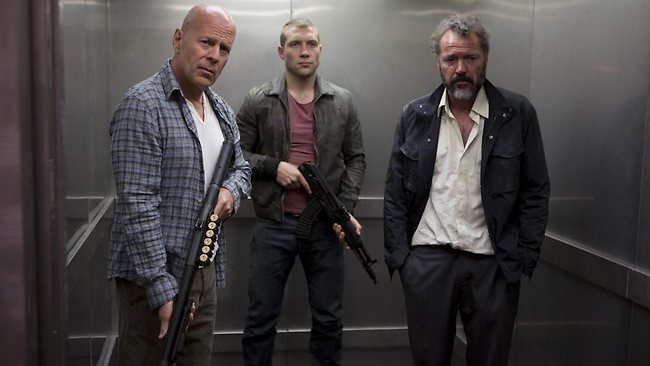 Here’s the deal: if you’re going to produce action sequences that don’t just stretch believability, they throttle it, then you better produce some memorable material. I long for the simply days of the original Die Hard where John McClane was a mere crafty mortal, confined to one location, using his wits, training, and stealth to turn the tables on the bad guys. He was an ordinary cop and that made him even easier to root for. Now he’s graduated to the Table of Indestructible Action Stars, men who can survive any scrape with barely a scratch no matter how improbably or death defying. I accept this change, but if you’re going to present larger-than-life action, you have an obligation as a filmmaker to make it entertaining. Die Harder had the man ejecting himself out an exploding airplane, and that was cool. Live Free or Die Hard had McClane driving an 18-wheeler along a collapsing highway, finally jumping onto a downed fighter jet. It’s completely over-the-top but it’s memorable and entertaining and, yes, cool.
The more I think back, the better 2007’s Live Free or Die Hard looks. It worked surprisingly well, well enough that I claim it as my favorite Die Hard sequel. First off, that movie had memorable action exchanges; I can still recount four or five sequences off the top of my head years later. Even if it was a standard fight between two characters, it found ways to make it interesting, like a fight between McClane and Maggie Q (TV’s La Femme Nikita) that extended into an elevator shaft and a falling auto. While Timothy Olyphant (TV’s Justified) couldn’t hold a candle to Alan Rickman (Harry Potter franchise) as far as movie villainy, the man was tremendously better than the pitiful bad guys in Die Hard 5. You have to let your villains have opportunities to be villainous, but they also have to be competent at what they do or else the movie is too obviously one-sided. Look we all know the hero will prevail but we like to see an even match for most of the running time. The Russian bad guys in this movie just suck. They suck and characters and they suck as bad guys and throwing twisty double-crosses and triple-crosses, just to keep an audience awake, make their master plan seem even more convoluted and implausible. All of this chaos is over a file whose possession, if I’m not mistaken by the needless confusion of the twists, resides with the villains for a good period of time. Why are they still going through this whole charade? Also, they suck.
The idea of tagging McClane with his son seems like a weak attempt to extend the franchise beyond the ownership of an aging Willis. I don’t care about John McClane’s kid. This isn’t Roots. I don’t come to these movies to check up on the guy’s brood of feisty kids, which by the way, Die Hard 4 did this same storyline much better with his daughter, Lucy (Mary Elizabeth-Winstead). Jack McClane is a thickheaded dolt of a son, and as far as a charismatic action figure capable of taking over a franchise, don’t hold your breath. The father/son dynamic is so poorly developed. They mostly just grunt at one another and we call it characterization. Pairing McClane up with a sidekick has worked before but only when the characters are vastly different from the central man of action, like Samuel L. Jackson and Justin Long’s more comedic characters. They provided contrast and conflict and brought out different sides of the John McClane character. When you pair John McClane up with his son, who happens to be a younger version of his dad, you get nothing. I already got one John McClane onscreen; I didn’t need a watered-down, charisma-free clone. If they’re going to continue the franchise with one of John McClane’s kids, I pray that it’s the more assertive and capable Lucy.
A Good Day to Die Hard is just not a good movie at all, and it’s an even worse sequel. The fact that I endured 97 minutes of a Die Hard movie and had to scramble for anything positive to say about the action should say more than the problems with logic, plot, character, pacing, and overall production. Willis doesn’t even look like he’s enjoying himself any more. The film never grabs you, never bothers to show you something different, and after a while it simply just beats you into submission with its video game-like artificiality and redundancy. I demand more attention and care put toward my action sequences rather than treating them like a tossed salad. Sure the right elements are there but they’ve been given no thought or care. I was literally battling sleep during long portions of this awful movie. For fans of the series and Willis, it’s hard to settle on any other conclusion but one of disappointment. The story is muddled and generic, the villains are muddled and generic, the action is muddled and generic. You get the idea, and Die Hard 5 is routine to the point of autopilot, a soulless cartoon of careening bodies and speeding bullets. The only reasonable excuse I can give for seeing this movie, lowered expectations and all, is just to see how low the Die Hard franchise has fallen.
Nate’s Grade: C-
Share this:

This is 40 (2012)
 In the five years since 2007’s comedy smash, Knocked Up, writer/director Judd Apatow has ascended to heights in Hollywood that few ever achieve. And while his disappointing 2009 film Funny People may have been an example of the man flying too close to the sun (let’s mix metaphors, why not?), he’s had a stable career guiding mostly hit comedies to big numbers, particularly last year’s Bridesmaids. For Apatow’s next directing effort, he picks up a handful of supporting characters from Knocked Up and gives them their own spotlight. This is 40 is Apatow’s “sort-of sequel.” It may seem familiar in tone and style to his previous efforts, but there’s one big difference between this film and Apatow’s previous works. This movie never feels like it goes anywhere. Even Funny People went somewhere even if I disliked it.
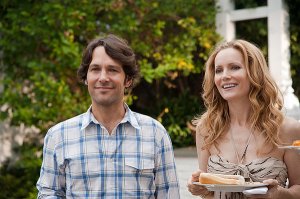
Five years after the events of Knocked Up, Peter (Paul Rudd) and Debbie (Leslie Mann) are struggling to keep their household afloat and sane. Their daughters, Sadie and Charlotte, (played by Apatow’s real daughters, Maude and Iris), are constantly fighting, Debbie’s worried one of her employees is stealing from her business, and Pete’s trying to save his record company without alerting his family to his panic. Pete has put all his efforts into promoting a new album from 1970s rocker Graham Parker, but really he’s fighting a losing battle against mainstream taste. Pete has also been secretly loaning out money to his no-good father (Albert Brooks), while Debbie has been trying to reconnect with her distant biological father (John Lithgow). Weirdly enough, both fathers have started secondary families and have broods of young children. As Debbie and Pete both approach the big 4-0, both of them make resolutions to better themselves, renew their family bonding, and reignite the spark in their romance. Of course, after two kids and several years of marriage tallied, it’s easier said than done.
 The Apatow films have always had their own loping rhythm to them, an easygoing quality that isn’t as directed by plot as character. So when I say that This is 40 feels rather aimless, I want readers to recognize that this goes beyond the normal loosely plotted Apatow affairs. Usually his movies have defined events to direct the overall trajectory of the plot; a baby on the way, losing one’s virginity, etc. I’m hard pressed to say what exactly is the direction of This is 40. It’s about the ups and downs of a married couple, but there isn’t necessarily any definable conflict. They’re sort of in a malaise and internalizing their unhappiness, but the movie is the sum total of many small conflicts that never seem to congeal. As a result, the movie feels like it’s often coasting, going beat-for-beat until something new takes it on a mild diversion. It’s a movie of diversions without a unifying path. Sure the couple becomes, presumably, stronger by the end of the film, but I can’t say what’s taken place to explain this progression. The movie plays out like a series of loosely connected scenes. I enjoyed myself, and found the movie often amusing, but I kept wondering what it was amounting to. It was never enough of a niggling concern to stop from being entertaining, but when it was done, I thought to myself that I just watched Apatow’s friends hang out for two hours and call it a movie.
There’s also the issue of indicating this is a sequel to Knocked Up or at least exists within the same universe. There’s very little continuity between the two films other than Pete and Debbie’s family. Jason Segel (The Muppets) and Charlyne Yi (Paper Heart) make reappearances playing characters with the same names, but they don’t seem like the same characters (though the gyno doc is the same – hooray). My major sticking point is the complete absence of the stars of Knocked Up, Ben (Seth Rogen) and Alison (Katherine Heigl). Now I wasn’t expecting a drawn out cameo from these two, especially after Heigl publicly badmouthed Apatow and the movie that made her a star. I did expect some passing reference, even something as small as, “Ben and Alison are looking at schools for their daughter.” I just wanted something to feel satisfied. Where this becomes a problem is that I’m fairly certain that Ben and Alison would be attending several of these major social events for their family members. They make a big deal about Pete’s 40th birthday party, so why wouldn’t Ben and Alison be there? And with her litany of marital woes, wouldn’t Debbie seek out, you know, her sister to talk with, the same sister she hung out with all the time in Knocked Up? Apatow might as well have just given everyone a new name if this was as sequel-y as This is 40 was daring to go.
Part of my lukewarm reception to the film is likely my lack of empathy with the problems of the main characters. Good storytelling should allow anyone to be able to empathize with characters dissimilar to themselves. I found many of the problems in This is 40 to be the stuff of rich fantasy. Pete is worried his record company, that he started, might not make it. He’s also been secretly giving his mooch of a father $80,000 (!) over the years. Maybe these people could stand to cut back and live within their means. Their house is huge, downright opulent, and it seems like Pete has wasted plenty of money on needless expenditures, which his own employees eventually point out at work. Did they need a big 40th birthday bash? Do their kids need every expensive gadget? When they take a vacation, does it need to be in a lavish hotel along the beach? I found too many of these complaints to be whiny and indulgent. That’s not to say that there aren’t serious relationship problems that are given thoughtful attention. This is 40 is arguably Apatow’s most mature and reflective film yet, though that might be faint praise to some. I would rather the movie spent more time focusing on the relatable concerns of a relationship crumbling rather than the stress of possibly having to move from a super-rich house to a merely somewhat rich house.
And yet the movie is routinely funny and charming, thanks to the Apatow standards of cast camaraderie, character, and the mixture of raunch with sweetness. I like these characters and so I enjoy spending time with them, and even if I feel like we’re not going anywhere fast, I don’t mind that much. I’ll gladly spend two plus hours with these funny people and their mid-life crises comic follies, at least once. The characters are well drawn and played by capable comic players that can do their Apatow jazz deal, finding peculiar riffs to work and squeeze out mirth. I thought a discussion over the appeal of being a widower and the fantasy of a spouse’s untimely demise to be quite funny as well as a topic generally unspoken (“This is the mother of your children we’re talking about. You want her to go peacefully.”). Rudd (Wanderlust) and Mann (The Change-Up) are terrific together and entirely convincing as a longstanding couple, people who know the ins and outs of one another. It’s fascinating just to watch the nuts and bolts of a relationship that is still a battle; it also helps when you like both participants and find that they each have valid points. Though I cannot fathom how hiding impending financial doom is a smart move.
 Apatow does a fine job of making sure the dramatic parts do not overweigh the film, usually settling things with a nicely punctuated joke or pop-culture critique (oddly enough, TV’s LOST becomes a major reoccurring gag, though you expect a bit more of a comedic payoff when they get to the controversial finale). I’m not sure that many people are going to know who Graham Parker is, but here he is folks. There are a lot of Apatow players peopled throughout, like Chris O’Dowd (Bridesmaids), Lena Dunham (TV’s Girls), and Melissa McCarthy (Bridesmaids), making fine work with minimal screen time. You’ll recognize other familiar faces as well. Occasionally the jokes feel like they go on too long, catching the downward slope of an overstayed improv riff, but I was laughing throughout and enjoyed the unpredictable nature scene to scene. You’ll likely predict the outcomes for certain storylines and conflicts, since Apatow is a sucker for the squishy ending, but you’ll feel like it got there on its own relative terms. It’s not exactly a happy ending but it’s a less unhappy ending.
There are plenty of supporting actors that shine in this movie, though I feel that I need to single out the great Albert Brooks (Drive). He plays such a passive-aggressive, manipulative, mooch of a father, but he does it in a way that almost wins you over, how straightforward he is with his bad behavior. When Pete tells him he cannot loan any more money, Brooks blithely, almost cheerily, theorizes that murdering some of his recent kids can solve this problem. He marches out, gets a hose, and asks the kids to volunteer who wants to be murdered. It’s scenes like this that manage to be funny but also cutting to a dramatic truth that the film hovers around, occasionally hitting the bullseye. Megan Fox (Transformers) is also enjoyable as a, what else, vivacious employee men are falling all over themselves for. And even Apatow’s own kids give rather strong performances, now playing actual characters rather than scene-stealers. Maude, the oldest, has a lot of dramatic scenes as the teenager daughter coming to grips with hormones and her crazy parents. The Apatow clan might just get some outside work after people see dad’s movie.
While I doubt Apatow has made any sort of definitive statement on what it means to approach four decades worth of life (and poop jokes), This is 40 is a perceptive and enjoyable movie even if it feels like a collection of scenes. Good thing I like these characters and enjoy spending time with them, otherwise I might find this whole film to be a bit aimless and self-indulgent. Seriously, how many scenes are there going to be of people singing along to music? This is 40 has enough going for it, be it comedy or some insightful dramatic moments, though it keeps an audience a bit removed due to the unrelatable nature of their posh problems. If there’s a This is 50 in the works, next time get me some more Rogen time. I’d rather watch him deal with raising a teenage girl in the age of social media. You don’t have to know anything about Knocked Up to follow along with This is 40, but then again, if you haven’t seen Knocked Up, just go watch that movie instead. Trust me.
Nate’s Grade: B
Share this:

Breaking Dawn: Part Two (2012)
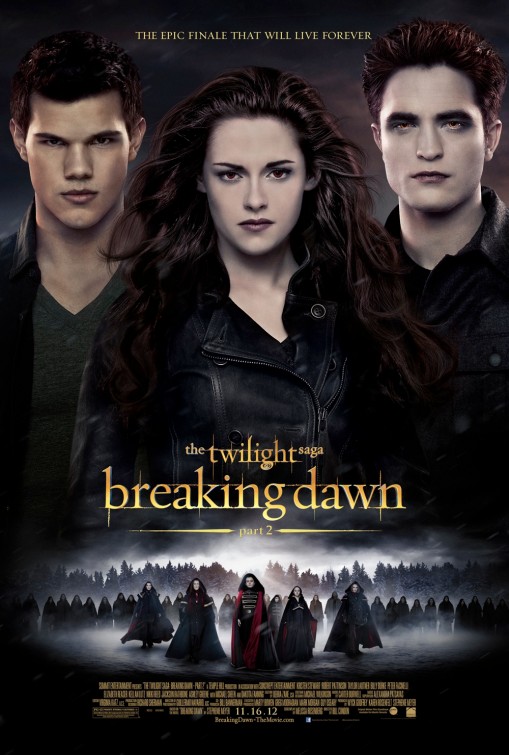 Ignoring the ironic nature of the Breaking Dawn Part 2 poster taglines declaring love to be “forever,” the box-office juggernaut that is the Twilight franchise is coming to an end. Based upon Stephenie Meyer’s outrageously popular series of books, we’ve followed the love life of Bella Swan as she’s experimented with human, vampire, and werewolf. The studio heads decided to take Meyer’s final book and split it into two books. Breaking Dawn Part 1 had a wedding, honeymoon, pregnancy, supernatural birth, and Bella’s death/resurrection. And yet, that movie was still crushingly boring. My hopes were substantially low for Part 2, despite director Bill Condon’s (Dreamgirls) best efforts to jazz up all the awful plotting, characters, and romance. Then a funny thing happened. I started enjoying myself, and then the movie took some chances that I felt were daring considering its rabid fanbase. And then watching Breaking Dawn Part 2 became more than watching the film, it was also the experience of watching the audience. To that end, the movie delivers and I may rue these words but I kinda sorta almost liked enough of it.
Bella Cullen nee Swan (Kristen Stewart) and her husband, immortal vampire Edward (Robert Pattinson), have gone through the wringer. In her waning days as a human, Bella got knocked up during her honeymoon, and her half-human half-vampire baby killed its mama on the way out. Now Bella’s a vampire and a mom (note to self: start writing new script – “Single Mom Vampire”). Her daughter, Renesmee (Mackenzie Foy’s face on a whole lot of other people’s bodies), is rapidly growing. She’s mistaken for a vampire baby, which is a punishment worthy of death. This news gets Aro (Michael Sheen) to rustle up his Volturi forces, a group of vampires with super powers. They’re coming for the Cullens and little Renesmee. The friendly vampires scour the world, gathering “witnesses” to the tyke’s half-vampire status, but really they’re gathering an army to defend themselves. It’s super vamp against super vamp and heads will roll.
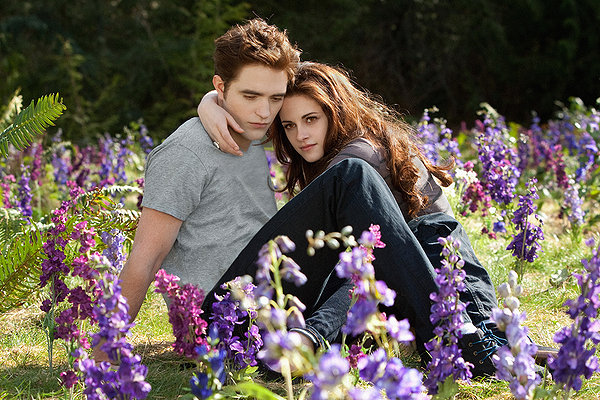 I clearly understand that I am in no way the target audience for this franchise and that my reams of pithy words will find little traction in the hearts of the Twi-hard faithful, but I’d like to state that I’ve never been a hater of the movies. Well, let me rephrase that. My thoughts ping-pong from liked okay (Twilight) to hated (New Moon) back to liked okay (Eclipse) back to hated (Breaking Dawn Part 1), and now here we back are to liked okay. Consider it a double-dip recession in quality. I still view the whole franchise as an exercise in pre-teen wish fulfillment, but I’ve already written extensively upon that theory so I won’t bother re-litigating that battle. With all that said, I found myself oddly enjoying myself for sustained durations. It’s just as silly as the other movies but finally we can move on from mopey Bella and her dubious romantic triangle. Finally we don’t have to suffer through two hours of kids making (new) mooneyes at each other (did I just out myself as “old”?). By this I mean finally something ELSE happens rather than the incremental coupling of Bella and Edward. Granted their kid is really more a prop than a character, but at least the story has taken one gigantic leap forward. Finally Stewart can actually smile and, you know, do things of actual consequence!
It’s no secret that the Twilight saga, as its monetary benefactors would like to dub the franchise, has noticeably been better the less time it spends with its female protagonist, Bella. Breaking Dawn Part 2 might just be the least Bella-filled episode yet, a cause of celebration for my brethren who view Ms. Cullen as an infuriating, insufferable, insulting protagonist. At least in this movie she develops a sense of self-identity, though too often that identity falls into the camps of Wife and Mother. With this movie, she’s adjusting to life as a vampire, so we get cutesy scenes of her hunting prey, learning how to fake looking like a puny human, and arm-wrestling the strong cocky vampire guy to, you know, for the strides in girl power. Too little too late, Bella. I find it more than a little funny that Bella’s super power is passive in nature, fitting a passive protagonist that waist for people to give her meaning and tell her what to do. I should stop before another rant unspools as I’ve done on previous Twilight writing occasions. In short: Bella sucks.
We’re introduced to a lot of new characters in this movie and each brings some sliver of backstory to develop. I’m not saying they’re all deserving of attention or interest, but at least these new clans of vampires brought some much-needed life to what has often been a claustrophobic, monotonous love triangle. Opening up Meyer’s world and seeing other vamps with special powers are a fun detour that I wish had taken place sooner. I liked seeing Lee Pace (TV’s Pushing Daisies) as a soldier from back to America’s colonial days. I’m left scratching my head why certain vampire members were added to the ranks when they didn’t even show up for the final showdown. What was the point of having Joe Anderson (Across the Universe) show up and be all skeptical about the group’s chances of winning… and then not have him join? So he was skeptical from the start and then remained so, choosing to sit the finale out. Well I’m sure glad we spent time on him then. Also, the movie falls into the trap of establishing super-powered beings that are too powerful. We get one guy who can control the elements. Not just one or two but freaking all of the elements. He’s like Captain Planet minus that dumb kid with the lame heart power. During the climactic battle, this kid uses his power ONCE. How do you give him a wealth of super powers and then sideline him? There’s also an Amazon vampire who can control people’s vision, namely making them see whatever she wants. How are these two assets not utilized for tactical supremacy?
 I had the suspicion that Breaking Dawn Part 2 might be the best film in the series simply by the fact that it’s the one with the most Michael Sheen. God I love this man. His last-minute turn in the appalling New Moon banished the suicidal thoughts swirling in my head. Even when he’s in bad movies, Sheen is usually the best thing about them (see: TRON: Legacy or the Underworld films). Here’s an actor who knows exactly how ridiculous everything about this universe is, and by God he sinks his teeth in. The benefit of added Sheen cannot be overstated. The movie greatly benefits by having a strong outside threat early. Only the third movie, Eclipse, had an external threat from the start, and that gave the film a much-needed sense of urgency. I was with Sheen and the Volturi on this one. They were merely following the laws of vampires meant to protect their own kind. Vampire babies are a no-no since they cannot control their otherworldly urges, so they and their makes must be destroyed. You know you’re in for a darker Twilight when early on we witness a baby getting tossed into a roaring fire. I admit that I have a susceptibility to falling under the sway of magnetic villains. Perhaps this speaks to some character defect of my own. It probably just speaks to the fact that movies often have boring heroes and charismatic villains. Sheen is so hammy and delightful and I just wanted more of him amidst the melee that punctuates the end. The man even looks like he’s about to lead a marching band during the battle and he’s still badass. Such is the awesomeness of Michael Sheen. Of this there can be no question.
But then the Condon and series scribe Melissa Rosenberg do something almost extraordinary given the slavish devotion to the series fans have. They divert from the source material in broad strokes during the climactic vampire brawl. I won’t go into exact details but the preview audience I was with was absolutely losing their collective minds. Women were screaming, cries of “Nooo” rang through the room; all around me was the echo of consternation and shock, women trying to absorb the reality of what they were viewing. Sitting with them, taking in their shrieks and lamentations, the general horror of what might happen next… it was a thing of beauty. I can almost recommend seeing Breaking Dawn Part 2 simply to be part of this experience. However, you’ll have to act quickly and be selective. You’ll need a packed theater filled with vocal Twi-hards, likely an opening weekend evening crowd, the kind that openly cheer shirtless revelries from the male co-stars. And then just sit and wait, knowing that soon all that revelry will turn to shock. I sound so mean-spirited explaining this and that’s not my intention. I didn’t necessarily enjoy the discomfort of the Twi-hards. I enjoyed the bewilderment. It felt like the theater was alive, coursing with the energy of alert uncertainty. Anything could happen, including some very not nice things. To be one tiny drop in an ocean of furious estrogen, well it’s an experience that deserves mentioning. Its strange experiences like this that make me love going to the movies, and that, ladies and gentlemen, is a combination of words I’d never thought I would write about any Twilight film.
Also, though my expectations were never that high to begin with, I have to credit Condon with fashioning a fairly exciting action brawl, one that’s surprisingly graphic at spots for a PG-13 movie primarily aimed at young girls. The series has been building up to a massive showdown, and the movie itself has been putting the feuding factions into place, so it’s satisfying that the finale truly feels climactic and delivers some thrills. For the record, Meyer’s book was free of any climactic battle. This movie is chock full of decapitations. I cannot recall another PG-13 film that had this many beheadings. I think you could watch a drama set during the French Revolution and you wouldn’t witness this many people lose their heads. Is there no other ay to kill a vampire? What ever happened to the good old fashioned staking of the heart? These kids these days; all they want to do is decapitate. To dull the grisly spectacle, the beheadings are weirdly bloodless. Condon does a bangup job of setting up plenty of mini-payoffs and duels throughout his busy action centerpiece. Then when it looks like the carnage is at an end, the movie takes a page from the Final Destination playbook, which Twi-hards will probably find relieving. I thought it was a major cop-out but whatever. Let the kids have their happy ending.
 Before you get your hopes up too extravagantly, this movie still offers plenty of stupid. I don’t care how you explain it, the imprinting thing is stupid incarnate. I still find it eternally creepy that Jacob couldn’t have the mother so he settles for the daughter. The fact that everyone treats this development so seriously makes me laugh. And oh boy, let’s talk about those Amazon vampires. First off, I find it hilarious that Meyer’s vision of vampire clans from around the world really just boils down to Europe and the Amazon. When they stepped onto screen wearing, and I kid you not, loin clothes and tribal markings, I was flabbergasted. Doesn’t anyone find this depiction to be at least deeply ignorant and culturally insensitive? I’ll stop short of calling it quasi-racist; though attaching “quasi” to anything lets you get away with most declarations (“This movie is quasi-watchable”). But when our big battle over a frozen lake takes place, why are these Amazon characters STILL wearing loincloths in the frozen landscape? Then there’s the annoying fact that Renesmee rapidly grows, meaning that Bella and Edward get to skip out on actually raising a baby. If Meyer intended to punish these kids for having sex in Part 1, then she needs to follow through on her antiquated sexual hang-ups.
As the franchise draws to a close, I’m trying to take stock of the five films and their overall impact (sadly, we all know with the potential riches, a reboot is likely only five years out). The end credits play out like a gauzy yearbook for the franchise, visually highlighting every significant speaking role, including the two different actresses who played villainous Rachel. The Twilight series has been very good to me as a writer; I’ve produced long-winded reviews with each new entry, and the opening-day people watching has become part of the spectacle I enjoy. That’s really what we’re dealing with here – spectacle. It’s all gooey romantic fantasy nonsense with some pretty bland characters, questionable messages for young girls, and such deadly seriousness. If we were grading on a curve, I’d say Breaking Dawn Part 2 is actually tolerable thanks to nominal character development, less whiny Bella, an influx of new characters, extra Sheen time, a better sense of humor, and a climax that truly feels climactic.
I can’t say the Twilight movies have gotten better as they’ve gone, though Condon has proven to be an apt choice to steer this franchise to a close. He’s given the franchise a bit more life, a bit more blood. I’ll never admit that the love story of Bella and Edward deserved five full-fledged movies, but I recognize the significance Twilight stands in many young girls lives. Fans will eat this stuff up. They’ll certainly enjoy the Bella/Edward sex where she doesn’t end up bruised. For them, it ends in a fitting sendoff, even after the jolts of text deviation morphs into giggled recounts on car rides home. For them, Breaking Dawn Part 2 will be the perfect ending to their beloved series. I can’t imagine anyone indifferent to the series working up that much interest, but I can say with sincerity that Breaking Dawn Part 2 is the best film in the Twilight series and potentially worth seeing for the rollercoaster ride of bewildered fan reactions. Now that the last blood has been drained from this franchise, let’s move on to more important items… like the next Hunger Games movie.
Nate’s Grade: B-
Share this:

Piranha 3DD (2012)
 Wow, I was not expecting the follow-up to the so-bad-it’s-excellent Piranha 3D to pretty much just inhabit the “so bad” spectrum, though I ignored warning signs at my own risk. I found the 2010 Piranha to be a sheer blast of campy entertainment, with some world-class gore effects and a game cast. I was actually terribly excited about a sequel; I’m ashamed to admit it now. Where did things go so horribly wrong? Much like Expendables 2, the movie’s tone shifts from tongue-in-cheek 80s throwback to meta self-awareness. The movie becomes more of a lousy comedy with some absurd violence rather than a horror movie with a nasty sense of humor. The entire premise is so labored, that a water park would become piranha-infested, and the characters are so unlikable; to dub them one-dimensional is to be too kind. The acting is abysmal even by bottom-of-the-barrel B-movie standards. The celebrity cameos feel wasted, with David Hasselhoff soaking up every second of desperation. The tension is next to nil and the gore effects are pretty cheesy, trading gallons of blood for ingenuity (many character deaths occur off screen, like Gary Busey’s). Then once the piranhas strike, the movie just completely abandons any sense of reality and becomes a gonzo comedy of the absurd, with characters behaving like idiots from another dimension. There’s even one character that gets decapitated by a simple string of flags. It’s at this point that Piranha 3DD drops any slapped-together sense of purpose. And yet this ghoulish mess can only barely make it to a scant 70 minutes (good luck getting through the abominably unfunny end credits outtakes). Reportedly, 3DD had almost the same budget of 3D. Where the hell did that money go? Piranha 3DD completely misfires on every level, failing as a horror movie, a horror-comedy, a comedy, a gore movie, hell, as a suitable movie. Whatever the metric, this movie blows. If you’re hard-pressed for gratuitous nudity soaked in blood, watch the superior 2010 Piranha film instead. I’m going to start drinking heavily and forget I ever looked forward to this monstrosity on taste.
Nate’s Grade: D
Share this:

Taken 2 (2012)
 Taken 2 (no, Taken Again, or The Retakening?) follows the all-too familiar path for action movies when sequel digits get added to titles. They attempt to redo the original premise, but bigger and better, but rarely does it succeed unless there’s a fresh take. Taken 2 is reheated leftovers. The first film was a pleasurably surprising action film, led by a steely performance from Liam Neeson. Now Bryan Mills and his family are vacationing in Istanbul and they all get taken… again (or retakened). But what really kills this movie, besides the compilation of genre clichés, is that these are the dumbest bad guys I’ve seen in some time. If I were hiring these goons I’d want to see where their class rank was at Goon University, or if they actually completed their goon studies. These guys give new meaning to the term incompetent. They don’t search Bryan’s person, they leave him unguarded and alone, and naturally they even poke their heads through bullet holes in the wall, only to be shot in the face. When the bad guys are this inept, it removes all danger. Part of the enjoyment of Taken was watching Bryan work up the food chain to rescue his daughter. Now we just get Neeson too easily taking out the bad guys. The action is a bit too hectic and doesn’t have the same crackle that helped the first film.Then there’s the dumb plot, which is best exemplified by the rooftop grenade sequence. Bryan’s daughter (Maggie Grace) is running across rooftops and just randomly tossing grenades (vacation grenades?), so Bryan can hear the sounds of explosions and note how close she is. Except she never looks where she’s tossing, so she’s indiscriminately tossing live explosive devices on the innocent civilians of Istanbul. If there’s a Taken 3, I think one of these innocent Turkish families should seek vengeance. Oh but there’s more stupidity, like Bryan killing a corrupt Turkish cop and having no ramifications for this whatsoever. It’s never spoken of again. Or Bryan and his daughter crashing through the U.S. embassy’s gates in a car, and two minutes later he’s walking the streets with no hassle. To sum up: Bryan and family murder a police officer, throw grenades into the city streets, and crash into the U.S. embassy.Taken 2 is a classic example of sequel-itis, and while it tries to make you remember the parts you liked in the first film (Neeson on a paternal rampage, his speech), I just kept remembering how much better Taken was the first takening.
Nate’s Grade: C
Share this:

The Expendables 2 (2012)
 The Expendables was a surprise hit two years ago. Sylvester Stallone collected an all-star team of aging AARP action stars and they kicked ass, took names, and didn’t apologize. It was a fitfully amusing throwback to the burly, macho action movies of the 1980s and the early 90s, a time where many of these men were kings. The nostalgia trip worked box-office magic for Stallone. A sequel was commissioned and these men of action were put back to work. There was already preliminary talk about the possible stars that could sign up for a third Expendables (Nicolas Cage and Clint Eastwood are on a wish list). Maybe people should see The Expendables 2 before getting too excited plotting out the future of this franchise. This is not a good movie even by Stallone’s standards.
Barney Ross (Stallone) is back with the best team money can hire. No, not the A-Team, the Expendables. There are also the preposterously named team members Lee Christmas (Jason Statham), Ying Yang (Jet Li), Gunner Jensen (Dolph Lundgren), Toll Road (Randy Couture), and Hale Caesar (Terry Crews). The over-the-hill gang also has some new blood, namely Bill(y) the Kid (The Hunger Games’ Liam Hemsworth). The gang runs afoul with Vilain (Jean Claude Van Damme), a terrorist mining for plutonium to sell to the highest bidder. Barney swears to thwart Vilain and calls in help from other living action legends like Chuck Norris, Bruce Willis, and Arnold Schwarzenegger.
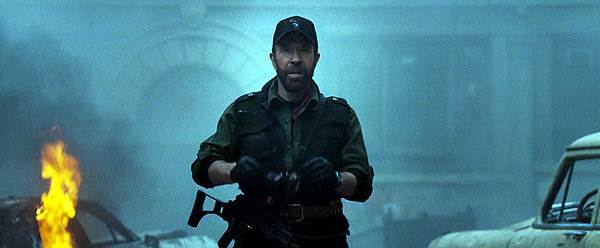
 What made the first Expendables enjoyable, at least for sustainable spurts, was its over-the-top nature comingled with a lack of irony. The movie felt often like a satire of the genre but you knew that Stallone was never winking at the camera. Stallone was never in on the joke. That changes with The Expendables 2, which often resorts to self-aware humor to poke fun at itself. This approach simply does not work. There’s an entire sequence where Chuck Norris even makes a Chuck Norris Internet joke, merging reality with irony. The bad guys are lousy shots and the good guys are the world’s greatest marksmen, but I don’t even know if this is intentionally self-aware or just par for the genre. Having Arnold repeat other people’s famous one-liners and quips (“Who’s next? Rambo?”) are not funny. The self-awareness never rises to the level of commentary or intentional satire, like say the underrated Last Action Hero. It’s just the same mindless violence but with the slightest of nods, the bare minimum to say, “Hey, we get it.” Except the movie feels shackled to this flawed approach and often the action fails to gestate into something larger than old guys shoot guns and make occasional wisecracks. The action sequences are really disappointing here. Little attention is given to geography, short of a climax set amidst an abandoned airport. I kept hoping for more of the gonzo, hyperbolic touches that the first film had in abundance. The best ridiculous moments this go-round are Van Damme roundhouse kicking a knife into a guy’s heart, and the piece de résistance, Norris shooting a guy onto an airport security conveyer belt where we then see the body full of lead on the x-ray machine.
Most of the Expendables teammates simply have nothing to do. Granted with a large cast the ratios of screen time are not going to be equal across the board, but I’d expect that Stallone and crew would at least give these people some reason to exist in the plot. Jet Li vanishes after the twenty minute mark and never returns. There’s truly no reason that Randy Couture and the great Terry Crews couldn’t have been Guy #5 and Guy #6. Lundgren is setup to be a chemistry genius, and then when trapped inside a mine, it looks like he’s about to utilize his chemistry knowledge to save the day. Nope. Then why would you even set this ability up if you weren’t going to do anything? Even Statham is pretty mitigated and he’s the number two guy. If you’re going to have a team-oriented action movie, then make use of the team and their unique skills. Part of the joy of these kinds of movies is watching the crew work together, like in The Avengers. With this film, we just get rapid-fire shots of the good guys shooting the bad guys, sometimes separately, sometimes together. It gets boring plenty quick.
 The plot is fairly bare-bones even more an action movie. It’s a rote revenge movie where Stallone and the boys are out to get Van Dame after he killed one of their guys (the only expendable Expendable, it seems). The plot never gets much more complicated than that. The gang encounters a group of terrorized villagers who want to rescue their husbands from Van Damme’s forced labor. Our bad guy even has a name that is a single letter away from spelling “villain” in case you needed the help. You know how he’s one evil man? He wears his sunglasses at all times even underground inside a mine. Of course this may also be a stylistic choice to hide Van Damme’s horribly Botoxed face. The Muscles from Brussels is actually the second best actor in the movie (Crews easily remains the best), good enough that I wouldn’t mind seeing the older Van Damme in more movies. Sadly his big showdown with Stallone is pretty short, with Van Damme resorting to the same roundhouse kicks before being subdued.
Stallone sat out the director’s chair and instead Simon West (The Mechanic ) takes the reins. I suppose this freed up Stallone to… focus more attention on the script? Emoting more? The visuals are fairly muddy and lack the polish of West’s other hyperactive action movies like Con Air. The opening assault sequence, where Barney and the Expendables roll through an enemy compound, literally busting through walls, is the visual highpoint for the movie. I credit the filmmakers for sticking with the R-rating and not toning down their violence. It would seem like hypocrisy to have a movie about a bunch of crusty old-timers lamenting how soft the world has gotten and then wuss out to a bloodless PG-13 rating. At least this wrecking crew doesn’t hold back when it comes to their specialty: mayhem.
The Expendables 2 should have been more than just Stallone and his peers patting themselves on the back. I’m glad Willis and Schwarzenegger graduated from cameos to supporting roles, but I wish the movie just had something for these men of action to do. There’s far too much repetition with its action, which becomes a formless montage of people shooting guns in slightly varying locations. The self-aware humor kills the development of the action and it’s simply not funny enough. It’s the kind of sad humor of old men trying to still look hip, like they’re in on the joke. Hey, they can make fun of themselves too. It’s just not a fun movie. There are only so many tried wisecracks you can endure, only so much redundant action, plotless excess, and crowbarred cameos. The Expendables 2 takes the little merits of the first film and completely loses touch, all to try and make a joke. In the end, the real joke is still on Stallone and the filmmakers. They wanted to make a movie that knew it was stupid. Instead they just made a stupid movie.
Nate’s Grade: C-
Share this:

American Reunion (2012)
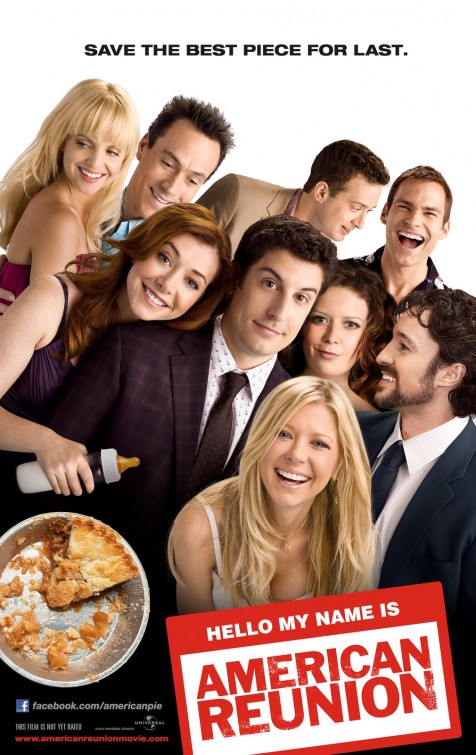 What loser doesn’t attend their 13th high school reunion? Who even organizes such an untimely event? The generally unnecessary American Reunion is being dished out to the public for a number of reasons. The studio would like to revive their once lucrative sex-comedy-meets-baked-goods franchise, and most of these actors could desperately use the work. Remember when the likes of Chris Klein, Mena Suvari, and Tara Reid were above-the-title names? What I recall, now that the gang is together again, is that I found most of these characters to be dullards. They’re in their 30s, have careers and families, and stupidly comfortable lives, yet they’re up to the same old hijinks, which just seem a bit more desperate and embarrassing this time around. Seann William Scott, the franchise’s true wild card, is still amusing as ever, but I couldn’t swallow the forced nostalgia for characters that are unappealing. Jason Biggs and Alyson Hannigan still make a nice pair, but rehashing the old gang mitigates their screen time. Comedy-wise, the movie has a few memorable gross-out moments but nothing really hilarious. I laughed from time to time but mostly I was bored, and Klein, especially in his new post-Street Fighter ironic version of himself, is rarely boring. It’s a pleasant enough experience and I suppose fans of the original films will get a kick out of seeing who ended up where and, in particular, what he hell happened to Reid’s leathery face. Otherwise, American Reunion is a gathering that nobody called for and fails to justify all the effort. Then again, my favorite of the American Pie films is the second one, so take my words with caution.
Nate’s Grade: C
Share this:

The Dark Knight Rises (2012)
 Let’s be honest, The Dark Knight Rises movie was never going to meet fan expectations after the high-water mark between superhero movie and crafty crime thriller that was the pop-art masterpiece, The Dark Knight. Whatever director/co-writer Christopher Nolan put together was fated not to match the pulpy big blockbuster alchemy that he worked so well in 2008. Minus Heath Ledger’s instantly iconic performance, a role that set the film on fire whenever he was onscreen, there is going to be a certain void to this capper to the trilogy. Now having seen the movie twice, including once in sphincter-rattling IMAX, I feel that I can truthfully state the most obvious: The Dark Knight Rises is not as good as the previous movies. While a fine finale for an ambitious series, this is definitely the weakest movie of the trilogy.
It’s been eight years since Gotham City last saw the likes of Batman. Bruce Wayne (Christian Bale) is an older man, hobbled by age, and living as a recluse in his mansion. His trusted friend and butler Alfred (Michael Caine) keeps encouraging Bruce to seek a life outside that of Batman. In those eight years, Gotham’s police have cracked down on organized crime thanks to the Dent Act, a law named after the late district attorney Harvey Dent (a fallen idol that only a handful know the real truth about). Commissioner Gordon (Gary Oldman) is growing sick with the secret of Harvey Dent and looks to retire from the force. Miranda Tate (Marion Cotillard) is a businesswoman eager to restart Wayne’s clean energy project, and a woman interesting in getting Bruce back on his feet. There’s also Selina Kyle (Anne Hathaway), a.k.a. Catwoman, a master thief who gives Bruce a new challenge. But then along comes Bane (Tom Hardy), a master terrorist and figure of brute strength. His goal is to fulfill the League of Shadows’ plan and destroy Gotham City and expose its rampant corruption. He sidelines Batman and takes over the city, unleashing criminals and hordes of the downtrodden upon the wealthy. There is no escape from Bane’s plan, his wrath, but Bruce Wayne must rise to the occasion and be ready to sacrifice the last of himself for the people of Gotham.
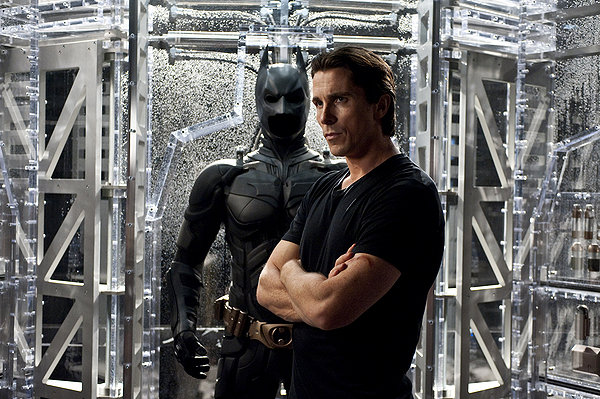 Firstly, Bane is no Joker. The bad guy lacks the fiendish charisma of Ledger’s Joker and he’s not as well integrated thematically into the movie. The Joker was an anarchist that wanted to tear down the pretensions of society and watch people “eat each other.” And we watched a city come unglued. We explore the notion of escalation and what the blowback would be for a man fighting crime in a costume. With Dark Knight Rises, Bane wants to take up the mantle of Ra’s Al Ghul (Liam Neeson) and wipe Gotham off the map. He’s got moments of being a master planner but really he’s just a big heavy. He’s the big tough guy that beats up old man Bruce Wayne, and Bane is continuously diminished in the film as it goes. A late revelation with the character completely diminishes his role and turns him into the equivalent of a mean junkyard dog. His big plan is simply to rile up the masses and wait for the inevitable. Hardy (Bronson) is a great actor prone to mesmerizing performances. This isn’t one of them. He’s super beefy but the facial mask, looking like some sea urchin, obscures half his face. It’s all physicality and eyes for his performance, along with very amped-up dialogue that you can tell was rerecorded after filming. Every time Bane speaks it’s like he has a speaker system installed in his face. And then there’s the matter of his sticky accent, which to me sounds like German mad scientist but to my friends sounded like drunken Sean Connery.
Bane keeps espousing about the corruption of Gotham but you really never get a strong sense of what that corruption has lead to. Catwoman talks about the Gotham elites living large while the rest of the city struggles; but rarely do you get a sense of this. So when Bane flips the tables, and the elite and wealthy are stripped of their decadence and put on trial by mobs, it feels improperly set up. Just because you have characters talk about wealth disparity and the city’s corrupting influence doesn’t mean it’s been established. Nolan’s Batman movies are a reflection of our modern-day anxieties in a post-9/11 world, so I wasn’t surprised to see a society rotting away from the sociopathic greed and wanton excess of the 1%. But rather than serve up a wealth disparity parable of class conflict, the movie simply turns to mob rule, a far less nuanced and interesting dissection of current events and fears. It’s like the French revolution took a trip to Gotham City (Gordon even quotes from A Tale of Two Cities). It’s a society built upon a central lie, the idol of Harvey Dent, but the movie fails to make the corruption felt. In the end, this is all pretty weak social allegory. And would it have killed Bane to be a little more brutal to stock exchange short-sellers?
 Then there’s the typical Nolan origami plot with the myriad of subplots intersecting. This is the first time in the series where the plots felt poorly developed. Rewatch Batman Begins or The Dark Knight, as I recently did, and you’ll see there is not an ounce of fat in those movies, not one wasted scene or one wasted line. Sure they got secret super ninjas and Katie Holmes, but those movies were well built blockbusters. I could have done without Bane entirely and certainly would have loved more of Catwoman. Hathaway (Alice in Wonderland) is terrific in the antihero role and brings a very interesting dynamic relationship with Batman. She may be the only person who understands him. I wanted more Catwoman, the movie needed more Catwoman, but alas she is just a plot device to connect Wayne to Bane. She has a larger role in the concluding melee but essentially becomes Batman’s reluctant wingman. The whole theme of the 99% vs. the 1% could have been generously explored with this character, and her spark and charisma would certainly be enough to get Bruce Wayne out of bed again. Then there’s the regular cop (Joseph Gordon-Levitt) doing the unheralded good deeds that so easily get overlooked. Here is an interesting character that, due to some leaps in logic, connects with Bruce Wayne on a unique level. He presents a counterbalance to all the souped-up superheroes, a recognizably regular human trying to do good. It’s then a shame that he gets entirely relegated during the third act so that the superheroes and their super toys can make some noise.
For a Batman movie there’s hardly any Batman in it. The caped crusader has been in retirement for eight years, so it takes some time before Bruce puts the suit back on. But then he’s also sidelined for a good third of the movie, stowed away in a far-off prison. The entire Indian prison sequence really could have been exorcised. It essentially becomes a Rocky training moment for Bruce Wayne to recover and a plot device to explain why there needs to be a time gap in the story. But this part of the movie just feels like it goes on forever, and we all know where it will go so we just keep waiting for the movie to get there. No one wants a Batman movie where Batman sits the middle out. The end feels relatively fitting but any fan of The Iron Giant will recognize some similar key elements.
And while I’m on the subject, let me do some estimates here. The timeline between Batman Begins and The Dark Knight is about a year, as the Joker notes to a congregation of mobsters. I’ll be generous and say that the events of The Dark Knight last two months. We learn that Batman never appeared again after the death of Harvey Dent, and now we flash to eight years later with The Dark Knight Rises. So you’re telling me that we only really got a solid year of Batman being Batman? That over the course of nine years he was Batman for only one of them? That’s very little Batman-ing for a Batman franchise.
But even with these flaws in tow, The Dark Knight Rises is still an exciting, stimulating, and mostly satisfying close to a trilogy of unprecedented ambition and scope for a modern blockbuster. The action sequences in this movie are huge and exhilarating. I loved Bane turning Batman’s armada of weapons against him. The Bat fighter plane is a nice addition that gets plenty of solid screen time. The sheer scope of what Nolan produces is epic; from a plane being hijacked in mid-flight and torn apart, to a city being leveled by explosives, to a face-off between a bevy of armored Batmobiles and the Bat plane through the streets of Gotham, the movie does not disappoint when it comes to explosive, large-scale action set pieces. This is also the first Batman movie where the climax is the best part of the film. The last half hour is solid action but also a fitting sendoff for a beloved character. Some will grumble with certain hat-tipping moments at the end, but I found it entirely satisfying. It all comes back to the central thesis of Nolan’s Batman films about becoming something more than just a man, becoming a symbol, and that symbol is meant to inspire others. By the end, you feel that the inspiration has been earned as so has our conclusion.
 I want to single out Caine (Harry Brown) who has very few scenes but absolutely kills them. He’s the emotional core of the movie, perhaps even the series, and has always been hoping that his charge, Bruce Wayne, would never return to Gotham. He’s the voice of reason in the movie, the man that reminds Bruce about the costs of a life spent seeking vengeance and sacrificing his body. I wish Caine was in the movie longer but his scenes are pivotal to the plot, as is his absence.
The Dark Knight Rises doesn’t rise to the level of artistic excellence of its predecessors, but it’s certainly a strong summer blockbuster that works as an agreeable finale to the premier franchise of the era. It’s not quite the knockout we were expecting from Nolan but it still delivers where it counts. I wish it had give a fuller, richer portrait of a city corrupt from the inside out, a society rotting away and ready for revolution, and plus I also wish we had plenty more Catwoman and plenty more shots of Anne Hathaway in her Catwoman cat suit (Michelle Pfeiffer still has nothing to fear), but these are the things of dreams. Nolan’s aim has always been to place Batman in a world that is recognizably our own, and with that comes the responsibility of bringing a stolid sense of realism with all the blockbuster pyrotechnics. This artistic ethos has given us some extraordinary movies, though some Batman purists would object that Nolan’s hyper-realism is not the Batman they grew up with. It’s hard to really get a sense of the accomplishments that Nolan and his team has been able to pull off over the course of three bladder-unfriendly movies and seven years. He’s taken the superhero movie and redefined it, brought it unparalleled psychological depth and philosophical analysis, and given a human quality to what normally gets dismissed as escapism. The Dark Knight Rises isn’t as revelatory as its previous entry but it sticks the landing and puts to rest what is indisputably the greatest superhero trilogy of all time.
Now get ready for the reboot in three years.
Nate’s Grade: B
Share this:

Men in Black III (2012)
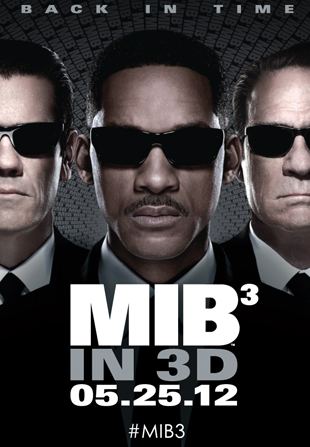 It wouldn’t be a Men in Black film without script problems. The first film languished for some time, originally taking place in Kansas of all places, before director Barry Sonnenfeld became attached and insisted upon a New York City location. The 1997 sci-fi buddy cop comedy was a hit, and rightfully so, and Will Smith became a megastar. Then the 2002 sequel’s climactic action sequence had to be rewritten due to the fact that it was originally going to take place in the World Trade Center. If only that lackluster sequel had gone through more extensive creative revisions. However, these past hiccups don’t seem to come close to Men in Black III, which to Sonnenfeld’s admission, started shooting in late 2010 without a finished script. It had a beginning, an ending, but nothing definite to tie together. So the whole production took eight months off to work on the meat of that movie sandwich. Hollywood movies, especially modern films of huge-scale budgets and set release dates, have routinely started production without completed scripts, including Gladiator, Jaws, Apocalypse Now, and Lawrence of Arabia. Naturally, those are the exceptions to the rule.
Boris the Animal (Jermaine Clement) has escaped from pison and out to seek revenge on the man who put him away and took his arm – Agent K (Tommy Lee Jones). Boris travels back to July 1969, when a young Agent K (Josh Brolin) thwarted the big bad Boris. Boris kills Agent K and alters the future. The Earth is now vulnerable to an alien invasion from Boris’ species. Agent J (Smith) has to travel back in time to save his old partner and the planet.
It’s been ten years since the spotty Men in Black II and almost four years since Smith has been seen in a movie. Where did the time go? Fortunately, this third movie hews closer to the droll brilliance of the first film. Part of that is a sharper story with a more clearly defined goal and a return of the playful exuberance that belies the franchise. Also, I must say that absence has made the heart grow stronger, because I’ve missed Smith’s effortless charisma onscreen. Agent K is such a natural fit for the guy and it’s just fun to watch him stumble through strange alien encounters (this time we learn all super models are aliens; listen good, young women of America who punish themselves to fit this image of beauty). Time travel is usually employed when a franchise seems like it’s all out of gas; it’s usually more focused on the comic fish-out-of-water possibilities, which there are a few in Men in Black III. As one characters notes, 1969 wasn’t exactly a great time for black people in America, and J combats casual racism, black panic, and ignorance with a defiant attitude that is amusing to watch. I’m glad the whole race-relations reality was addressed, though it’s also for the best that the movie doesn’t get bogged down with scenes of Agent J conflicting with bigoted authority. Men in Black III remembers that we’re here to have fun, and the screenplay by Etan Coen (Tropic Thunder) has a light-handed touch. I enjoyed the opening jailbreak sequence with Boris, though I would have thought a lunar prison would have better security. Bill Hader (Superbad) has a fun cameo as a self-hating Andy Warhol, really an undercover MIB agent, though the idea that Warhol’s Factory artists as aliens seem a tad simple. The glaring cameo omission was Jon Hamm (TV’s Mad Men) as a scotch-drinking MIB ladies man of legend.
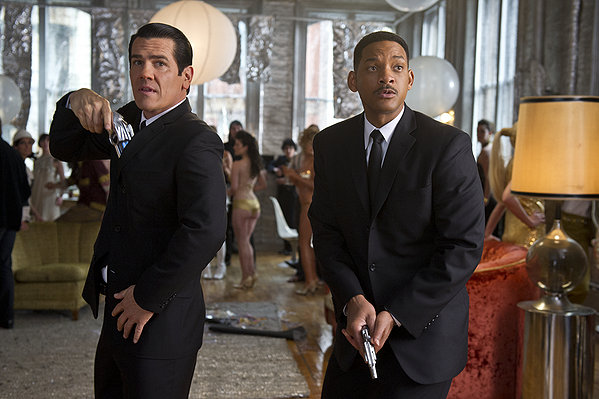 As evidenced from the trailers and marketing, Men in Black III is really Brolin’s movie. The guy establishes an uncanny Tommy Lee Jones impersonation. The eerie brick-faced stoicism, the melodic lilt of his voice, the syncopation of his speech patterns; Brolin nails it all. Watching his interaction with K are the film’s most enjoyable segments. At this point in the series, Agent J and K have gone beyond the rookie/mentor phase and now have something of a friendship, though their arguments at year fifteen of their partnership sound more like the arguments they would have in year two (you need to “open up” and be less grumpy, sounds elementary). Still, there is a personal connection to this case that eluded the last movie, and it gives the film a sense of urgency even when the comic shenanigans seem to hog the spotlight. The personal reveal in the last act didn’t have as much emotional power for me, mostly because I did the math and realized whom a certain unseen character of significance was before we got their true identity. The end does give the film series a circuitous sense of finality.
For a franchise that seems like it can go anywhere at any time with limitless possibilities, the worst thing you can do is be shut off to better avenues of storytelling. Take for instance the climax at Cape Canaveral, which itself is a rather anticlimactic sequence involving the launch of Apollo 11 (don’t they know that alternative 1960s history was sooo summer of 2011?). J has his time travel doohickey that lets him travel back. He gets to use this device once during the climactic fight, allowing him to travel back one minute in time so he knows how to properly duck. That is it. What a fantastic waste. If you’ve got a device that essentially allows for unlimited do-overs, then I want this device to be an integral part of the climax. I want J to have to regularly use it to fix past mistakes and learn more and more from each time jump. Just memorizing how to duck is lame. The entire subplot with Agent O (Emma Thompson in the present, Alice Eve in the past) and her dalliance with K is so carelessly thrown away that I wonder why the filmmakers even bothered to include it. Then there’s our villain, Boris, whose name itself is even lazy. He’s just a bad dude with some sort of insect that lives in his hand and shoots spikes. That is it. He’s a guy who can fire projectiles. So what? What about that makes him interesting? An unrecognizable Clement (Flight of the Conchords) does his best but the character just doesn’t have anything about him that deserves special attention; he could have been any villain (I think Vincent D’Onofrio was undervalued in his go-for-broke physical performance as the first film’s villain). I did like the idea of Present Boris arguing with Past Boris, but like most promising ideas in Men in Black III, this space-time sparring is never fully realized. While enjoyable, there’s little you’ll be able to think back on with Men in Black III and say, “That was well developed.”
Paradoxically, I think Men in Black III has a character that might simultaneously be the best and worst thing about the film. Allow me to explain. About halfway in, we’re introduced to the alien Griffin, played by the great Michael Stuhlberg from A Serious Man and TV’s Boardwalk Empire. He’s a creature who can see nigh unlimited timelines, all the variations of choice and possibility play out before his eyes, one after another. He never knows which timeline he’s in until the moment occurs, thus he’s constantly worried about every moment to come in his life. This foreknowledge sounds like a wretched curse, and with Stuhlberg gives a forlorn edge to his character’s eccentricity. So when J and K meet the guy, there are some clever moments, like when Griffin details every peculiar aspect of chance that lead to the 1969 Mets World Series victory. The moment, and by extension the character, is a nicely reflective idea that every moment is a miracle of causation. Griffin is just an interesting character. Here’s where the worst part comes in. Rarely is he treated as a character because, you see, Griffin is really a magic plot device. He can tell the Men in Black agents whatever they need to do at any point, instantly providing a narrative cheat. When in doubt, just ask the guy who sees the future and he’ll steer you without fail to the next necessary plot point.
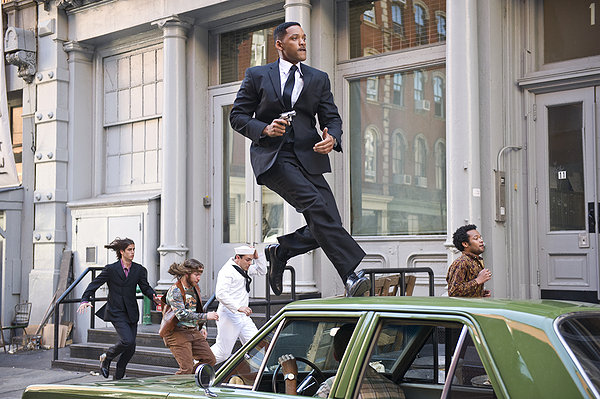 I saw this movie in 3D, not by choice mind you, and for the first half hour it felt like one of the better 3D conversions out there. Sonnenfeld’s camera plays a lot with depth of field and primarily forward-backwards movement, which made for a slightly elevated viewing experience. But somewhere around the halfway mark, I swear the movie forgot it was supposed to be 3D and the dimensional differences became negligent. It never really recovers, and so I advise all potential ticket-buyers to skip the 3D screenings.
With most time travel escapades, there’s going to be some plot holes. Working with a flurry of alien technology, it would have been exceptionally easy for the filmmakers to just explain away the plot holes with some magic device, much like the Paradox Machine in Dr. Who. Hey, there’s a machine that makes sure we don’t have paradoxes? Good enough for me. It’s like in Thank You for Smoking when Rob Lowe’s character explains why actors would be able to smoke in an all-oxygen space environment: “It’s an easy fix. One line of dialogue. ‘Thank God we invented the… you know, whatever device.’” The fact that Men in Black III doesn’t even address its biggest plot hole astounds me. If Agent K is killed in 1969, then he was never alive to recruit Agent J into the service. Let’s even assume that J’s credentials would still get him noticed and staffed with the MIB; if Boris killed Agent K in the past, then there was no reason for Boris in the future to travel back in time to kill Agent K. Again, these aren’t nit-picky gripes, these are major, easily understood plot holes, and I’m dumbfounded why no characters even address them. I could nit-pick over why Boris decides to go to 1969 when he just as readily could have gone to a time when K was a child and thus more vulnerable. Surely a child is easier to dispatch than a 29-year-old man.
Men in Black III is a far improvement over its stilted predecessor, but it still ends up falling well short of the potential it flashes. It’s intermittently amusing with some fun cameos and some visual panache, but this movie should have been stronger, stranger, and more playful with its central time travel conceit. It’s hard to work up that much distaste for the movie, especially since it has such a lively, jocular feel. Not all of the jokes work, but enough do, and the movie maintains an overall pleasant sensibility, zigzagging in imaginative directions that most Hollywood movies never beckon. It’s the stuff that works that illuminates the potential left behind as it goes into summer blockbuster territory. Men in Black III is an example of diminished returns, yes, but some franchises start so high that even latter, lesser sequels will have more entertainment value than their competitors. While it won’t set the world on fire, Men in Black III exceeds expectations and provides enough entertainment that it’s worth a look and little else.
Nate’s Grade: B


You must be logged in to post a comment.