Blog Archives
Evil Takes Root (2020)
 A new horror movie was filmed around Columbus, Ohio by a fledgling studio, Genre Labs, and a group of filmmakers who have made other successful Ohio thrillers and is now available for digital viewing on multiple platforms. Evil Takes Root is the most impressive looking and sounding Ohio indie I have seen yet. I mean this in all sincerity when I say it “looks like a real movie.” Even the poster art looks snazzy.
Dr. Thane Noles (Sean Carrigan) is still mourning the loss of his wife Mandy (Constance Brenneman) from mysterious circumstances (vague voice mail, hanging from a tree, black eyes, etc.). His daughter Sarah (Stevie Lynn Jones) is struggling with her grief and befriends a girl, Christina (Reagan Belhorn), going through a similar loss. Christina is desperate to bring her mother back and is doing the bidding of a supernatural presence to make this wish come true. The result is that Sarah becomes the vessel for this evil spirit, a Baitbat, a mythological figure from Philippines’ culture. Felix Fojas (Nicholas Gonzalez) is back in town to investigate the death of Mandy, the woman he still loves after an affair many years ago. Felix is a professor and a big believer in the supernatural, and he strongly believes evil is present and busy in Ohio.
 The production is glowing with professionalism that we associate with larger-budget studio ventures. Sure, you still slightly sense its lower budget in how much bang for your buck we get onscreen, but there are more than enough moments that impressed me from the technical aspects of moviemaking. The sound design is sensational. This has often been the biggest hindrance with local indies, and wow what a difference a professional sound design team can have on a horror movie. The creeping and scratchy noises of the Baitbat and its demonic intonations are unsettling and worthy of a few jumps. A great sound design team can goose any moment into being scarier. The spooky set pieces on their own weren’t imaginative or innovative but the sound design and photography elevated them. On the other side, this is a great looking movie, even with the drained color wash I usually dislike. Director and co-writer Chris W. Freeman (Sorority Party Massacre) knows how to make a horror movie with plenty of pleasing visual compositions by cinematographer Roy Rossovich (Union Furnace). Freeman is ready for a bigger stage, folks. There are a few instances of sweeping camera movements that made me go, “Whoa.” One involves a chase scene in the woods where naked witches run from their bonfire into the dark of the woods to kill an interloper, and the camera moves over the terrain with smooth velocity, and the way the fire illuminated the bodies as they went from one light source to another is simply stunning to watch. If it wasn’t for the topless women, I would expect a shot like that to be in the trailer. The focus levels, the way the camera movements enhance the frame and tension, even the use of a rain machine for mood, it’s all superbly impressive. The editing by Jason Heinrich and Jamie Marsh is great as well and makes the movie feel even more indistinguishable from Hollywood genre fare.
That impressive level of professionalism doesn’t extend to the story, sadly. Evil Takes Root is a very generic story told with very generic characters. I kept waiting for little moments to round them out, little moments to make me think differently about a character, to bring their conflicts into a new focus or coalesce their themes into the obstacles they’re confronting. I was simply looking for more personality than the five stages of grief at work. I can tell you what the characters do, as well as their larger plot designations, but I can’t tell you about who they are as people. There really isn’t one thing terribly interesting that any character does onscreen. They go about the discovery of the supernatural haunting, and then it’s concluded in a way that is anticlimactic in how easy it seems to be resolved. I read on another review that, according to the director’s commentary, that the movie underwent a troubled production and worked to fit footage that was shot many years apart. In that regard, it feels like a consistent product. I can’t see any obvious seams that show I’m watching a movie with significant scheduling gaps. Congratulations. But it also feels like any other small-scale Hollywood genre horror thriller, something like 2009’s The Unborn. Do you remember The Unborn? Do you remember it actually co-starred Gary Oldman? All that technical acumen put toward a mediocre story overstuffed with redundant characters (more on that below) and it’s a shame. The spooky set pieces are too short-lived and lack anything particularly memorable as well. Too much about this movie makes it burdensome to attempt to remember because it’s skating on generic and familiar tropes without leaving its stamp.
 This is disappointing considering I haven’t really seen too many American horror movies tackle the mythology of the Philippines. There must be plenty of fun choices to select for a big screen fright fest and for a majority of Western viewers, it would be a new kind of monster. I desperately wanted to learn more about the Baitbat and what made this creature unique. However, we don’t even know what this malevolent creature is until literally the last ten minutes, and I have no idea why the filmmakers held that from the audience for so long. The Baitbat is the lone thing to better help separate this movie from the glut of other possession/demon movies, so I don’t know why you wouldn’t make it more of a feature and try and tap into that potential and history. The viewer needs to know specific rules related to this spirit and it’s only a hasty exposition drop at the very end where we learn what the spirit is and what it wants. Imagine The Exorcist if you never knew what was going on with Regan until the last ten minutes. The Baitbat is our chief antagonist. We need to know more and earlier in order to make the movie more interesting. The tree root-tenatcle design of the creature is creepy and lends itself well to low-light silhouettes, which makes sense why it was chosen for a cost-conscious production. Other wicked cool Philippines monsters deserving of horror spotlights include a manananggal, a creature that separates its torso to fly, and a tikbalang, a creature with the head of a horse, the body of a man, and the feet of a horse.
There is a shocking amount of redundancy in this story best exemplified by the glut of characters. We have two grieving fathers raising teenage girls, we have two men who loved the same woman who was killed in the opening scene, we have two spiritual figures trying to combat evil possession, we have two teenage girls struggling with their loss of their mothers, we even have three authority figures (doctor, cop, pastor) all inserting themselves into this strange case. There’s so much crossover with these characters and their comparative stories that I’m quite surprised the filmmakers didn’t do some serious collapsing to better prune their narrative. If you’re going to have such character redundancy, you would think you’d highlight their parallel journeys as well as whatever can separate them. This is done to some extent but the differences are usually superficially one-note and never really affect the plot. Take for instance the commonality between Felix and Dr. Thane Noles. Felix was the “other man” in an affair and never lost his feelings for Mandy, though she lost hers for him. Felix blames himself for Mandy’s death but he’s still hung up on her after nine years since their tryst. A smart screenplay would really dive into this character dynamic, two men who shared the love of the same woman, but each should be able to provide insight into creating a bigger picture of this woman. The kind of woman she was with Felix should be different than who she was with her husband, not necessarily better but different. This would then provide a bridge for both men to find a level of understanding through these trying circumstances, not bonding per se but each discovering a little more about the woman they loved, getting to learn something new in her absence. Unfortunately, the film leaves all this drama unfulfilled, using the shared love as merely an excuse why Felix sticks around and why Dr. Noles doesn’t quite like him. Why do we need two spiritual warriors too except for maybe some sort of Exorcist homage? Make these character points matter more.
 The same scrutiny could be applied to both daughters as well. Why do we need both girls vying for screen time and going through the paces of the same story? Because of the juggling, they drop out for long stretches of the movie’s 95 minutes, like right after Sarah gets possessed. You would think that lost time experience, as well as her involvement in a murder, would be an enticing thing to further explore. You would think a spirit taking over her body and getting more oppressive would be a natural escalation with urgency to watch. We’d witness Sarah freak out as she wakes up from more and more shocking behavior. It’s an easy story because it makes sense, watching our possessed schoolgirl lose her mind and body. However, Evil Takes Root only tags in Sarah when it wants to, and this means her ongoing development as a demon vessel is curiously left underdeveloped. In contrast, Christina is immediately the more interesting character because she has a hearing disability and a lingering resentment over her father. Christina is even willing to explore with dark arts to bring her mother back from the dead. Dear reader, I ask you why can these two characters not simply be combined? If one girl is stepping into the supernatural, why not have her as the own affected? Why do her actions need to be carried out on a different character who has a similar back-story but who happens to not personally involve the supernatural to try and bring her dead mom back? Why have Sarah volunteer at a hearing-impaired school when we could just follow Christina at that same school from the point of view of someone who is already hearing impaired? These are the central relationships and characters and yet they could have been streamlined or retooled for more concise and developed drama.
Evil Takes Root is a horror movie that makes me feel stuck in the middle of praise and shrugging. It looks and sounds like a professional movie with real technical acumen, but it’s also a lot of effort to tell a deeply generic story with deeply generic characters and no standout set pieces. The sound design, editing, cinematography, and spindly special effects are impressive and seamlessly blended together. The monster needed more screen time. Nobody should be ashamed to have this movie on their resume, though the screenwriters (the director and the producer) might not feel that same degree of pride. Perhaps the mediocre story is a result of the production problems trying to make dispirit pieces come together into a meaningful and cogent whole. I cannot say. Whatever the reasons, Evil Takes Root is a very good-looking yet methodically generic horror movie.
Nate’s Grade: C+
Share this:

Antebellum (2020)
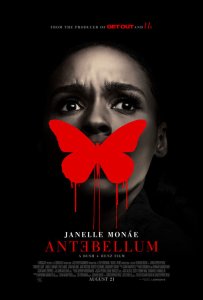
Antebellum was originally supposed to come out in the spring and yet it only feels even more relevant today in the wake of months of protests over police brutality, the removal of Confederate monuments, and whether or not black Americans can attain justice in an imperfect system. Antebellum has also been flagged with overly negative reviews and accusations of being just another movie that exploits the horror of slavery for cheap thrills. After having seen the movie, I feel perplexed that so many of my critical brethren could not connect with the film and its finer points on the world we lived in and the world we live in today, inextricably linked.
Eden (Janelle Monae) is an enslaved woman surviving on an eighteenth-century Southern plantation run by Captain Jasper (Jack Huston) and the mistress of the land, Elizabeth (Jena Malone). Then there’s Veronica (Monae) who looks identical to Eden and lives in modern-day. She’s an author and academic speaker on social oppression and politics. How these two women are related, as well as past and present, will be revealed over the course of 100 minutes.

Antebellum is divided almost equally into 30-minute thirds, and it’s the structure that helps to aid in its mystery while also stiffling its larger implications. The first third is watching a plantation and the horrors of slavery; however, there are clues that something strange is happening. Little touches, character responses, a tattoo that seems too eerily modern. From there, we jump forward to the next third with what appears to be the same Eden, this time as a featured academic author. From here, if your mind is similar to mine, you’re attempting to bridge this connection and uncover how the past and present have become entwined. Is Veronica experiencing a deeply felt dream? Is it time travel? That was my guess before starting the film based upon the advertisement. I thought it was going to be a story about horrible racists from America’s past kidnapping black Americans to enslave. It’s a sci-fi angle that can make the material feel fresh, as there are more things to say other than the obvious and profound statements that “Slavery was terrible,” and, “It should never be forgotten or mitigated of its horror.” I also think it would serve as a rebuttal to those who ignorantly argue, “It was so long ago, why does it still matter? Get over it.” The past, in that instance, is literally ensnaring the present and forcing citizens to relive generational trauma. It’s that final third where Antebellum reveals what it really has been all along, and it’s a surprise but it also makes sense in the world that its meant to represent, leaning into a contemptible degree of human avarice that reminded me of HBO’s Westworld. It’s a fitting revelation and, as one would expect, the final third charges into an emotional catharsis as we watch Eden/Veronica fight for her freedom at last.
However, and this is a word I can already tell I’m going back to repeatedly to qualify my reservations, once the Big Reveal is known I wish we could have spent far more time dwelling in the implications of what exactly it means. I won’t spoil what exactly that reveal is but it’s definitely something that has plenty of social and political commentary and a reflection of our modern times and the injustices that have only been further highlighted this year. It’s such an interesting angle that I almost wish the filmmakers had re-prioritized their movie. Rather than structuring to best serve a mystery with a Shyamalan-style twist, it could have had its Act Two break be its inciting incident, revealing its twist as the starting point for the real terror. As a viewer, while I enjoyed the mystery and portentous mood of the movie, it presents a potent storytelling avenue that is far more compelling than the first two-thirds, but by then it’s too late. It works as context for the behavior and setting we’ve seen, both past and present, but Antebellum strangely suffers from trying to be too clever when a more straightforward version could have better tapped into its full dramatic and political commentary potential.

I was intrigued early on and came away genuinely impressed with the technical skills of debut writer/directors Gerard Bush and Christopher Renz. The photography is often stunning and that goes for their visual compositions as well as their specific camera movements. The opening scene involves a tracking shot that starts from the front of the plantation facade, and that’s the best word, all prim and proper and beatific in appearance, before swooping behind and into the slave quarters to see the ugly reality behind that illusion. I didn’t feel like the filmmakers were simply using the backdrop of slavery as cheap genre exploitation. I felt their intentions were good. The horror of slavery isn’t downplayed but it’s also not overtly recreated just to add an easy splash of violence or terror. The movie relies more on implications, like Eden sleeping next to the plantation owner every night or an enslaved man finding his wife’s necklace in a charnel house among a scattering of ashes. The implication of the larger horror is there without having to be explicit. I’m reminded of the abrasively negative condemnations of Netflix’s Cuties insofar as people seemed to be missing obvious artistic intent. These are challenging and uncomfortable movies but movies with something to say, and Antebellum is not just a simple rehash of slavery tropes to turn black people’s historical suffering into slapdash slasher pulp.
Monae (Hidden Figures) is strong throughout and continues to build her case as a leading lady. She must register her fear in subtle ways without going into larger histrionics, but she maintains a quiet strength that keeps your eyes glued to the screen. Her time spent in the present, as the author calling out aging racist ideology, is bold and confidant and serves as a counterpoint to the woman we’ve experienced on the plantation. We know that woman is still inside Eden. Monae has a late scene set in slow-motion, with the music swelling, that simultaneously feels badass, uplifting, and like an American Valkyrie blazing against unchecked Confederate revisionism.

Antebellum is better than its reputation and offers more from an artistic standpoint than hitting the same points and rehashing the same traumas of the past. It’s a movie built around its mystery when I feel like it had much more it could have said with restructuring and more time spent after its final explanations. As a mysterious thriller, it’s tasteful, thematically involving, and technically impressive. It doesn’t even use the N-word once, which could be decried by some as unrealistic but also a sign of the filmmakers’ good faith to not merely use a shameful historical legacy for base titillation. It works as a thriller with more on its mind. However, and this is my last usage of that word, it’s that mind I was more intrigued by. Antebellum is a B-movie with A-level ambitions but a story structure that keeps it stuck as a well-polished B-movie.
Nate’s Grade: B
Share this:

The Curse of Lilith Ratchet (2018)
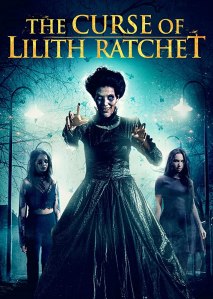 At its core, The Curse of Lilith Ratchet is a low-budget horror movie stuck between two paths of entertainment and sadly reaching neither. It could have been a genuinely good horror movie, one where its concept begets creative ingenuity, like a Lights Out or Final Destination, where the set pieces are well developed, the characters are interesting and meaningful, and there are pertinent themes linked to character to make the horror more immediate and impactful. Or it could have gone a completely different route and declared itself a schlocky horror movie, owning a trashy flair of fun while doling out exploitation elements of sex and violence to provide the prurient thrills of genre satisfaction. Unfortunately, Lilith Ratchet isn’t good enough to be legitimately good and it’s not knowingly bad enough to be particularly entertaining. It’s just another disappointing low-budget horror movie with too little thought given to its story and characters and horror sequences.
A group of friends steal a shrunken head belonging to the notorious Lilith Ratchet, a Civil War-era woman who murdered her cheating husband with an axe and was then killed herself. She would curse anyone who would say her name and attached nursery rhyme. Alice (KateLynn Newberry) and her pals offer the famous head to popular paranormal radio host, Hunter Perry (Rob Jaeger). He broadcasts from a dance club for a special Halloween show and brings in volunteers for a game of hot potato with the shrunken head (again, this is designed for an auditory medium, which doesn’t seem wise). The evil spirit roams the Earth, striking down in order those who held her shrunken head, and Alice scrambles for a potential way out.
 Here’s an example that hits both areas I cited above as it concerns that middle ground between well-developed horror and schlocky camp (mild spoilers I guess). Our first Lilith Ratchet victim, after the prologue, is abruptly run over by a car. This news does not reach his girlfriend, Lauren (Brianna Burke), until Alice delivers it in person, which seems beyond bizarre to me. Side note: cell phones do not seem to really exist in this universe. They do appear every so often, but when it comes to reaching others during times of crisis, or distributing key information, nobody picks up their phone to dial or text. They instead wait to hear face-to-face, and that consistent delay of communication breaks the tenuous reality of the movie. Writer/director Eddie Lengyel (Scarred, Mother Krampus 2) might as well have set the film during the 1980s or beforehand if modern technology matters so minimally. These characters are still talking about a popular radio show; not a viral podcast but, an alternative radio show. It doesn’t quite feel of today.
Back to my example, Lauren is informed her boyfriend has died. She retreats indoors to take a long bubble bath. She doesn’t exactly seem too broken up after her immediate response but hey we all grieve in different ways. Now, considering we’re dealing with a supernatural presence, why not take the form of the dead boyfriend? This would make the encounter more personal; the spirit could dig into Lauren’s suffering and perhaps any feelings of guilt, it would be an opportunity to open her more up as a character before her inevitable death, and it would simply be more interesting. Sadly, the film doesn’t go this route. Instead, she lounges in her bathwater and oblivious to the Big Scary Lady walking around the room. Then she’s violently pulled into the water and released, and this happens maybe four times. I don’t know about you but if I’m being yanked by a malevolent spirit in my bathtub, I’m getting out of that tub quick. Lauren leisurely tries to catch her breath. So, if we weren’t going with the more character-focused and developed death, then we should go for something memorable or truly horrifying. Instead, we get a woman being pulled under her bathwater and it happens three to four times. It’s not interesting and it becomes repetitious to the point of unintentional comedy. It’s also a bathing kill that veers away from T&A or anything too tawdry, which means it fails to register either as effective, engaging traditional horror and as schlocky, fun, campy horror. It just made me think of the obvious homage to Nightmare on Elm Street and then it didn’t offer anything more.
 Even with its low budget, that didn’t consign The Curse of Lilith Ratchet to certain doom. The problems begin early when it comes to establishing its universe and its rules in a way that feels consistent and credible. The script requires plenty of sloppy exposition and a questionable structure of this information. We should know the rules of Lilith Ratchet early to play along. It isn’t until over an hour into the movie where the characters even piece things together. There are also scenes that have no need to exist or their placement is questionable. Do we need a scene where the characters chat with a local shop owner who warns them about his open “not for sale” display? If we cut that scene, then it presents the characters as more devious when they explain how they obtained the shrunken head. When we do get the Lilith Ratchet back-story, we get it twice, first when Hunter is presented with the shrunken head and then second on his paranormal radio broadcast. Why not condense this into one experience? Why not even open with the back-story, then pull back and reveal him on his radio broadcast, and then from there have the characters on his doorstep with the shrunken head, knowing from the broadcast he was a fan? That’s a cleaner structure. There is a weird plurality of scenes of people consoling Dylan (Roger Conners), but it’s always someone informing you after-the-fact about relationships. I didn’t know he was best friends with a murder victim, and now everyone on the street wants to console him like he’s an unofficial mayor of the city. It’s storytelling that’s trying to fill you in on significance after it matters. If you’re going to be late giving us information to understand the characters’ emotional states, don’t bother.
As a horror movie, there are too many moments that are expected. It feels like we’re running through the motions to include certain moments because they’re expected. The opening prologue introduces a threat and some mild gore, but the massacre of this sorority doesn’t have any larger ramifications for the entire story. We see some of the dead girls, which means that Lilith Ratchet can indeed take the form of the dead, but they don’t act too suspiciously. It’s simply a quick visual cue for the audience not to trust these onscreen women. If she can take this form, I wish she had done it more often, especially as people started getting dispatched. The opening also has what might be the funniest moment in the entire film. One of our sorority girls sees the evil spirit, runs upstairs, hides in her bathroom without locking the door, climbs into the shower as a meager form of protection, and this is even funnier because the shower is a clear glass door. I don’t know what she was expecting hiding behind a completely transparent cover in an accessible room. Are we supposed to ridicule this person? I don’t get the sense anything is done for laughs. Likewise, there’s a preponderance of jump scares in place of cleverly designed set pieces of terror. There’s nothing tailored toward Lilith Racthet’s personal history to make it her feel more than a generic haunt.
 The real star of the movie is Lilith Ratchet and the actress behind the spirit, Crissy Kolarik (Mother Krampus 2). It’s rare for a horror movie to not just create a spooky creature but to even create an affecting silhouette, something easily identified and quickly felt. Lilith Ratchet is a great looking creation. She’s in a flowing Gothic gown, her clawed fingernails stretched at her sides, her Victorian era hairstyle and pale face. It’s a creepy image and Kolarik has a really strong sense of poise and presence as she patiently stalks the sets, enough that I was reminded of The Nun, another immediately creepy specter with a clearly identifiable silhouette. The backlit moments that highlight Lilith’s shape also have an unsettling impact. I wish that this evil spirit had a more interesting story to utilize this actress and setup. While the movie never calls for her to do anything terrible different, Kolarik excels at being the big bad boo and glaring menacingly.
Under its DVD release title, American Poltergeist: The Curse of Lilith Ratchet is a bit misleading considering she’s not a poltergeist. Or a demon. Or much of a ghost really. She’s kind of a walking idea, a version of the Bloody Mary urban legend. This lack of clarity and personal alignment is symptomatic of the movie as a whole. It’s certainly not a bad looking movie for its reported $15,000 budget. It has professional lighting that establishes a mood and solid makeup and gore effects, and even the score can have its draw. The acting is acceptable even with characters absent goals, dimension, or general points of interest. I have seen far worse movies with far bigger budgets. What I’m getting at is that The Curse of Lilith Ratchet had effective and appealing technical merits and a capable cast that could convey dismay and confusion. It had a starting foundation that could have delivered had they been given a good and interesting story. Alas, the screenplay feels too unfocused, sloppy, overcrowded, and lacking in direction and escalation and personal stakes beyond the obvious. We’re talking about stuff like an extended sequence of hot potato with a shrunken head for a radio show. If you’re not going to make smartly designed scary sequences, then perhaps try your hand at making a campy, gory, silly, knowing movie. The tongue-in-cheek version of this movie could have been a blast. The Curse of Lilith Ratchet is a middling horror movie that just comes and goes, leaving little impression other than a lingering sense that somehow it should have been better.
Nate’s Grade: C-
Share this:

The Rental (2020)
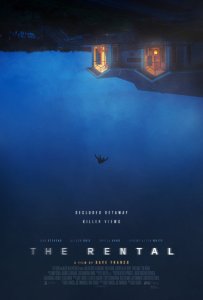 Dave Franco’s directorial debut showed me more promise than I’ve ever seen in big brother James Franco’s many, many directorial outings. The younger Franco also co-wrote The Rental with mumblecore/indie horror mainstay Joe Swanberg (Netflix’s Easy), and the movie is at its best when it feels like a really tense relationship drama with some creepy overtures for good measure. Two couples (Dan Stevens and Alison Brie, Sheila Vand and Jeremy Allen White) are renting a beautiful ocean-side cabin for the weekend. There’s a palpable tension early on as Vand’s character, a woman of Middle Eastern descent, challenges the homeowner why he chose to deny her bid over her white male co-worker. From there you quickly understand that she and Dan Steven’s character have a dangerous sexual attraction to one another and, after a drug-fueled night, circle each other hungrily and inevitably. I felt nervous simply waiting for them to cheat, and when they do, it sets the rest of the movie in motion because the evidence of their infidelity is what provides such an intriguing dimension of personal stakes. They discover a hidden camera in the shower head but it also means they are reluctant to go to the police because what if that proof is subsequently revealed? This delicious turn causes one half of our couples to conspire together and keep secrets from their significant others, and The Rental has a crafty and effective unease to it as the characters get more frantic, paranoid, and confrontational. There’s a solid hour of good material here with the relationship drama taking center stage in a creepy surveillance thriller setting. Franco also shows solid promise as a visual stylist. His ability to create an uncomfortable atmosphere of dread while maintaining pleasing, cleanly composed visuals is impressive. It reminded me at times of an Ari Aster A24 horror movie (Hereditary, Midsommar). Alas, it’s the last fifteen minutes that do The Rental in as it succumbs into being a boring slasher movie with a boring, and vague, killer. It fits with the parameters of the story being told but it’s the most boring and underwritten aspect, falling entirely on the mere iconography of slasher cinema to serve as external escalation. It’s a bit of a disappointment of an ending after such a promising and personal start. I definitely think Dave Franco shows promise as a filmmaker and a genre director who doesn’t sacrifice character for empty atmosphere, which is my most common complaint for much of atmospheric gonzo indie horror (see: Mandy, Neon Demon). At under 90 minutes, the movie doesn’t wear out its welcome and has enough juicy tension and drama to warrant at least one viewing. Hopefully, Dave Franco steps behind the camera again and hopefully he will write a better ending too.
Nate’s Grade: B
Share this:

The Beach House (2020)/ Archive (2020)

Sometimes when watching a movie I will get disappointed because I sense a path not taken that should have been, an intriguing premise that hasn’t fully been developed, and I get sad that the movie I’m watching isn’t really the best version of its potential story. Call it the Black Mirror Syndrome (oh, hot take). I felt this same assessment while watching two small indie films recently released on demand, one horror and one science fiction. Each has its own artistic merits and each I felt wasn’t the best version of itself.
The Beach House follows a twenty-something couple on a beach side retreat. They have problems in their relationship, there’s an older couple who arrive at the same house, and after awhile the film essentially becomes The Color Out of Space, an atmospheric horror movie about humans dealing with a biological unknown. Something from the sea is coming out, via mist or jellyfish or… something, and it’s affecting human psychology and physiology. The Beach House is far too vague for its own good and takes far too long getting its story moving. I started falling asleep at several points, so my attention was not exactly rapt. It ends in an expected downbeat manner but without greater explanation or even theories about what is happening, and there’s just not enough story and drama present to fill that void. The characters come across a subdivision of beach homes mysteriously absent any neighbors. It reminded me of a Stephen King story beginning, an environment where something bad has transpired and the new characters have to figure it out. As far as creepy atmosphere goes, it’s fine, and there are moments of unnerving body horror, like a protracted sequence where our heroine fishes out a jellyfish tentacle inside her wounded foot. Still, the general obtuse nature of the entire enterprise, and the underdeveloped characters we’re stuck with, made this feel like a disappointment for all but the most desperate for atmospheric horror.
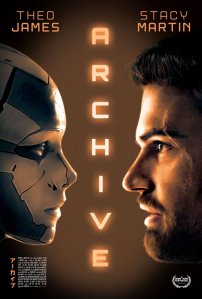
Archive follows one scientist (Theo James) trying to replicate his dead wife Jules (Stacy Martin) into a physical robotic form. She died in a car accident but he was able to save her consciousness onto a server available to consumers, but it will fray over time and only delays her inevitable passing, so he’s toiling away at a remote mountainous lab to create a new host to download her into. He’s gone through two different robots, each more complicated and more representational of Jules’ full brain; the first (J1) is like a box with legs and has the capacity of a child, the second robot (J2) is more like a teenager and reminiscent of the robot from I Am Mother, and the the third one (J3), under construction, looks the most human and will contain the full brain activity and hopefully the full Jules. Archive is fine and goes just about where you would expect, with exception to a last-minute twist that doesn’t make any sense. You can pick apart why it doesn’t work but I guess they wanted something shocking. The problem is that this movie needed to be told from a different lead perspective. Rather than being told from the scientist’s point of view as he doggedly tries to save the woman he loves, Archive should have been told from the second robot’s perspective. J2 looks at what her master is doing with the third, seeing the time and attention he’s putting into her, making her more feminine, and J2 feels pangs of jealousy and loneliness. She pleads for her master to make her better, asks why she isn’t good enough, and wants to be better while he essentially strips her for parts for her replacement. I felt so much for this second robot and her sad plight with a cold, selfish, oblivious creator. If Archive had been told from J2’s perspective, it could have been something special. She is going through a wealth of emotions, desiring to be all the things her creator projects onto his latest project, and she feels like she is failing him. When Archive focuses on its robots it’s at its best, and when it goes back to its human trying to avoid losing his wife one last time, it becomes too ordinary. It does have some commendable production values and special effects for a lower budget indie. I wish the movie could have been rewritten from the start and given us the superior dramatic perspective to serve as our guide.
Nate’s Grades:
The Beach House: C
Archive: C+
Share this:

Becky (2020)
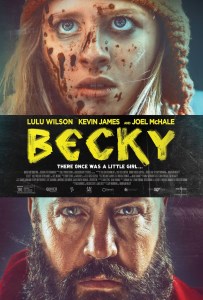 Imagine if Home Alone was more intense and populated with neo Nazis, and you’ll get a feel for Becky, a jubilantly gory, highly stylized indie thriller that might be as off-putting as it is entertaining. Kevin James, yes Paul Blart himself, gives an about-face turn as the leader of a group of Nazis that recently broke out of prison. With his bushy beard. swastika tattoos, and intensely quiet monologues, the stunt casting works out well, and James can be truly menacing. His band of goons are terrorizing a blended family in search for a macguffin of which just happens to be in possession of Becky (Lulu Wilson), an adolescent hellion they will soon reckon with. She knows the terrain of the family cabin and the woods and goes about picking off the bad guys one-by-one in fiendishly bloody, wildly over-the-top panache. That’s the real appeal of the movie, the various ways our pint-sized heroine takes down the Nazis. Directors Cary Munion and Jonathan Milott (Cooties, Bushwick) infuse plenty of visual style into their thrills, amplifying the intensity further, like a pounding camera edits and a walkie talkie confrontation between hero and villain where a series of pans makes it feel like they’re face-to-face. The film can be unsparingly brutal and hard to watch at times, walking a line between being darkly comic to simply being gross. Becky herself comes across like a brat and, as the killings continue, gleefully sociopathic. She’s still hurting from her mother’s death, she doesn’t want to have to save her soon-to-be stepmom and brother, but she’ll do it if it means killing more Nazis. One big tough Nazi has a crisis of conscience and demonstrates, at least onscreen, more depth than Becky. It’s all a bit too nihilistic by the end for my tastes. Becky ultimately is a movie about killing Nazis gory good and looking good doing so. If that’s enough for you, give it a watch.
Nate’s Grade: B-
Share this:

The Ninth Gate (2000) [Review Re-View]
 Originally released March 10, 2000:
The latest from old school horror pioneer Roman Polanski is a dark and brooding thriller that is… very long and brooding. What begins with noir charm and decadence grows thin by the movie’s over-bloated running time – giving new definition to the term “tedium.” The visuals are grim and noirish, but hang forever. Half of the movie is seeing Johnny Depp walk from Point A to Point B; and then the other half is watching him light up a cigarette usually already with drink safely in hand. Depp plays a librarian that doesn’t play by all the rules, or something or other. He’s set out to authenticate the last three books of a Satanic worshiper only to discover they lead to a path of devilish power. By the time Ninth Gate reaches its climax at an Eyes Wide Shut-style group gathering the audience has already hopelessly lost feeling in their ass. The vague ending is a cop-out after what the viewer is forced to go through to finally find out the secrets of these special 15th century books/doorstops. When it’s not carelessly lingering The Ninth Gate has some interest to it, but too often than not, it just rolls ahead forgetful of the audience that paid to come see it.
Nate’s Grade: C-
——————————————————
WRITER REFLECTIONS 20 YEARS LATER

Times sure have changed for famous director Roman Polanski. He’s been filming movies entirely in Europe for years since he fled the United States to escape prosecution for rape charges. He even won an Academy Award in 2002 for The Pianist, though he wasn’t present to accept naturally. However, in a post-Me Too realm of improved scrutiny over the bad habits of bad men with power and influence, Polanski hasn’t had a movie with notable names since 2012’s Carnage. He’s made a few foreign-language films since but his sphere seems notably smaller, more confined, and more shut off from the industry and actors and moneymen that want to work with the famous director. They’ve even attempted to get him extradited back to the U.S. again. All of this cannot help but color re-watching The Ninth Gate, especially when it already plays upon memories of Polanski’s own Rosemary’s Baby. I wondered if this movie might actually be better twenty years later, and for a while I was feeling like my young film critic self was perhaps a little too quick to judgment. However, upon recent viewing, this is still a long and boring misfire.
 The premise is slightly intriguing until you realize what it exactly entails. Johnny Depp’s character, Dean Corso, is a rare book evaluator and unscrupulous profiteer. He’s been hired by wealthy magnate Boris Balkin (Frank Langella) to authenticate a book reportedly co-written by the Devil himself and, if real, has the ability to summon Old Scratch to boot. Hey, we got something there for an intriguing horror movie that delves into the occult. And for perhaps the first act, The Ninth Gate works well enough to establish its mood and its central conflict. Then it just kept going. And kept going. And that’s when you realize that much of this movie involves one man traveling to different chateaus and other European estates to simply look at books. There are three copies of this rare Devil-penned tome, so Dean Corso is traveling to at least two different locales simply to compare and contrast books. I don’t think I’m fully articulating just how boring this can get. Imagine a significant other sitting beside you and deep in thought with a dense textbook. Imagine watching them read and make the occasional verbal noise. That is The Ninth Gate. Watching people read is boring, especially when it’s done repeatedly. There are MULTIPLE scenes of simply watching Depp look over a book while music plays. Film is a visual medium, and reading is inherently an internal function unless adjusted in context. It’s not like he’s deliberating over whether to send a text to a special someone, what the personal correspondence means to his concept of his family, it’s a man compare old books for a job. It’s not like he’s obsessed over this book for years or is a true believer of its power.
Some of this might even be permissible if the stodgy 133-minute film wasn’t so tediously repetitive (spoilers to follow). Corso is paid to authenticate the book but every person he encounters that knows a little about this book ends up dead. The book dealer he has stash the book? Dead. The old man with the second copy who says he’ll never sell his book not even if his life depended on it? Dead. The old lady expert with the third copy who despises Boris Balkin? Dead. By the time that wheelchair-bound woman is found to be repeatedly running into a wall, and upon further inspection has her tongue hanging out her mouth in an unintentionally goofy sight, the plot structure of The Ninth Gate has entered farce. Dean Corso doesn’t seem terribly alarmed by any of this or observant of an obvious pattern of events. He has several run-ins with goons and a mysterious blonde woman (Emmanuelle Seigner) that follows his every move. He seems comically oblivious to the danger all around him. Part of this is the repetitive plot structure where over an hour of the movie follows Depp going to a place, discovering one minor addition of information, finding that person dead, being chased, then repeating. It takes over an hour simply to note that there are minute differences in the engravings in the three copies of the devilish book. Then it simply shifts into a game of who can capture all the copies, which it should have been from the start, and would have introduced a very necessary sense of urgency from a prosaic script. Another reason for that general turgid feeling is that Depp seems to be sleepwalking through this performance absent emotion. Even Polanski himself complained.
 This is a movie about a special book that can unleash the powers of the Devil, so why is the finished film so boring and frustrating to sit through? It has rival cults and business tycoons fending for ownership over that power. At least it does in theory. The fact that there are competing interests should have been a substantially larger element of the movie. Once Lena Olin’s rich widow character sleeps with Dean Corso to get the first copy back, she disappears from the narrative until the very end, where she’s dispatched without any intervention from her assembled cult of would-be Satanists. Seriously they just stand by and watch a guy strangle her to death and jump at the word “Boo!” They were never a threat even if they were responsible for one part of the mysterious stalkers. The other stalker, our ever-present blonde, will literally float at times and come to kung-fu kicking rescue, which made me snort out loud. It just comes across so goofy. Her identity is clearly in a supernatural answer but the movie never fully explains who she is, what her real motivations are, her allegiances, and even what the ending is supposed to mean. After 133 minutes, it’s egregious that Polanski doesn’t provide a conclusion that feels even fleetingly conclusive. The whole movie is a mystery that moves with irritatingly incremental steps that leads to one big shrug.
I can see the appeal of the idea of this story but I don’t see the appeal of making The Ninth Gate as is, beside visiting some fabulous locations in Portugal and Spain. Why get an actor of Depp’s caliber if he’s going to read on camera and not worry about his encroaching danger? Why does this movie need 133 minutes to set up a plot that could have done it in 100? I think Polanski was eager to revisit the old school horror of his early works and didn’t sweat the details. Mysterious castles of old. Dangerous strangers. Cults. The Devil. Book authentication. Okay, maybe not that last part. I suppose one could charitably say Polanski is trying to establish an unsettling mood with patient-yet-paranoid camerawork and a story that feels unhurried. It feels to me like Polanski doesn’t know what movie he wants to make and is in no rush to get there. The most overtly horror moments fall into self-parody. That’s really where the movie errs for me. It takes great horror story elements and says instead of running with cults and the Devil, what if we focused more on the slow authentication of dusty old books? Not their power or meaning or value to devious men and women, but on whether they are real. That would be like finding a treasure map and then trying to make sure the ink was authentic for its era rather than, you know, hunting for treasure.
My original review twenty years ago is a bit harsh and angry, though I can understand why especially after such an anticlimactic ending. I would say the movie is more than watching Depp walk from Point A to point B, though to be sure that is heavily represented onscreen. I might even slightly raise my letter grade but the criticisms still stand as stated. Even twenty years later, with a fresh set of eyes, The Ninth Gate is a disappointing story that says too little and takes too long to do so.
Re-View Grade: C
Share this:

The Wretched (2020)
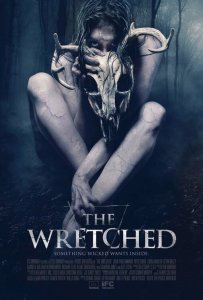
Very reminiscent of Fright Night, this movie feels like a lost relic to 80s coming-of-age movies and horror-next-door thrillers, and it’s generally great. We follow a teenager who is staying with his father over the summer; he’s also recovering after a drug-related accident. He’s convinced that his neighbor is really a witch who kills children and then fiendishly erases the memory of those children from the families she has inserted herself into. Nobody will believe him, especially with his past drug abuse, so he takes it upon himself to investigate the strange goings on, Rear Window-style, and potentially save lives once the witch is forced to jump into a new host and terrorize a new family. The Wretched is barely 90 minutes long and is splendidly plotted with every scene being meaningful, advancing the plot, shading characters and conflicts, heightening the stakes and suspense. The new-kid-in-town and young crush story elements work as well as the creepy horror. Overall, it’s a very fun movie that can switch modes when needed, being funny or sincere or spooky, and it does each with great finesse and execution. Writer-directors Brett and Drew Pierce (Deadheads) have a great affection for their characters as well as their material. It shows in the level of thought they give even small details, finding clever ways to serve payoffs as well as work emotional investment into a briskly told tale. There’s a very late twist that I should have seen coming but made me want to start clapping, and it works entirely within the carefully set-up rules of the supernatural monster and supplies an organic elevation to the stakes. I only wish the movie had given me even more. The Wretched is a charming throwback and proof positive that you don’t need to reinvent the wheel to make a good horror movie, just keep to a vision and see through the story to best serve and elevate that vision. It’s well worth your 90 minutes and I predict a bright future for the Pierce brothers.
Nate’s Grade: B+
Share this:

Verotika (2020)
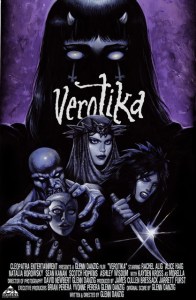 Misfits frontman Glenn Danzig loved the heavy metal aesthetic of big breasted ladies, fetish outfits, hulking monsters, and splashy gore, enough so that he started his own comic line in the 90s, Verotik (a portmanteau of “violence” and “erotic,” and yes that’s the explanation). They even adapted one of his comics, Grub Girl, into a 2006 adult movie, and I pulled this synopsis directly from Wikipedia: “One of the victims of the radiation is a sex worker whose scarred body is taken to a laboratory, where she wakes up while being sexually abused by a pair of necrophilic scientists, whom she kills on account of having given her ‘the worst f*** of my life.’ Grub Girl adjusts to being a zombie and returns to being a sex worker, discovering that being undead is advantageous to her career, as she is immune to disease and nearly impervious to pain.” Yikes. Anyway, Danzig took three of his comic tales and packaged them together into a low-rent horror anthology movie dubbed Verotika. Unfortunately, the final product is nothing short of one of the worst movies I have ever seen in my life. It is stunningly, exceptionally terrible in all facets.
I was left dumbstruck by the level of incompetence over the course of 89 ponderous minutes of awful. This goes beyond Tommy Wiseau and Neil Breen into downright Ed Woodian territory of ineptitude. I couldn’t turn away because I was trying to simply process everything I was seeing onscreen, to boldly attempt to understand so many choices made by Danzig as a filmmaker and storyteller. He serves as writer, director, and co-cinematographer. The finished film is not the so-bad-it’s-good derisive highs of Wiseau and Breen’s bemoaned catalogue of misfires. This is more just a slack-jawed “what were they thinking?” stupefied curiosity of an After Last Season (the worst film of the first 2000s decade, a movie so bad its small distributor asked theaters to burn their prints rather than ship them back). It’s not fun but baffling. It’s not silly but lecherous to the point of misogyny and discomfort. At no point are you transported to the weird imagination of an avant garde artist but instead you’re beset by huge lapses in filmmaking basics and a dearth of recognizable plot. With Verotika, there are no stories, only story premises that go nowhere and nowhere slow. While only 89 minutes long, it might be the most joyless, turgid, pointless 89 minutes I have experienced since After Last Season made an MRI machine out of paper print-outs.
 Allow me, dear reader, to describe for you the very opening minutes of Verotika, and please also understand that it only gets worse from there. The first segment is called “The Albino Spider of Dajette,” and it’s set inexplicably in France, which hamstrings every actor with a regrettable Pepe LePew accent that makes the segment even more ridiculous. Danzig could have spared his actors, who were clearly not capable of replicating French accents, the embarrassment but no. The opening minutes involve a busty woman, Dajette (Ashley Wisdom, porn actress), performing oral sex on a guy. He excitedly attempts to lift up her shirt, much to her chagrin, and is shocked to find that Dajette has eyeballs where her nipples should be. Yes, you read that correctly, she has literal eye nipples. The man leaves in horror and Dajette huffs dejectedly, “Not again.” These eye nipples will never amount to anything important, which is so confounding. Why include them? Her eye nipples cry a tear, which rolls down her breast and lands on a CGI spider, which then grows into a giant albino spider-man (Scotch Hopkins) with two working arms. This evil spider-man only comes out when Dajette is asleep, though she’s not sleeping now, so? He has a thirst for murder and sex and tells a prostitute he wants to rape her in the ass and then kill her. Her nonchalant response made me stare in amazement: “Ass f*** is my specialty.” Reader, I have described for you only the first few minutes of this entire segment. What is going on here?
The rest of this tale becomes repetitious as the spider-creature stalks and snaps more women’s necks, earning the moniker the “Neck Snapper” from the French media (imagine the strained pronunciation as “Nyek Snauhpah”). Dajette wanders around to stay awake, and this includes entering an adult film theater where the patrons conspire to gang rape her as soon as she nods off. She also enters a café where someone else’s cup is already waiting for her. Seconds later, a waiter asks if she wants any refills (“refeeelz”), and she declines and pays… for someone else’s cup of coffee? Here’s a prime example of the filmmaking shortcomings of Danzig. It would have been incredibly, stupidly easy to improve this scene simply by starting with Dajette at the table. By combining two shots of her walking along the street and then a shot of her indoors, still wearing her coat, and walking to a table, you are communicating an approximation of time. She has had no time to order her own coffee. All he had to do was start with her already seated and we could assume the cup was ordered off screen and before the edit. Verotika is replete with preventable bad decisions.
 Astonishingly, this segment is actually the best of the movie and each only gets demonstrably worse and more pointless. “Change of Face” is a clear homage/rip-off to 1960’s Eyes Without a Face as we follow a stripper/serial killer known only as “Mystery Girl” (Rachel Allig) as she slices off the faces of beautiful women to wear as her own. Our killer wears the faces of her victims to cover her own scarred visage while she strips for her customers. Considering she wears a mask to cover her face anyway while she dances, the face-removals seem gratuitous. If you’re looking for any clear motivation for this killer, even the simplest explanations, then you’ll only be further disappointed. Again, it would be so stupidly easy for Danzig to characterize the “Mystery Girl” as murderously jealous of the beauty denied to her, or present some insecurity that her stripping career and income will be shuttered if she cannot fix her face. Anything would have worked. Instead we simply get an absence of thought and development; this segment is taxed with several minutes of watching women lackadaisically walk around a stripper pole. It feels like Danzig had access to a strip club set for a day and was determined to use everything he shot. The epilogue of this segment even involves more lackadaisical dancing around a pole. The only thing that enlivens this segment is the acting of Sean Kanan as the detective tracking down the murderer. He talks like he’s trying to imitate Batman’s gruff voice and his chit-chat is blasé to the point of anti-comedy ironic perfection. “There’s your motive. They wanted a face,” he says. His big break in the case is finding a business card at the crime scene. Why would a stripper have a business card and why would this man assume she must be the killer? That would be like finding a carton of milk at a crime scene and declaring that the milkman was your top suspect.
The final segment is the most pointless of them all and feels like it should be visual accompaniment for talking heads on a History Channel special about Elizabeth Bathory, the notorious 16th century Hungarian noble who would bathe in the blood of virgins to stay young and vibrant. “Drukija Contessa of Blood” stars Alice Tate (Snowbound) as a woman who rubs blood on her face and body. That is literally the plot for thirty minutes. She slices some helpless women’s necks. She luxuriates in a bath. She rides a horse. She decapitates a runaway. She eats a woman’s heart while that victim inexplicably still writhes in agony well after the fact. There isn’t even the faintest hint of a plot here or characters. You would think we would follow one of the imprisoned women as she plots an escape. Once again, it feels like Danzig had access to certain elements that he was going to make sure got their overexposed spotlight. We watch Drukija stare into a mirror and make poses for several minutes. We watch Drukija sit in her creepy skeleton-lined bathtub for several minutes. We watch her ride a horse for minutes on end. At no point does Danzig offer a reason for the audience to care about anything happening on screen. The cruelty just becomes boring and as gratuitous as any other unfortunate moment in this unfortunate movie. The whole segment feels like watching a bored model on a cosplay photo shoot.
 The fundamental lack of story, characters, conflict drives me nuts, but the movie fails just as badly on its technical merits. I can excuse some lapses in filmmaking from a continuity standpoint as long as they are not glaring to rip me out of the movie. Anyone that nitpicks the placement of bed sheets from shot-to-shot rather than emotional engagement and narrative drive is simply watching movies wrong. However, Verotika is complicit in making the kind of goofs and mistakes you’d associate with a schlocky student films and not a (gasp) million-dollar horror movie. Danzig favors ending every scene in a fade out, and I’m not exaggerating when I say “every.” It’s like he doesn’t know when to end his own scenes (more on that below). There are specific limitations in the makeup and production design, but then why feature camera angles and lighting that expose those limitations? Things like the crotch of the spider-man being blown wide open and visible on camera or a superfluous CGI floor Drunkija struts over. There are a proliferation of lens flares, which I think Danzig feels are “arty,” and they do provide a brief respite from the very grimy, over exposed photography that can be dispiriting. Even with a million dollars, this movie looks depressingly cheap. Then there are sloppy mistakes nobody bothered to correct. The neon “café” sign that Dajette enters is above the café window, not over it, and facing inward, which means no potential customer from the outside would get the benefit of the sign. Murder victims are extremely unmotivated to get away from their eventual killers. Certain physical confrontations are so confusingly staged that character geography will alter in a flash like a scene was missing. A shaken police officer laments “if the press finds out about this” about the THIRTEENTH murder victim. I think the cat’s out of the bag, fella. Why do we need an Elvira-styled host (Kayden Kross, porn actress) making bad puns to introduce segments?
As a director, Danzig leaves his actors adrift with awkwardly non-existent guidance. It becomes readily apparent that Danzig was afraid to call cut too soon because many shots will linger on long after the point has passed, leaving actors to fidget or look around, waiting to be told the take was over. Sometimes this involves literal minutes of an actor doing something repetitious while the camera will zoom in and out continually. There are moments where the camera will duck around, unclear about what it’s meant to frame, looking for its subject or composition like a documentary filmmaker on the spot. Every actor suffers from this and shots and scenes have that uncomfortable feeling of dragging on haphazardly, missing the rhythm of film narratives. I bet you could shave those extraneous seconds off every scene and trim 15 minutes total. As a result of actors given bad material, nascent characterization when evident, funny accents, and little to no direction, there are plenty of actors struggling to perform whatever they’re intending.
 Even as a low-budget sleazy exploitation film, Verotika cannot even succeed by that metric. The gore effects are few and far between and Danzig likes to linger over what he can get, much like other elements. If he bought the makeup for one girl to be skinned faceless, you’re going to see that effect a dozen times. When the Contessa is chomping on a heart, the proportions are so out of scale that it dulls the impact of what is a fairly good prosthetic otherwise. Even when it comes to gratuitous sex and nudity, the movie seems oddly inept. During the interminable stripping scenes of “Change of Face,” the women don’t actually strip while they lethargically spin around their poles. The women on display are more fetishized as murder victims than they are as sex objects. Why include eye nipples and then do nothing with them? Where did they come from? Is this a genetic thing? Did Dajette’s mother have eye nipples and nurse her from them? My pal Ben Bailey came up with a better storyline with “eye nipples” on the spot, gifting them laser powers and a thematic angle about striking back against handsy men who won’t respect consent. Boom, right there, a better use of weird exploitation elements and he was only joking around.
With every conceivable level of filmmaking and storytelling, Verotika shows that Danzig is not remotely ready for the big screen. The paltry story is kept at premise-level, there’s a decided lack of characterization and stakes and intrigue, lots of repetition, and shaky direction that leaves actors astray with over-extended scenes. Even as an exploitation movie, you will be sorely disappointed. As a hopeful heir apparent to the so-bad-it’s-good club, Verotika is not the next The Room. Not even close. It’s bad and inept and boring and flabbergasting but it lacks the bewildering appeal of the best of the so-bad-it’s-good crew. It lacks a sense of sincerity. I doubt Danzig thought he was making great art or even something cool. It feels like he took a music video concept and bloated it to bursting (Danzig’s music is a constant background presence). Danzig actually has another movie scheduled for release this year, Death Rider in the House of Vampires, starring Devon Sawa, Julian Sands, and Danny Trejo. I can only hope he’s learned from this baptism by fire (and blood) and surrounds himself with professionals who can carry the burden when he falters.
Nate’s Grade: F
Share this:

Gretel & Hansel (2020)
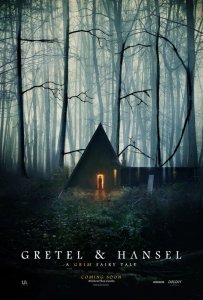 I feel bad for select audiences that went into Gretel & Hansel expecting a cheap thriller because what they really get is an atmospheric art movie that, even at a mere 80 minutes, moves at a very placid pace. Director Osgood “Oz” Perkins (The Blackcoat’s Daughter) takes the bones of the classic Grimm fairy tale and presents it as a feminist retelling of outcasts coming into their own feminine power and the costs of giving over to that power. The titular siblings are cast out by their mother after Gretel refuses to be a maid for a creepy older man very interested in hr “maidenhood.” They stumble upon the dwelling of an older outcast and she supplies plenty of food, but where exactly is it coming from? Gretel experiences strange dreams that portend to a witchy power of her own making, but she’s scared about what she may become and what may befall her brother, who the older woman deems Gretel’s “poison.” The story is a bit strained but the movie is visually luscious to watch. The photography and production design are exceptional and greatly lend the movie a transporting atmosphere that, coupled with its stodgy pacing, creates the sensation of experiencing a waking dream. The camera uses a lot of stark wide angles and centered compositions to heighten a sense of unreality. My favorite moments were the older Witch (Alice Krige, the Borg Queen from Star Trek: First Contact) was coaching Gretel on her inherent power and the sacrifices necessary for her to achieve her potential. She advises “trusting the darkness,” which sounds ominous enough. Because of the general familiarity with the fairy tale, the movie gets more leeway to fill its time with fantasy diversions and a slow build of horror revealing the disturbing process of how the feasts of food become prepared. It almost feels like the movie is reaching a breaking point with how lagging that pacing is, but then it generally gets back on track with a new revelation or complication. Gretel & Hansel is an enjoyably moody, stylish, equally beautiful and unsettling movie that’s heavy on grim and light on plot.
Nate’s Grade: B


You must be logged in to post a comment.