Blog Archives
80 For Brady (2023)
 I did some minor research and yes, three out of the four actresses of 80 for Brady are indeed in their 80s, with Rita Moreno in her 90s, so there is some truth in advertising still. Speaking of that, this geriatric comedy is about everything you would expect from its very basic premise. Inspired by a true story, four lifelong friends (Moreno, Jane Fonda, Sally Field, Lily Tomlin) are diehard New England Patriots fans and more so fans of the team’s famous quarterback, Mr. Tom Brady (playing himself). They’re determined to make one last big trip to support their team at the 2017 Super Bowl, as Tomlin is afraid she doesn’t have much time left. What follows is standard road trip hi-jinks and celebrity cameos the likes of which from Billy Porter and Guy Fieri and Patton Oswalt. Most of the jokes are mild and easily telegraphed, and the formula hews very close to other studio entries in the “old people still got it” ensemble comedy subgenre (Last Vegas, Book Club, The Bucket List, Going in Style, Best Exotic Marigold Hotel, Calendar Girls, etc.). The target audience is looking for something nice and reassuring with familiar faces. To that end, 80 for Brady mostly succeeds, but for anyone else outside it’s older demographic, it will be a middling and hokey comedy. I laughed out loud at the assertion that the Pats comeback from a 28-3 deficit versus the Atlanta Falcons was the result of one very determined, yet also obsessive to the point of hallucinating, elderly fan giving Brady a special pep talk that motivated him to try harder at winning. The movie isn’t meant to elicit big laughs, more pleasant smiles, and to that end it’s agreeably inoffensive right down to its predictability and easy conclusions. Entirely skippable if you’re under the age of 50.
Nate’s Grade: C
Share this:

Puss in Boots: The Last Wish (2022)
 Puss in Boots: The Last Wish is, surprisingly, genuinely great. No kidding. It’s very very good. It’s been eleven years since the first Puss in Boots spinoff, and that itself was seven years after the character was introduced in 2004’s Shrek 2, and there hasn’t been a Shrek movie since the franchise-killing Forever After in 2010. I would have assumed that Dreamworks had just moved on from this character in the ensuing years, especially as How to Train Your Dragon became their big new commercial franchise, until they too ran that into the ground with 2019’s disappointing third film. I had little expectations of greatness once I heard there was a new Puss in Boots feature, even after I started hearing the growing critical consensus. Early in, only mere minutes, I realized that a Puss in Boots sequel was one of the best movies of 2022 and an exciting and heartfelt sequel that proves that with the right artists and storytellers, any old character can still have vibrant relevance. It’s a children’s movie that can appeal to everyone.
Puss (voiced by Antonio Banderas) is a famous adventurer, sword fighter, and lover of women, but he’s also nearing the end of a long journey. He’s used up his eight lives and is now on his ninth and last, and to escape Death, he sets out on a quest to retrieve a fallen star that will grant one person a wish. It just so happens there are a lot of other characters in this fairy tale kingdom that want to get there too.

It is amazing how hard this movie goes. In its opening sequence, it establishes its bold artistic style that enlivens every second onscreen, it establishes its caliber of exciting action that feels akin to wild comic books and anime, and an emphasis on mortality that provides a sense of danger and emotional foundation for what could have been just another shoddy animated sequel drafting off brand recognition. Let’s just focus on the animation style to begin with. I was expecting the same old CGI that has dominated the world of animation for twenty years, but The Last Wish has been clearly inspired by the greatness of 2018’s Into the Spider-Verse. There is a distinct 2D edge given to the designs, accenting the imagery, and during bouts of action they will lower the frame frate, making the movements much more stark and pronounced. Add to this a lovely, painterly watercolor visual style, more emphasis on the overall impression than finite definition, and the movie is a consistent feast for the eyes. There are stylized sequences that communicate fear and desperation, as well as sequences that exemplify the kinetic movement of superhuman action, smartly altering its visual appearance to better serve whatever emotion it wants you to feel. I hope more and more animation companies continue this magical hybrid of CGI and traditional animation techniques, as also seen in 2021’s The Mitchells vs. the Machines. It’s a great step forward combining the old and the new into a stylized look that allows the creators to make the best of both animation worlds.
The action is also satisfying and surprisingly well developed. The opening sequence involves Puss awakening a giant behemoth and it made me think of the exaggerated and intense action of anime series with giant kaiju monsters like in Attack on Titan. The camera will freely circle and zoom around the theater of action, heightened with exaggerated motion lines and split screens and POV swaps. I also love that the filmmakers understand the inherent qualities of what makes for good action, incorporating the personality of the characters into the situations, providing organic consequences, tailoring to the geography, and providing clear mini-goals. After introducing the secondary antagonist of greedy Jack Horner (John Mulaney), as well as Goldilocks (Florence Pugh) and the three bears (Ray Winstone, Olivia Coleman, Samson Kayo) “crimin’” gang, the movie transforms into a delightful and unexpected fantasy version of Midnight Run. There are multiple groups racing against one another to a destination, all the while jostling for supremacy and bumbling into one another’s way. It makes for a fun series of events as every group has their own reasons for gaining the wishing star. Because of this, their behavior feels in-character and the cross-purpose motivation allows for fun combinations of characters getting in the way of one another and utilizing the specifics of their fantasy character details. There was a midpoint sequence combining all sides in a colorful brawl, including unicorn horns exploding into confetti upon contact, and I just felt a surge of pure incandescent joy.

In yet another of the movie’s pleasant surprises, it has one of the best villains of the year as it deals with the concept of mortality with actual nuance. The main antagonist is literally Death itself, personified as a red-eyed, grinning bounty hunter wolf and voiced by Narcos’ Pablo Escobar, Wagner Moura with a menacing purr. This Wolf is after Puss because he’s now on his last life and the Wolf is personally offended at the idea of having multiple lives. Their first encounter makes Puss feel fear for perhaps the first time in his nine lives. In a morbidly amusing montage, we zip through Puss’ previous eight lives and specifically the moments leading to their comical end. He’s flippant with an unchecked ego, and Death seriously humbles him, being the first to ever land a blade on Puss in Boots, a detail he’d been bragging about even in song. From here, Puss is deathly afraid and the hairs of his body will stick up whenever he suspects the return of the Wolf, who certainly enjoys terrorizing his targets with an ominous whistle to announce his presence. So at a moment’s notice, the crazy and colorful hijinks can stop from hearing that familiar yet eerie whistle. In some ways, it’s a family-friendly depiction of working through trauma. The larger theme is Puss acknowledging his moral shortcomings with his many lives, the time wasted on frivolity and ego, and making the most of the time he has left. The need to re-up his lives is a fine starting motivation based upon fear, personified as trying to literally escape the scary wolf, but it’s also what makes Puss confront his own behavior and want to change as well as hold himself accountable.
The heartfelt portion of the movie is its emphasis on found families, and it was done so well that I actually teared up at points. Yes, dear reader, Puss in Boots 2 had me on the verge of tears more than once. Goldilocks is the leader of her gang of squabbling thieves, but she still views herself as an orphan first, whereas the bears view her as an equal and valued member of the family and crime gang. Even her character arc comes to a poignant conclusion where she realizes that her real family isn’t the one she comes from but the one who makes her feel that she belongs. This theme is also demonstrated with little Perrito (Harvey Guillen, What We Do in the Shadows TV series) as the adorable and undying optimist puppy sidekick. His selfless vantage point contrasts with Puss, and greatly annoys him, but Perrito also has his own goal. He wants to be a comfort dog, and one of the sweetest moments of the movie involves him helping Puss come back from a traumatic response through a shared moment. Even typing these words makes me tear up. The screenplay knows how to develop characters that can grow as friends and family and the drama is directly connected to well-honed characters and thoughtful story without being overly sentimental and maudlin, a slippery slope to doom many child-friendly animated efforts with messages.

Puss in Boots: The Last Wish does everything well. It’s funny and colorful and exciting and meaningful and heartfelt and everything you would want in any movie, let alone one featuring a talking cat swashbuckler in tiny boots. No matter your mixed feelings on Dreamworks animated movies, or their iffy sequels, or even children’s movies as a whole, I whole-heartedly recommend that everyone give this magical movie a fighting chance. The animation is gorgeous and vibrant and colorful, the vocal performances are terrific, the action is fun and well-developed, and the themes and character arcs have substance to provide meaningful layers and emotional heft. This is superior entertainment and all in about 90-some minutes. While I’d slot it below Guillermo del Toro’s masterful stop-motion Pinocchio, this is a wonderful movie and one of the best to ever bear the Dreamworks mantle. It’s the 2022 sequel you never knew that you needed but will be oh so happy that it rightly does.
Nate’s Grade: A-
Share this:

Marcel the Shell with Shoes On (2022)
 The feature-length movie based upon the short stop-motion films about a mollusk in sneakers, Marcel the Shell with Shoes On might just be the most precious movie of the year. It’s set like a faux documentary where a lonely filmmaker discovers a magical inhabitant in his Air B&B, a very soft-spoken little guy with a heart much bigger than his actual size. Marcel (voiced by co-creator Jenny Slate) is looking for his lost family who were unknowingly absconded when the original couple who lived in the house broke up and gathered their things quickly before storming off. Dean (Dean Flesicher-Camp, also the movie’s director) records Marcel and his innocent little observations on life and the bigger world and posts the videos online, and Marcel becomes Internet famous, for good and bad. The plot of the movie is less important than its overall gentle nature. There’s not a lot that happens in the movie, but you dont mind because it’s really an 80-minute sit-down with Marcel. The entire movie is just so sweetly innocent that it’s hard to resist. It also has some bigger things to say about our place in the world as well as mortality. Marcel has a loving yet ailing grandmother shell (voiced by Isabella Rossellini) who is beginning to lose her lucidity, and it will hit home for anyone who has watching a loved one suffer from mental decline. Marcel the Shell with Shoes On is a perfect little antidote for our modern cynical lives. It’s overwhelmingly adorable and wholesome and winsome and just plain cute.
Nate’s Grade: B
Share this:

Amsterdam (2022)

It’s been seven long years since writer/director David O. Russell made a movie. He was prolific from 2010-2015, making four movies, which were nominated for a slew of Oscars, especially in multiple acting categories. Three were also nominated for Best Picture and Russell was nominated for Best Director three times as well. It was quite a vaunted run of mainstream and critical success, with devoted actors like Christian Bale and Jennifer Lawrence eager to sign up for Russell’s quirky ensembles (it helps when both won Oscars playing Russell roles).
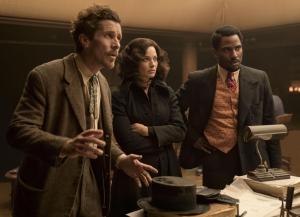
It’s natural to want to take some time off after such a busy creative period, but as the years stretched on, and after the Me Too accountability movement, Russell’s on and off-set behavior gathered more scrutiny and rebuke. His volatility had been known, like his screaming fit he had on the 2004 I Heart Huckabees set with Lily Tomlin. Even George Clooney recounts stepping up to Russell’s bully behavior on the set of 1999’s Three Kings (rumor has it Clooney was the one who released the Huckabees footage). On 2013’s American Hustle, Amy Adams said she cried repeatedly from Russell’s bullying and felt intimidated and isolated. Then there were the renewed revelations from Russell’s own niece who had been transitioning and accused Russell of inappropriate touching when it came to her changing body. Russell even admits to this, though he defends his actions by saying he was given tacit permission, or so he says. With all of this controversy and harassment swirling around Russell, it’s a wonder who would want to continue working with this kind of person. I guess as long as he was producing at his peak level, studio execs would excuse his bad behavior and keep funding his ballooning budgets. Well Amsterdam might just be the end of Russell’s star-studded big studio ride.
In 1933 New York, Burt Berendsen (Bale) is a WW1 veteran making ends meet as a doctor who specializes in veteran care. He and his best friend Harold Woodman (John David Washington) are framed for a murder and on the run, and the only way to clear their good names is to uncover a conspiracy that leads to a possible government coup. Helping the fellas out is Valerie Voze (Margot Robbie), a nurse who makes art from the shrapnel she recovers from inside war vets, and a wealthy socialite who also happens to be in love with Harold. Together, the three friends bumble their way through danger and mystery and crazy mishaps.
This is a mess of a movie, a waste of its top talent, and an excess of Russell’s excesses. The director has established a certain style since 2012’s Silver Linings Playbook, a movie I still to this day genuinely love (it was my top movie for that year). It’s a style that communicates mania, a nervous energy, and it made sense for Silver Linings Playbook as the movie was following a bipolar protagonist given to uncompromising bouts of mania. It makes less sense with each additional movie, but this improv-heavy, experimental, loose sensibility has become the default style for the director, and it feels misapplied. It leads to Russell bombarding his actors with questions or different requests in the moment, keeping them guessing, and actors have gone forward saying they never knew what they were shooting on the day and the shooting never stopped. This indulgence leads to stories that feel like a lot of elements are sloppily thrown together with the undying hope that somehow it will all come together in the end. With Amsterdam, it doesn’t.
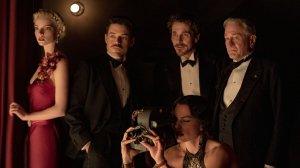
It’s not a great sign when I can say that the entire first hour could be jettisoned. There’s little sense of urgency for far too long, and what is presented feels almost comically unrelated, like even Russell can’t believe his silly characters are in real danger. The uneven pacing creates many dead spaces that feel like an awkward improv detour that you wish could have been avoided. We’re introduced to Bert as a drug addict, and then as a World War One veteran helping other veterans with facial scars and wounds, Bert’s relationship with his pal Harold, then their history in France during the war, then their introduction to Valerie and their kinship, then we have a mysterious death that also leads to a secondary love interest, which requires more setting up of the first love interest and her disapproving family, and then we get police investigating and warning about the first death and then a second murder, this time blamed on our characters, and they’re off to clear their names by… reuniting with Valerie and then bumbling through more characters before, finally the movie presents what it’s actually about well after a full hour-to-80 minutes of movie. It is exhausting and feels like a meandering alternative story that was clumsily grafted onto the Business Plot of 1933. The first half of the movie feels like a slipshod screwball comedy, and then once the particulars of a fascist conspiracy to overthrow the president are introduced, it’s like watching Looney Tunes characters try and foil Adolf Hitler. It just does not tonally work.
The Business Plot is a lesser known event in history, glossed over by the fact that the chief perpetrators more or less got away with their insurrectionist planning. They never did succeed in overthrowing FDR and installing their puppet, but they also did not get prosecuted in the end and most of the media dismissed the scheme as hogwash. It’s undetermined how advanced this plot eventually got but a coup was discussed by a consortium of business leaders. It feels like Russell is applying what he learned from 2013’s American Hustle, which introduced a crazy group of fictional criminals and then, in its last hour, explored the real Abscam criminal sting of the 1980s. I can see themes that Russell thinks are still prescient today, like a dark element desiring to overthrow the U.S. government because it didn’t get its way, as well as the collusion of big business in political king-making, seeking shells that will do what their benefactors demand. The problem is the themes behind this scheme are too serious for Russell’s trifling antics. Think about retelling the insurrection on January 6th but for the first hour it’s two bumbling bank robbers who keep finding themselves in the worst possible situations, ending at the U.S. Capitol. If you’re going to treat the rise of fascism, assisted by corporate overlords, as a serious threat, and something relevant for today, then maybe don’t have most of the movie be wacky nonsense.
Russell’s past films have often glided on energy and in-character authenticity, but this one feels so grasping and desperate. When the master plan to reveal the conspiracy and its shadowy participants is throwing together a big veteran’s show, I was reminded of the movies of young Mickey Rooney and Judy Garland where the solution to any dilemma was to put on a show. Then at one point the literal Nazis are singing loudly in German and are being confronted by our characters and the good patriotic Americans counter by singing “America (My Country ‘Tis of Thee)” and I had to stop the movie and just let out a deep sigh. I think Russell was going for the famous reference in Casablanca, also against Nazis, but it just flounders into unintentional comedy, accentuated by the antsy energy that treats it like camp. There are a couple of spots that I laughed out loud, though I doubt that was the intended response, like watching Taylor Swift abruptly run over by a car. The attempts at actual humor are winding and often lead to little, and the characters feel like more of a collection of quirks than firmly established personalities and perspectives to anchor a movie. What does Bert having a false eye add besides something for Bale to fidget with? What does Chris Rock have to do here? What does Anya Taylor-Joy have to do here? Most egregiously, what does John David Washington have to do here? It feels like Russell just wanted a character for Bert to talk to. The screenplay is overstuffed and polluted with all these minor and underwritten characters that could have been better consolidated.

I suppose you can still have fun with Amsterdam and engage with it on a light-hearted level, smiling as you watch the many big stars having a good time messing around with accents, props, and wacky character traits and tics, like a bunch of kids with a dresser of costumes (maybe it is a throwback to those corny Rooney/Garland kids pictures after all). With other Russell movies, I’ve felt invigorated by the energy and artistry, encouraged to sit a little closer and be more attentive of the character turns, and dig into the actors making three-course meals of their roles. With Amsterdam, I felt the desperation to recreate the success of old patterns but the creeping realization that it wasn’t going to materialize. It’s just a big mess of a movie, not without interesting ideas or moments or good acting, but too much feels resoundingly and frustratingly frivolous. You could ditch entire characters, entire subplots, even entire hours of this movie. Amsterdam cost Disney/Fox $80 million dollars, the biggest of Russell’s career, and only earned a pittance, so I think there is a retraction in due order. Begin with not watching Amsterdam yourself.
Nate’s Grade: C
Share this:

Rosaline (2022)
 Rosaline is a new romantic comedy in the vein of the meta Rosencratz and Guildenstern are Dead, playfully re-imagining Shakespeare’s doomed romance in a much more light-hearted rom-com tone. For you see, dear reader, Rosaline (Kaitlyn Dever) was the young woman who Romeo (Kyle Allen) was infatuated with… until he met Juliet (Isabela Merched), and then it was all Juliet 24/7. Rosaline is the spurned lover trying to regain her former boyfriend with the help of a handsome suitor and her gay best friend, Paris (yes, the one supposed to marry Juliet away from Romeo in the end). Rosaline is a delight for several reasons, chief among them the quick-witted screenplay by the Oscar-nominated pair Scott Neustadter and Michael H. Weber (The Disaster Artist, 500 Days of Summer) and the eminent charms of Dever as a forward-thinking, snarky, exasperated woman bumping against her society’s demands. Dever makes every joke that much better and is so charmingly diffident. We may know the story of Romeo and Juliet, but the fun of the movie is how it subverts our expectations or presents goofy answers around the peripheral of the main story, like how Rosaline was manipulating actions from afar, sometimes unintentionally. The tragic tone is replaced with something much more cheery and amusing, and that might irk diehard fans of the Bard. I found it to be a winning and irreverent low-stakes re-invention of a literary classic, elevated by charming performances and a beguiling and clever screenplay (I’m giving credit more to the screenwriters than the source material novel, as it had many one-star reviews on Good Reads). For fans of Shakespeare adaptations with a feminist twist, check out Rosaline and fall under its star-crossed spell.
Nate’s Grade: B
Share this:

Satanic Soccer Mom from Ohio (2022)
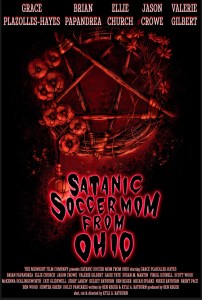
When you have a catchy title like Satanic Soccer Mom from Ohio, you know you have to deliver the goods. This gleefully schlocky suburban satire horror comedy (how many more adjectives you want?) is the follow-up from director/co-writer Kyle Rayburn, an unabashed genre enthusiast. I was granted an advance copy to review this new Ohio-made indie and I’ll try to remain as objective as possible, dear reader, despite the fact that Kyle is one of the nicest men on Earth and even allowed me to film an episode of my rom-com Web series in his own home. Satanic Soccer Mom from Ohio is more low-key than you may be expecting. Its chill vibes and relaxed, ironic humor are more indicative of a stoner hangout movie than something with demon figures and threats of damnation. I think plenty of viewers could latch onto the fun, weird wavelength of an undemanding silly comedy, although there are places I wish Satanic Soccer Mom had gone even further with its spirited sense of creativity.
Annie (Gracie Hayes-Plazolles) is trying to hold it all together in suburban Ohio. Her husband won the lottery and then vanished, and her suburban community is awash in gossip and speculation about what has happened to him. Annie is trying to raise her two kids alone, keep ahead of adult responsibilities like bills and soccer practice shuttling, and holding back from snapping at the clucking hens of the neighborhood, the Karens, lead by chief Karen Green (Valerie Gilbert). It all changes when she accidentally summons a horned demon, Balthazar (Brian Papandrea), who is willing to grant her three wishes at a price, as per proper Faustian bargains.
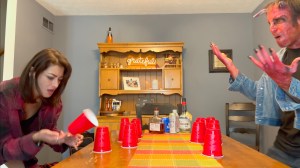
There is a breezy charm to Satanic Soccer Mom from Ohio, a casual, shoulder-shrugging amiability that invites you not to think too hard about the proceedings and just have fun, and if you can connect on that wavelength, then the meandering nature can also be part of that unexpected charm. It’s easy to see the works of Kevin Smith as a reference for Rayburn, but I was also reminded of the hangout cinema of Richard Linklater, where you adjust to the rhythms of characters and their daily lives and interactive camaraderie. Of course, nobody had their boobs literally fall off in Linklater’s world (though there’s still time yet), but it’s that same relaxed tone and feeling that permeates Satanic Soccer Mom. There’s something most amusing about populating your movie with fantastic creatures but keeping a deadpan sense of mundane reality. It’s one of the reasons I enjoyed the short-lived Adult Swim series Your Pretty Face is Going to Hell, a workplace sitcom set in an office literally in hell. If done well, the surprising triviality of the fantastic setup provides its own sly sense of humor. I enjoyed that the movie didn’t have apocalyptic stakes but instead illuminated conflicts very relatable to many: getting over a painful relationship, struggling to juggle the responsibilities of adulthood, fitting in but also knowing when to push back and assert your independence. Having the duplicitous neighborhood Karens be a bigger pain for Annie than an actual demon is a fun reversal. Same as Annie wasting her magically granted wish on ordinary adult requests, like a never-ending cup of iced coffee. The unblinking, roll-with-the-punches attitude of the characters made the movie entertaining even when little was going on from a plot standpoint, and that’s a big boon for an 80-minute indie.
I consider Satanic Soccer Mom from Ohio to be a silly buddy film, and it improves greatly once Balthazar becomes entwined in Annie’s domestic drama. This is also because Papandrea (Feaster Sunday) is the funniest performer in the movie. I loved the bickering dynamic between Annie and her demonic little helper. They reminded me of squabbling siblings, cemented even further during a contentious and competitive game of Mario Kart. This is also the key character dynamic for the movie, the ordinary in conflict with the extraordinary, the protagonist suffering and the relief with the strings attached. The movie is never better when these two are sharing the screen. Plazolles-Hayes (Night Work) has a spunky Parker Posey energy to her, an incredulity to her wide-eyed stares and eyebrow arches that feels earned. She’s the straight woman in a series of crazy developments, and Plazolles-Hayes doesn’t get lost in the craziness. Papandrea is a natural hell-raiser, a mischievous performer who makes the most of his material and elevates it with a grinning desperation that makes it all funnier, like a failing comic on stage. Balthazar is also highly engaging when he’s pretending to be a “normal human,” and his obvious, schticky delivery and mannerisms reminded me of Vincent D’Onofrio’s physical performance in Men in Black. I can still recall the moment he was trying to quickly hide from Annie’s children and just lifted whatever objects were near to badly obscure him (“What are you… four?” Annie berates him). The casual shade Papandrea imbues the line, “Okay… sinner,” is simply award-winning comedy. It’s also a diverting commentary that Annie gets along better with a demon than most humans, though I’m sure there are many among us who could relate. It endears Annie to the audience and proves how unflappable she is despite her troubles, worldly and other-wordly.
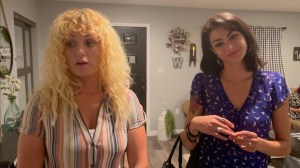
I also want to mention a few other performances that made the most with their screen time. Gilbert (Straitjacket) is so amusingly self-satisfied without becoming a full-blown suburbanite caricature of “Midwest nice.” I especially enjoyed the few moments she dropped the act and revealed the curdled reality behind her sweet-smiling facade. Virgil Schnell (Night Work) is hilarious with how transparently desperate he is to be with another woman, even willing to whip off his shirt to help a woman clean up a slight dab of spilled wine. Ellie Church (Harvest Lake, Jessie’s Super Normal Regular Average Day) is well-acquainted with low-budget horror and provides a welcomed sense of easy-going camaraderie for Annie as her lone friend in town.
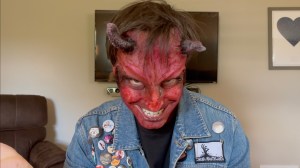
As one of those who previously watched Rayburn’s first film foray, 2019’s Men in Black-meets-True Blood caper, Night Work, I can see definite growth as a filmmaker. Both movies were made on shoestring budgets (only $5,000 total) and filmed primarily on a iPhone camera, though the low-budget look isn’t a big point of detraction for either movie. You can’t judge a small indie movie made for $5000 and filmed on the weekends by the same technical standards of bigger movies. You have to accept some tech shortcomings, like the absence of dynamic lighting or polished audio or complex camerawork. There’s very little visual coverage in Satanic Soccer Mom, many scenes composed of a closed shot-reverse shot circuit of edit choices, but it took me out of the movie only sparingly. The rough-around-the-edges DIY aesthetic can provide its own micro-budget charm too, and Rayburn and co-writer Ben Reger (Night Work) are aware enough to write around technical limitations and emphasize ideas and quirky character interactions. He even has a character joke in narration, “That’s what we could afford to show you.” Rayburn is also smart to cast well and get out of the way of his actors. The ensemble feel like they’re gelling on the same comedic wavelength, which is harder to do than most would think, and thus each performer feels in concert no matter the wild turns. The makeup effects for Balthazar are stylish and effective on a budget, and his whole denim jacket and button-heavy attire and punk rock attitude reminded me favorably of Viv from the short-lived but brilliant British comedy TV series The Young Ones, formative to my own burgeoning sense of humor.
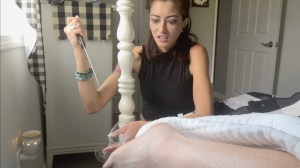
However, even with the emphasis on the ideas, there are enough moments that left me wanting more. I can understand some viewers feeling cold to its blase tone with its fantastical characters. Some viewers will not be able to get over the fact that a woman has a demon wish-granting service and the creativity only goes so far, mellowing in shallow waters for its own good vibes. With all the wish-granting, reality-altering possibilities that a demon represents, it can be something of a letdown for the wishes to be so mundane and minute. One of Annie’s wishes is for her (minor spoiler warnings) to be able to go out in town and pretend to be someone else, so she magically transforms into a different actress (Nickii Rayburn, the director’s wife, so good husband points there) for one raucous night. I can understand that this wish gets at Annie’s distaste for the oppressive negativity of her town, but couldn’t she just have gone to a different bar in a different town where nobody would know her? She could also just wish for the idiots in town to forget about her. It’s the same for why Annie even chooses to hang out with the Karens if she despises their company so much. I understand why the scene exists from a plot standpoint, as another contrast between Annie and the suburbanites she doesn’t fit in with, but then why even bother spending time with these women? There are engaging character aspects with Annie that feel only briefly touched upon, chief among them her complicated feelings about being abandoned by her husband. There’s a nice moment where Balthazar confirms her suspicions and Plazolles-Hayes gets to emote, finally able to process a key point of grief, and it’s one of the few genuine dramatic moments of the movie. However, without prolonged comedy set pieces, the movie would have benefited with more scenes like this for balance. The movie coasts a bit too long without a larger plot direction, so it can feel very scene-to-scene. Then the end includes multiple deus ex machinas, which can make the preceding problems feel too slight.
While I chuckled throughout, the comedy felt too subdued and too easily satisfied creatively. I’m surprised, given the premise, that there aren’t really comedy set pieces. I suppose there’s one, Annie and her pal getting stoned and attending craft night with the Karens, but that’s it. Much of the humor is ribald banter, so much will rest upon the quality of the dialogue writing. It helps having such sharp contrasts for conflict. I laughed throughout but kept wanting the movie to go further, to build off its gags and complications and peculiar turns. One of the dunder-headed Karens flippantly remarks about what could have happened to Annie’s husband, saying, “become a horse man,” and this would have made a fine opportunity to have her continue this weird fantasy tangent, accidentally revealing her own strange sexual kinks, something to separate her from the herd and then shame her back into social submission. That could have been a running gag. Or Bathazar’s one runty horn being a source of insecurity, something he has to defend (“I’ll have you know, plenty of lady demons have referred to my horns as ‘more than adequate.’”). There’s a truly wonderful random gag about the Karens raising money for “Saxophones for the Homeless,” and I was pleading for a visual representation of this concept, with a homeless man shrugging at the useless gift. I often wish there were comedy scenes and jokes that pushed beyond the first idea, taking one joke and finding a deeper, more belly laugh-inducing bit rather than settling for a passing chuckle. I’m talking about scenes where Annie gets stoned and giggles, or the inclusion of a record scratch sound effect to really ensure that a punchline landed and was meant to be unexpected. I wish Rayburn and Reger demonstrated as much confidence with all their jokes as they do their final gag involving an angel and the selected color of her wings (it’s definitely a memorable exit).
Two movies in and Rayburn is starting to establish a penchant for establishing weird and wild worlds with goofy, profane characters, rich in crude banter and crazy ideas, but worlds that I wish to explore further. Satanic Soccer Mom from Ohio is an amusing and charming movie, especially if one can gel with its overall amiable tone and forgive the inevitable technical shortcomings. I’m far more forgiving of tech issues than I am with narrative and comedy shortcomings, because those are strictly on the creative brain trust fully developing their story potential and exploring the possibilities of their funny. It’s hard not to feel like Satanic Soccer Mom is a solid first draft of a story and could have benefited from a few more passes and polishes to really punch up the comedy and better explore the character dynamics. That stuff isn’t budget dependent. Again, it’s easy to feel the passion everyone had for this project and especially the good times. We need movies that can provide that level of entertainment, no matter their flaws, and Satanic Soccer Mom from Ohio is likely going to be the most feel-good buddy movie ever with this title.
Nate’s Grade: B-
Share this:

Catherine Called Birdy (2022)/ Sharp Stick (2022)
Lena Dunham is a controversial creator, even more so since the conclusion of her hit HBO comedy Girls back in 2017. I’ve been a fan of her creative voice from the very first episode of Girls, and I appreciated how well she could write self-involved, self-destructive, myopic characters and her directing instincts as well, all at the age of 25. From her zeitgeist-tapping TV success came Lena Dunham the brand, the industry, and with that her feminist newsletter, book deals, personal appearances, and a perennial case of foot-in-mouth syndrome. It makes it more difficult to carry that fandom when the figure says cringey things like she wished she had had an abortion to better understand the plight of those who have. Some of the early criticisms against Dunham were simply mean-spirited, like gross insults regarding her body and her penchant for nudity on her own TV series, as if women don’t exist who resemble Dunham’s shape. However, with each new public example of bourgeois entitlement, I began to wonder whether Dunham’s satirical skills at sizing up self-involved characters was maybe a little less satirical. I’ve been curious what creative projects Dunham would gravitate to next. Her first was Camping, a short-lived 2018 remake of a British comedy that was cancelled after one season. But aside from producing some more HBO shows, and occasional acting appearances like in Once Upon a Time in Hollywood, Dunham has been relatively silent. And then in 2022, she had two new movies as writer and director. I thought it would be telling to review them both together, as they share many similarities, and as further insight into Dunham as an artist still exploring her voice.
 Sharp Stick was released first, though only a couple months before Catherine Called Birdy. Both movies are coming-of-age comedies about young women finding their place in a world that is all too ready to package them into tidy offerings for male desire. Both movies are about their plucky heroines pushing social boundaries and being exploited by lustful men, but one of these films is far better developed, more charming, and with clear ideas and consistent commentary. In short, watch the delightful Catherine Called Birdy and skip the rather dulled Sharp Stick.
Catherine Called Birdy is based on the 1994 children’s book by Karen Cushman and modeled as a young girl’s diary from thirteenth century England. Catherine (Bella Ramsey) is the only child of the lord of a small village. Her mother (Billie Piper) has suffered five miscarriages or stillborn births, and her spendthrift father (Andrew Scott) is bewildered at what to do with his headstrong daughter. She’s 14 and rejecting her father’s assembly of suitors, as he tries to marry her off and recoup some money to stabilize the family’s looming debt. Catherine narrates her very important year where she starts her period, hides it, and learns about love and life and finding her place.
Right away, I was taken with the sprightly energy and strong personality of our narrator, who would prefer to go by Birdy, thank you very much. We open with her literally slinging mud with the neighborhood kids and laughing and wilding out, enjoying the thrills of being young. The contrast of the movie will hinge upon the distinction of what is childish and what is mature, as these youngin’s are thrust into adult roles because society says that as soon as they can menstruate, they are ready to be married off and become baby factories. Birdy is angry with her mother for continuing to try and have children, especially after the painful recuperation of burying sibling after sibling. She resents the idea of being a mother, and especially so early into a life that still feels bound by the stirrings of being a child. Girls should be allowed to be girls, she demands, and by that she means running around, talking with her friends, and absent the pressures and limitations of adulthood. She’s defiant against the larger Medieval system of valuing women for their fertility. Dunham is smart enough to frame the movie in credible terms. It’s not like Birdy, through her tenacity, is going to overthrow an entire centuries-old system of gender norms, but the story is positioned in more personal terms, in breaking through to her father to see her on her own terms rather than as a convenient investment portfolio. That’s more achievable and will be more gratifying for us because of what winning him over will mean.
 The movie is also fast-paced and funny, with Birdy’s casual and catty observations delivered in quick succession. In some ways this reminded me of a Medieval version of 2011’s Submarine, another charming indie coming-of-age movie with an eccentric pop-culture obsessed teenage weirdo. There’s Medieval covers of contemporary pop songs strewn throughout for a youthful energy, and lots of onscreen titles and graphics that have their own jokes. The disconnect between Birdy’s viewpoints of the world and the common ways of thinking provide snarky commentary and plenty of progressive attitude. It’s a constant entertainment to watch this precocious little lady tweak the gender and social norms, riling up buffoonish and fragile male psyches. She’s an upstart, and there’s joy in watching her upset those in power and privilege, though she too is reminded of her own privilege considering she is the daughter of the lord and not merely some dirt-poor peasant. If it wasn’t for the sharp character-focused writing, Ramsey’s performance wouldn’t achieve the same comic and emotional heights.
Ramsey was a supreme scene-stealer on Game of Thrones, so much so that producers turned a one-scene part into a multi-season role, even giving her a badass death scene. Ramsey is the anchor of Catherine Called Birdy and perfectly in tune with her character’s feisty yet limited worldview. She’s such a winning character and represents our more modern worldview chaffing up against the very real reality of Medieval life. In some ways, she’s a case study in having to grow up too soon, and surely not the only woman to have done so. Ramsey is heartfelt and hilarious and headed for stardom (she’ll be co-headlining the HBO Last of Us series along with Pedro Pascal).
 Attaching the audience to this character is a rewarding experience, and Dunham as screenwriter has balanced the adaptation of going from a first-person diary-based narrator into a film world where we can get outside viewpoints that complicate and challenge our perceptions. I appreciated the widened scope of the narrative. It’s not just the women who are expected to perform their social duties. Birdy’s beloved older uncle, George (Joe Alwyn), is definitely in love with Birdy’s best friend, but that marriage will not do. He’s expected to marry from an established pecking order to better protect his family. There’s a village boy who is also clearly gay but will never be allowed to marry whom he loves, again emblematic of plenty of people who would be left behind in this system. Sophie Ookonedo (Hotel Rwanda) appears as a widowed noble lady who speaks about the freedoms she enjoys having “played the game” and waiting her turn, speaking to a possibility for Birdy working within a broken system. She’s savvy but graceful, with the hint of sadness just on the outer edges of her words. Birdy’s mother, Lady Aislinn (Piper), is similar, hoping to make the best of limited options, and trying to ready her daughter for a life she knows she will be ill-prepared for. It’s what any parent feels, trying to ease your child for the reality to come while still holding onto their innocence as long as possible. She has some heart-rending moments especially during a difficult childbirth scene, and it’s that moment that really showcases Birdy’s father, Lord Rollo (Scott). Until this point, her father has been frustrated by his impetuous daughter, but it’s this moment where she, and by extension us, see the depth of his caring for his family. It’s wonderfully played by Scott, and it reminds us that even the stooges and fools of this world have their own hidden depth.
Catherine Called Birdy is also something of a Game of Thrones reunion, pairing Ramsey with David Bradley, Dean-Charles Chapman, Paul Kaye, and Ralph Ineson. It’s like Dunham used the HBO series as a quick casting cheat sheet since she’s already seen them in a Medieval setting. Special mention to Russell Brand (Death on the Nile) who also just kills it in one scene as a confused and easily swayed suitor. I would have loved more appearances from this man but having him continually foiled by Birdy and never learning from his gullibility.
 Moving onto Sharp Stick, an original story from Dunham, you can see points of similarity immediately, framing the narrative around the self-discovery of Sarah Jo (Kristine Forseth). She’s 26 years old and still a virgin, a point she feels more uncomfortable about because of how open her half-sister Treina (Zola’s Taylour Paige) and mother (Jennifer Jason-Leigh) are about their own sexuality and their many paramours. Sarah Jo has her sights set on Josh (Jon Bernthal), a seemingly kind stay-at-home dad taking care of his special needs son that Sarah Jo babysits. If she’s going to lose her virginity to someone, she wants it to be him, but with this comes consequences as well as a steep learning curve for Sarah Jo on the realities of intimacy.
My issue with Sharp Stick is that it feels far more dawdling and confused about what it wants to say and explore with its brief 86-minute running time. This feels more like a handful of ideas or short story beginnings that Dunham inartly smashed together, and the proceeding movie has moments of levity and insight but is overall too messy and shambling and underdeveloped. Let’s start off with the main character who I would have assumed was a teenager by the way that she was acting. When the script tells me she is 26 years old, I was flabbergasted. She was behaving like a much less mature adult, not to say 26 is the height of maturity or that everyone matures at the same speed. Still, Sarah Jo comes across as very naïve and infantilized about adult relationships and human sexuality, which is confusing considering how open her family is about sex and pleasure. It’s not like she’s growing up in a conservative or repressive environment. She’s literally helping her sister record twerking videos for her social media account. The chief reason I think Dunham made an explicit reason for aging our protagonist 26 was to remove some of the ickier consent issues from coming-of-age stories about inappropriate relationships between underage teens and adults (American Beauty, Towelhead, The Diary of a Teenage Girl). She wanted to preemptively remove those criticisms, and so she made Sarah Jo 26, and she also had her uterus removed, something meant to make her seem more adult, at least on paper. Except this is the most childish 26-year-old I may have ever seen. The problem is that Sarah Jo’s naivete has shackled her character, so her sexual awakening feels more akin to a teenager’s than a mid-twenties adult.
Update: I did some research and discovered that Sarah Jo was originally written to be autistic, which would explain more of her social awkwardness. Dunham reached out to an expert on compassionate representations of autism and physical intimacy but then reportedly cancelled on her. I guess she just decided to make Sarah Jo neurotypical but didn’t change anything else. Needless to say, this was not the best decision and its impact is all over the oblivious sense of naivete that pervades the character and her choices.
 I found it hard to take Sarah Jo that seriously as a character, as her education seemed to be obvious and a little too arch and twee in delivery for the rest of the movie. Once she has her sights set on Josh, Sarah Jo looks to Internet pornography to learn about what she may do to better please her partner. She is titillated by watching porn but less from the simple carnal activity and more from her fixation on one very commanding actor, played with nonchalant exuberance by Scott Speedman. Sarah Jo studies the annals of porn and creates a colorful construction-paper-heavy checklist of sexual acts she would like to experiment with, and she even alphabetizes it. It’s stuff like this that paints Sarah Jo as being infantilized. It’s not like we were shown her penchant for arts and crafts or taking larger tasks and breaking them down into cutesy checklists before. She even starts soliciting men online to better help her check things off her list, although this doesn’t come to any danger beyond a few lackluster men not living up to her expectations. And that’s the big takeaway here, that what porn promotes is more fantasy than reality, that actual intimacy between consenting adults is its own very different thing. This is too simple a revelation to rest the entire movie upon wuthout a more in-depth character, which Sarah Jo is not. Again, it’s confusing because this character will seem like she is ignorant to the world of sexuality and yet her family is so direct. The Sarah Jo character feels like she’s been ported from another story about a sheltered wallflower learning about her body and her pleasure versus how she’s been told to act to better turn on men.
I don’t fully understand what the entire storyline with Josh was meant to add up to. He’s her first sexual experience, and while he’s awkward and hesitant, he eventually gives in to this young woman’s ego-stroking infatuation, and then they embark on an affair behind the back of his pregnant wife (played by Dunham). I’m going to go into spoilers to better assess this storyline, so be warned dear reader. He eventually confesses to his wife about the affair and breaks down into tears, apologizing and saying he couldn’t help himself, and the moment is squarely to make us see Josh as a pathetic loser. His tears are performative, and he’s throwing around shifty excuses like that he did it for them. He admonishes himself but it’s not contrition we see but manipulation, meant to provoke forgiveness or at least mitigation of his actions by his wife. That’s when she shakes her head and talks about the many, many other women that Josh had had affairs with, proving that this tryst was not out of character. In fact, this seemingly “good guy” dad is actually a creep. Okay, but then Dunham’s character stays with him and they continue living their lives, obviously with the absence of Sarah Jo now. She even returns to them to yell to Josh that she’s getting much better at sex, like she will win him back as a lover. I suppose Dunham was setting up Sarah Jo’s object of desire being less than her expectations and instead as another scuzzy and coddled man-child. That’s fine. But then why does Sarah Jo still seem so determined to win him back? It’s like she hasn’t learned from this.
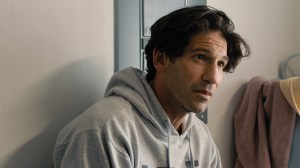 There are moments that work in Sharp Stick, little pieces that click together with insight or well-honed character writing. I enjoyed Sarah Jo’s mom going into full monologue mode to describe how she met and fell in love with Treina’s father. When Sarah Jo asks about her own father and her story about meeting him, her mom just shrugs and says her dad was just some guy. The disappointment is palpably felt. I also appreciated that children with special needs are presented in a straightforward and un-stigmatized fashion as just being kids. I thought the conclusion with life advice from Speedman was a great scene-stealing deluge of wisdom from the most unexpected place. I just wish it felt more earned for Sarah Jo and her awkward personal odyssey.
Dunham hasn’t directed a movie since her indie breakout in 2010, Tiny Furniture, and now she has two movies within weeks of one another. Catherine Called Birdy is the much stronger outing, allowing Dunham to adapt her voice and talents into a PG-13-firendly universe while still keeping her sharp wit and attention to character detail. Sharp Stick, in contrast, feels like several ideas that never fully coalesce, and the messy decisions with the main character makes the entire enterprise feel strange and lacking better-earned wisdom from her journey. After six seasons of Girls, I’ll always be intrigued about a new Dunham creative project, but they are not all equal. Catherine Called Birdy is Dunham flying far above the routine criticisms about her writing and her perspective, as well as showing her adaptability in an unfamiliar setting. Sharp Stick, sadly, is a reconfirmation of those criticisms and the sloppy execution of bigger ideas.
Nate’s Grades:
Catherine Called Birdy: B+
Sharp Stick: C
Share this:

Bodies Bodies Bodies (2022)
 Bodies Bodies Bodies is a darkly comic horror indie but the most horrifying aspect is being trapped in a house with these obnoxious Gen Z stereotypes. A gathering of drug-addled teenagers is interrupted by two major events: a hurricane isolating everyone inside the posh Floridian estate, and a hidden murderer among their ranks picking them off. The problem with this would-be Scream scenario is that its screenplay is hampered by tonal anguish; it’s not scary enough to unsettle, and it’s certainly not funny or satirically lancing enough to count. These cringe-worthy caricatures of Gen Z as over-stimulated, over-entitled, and over-offended are hacky and feel like somebody collected a lazy grab bag of generational complaints. Everyone in this movie is annoying or unlikeable or shallow or selfish or plainly insufferable. I know the movie wants to satirize the worst of modern social media-heavy teen friendships, but it feels written by someone who hates Gen Z but without deeper understanding of the foibles of Gen Z struggles. Cultural buzzwords will be thrown out (podcasts, ablest, gaslighting, feelings are facts, appropriation, triggering, etc.) with abandon but it all feels so phony and dubious. The central mystery has some appeal, and there are some performers who make the most of their sketchy characters, like Shiva Baby‘s Rachel Sennet and a well-cast Pete Davidson, but more often the actors are trapped from such limited material, especially Oscar-nominee Maria Bakalova (Borat 2) as our sheltered protagonist navigating this weird world of privilege. The horror elements feel entirely out of balance, utilizing the dark environment and rave glow band-lighting accents for most of its lackluster, murky atmosphere. Bodies Bodies Bodies has some shining moments but far too much down time with inauthentic yet very insufferable characters, and after 80 minutes, I didn’t care who survived because my patience had long been murdered.
Nate’s Grade: C
Share this:

Clerks III (2022)
 I’m at a crossroads with writer/director Kevin Smith. Well, I might actually have already switched sides but don’t want to fully admit it yet even if it’s self-evident. I’ve written about this before but Smith was one of those major cinematic voices that helped shape my sense of indie film and even comedy during my formative teenage years. I became a diehard fan, watched every movie several times and had all their interconnected Easter eggs memorized, and I’ve seen the man in person three times, one time recorded for a college Q&A DVD release. In short, I was most definitely a Kevin Smith super fan. Then over the last five years or so, things began to change, or more accurately my perception of Smith’s movies began to change. The attempts at humor were strained, obvious, and gassed, and it felt like his biting wit and raunch had transformed into mawkish nostalgia. The man in his twenties who made comedies I identified with and loved became a man in his forties with different priorities and a different perspective. He evolved. However, I am no static creature, and I too was evolving, and my fanfare for Smith’s comedy sensibility has transformed into more of a pained grimace. I re-watched Dogma in 2019 and Jay and Silent Bob Strike Back in 2021, as well as its second-banana imitation Jay and Silent Bob Reboot in 2019, and my assessment was only reaffirmed with each movie: I’ve outgrown my old influence. As a big screen storyteller, Smith has become more and more insular, inaccessible, and beholden to eroding fan-service, almost like he too is trying to bid goodbye to his own universe of characters. Maybe that will be the big reveal, Smith putting all his toys back away while he still can.
Clerks III is a return to the old QuickStop convenience store in Red Bank, New Jersey, last seen in 2006 with friends and malcontents Dante Hicks (Brian O’Halloran) and Randall (Jeff Anderson) as the new owners. Clerks II seemingly ended on a moment of triumph, of the guys returning to their roots but also stepping up, assuming ownership responsibilities. However, many can also view the ending as a darker indictment on what the future held for these men. Sixteen years later, what have these men accomplished? That’s the thrust of this third film, following Randal’s brush with death from a heart attack (based upon Smith’s own life-threatening experience). He re-evaluates his life at 50 and yearns to make a movie about his life and his personal experiences, which just happens to be life in service at the QuickStop. He bands together with Dante as producer and they put together a ragtag crew, including old buddies now selling their own state-approved brand of bud, Jay (Jason Mewes) and Silent Bob (Smith), to make their movie.
 In many ways, Clerks III is like a remake of Clerks with the characters of Clerks making their own version of Clerks only thirty years removed from the actual scenes of Clerks. There’s a bit of a snake eating its own tail feeling; many scenes are re-creations of moments from the original Clerks and with the same actors. It’s slightly fun to see even the smaller non-actors come back to recreate these moments, but it also makes the movie feel like an extended high school reunion (“Oh look, that guy lost his hair.”). If you were not a fan of Clerks, well you shouldn’t really be watching the third film in the series, but if you didn’t have an attachment to these characters and this odd world, seeing older versions of former fleeting characters, from the Chewlie’s Gum rep to the angry ruse-baiting video store customer or the woman who manually masturbates caged animals, would feel like flipping through someone else’s photo album, devoid of whatever nostalgic or emotion was intended.
As a lifelong fan of Smith’s filmography, or at least a former lifelong fan now transitioning to accepting a parting of ways, it’s neat to see this reunion of sorts, but it’s also ultimately pointless from a narrative standpoint. Smith is treading the same ground now with irony and distance. Actually, the irony gives way more to sentimentality. It’s not an insult to say that Smith has gotten increasingly softer as he’s gotten older, blunting much of his comedy edge. He comes across as a sincere man who really cares for the people in his life, including these very people that contributed their time and efforts in 1992 to help make a young man’s dream come true. I understand his desire to pay back all the little people, to check back with them one more time, and to have Clerks III serve as a love letter to those who were there from the very beginning. If you’re plugged into this universe, you might smile and you might also feel some of the love.
 There are famous cameos to balance out the lesser known faces from the original Clerks. You’ll see Ben Affleck hamming it up, Justin Long doing a funny voice, Fred Armisen grasping for something to do, and Sarah Michelle Gellar’s first film role since 2012 and first live-action film role since 2009’s Possession (Gellar was a voice on Smith’s Masters of the Universe animated series on Netflix). The two big additions from Clerks II also return. Trevor Fehrman, returning as the socially awkward coworker Elias, is the funniest part of the movie as his character goes through a spiritual crisis. He feels let down by Jesus and commits himself to Satan, and his runway show’s worth of crazy outfits and cosplays throughout the movie is the funniest joke that never even bears mentioning, which only makes it funnier (he too has his own Silent Bob-esque quiet sidekick played with good spirits by Austin Zajur). Elias was the voice of a younger generation of Internet fandom in Clerks II, allowing Smith his opportunity to criticize modern geek pop-culture, like the Star Wars prequels and Lord of the Rings. That doesn’t really happen in Clerks III despite 16 years of Dante and Randal’s cinematic absence. Smith doesn’t even nibble or good-naturedly rib any pop-culture landscape. Even the jokes about NFTs feel hesitant and wishy-washy and lazy. Smith was defined by his ribald wit and hyper-literate dialogue, and now his comedy has become inane slapstick and pandering nods meant to serve as a replacement for an absent punchline. It’s disappointing how little the comedy registers now.
The biggest addition to the Clerks trilogy was Rosario Dawson, now even more popular as she’s firmly solidified in the Star Wars TV empire. I figured she would have been written out of the franchise as her availability was going to be far more limited. It’s not a spoiler considering it’s revealed within the first minute or so, but Dawson’s character, Becky, who was pregnant with Dante’s child and this presented a new route for his future, is dead. Not only is Becky gone but she died in 2006 from a drunk driver, which means that her unborn child with Dante also died, though this is never touched upon and that seems truly bizarre because much of Dante’s characterization in this movie will be his prison of grief he’s been unable to break from. It’s been 16 years and Dante has not moved on, and I wish more of this was explored thoughtfully. He views himself as a man stuck, now in his 50s, and having missed his off-ramp to another and better life. Without more careful attention, it can come across like a schlub holding onto his grief as a mistaken form of identity. Even that description could be interesting, but you’re not going to get that level of drama in something like Clerks III. Dawson does have a few appearances as a ghostly memory trying to help Dante move on, though if this is the case, I feel like she should be reaching some kind of breaking point after 16 years of effort.
 By the end of Clerks III, it’s clear that Smith intends for this to be the concluding chapter, sending off these characters as reflections of his own film history. The focus of the final act is far more dramatic, as the act of retelling one’s life story as a movie becomes its own way of sharing the love and admiration of a decades-long friendship. I don’t quite think Smith gets to the dramatic heights he’s reaching for, even when some pretty significant and surprising events play out. Too much of the movie is like watching a low-budget remake of Clerks thirty years late, and while I’m a sucker for movies about the making of movies, and those fun found families of creatives banding together, the structural vehicle and conceit for Clerks III left much to be desired. If you remember the scenes of 1994’s Clerks, watching Clerks III is like reliving them as a strange Lynchian dream where the edges are smudged and everything isn’t quite as it should be. At this point, a new Kevin Smith movie is made strictly for the most diehard of fans. I can see that ever-shrinking pool of fans warmly smiling and chuckling from the movie but more in nostalgic recognition of time gone by. It’s nice to revisit these characters, as I’ve been eager to see what life has dealt them since Clerks II. You can feel Smith’s affection for these people, the ones who catapulted him into fame, but the movie is too backward-looking and uninterested in its own comedy as Smith winds down.
Nate’s Grade: C
Share this:

Secretary (2002) [Review Re-View]

Originally released September 20, 2002:
Secretary is a new romantic comedy with a few kinks to it. It’s actually the most romantic S&M movie ever. It’s the first S&M romantic comedy since maybe Garry Marshall’s disastrous 1994 Exit to Eden. I’m still trying to get the image of Rosie O’Donnell in a bondage mask out of my ongoing nightmares.
Lee Halloway (Maggie Gyllenhaal) is fresh from a stop at a mental institution for her hazardous habit of cutting herself to feel relief. Her overbearing mother stashes the entire kitchen cutlery in a locked cabinet. The sheltered Lee resorts back to a kiddy make-up box stashed under her home bed. Instead of colorful brushes and arrays of lipstick, she has a selection of sharp objects. Lee goes job hunting to step back from her habit, and is hired as a secretary to E. Edward Gray (James Spader). He is a rigid taskmaster who delights in pointing out typographical errors with his red marker, his weapon of choice. Gray enjoys his dominance and Lee complies, even if it’s routing through garbage. He ticks away Lee’s flaws like a checklist of annoyance but also appears to have genuine concern for her. When he notices her wounds Gray confronts her and convinces Lee to stop cutting herself.
The turning point arrives when Gray orders Lee into his office one afternoon. He commands her to bend over his desk and then delivers a sound spanking. Lee stares at her purple rump with fascination, like something has been awakened inside her. Soon enough Lee purposely makes typos so she can re-assume her spanking position.
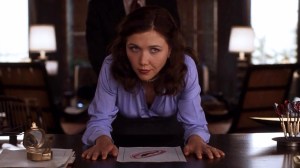 Maggie Gyllenhaal is a cinematic find with a fearless and breathtaking performance that is at once delicate, nervous, self-controlled, seductive and delightful. Gyllenhaal, with her heart-like face and pert lips, radiates star quality. She allows the audience into Lee”s head and we quickly fall in love with this peculiar yet charming heroine. If there is any justice in this world Gyllenhaal should at least get an Oscar nomination (she didn’t). Spader can do this left-of-center creepy character stuff in his sleep.
Secretary on the surface may seem like a fetish flick but it’s no different than boy (sadist) meets girl (masochist) and falls in love. Director Steven Shainberg treads carefully around serious subject matter, like Lee’s self-mutilation, to focus on these two very special characters. Secretary isn’t making any loud statements on sadomasochism or post-feminism, it’s just showing us that S&M is the route these two people take to find true love. It doesn’t judge them for their unconventional tastes and neither should we. This is one of the finest romances in recent memory and it seems to come from one of the most unlikely places.
Sadomasochism has been predominantly shown involving pain or some leather-masked madman evoking torture. Secretary may be the film that shows there can be pleasures with pain. Some people regard what Lee and Edward do as sick, perverted, or downright wrong. Secretary is a foot in the door to get people to understand what willing sadomasochism really is about. We all have fetishes and interests, and S&M is the number one fetish truth be told. This isn’t your everyday romance.
Obviously, this is a movie that will not appeal to everyone. The relationship between our leads is surprisingly complex but gentle and even sweet (if that’s the proper word for an S&M romantic comedy). Secretary shows that it truly takes different strokes and, despite an overly silly ending, is the most pleasing romance of the year. You’ll never look at red felt pens the same.
Nate’s Grade: A
——————————————————
WRITER REFLECTIONS 20 YEARS LATER

I’ll be honest with you, dear reader, because I think you deserve that. I didn’t recently re-watch Secretary. I did re-watch it a year or two ago, and the return experience was so jarring that I didn’t feel that I would greatly benefit from watching it so soon again, but I knew I would have to include it on my 2002 re-watch list when it was time. When I first watched it in 2002, I was smitten with its offbeat charms about an unconventional romance through the BDSM community and a young woman’s self-actualization through accepting her kinks. It was a star-making performance from Maggie Gyllenhaal (originally was going to be Gwyneth Paltrow) and as a sucker for quirky romances, it was one of my favorite films of the year. Nearly two decades later, I took out my DVD copy to share with my now fiancé, who is also a fan of quirky romances and who had never watched Secretary. Surely, I thought, she would be entertained. Dear reader, she was very not entertained. She was horrified. She was shaking with disgust. She was having a literal violent reaction to the movie and its onscreen display of what constituted romance, and I will say it struck me differently too. I understand that not every film will age well, as our sense of what is funny or acceptable or what is even compelling will change over time as our culture inevitably shifts. That’s art. But hoo boy has Secretary aged about as well as milk in the ensuing twenty years.
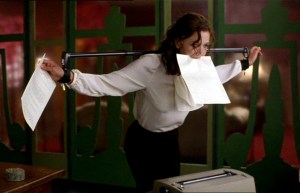 The very nature of the S&M relationship between boss and secretary was already problematic when it was released in 2002, but in a post-Me Too universe it is inexcusable and taints any charms the movie may have had. Mr. Grey (James Spader), the dominant boss and rigid stickler for rules, is the villain of the movie and not its Byronic hero, the brooding and damaged man that a pure-hearted woman just needs to find a magical way to reach and reform. He is not romantic. He is appalling, and the early critical praise, myself included, excused far too much of his behavior. While not condoning his excesses, critics may have given more leeway because the end result was framed as a happy ending, with Lee (Gyllenhaal) being cared for by Mr. Grey. However, he completely uses his position of authority in many inappropriate manners, and while they do develop a mutual relationship, eventually, the power dynamic is not equal at all. This takes away the agency of Lee and makes the romance feel like a false choice. Much of her relationship can be summarized by the awful moment he ejaculates on her back: she just has to take whatever he dishes and like it. That’s not romantic. That’s not cute. That’s toxic. It also hurts the overall movie that the way Lee proves her devotion as the film’s climax is to stay fixed at her boss’ desk for many days, to the detriment of her physical health. Yes, Mr. Grey gets Lee to kick her habit of self-harming but she replaces one need with another. He resembles a predator by most every definition, and to try and say, “Well, he’s just complicated,” is bad man excuse-making.
I tried imagining tweaks and alterations that could make this all work, but anything where he is her boss muddies the issue of consent. Maybe if he was a visiting businessman, but that would also offer a questionable dynamic. The core of Secretary is built upon the secretary/boss interplay and imagery. The tagline is, “Assume the position,” and depending upon the poster, you might only get a woman’s rear in fishnets as the sole imagery. Director Steven Shainberg (Fur) and screenwriter Erin Cressida Wilson (Chloe, The Girl on the Train) are clearly veering into the obvious office power dynamics for provocation. They are very intentional about subverting romantic clichés and looking for something different for our heroine. We have a nice guy, played with squirmy energy by Jeremy Davies, who just won’t cut it. He’s too vanilla for her and afraid to be too forceful in his spanking. It’s like the filmmakers are declaring that Lee demands more, and her specific combination of qualities just so happens to align with this gross man. The movie wants us to hold our judgment, and I could in 2002 in a “love is love” declaration, but what I see on-screen in 2022 is not indicative of love. It’s obsession. It’s codependency. It’s sad.
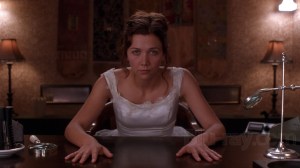 The other problem, sadly, is Maggie Gyllenhaal’s fragile performance. The choices she makes collapse Lee, greatly infantilizing her and magnifying all the icky feelings I had. She’s playing Lee less like an adult woman who is struggling to figure out her confusing life, and impulses, and more like a teenager who woke up in the body of an adult woman. Part of this is the screenplay but it’s not helped by the acting choices that Gyllenhaal engages with. I do really enjoy her as an actress, and it’s easy to see why she could captivate so many circa 2002 with this performance, but it plays so differently now. Today, she comes across as another young woman trying to remodel herself to please a man. Her little girl acting choices only make the courtship feel even more abhorrent. I wonder if they were trying to aim for the movie to be its own kinky fable, wherein the infantilization would harken back to older fairy tale tropes and Mr. Grey as the unorthodox knight in shining armor.
This is one of the biggest critical swings I’ve had since re-watching twenty-year-old movies and my initial reviews, and I’d say even one of my biggest changes on any movie I’ve watched. I do think you can make a funny and sexy S&M rom-com; for years I thought Secretary was it. Not so. I wouldn’t even recommend this movie and it used to be in my top of 2002. I suppose people who are curious could give it a chance, but I think the objections outweigh whatever positives can be gained from viewing. Oh well. That’s the nature of art. Not every movie or book or song will have the same power over time. They stay the same but we, the prism upon which art is judged and related, are constantly in flux. That’s just the way it is. This won’t be the last movie where my opinion changes dramatically. I just won’t watch Secretary again, and that’s okay.
And you’ll never be able to convince me that E.L. James didn’t take her BDSM character’s name from this film.
Re-View Grade: D


You must be logged in to post a comment.