Blog Archives
127 Hours (2010)
 So would you give your right arm for a good movie? 127 Hours is the true-life tale of a man trapped between a rock and a hard place. Hiking in dusty canyons, James Franco gets his arm pinned under a rock. And that’s about it from the plot standpoint. That’s because everything is leading up to the grisly inevitability that he will be forced to cut his own arm off for survival. And director Danny Boyle (Slumdog Millionaire) does not let you off the hook. You will see every gruesome second of a man hacking away his own arm, slicing nerve-by-nerve, crushing bones, etc. It’s not the uplifting experience that Boyle and the producers mistakenly believe. The film’s true success is that it still manages to be entertaining and exciting, despite having a central character unable to move more than inches. It’s fascinating to watch Franco use the tools at his disposal to survive for five days before, well, you know. Boyle does a terrific job of making an intimate almost claustrophobic plot feel much more open. Nobody probably could have done this movie better than Boyle, taking his kinetic trademark style and allowing us to enter the mind of Franco’s fallen hiker. 127 Hours isn’t so much an inspirational tale as it is a morbid curiosity that entertains in spurts. But all the visual tricks in the world can’t get people to want to pay to see a man cut off his own arm.
Nate’s Grade: B
Share this:

The Killer Inside Me (2010)
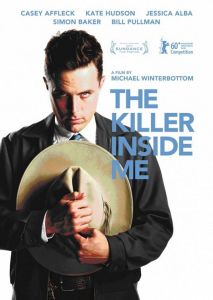 This is an unsettling thriller that takes us into the mind of a psychologically dangerous deputy policeman (Casey Affleck). He patrols the small Texas city by day and kills for pleasure by night. The movie runs into a problem because the character doesn’t have a semblance of any moral code, which sounds contradictory for a serial murderer. He doesn’t kill for profit or to cover a secret or anything that would come across as identifiably rational. He kills because he feels he has to; he’ll even kill the mistress he loves because he can’t control himself. It’s an upsetting premise that keeps the audience at a controlled distance throughout the film. There’s an ongoing theme of extreme sexual brutality, and director Michael Winterbottom (A Mighty Heart) seems to linger on extended sequences of sadomasochistic sex and ugly violence against women. There’s some ugly stuff here, like watching Jessica Alba get her face pummeled for a solid two minutes. You just feel sorry for what Alba and Kate Hudson go through (“voiding a full bladder” is amazingly low on the list of awful these women endure). Eventually Affleck has to keep killing to cover his tracks, and the threat of getting caught provides some moderate tension, a relief from wallowing in cruelty. All of this ickiness would seem worthwhile if it felt like we were learning something about our disturbed lead. Affleck plays his opaque character rather flatly, making him free of charisma, empathy, and sadly, insight. He’s just the same as a masked killer in a slasher movie. That’s the worst disappointment in a film with so much ugliness.
Nate’s Grade: C
Share this:

True Grit (2010)
 It may sound like sacrilege to some to remake True Grit. What can the Coen brothers add? Can Jeff Bridges fill in the boots of John Wayne? Those familiar with the 1969 original will recognize many of the same elements and a solid 70% of the dialogue is the same owing to the fact that both films come from the same source, Charles Portis’ novel. Where the Coens step out is placing the story’s focus on Mattie Ross (Hailee Steinfeld), the 14-year-old seeking vengeance for her dead father. Marshall Rooster Cogburn is a rascally often drunken cynic, so it’s easy to get swept up in the amusing character, initially played by the Duke and now played with great gruffness by Bridges. But the Coens know this is Mattie’s story, and apologies to Kim Darby, but Steinfeld looks like a 14-year-old. Every second onscreen reminds you how truly vulnerable she is, that is, until she opens her mouth. Steinfeld is remarkable and so self-assured. She holds her own with the stars. This is a young actress that has a bright future in Hollywood.
The Coens have put together such richly drawn characters, so it’s a tremendous pleasure just to watch the people interact, luxuriating in that old West speaking style that actors chew over like gumbo. It takes a while for the film to assemble its pieces, but once the gang is underway you just want to spend. As anyone who has ever seen a Coen brothers’ picture, the movie is technically flawless. Whether it be the sumptuous old west cinematography by the best man in the industry, Roger Deakens, the stirring score by Carter Burwell, impeccable sound design, or the overall languid yet authentic pacing of the whole film. There are moments of offbeat humor, moments of quiet tension, explosions of brutish violence, but I had to ask what it all added up to. It’s a good time spent with some nice characters, but it’s hard to shake the idea that the movie falls short of greatness. The Coens can’t be expected to make a masterpiece every time they step behind a camera. But the films that fall short of the M-word generally can be slotted in the “mostly very good” category (O Brother, Burn After Reading). You’re left with a somewhat sour resolution and it starts you thinking whether or not the film had anything substantial to say about vengeance, friendship, community, or a legion of topics. It turns out, True Grit is a solid two hours of great actors working through an entertaining story. For any other filmmaker, that would be all you could ask for. For the Coens, it means the film only can be classified as “very good.”
Nate’s Grade: B+
Share this:

The Girl Who Kicked the Hornet’s Nest (2010)
 The worldwide publishing phenomenon comes to a close with the third and final film, The Girl Who Kicked the Hornet’s Nest. In the span of nine months, all three Swedish films, based on the late Stieg Larsson’s best-selling books, have been released stateside. Hollywood is already filming the first of three remakes directed by David Fincher (Fight Club), with Fincher’s Social Network star Rooney Mara in Lisbeth’s chunky shoes. Releasing three films in one year, mere months apart, has given the series the feeling of an event. The Girl Who Played with Fire left a lot to tie up, but audiences steeped in the Larsson’s sordid particulars should find something rewarding, albeit unspectacular, in this final chapter.
The third film picks up immediately after events from the previous story. Lisbeth Salander (Noomi Rapace), punky computer hacker and international badass, is being airlifted to a hospital. She is recovering from a brawl with her father that left her with a bullet in her skull and him with an axe lodged in his (surprisingly, both live. Credit Swedish healthcare). Her father, Zalachenko (Georgi Staykov), was a Soviet spy that defected to Sweden in the 1970s. He is a high-value informant, which means that anyone who would compromise or expose Zalachenko needs to be dealt with. And if Zalachenko is going to speak his mind, perhaps he needs to be silenced as well. Mikael Blomkvist (Michael Nyqvist), muckraking journalist and Lisbeth’s staunch ally, is trying to protect his friend and one-time lover by exposing the corrupt and powerful. Lisbeth is trying to be silenced, and if assassins don’t work then the state will try her for attempted murder and lock her away in a mental institution, the same institution that Lisbeth was committed to at 12 when she tried to save her mother by setting her abusive father ablaze. The sinister Dr. Teleborian (Anders Ahlbom) admitted Lisbeth when she was a child and is eager to have her back in his clutches. He and the other crooked government officials will stop at nothing to put her away and stop Mikael from publishing the truth.
 So at the axe-swingin’ conclusion of Girl Who Played with Fire, I felt that some of my conclusion had to be put on hold until I could see the third film, the conclusion to what seemed like one larger film. For Fire I wrote: “As such, it’s hard to fully analyze certain storylines at play. I imagine that the sex trafficking storyline will carry on with the third film because of the tease that high-profile figures in government and police offices were involved. It already establishes a conflict and a set of antagonists ready for the third film. Then again, I may be too hopeful and the storylines of interest in Part Two may be completely dropped or mishandled by Part Three (see: Matrix sequels, Pirates of the Caribbean sequels).” Guess what happened? Dropped storylines abound as well as a lack of follow-through on most everything but the major storylines involving Lisbeth’s tortured personal history.
Now that we can all witness how Lisbeth and Mikael have walked off into that Swedish sunset, I can finally and conclusively say that the second film is incomplete and will never be complete. The loose ends abound and characters are completely forgotten, like Lisbeth’s Asian friend/sometime-lover and her boxing pal who took a beating. Apparently their narrative purpose was to take Lisbeth’s licks (could this be the greatest double entendre in the history of film criticism? Yes). The brute that dished out those bruises is a blonde baddie named Neidermann who looks like he was ripped from a bad James Bond flick. He is a straggling loose end that circles the narrative like a lost child in a supermarket (“Are you my mother?”). The high-reaching sex trafficking ring featured in Fire has a tenuous connection to Hornet’s Nest; in Fire we talk about an Evil Shadowy Government and in Hornet’s Nest we see the faces of that Evil Shadowy Government Agents.
If the first film was a slow-burning and lurid thriller, the second film a preposterous action film, then the third film falls clearly into the genre of legal thriller. The majority of the plot revolves around the People vs. Lisbeth Salander. The sluggish opening gives way to a sluggish series of pre-trial preparations. Mikael assigns his sister to serve as Lisbeth’s attorney, and thus we see the behind-the-scenes arrangements as far as gathering evidence, building a case, plotting arguments and counter-arguments, preparing Lisbeth to confront the men who have caused her such suffering and anguish. And being a courtroom thriller, we also get a heavy dose of new characters, almost all of them elderly and somewhat menacing (a guy with cancer even becomes a hired gun for One Last Job). There are a lot of liver-spotted faces to try and sort through, so it helps when the filmmakers add touches to set them apart (one of them wears a bow tie, another has glasses). Given the lethargic nature of assembling a court case, the pacing can get pretty slack. Then there’s the issue of Lisbeth. She spends almost the entire movie in police custody and the first hour or so confined to a hospital bed. It doesn’t make for pulse-pounding stuff. Lisbeth is a willful, defiant, quick-witted creature so it feels like she’s like a caged bird in this third and final film.
 Rapace is starting to catch serious Hollywood heat and deservedly so because once again she commands the screen. At first when the series began I was unsure of her acting abilities considering her mysterious character is forced to respond through a prism of emotional reserve. She doesn’t speak much but her intense, cold stares speak volumes to the turmoil she has bubbling under the surface. Restrained to a hospital bed or a jail cell, Rapace is given even less to work with. The part is nearly mute for long stretches of plot. Yet Rapace finds new and interesting ways to channel her character’s intensity and allow the audience to view her thought process. It’s a sign of a talented actor when a character’s internal thinking can become transparent without the need for hyperactive expressions. Lisbeth Salander is a complicated character and the audience deserves to have such an intriguing presence fleshed out into three dimensions. I wrote about the disappointing downgrade of Lisbeth’s character in Fire: “We project the interest we felt for her from the first film to the Salander stand-in represented in the second film. She’s still a resourceful, loyal, and cavalier presence, but the plot corners her into being a creature of action. She becomes the fantasy bisexual ass-kicking protagonist that was merely hinted at previously. That sounds like a good thing, but trust me, it does the audience a disservice to box in such a fascinating character.” With Hornet’s Nest, we discover the extent of how men have damaged her, which focuses more attention on the person of Lisbeth rather than the Gothic aesthetics. It’s a return to form even if Lisbeth is still remote.
Luckily, The Girl Who Kicked the Hornet’s Nest does manage to offer a satisfying sense of closure. The series has several bad men doing bad things, so it’s rewarding that after sitting through close to seven hours of material yields some long-awaited justice for Lisbeth Salander. We yearn desperately for this pint-sized gal to get her vengeance and for the powerful to find their comeuppance. Watching the antagonists fall would be more fulfilling if they weren’t only introduced a mere hour ago in this movie. Salander doesn’t get to put on her Gothic war paint until her first court appearance. It feels like a triumphant return, complete with a towering and imposing mohawk. Blomkvist’s storylines will always be the movie’s weak point considering he has to compete with the likes of the audacious Salander. In Hornet’s Nest, his magazine team is threatened but you never really take any of it seriously, because of course the crusading journalist will stick by Lisbeth. The ending is less than desired and tries to recycle some of the same action tropes that lead Girl Who Played with Fire astray. The final scene leaves you with a sense of, “Oh, so that really is it? Better get my coat then.”
 The Girl Who Kicked the Hornet’s Nest works as a mostly fitting capper to a long-standing mystery series. The bad guys are punished, the good guys prevail, there’s an open-ended resolution that leaves you squirming for more, especially now that Lisbeth is a free woman. At a bloated 145 minutes, Hornet’s Nest can often feel like an overextended Swedish episode of Law and Order. There’s a good 45 minutes that probably could have been left on the cutting room floor. At times the movie feels like it’s lurching along, caught up in the mountain of details. But then it generally finds a way to regain momentum and head to a satisfying close. Still, it’s disappointing that for the majority of the two sequels Lisbeth and Blomkvist have rarely been onscreen together. They worked so well as a team in the original Girl with the Dragon Tattoo. I never would have thought that the sequels would take that concept and keep them apart for as long as possible. Too bad author Stieg Larsson isn’t around to write new adventures for his characters, though there are rumors about an unfinished fourth manuscript left on Larsson’s laptop. Until that gets sorted out between Larsson’s widow and his family in Swedish court, I guess the world will have to settle for the forthcoming Hollywood remakes.
Nate’s Grade: B-
Share this:

Harry Potter and the Deathly Hallows Part 1 (2010)
 When author J. K. Rowling dropped off her last 700-page tome in the Harry Potter series, the world went into a state of mourning, right after ravishing every page of The Deathly Hallows. There would be no more literary adventures. You can expect that same sense of longing for the studio suits over at Warner Brothers considering the Harry Potter franchise has grossed over five billion worldwide. The bounty was about to be over, especially with one last book to adapt into an eventual overly long movie. Then the suits came across a genius strategy: split the last book into two separate movies. Filmed simultaneously over a year, Harry Potter and the Deathly Hallows will be released in two parts eight months apart. I understand that it’s hard to say goodbye to the boy wizard that charmed millions, and tow movies almost guarantee that nothing will be left out in the adaptation process. It also ensures that Warner Brothers will have two movies that make giant piles of money instead of one. Deathly Hallows: Part One plays its part setting up the finale, but judging from what we’re given, this series conclusion could have effortlessly been condensed to one overly long film instead of two.
Picking up shortly after the events of Half-Blood Prince, Harry (Daniel Radcliffe) and his best pals, Ron (Rupert Grint) and Hermione (Emma Watson), are on the run. Lord Voldermort (Ralph Fiennes) is determined to be the one to slay the boy wizard. Voldermort and his influence have taken over many facets of the magic world’s infrastructure, and they are all after Harry. Harry learned that his snake-faced nemesis has broken his soul into pieces and hidden them inside magical items known as horcruxes. Unless these horucruxes are destroyed, Voldermort will never be able to truly die. Harry and company has to hunt down those accursed horcruxes while being hounded by evil forces determined to kill them all.
 For a solid hour I felt like I was watching the second best Harry Potter film; Alfonso Cuaran’s Prisoner of Azkaban still stands as the artistic highpoint. Watching the characters on the run and constantly in peril spurs your protective feelings. We’ve seen them grow up, vanquish evil and hormones, and now they seem to be in serious danger and you feel real tension. I stopped to realize how much I actually cared for these characters and how concerned I was. There is a somber sense of finality, and I enjoyed characters and events colliding back together for one big finish. It truly feels like everything is coming to a titanic close, and the film manages to be the most emotionally satisfying of the series. That’s likely because it’s building off six films of character growth and goodwill. But it’s also due to the fact that Deathly Hallows spends the most time examining the characters of Harry, Ron, and Hermione. The series has followed a very lockstep plot formula and now it’s been stripped away. The kids are removed from the school setting so we get to spend plenty of time alone with the trio. In fact, it’s a bit too much time. We spend an interminable amount of time with these kids lost in the woods, waiting for something important to happen. While we wait we have the trio address fears, anxieties, and emotional hang-ups, which turns Part One into the most insular, reflective movie in the entire series. While this makes the movie rich with feeling before we come to the finish line, it also makes the film somewhat boring because these kids aren’t that deep.
Luckily, Deathly Hallows Part One presents some of the more exciting action sequences and tense mood yet for a franchise mostly built upon investigation and Hardy Boys stuff (with extra magic!). The Harry Potter world has always been more interesting to me the darker it got, and now the series has now firmly converted to the dark side (as far as PG-13 fantasies go). The opening shows each of the three kids being left alone, including Hermione protecting her Muggle parents by wiping away their memory of their daughter. Tough stuff. Then we transition to a floating Hogwarts teacher held prisoner by Voldermort and his legion of Death Eater followers. She’s struck dead and we see a tear roll down her bloodied face right before Voldy’s pet snake eats her. Parents be warned, this is no longer kid’s stuff. Death comes to several supporting characters and there’s plenty of spooky stuff that adds up to a gloomy atmosphere. The infiltration of the Ministry of Magic is a thrilling sequence. Harry and pals disguise themselves as Ministry workers to locate a horcrux from Dolores Umbridge (I cheered at the sight of Imelda Staunton back in pink). The scene is tense and lays out the stakes and important characters to fear. It also produces some potent drama as Ron is disguised as a Ministry member whose innocent wife is being interrogated. The moment culminates in a genuinely exciting chase sequence that got me excited for what was ahead. What I failed to realize is that there was not much more ahead.
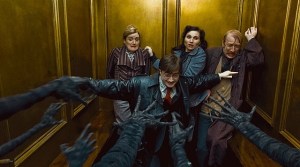 With all that extra attention spent on character, I can also say that Part One has some definite issues with its stagnating narrative. Having never read the books (get over it, Potter nation), I go in blind every time short for the mega-spoilers that I can’t help but learn thanks to all the Potter readers inhabiting my circle of friends and family. I can tell you if something doesn’t make sense because I don’t have the background knowledge of the books to fill me in. There was plenty in Deathly Hallows that made little sense. The adaptation introduces the titular deathly hallows, which ends up being another three super special magic items. There’s a nicely Gothic animated sequence to try and explain the three hallowed items, but it all adds up to a fairy tale that makes little traction. The narrative has already shaped up into a portentous scavenger hunt. Harry and friends are after the remaining horcruxes containing the soul of Mr. Snarly Face. The entire 145 minutes of Part One is spent destroying a single horcrux, leaving 3 or 4 remaining. Now they add three more magic items to find and it all compounds my feelings of fatigue. Did I mention they also have to find a magic sword? How many magical items are these kids going to be responsible to find and how many am I expected to care about?
I left the theater with many questions about what the hell the deathly hallows were, why they mattered, and all sorts of other storylines too. I could not follow all the new characters they threw so late into the game, especially some old wand maker and his connection to wand thievery. And when the hell did everyone gain the ability to teleport at will? Why don’t they teleport all the time then, especially out of danger or when they’re chased through the woods? My friend (an avid Potter reader) had to deal with a litany of stupid questions, likely treating me as a parent would a child asking about where the sun goes when it becomes night.
Also, the film is intended to be a prelude for an epic finale but it mishandles its own sense of climax at several turns. I’ll refrain from heavy spoilers, but one of the most interesting characters, played by an actor I adore, is killed off screen. Off freaking screen! Some other character comes back and says, “Oh yeah, he’s gone,” and then everyone looks glum and goes about their business. It happened so matter-of-factly and anticlimactically that I never made the connection. So later in the film when it’s confirmed that this character is in fact dead, I felt pretty thick. The last chapter of Harry Potter is destined to be a combined 5 hours, and you’re telling me they couldn’t fit in a fight scene that lets this character go out with style? I suppose somebody thought it was more dramatic to just mention a character death offhand. Following this logic, I can’t wait for the grandiose finale where Harry Potter just walks back into a room and says, “Oh, by the way, I just killed Voldermort. So who wants to get a bite to eat?” The emotional climax of the film involves the death of a supporting character I have yet to see onscreen for 8 years. How am I supposed to feel for a character that hasn’t been seen for so long? The ending is sad, sure, but it would have been more effective if: a) I knew what significance the character had in the narrative, and b) it didn’t look like Harry was clutching a rubber doll to his chest. We spend too much time with new characters that end up having minor worth or come across as one-offs. The movie would have benefited from some of the deathly exposition that clogged the first two film’s storylines. As the movie comes to a close it should be clearing things up instead of polluting the narrative with more names and faces.
 Director David Yates has been captain of the Potter helm since 2007’s Order of the Phoenix, and he seems to have found a unifying visual balance for the series. The film’s tone has gotten heavier and having a singular director take the series to an end looks to be a godsend. Despite a lengthy slog in the middle, Yates keeps the pacing fairly tight and tense. The visuals and special effects are just as luminous as ever. The true treat for me is watching all these splendid British actors assembled: Alan Rickman, Ralph Fiennes, Imelda Staunton, Helena Bonham Carter, Timothy Spall, Jason Isaacs on Team Evil, and Brendan Gleeson, David Thewlis, Rhys Ifans, Julie Waters, Robbie Coltrane, Michael Gambon on Team Good. Then there are new additions like glass-jawed David O’Hara (Wanted) and the great Peter Mullan (Young Adam) making strong yet short appearances. I don’t really care why all these talented thespians are together but I’ll enjoy them all the same.
Harry Potter and the Deathly Hallows: Part One is the beginning of the end, literally a prelude for the finale coming to theaters in summer 2011. The film manages to be exciting and dramatic and equally boring and confusing, especially for someone who has willfully refused to read the books. Spending more time with the teen actors has its pluses and minuses, chief minus being that while they wait for stuff to happen so do we. The manufactured end point for the movie feels far from satisfying, but the film manages to effectively whet the appetite for the follow-up. As the Harry Potter series comes to a close it’s hard not to get nostalgic and apologetic, but I resist this urge. Looking back, many of the Potter films have been fine pieces of entertainment but also too long, misshapen, and too slavish to making a book on tape. Part One of Deathly Hallows still falls victim to some of these faults, but the accumulated goodwill of the series and actors makes a 145-minute prologue easily bearable.
Nate’s Grade: B
Share this:

Never Let Me Go (2010)
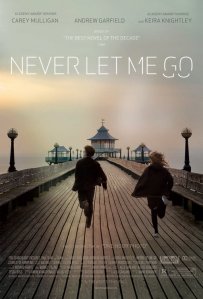 You’ll be excused for mistaking Never Let Me Go as one of those austere boardinghouse dramas the English are fond of cranking out. I mean it even has Keira Knightley in the thing for goodness sakes. Pretty lily-white British actors trying to find their place in a reserved society spanning the 1970s to the mid 1990s. You’d be forgiven for stifling a yawn. But then Never Let Me Go takes a sudden left turn into a realm of science fiction morality play. It becomes something much deeper and menacing. I am about to go into some major spoilers concerning the sinister premise of the movie, so if you’d prefer to stay pure then politely excuse yourself from the remainder of this review and come back at a later time. I won’t think less of you but only if you promise to come back.
Kathy (Carey Mulligan) and her pals Tommy (Andrew Garfield) and Ruth (Knightley) all grew up in the remote countryside school of Hailsham. It’s like any other school in most regards, except at Hailsham the children all wear monitoring bracelets, are afraid to leave the boundaries of school for fear of being murdered by outside forces, and are told that her physical fitness and internal health are of “paramount importance.” Figured it out yet? My then-partner leaned over and whispered, “Are these kids organ slaves?” Kathy and her friends find out their true identity when an outside third-grade teacher (Sally Hawkins) takes pity on them. She reveals that the students of Hailsham are clones whose sole purpose is to be raised into healthy adults who will then give “donations” to the ailing public at large. Most clones will go through one to four “donations” before “completing,” unless they so desire. You see Never Let Me Go exists in a realm where medical science has made momentous breakthroughs and now people can live to 100 years of age on average. Kathy and her friends are the dirty details.
 The rest of the movie flashes through our trio’s teen years. Kathy has always been kind and affectionate to Tommy, but before she could seal the deal Ruth swooped in and took Tommy for her own. Kathy has waited in vain for the two to break up, but that day just never comes. The trio ventures out to a small farmhouse in their teens to do some work and see the outside world. They’re living with a few other Hailsham alums that show them the knack for social interaction with outsiders. There are two rumors at play. One is that the Hailsham alums think they’ve found Ruth’s “original,” the person she’s been cloned from. The second rumor has greater significance: if two Hailsham students can prove that they’re in love, deep, honest love, then they can defer their donations for a few years. This idea takes hold of Tommy and consumes him. Except, we don’t really know whether Ruth or Kathy will be his partner in love.
So why don’t these people run away, or fight back, or do anything of defiance once they discover the horrible truth that will befall them? I have read several critics taking the film to task for being so painfully prosaic and passive, and Never Let Me Go can admittedly fall prey to those detractions at times. However, this is not the Hollywood version where the abused (clones) fight back for their survival and regain independence in a hostile world. That movie was called The Island, plus the several other films that Michael Bay sort of ripped off and then added extra loud explosions. Never Let Me Go has nary an explosion or moment of triumphant revolution. There is no revolt coming because the film doesn’t want to let anyone off the hook; these people are society’s collective collateral damage. They have been bred to be walking, talking, mostly demure, fleshy warehouses for spare parts. It’s only a matter of time before they leave everything on the operating room table, and these people benignly accept their doomed fate (“We all complete”). They march forward, trying to find some level of dignity and beauty before they get the call for “donations.” These people don’t know what it means to rebel; they have no real concept of liberty. They’ve been conditioned since childhood to obey, and that’s the whole point of the film. They have no self-preservation instincts. Likely any cloned child that was expressing strong feelings of boldness was removed, and destroyed, so as not to taint the rest of group. These people are like gown-up versions of veal. They’ve been cultivated since birth for the purpose of destruction, and their knowledge of the world is limited and cruelly self-serving. Watching innocent characters march off to a merciless fate can be very emotionally draining. It should also make you angry.
 These people are hopeless so that the movie’s full impact is absorbed. This isn’t some far off nightmarish scenario, because we as a society are already reaping the rewards of a lifestyle, a lifestyle that we’re loath to think about the mechanics of how we got so fat and happy. I can go to a Walmart and buy a T-shirt for a dollar. I am a happy consumer, but what did it take for me to get that product at such a discounted rate? Sure there are variables up the wazoo, but there are many negative factors that go into why that price stays low, invisible hand of the market be damned. Workers clock long hours in unsafe conditions in order to meet supply, earning a penance just enough to keep them alive and moving product. Environmental concerns are overlooked because that would mess with production. Long-term generational poverty can develop. The worker has ceased to be a person and is merely a dispenser of product, much like our clones in the film. This is not a definitive example of what goes on in the world, mind you. Never Let Me Go isn’t some far off scenario; we’re already there, albeit less explicitly. If the price of gas rose a dollar a gallon but it meant that people in other countries could have safe, uncontaminated water and enough food to stay healthy, what do you think would happen?
With all of that said, Never Let Me Go can’t fully fight the trappings of inert drama. For two hours we are watching somewhat nice, somewhat bland British kids gawk and smile their way toward the inevitable. The conceit calls for the breeding of rather milquetoast personalities. It simultaneously makes the characters more innocent and less emotionally involving. The screenplay relies on our sense of outrage and injustice to fill in the gaps of emotional connection. There are little molehills of characterization at best. You’re supposed to be choked up on indignation and sadness so as to not notice that the threesome of character are all rather good-natured but boring. That even may be an aim of the screenplay to accentuate the terrible fate that awaits, or maybe I’m just being overly analytical. Never Let Me Go reveals its awful truth fairly early at about the 40-minute mark, making sure that the audience is fully aware that we are definitely not headed for a happy ending. As it is, the actors are all lovely and talented but there’s only so much silent emoting and teary eyes can conjure.
 It’s credit to the talents of the actors that you do feel a storm of emotions from such otherwise frail characters. Mulligan (An Education) showcases her great gifts for communicating sadness. Her face just crinkles up, her eyes get glassy, and you want to hug her. She’s our dramatic linchpin. Her looks of conflict and yearning do well to communicate the inner struggle of her character’s abbreviated life. There’s a lot left to the imagination and Mulligan once again crushes it. Garfield (The Social Network) is stuck playing a wishy-washy character, which makes him seem a bit thick at times. He’s the most naïve and hopeful of the three, so when those hopes get crushed again and again his breakdowns have the most emotional heft. Knightley (Pride and Prejudice) has been in six period films since 2005, so she’s got this thing down pat. Ruth is a bit more assertive and angry than her friends, and it’s a pleasure seeing a more calculating side from the actress. It seems like the filmmakers had a troublesome time trying to downplay the attractive features of their cast. So it seems that they relied on the actors eating less. Knightley, and particularly Garfield, look rather gaunt and puckish, even before they begin “donations.”
I’ve gone this far without even mentioning director Mark Romanek’s (One Hour Photo) contributions, or the fact that the film is based off the 2005 novel by author Kazuo Ishiguru (Remains of the Day) and is adapted by Alex Garland (28 Days Later). Great artists that shaped the vision of this film. It’s a shame then that the impact of Never Let Me Go is blunted. It’s an intelligent, poetic, haunting, and emotionally wrenching film experience, and yet it could have been far more penetrating and devastating. The passive nature of the characters accentuates their doom and our sense of outrage. But that same passive nature makes them less than engaging characters. It’s been days since I saw the film and it still lingers in my memory, a testament to the moral quandaries and acting prowess. The existential drama of the film is better suited for the page where the questions of identity and morality can be given more careful and rewarding examination. The movie has an oddly detached feel to so much suffering. Never Let Me Go is a hard film to let go but also a hard film to truly embrace.
Nate’s Grade: B
Share this:

The Social Network (2010)
 Dismissively branded as “the Facebook movie,” the whip smart and hypnotic, yet poorly titled, The Social Network is much more than a rote TV-movie on the start of a popular website (coming out next year: Twitter: The Musical in 144 Characters). Yes, the film chronicles the people responsible for the Internet’s most ubiquitous time waster and their very varying accounts of who was responsible and who was unscrupulous. But the backdrop could be just as much any start-up business. Truth be told, the “Facebook movie” bares a striking resemblance to Citizen Kane. It is the story of one man who may be a genius in some regards but can?t help but push everybody he cares about away. It’s about powerful men who don’t know what to do with power. It’s about ambitious men who dedicate their lives to that ambition. It’s not about terabytes and html coding, this is a movie about people, betrayal, ego, greed, jealousy, and the great irony that Mark Zuckerberg created the world’s most dominant social network and yet he himself cannot hold onto a single legitimate friend.
In 2003, Zuckerberg (Jesse Eisenberg) is a Harvard student obsessed with getting into the prestigious clubs and fraternities on campus. But he’s not well connected or athletic or close to being rich. So after being dumped on night, he goes home and hacks into various Harvard sorority websites and steals pictures of coeds. He then creates the crude website Facemash (while also drunk, mind you) where Harvard undergrads rank their fellow classmates side-by-side two at a time. It’s an immediate hit and crashes the Harvard server. Zuckerberg is then approached by Cameron and Tyler Winklevoss (Armie Hammer and Josh Pence), handsome blue-blooded WASP twins who have an idea. They want to create their own social website just for Harvard students to communicate with each other. They are impressed with Zuckerberg’s tech skills and want to hire him to build the site. Zuckerberg takes the idea to his roommate and best friend Eduardo Saverin (Andrew Garfield), proposing to make their own site with Saverin’s limited means.
From there is where the different parties diverge on their versions of truth. Zuckerberg secretly works on his own side project while stalling and dodging the Winklevoss twins. He offers to have Saverin be CFO of the company and split the stakes. Then as success mounts, the Facebook website gets the attention of Sean Parker (Justin Timberlake), notorious for co-founding Napster at age 19. Parker immediately has the ear of Zuckerberg, and it isn’t long before Saverin starts feeling on the outskirts of his own company, and then eventually shut out completely. The Winklevoss twins and Saverin each file multi-million dollar lawsuits accusing Zuckerberg of intellectual theft and underhanded business tactics.
 Watching The Social Network feels like you?re downloading an entire semester?s worth of information directly to your brain. Adapted by uber wordsmith Aaron Sorkin (TV’s West Wing, Charlie Wilson’s War), this is a story that gallops at full speed and leaves you spinning. The dialogue flies by so blazingly quick that it?s easy to get left behind. I would not advise eating any concession snack with this movie or else you might miss reams of dialogue. Sorkin smartly weaves together a murky and litigious tale of alternate truths, showing different sides when it comes to the creation of Facebook. Was it really stealing or did the Winklevoss twins merely inspire Zuckerberg? Is he truly indebted to them? “Does a guy who makes a chair have to pay a fee to every person who ever made a chair before in history,” Zuckerberg snaps. How deep did Saverin?s involvement go, and was he naïve or just thinking too small in scope? How much is a friendship worth in dollars and cents? Sorkin gives a definite impression to these answers, and it should surprise nobody that Saverin comes across as angelic and the obviously wronged party here. But the script as a whole is meticulous with detail, characters, and dates. It almost feels like the content of a miniseries has been squeezed into a brisk two-hour time frame. The characters are just as layered as the plot. The opening scene where Mark is dumped by his girlfriend (Rooney Mara, soon to be Lisbeth Salander in Fincher’s remake of The Girl with the Dragon Tattoo) sets the tone of the movie. The dialogue feels like an assault and it is unrelenting. You openly wonder how Eisenberg can breathe reciting his verbose lines with such lightning speed. Mara is aghast at her hyper-literate yet bitter boyfriend spewing bile at the elite and yet unashamedly pining for that life. He’s brilliant and cutting but socially awkward and unable to understand the feelings he’s hurting. Mara has had enough and dumps him right there, spurring Zuckerberg into a drunken night of revenge that will set the stage for Facebook. Sorkin can pretty much start clearing shelf space for his Best Adapted Screenplay Oscar right now.
Many will find Zuckerberg to be unlikable from the get-go, but I never could bring myself to actively dislike or loathe the man. He’s really more of a figure of Greek tragedy. Zuckerberg is a blissful conundrum of a character, a walking contradiction. He can be sullen and wounded one minute and the next casually cruel. He seethes at deposition hearings; unable to control the contempt he has for others. Zuckerberg’s anger boils over, and his beady-eyed glares communicate an incredulous, “You are worlds below me.” He can?t stand people who have easy breaks, the select and privileged, and yet he nakedly longs to be apart of that group and meet their approval. He can be childish and narcissistic, insular and insecure, and then he can be charitable. Zuckerberg created a music application that Microsoft was willing to purchase. “Why didn’t you sell?” asks one of the Winklevoss twins. Zuckerberg just shrugs his shoulders. He doesn’t want to sell ad space on Facebook and get rich quick because it would ruin the site experience. He is a champion of the democracy of the World Wide Web; a modern-day Thomas Paine? Probably not, but Zuckerberg’s hard-driven ambition and crooked tactics make him a modern-day robber baron, a titan of industry. Rockefeller and Carnegie and J.P. Morgan are all men that don’t seem any different in practice than Zuckerberg, though they probably had more family money as a starting point. That’s not an excuse for Zuckerberg’s behavior, but I want to add some perspective before the world tars and feathers the guy. Zuckerberg is the Internet’s first self-made billionaire, but what are the costs? By sacrificing all, and burning personal relationships, Zuckerberg may have advanced Facebook to unparalleled heights. But whom does he get to share his success with? It’s a little simplistic to boil such a complex film to the greeting card-esque moral “It’s people that matter most?” but the film always circles back to the question of cost. It’s also rather simplistic to chalk up the creation of Facebook as a means of impressing a girl, but then operas have been written, art has been sculpted, and wars have been fought over the need to impress a woman. Zuckerberg is a fascinating creature and brilliantly played by Eisenberg. This is a character Ayn Rand would love.
 It seems that Zuckerberg’s instincts about human obsession with being apart of something exclusive were right on the mark. What separated Zuckerberg’s site from the likes of MySpace and Friendster is that you needed a college-based web address to get inside. It was a closed community, which made it cool and desirable. It started as a restricted club that all the cool kids wanted to belong to, then everyone joined, and now it’s damn near impossible to resist. First it was college kids, then college kids from other countries, then high school kids, then adults, now everybody on the planet has a Facebook page making sure the world doesn’t miss a single detail about their personal lives. I resisted as long as I could but broke down and got a Facebook account earlier this year. The Social Network is not concerned with the business angle of success unless it related directly to how it impacts the characters. You’re not going to find many insights into why Facebook took off or became entrenched in our navel-gazing society, which is a pity. The film also doesn’t concern itself with outright social commentary. Sure by exploring the micro personal struggles and betrayals of Mark and Eduardo the film marginally comments on the macro idea of generational self-absorption and ego, but so much more could be said about society as a whole. The film’s one clear moment of social satire is when Eduardo’s girlfriend berates him about his Facebook relationship status remaining single. She’s incensed and wants to know what he truly means by this outrageous declaration. He says he’s embarrassed but he doesn’t know how to change it, plus he’s hardly ever on the site. She responds to this by setting his gift on fire. Ah, petulant and jealous and self-absorbed concerning what a few scraps of digital bits say rather than direct, personal, face-to-face communication. It’s a brief, albeit nice slam on the myopic self-absorption of millennials, who came out of the womb with something electronic attached to their fingertips. The film doesn’t even touch the idea of millennials’ free sense of privacy and over sharing. This is not a generation -defining movie, folks.
This is all strange ground for director David Fincher (Seven, Zodiac), a visual stylist with few peers. Nerds creating a website doesn’t exactly strike anybody as fertile ground for a visually exciting drama, and yet Fincher proves once again that he is a masterful artist. The film looks beautifully sleek from beginning to end with Fincher’s typical green tinted, deep focus cinematography. Fincher also makes the best use of special effects I’ve seen this year. The Winklevoss twins were not played by actual twins. Hammer had his face digitally placed onto a stand-in’s (Pence) body. The digital cut-and-paste was remarkable in Fincher’s Benjamin Button but it also called attention to itself. Nobody would walk in believing Brad Pitt’s face somehow was on the body of a three-foot tall old man. However, in The Social Network, you would never once doubt that there are two twin actors on screen the whole time. Hammer manages to make each twin distinct and frustrated without coming across as jerky or entitled. The rest of the actors do fantastic work as well, and special notice to Timberlake who plays his mercurial role with glee.
 So what does the real Mark Zuckerberg think about all this attention? Well, in a surprise to people who do not have a firm understanding of the word, Facebook has declined all advertising for The Social Network and is staying mum on the film, hoping to ride out the critical storm. I don’t think anyone is going to be using Facebook less now that they have learned the ethically murky beginnings of the website. But Zuckerberg and his Facebook crew might want to think of formulating some response strategy because this movie, and talk of this movie, isn’t going away any time soon (Zuckerberg recently donated $100 million to Newark city schools on Oprah coincidentally the same week Social Network was opening). It’s rare to find a studio film that is as polished across the bard as this film. The writing is sharp, the direction is sleek, the acting is top-notch, the film rollicks with intrigue and suspense and juicy drama, and the film can’t help but be relevant in our modern society. You do not have to know a lick about coding and websites and whatever to get absorbed in this high-stakes drama. It may not be the generation defining experience some critics are wetting themselves over in hype, but The Social Network is easily one of the best films of 2010. Perhaps the Academy will give it the ultimate “friend request” come this winter. In the meantime, log off and get yourself into a theater to see this great American movie.
Nate’s Grade: A
Share this:

Shutter Island (2010)
 This was a pulpy B-movie put together with A-movie artistry. In a year that had some artistically polished genre movies, Shutter Island was Martin Scorsese’s return to genre filmmaking and he brought with him an entire team of experts and professionals. The movie is playful and intriguing, engaging the mind enough for a crime thriller that appears to be a straight-forward mystery but then shows flashes of being about something more, something darker. And when you’re dealing with a movie with Holocaust flashbacks, dead kids, Nazi doctors, mental asylums, well you know you’re not going to be reaching subtlety even with a stick. But the way Scorsese orchestrates all these foreboding elements, tying together various plotlines, and working at different levels to satisfy the informed and uninformed, right before delivering a dynamite twist that calls for further investigation and rewatching, well it’s nothing short of masterful. Shutter Island may not be anything more than a souped-up B-movie, but with this level of artistry, it’s also one of the most entertaining films of the year.
Nate’s Grade: A-
Share this:

The Town (2010)
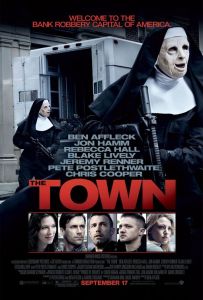 There are many people who think they can direct. It just looks easy to people. You get to tell everybody what to do all day. Who wouldn’t want that, right? And actors always think they know everything already, so there’s a litany of actors who feel like they can make the jump from in front of the camera to behind it with ease. Not everybody is going to be a Clint Eastwood, or a Robert Redford, or even the best of the current crop, a George Clooney. Every now and then you’ll find a true surprise, like Todd Field (In the Bedroom, Little Children) or Sarah Polley (Away From Her), but most actor/director projects come across like indulgent one-time pet projects (see: Drew Barrymore’s Whip It). Ben Affleck has easily endured his slings and arrows as an actor, though I’ve always found the man to be likeable, charming, and intelligent. Even so, nobody can excuse Gigli. When Affleck tried on the director hat for 2007’s Gone Baby Gone, it was easy to be skeptical. But then critics and audiences saw the film, which Affleck also co-wrote, and realized that this guy might have some serious chops after all. The Town, Affleck’s second directorial effort, proves that Affleck has found his rightful place in movies.
Doug (Ben Affleck) is a lifelong criminal living in the working class Boston neighborhood of Charlestown. We learn that this one-square mile produces more bank robbers than anywhere else in the world. It is a neighborhood seeped in the lifestyle of crime, the silent omissions of sin. Doug and his crew’s latest heist went according to plan except for one detail. Jem (Jeremy Renner), fresh from doing a nine-year prison stint, has taken the bank manager hostage in a moment of panic. The men blindfold Claire (Rebecca Hall) and deposit her along the Boston shoreline. Doug and his guys then become alarmed when they spot Claire in their neighborhood. She lives in Charlestown. Will she recognize them? FBI Agent Frawley (Jon Hamm) check up on her and requests interviews. Is it only a matter of time before she discovers the truth? Jem wants to handle it quick and dirty, but Doug insists that he take the lead. He watches her from afar and can’t help but feel sorry for the trauma he has caused her. He asks her out for a drink after meeting her and Doug can’t stop himself from falling for her. Jem is incensed and convinced she’ll give them all away. Doug must reconcile his life?s choices and Claire now gives him a reason to finally walk away from the only life he’s known.
 It didn’t take long for me to know I was in for something good. The pre-title opening sequence sets the tone and informs you that Affleck will be firmly settled in the director’s chair for some time. The opening bank heist crashes your attention. It’s filmed in quick cuts, swift camera movements, mimicking the ambush of the criminals as they throw people to the ground, upturn desks, and smash general office supplies. Then the scene cuts to a security camera footage of the same scene, and it’s static, and eerily silent and the contrast is fantastic. Then we smash right back into the fray and the chaos. Affleck refrains from the film turning into senseless genre junk. The violence in this film hurts. You feel its impact and wince at its approach, and you already get this sense before the credits even show up. Affleck wants his visceral violence to mean something, and these men of violence become more intimidating. Then there’s a scene about an hour in that had me gnawing my hand in anxiety. It all revolved around the possible reveal of an identifiable neck tattoo, where the only character who knows all the particulars of danger is Doug. He’s trying to nervously watch the eye line of the conversation, and I was physically trying to instruct the characters onscreen. The fact that I could get so caught up in a sequence of stellar tension that doesn’t involve cars, guns, or even overt threats of violence is a testament to the abilities of Affleck the director.
Doug’s crew is not a fly-by-night operation. They are honed professionals, knowing the timing codes for bank locks, how to dismantle security camera systems, and splash bottles of bleach all over the premises to eliminate usable fingerprints. And yet, when is enough enough? It feels like only days before Jem is pushing everybody for another job. They’ve barely had time to launder the money through drugs and gambling, given a cut to the local crime boss (Pete Postlethwaite), and they?re anxious for another score. Doesn’t anybody want to lie low for a while before the heat dissipates? Either this is just a conceit of only being able to work in a two-hour narrative or indicative or what a consistently dangerous life these men lead. These men know exactly where they?re headed; in fact, they seem resigned to their fate. Perhaps the expedited schedule is just another form of self-destruction or an impatient death wish, or perhaps it’s just an inflated sense of invincibility by guys who are good at what they do.
 The area where The Town could have been better is with its higher ambitions. The Town dutifully delivers the goods when it comes to a crime picture. The three holdups are all satisfying, taut, well paced, and the action is choreographed in a manner that’s easy to comprehend. The middle holdup creates some dynamic images as the men speed through Boston dressed in plastic nun masks and armed with machine guns. There are several standout moments and images that prove Affleck knows how to frame an exciting action thriller. The climax is great, though the denouement leaves something to be desired. You pretty much anticipate what beats the movie has to hit as a genre piece. These brothers in arms will likely follow the path of doomed protagonists. But Affleck clearly wanted his second feature to be more than a slick genre flick. He had his sights set on examining systemic and cyclical nature of crime and abandonment. The opening informs us that bank robbing is a trade passed down in Charleston from fathers to sons. Doug’s crew are all second-generation criminals, their long absent fathers serving sentences in federal prisons. Affleck wants to explore the nature of what separates good people who make bad decisions, digging into the limited lifestyles afforded to these blue-collar lugs who have lived in brutality. The Town doesn’t quite succeed in this regard. The somewhat saggy middle touches upon these ideas but fails to spend enough time for anything substantial to stick. Gone Baby Gone was a better study of class and moral ambiguity. With The Town, you readily identify who the good bad guys are and who the bad bad guys are.
Just like Gone Baby Gone, Affleck’s second feature excels with a glorified group of actors all given room to find their characters and show off their skills. Each actor kind of gets their own space to work and they all, from top to bottom, give stirring performances. The standouts among the cast include Renner and Lively, both barely recognizable in their parts. Renner (The Hurt Locker) is channeling James Cagney from his 1930s gangster pictures. Renner is a live-wire and creates bundles of nervous tension whenever he enters a scene. He doesn’t even have to say a word. His intensity radiates and keeps all the other actors on their toes, rightfully wary of the short-fused Jem. He’s magnetic, steals the film, and even gets a slightly touching sendoff that has managed to stay with me. Lively, best known as the fabulous face of the fabulous high-end TV show Gossip Girl, is going to open plenty of eyes about her potential. She plays Krista, Jem’s sister and damaged love interest to Doug before Claire comes onto the scene. Lively has levels of makeup and hard living coating her magazine-friendly good looks. Lively just doesn’t rely on makeup tricks to stand in the way for her character. She feels like the most tragic soul in the film. She has a kid, likely destined to be removed from her at some point, she operates as a drug mule, and she’s hitched her wagon to Doug as the man that will save her. When that comes apart, Lively herself disintegrates as well, but it’s never in a showy style. She barely conceals the pain consuming her very being. Her eyes are dead of life. Plus, her accent is spot-on.
 The other performers give strong work just at a level slightly below Renner and Lively. Directing himself, Affleck gives a fine if overly whispery lead performance. Hall (Frost/Nixon, The Prestige) is effectively broken as she works through the post-traumatic stress and uncertainty her character suffers from. She’s highly empathetic, though you’re left wondering what she sees in Doug. Hamm (TV’s Mad Men) is so damn handsome but I wish he had more to do than running around and barking orders. His character always seems to be a mouth for exposition and chews over his righteous indignation. Chris Cooper (Breach) has one total scene in this movie as Doug’s imprisoned father but he nails it. His antipathy for his son and his late mother spills over but the moment never screams what can be expressed with subtlety. To Affleck notable credit, nobody in a movie about cops and robbers gives a performance that could be labeled as over-the-top or campy. These are genre roles but they are treated like real, muscular characters.
The Town cements Affleck’s status as a director. This is a more accessible, streamlined yet sturdy genre picture that has real reverence for working class Boston neighborhoods. I love the faces Affleck peoples his films with, real people. It’s small touches that add to the authenticity and visceral nature of the movie, touches that help make The Town more than just another run-of-the-mill crime movie. While there may not be anything groundbreaking on display (though I think Renner may get remembered when it comes time for awards season), Affleck’s directing credentials are only strengthened. This isn’t as good a movie as Gone Baby Gone, but what this film showcases is Affleck’s ongoing journey as a director, the shaping of his Michael Mann-esque style, and his intent to marry great drama with great characters played by great actors. I can genuinely say that I look forward to whatever Affleck picks to be his next feature. He?s here to stay, baby.
Nate’s Grade: B
Share this:

Eat Pray Love (2010)
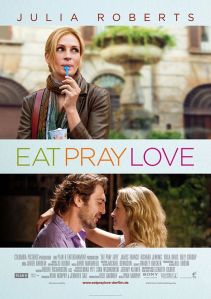 Eat Pray Love is based on the best-selling memoir about Elizabeth Gilbert (Julia Roberts), a woman in her 40s trying to recover from personal setbacks. She’s divorcing her husband and she’s generally unfulfilled with her life. It seems to be missing meaning. Her solution is to set off on a journey to Italy, India, and Bali in order to rediscover who she is and what is missing in her privileged life.
Granted I am not in the target demo for this movie’s audience, but I found the main character to be rather hard to relate with. The film opens with her deciding to end her marriage to Billy Crudup (Watchmen). So far I’m okay. The dissolution of a marriage, especially when you’re older, is a prime starting point to reevaluate your life now that you’re on your own and, frankly, terrified by that prospect. But then the movie presents Gilbert as a rather self-involved and almost callous individual. Her husband is devastated, but she’s only tear-eyed one night as she prays to God why she’s in her marriage. The movie throws out some half-hearted excuse, saying her husband is wishy-washy about his career, but it’s a smokescreen. Why even leave this stuff in there if we’re just going to dislike Gilbert? That’s like including an opening scene in Schindler’s List where Schindler beats a child. A hyperbolic example, yes, but proof that it’s a terrible idea to have an early scene harm audience sympathy.
 And so Gilbert goes about on her globetrotting voyage of self-discovery, chiefly to fulfill her health, spirit, and heart. Except the movie seems to get worse with every stop on the map. The overly long beginning in New York shows that our flighty main character shacks up with a hunky theater actor (James Franco), and then agonizes over how unhappy she is with this new guy. She needs to learn to love herself before anybody else, she says. In Italy, she finds freedom in losing herself to food. She feasts on fine Italian cuisine and doesn’t obsess over her weight gain. In fact, she and a buddy treat shopping for larger sized jeans as a joyous celebration. I’m pleased that people can become more comfortable with their bodies. This Italy section focuses on food and fellowship, and Gilbert learns the language, enjoys the company of a group of locals, and cooks a traditional Thanksgiving dinner for her new friends. This is easily the most likeable Gilbert will be in the film.
First off, a film about a character finding personal discovery and self-awareness is going to be hard to pull off. Internal journeys of self-actualization and enlightenment don’t necessarily scream great movies, a medium of images and movement. For this to work you need a good story and a character worth rooting for, somebody who the audience can empathize with and cheer on the arduous path to personal grace. Elizabeth Gilbert is not that character. The other two segments in India and Bali are a true test of patience. Watching Roberts sway around, chant to herself, and look forlorn waiting for enlightenment to come is not the best use of 40 minutes. Richard Jenkins (The Visitor) gives the film’s best performance in the most tedious segment, which kind of reignites the “tree falling in a forest” scenario. When Indians have spiritual crises do they travel to New York? The end feels even more leisurely paced and I found myself nodding off here and there. The movie was failing to keep my attention short of some lovely scenery.
 Director Ryan Murphy, co-creator of TV’s Glee, knows that his audience wants beautiful countryside, beautiful food, beautiful men, and Julia Roberts smiling. To that end, Eat Pray Love is a success. Murphy seems to enjoy filming the food sequences the most. The food is portrayed like a glamour reel. It’s easy to feel the rumbles of hunger while watching this movie. Pizza from Naples looks divine. But Murphy also serves as co-writer, along with Jennifer Salt, so he should have known better about the plot deficiencies that keep the audience at a distance from embracing Gilbert. The actors all seem to be having a good time, and why wouldn’t they? Visiting exotic places and stuffing their faces with local delicacies? It feels like I’m watching someone else’s boring vacation videos that go on for 135 laborious minutes.
Eat Pray Love seems to be missing something, namely the soul of its journey. By design, so much of this existential crisis is internal, which is where the book can fill in all the clarifying and illuminating details to make this feel like a full story. As a movie, it just doesn’t work on screen no matter how powerful Roberts smiles. The main character is hard to relate to. How many people can solve a midlife breakdown by flying across the world for over a year? How did Gilbert afford this? I’ll tell you how. Gilbert pitched the idea to a publisher and then used the advance to pay for her yearlong trek of dining and self-discovery. It makes me doubt how genuine this whole journey really was, considering she sold the ending before she ever reached her catharsis. Maybe the title should have been Eat Pray Cash Check.
Nate’s Grade: C


You must be logged in to post a comment.