Blog Archives
The Fate of the Furious (2017)
 I’ve written before that all I demand from the ever-ascendant and popular Fast and Furious franchise are its eye-popping action set pieces that teeter into madcap lunacy and impressive stunt work. A fiery meteor could crush all the characters, short of The Rock, and I wouldn’t shed a tear. Despite the super serious plaudits about the importance of family and loyalty and blah blah blah, I’m only here for the action spectacle that obliterates the laws of physics. I’ve said before there’s a fine line between stupid action and stupidly awesome action, and the Fast and Furious franchise has planted its flag like few others. Nobody today goes to the level of action spectacle that the Fast and Furious films achieve, bringing to life exciting action set pieces that feel fully plucked from the imagination of an exuberant child, and I don’t mean that at all disparagingly. These movies deliver like few others nowadays. We’re a long way from undercover cops and underground street racing. Vin Diesel and his team are essentially superheroes and their power involves doing amazing things with cars. I’m not a gearhead, I don’t care a lick about automobiles, but I’ve come to eagerly anticipate this franchise. It delivers ridiculous action on a ridiculous scale like few others. It’s earned my confidence. The Fate of the Furious, the eighth film, still delivers the high-octane goods even if it can’t quite keep up with the best of the franchise’s entries.
Dom (Diesel) has been preaching the virtues of family for years but now he’s turning his back on them. The notorious cyber terrorist Cipher (Charlize Theron) extorts Dom into helping her get her hands on nuclear codes. Dom’s crew (The Rock, Michelle Rodriguez, Ludacris, Tyrese Gibson, Nathalie Emmanuel) is wondering whether the man they know is still there. Government agent M. Nobody (Kurt Russell) reassembles the team to track down Dom, and they’re working with some unexpected help. Deckard Shaw (Jason Statham) has been released from maximum-security prison to thwart Cipher.
 This is a franchise that soared to new heights of commercial success after it left behind its inhibitions of the imagination. It’s a franchise that lives or dies depending upon its giddy action set pieces. As I wrote about Furious 7: “The set pieces of the last few films have been stunners, and at its height, the franchise can make you feel giddy like a child watching the unreal unfold with such delight. There’s a tremendous and infectious high watching a well-executed action scene on such a large scale. With every movie our expectations are hungrier, and the franchise has found a way to satiate our action movie demands.” Fortunately for the eighth film, there are two standout action set pieces that are some of the stronger ones in the history of the franchise. The first is a car chase through New York (though filmed primarily in Cleveland) that builds and changes as it continues, an essential element for any great action sequence to stretch forward. At one point Cipher takes control of an armada of hackable, self-driving cars and pilots them as a collective weapon of mass destruction. They resemble a herd of runaway bulls. The destructive fleet leads to some impressive sights such as a bevy of cars plummeting from a parking garage. It’s a strong sequence that also finds room for the other characters to try and take down Dom, and it allows Dom the ability to outsmart them, adding the personal element. The other standout is the entire third act set around the Arctic Circle in Russia that climaxes with the dizzying heights of a nuclear sub chase and The Rock manually redirecting a speeding torpedo. There are multiple points of action and mini-goals that lead logically to the next, allowing escalation to mount. It’s dangerously over-the-top even for this franchise and it’s generally awesome and I loved it.
Eight movies in and Fast and Furious is really becoming an expansive ensemble series. The core team has been picking up players here and there with each additional movie, building its diverse definition of a diverse family. This is getting to be a crowded film and there’s just not enough room to go around for everyone to contribute meaningfully, which means it’s more likely from here on out, unless there is some judicial pruning, that characters stay religiously archetypal. Ludacris is the tech guru, but isn’t Emmanuel now also the tech guru, or does she only specialize in the tech subgroup of hacking? Why do I need Scott Eastwood (The Longest Ride) to join the gang as the awkward rookie trying to look cool? Isn’t that a milder version of what Tyrese Gibson offers as the comic relief bravado? Admittedly, I only started really paying attention to this franchise once it added The Rock, but I’m still unsure what Rodriguez brings to the dynamic beside history and romance. This general sense of the characters settling into their expected roles is exemplified in the in-car banter and one-liners. It appears often that they’re just talking to themselves for these lines. I could do with far less Tyrese reaction shots and Rodriguez one-liners. Theron is also generally wasted as the new villain du jour. She’s got the icy glare down and looks to be having fun, but she’s not given anything interesting to do. Without going into greater spoilers, I will say that Dom’s heel turn is wrapped up by the end of its 135-minute running time. No need to turn it into a multi-film arc.
 Paul Walker’s character is understandably absent and I’d hate for them to bring him back after the very sweet and surprisingly poignant sendoff at the end of Furious 7, but he does still exist in this universe. I can agree with characters not wanting to get him involved in their dangerous missions across the globe, but at the end when they’re all dining as one big family, wouldn’t they also invite Dom’s sister, brother-in-law, and their children too? It gets into the Avengers territory where you start wondering why the Avengers haven’t assembled for the world-destroying threats from their respective solo film adventures.
The best post-Rock addition to the franchise has easily been Statham (Spy) and he proves it with his limited but highly entertaining time on screen. His appearances were a fun disruption in the previous film and he served as the most formidable villain. Reintegrating him onto the team was a smart move because he adds charisma, unpredictability, and a new dynamic that also seeds conflict. It was also smart because more Statham means including hand-to-hand combat action sequences that can involve a higher degree of stunt choreography, even if the former Transporter is starting to show his age. His scenes with The Rock were a natural highlight. However, adding Deckard onto the team to tackle a bigger baddie presents some weird questions. By the film’s end, everyone seems rather chummy with the man who straight up murdered their friend Han (Sung Kang). Sorry dude but it seems like everyone is rather relaxed with your murderer and big government having unlimited and regulation-free surveillance powers. My advice to future Fast and Furious installments, and there will be various, is to try and include as much Statham as possible (it’s essentially a repeat of The Rock Rule).
Where the movie has rougher terrain is in the area of drama and comedy. Look, nobody is going to confuse the Fast and the Furious films as great works of human drama. Director F. Gary Gray (The Italian Job, Straight Outta Compton) takes over for James Wan (The Conjuring) who took over for Justin Lin (Star Trek Beyond), and the discrepancy is noticeable. While having two excellent set pieces that place highly along the big board of the franchise, they’re not as well shot. Gray’s command of visuals is more than adequate but lacks the sizzle and vision of his predecessors. Wan was able to adopt the house style of the franchise and deliver a satisfying though lesser experience (Lin is king). Gray has a harder time with the material. The CGI approaches cartoon levels at points and Gray doesn’t better maintain tone. He doesn’t know when to pull back, which is unusually exemplified in the comedy asides. Everything that gets a laugh will be repeated until it becomes somewhat annoying, in particular a scene with Statham and a baby. It begins fun and cheeky, and Statham even uses the baby carriage as part of the fight choreography, but then it overstays its welcome like the other comedy bits. The dramatic moments are also far too overwrought, even for this franchise. It can be a bit much.
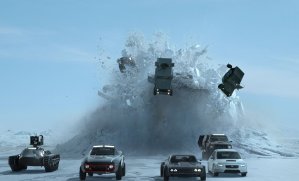 This is a franchise that revels in the ridiculous, that embraces being a big dumb action movie in the best way, delivering imaginative and often eye-popping action that deserves the full big screen treatment. Fate of the Furious falls somewhere in the middle of the franchise from a quality standpoint. It’s not as good as seven, which wasn’t as good as six, which wasn’t as good as five, but it’s still good enough. It’s definitely lesser and the new director doesn’t have the same natural feel for the preposterous as previous directors, and even after eight films I’m still mostly indifferent about the far majority of the characters on screen. As I’ve written before, though, thankfully the movie has the good sense to know what the audience is paying to see. It’s here for the fast cars, eye-popping stunts, and gratuitously framed camera angles highlighting women’s derrieres (I think there’s a contractual law that a close-up of booty shorts must make a grand entrance in the opening minutes of every film). Fate of the Furious is just enough of what I want from the franchise, though it’s getting harder to keep up with every new movie. Furious 9 and 10 are already in the works, and it’s only a matter of time before we get Fast and Furious in Space. It’s getting further and further removed from a sense of reality but as long as it keeps up with incrementally raised expectations and employs enough charming actors to compensate for Diesel’s enormous lack of charisma, then they’ll keep fans like me happy in the short run.
Nate’s Grade: B
Share this:

Ghost in the Shell (2017)
 When news broke that Hollywood was going to make a live-action version of the much-beloved 1995 anime Ghost in the Shell, fans were understandably nervous and excited. The original movie was a major hit that crossed over into the mainstream much like Akira, another movie Hollywood has long been trying to bring to life (run away, Jordan Peele!). People got extra worried when they heard that Scarlett Johansson was going to play the main character and cries of “whitewashing” were hurled across the chasm of the Interwebs. The “white washing” charge, which in context is possibly misapplied, might have been the smaller worry. The 2017 Ghost in the Shell remake is missing just about everything that made the original a standout. It’s a ghost, if you will, of its former, superior self.
In a cyberpunk future, Major (Scarlett Johansson) is an android fighter working for a special operations group tasked with taking down cyber criminals. The Major was injured in a terrorist attack and her brain was placed in a robotic shell (looking like ScarJo is one of the upgrade features). Every so often she gets hallucinations of events she cannot recall. After an encounter with the hacker criminal Kuze (Michael Pitt), a fellow android, she begins to doubt the true intentions of her superiors and what they have told her.
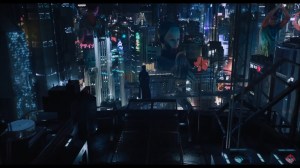 If you’re a fan of the original Ghost in the Shell, you might be depressed from what the live-action Hollywood adaptation does to its noteworthy source material. If you’ve never seen the anime, then you might find some scraps of entertainment to be had in what is essentially a drizzly cyberpunk product dumbed down for the largest mass audience that would be adrift with any minor hint of ambiguity. The 2017 Ghost in the Shell is not a good movie and it’s an even worse Ghost in the Shell movie. First off, we don’t need live-action versions of superior animated films just to have them, and this same statement goes for the equally underwhelming Beauty and the Beast remake. Just because a film lacks “real people” does not mean it is missing some crucial element, and I bristle at the notion that animated films are somehow inherently inferior or not “real movies.” With that being said, Ghost in the Shell will invariably disappoint fans of the original anime. There are visual signifiers and shots that it mimics with fealty; it’s just the overall story, characters, narrative complexity and mystery, and everything else that lacks that same level of fealty. Who cares if the main character is a shell of herself because, hey, they recreated this one shot fairly accurately, and that’s why we go to the movies, right?
Whereas the original was thoughtful and trusted the intelligence of an audience, the 2017 Ghost in the Shell resorts to explaining everything all the time, and even that it does badly. This is a muddled and frequently incoherent plotline, and the magnitude of its ineptitude is even higher considering how stupidly obvious the screenwriters make every twist and turn. This is the most obvious, simplistic conspiracy you could possible write. When Major wakes up in the opening scene and is being told what happened, the audience should already be alert with suspicion. This secret conspiracy goes in the most obvious direction (the good guys might not be the good guys after all) in a manner that should be transparently obvious to anyone except those unfortunate souls who have never seen another movie before in their lifetimes. So much of the plot is the untangling of this mystery, the Major’s real back-story, who the true villains are. To make it as obvious as possible and still devote so much time is not a good decision. The movie is constantly tagging characters to explain all exposition, leaving no subtleties to chance. The sadder part is that the plot is still muddled for long stretches even with all this handholding to straighten things out for the neediest.
 The world building and themes are kept at a distance, further denying the movie depth and substance. With any science fiction world, let alone one borrowed from other famous cinematic influences, it’s important for the viewer to get a sense of how the world operates. This can be done with small moments and larger moments, enough to properly contextualize this brave new world. With Ghost in the Shell, we’re told that mankind has become increasingly intertwined with machines and that cybernetic enhancements are en vogue. Except we never see this in the outside. We see loads of floating hologram advertisements, an overblown visual motif, but outside of our three main characters, this aspect that they felt merited inclusion in text before the movie gets underway is weirdly absent. It makes the characters feel less like they belong in an environment that makes sense. The larger themes of self-identity, the nature of humanity, and the questions over body autonomy are glossed over with the faintest of observations. Major is discovering her identity, but it leads her to what may be the most tired of conclusions. You would think having a robotic body would create some sort of existential reflection. You would be mistaken. Sure, Major feels unsure of herself and out of place, though why should she since we’re told man-robot hybrids are all the rage in this vague future landscape. I’m surprised someone didn’t just start explaining what the title meant at any given point.
The movie feels entirely surface-level and that’s where it has one redeeming value — its visual presentation. Director Rupert Sanders (Snow White and the Huntsman) is an above average visual stylist who benefits from strong production design and cinematography. At least the visual aesthetics could keep my attention, even if part of that attention was occupied in playing a compare-and-contrast game with certain scenes. The special effects are suitable and stylish enough, borrowing more than a few elements from the original. The action sequences are relatively muted, occurring in bursts but never really developing further. There’s an initial attack, then a response, and sometimes a chase, but that’s about it. The tech also doesn’t seem to factor in the combat. The strike team has the ability to communicate telepathically, but if they can do this why would they ever turn off this secret channel? It’s also lazy as it means we can just focus on filming scenes and record whatever dialogue we need later, as if the screenplay was incomplete.
 The 2017 Ghost in the Shell live-action version is a disappointing cyberpunk thriller that pays lip service to its source material, copying the movements but losing sense of the substance and soul. I’d advise people to merely watch the 1995 anime instead or the TV series that followed. It all feels like an expensive, slick, yet peculiarly ramshackle production that loses sight of the bigger picture by worrying at every turn whether a mainstream audience is going to need help understanding the most obvious. Johansson can be a great actress, which is important to remind yourself because she goes on kickass heroine autopilot with this movie. The action is short and inadequate, the visuals are impressive albeit derivative to the source material and its myriad influences, and the story has nuance, ambiguity, philosophy, reflection, and general substance replaced with a generic conspiracy structure that renders much uninteresting. The 2017 Ghost in the Shell doesn’t quite go to the insulting derisive lows of the Dragonball Z live-action remake, but it’s certainly not a good use of anyone’s time, and that includes you, the audience.
Nate’s Grade: C
Share this:

The Belko Experiment (2017)
 An efficient B-movie with a crazy high body count, The Belko Experiment is just about everything I wanted. The residents of the Belko office in Bogata, Columbia are informed by a disembodied voice that if they do not kill two people in the next 30 minutes, there will be further casualties. Everyone thinks it’s a joke until four people’s heads explode (the company placed “tracking devices” in them in case they were kidnapped). The office workers are now informed that if they don’t kill 30 people in the next two hours then 60 will die. The typical breakdown in order and moral relativism follows, although perhaps a bit too quickly for our main antagonist to assume his role. The bigger surprises for me were what Belko was lacking. There isn’t any real satire of office politics, corporate subcultures, or even capitalism and American culture. There is also only one office-specific kill, which is a real creative shame. I was expecting the Belko-ites to take their office supplies and turn them into post-apocalyptic-styled weapons. There is also much more implied gore and violence than you would expect; it’s certainly a bloody film, but it seems oddly restrained. I was expecting some level of commentary to provide further substance, but it was merely a well-developed, kill-crazy B-movie. With that being said, The Belko Experiment held my attention early with its foreboding clues that something wasn’t quite right, and it does a great job of visually identifying about twenty characters for us to follow through the stages of carnage. Writer James Gunn (Guardians of the Galaxy) definitely relishes his return to his horror roots, like a refresher on how awful human beings can be to one another. He purposely subverts our expectations at several points, though sometimes he’s hitting the same beat too often. Even the mostly satisfying ending provides as much of an explanation as you would require for a premise that has no serious rationalization. The Belko Experiment is like a Twilight Zone episode given extra length and extra violence. It does just enough with its attention-grabbing premise and familiar setting to justify a casual viewing if one has a certain taste for Battle Royale meets Office Space.
Nate’s Grade: B
Share this:

Power Rangers (2017)
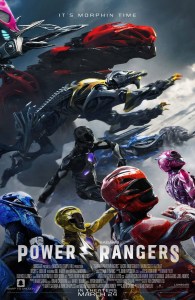 If you were a 90s kid, you know about Power Rangers. Who would have known that a TV show that combined Japanese monster fighting footage with cheesy teen drama and slapstick would become a pop phenom and nostalgic touchstone for a generation of kids? As Hollywood is want to do with anything nostalgic, it was only a matter of time before the series got its own mighty morphin’ big screen revision.
In the coastal town of Angel Grove, five teenagers meet in detention and are destined for monster-smashing greatness. Jason (Dacre Montogmery) is a star football player and natural leader. Billy (RJ Cyler) is a nerdy whiz kid on the spectrum. Kimberly (Naomi Scott) is a former cheerleader who has been abandoned by her friends. Zack (Ludi Lin) and Trini (Becky G) are barely at school, both of them tracking their loner paths. One day the fivesome come across strange glowing rocks that imbue them with powers like super strength and agility. “Are we like Spider-Man or Iron Man?” Billy asks, to help orient a superhero savvy audience. They’re neither, of course, for they are the Power Rangers, an intergalactic warrior organization meant to protect worlds from threats. Zordon (Bryan Crantson) used to be a ranger millions of years ago and is now a floating head. He assembles the teens because of the looming threat of Rita Repulsa (Elizabeth Banks), a former ranger tuned bad and bent on your standard world destruction. The angst-ridden, misunderstood teens must come together to stop Rita and save the Earth.
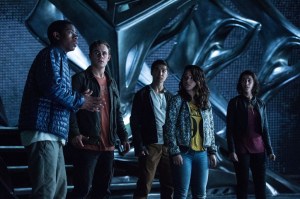 What tone does one adopt for a $100 million dollar reboot of a popular decades-spanning franchise intended for children that involves such names as Zords, Rita Repulsa, Zordon, Goldar, and the catch-phrase, “It’s morphin’ time”? Apparently the answer is a cross between Chronicle and Iron Man. For a show that even the most ardent fans would say was anything but serious, we have a fairly serious take on the material, at least serious enough when it wants to be. The filmmakers take a somewhat grounded approach to the sillier elements and that means a lot of palpable Breakfast Club-style teen angst and alienation, and it works. I was genuinely surprised that the second act’s focus on the teamwork and training of the five rangers was my favorite part of the film. It is an origin movie so expect a learning curve as the characters adjust to mastering their powers and abilities and the alien technology. You can’t just throw out a movie about space ninja cops that ride inside giant robot dinosaurs and battle monsters at the behest of a giant alien floating head without some setup. The training sessions cover a lot of ground but in fun ways that also build sequentially. The ascension of skills and confidence helps the characters open up and bond, and while some moments can be clunky (are any of their parents concerned where these kids go for seeming days on end?) it’s pleasant and satisfying to watch the outsiders finally find an understanding community of peers. The teen stars leave a positive impression, most notably Cyler (Earl of Me, Earl, and the Dying Girl) and Scott (The 33), who definitely seems poised for bigger things.
The characters have enough relatable conflicts, drama, and insecurities to produce just enough shades of characterization to make them interesting and worth rooting for. Those conflicts are also somewhat surprisingly adult and modern, often in clash with their parents’ requests, something that might lead to some weird conversations in the car if parents bring their young kids. Jason is fighting against his popular image, Billy has a hard time fitting in and making friends because of being autistic, and Zack is the caregiver to his dying mother, and these guys are in a lesser tier of adult conflicts, so think about that. Trini is stifling against her parents expectations and labels, notably implying her own sexual orientation that seems to be tearing her up on the inside, something that she cannot even fully articulate at this time. Maybe the movie is trying to have it both ways by not referencing the word “gay” but it at least felt like a more valid inclusion of conflict and diversity than the recent live-action Beauty and the Beast. Lastly, Kimberly used to be the chief mean girl and the reason why she was jettisoned by the popular set is because she was cyber bullying a would-be friend. She spread a private nude picture her friend sent her boyfriend and shared it throughout school (Jason tries to helpfully mitigate this by saying, “Thousands of pictures are sent in school,” which begs the question about Angel Grove’s underreported sexting epidemic). The team dynamic and the characters opening up to one another were enjoyable enough that I didn’t mind the relative dearth of action for 90 minutes of the two-hour running time.
 It’s a backdoor superhero movie that finds some interesting dark twists on its source material. The original TV show sought, in the most 90s way, “teenagers with attitude,” but the would-be rangers were just sort of normal teenagers. The 2017 movie at least provides that attitude and edge in a way that doesn’t feel as generic as a kid riding a skateboard and drinking a Mountain Dew eight inches away from his face. The TV show was campy and colorful and relatively trifling, and the movie version attempts to put more danger and loss into the emotional stakes. Zordon is given a new back-story; no longer is he simply a disembodied mentor, now he has a scheming reason for the rangers to succeed. It’s a small thing but it opens up the character of a floating alien head, and I cannot believe I just wrote that sentence. The friendship between our core group of characters matters so that, in the end, when it looks like they might lose, it does feel like something is going to be lost. With that being said, this isn’t a reboot that’s all gloom and doom. The reality of waking up one day and having super powers is played to the hilt of teen wish fulfillment and it makes for a fun series of self-discovery moments. These are teenagers adjusting to their new powers (heavy-handed puberty metaphor?) and enjoying the new potential unleashed for them. Their fun is contagious as is their camaraderie.
In fact, the conclusion where the rangers do morph and don their armored suits and drive their robotic dinosaur Zords may be the weakest part of the movie. The ultimate payoff feels a bit lackluster and mechanical, as if it’s simply falling back on cataclysmic citywide destructive action because that’s what is expected in these kinds of movies. Every person should anticipate a giant monster on giant robot brawl to conclude the story as it concluded every one of the 830 episodes. It’s just not that interesting especially since the big bad Goldar is simply a big personality-free heavy that looks like he’s made from runny Velveeta cheese. Rita, as portrayed with screechy, kooky camp by Banks (Pitch Perfect 2), feels like she’s been transported from a different Rangers universe. She literally gobbles gold to summon her colossal champion. She didn’t feel like an effective antagonist, and that’s even before her wicked scheme correlated with shameless product placement. Rita, Goldar, and their overall evil scheme makes for a rather perfunctory conclusion that feels like a downturn from the earlier, better events. Director Dean Israelite (Project Almanac) has a directorial style I’ll dub “Michael Bay lite” considering how much his hyperkinetic, blue-tinted, light flared universe jibes with fellow Bay production disciple, Jonathan Liebesman (Teenage Mutant Ninja Turtles). His visual compositions can get excessively busy at the worst times, making it hard to fully engage in the onscreen action especially during the climax. There isn’t that much action until the final confrontation, and I think this unexpectedly works as an asset to a franchise-starter that functions as an origin tale. Akin to the elongated tease from 2014’s Godzilla, there is a sense of relief from watching the rangers in their full suits and fighting with full powers. However, it lacks more payoffs. The movie expects that delaying the final presentation of its heroes is good enough to arouse audience satisfaction, and it’s not.
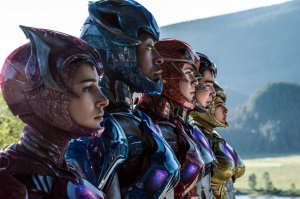 The revised, souped-up Power Rangers (nee Mighty Morphin’ Power Rangers) is a fitfully entertaining movie that works more often than it doesn’t. Fans of the TV show will probably be pleased with the big budget big screen heroics and the reverence shown, though older fans might feel a bit closed off from the teen-centric tone. The relatable angst and group camaraderie made for efficient characterization that helped make the rangers feel like people rather than suits of armor and superfluous gymnastics. I enjoyed the characters enough so that I didn’t miss the scattershot action and its slow motion stylistic indulgences. The special effects are fine and transparent its filmic influences, from Chronicle to Iron Man to even The Breakfast Club. It feels familiar but yet still different enough from the cheesy TV show, so it manages to justify itself. As far as my own history, I was just a bit too old once Power Rangers hit, so it was never my nostalgia. I found the new movie an acceptable origin tale that walks a delicate tone that allows serious moments to have weight and non-serious moments to be fun. If you’re a Power Rangers kid, I’m sure you’ll find enough to sate your demands. If you watched the trailer and thought it looked like something worthwhile, you might find enough to be suitably entertained, especially with well-calibrated expectations. If you’re anyone else, then I doubt there’s enough to necessitate your mighty morphin’ dollars.
Nate’s Grade: B-
Share this:

Kong: Skull Island (2017)
 Some of Hollywood’s most famous characters are its monsters, and no I’m not referring to studio executives. Kong was one of cinema’s first international stars, a stop-motion marvel in 1933 that had a hankering for blonde women. His legend has endured many different incarnations and once again the gigantic gorilla is given his close-up, in Kong: Skull Island, the second phase in a would-be MonsterVerse after 2014’s Godzilla. This time the monster comes through. Skull Island is a pleasing two hours spent with just enough style, thrills, and comedy to enjoyably pass the time best accompanied by a big bag of popcorn.
In 1973, a geological surveying team has discovered a heretofore-unknown island ominously shaped like a skull. Everyone is heading there for different reasons. Bill Randa (John Goodman) wants to prove the existence of monsters, and that he’s right. Preston Packard (Samuel L. Jackson) wants one last mission before returning home from the Vietnam War and its anticlimactic ending. James Conrad (Tom Hiddleston) is one of the world’s best big game trackers and wants a new challenge. Mason Weaver (Brie Larson) is an award-winning war photographer who wants a new scoop. Their plans are put on hold when a 100-foot tall ape, Kong, violently knocks their helicopters out of the sky. The survivors scramble to regroup and escape the hostile locals on Skull Island along with the aid of Hank Marow (John C. Reilly), a WWII fighter pilot who crashed on the island thirty years ago and might have a few screws loose from the experiences.
 Kong: Skull Island is a monster mash-up that knows how to entertain in grand smash-em-up style. It is not a remake of the original King Kong story, and being free of that “twas beauty killed the beast” narrative opens the movie to be its own thing, a high-concept action vehicle and clear Vietnam War parallel. It’s like someone watched Peter Jackson’s agreeable if bloated 2005 King Kong and said, “Hey, what if we shaved off the first hour and spent the whole time on Skull Island, the undisputed best part of the movie?” It’s the equivalent of an-all marshmallow box of Lucky Charms (Simpsons reference!). The unique environment boasts a retinue of fun surprises and a variety of action set pieces that keeps the movie from falling into a valley of repetition. It’s not just giant apes and dinosaurs, there’s also giant bulls, insects, and in one creepily terrifying moment a giant spider that uses its stalks of long legs to try and impale its prey down below. It’s a long lost world that allows for a constant sense of discovery that doesn’t get old. When the characters stumble upon a graveyard I wanted to soak up every detail of the spectacular collection of bones. I was grateful that Vogt-Roberts made fine use of his locations, real and computer enhanced, to build a sense of space and atmosphere.
One of the best aspects is that the producers have apparently learned from 2014’s Godzilla and elected not to play an elaborate game of hide and seek. My biggest complaint is that I wanted more Godzilla in my Godzilla movie. I was not content to settle for a shadowy impression or a glimpse of a tail here and a foot there. It was an artistic decision that toyed with audience anticipation but it also felt like we were being lead on. Too much teasing and not enough of the good stuff. This is not a problem with Kong: Skull Island; the title beast makes his presence known in spectacular fashion around the half-hour mark, and there’s no tiresome visual obfuscation to blunt the impact. You see Kong smash and it’s glorious carnage. He’s established as ornery protector, a sheriff of Skull Island keeping order with the fragile ecosystem. It makes the world of monsters seem much larger and more balanced. I wish there was more for Kong to do as a character but without his familiar arc he’s less character and more a testy god. There is a moment or two that hint at the soul inside the giant ape, but he’s mostly the physical embodiment of implacable force and the good and bad that goes with such power.
The Vietnam parallels are plentiful and provide a dollop of subtext to the conflicts, but this is a movie that doesn’t forget to have fun. The imagery can often fall into Apocalypse Now flashbacks and other war movie iconography, from the burnt orange sunsets casting dusky silhouette to the slow motion explosions trailing after teams of helicopters. The ever-present 70s rock soundtrack almost reaches Suicide Squad levels of needle-drop proportions in the first half, constantly reminding you of its time period. Skull Island isn’t a very deep movie but it does subvert some genre expectations at turns. A character given significant attention is taken out rather unceremoniously. An appeal to a greater sense of humanity is curtly brushed off. A lone heroic sacrifice that proves to be fruitless. Our more photographic heroes are evidently the worst, most useless characters (more on that below). For a movie that doesn’t strive for more than two hours of entertainment, it finds interesting sub routes.
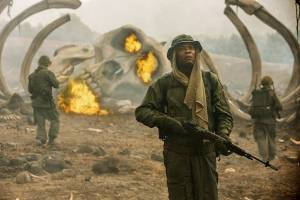 I’m shocked at what director Vogt-Roberts has proven capable of considering his only other film was the low-budget, rather unremarkable coming-of-age comedy The Kings of Summer. This is a Russo brothers-esque statement, a Colin Trevorrow-style jump from minor indie to full-blown big screen spectacle. Is Hollywood going to sign up Joe Swanberg or Shane Caruth to direct the next four-quadrant blockbuster based on a toy? He does an adept job of capturing the action with style, and his shot compositions are routinely visually pleasing, confidently guiding an audience’s eyeballs to key info within the frame. I loved Kong’s immediate introduction as the camera circled him in a 360-degree pan, stopping at points to slow down before ramping up once more. There are amusing angles that highlight the comedy or tension of a scene, and Vogt-Roberts’ sense of geography and scale enhances the destruction. The prologue even had me hooked, as we watch a pair of enemy WWII soldiers parachute on the beach and continue their fight on the new territory. It was such a slam-bang opener and Vogt-Roberts’ use of camera placement reminded me of Spielberg. The special effects are reliably terrific even if they don’t seem like leaps and bounds from Jackson’s Kong. The skull-faced lizard monsters are scary enough to be threatening while still cool. The monster mayhem is lovingly reproduced and in environments where an audience can see the spectacle.
Another improvement is that the human cast has just enough characterization to make me care. With the newest Godzilla, I didn’t care if the giant lizard stepped on any of them, short of maybe Bryan Cranston. However, in this film I wasn’t impatient for the monsters to return that much. The best characters are, ostensibly, the antagonists. Jackson (The Hateful Eight) who goes full on heart of darkness, obsessed with killing the mighty Kong, asserting man’s dominance, and winning a war that others tell him cannot be won. He’s still sore and frustrated from the Vietnam War’s conclusion. He’s convinced that brute force and intractable persistence will win out, and he’s trying to prove something to himself, to the brass in D.C., and perhaps to all the lives lost under his watch. It’s not subtle characterization by any means but neither is a movie with a giant ape fighting monsters. Goodman (10 Cloverfield Lane) uses any opportunity to prove his life’s research about the existence of ancient monsters who he claims are the ones who rightfully have dominion. He’s using the looming possibility of a threat, and the paranoia of the U.S. government in the Cold War, to his sneaky advantage. Watching Goodman and Jackson glare at each other, neither side refusing to back down in their stolid beliefs and personal, self-destructive obsessions, is the non-monkey highlight of the film.
The closest thing approaching human drama, and even tragedy, is Reilly’s distaff character, and I don’t know the last time that John C. Reilly was asked to be a movie’s human compass (Magnolia?). His out-of-time character has a definite degree of cabin fever wonkiness. Reilly excels at being the offbeat oddball and has some welcomed comic relief moments, but it’s the drama related to the character that stuck with me. With the appearance of new human faces, he can take stock just how much of his life he’s missed out on and the family he’s been absent for. His genuine melancholy provides a depth to a character that would ordinarily just be made fun of for being kooky. Still, he’s got some great gallows humor that keeps the movie alive comically while also reminding of the dangers at stake.
 The rest of the characters are rather interchangeable or curiously have little impact on the plot, and that unfortunately includes the headlining stars. Hiddleston (Thor) is a big game tracker and he’s the most useless character. Think about that. He’s supposed to be a wildlife expert and a tracker and he provides no real purpose other than he fills out a tight shirt nicely. Hiddleston is eye candy and little else, which is strange considering his skill set should have factored into the plot somehow. He points them in the direction of water and that’s about it. Larson (Room) is a recent Oscar-winner and has tremendous skill burrowing into her characters and finding a raw vulnerability. With Kong, her anti-war photographer gets off a few ideological shots with Jackson, but there’s little to separate her from the other diverse supporting castmates who are just bodies meant to be sacrificed. They’re all waiting to be eliminated in fantastic, gruesome, or unexpected ways. You won’t exactly be shedding a tear for these people when they become monster chow. Fun fact: ⅔ of the core cast of Straight Outta Compton are here (Corey Hawkins, Jason Mitchell), which apparently shows that Ice Cube isn’t a fan of long travel.
Enjoyably dumb at points and smart enough to know it, Kong: Skull Island is an admirably efficient monster movie that delivers its share of fun. Vogt-Roberts makes a major statement as a visual stylist and director of big-time smash-em-ups. The action is varied, intense, and vividly realized from carefully positioned camera angles and a team of high-class special effects wizards. Kong: Skull Island knows what an audience wants and happily delivers. The actors, for the most part, are enjoyable or enjoyably expendable. If this is the next step in the growing MonsterVerse, then I saw bring on the cataclysms and world-destruction. Friendly tip, stay for a post-credits scene that sets up future installments and try not to pump your fist in excitement. Kong: Skull Island is a boisterous B-movie that can make you feel like a kid again watching the amazing film feats of classic monsters.
Nate’s Grade: B+
Share this:

Logan (2017)
 The Wolverine solo films have not been good movies. The 2008 first film was widely lambasted and while it made its money it was an obvious artistic misfire. The second film, The Wolverine, directed by James Mangold was an improvement even though it had its silly moments and fell apart with a contrived final confrontation. The Wolverine movies were definitely the lesser, unworthy sidekick to the X-Men franchise, and this was a franchise that recently suffered from the near abysmal Apocalypse. Mangold returns for another Wolverine sequel but I was cautious. And then the cheerfully profane Deadpool broke box-office records and gave the Fox execs the latitude needed for a darker, bloodier, and more adult movie that’s more interested in character regrets than toy tie-ins. Thank goodness for the success of Deadpool because Logan is the X-Men movie, and in particular the Wolverine movie, I’ve been waiting for since the mutants burst onto the big screen some seventeen years ago. It is everything you could want in a Wolverine movie.
In the year 2029, mutants have become all but extinct. Logan (Jackman) is keeping a low profile as a limo driver and taking care of an ailing Charles Xavier (Patrick Stewart) south of the border. Xavier is losing his mind and a danger to others with his out-of-control psychic powers that need to be drugged. Caliban (Stephen Merchant) is also helping, a light-sensitive mutant with the ability to innately track people across the globe. Logan is ailing because his healing power is dwindling and he can’t keep up with the steady poison of his adamantium bones. A scared Mexican nurse tries to convince Logan to help out the little girl in her care, Laura (Dafne Keen, feral and a better non-verbal actor). She’s an angry, violent child and built from the DNA of Logan. She too has unbreakably sharp claws and a healing ability. Bounty hunter Pierce (Boyd Holbrook) is trying to recapture the runaway merchandise/science experiment, capturing Caliban and torturing him to track his prey. Logan goes on the run with Xavier and they try to make sense of what to do with Laura, a.k.a. X-23. They’re headed north to Eden, a hypothetical refuge for mutants to sneak over into freedom in Canada, and along the way are deadly hunters who aren’t afraid of leaving behind a trail of bodies to get their girl back.
 It feels like it shouldn’t haven taken Jackman’s reported final outing for the execs to realize that a guy with freaking knives attached to his hands might be a concept that would work in the more grisly, more adult territory an R-rating creatively affords. It’s about time this man got to fully use his claws, and it was a joyous explosion of violence and gore built up for fans such as myself for a long time coming. It feels like Fox has been planning for this event as well, as if they stationed a production lackey to devise all sorts of grotesquely fun ways that Wolverine might skewer his competition in bloody beauty (“Finally, your preparation will not be in vain, Ronald”). There’s one scene in particular where a bunch of armed henchmen are psychically frozen in place and Logan struggles to move past each, and we get to anticipate just how each one will be viciously stabbed. For a series that has shied away from overly gory violence, Logan certainly celebrates its new opportunities with bloody glee. The fact that the first word spoken is an f-bomb and there’s a gratuitous moment of drunken sorority girl boob flashing is like the producers trying to directly communicate to the millions of ticket buyers and saying, “Hey, we’re sorry it took so long. Hope it was worth the wait.” Oh dear reader, it was worth the wait.
It’s not just the action that’s invigorating but the emotional core of the film is deeper and more compelling and ruminative than ever before, and finally these great actors are given material to deliver great performances worthy of their talent. Stewart and Jackman have never been bad in their respective roles even if and when the movies have been. They just have never been called upon for much more than genre heroics, anguish, and pained moral dilemmas. With Logan, both actors are finally given meaty material that affords nuance and ambiguity, and they are excellent. Charles Xavier is losing his battle with Alzheimer’s and ALS, which is a major concern when his mind is considered a weapon of mass destruction by the government. He’s going through his own end of life deliberations (“You’re waiting for me to die,” he groans at Logan) and it brings out a far different Xavier than we’ve ever seen, even with the youthful cockiness from James McAvoy. This is a cranky, defiant, and doddering Xavier, someone who is barely outpacing his sense of grief, guilt, and depression. There’s a tragic back-story we only get a glimpse of but it’s suitably devastating for a man who has devoted his life to others. He’s looking for a few last moments of grace and looking to hold onto something by journey’s end.
 Thanks to his healing ability and the star wattage of Jackman, there was little fear that anything serious would ever befall Wolverine in his many previous film appearances. Sure bad things happened to him and he lost plenty of female love interests, but you never feared that he wouldn’t be able to ultimately handle himself. That’s not the case in Logan, which opens with a Wolverine who has clearly lost more than a step or two. He’s tired, rundown, and his adamantium skeleton is slowly poisoning his body. His healing powers are slowing down and he’s not as berserker fast and agile as he used to be. For once there’s an uncertainty attached to the character and a vulnerability. This turn greatly increases the intensity of the fight sequences and the greater stakes of the drama. The comparisons of the samurai were rife in The Wolverine and now the comparisons to the aging, lone gunslinger are ever-present in Logan. He’s drawn into a conflict that he was not seeking and he’s found a little bit of his remaining humanity and compassion to do right in the face of overwhelming odds and near certain destruction. There’s a subtle moment that the film doesn’t even dwell on that stuck with me. It’s after an accident, and in the thick of confusion, Logan is trying to save his mentor but he’s also worried that Xavier will think he betrayed him. “It wasn’t me,” he repeats over and over, not wanting this man to suffer more. It’s a small moment that doesn’t get much attention and yet it really spoke of their relationship and the depth of feeling during these fraught final days. This is the first Wolverine movie that feels like the characters matter as human beings just as much as purveyors of punching and kicking (now with gruesome slashing at no extra cost). Jackman showcases more than his impressive physique this go-round; he delivers a wounded performance that’s built upon generations of scars that he’s been ignoring. It’s the serious character examination we’ve been waiting for.
I also want to single out Merchant (Extras) who gives a performance I never would have anticipated from the awkwardly comedic beanpole. He even gets a badass moment and I never would have thought Stephen Merchant would ever have a badass moment in life.
Mangold’s film plays as a love letter to Western cinema and uses the genre trappings in ways to further comment on the characters and their plight. This is a bleak movie. It’s not a dystopia. In fact it resembles our own world pretty closely with a few technological additions; automated machines and trucks, the common knowledge that mutants have been wiped out like the measles. Knowing that it’s reportedly the end for Stewart and Jackman playing these characters, I was anticipating the film to strike an elegiac chord. His past and legacy are catching up with Logan. He becomes an unlikely guardian to Laura and explores a fatherhood dynamic that was never afforded to him before. The unlikely partnership, and it is a partnership as she’s a pint-sized chip off the block of her tempestuous father, blossoms along a cross-country road trip for a paradise that may or may not exist, while desperadoes and powerful black hat villains are out to impose their will upon the weak. This is explored in a leisurely pit stop with a working class family (welcome back, Eriq La Sale) that welcomes Logan and his posse into their home. We get a small respite and learn about greedy landowners trying to pressure them into giving up the family farm. It’s completely reminiscent of something you might see in a classic Western of old, just transported to a new setting. There’s even an extended bit where Laura watches 1953’s Shane on TV, and when those final words come back in expected yet clunky fashion, I’d be lying if they didn’t push the right emotions at the right time.
 But when it comes to action, Logan more than satisfies. The action is cleanly orchestrated by Mangold in fluid takes that allow the audience to readily engage. The film doesn’t go overboard on the Grand Guignol and lose sight of the key aspects of great action sequences. There’s a refreshing variety of the action and combat, and the action is framed tightly to the characters and their goals. It makes for an exhilarating viewing. If there is anything I would cite as a detriment for an otherwise incredible sendoff, I think the movie peaks too soon action-wise. The emotional climax is definitely where it ought to be (tears will be shed whether you like it or not) but the third act action doesn’t have quite the pop. Also, while Holbrook (Narcos) is an entertaining and slyly charismatic heavy, the villains in the movie are kept relatively vague as is their overall plan. The vacuum of villainy is kept more one-dimensional, which is fine as it allows more complexity and character moments to be doled out to our heroes, but it is a noticeable missing element.
One of the best attributes I cited from last year’s Captain America: Civil War is that the full weight of the character histories was felt, giving real emotional stakes to all the explosions and moralizing. When our characters went toe-to-toe, we felt a dozen films’ worth of setup that made the conflict matter. Logan carries that same emotional weight. We’ve been watching Wolverine and Professor Xavier for almost two decades and across nine films. These characters have gotten old, tired, and they carry their years like taciturn gunslingers looking for solitude and trying to justify the regrets of their lives. It’s a surprisingly emotional, serious, and altogether mature final chapter, one that provides just as many enjoyable character moments and stretches of ruminative silence as it does jolts of gritty, dirty, hard-charging action and bloody violence. It’s as much a character study as it is a superhero movie or Western. I cannot imagine this story as a watered down, PG-13 neutered version of what I saw on screen. This is a movie for adults and it pays great justice to the characters and the demands of the audience. The final image is note-perfect and can speak volumes about the ultimate legacy of Wolverine and by extension Xavier and his school for gifted youngsters. Logan is the second-best X-Men movie (First Class still rules the roost) and a thoughtful and poignant finish that left me dizzy with happiness, emotionally drained, and extremely satisfied as a longtime fan.
Nate’s Grade: A-
Share this:

The Great Wall (2017)
 The Great Wall is the most expensive film in Chinese history and the first major co-production between an American film studio and a Chinese-owned studio. While Matt Damon is the name above the title, it’s filled with recognizable Chinese stars, like Andy Lau, Eddie Peng, and pop star Lu Han. China’s most renowned action filmmaker, Zhang Yimou, serves as the director. It has the look and feel of a Hollywood special effects epic but it’s very much a Chinese film in ownership and execution, perhaps marking a new synergy of East meets West blockbusters. With a whopping budget of $150 million, the same as the last Star Trek movie, it looks like a typical Hollywood big-budget epic with visual spectacle and sweeping vistas. It’s up to the viewer whether a majority-Chinese production successfully imitating Hollywood middlebrow action spectacle is a brave step forward or just another source for mediocrity.
In the 11th centruy, traveling European mercenaries William (Damon) and Tovar (Game of Thrones’ Pedro Pascal) are looking for black powder, an explosive substance that’s worth serious money back home. A mysterious feral creature attacks them and William cuts off the beast’s hand, taking it as a trophy. The Nameless Order, Chinese military officials stationed at the titular great wall, capture them and want to know exactly how these foreigners were able to defeat this beast. Legend states that long ago a meteor crashed to Earth, and with it came a horde of green monsters with big teeth lead by a queen that psychically controls her thousands of attack drones. Every 60 years the creatures emerge searching for food for their ravenous appetites. The Imperial City must be protected at all costs and that is why the wall was constructed. Lin Mae (Tian Jing) is thrown into command when her male superiors are killed, and she relies upon her unexpected Western allies to throw back the evolving horde of monsters.
 As the first major big-budget collaboration between studios in China and the United States, The Great Wall feels like something that would have escaped from the 1990s era of tentpole filmmaking, and it’s clearly a paycheck film for all involved. Now that doesn’t condemn in either regard. There’s a certain charm to the relatively dumb sci-fi action movies that started being prepped with steady regularity in the 1990s when advancing special effects made it possible for hordes of CGI monsters to thwart. There’s an obvious point of engagement that crosses all translations: man versus monsters. The film even somewhat admirably knows its own ridiculousness and embraces it. I was reminded of the go-for-broke silliness of Jerry Bruckheimer’s movies like National Treasure’s positing that maybe, just maybe, there’s a treasure map on the back of the Declaration of Independence. This feels like the biggest budget Asylum movie you can imagine, and that in itself is not necessarily a problem. However, because of the mechanical nature of so much of its storytelling and the safe territory it resolutely occupies, The Great Wall is a mediocre monster movie that aims right down the middle for cross-continental mass appeal and nothing more. I’m almost certain that Damon had to have been paid $20 million dollars to justify his participation. The actors and the director go about their business in a professional manner but you feel the lack of passion. It’s a film looking to appeal to the most people and losing any sense of distinction.
Credit director Yimou (Hero, House of Flying Daggers) for keeping the film on life support, providing just enough action variety and pleasing visuals to stir an audience awake. The monsters are introduced very early into the film, around the twenty-minute mark, and their CGI horde definitely presents a worthy challenge. In fact they feel too overwhelming in their numbers. Early on we see that the ferocious creatures, which closely resemble the Ghostbusters demon dog painted green, are hard to kill outside of a straight shot to their shoulder-eyes (they have eyes on their shoulders… because…). The first creature that successfully scales the wall takes out a slew of Chinese warriors. If one of these things is that hard to kill, how in the world can a limited number of people, even with high ground, defend against a sea of a hundred thousand? The mismatched numbers deflate the stakes and lessen the tension, which isn’t helped from subpar characterization. The world building is certainly hazy (Why do they come out once every 60 years? Why do magnets affect them? Why all the effort for small food supplies?) and some of the elements feel inserted just for their “cool” factor. A group of female warriors bungee jump off platforms to spear the monsters, but why is this necessary when we’ve already seen that China has fiery projectiles that are far more effective? It is cool though.
Thankfully a movie with little going for it other than spectacle at least knows to vary up its action sequences. Each encounter with one of the monsters is structured differently. The best sequence may be William and Tovar navigating through a blinding fog and relying upon the sounds of whizzing arrows to alert them to approaching hungry monsters. It provides some fun tension and pop-out moments. There’s a beautiful sequence commemorating a fallen friend with the launching of hundreds of floating lanterns. The concluding sequence involves our remaining characters climbing to the top of a pagoda lined with stained glass. As the characters rush up flights of stairs, the screen is lovingly diluted with colored shafts of light, which also add extra visual flourishes when the monsters begin to leap through the glass level by level. Yimou’s use of color has always been a hallmark of his career and it translates even into the color-coded amour of the different divisions of the Nameless Order. They look like ancient Power Rangers. While lacking a great deal of overall tension due to its predictable nature and dull characters, there are fleeting moments of suspense drawn out in individual action set-pieces. The overall movie is generally unremarkable CGI carnage reminiscent of a too-late Lord of the Rings rip-off, and yet there’s at least a general professionalism to its unremarkable CGI carnage.
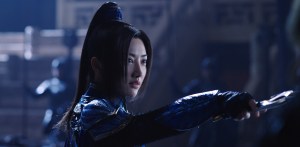 Early on the movie was hit with accusations of whitewashing, and given Hollywood’s recent track record with the likes of Exodus, Aloha, and Gods of Egypt, it would be entirely conceivable that producers felt Damon needed to be a white savior role. That’s not the case at all and in fact the Chinese forces are shown to be flawless specimens. Damon’s character is the out-of-place European (complete with hard to place accent) who represents selfish and arrogant Western attitudes. He’s routinely awed by the ability and precision of the Chinese warriors, who dutifully sacrifice for the greater good and safety of others they will never know. They are symbols of power, teamwork, courage, strength, and dignity. The lessons can be rather blunt (a woman… in charge?!). The portrayal of the Chinese forces is so honorable and so empowered that they come across as boring moral paragons without an ounce of traceably human nuance. They don’t come across like characters so much as interchangeable warriors, and so when they start dying one-by-one their sacrifices ultimately leave little impact. It turns out that the non-Chinese actors, Damon and Pascal, supply the most interesting characters because their roles are allowed personality, basic moral ambiguity, and inner conflict beyond a sense of duty and the requirements of achieving that duty. The Great Wall drafts off Damon’s worldwide star power to teach him a lesson about Eastern values. It certainly presents China and Chinese characters in a very positive perspective, but being so broad sanitizes their humanity and transforms people into boring paragons.
Given the pedigree of those involved, it’s completely expected to be underwhelmed by the end results of such an expensive East meets West collaboration. The Great Wall is ultimately too safe and stately to satisfy beyond generic genre thrills; lowering one’s expectations is highly advised in order to properly appreciate the goofy action spectacle. The Great Wall of China being constructed to protect from a horde of ravenous, possibly extraterrestrial monsters is certainly a silly premise, but the movie doesn’t pretend it’s anything than what it is, a large-scale monster movie with a sense of fun. It’s not soaked in deconstructive irony or meta commentary. Instead, The Great Wall is a straight-laced action spectacle that treats its absurdity with conviction. It’s not much better or worse than other empty-headed big-budget action cinema from the Hollywood assembly line, but is that progress? Is making an indistinguishable mediocre B-movie a success story?
Nate’s Grade: C
Share this:

The Lego Batman Movie (2017)
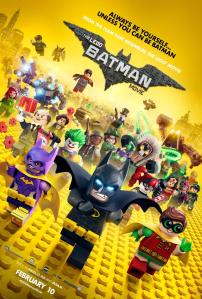 The Lego Batman Movie intends to expand the world of a movie that was designed to sell toys and was far better than anyone ever imagined. It’s frenetic, silly, and paced at spoof level speed with genial gags flying fast every ten seconds or so. It’s also flat, and while intermittently amusing I only chuckled, at best, a handful of times. Will Arnett’s self-involved Batman was a fun side character in the original Lego Movie but there’s not exactly enough there for his own starring vehicle (Jack Sparrow Syndrome). He’s saddled with a weak plot about letting others get closer and not having to be a loner. Besides a brief comedy bit about a cataclysm, the movie could have just been a broad Batman movie. It doesn’t really utilize the landscape of a Lego universe in any way. While many of the jokes didn’t work for me, I knew another one was mere seconds later, so I shrugged off the misfires. The final act of the movie involves a separate league of villains, all conveniently connected to other Warner Brothers properties. Lego Batman wore me down after the opening sequence where Batman battles his entire rogues gallery. It was high-energy but its aim was just too low for my tastes, and the results made me appreciate even more the cleverness and plain comedic accomplishments of the original Lego movie. There aren’t any memorable moments or jokes and there’s far too much Batman rapping. It’s colorful, it’s wacky, it’s filled with fine vocal actors with very little to do other than Arnett and an amusingly awed Michael Cera as The Boy Wonder himself, adopted sidekick Robin. It’s an acceptable albeit numbing experience that I wanted to enjoy more. I don’t know if this is the start of Lego spin-off movies but if it is I hope others do better with their own building blocks.
Nate’s Grade: C+
Share this:

Live by Night (2016)
 With only three films, Ben Affleck has successfully reinvented himself as one of Hollywood’s most talented directors when it comes to adult crime thrillers. It’s not just his superb directing chops; the man also serves as producer, lead actor on most films as well as a screenwriter, and Affleck’s ability to write flawed yet deeply human characters within genre parameters has accomplished actors flocking to work for him. Beyond his 2012 film Argo winning Best Picture, Affleck has gotten three different actors supporting Oscar nominations (Amy Ryan, Jeremy Renner, Alan Arkin). He’s an actor’s director and a man who knows how to satisfy an audience hungry for authentic genre thrills and interesting characters. His latest film is an adaptation of Dennis Lehane’s novel and is Affleck’s most ambitious film yet and it’s gorgeously brought to life. There’s still plenty to like and entertainment to be had with his Prohibition era gangster flick Live by Night, but it’s also unquestionably Affleck’s weakest film yet as a major director.
 Joe Coughlin (Affleck) is a hardened WWI veteran who says he came back to Boston as an “outlaw” (he seems to turn up his nose at being called a “gangster”). Joe settles into an easy life of crime with the local Irish gang lead by Albert White (Robert Glenister). Unfortunately, Joe’s lover, Emma Gould (Sienna Miller), happens to be White’s main squeeze. Joe and Emma sneak around and carry on their relationship without proper discretion. Their secret is found out, Emma is dealt with, and Joe escapes with his life, serving a prison sentence and then enlisting in the Italian mob under local boss Maso Pescatore (Remo Girone). Joe is sent to Tampa to manage the rum-running business, starting his life over. The area is ripe for expansion and it isn’t long before Joe is making friends and enemies over his exploits. He falls in love with Graciella (Zoe Saldana), a fellow criminal with a working operation of Hispanic bootleggers. Joe warms to a local police chief (Chris Cooper) and his daughter, Loretta (Elle Fanning) a girl who experiences the darker side of vice and becomes a troublesome born-again leader. All the while Albert White has relocated to Miami, and the specter of vengeance looms just within reach.
It’s a Prohibition gangster flick and Affleck makes sure to check as many boxes as he can when it comes to audience expectations for a pulpy hardboiled action drama. The production design is aces and the cinematography by Robert Richardson (The Hateful Eight) is beautifully composed with its use of light, shadow, and framing. There are shots of violence that are exquisitely rendered so as to be their own art, like a man falling down a stairwell with a Tommy gun blasting above bathed in light. The production details are a sumptuous aspect that Affleck and his team put supreme effort into to better make their movie transporting. The action sequences have a genuine delight as they pop. A shootout throughout the grounds of a mob-owned hotel is an exciting climax that finds fun ways to provide genre thrills. The rise-and-fall structure of the story, mingled with a simple revenge motivation, is a suitable story vehicle for the audience to plug into. There are fun characters, fun moments, and sizzling action, all decorated in handsome period appropriate details. While Live by Night has its share of flaws, a dearth of entertainment is not one of them.
Tone and coherency end up being Affleck’s biggest obstacles he cannot overcome. It’s somewhat of a surprise considering his other directorial efforts brilliantly melded several genres while telling invigorating stories. I think the main fault is a screenplay trying to do too much when more streamlining was optimal. The specific goal that sets Joe in motion is a bit hazy and fails to provide a larger sense of direction for the arc of the tale. Affleck’s previous films were rock-solid in crafting overarching yet specific goals that propel the scenes onto a natural narrative trajectory. With Gone Baby Gone, it’s finding the missing girl. With The Town, it’s getting closer to a bank employee without having that relationship discovered by his cohorts. With Argo, it was rescuing the hostages. With Live by Night, it’s mostly getting vengeance against Albert White, though we don’t know how. In the meantime, we have episodic incidents failing to register connective tissue or at least a cause/effect relationship where it feels like a natural order of organic conflicts. The opening act in Boston that sets up Joe’s tragic love, jail time, and enmity with White could be removed entirely. I’d miss the thrilling 1920s car chase, which is also unique in that it’s the first period car chase I can think of that utilizes the mechanical limitations of the vehicles for extra tension, but it’s at best a moment of flash. Having the story pick up with Joe putting his life back together in sunny Florida would have been a cleaner entrance into this world for an audience. Once Joe ingratiates himself into this new world, the audience has to play another game of character introductions and assessing relationships and the balance of power. It feels a bit redundant after having our previous act pushed aside to reboot Joe’s world.
 It feels like Affleck is trying to corral so many historical elements that he loses sight of the bigger picture. Joe’s criminal path seems comically easy at times as he builds a fledgling empire along the Floridian west coast. First it’s the law and then it’s the KKK and then it’s religious revivals that need to be dealt with. Each incident feels like a small vignette that observes the historical setting with an angle that will be perfunctorily dropped in short order. The conflicts and antagonists don’t feel sufficiently challenging and that lessens the intended suspense. When Joe is dealing with the KKK, it feels like he’s restraining himself out of politeness rather than a series of organic restrictions. The elements and tones don’t really seem to inform one another except in the most general sense, which leads to the film lacking suitable cohesion. It’s easy then for Affleck to overly rely on stock genre elements to provide much of the story arrangements.
The characters have difficulty escaping from the pulp trappings to emerge as three-dimensional figures. Graciela gets the worst of it, proving to be a capable bootlegging criminal in her own right who loses all sense of personality, agency, and import once she becomes romantically entwined with our hero. It’s as if she erased herself to better heal his broken heart. How kind of her. The religious revival element is ripe for further examination but it’s kept at a basic level. We’re never questioning the validity of Loretta’s conversion and sudden celebrity. Chris Cooper’s pragmatic lawman has the most potential as a man trying to keep his morals amidst the immoral. The character isn’t utilized in enough interesting ways that can also flesh out his dimensions, and his conclusion suffers from that absent development. The characters serve their purpose in a larger mechanical sense but they don’t feel like more recognizable human beings.
Affleck’s innate talent with actors reappears in a few choice moments, just enough to tantalize you with the promise of what Live by Night could have been. The standout moment for me is a sit-down between Joe and Loretta where she unburdens her self-doubts. This is a woman who has been preyed upon by others, had her hopes dashed, and is trying to reinvent herself as a religious leader, but even she doesn’t know if she believes that there’s a God. The scene is emotional, honest without being trite, and delivered pitch-perfect by Fanning (The Neon Demon). It’s the kind of scene that reminded me of The Town and Gone Baby Gone, how Affleck was deftly able to provide shading for his characters that opened them up. Miller (American Sniper) has immediate electricity to her performance and reminds you how good Affleck is at drawing out the best from his actors. British TV vet Glenister is so good as a villain that seems to relish being one that you wish he were in the movie more. He has a menace to him that draws you in closer. Maher (The Finest Hours) is a memorable cretin who you’ll be happy to be dealt with extreme prejudice. There isn’t a poor casting choice in the film (hey Clark Gregg, hey Anthony Michael Hall, hey Max Casella) except possibly one, and that’s Affleck himself. I know part of the reason he selects his directing efforts is the possibility of also tackling juicy acting roles, but this time he may not have been the best fit. He’s a little too calm, a little too smooth, a little too out of place for the period, and his director doesn’t push him far enough.
 A strange thing happened midway through, namely how politically relevant and vicariously enjoyable Live by Night feels specifically for the year 2017. It’s a movie largely sent in the 1920s with characters on the fringes of society, and yet I was able to make pertinent connections to our troubled times of today. After a contentious presidential election where many feel that insidious and hateful extremist elements are being normalized and emboldened, there is something remarkably enjoyable about watching a murder montage of Klansmen. The Tampa chapter of the KKK takes aim with Joe’s business that profit from fornicators, Catholics, and especially black and brown people. They’re trying to shake Joe down for majority ownership but they’re too stupid, blinded by their racist and xenophobic ignorance, to accept Joe’s generous offers, and so they can’t help but bring righteous fury upon their lot. There is something innumerably enjoyable about watching abusive bigots brought down to size with bloody justice. I could have seen an entire movie of Joe and crew tearing through the Florida chapters of the KKK and just cleaning out the rabble. This sequence whets the appetite for what comes later. Without going into specific spoilers, the climax of the movie involves the put-upon minorities rising up against their bosses who, like the Klan, felt they were too powerful, too indispensable, and too clever to be seriously threatened. In its own way, it’s like a dark crime actualization of the American Dream. Unpack that if you will.
Live By Night is Affleck losing the depth of his world to its surface-level genre pleasures and they are indeed a pleasure. This isn’t a bad movie by any measure, only one of slight disappointment because it had the markings and abilities to be much more than the finished product. The tonal inconsistency and storylines provide episodic interludes and enticing moments, whether in action or acting, but they don’t blend together to form a more compelling and impressive whole. It’s a gangster movie that provides the gangster genre trappings but loses sight of what makes the characters in these movies so compelling, the moral complications, shifting loyalties, the impossible positions, and enclosing danger. I don’t think you’ll sweat too much over whether the main character will come out on top, which somewhat hinders the intensity of the action. When your movie is more predicated on those genre thrills than character or story, that’s an even bigger hindrance. It’s a fun world worth visiting but it doesn’t have the staying power of Affleck’s better efforts.
Nate’s Grade: B
Share this:

Rogue One (2016)
 In the opening text crawl for Star Wars Episode IV: A New Hope, it says, “During the battle, Rebel spies managed to steal secret plans to the Empire’s ultimate weapon, the Death Star.” Disney, in its infinite wisdom to cash in on every potential resource of its lucrative cash cow, has decided to devote a whole movie to that one sentence in that initial crawl. I can’t wait for each sentence to get its movie. Rogue One: A Star Wars Story (in case you’d forget) is the first film outside of any of the trilogies and much is at stake. Not just for the rebels but for Disney shareholders. If a wild success, expect future tales coming from every undiscovered corner of the Star Wars universe. And if Rogue One is any indication, that’s exactly the kind of artistic freedom needed to blossom.

Not actually in the finished film.
Jyn Erso (Felicity Jones) has plenty to rebel against. Her father (Mads Mikkelsen) was forced against his will by Orson Krennic (Ben Mendelsohn) to work on a fiendish death machine for the Empire. Jyn’s father is responsible for designing the Death Star. Jyn is broken out of imperial prison by Cassian (Diego Luna) for the Rebellion. They want her to track down her father, find out whatever she can about this new fangled Death Star, and if possible, retrieve the plans on how it might be stopped. Her mission will take her to the ends of the galaxy to reunite with her father and to provide hope to the Rebellion.
Finally after many films we finally get a war movie in a franchise called Star Wars, and it’s pretty much what I wanted: a Star Wars Dirty Dozen mission. It’s thrilling to go back to the height of the resistance against the Evil Empire and see things from a ground perspective with a skeleton crew working behind the scenes. We may know the future events of those Death Star plans but we don’t know what will befall all of these new characters. Who will make it out alive? The open-and-shut nature of this side story in the Star Wars universe brings a bit more satisfaction by telling a complete story. This film will not have to wait for two eventual sequels years down the road in order for an audience to form a comprehensive opinion. I welcome more side stories like Rogue One that expand upon the fringes of the established universe and timelines, that establish colorful new characters and tell their own stories and come to their own endings, and hopefully don’t feature any more Death Stars (more on this below). It seems like it was ages ago that major studio tentpoles just attempted to tell a single, focused story rather than set up an extended universe of other titles to nudge along their respective paths. Director Gareth Edwards (2014’s Godzilla) is less slavishly loyal to the mythos of the series than J.J. Abrams. His movie doesn’t feel like flattering imitation but its own artistic entry. The cinematography is often beautiful and the natural landscapes and sets provide so much tangible authenticity to this world. Edwards has a terrific big-screen feel for his shot compositions and achieving different moods with lighting. He knows how to make the big moments feel bigger without sacrificing the requisite popcorn thrills we desire.
 Rogue One has to walk a fine line between fan service and its own needs. While it’s fun to see Darth Vader on screen again voiced by the irreplaceable James Earl Jones, it’s also a bit extraneous other than some admittedly cool fan service. We don’t need to see Vader clear out a hallway of Rebel soldiers but then again why not? It’s the same when it comes to the inclusion of cameos from the original trilogy. Some are minor and some are major, achieved through the uncanny valley of CGI reconstruction. Gene Kelly may have danced with a vacuum cleaner and Sir Lawrence Oliver and Marlon Brando both appeared as big floating heads after their deaths, but this feels like the next step beyond the grave. There’s a somewhat ghastly feel for watching a dead actor reanimated, so your sense of overall wonder may vary. The cameos are better integrated than the Ghosbusters ones.
There’s a great cinematic pleasure in putting together a team of rogues and rebels. The characters on board this mission have interesting aspects to them. Chirrut Imwe (Donnie Yen) is a blind warrior and aspiring Jedi. He feels like he stepped out of a great samurai movie. He uses his connection with the Force to make up for his lack of visual awareness, and Chirrut demonstrates these abilities in several memorably fun instances. There’s a world of back-story with Saw Gerrera (Forest Whitaker), a dotty wheezing warrior who is more machine than man at this point. Whitaker gives an unusual performance that reminded me of a kindlier version of Dennis Hopper in Blue Velvet. The reprogrammed robot K-250 (vocal and motion-capture performance by Alan Tudyk) is a reliable source of catty comic relief and I looked forward to what he was going to say next. The first 40-minutes is mostly the formation of this group, and it’s after that where the movie starts to get hazy. We know how it’s all got to end but the ensuing action in Act Two feels a bit lost. This may have to due with the reportedly extensive reshoots that were done last summer to spice up the movie (much of the earliest teaser footage isn’t in the finished film). I’d be fascinated to discover what the original story was from Chris Weitz (Cinderella) and just what rewrites Tony Gilroy (Michael Clayton) performed so late into its life. For much of the second act, the characters feel a bit too subdued for the life-or-death stakes involved, and that translates over to the audience. We travel to different locations throughout the first two acts but I can’t tell you much about them other than some intriguing mountainous architecture. The plot is a bit too undercooked and still obtuse for far too long, requiring our team to bounce around locations to acquire this person or that piece of information. Rarely do the characters get chances to open up.
 It all comes together in the final act for a 30-minute assault that makes everything matter. It’s a thrilling conclusion and the movie finds a way to keep escalating the stakes, bringing in powerful reinforcements that force our Rogue One crew to alter their plans and placement, while still clearly communicating the needs of each group and the geography as a whole of the multiple points on the battlefield. It’s what you want a climactic battle to be and feel like where each player matters. It’s also a welcome addition to the Star Wars cannon, as we’ve never seen a beach assault before. It feels like a new level that was unlocked in some video game, and that’s no detriment. The ending battle has different checkpoints and mini-goals, which allows for the audience to be involved from the get-go and for the film to jump around locations while still maintaining an effective level of suspense. Many of these characters make something of a last stand, and you feel the extent of their sacrifice. I read in another review that the reason Jyn and her rogues win is because they accept that they are replaceable, and Orson Krennic fails because he made the mistake of believing himself irreplaceable. I think that’s a nice summation about the nobility of sacrifice. I won’t get into specific spoilers but I was very pleased with the ending of the film even though it’s not exactly the happiest. It feels like a fitting ending for the darker, grittier Star Wars tale and it provides earned emotional resonance for the setup of A New Hope, which this movie literally rolls right into.
With as many fun and potentially interesting characters aboard for this suicide mission, it’s somewhat surprising that they are also the film’s weak point. Beyond simple plot machinations like Character A gets Character B here, I can’t tell you much more about these rogue yet noble folks other than their superficial differences. Take for instance the Empire turncoat, pilot Bodhi Rook (Riz Ahmed) What personality does he have? What defines him? What is his arc? What about Cassian? He’s supposed to secretly assassinate Jyn’s father if given the chance, but do we see any struggle over this choice? Does it shape him? Does his outlook define his choice? Can you describe his personality at all whatsoever? What about the villain, Krennic? Can you tell me anything about him beyond his arrogance? What about Baze Malbus (Wen Jiang), who carries a big gun and is close friends with our blind wannabe Jedi. Can you tell me anything about this guy beyond that? Even our fearless leader, Jyn Eros, feels lacking in significant development. She wants to find her father, get vengeance, but then changes her mind about sacrificing for the greater cause of hope. Many of the character relationships jump ahead without the needed moments to explain the growth and change. The original trilogy was defined by engaging characters. When you have a ragtag crew of six of seven rogues, you better make sure each brings something important to the movie from a narrative perspective, and not just from a pieces-on-the-board positioning for action. Look at Marvel’s Guardians of the Galaxy for tips. If this was going to be a powerful and emotionally involving war movie, the characters needed to be felt deeper. All too often they get lost amidst the Star Wars debris and then they become debris themselves. Ironically enough, Rogue One has the reverse problems of The Force Awakens, a movie that benefited from engaging characters but sapped from an overly familiar and cautious story. It’s telling when my favorite character, by far, is a sassy comic relief robot.
 Let’s talk about the Death Star in the room, namely the fact that over the course of eight Star Wars movies there have been Death Stars, or the construction thereof, in five of them (63% rate of Death Star sighting). We need a break. You can cal it a Star Killer Base whatever in Force Awakens but it’s still a Death Star in everything but name. I can’t even put a number to the amount of money it cost the Empire/First Order to build these things, plus the review process to try and correct design flaws that never seem to get corrected. At this point it feels like this model just isn’t cost-efficient for its killing needs. What about a more mobile set of multiple mini-Death Stars? I hope that the filmmakers for the new trilogy (Rian Johnson, Colin Trevorrow) refrain from putting another similar planet-killing space station-type weapon into their movies as we’ve had enough. However, the use of the Death Star in Rogue One was perfectly acceptable because it already fit into the timeline of the first film. I also greatly appreciated the clever retcon as to why the Death Star had its fatal flaw. It took a bothersome plot cheat from 1977 and found a gratifying and credible excuse. Now when Luke blows up that sucker it’ll have even more resonance.
Rogue One is a Star Wars adventure that feels like its own thing, and that’s the biggest part of its success. By being a standalone story relatively unencumbered by the canonical needs of hypothetical sequels, the movie opens up smaller stories worth exploring and characters deserving a spotlight. This is an exciting and entertaining war movie, and the kind of film I want to see more of in this multi-cultural universe. It’s not a faultless production as the lackluster character development definitely hampers some audience investment. I wish more could have been done with them before they started being permanently taken off the board. While Rogue One is looking to the past of Star Wars it still makes its own independence known. I hope this is the start of a continuation into exploring more of that galaxy far far away without the required additions of every Skywalker and Solo in existence. It’s a far bigger universe and it needs its close-up.
Nate’s Grade: B


 nathanzoebl
You must be logged in to post a comment.