Author Archives: natezoebl
Becky (2020)
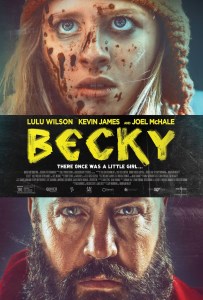 Imagine if Home Alone was more intense and populated with neo Nazis, and you’ll get a feel for Becky, a jubilantly gory, highly stylized indie thriller that might be as off-putting as it is entertaining. Kevin James, yes Paul Blart himself, gives an about-face turn as the leader of a group of Nazis that recently broke out of prison. With his bushy beard. swastika tattoos, and intensely quiet monologues, the stunt casting works out well, and James can be truly menacing. His band of goons are terrorizing a blended family in search for a macguffin of which just happens to be in possession of Becky (Lulu Wilson), an adolescent hellion they will soon reckon with. She knows the terrain of the family cabin and the woods and goes about picking off the bad guys one-by-one in fiendishly bloody, wildly over-the-top panache. That’s the real appeal of the movie, the various ways our pint-sized heroine takes down the Nazis. Directors Cary Munion and Jonathan Milott (Cooties, Bushwick) infuse plenty of visual style into their thrills, amplifying the intensity further, like a pounding camera edits and a walkie talkie confrontation between hero and villain where a series of pans makes it feel like they’re face-to-face. The film can be unsparingly brutal and hard to watch at times, walking a line between being darkly comic to simply being gross. Becky herself comes across like a brat and, as the killings continue, gleefully sociopathic. She’s still hurting from her mother’s death, she doesn’t want to have to save her soon-to-be stepmom and brother, but she’ll do it if it means killing more Nazis. One big tough Nazi has a crisis of conscience and demonstrates, at least onscreen, more depth than Becky. It’s all a bit too nihilistic by the end for my tastes. Becky ultimately is a movie about killing Nazis gory good and looking good doing so. If that’s enough for you, give it a watch.
Nate’s Grade: B-
Share this:

The Incredible Jake Parker (2020)
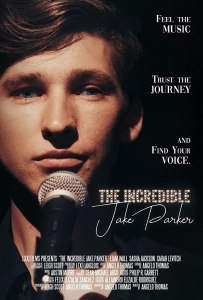 The Incredible Jake Parker is an Ohio indie written/directed/produced by Angelo Thomas, who just graduated from his arts college this spring. The 22-year-old adapted his own book into his first feature, all while finishing college and taking on activist responsibilities. The fact he has a finished feature film before he even graduated college, a film that was scheduled to open in multiple cities, is a damn impressive feat. Thomas is already well ahead of the game. Unfortunately, Jake Parker became another victim of COVID-19’s theater closings, and the limited release has been postponed. I was graciously given a digital link of the film to review and, even though I know people involved with the production, I vow to be as objective and constructive as possible with this film review. I honestly think the delay might help the movie, allowing for further critical examination and technical tinkering. As is, The Incredible Jake Parker is a well-made, albeit criminally short, indie that feels like it’s missing necessary development and potential drama to convey the steps in the journey of its titular star.
Jake Parker (Liam Wall) is a teenage musical sensation but he’s got a secret. He’s rapidly losing weight, enough to alarm doctors and his manager. Jake is anorexic. His tour is put on hold while he checks into a treatment center that will help him reflect and grow. He’s angry and eager to leave, but the more time he spends with the doctors and fellow patients, the more that Jake is able to tackle his personal demons with his body issues and figure out the man he wants to be.
The filmmakers behind The Incredible Jake Parker have an important and very personal message they take very seriously. Thomas has been open about his own troubles with an eating disorder and has spoken across the country about his experiences and insights. The character of Jake Parker is obviously informed from his own struggles and triumphs. Eating disorders are also a malady not typically associated with men, so smashing that taboo and educating viewers is admirable. We even see this flippant attitude in the movie where catty media figures wave away the implications of an eating disorder, especially for men, and prescribe just “eating a hamburger.” Body dysmorphic disorder is particularly affected by our omnipresent media culture that applies value to being thin, desirable, and staying within the codified boundaries of what is deemed appealing. That level of scrutiny and pressure can affect anyone’s mental health, let alone a performer whose press coverage and album sales can be affected by his good looks. It’s understandable to fall sway to negative thoughts that one’s body just simply isn’t good enough. The movie is filled with useful information about eating disorders as well as steps one can take to regain control over their body and mind and make healthy choices. By that regard, the movie can provide a great outreach to connect with people, especially young people, and inspire them to improve their own mental health and physical well-being. That’s what good art can do.
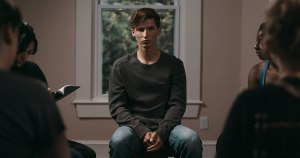 Now, with all that being said, it doesn’t feel like those good intentions have latched onto a suitable and engaging narrative to carry the burden of its worthy message. The movie is only 64 minutes long before its end credits and has the unmistakable feeling of missing development. We spend the first act establishing the problems for Jake and then in the last five minutes he finds effective solutions to those problems, but the connective tissue, the work, is missing in between. I’m going to go into some mild spoilers here though I don’t consider these to be significant because, realistically, did you expect Jake to not get better? I went back and re-watched what was Jake’s breakthrough therapy session and it amounts to being told that resilience is key and to find his inner strength. The very next scene involves Jake requesting ice cream to dine with a friend, seeming to now be able to manage his eating disorder, but why? Why was this a big breakthrough for Jake and why does it come with so much movie left? There’s another personal revelation that Jake is hiding that takes precedent in the last 15 minutes, which is odd to include so late after he seemed to overcome the movie’s big conflict, and even stranger to consider the fear it could pose to his musical career given modern-day sensibilities. It’s included to provide another scandal but it’s also there to get the plot even further across the hour-mark. Even his other late conflicts resolve so easily, some over text messages, that it begs the question of why introduce obstacles if they are so quickly overcome? When you wrap up your main internal struggle so early and with little elaboration, it leaves us questioning why we still have a movie.
So absent more in-depth examination on those problems, maybe we can use the extra time allotted to get to know Jake more as a character or the other residents of his treatment center, building a friendly network of lovable people leaning on one another to get better. The supporting characters are typically defined by their problem and stay that way. Mom (Rachel Coolidge) is an alcoholic, though we don’t see her drunk or even drink in hand if I recall, and Dad (John French) is a workaholic, though we don’t see him in a hurry to leave (the closest family Jake has is his British manager). Jordan (Sarah Levitch) has an eating disorder and was abandoned by her parents. I’m assuming the supporting characters at this treatment center all suffer from eating disorders but that could be my mistake. I have to go with this assumption because there is a raft of supporting characters that don’t open up about their specific problems, only occasionally their feelings of being helpless or being ashamed. A support group is a fantastic setting to derive some character-driven drama, forcing people to confront their pasts, mistakes, sense of self, vulnerabilities, relationships, and even butt heads before growing closer. It’s a conflict crucible ready for meaty scenes and yet it too is MIA. If Jake’s ultimate triumph over his personal demons is derived from the support he feels with the friends he’s made, then it would naturally need to feature meaningful interactions with supporting characters where we get to understand them and watch that progression of friendship and trust. It’s not that the material with these characters is bad, it’s just that they could all benefit from more of it.
 I do want to congratulate Thomas and his team for putting together a very professional looking movie. Even though its budget is a fraction of the Hollywood indie, The Incredible Jake Parker looks polished and proficient. The lighting and cinematography are a highlight of the movie, often finding compelling ways to frame the angular jawline of our titular star in anguish. It was filmed over nine days in Louisiana (boo) with some second unit work filmed in Columbus, Ohio (yeah). The songs we do get from Thomas and co-writers Austin Moore and Liam Wall are peppy and well composed with impressive production value. Just watching Wall sing is enjoyable and he seems at his most comfortable when he’s belting a tune and guitar in hand. The acting overall is generally good. Wall (Gold Dust) is a little stilted at times though it works for the awkwardness or clenched-jaw resentment he holds onto like a lifeline. Sasha Jackson (Blue Crush 2) has a few nicely delivered moments expressing her maternal worry and hope for Jake, who is more than just a client. The assorted supporting players make pleasant impressions, enough so that I desperately wanted them to have even more interactions to better allow the actors to shine.
Given Jake’s musical profession, I was expecting the film to include moments of his singing and guitar-playing for performances and songwriting, a reflection of his inner struggle for control and creative expression. What I wasn’t expecting was the movie to become a traditional movie musical where the characters just break into song and look into the camera. It first happens around the half-hour mark and took me aback, but I liked the two-minute introspective song and thought, “Okay, well if this is going to become a major element of the storytelling, I’m ready now.” I kept waiting for another moment of song-breaking and it didn’t occur until nearly the very end of the movie. It lasted, and I counted, 34 total seconds. Why break reality if it’s only going to last as long as a television commercial? If these two moments are the only ones that break reality to become a movie musical, then why include them if they only amount to two-and-a-half minutes? Could the sentiment not have been expressed with Jake merely playing his guitar and singing to himself rather than the music kicking in from on high? I was actually expecting more musical numbers simply because Wall can sing and play the guitar, as evidenced in the grabber of an opening scene where Jake records his amateur song that goes viral. He has talent so it would make sense that he writes a new song to discuss his journey, something he could perform at the very end to express his maturation and lessons learned, a new Jake Parker. That inspirational song, “Incredible,” plays over the end credits but why not actually see Wall perform the song to the camera, with the emotion pouring out of him, to mark the climax? It’s not like the film was running too long. Imagine the end of 2018’s A Star is Born and instead of Lady Gaga delivering that last powerful song to sum up her experiences, it just played over the credits.
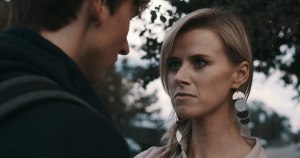 There are some other technical areas where The Incredible Jake Parker could benefit from some further attention before its big release rollout. The sound mix is often noticeably amiss with different shots having fuzzy interference that’s all the more noticeable when it’s edited with shots without. Some shots don’t seem to be using sound from other takes, so an off-screen character will sound distant because their dialogue was recorded away from the boom microphone. Why not pull sound from that character when they were on mic and layer it over? The color grading isn’t consistent at points, most notably when the film transitions from purchased stock footage that is vibrant in color to the more muted colors of the actual movie. I’m also hopeful that a new musical score can be applied (not the songs, the actual score) because it’s often too plain. The bigger technical element that could use another overview is the editing. Jake Parker is edited with a formula that a spoken line equals a shot cut. A character speaks. Next shot. A character speaks. Next shot. Repeat. It’s a stolid rhythm that can gum up the visual flow of scenes. The movie is crying out for another careful pass in the editing suite. It’s little things in the edit and pacing that can help mitigate whatever filming limitations there may have been.
The Incredible Jake Parker is a musical with a message and some spiffy technical acumen, especially considering that Angelo Thomas is only 22 years old and pulled this all off. Even though it’s only 68 minutes with credits, there is much to be impressed with this first film. There’s a late montage of real people (I’m assuming) who speak about their own struggles with eating disorders and mental health, their advice, and what a figure like Jake can mean to them, and while it may be manipulative my heart felt full-to-bursting while watching this genuine outpouring. It made me even more certain that had the film given more space to Jake’s journey, I would have been even more dazzled. Rare is the film I say could use an additional half hour minimum. The Incredible Jake Parker has all the hallmarks of great drama, with the insights of a man who lived it, so I wish we could have really dived into the development of its title character and his incredible story.
Nate’s Grade: C+
Share this:

The Last Days of American Crime (2020)
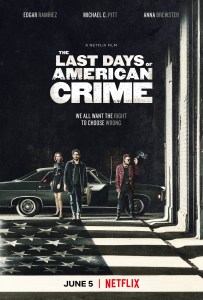 Even by relaxed standards which we judge widely-available Netflix movies during a time of quarantine, The Last Days of American Crime is a staggering waste of 150 minutes. It’s based on a 2009 graphic novel series and even by the sliding scale of shut-your-brain-off action movies, it’s numbing, dreadfully dull, incoherent, and stitched together with hoary genre clichés and little creative forethought. It’s rare that I come across a movie that seems so willfully ignorant to explore the implications of its own premise.
In the near future, the U.S. government is in the final stages of implementing the American Peace Initiative (API), a special radio signal that stops crime in its tracks. It acts as a brain blocker on anything illegal, stopping the user from being able to follow through. Graham Bricke (Edgar Ramirez) finds out the hard way when his bank robbery crew become some of the first test subjects. American citizens are desperate to flee to Canada before the API goes live. Bricke gets seduced by computer hacker Shelby Dupree (Anna Brewster) to pull off one big score. The government is readying to destroy a billion dollars in currency before going digital, and Shelby’s fiancé, Kevin Cash (Michael Pitt), has the connection to pull off the heist of the century.
 Firstly, there is not nearly enough material here to justify the gargantuan Avengers-esque running time. You could realistically slice down a whole hour and not impact its middling entertainment value or clarity. While I was watching it didn’t even feel like a movie, more like a series designed to be binge watched, where the plotting becomes much more slack because the filmmakers anticipate their show will be digested in quick succession and that they have earned patience. It irritates me in television and it certainly irritated me here as well. Don’t blithely assume that your audience has infinite patience when you haven’t given them a proper story to properly engage with. Just about every scene could be trimmed down and some of them go on punishingly long, especially scenes where people are getting shot. There’s one late scene that goes on for what feels like five minutes of just watching two characters get shot. It’s so gratuitous, like much else in the movie, that it borders into unintentional anti-comedy.
As for the action, director Oliver Megaton (Taken 2 and 3) delivers very little of note. There’s a car chase here, a shootout there, but no set piece that actually develops or proves that memorable. It’s all just disposable noise that amounts to little, not even fleeting, escapist entertainment. This is a heist movie where the actual heist planning is ignored. The most enjoyable part of a heist movie is the intricate planning and then execution of that plan, combating the unforeseen complications and overcoming for triumph. If your entire movie is centered on a big heist, don’t treat that like it’s another meaningless plot element. I cannot believe the filmmakers failed to realize that if the viewer doesn’t know what the dangers, problems, and scheme of the upcoming heist will be, then everything feels arbitrary and unsatisfying, and it does so here. The actual heist, pulled off around the 90-minute mark, is not worth the buildup and lack of accessibility. It’s just another haphazard action set piece, not the culmination of planning and an important payoff for carefully manufactured setups. If you’re tuning in for fun action, you’ll be sorely disappointed to find there’s more time spent torturing people onscreen than there is for sustained and exciting action.
The awful characters we’re left to spend 150 minutes with are hardly worth that investment. Everyone is kept strictly as stock archetypes, and even when the screenplay tries to develop them, it follows a strictly predictable path to minimal results. Oh, someone has a family member in custody and is being pressured to snitch? Oh, our silent-and-seemingly-conflicted protagonist wants to avenge his dead brother because he cares and stuff? Oh, our oddball criminal scion wants to make a big name for himself outside of his father’s shadow? The fact the movie spends so much time with these characters while giving them so little dimension, little personality, and little to do is another indictment on the bloated pacing. If we’re spending this much time with our criminal rogues, the least you can do is make them interesting and dramatic and colorful. The protagonist’s name is Graham Bricke, which sounds so boring that it must have been generated by an A.I. The femme fatale super hacker lady is really here just to look sad or sexy, here to deliver three uncomfortable sex scenes including a near rape as well. The other notable female roles in this movie include News Anchor, Lesbian 1 and Lesbian 2, Female Tweeker, and Female Cop. Hooray for depth.
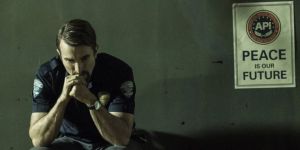 There are two characters that had a chance of being interesting but are so mishandled. The first is Kevin Cash, our wannabe gangster. Pitt (HBO’s Boardwalk Empire) brings a much-needed dose of energy and theatrics, like he’s trying everything in his power to desperately hold your flagging attention. Even his pathetic overcompensating nature is tiresome. A scene where he, his father, and his younger stepmother (another fine example of female character representation in the movie) shriek and bicker at one another is just embarrassing and misplaced comic relief. He’s boring. The only other potential was with Sharlto Copley (District 9) as a disgraced police officer. We spend plenty of time with him early in the movie, establishing his outsider status, perhaps some regret, and hoping that his position of authority will be better explored as he wrestles with whether the police force is worthy of its state-decreed exemptions to the API. Nope. He just becomes another dude in the final act that could have been replaced by anyone else. It would be like devoting so much time to Henchman #12 and his personal crisis of self in a Bond movie only to watch the lug unceremoniously die in a final action rush. Was that worth the time spent?
Its Purge-like premise sounds intriguing and worthy of exploration until, that is, you really think about how silly it all is. So a magic radio signal is going to inhibit your brain from committing known wrongs, but does that mean that the radio signal will have to blare constantly in order to have a lasting effect, otherwise its enforcement will be limited? What happens to sociopaths who don’t even register right from wrong? They will be able to move and act without abandon. Then there’s the day-to-day corruption, graft, greed from all pillars of society, politicians and Wall Street and officials that exploit their positions for illegal gains. Seriously, if this radio signal inhibits the fruition of illegal acts, would Wall Street just shut down? Would the factory owners who knowingly skirt worker safety for profits be able to operate? Would criminal defense attorneys be able to operate or would they use the ethical justification that everyone, no matter how heinous, deserves legal representation? If you think about a capitalist society, it’s built upon people behaving not so nicely, so would all facets of the economy grind to a screeching halt?
There is one aspect of this world building, even with what the meager story has established, that could be interesting to explore, and that’s the exceptions to this new order. Police officers are getting implants that make them immune to the effects of API, though in a world where a radio wave eliminates criminal acts, do you still need a police force to protect and serve? Regardless, this special class of exception is deserving of further exploration, a socially relevant angle to tap into the inherent advantages offered to the top one percent who don’t think the rules apply to them. In fact, if Last Days of American Crime was going to run with its silly premise as is, and during the pre-activation countdown timeline, they should have presented a story about those who are given the state-sanctioned privilege to act with impunity. Let’s watch the elite get their special exemption chips and plan for the New World where they maintain their vaunted privileges. It would at least make the movie socially relevant as well as a better development of its sci-fi premise.
 Watch, dear reader, as I present you two better scenarios with this silly premise. The first is the most obvious and that’s life AFTER the implication of the AFI, presenting life under a new fascist order and a group of revolutionaries trying to thwart the radio waves. Imagine a group not plotting to pull off a bank heist but ridding their community of the AFI and giving them autonomy over their minds and bodies again? There’s an ever-present hostility that forces the characters to keep their thoughts on safe topics, having to communicate with subterfuge to not set off their brain jailers. It would be like a dystopian version of that classic Twilight Zone episode where little Bill Mumy where everyone had to think “good thoughts” or else he would magically banish them to the cornfield. That’s interesting, that’s genuine conflict, that’s characters under great duress trying to escape a fascist nightmare without tipping off the invisible sensors in their own minds that could trigger. There’s a larger goal of freeing their fellow citizens from this tyranny as well. That’s already one hundred times better than simply trying to steal money before the clock strikes zero. If it was only ever going to be “one big last score” then why even bother with the mind-control antics? It could have been anything at all.
However, if you wanted something more low-key, you could take a different path with the idea of the bucket list before the API goes live. Think of two teenagers who don’t have the means to escape and feel like they haven’t fully lived and a whole lifetime of rebellion and adventures they had been dreaming towards will now be snuffed out. The screenplay already floats the idea of a criminal bucket list but why not run with that idea as the core of your movie? Two teenagers making the most of their time together over the course of one long crazy night of cutting loose, testing their boundaries, and acting out the best ways they know how, learning about each other and the depth of their friendship before their minds will not fully be their own. It takes the teenager coming-of-age model, feeling like a stranger in your own body, and gives it a PG-13-Purge twist, with the distant tragedy of the looming tyranny ahead to up the stakes. Even that development would be better than “one last score,” and these are just two ideas I’ve come up with while writing this film review. Think what could be accomplished if a professional screenwriter spent weeks fleshing out a better version.
Alas, the version of The Last Days of American Crime we do receive is powerfully plodding, incoherent, empty and arbitrary, and definitely not worth your precious 150 minutes. With the current state of the world where thousands of U.S. citizens are protesting in the streets over a militarized police state and wanton brutality, it makes Last Days look even more phony and ill-conceived as entertainment. It doesn’t examine the implications of its own fascist police state, it only uses it as a pointless backdrop for an arbitrarily plotted “last score” heist before it all just falls apart, spent of imagination and intent.
Nate’s Grade: D+
Share this:

The Ninth Gate (2000) [Review Re-View]
 Originally released March 10, 2000:
The latest from old school horror pioneer Roman Polanski is a dark and brooding thriller that is… very long and brooding. What begins with noir charm and decadence grows thin by the movie’s over-bloated running time – giving new definition to the term “tedium.” The visuals are grim and noirish, but hang forever. Half of the movie is seeing Johnny Depp walk from Point A to Point B; and then the other half is watching him light up a cigarette usually already with drink safely in hand. Depp plays a librarian that doesn’t play by all the rules, or something or other. He’s set out to authenticate the last three books of a Satanic worshiper only to discover they lead to a path of devilish power. By the time Ninth Gate reaches its climax at an Eyes Wide Shut-style group gathering the audience has already hopelessly lost feeling in their ass. The vague ending is a cop-out after what the viewer is forced to go through to finally find out the secrets of these special 15th century books/doorstops. When it’s not carelessly lingering The Ninth Gate has some interest to it, but too often than not, it just rolls ahead forgetful of the audience that paid to come see it.
Nate’s Grade: C-
——————————————————
WRITER REFLECTIONS 20 YEARS LATER

Times sure have changed for famous director Roman Polanski. He’s been filming movies entirely in Europe for years since he fled the United States to escape prosecution for rape charges. He even won an Academy Award in 2002 for The Pianist, though he wasn’t present to accept naturally. However, in a post-Me Too realm of improved scrutiny over the bad habits of bad men with power and influence, Polanski hasn’t had a movie with notable names since 2012’s Carnage. He’s made a few foreign-language films since but his sphere seems notably smaller, more confined, and more shut off from the industry and actors and moneymen that want to work with the famous director. They’ve even attempted to get him extradited back to the U.S. again. All of this cannot help but color re-watching The Ninth Gate, especially when it already plays upon memories of Polanski’s own Rosemary’s Baby. I wondered if this movie might actually be better twenty years later, and for a while I was feeling like my young film critic self was perhaps a little too quick to judgment. However, upon recent viewing, this is still a long and boring misfire.
 The premise is slightly intriguing until you realize what it exactly entails. Johnny Depp’s character, Dean Corso, is a rare book evaluator and unscrupulous profiteer. He’s been hired by wealthy magnate Boris Balkin (Frank Langella) to authenticate a book reportedly co-written by the Devil himself and, if real, has the ability to summon Old Scratch to boot. Hey, we got something there for an intriguing horror movie that delves into the occult. And for perhaps the first act, The Ninth Gate works well enough to establish its mood and its central conflict. Then it just kept going. And kept going. And that’s when you realize that much of this movie involves one man traveling to different chateaus and other European estates to simply look at books. There are three copies of this rare Devil-penned tome, so Dean Corso is traveling to at least two different locales simply to compare and contrast books. I don’t think I’m fully articulating just how boring this can get. Imagine a significant other sitting beside you and deep in thought with a dense textbook. Imagine watching them read and make the occasional verbal noise. That is The Ninth Gate. Watching people read is boring, especially when it’s done repeatedly. There are MULTIPLE scenes of simply watching Depp look over a book while music plays. Film is a visual medium, and reading is inherently an internal function unless adjusted in context. It’s not like he’s deliberating over whether to send a text to a special someone, what the personal correspondence means to his concept of his family, it’s a man compare old books for a job. It’s not like he’s obsessed over this book for years or is a true believer of its power.
Some of this might even be permissible if the stodgy 133-minute film wasn’t so tediously repetitive (spoilers to follow). Corso is paid to authenticate the book but every person he encounters that knows a little about this book ends up dead. The book dealer he has stash the book? Dead. The old man with the second copy who says he’ll never sell his book not even if his life depended on it? Dead. The old lady expert with the third copy who despises Boris Balkin? Dead. By the time that wheelchair-bound woman is found to be repeatedly running into a wall, and upon further inspection has her tongue hanging out her mouth in an unintentionally goofy sight, the plot structure of The Ninth Gate has entered farce. Dean Corso doesn’t seem terribly alarmed by any of this or observant of an obvious pattern of events. He has several run-ins with goons and a mysterious blonde woman (Emmanuelle Seigner) that follows his every move. He seems comically oblivious to the danger all around him. Part of this is the repetitive plot structure where over an hour of the movie follows Depp going to a place, discovering one minor addition of information, finding that person dead, being chased, then repeating. It takes over an hour simply to note that there are minute differences in the engravings in the three copies of the devilish book. Then it simply shifts into a game of who can capture all the copies, which it should have been from the start, and would have introduced a very necessary sense of urgency from a prosaic script. Another reason for that general turgid feeling is that Depp seems to be sleepwalking through this performance absent emotion. Even Polanski himself complained.
 This is a movie about a special book that can unleash the powers of the Devil, so why is the finished film so boring and frustrating to sit through? It has rival cults and business tycoons fending for ownership over that power. At least it does in theory. The fact that there are competing interests should have been a substantially larger element of the movie. Once Lena Olin’s rich widow character sleeps with Dean Corso to get the first copy back, she disappears from the narrative until the very end, where she’s dispatched without any intervention from her assembled cult of would-be Satanists. Seriously they just stand by and watch a guy strangle her to death and jump at the word “Boo!” They were never a threat even if they were responsible for one part of the mysterious stalkers. The other stalker, our ever-present blonde, will literally float at times and come to kung-fu kicking rescue, which made me snort out loud. It just comes across so goofy. Her identity is clearly in a supernatural answer but the movie never fully explains who she is, what her real motivations are, her allegiances, and even what the ending is supposed to mean. After 133 minutes, it’s egregious that Polanski doesn’t provide a conclusion that feels even fleetingly conclusive. The whole movie is a mystery that moves with irritatingly incremental steps that leads to one big shrug.
I can see the appeal of the idea of this story but I don’t see the appeal of making The Ninth Gate as is, beside visiting some fabulous locations in Portugal and Spain. Why get an actor of Depp’s caliber if he’s going to read on camera and not worry about his encroaching danger? Why does this movie need 133 minutes to set up a plot that could have done it in 100? I think Polanski was eager to revisit the old school horror of his early works and didn’t sweat the details. Mysterious castles of old. Dangerous strangers. Cults. The Devil. Book authentication. Okay, maybe not that last part. I suppose one could charitably say Polanski is trying to establish an unsettling mood with patient-yet-paranoid camerawork and a story that feels unhurried. It feels to me like Polanski doesn’t know what movie he wants to make and is in no rush to get there. The most overtly horror moments fall into self-parody. That’s really where the movie errs for me. It takes great horror story elements and says instead of running with cults and the Devil, what if we focused more on the slow authentication of dusty old books? Not their power or meaning or value to devious men and women, but on whether they are real. That would be like finding a treasure map and then trying to make sure the ink was authentic for its era rather than, you know, hunting for treasure.
My original review twenty years ago is a bit harsh and angry, though I can understand why especially after such an anticlimactic ending. I would say the movie is more than watching Depp walk from Point A to point B, though to be sure that is heavily represented onscreen. I might even slightly raise my letter grade but the criticisms still stand as stated. Even twenty years later, with a fresh set of eyes, The Ninth Gate is a disappointing story that says too little and takes too long to do so.
Re-View Grade: C
Share this:

The Wretched (2020)

Very reminiscent of Fright Night, this movie feels like a lost relic to 80s coming-of-age movies and horror-next-door thrillers, and it’s generally great. We follow a teenager who is staying with his father over the summer; he’s also recovering after a drug-related accident. He’s convinced that his neighbor is really a witch who kills children and then fiendishly erases the memory of those children from the families she has inserted herself into. Nobody will believe him, especially with his past drug abuse, so he takes it upon himself to investigate the strange goings on, Rear Window-style, and potentially save lives once the witch is forced to jump into a new host and terrorize a new family. The Wretched is barely 90 minutes long and is splendidly plotted with every scene being meaningful, advancing the plot, shading characters and conflicts, heightening the stakes and suspense. The new-kid-in-town and young crush story elements work as well as the creepy horror. Overall, it’s a very fun movie that can switch modes when needed, being funny or sincere or spooky, and it does each with great finesse and execution. Writer-directors Brett and Drew Pierce (Deadheads) have a great affection for their characters as well as their material. It shows in the level of thought they give even small details, finding clever ways to serve payoffs as well as work emotional investment into a briskly told tale. There’s a very late twist that I should have seen coming but made me want to start clapping, and it works entirely within the carefully set-up rules of the supernatural monster and supplies an organic elevation to the stakes. I only wish the movie had given me even more. The Wretched is a charming throwback and proof positive that you don’t need to reinvent the wheel to make a good horror movie, just keep to a vision and see through the story to best serve and elevate that vision. It’s well worth your 90 minutes and I predict a bright future for the Pierce brothers.
Nate’s Grade: B+
Share this:

The Vast of Night (2020)
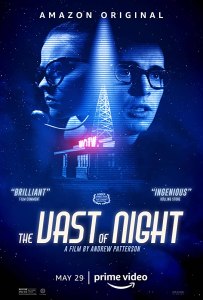 If you had told me that The Vast of Night was based upon a radio play or a narrative-driven podcast, something like the popular Welcome to Night Vale, I would have completely believed you. This is a very dialogue-driven story where the movie seems to hit pause and allow a speaker unfettered time to tell their tale in patient monologue, like a sci-fi edition of This American Life (I’m coming up with a lot of comparisons here). It’s a more high-concept, cerebral, imaginative-dependent science fiction. In 1950s New Mexico, a small-town radio DJ and a teen switchboard operator, both with dreams of leaving the town for bigger things, discover a strange signal and eyewitness reports of something in the sky. Over the course of one night, the characters investigate the signal and those who experienced it before. The Vast of Night flies right out of the gate, long takes giving space for fast-paced dialogue exchanges. The direction is very assured with long tracking shots to maintain the tightrope walk of a live theater performance that the screenplay imbues. I was always interested in what was happening but I can see many other viewers failing to click with the material and its narrative restraints. I do think the movie could use more of a resolution and errs by having the wrong combination of characters for a climax, denying the only real emotional catharsis that was offered by the screenplay. I’m sure many will simply find this movie slow and boring (it’s only 89 minutes but even that might be pushing it for many). The Vast of Night feels like an extended Twilight Zone episode, for better or worse. I applaud the ingenuity of the director and screenwriters on a small budget but I would not be surprised that bigger and better things lie ahead for each of these creatives.
Nate’s Grade: B
Share this:

Verotika (2020)
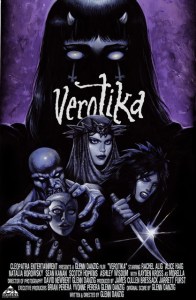 Misfits frontman Glenn Danzig loved the heavy metal aesthetic of big breasted ladies, fetish outfits, hulking monsters, and splashy gore, enough so that he started his own comic line in the 90s, Verotik (a portmanteau of “violence” and “erotic,” and yes that’s the explanation). They even adapted one of his comics, Grub Girl, into a 2006 adult movie, and I pulled this synopsis directly from Wikipedia: “One of the victims of the radiation is a sex worker whose scarred body is taken to a laboratory, where she wakes up while being sexually abused by a pair of necrophilic scientists, whom she kills on account of having given her ‘the worst f*** of my life.’ Grub Girl adjusts to being a zombie and returns to being a sex worker, discovering that being undead is advantageous to her career, as she is immune to disease and nearly impervious to pain.” Yikes. Anyway, Danzig took three of his comic tales and packaged them together into a low-rent horror anthology movie dubbed Verotika. Unfortunately, the final product is nothing short of one of the worst movies I have ever seen in my life. It is stunningly, exceptionally terrible in all facets.
I was left dumbstruck by the level of incompetence over the course of 89 ponderous minutes of awful. This goes beyond Tommy Wiseau and Neil Breen into downright Ed Woodian territory of ineptitude. I couldn’t turn away because I was trying to simply process everything I was seeing onscreen, to boldly attempt to understand so many choices made by Danzig as a filmmaker and storyteller. He serves as writer, director, and co-cinematographer. The finished film is not the so-bad-it’s-good derisive highs of Wiseau and Breen’s bemoaned catalogue of misfires. This is more just a slack-jawed “what were they thinking?” stupefied curiosity of an After Last Season (the worst film of the first 2000s decade, a movie so bad its small distributor asked theaters to burn their prints rather than ship them back). It’s not fun but baffling. It’s not silly but lecherous to the point of misogyny and discomfort. At no point are you transported to the weird imagination of an avant garde artist but instead you’re beset by huge lapses in filmmaking basics and a dearth of recognizable plot. With Verotika, there are no stories, only story premises that go nowhere and nowhere slow. While only 89 minutes long, it might be the most joyless, turgid, pointless 89 minutes I have experienced since After Last Season made an MRI machine out of paper print-outs.
 Allow me, dear reader, to describe for you the very opening minutes of Verotika, and please also understand that it only gets worse from there. The first segment is called “The Albino Spider of Dajette,” and it’s set inexplicably in France, which hamstrings every actor with a regrettable Pepe LePew accent that makes the segment even more ridiculous. Danzig could have spared his actors, who were clearly not capable of replicating French accents, the embarrassment but no. The opening minutes involve a busty woman, Dajette (Ashley Wisdom, porn actress), performing oral sex on a guy. He excitedly attempts to lift up her shirt, much to her chagrin, and is shocked to find that Dajette has eyeballs where her nipples should be. Yes, you read that correctly, she has literal eye nipples. The man leaves in horror and Dajette huffs dejectedly, “Not again.” These eye nipples will never amount to anything important, which is so confounding. Why include them? Her eye nipples cry a tear, which rolls down her breast and lands on a CGI spider, which then grows into a giant albino spider-man (Scotch Hopkins) with two working arms. This evil spider-man only comes out when Dajette is asleep, though she’s not sleeping now, so? He has a thirst for murder and sex and tells a prostitute he wants to rape her in the ass and then kill her. Her nonchalant response made me stare in amazement: “Ass f*** is my specialty.” Reader, I have described for you only the first few minutes of this entire segment. What is going on here?
The rest of this tale becomes repetitious as the spider-creature stalks and snaps more women’s necks, earning the moniker the “Neck Snapper” from the French media (imagine the strained pronunciation as “Nyek Snauhpah”). Dajette wanders around to stay awake, and this includes entering an adult film theater where the patrons conspire to gang rape her as soon as she nods off. She also enters a café where someone else’s cup is already waiting for her. Seconds later, a waiter asks if she wants any refills (“refeeelz”), and she declines and pays… for someone else’s cup of coffee? Here’s a prime example of the filmmaking shortcomings of Danzig. It would have been incredibly, stupidly easy to improve this scene simply by starting with Dajette at the table. By combining two shots of her walking along the street and then a shot of her indoors, still wearing her coat, and walking to a table, you are communicating an approximation of time. She has had no time to order her own coffee. All he had to do was start with her already seated and we could assume the cup was ordered off screen and before the edit. Verotika is replete with preventable bad decisions.
 Astonishingly, this segment is actually the best of the movie and each only gets demonstrably worse and more pointless. “Change of Face” is a clear homage/rip-off to 1960’s Eyes Without a Face as we follow a stripper/serial killer known only as “Mystery Girl” (Rachel Allig) as she slices off the faces of beautiful women to wear as her own. Our killer wears the faces of her victims to cover her own scarred visage while she strips for her customers. Considering she wears a mask to cover her face anyway while she dances, the face-removals seem gratuitous. If you’re looking for any clear motivation for this killer, even the simplest explanations, then you’ll only be further disappointed. Again, it would be so stupidly easy for Danzig to characterize the “Mystery Girl” as murderously jealous of the beauty denied to her, or present some insecurity that her stripping career and income will be shuttered if she cannot fix her face. Anything would have worked. Instead we simply get an absence of thought and development; this segment is taxed with several minutes of watching women lackadaisically walk around a stripper pole. It feels like Danzig had access to a strip club set for a day and was determined to use everything he shot. The epilogue of this segment even involves more lackadaisical dancing around a pole. The only thing that enlivens this segment is the acting of Sean Kanan as the detective tracking down the murderer. He talks like he’s trying to imitate Batman’s gruff voice and his chit-chat is blasé to the point of anti-comedy ironic perfection. “There’s your motive. They wanted a face,” he says. His big break in the case is finding a business card at the crime scene. Why would a stripper have a business card and why would this man assume she must be the killer? That would be like finding a carton of milk at a crime scene and declaring that the milkman was your top suspect.
The final segment is the most pointless of them all and feels like it should be visual accompaniment for talking heads on a History Channel special about Elizabeth Bathory, the notorious 16th century Hungarian noble who would bathe in the blood of virgins to stay young and vibrant. “Drukija Contessa of Blood” stars Alice Tate (Snowbound) as a woman who rubs blood on her face and body. That is literally the plot for thirty minutes. She slices some helpless women’s necks. She luxuriates in a bath. She rides a horse. She decapitates a runaway. She eats a woman’s heart while that victim inexplicably still writhes in agony well after the fact. There isn’t even the faintest hint of a plot here or characters. You would think we would follow one of the imprisoned women as she plots an escape. Once again, it feels like Danzig had access to certain elements that he was going to make sure got their overexposed spotlight. We watch Drukija stare into a mirror and make poses for several minutes. We watch Drukija sit in her creepy skeleton-lined bathtub for several minutes. We watch her ride a horse for minutes on end. At no point does Danzig offer a reason for the audience to care about anything happening on screen. The cruelty just becomes boring and as gratuitous as any other unfortunate moment in this unfortunate movie. The whole segment feels like watching a bored model on a cosplay photo shoot.
 The fundamental lack of story, characters, conflict drives me nuts, but the movie fails just as badly on its technical merits. I can excuse some lapses in filmmaking from a continuity standpoint as long as they are not glaring to rip me out of the movie. Anyone that nitpicks the placement of bed sheets from shot-to-shot rather than emotional engagement and narrative drive is simply watching movies wrong. However, Verotika is complicit in making the kind of goofs and mistakes you’d associate with a schlocky student films and not a (gasp) million-dollar horror movie. Danzig favors ending every scene in a fade out, and I’m not exaggerating when I say “every.” It’s like he doesn’t know when to end his own scenes (more on that below). There are specific limitations in the makeup and production design, but then why feature camera angles and lighting that expose those limitations? Things like the crotch of the spider-man being blown wide open and visible on camera or a superfluous CGI floor Drunkija struts over. There are a proliferation of lens flares, which I think Danzig feels are “arty,” and they do provide a brief respite from the very grimy, over exposed photography that can be dispiriting. Even with a million dollars, this movie looks depressingly cheap. Then there are sloppy mistakes nobody bothered to correct. The neon “café” sign that Dajette enters is above the café window, not over it, and facing inward, which means no potential customer from the outside would get the benefit of the sign. Murder victims are extremely unmotivated to get away from their eventual killers. Certain physical confrontations are so confusingly staged that character geography will alter in a flash like a scene was missing. A shaken police officer laments “if the press finds out about this” about the THIRTEENTH murder victim. I think the cat’s out of the bag, fella. Why do we need an Elvira-styled host (Kayden Kross, porn actress) making bad puns to introduce segments?
As a director, Danzig leaves his actors adrift with awkwardly non-existent guidance. It becomes readily apparent that Danzig was afraid to call cut too soon because many shots will linger on long after the point has passed, leaving actors to fidget or look around, waiting to be told the take was over. Sometimes this involves literal minutes of an actor doing something repetitious while the camera will zoom in and out continually. There are moments where the camera will duck around, unclear about what it’s meant to frame, looking for its subject or composition like a documentary filmmaker on the spot. Every actor suffers from this and shots and scenes have that uncomfortable feeling of dragging on haphazardly, missing the rhythm of film narratives. I bet you could shave those extraneous seconds off every scene and trim 15 minutes total. As a result of actors given bad material, nascent characterization when evident, funny accents, and little to no direction, there are plenty of actors struggling to perform whatever they’re intending.
 Even as a low-budget sleazy exploitation film, Verotika cannot even succeed by that metric. The gore effects are few and far between and Danzig likes to linger over what he can get, much like other elements. If he bought the makeup for one girl to be skinned faceless, you’re going to see that effect a dozen times. When the Contessa is chomping on a heart, the proportions are so out of scale that it dulls the impact of what is a fairly good prosthetic otherwise. Even when it comes to gratuitous sex and nudity, the movie seems oddly inept. During the interminable stripping scenes of “Change of Face,” the women don’t actually strip while they lethargically spin around their poles. The women on display are more fetishized as murder victims than they are as sex objects. Why include eye nipples and then do nothing with them? Where did they come from? Is this a genetic thing? Did Dajette’s mother have eye nipples and nurse her from them? My pal Ben Bailey came up with a better storyline with “eye nipples” on the spot, gifting them laser powers and a thematic angle about striking back against handsy men who won’t respect consent. Boom, right there, a better use of weird exploitation elements and he was only joking around.
With every conceivable level of filmmaking and storytelling, Verotika shows that Danzig is not remotely ready for the big screen. The paltry story is kept at premise-level, there’s a decided lack of characterization and stakes and intrigue, lots of repetition, and shaky direction that leaves actors astray with over-extended scenes. Even as an exploitation movie, you will be sorely disappointed. As a hopeful heir apparent to the so-bad-it’s-good club, Verotika is not the next The Room. Not even close. It’s bad and inept and boring and flabbergasting but it lacks the bewildering appeal of the best of the so-bad-it’s-good crew. It lacks a sense of sincerity. I doubt Danzig thought he was making great art or even something cool. It feels like he took a music video concept and bloated it to bursting (Danzig’s music is a constant background presence). Danzig actually has another movie scheduled for release this year, Death Rider in the House of Vampires, starring Devon Sawa, Julian Sands, and Danny Trejo. I can only hope he’s learned from this baptism by fire (and blood) and surrounds himself with professionals who can carry the burden when he falters.
Nate’s Grade: F
Share this:

The Lovebirds (2020)
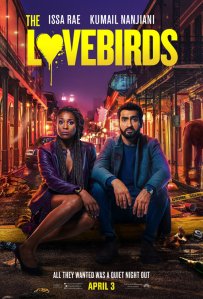 The tepid advertising for The Lovebirds gave me little motivation to see the movie. Even with the same director and star of The Big Sick, it just did not look funny with its trailer, so it was already gearing up to be mentally banished to a “see it eventually” field that might never be fulfilled. Then after COVID-19, it was bought by Netflix and now I had easy access to a brand-new 2020 movie previously targeted for a wide theatrical release. I watched The Lovebirds the day it debuted and was pleasantly surprised to notice just how much I was laughing early on, and that laughter continued throughout the movie’s entire running time. Kumail Nanjiani (Stuber) and Issa Rae (HBO’s Insecure) have a winning chemistry but they’re even better when they’re at odds, and the movie smartly frames the on-the-lamb misadventure during their dissolution as a couple. Through the harrowing events, we get a fuller picture of why their relationship didn’t work out, the issues each has, and why it might just work out over the course of some rather outlandish events trying to clear their names for murder. I found more to like in the riffs and weird diversions the movie would find itself circling, where an observational joke or offbeat moment could extend and find new life. The comedy set pieces are fine, though an Eyes Wide Shut-style orgy is a bit lazy without going into more humor on the group and their stuffy rules. I wish there were more meaningful and colorful supporting characters but the emphasis is on our main couple. I found myself smiling and nodding along and being taken by the low-key charms of a brisk comedy that didn’t ask much more of me than to have a good time with some appealing actors. It’s not The Big Sick but it’s not a big bomb either. On Netflix streaming, The Lovebirds is a perfectly enjoyable 100 minutes to stretch out to and chuckle to yourself and think back on how the abysmal advertising really undersold the funny.
Nate’s Grade: B
Share this:

Wonder Boys (2000) [Review Re-View]
 Originally released February 25, 2000:
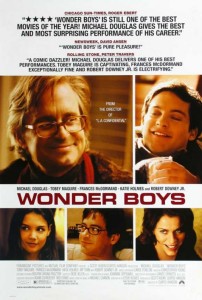
A rather warm but ultimately meandering tale of Michael Douglas as a college professor going through one crisis after another, Tobey Maguire as a creepy kid (again?!), and Robert Downey Jr. as an editor who seems to have a taste for transvestites. Though likable, Wonder Boys goes nowhere and nowhere slow. It carries the feel of a novel that was never intended to be brought onto the screen because of what it would lose in transition and it does. Douglas’ performance is sincere and syrupy but Wonder Boys is not a night out on the town.
Nate’s Grade: C+
——————————————————
WRITER REFLECTIONS 20 YEARS LATER
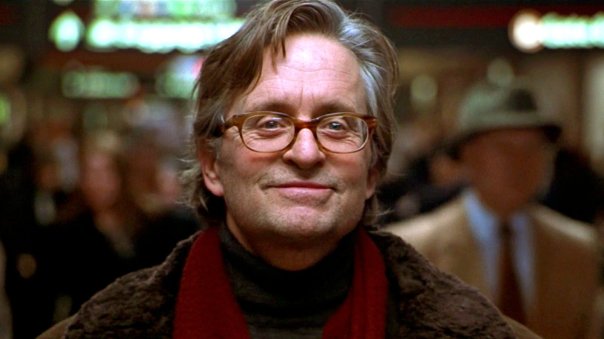
This was another film that I was curious to revisit because I was wondering whether or not I would find more of value than when I was 17-years-old and seeing Wonder Boys at a rare promotional screening with my good pals Kevin Lowe and Natalia Riviera (I recall none of us being particularly taken with the movie). It’s based upon an acclaimed book by Michael Chabon (The Amazing Adventures of Cavalier & Clay, The Yiddish Policeman’s Union), starring the eventual first big screen Spider-Man (Tobey Maguire), Iron Man (Robert Downey Jr.), Hank Pym (Michael Douglas), the first Rachel Dawes (Katie Holmes), and Oscar-winner Frances McDormand (Three Billboards Outside Ebbing, Missouri). It was director Curtis Hanson’s follow-up from his 1997 masterpiece, L.A. Confidential. The screenwriter, Steven Kloves, would go on to adapt every Harry Potter movie minus one. The studio even re-released the movie later in the fall of 2000 under new more ensemble-focused marketing to push for awards consideration (to my surprise, it was nominated for three Oscars: Editing, Adapted Screenplay, and winning Best Song for a craggy Bob Dylan tune). Maybe my indifferent review earlier was just a young man unable to connect with this brand of middle-class ennui. Now two decades later I can finally say… I still don’t connect with this ennui.
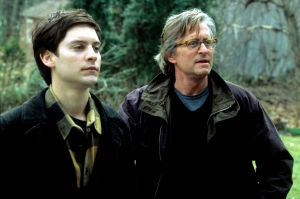
Wonder Boys is one of those shaggy dog stories where it’s not so much the destination but the journey, so you better enjoy the characters or else it will feel like a long ride. The problem with this story is that its protagonist feels so self-pitying and yet the universe seems designed to cheer him up. Grady Tripp (Douglas) is a celebrated creative writing professor just going through his days in a pot-fueled haze to dull the pressure of living up to his big breakout novel. It’s been over seven years and his next novel has no end in sight, already clocking over 2000 pages. Grady thinks he’s a has-been but every other character in this tiny bourgeois universe tells him how great he is. His publisher (Downey Jr.) is eager to peek at Grady’s next surefire literary hit. His students adore him and hang on his every word. He has multiple women throwing themselves at him, including McDormand, who wants to have his baby, and Holmes as his infatuated student/boarder. Everyone tells him how great he is as a writer. James Leer (Maguire) confesses that it was Grady’s book that inspired him to even be a writer, and he seems poised to become a great one. It’s exhausting for every other significant character to proclaim repeatedly how great our lead is and to have him repeatedly respond, “Yeah, but I just don’t know, you guys.”
Self-doubt is already relatable enough, on top of imposter syndrome for an artist or even just an adult, so the material is there for an introspective story about the struggles of creativity and responsibility, but that’s not what Wonder Boys presents as a movie. It’s filled with zany mishaps to fill up those meandering two hours. There’s Downey Jr. and his wandering eye, first with a trans women and then with James. There’s a man incorrectly labeled “Vernon” who stalks Grady demanding what he says is his car back. There’s also a dead dog that gets carried around for almost the entire movie, even though the plot covers days and it would seem like a very bad idea to continue hauling a decaying animal in one’s car. There’s no real reason why this dog’s corpse is even held onto. It belongs to Grady’s boss, the chair of the English department, and the husband to his mistress (McDormand). Why not dispose of the evidence especially with the personal connections? It’s yet one of several signs of the movie trying to be quirky and edgy over the consequences of character actions. Much of the plot beats follow retrieving a stolen coat once owned by Marilyn Monroe. Does the coat represent something of time gone by? A promise never fully able to be fulfilled? America’s innocence? Does it even matter? If Wonder Boys was going to explore the inner turpitude of Grady, why does the movie need so many dead ends and loping storylines as a means of distraction?
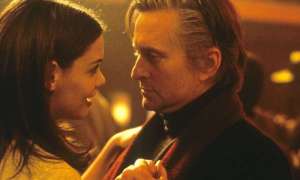
It’s not a terrible viewing experience but it feels like the movie is definitely missing material that made the book so effective. As I stated in my early and remarkably on-point review in 2000, it feels like a novel that would lose its appeal in translation and it has. The plot is treading water until Grady finally makes a big personal decision at the very end. He even gets a happy ending where his next great book is the recollections of the film’s events. The many supporting characters are not as interesting as the actors might make them appear. Even Maguire’s wonderkid writer, where the title is derived from, is a walking awkward quirk machine, an early representation of an autistic student before many of the characteristics were wider recognized. He provides a detached sense of comedy with his bluntly direct approach, like his encyclopedic knowledge of famous Hollywood suicides (fun fact: the home video versions edited out Alan Ladd’s name at request from his family estate). The problem with James as a character is he’s meant to represent promise to Grady, further compounding his sense of inadequacy. He’s the shiny new up-and-coming talent headed for great headlines, the kind Grady might have enjoyed but might now be too far in the rear view mirror. James has his own mini-arc of “cutting loose” but he wasn’t tightly wound from the start, just antisocial and aloof. He’s a symbol by design and an impenetrable autistic mumbly sidekick for offhand comedy observations, not so much a person.
Curtis Hanson’s direction is fine, the acting is fine, and even when relatively uninspired, the story is fine as it meanders and goes in self-defeating circles. It’s a movie that I think will be more remembered for weird little trivia, like a scene where future Iron Man and Spider-Man are in bed together. I don’t regret re-watching Wonder Boys but I didn’t get much more out of the experience than when I was 17. The main character is hard to fully embrace, especially his self-pitying problems of middle-class privilege, and the story is more a collection of chapter-based anecdotes and hasty character resolutions. Even if the two hours is amiable enough, it’s hard to connect with the characters and their conflicts, and it’s a prime example of an adaptation that can’t replicate its specific authorial charms. If I were 17 again, I’d make a pun on the word “wonder” but I’ll refrain. After all, I’ve grown.
Re-View Grade: C+
Share this:

Valley Girl (2020)
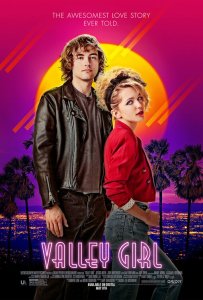 If you’re a big fan of 80s music and looking to congenially pass 90 minutes, I suppose you could watch the new musical Valley Girl as it whisks you away on a cloud of simple nostalgia. That’s the word for this movie. Everything is very simple, from the stock characterizations, to the boy-meets-girl romance, to even the performance of the dozens of popular 80s songs, which are reworked into being blander vanilla versions that reminded me of what Kids Bop does to music. We follow a titular valley girl (Jessica Rothe, so great in the Happy Death Day franchise) as she falls for a punk rocker (Josh Whitehouse, struggling in the singing department) from the wrong side of the tracks. The romance is very familiar as are their trials of stepping outside their individual comfort zones for the other person. The big problem with Valley Girl is that the first half feels like it’s at warp speed; nary a minute goes by without a song-and-dance number barreling onto the screen. The second half, in contrast, has only a handful of these numbers and tries to expand the characters but by that point it’s too late. I don’t care about them. Since it’s a jukebox musical, the songs should be selected to provide better insights into the characters’ emotional states, but too often they feel superfluous and clunky. “Hey Mickey” introduces our selfish jock (Logan Paul of YouTube infamy) at a pep rally. “Girls Just Wanna Have Fun” is about having fun on the beach. “Boys Don’t Cry” about dealing with being sad. It’s that kind of application. There’s a frame device where an older mom (Alicia Silverstone) is recounting her 80s experiences to her teenage daughter, and this could have provided a satirical and clever development, allowing the recounted experiences to blend into fantasy and her hazy memory. Valley Girl isn’t a bad movie, just one lacking significant purpose outside nostalgia and cleaning out a big music clearance account. If watching watered down 80s hits sounds like your thing, then party to the max, man.
Nate’s Grade: C


You must be logged in to post a comment.