Author Archives: natezoebl
Cars 2 (2011)
 Universally regarded as the least involving and nuanced film in Pixar’s illustrious catalog, Cars was the last film I thought would get the sequel treatment. Was it a creative tale that yearned to be told on the big screen, or is this just a business decision motivated by the sound of merchandizing coffers? Those talking cars seemed pretty content by the end of the 2006 original film. It doesn’t take long to realize that Cars 2 was done strictly for the cash. A sequel to the least involving Pixar film, with an even less involving storyline and elevating the most annoying character (Mater the tow truck) to lead status provides little in the realm of adult entertainment. The storyline, a mistaken identity spy thriller, seems like a rejected plot for a lesser direct-to-DVD sequel. While the visuals are still outstanding, the humor is stuck in neutral, overloaded with motor vehicle puns and groan-worthy visual gags. The message about accepting your uncouth friends no matter what their bad behavior might be seems rather misguided. That’s the message? Congrats Pixar, for providing cover for irresponsibility and incivility. The environmental message and its connection to a Big Oil conspiracy feels tacked on as an afterthought to try and crowbar in something more meaningful than a mediocre spy farce. I think cars are rather limited in their anthropomorphic expressions. There’s only so much they can do. And a world populated completely by living, breathing, gas-guzzling (can they get drunk on ethanol?) vehicles begs for an examination on how this world operates without any opposable thumbs. After a magical slate of films that dealt with serious mature themes and danced with storytelling finesse, it’s a shame that daring run comes to an end with such a rudimentary roadblock. Little kids will be entertained by all the bright colors and simplistic storytelling, but I cannot foresee too many fans of Cars even justifying the sequel’s existence. It’s not out rightly bad it’s just so pitifully pedestrian. Cars 2 has so little going on under its hood, you’ll swear it came from a different maker.
Nate’s Grade: C+
Share this:

Transformers: Dark of the Moon (2011)

After the obnoxious, oafish mess that was 2009’s Transformers: Revenge of the Fallen, a sequel that took everything good from the first flick and undermined it and took everything awful and magnified it, I wasn’t expecting much. True, low expectations have benefited this franchise built upon merchandizing, product placement, and giant freaking robots that fight. I still remain a fan of the first film back in 2007, and I do feel like director Michael Bay (Bad Boys, Armegeddon) is a natural fit for this material. But after another overlong, overblown, and overloaded Transformers film, I’m starting to think that the franchise’s best days left with Megan Fox and her cut-off jean shorts.
Sam Witwicky (Shia LaBeouf) has graduated from college and is now perusing a job in Washington D.C.’s vast center of government contracts. He’s living with his new girlfriend, Carly (Rose Huntington-Whiteley), the assistant to a rich billionaire (Patrick Dempsey) and his fleet of collector cars. Sam gets a job with at a military private contractor run by a angry loon (John Malkovich). But Sam’s post-collegiate journey once again runs afoul with killer alien robots. The villainous Decepticons are plotting to steal a spaceship that crash-landed on the dark side of Earth’s moon. Inside that spaceship are teleporter orbs and a sleeping robotic giant known as Sentinel Prime (voiced by Leonard Nimoy, hooray). Optimus Prime, leader of the noble Autobots, revives his predecessor. Together, the group attempts to thwart the Decepicons, lead once again by Megatron (voiced by Hugo Weaving).
The Transformers films have been getting larger and larger in scope and destructive power; the first film messed up some L.A. streets, the awful second film trashed Egyptian pyramids (only Six Wonders of the World left in your punch card, Bay), and now the third film pretty much obliterates downtown Chicago in stunning and overblown fashion. The climactic Windy City beatdown lasts a solid 50 minutes and may just be the greatest thing Bay has ever put onscreen, which admittedly might be faint praise to many. Perhaps the city of Chicago thought this would make for good tourism: ”Hey kids, come see the buildings that were turned to rubble in your favorite summer movie!” The impressive special effects are uniformly terrific, and the integration of reality and fantasy seems seamless. That goes without saying. I must credit Bay for creating sustainable action that is, here it goes, actually coherent. I know that “Bay” and “coherency” rarely go together, so I’m as shocked as everyone. No longer does geography become a hindrance to understanding. During this climactic Chicago onslaught, the locations are established, the objectives are clear, and the audience has a crisp understanding of the different teams, their paths, and their organic roadblocks and setbacks.
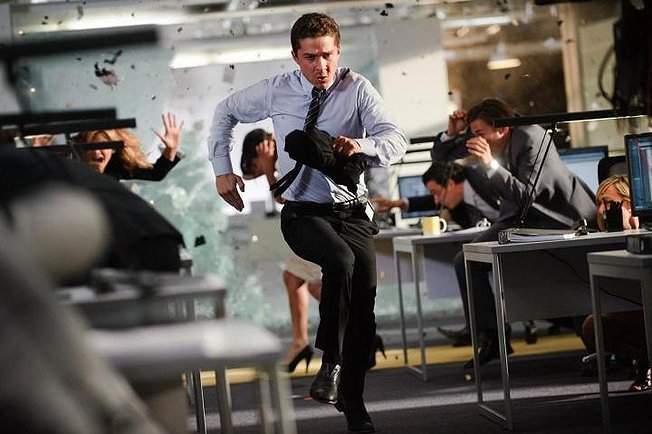 There’s a strong set piece within this 50-minute assault where Sam and company enter into a crumbling skyscraper that then teeters on its side. The organic complications allow for some nifty, almost ingenious, split-decisions utilizing a specific location, the hallmark of good action sequences. One moment they’re climbing up the floors, the next moment they’re tumbling through the floors, then sliding down the sheer glass wall, then firing at the glass to fall back inside and tumble some more. All the while a giant worm-like robot is churning through the foundation of this collapsing building. The scale of the sequence is quite thrilling for the time being. And yes, the 9/11 imagery is undeniable and relatively unearned without even a nod to solemnity or anything less than brainless summer spectacle. Sure the “cool-ness” of the individual parts never really materializes into something greater, and yeah maybe the action would have more impact if you actually felt for the characters, or knew who some of them even were, but you take what you can get in Michael Bay world. The extended climax for Transformers: Dark of the Moon is relentless and will beat you into submission, admiring the intrinsic beauty unique to Bay’s epic, albeit mind-numbing, demolition of the senses.
But Dark of the Moon is also the most visually coherent of Bay’s troika of Transformers flicks because the man has finally settled down when it comes to editing. Now no one will confuse this movie for Rope or Russian Ark (look it up, Transformers geeks), but the edit/panic button is given a slight reprieve. The shots last longer; the editing is far less frenetic and chaotically ADD-addled, and no longer does a Transformers action sequence look like jumbled, mechanical scrambled porn. Image A and Image B make a logical connection, at long last. You can tell which robot is which, for the most part. Perhaps this editing epiphany was a result of Bay’s corporate betters insisting that the film be shot in 3D (I chose to see the film in good old boring 2D, feeling that 150-minutes of Michael Bay with headache-inducing glasses was not worth the extra dough). Perhaps Bay had to consciously think about his audience’s well being so his shot selections lasted longer than his usual whirlwind of cuts. Perhaps the secret was loading Bay with cameras that weigh the same as couches. Maybe a little extra weight was all the man needed to formulate lucid action sequences.
And yet Dark of the Moon is just as stupid, outlandish, and tonally disjointed as the other movies, particularly the abysmal Revenge of the Fallen. The comedy remains at a puerile, sophomoric level. Bay’s sensibilities have always somewhat mirrored that of a snickering 14-year-old boy; the love of destruction, the fascination with things that go “boom,” the ogling of lithe feminine bodies. No joke, the first image seen directly after the film’s title is a close-up of Huntington-Whiteley’s ass ascending a staircase. I imagine there were plenty of men spasming in their 3D glasses trying to reach out and grab the circumference of a Victoria Secret model’s talents. I wrote about the second film: “Women don’t seem to exist in the Michael Bay world, only parts and pieces of women.” Huntington-Whiteley’s character certainly leaves much to be desired, outside aesthetics. At least Megan Fox’s character had, you know, some character traits. I also wrote: “Amazingly enough, [Fox] manages to lose more clothes the more she runs in slow-mo, allowing the male audience members to follow the nuance of her bouncing breasts. She’s clearly not the next Meryl Streep but this girl deserves more than being wordless arm candy.” Seems apt to me. Carly is as bland as she is blank-eyed beautiful, just the way Bay likes ‘em.
The first 90 minutes of the film is spent with the humans and it’s like being trapped inside a bad comedy. There has always been a strong comedic bent to the franchise ever since the first film in 2007; however, the latter films have taken to grotesque caricature. In Dark of the Moon, the comedy is so deeply unfunny but so consistently antic, trying to overwhelm you with its bad taste. There’s a scene where Ken Jeong (yes, you read that right) corners Sam in a bathroom stall to distribute his crackpot manifesto. Then Sam’s boss walks in and, oh boy, he overhears and thinks they’re having a homosexual liaison in the men’s stall. What a hoot. Then Sam’s mother gives him dating advice, stating there’s no earthly way her son is going to nab a third “hottie” unless her boy has a giant…. and trials off (wouldn’t a mother kind of have an idea about that subject?). And then there’s the little Autobots, the size of remote control cars (perfect presents for Christmas mom and dad), who wheel around spitting smart-alecky backtalk. The entire Malkovich portion could have easily been cut from the film without damaging a soul. The Ken Jeong stuff should have been eliminated first. There’s something to be said when John Turturro’s returning Agent Simmons is the least annoying comic sidekick in this movie. But hey, at least there aren’t any overt racist depictions and jokes about robot scrotums. Nope, there’s only infantile humor and nonchalant misogyny. The comedic pit stops and non-sequitors never allow the movie’s tone to gel.
 Before the movie descends into an all-out series of explosions and shrapnel, the setup actually has some genuine interest. Then it just all goes nuts at warp speed. The fact that the space race to the moon had a sinister ulterior motive, investigating alien technology, is an intriguing start. Bay even shoots the 1960s sequences like he’s ripping off Oliver Stone, swapping film stocks and black and white film to showcase his historical reinactors (three presidents get represented, including Obama). Apparently after this film and X-Men: First Class, the breakout star this summer is archived footage of JFK (man did he have a full plate, mutants and robots, and the man still found time to bang Marilyn Monroe). There’s even a cameo by the real Buzz Aldrin, which served to make me remember his better cameo on TV’s 30 Rock (“Would you like to yell at the moon with me?” he politely asked Tina Fey). The space race was a pretense for getting our human hands on some alien technology. Of course we were warned years ahead of time via Pink Floyd but nobody could put the pieces together. But there’s more alternative history to be had. Turns out that the disastrous nuclear accident at Chernobyl was caused by the Russians trying to operate alien/Transformer technology. I’m sure modern-day Ukrainians will adore having their deadly tragedy turned into a plot point in a stupid movie about fighting robots. The Decepticons wicked plan is to open a teleportation portal and bring their dead planet, Cybertron, to Earth. Then they will use Earth’s human population as slave labor to bring their dead planet back to life. My question is this: when you’re a huge robot the size of a building, wouldn’t puny little humans make for a terrible labor force with their stunted little legs and feeble muscles? I know there’s billions of them, but there’s a reason human beings have never turned on ants and forced them to become a labor force for our construction projects. How many more deadly things from Cybertron are secretly going to be hidden on Earth? And yet none of this is even one-tenth as stupid as Transformers’ heaven in Revenge of the Fallen.
Transformers: Dark of the Moon is likely everything fans would want from a franchise. There’s wanton destruction, a plethora of noisy explosions, and plenty of eye candy both in special effects wizardry and pouty, full-lipped women. But at a colossal 150-minute running time, this is a Transformers film that punishes as much as it entertains. There’s really no reason a movie about brawling robots should be this long. There’s no reason it should have to resort to so much dumb comedy. There’s no reason that the women should be fetishized as if they were another sleek line of sexy cars. There’s no reason why something labeled a “popcorn movie” can’t deliver escapist thrills and have a brain too. Dark of the Moon is saved by its long Chicago-set climax, which gives way to some staggering action set pieces. The newest Transformers movie is just as stupid as the rest (what the hell is up with the weird Igor robots tending to Megatron that just seem to grumble and grunt?) but, unlike the previous installment, it’s not offensively stupid. Dark of the Moon is an exhaustive experience whose thrilling high points even feel mechanical and pre-programmed. Is this the future of Hollywood? Bay and his army of robotics and excessive spectacle have taken over the world. When it comes to big-time summer entertainment, the machines of Hollywood are going nowhere fast and even louder.
Nate’s Grade: C+
Share this:

Green Hornet (2011)
 Unassuming, impetuous, and with a lowbrow sense of duty, The Green Hornet gets by on its self-aware, campy, chummy tone thanks to co-writer/star Seth Rogen. The slimmed-down comedian plays a news media playboy who tries to right his life by becoming a super hero with his deceased father’s assistant, the kung-fu connoisseur Kato (Jay Chou, making a very poor English acting debut). Where the movie works best is when it upends formula convention, like making every character insecure about their personal standing, including the villain (Oscar-winner Christoph Waltz), who is aggravated that the “Green Hornet” is dazzling criminals with his digital age marketing. When the film thumbs its nose at convention, it plays like a mischievous prank on super hero/crime fighting tales. Green Hornet is a movie that at times is too busy, too childish, bordering on a bromance between Rogen and Chou. But with director Michel Gondry (Eternal Sunshine of the Spotless Mind) at the helm, there are enough quirky visuals to keep things interesting to the noisy climax. Rogen and his film can never be accused of being too serious, and given the material that’s a blessing.
Nate’s Grade: B-
Share this:

Green Lantern (2011)
 To quote that sage Kermit the Frog and his words of wisdom concerning Green Lantern: “It ain’t easy being green.”
Hal Jordan (Ryan Reynolds) is a cocky pilot working for his ex-girlfriend, Carol Ferris (Blake Lively). Hal never takes anything too seriously and seems to freeze up in moments, recalling his own father’s crash. Then one day a purple alien crash-lands on Earth and seeks a replacement. This alien belongs to the Lantern Corps, a group of intergalactic policemen for the universe. He was mortally wounded by Parallax, a creature that grows stronger on fear but looks like a big rain cloud. The alien’s ring chooses Jordan as the replacement. Next thing you know, the guy is training on the alien world Oa and meeting lantern officers from all over the universe led by Sinestro (Mark Strong). Jordan is unsure of his heroic destiny, though we are reminded many times “the ring does not make mistakes.” In the meantime, Hector Hammond (Peter Sarsgaard) is dissecting the dead purple alien and gets infected with the fear cloud/Parallax. He lashes out at his father (Tim Robbins), at Jordan, and signals to the giant evil rain cloud that Earth is an all-you-can-eat fear buffet ready for the binging.
For starters, he power is a bit silly and hard to explain. I fall in with the majority of the public when I say, “Green Lantern who?” So the guy’s super duper power is to channel his imagination into green-tinted reality? It’s a bit vague and hard to quantify. So when a helicopter is falling to earth, instead of, say, picking it up or steadying it, Jordan creates a green Hot Wheels racetrack for it to zoom around to a stop. When the evil rain cloud fires its energy projectile, Jordan conjures a catapult to catch the projectile and fire it back. And of course at some point he materializes a green gun to use in combat. I’m sorry but for me this just seems silly. It’s one thing to say, “His strength is the power of his imagination,” and I can see where young kids would gravitate to this stuff, but when it’s realized on the big screen is seems infantile. What are the rules here exactly? It just seems dumb. I can better accept a magic ring that allows Jordan to fly or shoot sparkly lasers. If a healthy imagination is key, then the rings should be choosing some of the world’s greatest living authors and artists. Can you imagine Charlie Kaufman (Being John Malkovich) with a lantern ring, or Neil Gaiman (Sandman)? Surely those guys would come up with something more interesting than catapults and racetracks. But you see, the rings, and the lantern world itself, runs on the power of will. Will power is their energy resource (talk about going green). The enemy, the cosmic rain cloud, runs on the power of fear, which is represented by yellow energy. What are the other colors of the rainbow? Is the power of love red? Is the power of envy a darker green? Is orange the color of hunger? Is brown the color of painful bowel movements? Is the power of apathy… forget it.
The biggest misstep is all the time the screenplay squanders on boring old Earth. Just like Thor, the alien worlds are the best part of the movie. But in Green Lantern, we see the training home world (Oa) and the thousands of weird, fun-looking aliens staffed to police the universe. We get a taste of the lantern life and the heavy responsibilities. We get a sense of the powers. And… then… Hal… quits. He up and quits. He says, after about five minutes of training, “You got the wrong guy,” and we head back to Earth. What the hell? We then get to spend the majority of Act II with this guy moping over whether he should or shouldn’t be a superhero. Memo to Hollywood: no one spends this kind of money on a movie where the main character can’t be bothered to accept being a hero with amazing super powers. I can’t be bothered with a hero who can’t be bothered. The screenplay structure should have been: Act I spent on Earth, Act II spent on Oa and in space, Act III return to Earth to save the day. Instead we get about ten minutes spent on Oa. And while I’m on the subject, whenever we see this alien planet it’s like a non-stop Green Lantern convention (does Oa host other conventions? Is next week the semi-annual gathering of amateur ornithologists?), so who is left policing the universe? I understand that a majority of the universe is empty space, but if the lanterns keep getting together for pep rallies on Oa, what’s to stop a universe full of criminals from stealing everybody’s car stereos? Also, lanterns intervene in the universe when evil is afoot, but nobody seemed to give a damn about planet Earth until we got lantern representation with Hal Jordan.
So the bad guy here is a semi-formless rain cloud with a head that sucks people’s fear. It feeds on fear. That is its energy source (get a job in the media, son). Like much else in the film, the rules concerning the villain are never fully explained. At times, this rain cloud thing seems invincible. Most of the time it’s never explained what exactly this thing could do. See, if you explain things then you box in your characters. So if you don’t establish rules for your villain, your heroes, their respective powers, the history of the universe, etc., then they are limitless. It also means that everything onscreen lacks any sort of logic, internal or otherwise. So the villain is really just a fuzzy concept of fear. Hal Jordan and the lanterns have nothing to fear but fear itself. That means that the screenplay falls prey to a plethora of hackneyed messages that feel ripped out of some Saturday morning cartoon series. Everyone feels fear. Accept your fear. Courage means rising above. It’s the same patter that’s been rehashed for hundreds of episodes of people in tights teaching schoolchildren it’s okay (take a drink every time a character utters the word “afraid” or “fear”). The simplistic moralizing on fear and courage made me yearn for a ring so that I could imagine a better villain. Lastly, there’s a scene where our dastardly cosmic rain cloud descends to Earth and starts sucking away people’s fear/energy/souls. There’s a shot of a school bus screeching to a halt and children dashing away. I imagine children’s fears are more heightened since their healthy imaginations and lack of world experience would exaggerate scary things that adults would try and simply deny. Their fear has to be like a delicacy. I guess what I’m getting at is, if I were a giant space cloud that fed on people’s fears, I’d go for the children first.
Director Martin Campbell has crafted some truly spellbinding, breathless action sequences in movies like Goldeneye and Casino Royale, but you can tell that he seems to be straining against the onslaught of computer effects. Campbell is more at home with the open world of practical effects and the tangible. Being confined to the realm of green screen and CGI seems like a shackle for this guy’s own imagination. He constructs solid action sequences, admittedly, but nothing worth bearing the name of Campbell. It’s a special effects bonanza without a hint of realism, like a computer start vomiting onto the screen. It feels weightless and formless, like a giant evil rain cloud. The film reportedly cost over $200 million, which is a high figure for a movie that spends so much freaking time on Earth! Here’s an example of a costly filmmaking expenditure – the suit. Hal Jordan has a skin-tight green suit that is complete a computer effect. That means that every second Reynolds is seen onscreen in his signature outfit, it’s another effect that people labored over for months. Why? I’m pretty sure that in this day and age we have the technology for clothing. Campbell succumbs to the limitations of the material and Green Lantern ends up feeling more like a TV pilot with a runaway budget than the beginning of an epic franchise for its parent company.
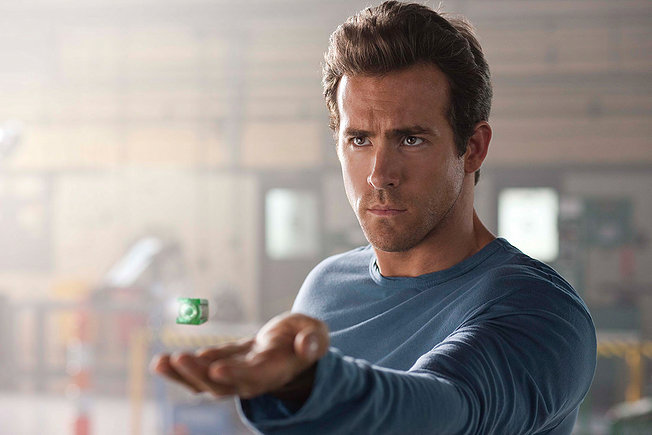 Reynolds (The Proposal) is an extremely likable actor whose biggest drawback is that he rarely seems serious, last year’s Buried a notable exception. He’s got this carefree attitude, practically bobbing his head and winking to the audience, and you like the guy even when he’s being a cad or a wimp. His character’s arc is supposed to be the guy who accepts responsibility, learns to accept and move beyond his fears, and it’s a character track that has been long journeyed and will continue to be. It makes for a simplistic hero’s journey storyline that seems to do the least work necessary to move things along. The movie did not fail on Reynolds’ shoulders; you can blame the four screenwriters and a ballooning budget for that one. Lively showed that she really could act in The Town. She shows no proof of this ability in Green Lantern. She speaks every line in a flat, monotone delivery, so much so you start to think she has like an inner-ear infection and can’t hear her own modulation. Her character is the weak love interest/damsel in distress role that regularly peoples these kinds of movies. Her monotone delivery does nothing for the lukewarm chemistry between her and Reynolds. Only Sarsgaard (An Education, Orphan) comes away mostly unscathed. His underwritten villainous character undergoes a monstrous transformation that would elicit sympathy from the Elephant Man.
Green Lantern is a movie that will thrill twelve-year-old boys and few others. It’s full of special effects, noise, and little clarity or wit. It’s not even a particularly fun movie. It repeatedly tells the audience things it should be showing, and it can’t help showing the audience character points (like Hal’s dead dad) that could have been handled with smoother nuance. The movie never feels like it can trust its audience for anything subtle. This is the kind of movie that needs to spell out everything. Green Lantern is muddled, tonally disjointed, the rules are not established, the villain is abstract, the messages are simplistic, the powers are ill-defined and also silly, the action is lackluster and overly dependent on often needless CGI, and the hero can’t even be bothered to accept his super powers. Apparently Green Lantern has about 60 years of comic history and a rich sci-fi universe, and this is the best four screenwriters could come up with? This is the best stuff they pulled from? Green Lantern is a movie that feels dimmed from start to finish.
Nate’s Grade: C
Share this:

Bad Teacher (2011)
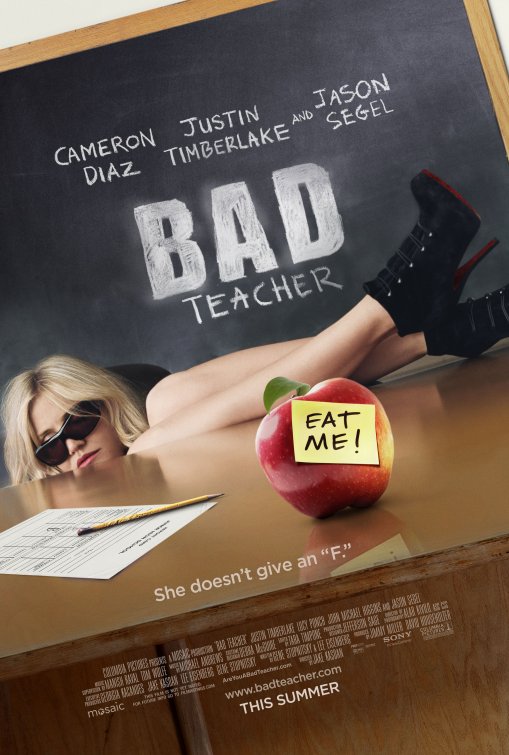 The teaching profession sure is taking its share of beatings lately. After the critical documentary Waiting for ‘Superman’, the loss of collective bargaining in several states, and the continual belief that teachers, despite having to take college courses and/or pass content tests routinely for license renewal, know nothing (full disclosure: I work in the teaching field), along comes the crude comedy, Bad Teacher. This is a comedy that wants a passing grade without showing its work.
Elizabeth Halsey (Cameron Diaz) is a figure that lives up to the promise of the film’s title. She drinks, smokes pot, sleeps, and all while in class. She looks down on her peers who actively attempt to be engaging to students, like the high-energy Miss Squirrel (Lucy Punch). The school’s gym teacher (Jason Segel) keeps trying to chip away at Elizabeth’s surly, apathetic demeanor, but she continues to shoot him down. Elizabeth’s attention is focused squarely on the handsome substitute teacher, Mr. Delecorte (Justin Timberlake). Not only is he handsome, he’s from a wealthy family. The only thing standing in her gold digging way is Miss Squirrel, who also has an interest in courting the studly sub.
Let’s analyze the bounds of having an unlikable protagonist. There’s a difference between an anti-hero and a generally disreputable lead character. An anti-hero usually has some interior good, or at least a relatable core. An anti-hero generally finds some small measure or redemption or change for the better, even if met through unorthodox means. An anti-hero doesn’t beg to be liked, but the trick is that the audience eventually does like this nontraditional lead. We do not have to agree with the values or behaviors of our lead. You do want to care and desire the character to reach some measure of happiness or wh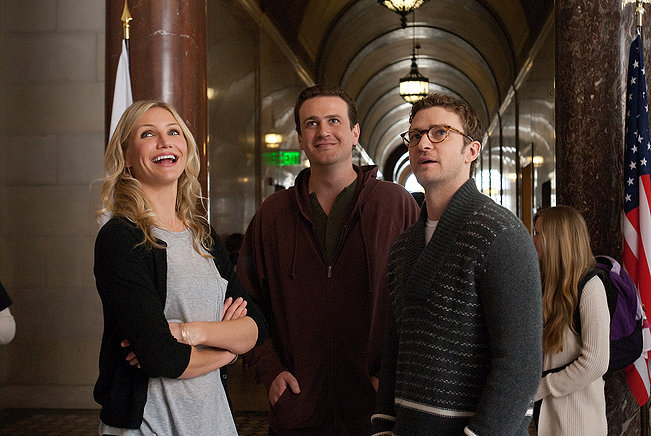 atever their goal is, perhaps an inkling of personal change. Examples include Bad Santa, Goodfellas, Jack Sparrow and Alex DeLarge, nearly every Clint Eastwood character, and take your pick from Quentin Tarantino or Robert Rodriguez’s oeuvre. A wholly unlikable protagonist is another concern. If you are so turned off by the protagonist you could not care less what befalls them. Whether they reach their goal, get away with their plot, or even risk life and limb, you do not care.
Bad Teacher suffers from having an unpleasant, obnoxious, selfish, greedy, churlish twit as its lead. Elizabeth is no dashing rogue, no charming cad, no subversive combatant against a corrupt system, nor is she is she a vulnerable individual lashing out to mask her pain or insecurity. All of those qualities would help make for a complicated but ultimately likeable hero or heroine. Instead, what Bad Teacher gives us is a woman that is so thoroughly unpleasant that you tune out early, severing all connection to a comedy. Bad move. Elizabeth’s one goal is to collect enough money through whatever means necessary to afford a boob job. And if she can bring other people down that annoy her, never mind if they are actually good people or teachers, then victory is all the sweeter. Bad Teacher‘s problem is that you don’t want Elizabeth to succeed, you want her to be punished. Elizabeth isn’t likable bad or truly nasty enough to be memorable. She’s the adult version of the popular girl that got away with everything. I never felt an ounce of pity for this person. There is no redemption for this woman, even if she starts treating a small handful of people mildly better. Acting 2% more like a human being does not qualify as progress. How did this woman get into teaching in the first place and for what purpose? There are a lot less strenuous ways to earn a paycheck.
I started feeling for Elizabeth’s rival, Miss Squirrel. Sure, she’s that hyperactive, goody-two-shoes, incredibly cheerful personality that can become grating in large doses, but she’s the only figure in the movie that displays a genuine interest in teaching. Everyone else just seems to be walking around. Elizabeth gets through months of teaching by showing inspirational teacher movies (Stand and Deliver, Dangerous Minds – no School of Rock?) and sleeping off her hangovers at her desk. Miss Squirrel is a bit obsessive about her job but she cares, and in the film’s void of having a likeable center I gravitated to the spastic, alternative foil. I began rooting for Miss Squirrel to root out her rival’s lies, expose her bad/illegal behavior, and earn some vindication. It was she that I latched onto sympathetically. I rooted for the character that was served up for ridicule by the filmmakers. What does that say about the movie? It also helps that Punch (Dinner for Schmucks, You Will Meet a Tall Dark Stranger) gives the strongest comedic performance. In the realm of Bad Teacher, the good, competent, idealistic, passionate educators are the ones unjustly punished by film’s end.
Diaz (Knight and Day, The Green Hornet) can do the salty, spunky stuff in her sleep, and often in Bad Teacher she seems to be on autopilot, dispensing with the vulgarity without a true glint of madness or enjoyment. She just seems to be irritated by everyone, including the audience. Timberlake (The Social Network) is playing aloof but could have easily been replaced by any decent-looking comic actor. Segel (Forgetting Sarah Marshall, I Love You, Man) gives the film a much-needed jolt when he appears onscreen. Too bad his screen time amounts to about 10 minutes and ends in a rather trite fashion with his gym teacher miraculously taming the shrew. Several other comedic actors are wasted in one-bit parts including John Michael Higgins, Molly Shannon, Phyllis Smith (TV’s The Office), Matt Besser (TV’s Upright Citizen’s Brigade), David “Gruber” Allen (TV’s Freaks and Geeks), and Eric Stonestreet (Emmy-winner for Modern Family).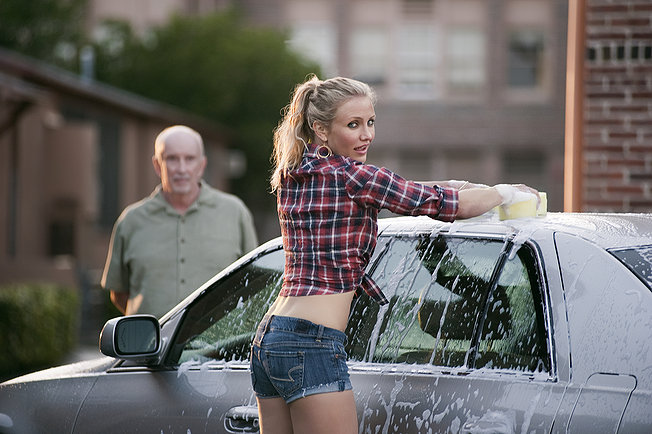
All of this would be marginally forgivable if the film were just funnier. The jokes are stuck in the same gear, mainly Elizabeth being rude or outrageous. It’s a recipe that gets repeated too often, only altering clarifying details. The school has a car wash and Elizabeth dresses provocatively, scrubbing dirty automobiles with a nubile and sudsy devotion not seen since 1980s heavy metal music videos, the heyday of car washing imagery (there sure were a lot of filthy cars in Reagan’s America). The men are agog. It’s the same joke on repeat. She drinks. She says something inappropriate at school. She gets high. People are agog. Bad Teacher is set up from a comedic front to be 100 minutes of reaction shots. It’s like director Jake Kasdan (Orange County, Walk Hard) has to rely on a glut of reaction shots to sell the gags. Why are the kids so meaningless in the comedy? Surely you would think the screenwriters would want to have some students as main characters as well, if nothing else than as a gauge for their lead. Elizabeth does give some advice to a lovesick dorky kid, but her advice is more of a tough love. When Elizabeth discovers there’s a bonus for whoever’s class has the highest state testing scores, you’d think this would be a rally the troops moment. She actually starts teaching and utilizing her skills to get her class to learn, albeit for a personal financial incentive. You would assume then that this might be a changing point for the character, where she actually discovers that she may like teaching or that she does in fact have some aptitude for the profession. Nope. She just resorts to cheating and blackmailing the maker of the state test (Thomas Lennon). I would applaud this narrative pivot, avoiding the expected, if it led to a funnier series of jokes.
The teaching profession is ripe for an astute, mordant satire exploding the politics of the position. Bad Teacher is not that movie. It’s not even close to that movie. It is, however, a comedy that is weighed down by an abhorrent lead character. Diaz’s heroine is unlikable to the point that she turns you off from the whole movie. I suppose there’s a certain measure of bravery having a mainstream studio movie with such an unpleasant main character that doesn’t give a damn about redemption. In the end, watching an appalling egotist get theirs in the end can lead to some sliver of satisfaction, but when that same detestable character gets away with their dastardly deeds? You feel robbed. That’s Bad Teacher in a nutshell. It robs you of laughs, money, and time.
Nate’s Grade: C
Share this:

Midnight in Paris (2011)
 Woody Allen hasn’t been this light-footed in a long time. Midnight in Paris is an effervescently charming film that flirts with overt sentimentality. But before you think Allen goes all gooey, the fatalist in him pulls back for some wisdom about the folly of nostalgia. Allen’s nebbish stand-in this time is Owen Wilson, assuredly better looking but on the same neurotic wavelength of his director. Wilson is a disgruntled Hollywood screenwriter visiting the City of Lights with his shrewish fiancé (Rachel McAdams) and her upper-class parents. One night a mysterious taxicab picks him up shortly after midnight. Wilson is transported back in time to his favorite era, 1920s Paris. He gets to rub elbows with literary and artistic giants, like Gertrude Stein (Kathy Bates), Ernest Hemmingway (Corey Stoll), Scott and Zelda Fitzgerald (Tom Hiddleston and Alison Pill), Salvador Dali (Adrien Brody), and others. He even falls for a lovely lady (Marion Cotillard) from that time period who served as a muse for several artists. Midnight in Paris is a far more enjoyable experience if you have a modicum of education in the humanities. Identifying the artists of old, albeit exaggerated cartoon versions of themselves, is part of the fun, fantasizing about interacting with the greats. But Allen is also playful with his storytelling, and for a while Midnight in Paris becomes a highly refined cross-time romance (think The Lake House written by Tom Stoppard). Midnight in Paris has been catching on with audiences, becoming Allen’s biggest hit in 25 years, and it’s easy to see why. It’s whimsical while being literate and romantic without being corny.
Nate’s Grade: B+
Share this:

Super 8 (2011)
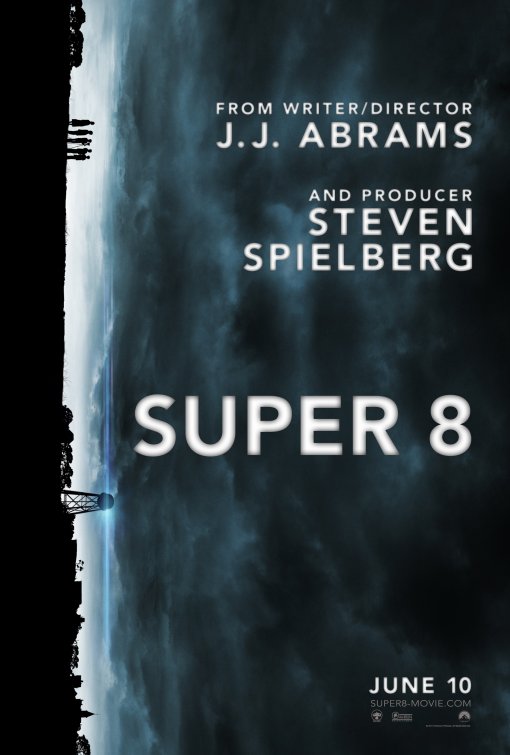 Super 8 is writer/director J.J. Abrams’ reverent homage to early Spielberg movies. For some, it will be too reverent to the point of being a slobbery love letter.
In 1979, a small Ohio town, 13-year-old Joe Lamb (Joel Courtney) is reeling from the death of his mother in a factory accident. His father, Jackson (Kyle Chandler), is a police officer who doesn’t know how to raise his boy. He even tries to convince his son to spend the summer at a baseball camp. “It’ll be good for you to spend some time with kids who don’t run around with cameras and monster makeup,” he says. That kid is Charles (Riley Griffiths), a self-possessed amateur filmmaker. Charles is writing and directing a short Super 8 film and all his friends are helping. Joe’s specialty is makeup, given his attention to delicately painting models. Being the makeup guy comes in handy when the gang invites the local pretty girl, Alice (Elle Fanning), to be in their movie. Joe gets to apply her zombie makeup. One night, the gang sneaks out to a train yard to film a scene in their movie. A U.S. Air Force cargo train is passing by and suddenly derails, in grand apocalyptic fashion. Strange things start happening all over town shortly after the train crash. Car motors and electrical equipment go missing, dogs run away to neighboring communities, and people start to go missing. The Air Force comes into town and takes charge. It seems that train was carrying something and that something has escaped.
What Super 8 does best is replicate a time, place, and mood. The movie is successfully awash in nostalgia, and that childhood nostalgia is the best aspect of an otherwise ordinary film. Abrams has fashioned the greatest film tribute to Spielberg in history. But its limited ambition makes it feel like the greatest cover band of all time. You’ve assembled al your talent and energy into replicating someone else’s original work. Congratulations, Super 8 is a glossy tribute to Spielberg. Now what? Well, the movie works well at finding that unique, infectious spirit of being young and full of ideas. Filmmaking, and movies in general, has a magic to it, the synergistic creativity and the sheer possibilities that can abound. Translating the imagination into a communal artistic experience. I’m sure Abrams was just as excited about the possibilities of a camera in his childhood as Spielberg was. That feeling of discovery, that rambunctious creativity, and the endearing clumsiness of amateur productions, it all rings completely true. I made silly movies with a camera and my friends when I was younger; my group of friends and I became known for our video projects in high school. So I could have readily watched an entire movie about kids and cameras and their artistic aspirations (as long as it was better than Son of Rambo). The highpoint of Super 8 for me was, surprisingly, the children’s short film “The Case” that plays over the closing credits. It’s funny and charming and sweetly affable. Finally seeing Charles’ finished film is the ultimate payoff.
Abrams as a director is quite capable of delivering big summer moments. He’s a genre specialist and a geek’s best friend. I’ve even compared his style to that of a young Spielberg in my review of 2006’s Mission: Impossible III. Abrams has a natural feel for putting his camera in the right placement. While Abrams can do exciting action with the best of them, crafting compelling screen compositions to ignite the senses, it’s the smaller touches that connect to his storytelling that impress me most. The very opening shot tells you so much and grabs you. It’s a slow zoom into a factory’s sign proclaiming how many days have gone by without an accident. A man takes down the number plates and the count drops from 750 to 1. There’s a small moment where alice imitates a zombie, cocking her head, lurching, going in to bite Joe. And you see her, in that moment, as Joe does: a lovely young woman who makes your heart melt. With the aid of Michael Giacchino’s very John Williams-esque score, you effectively feel Joe’s burgeoning young love. Then when we pull back there’s a trace of Alice’s red lipstick along Joe’s neck, indicating she made actual contact. It’s a small detail that makes you smile all over. It’s these small details that often play to plot or character that affirm for me that Abrams is a director of fantastic promise, a true Spielberg protégé. Now if Abrams could lay off his excessive use of lens flairs (though it’s not as prevalent as Star Trek; you could make a drinking game into every time there was a lens flair).
The young actors are pretty good despite the somewhat hollow characterization by Abrams. These kids are defined by one-note traits (the kid obsessed with explosives, the wuss, etc.). I was going to be more upset by this until I remembered that movies like The Goonies, deemed a nostalgic classic by my generation, also had flimsy, one-note characterization (the fat kid is fat, the Asian kid has funny gadgets!). The scenes where all the kids are assembled make for some of the best entertainment. The young actors have a great rapport with one another and feel like a true makeshift band of friends. Their camaraderie, uncertainty, and hopes seem entirely genuine. They seem like real kids with real kid problems and worries. Courtney is a strong emotional center for the film. It’s hard to believe this is his first role on the big screen. Fanning (Somewhere, Curious Case of Benjamin Button) has been acting ever since she was the two-year-old version of her famous big sister in I Am Sam. I’m on the record as saying that Elle is a superior actress to her sister, and I feel like that claim bears fruit with Super 8. There’s a scene where Fanning’s character is asked to practice some feeble dialogue. Her cohorts think of her as a pretty girl and a source of transportation. But in this one scene, she turns on a dime, bringing out real emotions that leave the boys breathless and the audience too. It’s reminiscent of the audition scene in Mulholland Drive where Naomi Watts, at the flip of a switch, transformed into a different person, coursing with vibrant life. Consider it the toned-down kiddie version.
 Truthfully, the monster stuff is actually the weakest part of the film. Super 8 works best as an endearing, nostalgic trip about being young. It works best as a coming-of-age tale and a somewhat touching first romance between teenagers. It does not work well as a sci-fi monster movie. You can tell that the monster/alien stuff has been grafted on to a separate storyline; the plots have little to no bearing on one another. If the kids happened to never go to that train stop that one night, their storyline would be almost entirely unaffected. It’s like parallel movies that pass each other occasionally but have little shared resonance. I found the human stuff, about being young and hurt and with your friends, to be affecting and interesting. The big-budget explosions, the monster mystery teased far too long, the subterranean third act that ends in a gob smack of logic issues, the heavy-handed metaphor about “letting go” (after only fours months? I think you’re still allowed to be sad four months after your mom dies) – that stuff plays well in trailers, but it’s far less interesting. The monster/alien conspiracy fails to lead to anything ripe in the narrative; the Air Force antagonists are more furtively empty than menacing. They don’t seem to care so much about a group of kids filming around the crash site. They’re pretty ineffective antagonists. The monster is hidden for so long, the film builds to an expectation level that it could never meet. The creature design of the monster/alien looks exactly like a smaller version of the Cloverfield creature (also produced by Abrams). When Super 8 is a poorly mimicking other B-movies, trying to wring tears by the film’s somewhat forced ending, I kept thinking, “The Iron Giant did this much better.” I guess once again aliens or a supernatural encounter helps people heal their family strife, which is something M. Night Shyamalan has been selling for years. This is one monster movie that would have been infinitely better without its monster.
Super 8 is obviously a personal film for Abrams, harking back to his boyhood days of monster movies, amateur filmmaking, and young love. This nostalgic time warp will likely succeed with many audience members. Nostalgia is a powerful narrative weapon. It taps into our warm memories of old. But nostalgia is easy to pattern. What’s difficult is creating a work of art that people will be nostalgic over a generation hence. Super 8 is not going to be an inspiration to a new generation of budding young filmmakers; it reconfirms the joy of monsters, movies, and creative possibility. But the elements don’t gel. The monster stuff feels tacked on to an affecting coming-of-age tale about a group of kids working together to make a movie. Rarely will the two plots really have much traction with one another. I think Super 8 would have been an even better movie had the “summer movie” elements been stripped. No monster. No sci-fi thrills. No military intervention. No train crash. Just kids, a camera, and the emotions of growing up.
Nate’s Grade: B
Share this:

happythankyoumoreplease (2011)
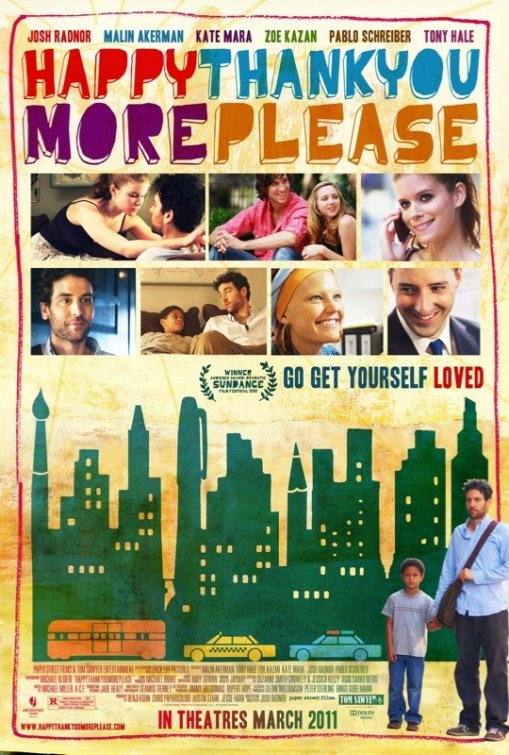 Josh Radnor’s (How I Met Your Mother) writing/directing debut reads like a heavy order of sitcom plots rolled into one tight space. There’s enough New York navel-gazing to fill up a spate of twee indie films. There’s Sam (Radnor), a struggling writer prone to relationship problems, having a three-night stand with Mississippi (Kate Mara), a waitress/cabaret singer. There’s Sam’s cousin, Mary (Zoe Kazan), is being pressured to move to L.A. by her boyfriend (Pablo Schrieber). Sam’s best friend Annie (Malin Akerman) suffers from dating the wrong kind of guys. She also suffers from alopecia, which makes her hairless (doesn’t sound like a deal-breaker to me). She’s being pursued by a suitor, Sam #2 (Tony Hale), a good man who acknowledges he’s not exactly a lady’s first image when it comes to Mr. Right. If this wasn’t enough plot to fight over for 100 minutes, Sam becomes an unlikely caretaker to a young child, Rasheen (Michael Algeri), left behind on a subway. The kid refuses to go back to foster care so he just sort of becomes Sam’s pet. Actually, the child is a plot device to facilitate Sam’s maturity and personal growth, which is why he all but disappears in the film’s second half dominated by romantic drama. Radnor is a relaxed presence onscreen. As a director, he knows a thing or two about pleasing shot compositions. As a writer, he has a good feel for droll observation (“Don’t make me run, kid, I’m almost thirty,” had me ruefully chuckling). As with most ensemble movies, some storylines are stronger than others; the Annie/Sam #2 stuff could have been its own movie. Both actors, Hale especially, are winning. Mara is sexy and a star in the making. The Mary stuff would have been better left alone. Kazan’s performance is somewhat irritating, and my interest sunk every time her face came onscreen. And yet, the film is carried by a sweetness that doesn’t tilt into saccharine. Given some of the sitcom-level setups, this could have spilled into eye-rolling cuteness (a girl named after the poorest state in the nation!). It’s romantic in a somewhat cheesy way but that’s part of its charm. It’s nothing groundbreaking, but happythankyoumoreplease rolls agreeably along thanks to being earnest, but not too earnest, and witty without being overly whimsical.
Nate’s Grade: B-
Share this:

Drive Angry (2011)
 Without a hint of self-awareness, and not nearly enough tawdry camp, this exploitation throwback manages to be completely serious with a ridiculous plot and a celebration of muscle cars, gory violence, and women in hot pants. And yet for a film about Nicolas Cage literally escaping from Hell to save his baby granddaughter at the hands of a Satanic cult leader (Billy Burke), it’s awfully complicated. The plot is hard to nail down, rarely does it spell things out, which means the audience is left trying to piece together the scraps of logic in between fetishizing cars and violence. Amber Heard (The Informers) and her cut-off high-waisted jeans becomes Cage’s sidekick and she gets to hold her own. The 3-D elements are mostly distractions flying at the screen, the violence is extreme but with a distasteful nihilistic edge, and the tone lacks any traces of irony or appreciation of genre. There’s more potential here that never feels tapped, like Cage’s special “God-killer” gun that spooks even the Grim Reaper/Angel of Death (William Fichtner, having a blast). At one point, Cage is locked in coitus with an overly animated waitress, and he kills an onslaught of goons while still engaging in sex. While Shoot ’em Up did it too, it’s a sequence that hints at what the film could have been had it given in to more crazy impulses. Instead, Drive Angry isn’t nearly passionate enough to register as anything but a mundane retro, country-fried rehash of 1970s action movies.
Nate’s Grade: C
Share this:

The Tourist (2010)
 It seems to have all the right elements aligned: two mega-watt stars, a gorgeous location, and an Oscar-winning director whose last film, 2006’s The Lives of Others, was a tense, meaty, humane drama. Add a mistaken identity plot and The Tourist should feel like a light-hearted romp. The truth is that the final product is resoundingly dim and dull is deeply disappointing. All that Hollywood glamour and this is the best they could come up with? The movie is too mechanical, joyless, without much in the way of pacing or a pulse, and the direction feels like a languid tourist trip itself, placidly soaking up the scenery and waiting for a plot to shamble into frame. The action sequences are bereft of tension. Angelina Jolie and Johnny Depp have too few scenes together, too mild a sexual tension, and sleepwalk through their performances. Depp could easily have been replaced by any actor. You’ll see the twists telegraphed a mile away, but by that time your eyes will have already glazed over thanks to the dead weight of a script credited to THREE Oscar-winning screenwriters. With this much talent behind and in front of the camera, I expected a lot more than a sluggish, bland, hermetic thriller that would more like to get lost in scenery than quicken a pulse. The Tourist feels like it needs a map just to know what it’s doing, and the finished product deserves a one-way ticket to the bargain bin.
Nate’s Grade: C-


You must be logged in to post a comment.