Blog Archives
Devil (2010)
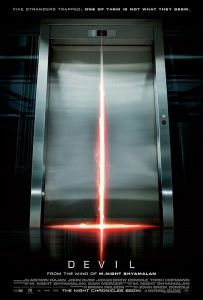 2010 has been a banner year for Trapped to Stuff Cinema. People have been trapped on a ski lift (Frozen), under a rock (127 Hours), in a coffin (Buried), and now with Devil… an elevator. The story comes from “the mind of M. Night Shyamalan,” not exactly a selling point at this juncture in time: five strangers are trapped in an elevator and one of them happens to be the titular devil. Now, that may sound like a waste of the Devil’s abilities; surely the Lord of Evil has better things to do than mess around with people in an elevator. Regardless, this low-rent thriller nearly overdoses on terrifically noisy jump scares as its primary source of spooks. As the candidates get picked off one by one when the lights go down, the guessing game becomes more tiresome. Even at a sparse 75 minutes the entire film feels exhausted. The characters are dumb. The Hispanic security guard tries to convince others that the devil’s responsible for the shenanigans. His method of argument: tossing a piece of toast in the air and saying because it landed jelly-side down, the devil is in play. Because when Old Scratch’s around, only bad things happen (protect your toast). The ending feels both contrived and tonally inappropriate, like putting a smiley face sticker on a school report on Ted Bundy. This is an entire movie that lands jelly-side down.
Nate’s Grade: C-
Share this:

Predators (2010)
 For a solid 45 minutes, Predators is a fairly good genre movie. No, it’s a very good genre movie. We snap awake in freefall with a ripped Adrien Brody. A group of deadly warriors from all cultures find themselves stranded in some strange jungle. For that 45-minutes of goodness, the assembled killers (and Topher Grace as a doctor?) try and piece together their circumstances while exploring the foreign terrain. It’s a setup straight out of the Twilight Zone catalogue. And then, at minute 46, they find out they’re on a game preserve planet for the notorious alien bounty hunters, the Predators. The characters get picked off one-by-one and the patient buildup unwinds in a familiar and depressing bloodbath. Predators will work as a quick fix of junk food, but it teased a promising alternative that never came to fruition. The action is bloody but listless. The plot twists are seen from miles away (Topher Grace as a doctor?) and after all that badass macho posturing, the end credits blast the song… “Long Tall Sally” by Little Richard? It’s the most bizarre element in a movie with killer space monsters in dreadlocks.
Nate’s Grade: C+
Share this:

From Paris with Love (2010)
 Sometimes a strict genre film can be forgiven its clichés. You find the characters interesting, the actors are having a grand time, or the director finds a way to make old seem new. And sometimes a movie just gets sunk to the watery depths of boredom thanks to an overabundance of genre clichés. From Paris with Love is the latter. I had higher hopes for the film coming from the director of 2009’s Taken, which defied a ball of clichés to be a fairly kick-ass and efficient action caper. Paris involves the tired setup of the straight-laced guy matched up with the reckless loose canon. John Travolta gets to chew every piece of scenery not nailed down. Travolta unhinged has its pleasures, but if the entire movie is Travolta’s theatrical tantrums and some scattered explosions, then forget it. We watch Travolta act up, go overboard, and then eventually be proven right. This formula is repeated ad nauseam. The silly plot involves a Pakistani terrorist strike against the U.S. ambassador at the African summit in Paris (convoluted much?). The twists and double-crosses are easily telegraphed, and most of the action sequences are poorly edited and structured, and the attempts at humor fall deadly flat. From Paris with Love is a stupid action movie for all the wrong reasons.
Nate’s Grade: C
Share this:

The Killer Inside Me (2010)
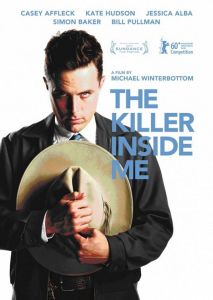 This is an unsettling thriller that takes us into the mind of a psychologically dangerous deputy policeman (Casey Affleck). He patrols the small Texas city by day and kills for pleasure by night. The movie runs into a problem because the character doesn’t have a semblance of any moral code, which sounds contradictory for a serial murderer. He doesn’t kill for profit or to cover a secret or anything that would come across as identifiably rational. He kills because he feels he has to; he’ll even kill the mistress he loves because he can’t control himself. It’s an upsetting premise that keeps the audience at a controlled distance throughout the film. There’s an ongoing theme of extreme sexual brutality, and director Michael Winterbottom (A Mighty Heart) seems to linger on extended sequences of sadomasochistic sex and ugly violence against women. There’s some ugly stuff here, like watching Jessica Alba get her face pummeled for a solid two minutes. You just feel sorry for what Alba and Kate Hudson go through (“voiding a full bladder” is amazingly low on the list of awful these women endure). Eventually Affleck has to keep killing to cover his tracks, and the threat of getting caught provides some moderate tension, a relief from wallowing in cruelty. All of this ickiness would seem worthwhile if it felt like we were learning something about our disturbed lead. Affleck plays his opaque character rather flatly, making him free of charisma, empathy, and sadly, insight. He’s just the same as a masked killer in a slasher movie. That’s the worst disappointment in a film with so much ugliness.
Nate’s Grade: C
Share this:

Tron: Legacy (2010)
 In 1982, TRON was a movie ahead of its time. It took place in a world inside the world of computers, which couldn’t have been that advanced back then. But “ahead of its time” and good are not the same things. Arguable one of the most influential science-fiction films in terms of design and CGI, the original TRON was a financial dud for its film studio. All this makes it so curious why Disney would spend upwards of $200 million dollars on a fancy, shiny, big-budget sequel to a movie people didn’t really give a damn about before. TRON: Legacy looks to capitalize on a generation of geek nostalgia. At least it doesn’t fare as poorly as the Star Wars prequels.
Sam Flynn (Garrett Hedlund) is 27 years old and the lead shareholder of Encom ever since his father, Kevin Flynn (Jeff Bridges), mysteriously disappeared in 1989. Kevin had found a way inside the world of computers, which he called The Grid. He studied it and based his company’s arcade games on what he found. Then after saying he was going to break the world of gaming wide open, he vanished. Then in 2010, Alan Bradley (Bruce Boxleitner, a sight for sore eyes) visits Sam with a message. He got a page from a number that’s been disconnected for over 20 years. Sam ventures into his father’s old arcade/workstation and gets zapped inside the world of computers. Now he’s amidst all those racing light motorcycles and flying disc battles. The slinky program Qorra (Oliva Wilde) rescues Sam from the gladiatorial battles. Inside this realm, the Grid is run by Clu (CGI Bridges), a digital doppelganger of Kevin Flynn. Sam is reunited with his dear old dad and together they try to escape this digital prison and stop Clu.
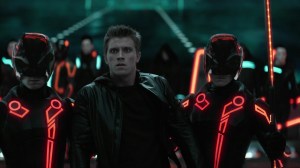 Never have I felt more like an old man than after watching TRON: Legacy. All the special effects dazzled, but after a while it felt relatively empty and insubstantial. But what did all those gleamy flashes of light and snazzy 3-D effects do, ultimately? Distract from the void of a story. I consider myself a fairly intelligent individual, able to follow complicated narratives and appreciate complex storytelling. And yet, when the lights came back up in my theater, I said, “There is a lot that I never understood.” The setup is relatively painless, but where the movie grinds to a deadly halt is for an exposition-heavy 20 minutes in the middle after our second big action sequence. When father and son are reunited they get to talking, and talking, and talking some more about God knows what. I think my brain shut off from all the stilted dialogue. Every character seems to stop and unload a pile of exposition. Even though the characters seem to explain so often, you always feel like you’re still missing something important. You still feel left out. But after this dreadful slog, suddenly there’s Michael Sheen (Frost/Nixon) to save me from my stupor exactly like he did at the end of the turgid Twilight film, New Moon. He brought me back to life, but after his campy, cane-guitar rockin’ sequence of battle, I was trying to get caught up on the parameters of plot and setting. But then the film just flew from one set piece to another and I was forever lost. I couldn’t tell you why anything happened in the last hour of the movie. It just seemed like one thing was following another without any sense of logic or foresight. I got the idea of the need to escape this virtual world and that there was a special doorway to make this happen, but after that it all became an unintelligible chain of ones and zeroes.
The incoherent screenplay by Lost scribes Adam Horowitz and Edward Kitsis is a bleak vehicle for special effects. TRON: Legacy will certainly melt your eyes but it leaves the brain cold and overlooked. The rules of the TRON universe are never adequately explained. When Qorra suddenly drives a vehicle off the Grid and says, “We can do this, they can’t,” you’re forced to just shrug and go with it. Why is Clu trying to kill Sam and his dad when he’s pretty much had the run of things for 20 years? What exactly is his plan for world domination? He thinks his electro-tanks will be able to take out the military powers of the real world? Do these programs have free will or does their engineering trap them? Why would they gather at a stadium to cheer the death of other programs in violent sport? All of these walking/talking computer programs got me thinking about The Matrix and how much more creative and effective and overall better that movie was with storytelling. There are some token nods to character, mainly Sam’s reunion with his long lost pop, but this is a movie designed to mesmerize with flashing lights rather than story and character. I would find this somewhat acceptable if I wasn’t bored so much, let alone paid an extra four bucks for the luxury of being bored in three dimensions.
 But if special effects are what you want, TRON: Legacy delivers big time. The sleek production design is married seamlessly with the flashy, techno-oriented effects inside the computer world. Watching the floating spaceships and zooming racecars is a luscious, exhilarating rush to experience. The visual style obviously has to hew close to the first film in 1982, which seems to handcuff the imagination of the crew. We’ve made gigantic leaps in the world of movie special effects but we’re stuck with characters in glow-in-the-dark jumpsuits and cityscapes that look at like half-finished neon outlines. I haven’t seen a 3-D movie since two-time reigning king of the world James Cameron’s Avatar, but I would readily advise people to see TRON: Legacy in 3-D if available. It gives the film that extra whiz-bang quality. This is not just a cheap grab at extra cash where the studio throws a 3-D rush on a film late in the game. The 3-D, which kicks in when Sam travels inside the computer world (like the change into color from the Wizard of Oz), feels more immersive without resorting to hurling countless objects at the audience. The greatest 3-D effect, bar none, is Olivia Wilde (TV’s House, Year One). Director Joseph Kosinski has a steady background in computer effects, and it shows. His handle on actors is another matter entirely.
But the biggest misstep with the special effects occurs with the 1980-version of Bridges. Whenever we get a glimpse of this Bridges of old, whether it’s from Clu or a brief and distracting scene in the film’s 1989 opening, it’s another opportunity for the movie to remind you of its lack of authenticty. The de-aging technique still needs some serious tinkering. What it does is make an actor look like a plastic doll, with dead Polar Express zombie eyes. It’s creepy and off-putting and every time you see the de-aging effect it rips you out of the movie. Watching young Bridges take on older, current Bridges would have been more interesting if we had an entire digital rogues gallery of Bridges characters. Imagine the Dude and his drunken, self-destructive country singer from Crazy Heart involved in digital games of combat.
 There are some nice action sequences that begin to touch imaginative possibilities of this unique world. The flying disc duels are interesting enough for the time being. The first few disc battles make fine use of the unique features of the boomerang-esque weapon. The motorcycle battle where the ribbons of light/exhaust create a wall is still a great idea for battle of wits at high-octane speeds. It just never fully materializes. The edits don’t occur in that hyperkinetic Michael Bay fashion that discombobulates the senses; however, I never really grasped the geography of the action realms. In order for the viewer to appreciate the action and the moves and counter-moves, we need to understand the arena and boundaries of the setting. With the cycle chase, it just seems like they’re all appearing at random. An action sequence is less satisfying if it doesn’t seem like it’s building and making use of the particular surroundings. The moody score by electornica duo Daft Punk gives the film a thematic lift, though having them score with a full orchestra feels like hiring Yo Yo Ma and forcing him to play a trombone.
TRON: Legacy feels at times like a super-sized Light Bright meant to dazzle and distract from the gaping void at heart. The story merely exists to get the characters from one place to another. The leaden exposition pretty much destroys the film’s momentum. It becomes plodding and tiresome. It would be like if Luke Skywalker sat and listened to 20 years of history rather than actually, you know, doing something. It’s been 28 years since the first TRON and the world has gotten far more computer savvy, and the jargon from the first flick would be readily understood. TRON: Legacy doesn’t feel like you’re in a computer, just whatever weird alternative universe. It seems like the real legacy of TRON ends up being hollow special effects.
Nate’s Grade: C
Share this:

True Grit (2010)
 It may sound like sacrilege to some to remake True Grit. What can the Coen brothers add? Can Jeff Bridges fill in the boots of John Wayne? Those familiar with the 1969 original will recognize many of the same elements and a solid 70% of the dialogue is the same owing to the fact that both films come from the same source, Charles Portis’ novel. Where the Coens step out is placing the story’s focus on Mattie Ross (Hailee Steinfeld), the 14-year-old seeking vengeance for her dead father. Marshall Rooster Cogburn is a rascally often drunken cynic, so it’s easy to get swept up in the amusing character, initially played by the Duke and now played with great gruffness by Bridges. But the Coens know this is Mattie’s story, and apologies to Kim Darby, but Steinfeld looks like a 14-year-old. Every second onscreen reminds you how truly vulnerable she is, that is, until she opens her mouth. Steinfeld is remarkable and so self-assured. She holds her own with the stars. This is a young actress that has a bright future in Hollywood.
The Coens have put together such richly drawn characters, so it’s a tremendous pleasure just to watch the people interact, luxuriating in that old West speaking style that actors chew over like gumbo. It takes a while for the film to assemble its pieces, but once the gang is underway you just want to spend. As anyone who has ever seen a Coen brothers’ picture, the movie is technically flawless. Whether it be the sumptuous old west cinematography by the best man in the industry, Roger Deakens, the stirring score by Carter Burwell, impeccable sound design, or the overall languid yet authentic pacing of the whole film. There are moments of offbeat humor, moments of quiet tension, explosions of brutish violence, but I had to ask what it all added up to. It’s a good time spent with some nice characters, but it’s hard to shake the idea that the movie falls short of greatness. The Coens can’t be expected to make a masterpiece every time they step behind a camera. But the films that fall short of the M-word generally can be slotted in the “mostly very good” category (O Brother, Burn After Reading). You’re left with a somewhat sour resolution and it starts you thinking whether or not the film had anything substantial to say about vengeance, friendship, community, or a legion of topics. It turns out, True Grit is a solid two hours of great actors working through an entertaining story. For any other filmmaker, that would be all you could ask for. For the Coens, it means the film only can be classified as “very good.”
Nate’s Grade: B+
Share this:

Attack on Darfur (2010)
 The idea of a filmmaker of Uwe Boll’s caliber tackling a subject like contemporary genocide seems like an artistic stretch. The man is mostly known for the poorly made, poorly received video game adaptations. It would be like the Wayans brothers making a stirring expose on supply side economics. The topic just seems far beyond their purview. I mean, maybe if somebody created some Darfur video game I might start thinking of Boll circling the project. Apparently, the despised German filmmaker had something Important to Say About Society. Attack on Darfur (or Darfur in some listings) is a well-intentioned cry for justice for a conflict often ignored by Western media. It’s a disturbing and grueling experience; however, the shortcomings of the script hinder the impact of the film and its crusading message. It ends up being a message movie subsumed by its message.
The Darfur region in southern Sudan has been the site of great atrocities. Thousands of people have been injured, raped, killed, and displaced. It is an ongoing civil war pitting Arabs against black Africans. The Sudanese government has been accused of working with death squads and militias, particularly the Janjaweed group. The Sudan government and the rebel groups formed a ceasefire after intense international pressure. But those in the Darfur region still report violent raids. The United Nations has dispatched a group of journalists to investigate a village for evidence that the ceasefire has been breached. Along the way are reporters (Billy Zane, Kristanna Loken, David O’Hara), a photographer (Edward Furlong), a cameraman (Matt Frewer), and others. Shortly after departing the village they can see the Janjaweed approaching in the distance. If they continue to leave then the village will most certainly be slaughtered. If they stay, perhaps they can avoid a bloodbath due to the presence of Western media. Some will go back to help fight for the condemned village and lay their lives on the line.
 Attack on Darfur is Boll’s attempt to be a serious filmmaker. He’s targeted a serious issue and he’s going to give it serious attention. And he does, mostly. The first half of the movie is almost entirely expository, attempting to educate an audience ignorant to the depths of the genocide. The film even ends on a post-script lecturing us that because action has not taken place that the world has learned nothing. It’s easy to see Boll had some very good intentions with his film, and it follows an Edward Zwick path of preaching. Except while Zwick buries his lessons in easily digestible action. Boll doesn’t bury his message. His message is all you will get for 90 minutes. The opening focuses on many establishing shots of village life, and it’s truly amazing that the film doesn’t condescend or pander. Attack on Darfur feels authentic without having to ratchet up the differences with Western culture. Well, it tips into that territory when Loken hands out deflated balloons to the village kids as a treat. The problem is that all those horror stories end up blurring together, which is a horrible statement. This is because during this 40-minute chunk of exposition, Boll doesn’t fully educate about the conflict. All we know is that one group is getting treated really really badly. We don’t know about the people’s history, about the intricacies of the conflict, or the particulars of who belongs to what.
When the massacre is unleashed Boll doesn’t hold anything back. We witness mass murder, rape, baby smashing, baby impaling, baby slicing, child burning, and, oh, more rape. It’s a harrowing montage of death and destruction and dehumanization. It’s hard to watch, and that’s exactly the point. Boll overwhelms with the emotional appeals, trying to raise people’s collective sense of outrage. People are lined up and executed. Kids are locked into a hut and then the hut is burned to the ground. Nobody escapes this hellish nightmare. At last, Boll is utilizing commentary with his displays of exploitative violence. However, because of the lengths of degradation, it’s hard to even the scales from a storytelling standpoint. The leader of the Janjaweed militia (Sammy Sheik, Charlie Wilson’s War) is a way to put a manageable face to a problem too difficult to fix. It introduces a villain that can be vanquished so there’s some small sense of satisfaction by the time the movie draws to a close. We yearn for somebody to right these egregious wrongs, and that’s who our white journalist characters are supposed to be. I don’t exactly know what their plan is considering three head back to save the village and two of them have minimal to no experience with firearms. Three guys with guns vs. much more than three guys with guns? It’s even more confusing when our journalists-turned-gunmen stick with their handguns. They fail to grab the automatic weapons from the bad guys they kill, and naturally they run out of ammo when they need it most. While the third act produces some minor level of satisfaction as the bad guys are picked off here and there, we all know where this is headed; there will be no happy ending because that would disrupt the Message.
 In the end, despite all the good intentions and horrific displays of violence, I’m left wondering why this story needed to be told? I’m not talking about the backdrop of the Darfur genocide, which clearly needs more attention. But what about this story did Boll and co-writer Chris Roland deem worthy of being their vehicle to garner attention to a worthy cause? The structure follows a very Edward Zwick approach; we’re introduced to the moral atrocity and then expected to stand up and make a difference. The first 40 minutes of Attack on Darfur is nothing but characters holding a microphone. That is the only purpose for the majority of our above-the-title recognizable faces. They are mic holders, and perhaps that’s a metaphor for the film as a whole but I doubt Boll has thought that deeply. We’re treated to extensive montages of village life and the testimonials from actual survivors of genocide (a nice touch by Boll). But what purpose do all of these characters serve if only THREE go back to fight against the Janjaweed? Billy Zane (Titanic, Bloodrayne), Edward Furlong (T2, Stoic), Matt Frewer (Dawn of the Dead, Rampage), and Kristanna Loken (Terminator 3, In the Name of the King)? They all stay in the car.
Completely ignore the poster/DVD cover art. Judging from that artwork, you would think very differently about where the story will head. With Zane front and center, sporting sunglasses and an automatic weapon, you’d naturally think Zane is going to lead a team to defend the victimized. And the bottom half of the artwork contains men in combat armor and attack helicopters looming overhead. But then would you ever guess that those same steely looks and explosions add up to… the advertised thespians sitting in a car looking glum? Their role is to serve as the shocked white faces of anguished reaction so we can truly know how bad things are, because otherwise how would we even know?
 Boll is definitely trending upwards in his directing abilities. It’s not leaps and bounds but progress is unquestionably being made from the days of House of the Dead. He seems to be aping the visual aesthetic of a different artist with every film. Due to the true-life nature of the genocide it’s no surprise that Boll makes use of the Paul Greengrass docu-drama approach: quick edits, swishy camerawork, and extreme close-ups angling to keep the actors faces inside the frame. This visual aesthetic works effectively during the chaos of the massacre, but it proves to be a distraction beforehand. There’s no reason that the edits have to be so choppy and the camerawork so self-consciously handheld when characters are just standing around talking. It also somehow manages to minimize the visual urgency of the ensuing massacre. The concluding shootouts are efficiently entertaining without packing any thrills. Boll’s command with actors has improved, though this might owe up to the fact that his last couple of his movies have been devoted entirely to improvised dialogue. Reportedly the actors created exhaustive research to study the habits of journalists and create elaborate back-stories for their characters. That’s nice. It’s also a gigantic waste of time considering the actors have little to do.
Attack on Darfur is a hard film to watch and a difficult one to justify beyond raising awareness. What’s the point of the movie’s story? Why introduce characters to only have them turn away when danger mounts? I understand Boll wants to communicate the frustration of the inaction to the Darfur genocide. He wants us to get angry when our U.N. peacekeepers keep to the line that they can do no more than observe. Boll wants to compel us to make sure what happens in Darfur will never happen again. Never forget. But this intent to shock and horrify overwhelms his narrative. The message becomes the movie and the characters just get pushed to the edges to make room for more atrocities. Boll would have served his message and his movie better by building a better story.
Nate’s Grade: C+
Share this:

Black Swan (2010)
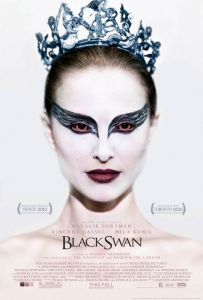 The prissy world of prima ballerinas and tutus doesn’t seem like a natural fit for sex, murder, lunacy, and mayhem. Director Darren Aronofsky (Requiem for a Dream, The Wrestler) is used to exploring the punishments of the human body and the strain of the mind, so you know that Black Swan isn’t going to be your traditional dance movie.
Nina (Natalie Portman) has been a company ballerina in New York City for years. She spends her hours at home practicing the grueling routines in hopes to break out for a lead role. Her mother (Barbara Hershey) is a former ballerina herself who gave up her shot at the big time when she had Nina. Then the head of the dance company, Thomas Leroy (Vincent Cassel), has decided that Tchaikovsky’s Swan Lake will be the first show of the season. It’s a bit tired, he admits, but he has a plan to juice it up: the same dancer will portray both the swan queen (tragic protagonist) and the black swan (villainous temptress). All of the dancers are committed to doing what they can to earn that coveted lead role. Nina’s primary worry is Lily (Mila Kunis), a dancer who is imperfect in technique but honest and free in her movements, garnering the attention of Thomas. In the process, Nina is losing her grip on reality. She’s hearing weird things, seeing weird things, and something dark wants to take center stage.
 Black Swan is a grade-A mind freak of the first order, a tonal fusion of sight and sound that echoes earlier masterworks of the eerie psychological horror like Rosemary’s Baby and The Shining. This is a movie that gets under your skin; I literally had a nightmare the night after watching it, though I don’t want to give people the wrong impression. Black Swan is not a horror film by the traditional standard we’re accustomed to today. The entire film has a downright Kubrickian vibe, from its devoted tracking shots, to the overdose on classical music underscoring the dramatic tension, and the unraveling of the human mind toward eventual psychosis. Aronofsky keeps the audience tethered to Nina, at times literally. The camerawork will rarely stray away from Portman, like we’re caught within her orbit and forced to see the world through her fractured perspective. She is our eyes to the world but, as becomes increasingly apparent, we cannot trust what we see. The unreliable POV leads to some fantastic freak-out moments that will consistently leave you scrambling. The diligent pacing marvelously matches the dissolution of Nina’s psyche. As her paranoia and delusion take control, Nina comes undone one thread at a time, with Aronofsky on the other end providing the tugs. The spiraling mental determination culminates with a glorious 20-minute finale that manages to be tense, beautiful, haunting, and powerfully moving. There are moments in this film that gave me goose bumps (a blood red-eyed Portman growling, “It’s my turn” is a chilling highpoint). I became determined to see Black Swan again even before the closing credits arrived.
Aronofsky makes use of every tool at his disposal to heighten the intense atmosphere. The attentive editing and camerawork create a shifty mood, communicating Nina’s desperate groping for direction. But beyond that, Aronofsky employs subtle sound effects to rattle you, keep you off guard. Routinely there will be the fluttery sound of wings flapping or hushed whispers. It’s enough to make you shudder time and again. It’s a small touch that elevates the mood and instantly snaps you to attention whenever you hear the eerie echoes. The disquieting sound effects are coupled with equally subtle visual effects. As Nina absorbs herself in her ballet role we occasionally will witness the pores of her skin raise, as if invisible hair, or fathers, are protruding. Sometimes these raised bumps will wash over her body in waves. As Nina becomes more consumed with her darker impulses, the special effects take a surreal role in conveying her madness.
 The film is also rather sensual without becoming trashy, late-night Cinemax fodder. Portman’s descent is linked with loosening up her own sexuality. She can portray the innocent and delicate white swan, but she’s having significant problems portraying the ominous and seductive black swan. She’s told to let go, lose herself to her physical impulses, and explore the confines of her nubile body. Black Swan is probably the artiest high profile film to feature prominent female masturbation since 2001’s trippy Mulholland Drive (the two movies have plenty of similarities in ambition). Nina’s suspicions about her rival transform into confusing erotic fantasies that will delight the teenage males in the crowd. Black Swan treads the erotic terrain with a European sense of maturity and candidness. The sex and masturbation and bisexual smooches don’t feel like gross, gratuitous shots at cheap titillation.
Portman ably takes the frazzled lead and gives an enthralling performance that will be hard to beat come Oscar time. The role is a lot more than screaming and crying. Although to be fair, Portman cries a whole lot. You may lose count the amount of times Portman is seen crying on screen. Her character is fragile but not fighting for sympathy. She can be distant and a little cold, obsessed with reaching the unattainable state of perfection. This pushes her to the extreme, goaded by her somewhat loopy mother. Portman has always been an attractive presence on screen, but she is also fairly transparent when she’s bored with her material (watch those Star Wars prequels and argue differently, I dare you). With Black Swan, she throws herself into a role like I’ve never seen before from Portman. I did not think the kewpie-dolled actress was capable of such heights. The immersion is entrancing. She physically trained for over a year before production to be able to do most of those pirouettes and fouettés. I’m not being overly generous with the dancing accolades; Portman comes across as smooth as a professional. The fact that Portman is capable of expressing so much devastating emotion through dance is astounding. My eyes were glued to her every movement. This is the performance that officially lifts Portman to the acting big leagues. She dances circles around the acting competition for 2010.
While it’s certainly Portman’s show, the supporting cast all shine in their small roles. Kunis (Forgetting Sarah Marshall, Book of Eli) is made to exemplify the edgy opposing force in Nina’s life. Kunis’s natural charm and alluring presence might make her the most likeable character in the film, even though her wild ways will keep you guessing about her true motives. Hershey (Hannah and Her Sisters) seems like a doting and supportive mother at first glance, but the actress reveals shades of desperation and mania. Winona Ryder (Star Trek, Girl, Interrupted) makes a welcomed near-cameo as the ballerina pushed out of the spotlight. And then Cassel (Ocean’s Twelve, Eastern Promises) plays lecherous creep like few others.
 The film manages to make ballet feel like a contact sport. These people punish their bodies, their artistic vessels. The rigorous routines require dancers to be in sleek form, which often leads to abuse via bulimia. The excruciating balance and coordination required places unusually high demands on the human body, particularly on the feet that must support the body in extreme positions. Broken toes and split nails are the least of the worries. Black Swan succeeds in showcasing the fierce brutality of dance; however, the movie also showcases the intrinsic beauty. I am a self-described novice when it comes to dance, especially ballet at that, but even I was spellbound by watching the dancing, notably the exhilarating Swan Lake opening night performance. The camera is positioned to be like another dancer, so we’re swooping and spinning around the stage with the featured performers. This gives the audience an intimate glimpse into the fluid movements and, just as importantly, the nuanced and sensual expressions of the performers. I would have scoffed at the idea of a ballet performance being anything more than frou-frou-ness, but Black Swan made me a believer. Witnessing the beauty and gracefulness of the dancing is proof that all that hard, punishing preparation is worth it.
Probing the stress of the body and fraying endurance of the mind, Black Swan richly explores the sacrifices we make for art and ambition. The world of ballet is highlighted as a hotbed for scandal and intrigue and female sensual desire. Not bad for all that hoofing around in frilly tights. Black Swan is anchored by Portman’s captivating descent into madness, a performance that will surely be awarded in the ensuing months to come. Aronofsky has fashioned a riveting psychological thriller with enough artfully crafted chills and spooks to make for one visceral experience at the art house. Beyond bringing the tingles of spine and bumps of goose, Black Swan digs into the psychological underpinnings of competition, devotion to art, and personal glory. There’s much more going on here than ballet. It’s a grade-A mind-freak but under Aronofsky’s skilled direction and Portman’s transfixing acting, Black Swan is also a grade-A piece of art and one of the most stunning works of cinema this year.
Nate’s Grade: A
Share this:

The Girl Who Kicked the Hornet’s Nest (2010)
 The worldwide publishing phenomenon comes to a close with the third and final film, The Girl Who Kicked the Hornet’s Nest. In the span of nine months, all three Swedish films, based on the late Stieg Larsson’s best-selling books, have been released stateside. Hollywood is already filming the first of three remakes directed by David Fincher (Fight Club), with Fincher’s Social Network star Rooney Mara in Lisbeth’s chunky shoes. Releasing three films in one year, mere months apart, has given the series the feeling of an event. The Girl Who Played with Fire left a lot to tie up, but audiences steeped in the Larsson’s sordid particulars should find something rewarding, albeit unspectacular, in this final chapter.
The third film picks up immediately after events from the previous story. Lisbeth Salander (Noomi Rapace), punky computer hacker and international badass, is being airlifted to a hospital. She is recovering from a brawl with her father that left her with a bullet in her skull and him with an axe lodged in his (surprisingly, both live. Credit Swedish healthcare). Her father, Zalachenko (Georgi Staykov), was a Soviet spy that defected to Sweden in the 1970s. He is a high-value informant, which means that anyone who would compromise or expose Zalachenko needs to be dealt with. And if Zalachenko is going to speak his mind, perhaps he needs to be silenced as well. Mikael Blomkvist (Michael Nyqvist), muckraking journalist and Lisbeth’s staunch ally, is trying to protect his friend and one-time lover by exposing the corrupt and powerful. Lisbeth is trying to be silenced, and if assassins don’t work then the state will try her for attempted murder and lock her away in a mental institution, the same institution that Lisbeth was committed to at 12 when she tried to save her mother by setting her abusive father ablaze. The sinister Dr. Teleborian (Anders Ahlbom) admitted Lisbeth when she was a child and is eager to have her back in his clutches. He and the other crooked government officials will stop at nothing to put her away and stop Mikael from publishing the truth.
 So at the axe-swingin’ conclusion of Girl Who Played with Fire, I felt that some of my conclusion had to be put on hold until I could see the third film, the conclusion to what seemed like one larger film. For Fire I wrote: “As such, it’s hard to fully analyze certain storylines at play. I imagine that the sex trafficking storyline will carry on with the third film because of the tease that high-profile figures in government and police offices were involved. It already establishes a conflict and a set of antagonists ready for the third film. Then again, I may be too hopeful and the storylines of interest in Part Two may be completely dropped or mishandled by Part Three (see: Matrix sequels, Pirates of the Caribbean sequels).” Guess what happened? Dropped storylines abound as well as a lack of follow-through on most everything but the major storylines involving Lisbeth’s tortured personal history.
Now that we can all witness how Lisbeth and Mikael have walked off into that Swedish sunset, I can finally and conclusively say that the second film is incomplete and will never be complete. The loose ends abound and characters are completely forgotten, like Lisbeth’s Asian friend/sometime-lover and her boxing pal who took a beating. Apparently their narrative purpose was to take Lisbeth’s licks (could this be the greatest double entendre in the history of film criticism? Yes). The brute that dished out those bruises is a blonde baddie named Neidermann who looks like he was ripped from a bad James Bond flick. He is a straggling loose end that circles the narrative like a lost child in a supermarket (“Are you my mother?”). The high-reaching sex trafficking ring featured in Fire has a tenuous connection to Hornet’s Nest; in Fire we talk about an Evil Shadowy Government and in Hornet’s Nest we see the faces of that Evil Shadowy Government Agents.
If the first film was a slow-burning and lurid thriller, the second film a preposterous action film, then the third film falls clearly into the genre of legal thriller. The majority of the plot revolves around the People vs. Lisbeth Salander. The sluggish opening gives way to a sluggish series of pre-trial preparations. Mikael assigns his sister to serve as Lisbeth’s attorney, and thus we see the behind-the-scenes arrangements as far as gathering evidence, building a case, plotting arguments and counter-arguments, preparing Lisbeth to confront the men who have caused her such suffering and anguish. And being a courtroom thriller, we also get a heavy dose of new characters, almost all of them elderly and somewhat menacing (a guy with cancer even becomes a hired gun for One Last Job). There are a lot of liver-spotted faces to try and sort through, so it helps when the filmmakers add touches to set them apart (one of them wears a bow tie, another has glasses). Given the lethargic nature of assembling a court case, the pacing can get pretty slack. Then there’s the issue of Lisbeth. She spends almost the entire movie in police custody and the first hour or so confined to a hospital bed. It doesn’t make for pulse-pounding stuff. Lisbeth is a willful, defiant, quick-witted creature so it feels like she’s like a caged bird in this third and final film.
 Rapace is starting to catch serious Hollywood heat and deservedly so because once again she commands the screen. At first when the series began I was unsure of her acting abilities considering her mysterious character is forced to respond through a prism of emotional reserve. She doesn’t speak much but her intense, cold stares speak volumes to the turmoil she has bubbling under the surface. Restrained to a hospital bed or a jail cell, Rapace is given even less to work with. The part is nearly mute for long stretches of plot. Yet Rapace finds new and interesting ways to channel her character’s intensity and allow the audience to view her thought process. It’s a sign of a talented actor when a character’s internal thinking can become transparent without the need for hyperactive expressions. Lisbeth Salander is a complicated character and the audience deserves to have such an intriguing presence fleshed out into three dimensions. I wrote about the disappointing downgrade of Lisbeth’s character in Fire: “We project the interest we felt for her from the first film to the Salander stand-in represented in the second film. She’s still a resourceful, loyal, and cavalier presence, but the plot corners her into being a creature of action. She becomes the fantasy bisexual ass-kicking protagonist that was merely hinted at previously. That sounds like a good thing, but trust me, it does the audience a disservice to box in such a fascinating character.” With Hornet’s Nest, we discover the extent of how men have damaged her, which focuses more attention on the person of Lisbeth rather than the Gothic aesthetics. It’s a return to form even if Lisbeth is still remote.
Luckily, The Girl Who Kicked the Hornet’s Nest does manage to offer a satisfying sense of closure. The series has several bad men doing bad things, so it’s rewarding that after sitting through close to seven hours of material yields some long-awaited justice for Lisbeth Salander. We yearn desperately for this pint-sized gal to get her vengeance and for the powerful to find their comeuppance. Watching the antagonists fall would be more fulfilling if they weren’t only introduced a mere hour ago in this movie. Salander doesn’t get to put on her Gothic war paint until her first court appearance. It feels like a triumphant return, complete with a towering and imposing mohawk. Blomkvist’s storylines will always be the movie’s weak point considering he has to compete with the likes of the audacious Salander. In Hornet’s Nest, his magazine team is threatened but you never really take any of it seriously, because of course the crusading journalist will stick by Lisbeth. The ending is less than desired and tries to recycle some of the same action tropes that lead Girl Who Played with Fire astray. The final scene leaves you with a sense of, “Oh, so that really is it? Better get my coat then.”
 The Girl Who Kicked the Hornet’s Nest works as a mostly fitting capper to a long-standing mystery series. The bad guys are punished, the good guys prevail, there’s an open-ended resolution that leaves you squirming for more, especially now that Lisbeth is a free woman. At a bloated 145 minutes, Hornet’s Nest can often feel like an overextended Swedish episode of Law and Order. There’s a good 45 minutes that probably could have been left on the cutting room floor. At times the movie feels like it’s lurching along, caught up in the mountain of details. But then it generally finds a way to regain momentum and head to a satisfying close. Still, it’s disappointing that for the majority of the two sequels Lisbeth and Blomkvist have rarely been onscreen together. They worked so well as a team in the original Girl with the Dragon Tattoo. I never would have thought that the sequels would take that concept and keep them apart for as long as possible. Too bad author Stieg Larsson isn’t around to write new adventures for his characters, though there are rumors about an unfinished fourth manuscript left on Larsson’s laptop. Until that gets sorted out between Larsson’s widow and his family in Swedish court, I guess the world will have to settle for the forthcoming Hollywood remakes.
Nate’s Grade: B-
Share this:

Buried (2010)
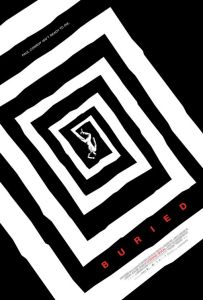 Spending 90 minutes trapped in a cramped space with a sweaty Ryan Reynolds? Doesn’t sound like a bad start for large swaths of the population. Buried is a small indie experiment that places Reynolds in exceedingly tight quarters. Paul is an American contractor driving trucks over in Iraq. Insurgents ambushed his convoy. He awakens to find himself trapped in a coffin and buried under the earth. Packed away inside with him are a lighter, a pen, and most importantly, a cell phone. Can your carrier get you coverage buried under the Iraqi desert? Time to switch, my friends.
For those left curious, yes, it really does take place entirely within a coffin. The entire 95 minutes are spent inside the small space. There is nary a flashback or even a visual insert to be had. You are trapped in that box just like Paul. The film is effectively claustrophobic. Director Rodrigo Cortes (The Contestant) gets terrific mileage out of his ultra confined space. The creative combination of angles, lighting, and nimble camerawork ensure that audiences do not grow tired of seeing the same 6 x 3″ of set. You can practically taste the sweat and dank air on screen. Buried has the most inspired camerawork I’ve seen in a film since 2006’s Children of Men. Cortes has only so much space to room to work and yet he does a magnificent job of manipulating the space to accentuate Paul’s fears and isolation. There are a few shots where the camera seems to keep zooming out, further and further, much further than the ceiling of that box would allow, like Paul is sinking below the sand.
 The script by Chris Sparling is agile and resourceful and keeps finding news ways to keep your eyes glued to the screen. The movie is consumed by that nerve-wracking sense of urgency. The first minute and a half of the film is in darkness, and we awaken to the terror of the situation just as Paul does. Including a cell phone seems like a necessary screenwriting plot device. If Paul awoke by his lonesome, the movie would turn into 90 minutes of watching a guy screaming himself hoarse and clawing away at the wooden walls. A cell phone opens up the narrative. Now Paul has something of a fighting chance to survive. It gives him the motivation to survive and adapt to his surroundings during his limited last moments. The cell phone also allows the bad guys to terrorize Paul over and over. They can make increasingly hostile demands even with their hostage lodged six feet under ground. The demands for money get more and more aggressive, leading to one-sided negotiations, like Paul filming a plea for help that terrorists can exploit and upload to the Internet. The people that Paul does get through to offer little in assistance. To them, it’s just another day going through the same motions, taking down the same messages. Cries for help may not rise above the fray.
The political commentary is, in a word, indelicate. The Iraq War commentary can feel a tad ham-fisted at times in how it wants to boil down and extrapolate Paul as a symbol of the war’s untold hidden human costs. Paul is a contractor paid to ferry supply along the dangerous roads of Iraq. He’s supposed to be seen as “just any guy,” that is, any American Joe. He symbolizes the lost lives that don’t manage to make the news because they don’t have stars and stripes on their uniforms. The Iraq War made use of hundreds of thousands of privet industry contractors, supposedly easing the burden of the U.S. military. Paul is intended to represent the forgotten casualties of war, the people who were merely punching a clock in a foreign land to help their families. The officials that Paul does get through seem more concerned with personal agendas then retrieving an entombed man. The military is concerned, sure, but more interested in locating and killing the terrorists/insurgents that ambushed Paul’s convoy. The State Department is more concerned about containing Paul’s story and ensuring media outlets don’t find out. They’re really worried that any ransom video Paul records will become an Internet sensation, particularly in the dry, dusty part of the world, and become a recruitment tool. Paul’s company is more worried about weaseling out of paying his insurance policy. The movie aims to ask what is the price of one life. Is it just a numbers game? Is losing an American contractor every few weeks worth the price of freedom? What is the definition of an acceptable loss?
 The movie is really a one-man show, so it’s fortunate to have an actor of Reynolds capabilities. He’s used to playing charming, self-effacing, fast-talking rascals; he has an innate ability to command your attention and interest. Reynolds gives a deeply empathetic performance. He goes through different stages of emotions, from shock and horror to anger and frustration, to impotence and self-pity, and all the way back again. You will think step-by-step with him as he tries to assess his situation. It’s a performance rooted in manufactured seclusion, something akin to the one-man show that Tom Hanks shared with a scene-stealing volleyball. Except Reynolds’ commitment seems even greater than what Hanks endured; Reynolds face is in every frame of this film. It would have been very easy for an actor to use the situation as an excuse to bounce off the walls, chewing scenery as an effective means of escape. But Reynolds dials down the histrionics. His character feels awkwardly real under the extreme circumstances.
I really enjoyed the concept, execution (the ending is note perfect), but I also found many of Buried‘s smaller moments to be more than worthwhile. When Paul begins to doubt he’ll ever be found in time, he mentally prepares himself for the inevitable. He films a last will and testament to be found with his corpse, whenever he is eventually unearthed. He leaves messages trying to reach out to love ones one last time. And perhaps most heartbreaking of all, Paul tries to reach his elderly mother, an Alzheimer’s patient in a rest home. He desperately wants to hear one last “I love you” from his mother’s voice, but the woman’s brain is a mental carousel and she is unable to comply. I thought about my own acceptance process if I was in Paul’s exact situation, and I know how much significance I would place on achieving some form of saying goodbye. In order to let go I would need to speak to the people closest to me and tell them how important they were, how much they meant to me. To be denied something so vital to acceptance is cruel. And Paul is denied his one last meaningful goodbye, and I found it to be aching and emotionally terrifying.
If you have any minute fear of tiny spaces or being trapped and helpless, then Buried will get under your skin big time. Add the general race-against-time nature of the script and the flick hums with nervous tension. This film is taut like a drum. It’s ridiculously tense. You may start to feel your feet moving, as if you’re trying to push away the space and dig your way out. It’s hard to believe but a movie that takes place entirely inside a box is one of the most inventive, visually appealing, and enjoyable films of the year.
Nate’s Grade: A


 nathanzoebl
You must be logged in to post a comment.