Blog Archives
Krampus (2015)
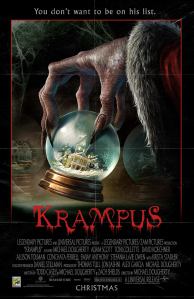 Not quite funny enough and not quite scary enough, Krampus is a holiday antidote that wants to be a modern-day Gremlins but needed to be nastier, darker, or some variant with the suffix of –er. Writer/director Michael Dougherty has been down this holiday road before with Trick ‘r Treat, a superb horror anthology genre gem that was buoyed by a twisted sense of humor and a clever criss-crossing set of storylines that pollinated plenty of payoffs. Krampus begins with a brilliant opening credit sequence that sets a high bar o promise the movie will ultimately be unable to deliver, watching slow-mo stampeding shoppers fighting over Black Friday discounts set to a classic Bing Crosby yuletide tune. From there it’s more a Griswald dysfunctional family gathering until one of the young boys rips up his letter to Santa in disillusionment, calling forth Krampus and his minions. From there the family is terrorized and come closer together in struggle, trying to understand their predicament. There are a few great character designs for the minions, especially a jack-in-the-box whose face unhinges into a sarlac pit of teeth. The PG-13 rating keeps the film from getting too gory or too wicked, which also belies the fact that at heart it’s really an old-fashioned Christmas morality play about loving one another. I was ready to groan with what appeared to be the ending but Dougherty at least subverts the expected and makes sure that there are lasting consequences for bad behavior. This isn’t going to be remembered as a holiday classic but if you’re looking for a fun horror comedy, Krampus at least has something to offer before you feel left wanting.
Nate’s Grade: B-
Share this:

Macbeth (2015)
 It’s a mighty task to boil the Bard’s classics down to a tight yet meaningful running time and maintain a degree of cinematic quality. You don’t just want to film a stage play with the mighty parameters of film, and yet giving in to the visual majesty means less time for Shakespeare’s stirring words and complex characterization. Woe unto thee who attempt an adaptation. It requires more skill than thou would believe. I had hopes for the latest version of Macbeth from its top-shelf cast, Michael Fassbender as the titular ambitious murderer-turned king and Marion Cotillard as his wife and co-conspirator. It didn’t take long for my hopes to be dashed. First, the good: the rolling hills of Scotland are lushly photographed, and the concluding battle is set amid a roaring hellish fire and flying embers that makes for a stunning backdrop. The actors are fairly fine. If you couldn’t tell from this faint praise, there’s not much to credit as an achievement with this Macbeth. It’s strangely narcotized and often listless. It doesn’t help that the actors speak 80% of their dialogue in whispers or mumbles, even when they discover the former king has been murdered. Director Justin Kurzel (the upcoming Assassin’s Creed movie, also with Fassbender) falls back on monotony, whether it’s an overabundance of mist, similar and low-rent locations, and a plodding score that feels like scorpions are in your mind. Some of the changes are also for the worse, especially making Lady Macbeth more “sympathetic” and neutering one of Shakespeare’s great characters. She no longer sleepwalks and instead confesses her unshakable guilt to a cross. Also Macbeth is haunted by the ghost of his dead son with the witches. And there’s some brief inclusion of awkward sex amidst monologues. The final showdown comes at the 90-minute mark and the entire proceedings feel rushed and yet miraculously boring. Even the bloody violence is pretty tame considering its R-rating. If you’re looking for a truly cinematic Macbeth that enlivens Shakespeare, check out the Masterpiece Theater version with Patrick Stewart adapted into a 1930s Stalinist era. Now that was brilliant. Kurzel’s version of the “Scottish play” is one that only signifies disappointment.
Nate’s Grade: C
Share this:

It Follows (2015)
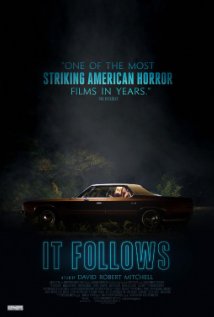 Indie horror is always looking for the Next Big Thing, and at the start of 2015, that movie was It Follows. Coming out of relatively nowhere, the second film by writer/director David Robert Mitchell was dubbed the real deal, and audiences flocked to see what all fuss was over. I would have been intrigued before the positive word-of-mouth namely because Mitchell made one of my favorite films of 2011, the understated and perfectly yearning ode to adolescence, The Myth of the American Sleepover. I dearly hoped that Mitchell was not another flash in the pan. In retrospect, I did not have need to fear. It Follows is unsettling, suspenseful, and borderline ingenious with its concept, but it also has some faults that mitigate its concluding power.
Jay (Maika Monroe) is a normal 19-year-old girl going to college in Michigan until the night she sleeps with her object of desire, Hugh (Jake Weary). In her post-coital mediation, he drugs her, ties her to a wheelchair, and then waits. He wants to show her something, or more accurately someone (perhaps something is actually more appropriate). A woman slowly trudges toward them, the embodiment of a curse he passed on to Jay through sex. It will keep following her until it gets her and kills her. The only way she can protect herself is to sleep with someone else, to pass the curse onto a new recipient. Then the monster goes after them; however, once this newest curse-holder is murdered, the monster moves back up the ladder, attacking the next curse-holder. Once you have it, there’s no getting rid of this curse, only delaying it.
 The top question with a horror movie is whether it provides enough suspense, spooks, and scares to jolt an audience, and in this regard It Follows is quite good; not as unsettling as last year’s Babadook but still plenty unnerving and extremely well executed and developed. The opening hooks you, with a teen girl constantly looking in the direction of the camera and clearly scared out of her mind. The camera has adopted the identity of the monster. The central premise is wonderful, rich with thematic potential about the alienation and anxiety of being a teenager navigating the world, but also intriguing enough that I always wanted a large expository info dump scene just to learn more about the rules or its history. Rare is the film, let alone a horror film, where I’m left desiring lengthy exposition. One of the clever developments of its monster is that it can adopt the appearance of anyone, including people close to you (though it rarely does this for an unexplained reason). That means anyone can be your doom and the only way to know is to double-check whether other people can see this menacing phantom as well. Imagine going the rest of your life always having to look over your shoulder, always having a little nagging doubt in your mind about whether or not this person or that person is real. The premise is well developed with sequences that draw out the tension and make us dread what’s coming next or what may or may not be real. Now, slow-trotting fully naked people might not be a scarier monster than, say, Leatherface, but it’s still alarming.
The premise also allows the audience to imagine what course of action they would do if they were stuck in this situation. Would you doom an innocent human being to protect yourself? If so, would you be upfront about it and the ensuing danger? Would you formulate a plan like Hugh and drive long distances to provide further distance? If you thought you were being followed, would you immediately find a sexual partner? The clever premise gets your brain thinking of what you would do to survive and at what cost.
There’s a distinct Stanley Kubrick and John Carpenter vibe with the filmmaking, which will enhance the overall mood of the film or drive certain viewers crazy. The camera movements fall into very few selections, mostly slow pans, slow zooms, or long tracking shots with the subject routinely framed in the center. It’s hard not to evoke feelings with The Shining, an all-time great horror film that likewise built a sense of foreboding terror, and Halloween. You’re conditioned to feel that something bad is about to happen as the camera turns or hovers, waiting for the creepy thing to pop around the corner. It plays into second-guessing everything you see, taking away the illusions of safety, and the steady and controlled camerawork enhances this mood. The entire movie feels vaguely out of time, notably a capsule from the 1980s save for one strange inclusion of a wireless reading device. The musical score by Disasterpeace (nee Rick Vreeland) is another throwback to the 80s, and its fuzzy synth-drenched soundtrack smoothly blends in and enhances the atmosphere.
 If anyone caught Mitchell’s previous film, you’ll know that besides a wonderful eye for framing visual compositions, the guy has a very natural feel for developing realistic teenage characters milling about their relatable existences. It Follows is no different, and while I would stop short of saying that the characters have depth to them, they are realistically drawn and portrayed by actors who look and act like scared teenagers. The relatablility of unrequited feelings, or going out on a limb and getting your heart broken, of trusting the wrong people who have ulterior motives, are universal pains that makes it all the easier to put ourselves in these unfortunate character’s shoes. It also helps that, up until the final act, the characters defy the arc of rampant stupidity in horror. After realizing the danger she’s trapped in, Jay actually seeks out the one person who she can get answers from, even if he’s the same person who doomed her with the curse.
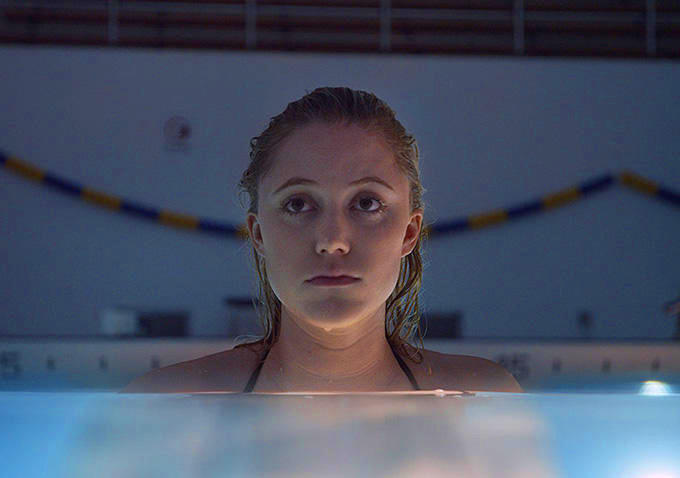
It’s unfortunate that the movie loses steam when it creeps into its third act and forces a solution and showdown with the monster that makes no sense whatsoever. I understand the need to feel like the teens can regain the upper hand or somehow outsmart the curse that doggedly follows them, but with everything presented, it’s just not believable. For the entire movie, we’ve seen that this supernatural force doesn’t really have a loophole in its system of rules. The only way to stave off annihilation is to pass it along and create a series of firewalls as protection with other sexual partners. Otherwise, it’s relentless and like zombies the eventuality is what helps magnify the sense of dread. We even see it get shot in a hasty defense from the teens and the gunshots do nothing. And yet, this vital information doesn’t seem to register with our band of teenagers. Their third act solution (spoilers): they’re going to lure the following terror into a pool and… electrocute it. Huh? Why would a supernatural entity that has not shown any weakness to electricity, or any mortal dangers, be able to be killed? This plan makes no sense and not one character voices a counter-argument to what is proven to be a very bad plan. Maybe the point is that it’s supposed to be bad, that it’s an example of how desperate these characters have become that they would hold out hope for something that is completely inaccurate. After this failed plan, Jay does exactly what you’d expect with the boy who’s been itching to jump her bones for the entire movie. He gets what he wants (physical copulation, being the white knight), she gets what she wants (flimsy security), and then the movie just kind of peters out and ends. I understand that Mitchell’s extended point is that there is no happy ending possible and the characters will have to uneasily look over their shoulders for the rest of their lives. However, the point could have been made even without the third act. I wish It Follows could have found a better landing than just shrugging and saying, “Well, what are you gonna do with curses, you know?”
 Before the movie hits the skids in the third act, I was pondering the greater implications and logistics of its sexually transmitted curse. Does “passing” it along require some form of genital contact? Does it require fluid exchange? If you wear a condom, does the prophylactic also protect your sexual partner from the transmission? Does the curse function relatively the same for same sex couples? What about people with non-functioning parts below the waste? Can someone who suffers from erectile dysfunction pass the curse along? Can it be transferred onto inanimate objects? Can men ejaculate into some sort of container and then send the container into space via the space shuttle and be protected? Actually, banging an astronaut who’s about to live on the space station or go to Mars might be the smartest move. I enjoyed thinking of a stratagem to best protect myself if I was caught in this scenario; even after passing it along and providing a buffer, you still always have to be on guard for the curse to move back up the ladder. My solution: have relations with a prostitute. This is probably a guarantee that the curse will be passed on within a 24-hour period, and even if that john is found and killed, chances are this prostitute may have already passed the curse along to a new client. If one cannot inoculate themselves from a supernatural STD-like curse with the aid of prostitutes, then there’s no hope for the rest of us poor mortals. Anyway, my mind wandered a tad.
It Follows may suffer due to the hype, the inconclusive resolution, and a third act that deflates, but it’s still an extremely well executed horror thriller with a terrific concept at heart. The sense of dread is stark and the camerawork and storytelling draw out the tension until you feel you’re about to break. It’s more unnerving than traditionally scary, but it has a power that does stay with you, particularly its fascinating premise and the natural relatability of the characters and their choices. I don’t know if this premise could sustain a sequel, especially with a villain that appears to be unstoppable, but that hasn’t thwarted the horror genre before in its stampede at cashing in on success. It Follows is a solidly entertaining and creepy movie, but it’s even more confirmation for me that David Robert Mitchell is going to be a filmmaker who has staying power. I’ll be following him.
Nate’s Grade: B+
Share this:

Annabelle (2014)
 The Conjuring was one of the breakout hits of 2013, so it’s no surprise that Hollywood fast-tracked a spin-off to take advantage of Conjurin’ fever. Enter John R. Leonetti, the accomplished cinematographer on The Conjuring and director of bad sequels like Butterfly Effect 2 and Mortal Kombat: Annihilation. Now in the spotlight, little Annabelle is proving to be a star of her own as far as box-office grosses are concerned. It’s too bad her new movie is about as lifeless as she is.
In the late 1960s, Mia (Annabelle Wallis) is pregnant with her first child when murderous cultists terrorize her home. They are dispatched but not before one young woman slices her own throat holding one of Mia’s expensive porcelain dolls, the Annabelle one. Her husband (Ward Horton, who looks like a living Ken doll) is afraid to leave her alone and reaches out to the church to help his wife. Strange things are going on in their home, mostly concerning the infamous Annabelle doll.
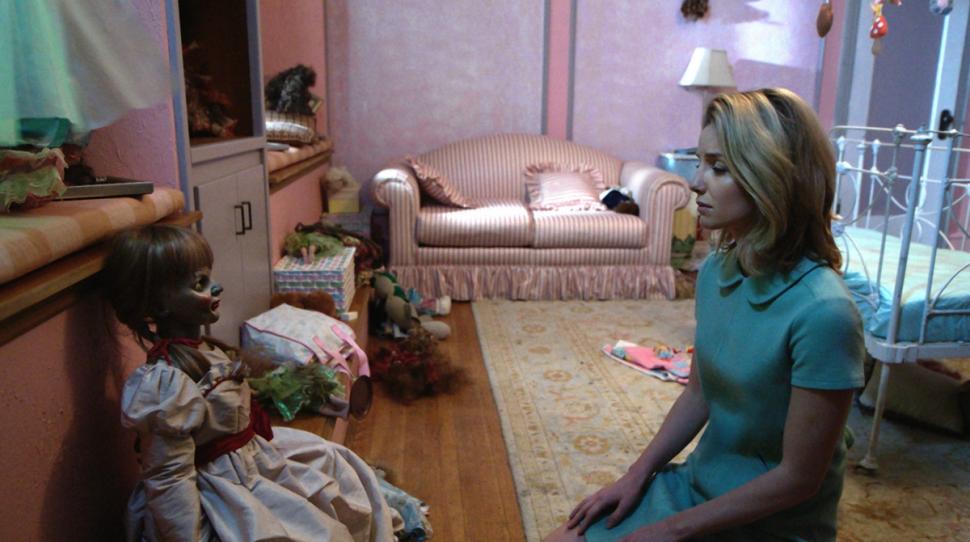
 The impact of Annabelle will depend directly upon your good will concerning The Conjuring and what your law of diminishing returns is with a creepy doll. To be abundantly clear, the Annabelle doll is one creepy looking thing. But how much can an audience take of a creepy looking doll that doesn’t have any articulation or expression? The character, and it feels like a stretch to label the doll as such, worked effectively as a prologue to The Conjuring due to the relative brief appearance. The doll was creepy enough for ten minutes and then the audience moved on. Now in a starring vehicle all to herself, Annabelle risks overexposure and the realization of just how limited this little demonic figure might be. A killer doll that comes to life is a genuinely unsettling proposition, one richly explored in a classic Twilight Zone episode that’s still spooky to this day. However, Annabelle doesn’t really do anything, and I suppose that’s the point. The doll is a conduit for the larger, invisible demonic force at play. We already know that it’s not the doll or a ghost but a demon posing as such. Ultimately, the doll isn’t anything more than a device to go back to again and again, a horror staple in place of true unnerving tension and dread. Hey, it’s hard to carefully manufacture and ratchet suspense, so why not just keep going back to a creepy looking doll instead?
With a lackluster antagonist, it’s no surprise then that Annabelle has to rely on all the hoary tropes of horror just to fill out its running time. The plot by writer Gary Dauberman plays out like the filmmakers watched Rosemary’s Baby, a documentary special on Sharon Tate, and said, “That’s it, we got out movie.” The Manson family-like cult is a plot element cast aside too quickly. They bring the demon to the doll, but the followers of this demonic presence never terrorize the couple again. It seems like one of many missed opportunities. Instead we get a slow series of events of the doll/demon messing around with Mia. There’s the kindly older priest that’s called into service, who does nothing. There’s a helpful neighbor mourning the loss of her own child who ends up an insulting plot device (more on this later with spoilers). And oh are there characters behaving stupidly, chief among them our heroine. She’s rather slow to realize the danger she is in and often leaves her baby alone to investigate said supernatural shenanigans. You know, the baby that is the object of desire for this demonic force. Rather than be proactive and have any sense of agency, Mia is that older type of horror heroine who runs around screaming and cowering in corners. It gets tired. There’s one scene where she’s trying to escape via an elevator that keeps opening on the same haunted floor. She literally hits the elevator button four times each time expecting something different, and the camera angle remains the same, leading to titters from my audience.
 While The Conjuring certainly wasn’t a brave new direction in the realm of cinematic horror, it was skillfully executed and masterfully setup its scares. Annabelle does have a few decent boo moments, many of which were showcased in the trailer, but it cannot overcome the burden of all its clichés and wooden characters. Audiences are used to characters making poor decisions in horror films, but you still should have some level of believability or internal logic to their decision-making that doesn’t make your brain hurt. Sadly, Annabelle cannot rise above the limitations of its titular “monster” and so it has to rely upon an assemblage of familiar horror tropes to make due.
This paragraph is going into spoilers concerning the ending so I’d advise any reader wishing to remain pure to skip to the next paragraph. The great actress Alfre Woodard plays that grieving neighbor lady, the one who is joyously buying Mia baby clothes for her little one. During a climactic confrontation, Mia demands to know what the demon entity wants. It communicates via crayon scrawls on the ceiling: “Her soul.” One of the film’s creepier moments. Then the baby disappears and she wants to know what it will take to save her child. Mia looks to a window and written on it is, “Your soul,” just as it gently pushes itself open. Again, a creepy moment. I was starting to get the impression the film was picking up momentum. She’s about to sacrifice herself when she’s pulled back inside. This is where the film goes from bad to insultingly bad. I kept repeating under my breath, “Don’t do it, don’t do it,” and wouldn’t you know, they did it. Woodard realizes her purpose: she must sacrifice herself so this nice white couple will be safe. She dives out the window and evil is vanquished… sort of. It’s a stupid character arc made all the more unpleasant by the racial casting choices. I’d rather Woodard just save herself.
This small prequel has proven to be a smash at the box-office, so where does Annabelle go from here? Another prequel seems unlikely considering the events of this movie cover the birth of the demonic doll and lead directly to the prologue of The Conjuring, where this spunky little doll met her match with the married paranormal investigators played by Vera Farmiga and Patrick Wilson. The real Annabelle is encased in a glass prison. The only direction seems to be forward, with Annabelle breaking free of her prison and having a night on the town. Maybe she can locate Chucky and that Twilight Zone doll. I just hope future adventures with Annabelle, and its box-office grosses almost assure there will be, veer away from the overload of uninspired genre clichés. There’s not enough effort on display to warrant this solo side project for a creepy doll that mostly just remains creepy. Annabelle the film could have used less of Annabelle the doll. Then again an unblinking and silent doll was still the most interesting character on screen.
Nate’s Grade: C-
Share this:

Fateful Findings (2013)
 Ever since the ascent of Tommy Wiseau’s The Room atop the dung heap mountain of midnight movie fare, the world has been avidly searching for the next so-bad-it’s-amazing film. There have been several contenders over the years, most of which were amusing, such as Troll 2 or the original Birdemic, but some of which made you consider the value of life itself, such as 2009’s After Last Season. Oh, that one still makes me wince. Don’t even see that one. But as a lifelong lover of all things cinematically terrible, thanks in part to growing up on a healthy appetite of Mystery Science Theater 3000, I am compelled to seek out the worst of the worst. The Room is one of my favorite movies of all time; my love for it knows no heavenly bounds. I have to sniff out anything that comes remotely close to replicating that wonderful experience.
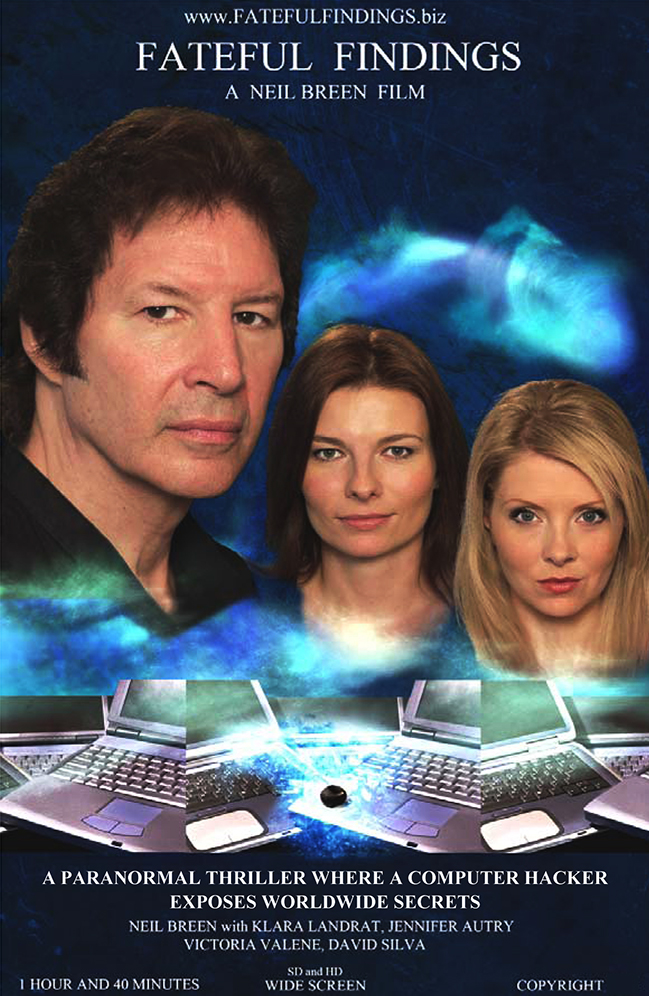
Enter Las Vegas realtor and architect Neil Breen. According to a Deadline Hollywood report from October 2013, Breen wrote/directed/produced/starred/edited/and just about everything else a little bundle of love called Fateful Findings. He sent it out blindly to distributors looking for any takers. It just so happens one bit, and now Fateful Findings is gearing up for a nationwide release specifically targeted at the midnight movie crowd that made The Room the sizeable cultural hit it is. Like Wiseau’s accidental masterpiece of cinematic miscalculation, Breen’s film is awash with bizarre directing choices, curious line readings, painful acting, subplots that come and go as they please, a lack of resolution, characters that behave more like aliens than human beings, odd camera framing and compositions, and, naturally, an ending that must be seen to be believed. For fans of woefully bad cinema, there’s a lot to dig in and I’ve got my knife and fork. First, I want to describe four of my favorite things about Fateful Findings and Breen.
 1) “It’s a magical day!”
The film opens with an eight-year-old boy and girl waking through the woods, coming across a magic mushroom (not that kind). The mushroom disappears, revealing a jewelry box, and inside is a black rock. “It must mean something,” young Dylan lets the audience know. Young Leah then says, twice, “It’s a magical day!” Oh, but if that wasn’t made abundantly clear, she also writes it in a notebook and shows it to the audience. But this opening scene isn’t done with its magic. We flash forward many years to an adult Dylan (Breen), who looks at least ten years older than the adult version of Leah (Jennifer Autry). Prepare for the sudden time jump shock. Anyway, Dylan and Leah never saw each other again after that magical summer that is… until she’s invited to a family barbeque. Why is this stranger, and her then fiancé, invited to a limited family engagement? Anyway, the way that these two people reconnect is that adult Leah bumps into adult Dylan and drops, what for it, the SAME notebook. It falls magically open to the SAME page, revealing the SAME message: “It’s a magical day!” Apparently she still carries that notebook around everywhere she goes and has never written in it since that fateful day. Who doesn’t bring a 30-year-old notebook with them to a barbeque?
2) “It was the Rolls Royce that hit ‘em. I saw it. I’m a witness.”
Also in the first ten minutes, we watch adult Dylan get creamed by a Rolls Royce. The speeded-up sequence itself is just hilarious to watch, especially since the car appears to be going rather slowly in the previous shot. Anyway, Dylan recovers in a hospital thanks to the black rock reviving him (make note when the EMTs arrive and their lagging sense of urgency). The collection of rubberneckers gathers at the accident scene, including one gentleman who, God bless him, foolishly attempts a British accent out of the blue, reciting the above line. I’m sure it would have been in question since the one car resting right next to the injured man is covered in his blood (how much did that cost to rent and splatter a car like that?). It’s at the hospital where Dylan unknowingly meets the adult Leah for the first time. She’s a doctor and pronounces Dylan “semi-comatose.” How is that a thing; can you be semi-pregnant? After his miraculous revival, Dylan leaves the hospital and re-enters his home, taking a shower. His wife, Emily (Klara Landrat, a former model), steps into the shower with him and happily embraces her man. Except beforehand we see a shot of his feet in the shower and blood is profusely streaming down his leg. Remember, all this is from a head wound, so how much does his head have to be bleeding to get down his leg? The shower is filled with blood, Dylan’s bandages are blotted red, and she steps inside. Gross. What kicks this entire sequence even higher in hilarity is that Dylan’s facial bandages actually cover his ENTIRE mouth and nose with no indentations for him to breathe out. When he detaches the oxygen mask, you’ll see there’s nowhere for him to actually breathe. Damn you, Obamacare!
 3) “No more books!”
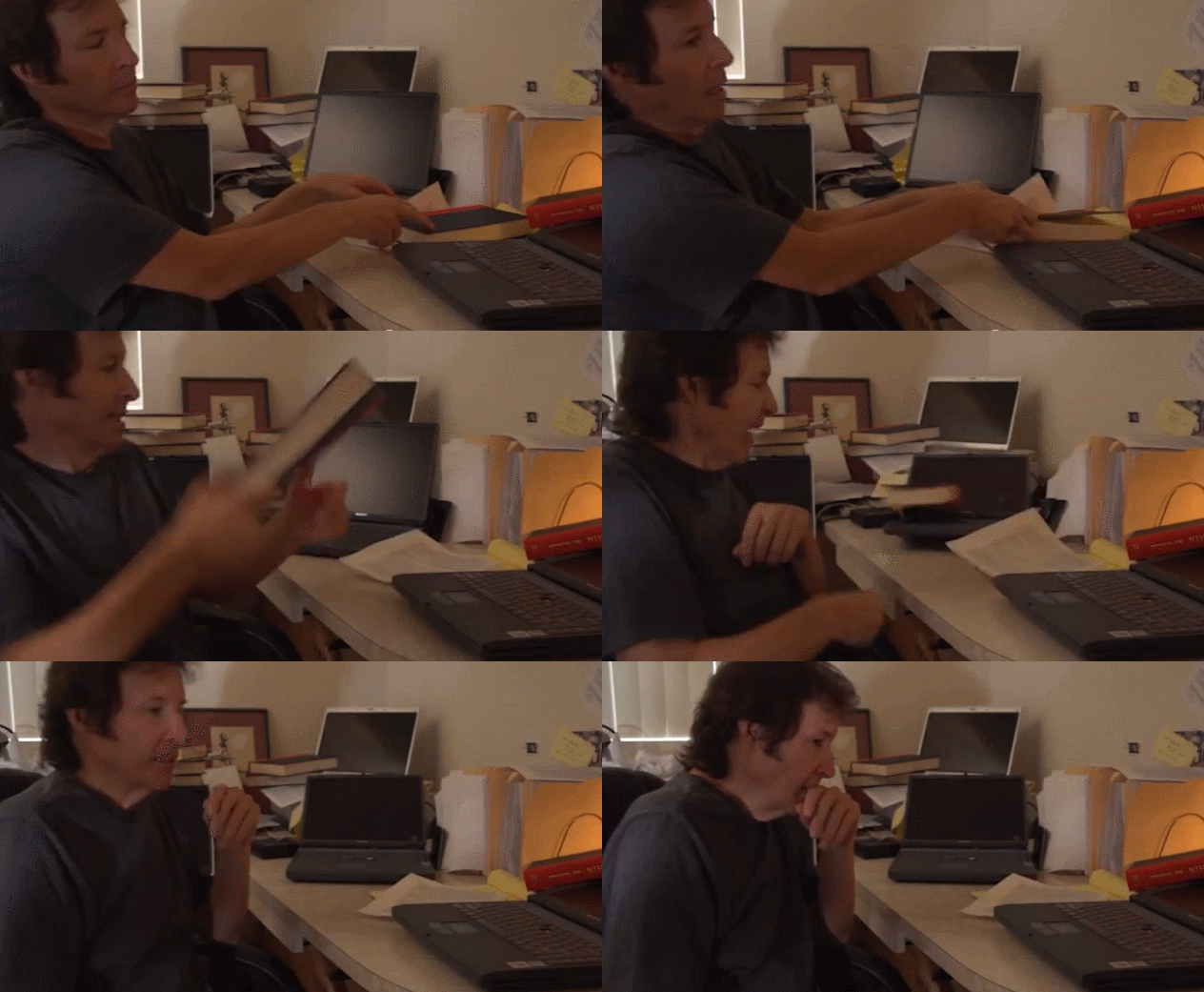
Once home, we learn that Dylan has a Master’s degree in computer science but became a successful novelist, a fact he seems almost disdainful about. This dichotomy is illustrated by the fact that Dylan has four laptops out at all times, none of which are ever really turned on. Why four? Why not? He pounds away, literally, trying to complete his next book, but when his temper arises, he almost always takes it out on the poor laptops. This is a very abusive film when it comes to laptops. My favorite moment is when Dylan is holding a cup of coffee and it looks like he’s going to spill it on that laptop. It’s a ten-second sequence that leaves you on the edge of your seat, finally ending in an even greater comic punchline. At another point, Dylan throws two books into two laptops before holding back his incalculable rage onto a third laptop. The only way people communicate is by throwing things in this film. You could turn Dylan’s tortured mistreatment of laptops into a drinking game.
4) “I can’t believe you killed yourself. I cannot believe you killed yourself. I can’t help you out of this one.”
I won’t go into detail about the context of this quote, to spare some spoilers, but it illustrates the habit of actors repeating lines of dialogue ad nasuem. The dialogue itself is rather plain, so it’s weird that Breen and company feel the need to keep repeating themselves, as if we’re missing some deeper hidden meaning. We’re not.
Breen has described his film in interviews as a genre-bending psychological thriller, and while some of those elements may be present in the faintest, most diluted distillation, the man’s movie is really the long story of two marriages coming apart. Dylan’s marriage with Emily hits the skids when she gets addicted to his pain medication, but neither person seems to treat this as the serious development it is; what makes this worse is that Dylan enables her addiction. He keeps getting her the meds when he clearly no longer needs them. It seems once his childhood sweetheart re-enters his life, Dylan just forgets he has a wife. The other marriage consists of Dylan’s bickering neighbors, Amy (Victoria Valene) and Jim (David Silva), and they really have no impact on the greater plot whatsoever, and yet Breen’s film wastes so much time on their story. They’re unhappy. He wants sex. She doesn’t. Eventually in the heat of the moment Amy does something impulsive and very criminal, and the movie treats it like any nominal plot moment. A vital witness to this crime doesn’t bother speaking up until fifteen minutes later in the film, as if they just had some nagging chores to do before alerting others about a serious crime. Perhaps Jim and Amy are, in some twisted perspective, Breen’s idea of comic relief (Jim’s exaggerated “drunk” movement, throwing drinks on one another, etc.), but for a movie that is nonstop comic blunders, what difference does it make?
 And then there’s the supernatural story that permeates the edges of the film, popping in from time to time to remind you during the marital discord that, oh yeah, there’s a mysterious ghost or something or other. The supernatural stuff begins muddled and unexplained and never really clarifies. It’s thanks to the black rock, which Dylan refers to as a cube, that he’s able to survive being hit by the car. If that’s the case, then I don’t think I’d ever let that sucker out of my pocket. I’d glue it to my hand. Inexplicably, the rock also gives Dylan the ability to transport himself through walls, though he only does this once and never explains how he knew. The way we know something “magical” is happening is when a little puff of grey vapor appears onscreen. Is it a spirit, a malevolent force? Does it have anything to do with this stupid book that keeps haunting Dylan? I feel like Breen is patterning himself after the work of David Lynch, except that Lynch’s films, which can consist of weirdness for weird’s sake, have cohesion, a vision. Fateful Findings has the occasional supernatural entity, but it’s rarely examined, and then we’re off to the next subplot as if spinning a board game wheel. Then the supernatural angle, which is only barely toyed with, and with such peculiar indifference, is abandoned and the movie wholly chases after another storyline.
The movie’s final focus is on Dylan’s super secret hacking uncovering all sorts of vague secrets and corruption from governments and corporations (“As president of… The Bank…”). Throughout the film, Dylan keeps mentioning this but it never seems terribly significant, at least judging by the characters’ actions. It isn’t until the very end where Breen spends more than a passing interest in this subplot, because we have more important storylines to feature, like Ally (Danielle Andrade), his neighbor’s teen daughter, inexplicably trying to seduce him. It comes out of nowhere and is just as quickly pushed aside (I also wonder how old Ally is supposed to be). Allow me to thread an analytical narrative to make sense of these dispirit storylines. Assessing the film, it sure comes across like Breen’s attempt to bolster his sense of self. In every scenario, people treat him as a treasured human being, he’s at the center of a diabolical conspiracy, he’s gifted with magic powers that separate him from normal men, all women want to seduce him, and then in the end he’s the one who makes the world a better place by exposing corruption. It sounds like a hero complex to me. Even acts that deserve harsh scrutiny, like his enabling of his wife’s addiction or his blasé attitude about carrying on an affair, are ignored. In this universe, Dylan is always right, always desired, always respected, and always special.
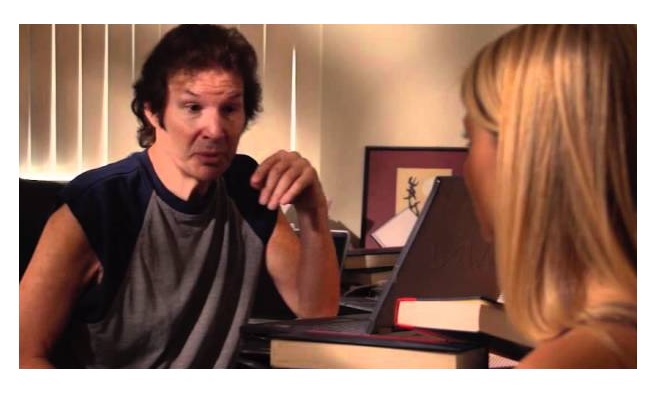
 The production has a hard time hiding its obvious shortcomings, sometimes hilariously so. It becomes clear very early that most of the film was likely shot in Breen’s home, which is fine except it also unsuccessfully doubles as other locations (the blinds are the big giveaway). The worst is the hospital room, which mostly consists of a bed and three oxygen canisters. What hospital room is going to have carpet? So much of the movie takes place in Dylan’s home office, with that plethora of laptops, that you’ll start to memorize the home layout. In the opening, with Dylan and Leah as kids, we’re shown modern-day vehicles and then flash forward at least 35 years. Could Breen not have shot the scene with some older vehicles? Then there are Dylan’s two therapist’s offices. The first one is the guy who keeps prescribing pain meds. Perhaps to communicate his overall incompetence as a doctor, Breen stages all of the therapy scenes in a conference room with both men sitting as far apart, at either end of the long conference table. What better way to foster patient intimacy? He also magically switches jackets in the middle of one session. The second therapist operates in what looks like a closet, and the only thing we see are two folding chairs. She may not really exist, or was in on the unexplained supernatural conspiracy, so perhaps the old lady therapist didn’t feel like putting that much effort into decoration.
The technical abilities of the Fateful Findings crew are, to be expected, less than stellar. The editing is another clumsy detraction, namely that Breen and his TWO other editors let their scenes meander several seconds longer than where they should have cut, giving the film a loping feeling. It’s like each person is counting mentally when to respond to the dialogue, and when one person finishes the film holds, counts as well, and then cuts. There are slow pans that add nothing to the film but space in between lines of dialogue. I don’t need rapid-fire cuts for what is essentially a domestic drama, but why the hesitant editing? Is it just a sneaky way of inflating the film’s running time? Even Breen’s staging of the camera can often be confounding. For whatever reason, the film often features camera shots of people’s feet or people very carefully cut off at the head, meaning their heads are not visible. It happens enough and for such nonessential scenes that I started to wonder if Breen found himself an Ed Wood-esque solution for not having his same actors for the scenes he needed them for. Beyond a Tarantino-size foot fetish, I don’t know why there are so many shots of feet. At least Breen is not as inept in his visual staging as the makers of After Last Season, a movie so bad it’s just bad beyond measure. Breen knows enough to adequately stage his scenes, which makes his choices all the more curious.
The acting is generally terrible across the board, occasionally breathtakingly bad. Let’s start with Breen himself, who is fairly listless and deadpan throughout. He raises his voice but rarely does he change how he’s responding. He’s aloof and strikingly self-serious at the same time. Breen’s command of his actors is limited to directing them to just ham it up. Most of the actors will exaggerate facial expressions and physical movements, providing more drama. Landrat is trapped by her storyline too early, and so she succumbs to the screaming wife with an Eastern European accent. Autry does no better, looking uncomfortable in every moment onscreen. The worst actor in the movie, easily, is Valene, who squawks in the same pained sing-songy manner with every line with nasally incredulity. The best performance in the film may belong to the mysterious old lady therapist who may not really exist. And yet, she’s the most grounded.
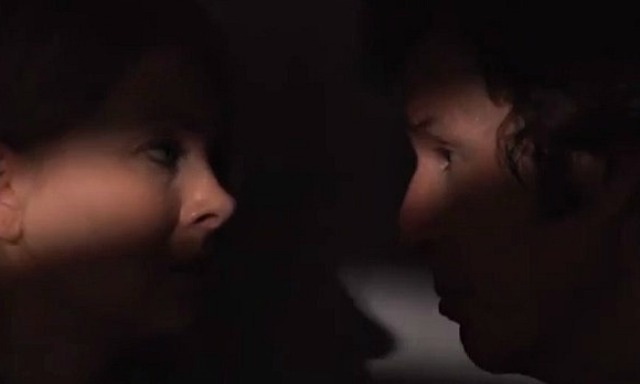
 Making the film seem even more alien is Breen’s chaste sense of human sensuality. One of the adjectives on the poster describing the film is “passionate,” but you have to wonder if Breen was just too uncomfortable, or perhaps his female actresses were, to make the onscreen passion a bit more palpable. The very way people kiss in this movie is so chaste. They lean in, pecking each other slightly on the lips, as if one was kissing their grandmother goodbye rather than engaging in uncontrollable passions. They were doing hotter fake kissing in 1940s Hayes code era Hollywood (check out Hitchcock’s Notorious and tell me that Cary Grant-Ingrid Bergman kiss still isn’t hot today). Breen’s passions are so modest and contained. Take for instance a scene of passion directly following a spat between Dylan and Emily, one where she threatens to leave him. Apparently that revved up their engines because they start tearing apart one another’s clothes and doing their chicken peck kissing. Breen, as is his usually fashion by this point, knocks over several laptops and throws papers into the air for what feels like a solid minute. Whenever disrobing one of the actresses, be it tearing of clothes or the more gentlemanly “unbuttoning” method, he always stops above his ladies bosoms, allowing a hint more cleavage but nothing beyond. It happens enough that it starts to become a noticeable artistic choice, as is his consistent framing of topless women sleeping face down on their beds. It gives just enough of a glimpse of partial nudity without revealing more (all four main actresses will go partially nude at some point in the film). This puzzled me because I was certain the only reason these actresses were selected is because they likely accepted a part where they would eventually display their physical assets. They’re not here because they can act, that’s for sure.
In fact, the only nudity in the entire movie belongs to Breen himself as he bares his behind while stumbling out of his carpeted hospital room. If you dare look closer, you’ll see the end of his gown catches the end of the hospital bed just so, allowing the flap to stretch and display Breen’s posterior. Either this was a one-time thing and Breen said, “why not?” or, and I think, given the nature of hero complex evidenced, this is more likely, that they kept shooting the scene until the flap caught and proudly displayed Breen’s rump. I suppose in the Garbage Bag Room (a reoccurring dream/nightmare in a space literally lined with garbage bags), there is a nude woman accompanying him, but she’s tastefully composed and likely a body double for Autry. For a man who looks visibly uncomfortable even kissing women, let alone disrobing them, it defies logic that Breen would acquiesce to his own nudity in his own film.
But the question that must be asked of all craptacular movies is whether it is the right kind of bad, the kind made with sincerity in equal measure with its incompetence. It’s one thing to make a bad movie and another to make it purposefully, chasing after the ever-hungry midnight movie crowd, looking to cash in with some canny filmmaking ineptitude (Birdemic 2, people). From everything I’ve gathered via Breen’s interviews, he’s legit. He even has previous movies to his name and I can only hope those will see a wider release. Breen’s film hits that so-bad-it’s-good sweet spot of derisive entertainment enjoyment. I was laughing just as many times as I was shaking my head. However, as a connoisseur of crap cinema, I must say that The Room maintains its throne. Breen’s film is a bit too lackadaisical in its nonsensical plotting and starts to feel redundant, and I’m not just talking about the oft-repeated dialogue. There is a finite level of bad to this film whereas The Room is a thousand brushstrokes of terrible. Breen’s film marvels but it may also test your patience at turns, unless you’ve been drinking heavily.
 Fateful Findings is awash in terrible decision-making, to the world’s benefit. Breen and his team have put together a movie that is baffling, ridiculous, and greatly entertaining. From the dropped subplots, repeated laptop abuse, inauthentic human behavior, hazy plotting, laughable special effects, chaste human interaction, strange feet-heavy framing, and that ending, oh the ending is just comedy gold; there’s a little something here for every discerning ironic viewer of bad movies, though the film does lag and repeat its offenses enough that it feels stretched and redundant. I’d say, amongst the spectrum of recent bad midnight movie fare, it’s probably just below Birdemic. I don’t know what the repeat value will be for Breen’s film, or whether it will catch on with audiences like Wiseau’s unexpected success. I can’t even say whether I really want to watch it again, but I will, and with a gathering of friends, and likely with the added benefit of some adult beverages. If Fateful Findings is playing at a theater near you, by means see it and bring your pals along for the fateful experience. It will make you think. Mostly about laptops.
Nate’s Grade: F
Entertainment value: A
Share this:

Frozen (2013)
 Enough time has passed that a revival of the 1990s Broadway formula that Disney stuck so aggressively to for so long is actually a welcome treat, especially when Frozen is this good of a movie. An extremely loose retelling of Hans Christian Anderson’s The Snow Queen, we follow two sisters and princesses, one of whom, Elsa, is gifted with magic powers controlling ice. She’s lived a life of solitude out of fear and penance for endangering her sister when they were kids. Ana has no idea, having her memory wiped through magic, and so she desperately wonders why big sis gives her the cold shoulder. After another accident, Elsa lets her powers loose, refusing to try and fit into the confines of society no longer. Ana is the only one who can save her and the town. Did you read any mention of a man in that plot breakdown? While there are significant male characters, including romantic suitors, Frozen is the story of a different kind of love, a familial love between sisters. It also generously pokes fun at Disney’s admittedly spotty record of heroines giving up their dreams for the first man they meet. Even the comedic side characters work wonderfully. Josh Gad (Jobs) as a magic snowman had me cracking up throughout with his dopey line reading and enthusiastic inflections. Idina Menzel (Rent) as the voice of Elsa is enthralling, and she gets the film’s “Defying Gravity”-esque showstopper, “Let it Go.” Kristen Bell (TV’s Veronica Mars) is terrific as the voice of Ana, vulnerable, heartfelt, and a little bit goofy, and she sings great. All the actors sing great (look what happens when you hire musical theater alums). Even better, the songs are catchy, well composed, and critical to the plot, short of a silly troll tune that should have been cut. The movie also looks gorgeous, which is surprising considering I thought the color palate would be limited with the film mostly taking place in the snow. But what makes the movie truly enjoyable is how emotionally engaging it is, the somber opening twenty minutes setting up just how much tragedy and misunderstanding there is between Ana and Elsa (the melancholy end to their song killed me). Their eventual reconciliation and the selfless acts of bravery might just make you misty. Frozen is a holiday treat for families, animation aficionados, and those hoping Disney could make a film with positive messages for young girls. In a weak year for animation, this rockets to the top of 2013. Just make sure you get the Disney version for your family and not, you know, the horror movie of the same name about people stranded on a ski lift. Though that’s a pretty good survival thriller itself, so, your call.
Nate’s Grade: A-
Share this:

The Lone Ranger (2013)
 With the director, star, and writers from Disney’s original Pirates of the Caribbean trilogy, you’d likely expect The Lone Ranger simply to be Pirates in the West, and it pretty much is, for better and worse. The pieces don’t nearly come together as well, and the characters aren’t anywhere close either, but I was mostly pleased with the finished results after coming to terms with the flaws of the execution. This is a semi-supernatural reinvention of the Lone Ranger and Tonto, prankish and proudly peculiar.
In 1869 Texas, John Reid (Armie Hammer) is the new district attorney for a small outpost along the railway run by tycoon, Mr. Cole (Tom Wilkinson). John’s brother (James Badge Dale) is the sheriff and the more accepted hero. This all goes awry when the nefarious criminal Butch Cavendish (William Fichtner) kills the sheriff, his posse, and leaves John for dead. He’s brought back thanks to Tonto (Johnny Depp), a Native American with his own quirks. Together, the duo struggle with the idea of justice versus vengeance and taking responsibility.
Thanks to screenwriters Justin Haythe, Ted Elliot, and Terry Rossio, it still follows the summer movie blockbuster blueprint while maintaining its own sense of self. I enjoyed the 1933 framing device and the sense of commentary it added to the legend of Wild West tall tales. Many of these story elements will be painfully familiar, from the unrequited love interest that needs saving, her plucky son, to even the villainous railroad baron, but the film finds ways to keep all these formula figures at least integrated and satisfying, doling out payoffs to several storylines. More so, the film just has a wild sense of fun to it, enlivened by Verbinski’s exuberant feel for action. When he gets things going, the man has a touch for inventive action orchestration akin to Steven Spielberg. He is a director who knows how to add scale and scope to action and make it felt. The movie feels constantly alive and full of surprises, stepping outside itself for some non-linear asides, adding bizarre examples of nature undone (In the words of Nicolas Cage: do not touch the bunny), and a heavy dose of magic realism. It’s just too funky and weird not to be interesting even when it threatens to be boring. Disney put crazy money into something this crazy, folks, reportedly $200 million.
 There are serious problems here much as there were in the Pirates sequels, notably a lingering sense of bloat. At 149 minutes, there could have been a lot of cuts. The saggy middle seems to almost derail all momentum, as Reid and Tonto stumble about the desert, filling in a majority of Tonto’s tragic back-story. Most of the supporting characters are chiefly underwritten. I pity the great Ruth Wilson, so nerve-fryingly awesome on the BBC’s Luther as an enthralling sociopath, and here she’s basically Love Interest/Single Mom for Reid. At least she does a decent job with her Texas twang. There’s plenty of overindulgence all around, and I won’t even entertain the argument that its handling of Native American displacement, while not as clumsily racist as feared, was anything other than schlocky. There are also three villains of different stripes that need to be juggled. There are a lot of storylines and characters to keep active and the movie just cannot keep up. The tone can be somewhat jarring as it dances around dark comedy, earnest sentimentality, tragic drama, and cavalier heroism. It feels like the movie never settles down, which can keep an audience from being fully engaged, fully invested. It hurts even more when the characters are nowhere near as charismatic as Captain Jack Sparrow.
Perhaps I’m being overly generous after coming from Man of Steel, and perhaps, nefariously, Man of Steel is still going on, locking me forever in some sort of parallel mobius strip where I’ll never be able to leave, but I greatly enjoyed the action sequences in Lone Ranger. Verbinski is one of the most talented visual filmmakers working today but, more importantly, he knows how to orchestrate large-scale action sequences in a way that they matter. Yes, like most things in The Lone Ranger, they can go on a bit too long, but here the situations develop naturally with organic complications, the sequences move the plot forward, and they escalate in excitement. The concluding twenty minutes involves a sumptuous dual train chase that keeps shifting and changing, going from atop to parallel trains, to cars being dislodged, people jumping from one to the other, all racing toward a bridge triggered with explosives. It’s a thing of beauty, this final action sequence, and Verbinski’s shot compositions allow things to play out so artfully while the audience still maintains its sense of orientation. It’s a finale that feels exhilarating, and the playful whimsy and sense of danger that the movie had been flirting with before comes together, enough for you to wish the whole movie had tonally coalesced with the skill shown toward the end. As an action fan, I was lapping it up, and the playful non-linear jumps, as well as the satisfying ends to some satisfying villains (Fichtner is terrific), left me grinning and hopping with excitement. A strong finish went a long way toward improving my opinion on the film and minimizing my misgivings.
Who is this dark, weird, somewhat clunky movie really appealing to? The Lone Ranger had its cultural peak back in the 1950s and thus the people actually excited for a Lone Ranger movie must be slim. And those people are probably going to be turned off by something as jokey and unfaithful to the source material as this movie. It does utilize the Ranger’s theme song, the William Tell Overture, but saves it for the end. What about kids? The movie is released under the Disney imprimatur and has the stamp of “from the creators of Pirates of the Caribbean.” Everybody loved the first movie and the sequels were also huge global hits, but this movie is even darker and somewhat grisly. There’s a moment when Cavendish literally cuts open a dude’s chest and eats his heart (mostly off-screen and implied mine you, but still). I can already hear the parental uproar. And while it’s somewhat implied that Cavendish and his men are cannibals, this storyline is never really touched upon again. Did we need the heart-eating scene to fully communicate how nasty our villain is? The true audience for the big-screen Lone Ranger may very well only be the mega fans of 2011’s Rango, Vernibski’s Oscar-winning foray into animation. If you like a somewhat weird, somewhat anarchic, tonally uneven movie with personality and eye candy, then perhaps Lone Ranger is for you. Problem is that this potential audience is going to be meager, but it does include me.
 I know there are many people out there experiencing stage four Depp fatigue, and I can’t blame them. His penchant for peculiar character construction can get somewhat tiresome if the movie doesn’t have more going on. In something like Alice in Wonderland, a movie I didn’t even like, at least his weirdness fit with the weird world unlike, say, Dark Shadows, a movie best forgotten by everyone involved. Here his Tonto is as head scratching as he is humorous. And is there an inherent awkwardness having a white actor, in this day and age, playing a Native American? According to the Internet, Depp has said he “probably” has some Cherokee ancestors because he’s from Kentucky. The funny (awful?) thing is that Tonto is often in white face with his special face painting (red face in white face?). I just don’t think he can apply the same bug-eyed, swishy, eccentric sensibility to every character and call it a day. Just when you think he’s gotten away from starring in every movie with Helena Bonham Carter, surprise, here she is. And it’s not even a Tim Burton movie, people! Tonto is seen less as side kick and more of a co-lead if not the real star, and part of that is the bankability of Depp as a box-office draw, part of that is Depp as an executive producer on the project, and part of that is just because the kooky Tonto is just far more interesting than the straight-laced Reid. Hammer (Mirror, Mirror) has the jaw line, the look, and an engaging yet square appeal to him, and if anyone saw The Social Network you know the handsome lad can act. Too often he ends up being a minor foil to Tonto; it takes him far too much hemming and hawing before he accepts his masked outlaw status. As a result, he’s something of a bland fuss bucket.
Disney’s big-budget reworking of The Lone Ranger will probably be held up as the prime example, in a non-Michael Bay summer, of everything wrong with studio filmmaking, the punching bag for blockbusters. Some may even invoke a comparison to another costly Disney endeavor, last year’s flop, John Carter. There are plenty of faults the movie exhibits, namely an extended sense of bloat and an uneven tone, but I’d be lying if I said I was obsessed with the faults by its spectacular end. The movie does enough right, and enough semi-right with enough style and verve, that I left my screening feeling giddy and satisfied. It might be too dark, too glib, too weird, or too self-indulgent, but those are all reasons that made me like this movie even more. There’s a character with a wooden leg that doubles as a rifle, and not only that but one of our villains, a cavalryman, has a clear fetish for prosthetic legs. And this is a Disney film! I can’t help but love the spirit at large. Thanks to a fine supporting cast, Verbinski’s high wire visual stylings, and some strange sensibilities, not to mention a grand finish, The Lone Ranger is as entertaining in what it does right as with what it does wrong.
Nate’s Grade: B
Share this:

Evil Dead (2013)
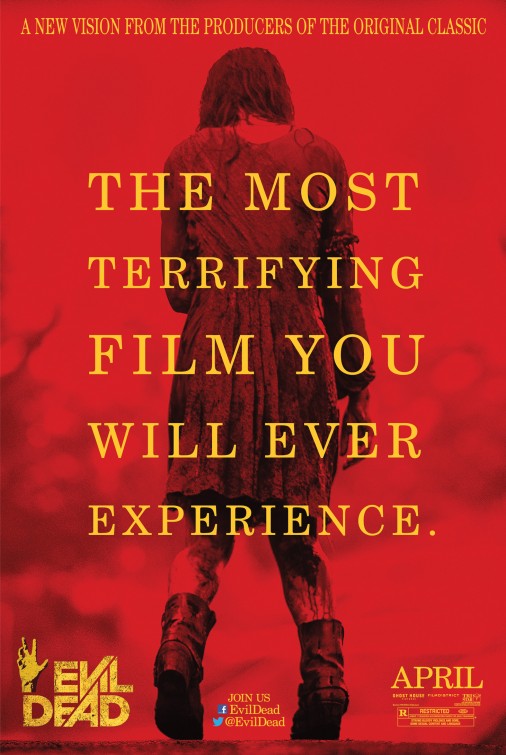 Upping the gore quotient considerably but having little else of merit, the remake of Evil Dead loses just about everything that made the original special. Gone is the sense of humor, unless you just count the quantity of gore to be the qualifier for “humor,” and gone is any real sense of a creative spark. It looks good thanks to director Fede Alvarez, and the practical gore effects can be memorable and truly disgusting in the best possible way, but it just doesn’t feel like an Evil Dead movie. It makes the same mistakes that your typical dumb horror movies do, from a lack of clarity to one-dimensional characters (I think Blonde Girlfriend had one line of dialogue for the first hour) to repeated rule breaking. There are a bunch of callbacks to the original Evil Dead but they serve little other purpose. The finale, after a series of fake-outs, involves a weak showdown with a Big Bad that’s anything but. I expect better from a remake sanctioned and produced by the original director, Sam Raimi, and star Bruce Campbell. Maybe they knew it was only a matter of time before their 1981 film, and its superior 1987 sequel, would be remade by a cannibalistic Hollywood, so they wanted to cash in while they could. Or maybe they just argued, if anyone was going to make a poor remake, it might as well be them. If you’re hungry for gore, then Evil Dead may suffice, otherwise it’s a horror movie that’s too familiar, too mediocre, and ultimately too disappointing to recommend.
Nate’s Grade: C+
Share this:

Movie 43 (2013)
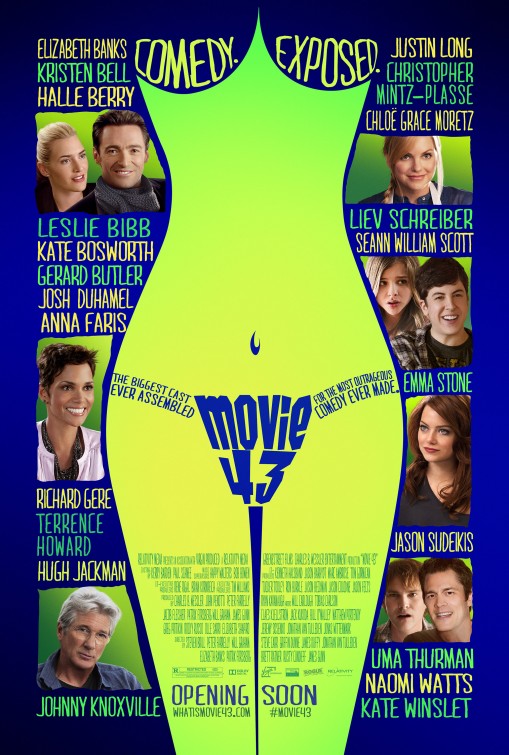 There were two driving reasons why I chose to go see Movie 43, the collection of 13 comedy sketches from different writers and directors. First, the red band trailer made me laugh, so I figured it was worth a shot. If one sketch didn’t work, there was always another ready to cleanse my comedic palate. The other reason is that I have been compiling sketches written by myself and my friends with the intent to make my own sketch comedy movie in 2013. Part of me was also concerned that something so high-profile might extinguish my own project; maybe we came up with similar material with sketches. After watching Movie 43, a tasteless, disconnected, and ultimately unfunny collective, I have renewed hope for my own project’s success.
Like most sketch comedy collections, Movie 43 is extremely hit or miss. This ain’t no Kentucky Fried Movie or even the Kids in the Hall flick. Rating this worth viewing depends on which side racks up the most. Unfortunately, there’s more terribleness than greatness on display, but allow me to briefly call out the film’s true highlights. The best segment in the movie, the one that had me laughing the longest, was a bizarre fake commercial that does nothing more than presuppose that machines, as we know them, are really filled with small children to do the labor. Seeing little urchins inside a copy machine or an ATM, looking so sad, with the faux serious music welling up, it made me double over in laughter.
 With the actual vignettes, “Homeschooled” and “Truth or Dare” where the standouts that drew genuine laughter. “Homeschooled” is about a mother and father (real-life couple Naomi Watts and Liev Schreiber) giving their son the total high school experience, which amounts to degrading humiliation. Dad makes fun of his son’s penis in the shower. Mom and Dad throw a party with the cool kids but don’t invite their son. Dad tapes his son to a flagpole. The kid gets his first awkward kiss thanks to his mom. It’s outrageous without falling victim into being crass for the sake of crass, a common sin amongst many of the vignettes. “Truth or Dare” starts off innocuously enough with Halle Berry (Cloud Atlas) and Stephen Merchant (Hall Pass) on a blind date. As the date progresses, they get into an escalating game of truth or dare that each has them doing offensive acts, like blowing out the candles on a blind kid’s birthday cake. This segment knows when to go for broke with it silliness and it doesn’t wear out its welcome, another cardinal sin amidst the other vignettes.
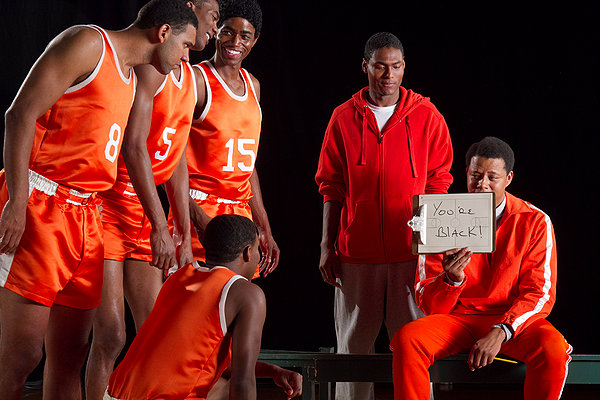
But lo, the unfunny sketches, or more accurately the disappointing sketches, outnumber the enjoyable. Far too often the sketches are of the one joke variety and the comedy rarely leaves those limited parameters. So a sketch about a blind date with a guy who has testicles hanging from his chin (Hugh Jackman) is… pretty much just that. There’s no real variation or complications or sense of build. It’s just that. A commercial about an iPod built to model a naked lady is… exactly that and nothing more. A speed dating session with famous DC superheroes like Batman (Jason Sudeikis), Robin (Justin Long), Supergirl (Kristen Bell) and others should be far cleverer than what we get. While I laughed at the sports sketch “Victory’s Glory,” it really all boils down to one joke: black people are better than white people at basketball. That’s it. “Middleschool Date” starts off interesting with a teen girl (Chloe Grace Moritz) getting her period on a date and the clueless men around her freaking out that she is dying. However, this is the one sketch that doesn’t go far enough. It really needed to increase the absurdity of the situation but it ends all too quickly and with little incident. “Happy Birthday” involves two roommates (Johnny Knoxville, Sean William Scott) interrogating an angry leprechaun (Gerard Butler) for his gold. It pretty much just sticks to slapstick and vulgar name-calling. That’s the more tiresome aspect of Movie 43, the collective feeling that it’s trying so desperately to be shocking rather than, you know, funny.
The worst offenders of comedy are the scathingly unfunny “Veronica” and “The Proposition.” With “Veronica,” Kieran Culkin tries to woo his lady (Emma Stone) with a series of off-putting sexual remarks, delivered in an off-putting “bad poetry delivery” manner, while the film is off-puttingly shot with self-conscious angles that do nothing for the comedy. It’s a wreck. “The Proposition” is just one big poop joke. It’s far more gross than gross-out.
 The frame story connecting the varied vignettes is completely unnecessary. Well, I suppose there is one point for its addition, namely to pad out the running time to a more feature-length 94 minutes. The wraparound storyline with Dennis Quaid pitching more and more desperate movie ideas never serves up any good jokes. Its only significance is to setup an ironic counterpoint that gets predictable and old fast. Example: Quaid says, “It’s a movie with a lot of heart and tenderness,” and we cut to a couple that plans on pooping on each other. See? You can figure out its setup formula pretty quick. I don’t understand why the people behind Movie 43 thought the perfect solution to pad out their running time was a dumb wraparound. These sketches don’t need a frame story; the audience is not looking for a logical link. For that matter why is the guy also pitching commercials? I would have preferred that the frame story was completely dropped and I got to have two or three more sketches, thus perhaps bettering the film’s ultimate funny/unfunny tally.
There will be a modicum of appeal watching very famous people getting a chance to cut loose, play dirty, and do some very outrageous and un-Oscar related hijinks. The big name actors do everything they can to elevate the material, but too many sketches are one joke stretched too thin. I suppose there may be contingents of people that will go into hysterical fits just seeing Hugh Jackman with chin testicles (I think the Goblin King in The Hobbit beat him to it), just like there will always people who bust a gut when a child or an old person says something inappropriate for their age, or when someone gets kicked in the nuts (the normal ones). I just found the majority of Movie 43 to be lacking. It settles far too easily on shocking sight gags and vulgarity without a truly witty send-up. It wants to be offensive, it gleefully revels in topics it believes would offend the delicate sensibilities of an audience, but being offensive and being funny are not automatically synonymous. You have to put real work into comedy. Movie 43 isn’t it.
Nate’s Grade: C-
Share this:

Mama (2013)
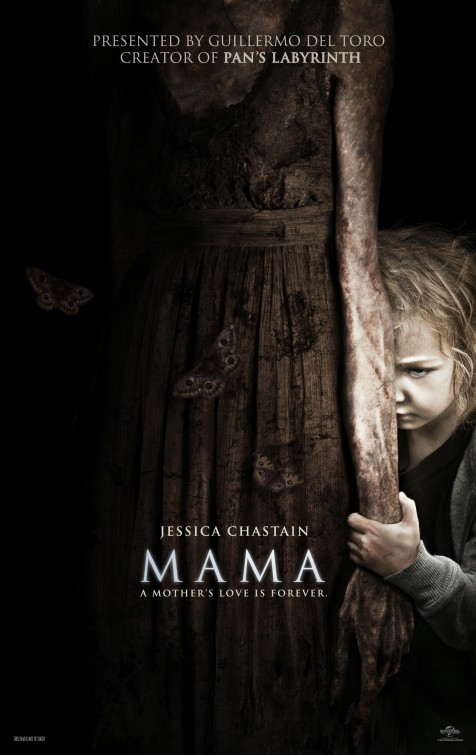 Guillermo del Toro is no stranger to the things that go bump in the night. He helped shepherd the horror film Mama to the big screen, and his love of heavy atmosphere and creepy, agile, lithe figures of terror is still evident. This is a rather effective and very creepy little horror movie that has enough little scares, big screams, and plain skin-crawling moments to recommend. The plot involves two little girls left to fend for themselves out in the wilderness. The two young actresses are fantastic, with terrific physical command of their bodies, able to slink and hop around like feral beasts. They help emotionally ground what could have been an otherwise ordinary ghost story. Oh yes, the girls prayed to a protector known as “Mama” who happens to be a malevolent and jealous spirit. Pity Jessica Chastain (Zero Dark Thirty), not just for her Gothic haircut and heavy eyeliner, but also as the girl’s reluctant foster mom. I’m shocked at how disturbing it is to watch a highly articulated physical specimen bend and snap and scurry at odd angles, broken arms bouncing like insect mandibles. And director/co-writer Andrés Muschietti knows how to properly tease an audience with just enough show and tell. The end is rather rote and familiar but, due to the emotional connection, has moments of genuine poignancy. Credit the considerable talents of the little ones as well as the devious vision of Muschetti and the guiding hand of del Toro. Give Mama a look.
Nate’s Grade: B


 nathanzoebl
You must be logged in to post a comment.