Blog Archives
The Matrix Resurrections (2021)
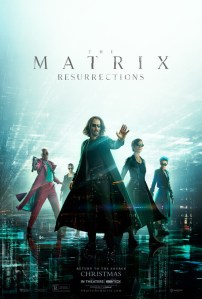 It is hard to overstate how influential The Matrix was upon its release in 1999. It rewrote the science fiction and action genres for Hollywood and introduced American audiences to many of the filmmaking techniques of Eastern cinema. It was exciting, philosophical, challenging, and made an instant brand out of the Wachowskis, the writing/directing siblings who had previously only directed one indie movie. The 2003 sequels were filmed back-to-back and released to great anticipatory fanfare and then, later, derision. The Matrix sequels, Reloaded and Revolutions, became a shorthand joke for bloated artistic miscalculation. They were talky, draggy, and just not what fans were hoping for jacking back into this strange world, and years later I think they’re worth a critical re-evaluation. Flash forward to 2021, and Lana Wachowski has resurrected The Matrix, and with the original actors for Neo and Trinity, both of whom died in Revolutions. Why go back? I think part of this was the declining career of the Wachowskis as directors. I personally loved 2012’s Cloud Atlas but it was an expensive and messy money-loser, the same as 2008’s Speed Racer and 2015’s Jupiter Ascending, a cosmically bad movie. So now it’s back to The Matrix with an older Neo, and older Trinity, and more of the same by design. The Matrix Resurrections just made me sad. It’s a movie that feels resentful for its own inception.
Thomas Anderson/Neo (Reeves) is living out his life as an award-winning game designer. His company and business partner, Smith (Jonathan Groff), are looking for their next big hit, and they’re looking backwards at Anderson’s biggest success… the “Matrix trilogy.” It was a virtual reality program that skewered the difference between reality and fiction. Mr. Anderson might have even based the role of Trinity on Tiffany (Carrie Anne-Moss), a woman he has grown infatuated with over time at a coffee shop. Except Mr. Anderson is having trouble determining what is real and what is only in his head. That’s because a new, younger Morpheus (Yahya Abdul-Mateen II) is telling him that he’s Neo, that he’s destined for greater things, and that he’s been kept in an unorthodox prison to keep him out of the action. Everyone seems interested in reactivating Neo, but for what purpose, and what has happened in the ensuing decades since the end of the war with the machines?
 Part of my struggle with Resurrections is that it too is struggling with its own existence, and not in a meta-textual sort of identity crisis, more like a reason to carry on 18 years later. Fair warning, this movie is far, far more meta than you are anticipating. The entire first hour of the movie features characters justifying rebooting “The Matrix,” the game. It’s a movie where characters glibly talk about parent companies going forward with the IP with or without the involvement of the original creators, so better to be the one trying to staunch the bleeding I suppose. A character literally says Warner Brothers wants a new Matrix and they will not stop until they get one. There are characters that sit around a table and try and break down what made the original Matrix (the game) so cutting-edge, and every person has a different brand slogan. “It was edgy.” “It blew your mind.” “It was a thinking man’s action story.” This prolonged section of Resurrections feels entirely like Wachowski speaking directly to her audience and saying, “Look, I had no reason to be back here. They forced my hand, and I want you to know that I’m not happy about it.” There are literal moments from the 1999 film that are presented as if the characters in the matrix are watching The Matrix to recreate scenes like avid cosplayers. There is one part where a character just starts screaming the word “reboot” with profane intention, promising to get their own spinoff as a threat. The entertainment industry satire about reboots and cash-grab sequels is funny but misplaced and coming from a perspective of defiance. If this was all the movie was then it would have been a fascinating example of an artist burning the bridge to their most successful franchise out of willful spite. However, if we had our own little focus group and asked what made the original Matrix so enjoyable, I doubt anyone would list, “entertainment industry satire and meta humor.”
The Matrix movies are well known for being a smarter, more ambitious viewing experience (“A thinking man’s action story”), blending philosophy and mysticism into anime-style action and kung-fu fights. There’s an intentional repetition here, built upon delivering something familiar and safe to audiences but with a “next gen” feel. We have a new Morpheus and a new Mr. Smith here, but did we require either? When they go through the motions of patterning themselves on characters of old, it feels strained, it feels gassed, and it’s another instance where Wachowski telegraphing to her audience, “Look, the studio demanded I bring back these characters, but I’ll be damned if I know what to do with them.” Morpheus has a little more story leverage as a catalyst for bringing Neo back to his path of enlightenment. Truth be told, I don’t really know half of what was happening in this movie, which lacked the elegant connectivity of the best action movies, linking cause and effect (the Merovingian would be proud of me) and pushing the movie forward to its inevitable conclusion. Even the prior movies felt more like the creators knew what was going on, even if the audience was lagging behind. With Resurrections, it feels like Wachowski and her screenwriters, novelist Dave Mitchell (Cloud Atlas) and Aleksandar Hermon (Sense 8 finale), have just given up trying to make sense of it all.
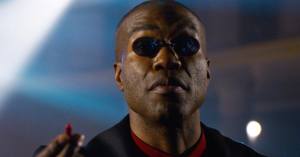 Another disappointment is the lack of any signature or memorable action sequences or, in the words of the Matrix round table, moments that “blew your mind.” The use of phones as transport in and out of the matrix has been replaced with mirror portals and doorways, which initially got my hopes up. There are such playful visual possibilities incorporating portals into action (see: Doctor Strange, even Matrix Reloaded), and I felt that Wachowski was up to the imaginative challenge. It too feels like another element that barely registers. The movie takes the anyone-can-become-an-Agent threat of the original trilogy and says, “What if instead of facing deadly Agents, it was just dumb zombies?” The new machines decide to rely upon a hive-mind system of grabbing whatever humans are in the vicinity and taking control of them into mindless foot soldiers. Let’s explore what a downgrade this is. The Agents were dangerous because they had powers that ordinary humans could not hope for, like the bullet dodging. In this movie, ordinary people are easily foiled and often a pathetic excuse for super-powered adversaries. The final act involves an escalation in numbers of the hive mind, but we’ve already been here with the multiple Agents Smiths of the sequels. There is one disturbing change-up where the machines realize how humans can just serve as canon fodder that is dark but a more effective attack. Even the requisite martial arts battles and gravity-defying wire work are humdrum this round.
If there is one thing that Resurrections does well it’s staking its identity out as a romance. Much of the second half prioritizes the relationship between Neo and Trinity, which was always taken for granted in the sequels. It was a romance of more utilitarian purpose, providing Neo with a love interest to motivate him to be saved in times of great peril. With Resurrections, the movie actually takes time to devote to Neo and Trinity as people with desires and what they would find appealing about the other. He’s not the savior of mankind, and she’s not his gateway to knowledge and empowerment. They’re portrayed as people, somewhat unhappy in their lives, and just hoping they might have another chance meeting at their shared coffee shop for one more electrifying conversation. The evolution of the movie places even more importance on this human connection, so I’m glad time has finally been given to exploring what it is that connects Trinity and Neo, especially if their love story is going to play as prominent a resolution to Resurrections. If you have never cared about Trinity and Neo as a couple, then you’ll likely be in for a disappointing second half.
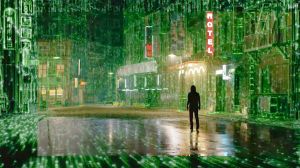 From a technical standpoint, Resurrections is still a feast for the senses. The photography is moody and atmospheric. The musical score is pumping. The special effects are state-of-the-art. There are a lot of talented people working on this sequel. So why then does the movie feel so perfunctory? In some regard each Matrix sequel has felt this way, adding extraneous pieces onto an already perfect standalone film. Having re-watched both Reloaded and Revolutions again, I can affirmatively declare Resurrections to be the weakest Matrix entry yet. We were all a bit too harsh on the prior two Matrix movies, which fall short of capturing the original’s magic alchemy but bring the goods when it comes to memorable set pieces, eye-popping visuals, and narrative zigs instead of zags (It was undercutting audience expectations before it was cool). They are still a bit too stuffy and talk in circles, but there are definite Major Ideas percolating underneath. In contrast, Resurrections feels more powered by resentment, by Wachowski coming back to this world against her better wishes and judgements. Maybe we should have left things alone.
Nate’s Grade: C
Share this:

Spider-Man: No Way Home (2021)
 This is going to be a difficult review to write. It’s the third Spider-Man movie in the Tom Holland era, though his sixth Marvel Cinematic Universe (MCU) appearance as the character, that much can be said. The MCU has been teasing a universe of parallel universes for a while now, even famously in 2019’s Far From Home, the previous Spider-Man film, and which No Way Home opens seconds later to deal with its immediate aftermath. The scuttlebutt with this new Spider-Man movie is that it is the most Spider-Man in all senses, bringing past iterations from the original Tobey Maguire run (2002-2007) and the maligned Andrew Garfield reboot (2012-2014). We know villains from each non-MCU Spider-Man film are making special appearances, and there are expectations for plenty more special appearances, so by that notion, writing a film review about a movie built upon surprise inclusions and secret revelations can be daunting to even be readable without giving too much away. I’ll do my best, dear reader. Spider-Man: No Way Home is not the best Spider-Man movie, in the MCU or prior, but it’s a rollicking adventure that will play like catnip for fans of the series, all iterations, and has some of the strongest moments of any web-slinging blockbuster.
In the wake of Mysterio framing Spider-Man (Holland) and revealing Peter Parker’s real identity, life has not been kind to your friendly neighborhood Spidey. The public has turned on him and even his best friends are suffering the consequences of their personal relationship. It’s enough that Peter seeks out his old pal, the wizard Doctor Strange (Benedict Cumberbatch), to cast a spell to erase the world’s memory of who Spider-Man really is. The magic spell, naturally, goes wrong, and villains of Spider-Man from other universes begin to appear. These larger-than-life characters are dangerous but also confused; this isn’t their universe, and this isn’t their Peter Parker. Doctor Strange is happy to send them all back to their primary universes, to correct the loose ends of the spell, but Peter doesn’t want to send them all to their fated deaths. He wonders if maybe they can be cured or reformed and if it’s too late to still do the right thing.
 First things first, you need to know that this movie is going to play much, much better if you are familiar with, and especially if you’re a fan of, the previous Spider-Man movies. No Way Home almost feels like it was written by a fan who has been nurturing a desire to do right by all past Spider-Man films. This feels like someone who had assembled a list of unresolved issues from different Spider-Man movies for over twenty years and said, “Hey, could I write these characters another ending that can redeem them and provide better closure in a way that is meaningful?” Because of that, each new character that comes through has a definite jolt of fan excitement like an all-star reunion, especially for characters you never thought you would see again. Certainly, some characters have more meaning than others, but I was pleasantly surprised how well integrated and written so many of the villains come across. Returning screenwriters Erik Sommers and Chris McKenna have ret-conned and redeemed the various Spider-Man missteps of old and have given characters more attention and fitting resolution, which makes this a surprisingly emotionally deep Spider-Man in ways you weren’t expecting. There are character reunions and resolutions that I didn’t know I needed, and I was smiling and even battling back tears of my own at various points. If you’re a fan of the recent Holland run, then the movie will still play well, but if you’ve been with Spider-Man from his cinematic beginning (if you really want to feel old, the original Spider-Man teaser involved the World Trade Center) then this movie will feel like a nostalgic blanket to warm you all over.
I think it’s safe to discuss some of the villains that have been prominent in the advertisement and later trailers, but if you wish to skip any character details, then skip to the next paragraph. It shouldn’t be much of a surprise that the two biggest villains are the ones with the biggest screen time and most allowance at redemption. Willem Dafoe as Norman Osborne (Green Goblin) and Alfred Molina as Doctor Octavius (Doc Ock) are treasures. It’s so good to see them again in these roles and each actor is just as good as you recall from their time 15-plus years ago. I was worried that bringing Doc Ock back could spoil the redemptive turn he has at the end of 2004’s Spider-Man 2, sacrificing himself to save the day from his own dangerous experiment. Little did I know that the entire movie was going to seek redemptive arcs for a veritable Sinister Six-worth of Spider-Man villains. It becomes the backbone of the movie, and I was skeptical at first but the movie found ways to win me over with just about every character’s inclusion. Norman and Octavius are similar in that they are battling other sinister personas in their heads, and when the real versions of each man break through, it’s often in heartbreaking moments of existential confusion and sadness. This is a movie that has time to fit in Spider-Man memes as well as question the moral culpability. It’s fascinating that a huge Marvel movie is so concerned with providing glimpses of humanity and compassion to bad guys from movies that the general public didn’t even generally like.
 This is the best acting of Holland’s Spider-Man run. He really gets put through the wringer about the consequences of trying to make the moral choice, both good and bad. His most emotional moments got me each time because of the investment in his character growth over six movies as well as the added investment in the supporting characters too. This is the most integrated and important both Ned (Jacob Batalon) and MJ (Zendaya) have been to the plot, and they have a platonic hug at the end that sent me into a tailspin of emotions for what it meant. The humor and natural camaraderie of the actors is still there, a hallmark of the MCU Spider-Man series. I laughed plenty, especially with certain characters deconstructing their parallels and connections (“Gotta watch where you fall,” a villainous understatement). However, this is the most emotional Spider-Man likely ever, and the actors all perform ably. I want to single out Marissa Tomei as Aunt May because she’s been undervalued in these movies until now. This is the biggest role Aunt May has played and she serves as the voice of morality to push Peter to do what he knows is right even in the face of outlandish adversity and personal cost.
No Way Home works better thematically than as a well-constructed plot. The solutions to the villain redemption are laughably convenient, and while it’s not as expressly magic as Doctor Strange’s spells, it’s pretty much the equivalent of technological magic. That’s fine, because it’s less the struggle of invention and more the choice that matters for each character. The mechanics of the ending also feel overly convenient and tidy (you could have just done this the whole time?). When Doctor Strange is chastising characters for hasty decision-making, it’s the movie calling attention to its own cheats. The movie splits so much of its time across multiple villains and drafting off of your old feelings. There are other narrative shortcuts taken and abbreviated, especially Strange’s involvement. He’s left out of much of the movie for the same reason Captain Marvel was left out of much of the final battle with Thanos in 2019’s Avengers: Endgame: he’s too powerful to have on the board. I’m not saying the screenwriters made the wrong choices on what to emphasize. The emotional beats of this movie hit strongly, and if they have to rely on a few cheats and nit-picky hand-waves to get there, then so be it.
 From an action standpoint, I think this might rank last for me in the series. Returning director John Watts has never wowed me as an action director. He’s not bad at staging the big moments but he seems more present in zippy tone than in style on a big stage. The added wow factor of seeing the various characters assembled on screen will compensate for much of the action feeling contained to dank sound stages. I think this was done as a cautionary measure to keep the secrets from being leaked, but it also shortchanges the action possibility. There’s nothing in this movie, from a pure action standpoint, that rivals the Venice or London sequences in Far From Home. The movie utilizes portals, and it got my hopes up for clever action inventions, but it serves as more plot device than action complication. There have been some artistic sacrifices, narratively and visually, to accommodate the Spider-Man Movie All-Stars approach, and while I think the filmmakers have emphasized the correct parts, it does still feel like there are some nagging shortcomings to an overall experience that plays exuberantly.
Finding a comfortable medium between fan service and creative constriction, Spider-Man: No Way Home is not the best Spider-Man movie but at the same time it just might be. It serves as a salve to the rest of the franchise, five iterations across two different runs, and because of that level of attention and compassion, the past movies get a little bit better, with more added resolution, more character moments, and second chances to correct miscues and blunders. Who among us wouldn’t want another opportunity to correct our mistakes? While ostensibly setting up the troubles ahead for the MCU (the trailer for 2022’s Doctor Strange: The Madness of the Multiverse is the final post-credit scene), the movie feels entirely backward-looking, rewarding fans of the character and resolving to do better where other films had gone awry. Maybe (Disney)Fox could do something like this for the bad X-Men movies? I don’t know if the same punitive charges of being slavishly nostalgic will hit No Way Home like they’ve done for the new Ghostbusters and Star Wars. It’s definitely still accessible for newer fans but plays best to the people with the longest investment, but isn’t that every continuing movie series? No Way Home is a rewarding cinematic experience of many highs and fun surprises and cameos as well as a humane redemption for the sins of Spider-Man’s past. It’s not the best superhero movie but it might be the most joyous one yet.
Nate’s Grade: B+
Share this:

Ghostbusters: Afterlife (2021)
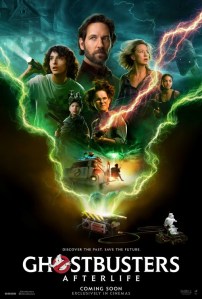
As I stated in my review for the 2016 Ghostbusters, allow me to wax nostalgic and explain my own private history with the franchise: “Growing up in the 80s, other kids had Transformers, or G.I. Joe, or He-Man, but I was a Ghostbusters kid. I fell in love with the 1984 original movie, slept below the poster for most of my childhood, and obsessively collected all of the action figures and toys, watched with glee the animated TV series, and hold the world and its characters in a special personal place.” This franchise means something to me. I think about the hours I spent playing in this world and my imagination and my own stories illustrated with marker and crayon, and it makes me extremely happy as well as reminds me how I fell in love with weird storytelling and macabre, ironic humor. I’ve been waiting for more Ghostbusters movies for my adult life. The 2016 movie was fine, I wasn’t enraged by it in the slightest, but it didn’t scratch that itch. While replicating some of the same plot beats, the 2016 movie was not reverent to its source material. Now the 2021 Ghostbusters, delayed over a year and a half from COVID, goes completely in the other direction. Ghostbusters: Afterlife is reverent to a fault, and while it has been met with mixed reviews and complaints of overdosing on slavish fan nostalgia, I found it to be a charming and fun family adventure that left me laughing, cheering, and even crying.
Egon Spangler (Harold Ramis, R.I.P.), original Ghostbuster, is dead, killed by a malevolent spirit. His estranged adult daughter, Callie (Carrie Coon), and her two teen children, Trevor (Finn Wolfhard) and Phoebe (Mackenna Grace), are shocked to learn of his death and their unexpected inheritance: a dirt farm in small-town nowheresville Oklahoma. They don’t know much about their grandfather and the kids are not exactly excited about relocating to a secluded mining town. Phoebe starts discovering weird pieces of technology hidden in the old house of her grandfather’s. A presence seems to be reaching out and trying to get the family to understand their real legacy. It appears that Gozer the Gozerian was not fully defeated on top of that New York City skyscraper in 1984, and Phoebe and her family must learn about the past in order to make sure we all have a future.
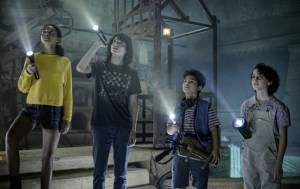
I can understand the charges of Afterlife being too nostalgic, but I don’t understand the charges of it being so enamored with its past that it poses a disservice to the movie standing on its own. This movie is intended at its very DNA to live within the shadow of the original films. The director and co-writer, Jason Reitman, is the son of the original films’ director, Ivan. It’s going to be reverent but that’s not an automatic bad thing. Whereas the 2016 reboot shrugged at past convention and went completely comedic, this edition takes the opposite approach, hugging onto the lore and past of Ghostbusters with heartfelt affection. If you’re a fan of the franchise, this adoring approach will likely be more favorable, not that the 2016 film is wrong for eschewing the established canon of the franchise and trying something new. If Afterlife had been a completely original story set in a Ghostbusters universe, I would have happily accepted that. However, just because something is outwardly nostalgic, or taps into fan service, does not mean it is destined to be an exclusive retread that only satisfies the hardcore base. I didn’t need the gratuitous Easter eggs of passing shots of a twinkie or Crunch bar, but they’re blink-and-you’ll-miss-them moments that don’t really relate to anything of consequence, so I can excuse them. Afterlife is similar to The Force Awakens in that it uses familiar plot beats to mirror events of its predecessors to ease back fans and new members to the fanclub, most especially in Act Three where Gozer’s demonic pooches are unleashed. I can understand many chaffing at this, but I feel that Afterlife does enough to justify its own creative existence even in facsimile rather than as some insular, facile, fan-stroking cash-grab.
This is, by far, the most dramatic of the Ghostbusters movies, a series that has existed in the realm of comedy. The prior movies were never spooky on adult terms, but they reached back into a primal, childlike curiosity and anxiousness over the unknown that made them creepy when they wanted to be. I don’t understand the umbrage some have expressed over Afterlife being more of a drama. First, the comedy is present throughout the movie with the characters making specific and wry observations that feel fitting for their situation. The humor is not as forced as the loping line-a-rama improv jazz riffs of Paul Feig’s 2016 film. I think this universe can sustain different kinds of stories being told, and I think that drama is perfectly acceptable as long as it’s earned, just like the comedy or horror elements. The central premise involves an estranged family coming to know the secret life of an absentee relative who abandoned them, so the more they learn about his Ghostbusting past and responsibilities, the closer they come to uncovering a clearer picture of who this man really was as well as their connections to him. Reitman and co-screenwriter Gil Kenan (Monster House) have smartly connected the investigation of the past into the development of personal relationships. We in the audience know the significance of the Ecto One and the ghost traps, but the new characters do not. We await them to understand the knowledge we already attain, but the movie doesn’t play this as characters dawdling. Each discovery unlocks new potential for the characters to shape who they choose to be, and each one gets them closer to their grandfather and reshaping their conception of the man who they wrongfully believed abandoned them for folly.
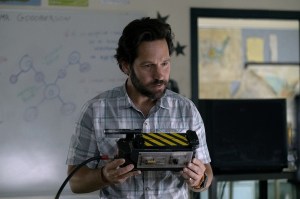
This all leads to a climax that had me genuinely in tears. I won’t exactly spoil it but Afterlife’s conclusion is less concerned with beating the Big Bad Gozer yet again and saving the universe. Reitman and company have smartly placed the real climax as an emotional catharsis; it’s more in keeping with Field of Dreams than some huge Marvel apocalyptic showdown. The ending is personal, emotional, and reaches into our universal desire for closure, for having that one last moment with a beloved who we no longer have any moments left to share, Reitman is clearly missing Ramis, a close family friend and inspiration who died in 2014, and this is his own way of processing his personal grief, offering an emotional output for the fans to share in, and allowing a grieving character/surrogate to find that needed release. It serves as a fitting conclusion and a special end note for any Ghostbusters fan who has held this franchise close to their heart for several decades, especially if shared with a paternal figure who may be gone.
The film also successfully channels a childhood perspective of awkward and awesome. It’s hard to create a story where a group of precocious adolescents discover strange things cooking in their sleepy small town without suggesting Stephen King and Stranger Things, but this isn’t necessarily a total negative. The earlier movies were always from a more cynical adult perspective. Yes, there were characters like Ray (Dan Ackroyd) and Egon who were true believers, but they were often set up for easy laughs. The tone of the series was mostly tied to the irony of the character of Peter Venkman (Bill Murray) that looked at the supernatural with droll detachment. This is the first Ghostbusters entry where the primary perspective is from children, and there’s something hopeful and heartfelt about a younger point of view with the supernatural material. These kids are excited and eager to learn more about the somethings strange in their neighborhood. It becomes endearing to ride along with them as they get to jump into the action. I loved the concept of a sidecar gunner seat for the Ecto One and how it felt like a childhood dream coming true. But it’s more than fan service because it serves as a point of progression for Phoebe’s sense of self, of embracing her scientific interests and roots, and taking charge in the face of unknown danger. It’s a coming out of sorts. When the kids are driving through (the always empty?) town and chasing a runaway ghost, wrecking storefronts from the boom of the proton pack, it’s a blast for them and us.

This is Reitman’s most commercial and mainstream film of his Oscar-nominated career. It’s interesting to me that this indie darling, who was on such a hot streak in the late 2000s, hit some speed bumps with the critical misfires of 2013’s Labor Day, 2014’s Men, Women, and Children, and 2018’s The Front Runner, so the next movie is a retreat to a big-budget franchise film. Reitman doesn’t necessarily have the best feel for large-scale spectacle, but he knows intimate character dramas and guides his actors well. Grace (Gifted, Haunting of Hill House) is wonderful as our plucky lead. Unfortunately for Wolfhard (It, Stranger Things), his dull character has nothing to do but pine for a local girl, scoff at his family, and then fix up the old ghostbustin’ mobile. Paul Rudd (Ant-Man) is as charming as ever as the school science teacher, especially as he nerds out over interacting with the Ghostbusters paraphernalia like an excitable fanboy living out his childhood dream. I wish Coon (The Leftovers) had more to do, but that’s my primary complaint in any movie where Carrie Coon is a supporting actress. Her chemistry with Rudd is strong and they could have done so much more together as adults trying to make sense of madness. They could have eliminated Wolfhard’s mopey older brother character entirely and given us more time with the goofy adults too. One feels like there is some secret contract where anything relating to 80s nostalgia requires the hiring of Wolfhard on hand.
Ghostbusters: Afterlife will not be the best movie of 2021. There are areas that could have been improved and streamlined and better developed. However, Ghostbusters: Afterlife will most assuredly be my favorite film experience of 2021. It’s a heart-warming continuation for fans with enough wit and whimsy to charm while owning its obvious and intended connections to the original. I may not be the most objective source on this particular matter, but I know what I like, and this movie had moments of pure happiness that just shot right through to my dopamine center. We’ll see if this movie can restart the dormant franchise, and strike more on its own, but even if this lone 2021 entry is all that we eventually get, I’m happy I got to experience this magic once again. I can’t wait to see it again with my dad.
Nate’s Grade: B+
Share this:

No Time to Die (2021)
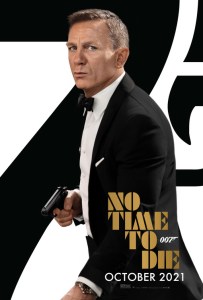 One cannot talk about No Time to Die without talking about finality. I’ll try and dance around significant spoilers but the movie by design is meant to serve as the capper to the Daniel Craig era filling out the world’s favorite martini-drinking British secret agent. I thought that 2015’s Spectre was the swan song for Craig as it brought back a famous franchise villain Blofeld (Christoph Waltz) made the man Bond’s secret half-brother, and it tried to explain how every bad thing that seemed to befall Bond was the machinations of an evil conspiracy, and then it literally ends with Bond driving into the sunset in his classic car with his girl (Lea Seydoux) by his side. It felt like the end, and it felt very much like everyone was just done and tired. And then the Bond producers wanted one more shot, or more likely one more lucrative franchise entry, to send an even older, battle-tested Craig on his way. I was wary of another Spectre-like entry, one that was tying back to the elements of decades-old for empty homage. Does anyone really care that the villain is meant to be Blofeld who means next to nothing to audiences in this era? After watching all 160 minutes of the longest Bond on record, for an actor who has portrayed 007 for 15 years, I have to say that No Time to Die is a terrific action movie and a welcomed second chance at a sendoff for the modern era of Bond that has gone through great artistic rebirth.
Bond’s cozy retirement is short-lived. Spectre agents have found him and Madeleine (Seydoux) and now Bond is forced to ship off his love for her safety. Years later, Lyutsifer Safin (Rami Malek) is determined to take down the last vestiges of the Spectre organization, the same group responsible for murdering his family. Bond is recruited by the newest 007 agent, Nomi (Lashana Lynch), to help MI-6 locate a kidnapped scientist with a powerful nanobot poison that can be genetically targeted to a specific person. Bond agrees especially once he realizes that Safn and his dangerous organization are targeting Madeleine, who has a big surprise of her own.
 As an action movie, I will argue that No Time to Die is better than 2012’s Skyfall, the Bond film that is widely seen as the high point of Craig’s tenure but one I find overrated. Director and co-screenwriter Cary Fukunaga, the second director ever given a writing credit for a Bond film, has crafted a beautiful movie with a real sense on how to showcase the majesty and suspense. Nothing will likely rival the superb cinematography by the legendary Roger Deakins on Skyfall, but this movie gets as close as you can get. It’s a remarkably beautiful looking movie. I mean that not just in the exotic locales and scenic vistas but simply in its depiction of action. The visual arrangements are noticeably several levels higher in quality, elegantly composed and lit to make each scene so pleasing to the eyes even before the information of the scene translates. Fukunaga (True Detective) frames the action in clear shots and clean edits so the audience is oriented with every shot and each patient edit point. For an era that began by trying to adopt the Paul Greengrass-style of docu-drama edits popularized with the Bourne sequels, it’s quite a welcomed change. I appreciate that action directors have creatively gone more in a direction of longer takes, wider shots, and a conscious effort to showcase the ingenuity and skills of its action choreography. Let us enjoy watching the masters of action operate at their highest level. Fukunaga understands this, and while the action might not be the best in the series, it is lovingly orchestrated and displayed.
There is a delightful mid-movie set piece that deserves its own attention mainly because of how actress Ana de Armas (Knives Out, Blade Runner 2049) steals the show. She plays Paloma, a CIA agent working in coordination with Bond, and the two of them wreak havoc across a Cuban neighborhood while wearing their finest evening wear. She immediately leaves a favorable impression and struts her stuff while operating heavy machinery with confidence. This part feels the most aided by co-screenwriter Phoebe Waller-Bridge’s contributions. Craig personally requested that Waller-Bridge, best known for award-winning TV like Fleabag and the first season of Killing Eve, come aboard and help polish the script, including characterization and dialogue. This sequence feels the most in keeping with her past spy thriller work and penchant for strong female characters who are meant to take the lead. de Armas is so memorable, and her segment so self-contained, that it feels like a backdoor spinoff to set up her own character’s franchise, and one that I wouldn’t hesitate to watch.
 If you thought Spectre was getting convoluted with how it tried to bend over backwards to explain how one man and one villainous conspiracy were manipulating all of Bond’s many miseries and setbacks, well then things are going to get even worse for you to keep up with. I’ll credit returning screenwriters Neal Purvis and Robert Wade, who have been with the storied franchise even before Craig’s 2006 debut, with attempting to make the continuity matter for a franchise that often throws up its hands at continued emotional stakes. By stretching backwards with ret-cons and added flashbacks, every new Bond movie tries to better evaluate the previous ones including the poorer movies, like Spectre and 2008’s Quantum of Solace. It’s like saying, “Hey, you didn’t like those bad guys in that movie? Well, these are the real bad guys,” or, “Well, maybe you didn’t like them, but their heinous actions gave rise to these new bad guys.” However, a consequence of continuing to add further and further clandestine machinations, and spiraling consequence from those machinations, is that Bond has now become a tangled web that is more convoluted without offering much in the way of payoff. I don’t think much more is gained introducing a new villain saying, “It was me all along,” when we don’t have an established relationship or interest with these new villains. Imagine introducing the Emperor back in Episode 9 of Star Wars and saying he was secretly behind everything… oh wait.
There are also benefits to this approach and No Time to Die crafts a sendoff unlike any other final entry for a Bond actor. This is a franchise going back sixty years, but the 007 brand has endured because no one actor is bigger than the brand. The franchise is regularly resetting with each new addition. The hyperbolic bombast and tongue-in-cheek frivolity of the Pierce Brosnan years (1995-2002) was replaced with a more grounded, gritty, and psychologically wounded Bond, made even more so by giving him personal attachments and then taking them away. I would argue this decade-plus with Craig (2006-2021) has involved the most mature and personal movies of the franchise;s history. It’s fitting then for the final film to pay service to that elevated take on the character. If you’re treating the secret spy as more of a person than a suit and a gun and a wisecrack, then that character deserves an ending that stays true to prioritizing more human elements of the character. To that end, No Time to Die works as a final sendoff, and I feel pretty confidant saying Craig is officially done now.
After a year and a half of delays from COVID, as well as its parent company, MGM, being bought for billions by Amazon, we finally have the final Bond movie in Daniel Craig’s successful run, and it’s a worthy finale for an era of the franchise becoming relevant again. I don’t know if that many people are emotionally attached to the character, likely more so just the nostalgia and the franchise, but if ever you were going to tear up from a James Bond thriller, this would be the one. It’s an exceptionally strong visual caper, with smooth and steady direction from Fukunaga, and while overly long and convoluted and a dull villain, it comes together for a worthy and celebratory conclusion that stands with the best of Bond. I’ll still cite 2006’s Casino Royale as the best Craig Bond, and one of the best ever, but No Time to Die is a solid second-place entry, and it does what few other Bonds ever could: fitting finality. Until, naturally, the popular series inevitably reboots with the next handsome leading man sipping a signature vodka martini (shaken, not stirred).
Nate’s Grade: B+
Share this:

Venom: Let There Be Carnage (2021)
 Whatever feelings you may have had for 2018’s Venom, I imagine they will only be magnified with the sequel, Let There Be Carnage, where it appears that the filmmakers took the goofy, campy elements from the original and magnified them exponentially. This is a silly, dumb movie that seems almost too aware of its existence as a silly, dumb movie; it reminded me of what a Roger Corman movie might feel like as a modern-day superhero blockbuster. This movie is ridiculous, and that will either be its major selling point of its point of condemnation. I was not a fan of the 2018 predecessor but I found myself enjoying the goofier aspects of Tom Hardy’s performance as journalist Eddie Brock after he shares his body with an alien symbiotic goo. This time we have a second alien symbiotic goo, which is actually what the villain of the first movie was, but this time it’s red and extra trendril-y! The appeal for any viewer is going to be the bonkers buddy film at its core, Eddie Brock and his living id personified as the Venom alien that keeps asking to be allowed to eat people. The movie is almost sitcom-level in it’s portrayal of the two butting heads and going their separate ways to prove they don’t need the other only to learn they were really meant to be. There are some comedic moments that just keep doubling down on silly jokes at the expense of everything else, like the “Not you, Father, you, father” bit that actually made me laugh out loud. Under the guise of actor-turned-director Andy Serkis (Mowgli), the movie is simply a broad cartoon that manages to walk a line between good-bad and laughably bad. It doesn’t always keep that balance but it’s sure entertaining to watch its goofball energy and it’s only a merciful 90 minutes long (almost one half of Eternals). I can’t really tell if everyone attached to the movie is trying hard or really just goofing off on the company’s dime. Regardless, if you were not a fan of Venom before, this movie won’t convince you there’s a compelling character or universe here. Michelle Williams (Manchester by the Sea) is pitifully wasted as Eddie’s ex-girlfriend. The accents are terrible all around. The new villain is a scenery-chewing serial killing dullard and then transforms into a goop monster. The love story with Woody Harrelson (Zombieland) and Naomie Harris (Moonlight) made me think if someone combined Natural Born Killers with X-Men but short-changed us on both counts. What works in this movie is what worked for me in the previous film, but now all elements feel more in alignment with the goofy energy of star-producer-and-credited-“story by”-writer Hardy. I don’t know if this franchise will ever qualify as traditionally good no matter how successful it proves to be. Maybe what the people really want is a screwball comedy with Hardy mugging alongside a wise-cracking, homicidal alien goo suit. Bon appetite, fans of expensive trash.
Nate’s Grade: C
Share this:

Halloween Kills (2021)
 In 2018, versatile indie director David Gordon Green (Stronger, Pineapple Express) and actor Danny McBride (Eastbound & Down) rebooted the Halloween franchise with a monstrous box-office return for their efforts. From there, the studio planned two immediate sequels to cash in. Delayed by a year, Halloween Kills is the first sequel and coming out just in time for the spooky season. The problem is the only thing this movie is going to adequately kill is 100 minutes of your time.
Laurie Strode (Jamie Lee Curtis) and her daughter (Judy Greer) and granddaughter (Andi Matichak) have trapped Michael Myers into their basement and set the house ablaze. Unfortunately for everyone, a team of firefighters rescues the giant killing machine. Michael wanders the town of Haddonfield, killing whomever he encounters, eventually circling back to his childhood home, the site of his first murder. The townsfolk have decided that they are sick of living in fear from the legend of Myers. They form a violent mob, chanting “Evil dies tonight,” and break into armed clusters to snuff out Michael Myers and put him in the ground for good.
 There is one intriguing aspect of the movie that gives it some fleeting life. The 2018 predecessor tantalizing explored the idea of generational trauma from terror, with Laurie raising her daughter in a constant state of paranoia and anxiety to prepare her for the eventual return of the unstoppable menace. The fraught relationship between three generations of Strodes was deserving of far more attention than it ultimately received in the 2018 film, although at least the filmmakers were smart enough to realize having them join their multi-generational talents would be a natural payoff. With Halloween Kills, we get a similar concept of generational trauma but from the point of view the supporting townsfolk, many meant to resemble middle-aged versions of bit characters from the older Halloween movies from the John Carpenter era. That sort of dedication to furthering the mythology of this town seems misplaced for the fan base. I doubt many hardcore Halloween fans were chomping to find out what happened to the little kid Laurie babysat. However, these obscure Haddonfield characters become a support group for trauma, a lasting memory of the horrible history of their town, and when Myers returns, they’re the first to fight back and form a mob to round up the masked boogeyman. The town’s social order breaks down and people give into the mob mentality of ends-justify-the-means violence. Even though Halloween Kills was originally scheduled to be released a year ago, it has a different feel in a world after the 2021 U.S. Capital insurrection, watching a sea of angry, misinformed citizens run wild in misplaced fear and loathing. It leads to tragedy and mistakes as the Haddonfield mob sweeps up, gathers more momentum, and doesn’t stop to think who it may trample upon next.
It was enough that made me wish the entire movie had been told from this peanut gallery perspective. Rather than following the silent killer stalk and brutally slay, let’s focus on the lesser seen cost of terror. Let’s concentrate on the side characters, the kinds who would normally play out as Cop #3 or Concerned Mom #2 in a normal slasher movie. What if we elevated them and told a slasher story from their victimized perspective and we stayed with their fear and anxiety while they remained in the dark about a madman terrorizing their town? The earlier movie was about how trauma had racked Laurie Strode’s life and personal relationships. It’s fitting that a sequel would widen the scope and show how many others have also suffered and are still haunted by their own trauma and PTSD from their fateful experiences with homegrown evil. Maybe it’s the less cinematic approach, but it’s something new and different and looking at a more human perspective for a sub-genre better known as serving as a relentless conveyor belt for wanton vivisection.
 What I’m saying is that these standard genre slasher movies bore me unless they have some exhilarating style, fresh ideas, or clever perspective shifts. With Halloween Kills, I’m watching a dull silent killer slowly murder disposable supporting characters and none of it qualifies as interesting. I don’t care about these people. I don’t find Michael Myers to be interesting (even when Rob Zombie foolishly tried to establish a trashy childhood back-story). The only thing I found worthwhile from the 2018 movie was the mother-daughter drama with the Strodes, which has all but been sidelined for the 2021 sequel. Perhaps I’m not the right audience for these kinds of movies, or perhaps this one just simply isn’t trying hard enough where it counts. The kills aren’t particularly memorable, though several are quite brutal and even a bit mean-spirited. The suspense set pieces are rote. The movie just feels far too much like it’s on autopilot, trying to provide enough filler material until its eventual concluding chapter, 2022’s Halloween Ends (yeah, we’ll see about that, title). We’re still watching a man pushing 70 years of age defy multiple stab wounds, bullets, contusions and beatings, and any number of aggressive defensive violence. It gets irritating. He’s not some supernatural force back from the dead like a Jason Voorhees; he’s just a beefy AARP member.
Green has an affinity for the franchise and the gore can be downright gooey and wince-inducing. The opening segment is an impressive recreation of the filmmaking techniques John Carpenter used in the late 1970s, even down to the period appropriate synth score. It’s a fun inclusion that essentially gives added context to the adult versions of many supporting charterers, seeing their own youthful run-ins with Michael Myers that fateful Halloween night so long ago. It’s clever but it adds up to little else as the movie progresses. If these moments with these characters had been more meaningful, maybe their eventual deaths would have meant more, but just because we spent more time with Cop #3 doesn’t mean their ultimate demise feels more than the death of Cop #3. Ultimately, it feels like this early section, a superfluous reminder of the past, is just here as something to entertain Green as a returning director for a filler sequel to a so-so movie. The strange humor of the 2018 edition has been completely eliminated, so what we’re left with is a thoroughly redundant slasher movie with some intriguing ideas percolating but not coming to fruition.
 If you were a fan of Curtis (Knives Out) as the gritty survivalist, the Cassandra trying to warn others of the impending doom they seem so oblivious to, then you’ll be disappointed here. I don’t know if Green and his co-writers were making a purposeful homage to the 1981 sequel where Laurie keeps to a hospital for the entire movie. Either way, Laurie is stuck in a hospital bed because the movie only follows mere hours from the events of the 2018 movie and only goes forward mere hours from there. We’re stuck, and so is Curtis, as she practically sits this one out. Judy Greer is likewise wasted as Laurie’s adult daughter. If there’s a star of this 2021 sequel, it’s Anthony Michael Hall (Live by Night) as the leader of the town’s mob. He has an intensity to him that feels believable without crossing over into exaggerated cartoon zealot.
If you’re a sucker for the Halloween franchise, or the glut of slasher movies that have exploded in the age of streaming, then perhaps enough of the crimson stuff gets spilled to satiate your horror appetites. I’m just bored by another movie about another slow-moving guy in a mask at this point. I need more, anything more, and Halloween Kills gives me too much of the same old same dead.
Nate’s Grade: C
Share this:

Jay and Silent Bob Strike Back (2001) [Review Re-View]
 Originally released August 22, 2001:
Kevin Smith returns back to his comedy roots. No more movies with a message (Chasing Amy and Dogma) it’s back to good ole’ snowballing and stink palming. His latest, Jay and Silent Bob Strike Back, is like a giant thank-you card to all his fans that have made the man who he is today. It ties up the entire View Askew universe so Kevin can drift off into uncharted ventures of film making and not have to keep referencing the same damn characters. Plus there’s plenty of good-natured vulgarity to go around.
 The plot of Jay and Silent Bob is nothing too heavy but seems to keep the film on a continuous pace, unlike the sometimes stagnant feel Mallrats had (what, they’re in one location for 90 minutes). It seems that after getting a restraining order at the Quick Stop on them, Jay and Silent Bob learn that Miramax is making a movie from a comic book that is in fact based off of them. Learned of the riches they could make they seek out the comic’s author Holden McNeil (Ben Affleck’s first appearance in the film) and demand a piece of the pie. Holden tells them that he long ago sold his right to his partner Banky Edwards (Jason Lee, in his second appearance in the film) and that there’s nothing they can do to stop the film. Jay suddenly gets the idea that if they stop the movie from ever getting made then they don’t have to worry. So off go our stoner duo on a mission to sabotage and satirize Hollywood.
Along the way are a hitch-hiker (George Carlin) advising the best way to get a ride is to go down in your morals, a confused nun (Carrie Fisher), the cast of Scooby Doo offering a ride (which will be 100x funnier than the feature film coming out next summer), a beautiful band of international diamond thieves (Eliza Dusku, Ali Larter, Jennifer Swalbach-Smith, Shannon Elizabeth), a rescued chimpanzee, a dogged Wildlife agent (Will Ferrell), and a full barrage of hilarity once Hollywood is finally hit.
 The best barbs are laid out by Ben Affleck and Matt Damon bickering about the other’s film choices on the set of Good Will Hunting 2: Hunting Season. This moment is truly inspired and full of great humor from Gus van Sant too busy counting his money to yell action to Damon turning into a vigilante hero. I almost fell on the floor laughing during this sequence.
When Jay and Silent Bob hit Hollywood is when the comedy starts hitting its stride as this Jersey Greek chorus interacts with the Hollywood life and encounters many a celebrity. The jokes are usually right on target except for Chris Rock’s performance of a racism obsessed film director. Rock’s portrayal becomes grating to the moviegoer far before it’s over, though he does get a few choice lines.
Smith as a director has finally elevated his visual art into something that can sustain itself instead of his earlier just-hold-the-camera-and-shoot movies. There are pans, zooms, quick cuts, cranes, action sequences, and even CGI. Smith is evolving as an artist but still staying his “dick and fart joke” self, and Jay and Silent Bob Strike Back is evidence. And that’s fine by me.
Nate’s Grade: B
——————————————————
WRITER REFLECTIONS 20 YEARS LATER
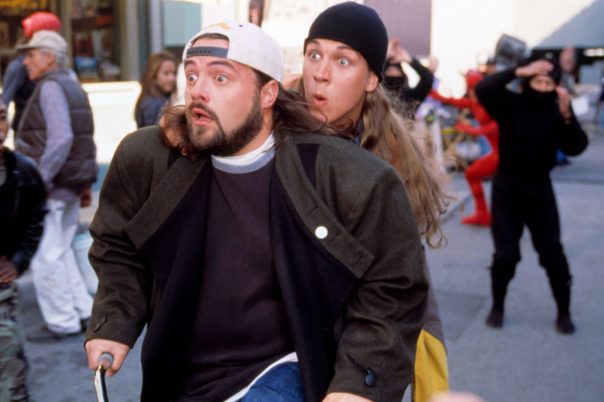
This was the one movie I was dreading more than any others on my 2001 re-watch. I’ve been a Kevin Smith fan since my teenage years and the man’s brilliantly vulgar movies had a formative effect on shaping my love of comedy, cinema, and even language itself. I don’t know if I can say I’ve been a fan of Smith as a filmmaker for some time. He took a more schlocky genre-based turn the last decade to diminished results; I enjoyed the change of pace from 2011’s Red State but found my interest deflating with 2014’s Tusk and 2016’s Yoga Hosiers. It wasn’t until 2019’s Jay and Silent Bob Reboot that my worry was unable to be suppressed. Had the filmmaker stopped growing or had I simply outgrown the filmmaker? The old jokes and self-serving references felt too labored, too stagnant, and like an old man repeating the hits for the same group of fans to laugh at the same recognizable and tired punchlines. By nature, comedy has the shortest shelf life of entertainment, and I was dreading that the original Jay and Silent Bob big screen adventure was going to feel so outdated and pitiful, especially since it’s the least substantial of all of Smith’s early films and was intended as a silly crowd-pleasing romp for his fandom. In 2001, I was a big participant of that group. In 2021, I don’t know if I still am.
This 2001 movie was always intended to be rather insular, pitched to the diehards who would understand references to chocolate-covered pretzels and the backseats of Volkswagens, but the star-studded affair was also intended to close the book on the View Askewniverse, the interconnected world comprising the first five films of Smith’s career. Smith had intended to move on and tell new stories unbound by the confines of his continuity and the demands fans would have that the new stuff tonally aligned with the old stuff. This never really happened. Smith tried something different with 2004’s father/daughter dramedy Jersey Girl and upon its theatrical demise retreated back to the safety of his View Askew universe. To be fair, he has branched out with bold experiments in horror, some of them rather successful, but it always feels like Smith is too afraid to move too far ahead of the fandom he credits so much for his success. Hey, people go to concerts and they want to hear the hits. I understand the appeal. I chuckled at points of familiarity in Jay and Silent Bob Reboot, and also Strike Back upon re-watch, but when you’re talking storytelling and comedy, stagnation isn’t growth. It’s a self-imposed ceiling.
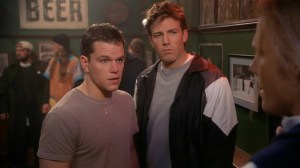 It was very early that my sinking feeling for Strike Back became my default setting. The characters of Jay and Silent Bob are not built to carry an entire movie, especially when one of them is mostly mute. It becomes the Jay (Jason Mewes) show and he overstays his welcome. There are definite limitations to these two stoners being the primary characters, and that’s why Jay seems to vary from scene-to-scene for the sake of comedy. In some scenes he’ll be clever, in others powerfully stupid, and in others so specific, like when he’s referencing Prince Valiant or rhapsodizing a Planet of the Apes apocalyptic fantasy that is too involved to come from the mind of this dumb stoner. This is the same guy who didn’t know you had to pay to ride a bus. The character unpredictability would be more acceptable if those leaps lead to worthwhile comedy bits that couldn’t otherwise be bridged by the operating persona of the long-haired foul-mouthed horndog. Therein lies the issue. The humor of Strike Back is too scattershot and too obvious to really land consistently. The fourth-wall breaks are painful and plentiful. The constant exclamation of “bong” is never funny. The random inclusion of the Mystery Machine, with a Velma openly lusting after women, is lazy. The fact that people are fighting with bong lightsabers and dildos is lazy. The joke that everyone on the Internet complaining about pop culture is just a teen dweeb is lazy and almost Aaron Sorkin-esque in its snide broad-brush painting of technology and youth. As I said in my review of Reboot: “Smith has never been one to hinge on set pieces and more on character interactions, usually profane conversations with the occasional slapstick element. This is one reason why the original Jay and Silent Bob Strikes Back suffers in comparison to his more character-driven comedies.” This movie is wall-to-wall wacky slapstick and road trip pieces that fail to transcend their cultural references.
And the comedy aspect that has aged the worse, by far, is the rampant gay jokes. At the time of its theatrical release, G.L.A.A.D. was openly decrying the film for its copious jokes at the expense of being mistaken as gay. I’m all but certain that 2001 me would have voiced the opinion that this was absurd, that of course Smith isn’t a homophobe, and he’s merely satirizing homophobia. The problem is that being gay is such a repeated joke of derision and hysteria. Wildlife Marshal Willenholly (Will Ferrell, one of the better reasons to still watch) admits he’s only a man on the outside, and I guess that’s a joke? Gay jokes are definitely one of the kinds of comedy that has aged the worst in the ensuing twenty years. Think back to 2005’s extended riff-fest between Seth Rogen and Paul Rudd in The 40-Year-Old Virgin where they try to top one another how they know the other is really gay. That would never happen in a studio comedy today. Times change and so do the mores of comedy. Things we thought were funny decades ago we might not feel the same way. That’s the nature of comedy. The overall comedy of Jay and Silent Bob Strike Back feels tacky and dated, so the onslaught of gay panic and derision only makes the rest of the comedy feel just as sad and pitiful.
 There are two hooks to this movie, the relationship that forms between Jay and Justice (Shannon Elizabeth), one of the members of a girl gang of jewel thieves, and the havoc and industry satire of the guys running through the Miramax studio lot. Heather Graham reportedly turned down the role of Justice because she could not understand what woman would fall in love with Jay, and she’s completely right. The girl gang seems included because it felt like the hot thing to do at the time after Charlie’s Angels, to include some sexy ladies in cat suits, give them slow-motion scenes where they wink at the camera about how sexy they must look in magazine cover poses, and seem to be in on the joke while just objectifying these one-note characters with air quotes. Just because Smith later has the girl gang underline their cliché nature doesn’t make them any less of a cliché, and their entire inclusion feels like fulfilling a personal demand for Smith rather than satirizing the shallow depiction of “strong action heroine” in Hollywood blockbusters. The other hook is the actual industry satire, strictly under the guidance of lampooning Miramax and their hits and indie darling culture, all of which has the pall of Harvey Weinstein cast over it. The industry jokes aren’t exactly very cutting. It’s difficult to even label this as satire. It’s more a madcap chase that resembles a crude version of Pee Wee Herman’s studio escapades. It too feels predicated on fulfilling personal demands for Smith, like literally fighting Luke Skywalker in a lightsaber duel. I’ll agree with my 2001 self that the comedy is on stronger footing during this final act, but that’s not exactly a ringing endorsement for the rest of the movie. Strike Back doesn’t strike hard enough.
There is one reason to watch this movie and it has always been the unique fascination of Jason Mewes as a performer. He was not even an actor when Smith put him in his indie breakout film, 1994’s Clerks. He has such an unpolished appeal and there were several line readings where he took a bizarre, immediately intriguing angle, something that made the line funny because of his delivery and conviction. Mewes is a genuinely underrated comic actor. He was also battling heroin withdrawal throughout the production and turned to getting drunk as a backup coping mechanism. As soon as filming was done, he began using drugs again and eventually Smith would drive his buddy to rehab and offer a place in his home if it meant he had someone to make sure he stayed sober. The friendship between Mewes and Smith, and the hell they’ve gone through together from his addiction, is truly heartwarming and would genuinely make an interesting movie all its own.
 I come back to my review for Jay and Silent Bob Reboot because I wrestled with these same feelings back then, and re-watching Strike Back only provided disappointing confirmation. As I said in 2019, “The highly verbose filmmaker has been a favorite of mine since I discovered a VHS copy of Clerks in the late 90s. I will always have a special place reserved for the man and see any of his movies, even if I’m discovering that maybe some of the appeal is starting to fade… As a storyteller, I’ll always be front and center for this gregarious and generous man. As a filmmaker, I’ll always be thankful for his impact he had on my fledgling ideas of indie cinema and comedy, even if that means an inevitable parting of ways as he charts a well-trod familiar path.” Going back to the crude comedies of Kevin Smith feels like meeting old friends and realizing how little you might have in common now, and that’s okay. They still were important, they won’t be forgotten, but some things just aren’t built to last, especially comedy. I guess don’t be sad because it’s over but smile because it happened, including the many, many dick and fart jokes.
Re-View Grade: C
Share this:

F9: The Fast Saga (2021)
 Has a multi-billion-dollar franchise ever had this much confusion and inconsistency with a name? The Fast and Furious saga, which is what we’re now calling it I suppose, began twenty years ago in 2001 and has undergone all sorts of titular irregularity. We’ve had different adjectives favored (Fast Five, Furious 7) and even gone the route of number-related wordplay, like 2018’s very soap opera-sounding The Fate of the Furious (spelled F8 in some incarnations). The ninth entry is titled F9, and by the logic of the previous sequel, I would assume that was intended to stand for “Fff-nine,” or likely “Fine,” and at this point an implicit admission of the franchise just not even trying to be relatable to any kind of recognizable pattern or order or even coherency. Alas, the title is apparently only supposed to be read as F-9, followed by the also soap opera-sounding The Fast Saga subtitle (sorry, “Furious,” maybe you’ll regain credit billing in the tenth movie in 2023). Maybe that will include the soap opera-sounding subtitle, “As the Wheels Spin.” It’s all just a curious way to handle name recognition for a twenty-year blockbuster franchise. F9 was delayed a year from COVID, a phrase that will be repeated a lot with upcoming fall releases, and after watching the 130-minute sequel, I think the franchise has finally exhausted its general appeal for me.
 I’ll begin by stating my own apologist stance on the Fast saga. I’ve never been invested in this franchise for the characters (with the exception of The Rock because he is The Rock) or for the stories, and I doubt few others who even consider themselves fans would differ. I watch these movies for their ridiculous stunts and action set pieces that don’t just defy the laws of physics but make the ghost of Isaac Newton vomit. As long as those action set pieces delivered the goods, I was able to forgive much. And I have had to ignore or forgive a lot but until now I have found those set pieces able to clear an increasingly elevating hurdle, the baggage of these characters and trying to make me care even as they become impervious superheroes that have long left the earthbound trappings of a scrappy team of underground street racers lead by Vin Diesel back in 2001. Now Diesel is 54, every member of his beloved crew/family will never die even after they appear to die, and the filmmakers have decided to introduce a long-lost adult brother played by John Cena, never mind the fact that these two muscle men don’t look like they share a single shred of DNA. It doesn’t matter, and the question remains what even matters any longer for a franchise defined by its brain-melting excess? It’s a soap opera with spy missions. It’s dumb fun to eat popcorn to. That’s all.
I acknowledge the inherent absurdity in bemoaning the over-the-top nature of a franchise whose very appeal was its over-the-top nature. It’s hard to define but every movie universe has a line of sustainable believability. Once that line is crossed, you feel it. The Fast saga has played with this tenuous tonal demarcation line for over a decade. In the eighth movie, the cars were outracing a nuclear submarine and cracking ice floes and The Rock redirected a torpedo with his biceps. That’s crazy, but remember The Rock is a superhero among us mere mortals. In the seventh movie, the cars parachuted out of a cargo plane and drove through skyscrapers. In the sixth movie, they faced off against a tank. And yet, I happily accepted those flights of fancy because they kept me entertained ahead of that nagging sense of incredulity that they were able to somehow outrace. With F9, even with the return of director Justin Lin (Fast 3-6), it feels like the franchise finally crossed that line for me. I completely understand any reader that wants to point and shout “hypocrisy.” In the arms race of action imagination where the producers have had to come up with bigger and more wild set pieces, I think they have inevitably gone from self-parody into ironic self-aware self-parody and back into self-parody again. The best way I can describe it is with the two Expendables movies. The first was amusing action bravado self-parody but then the second film tried to be in on the joke, and all the winking “we get it too” meta commentary just sapped all the enjoyment out of it. The same thing happened with the two so-bad-they’re-good Birdemic disaster movies, with the first a sincere bad movie, and the second trying to be an ironic bad movie, and it just wasn’t the same. The appeal was gone. For me, F9 is the signal that this franchise has begun its descent into Birdemic 2 range and yes, they go to space in a space car and isn’t that what all us irony-drenched fans wanted? It’s like the disappointing be-careful-what-you-wish-for warning of Snakes on a Plane all over again.
 Another factor that sank the movie for me was the inclusion of the long-lost brother storyline, especially considering the Diesel character is all about the vague platitude of family. In order to justify this significant oversight, the storyline has to resort to numerous flashbacks to fill in the sordid family details between the feuding brothers. I cannot overstate just how much I do not care about the characters in this franchise, so devoting more time to introducing complicated family histories with melodramatic flashbacks is not what I want to experience during the downtime in between the next explosion. By trying to take these characters and their relationships seriously, or seriously enough, we’re forced to slog through personal drama nobody asked for or actively desires. Better to embrace the soap opera absurdity and just have Cena show up and then every other set piece another long-lost brother shows up, and then we keep cutting back to the same singular flashback but now it’s revealed that another brother was there too previously unseen on the peripheral of the camera. The same thing goes for having to bend over backwards to explain the re-emergence of Han (Sun Kang), a character killed in the sixth/third movie by the-then bad guy (Jason Statham) that we like too much now to be the bad guy. I don’t care that he’s alive again, and the convoluted yet still unsatisfying vague plot to explain his fake death is unwanted as well. Apparently, the only character who will remain legitimately dead in this series is Gal Gadot (for now).
For the hard-core fans, there may be enough nitro juice in F9 to still provide a satisfying jolt of high-octane entertainment. Lin still has a nice command on action sequence visuals and there’s some large-scale carnage that tickles even while it’s undermining every concept of magnetism. Unfortunately, the joy I felt with previous action incarnations from the series was not recaptured this time. It just doesn’t feel as memorable, at least in a positive way. Going to space is memorable, but not in a positive way, unless they had to race a universe of aliens on the moon to save the Earth. I genuinely like Cena as an actor, but he’s far too strait-laced and dull here. Watch the recent Suicide Squad reboot to be reminded just how charming and comically talented he can be in the right role. Diesel seems to be putting less and less effort into every performance almost like a dare to the audience on how little they will accept. There were a few shots I watched where I felt like he was on the verge of going to sleep. The villain is lame, the movie has too many competing comic relief characters, and it’s all too long. I’ve been a defender of the blockbuster bombast of the Fast saga. I’ve considered myself a fan of its outlandish set pieces and ludicrous stunts. I’ve been able to ignore what didn’t work. Alas, the time has come where I can no longer do that. I just felt mostly indifferent and bored for much of F9, and its action highlights couldn’t save the extra emphasis on convoluted soap opera melodrama. Your mileage will vary as far as what you can forgive, but F9 feels like the appropriate off-ramp for me.
Nate’s Grade: C
Share this:

The Forever Purge (2021)
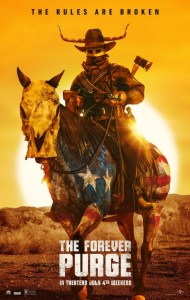 While the franchise is starting to diminish, there’s still enough blunt power and appeal to the Purge series that I welcome a new addition every few years. Coming at a time of renewed political peril, and where the world of its satire seemed to be indistinguishable from regular headlines, the Purge series for me has gained a renewed relevancy, and while many scoff at how blunt the filmmakers are with their commentary, I say we live in blunt times and sometimes a social sledgehammer is more applicable than a scalpel. Once again, the franchise seems prescient with its premise for The Forever Purge, a band of violent extremists refusing to accept the end of their murder party and thinking that the laws no matter apply to them because they are the real American patriots. There’s a definite perverse pleasure to be had watching these racist goons getting taken out one-by-one by the predominantly Mexican cast of heroes. In a post-Capitol insurrection universe, this movie can be a necessary release for many patriots who view that awful day with risible contempt. The U.S. government, once again under the control by the evil party that introduced the Purge, is now fighting against the white supremacist forces they have riled up and can no longer control for their own benefit. The Canadian and Mexican governments are offering a limited time open border to any American seeking refuge from the chaos and violence of its own government. There’s more heavy use of jump scares with The Forever Purge and the supporting characters and scenarios aren’t given enough attention to stand out or really savor (sadly, there is no Skeletor reappearance). It lacks a strong sense of climax; more so they just ran out of goons to kill. And yet, I appreciate that this movie reminds us how quickly outsized evil can come back when we think we have it vanquished, something to think about in a post-Trump presidency that doesn’t feel very post-anything close enough eight months later. This is probably the weakest movie of the franchise so far but it’s still a serviceable B-movie with enough action and comeuppance to please fans of the anarchic series.
Nate’s Grade: B-
Share this:

The Suicide Squad (2021)
 When Disney foolishly fired writer/director James Gunn for offensive past tweets, tweets the studio had already known about before hiring him to helm the first Guardians of the Galaxy Marvel movie, the brass at DC was more than happy to pounce. They offered Gunn the opportunity to tackle any of their many superhero properties. Gunn had earned a reputation as a blockbuster filmmaker whose bizarre sense of humor and style made him just as much as selling point as the property itself. Gunn gravitated to the Suicide Squad, though he didn’t want to be beholden to the 2016 film from writer/director David Ayer. The studio gave Gunn free reign. He could do whatever he wanted creatively, which just happened to be an extremely violent, R-rated sequel that also serves as a soft reboot. Gunn was the perfect person to tackle a project like The Suicide Squad and even with all his goofy humor, gallons of gore, and slapdash dispatching of numerous big names, there’s a real affection for these scruffy characters. Not that there was a big hurdle to clear, but this is clearly the superior big screen Suicide Squad.
Amanda Waller (Viola Davis) has assembled another team of criminals and has-beens and tasked them with a mission. If they fail, or deviate from their orders, she will detonate an explosive placed within the skulls of Task Force X a.k.a. the Suicide Squad. Skilled marksman Bloodsport (Idris Elba) is extorted into being the defacto leader of a band of squabbling misfits that includes Harley Quinn (Margot Robbie), the patriotic warrior Peacemaker (John Cena), the vermin-controlling Ratcatcher (Daniela Melchior), and even a giant living shark, King Shark (voiced by Sylvester Stallone), with a voracious appetite. The squad must destroy a scientific station on an island nation that has undergone a military coup and great political instability. Within that station, run by mad scientist The Thinker (Peter Capaldi), is a threat that could doom the world. Enter the Suicide Squad, but can they even be bothered to save the day?
 It feels like Gunn wanted to take the most ridiculous, pathetic characters in DC cannon and then find a way to make them appealing and worth rooting for. There is a strategy to take the scraps of the comic book universe and to make gold out of them. Case in point, Polka Dot Man (David Dastmalchian), a figure easily ridiculed by fans and populating just about every list of the worst villains of comic book lore. Gunn takes the maligned character and says, “Yeah, I’m going to keep his dumb power of flinging polka dots, and by the end, you’re going to care,” and you do care, or at least I did over the course of the film’s 132 minutes. Gunn is drawn to strange, dysfunctional found families, the misfits of society who find an unexpected kinship with one another. You can tell that even when Gunn is at his most irreverent, he still has an acute sense of reverence. The team-comes-together aspect of these sort of movies plays as a predictable but satisfying formula, and while I wouldn’t say anything took hold of my emotions like the best of the Guardians entries, I did come to care about the core of the team. I cared about the father/daughter dynamic between Bloodsport and Ratcatcher. I cared about Polka Dot Man coming into his own as a hero. I cared about King Shark feeling like he had a group of friends. The fact that I typed those last two sentences, which would sound insane absent context, is a testament to Gunn’s strengths.
The climactic villain, whom I will not spoil, is the greatest example of making the most with the least. It is immediately goofy to the point of laughter but still threatening and creepy. Gunn has taken one of the weirdest characters in comics and given it its due. Even by the end, as this villain is vanquished (not a spoiler), the movie finds a small moment to re-contextualize this absurd character as another victim. It was happier before being kidnapped and experimented upon by its devious captors. Even that extra passing consideration is impressive.
The movie also lets its weirdos have their fun. Watching bad guys, who are somewhat bad at being bad guys, try their hand at being good guys, but badly, or at least not as well, has plenty of comedic possibility as well as setting up the redemption and community payoff. The opening beach assault sets the sardonic and sloppy tone. I consistently enjoyed the contentious banter between the different members of the Squad and the jockeying for position. The gag about Polk Dot Man envisioning every enemy as his abusive mother is enjoyably goofy when visualized from his perspective (Elba’s line reading for “It’s YOUR MOM!” is a delight). King Shark’s dullard nature is a routine source of comedy that almost wears out its welcome. Nothing seems out of bound for him to say or do, whereas the others have more defined comedy boundaries. I laughed out loud frequently though some of the comedy bits feel a bit too stale and juvenile even for Gunn (a 69 joke?). This all feels very much like this is Gunn’s $180-million-dollar Troma movie he miraculously got to make with a studio blessing. The violence is over-the-top, occasionally gasp-inducing and occasionally beautiful. That’s an odd but an adept combination for Gunn as a filmmaker, a man who digs into the grimy bins of exploitation cinema and elevates it upon a bigger stage while still managing to stay true to his own silly style.
 Gunn hasn’t dulled the darker reality of his rogue’s gallery either. Bloodsport and Peacemaker get into a macho contest of killing foot soldiers in increasingly theatrical and flamboyant ways where their flippancy and hostility toward one another is the joke. King Shark is portrayed as a dumb brute who also tries to eat team members. Many, many characters have similar back-stories where their parent or guardian or captor experimented on them and live with the lingering trauma, trying not to have their pain define them. The 2016 movie wanted you to see the Squad as PG-13-approved antiheroes. The 2021 movie wants you to remember that they are indeed crazy, demented, dangerous, and murderers. Even Peacemaker, meant to evoke shades of the patriotic Captain America, says he will ensure peace “no matter how many men, women, and children I have to kill.” Harley isn’t fetishized as a punky pinup in short shorts like in 2016 (digitally shortened), but she’s still a psychopath who makes impulsive decisions. Her recognition about always falling for the wrong kind of man is a mixture of sadness, character growth, and a clear reminder that you should not let down your guard around this woman.
Spending time with these characters is made even better from the superb casting. Elba (Hobbes and Shaw) is the biggest welcomed addition; his character was likely initially intended to be the continuation of Will Smith’s Deadshot. Elba is charismatic and self-effacing and handles the comedy and action with equal measures of confidence. When he loses his patience, or opens up about his hidden phobia, it’s even more amusing because of how it contrasts with how naturally suave he is as a default setting. I wasn’t missing Will Smith at all with Elba and his natural accent. Robbie (Bombshell) was born to play Harley Quinn and should hopefully get many more opportunities. Cena (Fast and Furious 9) is so natural at comedy and slides comfortably into a macho blowhard coming into conflict with the other alpha males on the Squad. I loved the simple visual of him strutting around in vacation shorts for a long period of the second act. Viola Davis (Ma Rainey’s Black Bottom) is always excellent and might be the scariest character of them all. There are many joke characters played by actors firmly in on the tongue-in-cheek game.
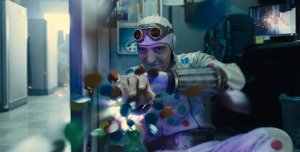 As a second chance at franchise-making, The Suicide Squad is a brash, bloody, and irreverent retake and the best DCU movie yet from a studio that seems to be throwing anything at the wall to see what potentially sticks. That has its benefits, like allowing Gunn the creative freedom to make a movie this crazy and schlocky and entertaining. It’s a shame, then, that this Squad movie looks like it will make a whopping hundred million less in its opening weekend at the box-office compared to its 2016 predecessor. It’s a sign that the traditional theatrical market hasn’t quite rebounded from COVID-19 (even Marvel’s own doesn’t look like it will crack $200 million domestic). It may also be a sign that audiences are not terribly interested about a sequel to a movie they didn’t really care for five years prior. Beforehand, I would have bet even money that the studio would give a blank check to bring Gunn back for more after he fulfills Guardians of the Galaxy volume 3 for Marvel, but maybe that’s not the case. Maybe The Suicide Squad will be more of an entertaining one-off than the start of a new direction for this lagging franchise. Regardless, if anything good came of Disney firing Gunn on dubious terms, it’s the existence of this movie in the interim for the in-demand filmmaker. While not everything works in The Suicide Squad, and the emotional depth is sacrificed for giddy gory bombast, it’s what you would hope for with the combination of James Gunn, wacky superheroes, and a commitment to an R-rating.
Nate’s Grade: B+


 nathanzoebl
You must be logged in to post a comment.