Blog Archives
Final Fantasy: The Spirits Within (2001) [Review Re-View]
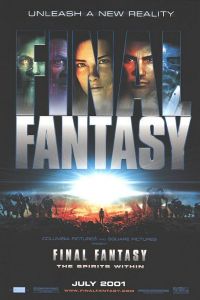 Originally released July 11, 2001:
Final Fantasy is an exciting venture in the history of animation. It’s the second video game to be turned into a feature film this summer, though exponentially better than Tomb Raider. It took the makers of Final Fantasy four years and the creation of new technology to capture what will be a benchmark in animation for years to come.
The story concerns a future Earth where aliens have crashed and invaded long ago. These “phantoms” are slightly invisible energy creatures of different size and roam around various areas with the ability to suck the life force or soul from a human being. General Hein (James Woods) is trying to convince the Earth council to allow him to fire a satellite called the Zeus Cannon to obliterate the alien menace. In opposition to Hein is Dr. Sid (Donald Sutherland) who believes with his adventurous pupil Aki Ross (Ming-Na) that the Zeus Cannon will obliterate the “spirit” of Earth. Their solution it to collect eight spirits in whatever forms they might be including plants and small animals to gather together and… do something that will send the alien life force repelling.
 Now I know Hein is supposed to be the bad guy as he’s a military man complete with the evil looking black leather cloak, but I couldn’t help but find myself agreeing with his logic. He wants to use something that has already been proven to kill the aliens whereas these two new age scientists want to collect a bunch of plants and animals and have their collective spirits ward off the interplanetary menace. I’d stand in my chair and say thank you to Hein when he dismisses the doctor’s plot. I know that Aki and Sid are the heroes and of course whatever theories they have will be proven true, but hell, I found myself agreeing more with General Hein than these two.
Complicating matters Aki is infected with a piece of the alien phantom that is slowly taking control over her body. Along in her quest to discover the final spirits is aided by a military commander Grey (Alec Baldwin) and his company of men. Turns out Grey and Aki are former sweethearts, so of course expect them to reconcile before the end credits.
The plot consists of something that could be an average episode on Star Trek: Voyager but does meander along at times. The dialogue is typical sci-fi buzzwords like “Fire in the hole” “The perimeter’s been breached” and the sort. Final Fantasy does have great excitement to it and some terrific action sequences better than most anything this summer. The ending is a disappointment as all the action hinges on two globs of energy propelled against one another. Globs or energy are not exciting. I thought we would have learned this by now.
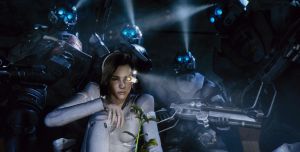 Final Fantasy is a landmark in animation. Never has so much detail been put into a movie and pulled off so amazingly well. To the nit-pickers out there the animation isn’t exactly the Holy Grail of photo-realism, but it’s closer than anything ever before. At times the characters come off as too plasticy (like Jude Law in A.I.) and tend to move too much, notwithstanding that their mouths don’t always follow the words coming out of them. Put aside these small grievances and what you have is stunning animation that makes one constantly forget it is animation. There are numerous moments of eerie precision like when a character’s nostril flares and their nose scrunches up in response, and the movement of every one of Aki’s 60,000 strands of gorgeous hair, to even a kiss between two characters. Even inanimate objects like a crumbled wall, a glass of alcohol, or a gun and its rounds are given startling accuracy. Backgrounds and scenic vistas are beautifully rendered with great care. There has been nothing ever like Final Fantasy before and it is the first movements toward an exciting area in animation.
The discussion must be raised can actors be phased out by computers now and will they ever? No, never. Actors can portray nuances that computers will never be able to master. Despite some actors best attempts to prove otherwise, we will always need actors. Now that you have the near photo realism one might be led to question what is the greatness of creating a fully realistic looking CGI tree when one can just be shot on film for millions of dollars cheaper. The all CGI world will not replace the real world of film making.
The mediocre story can be excused by the awe-inspiring animation. Despite the clunker of a plot Final Fantasy is entirely enjoyable because it always gives the viewer something to sit in wonder and take in. There’s always something to mesmerize the eyes on screen.
Nate’s Grade: B
——————————————————
WRITER REFLECTIONS 20 YEARS LATER
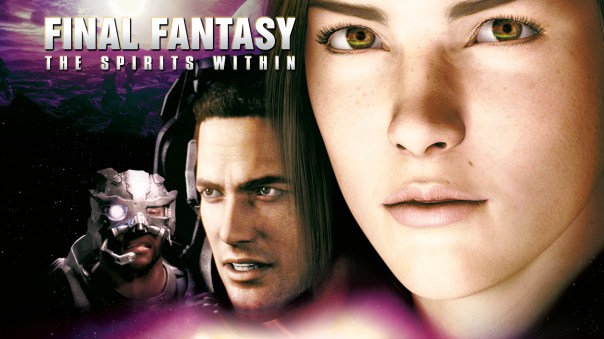
There was a time where the world wondered whether 2001’s Final Fantasy: The Spirits Within was going to put actors out of business. The Columbia/Sony animated feature, the first the studio released theatrically since the second Care Bears Movie, was a big technological leap. Square Studios, the makers behind the extremely popular video game RPG series, opened a new studio stationed in Hawaii to enter the realm of Hollywood, and they devoted four years and countless hours of processing to create photo-realistic visuals. This was still at the dawn of CGI animated features taking over the landscape and the leap was impressive. None other than Roger Ebert wrote in his review that he considered the movie a milestone along the lines of the first talkies. Before its release, there was scuttlebutt whether or not this was the wave of the future and actors would be replaced with computer versions, never mind that vocal actors were still being employed. The lead “actor,” Aki, was depicted in a swimsuit on a Maxim cover as an icky promotion. The 2002 movie S1mone satirizes this concept further, with Al Pacino fed up with temperamental industry actors so he secretly uses a photo-realistic computer program instead.
 I don’t really know why people got so worried. There are nuances that humans can convey that machines cannot, but even beyond that distinction, it’s simply a lot cheaper to hire an actor, put a costume on them, and record them than to build a model from scratch in a computer and toil for hours just to get the right look of the character raising an eyebrow. The listed budget for Spirits Within is $137 million, though has been rumored to be as high as $170 million (even more than Waterworld). For reference, the budgets of other 2001 movies include $125 million for the first Harry Potter, $93 million for Jurassic Park 3, $100 million for the Tim Burton Planet of the Apes, and $93 million for The Fellowship of the Ring. Even if you view Spirits Within as paving the way for motion-capture animated movies, the kind Robert Zemeckis spent a decade of his career slaving over, even those were eventually deemed too expensive for their returns. I think we can, at least for the time being, put this question to rest. Beyond the complexity that real actors can bring to performances, there’s the ease and cost that cannot be beat by a computer. Maybe in time this will change but for now rest easy Tom Hanks. You’re not going anywhere.
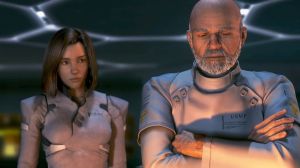
Twenty years later, the animation that once inspired awe now feels dated and surpassed. That’s the nature of the speed of technological advancement; even the company had to redesign scenes from the movie as they finished because the tech improved dramatically over the four-year development process. The visuals of the movie have become the norm for modern-day video games. There are aspects of the animation that are missing or just unable to be fully formed at the time. The faces look too slick and plastic, absent grooves and pores and imperfections that provide texture to people’s faces. The human appendages move like rubber. The hair seems to flow like it’s captured from a bouncy shampoo ad (apparently a fifth of the processing power went to animate the lead heroine’s 60,000 follicles). The character’s mouths look to be wired shut and unable to articulate their words. From a 2021 standpoint, the animation looks more like an extended video game cut scene from late 2000s. Its innovation has become commonplace.
 It should be no surprise that the script went through numerous rewrites. All the attention for Sony and Square was on the technical achievements and much less so on the story, which I guess they assumed would come together at some point. The project began with the Final Fantasy writers coming up with the initial plot, which would make sense until you realize the RPG fantasy series isn’t known for its sense of realism or cohesion. The plot of Spirits Within is not very in keeping with the more fantastical Final Fantasy series world. Screenwriter Jeff Vintar (I, Robot) was asked to read the script because the studio reportedly did not understand the project at all. His analysis was that they should completely start from scratch. The studio asked if he wanted to rewrite the script and gave him three weeks. His words were translated from English to Japanese and then back into English, which left something lost in translation a couple times over.
It’s surprising that the movie is even slightly coherent with everything it’s been through. It’s still a mess of a plot, with aliens having crashed onto Earth and made parts of the planet uninhabitable by their presence. They’re also revealed to be ghosts. So… alien ghosts. And there are eight horcruxes, I mean, um, spirits that need to be found to… something. The screenplay, under all of its laborious mutations, is really about a military team and a pair of scientists collecting MacGuffins and trying to use dreams to thwart a fascist from using a doomsday laser. It is simultaneously overly simplistic and overly complicated and quite silly. The villain, voiced by James Woods, even gets the full Nazi wardrobe but his viewpoint seems logical considering he’s pitted against scientists saying they need to break through to the “spirit of the Earth.” It’s hard to take their claims and wild speculation seriously in this more realistic world. Apparently, there was a plot development where Aki was revealed to be pregnant and her unborn child was the eighth and final spirit needed. You can still see its place in the plot. Reportedly, this storyline was cut because it was deemed “too Japanese” and I have no idea what that means.
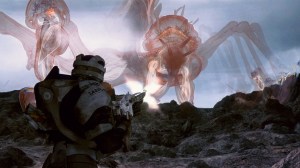 The real reason to ever watch The Spirits Within has come and gone. It’s now a footnote in animation history and a mild curiosity at best. I suppose you can still try and think how cool everything must have been to experience in 2001, and then your mind will wander because the nonsensical story will do little to hold your attention. It was such a financial disaster that Square Studios closed down and the company went back to focusing on video games full time with the occasional CGI direct-to-DVD movie (2004’s Advent Children and 2016’s Kingsglaive). Square Studio did make one of the CGI animated segments for 2003’s Animatrix, a concept paving the way for other ambitious animated anthologies like Netflix’s Love, Death, and Robots. The entire emphasis of this expensive production was slated onto its visual decadence, but the story was muddled, confusing, trite, and alien to the source material and the fanbase it was appealing to. I want to give my 2001 self a high-five because I’m happy that even at 19 years old in my original review I could see the evident faults of the mediocre storytelling as well as the arguments for replacing real actors with virtual facsimiles. Back in 2001, I said Final Fantasy: The Spirits Within had the benefit of always giving the viewer “something to sit in wonder and take in.” Twenty years later, that lone benefit has all but disappeared. Conversely, video games have become so much more ambitious, artistic, and emotionally engaging since 2001. So skip the movie and just play a game instead.
Re-View Grade: C
Share this:

Awake (2021)
 Every so often I’ll watch a movie and be really intrigued or hopeful with the premise, something that really grabs my imagination, and then that hope crashes and burns in disappointment of a story that never fully takes advantage of all the tantalizing possibilities of its start. In short, I say, “That movie didn’t deserve its premise.” That’s the first thing I thought about after watching Netflix’s new apocalyptic thriller, Awake, where humanity is suddenly incapable of going to sleep. There’s an engrossing drama about the psychological descent and a potent political thriller about the destabilizing of civilization once people are unable to get their forty winks. The premise peculates with such promise, and for it to become yet another end times road trip, hewing so closely to a solidifying formula, is like trapping everyone in a (bird) box.
Jill (Gina Rodriguez) is a former soldier, recovering addict, and current security guard who is also selling opioids on the side to make ends meet. One day, people are no longer able to sleep, everyone except her young daughter. Jill rescues her two children, gets into a car, and drives off for a far off scientific research base where a scientist (Jennifer Jason-Leigh) studying sleep might have the knowledge of how to solve this worldwide mystery.
 I think most people have dealt with the effects of sleep deprivation at some point in their life, especially if they have ever had a newborn child. The subject matter is very relatable. I had a bout of insomnia years ago where I was averaging less than two hours of sleep for weeks, and it was the worst physical endurance I’ve gone through in my, admittedly privileged, existence. I felt like a zombie, barely able to function, my head forever fuzzy, and I lost all desire to eat and had to compel my body to consume food I knew it needed for fuel. I even purchased the Ensure nutritional drinks. It was a miserable time and I was even getting a minimal amount of sleep rather than none whatsoever. I’ve had rough sleep certain nights and feel like I’m running on fumes for the rest of my workday. It takes far more time to bounce back from bad sleep, and I’m wondering if I’ll ever actually get consistently restful sleep again for the rest of my life. With all of that stated, Awake should be an easy movie to plug right into and relate to the deterioration. However, it’s so unclear and clumsy in its depictions of the world. It’s unclear until the very very end how long the world has gone without sleep, and so we run into examples that seem to paint two different pictures of our apocalyptic environment: overplaying and underplaying.
At times, Awake is overplaying the effects of the mental breakdown of society. At points, it feels like society has broken down so completely and over a confusing timeline. There are run-ins with a group of elderly naked people just standing around and acting serene, a prison where the inmates walk out for unspecified reasons involving the guards, and a church that has already gone full-borne cult crazy by thinking that sacrificing the little girl who can sleep means they’ll be able to share in her slumber. The movie didn’t establish these people as crazy religious fundamentalists, so this sudden bloodthirsty turn feels like a leap. Even in 2007’s The Mist, the trapped townspeople gave into the corrupting influence of the religious bigot over time and distress. It reminded me of another Netflix apocalyptic, parental road movie, 2019’s The Silence, where it seemed like it was mere hours before a select group of people started cutting their tongues out and declaring they needed to kidnap women for the purpose of re-population. I suppose some people are just looking for the first good excuse to indulge their baser impulses, but then explore more of this feature with meaningful characters that will matter when they break bad. I think the movie would have greatly benefited from a clear timeline, some helpful titles keeping up with the clock, things like “50 Hours In,” and the premise could have been revised to be a slow evaporation of sleep rather than a strict cut-off. Maybe people are only able to get two hours a night, then one hour, then 30 minutes, and people are freaking out because they know it’s getting less. Let society have some measure of reconciling with the totality of what is to come.
 At times, Awake is also paradoxically underplaying the effects of the mental breakdown of society. For the majority of the movie, our characters aren’t really acting differently even though they have been awake for multiple days. This is what also made me so confused. How much time has passed if nobody seems to be making a big deal about it? The slips in reaction time and awareness don’t really feel integrated until the chaotic conclusion. The family comes across the wreckage of an airplane and make no big deal of it. For that matter, if we’re establishing that sleep deprivation is causing planes to fall from the sky, I think there should be thousands of these crash sites dotting the landscape, unless the airlines have wised up and decided to ground their pilots because they’re afraid of potential post-post-apocalyptic class action lawsuits. Travels with Jill become too leisurely for everything that is going on (note to self: pitch an Anthony Bourdain-style travelogue during an apocalyptic social breakdown and tasting the new culinary delicacies). She senses that she will die and needs to train her children to survive in this new world without her. However, if only her daughter can sleep, then presumably only she will be left alive in due time and it’s less about fending for herself against other people and more how to live off the land. There’s an existential and more poetic, prosaic version of Awake where Jill is trying to cram years and years of parenting into a precious couple of days, where she also tries to secure a fortified hiding place for her daughter to wait out the rest of humanity dying off before she can come out like a hibernating animal. For Jill, its about securing her child’s survival rather than reversing this plague that is dooming humanity. There’s a stronger movie that could have been made had Awake been more personal and more serious rather than schlocky and muddled.
The movie does have a few moments of bizarre effect or risible tension, but these moments are few and far between and director/co-writer Mark Raso (Kodachrome) is very transparent about his genre influences. There’s a roadside checkpoint where a group of armed people try and break inside Jill’s vehicle and pull her and anyone else out the windows. The car is still driving as the assault goes on and the camera remains inside the vehicle while rotating around the interior as the attack plays out in a real-time long take. If you’ve seen the sci-fi masterpiece Children of Men, then this description should already be ringing a few bells of recognition. It’s not that Raso cannot pay homage to the sci-fi inspirations of his tale, but when you draw direct comparisons by emulating very specific artistic choices done by superior filmmakers, you’re inviting a negative impression. A standoff between Jill and an increasing exodus of prisoners had a queasy anxiousness to it because the movie lets the scene build with direct, immediate stakes. There’s a similar scene where Jill is hiding in a garage from voices, but the stakes don’t translate as well because our knowledge of who the other men are is limited. She could just sit in a corner and wait. The plane wreckage scene is impressively designed, and there are a few genuinely surprising moments, like the crowd of naked old people, to keep things curious, but Awake too often settles again and again for the most formulaic and least interesting creative path.
 If this all sounds a lot like Netflix’s Bird Box, then congrats, because you’ve likely caught onto the reason this movie exists. Both movies feature an unexplained worldwide phenomenon that results in the breakdown of society where mobs and cults have formed, and both movies feature a single mother trying to lead her two children, one boy and one girl, through the hazards of the road so they can reach a supposed secure place where authority figures will have answers, and both movies feature a normal facet of human existence that, once removed, is making people go crazy and mess with their perception. Both of the movies also provide plum roles for high-profile actresses. Rodriguez (Miss Bala) is a compelling actress who has shined in lighter, rom-com material (Jane the Virgin), in quirky character-driven indies (Kajillionaire), and in somber existential horror (Annihilation). She has the tools to be great. Awake did not give her enough. There are a couple of scenes, late, of her starting to lose her bearings, and it’s here that I wished the filmmakers had realized that showing the effects of this cataclysm would be best than underplaying or overplaying the deprivation. Awake is an apocalyptic road trip that will bore more than excite and frustrate more than engage. Who knew sleeplessness was such a snooze?
Nate’s Grade: C-
Share this:

A.I.: Artificial Intelligence (2001) [Review Re-View]
 Originally released June 29, 2001:
A.I. is the merger of two powerhouses of cinema – Stanley Kubrick and Steven Spielberg. The very mysterious film was given to Spielberg by Kubrick himself who thought ole’ Steven would be a better fit to direct it. The two did keep communication open for like a decade on their ideas for the project until Kubrick’s death in March of 1999. What follows is an imaginative futuristic fairy tale that almost grabs the brass ring but falls short due to an inferior ending. More on that later.
In the future technological advances allow for intelligent robotic creatures (called “mechas”) to be constructed and implemented in society. William Hurt has the vision to create a robot more real than any his company has ever embarked on before. He wants to make a robot that can know real love. Flash ahead several months to Henry and Monica Swinton (Sam Robards and Frances O’Conner) who are dealing with their own son in an indefinite coma. Henry is given the opportunity to try out a prototype from his company of a new mecha boy. His wife naturally believes that her son could not be replaced and her emotions smoothed over. Soon enough they both decide to give the boy a try and on delivery comes David (Haley Joel Osment) ready to begin new life in a family. David struggles to fit in with his human counterparts and even goes to lengths to belong like mimicking the motions of eating despite his lack of need to consume. Gradually David becomes a true part of the family and Monica has warmed up to him and ready to bestow real love onto their mecha son.
 It’s at this point when things are going well for David that the Swinton’s son Martin comes out of his coma and returns back to his parents. Sibling rivalry between the two develops for the attention and adoration of their parents. Through mounting unfortunate circumstances the Swintons believe that David is a threat and decide to take him away. The corporation that manufactured David had implicit instructions that the loving David if desired to be returned had to be destroyed. Monica takes too much pity on David that she ditches him in the woods and speeds off instead of allowing him to be destroyed.
David wanders around searching for the Blue Fairy he remembers from the child’s book Pinocchio read to him at the Swinton home. He is looking for this magical creature with the desire she will turn him into a real boy and his human mother will love him again. Along David’s path he buddies up with Gigolo Joe (Jude Law), a pleasure ‘bot that tells the ladies they’re never the same once he’s through. The two traverse such sights as a mecha-destroying circus called ‘Flesh Fairs’ complete with what must be the WWF fans of the future, as well as the bright lights of flashy sin cities and the submerged remains of a flooded New York. David’s journey is almost like Alice’s, minus of course the gigolo robot of pleasure.
There are many startling scenes of visual wonder in A.I. and some truly magical moments onscreen. Spielberg goes darker than he’s even been and the territory does him good. Osment is magnificent as the robotic boy yearning to become real, but Jude Law steals the show. His physical movement, gestures, and vocal mannerisms are highly entertaining to watch as he fully inhibits the body and programmed mind of Gigolo Joe. Every time Law is allowed to be onscreen the movie sparkles.
 It’s not too difficult to figure out which plot elements belong to Spielberg and which belong to Kubrick, since both are almost polar opposites when it comes to the feelings of their films. Spielberg is an idealistic imaginative child while Kubrick was a colder yet more methodical storyteller with his tales of woe and thought. The collaboration of two master artists of cinema is the biggest draw going here. A.I.‘s feel ends up being Spielberg interpreting Kubrick, since the late great Stanley was dead and gone before he could get his pet project for over a decade ready. The war of giants has more Spielberg but you can definitely tell the Kubrick elements running around, and they are a gift from beyond the grave.
I thought at one point with the first half of A.I. I was seeing possibly the best film of the year, and the second half didn’t have the pull of the first half but still moves along nicely and entertained. But then came the ending, which ruined everything. There is a moment in the film where it feels like the movie is set to end and it would’ve ended with an appropriate ending that could have produced lingering talk afterwards. I’m positive this is the ending Kubrick had in mind. But this perfect ending point is NOT the ending, no sir! Instead another twenty minutes follows that destroys the realm of belief for this film. The tacked on cloying happy ending feels so contrived and so inane. It doesn’t just stop but keeps going and only gets dumber and more preposterous form there. I won’t go to the liberty of spoiling the ending but I’ll give this warning to ensure better enjoyment of the film: when you think the movie has ended RUN OUT OF THE THEATER! Don’t look back or pay attention to what you hear. You’ll be glad you did later on when you discover what really happens.
The whole Blue Fairy search is far too whimsical for its own good. It could have just been given to the audience in a form of a symbolic idea instead of building the last half of the film for the search for this fictional creature’s whereabouts. The idea is being pounded into the heads of the audience by Spielberg with a damn sledge hammer. He just can’t leave well enough alone and lets it take off even more in those last atrocious twenty minutes.
A.I. is a generally involving film with some wonderfully fantastic sequences and some excellent performances. But sadly the ending really ruins the movie like none other I can remember recently. What could have been a stupendous film with Kubrick’s imprint all over turns out to be a good film with Spielberg’s hands all over the end.
Nate’s Grade: B
——————————————————
WRITER REFLECTIONS 20 YEARS LATER

There are two aspects that people remember vividly about A.I.: Artificial Intelligence and that’s the fascinating collaboration of two of the most influential filmmakers of all time and its much-debated and much-derided extended ending. Before we get into either, though, a fun fact about its very helpful title for Luddites. Originally the title was only going to be A.I. but the studio found that test audiences were confused by the two-word abbreviation and several clueless souls thought it was the number one and not the capital letter “I.” The studio didn’t want their high-concept meeting of cinematic masters to be confused with a popular steak sauce.
In the realm of cinematic titans, Steven Spielberg and Stanley Kubrick rise to the top for their artistic ambitions, innovations, versatility, and great influence on future generations, but you’d be hard-pressed to see a uniquely shared sensibility. Kubrick’s films are known for his detached, mercurial perspective, flawless technical execution, leisurely pacing, and a pessimistic or cynical view of humanity. Spielberg’s films are known for their blockbuster populism, grand imagination and whimsy, as well as the director’s softer, squishier, and more sentimental view of humanity. It almost feels like a mixture of oil and water with their contradictory sensibilities. And yet Kubrick and Spielberg developed A.I. for decades, starting in the late 1970s when Kubrick optioned the short story “Super-Toys Last All Summer Long” by Brian Aldiss. Kubrick felt that Spielberg was a better fit for director in the mid-1980s, but Spielberg kept trying to convince Kubrick to direct. Both took on other projects and kept kicking A.I. down the road, also because Kubrick was dissatisfied with the state of special effects to conceive his “lifelike” robot boy. Kubrick died in early 1999 and Spielberg elected to finally helm A.I. and finish their creative partnership. He went back to the original 90-page treatment Kubrick developed with sci-fi novelist Ian Watson and wrote the final screenplay, Spielberg’s first screenwriting credit since Close Encounters of the Third Kind (and his only one since 2001). I view the final movie as a labor of love as Spielberg’s ode to Kubrick and his parting gift to his fallen friend.
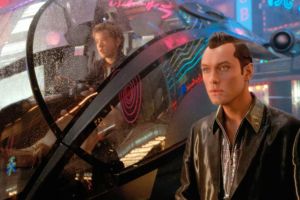 Watching A.I. again, it is a recognizable Kubrick movie but through the lens of Spielberg’s camera and budget. In some ways, it feels like Spielberg’s two-hour-plus homage to his departed mentor. The movie moves gradually and gracefully and, with a few delicate turns, could just as easily be viewed as a horror movie than anything overtly cloying or maudlin. The opening 45 minutes introduces a family whose child is comatose with some mystery illness and the likelihood he may never return to them. The husband (Sam Robards) is gifted with a shiny new robot boy, David (Haley Joel Osment), as a trial from his big tech boss (William Hurt) who wants to see if he can make a robot child who will love unconditionally. The early scenes with David integrating into the family play like a horror movie, with the intruder inside the family unit, and David’s offhand mimicry of trying to fit in can make you shudder. All it would take is an ominous score under the scenes and they play completely differently. One scene, which is played as an ice breaker, is when David, studying his parents at the dinner table, breaks out into loud cackling laughter. It triggers his parents to laugh alongside him, but it’s so weird and sudden and creepy. David’s non-blinking, ever-eager presence is off-putting and creepy and Monica (Frances O’Connor), the mother, is rightfully horrified and insulted by having a “replacement child.” However, her emotional neediness steadily whittles away her resistance and she elects to have David imprint. This is a no-turning-back serious decision, having David imprint eternal love and adoration onto her, and if she or her husband were to change their minds, David cannot be reprogrammed. He would need to be disassembled. With this family, David is more or less a house pet kept around for adoration and then discarded when he no longer serves the same comforting alternative. Once the couple’s biological child reawakens, it’s not long before jealousy and misunderstanding lead David to being ditched on the side of the road as an act of “mercy.”
From there, the movie becomes much more episodic with David and less interesting. The Gigolo Joe (Jude Law) addition furthers the story in a thematic sense and less so in plot. Gigolo Joe is a robotic lover on command, and framed for murder, and just as disposable and mistreated as David. From a plot standpoint, David’s odyssey is to seek out the Blue Fairy from Pinocchio, a book his mother read to him, and to wish to become a real boy and be finally accepted as his mother’s legitimate son. Thematically, David’s real odyssey is to understand that human beings are cruel masters. In short, people suck in this universe and they don’t get any better.
 People, or “orga” as they refer to organic life, are mean and indifferent to artificial life, viewing the realistic mechanical beings, or “mecha” as they are referred to, as little more than disposable toys. Despite its cheery happy ending (and I will definitely be getting to that), the movie is awash in Kubrick’s trademark pessimism. Early on, David is stabbed by another boy just to test his pain defense system. David is only spared destruction from the Flesh Fair, a traveling circus where ticket-buyers enjoy the spectacle of robot torture, because the blood-thirsty audience thinks he’s too uncomfortably realistic. I don’t know if they’re supposed to be confused whether he is actually a robot considering that the adult models look just as realistic. He’s not like a super advanced model, he’s just the first robot kid, but applying the same torture spectacle to a crying robot child is too much for the fairgoers. However, this emergent reprieve might be short-lived once these same people become morally inured to the presence of robot kids after they flood the consumer market. Once the “newness” wears off, he’ll be viewed just as cruelly as the other older models also pleading for their pitiful mecha lives.
The tragedy of David is that he can never truly be real but he’ll never realize it. His personal journey takes him all over the nation and into the depth of the rising oceans, and it’s all to fulfill a wish from a benevolent make-believe surrogate mother. His programming traps David into seeing the world as a child, so no matter how old his circuits might be, he’ll always maintain a childish view of the world and its inhabitants. He’ll never age physically but he’ll also never mature or grow emotionally. Because of those limitations, he’s stuck seeing his mother in a halo of goodness that the actual woman doesn’t deserve. Monica felt like she was being helpful by ditching David before returning him to his makers, but this boy is not equipped to survive in the adult world let alone the human world. He cannot understand people and relationships outside the limited confines of a child. So to David, he doesn’t see the cowardice and emotional withdrawal of his mother. She knew the consequences of imprinting but she wanted to feel the unconditional love of a child again and when that got too inconvenient she abandoned him. Their relationship is completely one-sided with David always giving and his mother only taking. David’s goal is to be accepted by a woman who will never accept him and care for him like her organic child. She will never view David as hers no matter how hard David loves her. He cannot recognize this toxic usury relationship because he’ll never have any conception of that. David is trying to be loved by people undeserving of his earnest efforts and unflinching affections.
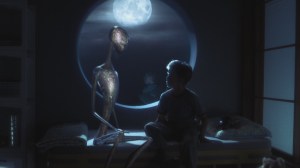
Do these look like robots to you?
Let’s finally tackle that controversial ending, shall we? The natural ending comes at about two hours in, with David in a submersible at the bottom of the ocean and pleading with a statue of the Blue Fairy in Coney Island to make him a real boy. He keeps whispering again and again to her, and the camera pulls out, his pleading getting fainter and fainter. The vessel is trapped under the water, so he’ll likely live out the rest of his battery life hopefully, and hopelessly, asking for his wish. It feels deeply Kubrickian and a fitting end for a tragic and unsparing movie about human cruelty and our lack of empathy. It’s also, in its own way, slightly optimistic. Because David is so fixated, he’ll spend the rest of his existence in anticipation of his dream possibly being granted with the next request. He has no real concept of time so hundreds of years can feel like seconds. Everything about this moment screams the natural ending, and then, oh and then, it keeps going, and the ensuring twenty additional minutes try and force a sentimental ending that does not work or fit with the two hours of movie prior. Two thousand years into the future, David is rescued by advanced robots (I thought they were aliens, and likely you will too) who finally grant his wish thanks to some convenient DNA of his two-thousand-year dead mother. These advanced robots can bring the dead back to life except they will only last one day, so David will have one last day to share with his mother before she passes back into the dark. However, David’s conception of his mother isn’t the actual woman, so his rose-colored glasses distortion means he gets a final goodbye from not just a clone but one attuned to his vision. It’s false, and the fact that the movie tries to convince you it’s a happy ending feels wrong. Also, the world of 4124 still has the World Trade Center because A.I. was released three months before the attacks on September 11th. It’s just another reminder of how wrong the epilogue feels.
This extended epilogue desperately tries to attach the treacly sentimentality that was absent from the rest of A.I., which is why many critics felt it was Spielberg asserting himself. Apparently, we were all wrong. According to an interview with Variety in 2002, the opening 45 minutes is taken word-for-word from Kubrick’s outline and the extended ending, including the misplaced happy every after, is also strictly from Kubrick’s original treatment. It was Kubrick who went all-in on the Pinocchio references and parallels. Even the walking teddy bear was his idea. Watson said, “Those scenes were exactly what I wrote for Stanley and exactly what he wanted, filmed faithfully by Spielberg.” The middle portion was Spielberg’s greatest writing contribution, otherwise known as the darkest moments in the movie like the Flesh Fair and robot hunts. The movie is much more sexual than I associate with Spielberg. There has been sex in Spielberg’s past films, but it’s usually played as frothy fun desire with cheeky womanizers (Catch Me If You Can) or as a transaction with unspoken demands (Schindler’s List, The Color Purple). Then again, when Spielberg really leaned into a sex scene, we got the awkward and thematically clunky “climax” of Munich. With A.I., the perverse nature of humanity is another layer that reflects how awful these people are to the wide array or robots being mistreated, abused, and assaulted on an hourly basis in perpetuity.
 Twenty years later, the movie still relatively holds up well and is good, not great. It’s more a fascinating collaboration between two cinematic giants, and the fun is recognizing the different elements and themes and attributing them (wrongly) to their respective creator. The special effects are still impressive and lifelike even by 2021 standards. Even though the movie is set in 2124, so over 100 years into the far-flung future, everyone still dresses and looks like they’re from the familiar twentieth century (maybe it’s retro fashion?). It’s a slightly distracting technical element for a movie otherwise supremely polished. There is a heavy emphasis on visual reflections and refractions of David in his family home, exploring the wavering identity and conceptions of this robo kid. Spielberg’s direction feels in keeping with Kubrick’s personal style and sensibility. A.I. is a labor of love for Spielberg to honor Kubrick, and he went another step further with the 2018 adaptation of Ready Player One where one of the missions was exploring a virtual reality recreation of the famous Overlook Hotel from The Shining. In my original 2001 review, I took the same level of umbrage with the miscalculated ending as I do in 2021. In the many years since its release, A.I. has been my go-to example of a movie that didn’t know where to properly end. As a result, it’s still a fascinating if frustrating experience on the verge of greatness.
Re-View Grade: B
Share this:

Infinite (2021)
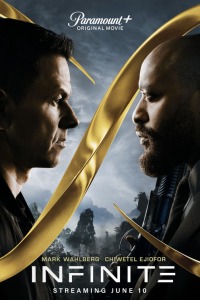
The cast and crew of Infinite were taken by surprise when their corporate overlords decided to shuttle the big-budget action movie to its fledgling streaming service, Paramount Plus. Fortunately for me, I had just purchased a yearlong subscription plan because I wanted to watch Bar Rescue whenever I pleased, so I was one of the lucky ones to gain access to this first “Paramount Plus Original Movie” as it quietly premiered. It might be for the best after all. Infinite is a high-concept action movie by committee that feels so lacking in just about every critical department.
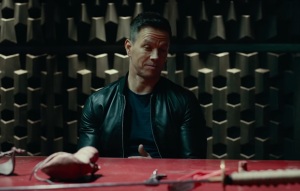
Evan McCauley (Wahlberg) is a man suffering from schizophrenia, or so he believes. He has strange visions in his head from past historical time periods and he instinctively knows how to forge a samurai sword. He’s interrogated by Bathurst (Chiwetel Ejiofor) who recognizes Evan as an ancient foe that he has fought through multiple past lives. Bathurst wants to kill Evan before he can remember who he is and stop Bathurst’s evil scheme. Evan is rescued by Mora (Sophie Cookson, Kingsman) who informs him that he is one of the Believers, a group of immortals who get reincarnated after each death. They’re waging a secret war against the Nihilists, lead by Bathurst, who want to obliterate the world rather than be reborn into it again. Evan must relearn his many pasts and help the Believers recover a hidden doomsday weapon his past self hid.
You’d be forgiven if you thought you had watched Infinite before, perhaps in a past life, because it’s so highly derivative. The story runs on two very well-worn tracks of science fiction storytelling, the Chosen One plot and the Secret War plot. You’ve seen variations on both in plenty of familiar sci-fi action movies, comic books, and the central pillars for countless Young Adult titles. Think about being told this statement: “Your ordinary life has been merely an elaborate cover, and you’re no ordinary person but secretly a powerful and important [fill in the blank] and there’s been a war going on in the shadows between [fill in the blanks] and you’re the key to solving this ages-old conflict.” I bet many of you can already think of similar titles that apply. There’s Harry Potter and Highlander and The Matrix and the Assassin’s Creed series and even more specific examples like Wanted, where it too features a sexy woman rescuing our lead in a sexy car and fending off bad guys while she informs him of his secret true calling. Even Ejiofor was in a strikingly similar movie just last year, 2020’s The Old Guard. It’s all so vaguely familiar at every moment that you’ll question whether it’s all built from spare parts.
Then there’s the added reincarnation angle, where people have amazing skills that they never knew they possessed (The Matrix, Wanted) and souls going from host body to host body (Cloud Atlas). In fact, David Mitchell, the author of Cloud Atlas, essentially wrote this very story in his 2014 novel, The Bone Clocks. In that novel, we learn that there are two factions of immortals who are reborn after every death, one group that preys upon the souls of mankind and another trying to defend the innocents. That book explores a lot more in the realm of identity (characters are reborn in different genders and races), time, and purpose than with Infinite, which settles for a recycled B-movie doomsday plot that even video games are getting tired of now. If past lives and reincarnation is just another disposable gimmick for super powered beings duking it out over a cataclysmic MacGuffin, then why bother with the existential possibility of the premise?
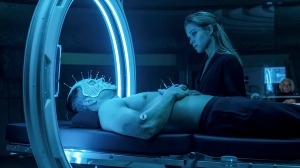
For a movie that takes so much time to spit out clunky exposition, Infinite is fairly incoherent and, occasionally, self-defeating. When you’re entering any new territory, there’s going to be a learning curve. Imagine how Neo learned about his misconception of reality, the war and history with the machines, and his capabilities he was opening himself up to. Exposition is best done in portions equally spaced out and tied to action, so our characters can learn through doing and failing and then succeeding. With the gimmick of past lives, it could open up such intrigue and possibility about human potential as well as the difficulty of these immortals finding one another across the globe for centuries, restarting with every rebirth (a fact explored in The Bone Clocks). It also would lend itself to characters being reckless with action movie stunts because, at worst, they die and take a twenty-year or so timeout before getting back into the action. Nothing of real interest happens with the past lives gimmick. The movie treats it as a shortcut to give its characters superpowers, and by tapping into those memories, now they have all these crazy super abilities that no mortal could accomplish in merely a single lifetime (sorry Bruce Lee). Imagine if in The Matrix, instead of Neo learning and training that they just uploaded everything into a Chosen One 3.0 security patch they downloaded (yes, he downloads skills, but we see the process demonstrated as visual progression). It’s boring to watch. The movie even could have explored more about these past lives, experiences, and lessons learned rather than in kaleidoscopic flashbacks. For the entire premise, Infinite seems so strangely limited in scope.
Then there’s the plot device that destroys the scheme of the villains. The Nihilists are tired of the eternity of being reborn and stuck with the accumulation of their memories. Bathurst says when he begins anew in the womb, he is a fully cogent adult brain and it’s nine months of torture. This, ladies and gentlemen, is the only interesting component in the entire movie that relates to the reincarnation premise. The Nihilists want to destroy all life so then they can never be reborn again, though this still seems theoretical. They have also developed a special device that will store a person’s consciousness onto a computer hard drive or microchip, supposedly stopping that consciousness from being reintegrated into a new host body. If this is the case, why isn’t Bathurst and his Nihilist fellows taking advantage of this? They’ve already developed a solution that works and doesn’t involve the destruction of all life on the planet. I don’t even know why Infinite introduces this absurd plot mechanic considering the damage it does. I guess it was an attempt to raise the stakes with immortals where death isn’t permanent, but for the purposes of the movie, a death means they are taken out of this present fight for the fate of the world. The stakes are still there. The implications are also nebulous, as they talk about souls as currency but can human souls be downloaded onto a portable technological deice? This entire plot device is silly in conception and even worse in execution, with big swirly bullets that also glow as they zip along.
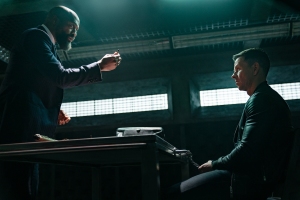
Wahlberg (Spenser Confidential) is on autopilot for the entire movie. He’s laconic and nonplussed and without any hint of humor or fun to be had. His under-performance is compensated by the overacting of Ejiofor (Doctor Strange) in a disastrous dynamic that reminded me of the 2011 Oscar hosting performance by the tandem of James Franco (under performing) and Anne Hathaway (over performing). At least Ejiofor is holding my attention with his high energy level and a maniacal glee that reminded me of James Bond villains. The problem is that nobody else is delivering this same arch level of camp. Everyone else in the cast is trying to play things so icy cool and nonchalant, and it just makes all the characters feel like boring robots.
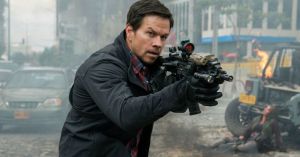
And yet all of this could be forgiven if Infinite had some memorable and exceptionally exciting or well-developed set pieces to entertain. Much can be excused or mitigated if an action movie delivers upon its action. Alas, Infinite cannot escape the orbital decay of its lack of imagination. The derivative nature extends to the action, which consists of a series of rote chases and gunfights. There is one sequence that had promise for the scale of its destruction, a car chase through the different floors and levels of a police building. It’s viscerally entertaining to watch all of the many things gets smashed while raising the question just how fragile concrete walls are constructed to be in downtown metropolitan architecture. This is also the moment that Evan is brought into the new world, which means it’s all downhill from here. Antoine Fuqua (The Equalizer) is an action genre veteran and can be counted on for some degree of style to jazz up the proceedings, but he can only do so much with sequences lacking points of interest and tension. Infinite would play better as campy nonsense, but it won’t acknowledge this identity.
Given how derivative everything appears, it’s surprising Infinite is based on an original work, the self-published 2009 novel The Reincartionist Papers by D. Eric Maikranz. The author offered his readers ten percent of his advance for whoever helped get him to sell the film rights to Hollywood (true to his word, Maikranz paid out in 2019). Already, this is more entertaining to me than anything provided in the 106 plodding and incoherent minutes of Infinite as a movie. The high-concept premise is reduced to a lazy shortcut for superpowers for a group of know-it-alls trying to act cool and strut while delivering exposition by the truckload. The action is stifled, the characters are dull, and the world feels so sprawling but without needed definition. This could have been any combination of Chosen One and Secret War story elements. What about Harry Potter battling the bullet-curving killers from Wanted? Or what about Neo facing off against the ancient society of werewolves and vampires in sleek lather catsuits? Or an immortal special ops crew that must track down other immortals before they can do lasting harm? This mix-and-match formula belies how truly interchangeable the story elements are with Infinite. It closes on voice over by Wahlberg that genuinely made me guffaw. Looking to the future, he says, literally, “Well the possibilities are… infinite.” For this hopeful film franchise, I strongly doubt that.
Nate’s Grade: C-
Share this:

Spiral (2021) / A Quiet Place Part II (2021)
 Chris Rock seems like an odd choice to spearhead a revival of the dormant Saw franchise, but the actor was a rabid fan of the grisly horror series and came to producers with an idea for a new Saw movie, and the results are Spiral: From the Book of Saw, like it’s a Biblical chapter. A Jigsaw copycat killer is targeting corrupt police officers and those who protected them, and Rock plays a detective who dared to turn in his partner after he murdered a crime scene witness. Rock’s character is seen as a traitor by his fellow brethren in blue, and as the Jigsaw copycat continues his or her bloody rampage, the history of police abuse and cover-ups comes to light. The problem with Spiral is that it feels like an entirely different independent script that somebody attached gory Saw set pieces and said, “Reboot.” The Saw set pieces get increasingly ludicrous and gross and the drama in between, where Rock tracks clues and barks at his peers, feels like boring connective tissue the movie can’t even bother to pretend is worth the effort. Both parts feel rote, the police conspiracy thriller and the gory death traps. The movie is also entirely predictable by the nature of the economy of characters. Within 15 minutes, I was able to predict the identity of the copycat killer as well as their connection and motive. This movie desperately needed more time with Rock and Samuel L. Jackson together. Another issue is that the movie ends abruptly and with a needed extra turn missing, perhaps where Rock agrees to work with the killer and justifies the executions as righteous reform. I wanted this new Saw to be more in keeping with Saw 6, the best sequel and most topical of the franchise where health care employees were put to fiendish ironic tests to punish them for denying medical coverage. It feels like targeting bad cops would produce more social commentary, but I guess that would get in the way of watching people try and sever their own spine on a single nail. Spiral doesn’t feel any more promising than the other attempted Jigsaw reboot in 2017 even with its topical elements. It might be cheap enough to earn a sequel, but it feels like a franchise eternally going in circles.
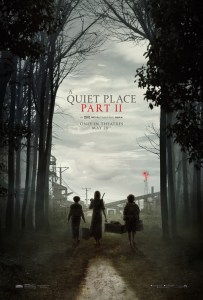 A Quiet Place Part II is the first movie I’ve seen physically in theaters since the middle of March 2020, and I genuinely missed the experience. It’s been the longest I’ve ever gone in my adult life without seeing movies in the theater, and this was one that felt like the presentation would be elevated by the big screen and superior sound system. Taking place nearly minutes after the conclusion of the 2018 hit, the surviving Abbott family ventures off their farm to find refuge and potentially find a way to protect themselves and neighboring communities from the killer monsters attracted to noise. The opening is the only flashback we get; everything else is forward-looking. I would have enjoyed getting more Day One experiences where the monsters first attacked, especially as we become open to new characters and their own harrowing journeys. The movie, written and directed by John Krasinski, isn’t quite as novel and brilliantly executed as its predecessor, but it’s still a strong sequel that gives you more while leaving you wanting more by the end. The majority of this lean 97 minutes is split between the family, one half staying put in a warehouse basement, and the other traveling out into the open to find a radio tower. The set pieces are still taut though rely more on jump scares this go-round, granted well executed jump scares that still got me to jolt in my seat and squeeze my girlfriend’s hand a little tighter. Cillian Murphy (Batman Begins) is the most significant addition as an Abbott family friend who has lost his whole family since that opening flashback. He’s a broken-down man, a parallel for Krasinski’s father figure from the first film, and at points it feels like he’s being set up to appear sinister, or at least hiding some dark secret that never really comes to fruition. The world building is expanded and introduces a very Walking Dead-familiar trope of desperate people being just as dangerous as deadly monsters, though in a world of hearing-enhanced creatures, I would think there’s more danger in larger numbers than security. The movie earns its triumphant ending even if the staging, and cross-cutting, is a little heavy-handed. A Quiet Place Part II is a successful sequel that understands the unique appeal of its franchise and how to keep an audience squirming while also remain emotionally involved and curious for more.
Nate’s Grades:
Spiral: C
A Quiet Place Part II: B+
Share this:

The Mitchells vs. The Machines (2021)

After watching it twice on Netflix, I have come to the conclusion that The Mitchells vs. The Machines is my favorite animated film since 2018’s Into the Spider-Verse. It’s so colorful, so exuberant, so clever, while still being heartfelt on its own terms and packing more jokes into a minute than any studio comedy in years. Everyone should check out 2021’s first cinematic treat.
The Mitchells are known as the weird family in their community. Rick (voiced by Danny McBride) is more about the outdoors and hands-on activities. His teenage daughter, Katie (Abbi Jacobson), is more about the digital sphere and creates her own sardonic, strange videos. She’s leaving for college and eager to fly the coop. Rick feels his last opportunity to bond with his daughter is leaving with her, so he forces the family into a cross-country road trip to drop Katie off at her school. Linda Mitchell (Maya Rudolph) is doing her best to be supportive of her husband and daughter while trying to bridge their divide. Youngest son Aaron just wants everyone to get along and talk about dinosaurs endlessly. The road trip gets even more precarious with a machine uprising and flying robots rounding up humans to eventually jettison them into space.

This is a gloriously entertaining movie that looks absolutely gorgeous. The animation is accentuated with similar styles from Into the Spider-Verse, so the filmmakers have implemented an overlay that adds a two-dimensional shaping and shading to the characters to provide more distinct definition. It’s a new design I heartily enjoyed in the Oscar-winning Spider-Verse and I hope more major animation projects employ it. It’s combining the fluidity and scale of 3D animation with the tactile and personal flavor of traditional animation. The movie also echoes its Gen Z-YouTube culture with cute hand drawn additions that will pop on the screen as accents or take over as quick freeze frames. I thought it was fun and a good indicator of Katie’s meta-drenched sense of humor and creative voice. This is also an explosively colorful movie with vibrant arrays popping off the screen. There were several visual sequences that took my breath away just at the arrangement of colors. The heavy use of neon pastels made me wonder if Nicolas Winding Refn (Neon Demon) was a visual consultant. There’s a stretch that highlights pinkish sunsets and the beautiful light blues of approaching dusk that I said this was the Nomadland of animated movies. Even when this movie has nothing happening, it’s a pleasure just to take it in and appreciate the artistry.
But oh my goodness there is so much happening with The Mitchells vs. The Machines. It’s a longer animated movie at 110 minutes but it’s also so fast-paced and antic, filled with ideas and jokes and moments it feels like it cannot wait to share. In some ways it feels like talking with a hyper-literate, boundlessly excited little kid, and I don’t mean that as a negative. I’m sure there will be more than a few viewers who will tire out early or find the pacing exhausting, but if you’re a fan of The Lego Movie and its hyperactive style of comedy, then you should be able to adapt here. The movie is densely packed with jokes, some that zip by in fractions of a millisecond to reward multiple viewings. I was laughing throughout and besides myself at several points, laughing hysterically from the slapstick to the offhand one-liners to the callbacks and silliness. There’s a little of everything here comedy-wise and it all works. It’s a buffet of laughs. One joke that is simply a tonally serious push-in on the question of mortality had me howling and it’s only a one-second gag. There’s a segment in a deserted shopping mall with the re-emergence of Furbys that is inspired lunacy (“Behold, the twilight of man!”). You have to be this good to be this smartly silly. This is the kind of comedy you can only do in the realm of animation, packing as much into the visual frame as possible and moving at the clip of the creative’s imagination. The side characters are the film’s secret weapons. The dumb dog made me laugh just about every time he was onscreen, and the fact that the movie legitimately finds a significant solution with this dog later is fantastic. The family also come across a pair of malfunctioning robots (voiced by Beck Bennett and Fred Armisen) and take them in as part of their unconventional family, and the robots are a terrific team for comedy bits, from their early entrance trying to ineptly persuade the family they are in fact humans (“Yum yum. Yum yum good.”) to their one-off remarks from a confused perspective had me laughing regularly.

The movie is more than just an assembly line of expertly calibrated gags, though again it must be said how flat-out hilarious this movie can be, like it’s disarming how instant the funny can break. The Mitchells vs. The Machines is also a well written movie from a character perspective and makes the audience genuinely care about this self-described clan of weirdos. My girlfriend looked at the running time for the movie and initially balked at how long it was, especially since we had seemingly come to a part that could serve as its Act Two break. “It better be worth that extra time,” she warned, and by the end even she agreed that it was time very well spent.
The heart of the movie is on the father-daughter relationship and while the other characters don’t get shut out, they become helpers to their various sides of this fractured relationship. The conflict is relatable, about the disconnection between two loved ones who just don’t feel like they have much in common any longer. For Rick, he doesn’t understand technology, the thing that Katie thrives in, and he’s struggling to adjust to her growing older. Those familiar daddy-daughter points of bonding don’t have the same appeal to her as a young woman increasingly embarrassed by her Luddite father. There’s a sincere warmth between the two, it’s just they don’t know how to express it fully to the other person and be seen as how they would like to be seen. It’s a generation gap, yes (Rick’s fear of technology will ring true to those with Boomer parents), but it’s also just two people who cannot use the same old tools to get the same results. The screenplay serves up both sides so that we see where each is coming from, understand their frustrations and overreaches, and pull for their reconciliation and growth. The themes are kept simple but expertly developed and with wonderful payoffs not just for Rick and Katie but for everyone. Each member of the Mitchell family unit has a character arc with a payoff, and each is utilized in a meaningful way with our outlandishly joyous climax, and that includes the dog and robots! Even the villain’s perspective is a parallel to our central family conflict, and that is just good writing. The story is deceptively clever and there’s more going on under the surface.
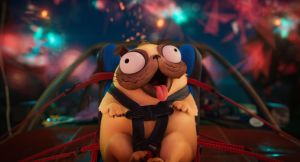
Besides the visuals, the comedy gold, and the heartwarming family relationships, there’s amazingly even more reasons to enjoy The Mitchells vs. The Machines. The voice acting is great, with McBride (This is the End) being a surprise standout as a loving middle-aged father. Also, of note, is that 2/3 of the principal cast of Netflix’s Disenchanted series are found in this movie (where for art thou, Nat Faxon?). The thrumming musical score by Mark Mothersbaugh is a synth-heavy blast that made me recall the scores for Blade Runner 2047 and his own Thor: Ragnarok score. The movie even features inclusivity in a casual manner; the son’s autism and the daughter being LGBTQ are treated with “yeah, sure” acceptance. At no point is either called out or featured in a moment to highlight this but neither are they dismissed as unimportant. Stick around because there are extra levels to the end credits, and I was happy for each because I didn’t want this wonderful time to end, so I kept hoping for more resolution to play out.
The movie was originally meant to be released a year and a half ago but COVID pulled its release date, and eventually Sony sold their project to Netflix for a cool $100 million. It’s hard for me to put an exact price on a work of art (what is this, an NFT? Seriously, someone explain these things to me) but I’m happy Netflix saved this movie and gave it a home. At this point, I’m willing to give producers Phil Lord and Christopher Miller the utmost benefit of the doubt when it comes to anything animated. After Cloudy with a Chance of Meatballs, The Lego Movie, Spider-Verse, and now this, they haven’t let me down yet. The Mitchells vs. The Machines is an eye-popping action movie and a superb comedy that the whole family can enjoy.
Nate’s Grade: A
Share this:

Mortal Kombat (2021)
 Mortal Kombat is video game royalty, and if you were a Millennial that grew up in the 90s, then you likely have your own personal connection to this bone-crunching franchise. Released in 1992, the halcyon decade of fighting games, the arcade game gained notoriety and parental infamy for its photo-realistic fighters and for the over-the-top violence. Players could finish off their opponents in brutal and bloody fashion, drawing the condemnation of parents and politicians and only making teenagers want to play the games even more. I can recall my disappointment over the Super Nintendo port of the first game lacking the blood and gore of the arcade, something my Sega Genesis friends could lord over me with their faithful port (there was a code where you could turn the copious amount of sweat red, but it wasn’t the same). This was corrected with the release of Mortal Kombat II, and I think I devoted two whole years of my teenage life to playing that game, memorizing every player’s special moves and deadly finishes. I never really kept up with the franchise after the third game, and from what I’ve seen with the newest versions, I can safely say they just aren’t for me anymore. The gore of the 90s games was campy and ridiculous and the gore of the current games is too medically graphic for me (I’m not alone; apparently the game developers also needed therapy as they suffered trauma from their research and detailed recreation of the intensely destructive violence upon human bodies).
 I can recall seeing the 1995 Mortal Kombat movie at the local drive-in with my friend and fellow fan of the franchise, and we lapped it up eager to see any live-action version of our video game obsession. We were so excited and ignored the faults of the film, and we weren’t alone. It gained the reputation as one of the “better video game movies,” which is a criminally low bar to clear. I never watched the 1997 sequel, Annihilation, but it’s widely regarded as a so-bad-it’s-good farce and definitely an insult to fans of the games. From there, fans have been savoring the day another Kombat film could find its way to the big screen, something to wash away the taste of the cheesy 90s movies that were both PG-13 and lacking the signature gore of the series. The new 2021 Mortal Kombat movie is firmly rated R and is chiefly made for the diehard fans. It’s a fun and bloody movie with some flaws, but I don’t know what more I should have expected from a franchise that, from its very beginning, has literally spelled “combat” with a K.
The plot is straightforward for a game centered around a super-powered inter-dimensional fighting tournament. The Outworld has won nine tournaments in a row and with one more victory they will gain control over Earthrealm. Sorcerer Shang Tsung (Chin Sun) is the ruler of the Outworld and has the bright idea that if he kills all of Earth’s chosen fighters ahead of time, it will make his next tournament victory that much easier. He sends powerful assassins to Earth to locate the Chosen One, an MMA fighter named Cole Young (Lewis Tan) who doesn’t know he’s the descendant of a destined family line of warriors. Cole is taken under protection by Sonya Blade (Jessica McNamee) and Lord Raiden (Tadanobu Asano), where he is trained to reach his true potential. He needs to unleash a hidden superpower to compete with the best of Outworld.
First off, if you’re looking for a Kombat movie that is faithful to the atmosphere of the games, then you should walk away happy. Nobody is going into this movie and expecting Oscar-level material. We’re here for the fights, the crazy characters, and the gasp-inducing gore effects, and to that end the third film incarnation of Mortal Kombat mostly delivers the goods. Compared to the 1995 movie, populated with majority white actors with varying degrees of martial arts skills, and “varying” might be charitable, this is a clear winner. These are actors here from The Raid, Wu Assassins, Into the Badlands, The Twilight Samurai, Mongol, and plenty other worthy martial arts spectacles, so the filmmakers clearly valued having actors who could credibly perform the complex fight choreography. It’s also worth noting that we have Asian actors playing Asian characters, so that’s a bonus for authenticity and reverence as well.
 The opening six minutes of the movie really sets up how serious and potentially great it can be. It’s the early 1600s, and we’re introduced to the quiet family man, Hanzo Hasashi (Hiroyuki Sanada), a member of a Japanese ninja clan that is being hunted by Bi-Han (Joe Taslim), a dangerous warrior from a rival Chinese ninja clan. The opening is patient, thoughtful, and eerie, and when the fighting breaks out it’s done in longer takes where we can watch the actors strut their physical stuff. The fighting makes specific use of each character’s skills and is a satisfying start. The movie never quite lives up to these artistic heights again, at least for a sustained duration, but this taste of a legitimately good Mortal Kombat movie is enough to make you believe we can return here again.
The rest of the movie is decidedly fun and clearly doesn’t take itself too seriously (they even make fun of the “combat” with a K spelling). It’s got characters that can shoot lasers from their eyes, invisible monsters, four-armed strongmen, metal arms, and just about every character introduction is another opportunity for the movie to shrug and just accept its inherent weirdness of its rogue’s gallery. There’s a lady with dinosaur wings and another guy with a really sharp hat. What you want is for the filmmakers to present a world where these characters work, something that didn’t succeed with the goofy 1990s movies. I think the script by Greg Russo and Dave Callahan (Wonder Woman 1984) accomplish this feat and presents a world that finds a credible middle ground between campy indulgence and self-serious blather. It’s serious enough to not break out into derisive laughter but it’s still not too serious that the filmmakers have forgotten what the audience has paid to see. The gore effects are sticky and impressive and gross without being offensively so. The creative process for this movie was likely crafting a list of all the red-strewn finishing moves from the games and figuring out how best to squeeze them into the royal rumble. Every character gets a signature move, along with plenty of clunky catchphrases also crammed in for fan approval. If you’re a fan of the games, they’ve designed this movie with your demands primarily in mind.
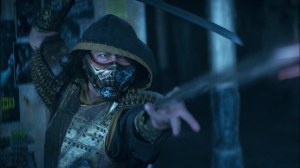 Where the movie falters are with decisions of pacing, structure, and some editing. Centering the story on a newcomer seems odd when any other established character could have sufficed, until you realize they’re setting up Cole Young to inherit the legacy of his ancestor and likely become the Scorpion we know so well from the games. Except that’s not quite what happens, which makes the decision to center him as an entry point perspective more confusing. It’s not like Cole is that interesting on his own. He’s a boring MMA fighter who wants to protect his family and that’s about it. He needs to summon his special power, and when he does, prepare to be underwhelmed. Another issue is that the second act is far too long and protracted. It’s mainly comprised of training exercises and people being told, “You’re not ready,” and vague force fields and teleportation powers that invite questions over whether they could have been used earlier. It’s too much training without the bloody reward of the gnarlier fights. This leaves the final act to be rushed and many of the climactic one-on-one fights are pushed into a measly montage. Finally, the editing of the fighting can become too choppy and jumbled to fully appreciate the onscreen action. The opening sequence is an example of where careful edits can highlight the choreography.
The new Mortal Kombat movie is fun, cool, bloody, and probably exactly what diehard fans would hope for from a big-screen rendition. It’s ridiculous but not tongue-in-cheek in tone. The visuals and special effects can often be weirdly beautiful especially with the crystalizing powers of Sub-Zero, the game’s popular ninja with the power to freeze and create deadly daggers of ice. There are some standout “wow” visual moments, like when Sub-Zero freezes a bullet firing from the blast of a rifle, or when he freezes his opponent’s spurting blood to form a knife. There were as many moments that brought a smile to my face as made me check the time. The dialogue is flat and the only actor who seems to really be enjoying himself is the proudly profane Josh Lawson as Kano. But when it comes to the fighting, the fatalities, and the franchise’s glorious selling point, it might not be a flawless victory but it’s still a victory nonetheless for fans.
Nate’s Grade: B-
Share this:

Chaos Walking (2021)
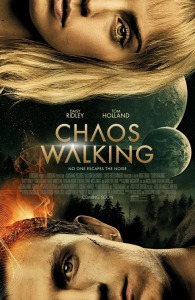 Chaos Walking has been shrouded under the ominous reputation of “troubled production” from its very inception. It’s based on a 2008 YA science fiction series by Patrick Ness and has gone through writer after writer, trying to hone this story into a visual medium. At one point, Charlie Kaufman was attached as the screenwriter, and if Kaufman, the man who turned his struggle to adapt a book about flowers into a meditative and meta experience, can’t find a way to make your story work, then I doubt many other Hollywood writers can. It began filming in 2017 with director Doug Liman (Edge of Tomorrow) and sat on the shelf for years, with the studio execs reportedly dismissing the finished version as “un-releasable.” Fifteen million dollars in reshoots took place in 2019, helmed by Fede Alvarez (Don’t Breathe), and now the finished movie has been quietly dumped to theaters and on-demand markets. Chaos Walking is, indeed, chaotic, but it’s mostly dull and simplistic with a premise that feels ripe for social commentary that the movie has no interest in because it would detract from its eighteenth depiction of another forest chase.
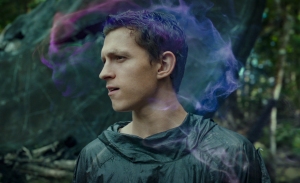 In the future, mankind has settled on an alien world with some unexpected results. There is a strange quirk about this planet – the men are incapable of hiding their inner thoughts, which materialize in front of their heads as visuals with their narration echoing (nick-named “The Noise”). Women, for whatever reason, are unaffected. It’s been so long since another supply ship from Earth has come that life on this alien world has begun to resemble the struggles of the early terrestrial pioneers. Todd (Tom Holland) wants to impress his small town’s authority figure, Mayor Prentiss (Mads Mikkelsen), and become an adult faster than he might be ready. Viola (Daisy Ridley) has made the multiple-generations trip from Earth but her spaceship crashes. Todd finds her and panics because she may very well be the only woman alive on the planet. He elects to hide her and try and reach an old technological outlet, while the Mayor leads a posse to round her up and maybe kill Viola.
Given that premise, you would think that Chaos Walking was setting itself up for some sharp, uncomfortable, and relevant social commentary about the plight of being a woman in a modern society. If Get Out was a horror story about being a black man in America, I was thinking Chaos Walking would be a horror story about being a woman in America, but I was wrong. Think about the premise, with every woman subjected to a society of men that cannot hide their unconscious objectification, their leering harassment, their distressing ulterior motives, where every man’s uncontrollable thoughts will be broadcast. It’s an empathetic and horrifying glimpse into the daily dismissal, exploitation, and condescension that woman experience. You add the extra element that women are immune and now they also become the subject of projected male resentment, that they feel judged, and this only makes the men more hostile and confrontational. Being “the last woman” also presents an obvious threat of sexual violence as well. It’s all right there, and yet Chaos Walking barely even toys with its explosive gender commentary; there’s a reason all the women are dead on the planet, but it’s not exactly revelatory, and its inclusion, at the expense of all other notable social or political commentary, makes the explanation feel more perfunctory. Why even bother having a premise that features a gender disparity if you’re not going to really say something about the treatment of women? If you think about those old movies where it’s one man on a planet entirely of women, or some similar dynamic where there is a giant gender upheaval, and they always say something about it. What would be the point of making an exception for one kind of person and then ignoring the larger implications? Well, I’ll never truly know, because Chaos Walking doesn’t seem to know either.
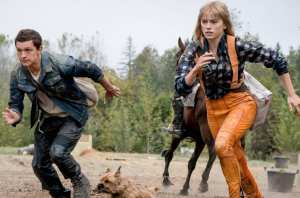 I can see why this premise works on the page where the reader is already able to immerse themselves in the inner thoughts of a point of view character. I’ve never read the source material but I can imagine it being like a jigsaw puzzle of first-person perspectives. It’s a little harder to translate into a visual atmosphere in a clear and meaningful way, especially when you’re limiting what it all says. As its portrayed onscreen, The Noise is often muddled and visually hard to decipher, and while it mimics the half-formed nature of thoughts (people don’t typically think in complete, declarative sentences) it’s still too abstract and confusing. The wispy visuals are opaque and glisten like sunlight in gasoline pools, which makes the imagery less easy to determine. It’s like someone made a sci-fi thriller and just ladled on extraneous visual elements but didn’t want anyone to properly decode these special effects. Sometimes the premise works, like when Todd is trying to hide his fears, like when he envisions a beat-down from a dangerous crowd, or when he purposely imagines scary imagery to spook a rival’s horse. Too often The Noise just feels exactly like that when it comes to the narrative. It’s a peculiarity that is underdeveloped and could well be forgotten. It’s such a strange experience to watch a high-concept movie where the filmmakers are seized by indifference with their high-concept. I don’t know if maybe this is a subtle acknowledgement of defeat.
There’s one character that symbolizes the futile adaptation of The Noise and that’s Reverend Aaron (David Oyelowo). He’s living in conflict with his own community and his Noise is more apocalyptic, fire and brimstone, and he views The Noise as a connection between man and God. Now that is interesting, looking at this quirk as a gift or curse from God and trying to make a spiritual understanding over why man, and only man, has been given this ability. It seems to radicalize him. At long last, here is a character with a direct and personal relationship with The Noise, the hook. How does this change his relationship with God, his sense of self, and his feeling of disconnect from being so far away from home in this alien world? Well, all of that tantalizing characterization and potential depth is cast aside. Reverend Aaron is merely a religious zealot and a boring one at that. It’s hard to determine whether he’s gone over into violent extremism or is seeking absolution, which makes him just another dangerous antagonist that appears here and there but you can’t quite square. This character could have been legitimately intriguing from the story specifics of how he would respond to drastic change, isolation, introspection, and a crisis of faith brought on by the environmental turmoil. Instead, he just becomes a secondary heavy chasing characters for vaguely unsatisfying reasons.
 Chaos Walking is not a fascinating failure or a so-bad-it’s-amazing fiasco, it’s just a mediocre chase movie. It’s patterned after Westerns visually and structurally, with the frontier town being lead by a Black Hat who is chasing after the Drifter who represents a threat to the status quo. It’s not just the horses, dusty trails, vilified natives, and small-towns shootouts, Chaos Walking is very intentionally a science fiction Western, a pairing that seems to keep getting tried on by Hollywood studios like an old pair of cowboy boots they’re positive fit perfectly once long ago. As far as space Westerns go, it’s fine. The action is fine, though I grew tired of the visual mundanity of characters continuing to walk in the woods, run through the woods, and take refuge in the woods. For an alien landscape, Chaos Walking often feels frustratingly plain and unimaginative. All of these interesting science fiction asides and additions and it’s really just interested in being a second-rate space Western. The screenplay is held together as a series of rote chases. The main characters are bland and Ridley’s straw-like blonde wig gave me bad memories of Kate Mara’s bad wig from the infamous Fantastic Four reshoots. For its 110 minutes, you won’t exactly be repelled from the screen with boredom but you won’t be tempted to pay close attention either. Chaos Walking is too generic, too safe, and too derivative to be anything more than passing entertainment. I wish it was more chaotic and un-releaseable just to be more memorable and worth your time.
Nate’s Grade: C
Share this:

Godzilla vs. King Kong (2021)
 Godzilla vs. Kong is the kind of movie where you need to question what your qualifications would be for its true entertainment value. Four films into the fledgling MonsterVerse, we’ve set up its Batman vs. Superman, its Infinity War, its climax, the biggest names on the biggest stage to settle the score once and for all. With indie director Adam Wingard at the helm, best known for peculiarly violent genre-defying movies like You’re Next and The Guest, the results with G vs. K (I’m not writing the full name every time) strictly fall into the realm of dumb fun. It’s up to you which of those categorical designations will reign supreme, the dumb or the fun.
The gigantic 100-foot tall ape Kong is being kept in a caged atrium by the Monarch organization. Godzilla is running amuck and attacking a shady company that may have a shady conspiracy afoot. Kong and Godzilla are two alpha predators, the last known titans, and it’s believed that Godzilla is seeking out Kong to put him down for good. The government is trying to protect its great ape, figure out why the big lizard is acting up, and maybe explore this kooky Hollow Earth theory. There’s a reason I haven’t mentioned any human character names because, once again, they don’t really matter.
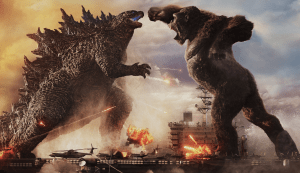 This movie is going to entirely depend on how much your love of monster brawls can, essentially, push aside crazy, incoherent plotting and meaningless human characters. If you’re the kind of fan going to G vs. K and expecting nothing else than bruising knockdown fights that decimate the landscape and ensure untold death, no matter how many times we’re told the entire city of Hong Kong has miraculously evacuated in minutes, then the movie delivers. There are three big brawls and each one of them is satisfying and has a weighty quality to them; they really do feel like heavyweight title fights, with each side giving it their all and then some. It’s an epic showdown and we demand the best from this clash of the titans, and Wingard comes alive during these sequences, finding stylish ways to demonstrate and develop the carnage so that the brawls feel unique rather than stale. Each of the three major battles takes place in a different location and uses that environment to its advantage when developing its action particulars. The first bout is at sea and Kong is chained to the galley of a warship, so Godzilla capsizes the ship, attempting to drown Kong. The water is also a far more friendly place for Godzilla, with Kong forced to jump from ship to ship like platforms in an old school video game. The rematch takes place in downtown Hong Kong and offers the traditional metropolitan cataclysm we’ve come to expect from disaster escapades (again, with vague reminders that somehow all these buildings are empty). Godzilla’s fire breath becomes a laser field that Kong must avoid with drastic escapes. Wingard’s camera finds fun ways to communicate the back and forth, at one point seemingly attached to the monsters as they pummel and move, like an arty Darren Aronofsky film. He finds ways to make two age-old creatures fighting still appear visually fresh and exciting. When the creatures are slugging it out, G vs. K is at its best as big-budget popcorn escapism.
I also must applaud that filmmakers that, four movies in, we finally have monster fights where the audience can see what is happening. 2014’s Godzilla reboot kept teasing the big lizard and giving glimpses, a foot there, a closing door here, that built anticipation but also tried audience patience. My biggest complaint was I wanted more Godzilla in my Godzilla movie, and 2019’s King of the Monsters answered this complaint, providing four different monsters to duke it out for monster supremacy. However, the supernatural slug-fests were undercut by sequences that were hard to see. Whether it was in the rain, at night, in a blizzard, in the fog or smoke, it was hard to tell what was happening because of all the annoying visual obfuscation. We had more monster fights, yes, but they weren’t that much easier to see than in 2014. Thankfully, this movie seems like a direct response to that chief criticism. The big fights take place entirely during the day, and not only that, it’s clear and even sunny, making sure we can soak up every loving CGI detail of these two giant pretend creatures having their big pretend rumble. It may sound like I shouldn’t be too congratulatory for a franchise that dares to allow its paying customers to actually see the spectacle that they paid to see, but after several other films of mitigating results, I’m happy we at least can enjoy the big brawls after so much build-up and delayed gratification.
 But if you expect more from a versus film other than predicated pugilism from your preferred participants, then G vs. K is going to disappoint. It is a vast understatement to say that this movie is extremely loony. It is so goofy that you will either shrug and go with the silly twists and turns, or you’ll be like several of my friends, and my girlfriend, who just stared stupefied and shook their heads, muttering how much more crazy-pants bananas things could possibly get.
For a franchise that started fairly grounded in 2014 from a science standpoint, and whose sequels have more or less hewn to that tonal vision, G vs. K says, “Hey, what if we…,” and injects whatever it deems might be insane and awesome, like an improv game that never meets resistance. Whatever you may be prepared for, this movie goes deeper and crazier. It literally goes to the center of the Earth and back. If I were to describe the parameters of the final fight, it would sound like I was drunk or needing of mental check-ups from concerned loved ones. It feels like the Asylum version of what a Godzilla and Kong match-up would be, and by that I refer to the low-budget studio known for its schlocky knockoffs and crazy all-you-can-eat buffet-style sci-fi plotting. There’s one solution that literally involves dumping alcohol onto a computer. Again, maybe your exact sensibilities will be a match for this wilder, sillier tonal wavelength; maybe you felt the earlier MonsterVerse entries took themselves too seriously. I’ll readily admit that they devoted far too much time to human drama I felt was, no pun intended, irritatingly small-scale. 2017’s Kong: Skull Island is the high watermark for this monster cinematic universe, and definitely better than you remember, and it didn’t take itself too seriously but found an agreeable baseline that allowed the film to have its spectacle while holding the human drama to be meaningful and entertaining itself. The movie was stylish, fun, and your brain didn’t melt when the big creatures were off-screen for long duration.
With G vs. K, any sense of established connectivity with the other movies is thrown out the window. Sure, there are faces that reappear (hey, Millie Bobby Brown), but they might as well be new characters. Even more than that, the tone of the movie is shifted so forcefully into self-parody, cheesy ludicrousness, including a spaceship serving as a moving defibrillator and psychic skulls, that it’s hard to take anything remotely seriously. I can already hear some detractors saying why should a movie about a giant ape fighting a giant lizard ever be taken seriously, and maybe you’re right you detractor you, but every movie needs an established baseline to provide a foundation of what is real, what is meaningful, and what is exceptional. If everything is crazy, it makes the monster action seem more mundane, and if anything can happen at any moment, it makes the plotting less important of careful setups and development, and satisfaction will be capped.
 If you’re just looking for a movie about a giant ape punching a giant lizard with top-notch special effects, well Godzilla vs. Kong has that aplenty, and if that’s enough for you, then enjoy. It’s far more of a Kong sequel with the occasional special appearance from Godzilla, so if you’re more a fan of the big lizard you may be a little miffed at the big guy being a second banana. The action is fun and splashy, and I wish I watched this titanic title match on the big screen where it belongs, and I’ll admit that likely has dulled some of my experience. The sharp tonal shift for the MonsterVerse, and the escalating silliness that climaxes into insanity is either going to be selling point or a breaking point for every viewer. You’ll either rock with glee and happy that this franchise has finally evolved into the schlocky spectacle you’ve been dying for, or you’ll be trying to hang on to the silly, over-the-top plotting to orient your staggered senses. Godzilla vs. Kong is everything the title suggests and little else, and for many that will be enough. For me, I think it kind of lost me somewhere between here and Albuquerque.
Nate’s Grade: C+
Share this:

Alternate Opinion: Zack Snyder’s Justice League Guest Essay
My friend and writing partner Ben Bailey asked me to host an extensive essay he was compelled to write after watching the four-hour Snyder cut of Justice League. I’ve never featured anyone else’s words or opinions on this review blog before, but it’s been so long since he really devoted himself to an artistic analysis, and with such detail, that I felt compelled to publish it on my personal review platform. Behold, a guest essay on the nature of Art, Ayn Rand’s Objectivist theory, super heroes and their appeal, Zack Snyder as a filmmaker and philosopher, and capitalism.
____________________________________________________________
“Zack Snyder’s Justice League and The Virtue of Shallowness: An Essay In Search of a Point” By Ben Bailey
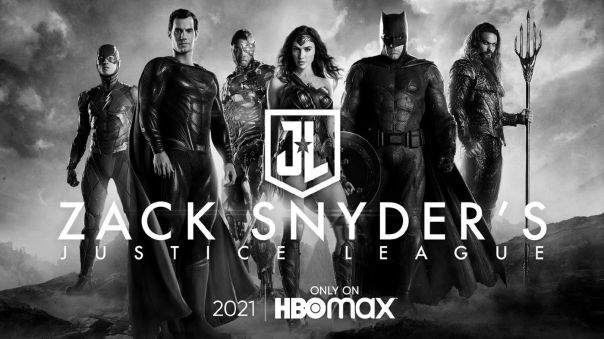
All Art is self-indulgent, but not all self-indulgence is Art.
Back in 2010, legendary film critic Roger Ebert famously groused that video games could never be Art. His reasoning was largely an attempt to grasp at the essential definition of what Art is, and how it can and cannot be applied to various artistic mediums in order to claim supremacy for his preferred medium, cinema, over one he pompously scorned. At the time, as a 25-year-old man-baby gamer, I objected strenuously to his argument but not in a way that I could articulate with the same thoughtful presentation with which he made his case. I just instinctively rebelled against the notion that a thing I loved in the same way Ebert loved movies could not be Art like movies clearly are because smart people like Ebert said so. I was still struggling with what Ebert struggled with in his piece, as I hadn’t yet developed a working definition of what Art actually was. Unlike Ebert, who never settles on a definition and just decides to declare himself right, I have since found one that at least works for me, and now in the cold hard light of 2021, I’m forced to conclude that Ebert was sort of correct but not for the reason he thought he was. The vast majority of video games are not Art, just like the vast majority of movies, TV shows, and books are not Art, because Art is something special and pretty hard to achieve in a capitalist society designed to stifle creativity at the altar of marketability.
For me at least, Art has a practical and a poetic definition. The practical one can best be distilled as, “Deliberate creative expression done for its own sake.” Artistic Intent is everything. It has to be something done on purpose, not something retroactively defined as Art by someone experiencing it separate from the Artist. It has to be a creative expression, which is to say something done to reflect the internal life or point of view of the Artist as opposed to something a craftsmen might build to be functional but not intellectually or emotionally inspired (All Art is craft, but not all craft is Art). And most importantly, it has to be done for its own sake, free of any creative compromise. For something to be Art, the Artist has to do it because it is something they simply must do, because it is born inside of them and must be birthed through the process of creative expression so that it isn’t left stillborn inside their soul to rot and kill its host. If it is done for any other motive, for profit or to cater to the whims of a prospective audience, it ceases to be Art and becomes Commerce, a commodity that belongs to the world and no longer to the Artist.
 The poetic definition is a bit looser as you might expect: “Art is the process of making your dreams come true.” It is how we physically manifest our imagination into literal reality, recreating what is inside of us to bare our souls to the world, not because it matters what the world might think of them or who might want to buy or sell the product of their representation, but simply because the soul of an Artist burns bright and the fire has to go somewhere. Many things are mistaken for Art because they are created with the same tools through the same mediums. A really entertaining movie you love might seem like Art to you, but chances are, just given the realities of how movies are made in the studio system, it wasn’t created by an Artist or group of Artists collaborating to bring something beautiful into the world from their own minds. It may have started out that way, or that may have been the hope at the outset, but inevitably to get the thing made, money people began to influence what it should be, and test audiences and marketing algorithms ultimately dictated its form. A spatula might be used to make pancakes or spank your lover, but that doesn’t make your breakfast foreplay.
You might have noticed by now that my conception of Art is marked by an almost Platonic ideal of the Artist as Rugged Individualist, perhaps an expansive application of Auteur Theory that would mean almost nothing could be Art if it involves any kind of collaboration. That’s not entirely untrue, as I am trying to say that Art is a very rare and exclusive thing, at least when it comes to the kind of creative works we are typically exposed to in a society built on commercial industry. But to clarify, multiple Artists working together on a shared vision like a film or video game, while always more difficult to coalesce than one person articulating a singular vision like a painting or novel, can still be Art as long as the intent remains pure, or if the idea of purity sounds a bit fishy to you, at least free of external influences from non-Artists. Still, it’s just easier to conceptualize the Auteur as Artist for the purposes of discussing artistic intent, eschewing the messiness of multiple Artists trying to figure out the workable common denominator of their unique perspectives. If Art is a person making their dreams come true, the fact that it is their dream and no one else’s would seem to be the pertinent factor in assessing whether it is true to what it is. You might call it the Virtue of Selfishness. And that is where Zack Snyder comes in.
 At this point, I don’t think I need to provide too much on the history surrounding the supposed epic tragedy of behind-the-scenes studio machinations that was the 2017 Justice League film. Suffice it to say if you don’t know, the theatrically released version of the movie was a sort of Frankenstein’s monster of two competing visions, one the culmination of original director Zack Snyder’s bleak, realistic take on DC superheroes introduced in two previous films, and the other a studio-mandated effort to re-shape the project to dilute Snyder’s influence and better ape the success of the Marvel Cinematic Universe (MCU) through the inclusion of re-shoots, re-edits, and post production work provided by the MCU’s most notable director at the time, famed garbage person Joss Whedon. The result was widely regarded as mediocre at best, a mishmash of clashing ideas and tones representing diametrically opposing perspectives on what a superhero movie should be. It was assumed at the time that the relative critical and commercial failure of the film meant that it and the cinematic universe it spearheaded was, much like Snyder’s conception of the DC Universe, completely hopeless. And then some weird stuff happened.
A strange confluence of circumstances involving the changing nature of our engagement with modern media, the increasing ubiquity of streaming platforms challenging and possibly supplanting the theatrical model of film distribution, and also a freaking pandemic, led to Snyder getting an incredibly rare second bite at the apple in the form of the Snyder cut. A long fabled, often dismissed as mythical truer version of Snyder’s masterpiece, the Snyder cut had been cruelly torn from him and mutilated beyond recognition by shortsighted naysayers who just didn’t understand the deep and profound things the director of Sucker Punch was trying to say in the movie where Lex Luthor apparently pees in a jar to make a point to a senator before killing her. Or I don’t know, maybe he got his assistant to do it before sending her to die in the explosion he didn’t tell her about? Okay, that’s not the point, but Batman V. Superman is still really stupid. The point is, fans demanded it, and Warner Bros.’ long history of poor decision-making led them to provide a whopping 70 million dollars, roughly the budget of an entire year’s worth of quality Blumhouse movies, to complete a thing that was supposedly already basically done. And now it’s here.

Author Ayn Rand
If you didn’t pick up on my reference earlier to the Virtue of Selfishness, consider yourself lucky to have never been exposed to any kind of deep dive into the nonsense of Objectivist “philosopher” Ayn (rhymes with “whine”) Rand. I use “philosopher” in quotes because Rand famously rejected all philosophers post-Aristotle other than herself, most likely because all of modern philosophy might as well be collected with the subtitle: “Why Ayn Rand Is An Idiot,” so her rejection of them was likely a preemptive strike done with the same degree of defensive self-awareness that led her to rail against government hand-outs her whole life only to accept Social Security and Medicare in her autumn years. The Virtue of Selfishness refers specifically to a collection of essays encapsulating Rand’s ethical vacuousness better than I could with any description, so I would say you should just read it, though you really shouldn’t. You could also check out her much more popular and well known novels, the CEO’s on strike fantasy Atlas Shrugged, or The Fountainhead, about a self-described brilliant artist who would rather see his greatest work destroyed than allow it to be altered by the people with the moral temerity to think they had the right to dictate what it should be just because they paid for it. Coincidentally, Zack Snyder has been trying to make that book into a film for years.
Snyder is, by his own admission, a devotee of Ayn Rand and a committed Objectivist, and despite my already established aversion to this worldview, I want to state clearly here that I don’t bring this up to say that Zack Snyder believes in something I find ridiculous and is therefore a ridiculous person. I might think that if I got to know him, but that isn’t the point I’m making here. I have no reason to think that Snyder isn’t a perfectly nice, intelligent person as an individual, at least by the standards that we might judge those things in the abstract. I don’t know the man personally, so I don’t know for a fact that his love of a philosopher who said we owe nothing to each other means he believes the same thing wholeheartedly, and I have no way of knowing how he might translate his conception of Objectivism into his daily interactions with other people. He may be a sweetheart or a total bastard for all I know. As a filmmaker, however, I feel like I can say with some degree of certainty that his Randian worldview is at the forefront of his creative vision. If his movies are any indication of his artistic intent (as one assumes they should be), the Artist’s fire that burns in his soul is one that seeks to burn down the liberal social order predicated on the notion that our success as a civilization requires that we care about each other.
 I would submit that the reason Zack Snyder’s approach to superhero movies feels so strange and off putting to so many people, whether or not they can articulate why, is because it lacks empathy. That isn’t to say that a movie or even a work of Art requires empathy, but its absence always feels wrong because art is the language of the soul, and having no interest in appealing to our shared humanity is the spiritual equivalent of gibberish. It feels especially wrong in superhero fiction because empathy is the basis for all superheroes on a fundamental conceptual level. The thing that makes them heroes is that they care about other people and, because of that, dedicate their lives to helping others. The people with similar powers who only use them for personal gain or to hurt other people, because they don’t believe we owe anything to one another, are the bad guys. So when Snyder, a filmmaker who views the world and the worlds he creates through the literal and figurative lens of Randian self-interest, tries to realize the characters of Superman, Batman, or Wonder Woman, it does not occur to him that anyone like them would ever sublimate their own selfish interests for the good of humanity. He has no frame of reference for altruism, so he can’t relate to characters designed to be the personification of it.
Snyder’s Superman spends almost the entirely of Man Of Steel rejecting the idea that he should use his amazing powers to help anyone, and only begrudgingly takes on the threat of General Zod when he is personally threatened and it is in his interest to fight, famously failing to even try to save Metropolis from the destruction wrought by his battle because civilian casualties were immaterial to him. In the sequel Batman vs Superman: Dawn Of Justice, the idea that all of this superheroic carnage has any real toll on real people that we should care about is addressed almost as a petty response to the backlash Man Of Steel faced for its callous depiction of the character, with Batman representing the side that at least cares enough to seek revenge, only to be revealed as short sighted in his zeal to defend humanity from this all-powerful alien god after a few common enemies and a coincidence involving their mothers’ names causes him to see the monster as a misunderstood hero. In between this convoluted arc, we have a montage of Superman saving lives that is one of the most morose series of images ever put to film, suggesting its the last thing he wants to spend his time doing. We see Wonder Woman coming out of hiding after decades of refusing to use her powers for the good of anyone, and we also find out that Batman, the billionaire who spent his life and vast wealth defending the innocent from evil, has since broken his oath never to kill and seemingly delights in sending criminals to prison branded with a symbol that almost assuredly marks them as targets for rape and murder.
 Back in 2019, Snyder directly addressed the criticism of his dark, “realistic” approach to superheroes, and specifically the idea that Batman would kill, by saying “It’s a cool point of view to be like, ‘My heroes are still innocent. My heroes didn’t fucking lie to America. My heroes didn’t embezzle money from their corporations. My heroes didn’t commit any atrocities.’ That’s cool. But you’re living in a fucking dream world.” And you know what, he’s absolutely right. It’s a dream world called comic books. You could say the same thing about something like Star Trek, the idea that we could all give up on greed and completely restructure society around the idea of helping each other is pretty naive and will probably never happen, but that’s not the point. The point is to imagine a world where it could happen, compare that imaginary world to our own, and think about what we might need to do to bridge the gap between them. Fantasies aren’t supposed to be realistic, they are supposed to be inspirational and aspirational. Most billionaires do probably embezzle money, and most people given the powers of a god would probably be corrupted by that power and commit atrocities. But what if they didn’t? What if those people were innocent do-gooders who helped other people instead? That would be super, and pretty heroic at that.
Of course, Snyder is in no way obligated to like or care about what superheroes are traditionally meant to represent in order to make movies about them, but it begs the question of why he would want to spend so much of his time and effort crafting an entire series of superhero movies if he doesn’t. A cynical approach to answering that question might start with the dumptruck of money Warner Bros presumably wheeled to his home, and might even posit a sort of trollish pleasure in taking down something he clearly detested through creative deconstruction a la Rian Johnson’s The Last Jedi. Or perhaps his motives were even more insidious. Perhaps he hates the very idea of altruistic superheroes and altruism in general so much that he dedicated an entire film franchise to subverting our love of superheroism so that we would lose hope in the empathetic message they are meant to inspire, and with nothing else left to cling to, fully embrace our Randian dark sides. For the record, I don’t think it’s any of those things, but any one of them would be more interesting that what I think the actually answer is, which gets me to my biggest problem with Snyder’s work overall, and especially his latest magnum opus, the Justice League Snyder cut.
 Every single movie Snyder has ever made has been at its core a parable extolling the virtue of selfishness, but none of them were intended to be that because they were never intended to be anything. If Snyder were a political or philosophical polemicist for Objectivism or any ideology, I would at least respect the intellectual exercise even if I couldn’t appreciate the end result, but that’s not what Snyder does. While his visual style is marked by hyper-realism, all slow-motion grandiosity, his storytelling is focused on reflecting the real world as he sees it, and his point of view just happens to be skewed the way it is. Remember, he doesn’t want to live in a dream world of his own making, he wants everything to be like the real world, which he just happens to see as one where nobody cares about or likes each other. Beyond that, there’s no inherent meaning in anything he does, which is insane considering how skilled he is at creating visuals meant to evoke the feeling of deeper meaning. When Aquaman stands on that pier with waves crashing over him and “There Is A King” playing in the background, it certainly feels like its saying something, but what? He’s sad? Angry? Symbolic of… anything? When Superman poses like Jesus, he’s clearly not meant to represent any form of Christ narrative I’ve ever read, but the image is iconic and memorable and just feels important somehow, and that’s all that matters.
Snyder’s shallowness is not in and of itself a problem, even if given his talents it represents a crushing waste of potential. The problem is that when your movie is four hours long and serves as a once-in-a-lifetime opportunity to rectify the injustice of studio meddling as a battle cry for every artist who ever had their work stolen from them, not having anything of importance to say and adding literally nothing of substance to the two-hour studio cut everyone hated is maybe the most disappointing thing you could have done. Obviously, the tragic circumstances surrounding his leaving the project in 2017 and the seemingly shady way Whedon was brought onto the project do not make Warner Bros look good, but if I’m supposed to believe this narrative that Snyder was betrayed and his dream project was bastardized by philistines, I shouldn’t be coming away from his original vision with so much more respect for the mediocre hatchet job. I know the prevailing critical consensus coming out of this is that whatever you may think of Snyder’s version, it’s at least better than the Joss Whedon version, but these people are just wrong.
 Comparing the two cuts is apples and oranges. One of them is a movie, created under the auspices of a studio director’s responsibilities to their contract, and the other is a vanity project with no such restrictions. Whedon completed a film that was palatable to a wide audience and within a reasonable running time to be shown in theaters, which is presumably what the studio thought Snyder was going to do too. If we are to believe that what we have now is Snyder’s true, uncompromised vision for it, then what was he going to do when they told him you can’t put a four-hour movie in theaters? What would he have cut to get it to two hours? If I had to guess, I’d say probably almost everything Whedon did, since the stories are so similar that its clear the content Snyder put back in was largely superfluous to the narrative. Most of what Whedon cut was unnecessary slow-mo, call backs to movies we wanted to forget, and setups for movies nobody wanted, and redundant moments already covered elsewhere. All the action scenes are present between the two cuts, except for the completely pointless Flash sequence, but in the Snyder cut they’re all twice as long. Same beats, same information conveyed to get the point across, just longer and less well paced than in the theatrical version.
Is Steppenwolf a more interesting villain now that we know he serves Darkseid because of some past mistake we don’t know about, rather than just assuming he does it because he’s from Darkseid’s totalitarian world where everyone serves him? Does Darksied’s comical incompetence as a despot make him a more enticing prospect for a sequel, somehow forgetting that the thing he devoted his life to searching for was on the one planet he failed to conquer, which just so happens to be the one planet where they left behind all those doomsday devices waiting centuries to be easily activated? We’re told it’s such a shame that we missed out on the great character of Cyborg, and now we finally get to see what could have been, but to quote the black clad Superman at the end of the Snyder cut, I’m not impressed. What more did we learn to deepen his story? Daddy never came to his football games but he still misses him when he’s dead? Riveting! Did we need a six-minute excursion into his mind palace with a voice over explaining all of his powers like we’re children when the original just demonstrated all of them by showing them to us? And what does it all amount to? In the end, he gets to ascend to his rightful place as the least interesting mopey superhero who hates being a superhero with all the other mopey self-hating superheroes. Hooray?
 Naturally, you’re probably thinking, it wasn’t all just cuts, what about all that stuff Whedon added in? “What about brunch?” you say. Sure, I’m not going to defend everything Whedon did to make his version work. You’re mileage may vary; I would say about half of his new additions worked for me and half were cringe worthy, but the good half seems even more vital now than it did when we didn’t know the alternative. The brighter color palette alone is a welcome change from the dreary, washed out look of the Snyder cut, and for every bit where Flash wedges his face in Wonder Woman’s cleavage, we get one like Cyborg laughing about his injuries after stopping the mother box, the only moment in either version where he resembles the fun, lighthearted character from the comics and TV shows. The Flash never gets his hot dog-strewn first meeting with Iris West, but he gets a heart-to-heart with Batman about how being a real hero means saving people one at a time that speaks to the greatness of both characters in a way nothing in the Snyder cut does. When Superman smiles in Joss’ version, it’s because he’s saving lives and he’s happy when he gets to do that. When he smiles in the Snyder cut, it’s a menacing sneer because he’s about to lay the smack down on a weaker opponent to show him who’s boss. And then we get that delightful Russian family.
Yeah, I know, you hate the Russian family, and I get it. I hated the Russian family when I first saw the 2017 cut. Why would they waste time showing these characters who don’t seem to have any bearing on the story? The thing is, we only thought that because we were treating this superhero movie like a superhero movie, where we don’t necessarily need to be reminded that superheroes save lives as long as that’s a base-level assumption. But in Snyder’s world, it isn’t. In his cut, there’s no family to save because who cares about saving families? The stakes in the Whedon cut are clear and personal, real people will be hurt if they fail. We are them and they are us. It’s not subtle but neither is anything Snyder has ever done in his life. In the Snyder cut, we know that the Earth is doomed, but it’s all theoretical, our entire planet reduced to the same collateral damage that Metropolis became in Man Of Steel, where the people are there, we assume, but they don’t matter enough to be our focus. And in the end (of the Whedon cut anyway) the villain is defeated by his own fear, because the fear he represents cannot stand up against what the heroes represent in opposition to him: love, for each other and for the world they fight for. In the Snyder cut, they just savagely whale on him, stab him, and cut his head off with terrifying glee in their eyes, and then we cut to a flash-forward into a future world seemingly based on the Injustice video game series where we find out they failed to save the planet anyway.
 Again, I would like to stress that I am not making a one-to-one connection between filmmaking style and personal character. I’m not saying that Zack Snyder the person doesn’t care about people, and I know Joss Whedon doesn’t. I assume that before he shot those Russian family scenes, he made sure to make some of his female employees feel like dirt because making women cry is the only thing that gives Whedon an erection. But the real-life context matters. You might be asking why I keep bringing up the Ayn Rand stuff even though I don’t even think he’s intentionally injecting it into his movies. It’s because when I saw the original 2017 cut, I was disappointed but I didn’t hate it. When I saw this new cut, I was incensed, and I couldn’t quite figure out why until that side of it clicked for me. I went through something similar with Quentin Tarantino’s Once Upon a Time… In Hollywood. Everybody was loving it but I couldn’t explain quite why I didn’t until it dawned on me that it wasn’t anything about the filmmaking but the larger context, a director who made millions working with Harvey Weinstien, making a love letter to old Hollywood in the wake of the Me Too movement centered around the exploitation of an actress and making the story about two clueless men. It just felt wrong, and I’m finally to the same point with Snyder’s movies.
The 2017 cut of Justice League came out shortly after the election of our fascist, white supremacist, and eventually traitorous former president Donald Trump, a man so comically evil that he literally served as one of the inspirations for Lex Luthor when he was transformed from a mad scientist into an 80’s-style corporate tyrant. His rise to power, or rather the lie he tells people about being a self-made man and not a trustfund baby, is basically a Randian Horatio Alger story, and not just because both men were fabulists rumored to be pedophiles. You might even call him a Randian Superman, and the line from Randian Self-Interest to CEO worshiping Social Darwinism to Trumpian fascist strongman politics is undeniable. This new Justice League, where Zack Snyder tries to turn all my favorites superheroes into fascist action figures, comes out only a few months after a bunch of traitorous right-wing scumbags tried to raid our nation’s Capitol to usurp our democracy at the whims of a would-be king. One technically doesn’t have anything to do with the other, but the images are iconic and the connection just feels like there’s something meaningful there, even if it’s unintentional. I just can’t treat Snyder’s bad politics as just some interesting facet of his directing style anymore. I don’t want it in my polity, I don’t want it in my entertainment, and I sure as hell don’t want it in my superheroes.
So what was the point of any of this? Why start with that long boring excursion into the definition of Art? And what’s more, if Art is the one place where the Virtue of Selfishness makes sense, where does any audience or any would-be critic like myself have any place to question an Artist like Zack Snyder? Why write 20-plus long paragraphs, the Snyder cut of Snyder cut hot take think pieces, if an Artist should never care about what anyone thinks of what they create? That’s where I’ve been the last few days. As you might guess, I find the whole notion of Art criticism to be utterly worthless and without merit. The entitlement that audiences have surrounding the Art they consume is equally abhorrent to me, as if what they think of something should have any bearing on the form it should take. So where does that leave me? Feeling like a hypocritical piece of garbage.
 I keep coming back to The Fountainhead (as a metaphor, not the actual book, because I read it once in college and that was enough). The protagonist Roark was hired to design a building and insisted he could blow the thing up if they didn’t let him build it the way he wanted, and when he does, he goes to trial, and makes a passionate plea in defense of his own rights over his creation that wins over all the doubters who couldn’t force him to conform to tradition. I keep wanting to force this narrative where Snyder is Roark and the saga of the Snyder cut is his quest to finally build that eyesore upon the skyline the way he always wanted, but it just doesn’t work for me. Art is deliberate creative expression for its own sake. The Snyder cut is certainly deliberate, and while it was made at the behest of the studio for a profit and an audience, I’m even willing to give Snyder the benefit of the doubt that he didn’t care about either of those things and really did set out to make it for its own sake. But then there’s that middle part, creative expression, something that reflects the internal life or point of the view of the artist. What if there’s nothing interesting about the internal life to reflect, and any apparent point of view is accidental and despicable at that? Is Zack Snyder the architect Frank Gehry, building beautiful sculptures people just happen to live and work in, or is that just who he thinks he is and who we want him to be, and really he’s just a very skilled craftsmen with nothing to say? How boring and uninspired can a work of Art get before it ceases to be Art at all from the sheer weight of its pointlessness?
Roger Ebert tried to say that video games could not be Art, but really he just didn’t understand them or like them, and for years, similar charges have been leveled at comic books and comic book movies. Whatever I might feel about Snyder or his work, he has been instrumental in lending a degree of legitimacy to comic book storytelling in the minds of a lot of people who otherwise dismissed it. Maybe not as much as the MCU has, but he’s still a part of it, and as a lifelong comic book fan, I can’t ignore that. I feel like I should be right there with everyone else, if not loving the Snyder cut, then at least loving what it represents, that for once the little guy won over the big guy, even if the little guy is usually on the side of the big guy unless he’s the one getting screwed, and he didn’t really win so much as reveal his limitations and give me a reason to say “I have more respect for Joss Whedon as an artist” which is something I never wanted to say again. But I’m not there, and I don’t think that’s what this represents, and really, I just wish that someone else, or really anyone else could have gotten the opportunity that Snyder did. Maybe this release makes that more likely in the future, but I don’t have much hope for that. I don’t have much hope for anything left in me anymore because I just watched a four-hour Zack Snyder movie and I’m pretty sure our future is going to be a Randian dystopian Knightmare. Release the David Ayer cut! Release the Gareth Edwards cut! Release the Lord and Miller cut! Release the Michael Cimino cut! Release all the cuts!
Just try to keep them under two hours, please.


 nathanzoebl
You must be logged in to post a comment.