Blog Archives
The Last Kiss (2006)
 Zach Braff has exploded in such a short amount of time. He was underappreciated on the perennially underappreciated Scrubs, but then his breakthrough came in 2004 with Garden State, an aloof, charming love story about personal awakening. After just one movie Braff is now a name-above-the-title headliner. For his second film, The Last Kiss, Braff stars as another young man going through another personal crisis. He even selected the radio-friendly songs for the soundtrack just like he did with Garden State. This new movie is actually a remake of a 2001 Italian film, adapted by Oscar-winning screenwriter Paul Haggis (Crash). But there’s one big difference between Garden State and The Last Kiss? Garden State is actually good.
Michael (Braff) works as an architect in Wisconsin. He’s having a bit of a crisis with the state of his life close to his impending thirtieth birthday. His girlfriend, Jenna (Jacinda Barrett), is pregnant with his child and the two are planning for their future, but all around them relationships are falling apart. Chris (Casey Affleck) feels crushed by the demands of his newborn child and wife. Kenny (Eric Christian Olsen) is looking for guilt-free sex. Izzy (Michael Weston) is a wreck after having his heart broken by his ex. Jenna’s parents (Blythe Danner and Tom Wilkinson) may be splitting after 30 years of marriage, not all of them blissful.
With all this in mind, Michael worries that his life seems too scripted now and deficit in surprises. Then along comes Kim (The O.C.‘s Rachel Bilson), a young flirty college student that shows a strong interest in Michael. He must decide where his life is heading and whose hand he’ll be holding.
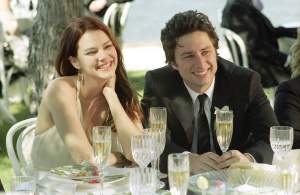 One of the reasons The Last Kiss is hard to get into is that the film never really elaborates why this foursome of guys have it so bad. Chris complains about a dead marriage but maybe his wife would nag him less if he spent more time trying to chip in around the house instead of avoiding his fatherly duties. Kenny is all gung-ho about a hot girl who’s interested in relationship-free sex, but then he runs the other way when, heaven forbid, the girl mentions the idea of commitment. Next thing you know, Kenny is not only running away from this girl but he’s joining Izzy on his cross-country road trip. He’s leaving the state because of the potential whiff of commitment. My friend, after we saw the movie, thought it was too stereotypical (woman: says one thing, wants other, man: scared of anything lasting). She suggested that Kenny slowly turns around his stance and wants to commit to this girl, who he obviously feels to be special. But that would mean The Last Kiss actually cares about the characters of Kenny and Izzy. These two serve more as a spare tire in a male relationship, and both their storylines are tied up with great time to spare.
Worst of all is Michael’s plight. He’s told by his buddies that he’s snagged the “perfect girl,” and from what we see she really is a lovely catch. Michael is freaking out because his life seems too tidy and empty of “surprises” now that a baby on the way. Boo hoo. So to jazz up his surprise-free life he has a fling with a college girl. Surprise! Isn’t your life better now, Michael? If it weren’t for the affable charm of Braff, who emits certain Dustin Hoffman Graduate vibes, the audience would feel no varying degree of sympathy for the dolt. Michael really bruises two innocent people just to needlessly reaffirm what he already knew. It’s hard to get behind all this. We don’t have to like characters, or their actions, but it hurts the drama when you’re simply watching one character hurt others for foolhardy reasons only evident to that character. In Unfaithful, we never really knew why Diane Lane had an affair but at least we saw complexity and strong repercussions.
There’s an element of maturity here and there with the screenplay, but twice as many moments of juvenile fantasies/fears (Look out, women will trap you and control you and expect equal work in return!). The movie has some adult material that works and hits its target but it also falls apart with idiotic musings. The best moments seem to come from the examination of the fading marriage between Jenna’s folks. It’s an interesting slice of life not commonly seen in youth-obsessed Hollywood, and Danner’s outbursts about what it takes to hold a 30-year union together ring true. But this moment falls victim, like many, to a tidy, simpleminded answer. Almost every storyline in The Last Kiss ends with a bow on it all wrapped up. Michael’s told not to give up and he essentially sleeps on his porch, wearing down the anger of his girlfriend through dogged persistence. In fact, the ending reminds me a bit of Secretary, another romance that ended with one lover proving their devotion by staying in one place a really long time. It’s almost insulting that the film presents Michael behaving badly and then excuses him as long as he just sticks it out. It’s not the idea that’s insulting; it’s the fact that The Last Kiss uses this ending as a cheap and easy out.
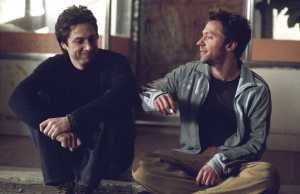 One of the benefits of movies directed by actors is that they tend to generate good performances. Director Tony Goldwyn (A Walk on the Moon) has assembled a nice cast that gives more than the material they get. The real find is Barrett, who may just be the greatest alum of a reality TV show (she was on the London edition of MTV’s The Real World). She showed promise in 2003’s The Human Stain and The Last Kiss is really her declarative ascent. She might start getting a lot of offers that would have normally gone to a Meg Ryan or a Julia Roberts. She shows a range of emotions and her breakdowns are hard to watch because of how well she sells her distress. She handles has a natural ease about her, which pairs nicely with Braff’s laid back, unorthodox charisma. Bilson is cute and crimples her doll face in a way that makes her character seem more naïve than seductress. Braff plays his role a bit subdued. He flashes enough life to not seem like he’s sleepwalking though the same steps he plowed in Garden State. Still, it’s not a very remarkable performance for someone people keep tabbing as a potential voice of a generation (a term nobody could feasibly live up to).
The Last Kiss is an unconvincing, simpleminded, disingenuous drama populated by whiny dolts afraid of the good things they have. It’s hard to sympathize with any of these flawed characters when we never really feel like their gripes hold water. Michael can’t believe his life seems planned out with a wonderful woman who’s having his baby. Solution: screw it up for variety. While it may be the spice of life, it’s also a heedless decision for someone who needs to wreck everything in order to realize what he has/had. This would all be easier to swallow if The Last Kiss didn’t tie everything up with a happy ending that lacked the groundwork. In the end, according to the film, all bad behavior can be wiped clean if you just wear down your significant other. The drama feels forced and the conclusions feel inappropriate. All human beings make mistakes and so do filmmakers.
Nate’s Grade: C
Share this:

Poseidon (2006)
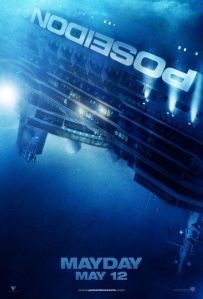 The Poseidon production design is rather fantastic and director Wolfgang Peterson (Troy) has a real handle on large-scale carnage, but Poseidon is a stripped down action flick that lacks the suspense and emotional involvement to bring strength to its attempts at harrowing survival. Some sequences, only some, are nail-biting, like a very claustrophobic escape through an air vent slowly filling with water. We’re presented a situation and then Peterson cranks up the tension and utilizes different characters working together. The sequence has the added benefit of utilizing the child to save them, unlike most films of this nature where irritating kids just become a liability to your own safety. The fact that this sequence, the film’s high point in my view, is also the least expensive of this $160 million dollar movie’s sequences is not lost on me. The film’s premise of working through the bowels of an underwater ship is filled with potential. The original Poseidon Adventure was cheesy, yes, but it was a lot of fun. This slick remake brings the action fairly early, having its “rouge wave” flip the ship at the 15-minute mark. Because of this decision the audience has no attachment to the film’s collection of characters, given fleeting seconds to establish some sense of personality. You really don’t care at all what happens to these people in the ensuing danger. The female characters add nothing to the story except to fall into the constant need of being rescued. Peterson paces his obstacles mercilessly right after the other, but he runs into the problem of killing off all his expendable (read: non-white) cast off too quickly. That lessens even the small amount of tension the film had going. Poseidon is way too big-budget and serious to go for camp. The special effects are above average and the pacing is swift. Frankly, you could do worse this summer for entertainment than spending 100 minutes watching this movie.
Nate’s Grade: C+
Share this:

Charlie and the Chocolate Factory (2005)
 The visuals by Tim Burton are suitably lavish but it’s missing the heart of the 1971 film. I never thought I’d say a movie worked despite Johnny Depp’s performance, but that’s the case here. It was far too off. Whereas Gene Wilder had the dichotomy of warmth and madness, Depp was just the kooky Michael Jackson-esque weirdo in a bobbed haircut (I thought Neverland had been found). Perhaps the added Michael Jackson vibe makes the premise a lot darker, what with luring children into a chocolate factory. Charlie is a really boring character lacking definition beyond his “goodness.” Once they get to the factory he?s basically wallpaper, watching his peers fall one by one to their vices. I’m not sold on a Wonka back-story. I don?t need to know why he is as he is; I need no tormented childhood and daddy issues. This new film has more polish but the old film has more togetherness and lasting power.
Nate’s Grade: B-
Share this:

Fun with Dick and Jane (2005)
 This feels like two movies battling for control and neither of them are good. Jim Carrey is horribly miscast and the film goes off the rails whenever it veers into his face-contorting slapstick. The corporate satire bits have more bite but fall short of even being on the same playing field as an off-day on The Daily Show. The end credits thanks big companies like Enron and WorldCom for making this film possible, but Fun with Dick and Jane hasn’t earned that ending gripe. This film is a sadly unfunny mess that deserves to be let go. Maybe we should outsource our comedy next time.
Nate’s Grade: C-
Share this:

King Kong (2005)
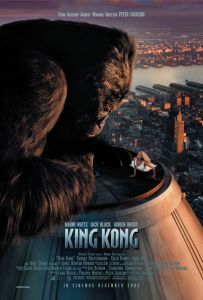 Has there been any movie this year that’s had a bigger hype machine than Peter Jackson’s King Kong? Coming after his Lord of the Rings trilogy, about two billion in revenue and a slew of Oscars in tow, Jackson decided to recreate the movie that captured his imagination as a child. It was King Kong that made Jackson want to become a filmmaker, so now he is returning the favor. Universal ponied up a staggering 200 million dollars for a budget and paid Jackson a record 20 million to sit in the director’s chair. Like his Rings series, this Kong clocks in at a gargantuan 3-hour running time. Will audiences share Jackson’s adoration with the story of a woman, a big ape, and a bigger building?
Carl Denham (Jack Black) is a filmmaker feeling studio pressure. The suits want to reel him in before he even starts shooting his next picture. Carl scrambles to get his crew and equipment onto a boat before the studio can shut him down. He?s on the prowl for a new lead actress and spots Ann Darrow (Naomi Watts), a hungry out of work vaudeville actress. He quickly convinces her to be apart of his movie and hurries her aboard, the selling point being that Jack Driscoll (Adrien Brody) has written the story. Carl practically kidnaps Jack and they all set a course for the mysterious Skull Island, a place only rumored to exist. The ship’s captain and crew are wary but sure enough their vessel washes ashore on an exotic island. But this is no sunny getaway, as the crew is immediately besieged by hostile natives and Ann is taken prisoner and offered as a sacrifice to Kong, a 25-foot gorilla. Jack leads an expedition to retrieve Ann, who begins to bond with her hairy captor (Stockholm syndrome, anybody?). Kong rescues Ann from dangers, be it bug or dinosaur, but flies into a vicious rage when she’s plucked away from him. Carl realizes an even bigger attraction: a giant ape to headline Broadway and line his own pockets. His schemes come true as Kong is knocked out and transported back to New York City. However, no stage is too great for Kong, as he busts free and looks all over for the love of his life, Ann.
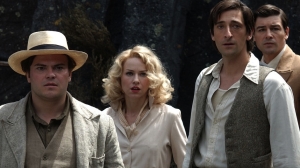 The sweet love story gives Jackson’s update a surprising emotional richness. In the 1933 original, Fay Wray never stopped shrieking until the big guy toppled off the Empire State building. She had no emotional connection to her furry captor and his unrequited love. In the 2005 King Kong, the strength of the movie is the relationship between Ann and Kong. Jackson of course stacks the deck of his story to all but guarantee an audience will fall in love with the big brute (he appreciates sunsets, how romantic!). There?s not much choice whether or not to sympathize with Kong, especially those moments where we stare into his soulful eyes welling up with emotion. King Kong has always been a tale of exploitation with man as the true monster. By administering time to fully develop a convincing relationship between beauty and beast, it makes the later scenes of exploitation have a larger sense of tragedy. Immense credit goes to Watts for selling this relationship and spurring our sympathy for Kong, instead of making their bond something for snickers and eye-rolling. Poor Adrien Brody though. It’s pretty bad in a romantic triangle when you’d rather pick a giant primate than Brody.
The performances go a long way to adding to the enjoyment of King Kong. Watts is a luminous actress and a natural beauty. It’s because of her that the second half of the movie has a beating heart and some kicks to the gut. Brody is ho-hum but given little to work with as a, wait for it, second banana. Black works wonders to make his villainous role so charismatic. Denham is a huckster that would step over his dying mother to make a buck, and yet Black’s charming and funny even at his most dastardly and cowardly. I don’t think King Kong would have worked the same with different actors; few could bring the heart and emotion Watts emotes, and few could bring Black’s comic virtuosity that makes it plausible why others would follow his showman character. Colin Hanks (also along side Black in Orange County), as Denham’s assistant, imparts a favorable impression. I’d like to see him paired up with Topher Grace sometime. Give it some consideration, Hollywood.
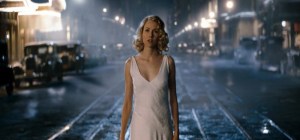 King Kong is a spectacular vision by one of cinema’s greatest visionaries. Jackson has lavishly recreated the excitement of his youth, bringing the story of Kong into the modern age with studly panache. The film is marvelously beautiful to take in and has plenty of moments that will reawaken the child within you, transporting you to an age when movies truly seemed larger than life. During the epic battle between Kong and the T. Rexes, I knew the exact curiosity and excitement Jackson felt when he saw the 1933 original. The action is intense and rarely lets up once our adventurers reach Skull Island. The special effects are some of the best movies have ever seen. Kong moves with expressive accuracy that goes a long way toward expressing his humanity, whether it is in a sigh or a tantrum. Andy Serkis has yet again brought life to another entirely CGI character. King Kong is well worth the price of admission just to sneak a peek at the Jackson’s limitless imagination.
With Jackson’s beefed-up recreation, he has also brought with him a terrible amount of bloat. This King Kong runs a frightful 3-hours plus, and most viewers will just feel exhausted by the time the lights go back up in their theater. Jackson’s love affair with his material is indisputable but it also seems to cloud his judgment as far as pacing is concerned. Numerous scenes seem to stretch longer than necessary and lose their point of interest, the first hour seems too drawn out and prosaic, and the movie haphazardly mixes in the serious with the soapy (Kong on ice?). Some scenes lose their sense of believability the longer they stretch on, even in a movie filled with giant monsters. Certain subplots have set-up but no follow-through, like all the added attention to Jimmy (Jamie Bell), the ship’s teen that wants to experience danger too. Jackson even makes sure we catch that he’s reading Heart of Darkness. So where does this character go? Nowhere and very slowly at that. The character has no bearing on anything that happens with the plot and is dropped entirely once they leave the island. There’s no point. Did something get cut from the inevitable 8-hour extended edition DVD that will prove how pivotal Jimmy really was? I doubt it.
 Some nipping and tucking and a comprehensive editing overhaul would certainly make King Kong a better movie, but it would lose its sense of spectacle. I can’t complain about length too much since Jackson packs such a wallop of entertainment like few others, so while King Kong certainly is a bloated and exhaustive film, it’s also an artistically bloated, exhaustive film. Jackson sure does have reverence for his source material (some lines and scenes are directly lifted), though he may have overlooked the 1933 King Kong‘s 100-minute running time.
Peter Jackson’s King Kong is an epic, epically grandiose, epically imaginative, epically action-packed, and epically bloated. The update is a bit exhausting but Jackson packs more entertainment per minute than few others in the film business, even if he has too many minutes to work with. Watts really sells her tender relationship with Kong and gives the film a surprising emotional heft absent from the 1933 original. Because of our emotional investment the film has a greater sense of sadness and tragedy as it plays out. King Kong was the 800-pound gorilla of the movie year and Jackson knows how to deliver a visual epic, even if he tiptoes into self-indulgence. While I can protest the length, pacing, and some subplots that go nowhere or strain credibility, it’s hard to argue that King Kong is the popcorn spectacle of the year. Your bladder may hate you by the end of it but you won’t want to miss a second.
Nate’s Grade: B
Share this:

The Longest Yard (2005)
 Does anyone else remember an episode of South Park from the 2004 season where Eric Cartman dresses up as a robot named AWESOM-O? The best part of the episode came when Cartman stumbled into a Hollywood meeting and they asked the robot to pitch a movie idea. He came up with idea after idea of Adam Sandler in some wacky yet predictable situation, each a slight variation from the last. The Hollywood execs ate it up and scribbled everything down, chanting, “Goldmine!” I imagine The Longest Yard remake, the latest Sandler comedy vehicle, came about through similar creatively bankrupt circumstances.
Paul Crewe (Sandler) is at a low point in his life. The once star quarterback has been banned from football for throwing a game. His girlfriend (Courtney Cox) thinks they should split, and after being chased by police for drunk driving, he?s been sent to prison. The warden (James Cromwell, your go-to guy if you need someone old) has big plans for Crewe. He wants the young stud to organize an all-inmate football team to play against the cruel guards. Crewe gets help from a fellow inmate Caretaker (Chris Rock) and they set about finding the right men for their team. A former Heisman-winning football player (Burt Reynolds), who happens to be in the same prison, becomes the coach. Slowly but surely the group becomes a team united to get some revenge on their tormentors.
The Longest Yard is an Adam Sandler comedy in the worst way possible. The film is sloppy and sophomoric but generally unfunny. It sets its comedy heights on kicking people in the nuts and making fun of gay people. Mission accomplished. The sex jokes, while in abundance, generally fall flat because the movie is so ineptly transparent when it comes to comedy. It lets all the air out of the supposed punch lines. The humor is typically homophobic but infuriatingly also anti-women. You see, one of the guards is taking steroids in a bottle with a giant label that says, “Steroids?”(so much for keeping a low profile). The boys replace the steroids with -hee hee- estrogen pills. And in three days time, which would of course have no effect in such a short period, the guard is now crying, and overly emotional, and empathetic, and he has hot flashes, though I don’t know how in the world a man comes to that conclusion. Apparently it’s funny because women are weak and care about each other. I would be offended by this whole joke if it wasn’t so incompetently done. The Longest Yard exists in its own inept world where inmates have cells within arms reach of each other and there’s a prison football league. Lest we forget, this prison also keeps a star system to rank its inmates. Little did you know of Roger Ebert’s unorthodox side projects.
 Sandler plays Adam Sandler as he does in most of his Hollywood flicks. He’s likable, he’s a goofball, and it all works out. I wonder if we’ll ever see the true thespian side of Sandler again, like in Paul Thomas Anderson?s deconstructionist Punch-Drunk Love. Rock’s abrasiveness is toned down but he also loses his comedic edge. He’s basically another stereotypical black character in a movie making tired jokes about the difference between black people and white people. Cromwell and Reynolds both appear to be having fun mucking it up with the youngins. The rest of the supporting cast have their moments but aren’t very memorable. The movie fills out the athletes by having real football players and wrestlers.
What’s worse is that The Longest Yard wants to also be taken as a serious movie. This causes some intensely jarring scenes intended for dramatic impact but they just stick out sorely and are misplaced. Every time the movie goes from kicking people in the nuts to dealing with something like racism or death, the movie flounders from the tonal whiplash. The original movie was more of a prison drama than a sports movie, let alone a comedy. The Sandler remake wants to be all three and isn’t good at any of them.
This movie is so formulaic that it could have been written on a string of napkins, likely only totaling three. The Longest Yard feels like 2005’s greatest example of a cut-and-paste studio approved movie. Of course the embattled hero will once again face his demons and his past. Of course the motley crew of idiots and convicts will come together for something greater than themselves. Of course the evil guards will all get their comeuppance in appropriate ways. I expected all this from the start, but where The Longest Yard goes terribly wrong is when even the details can be correctly guessed. I watched the film with a couple friends and we accurately guessed every character move, scene transition, character development, and sadly, every punch line. This is a film that spells everything out, including the jokes. Here’s an example of the film’s shortsighted thought process: the dastardly warden soaks the player’s field and makes it all muddy with the intention of demoralizing the team. What? These are prisoners, and you think mud is going to demoralize them? Don’t even get me started on how insane it is sending Burt Reynolds into the game as a running back. There’s more attention spent on the limp football scenes than the story or the comedy.
 Another example of how weak the comedy is comes during the football game. It’s being telecast on ESPN and Chris Berman is providing the play-by-play. His sidekick in the booth is an inmate who doesn’t say anything. Berman even broaches this fact on air. Now, if The Longest Yard knew the facets of comedy, the natural payoff for this sequence would be for the silent inmate to say something at the very end, something funny or unexpected or even verbose. Instead, the film has the inmate talk two or three times and he adds no comedy. That’s The Longest Yard in a nutshell: all set-up and no return. And seriously, stop with the Rob Schneider cameos already.
The humor is a cocktail of physical slapstick and the occasional one-liner. There just isn’t anything satisfying to the comedy The Longest Yard has to offer. The jokes typically don’t build to anything greater and the humor is simply immediate with no lasting results. There’s nothing that will make you keel over with laughter, nothing that rises above a smirk or a slight giggle. The jokes are way too predictable and there’s nothing funny about the expected. That’s why most people don’t chuckle when the mail arrives. This just isn’t an entertaining comedy, plain and simple.
The Longest Yard is a tirelessly formulaic affair that is so ham-fisted with comedy it can’t even deliver jokes properly. This is a dumb, sanitized, audience-friendly easily digestible piece of puff that will get caught in your throat. This is a Franken-movie, with various parts crammed together for the best possible results by some studio overlord. The Longest Yard‘s comedy is sophomoric and generally insipid, the drama is a complete misstep and tonally out of place, and the football scenes are vapidly jazzed up. This is a sports move that doesn’t work as a comedy and a comedy that doesn’t work as a sports movie. Sandler’s devout army of fans will likely be satiated with this latest effort, feeling the flick to be stupid fun. For me, it was just stupid. Very stupid.
Nate’s Grade: D
Share this:

Assault on Precinct 13 (2005)
 It seems that in American cinema, we have a long history of people being holed up in one location and fighting off outside forces. There’s instant drama in fending off forces that outnumber you, and Hollywood knows this. There are historical dramas (The Alamo), fantasy flicks (Lords of the Rings), and nearly every other horror movie (Night of the Living Dead) that have a central conceit of the good guys being outnumbered and with no place to go. Assault on Precinct 13 (a remake of the 1976 John Carpenter cult film) is the latest in this mini-genre. The film has big stars like Ethan Hawke, Laurence Fishburne, Gabriel Bryne and a mustachioed Brian Dennehy (there really should be no other kind) but even star power with facial hair can’t stop Assault on Precinct 13 from feeling run-of-the-mill.
On New Year’s Rockin’ Eve, Sergeant Jake Roenick (Hawke) is left to tidy up precinct 13, which will be shut down in days. The precinct secretary (Drea De Matteo) and seen-it-all veteran Jasper (Dennehy) will keep Roenick company. But alas, they have more company than they expected. A bus transporting prisoners makes an emergency stop at the precinct because of a blizzard. The bus has three small time criminals (John Leguizamo, Ja Rule, Aisha Hinds) and one very big fish, crime kingpin and cop killer Marion Bishop (Fishburne). Late in the night the precinct is besieged by a team of dirty cops led by Marcus Duvall (Byrne). It seems Duvall and his squad of corrupt cops have had many deals with Bishop, enough that they can’t let him live. Jake takes command of the precinct’s motley crew, prisoners included, and attempts to have everyone work together to fight off the invading forces.
 Hollywood upped the budget for this remake but they also upped the plot holes to match the firepower. How are the bad cops going to explain all those dead police officers in commando outfits? There’s likely enough forensic evidence everywhere to point a finger at the long arm of the law’s involvement. I suppose they could have burned the whole place down when they were done, but to paraphrase that great philosopher Ricky Ricardo, “Luuuuuucy, you got some ‘splainin’ to do.”
The acting is a non-issue. Hawke and Fishburne get to trade cool glances, Matteo gets to shake her Sopranos Joisey accent, and Dennehy gets to eat any scenery that isn’t bolted to the ground. I have no idea what Leguizamo was going for. His disturbed junkie performance reminded me of Mr. Ed, because whenever he spoke it looked like Leguizamo’s lip was being pulled up by an invisible string. Some may call this acting; I call it fun to watch.
Assault on Precinct 13 is constructed from so many familiar action elements you may think you’ve seen this movie before. Hawke plays a cop haunted by a bust gone wrong that, surprise, killed his partners. When the siege does go down, of course everyone can pick up a weapon (even a 1920s Tommy gun) and instantly become a trained marksman. There’s the whole “who can we trust” plot element that spurs Mexican standoffs between the cops and the crooks. All the characters are stock types, from Hawke’s reluctant hero, to Matteo’s saucy secretary, to Dennehy’s single-minded hothead to Fishburne’s calm and collected criminal mastermind badass. When a character opines a theory that someone on the inside is really working for the dirty cops, you should be able to immediately follow the falling anvils.
 Even when it comes to the action, Assault on Precinct 13 is too familiar. Because nothing interesting is going on inside the precinct, the audience relies on the spurts of action for their money’s worth. It all gets a little bland after awhile. Cops try breaking in. They get shot. They try breaking in with more cops. They get shot. Granted, replace “cops” with “monsters” and you have 30% of horror movies. There needs to be escalating action and some overall cause and effect with the plot, especially with action movies set in one isolated locale. In Assault in Precinct 13, rarely does the previous moment matter because both sides seem to shrug and move on. The only notoriety director Jean-Francois Richet brings to the action is a peculiar fetish for long takes of fresh head shots. He does enjoy the slow trickle of blood out of a bullet to the cranium (I counted 5 times; turn it into a drinking game at your own danger).
Assault on Precinct 13 is indistinguishable from what Hollywood pumps out every day. The characters are stock, the dialogue is short but stale, the plot holes seem to swallow the film whole, and, most tragically, the action seems meaningless except when paring down the cast (there’s a ten-minute whirlwind that cuts the good guys in half). People hungry for action might find something worthwhile but most will probably walk out of the theater with the same shrug the actors seem to exhibit. Assault on Precinct 13 is a routine action flick that replaces escalation with excess.
Nate’s Grade: C
Share this:

Dawn of the Dead (2004)
 For many, any notion of a remake of George Romero’s 1978 zombie classic Dawn of the Dead would be heresy. There are only two things this remake has in common with its predecessor: 1) The characters are holed up in a mall for survival, and 2) There are zombies. Thats it. The social commentary of Romero’s Dawn is stripped away, and in its place is a slick, lean action film with lots of very effective and suspenseful set pieces. Instead of thoughtless and lumbering zombies of Romero’s film, these zombies have taken a cue from Danny Boyle’s 28 Days Later brood and run, dont walk, to nibble their meat. First time director Zack Snyder creates a movie rich in gruesome thrills and dark comedy but overloaded with characters, some of which you dont even remember until they are eventually picked off. Indie stalwarts Sarah Polley and Ving Rhames nicely anchor the cast. Dawn of the Dead is light on characters (except in numbers) and plot, but it starts with a cataclysmic bang and doesn’t let up until the lights go back on. If you want the film to end optimistically leave immediately upon the end credits, and if not, then stick around for some more goodies.
Nate’s Grade: B+
Share this:

Freaky Friday (2003)
 The body-swapping movie was so en vogue a while back. It began with the original 70s film Freaky Friday (which co-starred Jodie Foster), and then the 80s hit and we had Fred Savage trading places with the likes of Judge Reinhold and Tom Hanks becoming Big. Heck, Disney even remade Freaky Friday in the early 90s starring Shelly Long (where have you gone, Shelly Long?). So will audiences welcome a second Freaky Friday remake when it appears that body-swapping films went the way of synth scores?
Tess Coleman (Jamie Lee Curtis) is a therapist with a long list of needy clients and access to about every portable electronic on the planet. Shes planning her wedding to Ryan (Mark Harmon), and as the details get crunched so does more and more stress. Her 15 year-old daughter Annabell (Lindsey Lohan) is the spunky and defiant teen that just cant see eye-to-eye with mom. Shes tormented by a bratty younger brother and is trying to get her pop-punk band (which has three, count em, three guitarists; a bit much I think) into competitions. Annabell is perturbed with her mom for remarrying so quickly after her father’s death. Is there anyway these two can get along? They’ll find out when they swap places due to a mystical Chinese fortune cookie.
Curtis is simply magnificent. She gets to have the most fun as the teen cutting loose in the adult body. She has her teen mannerisms and vocal tics down cold. Most of all, Curtis is having loads of fun and it becomes infectious, but not in the strained and superficial way Charlie’s Angels 2 tried to convince you with. She turns in a splendid comedic performance utilizing her tomboy magnetism. Shes a pure joy to watch because she goes for broke with her performance. I cant even think of what Annette Benning would have been like in the role. Ditto Kelly Osbourne as her daughter (they were originally cast).
 Lohan is equally up to the plate. She has a natural flair for comedy and also gets Curtis stilted mannerisms down to a T. Her line delivery is great. Lohan was in the 1998 remake of The Parent Trap, but with Freaky Friday she’s grown up into Avril Lavigne apparently. I also feel that Lohan has much more charisma and acting ability than in all of Hilary Duff.
The body-swapping gimmick is generally a straight forward path for the characters to literally walk in each others shoes and learn valuable lessons. But even so, I found myself getting choked up toward the end. It was surprising the amount you care for these two characters. Sure you know exactly how this whole enterprise will end, but exceptional acting and clever writing elevate the material.
Even more surprising is some risqué elements in the story. When Annabell is in her mothers body, her hunky crush starts falling for mom. Of course the Disney folks dont let this ever reach Mrs. Robinson territory before a tidy resolution. Even more risqué is the impending marriage of Tess. If the two ladies cant reverse their body-swap, Tess daughter will be stuck in the grown-up body, the same one that will be married and, yikes, be engaged in all kinds of honeymoon activities. A 15 year-old marrying and having sex with a 50 year-old man? Creepy.
Some things of Freaky Friday feel tacky and out of place, like a near racist portrayal of nosy Chinese women. And it’s never explained what Annabell’s hunky crush does at her high school. He works there, but your guess is as good as mine for what exactly he does besides wandering the halls and making doe-eyes at young girls.
Freaky Friday is exuberant, poppy, charming and refreshingly fun. The acting from our two female leads is strong and the steadied direction from Mark Waters (The House of Yes) balances a quick pace with airy humor and pathos (and a strong soundtrack of pop-punk covers). I think Im more surprised than anyone that the three Disney films released summer 2003 (Finding Nemo and Pirates of the Caribbean as well) were, by far, the three most sheer enjoyable films during the summer of 2003. Freaky indeed.
Nate’s Grade: B+
Share this:

The Italian Job (2003)
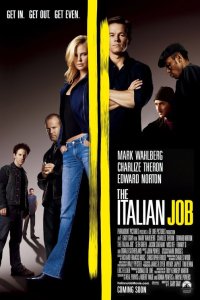 The Italian Job is equal parts dumb and equal parts entertaining, which makes for fine breezy summertainment. The cast is agreeable, the heist is interesting, the action is full of sexy cars and explosions; I call into question how in the world Jerry Bruckheimer’s name is absent from this. Maybe he’s too busy with his TV work.
The film opens up on a nifty heist in, of all places, Venice. Grizzled old-timer John Bridger (Donald Sutherland) leads his crew for, say it with me now everyone, one last heist. Charlie (Mark Wahlberg) is his second in command and the heir to the thievery throne. The crew steals a safe full of gold bars by applying explosive paint to specific levels of ceilings, causing the safe to drop two floors into the awaiting arms of our scoundrels. The Venice police believe the safe to be riding off in a boat, driven by the crew’s getaway man Handsome Rob (the always good to have Jason Statham). But no the real safe has fallen into the canal and Charlie and John are scuba-safe-crackin’. The crew gets away with their misdeed and toast about their thievery atop a mountainside.
 Everything is good. But wait, Steve (Edward Norton) double-crosses his peers and hijacks the gold and kills John. Heres what I dont get. Everyone in the crew is shocked, especially an overactive and whiny Wahlberg (and there’s no worse kind than a whiny Wahlberg). “How could you do this?” whines Whiney Wahlberg. Let me think here. Maybe its because … YOU’RE ALL THIEVES, JACKASS! What was that old saying, no honor among thieves or something. To paraphrase Go, you guys aren’t exactly in a highly ethical industry. There aren’t good thieves and bad thieves; this ain’t no Errol Flynn pic. I would also like to note that everyone in the crew should have known of Steves predestined treachery just by the fact that Norton has a mustache. C’mon, do you need any bigger a sign? Anyway, the van the crew is in drives off a bridge into subzero water. Steve fires some round into the water and believes hes killed his former crew. They of course are not dead and instead are using the scuba gear to breathe. Of course, it’s still subzero temperatures but what does that matter?
We then flash to one year later. Dead John’s not-so-dead daughter, Stella (Theron), conveniently works as a professional safe-cracker to tests security systems. Hmm, I wonder if that will come in handy later. Charlie approaches her with a plan to re-re-re-steal the gold from Steve, the man who, dramatic pause, killed her father. She agrees to help because she wants to see the look on Steve’s face when he finds his money gone. Its probably something very similar to many people over 40 I see now that the stock market is full of price-inflated charlatans.
 What follows is Charlie reassembling his crew; Seth Green as the geeky tech dude, Handsome Rob, and Mos Def as the demolitions expert. Together they work out a plan that is part elaborate and part ludicrous, but still entertaining. This is where The Italian Job gets the rules of heist cinema right: 1) Efficient amount of time must be made to plan the heist so the audience knows the steps and every role of importance. 2) The heist must go off for an extended period of time for the audience to enjoy the payoff of watching all the rehearsal proceedings. 3) The heist has got to be done in an interesting way. 4) Not everything has to go according to plan. The only real action sequences in The Italian Job bookend the film, with the opening Venice heists and the later and extended Steve steal. With this said, the end still carries a good sense of payoff for the audience, and watching all of the different elements of the team work together with their own responsibilities builds a sense of attachment to these otherwise undeveloped characters.
I am convinced Mark Wahlberg is a black hole of acting. Sure, he can do Affable Lug fine and dandy as evidenced by Boogie Nights, but when Wahlberg attempts (and that is the operative word) to emote he looks like his leg is caught in a bear trap. His whole bland handsome understatedness isn’t fooling me. Theron is a pretty face but I still havent seen anything shes done to convince me shes anything more. Green is very funny in his geeky role, complaining that he had the original idea for Napster and it was stolen from him by his roommate. Statham and Mos Def round out a likable if slightly one-note crew.
Director F. Gary Gray (The Negotiator) has graduated from the world of music videos but still knows how to stage some exciting scenes. The slick ending heist, with the L.A. gridlock, three trucks to chase after, and fleet of patriotic Minis is a great popcorn action set piece all the more appreciated because of the patient setup the movie has given.
In the days of summer, where some people wrongly consider a bloated and pretentious action film to be entertaining, even if they dont get a lick of it, it’s especially nice to have something like The Italian Job remind us the escapist fun summer flicks can offer. Just don’t worry if Wahlberg looks to be in pain.
Nate’s Grade: B-


 nathanzoebl
You must be logged in to post a comment.