Blog Archives

Crouching Tiger Hidden Dragon (2000)

Ang Lee’s mythical tale of ancient… (Taiwan?) is full of visual marvels and plenty of moments of awe that make the audience believe in the power of cinema to transport once again. However, upon further viewings and more butt pain because of the large length, the film is not “one of the best ever made” as has been praised. When you get down to it and think the film really isn’t about anything but retrieving a sword and feminist roles. The visuals are striking poetry and the action is exciting and top-notch and that’s what really counts in the end.

Nate’s Grade: B

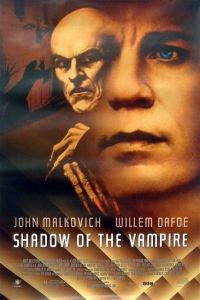
Shadow of the Vampire (2000)

Darkly comical with great stabs of satire at the film industry (bloodsuckers in the movies anyone? Hmmmmmm). Willem Dafoe retains his title as Creepiest Actor Alive and goes for broke with a tour de force performance that should have you checking under the bed. Shadow of the Vampire is alive, to use the term sparingly, with wit and a slow but maturely steadied pace. Dafoe deserves an Oscar and your fear.

Nate’s Grade: A

Traffic (2000)

The war on drugs may be one worth fighting but it’s a battle that every day seems more and more impossible. Traffic is a mirror that communicates the fruition of our current procedures to stop the illegal flow of drugs.

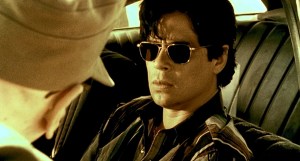
Traffic is told through three distinct and different narratives. One involves an Ohio Supreme Court justice (Michael Douglas) newly appointed as the nation’s next Drug Czar. While he accepts his position and promises to fight for our nation’s children, back at home, unbeknownst to him, his daughter is free-basing with her bad influence boyfriend. Another story involves a wealthy bourgeois wife (Catherine Zeta-Jones) awakened to her husband’s arrest. Her shock continues when family lawyer Dennis Quaid informs her of her husband’s true source of income. He’s to be prosecuted by two DEA agents (Don Cheadle and Luis Guzman) unless she can do something. The final and most compelling narrative involves Benicio Del Toro as an honest cop in Tijuana battling frustration with the mass corruption surrounding the city. Each story weaves in and out at various points in the film.

Traffic was photographed and directed by the man with the hottest hand in Hollywood, Steven Soderbergh. He uses a documentary feel to his filming that adds to the realism. Different color tones are assigned toward the three narratives as reflections of the emotional background. Soderbergh expertly handles the many facets of the drug industry and pulls out his typical “career best” performances from his onslaught of actors.

Benicio Del Toro is the emotional center of Traffic. His solemn demeanor and hound dog exterior reflect a good man trying to fight the good fight in a corrupt environment. He effortlessly encompasses determination, courage, and compassion that you’ll easily forget the majority of his lines are in Espanol. Benicio is an incredibly talented actor and one with such vibrant energy whenever he flashes on screen. It’ll be wonderful watching him collect all his awards.

Catherine Zeta-Jones also shows strong signs there may well indeed be an actress under her features. Her role is one of almost terror as you watch her so easily slip into her imprisoned hubby’s shoes. The ease of transformation is startling, but in an “evil begets evil” kind of fashion. The fact that she’s pregnant through the entire movie only makes the shift from loving house wife to drug smuggler more chilling.

The entire cast does credible acting performances with particular attention paid toward the younger actors deservingly. Don Cheadle throws in another terrific performance showing he’s sublimely one of the best actors around today.

Traffic oversteps its ambitions and aims for a scope far too large. It is based on a 6 hour BBC mini-series, so trying to cram that material into a two hour plus format is taxing. As a result we get an assembly of characters, but too many with too little time in between to do any justice. Screenwriter Stephen Gaghan (Rules of Engagement) condenses the towering impact and influence drugs have well enough, but he intercuts the stories too sporadically that attachment never builds for either of the three narratives. He does balance the Douglas Drug Czar one carefully as not to fall into the cliched vigilante metamorphosis. But the mini-series had more characterization and depth to its tale.

Traffic is a good film but it has edges of greatness never fully visioned. Soderbergh shines bright yet again and all accolades will be deserved. Traffic is undeniably a good film, but it’s one you may not want to watch a second time.

Nate’s Grade: B

Reviewed 20 years later as part of the “Reviews Re-View: 2000” article.

Cast Away (2000)

Strand Tom Hanks on a desert island for years? Sounds too good to be true to many a disgruntled movie goer. Such is the state in Cast Away, Robert Zemeckis’ existential meditation on man, nature, FedEx and their product placement checks, and of course… volleyballs.

Hanks is yet another everyman, except he’s a real stickler for time and order as a FedEx supervisor. His girlfriend (Helen Hunt) is pushing for marriage but hey – they’ve got all the time in the world, right? So Tom boards a FedEx flight headed for the Southern Pacific that hits a nasty collision with a powerful storm. The plane goes down abruptly in what is likely the most terrifying plane crash ever performed on film. Hanks washes ashore onto a mysterious deserted island after drifting alone in the vast ocean. Without civilization and without human contact he must start all over just to survive the day. So becomes the Odyssey of Island Tom.

Cast Away hits one out of the park with its near dialogue free middle act with Tom’s first days upon his new island home. Hanks struggles to do everyday things from finding food to creating a makeshift shelter. As Hanks goes through these daily troubles the audience is with him every moment and learns as he does. Cast Away‘s middle is fascinating to watch. After a few days some packages from the crash wash ashore including a volleyball that Tom turns into his best friend. “Wilson” is Hanks’ companion and is totally understandable how one would branch out for contact under the circumstances. Plus, Wilson’s a dynamite celebrity of his own right now.

Hanks’ acting is his usually above average output, but his whole role seems more like a showcase for his method acting than the acting itself. The first half of Cast Away was shot then they took a year off so Hanks could become scruffy, thin Caveman/Unibomber Hanks. The transition is fun to watch and remarkable for an actor to devote themself completely to their role. But the part itself, and Hanks’ show, seem more spectacle than substance. Helen Hunt pops up in the beginning and end proving that she can somehow manage to be in every film in December. Pretty much the next actor in the film would be… well, a volleyball. Cast Away is basically a one-man show.

Despite a wonderful middle ‘Cast Away’ is suffering from the opposite syndrome of Saving Private Ryan: strong middle, weaker beginning and end sandwiching it. Our opening plays like an extended commercial for FedEx, complete with the dazzling FedEx package POV cam (coming soon!). The end plays like a thank you card to FedEx. The ending also suffers from extreme let-down from multiple climaxes that don’t end the film but just give way to another climax. By the time the movie does end you’re exhausted.

Zemeckis lends a skilled hand toward the direction, the script plays to the strengths of the tale good enough, and Cast Away has its moments but becomes too heavy-handed at certain periods. Still, the volleyball is good. Go for the volleyball.

Nate’s Grade: B

(For fun, count the amount of times FedEx is mentioned or seen in the film. Hell, do it with this review too. I’ll even help you out – FedEx, FedEX, FedEx, FedEx, FedEx, FedEx, FedEx, FedEx, FedEx, FedEx, FedEx, FedEx, FedEx, FedEx, FedEx. Oh fun.)

Reviewed 20 years later as part of the “Reviews Re-View: 2000” article.

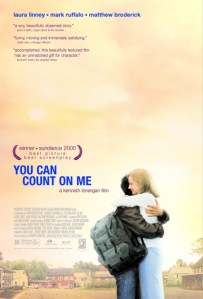
You Can Count On Me (2000)

Kenneth Lonergan has had quite an up and down year. He started the year co-writing the atrocious What Planet Are You From? and writing The Adventures of Rocky and Bullwinkle to ending it with the character ensemble piece that ran away with an armful of awards at Sundance. Lonergan uses subtle moves to create a vivid mosaic of small town America and family relationships with You Can Count on Me. In film, quite often do we see the relationships of sisters or brothers (maybe too often). Rarely, though, do we see a thorough drama hinged upon the relationship of a brother and sister. Both torn by their genders yet always drawn together. You may kid, and get angry, but when danger arises you will always come to the defense of your sibling. It’s this seperational friction yet togetherness that creates the brother-sister bond.

Laura Linney and Mark Ruffalo are brother and sister who years ago lost their parents to a horrible automobile accident when they were young. Forced with the battle of growing up with grief, each goes their separate way. Ruffalo is branded the “difficult” rebellious one, yet deep down he knows that his publicly deified sister is just as much the rebel. Linney is a single mother dealing with the pressures of raising her son (a Culkin kid) and working in her town’s bank branch headed by her new boss (Matthew Broderick). Her brother reappears in her life suddenly and the two learn a little form each other. With her brother she can rely on someone else to watch her child and experiences another flash of the mischief that she had to forfeit from her childhood in order to raise her younger brother. Ruffalo provides he male figure her son is lacking and begins to shed the boy’s over protection and opens him up to the world. One experiences responsibility, one experiences release. but do either learn? That is a good question.

Lonergan crafts a subtle texture that allows his characters to breathe and grow, but not necessarily learn. His modest character driven picture may make you think of Made for TV but its a slice of life that’s immersible. It’s hard to find a film that is subtle, at its own pace, and restrained when it needs to be.

Linney is fantastic as the sister that breaks loose and winds up sleeping with her boss with reckless childish rebellion. Her performance is an Oscar nomination lock as her character runs the emotional gambit. Ruffalo is amazing and establishes himself as one to surely look out for. his mannerisms and expressions are wonderful and his demeanor is reminiscent of Marlon Brando.

You Can Count On Me is a wonderfully affecting story about people who are more complicated then simple plot synopsis will allow. Lonergan has crafted something of an anomaly in modern cinema: a film that takes its time, doesn’t answer any questions, but makes us feel all the more better after seeing it.

Nate’s Grade: B+

Reviewed 20 years later as part of the “Reviews Re-View: 2000” article.
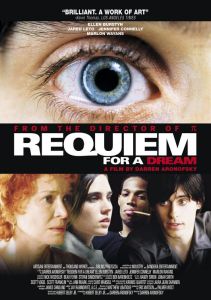
Requiem for a Dream (2000)

Rarely does a movie today affect you that when the end credits roll you’re left silent and unable to speak. Requiem for a Dream is an unforgettable and intensely harrowing experience. You can’t take your eyes away from it. Afterwards you’re left in disarray and unable to think straight for most of the day.

Requiem chronicles the lives of four individuals and their spiraling addictions and missed choices. Harry (Jared Leto) is a small time coke dealer along with his friend Tyrone (Marlon Wayans) who can’t help to taste their merchandise and eventually end up broke again. Harry has gotten into the habit of routinely pawning his elderly mother’s TV set for some quick cash to score with. This happens so often that the pawn broker has a special folder for Sarah Goldfarb (Ellen Burstyn) and her televison. Harry is in love with his more positioned girlfriend Marion (Jennifer Connelly). She’s given an annual allowance of money from her wealthy folks to spend in her own fashion, but she’s denied love or attention. It’s between these four main characters that we will go through hell with.

Ellen Burstyn shows her grace with age and utterly blows your mind with her jaw-dropping performance as the lonely and strung out Sarah. Sarah has no husband anymore or a son to look after. She is alone and old, and those are two bad ingredients. She lives in an apartment complex overlooking the decaying ruins of Coney Island. Sarah has a different addiction than her child, she is addicted to food and is overweight. One day she mistakes a random junk phone call as her ticket to appear on television. She daydreams about gliding across the stage in her red dress that she doesn’t be able to properly fill anymore. With her elderly peers aflutter she tries her best to stick to a diet to fit into her slender dress. When the temptation becomes overwhelming she consults a friend’s doctor for some special “pills” to suppress her appetite.

Harry and Tyrone are embarking on their own dealing dreams to evetually move up the ladder and score some pure coke. Marion and Harry experience their love through simultaneous shoot-ups that space them out and turn them into romantic philosophers. Harry speaks of great dreams he has and the yearning to be something. Tyrone is haunted by thoughts of himself as a child and disappointing his sweetly loving mother who was proud of her son no matter what.

The film starts off in the summer and we are in the good times for all four characters. Harry and Tyrone are successful and racking up profits. Sarah has an unusual amount of energy through her prescribed pills and feels good about herself when she sees actual results as the pounds begin to melt away. Marion dances in her love of Harry and is ambitious with plans for her own design store. Things never are as good as they are again. Fall rolls along and Tyrone and Harry lose their money and lose their ability to secure drugs to sell. Sarah is noticing her pills are not having the same effect they were earlier and decides to ignore guidelines and take them like M&Ms. Marion starts to lash out at Harry’s ineptness at scoring and begins to tear at their relationship. She gets pushed to the brink to score that she resorts to the practice of using her body to secure what she needs. This isn’t even the beginning of how dour and horrible events will become for these four.

One of the strengths of Reqiuem is the treatment of these characters. The film shows sympathy for them and their situations but never condone them. Harry and Sarah are a family that have much love between them they just don’t know how to express it. When Harry discovers his mother is on essentially speed when he pays her a visit he’s left a shattered and crying mess. Only an injection into his veins in that cab ride saves him from his emotions. The relationship between Harry and Marion is initially seen as puppy love or people brought together through a love of drugs, but there are moments where you see the true beauty they have. In the end when Harry is out of state and dramatically in the need of hospitalization he calls Marion just as she’s doing her make-up for a “special” get-together. In a hushed tone she asks when he will be coming home, to which he responds in a mix of pain soon. She then so sincerely and beautifully asks if he can come back today – to which through an array of tears he agrees. Her sincerity and emotion in this sequence is a powerful glimpse at the love that does exist between the two of them. The second time I watched this film I started crying at this moment.

Burstyn is the stand-out star and if she doesn’t at LEAST get an Oscar nomination then that is the most unjust crime of them all. It’s been some time since her roles in ‘The Exorcist’ and Alice Doesn’t Live Here Anymore but she still shines like a true gem. She magnificently portrays Sarah’s descent into madness and chemical dependency and leaves us with a chilling and haunting figure. Leto and Connelly show that they aren’t merely pretty faces and deliver their best performances of their lives. Both show incredible warmth and emotion.

Requiem was directed and adapted for the screen by Darren Aronofsky who gave us the head trip that was Pi. Here he uses camera trickery like speed up and slowed paces to show Sarah’s journey through her drugs. Other items include cameras mounted on the actors, split screens, and hyper edits to show the process of every drug shoot-up. His camera moves and tricks are never out of place though, as many gimmicky video director’s are. Each effect has a specific purpose. Aronofsky brilliantly uses a scene where Leto and Connelly are lying in bed besides one another but split screen to show the closeness they can strive but the distance that still exists. While each talks we see shots of the other’s hand carefully caress the other’s body. It’s a scene that’s as powerful as it it thematically romantic.

The tragedy of this is this film has been rated NC-17 by the MPAA and of course anyone who sees it knows the exact scene. The film is being released unrated by Artisan because NC-17 is a commercial kiss of death. The shame is this movie needs to be seen. Make it mandatory in schools. DARE isn’t working but this film will. No one with an urge to use drugs will have that same urge after seeing this harrowing film.

Nate’s Grade: A+

Reviewed 20 years later as part of the “Reviews Re-View: 2000” article.

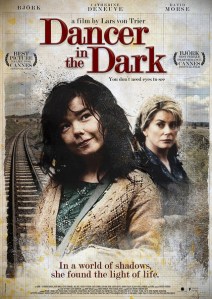
Dancer in the Dark (2000)

Lars von Trier’s latest shaky video opus is likely the most unique movie going experience you’ll have all year. Dancer in the Dark is a clever, heartfelt, and achingly beautiful tale of sorrow and redemption. Dancer stars Iceland’s version of Madonna in the elfin Bjork. She plays Selma, quite possibly the nicest but also most stubborn person in the world. She’s an immigrant in 1960s America working long and odd hours to ensure that she can raise enough money for her son. You see Selma is slowly going blind but continuing to work so she can make sure her son will not have to suffer the same inherited illness. So she works late on heavy industrial machinery causing accidents as her condition worsens all to stop her son’s genetic curse she will give to him. Selma’s escape has always been musicals. In life she hears music in unusual places and visualizes life stopping to burst out into a vibrant fully choreographed musical number. Selma’s life continues to degenerate along with her vision as events pile on worse and worse until they all come crashing together.

Dancer in the Dark is no picnic in the park. The movie is haunting but incredibly depressing. Lars von Trier’s previous film (Breaking the Waves) was another wrenching drama with good people going through rough times with no fraction of light at any end of a tunnel. His jerky handheld video work is back capturing the life of Selma and seemingly framing it in a more realistic sense. The video images are edited to look like a documentary and the whole feel is one of raw power. You aren’t merely watching a film, it’s like you are in it witnessing the actions from the sidelines. The escapist musical numbers are shot in glorious still film to contrast the drab realism of video. The colors are bright, the faces are happy, and the cinematography is a wonder to envision.

Bjork soars and delivers what should be an Oscar-caliber performance. I never knew the queen of alt-rock had such emotive powers. Selma’s innocence is keenly expressed in Bjork and her glassy eyes. Her love for her son is no more evident then all the suffering and tragedy she goes through. All of the suffering and tragedy could be avoided – except her son would not be helped.

The ensemble around Bjork work fantastic magic as well. Peter Stormare is a sad figure trying to just get a glimpse of Selma’s attention. David Morse is a down-and-out policeman who is Selma’s landlord and in need of some cash. He’s afraid to tell his bourgeois wife they’ve run empty with money. Catherine Deneuve turns in the brightest supporting performance as Selma’s co-worker and friend Kathy. She’s torn between trying to stop Selma from continuing on her acts that could cause her harm and helping her along her determination. A great scene as example of her care for Selma is when the two of them are in a theater watching an old Hollywood musical. At this point Selma is completely blind and can’t see what’s going on, so Kathy takes Selma’s palm and dances her fingers in correlation with the actions on screen to Selma’s delight. A simple scene yet so elegant and beautiful.

Dancer in the Dark is a wonderful piece of original film making that gives us the escape of hope and the crush of despair. Selma’s love of musicals and their role in life is perfect symbolism for discussion. Dancer will leave you with a distinct feeling by the end credits. Whether it’s sorrow or bewilderment Dancer in the Dark is a film not to miss.

Nate’s Grade: A

Reviewed 20 years later as part of the “Reviews Re-View: 2000” article.

Almost Famous (2000)

Cameron Crowe’s semi-autobiographical 70s rock opus is like a gigantic hug. It’s warm, engrossing, feel good, and leaves you with a smile wishing for more. Almost Famous may be the best movie going experience of the year. You likely won’t have a better time from a movie.

Fresh-faced newcomer Patrick Fugit plays the 15 year-old version of Crowe who is a budding writer for Rolling Stone. He’s tapped to tour and send in a story on the fictional band Stillwater fronted by singer Jason Lee and guitarist Billy Crudup. Stillwater is everything the typical early 70s rock band was and should be: long hair, tight pants, and continuous inner turmoil and squabbling. Little Fugit captures all of this with wide-eyed exploration as he stretches away from his overprotective mother played by the lovely Frances McDormand. Phillip Seymour Hoffman also pops in to do a brilliant portrayal of music critic Lester Bangs. Kate Hudson shines in a break-out performance as a “band-aid” to Stillwater; which is an uncertain mix of naive groupie and musical muse. She’s together with fellow “band-aids” Anna Paquin and Faruiza Balk.

The writing of Almost Famous is textured and fully satisfying. The turns it takes down the road are expert and you know you are in the hands of a true artist. Crowe’s direction again makes leaps and bounds in improvement with every new feature. He and his wife wrote all of the songs the fictional band performs and it sounds like, to my ears, he had a few more job offerings he could have easily been suited for.

The acting is phenomenal with every cast member contributing nicely to the fold. Crudup is the anchor, Hudson is the gleaming star, Fugit is the tender surprise, Lee is the emotional lightening rod, and Frances is the mother that we all would love to have deep down inside. She is at the level that is most difficult for a parent: she must begin to let go so they live their own life, yet she’s raised him from harm since he could spew mashed carrots. Surely, if the world had justice Frances will be winning her second Oscar.

Almost Famous is a breathing work that borderlines perfection. It’s a great time to be had just sitting and experiencing what the movie has to offer.

Nate’s Grade: A

Reviewed 20 years later as part of the “Reviews Re-View: 2000” article.
 

Gladiator (2000)

Director Ridley Scott has given the world of cinema some of its most unforgettable visual experiences. But can Scott breath new life into a genre whose heyday was when a badly dubbed Steve Reeves oiled his chest and wrestled loincloth-clad extras in the 1950s?

The year is roughly 180 AD and Rome is just finishing up its long-standing assault on anything that moves in the European continent. General Maximus (Russell Crowe) merely wants to retire back to his loving family and get away from the doom and war that has plagued his life. This is made all the more difficult when the ailing Emperor bypasses his treacherous son Commodus (Joaquin Phoenix) and decides to crown Maximus as the Defender of Rome. Because of this Commodus rises to power through bloody circumstances and has Maximus assigned to execution and his family crucified. You’d think crucifixion would be so passé by now. Maximus escapes only to be sold into slavery and bought by a dirt-run gladiator training school. As he advances up the chain and learns the tricks of the primal sport he seeks but vengeance for his fallen family.

Gladiator is an absorbing and sweeping spectacle of carnage and first-rate entertainment. The action is swift and ruthlessly visceral. The first movie in a long time to literally have me poised on the edge of my seat. The blood spills in the gallons and life and limb go flying enough your theater owner may consider setting down a tarp.

What Gladiator doesn’t sacrifice to the muscle of effects and action is storytelling. Are you listening George Lucas? Gladiator may unleash the beast when the rousing action is loose, but this is coupled with compelling drama and complex characters. Phoenix may at first seem like a snotty brat with an unhealthy eye for his sister (Connie Nielsen), but the further Gladiator continues the more you see in his eyes the troubled youth who just wants the love of his father that was never bestowed to him. Maximus is a devoted family man who regularly kisses clay statues of his family while away, and must ceremoniously dust himself with the earth before any battle.

The acting matches every sword blow and chariot race toe-for-toe. Russell Crowe marks a first-rate staple of heroism. Every calculating glare he exhibits shows the compassion and ferocity of this warrior. He becomes a rare breed – an action hero who can think and actually act. Oliver Reed, in what sadly was his last role, turns in a splendid and charismatic turn as the head of the gladiator school of Fine Arts and Carnage. Mysteriously everyone carries a British accent closer to them then a toga two sizes too small. Even Crowe who is nicknamed “The Spaniard” speaks like he walked out of Masterpiece Theater.

The effects and visuals are a sumptuous feast. The aerial shots of Rome and the Coliseum are simply breath taking. Gladiator rivals American Beauty for the most rose petals used in a movie, except in this one they don’t shoot out of Mena Suvari’s breasts.

Ridley Scott’s track record may be hit or miss but Gladiator is definitely one sorely not to be missed.

Nate’s Grade: A-

Reviewed 20 years later as part of the “Reviews Re-View: 2000” article.

Erin Brockovich (2000)

Julia Roberts is the female equivalent of John Travolta in last year’s A Civil Action — little guy/gal taking on the big/evil corporations that pollute our water. This is hands down what is likely her best performance of her long career. It’s a one-sided take and displays the title character’s ruthless tactics and intimidation in order to reach whatever goal she wishes to strive for. The story though, isn’t much for most to work with as it is essentially sap and predictability: the hero will win, justice will prevail, the bad guys who were alluding in the beginning will be punished… etc. etc. Julia’s “woman in a man’s world” business gruff will either prove sadistically humorous or simply wickedly mean-spirited to each viewer. You’ll either love this character or hate this character but either way it will keep you watching.

Nate’s Grade: B