Blog Archives
Superman (2025)
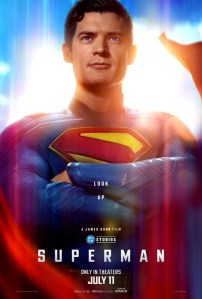 Has the world ever needed Superman more? I don’t know about you, but I could really use a symbol of good right now who represents the best of us, fighting for justice and protecting the innocent against the diabolical in power that seek to profit and prey upon the vulnerable. Vulture film critic Allison Wilmore has a fantastic headline for her review: “Superman [the movie] isn’t trying to be political. We just have real-life super villains now.” James Gunn, the quirky filmmaker who made us fall in love with a raccoon and a tree in the Guardians of the Galaxy trilogy, ascended to be head of DC movies in 2022, and he eyed reigniting Superman as the top priority, selecting himself as writer and director. It’s a lot of pressure to rebuild the DC movie brand by yourself, as there are only two other movies with scheduled release dates currently. This movie could make or break the fledgling DC Universe (DCU) rebuild soon after the smoking demise of the DC Extended Universe (2013-2023), informally dubbed the Snyderverse. Fortunately, Gunn’s take on the boy in blue is a reminder why this character has lasted so long and why the world still needs a symbol of hope.
Superman (David Corenswet) a.k.a. Clark Kent, has been a defender of Metropolis for three years now. He’s romantically involved with ace reporter Lois Lane (Rachel Bosnahan), who knows his secret identity but still chides Clark on somehow getting all those “exclusive interviews” with Superman. He’s also been a thorn in billionaire industrialist Lex Luthor’s (Nicholas Hoult) side and become an obsession of his. The world is still debating Superman’s unexpected intervention, thwarting a powerful military from invading its neighbor’s sovereign border (very reminiscent of Russian aggression). The U.S. government needs actionable proof that Superman is a threat, and Lex is determined to eliminate the alien for good.
 Amazingly, this movie feels like the second in a series rather than a reboot kickoff. From the opening text, Gunn drops us into this world already in progress. We’re skipping over the origin story, the character introductions, and all the table-setting that comprises many first films in franchises. It’s usually that second film that really takes advantage of the setup and patience of the first movie, expanding the world and deepening the character relationships and conflicts. Gunn has mercifully skipped over all that and gotten us right to the good stuff. The opening minutes of the movie drop us into a super-powered battle with the declaration that this is the first time our Superman has lost, and that beginning follows the most powerful alien on Earth having to patch up his injuries. I think that’s a very intriguing first impression, but I’ll detail more of that in a later paragraph. The world that Gunn establishes already feels well underway but the story is still accessible and the supporting characters have meaning within this world. This is a world that has been used to super heroes, a.k.a. metahumans, for some time, so when Superman finally dons his red underwear it’s not a complete shocker. This is not necessarily a reality where one super-charged character has reconfigured mankind’s entire sense of identity. The world is accustomed and adapted to extraordinary figures and monsters. This is where the Justice Gang comes in (Green Lantern, Hawkgirl, and Mr. Terrific). They’re the corporate supes, the ones called in to sign autographs, smile for pictures, and save the day for good P.R. Perhaps that’s too flippant, but the trio of established heroes doesn’t feel the same call to activism like Superman. It’s hard to fully articulate, so bear with me dear reader, but Gunn’s Superman already feels fully established, with the figure known, his relationship with Lois already in play, and Lex having already put nefarious time, research, and lots of money into combating this super obstacle with his own lethal experiments. With Gunn, there’s no time to waste. It’s already fully formed from his imagination, and the parts have their reasoning and meaning, making the whole much more satisfying.
Another way to differentiate this Superman is less from his strength than his vulnerabilities. This is a character long regarded as overly powerful, too indestructible and therefore lacking realtability. Well with Gunn’s version, here is a Superman that gets beat up. A lot. Ben Affleck’s Batman pointedly asked Henry Cavill’s Supes, “Do you bleed?” Gunn has answered in the affirmative. Much like Matt Reeves’ 2022 Batman, we get a work-in-progress superhero that is still feeling out how to best be a superhero. It’s a version that takes lots of lumps and Gunn finds interesting ways to test Superman’s limits, both emotionally and physically. The introduction of nanites into orifices certainly provides nods to Gunn’s body horror roots. While this is a Superman that gets knocked around quite a bit, his biggest vulnerability is his doubt. He’s simply trying to do good and save lives regardless of the political ramifications, but the world and its people, and especially their fears and paranoia of an Other, are more complicated. Superman explains he intervened in an international border war for the simple reason of saving lives. When Lois pushes him in a practice on-the-record interview, during one of the better scenes, about his decision-making, thinking through the consequences, consulting with world leaders and the like, he gets flustered and says there wasn’t time. All he wanted to do was save lives that would have been lost, so why is the rest of the world having a hard time with that? Over the course of those two hours and change, we watch this Superman battle through his self-doubts in a very real and compelling way that I don’t feel like any other Superman movie has better demonstrated. This is a world already rife with heroes, but is it better with a Superman? Is his existence a net positive?
 Gunn truly understands the character in a way that Zack Snyder never did. With Man of Steel and the subsequent film appearances, we were given a Superman that didn’t really want to be Superman. He was an overburdened superior being tasked with serving as mankind’s savior, and came across as annoyed. That version of Pa Kent famously told his super son that it might have been best if Clark had just let a bus full of kids die to keep his secret. Thanks for the life lesson, dad, and oh, by the way, your sacrifice was ultimately meaningless when your entire worldview was proven wrong by the end of Man of Steel. Regardless, here is a Superman that is unabashedly sincere and even a little corny. That’s who this character is, a do-gooder wanting to inspire others and wanting to save all life, even the villains, even the wildlife (my theater took special note when Superman saved a squirrel from being crushed). Snyder’s Superman was part of an entire Metropolis 9/11 of horrible collateral damage disaster porn. Gunn’s Superman works hard to make sure the giant kaiju monster, when teetering over, doesn’t fall on any building to protect the people inside. This is also a Superman that feels compelled to be a hero, to do better with his super gifts, and to keep trying even when he fails, that there can be dignity in losing a fight but continuing on because you know that fight is worth it. The depiction of Superman/Clark makes him feel much more a character worth closer examination. He’s not a detached god feeling above these petty mortals always needing saving. The real super power is his empathy and desire to help others, and that may sound corny, but Superman is too, and that’s completely fine in a world that would be better if we had more Supermans and fewer wannabe super villains.
The big question for me was whether Gunn could adapt his cheeky, irony-rich goofball sensibilities from the Guardians movies and make a Superman movie that was earnest and restrained. He has, and let this be a lesson that Gunn does not disappoint when it comes to superhero projects. There are still unmistakable elements of Gunn’s humor and style, like the ironic distance from action serving as an extended joke while characters discuss an unrelated topic, the bouncy and specific needle-drops that cue extended fight or action sequences, and of course the quippy sense of humor. I don’t agree with some of the early reviews I’ve come across that accuse Gunn of undercutting his drama with too many jokes. That is exactly why I was afraid that Gunn would be too insecure with straight drama and earnestness that he would have to rely upon an awkwardly squeezed-in ironic joke to, in his mind, balance the tone. There are jokes, some of them wild and unexpected, but this is most certainly not a movie in the same tonal space as anything Gunn has done before either as a director or a screenwriter. I did not feel that the comedy ever undercut the stakes or the sincerity of the scenes and the movie as a whole. Gunn has shown he can re-calibrate his style and comedic voice while at the same time still making things his own without copious slow-motion. The action is refreshingly staged to be immersive, with few cuts and wide camera swings in order to present everything on the screen in an easily oriented field of vision.
 Corenswet (Pearl, Twisters) has some big tights to fill, as I would argue while there have been iffy-to-bad Superman movies there hasn’t been a bad Superman. Obviously the one that all others are defined by is Christopher Reeve who was the greatest special effect the original movie had (I know the flying sequences were groundbreaking for their time, but they play out so cheesy and dated, complete with sudden Margot Kidder poetic resuscitation). Watching him switch from suave hero to clumsy Earthling in a split-second was the best. Corenswet certainly looks the part, clean-cut All-American looks, even though he’s British. He really channels the character’s big heart with his struggle to be accepted, by the public, by the media, by Lois, by even his enemies. He’s got the presence to fill out that suit but the emphasis is not on the contours of his abs but on the unfailing dedication and goodness of a character trying to do right. He won me over early, and it doesn’t hurt hat he has terrific chemistry with Brosnahan, who has been readying herself for this part for years with The Fabulous Mrs. Maisel. She’s great too. Hoult (Nosferatu) channels his smarm perfectly as a very punchable Lex who might make you think about a certain DOGE-master and his team of flunkies wreaking havoc on the rest of the country through unchecked hubris. I loved his pettiness and thinly-veiled vanity, like during an approaching apocalyptic cataclysm and he says to screw the people of Metropolis. “They chose him, let them suffer.” It sounds a lot like, “Your state voted against me, so you won’t get immediate emergency assistance.” You will cheer hard for Lex’s defeat, even more so when his plan involves literal extra-judicial forever confinement.
However, the real brreak-out star of the movie will most certainly be Krypto, the adorably jumpy super dog. Every time this pooch makes an appearance it is welcomed and he’s utilized as more than just easy comic relief. I expect a sharp uptick in the number of good boys named “Krypto” afterwards.
 James Gunn has alleviated all of my fears about him tackling the Man of Steel, and he’s created a Superman that soars above the superhero field. It’s so vibrant and funny and accessible to anyone regardless of their prior feelings or understanding of Superman. It’s also a clear-cut example of what a Superman movie can and should be, sincere and bright and, yes, a little bit corny too. We need this character, and we especially need film artists that know how to craft engaging stories with this character who’s existed for almost 90 years. There’s an inherent lasting power to Superman, and it’s his sheer goodness as an outsider, a feared alien, who has all the powers in the world but just wants to help others. Many have long viewed Superman as boring, a Boy Scout in a world that has grown too morally murky to maintain such a morally unwavering figure of truth, justice, and the American way (what does that last part even mean any more in the bleak environment of 2025?). Gunn has shown us how necessary the character can be, a balm to our troubled times, and the reality that do-gooder figures can be inspirational and aspirational no matter the circumstances. He’s made a Superman movie with an intriguing, lived-in world, one that I now believe can easily support a fuller universe of stories and side characters. He’s also made what I consider the best Superman movie to exist yet (apologies to the nostalgia of the fans of the Richard Donner/Christopher Reeve originals). I have some minor quibbles, like how Lois fades into the background for the second half, but they are only quibbles. This movie was exactly what I needed. I’m sure there are millions of others yearning for the same. Superman is proof that the DC film universe might actually have the perfect person in charge of charting their cross-franchise courses. Kneel before Gunn.
Nate’s Grade: A-
Share this:

Juror #2 (2024)
 Clint Eastwood’s possible last movie as a director (the man is 94 years old, people) was buried at the theater through a limited release by its studio, which is a shame because Juror #2 is a fairly solid adult drama with some grueling tension built right in. I was wondering how screenwriter Jonathan Abrams was going to make this premise work, where a recovering alcoholic and expectant father, Justin Kemp (Nicholas Hoult), is impaneled on a jury for a murder case and discovers, over the presentation of evidence, that he might actually be the culprit. That same night, at the same location of where the supposed murder took place, is where Justin thought he hit a deer. What follows is a soul-searching account of one man being torn apart as far as what he should do. Does he let this other man take the blame so Justin can live out his life with his new baby and wife? Or does he come forward and admit his own firsthand knowledge of the events would present a very reasonable doubt for this trial? The movie becomes an extended balancing act of how long Justin can keep this secret and what angles he will work, trying to push the jury one direction or another through persuasive appeals. It’s familiar dramatic territory to anyone who grew up on 12 Angry Men, though with an extra high-concept twist. It’s a fairly straightforward drama that allows the story to take center stage and puts the focus on one man’s personal crisis. The acting is strong all around with Hoult (Nosferatu) being the predicted standout, showing the heavy weight of his guilt wirh every pained expeession. I think the ending does a disservice to the kind of movie that came before it, namely that it should be more definitive in its conclusion and provide a fitting resolution. This isn’t exactly the kind of movie that benefits from prolonged ambiguity, so the abrupt ending feels like a miscalculation and hampers a bit of the ending’s impact. However, Juror #2 is a good squirm session.
Nate’s Grade: B
Share this:

Nosferatu (2024)
 Director Robert Eggers’ remake of a famous rip-off of the most famous blood-sucker in literature is a finely crafted and highly atmospheric drop into the past, as should be expected from Eggers (The Witch, The Northman). It doesn’t redefine cinematic vampires but rather puts the story through the contemporary lens of a toxic ex-boyfriend who refuses to relinquish what he feels belongs to him. The story should be familiar to most, even if they never watched the original 1922 silent film, nor its 1970s remake by Werner Herzog. Bill Skarsgaard plays the mysterious and threatening Count Orlock, a wealthy Transylvanian outsider looking to relocate to the big city in Germany, primarily to prey upon poor Ellen Hunter (Lily-Rose Depp), the “one who got away,” so to speak. He haunts her dreams and drives her mad, with Depp mesmerized and convulsing most convincingly. From there it’s a battle between Ellen’s husband (Nicholas Hoult) and an expert in the occult (Willem Defoe) over whose will will win out. Skarsgaard is fascinating and chilling and you too may want to imitate the thick-as-stew Count Orlock accent afterwards. The technical elements of this movie are masterful, from production design, to costuming, to the gas-lit and moody photography. Eggers is a deeply sincere filmmaker who translates his passions and madness onto the big screen with loving care. Nosferatu is gorgeous and unnerving, though I’m hesitant to say it rivals Francis Ford Coppola’s Dracula movie for modern vampire artistic triumph and pure horniness. It’s a gussied-up B-movie with a deeply committed filmmaker to deeply realized genre filmmaking, and so Nosferatu is an entertaining remake that most vampire fans will be happy to sink their teeth into this holiday season.
Nate’s Grade: B
Share this:

The Menu (2022)
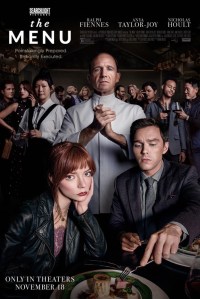 The first thing I thought about with the horror black comedy The Menu is what famous film critic and pun enthusiast Gene Shalit would do with this title and setup. He’d say, “Don’t send this one back to the chef,” or, “I’ll have seconds,” or, “Book your reservation now,” or any number of bad jokes (fun fact: Shalit is STILL alive and 96). Regardless, The Menu is an excellent main course for fans of dark comedies and biting satire. It’s not really scary or thrilling, even if it borrows liberally from the structure of contained thrillers. A dozen wealthy guests are selected for a once-in-a-lifetime dining experience from a legendary chef (Ralph Fiennes). The story is a balancing act of mysteries, with what is happening on this secluded island, each new course on the menu and what it reveals about its chef and his intentions, why each of the couples is present and what troubles they have, and why our head chef is so fixated on Margot (Anya Taylor-Joy), a last-second replacement date for arrogant would-be foodie, Tyler (Nicholas Hoult), and who she really is and whether she belongs here or not. Part of the wicked fun is watching things escalate and the characters freak out, or try and rationalize or bargain through the experience. I was chuckling throughout the movie, tickled by its sardonic humor and the excellent heightened performances from its ensemble cast. Fiennes (The King’s Man) is locked-in as his enigmatic yet intensely dedicated chef, so much so you might admire him while also being creeped out. His annoyance and cold disdain for the guests is a constant source of entertainment, especially a scene where he insists that the know-it-all foodie put on a chef’s robe and try his hapless hand at actual cooking. Hong Chau (Downsizing) is terrific as a no-nonsense sous chef simmering with barely concealed contempt. Her pronunciation of “tortilla” is one of the movie’s biggest laughs. With The Great and now this, Hoult is finding a great stride in playing outsized egotistical buffoons. By the end, I was left wanting a little more in the way of answers or catharsis or even its class conscious commentary, but The Menu still packs plenty in its 105 minutes to be an appetizing experience.
Nate’s Grade: B+
Share this:

Those Who Wish Me Dead (2021)
 If I told you I had a movie where Angelina Jolie is on the run from a team of assassins and under the backdrop of a raging forest fire, you’d likely be intrigued. Then if I said that it was co-written and directed by Taylor Sheridan, one of the best screenwriters working today who excels at taking muscular genres of old and providing uncommon depth and poetry, then you might say, “Why aren’t we watching this right now?” Those Who Wish Me Dead, based on the book by Michael Koryta, is Sheridan’s second directing effort after 2017’s excellent Wind River, and while I would not classify it as a bad movie, it is easily Sheridan’s weakest film to date. There’s so much amazing potential here with these plot elements, this cast, and this rising filmmaker, and to only produce a square, straightforward 90s action throwback feels deeply unsatisfactory. There could have been so much more.
We follow Hannah (Jolie) and her team of Montana forest fire fighters. She is still recovering from a recent tragedy where she was unable to save campers from a fire. She’s been reassigned to a lonely lookout tower to deal with her guilt and PTSD. Along comes Connor (Finn Little) whose father is being hunted down by a team of hired assassins (Aidan Gillen, Nicholas Hoult). His father is killed but Connor escapes, finding refuge with Hannah and wary of trusting anyone new. The two of them make a trek to find help while the killers narrow their search and start a forest fire to provide a very attention-grabbing distraction for the local authorities.
 The problem with the plot description I just provided is that there really isn’t much more to anything. You can probably see the progression of Hannah’s character arc immediately, having to confront her past trauma through combating the forest fire and saving this young boy’s life to make amends mentally for those she could not save in her past. The Sheridan of his past work would recognize that familiar arc and provide extra nuance, commentary, and make the character more emotionally resonant. Unfortunately, this version only produces a lead protagonist that is, shockingly, disposable. You could have eliminated the entire character of Hannah from this movie for all the personal significance she provides for this story, and that stunned me. We don’t really get insight into he beyond generic observations. She doesn’t really bond with this kid in any meaningful way. She doesn’t really teach this kid anything generally useful for his own safety. This is the type of relationship dynamic where the adult teaches the kid some means of defense, and then in a pivotal moment in Act Three, the child uses that technique to save themselves or the adult. It’s textbook (think: Face/Off with the butterfly knife as but one example). This movie doesn’t do that. In fact, once this kid hands over to Hannah the “unseen paper carrying dead dad’s important information” then he also comes across as disposable. I guess he’s still a witness to murder but the valuable intel seemed more pertinent to thwart. The fact that these two characters can arguably be removed from the story, either entirely or far earlier, is not a good assessment of their value added.
The competing storyline with Jon Bernthal (The Punisher) is surprisingly the one that feels most attached to the events of the plot and could have been its lead vehicle. He plays Ethan, a small-town sheriff’s deputy who happens to be Connor’s uncle. Ethan also has a pregnant wife, Allison (Medina Senghore), and they both take up a generous amount of screen time. There’s a good reason for this because they’re the best part. The loving yet pointed interactions between the two of them are the best example of characterization evident in the movie. When Allison is confronted by the assassins, she’s sees through their law enforcement disguise easily. When the bad men want to torture her to get key information, she manages to subdue them and escape, all while being seven months pregnant. In two short scenes, this woman proves more capable and fearless and badass than our lead character.
 It’s easy to see a version of Those Who Wish Me Dead where the Ethan character and his drama completely cover the same narrative territory that Hannah offers. Ethan’s wife is pregnant, the baby is due soon, and yet Ethan feels scared and unsure about whether he has what it takes to be a father. He comes across a young boy on the run from big trouble and protects him, and over the course of their shared experiences, he bonds and discovers paternal capabilities within himself, he teaches the kid a thing or two about defense, and he becomes more self-assured about his own personal future. Admittedly, you could say that’s a simplistic character arc, but is the one presented any less simple where we watch a person haunted by trauma confront that trauma by the end? My point in this revisionary hypothetical is that this version would be more aligned with the plot elements that seem to get the most care and screen time. I know it’s based on a book, but it clearly feels like Sheridan has shown what parts he cares about more so embrace those parts.
It’s also quite easy to identify the parts of the movie Sheridan did not care as much about. There is a surprising sloppiness to much of the setup here, where key connecting information is excluded from the viewer perhaps out of a sense of trying to be ambiguous but also perhaps out of a sense of general indifference. I was confused why the assassins blew up a house in their opening moment, what information Connor’s father had stumbled upon, and even who these killers were and what their connections were with an unexpected Tyler Perry cameo where he appears to be their boss or handler or buyer or someone. The plotting can also be disappointingly redundant, as Hannah and Connor fall into a frustrating pattern of leaving the lookout tower, going back to the lookout tower, leaving the lookout tower again, repeat. Perhaps most egregiously, the raging inferno doesn’t even seem to matter. How can you make a movie about a forest fire where the forest fire barely matter in the scheme of things. It exists as an immovable obstacle but more so as a means of emotional catharsis for Hannah’s prior trauma. Far too often it feels like the fire is practically standing still, watching the actors from afar and not wanting to interrupt, and then at the very end, it’s comically overcharged, zooming at super speeds to compensate for its earlier lazy pacing. There aren’t any real specific survival scenarios tailored to the circumstances of a forest fire, which means this movie could have easily been a flood or earthquake or any disaster or none at all.
 Those Who Wish Me Dead reminds me of the vanishing mid-level thrillers that Hollywood used to crank out on a near weekly basis. That’s probably also part of the reason it feels like a throwback to an earlier time, a time where a big star could be thrown into a disaster and given evil-doers to topple and we’d all gladly gobble it down with a heaping helping of popcorn. Perhaps that unassuming nostalgia will prove enough for some people, especially in the wake of a year of minimal big screen blockbusters. There are still moments here that feel like the Sheridan of old, but too much of this movie cannot escape the gravity of being a dull action movie without anything to say and without characters to invest in. It’s not even that the movie is too simple, because simplicity can be its own virtue, but that it’s underwritten, with characters that could be exorcised completely from the narrative, and a batch of villains lacking entertaining personalities or memorable menace. It’s hard not to feel like everyone’s talents involved were wasted somewhat on something so basic, which is even more baffling when you again recognize those fantastic story elements. Chases. From assassins. Into a forest fire. There’s an obvious movie to be had there. Unfortunately, Those Who Wish Me Dead doesn’t capitalize.
Nate’s Grade: C
Share this:

The Current War (2019)
 The Current War has been on the shelf for two years and now finally getting a release, strangely subtitled “The Director’s Cut.” Can a movie that has never been released to the public, outside of some festival screenings, really declare its first impression a director’s cut? Aren’t these supposed to be different, and generally longer versions of the original edit? Regardless, the movie acts like a 19th century version of The Social Network with the battle over the nation’s electrical grid up for stakes between Thomas Edison (Benedict Cumberbatch) and George Westinghouse (Michael Shannon). You may think Nikola Tesla (Nicholas Hoult) is a big player in this game, but you’d be mistaken as he’s more a glorified cameo. I appreciated how the history came alive under director Alfonso Gomez-Rejon (Me, and Earl, and the Dying Girl) and his overwhelming sense of style. This is a period film that feels excitedly modern in its presentation, with lots of clever transitions, stylish camera angles, and wide angle photography to go along with a churning score that even reminded me of Trent Reznor and Atticus Ross’ Oscar-winning music. The characterization of these Great Men of Industry also finds ways to humanize them, especially Westinghouse who shuffled his employees into his burgeoning and debt-ridden electrical gambit so he wouldn’t have to fire anyone. Edison’s portrayal is decidedly charitable, positioning him as a principled family man who rebuffed a shameless J.P. Morgan (a great movie bastard) and easy money for military contracts because he refused to participate in any endeavor that would take life. There’s an ironic subplot where Edison, forced into desperation, cooperates with New York state’s implementation of a new “more humane” way of executing prisoners, and pinning the deadly results on Westinghouse’s alternating electrical current. This is certainly not the Edison of litigious infamy. I enjoyed immersing myself in this older world where the men of science and vision were akin to magicians creating miracles that dazzle. Their competitive race is doomed to be a bit one-sided if you know the history of AC versus DC (it’s hard to compete when one option is both better and cheaper) but I was still entertained by their tit-for-tat and how each man responded to pressure and expectations. The screenplay by Michael Mitnick is judicious with its information and very accessible for a lay person. The acting is solid even if many side characters are glorified extras (Tom Holland, Katherine Waterston, Tuppence Middleton). The Current War has been getting some pretty dim reviews, with even dimmer puns, and I don’t quite follow why critics are turning out the lights on this movie (sorry). It might not have the stuff of greatness but it’s a perfectly enjoyable period piece with attention to character and a panache of style to liven up the dustiest of history.
Nate’s Grade: B
Share this:

Dark Phoenix (2019)

Dark Phoenix is the end of the X-Men as we know it. The franchise is arguably the reason that Disney bought Fox, to combine its Marvel properties under one creative universe, and hastened its ultimate demise. The franchise kicked off in 2000 when nobody knew what a Hugh Jackman was. Over the course of 19 years we’ve had ten total X-films (the original trilogy, four prequels, three Wolverine solo films — I’m not counting the two Deadpool entries) of varying quality. Dark Phoenix is longtime series writer Simon Kinberg’s debut as a director and was originally intended for a fall 2018 release before it got pushed back for extensive reshoots. There was even some doubt whether Disney would release Dark Phoenix or shunt it to its new streaming service (that’s my prediction for the long-delayed New Mutants, which released its trailer… in 2017). Ultimately this is the final X-Men movie, as we have known them for 19 years, and it’s the equivalent of a mayonnaise sandwich at room temperature: something nobody really wanted and delivered in a package not designed to satisfy.
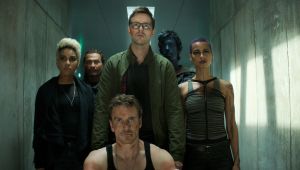
In 1992, the X-Men are called upon by the president when the government is left with no other options. Charles Xavier (James McAvoy) watches over as shape-shifting Mystique/Raven (Jennifer Lawrence) leads the younger X-kids, Cyclops (Tye Sheridan) and Jean Grey (Sophie Turner) and Nightcrawler (Kodi Smit-McPhee) and Storm (Alexandra Shipp), into space to save some astronauts. A strange cosmic energy cloud zaps Jean Grey and supercharges her telekinetic powers. At first she feels more alive but is losing control and worrying her friends. After a tragic confrontation, she runs off to find Magneto (Michael Fassbender) while a mysterious alien woman (Jessica Chastain) seeks to gain the “phoenix” powers.

Thoroughly mediocre, Dark Phoenix is a pitiful ending to a franchise that kicked off the superhero era of the twenty-first century. This is a pretty sad ending to a franchise that has admittedly had more downs than ups (I’d say four of the ten X-Men movies have genuinely been good, two were fine, and four have been different levels of bad). What’s even more peculiar is this is Kinberg’s second attempt at the Dark Phoenix storyline, arguably the most famous in X-Men comics, and it doesn’t work — again. At least 2006’s The Last Stand had other storylines that presented topics of interest, like the choice over taking a mutant cure and whether this should be a choice after all. The problem with Dark Phoenix is that it’s nothing but Dark Phoenix with little variation but it doesn’t ever expand on the Dark Phoenix dilemma. Act Two of the film seems to consist of the same scene on repeat, where Jean Grey complains about her power struggles to some character, warns them, doesn’t want to harm people, and then something bad happens and more characters elect to try and murder her. It’s like watching the same TV show recycle the same plot but just changing the characters. It makes for a saggy mid section that loses momentum and cannot regain it. The last act feels like a different movie because… it is. Thanks to late reshoots, the final act is a series of clashes aboard a military train. There are some fun moments of mutant-power action, especially Magneto and Nightcrawler. It doesn’t make much sense to what came before (when questioned why Magneto is trying to save Jean after literally trying to kill her ten minutes earlier, he says, “I had a change of heart”) but the sequence is at least diverting and visually playful in a way the rest of the movie had been missing. By the end of the film, much of it feels rushed and little feels earned, especially the time you’ve spent watching it.
I’m going to declare that the villains in Dark Phoenix are actually the worst in the entire universe of X-Men movies. They’re aliens adopting human form and they talk… so… slowly… and in unshakable monotone. They’re an alien species that wants the powers of the super space cloud. That’s it. That’s all you get. I have no idea what attracted Jessica Chastain (Molly’s Game) to this role and almost feel like it must have changed at some point. She walks around in a zombie-like daze with a giant platinum blonde wig that makes her look like an albino. At no point are any of these aliens interesting. At no point do they present personalities. At no point does their overall powers become clear. They seem invulnerable to anything, except when the script needs them not to be, and their vaguely defined powers seem limitless. Because of the creative choices with Jean Grey and how she developed her Dark Phoenix powers, extra emphasis is placed on the villains to carry the burden, and they could be eliminated entirely and not be missed in the slightest. It’s genuinely hilarious to watch them walk so stiltedly and then break into a run. The best thing Chastain does is strut in stilettos while taking a dozen blasting firearms to the face.

There are just some weird moments in this movie. Apparently Charles Xavier watches the students have their beer blasts in the woods and also keeps a thermal heat analysis of them during these moments (“That student’s really hot… I mean… getting really hot…, uh…”). That’s so weird and possibly perverted. There’s a running clothing item with blood that never gets changed. You’ll listen to “whose blood is that?” close to ten times. It’s always been inherently goofy watching these trained actors make silly strained faces while pretending to do things with their mind powers. Except this movie it goes a step further. There’s a moment of goofy strain face versus goofy strain face while the actors thrust their arms out, and there’s a scene where Jean Grey only has one arm out and then, to power up, she throws out her second arm. That’s not how mind powers work. There are several character jumps that seem rushed and unearned, like Charles becoming a focal point of disdain amongst his fellow X-people over his catering to public relations. Everyone is so quick to jump on the murder wagon when it comes to Jean Grey, which makes me wonder if they never really liked her and have just been waiting for a good excuse to kill her. The seesawing public support on mutants can be extremely confusing. The action sequences are filmed in a very haphazard way with replenishing bad guys to be disposed. During key stretches of the movie, I didn’t know who was on screen, where they had come from, and what relations they were to one another until punches started being thrown.
Continuity has never been a thing the X-universe cherished, especially once you started throwing in time travel with 2014’s Days of Future Past. However, Dark Phoenix complicates matters with its disregard for the overall continuity. Firstly, I am not a fan of the idea that these prequel films all take place in separate decades. It worked with First Class which tied the cultural revolutions and changing mores to the characters and their selfI identity, plus the Cold War paranoia. It even worked for Days of Future Past being set in the early 70s, during the malaise of the optimism of the 1960s. That related to the character arc for Raven on her quest for vengeance and the individual versus society. But what did Apocalypse have to gain by taking place in 1983? What does Dark Phoenix gain by taking place in 1992? Plus it means that these characters have hardly aged in 30 years and in less than a decade James McAvoy and Michael Fassbender are going to look like Patrick Stewart and Ian McKellen (no offense to McKellen, but that’s quite a sudden, precipitous drop). Let’s even say the older movies are eliminated from the timeline after the reboot of Days of Future Past. Just in the LAST movie they established that Jean Grey had the powerful phoenix spirit and abilities within her, as it was the final push to topple the bad guy.
Allow me to get into more detail why this disregard is so troublesome and erroneous. Judging from the trailers and marketing, I thought Dark Phoenix was going to be an addiction metaphor, with Jean Grey embracing a self-destructive thrill that made her feel good even as it pushed others away and forced her down a darker path. Despite the ads emphasizing this aspect, the actual movie ignores this addiction metaphor for a cosmic illness she contracts. Kinberg and the filmmakers have dropped that Jean Grey had this power within her and have made her a victim of an external force from space. This is far less interesting because it makes the story of Jean as reactive from external forces taking over. Space clouds resembling a pink Parallax (the poop cloud monster from 2011’s Green Lantern) did it all. That’s boring.
Think of the stronger version already within reach that examined the power within her that Charles has been keeping limited thanks to withholding her memories of her parent’s deadly accident. Because she was denied this essential part of her past she was never able to process her trauma and work through it. The man she trusted, the father figure telling her how to best control her feelings and powers has been inhibiting her the whole time and manipulating her. That betrayal could reignite the power already within her, and her journey would be about self-discovery while also confronting the gaslighting by those she trusted. You could even go further and have Charles eventually revealed as a villain for psychically altering people’s memories and minds to his ideal of what is right. That’s the better movie. They might as well have gone all-out and ended with the destruction of the Earth and the death of everybody we know because why not? What we get with Dark Phoenix is a woman who glows a lot thanks to an inscrutable pink space cloud.
It’s hard for these talented actors to hide their disinterest; some have been eyeing the exits since the last film. I challenge every reader to look at the painting of Chastain’s face on the very poster, which to me reads loudly, “Let’s just get this thing done with.” Turner (HBO’s Game of Thrones) is the best thing in the movie and yet the screenplay doesn’t give her an actual character arc with depth. It feels like she has three or four stages in the movie where Kinberg just asks her to repeat the same note over and over. Many of the actors that have been here since 2011’s First Class feel like they’re on autopilot. It’s simply another level of mediocrity that ends up defining this disappointing movie.
If you asked writer/director Simon Kinberg, in private so he could be truly honest, whether he would have repeated what happens in Dark Phoenix as the very last X-Men movie, and I legitimately think he would say no. That’s the problem with the movie is that it’s a double dip that, surprisingly, doesn’t get better. The story is boring and repetitive, the action is bland, the characters are at the mercy of a story that has no interest in them, and the resolution does not provide any satisfying finality. It feels like the close of a weekly television episode that knows more is to come except it’s been cancelled. The X-Men movies have been at their best when they’ve been about something, when they’ve gone inside their characters and the conflicts of living in a society of oppression and prejudice and fear. The franchise lends itself to being more than spandex-clad superheroes fighting each other. The division between the good X-Men movies and the bad X-Men movies is wide and clear; nobody is going to put Logan and Apocalypse in the same grade. It’s easy to tell when the plots connect to character and have exciting themes to go with their exciting action sequences. Coming to a shrug-worthy series conclusion, I think I’d rather rewatch The Last Stand than the second go-round of the Phoenix saga. The X-Men ultimately go out with a whimper but that doesn’t take away from the greatness of the other films. It’s been nearly two decades, and I’m grateful for the ride, but it’s a shame it had to end this way.
Nate’s Grade: C-
Share this:

The Favourite (2018)
 As soon as I saw the name Yorgos Lanthimos attached to the royal costume drama The Favourite I knew it would be one of my most anticipated films of 2018. I’m not naturally a sucker for these kinds of movies without some interesting new angle (Mary Queen of Scotts, we’ll meet soon), but Lanthimos has quickly become one of my favorite (favourite?) voices in cinema, rivaling perhaps even the esteemed Charlie Kaufman. His movies are so wonderfully weird and tonally distinct. A Lanthimos joint, if you will, is two hours of surprises and expanding the surreal with assured foresight. He’s earned such a highly regarded reputation as far as I’m concerned that I’ll see any movie with his name attached in any creative capacity. The Favourite is a different kind of costume drama.
In the early 18th century, Queen Anne (Olivia Colman) is leading her country through a protracted conflict with the French that is weighing heavily on everyone. Lady Sarah Marlborough (Rachel Weisz) is the Queen’s childhood friend, close confidant, and secret lover. She’s also perhaps the real power behind the throne, directly influencing the Queen to enact her own bullish policies. Harley (Nicholas Hoult), leader of a parliament, is worried about the country going bankrupt from the military expenditures. Enter Abigail (Emma Stone), a cousin to Sarah and someone seeking to save her once proud family’s name. She rises through the ranks and becomes a rival for the Queen’s affections and a threat for Sarah to maintain her position of power in the court and with the Queen.
 What distinguishes a Lanthimos experience is the development and commitment to a distinct vision and the sheer unpredictability. You really never know where the man’s films will go next. One minute you’re following a man struggle to find a romantic partner, and the next they’re talking about turning people into lobsters. One minute you’re watching a family deal with a creepy stalker, and the next people are debating which family member should be killed in the darkest family game night ever enabled. Even though Lanthimos did not write The Favoruite, it still feels of his unique, deadpan, darkly comic worlds and his fingertips are all over it. The story is already playing fast and loose with the history (it’s pretty unlikely Queen Anne was a lesbian, despite the centuries of character assassination from Sarah) so its curiosity where it might go next is electric, especially when it shows some bite. This is a movie that’s not afraid to be dark, where characters can behave badly, testing our sympathy and allegiance as they fight for supremacy. I love how unapologetic the characters are in their pursuits. They will scheme and manipulate to whatever extent works and demonstrate abuse of power for power’s sake (poor bunny). “Favor is a breeze the shifts direction all the time,” says Harley. “Then in an instant you’re back sleeping with a bunch of scabrous whores.” The ensuring two hours of palace intrigue and political gamesmanship is given a sordid boost from the historical deviations, making the political more personal and even more intriguing. I cackled often throughout with the amazingly witty one-liners and curt insults as well as the wonky asides and tonal juxtaposition. It’s a funny movie for offbeat audiences who enjoy offbeat humor.
This is a costume drama that is radical amongst the stuffy world of prim and proper Oscar bait involving kings and queens and the ostentatious royal courts. I’d say it reminds me of Stanley Kubrick’s Barry Lyndon and how it broke from the long film tradition of costume dramas, but I’ve never watched Barry Lyndon, my lone Kubrick omission (what, do you have three hours to spare?). Lanthimos has an anachronistic visual style that allows The Favourite to feel modern and different as it plays in familiar terrain. What other Oscar drama can you expect to see a modern dance-off in the queen’s court? The visuals make use of very stylized deep photography with the use of fish-eyed lenses and a locked camera position even while panning and moving. It’s not exactly the colorful, punk rock aesthetic of Sofia Coppola’s Marie Antoinette but it gives the film a dreamlike, odd sensibility. It’s a nice visual pairing that achieves the same effect as the screenplay by Deborah Davis and Tom McNamara; it piques your interest, drawing you closer with each moment.
 Lanthimos requires a very specifically attuned ironic wavelength that comes across as purposely deadpan, muted to better make the bizarre as the mundane. It’s a type of acting that can be very restrictive unless an actor can tap into that specific rhythm. The three women that top line The Favourite are each terrific. Colman (taking over Queen Elizabeth from Claire Foy in Netflix’s The Crown) is the standout as the temperamental monarch. Her favor is the prize and at some level she knows that people are playing games with her. It’s hard to know what degree of self-awareness Queen Anne is capable of considering she is beset by maladies both physical and mental (she really did lose 17 children in her lifetime, a dozen of them miscarriages). Because of all of this, the unpredictable nature of the Queen matches the unpredictable nature of the film, and one second she can be childish and defiant, the next playful and warm-hearted, the next manipulative and pushy, the next easily cowed and embarrassed. It’s a performance that has definite comic high-points as she howls at her servants and confuses her confidants, but there are layers to the character that Colman digs into. Sure she can be volcanic in rage or extremely funny when giving into the Queen’s whims, but it’s the degrees of sadness and vulnerability that creep through that round out the performance and person.
Weisz (Disobedience) has already starred in one kooky Lanthimos film (The Lobster) and easily slips into those peculiar comic rhythms again like a nicely fitting dress. Hers is the “fall” of the rise-and-fall tale, so she begins self-satisfied and ends humbled, except under Weisz she is never truly humbled. Her spirit does not break regardless of her unfortunate circumstances, including at one point being held hostage at a brothel. Even when she knows she must write a gracious letter she can’t help herself, composing drafts that keep veering into profane insults. Weisz is deliciously deadpan and never abandons the confines of that narrow acting range required for a pristine Lanthimos performance. Stone (La La Land) is the freshest face of the troupe as the underestimated young companion who rises through the ranks thanks to her cunning. Stone adopts a solid British accent, which is helpful, but her intonations are perfectly suited for Lanthimos. There are small, stranger moments where the character is breaking the facade with the audience to reveal an eager peculiarity, an imitation of a monster that’s random, or the most delightfully dismissive “yeah, sure” snort in the history of film. Stone is a versatile talent with comic bonafides, so it’s fun and satisfying to see her expand her already impressive, Oscar-winning range.
 This is a movie that does not work without a distinct vision, sure handed direction, and pitch-perfect acting, all seamlessly working in tandem to create such a finely crafted dark comedy that can go in many perversely entertaining directions at a moment’s notice. Lanthimos and his cadre of award-worthy actresses have great, prankish fun playing dress up in their fancy locations and making a costume drama with a dash of anarchic farce. The Favourite doesn’t quite rise to the top of my own list of Lanthimos favorites (I’d probably rank it a noble third) but it’s still a razor-sharp, sardonic, unpredictable, and wonderfully, vibrantly weird movie worth celebrating.
Nate’s Grade: A
Share this:

X-Men: Apocalypse (2016)
 “We all know the third movie is the worst,” says young Jean Grey (Sophie Turner) in a curious moment that is too meta for its own good. It’s meant to be an in-joke, and possible a jab at 2006’s heavily derided X-Men: The Last Stand, but it ends up summarizing more than one X-Men movie. Easily the weakest of the prequel series, X-Men: Apocalypse is a muddled super hero movie that marginalizes its interesting characters, lacks a thematic linchpin, pushes a new batch of boring and often superfluous new mutants, and feels like everyone is running through the paces of what they think an X-Men movie should be. It’s not Last Stand, the near franchise-killer that Days of Future Past had to wipe out of existence, but this movie is a dull and clear example of the lousy mediocrity of compounded missed chances suffered at the expense of loyalty to formula.
In 1983, Charles Xavier (James McAvoy) is running his school for gifted youngsters, a.k.a. mutants, and has a new class of students including Jean Grey, Scott “Cyclops” Summers (Tye Sheridan), Kurt “Nightcrawler” Wagner (Kodi Smit-McPhee). Magneto (Michael Fassbender) is trying to live a simple life and exclude himself from a larger fight between humans and mutants. Mystique (Jennifer Lawrence) is crossing the globe and discovering new mutants to rescue. Everything changes when an ancient mutant is awakened in Egypt. Apocalypse (Oscar Isaac) is thousands of years old and is rumored to be the first mutant. He collects four mutant helpers he deems his Horsemen, and in 1983 it happens to be a young Storm (Alexandra Shipp), Psylocke (Olivia Munn), Archangel (Ben Hardy), and Magneto. Apocalypse promises a world built for only the strongest mutants and will wipe the planet with those found lesser.
 Let’s start with the empty void that is the titular super villain; Apocalypse is a complete waste and a complete bore. Oscar Isaac is a terrific and soulful actor who can be so malleable to roles as diverse as misanthropic Llewyn Davis to dreamy X-wing pilot Poe Damaron. He is buried under pounds of purple makeup that limit his expression, coupled with a heavy costume that also limits his movement. Apocalypse should have probably been a motion capture performance. Andy Serkis has proven that mo-cap performances can exhibit tremendous emotive qualities and the technology can support it. Mo-cap would have been better than staring at Ivan Ooze lumbering around. Then there’s his haphazard characterization. Apocalypse is both too all-powerful and shackled with powers that are too vaguely ill defined. He doesn’t seem like the kind of guy that needs an entourage for support despite the whole snazzy “Four Horsemen” backing band name. Apocalypse should be the solo act; he doesn’t need a backup band. You could have written Storm and Psylocke out entirely and had no impact on the plot whatsoever. My pal Eric Muller even jokes that Psylocke literally walks off the movie. Allow me to indulge my X-Men fandom a moment and just say how Apocalypse is my favorite X-Men villain and Psylocke was one of my favorite X-Men way back when I was reading the comics consistently in the 90s. I loved the psychic blade of Psylocke, though in this movie it’s pretty much just a laser arm sword, which is a underwhelming. Seeing both of these characters completely wasted is particularly disappointing to 90s me.
But back to Apocalypse, he seems too powerful to need to seek out a select group of super lieutenants and part of this is also because of how poorly the movie explains the specifics or limitations of his powers. He absorbs the powers of his host mutants but what are those powers exactly? The movie never specifies beyond the weird shifting-humans-into-walls thing that looks a bit too silly to be truly terrifying. Every time he displays a new fancy power we just have to accept it, but if he keeps unleashing powers we never know about then why does he even need assistance? We already see Apocalypse turning the world into dust clouds, so why does he need Magneto to, I believe, rip the metal core out of the Earth? It’s not like he has a meaningful relationship with Magneto, the only Horseman who truly matters. Apocalypse should be the mutant equivalent of a god, and credit to my pal Ben Bailey on this assertion, and the world of mutants should be forced to make a choice to follow this god who genuinely wants a new world consisting only of his “children.” Instead he’s just a bloviating and boring demagogue that makes a terrible lead villain. For a guy who might be the “first mutant” and inspire the Bible, it sure seems like squandered potential.
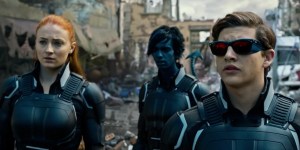 The trio of the core characters of the prequels (Professor X, Magneto, Mystique) is largely sidelined and you can certainly tell that the actors are eyeing the exit door, no more than Lawrence. These are the characters we’ve gotten to know and the ones we’ve built up an emotional attachment to, so why not just push them to the outer edges of your story and shove some new even younger X kids in place to dominate the narrative? Lawrence and Fassbender especially are given the least to do. When Mystique has to become a de facto X-Men leader and teacher, you can feel like everyone is just going through the motions. They just look bored or at least unable to hide their ambivalence with the muddled screenplay. The new X kids are also fairly bland with little charisma. I think there’s an actual scene where Nightcrawler is walking around a mall in plain sight. The X kids are here to take over for the Magneto/Xavier/Mystique unit and provide a bridge to the original X-Men series. It is here where I must now gripe because First Class was set in 1961 and Apocalypse is set in 1983 and nobody looks like they’ve aged. Maybe that’s a mutant ability plot device but then Rose Byrne’s human character hasn’t aged much either. Her character is also completely pointless in this movie. She might not be as badly shoehorned into the action as Lois Lane was in Batman vs. Superman, but then again there still isn’t anything as terrible as anything in BvS.
The X-Men franchise from the beginning has been a super hero saga with subtext and social commentary. It might not be completely subtle but it was effective and brings greater relevance and emotional power to the struggles of our mutant heroes. The first prequel was about a core philosophical divide between Xavier and Magneto; the second movie was about the individual versus society and was personally exemplified by the moral crisis of Mystique’s hunt for vengeance that would lead to the downfall of humanity. This third movie has none of that. Magneto is suffering from a personal tragedy caused by prejudice and fear but the basic theme is the same from First Class just not nearly as well articulated. Here it’s more just blunt “kill ‘em all” vengeance, and he’s made to be a practically mute cipher until called upon at the very end for some tidy plot work. I haven’t even talked about the tacky return to a concentration camp. The characters are either fighting the bad guy or fighting with the bad guy. That’s it. There isn’t any major personal or philosophical conflict that is highlighted by the subtext of the plot. It’s all just more grist for world-ending CGI nonsense.
Apocalypse at best is a series of moments, and the overall quality level rarely rises beyond competently acceptable, not exactly a ringing endorsement. The movie’s action sequences are rather dull and visually repetitive, making poor use of geography and development. The entire third act is a blandly extended action sequence in the dusty ruins of Cairo. Things just sort of happen and then more things just sort of happen. The opening action sequence in Days of Future Past is better than 99% of the scenes in this movie. The clear highlight that everyone will rightly cite is Quicksilver (Evan Peters) showcasing the amazing potential of his super speedy powers, but even this is a repeat of a highlight from a previous movie. It’s like the producers decided to take the moment everybody loved and do it bigger and better. It was a real fun surprise in the first time, and now it’s become the newest part of the X-Men formula. Still, it’s a fantastic sequence with great visual panache and a lively sense of humor. When the world slows down and Quicksilver steps into the frame, it’s almost like a hero moment for the audience to cheer. He saves a school of mutants, and a dog, from a colossal explosion, but it too is just another moment that could have been cut from the movie entirely. It’s a fantastic moment, the obvious highpoint, and yet it’s still superfluous. The other highpoint is an extended cameo at Alkali Lake, and again it is superfluous and calls into question greater franchise continuity.
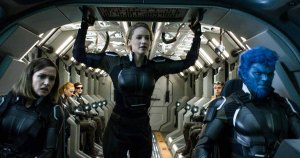 Speaking of continuity, there are some major events in Days of Future Past but especially Apocalypse that make me question how the events in the 2000s X-Men still stand. According to the events of the prequels, Mystique “outed” herself to the world and proved the existence of mutants to the wider public when she tried killing Boliver Trask (Peter Dinklage) and infiltrated the Nixon White House. Cut to 1983 and Apocalypse broadcasts a message to every human and mutant on the planet. He launches the world’s entire arsenal of nuclear weapons into space. That seems like a big deal, the kind of deal that would dramatically alter the events in the 2000s to the point that a mutant registration act would seem hilariously quaint and far too late. The character relationships in the first X-Men movie must also be reassessed with the events of Alkali Lake. It’s hard for me to reconcile the earlier films matching up with these prequels at this point.
The studio execs and producers behind the X-Men series have already gone on record speculating that their next movie will take place in the 1990s and have Mr. Sinister as its chief villain. I think they’re getting a little too ahead of themselves with the larger franchise vision much like what happened to Sony after their 2012 Amazing Spider-Man reboot. They started plotting two sequels, a spin-off, and lost sight of simply making a good movie with characters you care about and memorable action sequences. They lost track and had to reboot their Spider-Man franchise yet again, this time with an assist from the Marvel bigwigs. I don’t need an X-Men-a-decade adventure. I just want good movies. Out of six movies, half of them are great and the rest are acceptable to terrible. Apocalypse won’t kill its franchise but I think the negative and indifferent response from the public, as well as less-than-robust box-office returns, will give the studio caution. Don’t just throw out an X-Men movie in order to lay the tracks for the next two X-Men movies. Make a compelling and entertaining X-Men film that stands on its own. If you can’t do that, then there won’t be too many more X adventures, period.
Nate’s Grade: C
Share this:

Mad Max: Fury Road (2015)
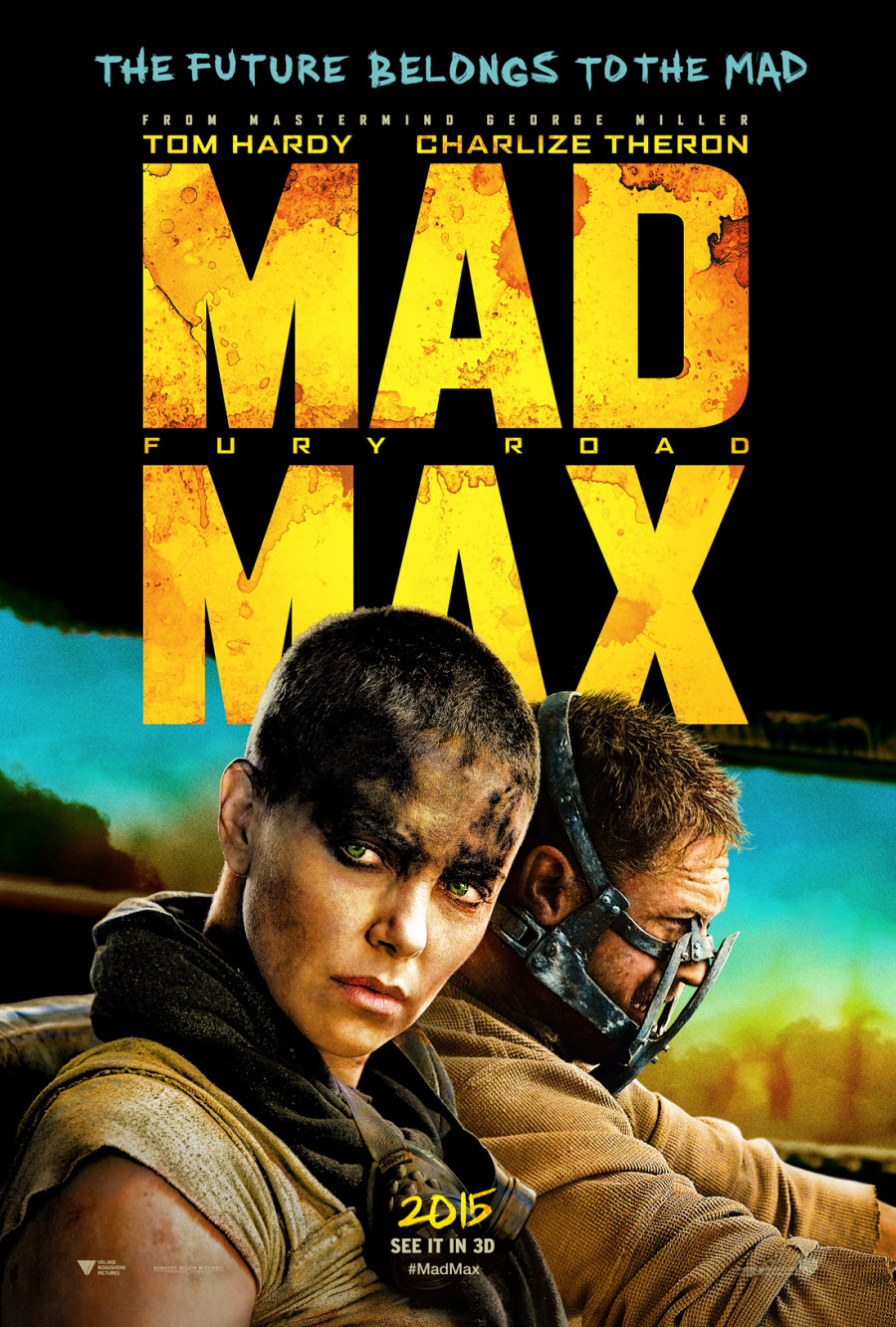 Allow me to begin with a confession. I had to see Mad Max: Fury Road again. I knew minutes into the film that my appetite would not be quenched and I needed to see it again, which I did less than 12 hours later. A week later I saw it a third time in the theater. The reason I did this is obvious in one regard – it’s a highly enjoyable, pulse-pounding, amazing spectacle of first-class stuntwork and mad genius so rarely accomplished on such a large, splendid scale of destruction. The other reason, from a writing standpoint, is that I needed to see the movie again or else my review of Fury Road was going to consist of nothing but an unending stream of positive adjectives vomited upon the page in excitement. And for you, dear reader, I wanted to do better. Also, I wanted to see Mad Max: Fury Road again and I honestly wouldn’t mind in the slightest seeing it again.
In the post-apocalyptic future, Immortan Joe (Hugh Keays-Byrne) is an aging warlord with his own fiefdom. He controls the water supply and has an army of gearhead warriors to enforce his rule. His trusted driver, Imperator Furiosa (Charlize Theron), is leading a caravan for supplies when she goes rogue, driving off into the desert. Furiosa has taken Immortan Joe’s “property,” namely his five wives. Enraged, Immortan Joe gathers a posse of death vehicles and riders and heads off to reclaim his “property.” Max (Tom Hardy) is a drifter thrust into the middle of this conflict when he’s strapped to a car and driven out into the desert, part of the Immortan Joe rapid response forces.
 There are few things more exhilarating in the realm of motion pictures than a well-executed, well-developed action sequence, and Mad Max: Fury Road is a blistering, awe-inspiring masterpiece of brilliant carnage. What director George Miller has achieved onscreen is visionary. The level of execution is so rarely seen at such a large scale, and with so many moving parts, that I was delighted and curious how something this extraordinary could escape the risk-averse studio system. I’m trying my best to restrain myself from sheer hyperbole, but this is an instant classic in the world of action cinema and a definite top five all-time action film (for those keeping track, I would say last year’s Raid sequel would also qualify for that status). The movie provided me a font of joy that did not let up until the end credits ushered me out of the theater. The action sequences are epic in their scale, with dozens of different vehicles in hot pursuit, and yet Miller brilliantly orients his audience to every moment of his symphony of demolition. There are so many different parts to the action but the audience knows everything that happens. The sheer sense of momentum and pacing is overwhelming and giddy. The action sequences develop organically, with new consequences throwing our characters into different and dire directions. There’s also a startling amount of variety with the action sequences. Fury Road has been described as a two-hour chase film, and that’s accurate to a degree, but there are breaks in between the sequences, small moments to catch your breath and learn more about our characters and their hostile world. Each sequence is different enough that the action doesn’t ever feel redundant, even when the third act literally requires the characters to backtrack. The adrenaline just doesn’t turn off from the get-go, and Miller keeps throwing out new tricks, new stunts, and new cars to astound and amaze. Simply put, Fury Road shames other American film releases.
The stuntwork is another facet that just raises the bar when it comes to action movies. Miller emphasized practical effects whenever possible, and the emphasis pay off with a heightened sense of realism onscreen. It’s real cars being smashed to real bits, real stuntmen being tossed around. In an age of CGI over saturation, it’s all too easy to become numb to big screen spectacle because of how hollow it all comes across visually. Just this past month with the Avengers sequel, I knew that all the fight scenes were mostly CGI or actors against green screens, and it eases off the enjoyment of the moment. Don’t even get me started on the deluge of CGI carnage in the last Hobbit film. Real physical objects and physical interaction offer so much more believability in an age of increasing disbelief with special effects. With Miller’s focus on practical effects first and foremost, it brings that sense of crazy excitement back and it ensures that Fury Road will hold up better over time.
 I also appreciated just how much thought Miller and his team put into crafting their world. Every detail feels like it adds to the overall richness of Miller’s vision. The designs of the cars, the use of scrap, the fact that a pulley system is operated with children running up giant wheels, it all contributes to making the world better realized and more alive. The level of thought put into weird and deadly concepts in this movie is fantastic. Once the main characters pass through a bog of land, we see people dressed in cloaks traversing the land on stilts, and it’s little passing details such as this that make the movie feel more complete. I enjoyed that one of Max’s heroic attributes is that he’s specified for his blood type, being O the universal donor. The fact that Miller finds a satisfying way to bring this attribute back as a payoff is also appreciated. I also enjoyed how Miller expands upon the family of Immortan Joe, with his bevy of freakish sons and brothers and peculiarities. I enjoyed the fact that Miller isn’t afraid to embrace the weird of his dystopia, symbolized best by a blind guitar player attached to a roaming wall of speakers who can shoot flames out of his instrument. Every time the movie cut back to this guitar playing pace setter, I smiled, and I smiled a lot during this movie.
Some have grumbled that Max is a supporting player in a movie that bears his name, but I would argue he is a co-lead and the real star is rightfully Imperator Furiosa. Max is not replaced with Furiosa, rather they have an inter-dependant relationship where they’re both vulnerable and they both come to trust the other but without a romantic mingling. These are both wounded, shaken, mistrusting, and volatile people, and to watch their shared sense of teamwork and the gradual opening and reliance upon one another, it is itself an affecting and emotionally satisfying relationship. But back to Furiosa, it’s really her story because she is the one with the personal connection to the mission. Max has always kind of been a wandering warrior who finds himself in other people’s battles. Consider him a post-apocalyptic Man with No Name. Furiosa is the leader who has planned and implemented the escape from Immortan Joe, and it’s she that deserves our attention. I enjoyed the fact that Miller doesn’t even have to explain her past. We know she’s suffered trauma, physical and likely sexual, and he assumes the audience does not need Furiosa’s past abuse spelled out specifically for them, or seen in grisly flashback. She’s a strong woman who is far from helpless with one arm. This is a story about women liberating themselves from sexual slavery under a corrupt patriarchy (more on the thematic relevance below). Theron is our leader and the ferocity in her eyes is all you need to believe that this woman will do whatever it takes for freedom.
The other aspect that’s very clear is that Fury Road is a decidedly feminist film but it never stoops to preaching or even directly calling attention to its efforts. It’s a ruined world where men with unchecked power have exploited the vulnerable, where women are treated as “property” and valued for breeding purposes. Our heroes are by and large women who have rejected their roles in this society or are fleeing their impositions. And with Furiosa as lead, it paints a more than convincing picture of women being just as capable and badass in the post-apocalypse (I want to go as Furiosa for Halloween). It’s a movie that portrays women struggling against an unjust system that devalues them but Fury Road doesn’t wallow in their suffering. It doesn’t have to in order to get its points across. It also treats the wives in a manner that lacks being sexualized. Immortan Joe has treated them as property but Miller treats them as human beings, even going as far as to give them distinguished personalities. They play a role in the action rather than damsels in need of saving. I’m not saying they approach three-dimensional characters but they’re certainly not just eye candy. There’s a sequence where they wash each other with a hose, and you could see the myriad ways this moment would go tawdry for some cheap titillation, but the film steers clear of that and moves on to the bigger picture. What the Men’s Rights Activists (sadly this is actually a thing) seem to have lost in their caterwauling is that feminism is not a zero-sum game; one person gaining stature and opportunity does not mean it’s taken away from another. Just because Furiosa is strong it doesn’t make Max weak. Furiosa being a compelling lead character does not diminish Max. It makes him an even better character because he recognizes her value and his own limitations, like a scene where he voluntarily hands over a rifle because he knows she’s the better marksman. No one has to explicitly point and say, “Girls can do it too.”
 There’s also a fascinating commentary on the danger of religious fundamentalism with the war boys. These powder-white young men are Immortan Joe’s armed forces and they are promised a swift appearance at the gates of their paradise if they die in battle (“Witness me!” is their exclamation before sacrifice). They spray paint their faces chrome (“Eternal, shiny and chrome”) and then go in for the kamikaze kill. Again, the theme is ripe and obvious but without requiring characters to comment. Nux (Nicholas Hoult, wonderfully deranged and then sincere) actually has the closest thing to a character arc, going from hopeful martyr to independent thinker. He begins as a clumsy yet determined antagonist and becomes a resourceful and unexpected ally.
This is practically a flawless film on a technical level. The cinematography by John Seale (Cold Mountain) is bright with lush colors that pop on the big screen. We’ve been treated to far too many color degraded films, so it’s nice to view a movie that wants to use all the colors at its disposal. The musical score by Junkie XL (300: Rise of an Empire) is stirring and pulse-pounding with its heavy percussion, but there’s a languid melody that returns again and again that is emotionally resonant. It’s surprising how the score will punctuate the bombast and wailing guitars with a lovely string arrangement, like when we rush into the sandstorm and a car is blown into the sky. The editing is outstanding by Margaret Sixel (Happy Feet) and she keeps the audience informed with every new twist and turn, and with so many moving parts and changing dynamics, that is a miracle itself. The production design by Colin Gibson beautifully expands and informs this strange world. There isn’t a department in Fury Road that wasn’t at the top of their game.
If I had to quibble, I could accept the argument that Mad Max: Fury Road lacks the substance to be considerably more than an exhilarating action ride. The dialogue can be a bit on-the-nose, Hardy mumbles through a majority of his miniscule lines, and the characters aren’t as fleshed out as they could be and the plot is rather bare bones. However, I view its narrative economy as a virtue, as there isn’t a moment or scene wasted in telling this breakneck tour de force of post-apocalyptic demolition. Rarely does an artist get to work at this level in the studio system let alone succeed with a final product that still manages to be strange, mordant, uncompromising, and completely riveting. This is a near-perfect action movie and a thrilling high-wire act of practical filmmaking bravado. Mad Max: Fury Road is the standard I am going to judge all summer movies by for the rest of the year, and I imagine many will be found wanting. I could continue to heap praise on the movie but the most persuasive stance I can make is that if you fail to see Fury Road on the big screen, you will always regret this decision. I am a disciple of Fury Road and witness my brethren and me. This movie was made for the biggest screen, the loudest sound system, and an endless bucket of popcorn.
Nate’s Grade: A


 nathanzoebl
You must be logged in to post a comment.