Blog Archives
You Can See Everything (2026)
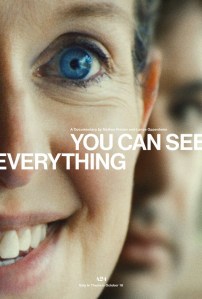 After multiple investigative books and documentaries, an award-winning podcast series, which was adapted into an award-winning TV mini-series, you’d be forgiven for wondering what was left to uncover about the case of Elizabeth Holmes. She was the CEO of Theranos, a cutting-edge start-up company that wanted to revolutionize the world of healthcare and blood-drawn results. She was on magazine covers as the next Silicon Valley wunderkind, and she had big names like General Mattis and Henry Kissinger on her board of directors. Theranos was at one point worth billions of dollars and then it was pennies. Holmes was convicted of defrauding investors and sentenced to serve eleven years in prison beginning in 2023. Seemed like a natural end to the tragic tale of Elizabeth Holmes, facing the just consequences of her criminal actions. Then mere months ago, comedian Nathan Fielder and documentary filmmaker Joshua Oppenheim (Primetime) revealed they had secretly filmed a documentary chronicling the last weeks of Holmes being a free woman with her husband and father of her two children, Billy Evans. This secret movie, with the purposely provocative title You Can See Everything, has been lavished with effusive praise, has become a runaway box-office hit for an indie documentary, and has grabbed hold of the cultural zeitgeist in a way that filmmakers and influencers would dream. It became the Movie You Had to See because everybody was talking about it. With all that hype, including many calling it one of the greatest documentaries in the history of the form, could it possibly live up to the hype? In short, yes.
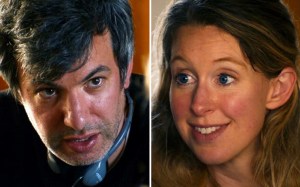 The biggest question I have walking away is why would Elizabeth Holmes and Billy Evans want to bring cameras into their lives after everything they’ve been through? The first reason I would theorize was to try and tell “their story,” to counter the narrative against Holmes built from the many works of media retelling her descent into fraud, as well as the legal judgements. Why would someone want to have cameras document your last weeks with your children before going to prison for possibly ten years? Maybe you’re trying to get someone else to pay for a video scrapbook. It just seems like such a fraught and tense and emotional time. Adding a team of movie cameras inserts the pertinent question of exploitation, and the brilliance of You Can See Everything is that we are left wondering who exactly is exploiting whom. Are Fielder and Oppenheim exploiting the sad circumstances of this family on the precipice of being ripped apart, or are Elizabeth and Billy exploiting the platform of a Hollywood documentary crew to present an image rehabilitation and another in a series of projections of a version of Elizabeth Holmes they want the public to grapple with? Is that why Holmes breast feeds in front of the cameras, to soften her image? To humanize her to the haters? Why rent out this beachside villa in San Diego specifically just for the movie? Why would Billy want the camera crew to film him fully naked in the shower, the moment that earns the movie its R-rating? That question over manipulation guides Fielder as he interacts with his subjects and struggles to find a baseline of truth. Does Elizabeth really believe she did nothing wrong? This is best exemplified when Fielder and Holmes debate the word “could,” as she still tries defending the failure of her Edison machine by saying it “could work.” Well, yeah, it would be great if it could work, but it would also be great if eating donuts cured all illness and disease. Holmes is holding to the aspirational, the Silicon Valley “fake it ‘til you make it” ethos, but you don’t get credit for “could work,” you get credit for your verifiable results. Can you even agree what is recognizable truth?
I also greatly appreciated how Fielder and Oppenheim break free from many of the conventions of documentary filmmaking to the benefit of the overall experience. Many docs attempt to present an objective and ethical barrier between subject and storyteller, but that distance is already erased just by the invitation of Holmes. The question is less what will befall this family in the final weeks before leaving for a prison sentence and more about who these people truly are when given a microphone at length. Fielder was solicited personally by Holmes, so it makes sense for his on-screen presence to be just as common. He’s the audience surrogate trying to interrogate these people, generally wary that he’s being used or manipulated to some end. I laughed out loud when Billy told Fielder he knew what he was thinking and Fielder snapped back, “No you don’t!” That’s the kind of response the viewer would make, and it’s invigorating when the filmmaker is channeling our challenges and refusing to let his subjects get away with vagueries and obfuscation. There is also the nature of re-enactments, and the layers of removal of reality presented from them, which Fielder openly acknowledges, showing himself offering notes on how the performances should have been. It’s an actor reenactment based upon one man’s memory of the event. There are some bold directions the film takes halfway through, after Holmes goes to prison, because you’d be understandably wondering what was left to cover. There is a new driving force that becomes the voice of the viewer when it seems like Fielder’s objectivity has been compromised. I appreciated that Fielder and Oppenheim’s movie leaves in all the moments we might expect other docs to exclude. There are lingering moments, contemplative pauses, and the filmmakers questioning their own perspectives. It’s even more intriguing when even the filmmakers widen their introspection and scrutiny to themselves.
 And then when you’re starting to have doubts and encroaching degrees of sympathy for Holmes, you remember, “Oh wait, she totally was a manipulative liar.” After watching this documentary, I went back and re-watched another documentary, Alex Gibney’s 2019 doc, The Inventor: Out For Blood in Silicon Valley and was bluntly reminded of how duplicitous Holmes can be with power. She has a way of swaying others with her dedication and aspirational big picture talk, but the details are where her goals run aground with reality. The Edison machine was never destined to work because, as one interviewer puts it, the “laws of thermodynamics,” which are presently undefeated. Having a small box to transfer blood samples, act as a centrifuge, and operate up to forty different tests is a lot to ask for, and it’s no wonder the machine would often malfunction. It was never going to work by design, no matter how long they toiled; it was the equivalent of a Silicon Valley CEO looking at a circular hole with a square peg and saying, “Those other disruptors just didn’t have vision like we do. It’s gonna work for us.” Theranos had to use other companies’ diagnostic machines to run its lab results, all the while saying they came from their magic don’t-really-work technology of tomorrow. The lab results from the actual Edison machine proffered false positives and negatives for patients, which can be a big deal when you’re having blood drawn for things like cancer screenings. Not only did the machine not work, they were actively misinforming patients, which directly contradicts Holmes mission of getting accurate medical results in time to make a preventative difference. Beyond that, Holmes used her position to squash internal questions, crushing employees under costly legal threats to keep them in line. The Gibney doc benefits tremendously from interview subjects reciting their own personal experiences of Holmes’ malfeasance.
Regardless of whether or not Holmes might be on the spectrum, which is audience projection at best, that doesn’t excuse her from committing fraud. Her own father throws out the alarming news that Elizabeth is a rape survivor, and he blames a trail of controlling men for her downfall. At one point, with Holmes struggling to explain the humor of one of the most famous comedy routines of the twentieth century, Billy leaps in to explain that Elizabeth just sees the world so differently and what might be clear in her brain is not easy for others. She’s just too special and smart for the rest of us, you see. It’s a strange moment of ethical rationalization, blame-shifting, and, oddly, a sympathetic defense of the woman he loves. While the movie offers many lingering questions about the pursuit of an objective form of truth, I found myself feeling that the affection Elizabeth and Billy share with one another is genuine. It’s strange but Billy’s intervention and sense of control can often be viewed through a protective lens, that he’s trying to protect Elizabeth from herself because others don’t understand her like he does. He’s the self-appointed Elizabeth Holmes translator. Then there are moments where he takes away a bowl of eggs from Elizabeth because he says she’s beating the eggs wrong and does it his way. Is he protecting her or dominating her? While there are still lingering questions over whether Billy sought Elizabeth out as fame-chasing clout, he comes from money and, as Elizabeth notes, she is hemorrhaging money from her legal fees and lawsuits. These two people feel like born hustlers and attention-seekers, and yet could they really have something together that is simple and sincere and honest? It’s another fascinating question in a regularly fascinating movie.
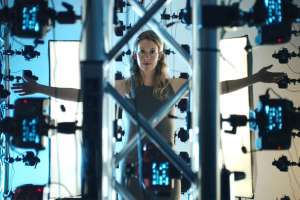 Even at three hours, You Can See Everything doesn’t feel like a moment is in waste, and that by itself is a significant achievement. Fielder’s penchant for meta-textual elevations and invitations of empathy transform a documentary into so much more, raising questions that can lead to hours of discussion. Much of watching the movie can feel like trying to get to the Real Elizabeth Holmes, cornering her into finally admitting guilt and recompense, but that isn’t really the movie. It shifts and morphs before your eyes and makes you question your preconceptions but also the nature of journalism going through channels of interpretation. Elizabeth argues that the version of her played by Emmy-winner Amanda Seyfried in the TV miniseries is really a fictionalized portrait of a fictionalized persona. If that is the case, who is the real Elizabeth Holmes, and is it even possible to uncover this person through the art of documentation? Have we been deceived? Is she deceiving herself? Are we holding Holmes to a standard she could never meet? The movie invites an open dialogue and I think that’s what has heightened its must-see reputation. It’s an effortlessly fascinating movie that invites you to lean closer and think more critically, even about its own nature. To elicit that kind of response from a subject already so heavily documented is even more of a surprise. You Can See Everything might not live up to its title but what you can see is phenomenal.
Nate’s Grade: A


You must be logged in to post a comment.