Blog Archives
Shutter Island (2010)
 This was a pulpy B-movie put together with A-movie artistry. In a year that had some artistically polished genre movies, Shutter Island was Martin Scorsese’s return to genre filmmaking and he brought with him an entire team of experts and professionals. The movie is playful and intriguing, engaging the mind enough for a crime thriller that appears to be a straight-forward mystery but then shows flashes of being about something more, something darker. And when you’re dealing with a movie with Holocaust flashbacks, dead kids, Nazi doctors, mental asylums, well you know you’re not going to be reaching subtlety even with a stick. But the way Scorsese orchestrates all these foreboding elements, tying together various plotlines, and working at different levels to satisfy the informed and uninformed, right before delivering a dynamite twist that calls for further investigation and rewatching, well it’s nothing short of masterful. Shutter Island may not be anything more than a souped-up B-movie, but with this level of artistry, it’s also one of the most entertaining films of the year.
Nate’s Grade: A-
Share this:

Remember Me (2010)
 How much time do we give before our memories are used as unnecessary and cheap dramatic ploys to wring out tears? Remember Me will test your sensibilities on what should be classified as art and what should be designated as hacky, shameless exploitation.
Tyler Hawkins (Robert Pattinson) is a troubled 21-year-old college student in New York City. He’s mostly estranged from his rich, distant father (Pierce Brosnan). Tyler’s older brother hanged himself five years earlier, and that personal tragedy still lingers. Tyler quotes poetry, writes letters to his dead brother, and has his share of run-ins with the police. Sergeant Neil Craig (Chris Cooper) busts Tyler and his friend (Tate Ellington, mostly annoying) one night after the duo tries to clear up a brawl. Then the boys discover that the sergeant’s daughter, Ally (Lost‘s Emilie de Ravin) also attends their college. They devise a sketchy means of getting even: Tyler will date Ally. A subway mugger killed her mother when she was 9 years old, so the two bond over family misfortune. He asks her out for dinner and she appears cautious, but it isn’t long before love is in the air. Dad doesn’t approve but that won’t stop Ally from spending time with her special someone. Suddenly Tyler is vulnerable and coming out of his shell. It looks like things might work out though you don?t really comprehend why, then things take a sudden turn and very much do not work out. More details on that plot development later.
Remember Me does not work for many reasons, but as designed, it was never going to work. Allow me to go into greater analysis, which will naturally unleash a horde of spoilers concerning the film’s conclusion.
 This movie will not work; in fact it refuses to work from a conceptual standpoint. The story seems retrofitted to lead directly to the ending. Screenwriter Will Fetters seems to have followed the M. Night Shyamalan approach to screenwriting and come up with a twist ending and worked backwards. You see dear reader, the film climaxes on a day burned into the memories of everyone who lived through it — September 11, 2001. The movie plays coy with its timeline the whole time, never drawing too much attention to its exact setting. Tyler even goes to see American Pie 2 to lift his spirits, and who besides people who are crazy about film release dates would know that was released back in August 2001? There’s also a jump forward of ten years from the murder of Ally’s mother in 1991, but that’s the last time the movie ever reminds you about time. Instead, it makes sure that all the pieces will be in place so that Tyler will be standing on the 90th floor of the World Trade Center, looking off into the horizon for the last day. Fetters’ story uses a national trauma as a dramatic tragedy for his doomed lovers. But here’s the thing: anything else would have worked the same. Did Tyler really have to die in the 9/11 attacks? Could he not have had an accident, gotten mugged, hit by a car, or any number of other missteps that would have the same effect? The emphasis isn’t on the relationship of 9/11 to the characters; 9/11 just serves as the event to wipe out one half of our relationship. But any other event would have resulted in the same effect without coming across as so icky and exploitative. The movie does not work because it’s designed as a ?gotcha? ending but the only “gotcha” is that 9/11 is shamefully used to spin this illusion that Remember Me is meaningful and transcendent.
The other half of this argument could go as such: Fetters was trying to tell but one tale of the many that lost their lives on 9/11, illuminating the fantastic human toll and how each number was a person with a family and friends that will forever miss them. That would have been sufficient. Hollywood and the cinema have a history of taking national tragedies and showcasing individuals who were lost. I even declared United 93, the docu-drama painstakingly detailing the final moments aboard that downed airline, the best film of 2006, and four years later I still stand by that declaration. Artists can take collective pain and showcase triumph and substance, allowing us a cathartic means for therapy and working through trauma. I believe with every fiber of my being that art has the power to heal and elucidate.
However, Remember Me is not that kind of art. If Fetters had a strong desire to showcase one of the lives lost that horrific day, that’s a noble effort. But the drama of Remember Me is stagnant and suffused with stereotypes and one-note characters bumbling around, uncertain what exactly they should be doing. It almost seems like everyone is simply waiting for the Big Event at the end, and that in itself is disquieting. The character dynamics of this movie couldn’t get more cliché. This sloppy, overcooked weepie has the Bad Boy and you know he?s troubled because he has stubble and smokes. Pattinson also spends 80 percent of his screen time looking forlorn. I’m sorry, but looking off screen and being forlorn are not replacements for good character development. He’s lost a brother and he?s mad at his distant, workaholic father, but you might as well describe him as Boy. That’s pretty much his extent in this film. His love interest could equally be named simply Girl. The two have a shared history of family tragedy, but then what? Do we learn anything about Ally as a person, about what draws her to Tyler (besides that haircut, of course), or how her life is made more whole thanks to the brooding bad boy? No. It would be generous to even refer to these characters as archetypes. They are characters in name only. Fetters has cobbled an equation that simply boils down to Boy + troubled past + Girl + troubled past = perfect future. Even worse, their whirlwind courtship feels like it exists in some movie world where gazes and hugs substitute for the excitement of romance, of feeling out the interested party and becoming overwhelmed with the sheer possibility of a relationship. This is only a love story from a the standpoint of that equation. You never believe for a second that anybody matters because they only feel like puppets meant to go through the motions until the film reaches its anvil of a climax. Then, you see, we’re supposed to feel because there is death, except I didn?t see any convincing signs of life beforehand.
 The rest of the story is awash with bizarre and mostly lame elements meant to heighten the ensemble drama. For whatever reason, Tyler’s friend coaxes him into initially dating Ally as a contrived means of sticking it to her father. This tiny yet stupid hurdle will of course be revisited when the film’s second act break comes calling. But why does this past run-in even matter? Romantic comedies have all sorts of plots where the couple begins their time together through some duplicitous guise, and of course the truth drops just as guy and girl are starting to really like one another. But in Remember Me it isn’t a bet or something nefarious that brings boy and girl together. If anything, the run-in with dad could be seen as an introduction. The “get revenge” idea isn’t something that’s ever revisited by Tyler or his friend, nor do they at any point provide further detail. It remains a vague notion from beginning to end.
Then there’s Tyler’s own family drama. The strangest plot addition is when Tyler’s younger sister attends a birthday party. It is at this birthday party that a cohort of mean girls gives Caroline Hawkins an unflattering makeover. This bad haircut is then played for ridiculous dramatic overkill. Everyone around the kid is speaking in hushed tones, trembling, recollecting as a family unit, and pretty much acting like Caroline had been molested when, at worst, she got her hair cut by some mean girls. Tyler even escorts his kid sis to school and almost decks one of the little girls responsible, instead choosing to huff and puff in her face like a raging bull. I guess when you’re Pattinson and a good third of your acting comes from your haircut, you take follicle care very seriously.
Remember Me is so anxious to be poetic. It’s not. It’s pedantic and faux intellectual. It wants to be a moving romance. It?s not. It?s two pretty but bland characters that just seem to play around furniture and eventually do it. They’re as interesting as bland pretty people usually are in these things. It wants to be a significant drama that manages to say something big. It’s not. It’s a slapdash effort revolving entirely around the eventual reveal of a “gotcha” ending that does nothing to justify all the strained spinning. At best, the ending is in poor taste and a cheap trick to gin up sympathy and give the impression of substance. At worst, it’s ugly exploitation that reduces a national tragedy into a last-ditch effort to cover the empathetic deficiencies of a lackluster drama. Flogging national suffering to make an audience feel for your bland characters after an empty 100 minutes? That’s offensive. Remember Me isn’t worth any outrage. It?s a pretty but mostly empty venture designed around a twist. It is anything but worth remembering, even in disgust.
Nate’s Grade: D+
Share this:

The Town (2010)
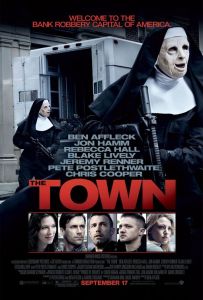 There are many people who think they can direct. It just looks easy to people. You get to tell everybody what to do all day. Who wouldn’t want that, right? And actors always think they know everything already, so there’s a litany of actors who feel like they can make the jump from in front of the camera to behind it with ease. Not everybody is going to be a Clint Eastwood, or a Robert Redford, or even the best of the current crop, a George Clooney. Every now and then you’ll find a true surprise, like Todd Field (In the Bedroom, Little Children) or Sarah Polley (Away From Her), but most actor/director projects come across like indulgent one-time pet projects (see: Drew Barrymore’s Whip It). Ben Affleck has easily endured his slings and arrows as an actor, though I’ve always found the man to be likeable, charming, and intelligent. Even so, nobody can excuse Gigli. When Affleck tried on the director hat for 2007’s Gone Baby Gone, it was easy to be skeptical. But then critics and audiences saw the film, which Affleck also co-wrote, and realized that this guy might have some serious chops after all. The Town, Affleck’s second directorial effort, proves that Affleck has found his rightful place in movies.
Doug (Ben Affleck) is a lifelong criminal living in the working class Boston neighborhood of Charlestown. We learn that this one-square mile produces more bank robbers than anywhere else in the world. It is a neighborhood seeped in the lifestyle of crime, the silent omissions of sin. Doug and his crew’s latest heist went according to plan except for one detail. Jem (Jeremy Renner), fresh from doing a nine-year prison stint, has taken the bank manager hostage in a moment of panic. The men blindfold Claire (Rebecca Hall) and deposit her along the Boston shoreline. Doug and his guys then become alarmed when they spot Claire in their neighborhood. She lives in Charlestown. Will she recognize them? FBI Agent Frawley (Jon Hamm) check up on her and requests interviews. Is it only a matter of time before she discovers the truth? Jem wants to handle it quick and dirty, but Doug insists that he take the lead. He watches her from afar and can’t help but feel sorry for the trauma he has caused her. He asks her out for a drink after meeting her and Doug can’t stop himself from falling for her. Jem is incensed and convinced she’ll give them all away. Doug must reconcile his life?s choices and Claire now gives him a reason to finally walk away from the only life he’s known.
 It didn’t take long for me to know I was in for something good. The pre-title opening sequence sets the tone and informs you that Affleck will be firmly settled in the director’s chair for some time. The opening bank heist crashes your attention. It’s filmed in quick cuts, swift camera movements, mimicking the ambush of the criminals as they throw people to the ground, upturn desks, and smash general office supplies. Then the scene cuts to a security camera footage of the same scene, and it’s static, and eerily silent and the contrast is fantastic. Then we smash right back into the fray and the chaos. Affleck refrains from the film turning into senseless genre junk. The violence in this film hurts. You feel its impact and wince at its approach, and you already get this sense before the credits even show up. Affleck wants his visceral violence to mean something, and these men of violence become more intimidating. Then there’s a scene about an hour in that had me gnawing my hand in anxiety. It all revolved around the possible reveal of an identifiable neck tattoo, where the only character who knows all the particulars of danger is Doug. He’s trying to nervously watch the eye line of the conversation, and I was physically trying to instruct the characters onscreen. The fact that I could get so caught up in a sequence of stellar tension that doesn’t involve cars, guns, or even overt threats of violence is a testament to the abilities of Affleck the director.
Doug’s crew is not a fly-by-night operation. They are honed professionals, knowing the timing codes for bank locks, how to dismantle security camera systems, and splash bottles of bleach all over the premises to eliminate usable fingerprints. And yet, when is enough enough? It feels like only days before Jem is pushing everybody for another job. They’ve barely had time to launder the money through drugs and gambling, given a cut to the local crime boss (Pete Postlethwaite), and they?re anxious for another score. Doesn’t anybody want to lie low for a while before the heat dissipates? Either this is just a conceit of only being able to work in a two-hour narrative or indicative or what a consistently dangerous life these men lead. These men know exactly where they?re headed; in fact, they seem resigned to their fate. Perhaps the expedited schedule is just another form of self-destruction or an impatient death wish, or perhaps it’s just an inflated sense of invincibility by guys who are good at what they do.
 The area where The Town could have been better is with its higher ambitions. The Town dutifully delivers the goods when it comes to a crime picture. The three holdups are all satisfying, taut, well paced, and the action is choreographed in a manner that’s easy to comprehend. The middle holdup creates some dynamic images as the men speed through Boston dressed in plastic nun masks and armed with machine guns. There are several standout moments and images that prove Affleck knows how to frame an exciting action thriller. The climax is great, though the denouement leaves something to be desired. You pretty much anticipate what beats the movie has to hit as a genre piece. These brothers in arms will likely follow the path of doomed protagonists. But Affleck clearly wanted his second feature to be more than a slick genre flick. He had his sights set on examining systemic and cyclical nature of crime and abandonment. The opening informs us that bank robbing is a trade passed down in Charleston from fathers to sons. Doug’s crew are all second-generation criminals, their long absent fathers serving sentences in federal prisons. Affleck wants to explore the nature of what separates good people who make bad decisions, digging into the limited lifestyles afforded to these blue-collar lugs who have lived in brutality. The Town doesn’t quite succeed in this regard. The somewhat saggy middle touches upon these ideas but fails to spend enough time for anything substantial to stick. Gone Baby Gone was a better study of class and moral ambiguity. With The Town, you readily identify who the good bad guys are and who the bad bad guys are.
Just like Gone Baby Gone, Affleck’s second feature excels with a glorified group of actors all given room to find their characters and show off their skills. Each actor kind of gets their own space to work and they all, from top to bottom, give stirring performances. The standouts among the cast include Renner and Lively, both barely recognizable in their parts. Renner (The Hurt Locker) is channeling James Cagney from his 1930s gangster pictures. Renner is a live-wire and creates bundles of nervous tension whenever he enters a scene. He doesn’t even have to say a word. His intensity radiates and keeps all the other actors on their toes, rightfully wary of the short-fused Jem. He’s magnetic, steals the film, and even gets a slightly touching sendoff that has managed to stay with me. Lively, best known as the fabulous face of the fabulous high-end TV show Gossip Girl, is going to open plenty of eyes about her potential. She plays Krista, Jem’s sister and damaged love interest to Doug before Claire comes onto the scene. Lively has levels of makeup and hard living coating her magazine-friendly good looks. Lively just doesn’t rely on makeup tricks to stand in the way for her character. She feels like the most tragic soul in the film. She has a kid, likely destined to be removed from her at some point, she operates as a drug mule, and she’s hitched her wagon to Doug as the man that will save her. When that comes apart, Lively herself disintegrates as well, but it’s never in a showy style. She barely conceals the pain consuming her very being. Her eyes are dead of life. Plus, her accent is spot-on.
 The other performers give strong work just at a level slightly below Renner and Lively. Directing himself, Affleck gives a fine if overly whispery lead performance. Hall (Frost/Nixon, The Prestige) is effectively broken as she works through the post-traumatic stress and uncertainty her character suffers from. She’s highly empathetic, though you’re left wondering what she sees in Doug. Hamm (TV’s Mad Men) is so damn handsome but I wish he had more to do than running around and barking orders. His character always seems to be a mouth for exposition and chews over his righteous indignation. Chris Cooper (Breach) has one total scene in this movie as Doug’s imprisoned father but he nails it. His antipathy for his son and his late mother spills over but the moment never screams what can be expressed with subtlety. To Affleck notable credit, nobody in a movie about cops and robbers gives a performance that could be labeled as over-the-top or campy. These are genre roles but they are treated like real, muscular characters.
The Town cements Affleck’s status as a director. This is a more accessible, streamlined yet sturdy genre picture that has real reverence for working class Boston neighborhoods. I love the faces Affleck peoples his films with, real people. It’s small touches that add to the authenticity and visceral nature of the movie, touches that help make The Town more than just another run-of-the-mill crime movie. While there may not be anything groundbreaking on display (though I think Renner may get remembered when it comes time for awards season), Affleck’s directing credentials are only strengthened. This isn’t as good a movie as Gone Baby Gone, but what this film showcases is Affleck’s ongoing journey as a director, the shaping of his Michael Mann-esque style, and his intent to marry great drama with great characters played by great actors. I can genuinely say that I look forward to whatever Affleck picks to be his next feature. He?s here to stay, baby.
Nate’s Grade: B
Share this:

Robin Hood (2010)
 So what happens when you make a Robin Hood movie that doesn’t have any Robin Hood? What’s the point of revisiting the legend when you don’t even bother incorporating the elements that made it legendary to begin with? It’s not like they sacrificed familiarity for historical accuracy. Director Ridley Scott’s film spends more time setting up the various pieces of a Robin Hood tale; it’s a prequel at best. This is mostly a historical drama about the English faring off French invasions (the opening text also identifies the setting as the wrong century). The film still manages to be relatively entertaining. The production design and cinematography are top-notch, the acting is robust, Russell Crowe makes a good, if aged, Hood, and the action sequences are thrilling and visually striking. The problem is that there are few action sequences and way too much yakking about foreign policy and Medieval politics and debt. I don’t think people were clamoring for a big-budget Robin Hood revival that explores in depth the financial consequences of an overextended military on the English treasury. This is just not an appealing origin story. The movie resorts to having Hood pose as Maid Marion’s (Cate Blanchett) husband, and it’s as eye-rollingly contrived as any sitcom setup. Originally, the film was designed so that Crowe would play both Hood and the villainous Sheriff of Nottingham (barely seen in the movie). While that is a terrible and senseless idea, at least it would have made the film worth watching from morbid curiosity. Robin Hood isn’t a bad film, but it barely ranks as a Hood outing, and it’s steps behind the delightfully cheesy Kevin Costner version.
Nate’s Grade: B-
Share this:

Get Low (2010)
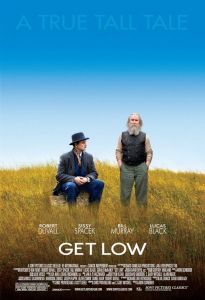 This slice-of-life Depression era tale examines a hermit named Felix (Robert Duvall) coming to terms with his life. He’s the scary old man that everyone has a story about, and now he’s come to town to make his funeral arrangements with a sleazy funeral director (Bill Murray). Except Felix wants to have his funeral while he’s alive, invite everybody in town, and have them share their collected stories, and he?s got his own story to share that’s been haunting him for decades. This is a very slow burn of a drama, to a fault. It works itself into a corner, and when Felix reveals his haunting secret you sort of shrug and think, “Is that all?” The pacing is languid; the movie feels lived-in and authentic down to its terse sense of humor and local color. You can feel the fingerprints of the Coen brothers on the film even though they had no involvement. This is a mildly touching, occasionally inert drama that benefits tremendously from the talents of Duvall and Murray, both relishing their folksy characters. This is a movie where the actors have time and space to dig in and explore their characters. Duvall and company keeps the movie from drifting off into melodrama. Get Low follows a cue from its lead actor. It’s understated, low key, and will likely go unappreciated because of its emphasis on subtlety, sometimes too much subtlety.
Nate’s Grade: B
Share this:

Eat Pray Love (2010)
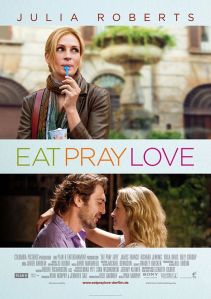 Eat Pray Love is based on the best-selling memoir about Elizabeth Gilbert (Julia Roberts), a woman in her 40s trying to recover from personal setbacks. She’s divorcing her husband and she’s generally unfulfilled with her life. It seems to be missing meaning. Her solution is to set off on a journey to Italy, India, and Bali in order to rediscover who she is and what is missing in her privileged life.
Granted I am not in the target demo for this movie’s audience, but I found the main character to be rather hard to relate with. The film opens with her deciding to end her marriage to Billy Crudup (Watchmen). So far I’m okay. The dissolution of a marriage, especially when you’re older, is a prime starting point to reevaluate your life now that you’re on your own and, frankly, terrified by that prospect. But then the movie presents Gilbert as a rather self-involved and almost callous individual. Her husband is devastated, but she’s only tear-eyed one night as she prays to God why she’s in her marriage. The movie throws out some half-hearted excuse, saying her husband is wishy-washy about his career, but it’s a smokescreen. Why even leave this stuff in there if we’re just going to dislike Gilbert? That’s like including an opening scene in Schindler’s List where Schindler beats a child. A hyperbolic example, yes, but proof that it’s a terrible idea to have an early scene harm audience sympathy.
 And so Gilbert goes about on her globetrotting voyage of self-discovery, chiefly to fulfill her health, spirit, and heart. Except the movie seems to get worse with every stop on the map. The overly long beginning in New York shows that our flighty main character shacks up with a hunky theater actor (James Franco), and then agonizes over how unhappy she is with this new guy. She needs to learn to love herself before anybody else, she says. In Italy, she finds freedom in losing herself to food. She feasts on fine Italian cuisine and doesn’t obsess over her weight gain. In fact, she and a buddy treat shopping for larger sized jeans as a joyous celebration. I’m pleased that people can become more comfortable with their bodies. This Italy section focuses on food and fellowship, and Gilbert learns the language, enjoys the company of a group of locals, and cooks a traditional Thanksgiving dinner for her new friends. This is easily the most likeable Gilbert will be in the film.
First off, a film about a character finding personal discovery and self-awareness is going to be hard to pull off. Internal journeys of self-actualization and enlightenment don’t necessarily scream great movies, a medium of images and movement. For this to work you need a good story and a character worth rooting for, somebody who the audience can empathize with and cheer on the arduous path to personal grace. Elizabeth Gilbert is not that character. The other two segments in India and Bali are a true test of patience. Watching Roberts sway around, chant to herself, and look forlorn waiting for enlightenment to come is not the best use of 40 minutes. Richard Jenkins (The Visitor) gives the film’s best performance in the most tedious segment, which kind of reignites the “tree falling in a forest” scenario. When Indians have spiritual crises do they travel to New York? The end feels even more leisurely paced and I found myself nodding off here and there. The movie was failing to keep my attention short of some lovely scenery.
 Director Ryan Murphy, co-creator of TV’s Glee, knows that his audience wants beautiful countryside, beautiful food, beautiful men, and Julia Roberts smiling. To that end, Eat Pray Love is a success. Murphy seems to enjoy filming the food sequences the most. The food is portrayed like a glamour reel. It’s easy to feel the rumbles of hunger while watching this movie. Pizza from Naples looks divine. But Murphy also serves as co-writer, along with Jennifer Salt, so he should have known better about the plot deficiencies that keep the audience at a distance from embracing Gilbert. The actors all seem to be having a good time, and why wouldn’t they? Visiting exotic places and stuffing their faces with local delicacies? It feels like I’m watching someone else’s boring vacation videos that go on for 135 laborious minutes.
Eat Pray Love seems to be missing something, namely the soul of its journey. By design, so much of this existential crisis is internal, which is where the book can fill in all the clarifying and illuminating details to make this feel like a full story. As a movie, it just doesn’t work on screen no matter how powerful Roberts smiles. The main character is hard to relate to. How many people can solve a midlife breakdown by flying across the world for over a year? How did Gilbert afford this? I’ll tell you how. Gilbert pitched the idea to a publisher and then used the advance to pay for her yearlong trek of dining and self-discovery. It makes me doubt how genuine this whole journey really was, considering she sold the ending before she ever reached her catharsis. Maybe the title should have been Eat Pray Cash Check.
Nate’s Grade: C
Share this:

After Last Season (2009)
 After Last Season is a little movie that most people wrongly mistook for a joke. Writer/director Mark Region pulled off something rarely witnessed in modern movies: he put together a low budget movie all on his own and got it released nationally. The movie even has a Quicktime trailer on Apple’s website. It was released last summer in only four cities for a limited trial run, which explains why nobody has every heard of Region’s creative opus. It also might have to do with the fact that After Last Season is so appallingly terrible that the distributor reportedly called the theaters to advise burning the film prints rather than returning them. Naturally, given my cinematic tastes for the finest trash and my keen knowledge of the baddest of bads, I instantly had to see this film for myself. The website After Last Season boasts an Amazon.com customer review (nary a good sign of accomplishment) saying that the movie is unlike any you have ever seen. There’s a good reason for that. After Last Season approaches a near Manos level of ineptitude. That should speak volumes.
The plot, as can best be described, involves a university conducting scientific experiments. Sarah (Peggy McClellen) and Matthew (Jason Kulas) are interns conducting their own investigation into a recent string of murders. They have access to a device that allows the connection of minds, and so Sarah and Matthew link brains and get caught in the wavelengths of the campus killer, who now begins to target them. This plot synopsis is actually too kind and might mislead some into thinking the movie has drama or action or suspense. What really happens are characters who you don’t know doing things that aren’t fully explained followed by unexplained location changes where the whole process repeats itself. You haven’t lived until you’ve listened to Sarah’s roommates engage in senseless conversations about going to the North Market.
 When I say that this movie is awful, I really mean it with all sincerity. This movie is so awful, so off-the-charts painful to watch that there is not an ounce of derisive fun to be had. After Last Season does not fall into that coveted category of “so bad it’s good,” no, this movie is simply disastrously, regrettably, incomprehensibly bad. I would not recommend it to my friends or enemies. From a plot standpoint, there’s about 15 minutes of stuff stretched out to a short but far too long length of 93 minutes. The opening 10 minutes concern characters explaining how an MRI machine operates. It’s like Region once wrote a paper on an MRI machine and wanted everybody to know the work put into it. The characters just keep rehashing the ins and outs of this machine, and the machine is clearly made of cardboard and in the middle of somebody’s living room (is it unusual for a metallic ceiling fan to be placed directly above a Magnetic Resonating Imaging machine?). Then there’s a 30-minute stretch in the middle that is nothing more than two people sitting across a table and dreaming about geometric shapes. 30 minutes! I doubt that I even have the ability to adequately explain the amount of mind-numbing torture that this sequence was. My friend Eric and I just kept looking at one another with hopeful expressions, silently pleading, “Will our pain and suffering soon be over?” 30 freaking minutes! One third of the entire movie is like watching somebody’s annoying screensaver from 1987. I can’t wait for the sequel where it looks like a bunch of windows are flying.
The rest of the script isn’t filled with intriguing character dynamics or challenging drama. It’s almost completely built from non-related scenes with non-identified characters having frivolous conversations about nothing. Most of the dialogue is driven by linked non-sequitors, which prompted me to repeatedly yell at the screen, “Why the hell was that important?” Characters will drone on in useless babble, never once circling a subject that seems to be related to the plot at hand. The small group of actors (you will be amazed that the end credits lists over 15 characters) feels like people awaiting an execution. True, the pitiful direction leaves them unmoored, fighting to find meaning in anything they say, but these people just suck at acting. The general range of acting goes from impassive monotone to somewhat less impassive monotone. It’s the acting equivalent of rounding up random people at the bus station and hoping for a miracle.
 I have seen low budget productions before but this movie looks like it was made for the cost of a lottery ticket. For whatever reason, the current info has the budget at five million but there’s no way in hell that can be true (some producer must have ran off with like the whole sum minus twenty bucks). Reportedly the movie cost $40,000, which I can believe barely, and the special effects cost 4.95 million dollars, which I find baffling. The sets are all overly lit basements disguised by the clever decorative abilities of pegboards and sheets of paper. There are scenes where actual paper is taped to the walls like it was shingles, just like what a child might devise as a means of decoration. There’s even a supposed college class that takes place in this same low-rent location, which means that this particular university is really struggling for endowment funds. This utilitarian approach to locations is what I’d expect from a public access show or a student’s video project. These locations make it seem like every person is one moment away from being gutted by a serial killer just off screen. Did Region have only one abandoned office basement to work with? The visitations by the ghost/mind spirit/whatever are just as bad. We have the embarrassment of watching plastic tubs being pulled across the floor with fishing line. Having a low budget should force Region to be more creative with his use of resources, to work around his limitations. Instead, he just continually shines a bright light illuminating every possible limitation in the movie.
From a technical standpoint, After Last Season is an abysmal entry. It fails not just because of its lack of funds but it fails because Region lacks any filmmaking ability whatsoever. Sure, apparently the man was able to pose actors, have them recite lines, and keep the cameras running, but I expect more from my movies than the same criteria I have for family vacation videos. Region’s directorial style is, ostensibly, to have no discernible visual sensibility at all. Actors will routinely be cut out from the camera frame or the spatial relations will be completely out of whack, allowing for tremendous space above heads or showing the actor’s complete body except the upper half of the face. Characters will be bunched in one tiny section of the screen, or Region will suddenly cut back and forth between two different shots that conflict from a geographic standpoint; they don’t visually match up. There isn’t a single shot anywhere in After Last Season that couldn’t have been credited to a tripod for complete creative inspiration.
Here’s a terrific example of how creatively bankrupt this movie is, and no, I will restrain from making reference to the sheets of paper as decoration. The website for After Last Season actually touts its use of special effects. What special effects, you may very reasonably be asking yourself. Evidently, several scenes had less background coverage, so the special effects gurus took a sample background object and copied it to cover the space (like taking one sheet and making a wall out of them). Okay, fine, except that this special effects wizardry doesn’t always work. The website itself even showcases a scene where Sarah goes in for her job interview and on the right hand side we can see the special effect trick of covering up the empty space. However, the left side is completely untouched, leaving exposed all the set shortcomings and extension cords. Why cover one side but not the other? Too expensive? Here’s the best question of all. Why spend any money whatsoever on lame special effects when you could have simply zoomed in so that the two characters filled the screen? That’s a much more cost-effective option and wouldn’t break the perilous illusion of the movie. It is examples like this that condemn Region as an artist with zero creative ingenuity.
 Now it’s at this point where I have to call into question the integrity of After Last Season. Was this entire project created on purpose to be terrible, and if so, does it even make a difference? Is a bad movie more acceptable if it’s intentional or unintentional? From my perspective, you cannot intentionally make a campy movie. The derisive pleasure must come from the fact that the filmmakers thought they were making compelling cinema at some point. If After Last Season is fake (I hesitate to use that word given its connotation) then it’s an even bigger waste of time (Update: I just read online interviews with Region, and the movie is for real). As it stands, the movie is technically inept on every level of filmmaking with a bad script, bad actors, bad pacing, bad direction, bad sets, bad sound coverage, bad “special effects,” and really bad editing. If Region was dreaming of creating a midnight-movie sensation like The Room then he missed the mark. This movie isn’t any fun whatsoever to watch because there’s not enough going on to make laugh at. With The Room, every scene had like eight things wrong with it; that film was a 1000 brushstrokes of bad. With After Last Season, it’s the same forehead-smacking flaws repeated ad nauseam. There’s no derisive joy to be had here, folks.
I’m not shocked that something as unrepentantly bad as After Last Season exists. There is plenty of crap on the Internet and in this modern age of user media, there’s no shortage of poorly executed ideas finding a wider audience. It’s the same with the infamous 1979 blotch on cinema, Caligula. I’m not surprised that something so debased and wildly salacious exists, what shocks me is that a movie with incest, bestiality, necrophilia, hard-core sex scenes, and gallons of blood would star such a celebrated cast of thespians like John Gielgud, Peter O’Toole, Malcolm McDowell, and Helen Mirren (though if you’ve seen Zardoz you know that Mirren wasn’t too picky in those days). What shocks me is not that Caligula exists but the level of involvement and exposure. What truly shocks me is that After Last Season got a theatrical release over the likes of thousands of other movies fighting for a release. Yes, this only played on four screens in four different cities, but how does anybody justify After Last Season even being in the same consideration of cinematic art? I am faint to even refer to this as a movie. It almost seems like a social experiment with disturbing psychological implications. After Last Season isn’t a movie so much as an endurance test of how much pointless garbage a person can consume before they relentlessly cry, “Enough! You have officially destroyed my soul!” I never thought I’d say these words, but After Last Season makes The Room look competent. Your apology letter is in the mail, Tommy Wiseau.
Nate’s Grade: F
Share this:

The Final Storm (2009)

Famously detested film director Uwe Boll finally tackles a subject that many film fans, and video game aficionados, felt he could possibly be the harbinger for – the apocalypse. Yes, in our apocalypse-drenched times with the bottoms falling out of economic markets and civil unrest, it was only a matter of time before Boll decided to put his unique German stamp on the end of the world. Usually we associate a feeling of dread with the apocalypse, akin to the feeling of dread whenever somebody turns on a Boll movie. Except Boll’s apocalyptic entry, The Final Storm, is a direct-to-DVD oddity that actually works for a while but ultimately fails like other Boll movies. But here’s the funny thing – it’s not Boll’s fault.
Tom (Steve Bacic) and Gillian Grady (Lauren Holly) ditched their big city lives to raise live on a farm out in the country. The TV is filled with apocalyptic flair: riots, fires, strange weather, radiation leaks, power outages, etc. Over the night, a ferocious storm knocks out the family’s power. Their dog runs off into the night and a mysterious stranger collapses on their doorstep. Silas (Luke Perry) says his family used to live on the Grady farm, but he can’t remember much else. Tom is convinced (somehow) that Silas is no good, whereas Tom’s wife is happy to accept a guest that will agree to do housework. When the Grady clan, plus Silas, enters into town they find it deserted. People seemed to have vanished overnight, except for the violent gang roaming the town. Silas, a man of faith, is pretty confidant that God’s Rapture is upon mankind, but Tom goes back into town once more to seek answers about the world and about Silas’ family past.
 For a while there, The Final Storm actually presents a pair of intriguing mysteries that keep the mind occupied: 1) Who is Silas, and 2) What has happened to the outside world? The world has pretty much disappeared; neighbors are gone, the police station has half-drunk cups of coffee and half-eaten donuts. Tom keeps trying to find a rational explanation for what is happening, arguing that the empty town was evacuated as a precaution. But a precaution against what exactly? Something major is underway or has already taken place. Ever since the heavy storm, there have been no birds singing or circkets chirping, no real noises of any kind. Silas is pretty confidant that it’s the end of the world and says that all they have to do is “stack up the chairs and turn out the lights.” Boll places us in the family’s camp; we only know as much as the beleaguered family trying to make sense out of the unexplainable. Canadian screenwriter Tim McGregor (Bitten) is telling a worldly event from a small perspective, trying to personalize the apocalypse. There are no big special effects sequences a la 2012 where the earth swallows cities whole. There is only uncertainty and an overall dread that something is coming but must be waited for. It’s an unsettling thought and played out with enough Twilight Zone –level ambiguity to keep the audience guessing and sticking around for answers.
A general complaint is that nobody seems to react about, you know, the End of Days. Animals and people disappeared over night. Certain townspeople are left behind. Why? Why were others taken and others not? How exactly does that one get explained (in the Left Behind movies, they comically tried to explain the Rapture as “radiation”)? The only one who shows any sign of concern is Gillian, probably because she’s slotted into the thriller female role and thus needs to express concern and eventually need saving. Tom is too preoccupied with his paranoia over Silas, and Silas is supposed to be mysterious so he reacts like he always knew the apocalypse was right around the corner. Even Graham (Cole Heppell), the Grady’s son, seems to be more concerned with his missing dog than the end of all existence. If only everybody was this blasé about the End of Days.
But then there’s that other mystery. Silas shows up at the Grady family home the night of the intense thunderstorm. He says he can’t recall how he got there, per se, and his body is covered in Biblical tattoos. Silas also appears to have some sort of insight into what’s happening in the world. He even tells Graham that his dog, which ran away during the storm, is dead. He’s so certain and preoccupied with making a nice grave marker for the dog that I almost started guessing that Silas was the dead dog incarnate. Seriously, the movie really tries hard to present the illusion that Silas has some sort of ephemeral connection to what is happening, some sort of understanding that goes beyond knowledge of Scripture.
And then the last 20 minutes of the movie reveal that Silas is … (spoiler alert) just some dude who killed his dad and escaped from prison. The Grady home is Silas’ old family home. So the guy who Tom kept saying was dangerous, who showed no real signs of being unbalanced or anything other than courtly and helpful, is revealed to be your standard killer on the loose. This is where The Final Storm utterly falls apart. These characters should be reacting with more alarm about the end of the world. Perhaps McGregor was trying to illustrate how extreme situations affect us, and how jealousy and paranoia can take hold as a means of comfort and survival. But I don’t buy that. First off, it rewards Tom for his unchecked paranoia that had no basis in reality. Silas fixes the roof, helps fend off attackers in town, and chops wood, but it all just makes Tom angry. The last 20 minutes is Silas fully embracing his villainy, the stuff that didn’t show any previous signs of existing. Silas is one big red herring and the movie shifts gears so quickly and absurdly to fit in “super able killer terrorizes family clan” mode. Silas gets frisky with Gillian, asking her to bring in hot water for his bath while he’s in the tub (it’s like an Amish Body Heat). Then he goes full crazy and tries to hang Tom in a tree. Eventually, Silas is set on fire and stabbed with a pitchfork. Then the family stares into the sky and watches as stars get blotted out and the universe collapses. Where is the connection to the apocalypse? The two storylines don’t seem to mix when there is no greater connection. It feels like an ordinary “dangerous drifter” story weirdly set against the backdrop of the apocalypse. Why connect these stories if there is no relevancy, McGregor? It seems like an awfully big waste of time.
Luke Perry (TV’s first Beverly Hills 90210) and Lauren Holly (Dumb and Dumber) don’t seem too shocking to star in a Boll movie when you remind yourself that this isn’t 1996 and neither star has exactly been in high demand since their zeniths. That’s the Boll casting way: catch a falling star. Perry is actually pretty good. He has this serene nature to him that regrettably makes him seem knowledgeable, until you realize that his secret he’s hiding is mundane. He has a slight creepiness brought out through his serenity, but then he gives in fully to malice when his character indulges the dark side. Holly’s character is mostly the worried mother figure, the concerned type who widens her eyes and dribbles her lips to denote said worry. There’s little else to her character, though McGregor tries to come up with some weak back-story. Holly goes in and out of a Southern accent but is generally decent at being wary. What is perhaps the most perplexing is that Holly agrees to get naked for a Uwe Boll movie. Anyway, it’s a point of excitement for any NCIS fans out there that can still feel something below the waist.
 As for Boll, this is one movie that I can honestly say is not his fault. His direction doesn’t exactly elevate the material but at the same time he doesn’t get in the way of the mysteries. I was genuinely interested in discovering what has happened. I figured a religious explanation was going to be the climax, especially after we witness a blood-red moon. But it’s not Boll’s fault that the movie collapses at the end when it feels the need to endanger the family by cribbing from slasher movie rules. Boll’s direction is fairly invisible, though a few shots seem to go on much longer than necessary. The entire production feels like a TV-movie just with a few more naughty words. I feel like Boll is getting a better command of how to direct actors because Holly, Perry, and Bacic (TV’s Big Love), who actually is the best actor of the bunch, all give decent if underwhelming performances. But it wouldn’t be a Boll movie without some form of imitation. I think McGregor and Boll were trying to create their own version of Cormac McCarthy’s widely revered, The Road. There’s an unidentifiable apocalypse, a father and son, roaming bands of desperate gangs, and the general unease of futility creeping up. Too bad that Boll’s movie
The Final Storm isn’t necessarily a good movie by most standards but by Boll’s standards it rises to the top of the junk heap. The supernatural apocalyptic mystery is clearly the most interesting aspect, far more interesting than Silas becoming your standard movie maniac terrorizing a family. Has he no consideration? It’s the end of the world, man. Leave land squabbles for the day after the apocalypse. This unrelated side story pretty much derails the movie during the last act, jettisoning the apocalypse for lousy thriller fare. Boll’s direction lets the story play out to its potential and we feel the pull of the mystery, the longing for discovery and answers, and then the answers end up being far less than satisfying. The Final Storm is probably a little too slow for its own good, which furthers my hypothesis that McGregor had half a story about a crazy drifter and thought, “Well, I can’t finish this. I’ll throw together some end of the world stuff and call it a day.” Boll seems to be advancing as a director; the last few movies have become more capable. This is the first of his thirteen movies (and counting) that I’ve reviewed that I can say, without a hint of seething irony, that this movie sucks and it’s not Boll’s fault. Of course, you’re still left with a movie that sucks.
Nate’s Grade: C
Share this:

Eclipse (2010)
 This may be an obvious statement but I will never be a teenage girl. Shocking news to anybody who never knew of the existence of my Y chromosome. Regardless, it’s hard for me to empathize with the madness that surrounds the cultural juggernaut that is the Twilight series. I cannot work myself into a frenzy. I cannot get madly passionate about the merits of Team Jacob vs. Team Edward (though full disclosure: I lean more toward Jacob). I cannot even understand the appeal of the main character and why she’s worth every human, vampire, and werewolf fighting over her. I just can’t walk in the same shoes of the Twilight faithful and their devotion to author Stephenie Meyer’s series. I get the appeal because its adolescent wish fulfillment with the flashes of danger muted by the overall security of traditional values (the vampire wants to wait until marriage before they have sex). I fully acknowledge my divorce from this conjured reality of the Twilight series. But that doesn’t mean I can’t judge the films on their merits. The first film worked for what it was, the second one was resoundingly bad, and now the third film, Eclipse, manages to reheat the same love triangle squabbles and call it something fresh.
Bella Swan (Kristen Stewart) is about to graduate high school and, presumably, graduate from the human race. Her vampire boyfriend, Edward Cullen (Robert Pattinson), has pledged to grant her wish and make her a vampire so they can truly be together forever. Bella’s friend/werewolf/ab model Jacob (Taylor Lautner) is vehemently against this plan. He wants Bella to be with him instead. He’s the safer choice and she doesn’t have to become dead for a happily ever after. Bella is torn between her two romantic options, again. However, Victoria (Bryce Dallas Howard) is out their plotting vengeance against Bella and the Cullen clan of “vegetarian” vampires. She’s creating an army of newborn vampires in Seattle. The army is so powerful that the Cullens reach out to the werewolves for an alliance. Mortal enemies comes together, including feuding paramours Edward and Jacob, to protect Bella and vanquish Victoria once and for all.
 For starters, stuff actually happens in the third Twilight movie. I know that’s a fairly damning comment in itself that one must wait until the third movie for action. But here’s the thing: the plot fails to advance more than an inch. At the end of New Moon, Bella pretty much made her choice when she decided to whisk to the other side of the earth at the very utterance of Edward’s name, leaving poor Jacob high and dry. In Eclipse, she solidifies her choice. In New Moon, Bella implores Edward to turn her into a vampire, which he agrees to do after she graduates from high school (what a bizarre academic motivation strategy). In Eclipse, Bella further implores Edward to turn her into a vampire, which he is reluctant to do, but eventually he agrees. In New Moon, the werewolves and vampires don’t like each other. In Eclipse, that’s about the same, but they form an uneasy alliance to protect Bella, the most important girl in the whole wide world. The third film feels like a student’s paper revision; characters now add supporting evidence to explain their decision-making. Bella now gets to expound in further detail why she should be turned into a vampire (hint: she doesn’t feel like she fits in), Jacob adds to a budding Master’s thesis on why he is the better romantic option for Bella, and Edward gets plenty of opportunity to be the wet blanket, whether he’s turning down a horny Bella (no action there) or warning her about the dire lifestyle of today’s modern vampiric American. Much of Eclipse is people sitting around and chatting about their decision-making, verbalizing stuff that Meyer has no ability to place as subtext. By the end of the movie, at least you feel satisfied that everybody has weighed their options, even if they keep making the same dumb mistakes.
Speaking of action, Eclipse greatly benefits from having an external threat throughout the movie. The first two films felt prosaic and self-involved partially due to the fact that an antagonist was never introduced until the final act of each movie. The first two movies were two hours of brooding and making cow-eyes at each other, followed by a requisite climactic fight that felt anything but climactic.
 With Eclipse, we have Victoria building her army of newborn vampires, and we see that army form, wreck havoc on the streets of Seattle, and for once the Twilight series feels like it has a real threat. That’s because Victoria has never ever felt like a threat. I don’t know how she’s represented in Meyer’s books, but in three movies, this curly-haired vampire has always come across as woefully unintimidating. She feels like a Kate Hudson romantic comedy character with fangs. It just doesn’t work no matter how fast the filmmakers show she can run through forests. The Cullen clan will occasionally chase after her, that is, when they’re not lining up like they’re making superhero posse poses. Victoria has never cut it as a villain, so it’s a good move for her to amass an army of super vampires that will do her bidding. The audience is repeatedly told, rather than shown, how serious the newborn vampires are because, you see, newborns still have some human blood in them. Never mind that the Twilight movies have never made mention of this power before. What’s puzzling is that Victoria has been building up her base of bloodsuckers for over a year, so why aren’t there like a ton more? The army of newborns consists of like twelve vampires. I understand the logistics of having to feed and house multiple vampires, but if I was planning for a brutal assault I’d want as many of these super vampires as I could sire.
Let me rephrase some of what I just said. New Moon did have an antagonist and her name was Bella Swan. She was sullen, whiny, self-involved, casually hurtful, and she led around Jacob on a leash. The dude is obviously in love with her, and even tells her face-to-face in Eclipse. Bella toyed around with her self-described “best friend” for whatever she needed and then she screwed him over for her sparkly vampire. In Eclipse, she starts to repeat this same pattern of behavior. Every movie makes it emphatically clear that Bella and Edward are destined to be together, and yet every movie has Bella engage in this annoying, wishy-washy “Maybe I’ll be with you, maybe I won’t” dance to make the boys fight over her one more time and thus validate her existence. I’ve seen this type of behavior before; it’s loathsome. She’s less unlikable and callous in Eclipse. Bella is absent any defining characteristic so that the millions of Twilight readers can insert themselves into the story as the girl everybody wants to fight over. Edward practically hounds her at every turn to marry him, which also seems like another case of wish fulfillment. Bella seems defined by whatever man she has at the current time. I’m surprised more of Meyer’s readers don’t find this fact insulting. Well, in Eclipse Bella doesn’t magically sprout a personality so you’re stuck yet again with the Bella bores.
 Director David Slade (Hard Candy, 30 Days of Night) was an interesting choice to handle all this teenage melodrama. The visual aesthetic is much more refined and accomplished, and the pacing is infinitely better. New Moon was 130 minutes but felt eight times that long because of all the repetitious plotting and brooding, not to mention the gratuitous beefcake shots. Eclipse is only six minutes shorter than its predecessor and yet it moves along at a steady jaunt thanks to the immediate external threat. It still has to fit in all those beefcake shots to make the soccer moms swoon, but at least the movie maintains that pulpy teenage synergy from the first Twilight movie. The special effects have greatly improved as well, which makes the wolves vs. vampire fight scenes more entertaining to witness for the right reasons.
The screenplay for Eclipse includes all sorts of extras to round out the Twilight universe, though they are tangential to the plot at best. Jasper (Jackson Rathbone) and Rosalie (Nikki Reed) get their back-stories revealed, which means flashbacks with costumes! While each is momentarily diverting, why am I getting time taken out from the movie to flesh out the lives of what are, essentially, background characters? At least Slade doesn’t just let the actors jaw away with exposition; he shows the audience their pre-vampire lives. Screenwriter Melissa Rosenberg has adapted every movie so far and she seems well aware of what her audience expects. Eclipse has the exasperating habit of not leaving anything implied. When Rosalie warns Bella about choosing to become a vampire, Bella promises she’ll never want anything more than Edward. “There’s one thing more you’ll want,” Rosalie says. And then, because the audience is perhaps too thick to pick up that subtlety, she adds, “Blood.”
Our threesome of young actors all seem to have their parts well memorized at this point. One part pouting, one part glowering, and two parts yearning. This is the meatiest film yet for the actors as they all get to assemble heir cases. Jacob argues that he’s best for Bella and tries to convince Edward that if he truly loves her, he won’t let her become a vampire. Edward knows the heartache that comes with transforming into a monster and watching as everybody you love dies while you seem to be standing still. Oh, and there’s that whole insatiable desire to drink blood thing, which is just gross. Bella realizes she’s in love with two guys at the same time. She also realizes that in order for her relationship with Edward to last, she will inevitable have to be turned into a vampire. It’s the fork in the road every “girl who dates vampire” story must ultimately lead.
 Stewart and Pattinson give serviceable performances, though Stewart seems like she’s doing you the favor of acting, like she’d rather be elsewhere. Once again, Lautner, who seems to have the most fun with his role, upstages them. There’s a sequence where the threesome share a tent in the mountains, and Bella is freezing and the ice-cold Edward cannot warm her. A plan is hatched: Jacob will crawl into the sleeping bag with Bella and warm her with his body heat. The ridiculousness of the scene is pierced by Lautner deadpanning, “Well, I am hotter than you” (which left my packed theater screaming in approval). Even though he’s saddled with quasi-stalker dialogue like “You love me, you just don’t know it yet,” Lautner makes the most of his wolf-boy licking his wounds.
Here’s another revelation thanks to Eclipse: vampires are apparently made of porcelain. When a vampire is destroyed in the Twilight world, they literally can have limbs snapped off like it’s nothing. They look like dolls getting ripped apart. Occasionally someone will have their head beaten and the vampire cranium will just shatter into thick pieces, much like a porcelain doll. Weirdest of all, whenever a vampire gets hit they are accompanied by this rattling sound effect, like inside the vampires are filled with rolls of nickels and dimes. It’s bizarre and distracting. I don’t ever remember this happening to vampires in the previous two installments. Why not go the Buffy route and just have dead vampires turn into ash? It doesn’t have to be as violent and nauseating as vampires getting staked on HBO’s superior True Blood, but I expect more than vampires just breaking. These are the creatures of the night. They should not be fragile little porcelain dolls. I know Slade and the producers went this route so that they could ramp up their bloodless action and get away with more onscreen.
The fact that something other than two-hours of lovey-dovey romantic declarations and intense, self-indulgent brooding happens means this is by far the most action-packed film in the Twilight series yet. It’s still not that good but it is a vast improvement over the dour suckfest that was New Moon. In fact, since Eclipse repeats many of the same plot points there really is no reason to ever watch New Moon. Skip it altogether. Once again, little of consequence happens in the film but at least Bella isn’t insufferable and we get some nice supernatural fight scenes out of it. The appeal of the series has failed to be translated on the big screen. It’s all about the swoon, and Eclipse will keep the Twi-hards swooning as they take in their male sex objects brought to visual life. Once again, I will state that the Twilight series comes across like a tedious teenage soap opera scrubbed clean of teenage hormones. Eclipse is probably the most guy-friendly of all the films so far, but even that isn’t enough to keep old material interesting the third time it’s reheated.
Nate’s Grade: C+
Share this:

Sex and the City 2 (2010)
 Sex and the City is a cultural phenomenon that women around the globe celebrate. When the show first premiered on HBO in the late 90s, it chronicled the lives of professional women that wanted to have it all, and they wouldn’t apologize for their sexual appetites or fashion splurges. The successful show then launched a very successful movie in 2008, but the movie tied up everyone’s storylines in fairly nice little bows. So now where to? For the fans, it hardly matters. Sex and the City is a cause of celebration, a girl’s night out with cosmo in hand. The content of the movie seems almost like an afterthought. Fans aren’t going to be too picky but there is a lot to pick at with Sex and the City 2.
It’s two years after the events in the first film. Carrie (Sarah Jessica Parker) and her husband, John James “Mr. Big” Preston (Chris Noth), are settling into married life. Miranda (Cynthia Nixon) feels mistreated and unappreciated by her boss because she’s a woman. Charlotte (Kristin Davis) has her hands full with two young children, and motherhood in reality isn’t at glamorized as she thought. She’s also worried that her husband (Evan Handler) might cheat with their busty Irish nanny (Alice Eve, the “10” from She’s Out of My League). They girls dub her “Erin Go-bra-less,” I think as a weird wordplay on Erin Brockovich. Your guess is as good as mine. And then there’s Samantha (Kim Cattrall) who is 52 and desperately fighting to look and feel young again. She has a regiment of hormone pills and creams she uses daily to keep the encroaching effects of menopause at bay. To give the girls an excuse to get away, a rich middle Eastern sheik wants to persuade Samantha to do some PR work for his hotel, so he invites the foursome on a fabulous all-expenses-paid trip to Abu Dhabi in the United Arab Emirates.
 I know coming from my non-demographic perspective that I’m going to have some difficulty relating to these main characters, but these gals are so self-absorbed in their petty, rich people problems, I question who could really relate to much of this drama. Charlotte is being driven mad by the toll of motherhood, which is relatable, except her toll involves staying at home in a rich apartment, never having to worry about money, and handing off her screaming kids to the nanny. Not relatable. Carrie’s dilemma is the most forced and therefore the worst of the bunch. After having her storyline tied up in the first film, where can she go? She has got the guy, she got her wedding, she has a luxurious apartment, and her man wants to spend time with her. She’s in her mid-to-late 40s at this point and wants to still go out every night on the town. She complains that they stay in TWO NIGHTS a week. When Big gets her a thoughtful anniversary gift, a flat-screen TV in the bedroom so that they can watch old romantic movies TOGETHER, she pouts and says, “Jewelry would have been nice.” Her main problem is that her guy, the one she married, wants to spend time with his wife in their comfy abode and relax TOGETHER. When Carrie asks for two days leave so she can get some work done on an article, Big allows her the time off and then wonders if that apply to their marriage: each takes a day or two off to concentrate on work, relax, catch up with friends, etc. It’s her idea, but when he voices it suddenly it becomes threatening and again all about Carrie. She responds, “Is this because I’m a bitch wife who nags you?” Well, at least she cuts to the chase. These are the problems that people have when they don’t actually have any real problems.
There is one, count ’em, one great scene in the movie and it doesn’t involve Carrie or the ever increasingly cartoonish Samantha. Charlotte and Miranda are by themselves sipping from cocktails and confessing about the hardships of motherhood. Both take sips and then admit a guilty secret. One says she feels like a failure at being a mother. Another admits that being a stay-at-home mom just isn’t enough for her in life. They both admit that they love their children dearly, but have enjoyed the time away from them. The scene feels genuine, with some heartfelt laughs derived from the situation. Charlotte bashfully admits that her first thoughts following the idea that her husband might cheat with the nanny were, “No, I can’t lose that nanny,” and it feels honest and right for her character, plus it’s funny. And then they admit something that the audience had fortuitously forgotten in that moment — they do all this with help. Charlotte has a nanny and Miranda has her grandmother-in-law living with them to help raise the kids. A really nicely written and acted moment that peels away to showcase the complexities of the modern mother is dashed. Even the universal concerns we can all relate to (infidelity, doubt, settling, getting older) take a backseat to the overly manufactured melodrama.
 The rampant consumerism hasn’t slowed down despite the economic meltdown of 2008. Carrie makes a quick comment about how it “wasn’t a good time to sell her apartment,” and so she keeps her spacious apartment along with the multi-million dollar one she lives with Big. The sheer celebration of consumerism has turned into blind worship; it’s all about the stuff. The characters have long since burrowed into their types (the fussy one, the career-minded one, the sexually voracious one, and the self-involved one), and those types have become entrenched, and the men have become just another accessory for a large closet of goods. The real star of this movie is the outlandish, sometimes garish, fashion, and there is heaps of it. One outing into the Arabic desert makes use of three separate costume changes. The name-dropping and product placement are aggressive. For the first film I wrote: “‘I’m not going to charge the film with setting back feminism or anything but why do the main characters have to be so shallow, brand-conscious, and live to splurge? The emphasis on buy, buy, buy to make yourself feel good is a rather sad and empty message.” The Sex and the City movies have morphed into consumerist, female wish-fulfillment fantasies, enabling Carrie’s princess indulgences and superficial demands. The girls are all panicked towards the end about he possibility of, gasp, flying coach, you know, like the rest of us. These women haven’t lived in anything resembling reality for some time. It’s a shame that in these cost-conscious times, the Sex and the City universe seems unaffected. I would have enjoyed seeing how these high-powered women dealt with the repercussions of an economic recession (not to mention Carrie dealing with the death of print publishing). Yes, I know, it’s designed to be escapism, and that’s all well and good, but I wanted to escape from these characters and their lifestyles.
But what will get the most attention is the extensively long escapade in the Middle East, like Sex and the City is planning to solve global politics. Obviously, there is something wrong with how women are treated in several majority Muslim countries, from the demands to cover themselves in heavy garments so as not to tempt men, to the void of rights, to honor killings and stonings, and murdering women just because they went to school. This is a serious matter. These countries are behind the times and women deserve an equal footing and an equal say, and several contemporary movies have dealt with these issues in a thoughtful manner. Sex and the City 2, on the other hand, takes a patronizing approach that is culturally insensitive at best and downright racially insulting at worst. These ambassadors of modern feminist thinking basically show themselves to the Arab world as the quintessential ugly Americans; the ladies of Sex and the City are exactly what radicals think about when they order women to cover up or else. These women are self-indulgent, materialistic, vapid, and riding high on Western self-righteousness. I am in no way apologizing for how large portions of the Muslim world treat women, but Carrie and company are quite possible the worst ambassadors to argue the case for feminine equality. And remember, they complain about their pity-party problems while on an all-expenses-paid vacation to a lifestyle of lavish luxury in the Middle East. They reduce the problem of Muslim women into simplistic, indignant quips. It’s more than a little insulting to have somebody wearing clownish outfits telling women in other countries how to dress. This foursome is brash and in-your-face with their strong sense of cultural superiority, practically baiting the locals into making a scene. At one point, Samantha is jailed and shocked that the authorities might be upset that she was caught having sex on their beach. Don’t these women understand culture clash? In the end the women are chased out of town and you almost (I repeat — almost) feel for the other side.

This is considered fashionable?
Even worse than the ethically dubious moralizing is the fact that this extended portion of the movie (about 100 minutes) grinds the plot to a halt. Most of the storylines are set up before the trip, and then they are all tied up somehow when the women return, though the time in Abu Dhabi seems to have had no effect. Miranda’s conflict with her boss is resolved before the gals ever get on a plane, so she becomes essentially tour guide and confidant for the trip. Samantha is denied her plethora of pills at the airport, so she becomes the slapstick comic relief trying to stave off menopause. Her pun-heavy dialogue is full of groaners like, “Lawrence of my labia.” Her sex kitten act is getting as tiresome as her futile attempts to keep Mother Nature at bay. Samantha is the same from the beginning of the movie to the end, and fans will probably rejoice at this lack of character development. The entire misadventure in Abu Dhabi feels like a Hope & Crosby road picture, or, worse, one of those lame TV-movie gimmicks from sitcoms (luckily Carrie is spared the curse of the tiki idol).
But whatever I say will be regarded with shrugs by the legions of Sex and the City fans. They’ve grown with these characters over 12 years, so I understand the attachment fans feel. Like I said before, the movie medium is not the ideal place for these ladies. In half hour doses their quirks and problems seem cute, but when stretched to a bloated running time they come across as vapid and whiny. The conflicts don’t seem too relatable and the humor is once again tied to slapstick and leaden puns. The problem is that after six seasons and one 145-minute movie, the characters feel tapped out. They’ve been through plenty and now the crew is just coming up with whatever excuse they can have to reunite the cast on the big screen (stay tuned for Sex and the City 3 … in Space!).
Nate’s Grade: C


You must be logged in to post a comment.