Blog Archives
Superman (2025)
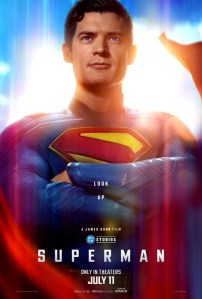 Has the world ever needed Superman more? I don’t know about you, but I could really use a symbol of good right now who represents the best of us, fighting for justice and protecting the innocent against the diabolical in power that seek to profit and prey upon the vulnerable. Vulture film critic Allison Wilmore has a fantastic headline for her review: “Superman [the movie] isn’t trying to be political. We just have real-life super villains now.” James Gunn, the quirky filmmaker who made us fall in love with a raccoon and a tree in the Guardians of the Galaxy trilogy, ascended to be head of DC movies in 2022, and he eyed reigniting Superman as the top priority, selecting himself as writer and director. It’s a lot of pressure to rebuild the DC movie brand by yourself, as there are only two other movies with scheduled release dates currently. This movie could make or break the fledgling DC Universe (DCU) rebuild soon after the smoking demise of the DC Extended Universe (2013-2023), informally dubbed the Snyderverse. Fortunately, Gunn’s take on the boy in blue is a reminder why this character has lasted so long and why the world still needs a symbol of hope.
Superman (David Corenswet) a.k.a. Clark Kent, has been a defender of Metropolis for three years now. He’s romantically involved with ace reporter Lois Lane (Rachel Bosnahan), who knows his secret identity but still chides Clark on somehow getting all those “exclusive interviews” with Superman. He’s also been a thorn in billionaire industrialist Lex Luthor’s (Nicholas Hoult) side and become an obsession of his. The world is still debating Superman’s unexpected intervention, thwarting a powerful military from invading its neighbor’s sovereign border (very reminiscent of Russian aggression). The U.S. government needs actionable proof that Superman is a threat, and Lex is determined to eliminate the alien for good.
 Amazingly, this movie feels like the second in a series rather than a reboot kickoff. From the opening text, Gunn drops us into this world already in progress. We’re skipping over the origin story, the character introductions, and all the table-setting that comprises many first films in franchises. It’s usually that second film that really takes advantage of the setup and patience of the first movie, expanding the world and deepening the character relationships and conflicts. Gunn has mercifully skipped over all that and gotten us right to the good stuff. The opening minutes of the movie drop us into a super-powered battle with the declaration that this is the first time our Superman has lost, and that beginning follows the most powerful alien on Earth having to patch up his injuries. I think that’s a very intriguing first impression, but I’ll detail more of that in a later paragraph. The world that Gunn establishes already feels well underway but the story is still accessible and the supporting characters have meaning within this world. This is a world that has been used to super heroes, a.k.a. metahumans, for some time, so when Superman finally dons his red underwear it’s not a complete shocker. This is not necessarily a reality where one super-charged character has reconfigured mankind’s entire sense of identity. The world is accustomed and adapted to extraordinary figures and monsters. This is where the Justice Gang comes in (Green Lantern, Hawkgirl, and Mr. Terrific). They’re the corporate supes, the ones called in to sign autographs, smile for pictures, and save the day for good P.R. Perhaps that’s too flippant, but the trio of established heroes doesn’t feel the same call to activism like Superman. It’s hard to fully articulate, so bear with me dear reader, but Gunn’s Superman already feels fully established, with the figure known, his relationship with Lois already in play, and Lex having already put nefarious time, research, and lots of money into combating this super obstacle with his own lethal experiments. With Gunn, there’s no time to waste. It’s already fully formed from his imagination, and the parts have their reasoning and meaning, making the whole much more satisfying.
Another way to differentiate this Superman is less from his strength than his vulnerabilities. This is a character long regarded as overly powerful, too indestructible and therefore lacking realtability. Well with Gunn’s version, here is a Superman that gets beat up. A lot. Ben Affleck’s Batman pointedly asked Henry Cavill’s Supes, “Do you bleed?” Gunn has answered in the affirmative. Much like Matt Reeves’ 2022 Batman, we get a work-in-progress superhero that is still feeling out how to best be a superhero. It’s a version that takes lots of lumps and Gunn finds interesting ways to test Superman’s limits, both emotionally and physically. The introduction of nanites into orifices certainly provides nods to Gunn’s body horror roots. While this is a Superman that gets knocked around quite a bit, his biggest vulnerability is his doubt. He’s simply trying to do good and save lives regardless of the political ramifications, but the world and its people, and especially their fears and paranoia of an Other, are more complicated. Superman explains he intervened in an international border war for the simple reason of saving lives. When Lois pushes him in a practice on-the-record interview, during one of the better scenes, about his decision-making, thinking through the consequences, consulting with world leaders and the like, he gets flustered and says there wasn’t time. All he wanted to do was save lives that would have been lost, so why is the rest of the world having a hard time with that? Over the course of those two hours and change, we watch this Superman battle through his self-doubts in a very real and compelling way that I don’t feel like any other Superman movie has better demonstrated. This is a world already rife with heroes, but is it better with a Superman? Is his existence a net positive?
 Gunn truly understands the character in a way that Zack Snyder never did. With Man of Steel and the subsequent film appearances, we were given a Superman that didn’t really want to be Superman. He was an overburdened superior being tasked with serving as mankind’s savior, and came across as annoyed. That version of Pa Kent famously told his super son that it might have been best if Clark had just let a bus full of kids die to keep his secret. Thanks for the life lesson, dad, and oh, by the way, your sacrifice was ultimately meaningless when your entire worldview was proven wrong by the end of Man of Steel. Regardless, here is a Superman that is unabashedly sincere and even a little corny. That’s who this character is, a do-gooder wanting to inspire others and wanting to save all life, even the villains, even the wildlife (my theater took special note when Superman saved a squirrel from being crushed). Snyder’s Superman was part of an entire Metropolis 9/11 of horrible collateral damage disaster porn. Gunn’s Superman works hard to make sure the giant kaiju monster, when teetering over, doesn’t fall on any building to protect the people inside. This is also a Superman that feels compelled to be a hero, to do better with his super gifts, and to keep trying even when he fails, that there can be dignity in losing a fight but continuing on because you know that fight is worth it. The depiction of Superman/Clark makes him feel much more a character worth closer examination. He’s not a detached god feeling above these petty mortals always needing saving. The real super power is his empathy and desire to help others, and that may sound corny, but Superman is too, and that’s completely fine in a world that would be better if we had more Supermans and fewer wannabe super villains.
The big question for me was whether Gunn could adapt his cheeky, irony-rich goofball sensibilities from the Guardians movies and make a Superman movie that was earnest and restrained. He has, and let this be a lesson that Gunn does not disappoint when it comes to superhero projects. There are still unmistakable elements of Gunn’s humor and style, like the ironic distance from action serving as an extended joke while characters discuss an unrelated topic, the bouncy and specific needle-drops that cue extended fight or action sequences, and of course the quippy sense of humor. I don’t agree with some of the early reviews I’ve come across that accuse Gunn of undercutting his drama with too many jokes. That is exactly why I was afraid that Gunn would be too insecure with straight drama and earnestness that he would have to rely upon an awkwardly squeezed-in ironic joke to, in his mind, balance the tone. There are jokes, some of them wild and unexpected, but this is most certainly not a movie in the same tonal space as anything Gunn has done before either as a director or a screenwriter. I did not feel that the comedy ever undercut the stakes or the sincerity of the scenes and the movie as a whole. Gunn has shown he can re-calibrate his style and comedic voice while at the same time still making things his own without copious slow-motion. The action is refreshingly staged to be immersive, with few cuts and wide camera swings in order to present everything on the screen in an easily oriented field of vision.
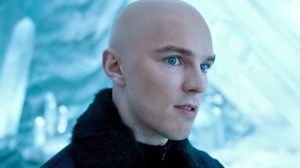
 Corenswet (Pearl, Twisters) has some big tights to fill, as I would argue while there have been iffy-to-bad Superman movies there hasn’t been a bad Superman. Obviously the one that all others are defined by is Christopher Reeve who was the greatest special effect the original movie had (I know the flying sequences were groundbreaking for their time, but they play out so cheesy and dated, complete with sudden Margot Kidder poetic resuscitation). Watching him switch from suave hero to clumsy Earthling in a split-second was the best. Corenswet certainly looks the part, clean-cut All-American looks, even though he’s British. He really channels the character’s big heart with his struggle to be accepted, by the public, by the media, by Lois, by even his enemies. He’s got the presence to fill out that suit but the emphasis is not on the contours of his abs but on the unfailing dedication and goodness of a character trying to do right. He won me over early, and it doesn’t hurt hat he has terrific chemistry with Brosnahan, who has been readying herself for this part for years with The Fabulous Mrs. Maisel. She’s great too. Hoult (Nosferatu) channels his smarm perfectly as a very punchable Lex who might make you think about a certain DOGE-master and his team of flunkies wreaking havoc on the rest of the country through unchecked hubris. I loved his pettiness and thinly-veiled vanity, like during an approaching apocalyptic cataclysm and he says to screw the people of Metropolis. “They chose him, let them suffer.” It sounds a lot like, “Your state voted against me, so you won’t get immediate emergency assistance.” You will cheer hard for Lex’s defeat, even more so when his plan involves literal extra-judicial forever confinement.
However, the real brreak-out star of the movie will most certainly be Krypto, the adorably jumpy super dog. Every time this pooch makes an appearance it is welcomed and he’s utilized as more than just easy comic relief. I expect a sharp uptick in the number of good boys named “Krypto” afterwards.
 James Gunn has alleviated all of my fears about him tackling the Man of Steel, and he’s created a Superman that soars above the superhero field. It’s so vibrant and funny and accessible to anyone regardless of their prior feelings or understanding of Superman. It’s also a clear-cut example of what a Superman movie can and should be, sincere and bright and, yes, a little bit corny too. We need this character, and we especially need film artists that know how to craft engaging stories with this character who’s existed for almost 90 years. There’s an inherent lasting power to Superman, and it’s his sheer goodness as an outsider, a feared alien, who has all the powers in the world but just wants to help others. Many have long viewed Superman as boring, a Boy Scout in a world that has grown too morally murky to maintain such a morally unwavering figure of truth, justice, and the American way (what does that last part even mean any more in the bleak environment of 2025?). Gunn has shown us how necessary the character can be, a balm to our troubled times, and the reality that do-gooder figures can be inspirational and aspirational no matter the circumstances. He’s made a Superman movie with an intriguing, lived-in world, one that I now believe can easily support a fuller universe of stories and side characters. He’s also made what I consider the best Superman movie to exist yet (apologies to the nostalgia of the fans of the Richard Donner/Christopher Reeve originals). I have some minor quibbles, like how Lois fades into the background for the second half, but they are only quibbles. This movie was exactly what I needed. I’m sure there are millions of others yearning for the same. Superman is proof that the DC film universe might actually have the perfect person in charge of charting their cross-franchise courses. Kneel before Gunn.
Nate’s Grade: A-
Share this:

The Old Guard 2 (2025)
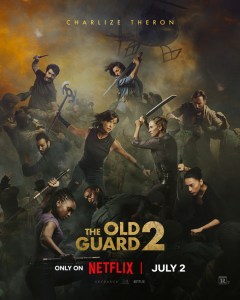
I wasn’t a big fan of the 2020 immortal action movie The Old Guard, but apparently it became one of Netflix’s most viewed movies, so here we are five years later with a sequel about the ancient conspiracy of warring immortals co-starring Chiwetel Ejiofor (not to be confused with Infinite, which is about an ancient conspiracy of warring immortals who are reincarnated into new bodies co-starring Chiwetel Ejiofor). I found the action and the general world-building to be underwhelming, but Old Guard 2 makes The Old Guard look like Michael Bay in comparison. There are two key developments in this sequel. Uma Thurman plays the first immortal and she wants to destroy the world or whatever. The second is that anyone injured by our newest immortal, Nile (Kiki Layne), loses their immortality. The rules of this universe get awfully hazy. I’m taking this directly from the film’s Wikipedia summary: “Additionally, anyone who has lost their immortality can regain their power by another wounded immortal who can transfer their power to the host they choose.” Still following? So we have one person who can make immortals mortal, but any mortal immortal can also choose to have their absent immortality bequeathed to a mortal immortal of their choice, reasserting their immortality. Okay. The confusing rules would be mitigated if we found any of the characters compelling. The sequel does bring back Andy’s (Charlize Theron) ex-beloved Quynh (Veronica Ngô) who was locked into an iron maiden coffin and dumped overseas. The established rules had immortals reawaken from death, so this poor woman would keep waking back up again only to drown instantly and repeat the horrifying process again. Let’s do the math here. On average it takes about two minutes to drown (FYI, I typed into Google “how long does it take to drown,” and now my computer is worried about my mental health). Let’s cut that in half from the extra water pressure filling her lungs. So let’s say she dies every minute. That means she dies 1440 times a day. Over the course of 500 years she has died 262,800,000 times. Rescuing this woman should be a recognition not just of her relentless suffering but the fact that her mind should be shot. Having to endure that horror would break anyone, and Andy coming to terms with her inability to heal someone who cannot die but is also unable to continue life any longer woukd be interesting. That’s my preferred sequel. Instead with The Old Guard 2 we get a bunch of lackluster fights and convoluted lore, and it doesn’t even offer a conclusion, more an implied hand-off to a third movie where the characters may indeed be able to finish what they’ve started. It’s time to let these mortal immortals just die in peace.
Nate’s Grade: C-
Share this:

Drop (2025)
 It’s a bad sign when you forget seeing a movie mere weeks later, and thus is my state with the contained thriller Drop, a movie that never seems to take full advantage of its modern drawing room mystery-thriller premise. Director Christopher Landon (Freaky, Happy Death Day) finds all manner of visual artifice to make the best of this story of one woman’s worst fears re-entering the dating scene. Violet (Meghann Fahy) attends a first date in one of those high-rise skyscraper restaurants, and during the date she’s harassed digitally by an unseen stalker who is sending hostile text messages and increasingly intense demands. Who in the restaurant could be the culprit, and why? Also, can she salvage this first date with this cute guy becoming more alarmed as the night progresses? The fun of the scenario rests in how our protagonist can keep ahead of the suspicion of her date while also trying to stay ahead of the suspicions of her antagonist as she deduces who in the restaurant might be her creep. It’s entertaining enough but the problem lies in the escalation of demands from the antagonist, including murder, and the movie doesn’t have the interest or stomach to go wilder or more extreme. As a result, Drop feels like an under-developed nosy neighbor movie, trying to suss out details with an informal investigation that never really takes off. Landon does his best to jazz up the proceedings with very intrusive visual designs of the ominous texts and messages, filling the screen with literal threats. It reminded me of 2014’s Non-Stop where Liam Neeson was on an airplane and being harassed by an unknown caller who plots to take down the plane. That premise had elevated stakes because of its location and urgency. This movie is about a woman on a date. You can see there’s a bit of a difference in their execution and aims. I can’t work up too many negative criticisms about Drop because it sets out to achieve what it promised, it’s just by the time we get into the third act action heroics away from that central setting, you may be checking your phone too, having already checked out.
Nate’s Grade: C
Share this:

Final Destination: Bloodlines (2025)
 A funny thing happens once you conclude a Final Destination movie. You start to see the world differently. After I finished watching Bloodlines, the first new film in the franchise since 2011, I found myself elevated by creative paranoia. I was holding onto an empty aluminum can and thought, “What if placing this on the counter will create a chain of events that leads to disaster?” Then I was washing our kitchen sink and looking at how close other electrical devices were to the faucet spray. Then I began thinking of all the dog toys that could position themselves underfoot and cause me to hit my head against our tile, perhaps then having that aluminum can fall on my head as a finishing move. If you’ve ever seen one of these movies, they are games of misdirection and dramatic irony, anxiously anticipating that any little item will contribute to a Rube Goldberg-esque wave of death. In many ways, the franchise brings an outlandish fear home and makes you just as crazy as the doomed characters. Final Destination: Bloodlines is a return to form for a franchise that never should have been on the brink of death. As long as people can come up with clever deaths and misdirects, there should be sequels.
Having watched and enjoyed every Final Destination movie, I will readily admit that while each of the five previous entries can be gory good fun they cannot be described as great movies, and that’s okay. They are delivery systems for amusement and absurd deaths, asking the audience to try and guess the ridiculous series of events that will contribute to the demise of whomever fills the screen. It’s a reliable formula that can be replicated again and again, where death itself is the main villain, or star, and where the appeal of the franchise is the winking game the movies are knowingly playing with the viewers. We’re here for the over-the-top machinations and dark humor of trying to guess what combination will succeed. The later sequels were populated with repellent or powerfully bland characters that we happily awaited their fateful demise, but the deaths were also getting stale, becoming more mean-spirited or more flimsier in design, giving to obvious obliteration options and then cheap shock alternative as mini-twists. If you’re going to have a game, it’s better to play by your rules. That’s where things began to go sour with me, but that doesn’t mean good writers who fully understand this franchise cannot revive it. I just thought it would have taken less time considering the inherent rebooting potential at play.
 This brings us to Bloodlines, by far the most ambitious of all Final Destination movies. It attempts to really explore the mythology and history of the franchise while also grounding the characters and their drama in a surprisingly emotionally resonant manner. I’m not saying anyone is going to confuse this movie with, say, Sophie’s Choice, but the filmmakers have put in the work to make us actually care about the doomed characters and their fledgling efforts for survival. Usually these movies follow a group of strangers along with a small friend group that becomes our core. This is the first movie where all of the characters in peril are family members across generations. Watching your mother or aunt or brother die horribly before your eyes and knowing that someone else in your family is next is just more impactful than if the relationships were based on high school friendships, work colleagues, or strangers. That kind of trauma just hits differently. Also, the ages of the family dynamic present a clear direction for the path that death is planning to take, going from oldest to youngest, although death seems to put this chronological pecking order on hold to wipe out a line of siblings. Excuse the math word problem setup of what will follow. Let’s say you have Oldest Child and Youngest Child and both have two kids but Oldest Child’s kids were both born after Youngest Child’s kids. Rather than killing the descendants in descending chronological order, death would wipe out Oldest Child’s offspring first even though they are younger than the children of Younger Child. As always, it appears death is a stickler with its rules.
The opening sequence is an all-timer for the franchise, and because it sets everything in motion I don’t feel like discussing it is particularly spoiler-y, but you may decide otherwise and can skip this paragraph. According to the new mythos, this is the event that sets the entire Final Destination universe into effect. It’s a spectacular disaster set in a high-rise restaurant 400 feet in the air atop one of those Sky Needle skyscrapers. The entire sequence is brilliantly executed and edited with extremely heightened periods of dread. These first ten minutes introduce us to a young romantic couple and get us invested enough to feel bad about what’s to eventually come. They also set up the stakes as well as the twisted gallows humor to follow. I loved tracing the different elements at play, from the cracking glass dance floor, to a loose chandelier shard (if one little chandelier piece could cause cracks then this must be the weakest floor in history), to a loose penny causing mayhem all because of a snotty little brat, the real villain of the franchise. The cross-cutting between the different incidents as things ratchet up is wonderful, and the clever cuts to the creme brule being broken as that glass dance floor is cracking is just superb. This is more than just a sequence in vertigo terror. There’s a gas explosion, a falling elevator, a Titanic-esque splitting of the restaurant, and the use of a grand piano as a slapstick coup de grace that left me cheering. This opener lets you know you’re in bloody good hands with Bloodlines and it also begins to emotionally ground the film too.
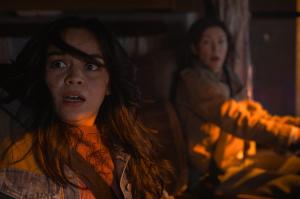 This is the most self-aware of the Final Destination movies but I think it works considering it’s the sixth entry, so having characters essentially be voices for the audience’s frantic clue-guessing is appropriate. One of the better sequences in the movie is when our protagonist, Stefanie (Kaitlyn Santa Juana), is walking through her neighborhood and trying to absently predict the everyday dangers on a garbage day. It begins as absurd and then it becomes even more absurd when everything she predicted lines up, though not as we might have expected. The whole thing plays out like a demented and extended joke setup with death as the punchline. Thankfully, it doesn’t take long for the family to get on board with this crazy idea that death is after them, so the second half of the movie is more their scrambling to plot how to cheat death established by the previous movies by either dying and being brought back or by taking a life and getting that person’s remaining time. There’s a gasp-inducing joke where characters, after discussing these rules, glance at a maternity ward and consider, “Could we actually kill a baby?” before shaking away the dark idea and going back to their original plan. It’s self-aware without being overly meta, working through the rules and expectations but without an ironic detachment that can cheapen the enjoyment of the drama and thrills. That’s important because this might be the Final Destination movie with the lowest amount of deaths after the big opener. Part of that is because we’re setting the story decades after that establishing catastrophe, where death has been busy chopping away the survivors before coming back around to our core family (there’s got to be a mathematical formula here how long it took death to catch up). You’ll have to wait longer for some kills, and a few are just haphazardly thrown together, but there’s still plenty of dreadful squirm and rueful chuckles to be had.
Considering its runaway success at the box-office, out-grossing all of the previous Final Destination movies, I doubt we’ll have to wait anywhere close to another 14 years for more franchise mayhem. These movies are perfect vehicles for twisted entertainment when they have the right people calibrating them. They may not always be great but they can be consistently great fun, and under the right mindset, exactly what you need to wash away the blahs and laugh at the absurdity of death and fate. It will also make you re-examine your home decorative plan for your own pre-emptive protection. Feng shui or die, ya’ll.
Nate’s Grade: B
Share this:

Until Dawn (2025)

I’m going to do something I don’t know if I’ve ever really done before in my twenty-five-plus years of toil as a film critic. I’m going to devote almost the entirety of this review to try and make sense of the ending and its cascading choices that confound and astound me. I’ll present some spoiler-free analysis beforehand but, dear reader, this is going to be a spoiler-heavy review because, quite simply, it’s all I want to talk about as it concerns Until Dawn. The horror movie is an adaptation of a 2014 PlayStation video game that itself was fashioned like a ten-hour horror movie. It was a love letter to the horror genre and your goal was to keep as many of the characters alive as you could through quick-time events and choices that could have lingering and unexpected consequences later in the game. It was, above all else, fun, and news that Hollywood was going to turn it into a movie made a degree of sense. After all, it was practically an interactive movie to begin with. Then news matriculated that they weren’t really adapting the game and instead were making something new and different, so why call it Until Dawn? Beyond the cash-grab from the use of a familiar name, if you’re going to be Until Dawn in name only, why not just be that original horror idea and let someone else actually adapt Until Dawn as it was? You’re not going to get another crack at this title, so why is the first attempt one that could be done without the game existing? Regardless, the movie is a bad adaptation of the game and a bad use of dwindling brain cells.
Five teenagers make a trip to search of Clover’s (Ella Rubin) missing older sister. They trace her last recording to a gas station just outside the mining town of Gore County. The gas station attendant (Peter Stormare) lets these curious kids know that weird things happen in town, and sure enough the weird stranger is right. The teens take refuge in a visitor center with a guestbook and a peculiar hourglass time piece on the wall. Soon enough they’re beset with masked killers and monsters and each of the five friends is slaughtered. Then they wake up back in the visitor center with the hourglass starting over. They have to learn about this mysterious location to try and stay alive all the way… until dawn!

Before the heavy spoilers begin, I’ll provide a few accolades to what the movie does well. Director David F. Sandberg (Shazam!, Lights Out) has a clear affinity for the horror genre and can summon some pretty effective and skin-crawling imagery. I actually like the premise of a horror time loop, though this was also covered with the tongue-in-cheek genre tweak that was 2017’s Happy Death Day. However, that movie primarily dealt with a slasher scenario whereas Until Dawn can mix and match different genres, which makes each new iteration feel like a blank slate to explore. I loved the shortest loop, where the characters hold up in a bathroom and gruesomely discover what happens if you drink the local water. It’s the best development in the movie and one I’m glad the script revisits from time to time. With most time loop movies, once the characters adjust to the reality that death is not final, they get a little more loose with their physical well-being. I enjoyed some of the turns the characters make with the understanding that they’ll come back again. The visual nods and connections to the game are there without feeling too gimmicky. Plus, having Stormare come back to play a variation on his nattering psychiatric weirdo from the game is exactly what the movie adaptation needs. Stormare is on his own unique wavelength.
Now, the madness. Abandon all hope ye who enter the spoiler section of this review.
I don’t understand this movie. At all. I read over its Wikipedia summary and watched a few of those YouTube explanation videos to see if it was just me and I missed important pieces of information that would connect the various elements together. It’s not me, folks. These story elements don’t connect. They don’t form a coherent whole. I don’t need a reason why time loop scenarios happen; they never explained it with the genre grandaddy Groundhog Day, and if it’s good enough for Groundhog Day, it’s good enough for your movie. The problem is when they try to explain and it actively makes things worse, because now you begin to question everything. I liken it to 2019’s Us, a movie with plenty of outlandish story elements including the existence of a same-age evil twin for every person but living in a subterranean mimicry of surface life. I would have happily accepted that as-is, but then the movie tries to find a real explanation for where these people came from and why, and now the illusion of ignorance is shattered. Now all those pesky questions start flooding the mind that could have before been kept at bay.

Let’s examine the explanations for the two primary mysteries: 1) why there are monsters, and 2) why there is a time loop trap. Again, both of which didn’t even need explanations but here we go.
The mythology of the game gets ported over in starts and stops, but the movie keeps the setting of a mining town that had a tragic collapse that devastated the town. In this version, the majority of the town fell into a sinkhole below the earth. Do we get to explore these exciting and creepy locations? Nope. One of the town’s psychiatrists (Stormare) is still alive and continuing his mad experiments for… reasons. Like the game, there is a curse wherein if you resort to cannibalism you will become a spooky wendigo monster, so the creatures are a result of the former townspeople and other past residents from the previous time loops. Fine. I can accept that. However, late in the movie, our creepy psych doc clarifies for Clover that things aren’t just all in her head, a nod to the original game. Except that ending would have made more sense. The new ending says that Clover’s fears are responsible for manifesting the different antagonistic monsters and killers. Okay, so we’re externalizing the internal, fine, but why her? Why not any of the other friends? Does this mean every previous group was also responsible for manifesting their own tormentors based upon personal psychological fears? Why are we including this roulette wheel of terrors on top of the constant of the wendigo creatures? How is this even happening because the movie gives no scant indication? Do the deadly rules get reset with each new group? In our story, the characters can’t drink the water, but what about other groups? If every group is manifesting the same avatars of fear then why not just adopt them as stable rules? Why is this one man staying behind to catalogue the results? He’s mortal so he just lives in the sinkhole or works at the gas station, waiting for wayward teens to stumble into his next experimental group? Who is keeping the lights on in this visitor center? What does this guy do during the “off season” when there are no looky-loos? Does he have to feed the existing wendigos like some kind of demented zoo? What is to be gained from all these experiments? Is he planning on publishing his research later? What is this guy’s regular life like?

Then there’s the time loop explanation which is -wait for it- nothing. Absolutely nothing. Why are characters getting second and third and thirteenth chances to survive until dawn? Why is it thirteen? The movie doesn’t even have the time to demonstrate thirteen loops, instead jumping from like the fourth straight to the last one through the annoying use of, “Oh, let’s watch these film clips we took that we don’t remember.” If you didn’t have the interest or time for thirteen loops, why even make it thirteen? Why does the number matter if they inevitably turn into wendigos from desperate cannibalism? You would think the loops should be infinite to guarantee this result. Why would the other victims bother writing their name in the guestbook every loop? It establishes a timeline of sorts, but if writing can last in this guestbook, why doesn’t anyone write anything other than their name over and over? Detailing your experiences and lessons learned as a living record might be helpful to future loopers. Also, what obligations do these people feel about signing their names in the guestbook? Who accepts getting murdered over ten times but is still being a stickler for signing their name, and for what? Are they getting some little feeling of superiority that they were able to scribble their name thirteen times? Where did the hourglass come from? It definitely looks like it was installed with purpose, so did these just materialize? Why do the timeloops even consider having a mechanism for letting participants win and escape? What about the other quirks like how the weather is affected by the bad vibes of this place? Even the rain knows better.
So, in summation, the time loops and manifesting monsters are unrelated to one another and there is no added context provided for like some ancient curse or witchy magic or anything to cause this mess. There is one nefarious wacko doctor who just hangs around for kicks, though why he is immune from the loops or the larger effects of the manifested monsters is beyond me. Is he recruiting the monsters like some sort of work foreman, telling this gnarly creature, “Need ya to pull a double today, Fangy.” It just all feels like scary elements working in parallel and occasionally drifting into one another’s orbit, but there’s no fitting or acceptable explanation, so why does the movie even try to present one in the first place? I’m stunned at how Until Dawn just completely unravels into incoherent madness by the conclusion, which sets up that there might be a larger universe of these doctors overseeing experiments. At that point, you might as well be watching The Cabin in the Woods. If you have no allegiance or familiarity with the video game, you might find enough to amuse you, at least for fleeting moments. I was open-minded to what an Until Dawn-in-name-only adaptation could do with a time loop gimmick, but the final results feel like an uneven grab-bag of imagery and ideas and directions that go nowhere.
Nate’s Grade: C-
Share this:

Black Bag (2025)
 It’s Steven Soderbergh’s second movie of 2025, also with screenwriting vet David Koepp, and this time they’re tackling the spy thriller, centering on a marriage between two spies. Michael Fassbender and Cate Blanchett play a couple who both have clandestine lives, and when either one ventures into sharing sensitive details, they utter the code “black bag” as a conversation-ender. There’s a mole in the agency and Fassbender is tasked with uncovering the identity of the culprit, but he worries this investigation might ultimately point toward his own wife and then what’s a man to do? Black Bag is one of those more realistic, exacting spy thrillers, which means it’s churning at a very slow pace with minimal stakes before things ratchet up late. The parallels between trust in a marriage and trust in a spy agency are there but never explicitly explored for thematic richness. You know where the ultimate goal is, finding the mole, but every scene plays out more like a couples drama of squabbling, unhappy upper class winos with secrets and grudges. I had to occasionally remind myself, “Oh yeah, these are spies.” I never fully got on board the wavelength of this movie, finding its detached sexy vibe to be more glossy and meandering. The characters just weren’t that interesting to me. I kept waiting for things to pick up, and even when characters are murdered the tension level still feels unchanged. It’s all a little too heavily submerged under the icy tranquil surface for me. Black Bag is a sedate spy thriller presented as sophisticated but comes across a tad too detached and ultimately tedious.
Nate’s Grade: C+
Share this:

Companion (2025)

Confession: several years ago, my good friend and I co-wrote a movie for the Chinese film market that had several similarities with Companion. It was about a robot designed to be everything her owner desires turning on her owner. I’ll freely admit: Companion is better. While the movie doesn’t reveal that its robotic companion, Iris (Sophie Thatcher), is indeed made of circuits and screws until twenty minutes in, there are so many better twists and turns that come later. It begins with something relatively standard, a girlfriend nervous to meet the friends of her boyfriend Josh (Jack Quaid) during a lake house retreat. The film takes a dark turn that forces the characters to question how far they would be willing to go to cover up a crime as well as their own culpability. The second half of the movie becomes a very engaging and twisty cat-and-mouse game with Iris trying to escape from pursuers. Writer/director Drew Hancock (My Dead Ex) had put plenty of thought into the story mechanics of his thriller set pieces, connecting them to character decisions and the desperation of trying to outwit one another. The entire movie is elevated and then some by the terrific lead performance from Thatcher (Heretic, Yellowjackets) who becomes our emotional anchor and Final Girl worthy of rooting for. Thatcher can be heartbreaking one minute, hilariously deadpan the next, like when she’s stuck speaking German, and a tremendous source of empathy as she fights for her survival. Upon my first watch, I felt there might be too many twists and turns right up to the very end, but having re-watched Companion, I appreciate how much Hancock really thinks about move-countermove plotting, making sure that we experience many avenues from this premise. It’s a vicious take-down of viciously exploitative control freaks, with some strong satirical dark humor elbowing you in the ribs. It very much reminded me of 2019’s Ready or Not and would pair well as a double-feature of feminine empowerment amidst horror manhunts. While it might not have much on its mind as far as larger social commentary, there’s enough cooking here to keep me entertained, laughing, wincing, with my eyes glued to the screen to see where exactly it could go next. That’s a rarity. Companion is built different.
Nate’s Grade: A-
Share this:

Wolf Man (2025)
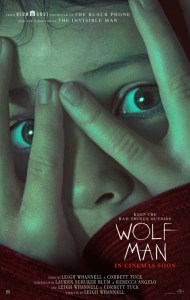 I had high hopes for writer/director Leigh Whannell’s second take on the classic monsters after how thrilling and satisfying his take on the Invisible Man was in the early months of 2020. Werewolves have served as a fertile metaphorical ground for genre storytelling to cover such varied topics like coming of age, self-actualization, and addiction. Considering Whannell was able to use an invisible man to explore toxic masculinity and gaslighting, without losing sight of a monstrously entertaining movie, I was hoping for repeated success. Wolf Man is ostensibly about inherited curses and the relationships between fathers and children, but it’s really about dealing with flaring tempers and whether or not our shortcomings are a result of our genetic inheritance. It’s also about a family trapped in a cabin helplessly watching their father/husband transform into a dangerous beast. I suppose there’s something here about the cycles of trauma and abuse, anger as a sickness, but the problem with Whannell’s Wolf Man is that it all feels like an incomplete beginning. There are definite identifiable themes here, and a scenario that would lend to slow-building dread amid losing control over one’s sanity to become a monster against their loved ones. I just kept waiting for something more. The movie runs out of steam shockingly once it strands its family in the cabin. We’re treated to many scenes of Christopher Abbott, as the beleaguered father, blankly staring and then seeing his vision where people are highlighted with neon outlines. It’s a neat visual but what does it mean? I was waiting for more development, more character work, more culminating of themes, more… anything. It’s a lot of sitting around, like this promising genre movie had been hijacked by, like, some self-sabotaging arty Godard-obsessed filmmaker trying to Say Something with all the protracted scenes, pained silences, and repetition without revelation. It’s a surprisingly boring movie and, I repeat, it’s a werewolf movie. The makeup effects also make our titular monster look more like a shaved wolf, or a goblin rather than a lupine-centric creature of the night. I don’t even think there was a single shot of a full moon in the whole movie. Regardless, Wolf Man is a disappointing a d dull monster movie that’s too shaggy for its own good.
Nate’s Grade: C
Share this:

G20 (2025)
 G20 is a curious movie. There are plenty of these kinds of movies to be found dotting the landscape of straight-to-DVD action vehicles starring the likes of, say, Casper Van Dien or Dolph Lungren. Junky action movies can be their own pleasure, guilty or otherwise. What I wouldn’t expect was watching one of these kinds of movies with an actress the caliber of Viola Davis, four-time Academy Award nominee. The movie portrays Davis as America’s president (if only …sigh…) attending the annual G20 global convention of world leaders when it’s taken over by terrorists. The lead terrorist (Antony Starr, The Boys) has a master plan to appeal to the citizens of the world to divest their money from banks and invest entirely in crypto currency. That’s right, dear reader, the bad guy has a crypto scheme. I suppose the movie is meant to emulate a Die Hard-in-a formula, or more accurately an Air Force One-in-a formula since that movie also followed a cornered president acting as an avenging lone wolf. The setup is fine, it’s the execution that is shoddy and poorly developed, with the limitations of the budget that was still obviously so much bigger than almost any other direct-to-DVD action thriller. The hide-and-seek setup where we watch a character outfox and pick off the bad guys is a winning scenario, but G20 doesn’t bother to derive engaging and surprising set pieces. Each scene of characters running, fighting, or exchanging gunfire is much like the last. The president even has a pair of tech-savvy kids, and a useless husband (sorry Anthony Anderson), who are lackluster additions, serving as tools to be threatened. If you had cut out Davis and replaced her with, say, Antony Starr, this movie wouldn’t be much different from the tide of mediocre action-thrillers meant to pass the time. Davis is a credited producer on this movie, which means she is the star because she wanted to be an action hero. That’s an admirable goal but an actress of her ability shouldn’t have settled for interchangeable genre dreck.
Nate’s Grade: C
Share this:

Soul to Squeeze (2025)

It’s been some time since I’ve reviewed an Ohio-made indie (having a baby and adjusting to a new job will do that). My goal has always been to discover the rare diamonds in the rough and to provide professional film criticism to these smaller-scale movies trying to make some noise. I’ve been doing this for a few years now and I’ll admit I haven’t found that many diamonds, so to speak. My wife has long since stopped watching these movies with me and declared me a masochist for continuing this quest. What can I say, I’m still hopeful to discover what Ohio filmmakers can do when given a platform. One such filmmaker, who has since relocated from Ohio to the City of Angels, is W.M. Weikart. I reviewed his 2019 short film Pure O and we have several mutual friends. He asked me to review his next project, a feature-length movie shot with some Ohio-bred talent in front of and behind the camera, so I’m considering Soul to Squeeze as Ohio-indie-adjacent. It’s a trippy, beguiling experience, and it’s one that will prove befuddling to some but is an experience that gets better with every additional minute.
The story itself is relatively simple. Jacob (Michael Thomas Santos, CSI: Vegas) is a young coed who agrees to be the subject of a mysterious experiment. He lives in a house for days and experiences a series of bizarre auditory and visual hallucinations, picking at his mind, memories, and hidden trauma that he’s been trying to ignore for years. Or are they actually hallucinations after all? Can his mind survive?

These experimental/psychological triptych kinds of movies hinge on a few points of potential viewer engagement. First, the most obvious is simply being interesting and memorable in its weirdness. If you’re going for a crazy sensory experience, it helps if there’s actually something crazy worth watching. This was one of my biggest issues with the 2023 horror indie Skinamarink, a strange nightmare that mostly felt like the same ten boring images jumbled around for 80 very tedious minutes of dashed hopes. There’s only so much formless imagery I can watch without some larger connection, and if your movie is going to live or die based upon your outlandish nightmare imagery, then you better rise to the challenge. Skinamarink did not. Thankfully Soul to Squeeze has a larger agenda that reveals itself over the course of its 80-minute running time. We have a character trying to hide from some trauma he’d rather ignore, so we know this experience will force him to confront those feelings and, hopefully, find some way to process his intense emotions and come out the other side a better person. Or it will drive him completely mad. Either storytelling path offers intrinsic entertainment value. There’s purpose under the imagery so it’s not all abstract nonsense waiting for someone else to project meaning onto the disconnected pieces.
Now, it takes a little long to get going to begin to reveal that trauma and that connectivity. For the first forty minutes, weird things are going down without much in the way of a larger set of rules, which could have benefited the engagement, such as disturbing or confounding visions happening between certain hours of the day, allowing our protagonist time to anxiously dread their arrival. Or there could be an escalation in the intensity of the visions and their duration. There could also be the question over whether the visions are real or not, especially if they’re occurring after he’s forced to eat the provided food in the house. Perhaps he even tries to abstain from eating to then discover they still come like dreadful clockwork. Unraveling past residents of this experiment could also foretell what possible fates, both helpful and harmful, could await. Our protagonist could also try and escape as the visions get more personal and find he cannot escape. The character could be a little more active. Jacob seems very compliant for a wounded character undergoing psychological experimentation, which begs the question why he would continue with this treatment after it begins picking away at the secret he doesn’t want to face. There are other directions that the main character could have gone through while we waited for the larger thematic clarity to come into focus with the visions after 40-minutes of atmospheric noodling.

When you’re going for a more experimental narrative with heavy visual metaphors, it can be tricky to find a balance between arty and pretentious, or, to put it in other words, between David Lynch and student films. This balance is tipped toward the latter early, especially when I think a blue flower comes to life and is… a French woman… spouting platitudes before turning back into a flower. It’s stuff like that which can seem a little daft but without the intention of weird humor. In contrast, there’s a strange but amusing scene where our character comes across a sitting mermaid on display in a museum. She literally eats a pearl necklace from Jacob’s hands and then smiles mischievously as it reappears around her neck, now her own possession. There is a larger metaphorical connection here that’s revealed later, with the necklace having a connection to Jacob’s traumatic past and even the concept of the mermaid too. There’s a phone conversation that we get both sides of that ends up starting as one of the earliest points of confusion and agitation for Jacob and then, by its return, serves as an unexpected vehicle for our protagonist’s emotional growth and reflection. It’s a clever and rather satisfying creative boomerang.
Soul to Squeeze impressively masks its low-budget nature through creative choices and elevated technical craft. Weikart has a natural eye for visual composition and lighting especially, so there’s nary a moment where the movie isn’t at least appealing to the eyes. Having a director who can frame an engaging shot is a godsend when you’re primarily going to be stuck in a single location for 80 minutes. A smart and talented visual artist can really hide the limitations of a low budget well. This is also by far one of the best sounding low-budget indies I’ve heard. The sound mixing is impeccably professional and the score by Sonny Newman (Burn the Witch) is very pleasant and evocative and soothing when it wants to be. Sound design is one of the biggest areas that holds back so many micro-budget film productions, and it’s so refreshing to have a movie not only where sound has been given great attention but also incorporated into the presentation and experiences in meaningful and artistic ways. The visuals can be rather eye-catching, like when Jacob’s TV transforms into a multi-screen monster where eyeballs and a giant mouth take up residence on the various screens, and aided by a slick sound design, it all allows the sensory experience to be even more compelling and accessible. As the film progresses, the bigger picture comes into focus, which means more exposition is thrown at the viewer. Weikart and his team cleverly find ways to present the information through a series of sufficient images and sounds that imply plenty with minimal (some of the sound and picture arrangements can take on a certain true crime dramatic recreation feel). I don’t have a final budget number but it looks better than many indies I’ve seen with considerably higher budgets.

There is one very significant technical choice that I wish had been more essentially incorporated into the story of Soul to Squeeze. As its promotional materials declare, this is the “the first film ever to have a continuously changing aspect ratio throughout the entire film. It begins in a 4:3 aspect ratio and expands out to a 2.35:1 by the end.” For the layman, that means throughout the film the aspect ratio is changing from the old boxy TV standard to a wider and wider widescreen. Now, you could make an argument that this is meant to represent the progression of Jacob’s thinking, that his world is literally expanding, but if that’s the case it feels a little too metaphorical to land as an essential tool for this story to be told at its best. It’s kind of neat but ultimately feels more like a gimmick. Perhaps the nights could have been labeled sequentially, and with each additional night the aspect ratio alters, expanding the horizons. You could even make it a Wizard of Oz motif, with Jacob opening a door and coming out the other end with a different aspect ratio to communicate the transition to a new plane of thinking and reality. Without calling more attention to its changes, and without connecting it more deliberately with the onscreen action, it becomes only a slightly noticeable visual choice over time that may go ignored by most.
By design, Soul to Squeeze is meant to be mystifying and experimental, which will try some people’s patience if they don’t find the ensuing imagery and weirdness to be entertaining. I wish there was more of what I appreciated in the second half to be present in the first half, and I’ll freely admit that I might have missed some of those clues and connective tissue just due to the strange and abstract nature of the movie. I was never bored and often amused at the various ideas that animate the movie (a game show host narrating breakfast is quite surreal and hilarious). The movie looks good, sounds good, and moves along at a fitting pace. The biggest gripe I have with these kinds of movies is whether it will ever add up to anything or is every moment just another in a chain of interchangeable weirdness? With Soul to Squeeze, there is a connection to much of the imagery and hallucinations, so there is a larger design that coalesces. I think there are some specifics that would have potentially aided the overall experience, but adding specificity could deter the immersion and grasping for understanding desired from these kinds of movies. Soul to Squeeze might not be that quintessential diamond in the rough I’m in search of with these Ohio (and Ohio-adjacent) indies, but it’s still a professionally made, creatively engaging, and fairly entertaining curio that can surprise at a moment’s notice.
Nate’s Grade: B


 nathanzoebl
You must be logged in to post a comment.