Blog Archives
News of the World (2020)
 News of the World is an old-fashioned story, a Western and road movie, a grieving father taking a young girl under his wing, but with a slight modern polish thanks to the cinema verite style of director Paul Greengrass (The Bourne Supremacy, Captain Phillips). The handheld camerawork and close-ups create a different kind of mood for a genre defined by long takes of sterling vistas. Hanks plays Captain Kidd, a traveling performer in 1870 who would literally collect newspapers and read the news to the locals, providing a wider understanding of the wider world. Along the way he comes across a young German girl (Helena Zengel) who was raised by a Native American tribe (the same tribe killed her German family and adopted her). He is determined to take her to the last of her family 400 miles away and from there they encounter many dangers and detours. I feel like every big filmmaker at some point feels the need to make a Western, and now Greengrass has scratched that itch. The older genre is so mythic and filled with grandly romantic notions of the frontier. News of the World is more an old-fashioned Western, without much in the way of critique, and fairly episodic in plot, and Kidd and the kid travel from miniature set piece to set piece like little narrative cul-de-sacs rarely producing additional connections from their adventures. I hoped Greengrass would bring his docu-drama realism to deconstruct the American romanticism of the Wild West, pick apart at that myth-making and whitewashing, but the movie is more committed to being a safe, square, and traditional old movie. The little girl is less a character and more of a necessary plot device, something to drive this man to confront his grief and provide a purpose for him. I wish there was more to their dynamic but she could have just as easily been replaced with a dog. There is one shootout that serves as the highlight of the film and where Greengrass comes most alive with his sense of tension. I was expecting a bit more conflict or commentary given that Kidd is traveling post-Civil War Southwest and selecting what news each community wants to hear, tailoring to his audience and knowing everyone likes a good story during “these troubled times.” There’s one section where a local boss looks to take advantage of Kidd’s services by forcing him to read from the boss’ propaganda publication and Kidd turns the tables on him. It feels like an anecdote rather than a thesis statement. I kept waiting for more to arise with the characterization but was left disappointed, as much of the movie is kept at a surface-level of who these people are. Whether it’s victim, saint, marauder, or newsman, everyone is pretty much whom you assume on first impression. The movie’s staid pacing lingers. It’s two hours but it’s not in any sense of hurry. Part of this is because the screenplay, based upon a 2016 book by the same name, is entirely predictable. Even the revelations held until the very end for fitting tragic character back-stories can be sussed out. I watched News of the World and kept thinking, “What about this story got these people so excited?” I think it was Greengrass feeling that artistic itch to lend his stamp on the American Western (I was reminded of Ron Howard’s own itch, 2003’s The Missing) and yet it feels like Greengrass was holding back and just sublimated his style to the settled genre expectations. It’s not a bad movie by any means but it lacks anything exceptional to demand a viewing. It’s a perfectly fine movie with a handsome production, gorgeous setting, effective score, and sturdy acting, and when it’s over you’ll say, “Well, that was fine,” and then you’ll go on with your life.
Nate’s Grade: B-
Share this:

On the Rocks (2020)
 Sofia Coppola’s examination on the relationship between fathers and daughters feels like it would have been more entertaining had it gone for a more farcical tone. On the Rocks follows a struggling writer (Rashida Jones) who is questioning whether her husband (Marlon Wayans) is having an affair. Her partner in this makeshift investigation is her bigwig father (Bill Murray), a notorious Lothario whose own penchant for cheating and flirting with every woman has shaped his daughter’s perspective on relationships. If this is a comedy, I can’t tell you where the comedy parts are. The premise sounds rife with potential for hijinks and comedic mishaps trying to remain elusive. The father-daughter history is also ready for some combustible confrontations and perhaps some shades of earned empathy by the end. The problem is that the movie just sort of happens. It unfurls before your eyes, and those elements are there for the taking, but Coppola’s story never seems to really grab at any of them to build more sustained engagement. It feels like Coppola has taken a zany sitcom premise and adopted the tone of a somber indie exploring middle-class ennui. The amusement is under the oppressive force of melancholy. The dramatic substance also feels too dithering and without greater observation and exploration. Jones has some outstanding moments and Murray is at his best when he’s onscreen with her, his outwardly performative qualities shining light on a relative unspoken history that hangs over them. Even Marlon Wayans is good as the possibly philandering spouse. Really, the movie seems to be about the gnawing questions of doubt and suspicion and how quickly one can succumb to them. By the end, I don’t really know what Coppola was going for here. It’s a nice enough film, it holds your interest, and it has a few surprises, though I don’t know if they amount to much. On the Rocks feels like an early draft of a much better or much funnier movie.
Nate’s Grade: B-
Share this:

Locked Down (2021)
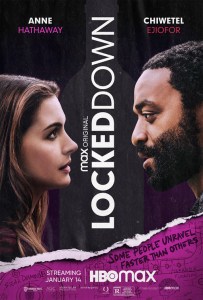 I’m already starting to dread the inevitable onslaught of movies and fictional narratives tackling the COVID crisis, and I don’t know if that’s ever going to be truly inviting for me. After the near year of pandemic fatigue, I can’t see myself wanting to relive the experience through my media. Naturally, this is partially because of how fresh everything is. Years down the road I may hold a different opinion and find COVID-19 stories more engaging. I’m sure there will be worthy ones to explore with the best storytellers that movies and television can afford. Right now, I’m not looking forward to the rom-coms about couples being forced together, or forced apart, and I’m not looking forward to the zombie movies that seem all too obvious in commentary. It is with this context that I watched the new 2021 movie Locked Down with wary curiosity. It was filmed during the quarantine in London over 18 days. It stars big actors, has a director and writer who have worked on highly esteemed projects, and it’s the first big project to feature the pandemic while we’re still in the middle of a worldwide pandemic. It has temporary notoriety but is it any good?
Linda (Anne Hathaway) and her husband Paxton (Chiwetel Ejiofor) are stuck at home like everyone else in London thanks to COVID-19. He’s struggling for work and she’s struggling with the mental weight of her job and the impending knowledge her friends and co-workers will soon be laid off by Linda herself. The couple is also heading for a divorce, though they’re keeping that quiet from concerned family members checking in. Paxton’s sense of self is falling apart, and the rebellious biker who got into one unfortunate bar fight long ago seems to be fading. Now he doesn’t know what he’ll be and he’s forced to sell his prized motorcycle. Linda gets the idea to pull off a jewelry heist that she and Paxton have an unique opportunity for. Could it be the thing that makes them feel excited again? Could it bring them back together?
 Locked Down has some significant tonal shifts but more so in ambition than execution, because at its core its really a talky, mumblecore relationship drama, but one that I found a little too lax and shapeless and ponderous to jibe with. Screenwriter Steven Knight can be a tremendous writer. He’s written Eastern Promises, Locke, Dirty Pretty Things, and created Peaky Blinders. He knows plot, he knows character, he knows structure. This, though, doesn’t feel so much like it was a script needing to be told as it was an experiment in could they make a movie about the pandemic and film it during the pandemic. The heist elements are rather haphazard and ultimately mean little to the overall storyline, merely serving as an instrument to reconcile our couple and force them to rely upon one another for a shared triumph (this shouldn’t be a spoiler). I think your overall view of Locked Down will depend upon your opinion of how the heist elements are handled. If it seemed like the start of something more exciting, more engaging, then you’ll be disappointed. If you didn’t care about the particulars of a heist during COVID times, and you didn’t want a more purely genre plot device to take over from the character-driven relationship drama,then you might be more charitable. For me, I love heist movies and the formula is ready-made for payoffs and entertainment. However, I also enjoy character-driven relationship dramas but I just wasn’t connecting with this one.
The characters of Paxton and Linda felt too overly written for me and lacking the more intriguing nuances that I find in the best of observational mumblecore cinema. To be fair, being overly written is not an indictment in itself. Quentin Tarantino characters are overly written and we love them. Viewers love big characters that demand your attention and equipped with monologues that we wish we could recite when life’s challenges afforded us the opportunity to wax poetic. The central agreement we have with characters, whether they’re realistically drawn or idiosyncratic or cartoonish, is that they need to at least be interesting. You need to want to spend time with the characters.
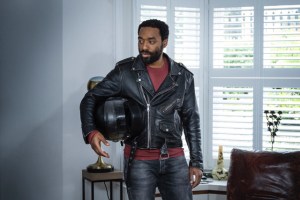 With Locked Down, I was getting as restless as the onscreen couple. I didn’t find them interesting because the same character notes were being hit over and over with little variation. The monologues, while having moments of life and personality, didn’t provide me greater insight at minute 80 than they did at minute 40. The experience felt like watching actors workshop characters and looking for extra meanings that seemed to be elusive. Listening to these characters talk more should make them more interesting, make them more personable, and make them more complex, right? While they uncork some well written asides, they’re each just rubbing the same nub of an identity crisis. The pacing also made the repetitive portions feel even longer. The metaphor of what Paxton’s motorcycle represents is so overblown and simplified. After spending so much time listening to these two bicker and argue in the same rooms, I was hoping for the heist as a needed escape, something that could finally serve to motivate the characters out of their pity parties and force them into a new conflict. I needed something, anything more to hold my waning attention. Alas, I finished Locked Down in the same patient, pursed-lip stupor as it began. These characters did not deserve this much extra breathing room.
I like Hathaway (Colossal) and Ejiofar (12 Years a Slave). Watching them leap into what is essentially a two-hander filmed play sounds like a good bet for entertainment, especially with a writer with the credentials of Knight (we’ll ignore the outlandishly bonkers 2019 Serenity). Hathaway and Ejiofor are good together too. They have a spark that works, her anxiousness melding well with his dismissive pessimism. Again, the characters they’re portraying aren’t poorly written. There just isn’t enough polished material for them. That’s why each feels like they’re grasping to discover the character like it’s being formed in the moment. The entire movie feels like an overextended improv workshop everyone involved is developing in the moment. Good mumblecore movies can make you feel like a fly-on-the-wall with real people, but these characters are so overly written that an improv feeling doesn’t so much replicate the recognizable rhythms of life as it does an ungainly acting class in search of more direction and discretion. There are some other celebrity appearances in the form of Zoom cameos, and that’s something I’m not looking forward to with the incoming COVID movies, the ugly selfie aesthetic prevalence.
 Locked Down feels more like an experiment to see if the filmmakers could make a movie under such unique and trying circumstances. It feels more like an acting exercise in need of more development and a little more vitality. There are fleeting moments that seem to tap into a universal despair and uncertainty many of us have wrestled with during our COVID isolation, but then the movie will just as likely throw in a hidden patch of poppies in a garden and a joke about nobody seeming to recognize the name Edgar Allen Poe. I watched Locked Down over the course of two nights, and mt girlfriend and I literally had forgotten we watched the first hour until coming across it again and going, “Oh yeah, we need to finish that after all.” I feel like that sums up the movie well. Within a day, I had already forgotten it, and that was before I even finished the full movie. They made a movie during COVID. Now make better ones in the future.
Nate’s Grade: C
Share this:

Beanpole (2020)
 Deeply depressing but empathetic to a fault, Beanpole might just be the most artistically uncomfortable movie of the year. It’s a Russian film set in Leningrad one year after World War II and the consequences of that awful conflict. Iya (Viktoria Miroshnichenko), our “beanpole,” fought in the war until her PTSD got too bad; she literally freezes in place like a statue when triggered. She’s working in a hospital and looking after her best friend’s child when tragedy strikes. That friend, Masha (Vasilisa Perelygina), desperately wants another child but cannot get pregnant. She pressures Iya to become her surrogate womb, and Iya feels so guilty that she agrees. From there, Beanpole chronicles the pain of not just these women but a pall that hangs over the nation, as people try to return to a normal that begs questioning whether it ever existed. It’s about hurt people lashing out and hurting others, some intentional and some unintentional. A coerced sex scene (a.k.a. rape) between Iya, a blackmailed but kindly middle-aged doctor, and Masha is immediately troublesome and yet thanks to the careful consideration of co-writer/director Kantemir Balagov, you can understand the motivation that lead each to being there. Masha is setup as the villain of the second half, knowingly guilting and pressuring Iya, taking away her agency, bullying her, and then there’s an extended scene toward the end where Masha meets the wealthy parents of her fledgling boyfriend. She reveals the lengths she would go to survive life during wartime as a woman soldier in a predominantly male encampment. It might not be enough to reverse your stance on her as a person but it definitely complicates your understanding. The whole movie is about people doing what they need to in an unjust world to survive. Beanpole opens up into a larger mosaic of condemnation about how women are treated by society, and each member of this tale is a victim in their own way, with their own story and own past and own demons, even the cruel ones. Beanpole has a gorgeous use of color, a deliberative sense of pacing, and outstanding acting that feels completely natural. It’s also, as mentioned, super depressing and hard for me to fathom many that will be eager to be this uncomfortable. For those courageous enough, you might find a beauty in the dignity of these women navigating post-war trauma and resilience.
Nate’s Grade: B
Share this:

Pieces of a Woman (2020)
 More an acting exercise than a fully developed movie, Pieces of a Woman is a punishing experience for the audience as much as the actors onscreen. The entire first 30 minutes is comprised of watching a home birth in an extended long take, which doesn’t so much immerse you in the situation as beg the question of, “How’d they do that?” The sequence concludes with a rushed delivery and an asphyxiated child, and then we cut to the title screen. From there, it’s 90 minutes of what agonizing grief does to this family. Vanessa Kirby (The Crown) plays the mother and she doesn’t want to let go but also feels uncomfortable that their flustered midwife is being charged with negligent homicide. Her boyfriend (Shia LaBeouf) is struggling to maintain their relationship and move past their shared tragedy. Her mother (Ellen Burstyn) is a domineering presence and wants the boyfriend gone and the midwife in jail. It’s all very well acted and Kirby does a fine job dredging up pure emotional devastation. The problem is that Pieces of a Woman has seemed to confuse drama with plot. There are many dramatic moments that occur but they don’t really provide greater insight into the main characters who are, at their core from that half-hour mark onward, broken people coming to terms with their response to the unimaginable. It seems paradoxical because the concept of a grieving family, angry and looking to blame someone, a relationship splintered where each party is potentially having an affair to feel something diverting, mother-daughter head-butting, it all seems like foundational elements of compelling drama. The problem is that we don’t ever get progression with the characters and their emotional states from these very dramatic events. They’re suffering, they’re unhappy, they’re numb to the pain yet carrying on, but are they interesting? Are we getting more of a sense over who they are or how they’ve changed? I would argue no. The movie feels locked into stagnation. I think a major stumbling block was spending so much time establishing a realistic birthing sequence opening, aided by a roving and unblinking camera, when the same information could have been covered in the first ten minutes and not first 30. It’s excessive and repetitive, but then so are the 90 minutes that follow that wallow in unchecked misery. It’s an approach that can take some of the devastation out of the horrific. Pieces of a Woman will be available on Netflix streaming starting tomorrow and despite its artistic merits and good acting I can’t exactly argue that it’s worth enduring the pain over.
Nate’s Grade: C+
Share this:

Black Bear (2020)
 What an intriguing little movie Black Bear turns out to be that inspires so much interpretation and dissection. I spent time reading through different interpretations on Reddit about writer/director Lawrence Michael Levine’s (Always Shine) surreal indie, each one providing new insights and connections. It all just made me realize even further how intriguing and rare a movie like Black Bear can be, an accessible puzzle that still works outside of the guise of sifting the pieces for larger meaning.
Allison (Aubrey Plaza) is a director who is looking to rebound her career. She takes a retreat to a bed and breakfast out in the woods run by a husband and wife Gabe (Christopher Abbot) and Blair (Sarah Gadon). There’s a lot of tension between these two and perhaps some unwanted romantic advances toward Allison. Then the movie changes, and now Allison is an actress in a movie filming at the same cabin in the woods. Gabe is now her director and her husband, and Blair is now the co-star that she suspects is having an affair, both with her real husband and the husband character in the movie they are making. Things get a little weird from there.
 There are really three primary stories here: 1) Allison sitting on the dock and then trying to write, 2) Allison coming into the realm of a dysfunctional married couple and adding extra jealousy and combustion, and 3) Allison is starring in an independent film that appears loosely connected to the second story, and this time she is being manipulated by her director/husband into thinking he is having an affair in order to add more realism to her screen performance. From there, the movie invites you to build your own connections from its many surreal parallels that fold onto one another begging for discussion. Is the second story what really happened in real-life to Allison and then the third story is the film version of these events, with the roles swapped for greater personal anguish? Is the third segment what really happened in real life and, in her anguish, she has projected her hard feelings into her own movie version of her torment, achieving a delayed vengeance? Are both segments mere fictional accounts from Allison in the first segment struggling through serious writer’s block? Dear reader, I cannot say because any of the interpretations I have cited, and many more, would be valid with enough careful corroborating evidence. I was delighted to read new takes. Part of the movie’s fun becomes building the meaning and finding more hidden clues after you’re done with it.
The second story plays like an identifiable mumblecore indie and one of the most awkward dinners you’d never want to be part of. Allison becomes the catalyst that pushes the husband and wife to open up their mounting disagreements and simmering conflicts with one another. He’s feeling like he’s compromised too much as an artist who still wants to be considered an artist, so he seeks a solidarity with their guest. She wants to bring a dash of reality to Gabe’s sense of self, which includes pushing him to adapt rather than holding onto a version of himself that no longer fits. Blair also seeks solidarity from a fellow woman to call out Gabe’s questionable viewpoints where he says life was simpler and perhaps better when gender norms were rigid. The night starts out amenable but ratchets up the discomfort moment by moment, opening up the characters and their histories and looking for allies through a cross-section of confrontation. We’re put in Allison’s position and different people might find fault with either husband or wife. Allison seems to enjoy being contrarian, admitting she was even lying about key points just to get or stifle a reaction from the others. As the night wears on, you worry mistakes will be made.
 The third story is about twice as long and has multiple times the participants. Whereas the first film is a tightly wound threesome, this new story involves a small family of indie filmmakers. You start to notice repetitions and your mind begins to form potential connectivity. Allison is now starring in a movie directed by her husband, Gabe, who is carefully constructing a cruel ruse that he is engaging in an onset affair with her co-star, Blair. In the previous story, Allison was the interloper and thought to be the homewrecker, and now in this tale Allison and Blair have swapped positions. Gabe’s rationale is that he is pushing his wife to give the best performance of her career, where her powerful emotions will feed the role of the jealous wife breaking down. It’s blatant manipulation and again I was growing in fear that this was going to build to something calamitous and that a misunderstanding could have tragic, possible fatal results. The third story calls into question the complicity of artists when it comes to abusive behavior. Everyone benefits from Allison delivering a headline-grabbing comeback performance, their careers get a boost, and yet the torment she goes through is undeniable and it sure doesn’t feel justified for the sake of art.
Despite an amusing and diverse ensemble of the film crew, this is really a three-person movie and Plaza (Child’s Play) is the constant. For those saying Plaza will only be able to play some variation on her famous sarcastic, detached persona, I happily invite you to watch Black Bear because she is capable of so much more. The second story, the mumblecore version, is playing upon the kind of role we’re used to seeing from Plaza, which I must think the filmmakers anticipate. That’s why the next version either deconstructs it or perhaps contrasts it. With the third version, Plaza digs deep and unleashes some startling dramatic outbursts, enough that the crew feel entirely uncomfortable and perhaps a little guilty over how far things have gone. There are moments with Allison breaking down that reminded me of like Gena Rowlands in a John Cassavetes movie. There’s an extra meta layer to the performance where if you argue Plaza is going bigger than she should, well perhaps that is her portraying an actress who is modeling her breakdown after depictions in movies and award-caliber movies. Had I watched Black Bear mere hours before I handed in my critics’ nominations, I would have found a place for Plaza on my shortlist.
 I invite you to watch Black Bear and join the discussion. It’s well written and engaging from moment-to-moment, so even if you don’t care about larger textual connections you can still enjoy yourself watching interesting characters simmer and explode. If your mind does enjoy rearranging the building blocks into more meanings, then the movie becomes even more fun. It’s also just a great showcase that proves Plaza is more than an actress stuck playing snide comedic roles. Seek out Black Bear, read other interpretations, and then craft your own.
Nate’s Grade: B+
Share this:

Never Rarely Sometimes Always (2020)/ Unpregnant (2020)
 Abortion is one of the most hot-button cultural issues even almost 50 years after the landmark legal case made the procedure legal in the United States. Two 2020 movies elected to normalize the topic of abortion as a healthcare option but through very different approaches.
Never Rarely Sometimes Always plays out like a horror movie but not just with the hard-hitting reality of abortion access for many in this country, it’s also a horror movie about being a teenage girl in modern America. Autumn (Sidney Flanigan) is 17 years old, a budding musician, and about 18 weeks pregnant with the baby of her abusive boyfriend. She’s living in small-town Pennsylvania and the closest clinic that will treat her and not require parental permission and notification is in New York City. Her best friend, Skyler (Talia Ryder), steals a stash of cash from their supermarket job and books bus tickets to the big city. They travel on their own without informing their parents. However, the two girls must run around the city to jump through bureaucratic hoops while their dwindling money supply makes their options more desperate.
 The movie is steeped in realism, which at different points comes across as an indictment on the burdens placed upon young women, but it’s also an understated case that wants to preach through its actions rather than any hokey soap box moments. Writer/director Eliza Hitman keeps things simple and to the bone for her narrative. We follow Autumn sneak out and try and get an abortion, only to have to wait longer and longer, with no place to stay overnight in a city she and her friend are unfamiliar with. I was fearing for both Autumn and Skyler as their stay increased and their money supply decreased. Just about every man depicted onscreen has an ulterior motive. Autumn’s boyfriend is controlling and abusive (inspiring a song Autumn performs for a school talent show in the opening scene). The supermarket boss insists on kissing the girls’ hands when they turn in their registers at the end of their shift. The creepy guy on the bus clearly has his sights set on Skyler. The guy on the subway just starts masturbating while staring at them. Being alone, far from home, and limited in means and transportation, you feel an overwhelming dread that something bad is going to happen to these two girls and it will be at the hands of men. They are victimized in small ways and large throughout their very existence. This dread does not go away until the very end of the movie. Skyler walks away to make some risky choices to earn needed money, and it’s not exaggerated but you do worry you may never see her again. Surely, many will reflect, it shouldn’t be this arduous for women to seek legal medical procedures, and when mostly-male legislators create extra burdens, it pushes desperate people into danger. At no point does anyone opine about body autonomy or anything overtly political. However, the movie’s entire function is to demonstrate these undue burdens.
 Flanigan has been getting serious Oscar buzz for her performance and deservedly so. Autumn is definitely intended to be a relatable representation for many women going through similar struggles. Much of the performance relies upon her guarded acting through a veil of emotional detachment. She’s been ground down by her small town, by her family, by her abusive boyfriend and his jerk friends, and this can make her seem like a numb zombie at points. Autumn isn’t, though, she’s just trying to stay afloat from trauma and anxiety eating away at her. Flanigan has a quiet strength to her that keeps you pinned to the screen. She does have one standout scene that I’m sure would be her Oscar clip. At one New York clinic, an employee runs through a standard questionnaire (where the film gets its title from) and hits upon whether Autumn has been coerced into sex she didn’t want to have, and that’s when the emotions of Flanigan’s performance break through, her eyes welling with tears, her inability to answer while still answering. The off-screen employee recognizes the confirmations and responds with adept compassion. With that you also can glean how many times this clinic employee has heard these same gut-wrenching responses.
Beyond being a dread-filled horror movie of discomfort, Never Rarely Sometimes Always also becomes an unexpectedly touching movie about the great lengths that friends will go for one another. While there aren’t extensive conversations about how much they love one another, the actions speak for themselves, much like the rest of the understated movie. It’s Skyler who takes the lead in putting together this journey, keeping track of their progress, and eventually doing what needs to be done to gain money to go home. Both Skyler and Autumn support one another and rely upon one another and will go the extra mile for one another. A hand held tightly can be all the confirmation we need of their love and friendship during the most trying of times.
 Unpregnant is easily the more entertaining and light-hearted of the 2020 abortion movies, using a raucous road trip of misadventures to reform the friendship of two high school girls. While applying a lighter touch (it is, after all, titled Unpregnant) it doesn’t trivialize the experiences of those making these choices. Veronica (Haley Lu Richardson) is 17 years old, the valedictorian, and 6 weeks pregnant, Her lousy X-Games-aspiring boyfriend Kevin (Alex MacNicoll) thinks it means they’re meant to be together forever. Veronica is mortified and certain she’s not ready to be a mother, let alone having Kevin’s baby. She’s afraid to tell her parents, her snooty friends at school, and so the only ally she can find is the outcast Bailey (Barbie Ferreira), a former friend with access to a working car. They must travel from Missouri to Albuquerque, New Mexico to find the nearest state and clinic without first requiring parental permission and notification.
Unpregnant is very much a road trip movie with the assorted mishaps along the way pushing the two teens together and reminiscing about how close they used to be as friends until going down separate paths in high school. Naturally, the formula calls for them to each confront their own personal demons, assert themselves, and reconcile, and it happens at regular pit stops, but that doesn’t mean that Unpregnant isn’t satisfying just because you suspect where it’s going. The overall comedic tone takes you off guard, at least it did for me, and it happens immediately. We’re used to movies where abortion is a central storyline being heavy and depressing (4 Months, 3 Weeks, and 2 Days), and when they do go for some degree of comedy, it’s usually quite dark (HBO’s Girls) or satirical (Citizen Ruth). Unpregnant lets you know right from its peppy start that it’s okay to laugh. It’s okay to find humor in the awkwardness. It’s also okay to assess choices relating to an unplanned pregnancy without the stigma of shame or guilt. The movie doesn’t downplay the character’s dilemma, but instead of the conflict being whether she will keep the baby or not, the crux of conflict is, much like Never Rarely Always Sometimes, on equitable access to abortion services. Whereas that Sundance drama overwhelms with dedication to its real-life hardships and hurdles, Unpregnant chooses to take on these same hurdles with incredulous defiance and an F-you attitude that still feels political but aligned with its tone.
 All road trips are dependent upon the co-pilots, and Unpregnant is an infectiously enjoyable experience spending time with Veronica and Bailey bantering and ultimately reconnecting. They are fun, and despite the circumstances that make this movie’s plot, they still find ways to have fun with one another. There’s an easy affection for one another that warms your heart. They clearly care about one another and watching them reunite and grow in their admiration for one another makes me like them even more. With any road trip movie, you must enjoy the people you’re stuck with. I appreciated both making amends of their past, why they fell out as friends, and what moments shaped each into being the headstrong woman they are today. Bailey uses this opportunity to try and reconnect with her absentee father. Veronica uses it to test her boundaries of what she felt needed sacrificing to stay on her master plan of academic success. Their kinship reminded me of Booksmart. The chemistry is so good, the dialogue snappy without being self-conscious, and the big dramatic moments nicely felt without being cloying, that Richardson (Split) and Ferreira (TV’s Euphoria) really feel like amusing best friends.
As per road trip comedy rules, we go from place to place getting into new hijinks. I appreciated that the mishaps don’t derail the light-hearted tone and direction even when they get broad. The girls become potential criminals when Bailey confesses their getaway vehicle might belong to her mom’s boyfriend and she might not have gotten his permission. This raises the stakes while still keeping things fun and feisty. A pit stop in Texas turns into a suspense thriller parody as the girls discover the kindly couple giving them a ride might be religious zealots who won’t let them leave. This leads to a wacky chase scene that ends in a hasty faked death and trying to jump onto a speeding train like “old timey hobos.” There’s also a running gag where Kevin keeps resurfacing, not exactly taking no for an answer, and arguing his nice guy credentials that aren’t being as respected as he deems necessary. For those worrying out there, Unpregnant does not condemn all men in this heightened universe or look upon them with dark suspicion.
 I don’t think it’s a spoiler to admit that Veronica does, in fact, get to her appointment and have an abortion. I also think its noteworthy how this is portrayed and its aftermath. She’s lead through the different steps of the procedure with the calm instruction from an empathetic nurse, they don’t sensationalize any of the medical realities, and afterwards Veronica comes back home and has a heart-to-heart with her mother who, while admitting she would not make the same choice, still emphatically confirms her love for her daughter. Veronica also admits that she feels like she should feel bad or ashamed or guilty and she doesn’t. She feels relieved, she feels deep down that she made the right call. Never Rarely Sometimes Always covers this same ground with level-headed clarity but I think there’s something extra appreciative for Unpregnant. Between the two, this is going to be the more widely viewed film. Its very ambition is to be a crowd-pleasing road trip comedy built upon the bond of female friendship. I would expect an indie drama to try and normalize abortion, but it’s another thing when a light-hearted and readily accessible comedy (it’s PG-13!) has the sensitivity to normalize abortion. Many viewers will find this approach refreshing and helpful. The topic of abortion should never be made flippant but it doesn’t need to be a condemnation of inevitable ruination and regret either.
Never Rarely Sometimes Always is a hard-hitting drama that’s understated, realistic, compelling, but also a little too numbing. It’s quite artistic and empathetic and yet it can also be quite grueling to endure. I was wincing when Autumn felt the need to batter her own pregnant stomach. It’s more than effective but also sometimes its understatement can be a hindrance. On the complete other end of the tone spectrum is Unpregnant, a funny and entertaining road trip that doesn’t dismiss the certainty of its female characters and their choices. Both movies are worthy of being viewed and will leave an impression and could change some hearts and minds on the subject of abortion if those same people are willing to listen. I just found one film to be more generally entertaining.
Nate’s Grades:
Never Rarely Sometimes Always: B
Unpregnant: B+
Share this:

Sound of Metal (2020)

I don’t think I’ve better empathized with hearing loss and deafness than with Sound of Metal, a moving and observant drama about a heavy metal drummer quickly losing his sense of hearing. Riz Ahmed (Nightcrawler) plays Ruben, a former junkie who is four years sober and worried about losing his girlfriend/band mate (Olivia Cooke) with his recent diagnosis. He’s attending a treatment center meant to cater to a deaf community and transition others into this community. Ruben is defiant, depressed, angry, all the stages you can imagine with grief. The movie is at its best during its quiet and contemplative moments where we empathize with the terror and alienation of Ruben. When he first joins the center, we don’t get subtitles for the many signed conversations between members. It’s only after Ruben learns ASL, integrates into the community, and opens himself up to the program that we too get to be knowledgeable. The sound design is exceptionally utilized to illustrate Ruben’s changing perspective, and some later choices with it might make you long for the peacefulness of silence. The movie is exquisitely thoughtful and considerate while maintaining a subtle, character-driven approach that keeps things from wallowing in self-pity. For many of the deaf, hearing loss isn’t seen as a disability but a community with its own culture and quality of life. It’s understandable that Ruben is focused on loss but the movie doesn’t dwell in loss, more so transformation and acceptance. Ahmed is fabulous in the lead role which requires him to rely primarily upon non-verbal expression for extended periods. His eyes are his best vessel for communicating Ruben’s emotional state, and Ahmed is sensational. Paul Raci is also great as the leader of the treatment center and the responsibility and generosity he feels to those in his care. Sound of Metal is an immersive, sensitive, authentic and poignant drama with an Oscar-caliber lead performance and a depth of compassion for the many people of the deaf community.
Nate’s Grade: B+
Share this:

Ma Rainey’s Black Bottom (2020)/ One Night in Miami (2020)
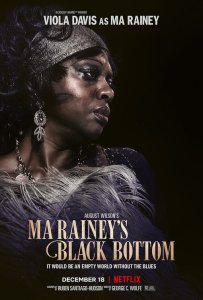 Two new movies are poised for major awards consideration, both based on plays by black authors, and both providing insights into the injustices and experiences of different black Americans from the past. Ma Rainey’s Black Bottom is available on Netflix streaming and One Night in Miami will soon be available through Amazon Prime in January, and both movies are observant, reflective, unsparing, hard-hitting, and provide some of the best acting you’ll see in movies this year.
In 1930s Chicago, Ma Rainey (Viola Davis) is assembling a team of musicians to record her latest blues single “Ma Rainey’s Black Bottom.” Cutler (Colman Domingo) will play trombone, Slow Drag (Michael Potts) will play the bass, old man Toledo (Glynn Turman) will play piano, and Levee (Chadwick Boseman) will play the trumpet. Levee has big ideas about what he can offer, and the rest of the band is happy to simply play their parts. Ma Rainey has her own demands for the record, some of which run counter to Levee and her own manager, and the many personalities will come into direct conflict on one very hot summer day.
 The big reason to see Ma Rainey, beyond the fact that it’s an amazing adaption of a great August Wilson play, is because it’s the final film performance from the late Chadwick Boseman. The world was stunned when the Black Panther actor suddenly died in August in the prime of his career. He had been hiding a years-long battle with colon cancer that only made his work ethic more astonishing. This man knew his life could very likely be cut short, but he wanted to make a difference by using his celebrity status to portray a gallery of historical heroes like Thurgood Marshall and James Brown. Of course, it also raises the question why waste your valuable time on something as mediocre as 21 Bridges. Regardless, with this new knowledge, it’s impossible not to find extra layers of meaning with Boseman’s final remarkable performance. Immediately you notice how thin he is, lanky, and now we know why. The character feels like someone just stringing along on the faintest of threads, a hope for a better tomorrow, and Boseman’s gaunt physical form reinforces that desperate impression. There’s also a moving moment where Levee is monologuing about his disdain for God’s lack of intervention in his life, during his mother’s assault by a team of white men, during the entire experience of every African American. It’s hard not to read the actor’s own personal struggle into this confrontational moment, lashing out at the unfairness of a life denied too early, and it just makes a tragic figure even more wearingly tragic. The final image is so summative of Levee’s tragedy and the music industry profiting off the entrenched exploitation of black musicians, that it feels so dispiriting even without further explanation.
The entire time I was relishing Boseman’s performance like one final meal, and the man makes a feast of it. Another critic compared Boseman’s performance to an athlete “leaving it all on the field,” and I couldn’t agree more. The man gives you everything he has. It’s not a subdued and subtle performance, though Wilson’s plays don’t tend to settle for subdued characters speaking with pronounced subtlety (see: Fences). The playwright’s gift is for crafting big characters with big personalities and big problems, and that’s the way we like it. Levee is a character with more than chip on his shoulder, he has the whole block. He’s bursting with nervous energy, masked as excitement, and eager to finally hit those last few hurdles and get the fame he feels is destined. The other members of the accompaniment are older, settled in their ways and comfortably pessimistic about The Way the World Works. They know the deck is stacked against them and they have accepted this injustice (“Be happy with what you can get,” they argue). Levee is still fighting, still hoping he can break through on the merits of his talents and perseverance, and we can all suspect the hard reality that will come crashing down later. Boseman is captivating from start to finish. It’s his greatest performance of his all-too short career and one I fully expect to sweep come the delayed awards season. It’s the best male acting I’ve seen for all of 2020. As I kept watching, a sadness washed over me, much like watching Heath Ledger during the end of 2008’s The Dark Knight, a melancholy realization that this is it, it’s almost over, and this is all we’ll ever get from an actor who was just beginning to make substantial waves and leave their mark on the industry.
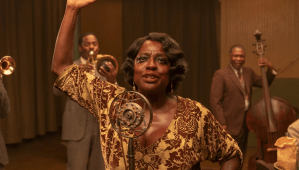 While Boseman’s lead is the biggest draw, Ma Rainey has plenty other aspects deserving of praise. Every character gets time to be fleshed out into feeling like real, complicated people with complicated pasts worth illuminating. Most of the play’s characters are black musicians during a very racist period in American history (you could readily argue that this description applies to all periods). They know they’re being exploited, and they know that these smiling white men with money are only being polite as long as they have something to offer that these men want. Even Ma is aware of her leverage. She’s a successful singer who sells plenty of records, but fame can be fleeting, and her records aren’t selling like they used to, and she knows time is short. She’ll be cast off and replaced by another singer/performer who doesn’t have the wherewithal to push back. Davis (Widows) is a force in this movie, flinty and proud and no-nonsense. She’s great even if she has less screen time than any of the male musicians. It feels like more could be had from exploring her character, her passions, her lesbianism, her sense of self, but Davis still makes quite a presence.
The injustice of the circumstances of the musicians are emblematic of the black experience with America a hundred years hence. Levee has a monologue about his father having to sell his own land to his wife’s attackers. Cutler has a monologue about a preacher who got off on the wrong train stop in Florida and was harassed and threatened by an unruly crowd, his vestments serving him no mercy from a racist mob. Wilson’s wonderful words are brought to sterling life from these seasoned performers and their digressions and reflections better paint a thematic mosaic of shared communal pain. The way the movie holds your attention even when Boseman isn’t on screen is a testament to how engaging and well-realized Wilson’s characters can be no matter how small.
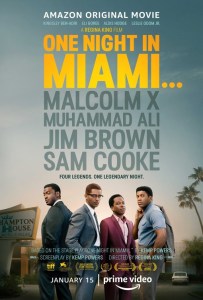 With One Night in Miami, based upon the play by Kemp Powers (co-director of Soul), we follow big names of sports and politics that improbably convened together one night in 1964. Cassius Clay (Eli Goree) has just become heavyweight champion of boxing and is poised to announce his conversion to Islam under the tutelage of Malcolm X (Kingsley Ben-Adir). NFL running back Jim Brown (Aldis Hodge) has crossed over into movies and is starting to think about life after football. Sam Cooke (Leslie Odom Jr.) is riding high off his recording fame but wondering how much more of himself and his artistic voice he should insert. Over the course of this long night, the four men will converse, bond, butt heads, and make changes with their responsibilities.
The movie, adapted by Kemp as well, establishes each participant before bringing them together for that fateful night (inspired by true events, meaning it’s entirely fictionalized). This first act does a fine job of establishing each character but especially a point of insecurity for them that we’ll watch later become raw and, hopefully, reconciled or re-examined. Jim Brown worries that no matter his level of success, he’ll never be legitimate to a section of America. He’s looking at movies as his inroad but even someone of his fame is still the black character killed first. Cassius Clay is hesitant about making his announcement to Mohammad Ali and Islam, second-guessing the commitment he’s signing up for. Sam Cooke is known for his fluffy pop songs and feels like a sellout, needing the credibility of making music that matters. Malcolm X is preparing to break away from the Nation of Islam after his distaste for the hypocrisy of its leadership. He’s positioning Cassius Clay’s announcement as his big pivot point to make a name for his own break-off movement and hopeful that the media attention will translate into new converts.
 The combustibility of this night makes for plenty of compelling drama. Malcolm X is an instigator with the others, spurring them to use their privileged platforms to enact change that can be useful for the Civil Rights movement. He squares his attention on Sam, calling him out for being a tool of white moneymen and even plays him Bob Dylan’s “Blowin’ in the Wind” and asks why this white man is writing more politically active music than Cooke. The singer pushes back, saying he allowed the Rolling Stones to sample his song because it brings more money into his pocket and his songwriters that he can use to profit black businesses. He proclaims he recognizes the system and is playing it to his advantage. They have very different perspectives that clash, making fine drama that spills over. It’s a purity versus pragmatism argument, one that Cooke raises to flout the indulgences he sees in the leadership of the Nation of Islam, a fact we know Malcolm X is aware of and also cannot stomach. It’s also a version of Malcolm X that is more vulnerable than we’re accustomed to seeing. We’re used the strident, righteous Malcolm X, and here he’s much more indecisive and struggling with making some big personal decisions. Leaving his religious organization is verboten, and he’s looking to reform what he views as sinful failings from his peers, and much rests on the publicity of Clay coming forward. This puts Clay in a tough position especially as he feels uncertain about this commitment. The continual push and pull of these four men lead to several interesting discussions, many that become heated, that allow each to open up as a real and complex person, not just a picture in a textbook.
The ensemble is overall quite solid, though the two biggest performers are the ones at the widest ideological divide. Odom Jr. (Hamilton) brings a distinct charisma and has a silky singing voice you wish you got to hear more often, but he’s also hiding a clear disdain. Whether it’s pride or whether it’s shame, it’s there, and Odom harnesses it to make his character feel like a cat ready to strike, wound up from being dismissed by too many others. Ben-Adir (The OA) nails the intonations of Malcolm X but also adds extra layers of doubt and awkwardness. He tries to parry concerns from the other guys that a “party” in this one motel room will be lame by promoting the power of ice cream (only flavor available: vanilla). This is a humbled and scared Malcolm X, one on the precipice of potentially losing his movement and standing to his ethics, and some may argue his ego. Ben-Adir is soulful and presents a fully formed performance more than lazy imitation (he also played President Obama in the recent Comey Rule miniseries for Showtime).
 The biggest question with play adaptations is the challenge of making them feel bigger and more cinematic than contained conversations. Nobody wants to feel trapped in a broom closet. First time film director Regina King (If Beale Street Could Talk) gets the most from her performers and handling of the subject matter, though the various rooms inside and outside the Miami motel provide little in the way of variance. The men go to the roof to watch the fireworks. A couple leave to go get some liquor. The focus is on the men, so the background of the setting isn’t a huge deal to the entertainment. King’s direction is more felt in the performances, as most actors-turned-directors tend to be, and with that she’s aces. With Ma Rainey, director George C. Wolfe (The Immortal Life of Henrietta Lacks) does an excellent job of opening the spaces visually but also making the spaces reflective of mood. The ashy rundown basement where the band practices, the sweat-glistening off the performers with the hot, daub lighting, the peeling paint and broken doors leading to symbolic dead-ends. Wolfe has a stronger command of visuals, not just making his pictures pretty, but also making his play-turned-film feel less confined by its original stage bound limitations.
Ma Rainey’s Black Bottom and One Night in Miami are both deserving of your attention. I found Ma Rainey to be the more engaging movie with the higher artistic peaks, anchored by an amazing and career-defining performance from Chadwick Boseman. One Night in Miami is consistently probing and generous and thoughtful and superbly acted as well. Both movies are great tools for empathy and interesting to take together considering they churn with experiences of black characters fighting for equality from a broken system several decades apart. There have been gains made from the time period of Ma Rainey but Malcolm X’s complaints are extremely valid, and many resonate today in the face of systematic racism and police brutality. Watch both movies when available and welcome more black-penned plays making the big screen leap.
Nate’s Grades:
Ma Rainey’s Black Bottom: A-
One Night in Miami: B+
Share this:

Fatale (2020)
 There were many bad judgements when it came to developing Fatale, the first being that this erotic thriller was worthy of any sustained effort. I’m all for a guilty pleasure genre outing, and we’ve had enough distance from the heyday of erotic thrillers that a re-examination could be due, especially in light of the Me Too era. I was wondering if Fatale was going to present its chief crazy lady, played by two-time Oscar-winner Hilary Swank, as the one who was right all along, and instead of endangering the nervous husband Derrick (Michael Ealy) she was really protecting him. Or maybe the movie was going to posit that Derrick’s perception of events was biased and built upon false assumptions and he was the real villain. Or maybe the Fatal Attraction-esque plot (Swank’s loft even resembles Glenn Close’s abode) would have more commentary on the fact that our resident crazy stalker was a police officer targeting a black man. I was holding out hope there would be something, anything to separate this movie from the glut of junk, but alas, it is merely a better assembled mobile of junk you’ve already seen far too many times in other questionable movies. There is nothing to surprise, to subvert your expectations. It’s depressingly predictable. Amazingly, the writer is David Loughery, who also wrote Obsessed, Lakeview Terrace, and The Intruder, which suggests he’s perhaps copying and pasting and re-arranging familiar story elements at this point. I didn’t care about the plight of Derrick because the movie wants me to see him as a “nice guy” but he’s really a dolt who doesn’t deserve our sympathy. Swank (The Hunt) is badly miscast as a seductress. She comes on so strong so fast that I thought the movie was aiming for self-parody. The fact that Swank is listed as a producer further confounds me. I’m sure she felt playing a sultry villain would be fun, but Swank’s performance needs to go bigger to leave the orbit of an otherwise forgettable and boring genre exercise that wastes everyone’s time. Fatale deserved to be filled with no names and occupy a Cinemax slot between the hours of three and four A.M.
Nate’s Grade: C-


 nathanzoebl
You must be logged in to post a comment.