Blog Archives
Godzilla: King of the Monsters (2019)
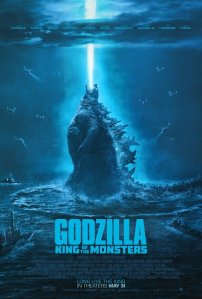 Godzilla: King of the Monsters is the sequel to 2014’s American re-launch, and the biggest complaint I had with that other film was how frustratingly coy it was with showing Godzilla. I wanted more Godzilla in my Godzilla movie, and King of the Monsters at least understands this need and supplies many of the most famous kaiju in the franchise, like Mothra, Rodan, and the three-headed King Ghidorah. The human drama is just as boring with characters I have a hard time caring about. Vera Farmiga plays a scientist who lost a child during the 2014 monster brawl in San Francisco. She develops a sonar device to communicate and domesticate the giant monsters (now totaling 17 plus). She and her teen daughter (Millie Bobby Brown) are kidnapped by eco terrorists that want to… destroy the world and leave it back to the ancient monsters? It’s a bit jumbled. I felt more for a monster than I did any living person. The plot does just enough to fill in time between the monster battles, which can be fun but are also lacking a few key items. Firstly, the sense of scale is lost. That’s one thing the 2014 film had in spades, the human-sized perspective of how enormous these beasts are. Also the fight scenes are shot in pretty dark environments that can make things harder to watch. There is a simple pleasure watching two giant monsters duke it out on screen, and King of the Monsters has enough of these to satisfy. It’s still a flawed monster mash but at least it sheathes the itch it was designed for, and if you’re a Godzilla fan and feeling generous, that might be enough to justify a matinee with a few of your favorite fifty-story pals.
Nate’s Grade: B-
Share this:

Brightburn (2019)
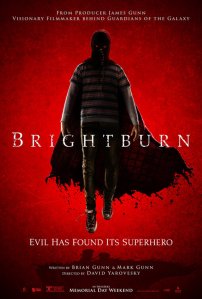 Many writers and artists have re-imagined the origin of Superman, the alien orphan sent to Earth and raised by the Kents into a thoughtful young man who empathizes with the humans he has come to identify with. What if that alien child, blessed with powerful abilities, didn’t decide to become a hero and instead saw himself as superior? That’s the premise of Brightburn which looks at the Man of Steel through the lens of The Omen.
In the small Midwestern town of Brightburn, Tori (Elizabeth Banks) and Kyle Breyer (David Denman) are a couple struggling to conceive, and then one fateful night a spaceship crash lands on their farm. Inside is a baby boy they decide to raise as their own son. Flash ahead a decade and Brandon Breyer (Jackson A. Dunn) is a normal kid except he’s never been sick, he cannot be cut, and he’s starting to develop even more powers thanks to his spaceship seeming to activate something within him. It also fills his head with an alien message, one not too friendly for the people of Earth. Tori and Kyle must reconcile how far they’re willing to go to protect their son and whether it’s at the expense of the well-being of billions.
 Brightburn takes its thought exercise to the limit, fully developing its intriguing angle of what if the story of Superman went in a much darker, much bleaker direction. Instead of representing a hope for mankind, what if this alien son represented its demise? As I was sitting back and watching, each element felt well placed and well thought out, contributing to a feeling of satisfaction that the screenwriters have given considerable thought to telling not just a good story but the best version of their story. There’s a very early science reference to wasps that tells you exactly where the film is going. I have some small quibbles when it comes to motivations, in particular the flip in Brandon, but these are minor and honestly could have been smoothed out with one or two added scenes. I appreciate that writers Brian Gunn and Mark Gunn (cousins to James) start things rather dark and see it through. This is the kind of movie you pray doesn’t go soft and squishy by the end, where the irredeemable monster is reached through the power of love. This is not that movie. With an all-powerful monster, it would be a cop-out to somehow slide in a happy ending. The entire trajectory of the movie feels appropriate, quibbles over rushed motivation aside, and where we end up feels predictable but right.
The biggest comparison I can make with the film isn’t any of the Superman adventures but a little indie, 2011’s powerful character study, We Need to Talk About Kevin. For those unaware, that movie followed a woman whose son grows up to be a school shooter who also kills her husband and daughter. The movie skips around in time and in doing so reveals through flashes of memory key incidents, flashpoints, where mom realizes something just isn’t right with her dear old son. It’s a test of a parent’s love but it’s also a test of how far a parent can ignore the warning signs that are amassing like a cancer. Like that film, Brightburn demonstrates the limits of parental love and rationalization. For much of the movie, Tori refuses to accept her son’s darker impulses and the reality that is getting harder to ignore. Her son was a gift from the sky and that needs to mean something. Her love and parenting should be enough to keep her child on the path of good and responsibility, she reasons. This only delays the intervention that might have made a difference, but then again, when you’re dealing with a kid with invulnerability and laser eyes, is there any intervention to turn things around? Are some too far gone? There are moments that even touch upon the creepy loner status of deranged spree killers. I genuinely felt sorry this one teenage girl ever showed a glint of kindness to Brandon because all it does is place her and her family into his obsessive fixation to control.
 I do believe that your enjoyment of Brightburn will partly rest on your prior knowledge of the Superman mythos and its clever, darker reworking. Considering this is an essential aspect of its premise and execution, I don’t see this as a fault, though it will limit the audience that can simply plug into Brightburn and enjoy it as is. The film leans heavily on the iconography of Superman and purposely twists it as a perverse thought experiment. If you’re indifferent or unfamiliar with Superman, it may play out as an efficient thriller with some solid acting and gross-out effects. However, if you’re a canny follower of the Superman origins, then it becomes a meta commentary with even more to unpack. How does one exactly keep a god grounded in the ways of morality? I don’t mean to make it seem like Brightburn is inaccessible to non-comic book fans. It’s not, but part of the enjoyment for me was how it took something familiar and twisted anew.
Those gore effects are impressively gross. This is a movie that doesn’t shy away from the destructive power of its super demon seed. It builds in intensity and is actually pretty restrained, all things considered, but when it wants to pack a punch, the movie does. There was one extended bit of eye trauma that made me shield my face. How in the world can a person have that much glass shard lodged that far into one eyeball? It causes me shudders even thinking back on it. There’s another scene where a person’s jaw is dislodged like they were the Tin Man from The Wizard of Oz, a lanky part that stubbornly won’t stay put. The person even holds their hand over their face, knowingly teasing the audience. As the film hurtles toward its final act, if you can think of a way that Superman could kill a vulnerable mortal, this movie covers it. Super speed splattering a person? Check. Laser eyes boring a hole through a skull? Check. There’s even a scary sense of visual poetry to one kill that goes flying into the heavens in slow motion. The gore and grisly deaths are another aspect that reminds me how well developed the film is.
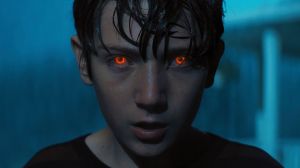 The acting may be better than you’re anticipating. The screenplay doesn’t simply rely on the main characters being stand-ins for their Superman analogues. While they don’t feel like three-dimensional characters, care has been put to give them more substance so that the drama of their choices can be compelling on its own. Banks (Lego Movie 2) and Denman (16 Hours) debate their increasingly fraught choices with clarity. He’s convinced their son isn’t right and poses a danger, and she doesn’t disagree but refuses to abandon their son after all these years together. Early on, they feel like a real family, and that only makes the tragic events feel much more resonant as things spiral out of control. Banks and Denman are certainly not playing any scene for a knowing wink. To them and the rest of the production the events are very real and very scary. Dunn (Avengers: Endgame) is eerily spooky with his stares and glares, but there are also moments that remind you he is or was still a kid and experiencing the same desire to belong.
This is not going to be a movie for everyone but if you’re intrigued by the premise and/or have an affinity for Superman what if scenarios like Red Son, then it should be right up your alley. It’s a clever and satisfying thriller that appeals to fans with darker desires. It’s about as well executed as its premise could go, and I left my theater thoroughly satisfied with only some minor quibbles for motivation clarity and an extended epilogue (I don’t know if Billie Eilish fits for the end credits but that’s just a personal preference). Brightburn takes the Superman mythos and twists it into a creepy horror film, the origin of a super villain, and an apocalyptic death sentence for the rest of humanity. It’s actually a lot of fun to watch even as it’s disturbing you and leaving you wincing.
Nate’s Grade: B+
Share this:

Captive State (2019)
 The fraught world of Captive State is interesting, a political landscape ten years into an alien occupation. We follow a small band of human resistance fighters working to get past a security stopgap to strike back at the alien overlords who resemble human-sized pine trees. John Goodman plays a police security chief trying to unravel the insurgent conspiracy while working with the collaborative government. It has a slight cat-and-mouse feel of a good conspiracy thriller and there are asides that broaden the world, giving an interesting peak at the realities of this strange new world. The problem is that it feels like a whole mini-series stripped into a two-hour movie. The characters feel less like people and more like impressions of people, and the story is plowing through so many incidents that there isn’t much time to flesh them out except for the occasional trope. As a result, the movie feels like it has a lot of things happening but my interest level flagged because I felt little for the characters. The limitations of the budget are felt here and there as far as the sense of scale. Director/co-writer Rupert Wyatt (Rise of the Planet of the Apes) takes a docu-drama approach and favors nighttime chases and sneaking, which also conceals special effects restrictions. The visual grittiness adds a visceral level of realism but can lend itself to additional logic questions. I kept waiting for the world to feel more lived-in and offer important slivers to add layers of context to this conspiracy. Captive State is frustrating with how much it leaves unspoken and unclear. It’s ten years in to this occupation and what exactly have the aliens offered the world? What has changed? Why are these freedom fighters fighting back? What are the goals of the aliens? I can handle ambiguity and nuance but with too much the world building can feel unsatisfying and incomplete. It comes together well but by the climactic end I felt the universe it established was more intriguing with potential than the story it delivered.
Nate’s Grade: C+
Share this:

Captain Marvel (2019)
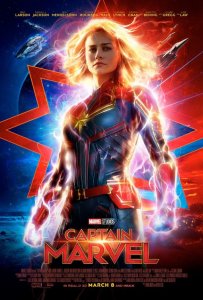 Wonder Woman may have beaten her to the punch but Carol Danvers, a.k.a. Captain Marvel, deserves her own share of headlines as the first woman to have her own starring vehicle in the highly successful Marvel Cinematic Universe (MCU). Her presence was first teased in the post-credit scene of Infinity War. After twenty-one films, Captain Marvel gets squeezed into the penultimate chapter before closing the book on the MCU as we know it for a decade, and it feels like a throwback in both good and bad ways.
Carol Danvers (Brie Larson), or “Vers” as she’s known on the Kree home planet, is part of an elite alien squad of “noble warrior heroes” fighting in a long-running war against another alien race, the shape-shifting Skrulls. Carol Danvers goes back to her home planet of Earth (a.k.a. Planet C-53) in the 1990s to look for a hidden weapon linked to a mentor she can’t quite remember, a woman (Annette Bening) from her past life on Earth as an Air Force pilot. Carol Danvers must try and recall who she is with the help of Agent Nick Fury (Samuel L. Jackson) and stay one step ahead from the invading Skrulls.
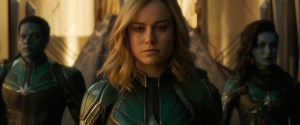 This definitely feels like a lower-to-mid tier Marvel entry, something more akin to the Phase One years (2008-2012) where the initial franchises were just starting to get a sense of direction and personality. They were also lacking the larger depth of character development, social and political messaging, as well as judicious independence from the overall studio formula that has come to define dozens of superhero blockbusters. It’s not a bad movie, and is fairly entertaining throughout its 124-minute run time, but it’s hard not to notice the shortcomings that, frankly, haven’t been this transparent in an MCU movie for some years now. I had to think back on a comparable MCU experience and I had to go back to 2015 with Avengers: Age of Ultron or maybe even 2013’s Thor: The Dark World. In short, Captain Marvel just feels a little less super in many important areas.
This is the first female-lead superhero film in the MCU (sorry Black Widow) and Carol Danvers has been a character in Marvel comics since 1968, and yet the film doesn’t put together a compelling case why she is the one getting her big screen moment. The character suffers that wonderfully tired movie trope of the foggy memory, so we have a protagonist trying to discover who she is alongside the audience. This would be a fine starting point for her to essentially reclaim her humanity and her agency as she travels back to good ole C-53 and learns more about her past. There’s a core of a beginning theme already present there, the nature of what it means to be human, and how it can be viewed as a weakness by n alien species and how it comes to be a strength for her. Maybe that’s too pat but it’s a start. The problem is that Carol Danvers isn’t seen to be that interesting. She’s somewhat boring and the presentation feels a tad inauthentic; when she’s quippy it feels forced, and when she’s badass it feels lethargic. There’s a personal journey that challenges her to assess her preconceived notions of good and evil in an ongoing intergalactic conflict, but it’s so impersonal. Even when she’s revisiting with friends and reminiscing (what she can) it doesn’t feel like we’re getting that much more insight than we had before. She’s a warrior. She’s upstanding. She definitely doesn’t like men telling her what she can and cannot do. But what else do we know besides her increasingly invincible super powers? What is most important to her that drives her? What are her flaws other than a faulty memory? When she goes full super saiyan it should be celebratory and joyous and instead it feels more weirdly perfunctory.
 I love Larson as an actress and have been singing her praises for dramas (Room, Short Term 12) and comedies (21 Jump Street, Scott Pilgrim) for years, and I kept waiting and waiting to be wowed by her in this role. I was left unfulfilled. Larson is a terrific actress and can be so expressive, resolute, heartbreaking, and inspiring, and I grew frustrated as the movie kept her talents buttoned up for too long. She seems too removed from the action even as it’s happening in the moment. It’s not that she’s too serious (“smile more” chime the denizens of cretinous “men’s rights activists”) because her character should be serious. It’s that she hasn’t been given enough depth and interest a hero deserves.
Jackson (Glass) and Mendelsohn (Ready Player One) were my favorite parts of the movie. Watching a 40-something Jackson front and center looking like he was ripped out from 90s cinema is remarkable. The movie is at its best when Jackson and Larson are working their 90s buddy cop chemistry together. There’s a fun running joke about how Fury loses his eye with some near-misses played for comedy (reminiscent of Crispin Glover’s eventual armless bellhop in Hot Tub Time Machine) and while the film does a disservice to Carol Danvers’ character it opens up Fury even more as a person. Mendelsohn has become a go-to villain for Hollywood and the filmmakers use this to their advantage. He slinks around having a good time being bad, but there’s also a surprising turn that provides unexpected pathos and depth to what could have been a one-note scary-looking bad guy. In a movie that deserves headlines for being the first female-lead MCU entry, the supporting dudes end up having the most depth and success, which is rather odd.
Captain Marvel is missing a larger sense of vision and purpose, which is why it feels more like a throwback to those early days. Directing/co-witting husband-and-wife team Anna Bodin and Ryan Fleck (Half Nelson, Mississippi Grind) don’t manage to have a feel for the material and for action as a whole. There are some pretty-looking sequences and some moments that strike their intended effect well, but the structure of their movie could use a bit of an overhaul. The first act, the pre-Earth return, is a bit convoluted and could be condensed. This even goes for the Kree Special Forces team (Kree Team Six?), which comprise many differentiated soldiers when really three non-Jude Law members would suffice. The Kree characters are stranded for the middle act and when they come back it’s hard not to feel disinterest. The concluding act brings the various plotlines together better with some good twists I did not see coming and appreciated. However, the climax is missing out on its triumphant jubilation because of the spotty characterization and the haphazard action direction. From the start, the action is unimpressive and poorly choreographed and edited. The chases are humdrum and the special effects are surprisingly substandard at too many turns. It’s hard to tell what’s happening in many fight scenes, and once Carol Danvers gets her full super laser-blasting powers, the screen becomes even more obstructed and even harder to decipher. Bodin and Fleck have showcased a natural feel for visual storytelling but action appears beyond their grasp for now.
 Captain Marvel suffers from being asked to do too much, slap together an origin tale for the last essential character for the conclusion to a larger multi-movie storyline, also forging the beginning of the MCU timeline as a prequel for Fury and S.H.I.E.L.D, as well as some connective back-story with the Guardians universe. It has to do a lot of heavy lifting in two hours that the screenplay and characterization do not seem best equipped to handle. The humor is a bit dull and unsure of itself, relying upon certain beats one too may times, notably a cute orange cat tagging along. Even the 90s setting feels like something tacked on for easy jokes about dial-up Internet and references to Radio Shack. It feels like simple nostalgia and that goes to the soundtrack selections as well. This must have been the easiest job the music supervisor ever had for a film, having to do a mere cursory scan of 90s alternative rock for the hits. An action sequence set to No Doubt’s “Just a Girl” should have more attitude than it does. A dream/trance sequence set to Nirvana’s “Come As You Are” should be creepier and more unsettling. By the end, as the credits flash onscreen set to the guitar chords of Hole’s “Celebrity Skin,” I felt certifiable 90s fatigue.
I feel like I’m piling on Captain Marvel with complaints and quibbles and presenting the impression that it’s a bad or dimly entertaining film. It’s not a bad experience but it definitely has its share of flaws that hinder the enjoyment factor. As a white guy in his thirties, Hollywood has been making movies tailor-made for me as their default setting. I cannot underestimate the cultural and personal impact this will have for millions of women and young girls who have been eagerly waiting for a big-budget movie with a strong female protagonist front and center. Wonder Woman was a cultural and commercial touchstone that might diminish the luster of Captain Marvel for some, but the MCU is its own unparalleled zeitgeist. Having a woman carry a movie in this special high-profile film universe will mean considerably much to many. I wish it was a better movie, but even lower-tier Marvel is still better than plenty, and that may be enough. I’ll look forward to see how other screenwriters and filmmakers make use of the character in the ensuing Avengers sequel coming out next month. I’ll reserve my final judgment on the character after I see how she fits into the larger picture and with storytelling talents that have shown more aptitude toward the super stuff.
Nate’s Grade: B-
Share this:

The Lego Movie 2: The Second Part (2019)
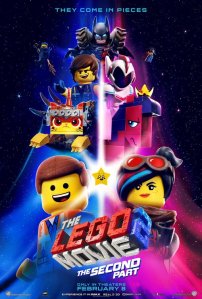 Everything might not be awesome but it’s still pretty great for this creative, heartfelt, and hyperactive family franchise that is better than it has any right to be thanks in part to returning writers Phil Lord and Chris Miller. It’s not quite as fresh and clever as the first go-round but it manages to better its predecessor in some key ways. Now that we know the colorful and zany antics of the animated Lego characters are also simultaneously the imaginative play of a real-world family, it provides a deeper thematic subtext with the unseen nature of siblings in conflict. I remember my own younger sister wanting to play with me and my toys, and me rebuffing her, and the film struck home some key emotional points about the inclusion of cooperative play. The different styles of play are on display as our characters are abducted by a shape-shifting space queen (voiced by Tiffany Haddish) who is determined to marry Batman and possibly rule the universe. A fantastic running joke is how transparently malevolent the queen is, which leads to an even better payoff. There are more songs and each is pretty well constructed, relevant to the story, and assuredly catchy, like “Catchy Song” used to brainwash people through pop, and a mournful version of “Everything’s Not Awesome” that becomes genuinely inspirational and uplifting by its climax. The life lessons are easily digestible and the sense of breezy fun is still alive and well. I was laughing throughout, sometimes quite hard, and the brother/sister subtext had me wondering if I owed my younger sister a decades-late apology for my behavior (sorry, Natalie). Lego Movie 2 is a worthy sequel that finds new and interesting ways to build off the irreverent original’s model. Bring on the Toy Story 3-style ending where our grown-up owner says goodbye to his childhood toys and friends. At this point, Lord and Miller can do anything and imbue it with wild wit, whimsy, and unparalleled mass entertainment (except Star Wars, I suppose).
Nate’s Grade: B+
Share this:

Bumblebee (2018)
 Why haven’t they been making these kind of Transformers movies from the beginning? Bumblebee is a scaled-down, character-driven family film where the bigger moments re about fitting in, finding your sense of self, and keeping your new alien robot friend hidden from your parents. Set in the late 80s, Hailee Steinfeld (Edge of Seventeen) plays a high school senior dreaming of a life beyond her neighborhood and family. The ticket out is a new car, which just happens to be an Autobot from another planet disguised as a VW beetle. Because Bumblbee had his memory wiped from a fight years earlier, he’s very childlike and endearing, and the interaction between the big robot and Steinfeld will rekindle more than a few memories for The Iron Giant, E.T., and other classic “boy and his dog” tales. There’s a real attention to the characters, big and small, that makes this the best Transformers movie. Not everything has to be about the next world-destroying cataclysm. There’s plenty of formidable drama in watching a teen girl navigate the world with an unconventional new friend. Director Travis Knight (Kubo and the Two Strings) graduates to the world of live-action with a terrific feel for the visual parameters and material. It helps that Knight gives his film a sense of scale without sacrificing coherency. The camera prefers wider shots and longer takes so the audience can follow the action. The movie also has a sly sense of humor it knows when it call upon, like a highly enjoyable John Cena who is baffled at his government’s open door policy to evil robot aliens: “They have Decepticon in their name. Is that not a red flag to anyone else?” This is a well-paced, sweetly heartfelt movie with good humor, good characters, and good action. If this is what happens when you strip Michael Bay from the franchise, then lock him up.
Nate’s Grade B+
Share this:

Twisted Pair (2018)
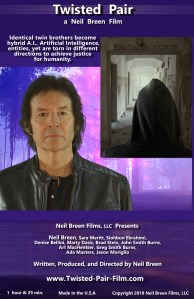 Neil Breen is the closest thing we have today to a living Ed Wood, a filmmaker so determined to tell his stories without a clue how to accomplish this feat, routinely finding new and astounding ways to transform the medium of film into an incomprehensible experience that can only be best appreciated through the howls of incredulous laughter. In 2013, Neil Breen came to attention among a certain select audience seeking the pleasures of a so-bad-it’s-good movie, and I count myself chief among this nation. I was fascinated by Fateful Findings and have since sought out Breen’s other films, using them as the main attraction for a gathering of like-minded friends and adult beverages. He may not be the next Tommy Wiseau or produce an accidental masterpiece like The Room (I don’t think an Oscar-nominee will be playing Breen in any biopic, though I pick Eric Roberts). Breen is taking advantage of the pocketbooks of eager midnight movie enthusiasts but he refuses to see his movies in that derisive light. To him, and God bless him, they are legitimate pieces of art and he personally disallows any marketing of them as “midnight” or “cult” movies (I saw portions of his actual contract he sent to our local art house theater playing his newest picture). His latest is Twisted Pair, a “psychological thriller” with double the onscreen Breen. It may not rise to the craptacular heights of Fateful Findings, but Twisted Pair is a worthy and hilarious entry in the ever-expanding yet mordantly redundant Neil Breen cinematic universe.
To explain the premise or story is almost superfluous, like trying to find a logical interpretation in a David Lynch movie or a Jackson Pollack splotchy painting. I’ll try. Cade and Cale Altaire (Breen) are twins who were… abducted by aliens… and given supernatural powers thanks to… A.I. technology? Back on Earth, Cade (or Cale?) has a wife (Sara Meritt) and plant bombs in the buildings of evil corporations, I think. Cale (or Cade?) is addicted to drugs (maybe?), has an addict girlfriend, and abducts corrupt CEOs, politicians, and authority figures and chains them in a murder dungeon where he lectures them and occasionally shoots them casually in the kneecap or shoulder. There’s also a conspiracy about trying to… do nefarious things with a cutting-edge A.I. virtual reality program… that shouldn’t fall into the wrong hands? Cade (or Cale?) must stop these evil forces from doing… evil things… by blowing them up? Also, his wife may be a spy.
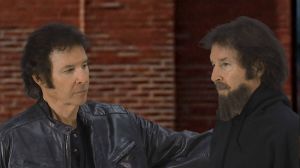 If the above sounds like pure insanity straight from the cuckoo source, then you have read it clearly. Twisted Pair doesn’t abide by any traditional standards of film or storytelling. There isn’t so much a plot with a beginning, middle, and end as there are a jumble of scenes that could have been placed in any order whatsoever and lost nothing. With Neil Breen as writer and director, we typically get a lot of visual repetition; whatever info can be imparted in one moment Breen decides to impart in five. On the other side, storylines and characters will be summarily dropped or introduced with little context. Take for instance the villain who, as best I can tell, speaks with a voice-modulated tone in real life. It’s not like he’s holding some mask to his mouth or anything that would alter his voice to that super deep register. Apparently he just speaks this way normally, and it’s hard to understand half of what he says, and it’s hilarious. Does this character matter in the scheme of things? Not really. He’s there to be another face to a vaguely defined conspiracy of forces that Breen is determined to thwart. The villainous character just happens to fondle dollar-store costume jewelry as a side bonus.
As another sign of repetition, Neil Breen obviously bought a package of special effects, and he is determined to get all his money’s worth. Thanks to the alien A.I. (I think), Cade and Cale are gifted with super powers but these only seem to involve jumping. Cade will form a Super Mario Bros.-esque jumping pose, or spread out onto the ground like Spider-Man, and then magically leap fifty feet in the air. It’s a cheesy effect that looked more realistic on the Six-Million Dollar Man in the 1970s, but Breen is going to make sure you become familiar with it again and again. Sometimes the jumping seems more trouble than it’s worth, as Breen’s character could have more easily taken a flight of stairs. A similar effects package must have been explosions, so you’ll see the same fiery effect over and over across a variety of surfaces, though never impacting those surfaces or leaving anything resembling debris. You may become more familiar with this oft-repeated explosion than the faces of your own relatives. There’s also a strange addition where whenever Cade touches a presumably locked door a little light goes on, as if to communicate he is unlocking it. This happens a lot. The last scene of the movie, Cade addresses the camera directly, touches his heart with two fingers that glow, and says without a hint of irony, “I’ll be right here.” He has to know he’s ripping off E.T., right? By the rules clearly established, does this mean he’s unlocking his own heart?
 The side storyline with the twin could have been cut entirely (not that there’s much that genuinely serves a larger story). I was expecting more interaction between the two Breens and for each to reflect some sort of dichotomy between good and evil. Nope. The second Breen, Cale, is a vengeful vigilante in a hooded sweatshirt and a gloriously fake beard. He shouts questions like, “Who am I? What am I?” but doesn’t seem that torn up. He kidnaps some corrupt officials and promises to hold them an undetermined period of time, occasionally shooting or beating them. Then the screen starts to have other images of other chained officials superimpose while an eerie soundtrack kicks in, seemingly implying the sheer numbers of Cale’s victims. At no point are we meant to see Cale as a wayward figure succumbed to his darker impulses. In fact, Cale and Cade aren’t that different at all; both of them destroy the apparatus of corruption and take human life. The prisoners have a hilarious moment that feels like an improv run amok as they try and top one another with all the bad things they have been committing. They almost run over each other in their carefree confessions of moral decay. Yet these missing people, presumably important enough to attract the attention of the police and investigators, never impact the larger plot. You would think only naturally that an identical twin kidnapping people would have some direct mistaken identity complications. Either the bad guys come after Cade or the authorities do, thinking he’s the other brother. Nope. Strangely, the brothers only interact in dreams and brief flashbacks.
There’s a distinct reason that Neil Breen’s onscreen characters are always lionized as heroes. It’s filmmaking as therapy session, and as I wrote for my Fateful Findings review: “Assessing the film, it sure comes across like Breen’s attempt to bolster his sense of self. In every scenario, people treat him as a treasured human being, he’s at the center of a diabolical conspiracy, he’s gifted with magic powers that separate him from normal men, all women want to seduce him, and then in the end he’s the one who makes the world a better place by exposing corruption. It sounds like a hero complex to me. Even acts that deserve harsh scrutiny, like his enabling of his wife’s addiction or his blasé attitude about carrying on an affair, are ignored. In this universe, [Breen] is always right, always desired, always respected, and always special.” This may be why even his “twisted pair” is spared any sort of scrutiny for their own bad behavior.
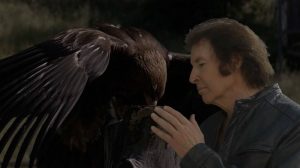 There are numerous sequences that just make you shake your head. My favorites include an interlude with a slow-motion hawk that Breen nuzzles up next to. Seriously, there is a lot of green screen work throughout the film including a Wiseau-style fixation on things that shouldn’t need green screen. Why green screen the exterior of a building? Could Neil Breen not find one building exterior in all of his home state of Nevada? There’s a sequence where a woman materializes and literally turns on another Neil Breen movie, firmly establishing the connected universe theory. This same woman leads a man inside a literally red-lit abode (more on lighting below) and you suspect someone will be killed, either the woman or the mysterious john you never see above the neck. Nothing comes of it. Occasionally we’ll get a wide shot and watch Cade or Cale walking… for thirty seconds, and sometimes a tree will obstruct our view and we’ll wait for him to appear on the other side of the tree…. but instead he’ll be in the tree! Aha, you weren’t suspecting that, were you, complacent audience member? I would estimate a solid 80 percent of the movie’s dialogue is Breen’s voice over stating the obvious or the preposterous. In consecutive lines of voice over he says, “I miss my brother,” and, “I miss what I never knew.” But you knew your brother; we’ve seen footage of you two together.
The relationship with Cade’s wife is baffling. It begins with Cade running into a woman and profusely apologizing and declaring he will make it up with dinner. She is not interested in the slightest but he doesn’t acknowledge her discomfort at all and persists. He then FOLLOWS her home. He then BREAKS INTO her home. He then ATTACKS her and ostensibly tries to rape her while calling her a “bitch.” This awkward moment then transitions into the eventual revelation that it was all one big role-play. What? Neil Breen purposely staged his character attempting rape and made it into a sex game for he and his ever-accommodating wife? That’s so weird and off-putting. I don’t think Neil Breen is the kind of artist to attempt something approaching Elle.
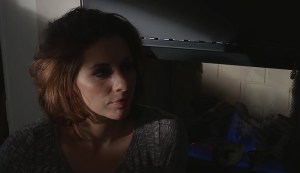 The technical specs are spotty, especially the lighting. There seems to be two prevalent styles of lighting a scene: 1) overblown to hell, casting harsh shadows, and 2) with a small diagonal sliver. This sliver approach happens in numerous scenes and always seems to find the faces of the actors in the scene, or Breen or whoever will use it as a mark, walking into that small sliver of light and exposing their face. It happened so often that my rowdy theatrical audience turned it into a game, loudly cheering whenever a character “met their mark” and was highlighted by that available strand of light. I think this is what Breen thinks makes a professional looking movie or a film noir.
The acting hasn’t gotten any better over time. As I wrote about Breen’s performance in Fateful Findings: “Let’s start with Breen himself, who is fairly listless and deadpan throughout. He raises his voice but rarely does he change how he’s responding. He’s aloof and strikingly self-serious at the same time.” Since there are two Breens, consider this observation even more fitting. The rest of the actors don’t have much to work with. There isn’t a natural performance in the film. Often the delivery is stilted or overemphasized, pausing at weird points or simply raising the volume for effect. At least with previous Breen outings there was another actor or two to single out, usually not in a positive way mind you. With Twisted Pair, it’s all Breen, all the time, for better or worse.
 So ultimately where does Twisted Pair fall on the curve of so-bad-it’s-good cinema? It is a hoot, a misguided and poorly executed sci-fi thriller with baffling and repetitious plot turns, characterization, and puzzling decisions at nearly every level of filmmaking. Having digested five Breen movies (and lived to tell the tale) I can attest that there are patterns that emerge in each one of his films. He’s always going to be portrayed as a crusading hero against the corrupt forces out there bewildering the little guy, he’ll have a dash of supernatural elements that will never be adequately explained, his idea of romance is comically chaste and usually involves women face down and topless, and he’ll gift the audience with head-smacking redundancy of scenes, motifs, messages. If you have to skip out to the bathroom at any point, whatever you miss will be covered again. Twisted Pair is mid-range Breen, not quite as high as his crowning achievement, Fateful Findings. It runs out of steam in the final fifteen minutes and even my rowdy midnight-movie crowd sensed the drop-off. The movie is playing one-night-only screenings across the country. If you get a chance, and love the weird world of sincerely made bad movies, then I highly recommend gathering a group of friends and checking out Twisted Pair and doing your best to make sense of it during and after the film.
Nate’s Grade: F
Entertainment Value: A-
Share this:

The Predator (2018)
 It’s been 31 years since the first Predator strutted its camouflaged self onto the big screen and bedeviled Arnold Schwarzenegger and company. Since then the dreadlock-sporting intergalactic sportsman has become a familiar vaginal face to movie audiences around the world. One of those company deaths in the original movie was none other than Shane Black, years before the writer/director became a bankable Hollywood commodity. Black is going back home to revive the dormant franchise with The Predator, a big-budget sequel/reboot that aims for the stars and falls far, far too short.
An alien spaceship belonging to a rogue Predator crashes on Earth, scattering important debris. Quinn McKenna (Boyd Holbrook) is a black ops sniper and the only surviving member of his team who happened to be on site when the ship crashed. The government says he’s crazy and transfers him onto a bus filled with other mentally disturbed military vets who call themselves “the Loonies” (Trevante Rhodes, Keegan-Michael Key, Thomas Jane, Alfie Allen, Augusto Aguilera). A tough-talking government agent, Traeger (Sterling K. Brown), seeks out a biological specialist, Dr. Brackett (Olivia Munn), to examine their interstellar prize. At the secret lab, the Predator breaks free, Dr. Brackett chases after the specimen, and she teams up with the “Loonies” to track down the alien. After his initial Predator encounter, Quinn mailed the alien helmet and other evidence to his son, Rory McKenna (Jacob Tremblay), a young boy with autism who cracks the alien code and becomes the target of a Predator, a Super Predator, and the government.
 The Predator is a supremely messy movie, often feeling like two separate screenplays inelegantly stitched together, one a big bloody action thriller, the other a winky Shane Black vehicle with a cavalier, macabre sense of humor. It doesn’t quite work because the movie can’t fully settle on a tone, or a direction, and thus it keeps providing glimpses of the many versions of the kind of movie it could have been instead. I’ll openly admit to being a Shane Black fan when he embraces his sly instincts, command of genre, and ribald wit (Kiss Kiss Bang Bang is a modern comic masterpiece; The Nice Guys is… pretty good), so the Black touches were my favorite part especially because they stood out the most. I enjoyed the characters entering into scene-breaking asides, like Dr. Brackett questioning why the alien would be named a “predator” given its behavior is more akin to a hunter or a fisherman, and Traeger shrugging, “Yeah, well, we took a vote and ‘predator’ was cooler. Right guys?” Or when a character is being held at tranquilizer gunpoint and mocks the danger, only to be tranqued point blank in the eye, killing him. Or a bully suddenly getting drilled by the defense mechanisms of the Predator helmet and murdered. It’s these moments that kept me most entertained, demonstrating Black’s unique voice that can take genre filmmaking within a studio sphere and turn it on its head with a devilish grin. If The Predator had been more a Shane Black vehicle than a Shane Black studio reboot, then perhaps the final product would have risen above the mediocrity that sinks it.
Much of that mediocrity comes from the middling plotting, mostly after the first act. For a solid half hour, I think Black has something promising, having set up the various characters and gotten them to intersect and go on the run together as a merry band of outlaws and amateur alien hunters. Once the “Loonies” break free with Dr. Brackett is where the movie loses its sense of direction. The plot just stumbles from one set piece to another, rarely with good reason. One minute they’re running away from a Predator creature and the next they run into an apparently unlocked high school building rather than flee in cars and RVs. Most of the plot movement follows little Rory, first reaching him before the bad men do, then rescuing him from Predator dogs, and Predator, and then he’s kidnapped by the bad guys, then he’s hunted by the Super Predator and I’m tired. This kid is a spectrum-walking, spectrum-talking plot device (more on that below). It feels decidedly odd to have a super sniper paired with a renegade group of mentally disturbed and dangerous military castoffs and instead of them primarily hunting and killing a space alien they are rescuing a little boy with special needs. It would be like having a Tarantino rouges gallery teaming up to teach a child how to read. It feels like a misapplication of the character dynamics onscreen, which again gets to my central criticism of the final film feeling too much like separate movies in conflict. The studio elements (supportive yet feisty ex-wife, autistic savant, Predator dogs) feel too obvious.
 The action is serviceable with a few dandy practical gore effects. There’s a nasty, visceral quality of the action that proudly wears its R-rating as a badge of honor, as a PG-13 Predator movie would be a disservice to the universe’s most fearsome hunter (the first Alien vs. Predator was PG-13; I suppose acid and florescent blood are less traumatic to be seen gushing from hacked limbs?). The action gets a lot more boring once the Super Predator is introduced, an eleven-foot all-CGI monstrosity that needed a bit more work. Beforehand the Predator is a combination of makeup and practical effects, allowing longer interaction with its environment. I enjoyed the Predator breaking out of the lab. I did not enjoy the team taking on the Super Predator at night in the middle of the woods because it decided to go… sporting. Seriously, the second-to-last action set piece has the flimsiest formation. Rather than accomplish its mission, the Super Predator invites all the humans to one more game, though the alien acknowledges that “McKenna” is their only true champion. It devolves to jump scares in the spooky woods, but hey, at least characters can start being eliminated (some of them so abruptly that it’s a blink-and-you’ll-miss-it exit). There are touches throughout the action that keep things lively before ultimately succumbing yet again to the freefall of the project’s creative dissonance.
The actors are enjoyable but I felt bad they weren’t given more. Holbrook (Logan) is consistently upstaged by his eccentric band of compatriots, but only Jane, Key, and Rhodes get any personality. The other guys are just kind of there. I don’t think I laughed once at Key’s (Netflix’s Friends from College) many, many wisecracks. The Tourette’s syndrome tic given to Jane (TV’s The Expanse) is rarely funny, and yet Black goes back to it again and again (the adolescent kid behind me in my theater thought every profanity was the funniest thing ever committed to film). The actors glide by on Black’s signature macho, cocksure style, clinging to every new quip like a lifeline. Munn (X-Men: Apocalypse) has a few fun, feisty moments but is still basically featured as The Girl. Tremblay (Wonder) is making me rethink my evaluation of him after Room. The best actor in the movie, by far, is Brown (Black Panther) who has a malevolent charm that connects most fluidly with Black’s sensibilities. Even his self-satisfied laughter made me laugh.
 We need to talk about the film’s views on autism (there will be some spoilers in this paragraph, so skip ahead if desired). Rory McKenna is of that kind of Hollywood Autism, the kind we see on TV (The Good Doctor) or of classic movies (Rain Man). It’s the designation of autism as a gateway to super powers (never mind that having savant abilities only impacts ten percent at best). Whatever, it’s an unrealistic depiction in an age of better, more nuanced depictions of mental health and disabilities. Where The Predator gets crazy is when Dr. Brackett offers this nugget: “You know many people think autism is just the next step in human evolution.” No. Nobody thinks this. As someone who has worked extensively with children with autism, this is not a thing. I’m not saying by any rationale that those with autism are lesser by any means but they’re no more the next stage in human evolution than any other condition. Ask a person with autism if they feel like the next stage in human evolution, like an X-Men mutant. What makes matters worse is that Black confirms this strange notion when the Super Predator, surprise surprise, was most impressed with Rory McKenna and not his big bad dad. The Super Predator plans to take the kid back to, presumably, harvest his autism DNA so the future predators will… know how to fly their spaceships that they already know how to fly? I don’t know.
The Predator is part sequel, part reboot, part Shane Black genre riff, part muscular R-rated action movie, part chase movie, and part Hollywood mishmash. Apparently the film underwent extensive reshoots as well, retooling the entire third act, which seems obvious in hindsight and only magnifies the disconnect between the central story elements. Shane Black’s signature elements are but glimmers of what could have been. It needed to be more of a genre send-up of 80s-action farce, or a more straight-up action movie, or something where the plot generally made sense and had characters we liked. Was Shane Black playing a joke on the studio? The Predator will probably be most known for editing out a real-life sexual predator, or from its dreadlocked alien dog being domesticated after getting shot in the head, or its depiction of autism, or anything that isn’t really the entertainment level of a mediocre rehash. Check out Predators instead.
Nate’s Grade: C
Share this:

Solo: A Star Wars Story (2018)
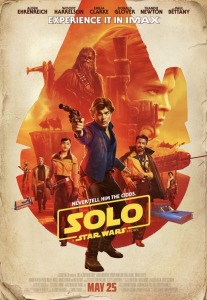 The notorious back-story behind Solo: A Star Wars Story has more than eclipsed whatever else this “young Han Solo” prequel appeared to offer. Directors Phil Lord and Chris Miller were responsible for a string of fast-paced, silly hits like The Lego Movie and the 21 Jump Street films, and when producer Kathleen Kennedy hired them, it felt like an inspired infusion of new blood to make a Star Wars movie different in tone and approach. Five months into shooting and mere weeks away from completing photography, Miller and Lord were fired. The on-set rumors and sources have relayed a badly conceived marriage between the directors, given to improv and irreverence, and Kennedy’s sense of what a Star Wars movie should include. Enter Ron Howard, no stranger to the world of George Lucas, and an extensive battalion of reshoots, and you’re left with Solo, which only lists Howard as director. With that as its genesis, it feels like this movie should be a train wreck. It’s not that. Instead, Solo is fitfully entertaining but underwhelming diversion weighed down by its untapped potential.
Years before that noisy Mos Eisley cantina, Han Solo (Alden Ehrenreich) is a low-level criminal trying to find a better life. He loses his girl, Qi’ra (Emilia Clarke), joins the Imperial Army, and defects, finding a partner in a big hairy wookie named Chewbacca (Joonas Suatamo). The two of them join a crew of thieves run by Beckett (Woody Harrelson), and after a job gone wrong, everyone is in grave danger and deep debt to the crime lord Dryden Vos (Paul Bettany). The crew must even the score and make things right, and they must navigate unreliable allies like Lando Calrissian (Donald Glover), his trusted robotic assistant L3-37 (Phoebe Waller-Bridge), and, most surprisingly, Qui’ra herself, working as one of Vos’ top criminal consultants.
 Solo is hard to justify except as an increasingly tedious appeasement to the greater altar of fan service. The movie reminded me of those young author biopics like Finding Neverland where everything is given the unspoken-though-heavily implied significance of dramatic irony, where the audience knows, “Oh, this will be where that comes from, or that’s the first time that happened, etc.” Solo provides further light on the Star Wars minutia that only a scant few will work up real excitement over. For every interesting revelation, like Han and Chewbacca first meeting and bonding, there are numerous others that could best be characterized as cataloging the story of Who Gives a Crap?: The Movie. Who cares how Han got his dice? On that note, did I just not remember this trinket being as heavily showcased in the original trilogy as these new films emphasize? Also, who cares about how Han gets the Millennium Falcon? Who cares how Han got into the smuggling business? Who cares why Han was on Tatooine to begin with? The film expects audiences to supply the significance for scenes that lack that on their own. Too much of the script by Lawerence and Jonathan Kasdan (In the Land of Women) coasts along on audience good will carried over from the original trilogy.
As far as being a heist movie, Solo doesn’t put much concentrated thought with its heist set pieces. Much of the plot hinges on a “job” to recover a large amount of fuel owed to the scary crime boss, so the job itself should be treated as important. Once topside, the characters stick to their ruse for about five minutes and things immediately go bad and then it’s just one messy, ongoing action sequence. I could understand carefully planning a scheme only for it to unexpectedly go wrong, but the appeal of heists are their intricacy, development, and complications, and Solo sadly snuffs this appeal out. The high-point of the film is an early Act Two heist that’s the sci-fi equivalent of a train robbery. Things start off promising with the space craft being able to rotate around its rail, which tickles the imagination for plenty of dire hangings on. We even get a few preparatory words for the plan, though even those are fairly general. And then things start and they immediately go bad and stay that way without satisfying complication. Part of the appeal of heists is seeing the curve balls, the unexpected complications, and how our team reacts and recovers. It’s a fun sequence with some thrilling visuals but it never rises beyond the sum of its action particulars, and so an important set piece is held back from going for greatness. The action throughout Solo is serviceable but rarely does it feel like what’s onscreen is the best version of what it could have been. Serviceable, sure.
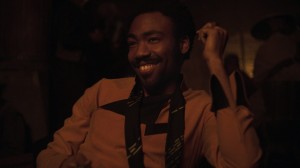 Which brings about the inevitable analysis over what can be gleaned from the final product that traces back to its original team of directors. There are a handful of comic asides that feel like the lasting touch of Miller and Lord. Beyond that, Solo feels very much like Howard’s movie, though much like Rogue One, the mind conjures the possibilities of the original version. One of the biggest changes is that Howard added Bettany’s gangster character. He’s on screen for really two sequences though his importance stretches over the entire film. Solo feels cohesively like one movie to the degree that if you had never heard about the headline-grabbing production tumult, you wouldn’t suspect anything had happened behind-the-scenes. However, the lasting impact seems deeper, namely that many of these sequences feel, to some degree, interchangeable by design. The execution and development feel lacking. It’s a lingering feeling that what you’ve been watching isn’t fully coming together. It’s not fully engaging the attention and making the most of its beloved characters. It feels less like a seminal moment in the story of Han, Chewie, and Lando and more like an extended episode of a television series. I was too detached and grew restless too often. I started waiting for it to be over rather than waiting to see what happened next.
Ehrenreich showed enormous promise with 2016’s Hail, Caesar! both with comedy chops and leading man appeal, so he seemed like a capable choice for a young Han Solo. After rumors of having to hire an emergency acting coach on set, I was expecting a poor performance. He’s decent, grinning through the indignities, stumbling along with a sardonic sensibility that still plays into a confident sense of optimism against the odds. Ehrenreich, much like most of the movie, is perfectly fine, entertaining at times, but far too often a passing blip. The real star of the movie is Glover (TV’s Atlanta) who is brimming with charisma. Plus Lando’s suave, pansexual nature and tendency toward shady scheming lends itself to a more fascinating glimpse at a character we know decidedly less about.
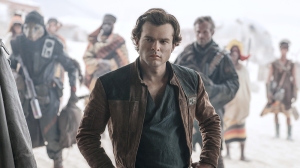 Clarke (HBO’s Game of Thrones) is saddled with a non-starter of a storyline as the old girlfriend who got away. Harrelson (Three Billboards) plays another cranky father figure role. Bettany (Avengers: Infinity War) is generally wasted as a villain lacking a stronger sense of identity or menace. His weapons of choice, two laser-edged knives, seem like where the depth of character creation ended with him. Oh, he also has scars over his face, so that’s about the same as a personality. The lone supporting player that leaves an impression is Waller-Bridge (Fleabag) as the android, L3-37. I could have used an entire movie with her and Lando. She becomes a political revolutionary by accident over the mistreatment of droids, and L3-37 does what the other supporting characters, and even what Ehrenreich to some extent, do not — leave you wanting more.
After its problematic history, it would be easy to look for ways to carve up Solo as a hodgepodge creation of studio interference but that’s too tidy an explanation. I’m not against the idea of a “young Han Solo” film franchise, though it needs to find the right stories to shed new and meaningful light on this classic rogue. Han Solo was, like, mid thirties at the oldest in 1977’s Star Wars and Ehrenreich’s early-to-mid 20s version doesn’t afford a great many differences (he was already a “young” character to start with). If you’ve bought into the Star Wars universe, there should be enough to at least be entertained by, and if you’re a nascent fan, then Solo might be an easily digestible fun adventure. The mitigated or underdeveloped potential nagged at me as I was watching. It’s got aliens and space heists and most of the time I was approaching boredom. I’ll label the movie with its own Scarlet F: it’s… “fine.” It’s the kind of movie you shrug your shoulders at afterwards, not necessarily regretting the experience but moving along. Perhaps we’re just at a natural point in the post-Disney-purchase of Star Wars, and now we’re facing less-than-ideal time-discharged product. I was hoping for more, either good or bad, but had to settle for a relatively lackluster prequel. I don’t know if there will be further escapades with the “young” Han Solo but I wish they choose them more wisely. Even the title feels bland.
Nate’s Grade: C+
Share this:

Avengers: Infinity War (2018)
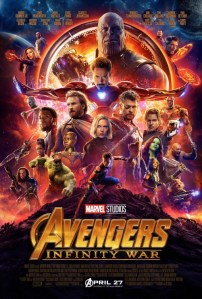 It’s hard to draw comparisons to the major commitment to long-form storytelling that the Marvel Cinematic Universe (MCU) has dabbled with over the course of ten record-shattering years of success. I can think of movie franchises that have been popular over long periods of time, like James Bond, but rarely do they keep to continuity. It’s been 18 movies and ten years since the caddish Robert Downey Jr. first stole our hearts in the original Iron Man, and its stable of heroes and villains has grown exponentially. Looking at the poster for Avengers: Infinity War, it’s hard to believe there’s even enough space just for all of the actors’ names. Infinity War feels like a massive, culminating years-in-the-making film event and it reminded me most of Peter Jackson’s concluding Lord of the Rings chapter, Return of the King. After so long, we’re privy to several separate story threads finally being braided as one and several dispirit characters finally coming together. This is a blockbuster a full decade in the making and it tends to feel overloaded and burdened with the responsibility of being everything to everyone. It’s an epic, entertaining, and enjoyable movie, but Infinity War can also leave you hanging.
Thanos (Josh Brolin) has finally come to collect the six infinity stones stashed around the universe. With their power, he will be able to achieve his ultimate goal of wiping out half of all life in the universe. Standing in his murderous way is a divided Avengers squad, with Tony Stark (Downey Jr.) still on the outs with a wanted-at-large Captain America (Chris Evans) and Black Widow (Scarlett Johansson). One of the in-demand infinity stones resides in the head of the Vision (Paul Bettany), who is in hiding with his romantic partner, Scarlet Witch (Elizabeth Olsen). They know Thanos will be coming for Vision eventually. On the other side are the Guardians of the Galaxy who have a few personal scores to settle with Thanos, the adopted father of Gomora (Zoe Saldana) and Nebula (Karen Gillan). Elsewhere, Thor (Chris Hemsworth) strikes out looking for the key to defeating the big purple menace. Thanos’ loyal lieutenants attack Earth to gather the remaining infinity stones, drawing the attention and push-back of Doctor Strange (Benedict Cumberbatch) and Peter Parker (Tom Holland). The various heroes of Earth and space unite to eliminate the greatest threat the universe has ever known.
 Avengers: Infinity War serves not as much a series of payoffs as it is climaxes, with climactic event right after another, and this time it’s for keeps (more on that below). There are moments that feel like major payoffs and moments that feel like shrug-worthy Last Jedi-style payoffs. Infinity War is the longest MCU movie yet at 149 minutes but it has no downtime. That’s because it has to find room for dozens of heroes across the cosmos. With the exception of three super heroes, everyone is in this movie, and I mean everyone. This is an overstuffed buffet of comic book spectacle, and whether it feels like overindulgence will be determined by the viewer’s prior investment with this cinematic universe. If this is your first trip to the MCU, I’d advise holding off until later. Any newcomer will be very lost. I’ve deduced the seven MCU movies that are the most essential to see to successfully comprehend the totality of the Infinity War dramatics, and they are Iron Man, The Avengers, Captain America: Winter Soldier, Guardians of the Galaxy, Captain America: Civil War, Doctor Strange, and Thor: Ragnarok. Naturally, being intimately familiar with the previous 18 movies will be best, but if you don’t have thirty hours to spare then please follow my seven-film lineup and you’ll be solid.
As far as the stakes, the MCU has been notoriously reluctant about killing off its characters, but Infinity War is completely different. I won’t spoil circumstances or names, of course, but the march of death happens shockingly early and carries on throughout. There are significant losses that will make fans equally gasp and cry. This is a summer blockbuster that leaves behind an impressive body count across the known universe and ends in a downbeat manner that will naturally trigger reflexive Empire Strikes Back comparisons. It’s hard to feel the full impact of the drastic decisions, and the grief over their losses because I know there is a Part Two coming summer 2019, and with that comes the almost certainty that several important events will be diminished or straight-out reversed. After all, in comics, nobody is ever really dead, though with movies the heroes have the nagging habit of aging. With that said, you better believe I was holding my breath during some standoffs, tearing up at some sudden goodbyes, and reflecting upon journeys shared.
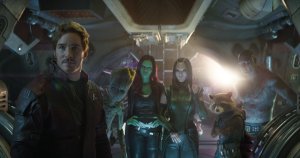 This is very much Thanos’ movie, which was one of the bigger surprises for me. Beforehand, our exposure to the big purple guy has been relatively minor, a brief moment here or a cameo there during a post-credit scene. Considering Thanos is supposed to be the universe’s biggest bad, it makes sense to finally give him his due, and that is what Infinity War does. Thanos gets the most screen time of any character and is given an honest-to-God character arc. He’s a villain who goes on an actual emotional journey as he follows a path that he feels compelled to even as it tests him personally. He finally opens up as a character rather than some malevolent force that is oft referred to in apocalyptic terms. We get his back-story and motivation, which is less a romantic appeal to Death like in the comics and more a prevention of the apocalypse reminiscent of the Reapers in the Mass Effect series. Thanos sees himself as a necessary corrective force and not as a villain. He’s never portrayed in a maniacal, gleeful sense of wickedness. Instead he seems to carry the heaviness of his mission and looks at the Avengers and other heroes sympathetically. He understands their struggle and defiance. Having an actor the caliber of Brolin (Deadpool 2) is a necessity to make this character work and effectively sell the emotions. Thanos is the most significant addition to the MCU appearing the latest, so there’s a lot of heavy lifting to do, and Infinity War fleshes him out as a worthy foe.
 As an action spectacle, however, Infinity War is good but not great. The action sequences are interesting enough but there’s nothing special and little development. There’s nothing that rivals the delirious nerdgasm of the airport battle in Civil War pitting hero-against-hero to dizzying degree. The characters are separated into units with their own goals leading to a final confrontation that feels more climactic conceptually than in execution. That’s because this is an Avengers film that falls into some of the trappings of the glut of super hero cinema, namely the army of faceless foot soldiers for easy slaughtering, the over exaggerated sense of scale of battle, the apocalyptic stakes that can feel a bit like a bell rung too many times, and even minor things like the lackluster supporting villains. Thanos’ team of lieutenants are all the same kind of sneering heavy with the exception of one, a sort of alien cleric heralding the honor of death from Thanos. Carrie Coon (HBO’s The Leftovers) is generally wasted providing the mo-cap for the Lady Lieutenant That Sounds Like a Band Fronted by Jared Leto, a.k.a. Proxima Midnight. There are far too many scenes where characters reluctantly strike a deal to give up an infinity stone if Thanos will spare the life of a beloved comrade. The film’s greatest point of entertainment isn’t with its action but the character dynamics. The fun is watching years-in-the-making character interactions and seeing the sparks fly. There’s more joy in watching Downey Jr. and Cumberbatch try and out smarm one another than with any CGI collision of a faceless army of monsters. There are so many characters that few are given fully defined arcs. Most are given beginnings and stopping places. Though the eventual sequel will have fewer characters needing to share precious screen time.
The standouts on screen are Hemsworth (12 Strong) carrying a large portion of the movie and not missing a beat of his well-honed comic rhythms from Ragnarok, Bettany (Solo) brings a sad soulfulness to Vision as a man who knows fate is likely unavoidable, and Dave Bautista (Blade Runner 2049) is perfectly deadpan as Drax and has the funniest lines in the movie followed closely by the exuberant Holland (Lost City of Z). To even say which characters deal with more complex emotions might be a spoiler in itself but there are several actors showing an emotive level unseen so far in the bustling MCU.
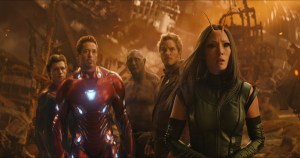 Avengers: Infinity War marks a significant concluding chapter for one of cinema’s most popular series, until at least the next movie possibly makes it feel less conclusive. I pity Marvel because expectations are going to be astronomical for this climactic showdown. There are so many characters, so many crossovers, and so much to still establish, like Thanos as a character more than a spooky force of annihilation, that it feels rather breathless even at nearly two-and-a-half hours. You may be feeling a rush of exhilaration on your way out or an equally compelling sense of exhaustion. Infinity War doesn’t have the imaginative highs of a Dcotor Strange, the funky personality and style of a Guardians of the Galaxy, the wonderfully thought-out structure of a Spider-Man: Homecoming, the adroit weirdness of a Thor: Ragnarok, or even the hero-against-hero catharsis of a Civil War (still my favorite). What it does have is a sense of long-gestating finality, of real stakes and dire consequences. It’s not all pervading doom and gloom; this is still a fun movie, buoyed by crackling character team-ups and interactions. While, Infinity War won’t be all things to all people, myself included, it will please many fans, casual and diehard alike.
Nate’s Grade: B


 nathanzoebl
You must be logged in to post a comment.