Blog Archives
Eddington (2025)

I’ve read more than a few searing indictments about writer/director Ari Aster’s latest film, Eddington, an alienating and self-indulgent movie starring Joaquin Phoenix on the heels of his last alienating and self-indulgent movie starring Phoenix. It’s ostensibly billed as a “COVID-era Western,” and that is true, but it’s much more than that. I can understand anyone’s general hesitation to revisit this acrimonious time, but that’s where the “too early yet too late” criticism of others doesn’t ring true for me. It is about that summer of 2020 and the confusion and anger and anxiety of the time; however, I view Eddington having more to say about our way of life in 2025 than looking back to COVID lockdowns and mask mandates. This is a movie about the way we live now and it’s justifiably upsetting because that’s where the larger culture appears to be at the present: fragmented, contentious, suspicious, and potentially irrevocable.
Eddington is a small-town in the dusty hills of New Mexico, neighboring a Pueblo reservation, and it serves as a tinderbox ready to explode from the tension exacerbated from COVID. Sheriff Joe Cross (Phoenix) has had it up to here with mask mandates and social distancing and the overall attitude of the town’s mayor, Ted Garcia (Pedro Pascal). Joe decides to run for mayor himself on a platform of common-sense change, but nothing in the summer of 2020 was common.
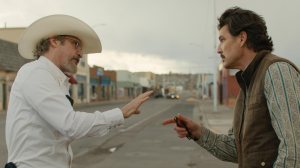
Eddington is a movie with a lot of tones and a lot of ideas, and much like 2023’s Beau is Afraid, it’s all over the place with mixed results that don’t fully come together for a coherent thesis. However, that doesn’t deny the power to these indefatigable moments that stick with you long after. That’s an aspect of Aster movies: he finds a way to get under your skin, and while you may very well not appreciate the experience because it’s intentionally uncomfortable and probing, it sticks with you and forces you to continue thinking over its ideas and creative choices. It’s art that defiantly refuses to be forgotten. With that being said, one of the stronger aspects of Aster’s movies is his pitch-black sense of comedy that borders on sneering cynicism that can attach itself to everything and everyone. There are a lot of targets in this movie, notably conspiracy-minded individuals who want people to “do their own research,” albeit research ignoring verified and trained professionals with decades of experience and knowledge. There’s a lot of people talking at one another or past one another but not with one another; active listening is sorely missing, as routinely evidenced by the silences that accompany the mentally-ill homeless man in town that nobody wants to actively help because they see him as an uncomfortable and loud nuisance. For me, this is indicative of 2025, with people rapidly talking past one another rather than wanting to be heard.
When Aster is poking fun at the earnestness of the high school and college students protesting against police brutality, I don’t think he’s saying these younger adults are stupid for wanting social change. He’s ribbing how transparently these characters want to earn social cache for being outspoken. It’s what defines the character of Brian, just a normal kid who is so eager to be accepted that he lectures his white family on the tenets of destroying their own white-ness at the dinner table, to their decidedly unenthusiastic response. I don’t feel like Aster is saying these kids are phony or their message is misapplied or ridiculous or without merit. It’s just another example of people using fractious social and political issues as a launching point to air grievances rather than solutions. The protestors, mostly white, will work themselves into a furious verbal lather and then say, “This shouldn’t even be my platform to speak. I don’t deserve to tell you what to do,” and rather than undercutting the message, after a few chuckles, it came across to me like the desperation to connect and belong coming out. They all want to say the right combination of words to be admired, and Brian is still finding out what that might be, and his ultimate character arc proves that it wasn’t about ideological fidelity for him but opportunism. The very advancement of Brian by the end is itself its own indictment on white privilege, but you won’t have a character hyperventilating about it to underline the point. It’s just there for you to deliberate.

Along these lines, there’s a very curious inclusion of a trigger-happy group in the second half of the movie that blends conspiracy fantasy into skewed reality, and it begs further unpacking. I don’t honestly know what Aster is attempting to say, as it seems like such a bizarre inclusion that really upends our own understanding of the way the world works, and maybe that’s the real point. Maybe what Aster is going for is attempting to shake us out of our own comfortable understanding of the universe, to question the permeability of fact and fiction. Maybe we’re supposed to feel as dizzy and confused as the residents of Eddington trying to hold onto their bearings during this chaotic and significant summer of 2020.
I think there’s an interesting rejection of reality on display with Eddington, where characters are trying to square news and compartmentalize themselves from the proximity of this world. Joe Cross repeatedly dismisses the pandemic as something happening “out there.” He says there is no COVID in Eddington. For him, it’s someone else’s problem, which is why following prevailing health guidelines and mandates irks him so. It’s the same when he’s trying to explain his department’s response to the Black Lives Matter protests that summer in response to George Floyd’s heinous murder. To him, these kinds of things don’t happen here, the people of Eddington are excluded from the social upheaval. This is an extension of the “it won’t happen to me” denialism that can tempt any person into deluding ourselves into false security. It’s this kind of rationalization that also made a large-scale health response so burdensome because it asked every citizen to take up the charge regardless of their immediate danger for the benefit of others they will never see. For Joe, the tumult that is ensnaring the rest of the country is outside the walls of Eddington. It’s a recap on a screen and not his reality. Except it is his reality, and the movie becomes an indictment about pretending you are disconnected from larger society. It’s easier to throw up your hands and say, “Not me,” but it’s hard work to acknowledge the troubles of our times and our own engagement and responsibilities. In 2025, this seems even more relevant in our doom-scrolling era of Trump 2.0 where the Real World feels a little less real every ensuing day. It’s all too easy to create that same disassociation and say, “That’s not here,” but like an invisible airborne virus not beholden to boundaries and demarcations, it’s only a matter of time that it finds your doorstep too.

You may assume with its star-studded cast that this will be an ensemble with competing storylines, but it’s really Joe Cross as our lead from start to finish, with the other characters reflections of his stress. I won’t say that most of the name actors are wasted, like Emma Stone as Joe’s troubled wife and Austin Butler as a charismatic conman pushing repressed memory child-trafficking conspiracies, because every person is a reflection over what Joe Cross wants to be and is struggling over. Despite his flaws and some startling character turns, Aster has great empathy for his protagonist, a man holding onto his authority to provide a sense of connectivity he’s missing at home. Our first moment with this man is watching him listen to a YouTube self-help video on dealing with the grief of wanting children when your spouse does not. Right away, we already know there’s a hidden wealth of pain and disappointment here, but again Aster chooses empathy rather than easy villainy, as we learn his wife is struggling with PTSD and depression likely as a result of her own father’s potential molestation. This revelation can serve as a guide for the rest of the characters, that no matter their exterior selves that can demonstrate cruelty and absurdism, deep down many are processing a private pain that is playing out through different and often contentious means of survival. I don’t think Aster condones Joe Cross’ perspective nor his actions in the second half, but I do think he wants us to see Joe Cross as more than just some rube angry with lockdown because he’s selfish.
It’s paradoxical but there are scenes that work so splendidly while the movie as a whole can seem overburdened and far too long. The cinematography by the legendary Darius Khnodji (Seven, City of Lost Children) expertly frames and lights each moment, many of them surprising, intriguing, revealing, or shocking. There can be turns that feel sudden and jarring, that catapult the movie into a different genre entirely, into a Hitchcockian thriller where we know exactly what the reference point is that I won’t spoil, to an all-out action showdown popularized by Westerns. Beyond Aster’s general more-is-more preference, I think he’s dabbling with the different genres to not just goose his movie but to question our associations with those genres and our broader understanding of them. It’s not quite as clean as a straight deconstructionist take on familiar archetypes and tropes. It’s more deconstructing our feelings. Are we all of a sudden in a forgiving mood because the movie presents Joe as a one-man army against powerful forces? It’s all-too easy to get caught up in the rush of tension and satisfying violence and root for Joe, but should we? Is he a hero just because he’s out-manned? Likewise, with the conclusion, do we have pity for these people or contempt? I don’t know, though there isn’t much hope for the future of Eddington, and depressingly perhaps for the rest of us, so maybe all we have are those fleeting moments of awe to hold onto and call our own.

Eddington is an intriguing indictment about our modern culture and the rifts that have only grown into insurmountable chasms since the COVID-19 outbreak. It’s a Western in form pitting the figure of the law against the moneyed establishment, and especially its showdown-at-the-corral climax, but it’s also not. It’s a drama about people in pain looking for answers and connections but finding dead-ends, but it’s also not. It’s an absurdist dark comedy about dumb people making dumb and self-destructive decisions, but it’s also not. The paranoia of our age is leading to a silo-ing of information dissemination, where people are becoming incapable of even agreeing on present reality, where our elected leaders are drowning out the reality they don’t want voters to know with their preferred, self-serving fantasy, and if they just say it long enough, then a vulnerable populace will start to conflate fact and fiction. I don’t know what the solution here is, and I don’t think Aster knows either by the end of Eddington. I can completely understand people not wanting to experience a movie with these kinds of uncomfortable and relevant questions, but if you want to have a closer understanding of how exactly we got here, then Eddington is an artifact of our sad, stupid, and supremely contentious times. Don’t be like Joe and ignore what’s coming until it’s too late.
Nate’s Grade: B
Share this:

Horizon: An American Saga – Chapter 1 (2024)
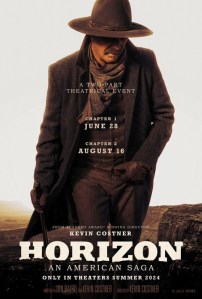
I admire Kevin Costner throwing out all the stops to achieve his passion, a four-part, twelve-hour film series to showcase a sprawling Western epic. The man put a hundred million of his own money into the first two parts of Horizon: An American Saga, and the time devoted to this project was so all-consuming that Costner quit the Yellowstone series, a cable TV juggernaut getting bigger ratings every season. It’s ballsy all right, to abandon a monumentally successful series at the height of its zeitgeist popularity so he can direct not just one but four throwback Westerns that will ultimately be as long as the Lord of the Rings trilogy. It’s rare to see this level of sheer chutzpah in Hollywood. Horizon’s first part was released in June, with its completed second part intended to be released a mere two months later in August. After the poor box-office of Part One, the studio decided to pull Part Two from the release schedule, ostensibly to give people more time to catch the first movie. Will we ever see Part Two in theaters? Will we ever see Part Three, which Costner is currently filming, or Part Four, which Costner is currently raising money for? Costner intended to release the whole saga as a miniseries upon completion, and this might be the best case scenario. As a movie, albeit one quarter of an intended whole, Horizon Part One feels far more structured as an incomplete and rather prosaic TV series.
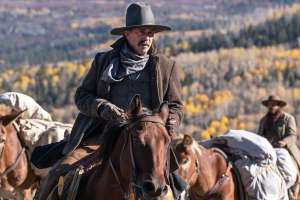
Upon the completion of the 170 minutes, I was left wondering what was here that would make someone want to come back for a lengthy second part, let alone a third and a fourth. It doesn’t feel like a complete movie or even a completed chapter, and again let me cite Peter Jackson’s Lord of the Rings series. Released over the course of three years, each movie had its own form of a beginning, middle, and end, with each climaxing around some event that left one satisfied by its conclusion. They didn’t just feel like chapters linking to the next; they felt like completed stories that pushed forward a larger overall story. Now, with Horizon Part One, it doesn’t feel like a three-hour movie, rather like three one-hour episodes of a TV series. Each of those hours feels too separate from the other. I’m reminded of television in the streaming era, where producers anticipate viewers binging through multiple episodes in speedy succession. This tacit assumption lends itself toward the general pacing issues I find with too many streaming series, where the filmmakers take far too long to get things moving in a significant manner. I’m reminded of a joke by Topher Florence that back in the day a show like Surf Dracula would feature its lead character surfing in weekly adventures, but the streaming age version would take its entire first season showing how he got his surfboard and then spend five minutes surfing in the finale. When you’re pacing out only one quarter of your possible intended story, calling it slow and lacking development and payoffs is an obvious hazard, which is why every movie needs to be its own thing, to provide a sense of conclusion even if it’s not the final conclusion.
Part One is divided into three parts: 1) the early settlers of Horizon, in the San Pedro Valley, being massacred by the Apache, 2) an old gunslinger (Kevin Costner) tasked with protecting a woman and child on the run from vengeful gunmen, 3) a wagon train of settlers headed to Horizon. Now, from that very streamlined synopsis, which of those storylines sounds the most exciting? Which of those storylines sounds like it can lend itself toward having an in-movie climax? Which of these storylines feels the most fraught with danger and intrigue? It’s the one starring Costner himself, of course, fitting naturally into the role of a tough curmudgeon.
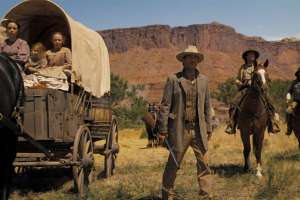
I’m confused why the entire first hour of this movie is devoted to following the frontier town when we’re only going to get two survivors total that go forward. As far as its narrative importance, this entire section could have been condensed to a terrifying flashback from Frances Kittredge (Sienna Miller) and her daughter after the fact. The majority of this hour is spent watching the fine Christian folk of the early days of Horizon die horribly. We’re confined inside the battered Kittredge home that serves as the foundation of a siege thriller, with the band of various townspeople trapped and trying to fight off their indigenous intruders. The attack is prolonged and unsparing in its violence, eliminating all these nice, smiling faces from before. What does it add up to? It’s the tragic back-story for Frances, but it also makes her conveniently romantically unattached so that the nice cavalryman, Trent Gephart (Sam Worthington), can swoon and she can Learn to Love Again. It also sets up a young Apache warrior, Pionsenay (Owen Crow Shoe), making aggressive moves that his elders disagree with in their continued efforts to find some balance with the American settlers grabbing their territory. It also sets up what serves as the only possible character arc completion, with young Russell (Etienne Kellici) escaping the massacre in the beginning to then witness a massacre of Apache, and as he observes the scalping butchery, it galls him, not providing the relief of vengeance he had sought. Now that’s a conceivably emotional storyline, but Russell isn’t the primary character, or even one of the most essential supporting characters. You might genuinely forget about him like I did.
Something else I forgot an hour in was that Part One opens with Ellen Harvey (Jena Malone) shooting her abusive husband and running out. This prologue eventually comes back to setting up the present-day conflicts of the second hour, where Ellen has started a new life as Lucy with her young son. She lives in the Wyoming territory with a prostitute, Marigold (Abbey Lee). This storyline picks up significantly with new characters coming into the mix and disrupting the status quo. The first is Hayes Ellison (Costner) who finds himself attracted to Marigold, perhaps recognizing a woman in over her head. The second are the Sykes brothers (Jamie Campebell Bower, Jon Beavers) who have come looking to retrieve Lucy and her child, the son of their dearly departed pa who was slain in the opening. I am astounded that Costner decided to make the audience wait an hour for this segment because it feels like a much better fit to open Part One. There’s an immediacy to the looming danger and the consequences of actions, and what would serve as the Act One break is when Hayes has to intervene at great risk. This is, by far, the best segment of Horizon Part One. The ensuing on-the-run segment doesn’t get much further, setting up ongoing antagonism between the two sides that presumably will come to blows again. It’s not exactly reinventing the wagon wheel here: drifter reluctantly becoming protector for the vulnerable and reckoning with his shady past and trying to make amends. However, for this first movie, at least this storyline provides a sustained level of engagement with needed urgency.

The weakest portion is the wagon train led by Matthew Van Weyden (Luke Wilson). The most significant conflict during this section isn’t even the protection of the wagon train, it’s whether or not the hoity-toity British couple (Tom Payne, Anna and the Apocalypse‘s Ella Hunt) will assimilate to life on the prairie. They’re privileged, though at least he seems to recognize this. She bathes in the drinking water supply in an extended sponge bath sequence that feels so oddly gratuitous and leery. Two scouts are caught eagerly peeping and this seems like the most significant conflict of this whole section. They’re headed for Horizon, the setting of tragedy and indigenous conflict we know, but the entire wagon train lacks any feeling of dread or even the opposite, a feeling of yearning for a new life. It’s just a literal pileup of underwritten characters in movement without giving us a reason to care.
Costner’s Western eschews the trappings of modern revisionism, deconstructing the heroism and Manifest Destiny mythology of popular Wild West media. This isn’t a deconstruction but a full blown romantic classical Western, embracing the tropes with stone-faced gusto. In some ways it feels like Costner’s version of a Taylor Sheridan show (1883, Yellowstone). He left a Sheridan show to make his own Sheridan show. It’s more measured in its portrayal of the Native Americans even as it shows them massacring men, women, and children as our first impression. I wager Costner is showing that the evils of violent tendencies pervade both sides of the conflict, with a troop of American scalp-hunters that don’t really care where those scalps come from. It’s hard to fully articulate the themes given this is only one-fourth of the overall intended picture. The expansive settings are stunning and gorgeously filmed. I can understand why Costner would want people to watch this movie on the big screen with scenery this beautiful from cinematographer J. Michael Muro, who served as Costner’s DP on 2003’s Open Range, another muscular Western. Fun fact: Muro also served as a Steadicam operator on Costner’s Best Picture-winning Dances with Wolves, so their professional relationship goes back thirty-five years and covers Costner’s love affair with Westerns.

During its conclusion, Horizon: An American Saga runs through a wordless montage of clips that serves as a trailer for the forthcoming Part Two. It’s not edited like a trailer, more so a very leisurely preview with clips that look good but, absent context, can be shrug-worthy. Oh look, a character looking out a window pensively. Oh look, a character walking along a trail. Oh look, a character dismounting from a horse. Oh look, another character looking out a window pensively. It’s hard for me to fathom this truncated preview getting too many people excited for what Part Two has to offer, but then I think that’s the same problem with Part One. It doesn’t serve as a grabber, with characters we really care about, with conflicts that keep us glued, and with revelations and character turns that can keep us intrigued and desperately wanting more. It’s hard for me to think of that many people walking out of Part One and being ravenous for nine more hours. I accept that stories might feel incomplete and characters might feel disjointed, but Horizon is perhaps a Western best left in the distance, at least until you can binge it in its completed form, whatever that may be, though I doubt we’re going to get four full movies. Ultimately, Costner’s opus will need to be judged as a whole rather than as consecutive parts.
Nate’s Grade: C
Share this:

The Power of the Dog (2021)
 Every year, it seems that Netflix’s crown jewel for their big Oscar hopes ends up getting marvelous critical acclaim, and then when I finally watch it I am left disappointed. It happened in 2018 with Roma. It happened in 2019 with The Irishman. And it happened in 2020 with Mank. I haven’t disliked any of those movies, but I was unable to see the highly laudable merits as other critics. Now here comes their big Oscar play for 2021, Jane Campion’s The Power of the Dog, a Western that has been gracing the top of more critics lists than any other American film this year (I’ll be getting to you soon enough, Drive My Car). As I burned through awards movie after awards movie to assess, I held back from The Power of the Dog for a time. I just didn’t want to find that once again I was disappointed with the latest Netflix Oscar contender. I’m still chewing over my feelings with The Power of the Dog, which has a lot going on under the surface and a palpable tension that you’re unsure of how and when it will erupt. It’s also a movie that touches upon repression, toxic masculinity, manifest destiny, grooming, emotional and physical manipulation, and the danger of unstable men who are unable to process who they really are.
Set in 1925 Montana, Phil (Benedict Cumberbatch) and his brother George (Jessie Plemons) own and operate a cattle ranch. George marries a widow, Rose (Kirsten Dunst), and brings his new wife and her teenage son, Peter (Kodi Smit-McPhee) to live at the ranch. Phil resents his new sister-in-law, looks down on her son, and torments both repeatedly. Rose sees Phil as an enemy, someone who will not stop until he forces her out, and his target becomes her son, Peter.
 This is less a traditional Western in several respects and more a tight character study that happens to be set at the conclusion of a Western fantasy for America, transitioning to modernity. It goes against our preconceived notions of a Western, not in a deliberately deconstructive way like 1992’s brilliant Best Picture, Unforgiven, but more in providing contrary thematic details that often get squeezed out. I was expecting the movie to take place maybe during the 1870s or 1880s, but the fact that it’s taking place five years removed from the Great Depression offers different story opportunities and larger reflection. There’s a reason this story is told well after the halcyon days of the Old Wild West. The movie is about certain characters holding onto an exclusive past that has eclipsed them and others ready to move forward by shuttling over their past and the obstacles standing in the way of personal progress.
There are thematic layers expertly braided together that touch upon the larger question over what it means to be a man in society. Each of the primary male characters (Phil, George, Peter) is an outsider to some degree, someone who doesn’t neatly fit into what constitutes a conventional man of the times. George is soft, empathetic, meek yet in a position of power from his family’s status; Peter is rail-thin, academic, odd, effeminate at turns, a dandy presented for ridicule; Phil is the one who presents as a “man’s man,” a hard-driving, hard-drinking man of the land who imposes his will on others. However, deep down, Phil is hiding a key part of himself that would conflict with his society’s view of masculinity. Each man bounces around points of conflict and connection with one another, familial bonds fraying, and a slow-burning battle for supremacy escalating.
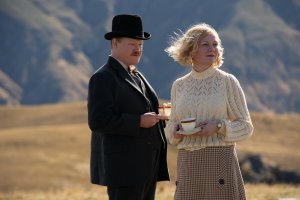 The movie could have also been charitably nick-named “Benedict Cumberbatch is a jerk to everyone,” as this is much of what Campion’s script, based upon the 1957 novel by Thomas Savage consists of. The movie is absent a primary perspective. We drift from person to person in the small-scale ensemble, elevating this next character and their views and worries and priorities. Phil could be deemed the primary protagonist and antagonist, especially the latter. He’s a mean man. Phil is a man who likes to make others uncomfortable, who needles them, and he takes great interest in targeting Rose, partly because he doesn’t like the influence she has on his only brother, and partly because he can get away with it. When he sets his sights on Peter, you don’t quite know what this hostile man will do to get his way. Will he manipulate Peter to turn him from his mother? Will he endanger Peter as a threat to Rose? Will he go further and possibly kill Peter? Or, as becomes more evident, does he see Peter in a very different light, a special kinship that had defined Phil’s own secretive past.
I suppose it’s a spoiler to go further so if you want to, dear reader, then go ahead and skip to the next paragraph. Phil reveres “Bronco Henry,” a deceased rancher that taught him many things when he was younger. The movie heavily, heavily implies that this long-departed older man had a romantic relationship with Phil when he was much younger, something the grown Phil cherishes, caressing himself in private with a scrap of fabric belonging to Henry. The lazy characterization would be, “Oh, Phil is homophobic because he’s really gay, and he’s angry because he cannot accept himself.” With Campion, Phil could be viewed as a victim too. He was likely groomed by an older man, and maybe that relationship was viewed by Phil as more romantic and consensual than it was, but it’s the lingering nostalgic memory of the intimate happiness that he holds onto, afraid to move on because of the danger of letting go and the danger of possibly reaching out, being vulnerable again. Yes, dear reader, this is more a gay cowboy movie than Brokeback Mountain (which, to be fair, were sheep herders). Savage himself was also gay. As Phil takes Peter under his wing, you don’t know whether this man is going to kill or kiss him, and the tension is ripe enough that either way it can ties you up into anxious knots.
The acting is extremely polished all around, with each performer having layers of subtext to shield their true intentions. Cumberbatch (Spider-Man: No Way Home) is a thorn in so many sides and it isn’t until much later that the veil begins to drop, ever so slightly, allowing you to finally see extra dimension with what appears to be a bully character for so long. He might just be too impenetrable for too long for some viewers to develop any empathy. Plemons (Jungle Cruise) and Dunst (Melancholia) are sweet together, and I enjoyed how each one leans upon the other for support. Rose is the butt of much of Phil’s torment and teasing, so we watch Dunst break down under the constant abuse of her berating brother-in-law. When her character sees a way to gain an upper hand, it becomes like a light in the darkness for her momentary relief. I felt heartbroken for Rose as she studied a piano tune for weeks to impress esteemed guests of her husband’s, only to succumb to her nerves and insist she couldn’t play because she didn’t think she could be good enough. Then to watch Phil cruelly needle her further about her disappointment by whistling that same tune is even worse. This is the best acting of Smit-McPhee (Let Me In) since he was vying with Asa Butterfield (Hugo, Ender’s Game) for every preteen lead in big studio features. There’s a deliberate standoffish quality to the character, to Peter’s way of viewing others. It’s like he’s part alien, studying the things that make people tick. Like Cumberbatch, there are multiple layers to this performance because his intentions are equally if not more guarded. You almost need to watch the movie a second time to better identify what Smith-McPhee is doing in scene after scene.
 The Power of the Dog is a terrific looking and sounding movie. The photography is beautiful, the New Zealand landscapes are awe-inspiring, the production design is handsome, the musical score by Johnny Greenwood (There Will Be Blood) is discordant strings that enhances the tension permeating through the movie. Campion hasn’t directed a movie in over ten years, and this is only her second movie since 2003’s misbegotten erotic thriller, In the Cut, starring an against-type Meg Ryan. It feels like she’s had no time away with how controlled and resonant her directing plays. I wish her script was less ambiguous to a fault; it errs somewhat I believe by holding out key revelations about Phil for too long, leaving us with the man being an unrepentant bully for too long. There are significant turns in the concluding minutes that will reorient your interpretation of the entire film, and I have every reason to believe that when I watch The Power of the Dog another time it will be even more impressive.
Congratulations, Netflix, on breaking your streak of disappointing me with your prized awards contenders. I’ve included many Netflix movies in my best lists, and worst lists, over the years, as that is the lot when you have such an enormous library in the prestige streaming arms race. The Power of the Dog is an intimate and occasionally even sensual Western that pushes its put-upon characters to their breaking point, and perhaps the audience, while rewarding the patient and observant viewer. There’s gnawing, uneasy tension that gets to be overwhelming, but the movie benefits from the unexpected destination for where that tension will lead. Will it be violence? Will it be passion? Will it be a crime of passion? The acting is great, the artistic quality of the movie is high, and each scene has much to unpack, allowing for further rewarding examination. I wish there was more of the last half hour when things better come into sharper focus, and I wish the movie was a little less ambiguous for so long, but this is one of the better films of 2021 and Campion’s best movie since 1993’s The Piano (I fully expect her to become the first female director nominated twice for the Best Director Oscar). The Power of the Dog is a lyrical, surprising drama, a sneaky character study, and proof that my Netflix overrated front-runner curse has been lifted (for now).
Nate’s Grade: A-
Share this:

News of the World (2020)
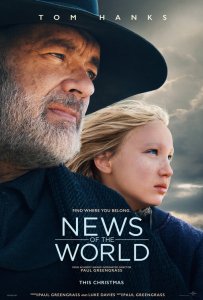 News of the World is an old-fashioned story, a Western and road movie, a grieving father taking a young girl under his wing, but with a slight modern polish thanks to the cinema verite style of director Paul Greengrass (The Bourne Supremacy, Captain Phillips). The handheld camerawork and close-ups create a different kind of mood for a genre defined by long takes of sterling vistas. Hanks plays Captain Kidd, a traveling performer in 1870 who would literally collect newspapers and read the news to the locals, providing a wider understanding of the wider world. Along the way he comes across a young German girl (Helena Zengel) who was raised by a Native American tribe (the same tribe killed her German family and adopted her). He is determined to take her to the last of her family 400 miles away and from there they encounter many dangers and detours. I feel like every big filmmaker at some point feels the need to make a Western, and now Greengrass has scratched that itch. The older genre is so mythic and filled with grandly romantic notions of the frontier. News of the World is more an old-fashioned Western, without much in the way of critique, and fairly episodic in plot, and Kidd and the kid travel from miniature set piece to set piece like little narrative cul-de-sacs rarely producing additional connections from their adventures. I hoped Greengrass would bring his docu-drama realism to deconstruct the American romanticism of the Wild West, pick apart at that myth-making and whitewashing, but the movie is more committed to being a safe, square, and traditional old movie. The little girl is less a character and more of a necessary plot device, something to drive this man to confront his grief and provide a purpose for him. I wish there was more to their dynamic but she could have just as easily been replaced with a dog. There is one shootout that serves as the highlight of the film and where Greengrass comes most alive with his sense of tension. I was expecting a bit more conflict or commentary given that Kidd is traveling post-Civil War Southwest and selecting what news each community wants to hear, tailoring to his audience and knowing everyone likes a good story during “these troubled times.” There’s one section where a local boss looks to take advantage of Kidd’s services by forcing him to read from the boss’ propaganda publication and Kidd turns the tables on him. It feels like an anecdote rather than a thesis statement. I kept waiting for more to arise with the characterization but was left disappointed, as much of the movie is kept at a surface-level of who these people are. Whether it’s victim, saint, marauder, or newsman, everyone is pretty much whom you assume on first impression. The movie’s staid pacing lingers. It’s two hours but it’s not in any sense of hurry. Part of this is because the screenplay, based upon a 2016 book by the same name, is entirely predictable. Even the revelations held until the very end for fitting tragic character back-stories can be sussed out. I watched News of the World and kept thinking, “What about this story got these people so excited?” I think it was Greengrass feeling that artistic itch to lend his stamp on the American Western (I was reminded of Ron Howard’s own itch, 2003’s The Missing) and yet it feels like Greengrass was holding back and just sublimated his style to the settled genre expectations. It’s not a bad movie by any means but it lacks anything exceptional to demand a viewing. It’s a perfectly fine movie with a handsome production, gorgeous setting, effective score, and sturdy acting, and when it’s over you’ll say, “Well, that was fine,” and then you’ll go on with your life.
Nate’s Grade: B-
Share this:

Once Upon a Time… in Hollywood (2019)

Quentin Tarantino has been playing in the realm of genre filmmaking for much of the last twenty years. He’s made highly artful, Oscar-winning variations on B-movies and grindhouse exploitation pictures. There are some film fans that wished he would return to the time of the 90s where he was telling more personal, grounded stories. His ninth movie, Once Upon a Time… in Hollywood, is Tarantino returning to the landscape of his youth, the Hollywood back lots and television serials that gave birth to his budding imagination. Tarantino has said this is his most personal film and it’s easy to see as a love letter to his influences. It’s going to be a divisive movie with likely as many moviegoers finding it boring as others find it spellbinding.
In February 1969, actor Rick Dalton (Leonardo DiCaprio) is struggling to recapture his past glory as a popular TV star from a decade prior. Cliff Booth (Brad Pitt) is Rick’s longtime stuntman, personal driver, and possibly only real friend. Rick’s next-door neighbor happens to be Sharon Tate (Margot Robbie), a rising star and the wife to famed director Roman Polanski. All three are on a collision course with the Manson family.
 The thing you must know before embarking into a theater to see all of the 160 minutes of Tarantino’s latest opus is that it’s the least plot-driven of all his movies, and it’s also in the least hurry. This feels like a hang-out movie through Tarantino’s memories of an older Hollywood that he grew up relishing. It’s very much a loving homage to the people who filled his head with dreams, with specific affection given to the life of an actor. Tarantino is exploring three different points of an actor’s journey through fame; Sharon Tate is the in-bloom star highly in demand, Rick Dalton is the one who has tasted fame but is hanging on as tightly as he can to his past image and wondering if he’s hit has-been status, and then there’s Cliff Booth who was a never-was, a replaceable man happy to be behind the scenes and who has met his lot in life with a Zen-like acceptance. Each character is at a different stage of the rise-and-fall trajectory of Hollywood fame and yet they remain there. This isn’t a movie where Rick starts in the dumps and turns his life around, or even where it goes from worse to worse. Each character kind of remains in a stasis, which will likely drive many people mad. It will feel like nothing of import is happening and that Once Upon a Time… in Hollywood is more a collection of scenes than a whole.
What elevated the film was how much I enjoyed hanging out with these characters. Tarantino is such a strong storyteller that even when he’s just noodling around there are pleasures to be had. Tarantino movies have always favored a vignette approach, unwieldy scenes that serve as little mini movies with their own beginnings, middles, and often violently climactic ends. An excellent example of this is 2009’s Inglourious Basterds where the moments are brilliantly staged and developed while also serving to push the larger narrative forward. That’s missing with Hollywood, the sense of momentum with the characters. We’re spending time and getting to know them, watching them through various tasks and adventures over the course of two days on sets, at home, and on a former film set-turned-ranch for a strange commune. If you’re not enjoying the characters, there won’t be as much for you as a viewer, and I accept that. None of the central trio will crack Tarantino’s list for top characters, but each provides a different viewpoint in a different facet of the industry, though Sharon Tate is underutilized (more on that below). It’s a bit of glorified navel-gazing for Tarantino’s ode to Hollywood nostalgia. There are several inserts that simply exist to serve as silly inclusions that seem to be scratching a personal itch for the director, less the story. I was smiling at most and enjoyed the time because it felt like Tarantino’s affection translated from the screen. I enjoyed hanging out with these people as they explored the Hollywood of yesteryear.
 DiCaprio hasn’t been in a movie since winning an Oscar for 2015’s The Revenant and he has been missed. His character is in a very vulnerable place as he’s slipping from the radars of producers and casting agents, filling a string of TV guest appearances as heavies to be bested by the new hero. He’s self-loathing, insecure, boastful, and struggling to reconcile what he may have permanently lost. Has he missed his moment? Is his time in the spotlight eclipsed? There’s a new breed of actors emerging, typified by a little girl who chooses to stay in character in between filming. Everything is about status, gaining it or losing it, and Rick is desperate. There’s a terrific stretch where he’s playing another heavy on another TV Western and you get the highs and lows, from him struggling to remember his lines and being ashamed by the embarrassment of his shaky professionalism, to showing off the talent he still has, if only given the right opportunity. DiCaprio is highly entertaining as he sputters and soars.
The real star of the film is Pitt (The Big Short) playing a man who seems at supernatural ease no matter the circumstance. He’s got that unforced swagger of a man content with his life. He enjoys driving Rick around and providing support to his longtime friend and collaborator. He has a shady past where he may or may not have killed his wife on purpose, but regardless apparently he “got away with it.” This sinister back-story doesn’t seem to jibe with the persona we see onscreen, and maybe that’s the point, or maybe it’s merely a means to rouse suspicion whether he may become persuaded by the Manson family he visits later in the movie dropping off a hitchhiker he’s encountered all day long. The role of Cliff seems to coast on movie star cool. There is supreme enjoyment just watching Pitt be. Watch him feed his dog to a trained routine, watch him fix a broken TV antenna and show off his ageless abs, and watch him navigate trepidatious new territory even as others are trying to intimidate him. It’s Pitt’s movie as far as I’m concerned. He was the only character I felt nervous about when minimal danger presented itself. There’s something to be said that the best character is the unsung one meant to take the falls for others, the kind of back-breaking work that often goes unnoticed and unheralded to keep the movie illusion alive.
There aren’t that many surprises with Once Upon a Time… in Hollywood as it moseys at its own loping pace. It reminded me of a Robert Altman movie or even a Richard Linklater film. It’s definitely different from Tarantino’s more genre-fed excursions of the twenty-first century. It’s a softer movie without the undercurrent of malice and looming violence. There is the Manson family and Tarantino knows our knowledge of the Manson family so we’re waiting for their return and that fateful night in August, 1969 like a ticking clock. It wouldn’t be a Tarantino movie without an explosion of bloody violence as its climax, and he delivers again, but I was shocked how uproariously funny I found the ending. I laughed throughout but as the movie reached its conclusion I was doubled over with laughter and clapping along. There’s a flashback where Cliff and a young Bruce Lee challenge each other to a fight, and it’s so richly entertaining. The phony film clips are also a consistent hoot, especially when Rick goes to Italy. It’s a funnier movie than advertised and, despite its ending, a far less violent movie than his reputation.
 As Tarantino’s memory collection, the level of loving homage can start to eat the narrative, and this is most noticeable with the handling of Sharon Tate. The initial worries that Tarantino would exploit the horrendous Manson murders for his own neo-pop pulp was unfounded. Tate is portrayed with empathy and compassion, and as played by Robbie she nearly glides through the film as if she were an angel gracing the rest of us unfortunate specimens. She has a great moment where she enters a movie theater playing a comedy she is a supporting player in. The camera focuses on Robbie’s (I,Tonya) face as an array of micro expressions flash as she takes in the approving laughter of the crowd. It’s a heartwarming moment. But all of that doesn’t make Tate a character. She’s more a symbol of promise, a young starlet with the world at her fingertips, the beginning phase of fame. Even the Manson clan doesn’t play much significance until the final act. Charles Manson is only witnessed in one fleeting scene. I thought Tarantino was including Tate in order to right a historical wrong and empower a victim into a champion, and that doesn’t quite happen. I won’t say further than that though her narrative significance is anticlimactic. You could have easily cut Sharon Tate completely out of this movie and not affected it much at all. In fact, given the 160-minute running time, that might have been a good idea. The movie never really comes to much of something, whether it’s a statement, whether it’s a definitive end, it just feels like we’ve run out of stories rather than crafted an ending that was fated to arrive given the preceding events.
The Tarantino foot fetish joke has long been an obvious and hacky criticism that I find too many people reach for to seem edgy or clever, so I haven’t mentioned it in other reviews. He does feature feet in his films but they’ve had purpose before, from arguing over the exact implications of a foot rub in Pulp Fiction to Uma Thurman commanding her big toe to wiggle and break years of entropy in Kill Bill. However, with Hollywood, it feels like Tarantino is now trolling his detractors. There are three separate sequences featuring women’s feet, two of which just casually place them right in the camera lens. At this point in his career, I know he knows this lame critique, and I feel like this is his response. It’s facetious feet displays.
 When it comes to Once Upon a Time… in Hollywood, if you’re not digging the vibe, man, then there’s less to latch onto as an audience member. It’s a definite hang-out movie reminiscent of Altman or Linklater where we watch characters go about their lives, providing peaks into a different world. It’s a movie about meandering but I always found it interesting or had faith that was rewarded by Tarantino. It doesn’t just feel like empty nostalgia masquerading as a movie. It’s funnier and more appealing than I thought it would be, and even though it’s 160 minutes it didn’t feel long. The acting by DiCaprio and Pitt is great, as is the general large ensemble featuring lots of familiar faces from Tarantino’s catalogue. I do think the inclusion of Sharon Tate serves more of a symbolic purpose than a narrative purpose and wish the movie had given her more to do or even illuminated her more as a character. However, the buddy film we get between DiCaprio and Pitt is plenty entertaining. It might not be as narratively ambitious or intricate or even as satisfying as Tarantino’s other works, but Once Upon a Time… in Hollywood is a fable for a Hollywood that may have only existed in Tarantino’s mind, but he’s recreated it with uncompromising affection.
Nate’s Grade: B+
Share this:

The Ballad of Buster Scruggs (2018)
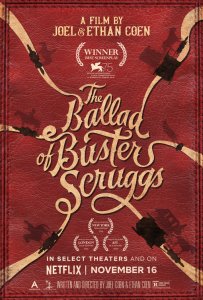 Netflix might just be the best pasture yet for brothers Joel and Ethan Coen. The Oscar-winning filmmakers were reportedly creating a Western series for the online streaming giant but that has turned into an anthology film, The Ballad of Buster Scruggs. The Coens’ love of the beautiful, the bizarre, the bucolic and the brazen are on full display with their six-part anthology movie that serves as reminder of what wonderfully unique cinematic voices they are. The Ballad of Buster Scruggs is uneven, as most anthology films tend to by design, but it reaches that vintage Coen sweet spot of absurdity and profundity.
The best segment is also the one that kicks things off, the titular adventures of Buster Scruggs, a singing Gene Autry-style cowboy who manages to get into all sorts of scrapes. The tonal balancing act on this one is pure Coen, at once inviting an audience to nostalgically recall the Westerns of old while kicking you in the teeth with dark, hilariously violent turns that veer into inspired slapstick. There is a delightful absurdity to the segment thanks to the cheerful sociopath nature of Buster Scruggs, the fastest gun in the West that’s eager to show off at a moment’s notice. He’s a typical Coen creation, a wicked wordsmith finding himself into heaps of trouble, but through his quick wits and sudden bursts of violence, he’s able to rouse an entire saloon full of witnesses to his murder into a swinging, carousing group following him in song. I laughed long and hard throughout much of this segment. I was hooked and wanted to see where it would go next and how depraved it might get. Tim Blake Nelson (O Bother Where Art Thou) is wonderful as Buster Scruggs and perfectly finds the exact wavelength needed for the Coen’s brand of funny and peculiar. He’s like a combo Daffy Duck and Bugs Bunny breaking the fourth wall to let the audience in on his merry bravado. The segment ends in a fitting fashion, another song that manages to be hilarious and strangely poignant at the same time. The Coens allow the scene to linger into a full-on duet of metaphysical proportions. I could have watched an entire series following Buster Scruggs but it may have been wise to cut things short and not to overstay its novelty.
 The other best segments take very different tonal destinations. “All Gold Canyon” is a slower and more leisurely segment, following Tom Waits as a prospector who systematically works the land in search of a hidden trove of gold he nicknames “Mr. Pocket.” The step-by-step process has a lyrical nature to it, and it reminded me of the opening of There Will Be Blood where we follow Daniel Plainview’s initial success at unearthing the beginning of his fortune. Waits is fantastic and truly deserving of Oscar consideration as the prospector. He’s hardscrabble and resilient, and there’s a late moment where he’s narrating a near escape from death where he’s tearfully thankful, possibly losing himself in the moment, and so grateful that it made me tear up myself. The segment ebbs and flows on the strength of the visual storytelling and Waits. It’s a lovely short with a few hidden punches, which is also another fine way to describe the other best segment, “The Gal Who Got Rattled.” It stars Zoe Kazan (The Big Sick) as a woman making her way to Oregon with a wagon train. She’s heading west for a new life, one she was not prepared for and only doing so at the urging of her pushy brother who dies shortly into the journey. Now she’s on her own and struggling to find her own place in the larger world. There’s a very sweet and hopeful romance between her and Billy Knapp (Bill Heck), one of the wagon train leaders who is thinking of settling down. It’s also a segment that slows down, accounting for the longest running time of the six. It goes to great care to establish the rhythms of life on the road, where many people walked the thousands of miles across the plains. The budding courtship is at a realistic simmer, something with more promise than heat. It’s such an involving story that its downturn of an ending almost feels criminal, albeit even if the tragic setups were well placed. Both of these segments take a break from the signature irony of the Coens and sincerely round out their characters and personal journeys and the dangers that await them.
 The remaining three segments aren’t bad by any stretch (I’d rate each from fine to mostly good) but they don’t get close to the entertainment and artistic majesty of the others. The second segment, “Near Algodones,” has some fun moments as James Franco is an inept bank robber who seems to go from bad situation to new bad situation, getting out through miraculous means until his luck runs out. The interaction with a kooky Stephen Root is a highlight but the segment feels more like a series of ideas than any sort of story. Even for an anthology movie, the segment feels too episodic for its own good. The third segment, “Meal Ticket,” is about a traveling sideshow in small dusty towns in the middle of winter. Liam Neeson plays the owner and the main act is a thespian (Henry Melling, best known as Dudley Dursely in the Harry Potter films) with no arms and no legs. The thespian character says nothing else but his prepared oratory. It makes him a bit harder to try and understand internally. I was also confused by their relationship. Are they father/son? Business partners? It’s also the most repetitious short, by nature, with the monologues and stops bleeding into one another, giving the impression of the thankless and hard life of a performer trying to eek out a living. It’s a bit too oblique. The final segment, “The Mortal Remains,” is like an Agatha Christie chamber play. We listen to five characters engage in a philosophical and contentious debate inside a speeding stagecoach that will not slow down. It’s an actors showcase with very specifically written characters, the Coens sharp ear for local color coming through. The conversation takes on a symbolism of passing over to judgment in the afterlife, or maybe it doesn’t and I’m trying to read more into things. You may start to tune out the incessant chatter as I did. It’s a perfunctory finish for the movie.
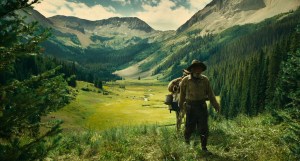 Being a Coen brothers’ film, the technical merits are mesmerizing. The cinematography by Bruno Delbonnel (Amelie, Inside Llewyn Davis) is sumptuous and often stunning. The use of light and color is a gorgeous tapestry, and some of the visual arrangements could be copied into ready-made scenic postcards, in particular “Meal Ticket” and “All Gold Canyon.” The isolation, hostility, warmth, majesty of the setting is expertly communicated to the viewer. The production design and costuming are consummate as well. The musical score by longtime collaborator Carter Burwell is classic in its use of melancholy strings and motifs. It’s a glorious looking movie made with master craft care.
Before its release, the Coens had talked about how hard it was to make their kind of movies within the traditional studio system, even with their 30 years of hits and classics. Netflix is desperately hungry for prestige content, so it looks like a suitable match. I’d happily welcome more Coen brothers’ movies like The Ballad of Buster Scruggs, a goofy Western that’s equally heart wrenching as it is heart-warming, neither shying away from the cruelty and indifference of the harsh setting nor neglecting to take in its splendor. Just give them whatever money they need Netflix to keep these sort of movies a comin’.
Nate’s Grade: B+
Share this:

Hostiles (2017)
 A slow-paced Western with A-list actors, Scott Cooper’s Hostiles is a ponderous Western that feels too lost in its own expansive landscapes. It’s about an Army captain (Christian Bale) reluctantly taking the lead to escort a Cheyenne chief to die on his native soil. As you could expect from that premise, Hostiles is reverent and meditative to the point of boredom. It deals with Major Themes about man’s place in the world, connection to nature and the land, and our treatment of Native Americans, but it feels like it believe it’s saying a lot more than it accomplishes. The final film is over two hours but I kept waiting for the movie to feel more substantial, for the real story to start. The premise is workable and there are some interesting side characters, notably Rosamund Pike as the sole survivor of her family’s Native American attack, but it all feels underdeveloped to serve the central figure. It’s a story of one man having to come to terms and forgive himself for the cruel things he’s done in the past in the name of glory, honor, and patriotism. There are too many moments where characters reach out to remind him that he is, in fact, a Good Man. It gets to be too much. The talented supporting cast is generally wasted. Bale (The Big Short) is very internal, almost far too insular as a man speaking with looks and eyebrow arches, as he feels the weight of his soul over the course of this journey. I just grew restless with the movie and kept waiting for it to change gears or get better. Hostiles is not a poorly made movie, nor without some artistic merit, but it’s too languid and lacking.
Nate’s Grade: C+
Share this:

Logan (2017)
 The Wolverine solo films have not been good movies. The 2008 first film was widely lambasted and while it made its money it was an obvious artistic misfire. The second film, The Wolverine, directed by James Mangold was an improvement even though it had its silly moments and fell apart with a contrived final confrontation. The Wolverine movies were definitely the lesser, unworthy sidekick to the X-Men franchise, and this was a franchise that recently suffered from the near abysmal Apocalypse. Mangold returns for another Wolverine sequel but I was cautious. And then the cheerfully profane Deadpool broke box-office records and gave the Fox execs the latitude needed for a darker, bloodier, and more adult movie that’s more interested in character regrets than toy tie-ins. Thank goodness for the success of Deadpool because Logan is the X-Men movie, and in particular the Wolverine movie, I’ve been waiting for since the mutants burst onto the big screen some seventeen years ago. It is everything you could want in a Wolverine movie.
In the year 2029, mutants have become all but extinct. Logan (Jackman) is keeping a low profile as a limo driver and taking care of an ailing Charles Xavier (Patrick Stewart) south of the border. Xavier is losing his mind and a danger to others with his out-of-control psychic powers that need to be drugged. Caliban (Stephen Merchant) is also helping, a light-sensitive mutant with the ability to innately track people across the globe. Logan is ailing because his healing power is dwindling and he can’t keep up with the steady poison of his adamantium bones. A scared Mexican nurse tries to convince Logan to help out the little girl in her care, Laura (Dafne Keen, feral and a better non-verbal actor). She’s an angry, violent child and built from the DNA of Logan. She too has unbreakably sharp claws and a healing ability. Bounty hunter Pierce (Boyd Holbrook) is trying to recapture the runaway merchandise/science experiment, capturing Caliban and torturing him to track his prey. Logan goes on the run with Xavier and they try to make sense of what to do with Laura, a.k.a. X-23. They’re headed north to Eden, a hypothetical refuge for mutants to sneak over into freedom in Canada, and along the way are deadly hunters who aren’t afraid of leaving behind a trail of bodies to get their girl back.
 It feels like it shouldn’t haven taken Jackman’s reported final outing for the execs to realize that a guy with freaking knives attached to his hands might be a concept that would work in the more grisly, more adult territory an R-rating creatively affords. It’s about time this man got to fully use his claws, and it was a joyous explosion of violence and gore built up for fans such as myself for a long time coming. It feels like Fox has been planning for this event as well, as if they stationed a production lackey to devise all sorts of grotesquely fun ways that Wolverine might skewer his competition in bloody beauty (“Finally, your preparation will not be in vain, Ronald”). There’s one scene in particular where a bunch of armed henchmen are psychically frozen in place and Logan struggles to move past each, and we get to anticipate just how each one will be viciously stabbed. For a series that has shied away from overly gory violence, Logan certainly celebrates its new opportunities with bloody glee. The fact that the first word spoken is an f-bomb and there’s a gratuitous moment of drunken sorority girl boob flashing is like the producers trying to directly communicate to the millions of ticket buyers and saying, “Hey, we’re sorry it took so long. Hope it was worth the wait.” Oh dear reader, it was worth the wait.
It’s not just the action that’s invigorating but the emotional core of the film is deeper and more compelling and ruminative than ever before, and finally these great actors are given material to deliver great performances worthy of their talent. Stewart and Jackman have never been bad in their respective roles even if and when the movies have been. They just have never been called upon for much more than genre heroics, anguish, and pained moral dilemmas. With Logan, both actors are finally given meaty material that affords nuance and ambiguity, and they are excellent. Charles Xavier is losing his battle with Alzheimer’s and ALS, which is a major concern when his mind is considered a weapon of mass destruction by the government. He’s going through his own end of life deliberations (“You’re waiting for me to die,” he groans at Logan) and it brings out a far different Xavier than we’ve ever seen, even with the youthful cockiness from James McAvoy. This is a cranky, defiant, and doddering Xavier, someone who is barely outpacing his sense of grief, guilt, and depression. There’s a tragic back-story we only get a glimpse of but it’s suitably devastating for a man who has devoted his life to others. He’s looking for a few last moments of grace and looking to hold onto something by journey’s end.
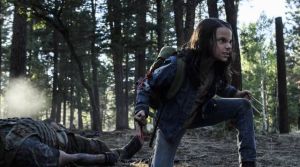 Thanks to his healing ability and the star wattage of Jackman, there was little fear that anything serious would ever befall Wolverine in his many previous film appearances. Sure bad things happened to him and he lost plenty of female love interests, but you never feared that he wouldn’t be able to ultimately handle himself. That’s not the case in Logan, which opens with a Wolverine who has clearly lost more than a step or two. He’s tired, rundown, and his adamantium skeleton is slowly poisoning his body. His healing powers are slowing down and he’s not as berserker fast and agile as he used to be. For once there’s an uncertainty attached to the character and a vulnerability. This turn greatly increases the intensity of the fight sequences and the greater stakes of the drama. The comparisons of the samurai were rife in The Wolverine and now the comparisons to the aging, lone gunslinger are ever-present in Logan. He’s drawn into a conflict that he was not seeking and he’s found a little bit of his remaining humanity and compassion to do right in the face of overwhelming odds and near certain destruction. There’s a subtle moment that the film doesn’t even dwell on that stuck with me. It’s after an accident, and in the thick of confusion, Logan is trying to save his mentor but he’s also worried that Xavier will think he betrayed him. “It wasn’t me,” he repeats over and over, not wanting this man to suffer more. It’s a small moment that doesn’t get much attention and yet it really spoke of their relationship and the depth of feeling during these fraught final days. This is the first Wolverine movie that feels like the characters matter as human beings just as much as purveyors of punching and kicking (now with gruesome slashing at no extra cost). Jackman showcases more than his impressive physique this go-round; he delivers a wounded performance that’s built upon generations of scars that he’s been ignoring. It’s the serious character examination we’ve been waiting for.
I also want to single out Merchant (Extras) who gives a performance I never would have anticipated from the awkwardly comedic beanpole. He even gets a badass moment and I never would have thought Stephen Merchant would ever have a badass moment in life.
Mangold’s film plays as a love letter to Western cinema and uses the genre trappings in ways to further comment on the characters and their plight. This is a bleak movie. It’s not a dystopia. In fact it resembles our own world pretty closely with a few technological additions; automated machines and trucks, the common knowledge that mutants have been wiped out like the measles. Knowing that it’s reportedly the end for Stewart and Jackman playing these characters, I was anticipating the film to strike an elegiac chord. His past and legacy are catching up with Logan. He becomes an unlikely guardian to Laura and explores a fatherhood dynamic that was never afforded to him before. The unlikely partnership, and it is a partnership as she’s a pint-sized chip off the block of her tempestuous father, blossoms along a cross-country road trip for a paradise that may or may not exist, while desperadoes and powerful black hat villains are out to impose their will upon the weak. This is explored in a leisurely pit stop with a working class family (welcome back, Eriq La Sale) that welcomes Logan and his posse into their home. We get a small respite and learn about greedy landowners trying to pressure them into giving up the family farm. It’s completely reminiscent of something you might see in a classic Western of old, just transported to a new setting. There’s even an extended bit where Laura watches 1953’s Shane on TV, and when those final words come back in expected yet clunky fashion, I’d be lying if they didn’t push the right emotions at the right time.
 But when it comes to action, Logan more than satisfies. The action is cleanly orchestrated by Mangold in fluid takes that allow the audience to readily engage. The film doesn’t go overboard on the Grand Guignol and lose sight of the key aspects of great action sequences. There’s a refreshing variety of the action and combat, and the action is framed tightly to the characters and their goals. It makes for an exhilarating viewing. If there is anything I would cite as a detriment for an otherwise incredible sendoff, I think the movie peaks too soon action-wise. The emotional climax is definitely where it ought to be (tears will be shed whether you like it or not) but the third act action doesn’t have quite the pop. Also, while Holbrook (Narcos) is an entertaining and slyly charismatic heavy, the villains in the movie are kept relatively vague as is their overall plan. The vacuum of villainy is kept more one-dimensional, which is fine as it allows more complexity and character moments to be doled out to our heroes, but it is a noticeable missing element.
One of the best attributes I cited from last year’s Captain America: Civil War is that the full weight of the character histories was felt, giving real emotional stakes to all the explosions and moralizing. When our characters went toe-to-toe, we felt a dozen films’ worth of setup that made the conflict matter. Logan carries that same emotional weight. We’ve been watching Wolverine and Professor Xavier for almost two decades and across nine films. These characters have gotten old, tired, and they carry their years like taciturn gunslingers looking for solitude and trying to justify the regrets of their lives. It’s a surprisingly emotional, serious, and altogether mature final chapter, one that provides just as many enjoyable character moments and stretches of ruminative silence as it does jolts of gritty, dirty, hard-charging action and bloody violence. It’s as much a character study as it is a superhero movie or Western. I cannot imagine this story as a watered down, PG-13 neutered version of what I saw on screen. This is a movie for adults and it pays great justice to the characters and the demands of the audience. The final image is note-perfect and can speak volumes about the ultimate legacy of Wolverine and by extension Xavier and his school for gifted youngsters. Logan is the second-best X-Men movie (First Class still rules the roost) and a thoughtful and poignant finish that left me dizzy with happiness, emotionally drained, and extremely satisfied as a longtime fan.
Nate’s Grade: A-
Share this:

The Magnificent Seven (2016)
 Obviously the new Magnificent Seven remake was never going to be as good a Western as the 1960 original, or as good an action movie as its source material, Akira Kurosawa’s legendary Seven Samurai. Once you accept that, the question becomes whether simply being an enjoyable Western action movie qualifies as a success given its storied pedigree. If you can’t do better than the original, why bother making it as my friend Ben Bailey would question. The answer is of course blunt (money) but the conundrum is how does one improve on classic film masterpieces? I think the new Magnificent Seven found its footing by accepting its unquestioned ceiling and instead going down a different path, instilling the essence of what made the older films so superb, and just trying to be the best B-student it can be with its new set of guidelines for broad entertainment.
The dusty town of Rose Creek falls under attack by ruthless industrialist Bartholomew Bogue (Peter Sarsgaard), who wants the land for his mining company. He installs loyal toadies as lawmen for the town and to ensure any troublemakers are put to “justice.” Emma Cullen (Haley Bennett) wishes to avenge her fallen husband and recruits a famous outlaw, Chisolm (Denzel Washington). He agrees to help and rustles up a powerful posse of gunslingers to defend the town from Bogue and his cruel forces.
There’s a reason this story still works as well as it does and that’s because the structure is ready-made for payoffs and audience satisfaction if the director and actors are capable. Act One establishes the threat and our two main roguish heroes, and then Act Two starts off with the gathering of the team, routinely one of the greatest sequences in screenwriting, and then the Act Two midpoint involves toppling the corrupt thugs controlling the town, and Act Three is the culmination between the forces of anti-hero good versus evil over the ultimate battle for the town. It’s an against-all-odds underdog tale with good but possibly doomed forces against a villain used to steamrolling through vulnerable citizens. I don’t care whom you are, that story structure worked then and it still works now. Fuqua and company don’t break a winning formula and know what strengths they have and how best to maximize them for top entertainment value.
 The biggest asset is this glorious cast, headlined by Washington and Chris Pratt (Guardians of the Galaxy). There isn’t admittedly much to these characters from a development standpoint. They’re given back-stories, though some of them are fairly airy and provide a bare minimum of effort. Red Harvest (Martin Sensmeier) in particular just kind of shows up and everybody shrugs and says, “Why not?” more or less. Also, while on this subject, it’s a bit contrived that when the bad side has their own villainous Native American that the script has to conspire for the only two Native Americans to face-off, especially when we’ve been given no history or connection between them prior to this climactic showdown. Back to the main cast, Washington settles into his suave badass persona we’ve come to expect from the man. He even fades into the background at times, ceding space for the other characters to have their moments. Make no mistake, though, because Washington’s character is a strong central anchor for this movie and even on autopilot this actor still produces attitude with style and gravitas. There’s also the simple pleasure of just watching Washington in a Western. The man was made for this setting of taciturn badasses. The brightest star of the picture is Pratt, expertly cast as a charming rogue with a big personality. What the characters lack in development they make up for in colorful personalities, which is acceptable in a genre that rewards memorably outsized figures of entertainment. Pratt is a fun rascal with a penchant for sarcasm and playing around with his prey. Every minute Pratt commanded the screen was a minute that captured my full attention.
The rest of the cast is solid and make the most of their screen time, putting in memorable supporting performances to compliment the stars. Vincent D’Onofrio (Jurassic World) is basically like a human equivalent of a bear or yeti. He’s this massive and animalistic creature and I appreciated D’Onofrio’s gusto in embracing the peculiarities. In a film of great casting and memorable characters, he nearly steals the movie. Ethan Hawke (Boyhood) has one of the more credible character arcs in the film as well as the best name (Goodnight Robicheaux). He’s haunted by a lifetime accumulation of killing. His flinty co-star Byung-hun Lee (RED 2) is the strong silent type and the two of them have a nice gunslinger chemistry, nicely contrasting but still a believable brotherhood in arms. Bennett (Hardcore Henry) is going to break out in a big way in 2016. She has a very arresting face (it’s her eyes) and an instant screen presence, which is hard to do with these guys soaking up much of the oxygen. She also gets to prove her mettle and not be treated as a romantic object, so hooray. My one concern with Bennett was that the costume designer had let her down, as it seemed the top of her gown was dangerously close to slipping off her shoulders at several key points. I understand this is designed to squeeze in a slight surge of sensuality for what is very much a PG-13 action flick but it became distracting with its obviousness. Bennett deserved better, though she might be another figure of T&A with her role in The Girl on the Train. We shall see (maybe much). The only sore spot is the villain, a wasted Sarsgaard (Black Mass) who never quite lives up to a diabolical nature worthy of the attention of our colorful cadre of anti-heroes. He’s a bully but he doesn’t seem formidable enough or that interesting.
 Fuqua (The Equalizer) hasn’t been the most consistent stager of action with his up-and-down career but he puts out all the stops with The Magnificent Seven to great effect. The action sequences are robust and shot with great attention to geography and escalation. I knew exactly what the stakes were with each sequence and gun battle, and I knew the different people and their placement and the goals. With a crew of seven and counting, it can be difficult to adequately find room for each of the fighters to be well utilized and have at least a moment that matters (just look at what happened with Suicide Squad). The second half of Act Two is our team plotting how to compensate for the overwhelming forces coming down their way, and the plotting produces plenty of opportunities as the audience watches the setups and waits for the payoff jamboree. There are little payoffs, big payoffs, crowd-pleasing payoffs, character arc pleasing payoffs; it’s an action movie that knows the climax should be the best part, and it doesn’t disappoint. The town may be in rubble and strewn with corpses by film’s end, but you’ll be happy and content from the wealth of tense and smartly directed action. Helping things along, Fuqua’s Wild West photography is often strikingly beautiful with its use of natural light.
The Magnificent Seven makes up for its lack of originality and rich characters in colorful personality and the sheer scope and intensity of its action. It can’t contend with John Sturgis and Akira Kurosawa, but what modern movie can? I don’t fault the movie for failing to live up to the standards of two classics in two different genres. I instead credit the movie for knowing its strengths and knowing how best to develop and deliver them for maximum mass appeal enjoyment. The cast is wonderfully selected and given fun characters to dig into, and the onscreen camaraderie of our seven might not rise to the level of magnificence but it’s pretty good by all accounts. That’s a rather keen summary of the movie writ large; with modestly recalculated expectations, the movie may not be magnificent but it’s plenty good and plenty entertaining. Washington and Pratt are stars making full use of their broad star appeal. The action sequences are well staged and peppered with payoffs, and it’s worth congratulating the team on having several parallel lines of action and keeping all of the shifting particulars understandable for its audience. The Magnificent Seven is about as good as I expected any remake to be, and while it doesn’t rise to those storied heights it does achieve its goals with vigor and style.
Nate’s Grade: B
Share this:

The Hateful Eight (2015)
 The Hateful Eight almost didn’t happen thanks to our modern-day views on copyright and privacy. Writer/director Quentin Tarantino sent the first draft of his newest script to three trusted actors, and within days it had spread to the outer reaches of the Internet. Tarantino was so incensed that he swore to shelve Hateful Eight and never film it. After a staged reading in L.A. with many of the eventual actors for the film, he changed his mind, to the relief of his sizable fanbase and actors everywhere. The Hateful Eight is a drawing room mystery with plenty of Tarantino’s signature propulsive language and bloody violence, but it’s also the director’s least substantial film to date.
In post-Civil War Wyoming, famous bounty hunter John “The Hangman” Ruth (Kurt Russell) is taking the outlaw Daisy Domergue (Jennifer Jason Leigh) to hang for her crimes. Along the way, he meets up with Major Marquis Warren (Samuel L. Jackson), a bounty hunter who served in the North and carries a letter written to him from none other than Abraham Lincoln. They’re both heading to Red Rock to extract their bounty earnings. Due to an oncoming blizzard, they’re forced to make a stay at Minnie’s haberdashery, except Minnie isn’t anywhere to be found. There’s Bob the Mexican (Demian Bichir) who says Minnie left him in charge, a foppish hangman Oswaldo Moblay (Tim Roth), a quiet cattle driver Joe Gage (Michael Madsen), a Confederate general, Sandy Smithers (Bruce Dern), and Chris Mannix (Walton Goggins), the son of a Confederate rebel who claims to be the newly designated sheriff of Red Rock. Over the course of one long night, everyone’s true identity will be learned, because someone is not who they seem to be and is secretly waiting to free Daisy and kill the rest.
 Even as lesser Tarantino, The Hateful Eight is still an entertaining and talky stage play put to film. The setup is strong and invites the audience to play along, to scrutinize the assorted characters and determine who is telling the truth. There are plenty of twists and turns and some violent surprises to keep things interesting. The conversations of the characters are such a pleasure to listen to; I want to luxuriate in Tarantino’s language. His wordsmith abilities are unparalleled in Hollywood. There’s a reason every star is dying to snag a part in a Tarantino movie, especially now that they’ve caught Oscar fire as of late. That’s somewhat crazy to think about. Cinema’s ultimate indie voice with his encyclopedic knowledge of the medium, high and low art, has become an institution within the system and his violent period films are now looked at as year-end prestige pictures. Tarantino’s M.O. has been to take B-movies and to transform them into A-movie level talent and intelligence. Never has a Tarantino flick felt more B-movie than The Hateful Eight. It was inspired from episodes of TV and it’s easy to see that genesis in its execution. It’s a self-contained mystery that comes to a head. It’s a limited story that’s likely taken as far as it could possible go, pushing three hours. I’m a tad befuddled why this was the movie Tarantino insisted on filming in “glorious Panavision 70 millimeter.” It’s almost entirely set in that one-room interior location. The extra depth that 70 millimeter affords would appear to be wasted, unless you enjoy looking at general store items on shelves in the background. Still, The Hateful Eight is a movie that doesn’t feel like three hours and harbors enough intrigue and payoffs to hook.
I tried to diagnose why this felt like lesser Tarantino, and it’s because over the course of almost three hours we don’t have much at stake because the people inhabiting the movie aren’t really characters but tough-talking facades. Tarantino is often cited for his uniquely florid dialogue, and nobody writes dialogue like Tarantino and his naturally stylized cadences, but another of the man’s skills is how great he can write a coterie of colorful characters that pop from the big screen. You might not be able to remember many lines from Hans Landa or Vincent Vega or Django, but you remember the vivid characters. Tarantino is preternaturally skilled at building characters that feel fully realized with their own viewpoints and flaws and prior experiences. He can make characters stand out but he also has the great ability to make the larger-than-life characters feel real, which is truly genius screenwriting for characters so flamboyant. The older romance in Jackie Brown is perfectly captured and felt. It’s downright mature. This is the first time I would say Tarantino has disappointed when it comes to his characters.
There are broadly drawn folk aplenty onscreen and they still talk in that wonderfully florid language of Tarantino’s that actors must savor like a fine steak, something they can sink themselves in for and enjoy every morsel. However, the characters onscreen have never felt this empty before. They are what they are and the only real change that occurs is that many will be dead before the end credits. They don’t have arcs per se but end points. It’s all about unmasking and identifying the rogues in a room full of rogues. Beyond Warren and Mannix, we’re left with precious little for characterization beyond bravado and nihilism. The effect of how empty they are would be felt less if we weren’t stranded with them for near three hours. Trapped in a room with a group of suspicious characters can only go so far, and ultimately it’s a parlor game that cannot sustain longer staying power. I doubt I’ll ever watch this with the frequency of other Tarantino flicks.
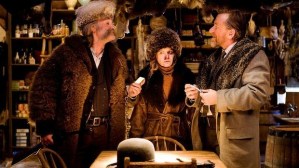 “You keep talkin’. You’re gonna talk yourself to death,” says one of those hateful numbers to another member. I’d pay to listen to Tarantino rewrite the phone book, that’s how excellent the man is with his dialogue. The man likes to hear his words and I like listening to them too. The problem is that The Hateful Eight has no reason for its gargantuan running time. As stated above, the characters we’re getting are nowhere near as complex or interesting as previous Tarantino escapades, so the talking can grow weary. Tarantino has patented a new formula from 2009’s Inglorious Basterds that involves characters playing a game of I-know-you-know-I-know while they suss out the truth, all the while the tension finely simmers until it blows. It’s a long fuse of suspense that can pay off rich rewards, like the near-perfect tavern scene in Basterds. The dinner table scene with Candie and the skull of his favorite house slave is another good example. Once our titular eight have gathered at Minnie’s, the entire movie is this sort of scene. It may be broken up into chapters and flashbacks but it feels like one long scene.
There’s also far less at stake than there was with Basterds or Django Unchained, even Reservoir Dogs, and that’s because the protagonists had goals and we had built up far more allegiance and time with them. When they were in danger, it mattered. The danger doesn’t feel as immediate because so little else is happening. There are plenty of comparisons to Dogs, which also utilized a hidden identity and a confined location. I think the difference was that, besides it being Tarantino’s first foray as a director, the tension was felt more because the danger was immediate from the start and we cared about character relationships. I cared about Mr. Orange and Mr. White and their bond. I can’t say I cared about any of the characters in Hateful Eight. I found them interesting at points, sure, but they were all a bunch of rotten bastards with little variation short of a burgeoning understanding between Mannix and Warren. The wait at Minnie’s feels like the Basterds tavern scene on steroids, pushed to the breaking point, and yet absent the urgency.
The acting is yet another tasty dish served up by Tarantino, and it feels like the actors are having the time of their lives playing their lively scoundrels. Jackson (Kingsmen: the Secret Service) settles in nicely and always seems to elevate his game when he’s reciting Tarantino’s words. He’s icy cool in scenes where the other characters are trying to do whatever they can to fire him up. He’s less bombastic than we’ve come to expect from Jackson. For bombast, there’s Russell (Furious 7) who cranks his performance to the broad heights of his bellicose lawman. Goggins gives a sly and extra caffeinated performance that answered the question of what it would sound like if you dropped his character from TV’s Justified into a Tarantino movie. Roth (Selma) feels like he’s doing his best manic Christoph Waltz impression. Dern (Nebraska) is a racist codger with a soft spot for his kin. Madsen (Kill Bill vol. 2) seems somewhat wasted as a taciturn “cow puncher.” Bichir (The Heat) gets some laughs as a seemingly aloof caretaker. It’s Leigh (Anomalisa) who steals the show, especially in the film’s second half. Daisy is a character that relishes being bad, and Leigh takes every opportunity to enjoy the fun. Her character plays a bit of possum during the first half but it’s the second half where she lets loose and becomes unhinged, and her exasperated and grotesque responses are often played for great sputtering comic effect. It’s a boys movie but it’s the lone woman who will prove most memorable. Tarantino’s last two movies have won acting awards and Leigh just might make it three-in-a-row.
 There are also some uncomfortable elements that can deter your viewing enjoyment, which isn’t exactly a foreign charge against Tarantino’s career. At this point you can probably repeat the oft-cited accusations: flagrant use of the N-word and exploitative violence. At least the historical background provides a context for the other characters unleashing the N-word, and I’d argue it tells us something about the characters as well. The characters that use the N-word when referring to Warren are the ones with allegiances to the Confederacy and those viewpoints don’t vanish even after you lost a war. They’re dismissive and intolerant and view Warren as sub-human. It also doesn’t approach Django Unchained-levels of excess, so I let it slide (I know my perspective as a white male makes my opinion on this effectively meaningless). It was the violence that got to me, specifically the violence directed at Daisy. Tarantino’s penchant for violence goes all the way back to his ear-slicing debut, so it’s nothing unexpected. He often tells stories about violent men and women fighting their way in a world governed by violence. I accept that these characters are bad to their core. That doesn’t excuse behavior. Violence on screen can be tempered with authorial commentary, but it’s the association that bothered me with Hateful Eight. For the entire movie, Daisy is put through the physical wringer. Our very first image of her is with a black eye. She’s a nasty woman and Ruth often expresses his distaste of her by punching her in the face, which is played as dark comedy. This happens repeatedly. We’re meant to recoil from much of the bloody violence on screen but repeatedly we’re meant to laugh at the violent suffering of Daisy. Tarantino has often used over-the-top violence as dark humor, and I’ve laughed along with it. This was one instance though where I stopped laughing and starting shifting uncomfortably in my seat.
Even lesser Tarantino can still be plenty entertaining and superior to most of what Hollywood usually cranks out as product. The Hateful Eight can be exciting, funny, surprising, and plenty of things, but what it can’t be is more than a lark. Tarantino has taken stories that would seem like larks, particularly the Kill Bill series, and infused them with pathos and meditation and soul to go along with all that snazzy genre stuff. It’s disappointing that Hateful Eight isn’t more than what’s on screen, but what’s on screen is still worth watching, though I don’t know whether it’s worth watching a second time.
Nate’s Grade: B


 nathanzoebl
You must be logged in to post a comment.