Blog Archives
The Iceman (2013)
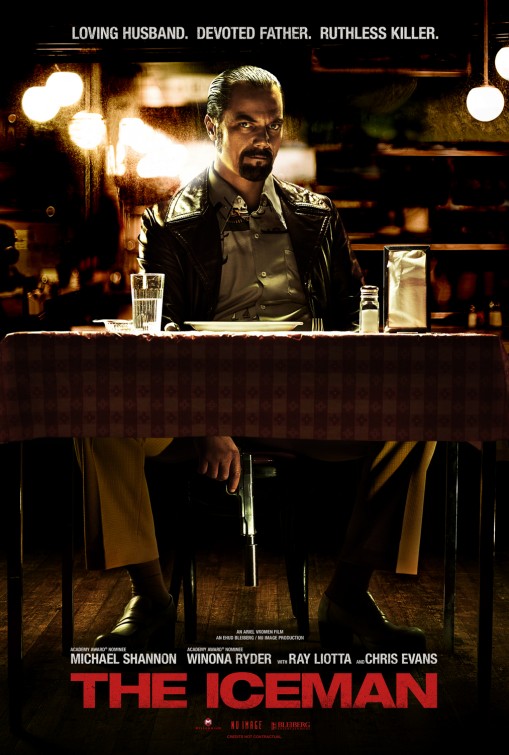 We’re fascinated by hired killers. Chalk it up to morbid curiosity or perhaps perverse, secret wish fulfillment, but we’re all titillated a tad by the murderous for hire. The Iceman is all about Richard Kuklinski (Michael Shannon), who worked as a contract killer for the mob from 1966 to 1988. He’s estimated to have killed over 100 people. A mob middleman (Ray Liotta) is impressed that Kuklinski shows no fear with a gun in his face, and so the guy gets hired to rack up the bodies. At the same time, Kuklinski has a wife (Winona Ryder) and two daughters, all of whom have no clue what daddy does for a living until he’s finally brought to justice.
The main issue at play with The Iceman is that it’s trying to draw out a character study for a rather impenetrable person. It’s hard to get a solid read on the character of Richard Kuklinski. The compartmentalizing of these two very distinct lives is a fascinating psychology to explore, one I wish the filmmakers had spent a majority of the screen time upon. The internal justifications, struggles and compromises would make for an excellent and insightful look into the psychology of killer rationalization. However, I don’t know if this movie would even be possible from this subject. Kuklinski is by all accounts a pretty detached guy. There just doesn’t seem like there’s a lot to him. His circumstances are interesting, beaten into an emotionless cipher by his father, brother to a fellow sociopath, and trying to make a reasonable life for himself while keeping his inner urges at bay. The sociopath-tries-to-make-good storyline is reminiscent to fans of TV’s Dexter, and there’s plenty of room to work there. It’s an intriguing contradiction, the man who cares for so little protecting his family. In the end, we don’t really get a sense of why beyond the illusion of the American Family that Kuklinski wants to hold onto, to make himself seem normal, to prove to his family he could break free from their influence. Even typing this I feel like I’m giving the film more depth than it actually illustrates. Even though he tries to play the part of devoted family man, we rarely see any evidence of devotion. He provides, yes, puts his kids in private school, but he puts his family at risk and doesn’t seem to have affection for them as much as propriety. They are his things and nobody will mess with them. Your guess is as good as mine if he genuinely loves any of them.
 Too much of the film gets mired in standard mob clichés. This guy upsets that guy; this guy wants the other guy dead. It all becomes the focal point of the movie, Kuklinski getting caught up in, essentially, office politics. Even the true-life details of the grisly methods of death feel like wasted potential for a better story. He goes on a job, he botches a job, he gets let go, so to speak, he strikes up a new partnership with another contract killer, Mr. Freezy (Chris Evans in a bad wig). That last part could have been a movie unto itself, watching an odd couple of hitmen plan, execute, and then dispose of their targets. The Iceman nickname comes from their process, freezing the dismembered corpses for months so that coroners cannot get a read on when the bodies were slain. While Evans is entertaining, this entire portion of the movie could have been eliminated, its bearing on the plot minimal. Likewise, the movie has several small roles populated by recognizable actors, which become a series of one-scene distractions. Kuklinski goes out on a hit and it’s… James Franco. Then there’s Friends actor David Schwimmer as a sleazy, ponytailed, nebbish mob screw-up. Stephen Dorff has one moment as Kuklinski’s angry, desperate, murderous brother in prison. The actors are all fine, with the exception of Franco, but many of them are just another reminder of the film’s disjointed attention.
I mentioned in Pain and Gain the notion of portraying true-life criminals as sympathetic figures, and the queasy nature of this complicit interpretation. The Iceman never really tries to make Kuklinski sympathetic or some form of an antihero, and I think the movie is better for it. One of the earliest moments in the film is Kuklinski slitting the throat of a guy who harassed him and defamed his lady. This is BEFORE the guy is even hired as a contract killer too. It seems like when the guy can’t murder he becomes a worse family man. Even in the end, he’s testing a new batch of cyanide on the neighborhood cat. The movie presents Kuklinski as he is, though you’ll be forgiven for feeling some initial pings of sympathy when you seem him try and protect his family. Granted his family could also very well use protection from him.
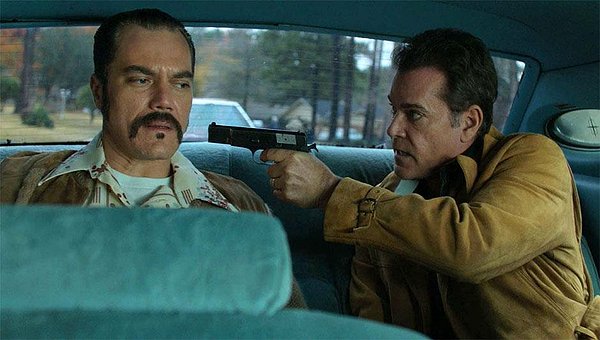 Shannon’s (Premium Rush) performance is what keeps you watching. There are few actors who are as intense as this guy, though I’m used to seeing him play unhinged psychos bouncing off the walls. Kuklinski is just as troubled as his other roles but he’s all reserve, steely nerves, and anger that eventually bubbles over into violent rage. Shannon is still such a good actor that even with a thin character, or at least thin characterization, he can be completely compelling to watch onscreen. One of the more peculiar, inconsistent elements of the film is Shannon’s constantly-changing facial hair. I think I lost count at about nine or ten different facial topiary variations. There were times where it will be different in consecutive scenes. I guess that’s a tipoff of a time jump, but his morphing, period-appropriate facial hair also became a point of amusement.
What makes The Iceman so disappointing in retrospect is how much potential it seems to squander. There’s a great story to be had with a contract killer by night and a family man by day. That contradiction, the struggle, the psychology is all rich material to work with. It’s just that Kuklinski is not necessarily that guy; he’s not too deep, at least not in this version, and his killer work problems are just not that compelling. If this is what the filmmakers were going to do with their real-life subject, then they might as well have just used Kuklinski as inspiration. Take the best parts and then compose a different lead character, someone more emotionally transparent or relatable or just plain old interesting. Just because it’s a real story doesn’t mean you’re indebted to telling every true facet of it, especially when a better story is within sight. Shannon is a terrific actor and does his best to make the film worth watching, but from distracted plotting to unmet analysis and emotional exploration, it’s hard to walk away from The Iceman and not feel a bit chilly.
Nate’s Grade: C+
Share this:

Pain & Gain (2013)
 I think the audience for Pain and Gain is going to know exactly who they are, and I count myself amongst that number. The latest from director Michael Bay, often treated tantamount to Satan in many critical circles, has the based-on-a-true-story hook but really it’s the big stars, stylish violence, peculiar criminal antics, and overall overflowing machismo of the picture that will draw its audience. I knew after one watch of the trailer that I wanted to see it, though I was somewhat ashamed of the level of my interest (don’t want to taint your critical credentials with too much sympathy for the devil, after all). Pain and Gain is a trashy and entertaining jaunt, just as I hoped it would be, but it overstays its welcome and may leave you fatigued and possibly dejected (so… a typical Michael Bay movie? Still got it).
In 1995, three Miami, Florida goons enacted one of the most bizarre and sordid criminal schemes, a story that could supply a tabloid with enough juicy exposes for a year. Daniel Lugo (Mark Wahlberg) and his co-worker Adrian Doorbal (Anthony Mackie) are personal trainers at Sun Gym. Their days consist of pumping iron and hitting on ladies. One of Lugo’s clients is Victor Kershaw (Tony Shalhoub), a wealthy businessman with a nasty temper. Lugo and Doorbal, with the help of an ex-con and ex-junkie (Dwayne “The Rock” Johnson), kidnap Kershaw, hold him hostage for weeks, torture him, and eventually get him to sign over his assets to them. Afterwards they try to stage his “accidental” death, though like most things, it does not go according to plan. Penniless and broken, Kershaw seeks out help from a retired private eye, ED DuBois (Ed Harris), to provide validation for his case. The Miami police are laughing off his claims. Kershaw is concerned that the Sun Gym gang will strike again when their lavish lifestyle dips, and he’s right. Lugo and company get into even more trouble and the body count rises.
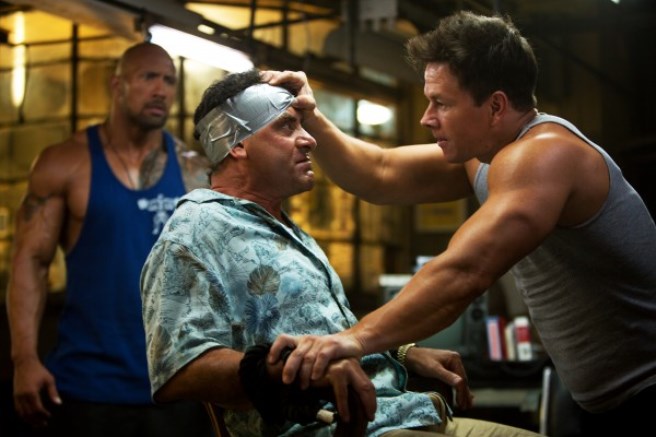 The results on screen are often entertaining in an over-the-top fashion, sustaining a rubbernecking captivation much like a horrendous car wreck. You just have to see how much crazier this thing gets, all the while muttering to yourself, “This was a true story?” It even gets to the point where the movie will remind you, via onscreen text as a man barbecues a batch of severed hands, that yes this is still a true story. Naturally there have been fictional inventions, character composites, and some details have been dropped to fit into the confines of a film narrative, but online research shows me that most of the larger plot beats are accurate, thus making the film even more compelling and disturbing. When the film is on, it feels manically alive with intrigue and absurdity. The problem is that it cannot keep this manic tone alive forever especially when actual innocent bodies start piling up (more on that later). There’s a certain uncomfortable tonal incongruity as the film develops and the comedy picks up a distasteful resonance. I love a well-executed dark comedy but just because something is macabre or unexpected does not automatically make it funny. Still, the movie has enough high-energy antisocial antics to keep you planted in your seat, laughing through bafflement.
Pain and Gain isn’t subtle in the slightest and yet it’s easily the most nuanced film of Bay’s career. Of course there are still the sleek cars, sexy babes, emphasis on style, and wanton destruction that are hallmarks of the man’s career, but the perspective is given a satirical prism, dropping us into the deluded, sub-American Psycho perspective of Lugo, a man with a very cracked view of the American Dream. The moral message reminds me of Marge Gunderson’s concluding musing in Fargo, telling a captured criminal, “There’s more to life than a little money, you know.” There’s some slight social commentary on wealth and the dirty tricks of capitalism, but really it’s the narcissistic delusions of a jacked-up criminal who believes he can succeed because he’s “seen a lot of movies.” You may even find yourself sympathizing with some of these knuckleheads, that is, until things get way out of hand. The screenplay by Christopher Markus and Stephen McFeely (Captain America: The First Avenger) is briskly paced and packed with bizarre details and even jumps into six different characters for voice over (Wahlberg, Johnson, Mackie, Shalhoub, Harris, and Bar Paly). For some characters it works as a great insight into their twisted logic but for others it’s just an easy set up for ridicule. The juvenile humor (did we really need a visual pubic hair joke?), candy-coated film palate, and sugar-rush, roid-rage plotting feel like a suitable match for the talents of the bombastic Bay.
The last thirty minutes of the movie will test your sensibilities of good taste. I’m all for having unlikable central characters just as long as the writer makes them interesting (what good is likeable but boring, the “friend zone” of characterization?). Some of movie history’s most fascinating characters have been scumbags and psychos. However, with that being said, I need my unlikeable characters to at least progress. When I’m stuck with a bad dude who keeps making the same bad mistakes, it can grow tiresome, and that’s where Pain and Gain ultimately lost me. Bay can’t quite keep up the charade of ironic bemusement forever, and a saggy second half starts to tread water, forcing the characters to act even more outlandish and inept. Did we need The Rock losing his big toe and then inexplicably giving it to a dog? It feels like the movie is filling time until the accidental murders come into being, raising the stakes. For a movie that’s 130 minutes, there should not be any need to fill time. During that long sad stretch, you start to feel disquiet, like the movie has lost its sense of perspective and the jokes have gotten too mean, too ugly, too outlandish. It doesn’t feel funny any more, and maybe that’s ultimately the point, but by the end Pain and Gain has soured. It overstays its welcome and then some.
 Its tone and connection to the real world raises an interesting and thorny question over whether something like this is appropriate. Should a story that involved the murders of innocent people end up becoming an over-the-top, stylized, lavishly glamorized Hollywood crime comedy? It has been over 15 years since the events of the Sun Gym gang, but is there a statue of limitations on good taste? Are we eventually destined for a vulgar film tackling the poor lives of the victims of 9/11? The answer is almost certain. What is off limits, or more pressingly, should anything be off limits to a comedic narrative? Is anyone really furious with Trey Parker and Matt Stone over their first film, Cannibal the Musical, transforming nineteenth century murder into song and dance? I doubt it, and yet there was something very off-putting about 2011’s 30 Minutes or Less, an unfunny comedy based around the true story of a pizza guy strapped with a bomb and ordered to rob a bank. The guy was blown to bits in real life (ha ha?). I guess I, as well as audiences, would have been more forgiving if the movie had been funny. I’m sure there would be fewer objections if Bay’s film had been more of a sober, contemplative drama on the sad acts of a bunch of desperate criminals, but with all the hyperbolic elements, machismo, and so-crazy-it-must-be-true plot turns, how could you turn this story into a serious drama? Not from the perspective of the nitwit criminals, at least. I don’t think the movie is ever positioning these guys as anti-heroes or excuses their excess.
Wahlberg (Ted) broke out as an actor thanks to a similar role as a wannabe star whose ambitions exceeded his grasp, and the man does dumb as good as just about anyone in Hollywood. It’s a specific kind of dumb, the angry, arrogant, pissy, self-involved kind of dumb that makes it acceptable to ridicule his character to no end. Johnson (G.I. Joe: Retaliation) gets to explore some interesting range as an actor, pacing around the demons of his character before just going hog-wild with the excess. Mackie (Gangster Squad) is arguable the most sympathetic of the group but also with the most to lose. Compared to his peers, he’s practically mild-mannered even though he takes injections into his penis. Shalhoub (TV’s Monk) is amusingly apoplectic and just enough of a jerk that you excuse his misfortune, at least for a little while. Ken Jeong (The Hangover) and Israeli model-turned-actor Bar Paly give the exact performances you would expect them to deliver. The best actor in the whole movie, though truth be told there isn’t a stinker in the bunch, is Emily Rutherford (Elizabethtown, TV’s The New Adventures of Old Christine) who plays Dubois’ wife. She has this calming, down-to-earth presence that seems to bring a small sense of peace to the madcap antics. She doesn’t have a lot of screen time but you’ll wish she had lots more.
Perhaps I’m being unfair to a movie that clearly isn’t intending to be anything but naughty, tacky, and gleefully excessive. In a way Pain and Gain reminds me of Tony Scott’s Domino, loosely based upon a true story but crushed to death by narrative kabuki and Scott’s characteristic excess. If I wanted to defend the much maligned Michael Bay, I’d argue what the real difference is between his excess and the excess of the more critically lauded Scott? Bay doesn’t have a slate of movies to his credit the likes of Top Gun, Crimson Tide, or True Romance. But isn’t flashy, artistic excess all the same when in the name of empty storytelling? Domino is also an apt comparison because it’s ultimately tiresome and far overstays its welcome, losing its audience with an endless array of odd sidesteps and moronic, deviant characters. While Pain and Gain has enough quirk and style to justify consideration, you may not respect yourself once it’s over.
Nate’s Grade: C+
Share this:

West of Memphis (2012)
 The West Memphis Three murder case gained substantial notoriety thanks to an HBO documentary team, Joe Berlinger and Bruce Sinofsky, who were on hand in 1993 to document the trial in their film, Paradise Lost. Three eight-year-old boys (Michael Moore, Christopher Byers, Steven Branch) went missing one day in May in West Memphis, Arkansas. Their bodies were found the next day in a nearby creek. The boys had been hogtied and bore plenty of vicious marks, one of them having a severed penis. The horror shocked the small town and the blame landed on a trio of local teens (Jessie Miskelley, Jason Baldwin, Damien Echols). Miskelley had confessed under police interrogation and so was tried separately, but all three were found guilty. Miskelley and Baldwin were given life in jail and Echols, the supposed ringleader, a teen who disliked authority and read about magic and demons, was given the death penalty.
In the years that followed, thanks to the exposure of the Paradise Lost films (a second was released in 2000 and a third in 2011), advocates flocked to the cause, belied by the overwhelming belief that the three convicted had been unfairly railroaded. Celebrities spoke out and got involved, chief among them Lord of the Rings filmmakers Peter Jackson and Fran Walsh. They began communicating with Echols and his wife, Lori, and personally bankrolled a new team of forensic experts to amass new evidence that could allow for a potential appeal. Jackson even hired Oscar-nominated filmmaker Amy Berg (Deliver Us from Evil) to helm her own documentary, West of Memphis.
 Denied at most turns by the same flat-footed officials, the West Memphis Three struck a deal with the Arkansas attorney general in August 2011. The three would be granted freedom if they agreed to an Alford Plea, a rare legal circumstance where a defendant can plead guilty while still maintain their innocence. Eighteen years later the West Memphis Three are free but there are still many questions that need to be answered, mostly involving the conduct of officials involved in the case and the identity of the real killer.
As an ardent follower of the case, as well as the three previous documentaries by Berlinger and Sinofsky, I was concerned that West of Memphis would be more or less a rehash of what has already been covered in earlier, better movies, and to some degree it is. When you’re the fourth documentary to the table, there’s going to be some repetition. Berg’s film serves as a nice introduction to the case for newcomers and provides a diligent overview of the main facets of the murder case. There are a few finer points that Berg’s film spends more time illuminating that I think are worth mentioning. The first is extensively laying out why Miskelley’s confession was coerced. The teen, whose mental faculties are low, was locked away in police custody, without a parent or lawyer, for most of a day, with only a scant portion recorded. On these recordings, Berg clearly points out, with the assistance from some expert talking heads, how police officials guided Miskelley into the statement they wanted to hear. It’s pretty damming stuff to hear and a clear-cut case of a coerced confession.
What West of Memphis does best is narrow its focus to police and prosecutorial misconduct, picking apart the evidence that put two men away for life and one on death row. The fact that the prosecution used Damien’s own teenage poetry against him, evidence that might simultaneously doom and embarrass us all, should speak volumes. This was a case where the only thing tying the defendants to the crime scene was Miskelley’s false confession and the flimsy idea that the crime scene was a satanic ritual. Berg finds several of the prosecution witnesses who testified on the stand about how the three were involved in satanic practices, and in those new interviews each witness comes clean, admitting they were pressured by police or offered attractive deals to link the defendants to the satanic motive. Their recantations are satisfying to hear and, in journalistic lingo, a true get for Berg and her crew.
We expect our law enforcement officials to be just but mistakes will happen; however, in the event of those mistakes, we expect officials to try and correct them, to make things right. What West of Memphis shows is that the West Memphis officials dug down deeper in the face of compelling evidence, refusing to admit when they were so clearly wrong. In the years after the case and following the Berlinger and Sinofsky films, there have been renewed efforts to revisit the physical evidence of the case. To a fault, every professional profiler, including one guy who was there at the founding of the FBI, concluded that the crime had nothing to do with Satanism or the occult. They also concluded that most of the wounds, argued by prosecutors to be responsible by a serrated knife found in a lake behind Baldwin’s family mobile home (a knife the prosecution expressly knew Baldwin’s mother admitted to hurling in that lake a year prior to the case), were in fact made post-mortem by local scavenging animals, mainly large turtles with snapping jaws. There’s a reason that the wounds aren’t bloodier. It’s because the victims were already dead.
 But the most enlightening piece of evidence is what was found thanks to DNA, namely nothing. On not one single piece of evidence or anything relating to the victims was one scrap of DNA linked to Baldwin, Misskelley, or Echols. Seems rather open and shut, doesn’t it? Except Judge David Burnett, the same judge who presided over the original case, dismissed the reams of new physical evidence and rejected the motion for an appeal. It got to the point where, at the Arkansas Supreme Court, the state was arguing that the only new evidence that should be considered when granting appeals is evidence that points to guilt. The state argued, to the disbelief of the court justices, that new evidence that could overturn (wrongful) convictions should be disallowed. Fortunately, the Arkansas Supreme Court rejected this motion unanimously. It’s quite clear that law enforcement officials sought to save face rather than enact justice.
Another aspect that Berg’s film does better is illuminating another suspect the police have ignored for 18 years, Terry Hobbs, stepfather to Steven Branch. The movie devotes a solid 45 minutes on the subject, painting a convincing portrait of a suspect with long ties to abuse, anger, lies, and manipulation. A hair of Hobbs, matching his DNA exactly, was found tied into the knot of one of the bound boys. Weirdly enough, Terry Hobbs sued Dixie Chicks lead singer Natalie Maines for defamation, which fortuitously provided an opportunity to question Hobbs with the full penalty of the law behind them. Under oath, his story crumbles and his alibi at the time proves to have a sizable a gap, a period where the boys were killed according to medical reports.
Clearly Terry Hobbs is a compelling suspect though I wish the movie didn’t feel the need to resort to superficial assertions concerning how he “behaves guilty,” like his lack of emotion concerned the case. Questioning why he waited over two hours to tell his wife that their son was missing is a fair line of inquiry. Questioning his history of spousal abuse and violent run-ins is fair. Questioning why he isn’t more outwardly bereaved is not. It’s the same prejudicial judgments made against Damien when he was being tried, the idea that he just wasn’t acting like an innocent man (to be fair, Damien was also a moody teen at the time). Berlinger and Sinofsky are guilty of this as well, devoting a disproportionate amount of Paradise Lost 2 to pointing a suspicious eye toward John Mark Byers, stepfather of Christopher Byers, and a theatrical, larger-than-life figure. At least with Paradise Lost 3, the filmmakers make amends, and there’s a nice scene where Byers apologizes to Echols. This guilt-by-superficial-judgment is a dubious line of accusation that Berg and her film should rise above (just the facts, ma’am).
From there, though, I started feeling like West of Memphis is best served as a complimentary film to be paired with the altogether superior Paradise Lost documentaries. There is something to be said for Berlinger and Sinofsky being on the ground from the get-go, having unprecedented access to the victims’ families, the families of the accused, the attorneys on both sides, and the accused themselves. Naturally over three films you get a much stronger sense of the nuances of the case, but Berlinger and Sinofsky also gave you a much stronger sense of the community and the full context of the crimes. I was bothered at how often Berg’s film eschews direct on-camera interviews with Miskelley and Baldwin. Late in the film, as the movie explores Baldwin’s hesitancy to admit guilt for a chance at freedom, a friend recounts her phone conversations with Baldwin on the tricky subject. Why isn’t Baldwin himself on camera talking about this rather than a friend relaying her conversations with the man? Throughout the film, when it concerns the accused, the movie feels oddly removed from the source (Damien and his wife are credited as producers for the doc). It’s got plenty of talking heads and famous celebrities on camera but I’d rather hear from those directly involved. It’s just another reminder of the access and relationships that were formed through the Paradise Lost films. You’ll get a good overview of the fascinating and horrifying case with this movie, but to get a better understanding of the people involved, reference the meatier Berlinger and Sinofsky films.
 By the end, even after 18 years in prison, it’s remarkable and inspiring how free of bitterness the three men are. They still have to live with the guilty verdicts but they are free, and rather than dwell on what was taken from them, the men are thankful for their freedoms and thankful for the diligence of the people who believed in their innocence, who fought long and hard so the day would come when they three of them would be set free. Berg’s film even dedicates its last moments to those advocates and their efforts, saying that their involvement made all the difference. This is an example where a movie literally saved somebody’s life. Without the exposure of the Paradise Lost, it’s very likely Echols would have remained on death row and been executed. On a personal note, this was the final moment that got me to cry (there were a couple others that made me teary). It’s because of the shared happiness and accomplishments of helping, in whatever small way, three innocent men get their long overdue freedom. I won’t overstate my involvement, but I was there, writing letters, sending in donations, advocating, since 1999. I have never been happier to retire a T-shirt than with my “Free the West Memphis Three” shirt (I wore it one last time to watch this movie). The forward-thinking, gracious attitudes of Baldwin, Miskelley, and Echols are inspiring, and it even inspired me to seize the moment myself rather than remain passive in a personal relationship.
Coming in after a trilogy of other extensive documentaries, West of Memphis can’t help but feel a little late to the party. Its strengths lie in deconstructing the prosecution’s case and assembling new interviews where key witnesses have an opportunity to come clean and recant. Otherwise, it’s like listening to another singer perform a song you’re already familiar with. The case is so deeply troubling and morbidly fascinating that there’s definitely room for four movies on the topic and then some; Atom Egoyan has filmed a movie based upon journalist Mara Leveritt’s book on the case, Devil’s Knot (starring Reese Witherspoon and Colin Firth too). It’s easy to become immersed in this case; I know I have over the years. It all came down to a police force pressured to find a killer and three teens that were different in a small town. There are many tragedies tied to this case. The three boys who were gruesomely murdered. The three men who were wrongly convicted and lost 18 years of their lives. And since the West Memphis Three plead guilty, it means that the police can officially close the case, allowing the real killer to continue to walk free and unpunished. That should trouble every single person. West of Memphis is a gripping and thought-provoking documentary, though I think it’s best viewed as a supplement or introduction to the superior Berlinger and Sinofsky films.
Nate’s Grade: B+
Share this:

Emperor (2013)
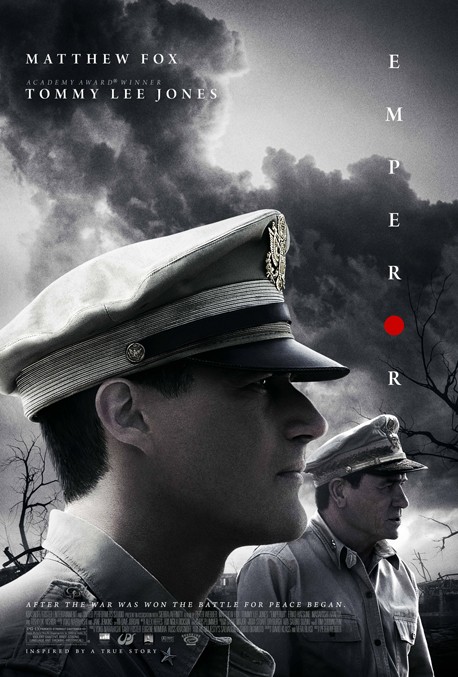 When you’re tasked with retelling an interesting part of history, a story that few are familiar with, it’s best to get out of the way. You don’t need to gussy it up if the history, itself, is interesting enough to warrant a movie. Such is the case with Emperor, a drama set in Japan weeks after their surrender to Allied forces in WWII. General Douglas MacArthur (a stodgy, scenery-chewing performance from Tommy Lee Jones) will rely upon the advice of one man (Matthew Fox) whether to try the Japanese emperor for war crimes for his possible involvement in the Pearl Harbor attack. The country is still recovering from the shock of nuclear bombs, its people could rebel against foreign occupiers, and the future of the country feels precariously on the brink. All of this makes for a good setting for a story, but Emperor doesn’t stick this out. It keeps falling back to a lame love story about Fox’s college days when he was smitten with a Japanese woman. So, now in Japan again, he desperately looks for her, having amber memories to times where he chased her around wooded areas (they must have done this a lot as a couple since it makes up the majority of his flashbacks). You keep thinking, isn’t there a bigger story at work here than one guy’s failed college romance? The rest of the movie is treated so cursory, with stiff-lip TV procedural attention, so that the details are all we get and the people get lost. Ultimately, Emperor is a movie that crushes us with the wrong history, misses out developing all the meaty stuff, and thinks what we truly want is Fox chasing after his lost love. It’s a shame the movie is so boring while the history is not.
Nate’s Grade: C
Share this:

The Impossible (2012)
 On December 26, 2004, an underwater earthquake triggered one of the deadliest tsunamis on record, devastating coastal cities along the Indian Ocean. Over 230,000 people are believed to have perished from the waves and resulting damage. The Impossible tells the harrowing and ultimately inspiring true-story of one family and their vacation from hell. We follow Marie (Naomi Watts) and Henry (Ewan McGregor) as well as their three sons, from oldest to youngest, Lucas (Tom Holland), Thomas (Samuel Joslin), and Simon (Oaklee Pendergast). They’re vacationing in Thailand for the holidays and then the tsunami hits, separating Marie and Lucas from the group. They are swept away by the punishing waves and Marie is badly hurt. Henry is desperately searching for his loved ones, Lucas is desperate to get his mother proper medical attention, and there are thousands just as desperate and just as in need.
It’s nigh impossible to watch this movie and be unmoved. It’s not very subtle when it comes to its themes and messages, but man is it ever effective. The family struggle could have easily descended into melodrama with a sappy, maudlin reunion, punctuated with swelling music to hit you over the head. It’s a fairly simple story with little to its plot. The family gets separated and then they desperately search for one another and, surprise, they reunite. It is after all based on a true story and they all lived, so there’s that. It’s the startling level of realism, the exceptional performances, and the poignant moments of human kindness and grace that suckered me in big time. I was an emotional wreck throughout this movie but in the best way possible. I cried at points, sure, but my tears and my emotions always felt genuinely earned. There’s no doubt that this is one manipulative movie. It knows what strings to pull, what buttons to push, and it does so with finesse. Last year I decried Extremely Loud & Incredibly Close for being overly manipulative and overdosing on false sentiment. However, with this movie, my investment was never in jeopardy. I was completely absorbed by the story and felt great empathy for the array of characters as they persevere. The horror of that 2004 tsunami is told in one small story, personalized, and giving an entry point for an audience to engage without feeling overwhelmed by the magnitude of destruction and death.
 Let me go into further detail about that wall of destruction, given astonishing, terrifying realism. The recreation of the tsunami ranks up there as one of the most frightening sequences I’ve ever seen in film. It’s a solid ten minutes of chaos, and you will feel the frenzy of that chaos. You’re put in the middle, floating along with mother and son as they helplessly try and cling to one another. The scope of the disaster will leave you gasping. I know they must have used sets and water tanks but I’m left stupefied how it all came together to look so seamless. It sounds macabre to compliment the marvelous recreation of mayhem, but director Juan Antonio Bayona (The Orphanage) and his team have turned disaster into world-class drama. It’s not just the powerful waves as well, there’s the field of debris just under the surface to contend with. When the first wave hits Maria, we experience her complete disorientation. The sights and sounds are blurs, the water oppressive, and the debris sudden, jolting, unforgiving. It’s the closest any person would ever truly want to get in the middle of a tsunami.
The majority of the film is about the family coming back together, and while their reunion is indeed a tearjerker, I found the film littered with many small moments that just soared emotionally. When a disaster of this magnitude hits, I’m always struck by the wealth of human kindness and cooperation that emerges in response. There’s something deeply moving about helping your fellow man in need, even if you cannot understand his or her language. Maria is aided by the Thai locals who do not treat her differently because she’s a white woman. She is just another person in need.
Whenever disaster strikes, we think of the people who plunge into the middle as heroes, but simple acts can be just as comforting and thoughtful. There are small moments of kindness, like lending a stranger your cell phone to call home, that speak volumes. In that one instance, Henry is so distraught, the weight of everything hitting him as he tries to put it into words, and his call is abrupt and somewhat incomprehensible thanks to his rising emotions. Henry is urged to call back, not to leave it at that, to leave his relatives dangling with such precious little and the alarm in his voice. So he’s given the phone again, and in a more measured demeanor, Henry is able to talk about the situation and promise to find his wife. It’s such an everyday gesture made invaluable to Henry. There’s a woman talking to Thomas about the stars in the sky, how we don’t know which are dead but they continue to live on, and the subtext is a bit obvious but it’s still heartfelt. Then there’s Lucas’ mission of organizing the triage center, scouring the grounds looking for missing family members. He takes it upon himself to make a difference rather than sitting idle. It’s that human connection in the face of adversity that proves most uplifting.
 Watts (J. Edgar) gives a performance of tremendous strength and fragility. The tenacity and resilience she has to keep pushing through is remarkable. She’s so strong but vulnerable at the same time, showing you the fine line she walks to stay above the fray for her child. She endures great physical trauma, a gnarly gash in her leg peeling off like tree bark. Then there’s the emotional burden of trying to be a mother to a child desperately in need of a sturdy parent. Watts could have readily played to the heights of the emotions, resorting to hysterics, but the quiet strength of her character makes her underplay the burdens she endures. She can’t simply just break down. You don’t get a true sense of the toll she has suffered until her life-and-death struggles at the very end.
The supporting team around Watts also deserves accolades. McGregor (Salmon Fishing in the Yemen) has several heartbreaking and heartwarming scenes, striving for hope. Lucas has to rise to maturity when his mother is wounded, protecting her, supporting her. Acting novice Holland rises to that challenge with great courage, though there are moments that still remind you he’s only a boy, like when he bashfully turns his back upon seeing his mother’s exposed breast. That awkward, indecisive moment where a young boy doesn’t know how to handle the sight, seeing his mother so exposed and vulnerable, is quite effective. The other actors who round out the family (Joslin and Pendergast) are quite superb as well. The family feels like a cohesive, loving unit, and every performance feels believable.
The Impossible is based upon the true experiences of a Spanish family, and yet the onscreen family we follow is white, so what gives? It’s not surprising for Hollywood to whitewash a story to appeal to a wider audience. Should we have any more sympathy for this family’s plight because they are white? Would we feel less if they were Spanish? I think the perils and victories would be the same regardless of language or ethnicity.
Watching the unflinching and stunning events in The Impossible, you will likely shed some tears, be they from horror, sadness, or happiness at the family’s reunion. While the ending is never in doubt, the movie has plenty of other potent and poignant small moments to keep your emotions safely stirred. It’s a visceral experience that will shock and exhilarate. There were moments where I felt like I had to cover my eyes. But The Impossible is not disaster porn, ogling over the suffering and endurance of the misfortunate. It’s as much about the response to tragedy as it is the wallop of that cruel tragedy in 2004. The perseverance, the open-hearted help of one’s fellow man, the strength of human connection, the long ripples of kindness, it all comes together to form one compelling, often moving, and quite memorable film experience. Add some formidable performances, top-notch direction, and tremendous technical achievement, and The Impossible is a rousing drama that speaks to the best of us even in the worst conditions (think of it as the antithesis of Ayn Rand’s philosophy). It may be manipulative, it may be somewhat straightforward, and it likely climaxes too soon, but when the results are this powerful and emotionally engaging, then I’m happy to have my buttons pushed.
Nate’s Grade: A-
Share this:

Zero Dark Thirty (2012)
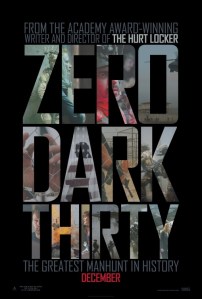 Director Kathryn Bigelow and journalist-turned-screenwriter Mark Boal, Oscar winners for 2009’s Best Picture-winner war film The Hurt Locker, were hard at work on their next movie when fate intervened. They were about to start production on a film about a 2001 incident where U.S. Special Forces almost nabbed Osama bin Laden, the notorious mastermind behind 9/11. Then on May 1, 2011, the world learned that Seal Team Six stormed bin Laden’s secret compound in Pakistan and executed the most wanted man in the world. Bigelow and Boal scrapped all plans and rewrote their movie from scratch. Now they had the ending we’d all demand; isn’t a movie where we get bin Laden way better than one where he narrowly escapes? Zero Dark Thirty (military terminology for well after dark) is the stunning result of Boal’s impressive reporting and condensing, Bigelow’s masterful direction, and a great supporting cast that brings history to vivid life. If you’re like me, you’ll walk out of the theater whistling to yourself, speechless at the spellbinding artistic achievement of the movie. This, ladies and gentlemen, is what essential, invigorating, quality filmmaking is all about.
We may know about Seal Team Six and the lead presented from tracking the courier, but few people know of the CIA analyst at the heart of the manhunt. Maya (Jessica Chastain) is a young agent stationed in Afghanistan who desires nothing more than to be the one who helps ensure that bin Laden gets killed. We follow her decade-long quest as she chases down leads, interrogates prisoners, and successfully presses the CIA brass for action, resulting in the fateful raid that took out bin Laden.
 You can tell early on that Zero Dark Thirty is going to be an excellent film. Given the pedigree of is creators, my expectations were enormously high. I rated their previous collaboration as my top film of that year. I knew I was in capable hands when the film opens on September 11, 2001 but skips any visuals. We sit and watch a minute of a blank screen while the sounds of desperate 911 calls become a wall of sound. It’s enough to reassert the stakes while still being restrained. Bigelow’s directorial command is astonishing, pitting you in the thick of the action. There are a lot of moving parts with a movie like this, wheels within wheels, and Bigelow keeps everything moving and focused. It helps that the bigger manhunt is broken up into a series of mini-missions over the ten years. Bigelow and her talented production team have recreated the ends of the world to bring this story to life. That added sheen of verisimilitude gives every moment a sense of magnified power, an electric sense of relevancy. You’ll get goose bumps as they start circling the actual location of bin Laden. Bigelow, who won an Oscar for her virtuoso work on The Hurt Locker, still knows how to play every one of your nerves. There’s a clandestine meet up with a possible turncoat that is stuffed with dread. Every checkpoint, every safety procedure waved, you’ll be biting your nails, the voice in your head clearly saying, “Oh no, this isn’t going to go well.” Zero Dark Thirty is more crime procedural than the action thriller. Even so, Bigelow’s direction is top-notch and brings an intense, churning verve to the film, down to the smallest detail.
The film plays out like an absorbing, hard-hitting piece of investigative journalism, recreating the steps and false turns over the ten-year manhunt for bin Laden. There is a lot of information to process and over 100 speaking roles, and Boal and Bigelow do not stoop to pander to the less intelligent in the audience. You will be expected to catch up or fall behind. It can get confusing at points but Boal does an exceedingly articulate job of narrowing the particulars of the bin Laden case and presenting a clear through line. It’s a story that hops around the globe through a series of mini-missions, from a meet up with a possible al Qaeda spy to locking down a phone number to trace a courier in Pakistan. You see every step, every deal, and every effort that it takes to land the big break, namely tracking down bin Laden’s trusted courier to his Abbottabad compound. Boal even separates his narrative with titled sub-sections like a lengthy piece of journalism. We all know where the story is going to end up, but Boal’s supreme talent is making every step meaningful and tense leading up to that fateful raid May 1, 2011. The level of reportage detail is completely enthralling and will be relatively unknown to most filmgoers. Beyond 9/11 and the London bombings, I confess to being ignorant of the other al Qaeda attacks highlighted throughout. Therefore, not only is Zero Dark Thirty an exciting manhunt, it’s also an educational endeavor for most Americans.
 The proceeding two hours are an engrossing manhunt, but when Zero Dark Thirty gets to the raid sequence, that is when the movie ascends to a level of cinematic excellence unsurpassed this year at the movies. There is nothing else in 2012 that comes close to matching the 30-minute raid on bin Laden’s compound. My heart was in my throat the whole time. I was physically shaking. I was pinned to my chair. The conclusion, nabbing bin Laden, is one of the most riveting sequences in film I have ever seen. It’s like Bigelow has complete control of your senses, and even though we all know how this story ends, you’ll be glued to the screen, pulse racing, anticipating every step. After the film ended, I told my friend Eric that I felt like I needed to start smoking, thus was how exhilarated I felt leaving the theater (message to kids: don’t smoke, even if you see Zero Dark Thirty). My head was bustling afterwards. All I could think about was the masterful conclusion to a very good movie. The raid sequence is brilliantly recreated and just about portrayed in exacting real time; you feel like you’re right there along with the members of Seal Team Six. For a civilian, it’s fascinating jut to watch the minutiae of what went down, but under Bigelow’s taut direction, it’s the moment every American has been waiting for since September 11, 2001. Bigelow is also careful not to portray the death in any sort of jingoistic, fist-pumping context. She sticks with her docu-drama approach, avoiding sensationalism, and you don’t even see the shot that takes down bin Laden. The film is also very careful not to linger on bin Laden’s dead body or even reveal his face; she doesn’t, as President Obama said, “spike the football.” Bigelow deserves a second Oscar just for her superlative handling of those unparalleled 30 minutes of pure filmmaking bravado. Plus, it’s the best ending of the year at the movies.
Let me address the brewing controversy ensnaring the movie regarding its depiction of torture. Zero Dark Thirty does demonstrate torture but it never glorifies it or presents it as anything less than dehumanizing and morally repugnant. But torture did happen (I’m sorry Dick Cheney… “enhanced interrogations”) and to whitewash this regrettable period of time from the historical record is a disservice to the truth. This country, as well as any other, engages in extreme and detestable measures; we only hope that our leaders have the moral clarity to make these ethical lapses as few and far between as possible. Now, the politicians and bloggers have attacked Bigelow’s movie as tacitly condoning torture, indicting that it was successful in getting that big break. This is not the case. Zero Dark Thirty shows a variety of methods being used, and yes we get a heavy helping of torture and humiliation, but it’s when Maya and others start treating the detainee like a human being again, offering food and conversation, is when the progress is made. The film does not explicitly declare one interrogation method successful, however, I can see where people will draw their own (wrong) conclusion. If anyone wants to read my exact stance on torture, just check out my lengthy review of the 2007 Oscar-winning documentary, Taxi to the Dark Side. In short, torture does not work and Zero Dark Thirty does not purport that it does, though many may conclude otherwise. It seems to me that the critics don’t have enough faith in the audience to accept ambiguity.
2011’s breakout actress, Chastain (The Help), is the focal point of the movie and she delivers. Her character has no life outside of doggedly hunting for bin Laden. She’s completely driven by the goal of killing him, and as such she gets to uncork some dandy angry monologues dressing down her colleagues for their failing dedication. Chastian does a fine job of keeping a veneer around Maya, shrouding her emotions into a mysterious calm, which seems realistic given the nature of the character but also makes it tricky to connect with her emotionally. This movie is not the great character study that The Hurt Locker was, and so Maya gets some rather shrift characterization: she’s a workaholic fighting for credibility. The real star of the movie is the story so all the characters take a back seat to Boal’s journalism. While Chastain is quite good, I have to shrug my shoulders at the various critics groups throwing Best Actress accolades her way (go Jennifer Lawrence).
 The supporting cast doesn’t have a weak link amongst them, from Kyle Chandler (Super 8) as an outpost boss, Mark Strong (Tinker Tailor Soldier Spy) as a CIA superior screaming at the bin Laden team to “find me targets to kill,” Jennifer Ehle (Contagion) as Maya’s closest friend in a hostile land, James Gandolfini (TV’s Sopranos) as CIA director Leon Panetta, Stephen Dillane (Game of Thrones’ Stannis Baratheon) as a skeptical NSA head, and Chris Pratt (TV’s Parks and Recreation) as a member of Seal Team Six. That’s right America, TV’s Andy Dwyer helps cap bin Laden. But the real standout is Jason Clarke (Lawless) as an interrogator who eventually leaves the field for an office but still makes headway for Maya.
Much like The Hurt Locker, here is a movie that transcends politics and genre. Zero Dark Thirty is a nerve-wracking thriller, it’s an intelligent crime procedural, and it’s an engrossing and powerful work of relevant art. It operates on such a high level of artistic achievement that little else from 2012 even comes close. This thorough, intense, provocative, thought-provoking, morally ambiguous, thrilling, and generally tremendous movie is taken to a whole other level with its concluding act, brilliantly recreating the raid that took down Osama bin Laden, the most cathartic and satisfying ending of the year. You’ll be liable to whistle in awe at how accomplished Zero Dark Thirty is. Of course audiences should not accept every thing they see in the movie as unimpeachable gospel, as dramatic license is needed to help shape a formidable narrative. This is still a movie that desires to entertain and yea does it entertain. I look forward to the American public getting a chance to experience the same riveting theatrical experience that I had with my critical brethren, as well as the sense of catharsis and relief by film’s end. Zero Dark Thirty forgoes sensationalism for modulation, eschews moral righteousness for ambiguity, and expects the audience to keep up with its retinue of information. And you’ll be grateful to be given the chance to tag along. Run out and see this remarkable movie when you have the chance. Movies don’t get much better than this, folks.
Nate’s Grade: A
Share this:

Hitchcock (2012)
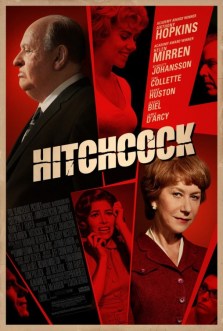 I think Alfred Hitchcock would be amused at his continued notoriety, not just from the quality of his films but also from the magnitude of his own presence. 2012 offers not one but two different movies about the master of suspense, both of which are oddly close in time period. HBO’s The Girl explored Tippi Hedren’s account of what it was like to film The Birds, with Hitchcock being a provocateur. The more straight-forwardly named Hitchcock looks at Alfred’s trials to make one of his seminal films, 1960’s Psycho. I only wish that the movie spent more time on Psycho and less time on the Hitchcock marriage.
Alfred Hitchcock (Anthony Hopkins) is starting to feel like he’s being left behind in Hollywood. He’s looking for his new project, something to rekindle his creative fervor, get those juices flowing once more. Then he comes across the book Psycho, based upon the murders of Ed Gein, a man who thought his dead mother was telling him to kill and make skin suits of his victims (Gein is also the inspiration for The Texas Chainsaw Massacre and Buffalo Bill in Silence of the Lambs; truly the gift that keeps on giving for horror). Murder, cross-dressing, incest. You can understand the hesitation from studio heads to bankroll the picture, even with the great Hitchcock name attached. With the sturdy support of his unflappable wife, Alma (Helen Mirren), Hitchcock puts his own money and clout on the line to see Psycho through. As the pressure mounts, Alfred is worried that his wife is spending a bit too much of her time with a certain screenwriter who wishes to woo her efforts away.
 Sir Alfred was a blunt individual so I will follow suit and mince no words – this movie is terrible. How could it possibly be? It has tremendous acting talent and the rich angle of looking at the making of one of Hollywood’s most controversial and famous movies of all time the groundbreaking Psycho. Alas, it’s when the movie takes its many sidesteps away from the behind-the-scenes action of Psycho is where it goes astray. First off, I find the narrative framing around the marriage of the Hitchcocks to be superficial and hamstrung. We’re telling this vastly interesting story and grounding it in a very slight manner, gauging every creative struggle through the prism of whether or not Alfred and Alma will stick together. I assume it’s supposed to provide an emotional entry point for the movie, but I just didn’t care. I didn’t care about the jealous spasms Alfred felt as his wife spent more and more time with a caddish screenwriter, and boy did that storyline get tiresome. I want to know more about Psycho and not this dumb portrayal of martial woes told with such graceless handling. The whole portrayal seems so minute and clumsy and such a poor framing device when the making of Psycho is a juicy enough story. I didn’t need the focus to be on whether the Hitchcock marriage will persevere. Oh, and the resolution for this feels completely pulled from thin air, without any groundwork laid to explain the about-face into compassion in those final minutes.
Then there’s the portrayal of Alfred Hitchcock himself, which is so dubiously shallow when it comes to psychology. Oh, he’s obsessed with blonde leading ladies? Oh he’s a bit of a control freak? Oh he can be overbearing and demanding and standoffish? Wow, what powerful insights into arguably the most famous director in movie history. The movie, adapted by John J. McLaughlin (Black Swan), feels like it was made by someone who did the bare minimum of research on the man. There are no new insights or even mildly interesting ones to be found. It’s the standard boilerplate repeated with different actors. And then there are the nails-on-a-chalkboard scenes where Hitchcock imagines himself talking confessionally to none other than Ed Gein (Michael Wincott). Excuse me? Oh my goodness do these tacky sequences just grate. I don’t even understand their inclusion. Is this a manifestation of Hitchcock’s own sense of madness when it comes to moviemaking? Does he feel some connection to the horrible disturbed man who inspired his newest film? Does Hitchcock only feel like he can communicate to a figment of his own imagination? Whatever the reason, I wanted to smack myself in the head every time Hitch and Gein had a heart-to-heart. I should have known I’d be in for a bumpy ride when, in the movie’s opening minutes, a news reporter asks Hitchcock, after the premier of 1959’s North by Northwest, why he doesn’t just hang it up? Did this idiot even see North by Northwest? Would you ask Spielberg if he should retire after viewing Saving Private Ryan or Kubrick after A Clockwork Orange?
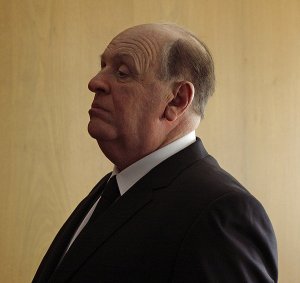
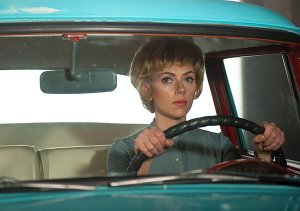
Then there’s the matter of Hopkins as Hitchcock. It never feels like the right fit. Turkey jowls aside, the man doesn’t look too similar to Hitchcock nor does he adopt a demeanor that proves convincing. Sure he goes for that highly imitable voice and cadence that Hitch is well remembered for, particularly his openings on his own TV show. You never feel like Hopkins has a real strong bead on the character, and surely the fault lies with the weak characterization relying on the collective knowledge of Hitchcock’s outsized public persona. Likewise, Mirren (The Debt) is fine but gets to play another of her steely strong-willed matriarchs. Mirren won’t let you done when it comes to performance but, given the lack of strong characterization, she goes on autopilot. The best actor in the movie is surprisingly Scarlett Johansson (The Avengers) who has a striking similarity to Janet Leigh, and not just in what you’re thinking. She’s instantly likeable and takes the Hitchcock peculiarities in stride, putting up a strong front but voicing her concerns when appropriate.
 Director Sacha Gervasi (Anvil! The Story of Anvil!) gooses up his story with all sorts of horror genre techniques, including editing fake outs and violent edits. I’m also unsure why so many liberties needed to be taken with the retelling of this story. I’m not going to be a person decrying the use of fictionalized elements in a true-life story for dramatic effect (I loved Argo), but you have to do so in a way that tells a better story without getting too far away from the essential truth of the matter. Hitchcock, in raising the talents of Alma, attributes many of Psycho’s development achievements to her keen womanly insights when they came from others. That’s fine, except that the movie portrays her in such a rarefied state of genius that she quickly becomes the movie’s surefire narrative cheat. Having problem with the last act? Let’s have Alma fix it. Having problems with the editing? Let’s have Alma fix that. It’s not compelling of a story for one character to chiefly have all the answers instinctively and without any sense of struggle. I understand that Alma did a lot of unaccredited work on Hitchcock’s movies, though it wasn’t uncommon for women to be screenwriters at that time and you’d think the pull of being a Mrs. Hitchcock would get her well-deserved credit. Regardless, I wish that Gervasi and McLaughlin had given Alma more depth than being put upon wife/secret savant collaborator.
It’s a shame because there’s a genuinely interesting movie to be had somewhere in here. The making of Psycho was fraught with difficulties and the studios just didn’t get it. Watching Hitchcock work through that process and persevere would be far more interesting. I enjoyed the multitude of famous cameos, like Michael Stuhlbarg as Lew Wasserman, Hitchcock’s agent and eventual head of Universal Studios, and even Ralph Macchio as Psycho screenwriter Joseph Stefano. I suppose the ins and outs concerning one of the most famous movies of all time could be considered, erroneously I feel, to be too “inside baseball.” That’s why I think the filmmakers expanded the romantic drama angle and had it consume the majority of the running time. Often the stupid perils of the will-they-or-won’t-they romantic squabbles feel so petty and cheap considering the magnitude of the work going on. Hitchcock feels like a movie that found the least interesting and essential angle to tell the story of the making of Psycho. Diehard movie fans might find some fun to be had with the minutia of Hollywood and Hitchcock’s life, but I cannot fathom how anyone could view this portrayal as effective. It’s not insightful, it’s not challenging, it’s not relevant, and it’s certainly not entertaining. This movie is not deserving of the name it bears.
Nate’s Grade: C
Share this:

Lincoln (2012)

Steven Spielberg’s long in the works biopic of Abraham Lincoln could have easily been retitled, The Thirteenth Amendment: The Movie, such is the narrow band of focus. Lincoln is an engrossing, handsomely mounted study in the political machinations that went into passing the 13th amendment to outlaw slavery. Unless you’re a fan of history or politics, I can’t imagine that this movie is going to prove that engaging for you. This is a big movie about Big Moments with lots of people with beards giving speeches. Daniel Day-Lewis does a tremendous job as our titular sixteenth president, giving the man more foibles and traces of humanity than I can remember from any screen portrayal. Liam Neeson (The Grey) had long been attached to be Spielberg’s Lincoln, but I cannot fathom any other actor in the role after seeing Day-Lewis’s amazing work. I think he’s a shoo-in for his third Oscar. It’s intriguing to witness what a political animal Lincoln was, able to play off different sides to get his way. In the end, you may even feel a stir of patriotic pride, inspired by the good that government can grant with the right leaders for the right causes. The supporting cast all provide great performances, from Sally Field as the volatile Mrs. Lincoln, to James Spader as a conniving lobbyist, to Tommy Lee Jones as a stubborn curmudgeon… so basically Tommy Lee Jones. Just about every speaking part is a recognizable character actor. Who’s going to turn down the prospect of a Spielberg Lincoln movie? The tighter window of focus allows the movie greater depth as an important political juncture in our nation’s history, but Lincoln could have also been the 19th century equivalent of that Schoolhouse Rock song, “I’m Just a Bill.” This is an easy movie to admire but I think a more difficult film to love, to fully embrace.
Nate’s Grade: B+
Share this:

Compliance (2012)
 The day at a fast food eatery began like any other. Sandra (Ann Dowd), the manager of the branch, has to shepherd her small group of employees through a hectic Friday evening. Then she gets a phone call from an “Officer Daniels” (Pat Healy). He tells her one of her workers, Becky (Dreama Walker), has stolen money from a customer. Sandra takes Becky into a storeroom and confronts her. Becky is aghast and professes her innocence. This is where things start to get out of control in writer/director Craig Zobel’s potent indie pressure-cooker. “Officer Daniels” insists that Becky be searched, then strip searched, and then worse, and Sandra and the employees begrudgingly go along. After all, it’s an officer of the law telling them what to do. Except that “Officer Daniels” is no police officer. This whole incident is an awful prank, and the people involved will never be the same.
This really is an indie horror movie, flipping the oft-repeated cry, “Don’t go in there,” with, “Why are you still doing this?” You may have to watch portions of this movie between your fingers. I was squirming and crying out at numerous points. The tension and dread just continue to mount, and you watch the characters slowly degrade, as they’re asked to do more insidious acts of humiliation in the name of compliance, and to watch them carry on the path of shame. It’s a step-by-step process of human degradation, so that the more disturbing moments of sexual obedience don’t feel entirely implausible given the journey through hell the characters have endured. It is impossible to watch this movie silent and detached. This is a provocative film that will garner many reactions but it’s also something of an endurance test. How long can you watch? How far can you watch these characters descend? The movie hooks you early and then you almost feel complicit, but you’re completely taken over by morbid curiosity.
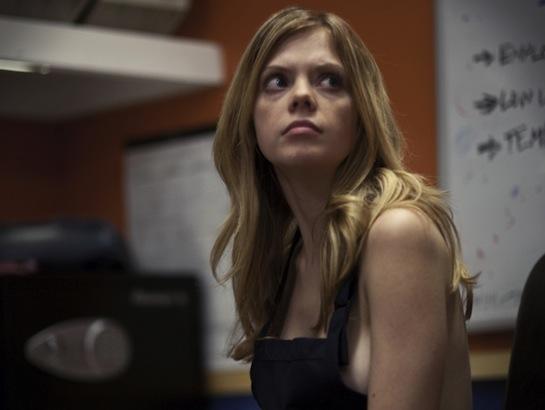 The movie is a powerful modern-day example of the Milgram experiment, the famous psychological exercise where a figure in authority, who assumes all responsibility, gradually gets average people to commit increasingly harmful acts to others. As long as people believe they are following orders, they can be convinced to do almost anything by someone in control. It’s easy to sit back and judge these characters, scoffing at how naïve they seem to be. It’s always easy for us to say what we would do in hypothetical situations, that is, until they happen. Compliance is an intriguing analysis of the shifting facets of power, authority, and manipulation. “Officer Daniels” enlists a host of tricks and verbal intimidation to persuade his victims to do things outside their better judgment (the caller’s true profession is a brilliant backstory). After a while, Sandra looks to be developing some slight Stockholm syndrome as she empathizes more with the plight of the phony officer on the phone than her employee. He provides just enough sympathy and validation she’s looking for to win her over. He also plays people against one another; he implores Becky to spare Sandra any extended grief, which often cows her into consenting. “Officer Daniels” isn’t the only one manipulating others; Sandra pressures employees to become involved in the situation, using her position of power to squeeze others into getting what she wants. There are numerous victims and culprits here.
Zobel could have easily given over to the exploitation elements of his story and made a very tawdry, voyeuristic exercise in sexual dominance. We watch as Becky bares all of herself and then goes even further, as “Officer Daniels” instructs male attendants to physically inspect her body cavities. It is a credit to Zobel’s sensitive direction that Compliance does not come across like a glorified S&M masturbation fantasy. He treats the incident very seriously, providing clear distaste without going overboard into preachy condemnation or superiority. It’s amazing that Zobel’s script finds so much empathy for his participants. You may be surprised at how relatable and “normal” these people seem. You may even recognize some of them. They’re all trying to do the right thing at heart, but that distinction gets extremely blurry as the night carries on. The point of Zobel’s script is that these people could be us. The added empathy makes the downward spiral all the more stomach-churning, as we want these characters to take a stand, to wise up and question the voice of authority.
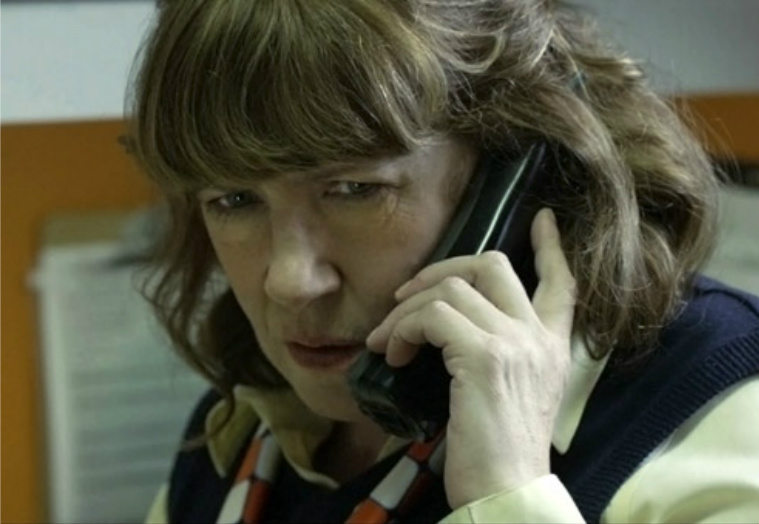 Dowd (Marley & Me) is downright heartbreaking and deeply frustrating in the movie. We get a clear sense of the pressure she’s under in her position, but she’s really the focal point of the movie. Walker (TV’s Don’t Trust the B in Apartment 23) is the martyr of the piece, and her slow resignation to the humiliation is deeply affecting, but this is Dowd’s movie. The longtime character actress takes the character of the dowdy Sandra, striving for respect, and transforms her into a figure worthy of Greek tragedy. She can be vindictive and, well, bossy, but she’s also a figure struggling for respect and validation and what she feels is morally just. We watch as her confidence starts getting chipped away, the flickers of doubt that she must tamp down because now she’s gone too far to reverse course. I don’t imagine that a movie as small as Compliance will be remembered around Oscar time, but I’ll certainly recall Dowd’s sad and transfixing performance.
I’d like to share a spooky bit of personal connection to the film. No I’ve never experienced anything this heinous before, but there was an offhand music cue that caught my interest. When we cut to the dining area early on, there’s an Admiral Twin song playing. Who is Admiral Twin? Why they’re a brilliant pop-rock band from Tulsa, Oklahoma that I’ve been singing the praises of since 2000. I’ve won over friends with my discipleship, but the band is still relatively unknown, playing few performances outside of their native Tulsa. Given the phonetic approximations of my name with the film’s writer/director, and the inclusion of an obscure indie band that few know (but should), it seems likely that Zobel may indeed be some far off relative of mine or, more likely, myself. I must have crafted an entire film without ever knowing about it. This seems like the most probable scenario.
I don’t want it sound like Compliance is some grueling exercise in group sadism. In lesser hands, it might have devolved to that. It’s a fascinating and provocative game that challenges and incenses an audience. The movie is a sickening but compulsively watchable dramatic experiment that will leave you talking for hours once it concludes. It’s an uncomfortable sit, yes, but that doesn’t mean it’s not worthwhile. The events in the film seem unbelievable and yet it’s based on a true story. This stuff happened, people. Not only that, it happened multiple occasions in multiple vicinities. What does that say about human nature? Will we only be as good as society lets us be? If we are absolved of responsibility, how far removed from our own sense of ethics will we go? Are we all susceptible to this moral failing under the right circumstances? I think that’s the truly terrifying and lasting lesson of Compliance. These people could be us, both victim and unwitting antagonist. Destined to stir debate and become a college ethics course favorite, Compliance is a gripping movie that will make you cringe but also give way to some scary introspection. How far would you go?
Nate’s Grade: A-
Share this:

Argo (2012)
 The reinvention of Ben Affleck as movie director took a big step forward with the critical and commercial success of the 2010 Boston cops-and-robbers thriller, The Town. While I’d argue Affleck’s first outing as a director, 2007’s Gone Baby Gone, is still his best, The Town won over plenty of doubters. Here was an actor-turned-director who could deliver smart drama, intense suspense, and coax Oscar-caliber performances from his brilliantly assembled casts. Have you seen Blake Lively half as good in anything as she was as a tragic junkie single mom in The Town? She’ll be able to get work for years just from the demo reels of that performance. But with two sturdy, complex, taut genre movies under his belt, Affleck still had doubters. The political thriller Argo takes Affleck far out of his Bostonian comfort zone. The creative stretching proves fruitful because Argo is a stirring, fascinating, and engrossing true-life story that should at last silence the remainng doubters concerning Affleck’s talents behind the camera.
In 1979, The U.S. embassy in Tehran was overtaken by a storm of Iranian protestors. Fifty-two Americans were held hostage for an exasperating 444 days. During the takeover, six Americans escapes through a back alley and found asylum with the Canadian ambassador (Victor Garber). There they waited for months, trying to work out a plan to escape. If caught by the mob, it’s very likely they would be deemed spies and executed. Enter CIA agent Tony Mendez (Ben Affleck) and his scheme. His idea is to pretend the six American hostages are part of a Canadian film crew scouting locations in Iran for their sci-fi movie. His superiors seem dubious but Mendez gets the green light. He heads to Hollywood and puts together his team, a veteran makeup artist (John Goodman) and an established producer (Alan Arkin) on the outs with the industry. They settle on the screenplay “Argo” and have to build a credible cover story. From there, Mendez travels into Iran to meet with the hidden hostages to sell them his scheme. They were all coming out together or nobody was getting back home.
 Argo is a fascinating story that seems like it could only exist in the movies, and yet it’s a true story and one hell of a story. It’s a mission movie, so we know the familiar flow of the film even as the details seem fresh (unless you’re Canadian). The very idea is one of those “so crazy it might work” plans; one State department official asks, “You don’t have any better bad ideas than this?” Even though we know it was a success, that doesn’t stop the movie from being engrossing. Argo flies by like a caper film as the CIA gathers the resources and experts to try and put together a ramshackle rescue mission. There’s feeling out the Hollywood angle, gathering the pieces to create the illusion of an actual film production, and the urgency of the façade. Even though it’s a bit outlandish, the fake movie plot seems worlds better than the other possible plans being pitched by the government agencies (smuggling in bicycles and maps?). I thought it was genuinely interesting just to be granted access to a room where people where debating rescue options and picking them apart. The film is consistently intriguing watching smart people come up with smart solutions to challenging problems.
Argo really is three movies expertly rolled together into one; a Middle East thriller, a Hollywood satire, and a D.C. procedural. It’s a bonus that every one of these segments works but it’s even more surprising, and rewarding, that the different segments all snap together without breaking tone. Credit Affleck the director for making sure his movie parts don’t overpower one another. We can go from a tense Middle East sequence where the hostages might have just risked exposure, and then we’ll cut to Hollywood and laugh at the cantankerous Lester. It’s a delicate balancing act that Affleck superbly handles. The humor of Hollywood doesn’t detract or minimize the seriousness of the Middle East chapters; it allows room to breathe, to let off steam. The D.C. segments are the biggest expository moments but they give scope and meaning to the danger. Each of these segments is compelling and each one could have been a captivating movie all its own. We’re fortunate that Argo gives us all three.
Audience ignorance aside, we may know how this story ends but that doesn’t stop the film from being completely nerve-wracking. Affleck showed remarkable skill in The Town when it came to building exciting sequences that felt like they would explode with tension. When it came to Argo, there were moments that literally kept me on the edge of my seat, a rarity with action films. The beginning sequence of the American embassy is rapt with suspense, as the security system deteriorates and the people inside realize the inevitable. They start destroying classified state evidence but really they just have to sit and wait, hearing the footsteps, knowing what is near. The sharp screenplay from Chris Terrio (Heights) does a tremendous job of developing clear suspense sequences. There’s the tension of the precarious subterfuge, of the hostages hiding behind enemy lines, so to speak. If one wrong person were to discover their identity, it could quickly unravel. There’s a whole team of children being paid to piece together shredded documents and photos like they were jigsaw puzzles. Knowing this, it makes the scenes where the group ventures out of the embassy thrilling. The group has to visit a marketplace as part of their cover and it’s terrifying. We know the steps of escape, and each one could easily blow up and get everyone killed. Just when you think you can breathe a sigh of relief we’ve moved onto the next challenge and the tension washes over you again. The climax is so tense that your audience will likely erupt in applause when the hostages eventually escape, relieved and proud of the accomplishment.
The maturation of Affleck as a bonafide directing talent continues. There’s a growing confidence in his direction. The man doesn’t have to rely on flashy visual artifice nor does he seem to be hewing to one notable style. He’s directing each movie as its own beast, be it crime thrillers or true-life suspense story. The man knows where to put his camera in the thick of the action. Affleck also eschews the popular shakycam docu-drama approach that too many filmmakers automatically does all the work of establishing realism. Docu-drama visuals can work when properly utilized, but too often I find it to be self-consciously arty and an annoying distraction. Affleck’s camera remains steady but holds on his actors, giving them space to emote. Three movies into his directing career, Affleck has established himself as one of the best men to direct actors. He’s already lead two actors to Oscar nominations and might just earn a third for Arkin. Plus there’s the fact that Argo, top to bottom, is cast with great character actors. You have people the likes of Michael Parks (Red State) who are there for one line. It also helps Affleck the actor to have Affleck the director.
 The only nagging problem with Argo is that it’s rather light when it comes to character development. The caper is the star of the movie and sucks up most of the screen time. The film does an excellent job of recreating the anxiety that the hostages felt. I can’t say we get to know any of them well as people. I can’t say we get to know much about Tony Mendez either, beside the de rigueur parts of being a CIA agent like divorce, child custody, and long nights of loneliness. The best-developed character in the movie is Lester Siegel, and while he’s terrifically entertaining, it’s something of a misstep for the cranky Hollywood producer to win that title. He’s a man who knows his value in the ever-changing currency of Hollywood; bitter, crabby, but hopeful of making a difference. Arkin (Little Miss Sunshine) is a natural fit for the character and brings more dimensions to the role. I wish the same care were given for the other people in the story, particularly those in harm’s way. The nuanced approach to character with Gone Baby Gone and The Town is just absent. Thankfully, the story is so engrossing that it’s not a mortal wound, but you do wish there was a greater emotional involvement in the film rather than a generic empathy of rescuing those in danger. Also, the Canadian involvement seems curiously downplayed even though their ambassador was the one hiding them for months. His role in the movie plays like he’s Guy #8. I know we tackle the CIA’s involvement but Canada could use more recognition for their integral contributions.
Argo establishes Ben Affleck as a dependable, versatile, actor’s director; someone along the likes of a Sidney Lumet or Sydney Pollack (I swear I don’t have a “Sydney” key lock in my brain). Affleck has proven to be a director who immerses himself into his stories, and his fingerprints are on every frame, every performance. He just nails it. The pacing is tight, the suspense builds to near unsustainable levels, and the tones are expertly juggled to prove complimentary rather than distractions. Best of all, Affleck lets Terrio’s terrific script take center stage. The incredible true-story of Argo is the biggest selling point for the movie, and Affleck doesn’t try to gussy up a whopper of a tale. The film has even more unexpected resonance given the recent spur of violent protests in the Middle East, notably the deadly attack on the U.S. embassy in Benghazi. Argo doesn’t sensationalize the hostage crises for cheap popcorn entertainment. Nor does it glorify or denigrate the Iranian’s outrage over the U.S. giving sanctuary to the deposed Shah. For a very political subject, the movie takes a very muted political stance, relying on the facts of the situation. The movie finds a rare poignancy in its appeal to the power of international cooperation. By the end of the movie, you might even tear up when you hear the actual hostages and government officials recount their struggle and ultimate triumph. Argo is that rare breed of a movie that seems to have everything. While it’s not perfect, it’s clear that Affleck is here to stay as a top-level director.
Nate’s Grade: A-


 nathanzoebl
You must be logged in to post a comment.