Blog Archives
Scream 5 (2022)
 The fun of the Scream franchise has been its meta-textual commentary, wry jabs at horror, and the guessing game of who the killer culprit(s) could be, and Scream 5 or Scr5am (what it SHOULD be called) is a good-fun B-movie that knows precisely what it wants to be and plays to the strengths of the franchise. We haven’t had a Scream sequel since 2011, and the landscape of horror has changed as well as the landscape of multi-media entertainment. There are new satirical horizons to be targeted. This is the first Scream after the death of legendary horror director Wes Craven, but it’s in good hands with the directors and writer of 2019’s bloody excellent Ready or Not. The fun, knowingly goofy elements are retained, and the filmmakers clearly have love for what they’re sending up. There’s a sequence of languishing shots of a character opening fridge doors and pantry doors and I felt everyone in my theater tense for the eventual reveal of the killer on the other side. Moments like these are the good kind of tension-release giggle that Scream can get away with. The plot is sufficient to gather the “legacy characters” back to the site of the original murders for a new stab at rewriting the movie franchise. There’s even some plot elements that are surprisingly resonant and deeper for a satirical slasher franchise, like tear-filled discussions over loss, abandonment, mental illness, and personal responsibility. There’s a sister-to-sister reconciliation that plays like a straight drama, and it plays well. There’s nothing terribly gruesome or memorable about the kills, and some of the meta-commentary can feel like talking in circles, especially as characters knowingly enact scenes from the original. It’s a copy of a copy, meant to mock Hollywood’s reboots, but it’s still a copy of a copy. Sometimes the knowing winks are obvious, like a shower sequence recreating Hitchcock’s angles, and sometimes the potential homage feels lost in translation. Still, Scream 5 is a fun, ironic, bloody hoot of a movie, and for fans of the franchise a more welcomed return to the creative heights of the original movie.
Nate’s Grade: B
Share this:

The Novice (2021)
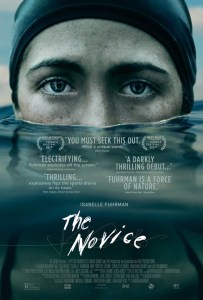 The Novice could be deemed “the Whiplash for rowing,” and that is it in a nutshell but it also distinguishes itself separately from that Oscar-winning 2014 indie. Debut writer/director Lauren Hadaway was actually on the sound editing team behind Whiplash, and that’s her area of expertise with over 40 credits, and right away you can tell her attention to details as far as filmmaking being an immersive experience for the viewer. It’s been nominated for five Independent Spirit Awards, including Beat Feature, Best Director, and Best Actress. It’s the little indie that could right now, though it also seems like the kind of well-received indie that gets forgotten around award season. That would be a shame, because while not quite at the level of Whiplash, this is a hypnotic and visceral and disturbing portrait of competitive obsession.
Alex Dall (Isabelle Furhman) is a freshman for her East Coast university. She joins the crew team with the goal of being the best. Her coaches encourage her competitive spirit but even they try and warn her to take it easier with her relentless training regiment. Nothing else matters to her.
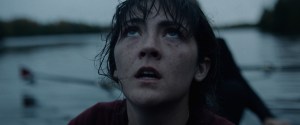 You feel Hadaway’s background in sound design, how she uses it to disorient and produce a rhythm to her movie, the inhale and exhale of pushing one’s self to their physical limit. It’s accompanied by dizzying edits that feel completely matched by their auditory components (Hadaway also served as a co-editor). It’s frenetic and places you in the mindset of our protagonist, whose single desire is to be the best no matter what. That solitary focus blurs out the outside world, so when we get into trance-like states of close-ups, repetitive edits, and slow-motion extensions, we feel trapped inside her restless state of mind. One critic compared the training montages to the drug use montages from Requiem for a Dream, and this is completely accurate. Alex would never view herself as an addict but that’s precisely what she is. Her personal addiction is at winning, and winning at all costs and being the best.
In Whiplash, Miles Teller’s protagonist was a capable drummer that wanted to be excellent. He already had talent and was pushed to the brink by his monstrous teacher/drill sergeant/abusive father figure. Alex throws herself into unfamiliar situations. She is a physics major even though she doesn’t really like or understand the subject. She joins the rowing team even though she lacks any experience whatsoever. And yet, she still sets her sights on the near impossible. She doesn’t want to be the best freshman, and she doesn’t just want to join the varsity squad; she wants to break all the individual records as soon as possible for a team sport. A normal person would view these goals as unrealistic and potentially out of reach, but that’s the point for Alex. It’s the best or nothing, and her toxic win-at-all-costs mentality is even more toxic because she expects to win even in the most unlikely scenarios. It would be like never driving a car and expecting to win the Indy 500. That adds a different dynamic for Alex but it also makes her even more self-destructive and misanthropic.
 The movie becomes a tale of obsession, a downward spiral much akin to an addiction narrative. Alex gradually cuts off all other parts of herself she deems to be a distraction. It’s only small moments where we try and catch a different definition of Alex, the version of her when she might allow herself to relax, but this feels like the “weak Alex” that she’s trying to snuff out, because there shall be no other version of Alex except the one in service to her goal. When she starts having a potential relationship with her T.A. (model Dilone), you think this might be the character’s off ramp, an opportunity for her to settle and realize something else that is meaningful, building an interpersonal relationship. It becomes another distraction to remove. This achieves the artistic vision of showing the mental and physical decline of Alex. Everything in the movie is likewise in service of serving Alex’s grueling goal. However, this also makes her a less dimensional character. If all we know about her is how obsessive she can become, then we’re left to pick up whatever other scraps we’re given to piece together a fuller understanding of her. Perhaps Hadaway doesn’t want any definition beyond Alex’s obsessions. It makes the character less complicated and by extension less compelling, but there is that rubbernecking quality of just watching to see how far she will go before reaching a breaking point. Maybe even death?
This movie would not work as mightily without the committed performance by Fuhrman (Orphan, The Hunger Games). She’s been working ever since she was a child but this is a breakthrough performance for the actress. The intensity of her performance is so conveyed that you might feel like you had a workout yourself. The actress gained ten pounds of muscle over the course of the punishing film experience and athletic training. I had to imagine the movie was shot linearly so they could trace her physical transformation, but I haven’t confirmed it.
Another sound area that greatly elevates the movie is the stirring score by Alex Weston (The Farewell). This is my favorite film score of 2021. It is haunting, moody, and appropriately frantic, with jangling strings and a propulsion that echoes its main character. It has an easy presence of sliding in and out, mimicking the pace of the compulsive training, and standout tracks include the motif “Training” and “Legs Body Arms” and “Seat Race.” Listen to it, folks. Weston has put together greatness and deserves far more recognition than he is being given.
 The Novice could do worse than patterning itself after Whiplash, one of the best films of the last decade. What it lacks in originality and characterization it makes up for in execution, immersing the viewer in the insane obsessions of its lead character. Film has always been an empathetic medium and sometimes it’s a trip into the dark side of the human psyche. Why is Alex this way? It’s unknown. Will she ever break free from this toxic mentality? It’s unknown. Even the ending leaves you with enough ambiguity to wonder what Alex will do now. Is she fulfilled, has she had some important introspective breakthrough, or will she never be satisfied, always finding a new mountain to climb even as her body gets painted in bruises and scars? The Novice is an impressive film debut for Hadaway. It’s not the most in-depth movie from a substance standpoint, but the packaging, presentation, and style give it something extra special.
Nate’s Grade: B+
Share this:

The Power of the Dog (2021)
 Every year, it seems that Netflix’s crown jewel for their big Oscar hopes ends up getting marvelous critical acclaim, and then when I finally watch it I am left disappointed. It happened in 2018 with Roma. It happened in 2019 with The Irishman. And it happened in 2020 with Mank. I haven’t disliked any of those movies, but I was unable to see the highly laudable merits as other critics. Now here comes their big Oscar play for 2021, Jane Campion’s The Power of the Dog, a Western that has been gracing the top of more critics lists than any other American film this year (I’ll be getting to you soon enough, Drive My Car). As I burned through awards movie after awards movie to assess, I held back from The Power of the Dog for a time. I just didn’t want to find that once again I was disappointed with the latest Netflix Oscar contender. I’m still chewing over my feelings with The Power of the Dog, which has a lot going on under the surface and a palpable tension that you’re unsure of how and when it will erupt. It’s also a movie that touches upon repression, toxic masculinity, manifest destiny, grooming, emotional and physical manipulation, and the danger of unstable men who are unable to process who they really are.
Set in 1925 Montana, Phil (Benedict Cumberbatch) and his brother George (Jessie Plemons) own and operate a cattle ranch. George marries a widow, Rose (Kirsten Dunst), and brings his new wife and her teenage son, Peter (Kodi Smit-McPhee) to live at the ranch. Phil resents his new sister-in-law, looks down on her son, and torments both repeatedly. Rose sees Phil as an enemy, someone who will not stop until he forces her out, and his target becomes her son, Peter.
 This is less a traditional Western in several respects and more a tight character study that happens to be set at the conclusion of a Western fantasy for America, transitioning to modernity. It goes against our preconceived notions of a Western, not in a deliberately deconstructive way like 1992’s brilliant Best Picture, Unforgiven, but more in providing contrary thematic details that often get squeezed out. I was expecting the movie to take place maybe during the 1870s or 1880s, but the fact that it’s taking place five years removed from the Great Depression offers different story opportunities and larger reflection. There’s a reason this story is told well after the halcyon days of the Old Wild West. The movie is about certain characters holding onto an exclusive past that has eclipsed them and others ready to move forward by shuttling over their past and the obstacles standing in the way of personal progress.
There are thematic layers expertly braided together that touch upon the larger question over what it means to be a man in society. Each of the primary male characters (Phil, George, Peter) is an outsider to some degree, someone who doesn’t neatly fit into what constitutes a conventional man of the times. George is soft, empathetic, meek yet in a position of power from his family’s status; Peter is rail-thin, academic, odd, effeminate at turns, a dandy presented for ridicule; Phil is the one who presents as a “man’s man,” a hard-driving, hard-drinking man of the land who imposes his will on others. However, deep down, Phil is hiding a key part of himself that would conflict with his society’s view of masculinity. Each man bounces around points of conflict and connection with one another, familial bonds fraying, and a slow-burning battle for supremacy escalating.
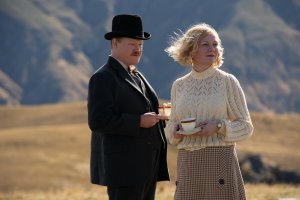 The movie could have also been charitably nick-named “Benedict Cumberbatch is a jerk to everyone,” as this is much of what Campion’s script, based upon the 1957 novel by Thomas Savage consists of. The movie is absent a primary perspective. We drift from person to person in the small-scale ensemble, elevating this next character and their views and worries and priorities. Phil could be deemed the primary protagonist and antagonist, especially the latter. He’s a mean man. Phil is a man who likes to make others uncomfortable, who needles them, and he takes great interest in targeting Rose, partly because he doesn’t like the influence she has on his only brother, and partly because he can get away with it. When he sets his sights on Peter, you don’t quite know what this hostile man will do to get his way. Will he manipulate Peter to turn him from his mother? Will he endanger Peter as a threat to Rose? Will he go further and possibly kill Peter? Or, as becomes more evident, does he see Peter in a very different light, a special kinship that had defined Phil’s own secretive past.
I suppose it’s a spoiler to go further so if you want to, dear reader, then go ahead and skip to the next paragraph. Phil reveres “Bronco Henry,” a deceased rancher that taught him many things when he was younger. The movie heavily, heavily implies that this long-departed older man had a romantic relationship with Phil when he was much younger, something the grown Phil cherishes, caressing himself in private with a scrap of fabric belonging to Henry. The lazy characterization would be, “Oh, Phil is homophobic because he’s really gay, and he’s angry because he cannot accept himself.” With Campion, Phil could be viewed as a victim too. He was likely groomed by an older man, and maybe that relationship was viewed by Phil as more romantic and consensual than it was, but it’s the lingering nostalgic memory of the intimate happiness that he holds onto, afraid to move on because of the danger of letting go and the danger of possibly reaching out, being vulnerable again. Yes, dear reader, this is more a gay cowboy movie than Brokeback Mountain (which, to be fair, were sheep herders). Savage himself was also gay. As Phil takes Peter under his wing, you don’t know whether this man is going to kill or kiss him, and the tension is ripe enough that either way it can ties you up into anxious knots.
The acting is extremely polished all around, with each performer having layers of subtext to shield their true intentions. Cumberbatch (Spider-Man: No Way Home) is a thorn in so many sides and it isn’t until much later that the veil begins to drop, ever so slightly, allowing you to finally see extra dimension with what appears to be a bully character for so long. He might just be too impenetrable for too long for some viewers to develop any empathy. Plemons (Jungle Cruise) and Dunst (Melancholia) are sweet together, and I enjoyed how each one leans upon the other for support. Rose is the butt of much of Phil’s torment and teasing, so we watch Dunst break down under the constant abuse of her berating brother-in-law. When her character sees a way to gain an upper hand, it becomes like a light in the darkness for her momentary relief. I felt heartbroken for Rose as she studied a piano tune for weeks to impress esteemed guests of her husband’s, only to succumb to her nerves and insist she couldn’t play because she didn’t think she could be good enough. Then to watch Phil cruelly needle her further about her disappointment by whistling that same tune is even worse. This is the best acting of Smit-McPhee (Let Me In) since he was vying with Asa Butterfield (Hugo, Ender’s Game) for every preteen lead in big studio features. There’s a deliberate standoffish quality to the character, to Peter’s way of viewing others. It’s like he’s part alien, studying the things that make people tick. Like Cumberbatch, there are multiple layers to this performance because his intentions are equally if not more guarded. You almost need to watch the movie a second time to better identify what Smith-McPhee is doing in scene after scene.
 The Power of the Dog is a terrific looking and sounding movie. The photography is beautiful, the New Zealand landscapes are awe-inspiring, the production design is handsome, the musical score by Johnny Greenwood (There Will Be Blood) is discordant strings that enhances the tension permeating through the movie. Campion hasn’t directed a movie in over ten years, and this is only her second movie since 2003’s misbegotten erotic thriller, In the Cut, starring an against-type Meg Ryan. It feels like she’s had no time away with how controlled and resonant her directing plays. I wish her script was less ambiguous to a fault; it errs somewhat I believe by holding out key revelations about Phil for too long, leaving us with the man being an unrepentant bully for too long. There are significant turns in the concluding minutes that will reorient your interpretation of the entire film, and I have every reason to believe that when I watch The Power of the Dog another time it will be even more impressive.
Congratulations, Netflix, on breaking your streak of disappointing me with your prized awards contenders. I’ve included many Netflix movies in my best lists, and worst lists, over the years, as that is the lot when you have such an enormous library in the prestige streaming arms race. The Power of the Dog is an intimate and occasionally even sensual Western that pushes its put-upon characters to their breaking point, and perhaps the audience, while rewarding the patient and observant viewer. There’s gnawing, uneasy tension that gets to be overwhelming, but the movie benefits from the unexpected destination for where that tension will lead. Will it be violence? Will it be passion? Will it be a crime of passion? The acting is great, the artistic quality of the movie is high, and each scene has much to unpack, allowing for further rewarding examination. I wish there was more of the last half hour when things better come into sharper focus, and I wish the movie was a little less ambiguous for so long, but this is one of the better films of 2021 and Campion’s best movie since 1993’s The Piano (I fully expect her to become the first female director nominated twice for the Best Director Oscar). The Power of the Dog is a lyrical, surprising drama, a sneaky character study, and proof that my Netflix overrated front-runner curse has been lifted (for now).
Nate’s Grade: A-
Share this:

Voyagers (2021)
 Voyagers feels so astonishingly like a Young Adult novel and yet it is an original screenplay from director Neil Burger (Limitless, Divergent), though it borrows heavily from Lord of the Flies at that. Set in the distant future, we’re aboard a colony ship with teenagers meant to be the future of Earth, or at least their grandchildren will be when they land on a new planet. They’re kept on a controlled regiment of activity, nutrition, and mood-altering medication to keep their hormones in check until it’s optimum breeding time (in vitro operations). After an accident, the teenagers are all alone on a ship with no adults, and they fear an alien might have snuck on board. This leads to different factions being created, one that says to follow the rules established by their adult authority figures, and the other that wants to stop taking their meds, stop rationing their supplies, and live as wild as they desire. This leads to extended bouts of PG-13 horniess; the movie practically feels like it’s trying to dry hump you for stretches of time. Everything is very YA, from the character dynamics, to the major conflict without adults, to dealing with their hormones and the thrill of freedom. I found an unexpected parallel with this movie to the January 6 insurrection. The villain in this movie, played snidely by Fionn Whitehead (Dunkirk), is a darkly charismatic leader who appeals to the most selfish, self-destructive instincts of his peers, and even after definitive proof is given about his moral culpability, he’s able to still gaslight his followers to accept his reality distortions and stirs them into an ignorant, violent mob. I found this character’s eventual death to be extremely satisfying as a climax. Regardless, Voyagers isn’t anything special. It’s a lot of running down corridors, smokey side eyes and lip biting, and paranoid shouting about who is or isn’t the alien. As a user so succinctly put it on Letterboxd, it’s “Among Us but horny.”
Nate’s Grade: C
Share this:

House of Gucci (2021)/ The Last Duel (2021)
 The octogenarian filmmaker Ridley Scott has been a prolific and influential director for decades, but rarely has his high-powered work ethic been as obvious as within a 30-day window. Scott directed two movies, both aimed at adults and potential awards consideration, and both co-starring Adam Driver in a supporting role, and both as subtle as the outlandish fashions of the 1980s. Scott is not a subtle filmmaker by trade. He favors rousing excess and bold characters making bold decisions. This is not the first time Scott has managed to release two movies in a single calendar year (2017: Alien Covenant and All the Money in the World; 2001: Black Hawk Down and Hannibal) but for both movies to be released within a month, and share thematic similarities, is worth noting. The films also share many of the same artists (editor, composer, director of photography) as House of Gucci was filmed a mere four months after wrapping The Last Duel, which was delayed because of the pandemic. Both movies are based on true stories but go in different directions for artistic impact. House of Gucci veers into tragi-comic camp to its entertainment benefit, and The Last Duel spares subtlety for blunt political points.
The Gucci family has enjoyed nearly a century as fashion royalty. They’re known for their classic look, the care that’s put into their leather, and the long-standing resistance to change. Enter Patrizia (Lady Gaga), an ambitious young woman who doesn’t want to work for her father’s truck-driving company forever. She sets her sights on Maurizio (Driver), the mild-mannered son of Rodolfo (Jeremy Irons) and nephew to Aldo (Al Pacino), the co-heads of the Gucci empire. Their whirlwind romance leads to marriage and Patrizia insisting that her beloved take more control of the family business and make his mark as a Gucci.
 The real reason you should go to the theaters for all 150 minutes of gargantuan Gucci drama is because of the monumentally captivating performance by Gaga. I will suffer no fools on this subject: Gaga is flat-out wonderful. As the kids on the social media say, she clearly understood the assignment. Gaga is knowingly broad and hamming it up but she is having the time of her life. I was impressed with her acting in 2018’s A Star is Born and how natural she was onscreen. Now she’s playing a distinctly drawn character and she dissolves into the role, smirking it up and purring with every line. You won’t exactly trust this woman, who is proven to be conniving and ambitious but also effective at manipulating others and earning her position of prominence, but you’ll love watching her onscreen whether alone or dancing circles around her cohorts. Gaga understands completely that this sordid tale plays better intentionally dipping into camp, making bold and outrageous what otherwise could have been underplayed. It’s an outrageous story with outrageous wealth and privilege, and it deserves to be told in an outrageous manner. That doesn’t mean dismiss the drama as minimal, but it recognizes the tone that will best bring out the entertainment value of the soapy plot elements. No one needs this kind of story played miserably strait-laced and absent any light; nobody needs another astoundingly awful The Counselor (sorry, Ridley). Take the sex scene between Gaga and Driver. It is so loud, so obnoxious, so over-the-top, and it stays at that level for a thrust-heavy protracted period, that the movie, and Gaga especially, is inviting you to laugh along. Gaga is the one who fully understands the edict of more-more-more the most and demonstrates it with her charmingly over-the-top performance. She is fully deserving of Academy recognition and to be memorialized as a thousand memes and GIFs.
House of Gucci feels very much like a Ryan Murphy show condensed to a feature-length over-extended special. For those unfamiliar with Murphy’s genre-bending TV work on FX (American Horror Story, American Crime Story) and now Netflix (Ratchet, Hollywood), the provocateur never met a juicy twist or outlandish plot element he didn’t love to use, abuse, and inundate the viewer. He’s like a creative prankster freely celebrating the ridiculousness of the prime-time soaps of old while also providing ironic counterpoints to them. It can be a riveting experience when it all works together and an unmitigated yet often fascinating hot mess when it doesn’t. Subtlety also rarely factors into a Murphy show. He also loves opening up the fabulous lives of the fabulously wealthy, including the heralded Versace family, and the fabulous lives of Hollywood stars in tremendous acrimony, like Bette Davis and Joan Crawford, for our envious guilty pleasure consumption. The House of Gucci feels comfortably pitched in that Ryan Murphy sweet spot, especially if you’re a fan of the populist high-gloss escapism of Murphy’s campy forays.
 Because of this tragi-comic tone, House of Gucci keeps things rolling with eye-rolling excess and consistent laughter. It’s essentially watching Patrizia climb the ladder of power within the Gucci family, eliminating her enemies and neutralizing her opposition. She’s so strong-willed, ruthless, and successful, that it’s fun to watch this outsider, who was seen as a gold-digging harlot by some within the cloistered family, systematically tear apart the tut-tutting elites. It’s structured in many ways like a gangster movie with its rise-and-fall narrative and, in its final half hour, it becomes a full-fledged crime story, one whose outcome I had no idea about. If you’re unfamiliar with the Gucci family story and scheming, like me, the movie will play even better with its level of surprise and colorful characters. This is Scott’s most light-footed work since 2015’s The Martian.
Another shocking surprise is how enjoyable Jared Leto (The Little Things) is as clownish cousin, Paolo Gucci. The actor is buried under pounds of prosthetic makeup and is performing on the same tonal wavelength as Gaga; these two know best what kind of movie they’re starring in. Leto is so deliciously, amazingly over-the-top that all of his Method affectations are part of the appeal rather than being a distraction. This character is a riotous naïve hack, a Gucci with the worst ideas in fashion but the inability to recognize his creative shortcomings. He would be set up for tragedy in a different kind of movie, like a Falstaff if you want to go all Shakespearean, but in this version of this story, he’s a buffoon with no self-awareness. Every time he appears onscreen, it’s deserving of a live studio audience applauding like a TV sitcom character that has stumbled into a prestige drama by mistake. This performance is so hugely Italian is practically exhaling mozzarella cheese. He could be the missing Mario triplet. Watching Leto and Pacino go back and forth is like watching a competition over who can chew the most scenery with the most overblown Italian accent, and I gave in and loved every second of it.
 The overall length of House of Gucci starts to grate and the indulgence of the lavish lifestyles of the famous family gets repetitive. We don’t need five montages of wealth and luxury when one will do. Once Patrizia and Maurizio rise to control Gucci, the movie seems to coast, so much so that the eventual divide between the two seems arbitrary and undeveloped. When the movie transitioned to this point, I was left wondering what had exactly been their relationship breaking point. Maybe that’s the point and the absence is meant to convey how Maurizio has changed, given into the fast cars and fancy suits of a lifestyle he previously seemed indifferent to. The movie feels long and overly extended for a feature. The content could have worked as one of those glossy Ryan Murphy miniseries, but as a movie it could have used some judicious accounting.
House of Gucci is going to be the most entertaining for people seeking a less realistic, brooding, and contemplative drama about power and corruption and more seeking a delightfully baffling and campy mess of a movie. Lady Gaga and Jared Leto are playing their respective roles to the hilt, and it’s a hoot to watch them have as much fun with such broadly comic characters. Perhaps the tragi-comic tone will feel in poor taste for some (designer Tom Ford, a player in the Gucci resurgence in the 1990s, has said so), but I found House of Gucci to be a ridiculous movie that knew where it should go big and where it should go small, and it favored big early and often.
 In contrast, The Last Duel is based upon a true story of the last time France used judicial trial by combat. It’s the 1300s, and Sir Jean de Carrouges (Matt Damon) is a soldier for King Charles VI and looking to repay his mounting debts. He enters a marriage with Marguerite (Jodie Comer) for her dowry and promised land. However, Sir Jean finds his former squire and friend Jacques Le Gris (Driver) the recipient of the land, having been gifted it as thanks from the local lord, the carousing Pierre d’Alencon (Ben Affleck). Sir Jean is outraged by the offense. Then the bombshell hits: Marguerite accuses Le Gris of raping her. Le Gris denies it to his core. Sir Jean challenges his former friend to a trial by combat whereupon only one man will walk away alive.
The Last Duel could have also just as easily been titled, Sucks to Be a Woman: The 14th Century Edition. It’s a blunt assessment of systemic misogyny and the cruelty that was so casual that Church officials were blaming women for tempting men into raping them. This is an upsetting movie by design, and it’s filled with head-shaking arguments like a “real rape” cannot cause a pregnancy (“That’s science,” the court prosecutor says, in a nod to a future Todd Akin), that pregnancy is facilitated if the woman experiences an orgasm, so ipso facto how could the accused rape be in fact a rape if the lady is pregnant because that means she must have enjoyed herself. It hurts me to even type this diseased thinking, and I don’t consider it a spoiler to list some of the absurd arguments that will be unleashed in the name of institutional sexism. You could just as likely come up with your own ridiculous arguments playing a game of sexist Mad Libs and it will likely be featured at some point throughout The Last Duel. This is not a condemnation of the movie but a realization that its main journey is going to be a bleak grind, one that consistently makes you sigh deeply and feel uncomfortable for all the countless millions of women.
 I fully believe that there are important lessons to be had in empathy and shattering ignorance when it comes to uncovering history as it is and not history as it is written. For some, the events of The Last Duel will hardly be eye-opening, but that doesn’t mean that it cannot engender greater consideration and thought to not just the historical context of the Medieval period but on the classic tales of chivalry and masculinity that have been passed down verbatim through centuries. The division of character perspectives is almost like uncovering the historical perspective through layers of obfuscation and legend. We see the movie three times, each from the point of view of another. We start with Sir Jean who views his life as abused loyalty, a dutiful soldier who fights for God and country and is constantly attacked by scheming upstarts. This beginning perspective is the most basic one, lacking dimension and keeping to a rigid right/wrong dichotomy. This is the kind of boilerplate that goes into legends. The second perspective, and seemingly longest, presents the villain’s perspective but where he clearly views himself as a dutiful soldier whose loyalty is also abused. He becomes obsessed with Marguerite and dreams of her and is convinced that her evinced kindness is really flirtation. He completely views the rape as a consensual outing. This perspective is more reflective than the first and insightful insofar as it’s meant to convey how men of this society can fool themselves into thinking their abuse is requested and obliged. This perspective is meant to convey the, for lack of a better word, common thinking and confirmation bias of centuries of entrenched systemic misogyny.
Despite its grim subject matter, The Last Duel is assuredly a feminist film and does not condone or dismiss the actions of its sexual predators. In trying to showcase differing perspectives, the movie is not asking us to question whether the rape was real or not, it’s asking us to understand, not excuse, the perspective of the perpetrator to better understand, not excuse, the landscape that produced so many more perpetrators. It’s historical context that some will argue is exploitative. Do we need to have the brutality shoved in our faces to better understand the plight of women? The screenplay is written by Damon and Affleck, their first collaboration since 1997’s Oscar-winning Good Will Hunting, and they made the decision to have Nicole Holofcener (Can You Ever Forgive Me?) write the feminine perspective from their story.
 The third and final perspective is the one more aligned with the truth, and it’s here that we can begin to compare the points of difference between the prior two male perspectives. Early on, Marguerite’s marriage is de-romanticized. She is expected to bear a son at all costs. As time passes without a child, her husband begins to have his doubts about her worth. He didn’t have this problem with his first wife, he adds, to let her know where the problem is coming from. Yet Marguerite is also a natural problem-solver and manager, and when left alone to tend to her husband’s estate, she enacts policies that are clear improvements. Again, it’s another symbolic example of how many capable and intelligent women were intimidated into being primarily child-bearing mares. When she tells her husband she has been raped, Sir Jean takes it as an offense against him first and foremost. He also undresses and insists that Le Gris will not be the last man to “know [his] wife.” When Sir Jean boldly challenges Le Gris to a trial by combat, he fails to mention to his wife that if he were to lose, and thus found unfavorable in God’s eyes, then she will be burned alive as punishment for a false accusation. She asked for the justice of the courts, but that wasn’t good enough for her husband’s pride (to be fair, the courts were also stacked with bias to the liege lord). If the first perspective is the one most likely to be recorded, and the second most likely to be held by the men of this time, then it’s the final perspective that is reality, and one that has been ignored.
This all leads up to a climactic duel that had me rooting for both men to kill each other, unless that forfeited the life of Marguerite somehow through its arcane rules. I felt genuine tension because I was dreading the bloody outcome. I was suspecting the worst, with Le Gris to persevere and the movie to basically say, “Well, that’s what it was like, folks.” It’s a brutal sequence. The extended confrontation is thrilling exactly because the movie has done its work to establish genuine emotional stakes. I feared for the life of Marguerite, trapped in this ridiculous system of narcissistic men hitting each other for God’s favor rather than trusting the voice of the victim. It’s absurd in the same vein as drowning a woman to prove whether she was a witch is absurd. I won’t spoil the ending results, but I think it pays off the grind of the preceding two hours while staying true to the characters and their perspectives until the bitter end.
 The Last Duel is not exactly a subtle film, but when the political message is intended to be blunt and alarming, is it better to use the dross of artistic subterfuge or be blunt? The characters are more archetypes than multidimensional figures, and even the extra time with them produces more of the same but at least offers a reflection of their respective reality distortion fields. The symbols are rather obvious throughout, like Marguerite breeding horses (look, that mare is like you!) and the cultural lessons are not exactly revolutionary. But when people need to be shaken, to dramatically rethink their cozy relationship with historical assumptions, then I say you bring a rhetorical sledgehammer rather than a scalpel. One can almost hear a certain political figure of recent prominence flatly echoing, “But he strongly denies it,” as proof of innocence in the face of overwhelming evidence otherwise (“locker room talk” and the like). But this story of toxic masculinity and systemic victimization doesn’t deserve to be told subtle and with brave faces in the wake of quiet indignities. It’s trying to re-contextualize heroes and villains of chivalric legend without losing sight on the human viewpoint. Whether viewers think they need a 150-minute lesson in how awful it was to be a woman is going to be a personal decision, and the reason I think many adults stayed away (sorry Ridley, it’s not we Millennials that this movie was marketed toward). This could have been trimmed down, especially with all the overworked palace intrigue in the middle. It’s an uncomfortable movie by nature, but one with relevant power and empathy and grueling suspense. The Last Duel is an uncompromising movie that asks the audience to think most of the unseen perspective too often overlooked.
House of Gucci is meant for titillation and diversion. The Last Duel is meant for conversations and denied catharsis. Even when the movie ends, you’re left with the underlined impression that this one woman’s plight is the same as so many others who will never know the spotlight. Both movies take clear aim at distinctly different tones and achieve their aims through their devotion and execution. Scott is a brilliantly visual tactician who simultaneously makes the outdoors look their driest and wettest. I cannot say either movie is elevated to another level it would have been unable to achieve thanks to Scott’s able direction, but he feels more committed and invested in both stories, and in particular the performances, than in his most recent output. I’m happy that Hollywood is still making mature moves for grown-ups, even if The Last Duel looks like a costly box-office dud. Both of these Scott ventures are worth watching. It all depends on your desired mood. Do you want to lounge in luxury and laugh it up, or do you want to feel miserable but more educated? Either way, these movies will mostly deliver what they promise for your 150 minutes of attention.
Nate’s Grades:
House of Gucci: B
The Last Duel: B+
Share this:

Army of Thieves (2021)

So were you ready for the feature-length back-story for the safe-cracker character in Zack Snyder’s Army of the Dead so that you could feel more emotional involvement and understanding why he was so obsessed with cracking that special super vault in Vegas? Oh, you didn’t, well Netflix decided to spin off the goofy, energetic German character, once again played by Matthias Schweighöfer, who also directs the movie too, and now here it is. The character is too goofy to justify anything terribly dramatic, so the prequel becomes about how he was roped into a heist gang after becoming a star in the… underground safe-cracking betting ring. I would say that seems far-fetched but Netflix’s Squid Games pretty much explained its existence with, “Eh, the rich are bored and will bet on anything.” The most fun part for me was when the movie would take a few self-aware winks, as if it knew it was a movie, and characters would express how, if this were a Hollywood heist movie, this would happen, or that would happen, and then it inevitable does. It’s a small thing but it was something that slightly gave the movie its own identity because everything else is so rote and without charm or intrigue. The requisite gang has their requisite tensions and requisite betrayals and requisite unrequited romances. I just didn’t care much and the set pieces never elevated the suspense or interest level. The heist movie formula is ready-made for enjoyable setups and payoffs, as long as you see it through and hopefully give us fun characters and unexpected complications to overcome and improvise. Army of Thieves feels like a slapped-together action thriller that would have served as the years-later direct-to-DVD franchise ripoff except we got it the same year as its zombie franchise launch. And that’s the thing, this movie is literally taking place during a time there is a zombie outbreak and we’re just shrugging and going along with a standard heist that could have existed in any non-zombie outbreak universe? When even your supporting police characters say, “Hey, shouldn’t we pay more attention to that, you know, zombie apocalypse thing?” then maybe you heed their advice.
Nate’s Grade: C
Share this:

Mulholland Drive (2001) [Review Re-View]

Originally released October 19, 2001:
Mulholland Dr. has had a long and winding path to get to the state it is presented today. In the beginning it was 120 minutes of a pilot for ABC, though it was skimmed to 90 for the insertion of commercials. But ABC just didn’t seem to get it and declined to pick up David Lynch’s bizarre pilot. Contacted by the French producers of Lynch’s last film, The Straight Story, it was then financed to be a feature film. Lynch went about regathering his cast and filming an additional twenty minutes of material to be added to the 120-minute pilot. And now Mulholland Dr. has gone on to win the Best Director award at Cannes and Best Picture by the New York Film Critics Association.
Laura Harring plays a woman who survives a car crash one night. It appears just before a speeding car full of reckless teens collided into her limo she was intended to be bumped off. She stumbles across the dark streets of Hollywood and finds shelter in an empty apartment where she rests. Betty Elms (Naomi Watts) is a young girl that just got off the bus to sunny California with aspirations of being a big time movie star. She enters her aunt’s apartment to find a nude woman (Harring) in the shower. She tells Betty her name is Rita after glancing at a hanging poster of Rita Hayworth. Rita is suffering from amnesia and has no idea who she is, or for that fact, why her purse is full of thousands of dollars. Betty eagerly wants to help Rita discover who she is and they set off trying to unravel this mystery.

Across town, young hotshot director Adam Kesher (Justin Theroux) is getting ready to go into production for his new film. He angers his mob producers by refusing to cast their chosen girl for his movie. After some harassment, threats, and a visit by an eyebrow-less cowboy assassin (God bless you David Lynch), he relents.
In the meanwhile, people are tracking the streets looking for Rita. Betty and Rita do some detective work and begin amassing clues to her true identify. As they plunge further into their investigation the two also plunge into the roles of lovers. Rita discovers a mysterious blue box and key in her possession. After a night out with Betty she decides to open it, and just when she does and the audience thinks it has a hold on the film, the camera zooms into the abyss of the box and our whole world is turned upside down.
David Lynch has made a meditation on dreams, for that is at the heart of Mulholland Dr. His direction is swift and careful and his writing is just as precise. The noir archetypes are doing battle with noir expectations. The lesbian love scenes could have been handled to look like late night Cinemax fluff, but instead Lynch’s finesse pays off in creating some truly erotic moments. Despite the population of espresso despising mobsters, wheelchair bound dwarfs, and role-reversal lesbians, the audience knows that it is in hands that they can trust. It’s Lynch back to his glorious incomprehensible roots.
Watts is the true breakthrough of Lynch’s casting and she will surely be seen in more films. Watts has to play many facets of possibly the same character, from starry-eyed perky Nancy Drew to a forceful and embittered lesbian lover.
One scene stands out as a perfect example of the talent Watts possesses. Betty has just been shuffled off to an audition for a film and rehearsing with Rita all morning. She’s introduced to her leathery co-star and the directors await her to play out the audition scene of two kids and their forbidden love. As soon as the scene begins Betty vanishes and is totally inhabited by the spirit of her character. She speaks her lines in a breathy, yet whisper-like, voice running over with sensuality but also elements of power. In this moment the characters know, as the audience does, that Betty and Naomi Watts are born movie stars.
It’s not too difficult for a viewer to figure out what portions of the film are from the pilot and what were shot afterwards. I truly doubt if ABC’s standards and practices allows for lesbian sex. The pilot parts seem to have more sheen to them and simpler camera moves, nothing too fancy. The additional footage seems completely opposite and to great effect. Mulholland Dr. has many plot threads that go nowhere or are never touched upon again, most likely parts that were going to be reincorporated with the series.
The truly weirdest part of Mulholland Drive is that the film seems to be working best when it actually is still the pilot. The story is intriguing and one that earns its suspense, mystery, and humor that oozes from this noir heavy dreamscape. The additional twenty minutes of story could be successfully argued one of two ways. It could be said it’s there just to confound an audience and self-indulgent to the good story it abandons. It could also be argued that the ending is meticulously thought out and accentuates the 120 minutes before it with more thought and understanding.
Mulholland Dr. is a tale that would have made an intriguing ongoing television series complete with ripe characters and drama. However, as a movie it still exceeds in entertainment but seems more promising in a different venue.
Nate’s Grade: B
——————————————————
WRITER REFLECTIONS 20 YEARS LATER
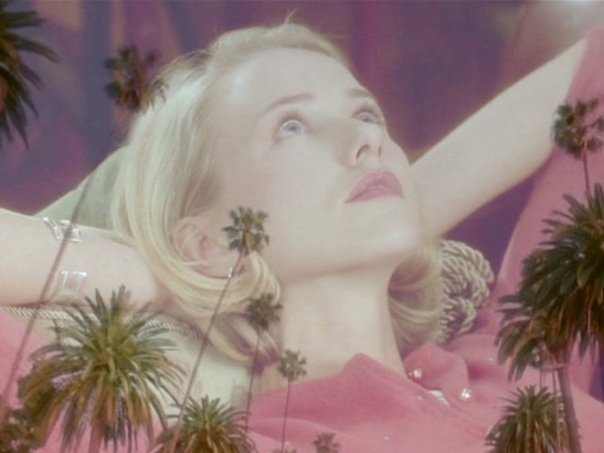
How much is a dream worth to you? That’s my main takeaway re-watching David Lynch’s surreal indie Mulholland Drive twenty years later from its release. Lynch has had plenty of his own run-ins with the dream makers of Tinseltown, from the difficulty to see his admittedly weird projects off the ground to the swift cancellation of his once zeitgeist, and deeply weird, TV series, Twin Peaks. It’s common knowledge now that Mulholland Drive began as a 1999 TV pilot that Lynch re-conceived as a movie, shot 30 minutes of additional footage, and earned a 2001 Best Directing Oscar nomination for his perseverance and creative adaptability. The movie has since taken on quite a reputation. The BBC and Los Angeles Society of Film Critics have both hailed it as the best film of the twenty-first century (so far). Lynch has retreated back to his insular world of weirdness with hypnotic, over-indulgent retreads, Inland Empire, and bringing back his signature TV series for a Showtime run in 2017. In 2001, Mulholland’s Drive’s success seemed to be the last point with Lynch working with the studio system he so despised. In a way, this is his farewell letter to chasing his own dreams of stardom, at least as far as a director can have creative control and a steady supply of protection and money to see his vision through. Watching Mulholland Drive is like stepping through a dream, which has been the hallmark of Lynch’s more celebrated, obtuse filmography from 1977’s Eraserhead onward. The movie is meant to operate on a certain dream logic, sustained with choices that seem artistically self-destructive, but the journey might feel as emotionally or intellectually fleeting as a dream as well, so I ask you, dear reader, to think as you continue, how much is a dream worth?

The failed pilot serves as a majority of the film’s running time and it’s filled with peculiar beginnings that will never pay off. There are actors like Robert Forster (Jackie Brown) and Brent Briscoe (Sling Blade) who show up for one whole scene and then are never seen again. Presumably, the roles would have been more significant as detectives snooping around from the peripheral. There are mysterious forces chasing after “Rita” (Laura Harring), an important-looking woman who has conveniently lost her memory and adopted her name after seeing a poster of Rita Hayworth. She’s got a bag filled with money, a gun, and blue key. One would assume over the course of a network season that we would get closer to discovering the real identity of our amnesiac leading lady. There are also scenes that seem to exist as their own short films, like the darkly comedic hapless hitman and the scared man detailing his spooky dream to a concerned friend in a diner. These characters, presumably, would come back for more significance or at least larger interplay. The same with the mysterious locked box and key. You can practically identify the J.J. Abrams “mystery box”-style of storytelling for future intrigue. The role of a TV pilot is to serve up a storytelling engine that can keep churning, as well as ensuring that there’s enough curiosity to hook an audience through commercial breaks. Lynch is used to inserting strange symbols and starts in his movies that potentially go nowhere, so the difference between a Lynch pilot and a Lynch movie aren’t terribly noticeable. These characters, clues, and moments were perhaps intended to be developed further, or perhaps they never were. It’s as if the movie itself is a nightmare of different television programs colliding incoherently.
There does seem to be a consensus interpretation for Mulholland Drive, one that synchs up the various doubles and symbols. For two hours, we’re riding along with Betty (Naomi Watts) as she moves to L.A. with big dreams and perky naivete. She finds the amnesiac Rita in her aunt’s apartment and takes it upon herself to give her a home and investigate her identity. They grow close together, Betty nails her big acting audition, and then Betty and Rita become lovers. They go to a club (Silencio) where performance artists insist “everything is recorded,” and thus already happened, phony, and a replication of memory, and then Rita inserts that mystery blue key into the mystery box and mysteriously vanishes. We next return to the scene of Diane, who at first was a dead body that Rita and Betty found during their investigation. Now it’s Betty, or at least Watts playing her, and she’s a struggling actress who is jealous of the success and favor her girlfriend, Camilla (also played by Harring), is indulging in from their seedy director, Adam (Justin Theroux). Overcome with torment, she hires a hitman to kill Camilla. From there, she’s attacked by a homeless monster, tiny versions of the people portraying Betty’s parents in the first part, and she takes her own life in grief and guilt. The most common interpretation is that the final twenty or so minutes with Watts as Diane is the real story and that the proceedings 110 minutes was Diane’s dream trying to process her guilty conscience and mixed emotions. The blue key, the symbol from Diane’s hired hitman of a job completed, is the point of transportation between the dream and returning to a living nightmare of regret. Adam’s prominence in the first two hours is explained as punishment from Diane’s mind, so this is why he is emasculated repeatedly, from being robbed of control over his movie, his marriage, and ultimately his future.
Just because this is the most prominent interpretation, and even perhaps the author’s intended one, doesn’t mean other viewers cannot find equally valid and differing interpretations. That’s the appeal or point of frustration with Lynch’s most Lynchian work. However, the problem with asserting that the first two hours of your two-hour-plus movie were all a dream can make it feel overindulgent and unsatisfying. The TV pilot segments are shot in a way that evokes the cliché storytelling stye that prevailed at the time, with overly lit scenes and flat acting. I cannot say for certain but it feels like Lynch purposely told Watts (King Kong) to try and be hammy. Lynch has been known to purposely ape the style of prime-time soaps to provide subtle satirical contexts. Is Watts doing a bad job with the purpose of making us think of other bad actors from soaps? The one scene Betty comes alive is during her audition scene. We’ve already seen her act it out once so we’re expecting more of the same, but in that moment, she comes alive with sensuality, taking control from the aged acting partner who was just there to exploit some young new starlets. The intensity she unleashes, a mixture of carnal desire and self-loathing, is nothing like bright-eyed Betty. Is the irony that when Betty is pretending to be someone else that’s when the performance excels? You can see the points for interpretation, especially considering the ending thesis, but if so, it’s such a bold gamble by Lynch that could prove so alienating. You’re deliberately having your lead actress act in a cliched and stilted manner to perhaps make a point fewer will grasp? Obviously, the ending wasn’t intended to pair with the pilot parts, so it feels like projecting an unintended meaning onto the intentions of acting decisions, but dreams are murky that way.
I wouldn’t be surprised if just as many people are tested by Mulholland Drive as they are mesmerized. It’s a combination of different genres and film iconography, from Manning as a living-breathing femme fatale, to dark whimsical comedy, to surreal mystery, to tawdry erotic drama, to industry-obsessed soap. As much as it feels like a pilot retooled into a new beast, it also feels like a collection of genres being retooled for whatever intended association Lynch wants to impart. It’s ready-made for dissection and ready to take apart the Hollywood studio system. I enjoyed some of the strange moments that felt most ancillary, like the mobster with the extremely refined taste for espressos, and the eyebrow-less cowboy assassin threatening Adam. That scene in particular still has an unsettling menace to it, as Lynch takes what could have been absurd and finds a way to make this man overtly threatening without ever explicitly doing anything threatening. His browbeating to Adam over the difference between listening and hearing is well written and ends perfectly: “You will see me one more time, if you do good. You will see me… two more times, if you do bad. Good night.” I wish more sequences like this could stand on their own. So much of Mulholland Drive seems intended to provide a skeleton for meaning to be provided later as the added meat that Lynch didn’t value as highly.
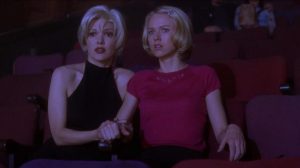
Watts became a star from this movie and was taken to another level with the success of 2002’s The Ring. From there, she was in the Hollywood system of stars and after toiling for ten years from rejected interviews to rejected interviews. She was thinking of quitting acting and going back to her native Australia at the time she got asked to play Betty/Diane. The audition scene, the later distraught and frail Diane, as well as the mannered Betty served as an acting reel for every casting agent that had rejected her. Here was Watts, capable of doing it all and then some (she was nominated for two Oscars – 2003’s 21 Grams and 2012’s The Impossible).
My original review in 2001 is also wrestling with the question over interpretation versus intention, with the genre mash-ups as symbolic satire or as laborious TV pandering. Mulholland Drive is like watching a dream and trying to dissect its many meanings. Some people will relish the puzzle pieces that Lynch has provided and finding further hidden mirrored meanings, and other people will throw up their hands and ask for a road map, or lose interest by then. I don’t think this is the best film of the first twenty years of this new century. I don’t even think it’s close. I think at its best it can be hypnotic and intriguing; it’s a shame that these are only moments for me, and twenty years later these moments felt even further spaced apart. I just didn’t find Lynch’s movie quite worth the long, surreal drive into the dark of his imagination.
Re-View Grade: B-
Share this:

Halloween Kills (2021)
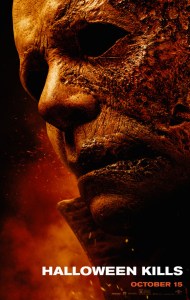 In 2018, versatile indie director David Gordon Green (Stronger, Pineapple Express) and actor Danny McBride (Eastbound & Down) rebooted the Halloween franchise with a monstrous box-office return for their efforts. From there, the studio planned two immediate sequels to cash in. Delayed by a year, Halloween Kills is the first sequel and coming out just in time for the spooky season. The problem is the only thing this movie is going to adequately kill is 100 minutes of your time.
Laurie Strode (Jamie Lee Curtis) and her daughter (Judy Greer) and granddaughter (Andi Matichak) have trapped Michael Myers into their basement and set the house ablaze. Unfortunately for everyone, a team of firefighters rescues the giant killing machine. Michael wanders the town of Haddonfield, killing whomever he encounters, eventually circling back to his childhood home, the site of his first murder. The townsfolk have decided that they are sick of living in fear from the legend of Myers. They form a violent mob, chanting “Evil dies tonight,” and break into armed clusters to snuff out Michael Myers and put him in the ground for good.
 There is one intriguing aspect of the movie that gives it some fleeting life. The 2018 predecessor tantalizing explored the idea of generational trauma from terror, with Laurie raising her daughter in a constant state of paranoia and anxiety to prepare her for the eventual return of the unstoppable menace. The fraught relationship between three generations of Strodes was deserving of far more attention than it ultimately received in the 2018 film, although at least the filmmakers were smart enough to realize having them join their multi-generational talents would be a natural payoff. With Halloween Kills, we get a similar concept of generational trauma but from the point of view the supporting townsfolk, many meant to resemble middle-aged versions of bit characters from the older Halloween movies from the John Carpenter era. That sort of dedication to furthering the mythology of this town seems misplaced for the fan base. I doubt many hardcore Halloween fans were chomping to find out what happened to the little kid Laurie babysat. However, these obscure Haddonfield characters become a support group for trauma, a lasting memory of the horrible history of their town, and when Myers returns, they’re the first to fight back and form a mob to round up the masked boogeyman. The town’s social order breaks down and people give into the mob mentality of ends-justify-the-means violence. Even though Halloween Kills was originally scheduled to be released a year ago, it has a different feel in a world after the 2021 U.S. Capital insurrection, watching a sea of angry, misinformed citizens run wild in misplaced fear and loathing. It leads to tragedy and mistakes as the Haddonfield mob sweeps up, gathers more momentum, and doesn’t stop to think who it may trample upon next.
It was enough that made me wish the entire movie had been told from this peanut gallery perspective. Rather than following the silent killer stalk and brutally slay, let’s focus on the lesser seen cost of terror. Let’s concentrate on the side characters, the kinds who would normally play out as Cop #3 or Concerned Mom #2 in a normal slasher movie. What if we elevated them and told a slasher story from their victimized perspective and we stayed with their fear and anxiety while they remained in the dark about a madman terrorizing their town? The earlier movie was about how trauma had racked Laurie Strode’s life and personal relationships. It’s fitting that a sequel would widen the scope and show how many others have also suffered and are still haunted by their own trauma and PTSD from their fateful experiences with homegrown evil. Maybe it’s the less cinematic approach, but it’s something new and different and looking at a more human perspective for a sub-genre better known as serving as a relentless conveyor belt for wanton vivisection.
 What I’m saying is that these standard genre slasher movies bore me unless they have some exhilarating style, fresh ideas, or clever perspective shifts. With Halloween Kills, I’m watching a dull silent killer slowly murder disposable supporting characters and none of it qualifies as interesting. I don’t care about these people. I don’t find Michael Myers to be interesting (even when Rob Zombie foolishly tried to establish a trashy childhood back-story). The only thing I found worthwhile from the 2018 movie was the mother-daughter drama with the Strodes, which has all but been sidelined for the 2021 sequel. Perhaps I’m not the right audience for these kinds of movies, or perhaps this one just simply isn’t trying hard enough where it counts. The kills aren’t particularly memorable, though several are quite brutal and even a bit mean-spirited. The suspense set pieces are rote. The movie just feels far too much like it’s on autopilot, trying to provide enough filler material until its eventual concluding chapter, 2022’s Halloween Ends (yeah, we’ll see about that, title). We’re still watching a man pushing 70 years of age defy multiple stab wounds, bullets, contusions and beatings, and any number of aggressive defensive violence. It gets irritating. He’s not some supernatural force back from the dead like a Jason Voorhees; he’s just a beefy AARP member.
Green has an affinity for the franchise and the gore can be downright gooey and wince-inducing. The opening segment is an impressive recreation of the filmmaking techniques John Carpenter used in the late 1970s, even down to the period appropriate synth score. It’s a fun inclusion that essentially gives added context to the adult versions of many supporting charterers, seeing their own youthful run-ins with Michael Myers that fateful Halloween night so long ago. It’s clever but it adds up to little else as the movie progresses. If these moments with these characters had been more meaningful, maybe their eventual deaths would have meant more, but just because we spent more time with Cop #3 doesn’t mean their ultimate demise feels more than the death of Cop #3. Ultimately, it feels like this early section, a superfluous reminder of the past, is just here as something to entertain Green as a returning director for a filler sequel to a so-so movie. The strange humor of the 2018 edition has been completely eliminated, so what we’re left with is a thoroughly redundant slasher movie with some intriguing ideas percolating but not coming to fruition.
 If you were a fan of Curtis (Knives Out) as the gritty survivalist, the Cassandra trying to warn others of the impending doom they seem so oblivious to, then you’ll be disappointed here. I don’t know if Green and his co-writers were making a purposeful homage to the 1981 sequel where Laurie keeps to a hospital for the entire movie. Either way, Laurie is stuck in a hospital bed because the movie only follows mere hours from the events of the 2018 movie and only goes forward mere hours from there. We’re stuck, and so is Curtis, as she practically sits this one out. Judy Greer is likewise wasted as Laurie’s adult daughter. If there’s a star of this 2021 sequel, it’s Anthony Michael Hall (Live by Night) as the leader of the town’s mob. He has an intensity to him that feels believable without crossing over into exaggerated cartoon zealot.
If you’re a sucker for the Halloween franchise, or the glut of slasher movies that have exploded in the age of streaming, then perhaps enough of the crimson stuff gets spilled to satiate your horror appetites. I’m just bored by another movie about another slow-moving guy in a mask at this point. I need more, anything more, and Halloween Kills gives me too much of the same old same dead.
Nate’s Grade: C
Share this:

Malignant (2021)

Thank goodness for James Wan. The horror hit-maker has earned enough creative cache in the industry after fostering three separate horror franchises (totaling near two billion dollars), plus two other high-profile action superhero blockbusters, that he can do whatever he wants and thankfully what Wan wants to do is make really weird movies that take tremendous risks. Malignant is a movie that starts slow, appearing to be another in the line of horror thrillers about a psychic connection between a troubled soul and the imaginary friend that seems to be coming back. The movie begins feeling like high-end camp in a flashback, takes a very serious and uncomfortable turn into domestic violence and miscarriages, and then builds into a psychic serial killer investigation where our main character (Annabelle Wallis) is having creepy visions of the killer exacting bloody revenge. For the first half of the movie, there’s a lot to keep up with and it’s easy to get confused with bland characters, their often baffling actions and decisions, and then it plops you down for heavy exposition via asylum VHS tapes. However, from that point forward, Wan lays out all his cards and it’s so absurd, so entrancingly weird, and so enthusiastic about all of it, that you may burst out laughing in the best possible way. Before its drunken rampage of schlocky delight, Malignant is a horror mystery and stylishly directed with some bravura shots and angles. It’s worth your time, but everything is in service to setting up the final act where it gets so much bigger, more bonkers, and deliriously more entertaining. Wan is clearly going for messy giallo horror camp and gives the audience permission to laugh along with the insanity. It acknowledges how goofy looking and bizarre its eventual monster looks, let alone the logistics and circumstances involved, and it all veers into that. Whereas Old felt like M. Night Shyamalan was trying to escape camp and kept falling back into its morass, Malignant feels expressly like the movie James Wan wishes to make. There’s even a spooky abandoned child experiment-heavy hospital on a cliff, and rather than have something spooky happen, the character then safely arrives back home with an armload of incriminating medical VHS tapes. The deliberate asides, misdirects, and eventual revelations feel so purposeful to yank around the audience and deliver a frantic and unpredictable ride of a movie that leaves the audience screaming and howling with laughter. I can understand people hating Malignant. I can understand people loving Malignant. I can understand people having trouble even making sense of Malignant. However, you cannot watch this movie and have a passive response. I wish I could have seen this in a packed theater pre-COVID. I think I figured out my inexpensive Halloween costume for 2021.
Nate’s Grade: B+
Share this:

Old (2021)

Old, M. Night Shyamalan’s latest thriller, seems ripe for parody, perhaps even upon delivery in theaters. The “can’t even” bizarre energy of this movie is off the charts and bounces back and forth between hilarious camp and head-scratching seriousness with several frustrating and absurd artistic decisions by Shyamalan. If you viewed this movie as a strange comedy, then you would be right. If you viewed it as an existential horror movie, then you would be right. If you viewed it as a heightened satire on high-concept Twilight Zone parables, then you would be right.
We follow a family on a vacation to a Caribbean resort. Guy (Gael Garcia Bernal) and Prisca (Vicky Krieps) are keeping secrets from their two children, six-year-old Trent (Nolan River) and eleven-year-old Maddox (Alexa Swinton). The parents are planning on separating and Prisca has a tumor, though benign for the time being. The hotel manager offers an exclusive secluded beach for those who would really enjoy this special experience. Guy, Prisca, and their kids join another family with a six-year-old daughter, a married couple, and an old lady with her dog, and they drive off into the jungle. Except this beach is not what it appears to be. There are strange artifacts of past visitors, and every time people try and pass back through the path to leave, they pass out. Also, everyone is aging rapidly, about one year for every 30 minutes elapsed. The children become adults, the elderly succumb first, and everyone worries they may not ever leave.
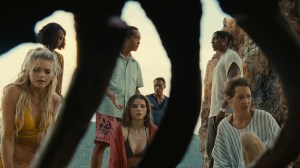
Old is not one of Shyamalan’s worst movies but it’s hard to classify it as good without attaching conditional modifiers. It might be good, if you enjoy movies that are campy and schlocky. It might be good, if you enjoy movies that throw anything and everything out there just because. It might be good, if you enjoy movies that produce a supernatural concept, drop rules established whenever convenient, and then try to wrap everything up neatly with an absurdly thorough explanation for everything. It might be good, if you think Shyamalan peaked with 2006’s Lady in the Water. This is going to be a polarizing experience. I think Shyamalan doesn’t fully understand what tone he’s going for and how best to develop his crazy storyline in a way that makes it meaningful beyond the general WTF curiosity. Even when it goes off the rails, Old is entertaining but some of that is unintentional. There are points where it feels like Shyamalan is trying for camp and other points where it feels like he is aiming for something higher and just can’t help but stumble, Sisyphean-style, back again into the pit of camp absurdity.
The premise is a grabber and takes the contained thriller conceit that Hollywood loves for its cheap cost and applies a supernatural sheen. It’s based upon a French graphic novel, Sandcastle by Pierre-Oscar Levy and Frederik Peeters, though Shyamalan has taken several creative liberties. It’s an intriguing idea of rapid aging being the real trap, and it forces many characters to confront their own fears of mortality and aging but also parental failures. Every parent likely thinks with some degree of regret about how quickly their little ones grow up. These adults have to watch their children rapidly age in only hours and not have any way to stop the relentless speed of time. The extra level of fear is produced by the fact that mentally the children are still where they began that morning. Even as Trent ages into the body of a teenager, he still has the mind of a six-year-old, and that is a horror unto itself. As his body rapidly changes, his parents are helpless to stop this terrifying jolt into adulthood and unable to shield their child from the terror of physical maturation but being trapped in the mindset of a child who cannot keep up with their mutating body. There are definite body horror and existential dread potential here, though Shyamalan veers too often into lesser schlocky thriller territory. For him, it’s more the mystery or the foiled escape attempts than actually dwelling on the emotional anxiety of the unique predicament. There’s enough born from this premise that it keeps you watching to the end, even as you might be questioning the actions of the characters, their ability to somehow miraculously guess the right answers as a group about what is happening, and the inconsistency of the rules about what can and cannot happen on this accursed beach.

There is one sequence that deserves its own detailed analysis for just how truly bizarre and avoidable it could have been, and to do so I will need to invoke the warning of spoilers for this paragraph. One of the other six-year-olds, Kara, gets a whole traumatic experience all her own that is morally and artistically questionable. Midway through the movie, Kara (Eliza Scanlan) and Trent (Alex Wolff) come back from a jaunt off screen together and they’re older and Kara is clearly pregnant. Given the rules that were established, that means that these six-year-old children experimented with their newly adult bodies to the point of fertilization (oh God, writing this makes me wince). I must reiterate that these characters are still six-years-old. Before you start realizing the gross implications, Kara is quickly entering labor and within seconds the baby is suddenly born and within seconds the baby just as suddenly dies silently from, what we’re told, was a lack of attention. What he hell, Shyamalan? Did you have to throw a dead baby into your movie to make us feel the visceral horror of the situation? It feels tacky and needlessly triggering for some moviegoers. This entire sequence doesn’t impact the plot in any meaningful way. Kara could have died in childbirth because of the circumstances of the beach. That would be tragic but matter. Just having her get suddenly pregnant and then suddenly the recipient of a deceased child seems needlessly cruel and misguided. And then, in the aftereffect of this trauma, Kara’s mom tearfully recounts her first love, a man she still thinks about to this day but doesn’t understand why. What does this have to do with anything? Re-read this entire scenario and let it sink in how truly uncomfortable and gross it comes across. It could have been avoided, it could have even been better applied to the characters and themes of the story, but it’s empty, callous shock value.
Another hindrance of Old is that the characters lack significant development and nobody ever talks like a recognizable human being. As Shyamalan has embraced being more and more an unabashedly genre filmmaker, he’s lost sight on how to write realistic people. You see this throughout 2008’s The Happening with its curious line readings and clunky, inauthentic dialogue being legendary and unintentionally hilarious (“You should be more interested in science, Jake. You know why? Because your face is perfect.”). I feel like Old is the most reminiscent of The Happening, the last time Shyamalan went for broke with ecological horror. The way these characters talk, it sounds like their dialogue was generated by an A.I. instead. “You have a beautiful voice. I can’t wait to hear it when you’re older,” Prisca says, which is a strange way for a parent to say, “I like what you have but wishing it was better.” She also has the line to her husband, “When you talk about the future, I don’t feel seen.” There’s also a running theme of characters just blurting out their occupations as introductions, “I’m a doctor,” followed by, “I’m a nurse,” like it’s career day on the beach. Frustratingly, all the characterization ends once the people wind up on this fated beach. Many of these characters are simply defined by their maladies and professions. This character has seizures. This character has a blood disorder. This character has a tumor. This character has MS. Noticing a pattern? You would expect that with such a unique and challenging conflict that it would better reveal these people, push them to make changes, especially as change is thrust upon them whether they like it or not. Imagine your uncle being cursed with rapid aging but all he does is still complain about his lousy neighbor. That limited tunnel vision is what Old struggles with. And one of the characters is a famous rapper named Mid-Sized Sedan but without a hint or irony or showbiz satire. Mid-Sized Sedan!

The way Shyamalan shoots this movie also greatly increases its camp appeal. This movie is coursing with energy and contrarianism. Shyamalan is often moving his camera in swooping pans and finding visual arrangements that can be frustrating and obtuse. Sometimes it works, like when we have the child characters with their backs to the camera and we’re anticipating how they have changed and what they might look like. Too often, it feels like Shyamalan trying to interject something more into a scene like he’s unsure that the dramatic tension of the writing is enough. There are scenes where what’s important almost seems incidental to the visual arrangement of the shot. Some of the sudden push-ins and arrangements made me laugh because it took me out of the moment by making the moment feel even more ridiculous. This heightened mood to the point of hilarity is the essence of camp and that’s why it feels like Shyamalan can’t help himself. If he’s trying to dig for something deeper and more profound, it’s not happening with his exaggerated and mannered stylistic choices being a distraction.
The ending, which I will not spoil, tries to do too much in clearing up the central mysteries. It feels overburdened to the point of self-parody, having characters pout expository explanations for all that came before and supplying motivation as to what was happening. Still, Shyamalan cannot keep things alone, and he keeps extending his conclusion with more and more false endings to complicate matters; the more he attempts to tidy up the less interesting the movie becomes. I would have been happy to accept no explanation whatsoever for why the beach behaves as it does. The best Twilight Zone episodes succeed from the mystery and development rather than the eventual explanation (“Oh, it was all a social experiment/nightmare/whatever”). Once you begin to pick apart the explanation with pesky questions, the illusion of its believability melts away. I had the same issue with 2019’s Us. The more Jordan Peele tried to find a way to explain his underground doppelganger plot, the more incredulous and sillier it became.
Old is a Shyamalan movie for all good and bad. It’s got a strong central premise and some memorable moments but those memorable moments are also both good and bad. Some of the moments have to be seen to be believed, and some of those moments are simply the odd choices that Shyamalan makes as a filmmaker as well as a screenwriter. It’s hard to say whether the movie’s weirdness will be appealing or revolting to the individual viewer. It feels like camp without intentionally going for camp. Rather, Shyamalan seems to be going for B-movie schlock whereas his older movies took B-movie premises and attempted to elevate them with themes, well-rounded characters, and moving conclusions (don’t forget the requisite twist endings). The worst sin a movie can commit is being boring, and Old is rarely that. I can’t say it’s good for the entire duration of its overextended 100 minutes but it does not prove boring.
Nate’s Grade: C-


You must be logged in to post a comment.