Blog Archives
The Green Knight (2021)

The Green Knight is an indie drama heavy on atmosphere and mood and a little lax on pacing, falling into yet another A24 discrepancy between critics and audiences. Much like the contentious differences of opinion over It Comes at Night and Hereditary, it seems like general audiences are a little more indifferent to hostile for this arty release than the critics. Maybe they were expecting something more conventional, which is a mistake considering it’s written and directed by David Lowery, who has dabbled in a studio sphere (Pete’s Dragon, the upcoming Disney Peter Pan remake) but seems more at home with introspective, quiet, occasionally overly obtuse art-house pictures, the kind like 2016’s A Ghost Story where Rooney Mara eats a pie for ten minutes (I will never forget this puzzling movie moment). It’s not surprising then that The Green Knight would be a polarizing film of differing expectations. It’s got good graces, an artistic vision, and a preponderance on atmosphere that can feel a little strained at points.
Gawain (Dev Patel) is the nephew to the King of England (Sean Harris). He longs to be accepted as a respected knight but he has no adventures to his name. Then one Christmas, a Green Knight (Ralph Ineson) enters the kingdom and challenges any daring knight to a game. That knight can inflict whatever blow or mark upon him, but then the Green Knight will return the exact favor in one year’s time. Full of bravado, Gawain takes mighty Excalibur and decapitates the Green Knight. Turns out the knight is not dead. He only picks up his fallen head and promises that in one year, he’ll deliver the same to Gawain. The months pass and Gawain is drinking and sleeping away his last remaining time before finally accepting to meet his fate. He rides out of Camelot in search of the Green Knight and perhaps a solution out of his predicament.
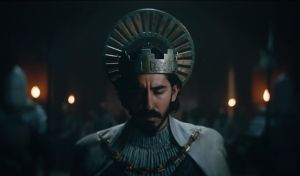
Where The Green Knight excels is with the distillation of mood and myth-making while not losing sight on its own sense of humanity. This is an Arthurian legend that is potentially a thousand years old, and when it comes to big screen adventures steeped in the mythology of cultures, it’s easy to get swept up in the fantasy spectacle of monsters and heroism. The vulnerability of the heroes is often cast aside to provide further attention to the grandiosity of the experience and entertainment. Lowery positions his movie from the perspective of an eager naïf yearning for a proper adventure to bring him respect and legacy, but he’s also a scared young man who is dreading the worst possible outcome that could be his only outcome. As Gawain sets off on his quest, he sets off proud, striding along his horse, not looking back at his home as he rides off to face his destiny, and then he’s immediately beset by treachery that removes the pristine shine off the tales of old. He’s taken advantage of by highway robbers and placed at an even greater risk of failure. As the movie progresses, Gawain becomes more and more anxious about the potential of getting himself out of his predicament. It truly seems like he’s marching off to meet his executioner, and that realization forces him to quickly adapt into the heroic mold he’s been aspiring for, the legendary knight, bold and brave and meeting death square in the eye. That sounds good in theory but it’s a lot harder to realize in real life. If any one of us, dear reader, knew that our lives were coming to an end with certainty, summoning the courage to meet that would be a herculean effort, and many of us would crumble under the pressure. It all doesn’t seem like enough time. This is what I appreciated throughout The Green Knight. It has its weird, atmospheric mythology and fantasy elements, but it also grounds the drama in relatable and nervous human emotions.
Where the movie goes astray, at least for me, is the time it devotes to achieving its poetic atmosphere. This is a two hour-plus movie that feels every bit of it, even if you’re enraptured by all the pretty style and ponderous pontificating. That’s because the movie is very episodic by nature, which at least breaks it up into manageable chunks each with something new to draw our attention, but it also makes it feel like less is being earned or amassed. In one segment, Gawain rescues the head of a ghostly woman (Erin Kellyman). In another segment, this one quite awkward to experience, he is tempted by both the lord (Joel Edgerton) and lady (Alicia Vikander) of a household, keeping his vow while something most distracting is taking place simultaneously. Another segment has Gawain interacting with giants, including one breastfeeding a little giant. There’s also a fox who occasionally talks and tries to plead with Gawain to turn away from meeting the Green Knight. I suppose if you’re being charitable you could surmise each of these stops is like a test of his skills of knighthood, from compassion to chastity to dedication, but it feels less like an accumulation and more like Lowery is simply finding time to explore other weird offshoots of this crazy fantasy medieval world.
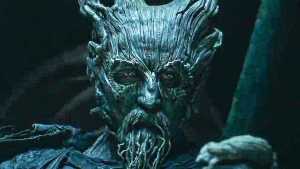
A term I first used describing the films of Nicolas Winding Refn (Neon Demon), a filmmaker I’m not particularly fond of, is the use of empty space, where the narrative feels stretched out and the audience is intended to provide that extra level of meaning for the dead air. To me, it’s narrative forfeiture. The Green Knight could have been trimmed down, it could have been reordered, it could have been given more specific meaning, but that would potentially detract from its tone poem qualities. If that cinematic sensation works for you, and you fall under the film’s sway, then congrats. If you’re looking for more or at least more meaning in the plot and chain of events, then you’re going to be left grasping for more significance. Sometimes things just feel put into the movie because, beyond all else, it’s simply cool. That’s fine, though I found too many of the asides to be lacking once the initial obstacle was established. Lowery has a larger thesis under the surface about environmental awareness considering the Green Knight is literally made of wood and plants, he goes out to the forest to live on his throne amongst the wilderness, and there’s even an extended fiery monologue by Vikander about the enduring power of “green” and how it will outlive us all and grow over our corpses (if you were being pedantic, you could argue that all color will outlive us as I doubt there will be a nightmare future without, say, the color orange). The larger thesis, however, doesn’t feel supported by the asides and episodes of Gawain. I guess it’s about thinking of the consequences of our actions and, in a way, proportionality or response. Maybe more people would reconsider their carbon footprint if nature was going to cut off their heads as a consequence of using too many plastic straws. Maybe.
Where Lowery’s plot and ambition do come together, thankfully, is with his conclusion, which I will spoil in the following two paragraphs. In the original Medieval legend, Gawain meets the Green Knight who proves to be the lord of the manor in disguise. The man playfully chides Gawain for flinching and wearing a sash he felt would spare him of harm. He then says Gawain is “the most blameless knight in all the land,” which makes little sense, and then Gawain joins the other knights, and they all have a big laugh about the jape played on Gawain. That’s not exactly a satisfying ending and takes away any personal growth Gawain might have earned. In the movie, the Green Knight is for real. Gawain initially lowers his head, trying to summon the courage to meet his death, but he flees and apologizes, escaping the Knight’s retribution.

In a nearly wordless epilogue, we watch Gawain’s life over the course of decades, inheriting the throne, siring an heir, abandoning the mother, leading his people to war, losing his son, and eventually being such a disliked leader that his own people revolt including his own family members. All the while he wears that magical sash to thwart his own demise. This epilogue is revealed to be a flash forward for Gawain, who returns to the moment of consequence with the Green Knight. Rather than flee his fate, he now chooses to accept it, to avoid this future where Gawain goes down a path of corruption and neglect. Better to die now than become a cruel despot that will harm others. He even removes the sash. It is here where the Green Knight finally acknowledges Gawain with respect. It’s this ending that really hits home the themes and the character arc for Gawain. He’s become a knight worthy of legend but has no audience, and is choosing to have no audience, to die alone rather than live in infamy. He’s found his sense of bravery at long last because of his fear of what avoiding his fate will cost. It’s an ending that feels earned and when the Green Knight is giving him an “atta boy” you want to join in.
The Green Knight is going to be a different experience for each viewer depending upon your patience for ambiguity and pacing. I found myself at points marveling over the mood and visual style of Lowery’s vision, and at other points I found myself getting restless with the episodic side quests and the stalled character development. It all comes together by the end with a finale that really cements Lowery’s big ideas and drives homes the personal journey of Gawain. It’s all a mixture of bold and beautiful and a little bit boring.
Nate’s Grade: B
Share this:

Nine Days (2021)
 Oddly enough, over the course of less than a year, we now have two movies about young souls competing to find their sense of self before being born. Will (Winston Duke) lives in a small cottage in the middle of the desert. Or so it would appear. He’s a former human who now serves as a spirit who watches over the lives of a select group of others on Earth through P.O.V. monitors. After a car accident, one of his people is killed, leaving a new opening. It’s Will’s job to interview a group of candidates and determine who is best equipped to handle being born. Will takes the process very seriously but he is also more emotionally affected by the loss of life under his guidance than he admits. Where did he go wrong, or is right and wrong even the right markers for assessment? Will must choose wisely over nine days of deliberation and insight into what it means to be human and what it means to live.
 Nine Days is a tender and thoughtful movie that has much under the surface given its metaphysical context and probing questions about spirituality, identity, and existence, but it doesn’t simply rely upon the artistic weight of ambiguity. There’s a genuinely involving emotional drama here that’s accessible while offering greater depth to be unpacked by the viewer who enjoys metaphor and implication and debate. At its essence, the movie is about a series of job interviews but for a position that we don’t fully understand what the requirements are and if even meeting the requirements is enough for the hire. It’s a primarily dialogue-driven procedure but it’s also character-focused as the entire process examines what animates Will, what haunts him, and why he does what he does. Early on, the surreal nature of what should be an ordinary event, job candidates interviewing with a boss, gives the movie an air of mystery and offbeat humor. The candidates are showing up, going through a series of questions and role play scenarios, and with each session, the candidates evolve into the personas that will define them. There’s something mildly profound about watching the development of an identity before it’s even been born. As the movie progresses, Will turns down candidates and the news is truly devastating. Not only will these spirits/souls miss out on being born on Earth, they will cease to ever exist and fade away. That is some heavy stuff. Watching each one come to terms with that sort of death can be heartrending. Just imagining having to accept the end before life ever even began.
Rather than simply fade away into the blank of nothingness, Will chooses to help these souls get one last moment of peace before their ultimate end. He becomes a celestial one-man Make-A-Wish spiritual service. It’s unknown whether these “positive memories” are from the souls’ own development or their observation of the souls that have been placed on Earth. Regardless, each rejected candidate gets a moment that Will studiously recreates as an act of kindness. This section can be rather moving as each soul gets a personal sendoff and, in those final moments to savor, we watch them become affected with the generosity and the fleeting moment of life that will be tragically denied to them. One candidate climbs aboard a stationary bicycle, and Will positions one screen after another, each with projection from that angle of the street. When taken together, it creates the illusion of a nice bicycle ride through a town square. The homemade production, even sprinkling cherry blossoms and a swinging light to illustrate a traveling through a tunnel, provide small moments of affectionate conviction. I found each of these moments to be emotionally rich and beautifully rendered on screen. The care and craft Will puts into these acts is wonderful and a tremendous insight into who he is as a character and what he values in others.
 Will is haunted by the idea that he may have been oblivious to the pain of one of his pupils, and this indecision is coloring his interview process for a replacement soul. It’s unclear what exactly Will is, or his boss, or his duties, but he vaguely amounts to a guardian angel. He has a bank of old TVs that he monitors and obsessively documents the lives of a few. He takes particular pride in one soul on Earth and listens to her virtuoso violin playing as a means of personal relaxation. Her sudden death rocks him, and when it’s revealed that she was depressed, he tries to make sense of being able to see and hear everything these souls do but not fully knowing them. Did he get something wrong in his clerical assessment? Did his understanding of her have its limits? Could she have been hiding something so all-consuming without his suspicion? It all upends Will and fosters self-doubt. He’s trying to make sense of something that may not ever make sense. That is how inscrutable human beings can be and how tragically fleeting life can become in an instant.
The other change agent for Will is the presence of Emma (Zazie Beetz), a candidate who shows up late, questions the nature of the questions she is given, and is empathetic to a fault. The other candidates are playing within the rules of Will’s questions but she’s pushing back, and it only makes Will think more and more about her and her aims. I don’t consider it too much of a spoiler that Emma will be one of two final candidates for the open spot for life. Her character causes Will to reassess his own biases, his own way of doing things as they have, and his own conception of himself and what life can be about including his own time spent on Earth, which he likes to remind the others like it’s bragging rights. I suppose one could argue that, yet again, we have a quirky female character in service of teaching the male hero about the importance of embracing life to the fullest, but I think the general makeup of the characters is superfluous to the impact of the story. We’re dealing with spirits taking a physical form here. Their appearance is immaterial to their identity at this point, at least in an otherworldly realm that (hopefully) knows no sexism and racism.
 Nine Days is the film debut from commercial director Edson Oda and the movie is utterly gorgeous from a technical standpoint. The photography favors gleaming sunsets and pristine vistas to communicate the exquisiteness and otherworldly plane of existence. The desert landscape is beautifully filmed, and the interiors are also pleasing with their visual arrangements and the mingling of natural and artificial light. Oda won a screenwriting award at the 2020 Sundance Film Festival and for good measure. This isn’t just a good-looking indie, which it assuredly is, but there is deep melancholy and beauty and transcendence to be had with the very humane and compassionate storytelling trying to get at larger truths about our limited time. The storytelling has plenty of ambiguity and nuance and metaphor, but there’s an accessible core that I believe most viewers can align with and then, if they choose, can discover further meaning. There is a slightly basic “stop and smell the roses” moral, but I found there to be more lyrical beauty at different points that affected me deeper than any condensed message. The conclusion hinges on a recitation of Walt Whitman’s “Song of Myself” and it conveys not just Whitman’s celebratory humanism but also taps into Will’s own character arc. The poetic performance itself is an expression with multiple levels, celebrating life in multiple ways, and serving as a heartfelt and personal goodbye. It’s a lovely ending for a lovely little movie.
Nine Days is packed with recognizable acting faces (Tony Hale, Bill Skarsgaard), several of whom have graced Marvel superhero movies (Duke, Beetz, Benedict Wong), and there must have been something compelling for them to all accept this low-budget, contemplative indie about the human condition. It’s a little movie with a lot on its mind but it doesn’t feel the need to explain everything. There’s a sturdy foundation to begin with but enough ambiguous room for discussion and debate. It reminds me of 2003’s beguiling, divisive, and highly metaphorical indie Northfork. Both movies are poetic, understated, and deeply involved in human connection and spiritual meaning while providing room for interpretation. There’s plenty here to unpack but even on a literal level the movie works as an emotional experience. I found myself under the gentle sway of Nine Days and its mighty beating heart of humanism that extends even beyond the realm of flesh and blood.
Nate’s Grade: A-
Share this:

The Others (2001) [Review Re-View]
 Originally released August 10, 2001:
Nicole Kidman has saved the summer of 2001 – it is now official. In what would have been deemed a pit of mediocrity and nightmares consisting of Angelina Jolie as some raider of tombs or Marky Mark making dough-eyes at attractive apes, has now been bookended by two terrific Kidman films. First Moulin Rouge ushered us in and now The Others is leading us the way out.
The Others is the tale of Grace (Kidman) trying to take care of her two ailing young children shortly after the end of World War II. Kidman is waiting for the return of her husband from the war and is all alone in a giant Gothic mansion. Her two children suffer from a rare allergy to sunlight that is so severe that if exposed long enough their bodies will develop markings and they will asphyxiate to death. To accommodate this illness the entire Kidman household is in the dark and grounded in stern rules. No door is to be unlocked without locking the last, like trapping water in compartments of a sinking ship.
 Grace discovers that she does need help and accepts three mysterious strangers that have said they were caretakers to this house once before. Before long the children start reporting odd events occurring that resemble ghosts; a door is opened when it shouldn’t be, someone is making noise where there is no one, and the children report having interaction with otherworldly spirits. Grace scoffs at any notion of the paranormal and goes back to instructing her children with the Bible and its accounts of penance and hell. The incidences begin to build further and further until The Others becomes a full-fledged ghost spectacle.
Spanish writer/director Alejandro Amenábar’s first English feature film is one of carefully textured craft and effective mood. The Others follows the points of ghost stories closely from dark hallways to the creepy and slightly dilapidated house closely. Every move, though, is so well in tune that they are highly effective in creating actual suspense and spookiness. One may have seen the same items numerous times before, however The Others utilizes them so gracefully that it achieves the full desired impact each can bring. Amenábar has created a ghost story that is genuinely creepy and at times scary.
Kidman shines as the dutiful and determined mother. Her performance is one of great dedication and she just consumes whole-heartedly the distress, confusion, and fear of this lonely mother. She is a true anchor for a film. Watching every moment of her on screen is amazing as well as invigorating. This role may lead to possible Oscar buzz come the end of the year but that is just speculation for now.
 The rest of the acting is very thorough and well handled by the few other cast members. James Bentley and Alakina Mann portray Kidman’s afflicted children and have much of the movie hinging on their performances. Not to worry, these two excel and give credence to being two of the more gifted child actors in a while. Their efforts greatly induce sympathy as well as great scares at key moments.
The story of The Others by Amenábar may seem simplistic, or even predictable, but the more I thought of the structure and the order of events the more well oiled and calculated it became. This is a delicate story told with great precision with a fantastic knockout ending that had me reworking everything. The Others is an example of why screenwriting is not yet dead in Hollywood.
The Others is a wonderfully brooding film with real scares and great performances, as well as terrific turns in writing and directing by Amenábar. Nicole Kidman has thankfully done it again, and if anyone dares doubt the power and newfound importance of her then see the rest of the summer of 2001’s offerings.
Nate’s Grade: A
——————————————————
WRITER REFLECTIONS 20 YEARS LATER

They don’t really make movies like The Others any more. It’s a patient movie with lots of old-fashioned craft and has more in common with horror movies from a different era. While I would claim that the popular Conjuring franchise, at least the James Wan entries, is a successful Old School horror throwback, its execution can also become quite extreme and ridiculous. Something like The Others dutifully takes its time and nips at your nerves, knowing precisely what key piece of information to tantalize and when to provide more, just enough to grab you deeper into its central mystery and worry over the looming danger for the characters. Twenty years later, the movie plays just as splendidly as it did initially in 2001 but now I have more reverence and appreciation for how it goes about telling its ghost story in a very methodical manner. Not every horror movie ages well. I’m sure that modern audiences could watch The Exorcist and laugh at what, in 1973, scared people to the point of vomiting in theater aisles. If you’re not executing at a high level, it could make for a tragically boring movie. It’s a good thing then that The Others is a PG-13 horror movie that plays all of its limitations to its many artistic advantages.
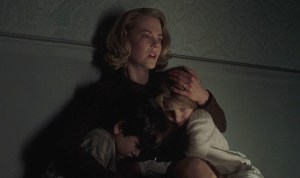
 Coming at the end of a mediocre summer slate of movies in 2001, The Others was a surprise hit, earning over $200 million dollars on a modest budget of $17 million. It helps when your entire movie takes place in one Gothic house and one of the biggest fears is being caught in the light. The premise involves a World War II-era estate where Grace (Nicole Kidman) is seeking help for her two children, Anne and Nicholas, who have a rare photo sensitivity allergy. Direct sunlight will cause them to break out in lesions and potentially asphyxiate (this is a real and rare condition afflicting around 1000 people on the planet). This is a brilliant turn because it means that most of the movie must take place in darkness and even the hint of light could be enough to start causing trembles. A late scare in the movie is simply the realization by Grace that all of the curtains have been removed from the house. Taken without context, that can seem laughable or ludicrous for a horror movie. With the proper context, it becomes a devastating turn. Much like A Quiet Place so brilliantly made sound the enemy, The Others makes the prospect of light the enemy. We start to associate darkness with safety, and then writer/director Alejandro Amenabar uses that environment to drive minimalist horror to great effect. The sound design of whispers, of footsteps, of something that shouldn’t be there is elevated, and the intrusion into the safe space of the vulnerable children makes us all feel a little more vulnerable. It takes the familiar setting of old Gothic horror tales about dark corridors and creaky attics and elevates it anew.
The story is simple but so excellently structured and performed. A mother and her two children are terrorized by ghosts in an old house. Three caretakers arrive to help who know more than what they let on. These characters allow Grace to have someone to question and share her emotional state of mind but they also provide dramatic irony and dread for the audience. They know what’s going on with the house and they’re hiding something, initially tombstones they will later reveal but who do they belong to? They know the house intimately but what is their actual connection to its history? Early on we already have our concerns, as the notice Grace sent out seeking help was never mailed. Halfway through, the caretakers discuss among themselves a secret they are hiding relating to the history of the house. By this point, we have already had a few ghostly encounters so our assumption is that it will relate with the otherworldly intruders. These characters are conflict stirring and keepers of secrets to be revealed in time. Amenabar has a divine instinct of when to drop a new clue, when to pick up the escalation, and when to finally lay out his plot particulars. The big twist has been hiding in plain sight from the start, from the very opening image of Grace gasping awake in her bed and coming down from her frantic distress.
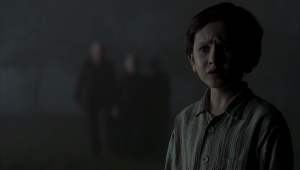 The ultimate revelation that Grace and her children are not being haunted by malevolent spirits but are in fact the real malevolent spirits is a terrific rug-puller. Much like the best twist endings, many of which occurred in contemporaries like The Sixth Sense and Fight Club, you can re-watch the movie and see all the clues you missed or how the added perspective reinterprets sequences for added depth. It’s not just a great twist but a culmination of an emotional catharsis; much like The Sixth Sense, it’s a ghost coming to terms with accepting their ghostly identity. Unlike The Sixth Sense, our ghostly protagonist refuses to go gently into the light. Grace has her children repeat to her, “This is our house,” and they refuse to budge. One of the final images, of Anne dancing in the sunlight, is both a victory and condemnation. She can at long last not worry about the rays of sunlight harming her and can live life like an average child. However, she has no life to live and can never leave the house, never grow old, and refuses to part under the rigid determination of her mother, the same woman who killed her and doomed her to purgatory. In some regard it’s a happy ending because hooray the kids can relax, and in many other more disturbing implications, it’s a guilt-ridden murderous mother refusing to let go of her children even after killing them. The movie serves as an empathy experiment to provide back-story for the kind of specters that would haunt an old Hammer horror movie. It might make you rethink other ghost stories or at least try and see things from the ghostly perspective.
I will say that this movie was also maddeningly hard to hear at times. I had to crank up my TV to unheard of volume levels to clearly make out what people were saying. Kidman is quite good but she has a habit of falling back on very breathy acting, relying on whispered intonation. I’m glad I already saw the movie but the sound levels forced me to actively pay attention. Maybe your TV will be different.
 Amenabar is a Spanish filmmaker that rose to international acclaim with 1997’s Open Your Eyes, starring Penelope Cruz and later remade into Vanilla Sky, also starring Penelope Cruz (coming to a Re-Veiw in December!). The Others was a significant breakthrough, and in 2004 Amenabar won the Academy Award for Best Foreign Film for The Sea Inside, a true-life drama where Javier Bardem portrays a man fighting for the right to end his own life. He seemed like an international director on an accelerated ascent, and it all came to a crash with 2009’s costly historical intolerance drama, Agora, starring Rachel Weisz and Oscar Isaac that examined the contentious relationship between Christians and Pagans in fourth century Egypt. It cost $70 million dollars, was over two hours, and made a pittance at the U.S. box-office. From there, Amenabar has primarily worked within the Spanish cinema (2019’s While at War), Spanish TV (2021’s La Fortuna), and one schlocky horror movie about a Satanic cult (2015’s Regression, a title that is too on-the-nose perfect). Admittedly, I haven’t watched any of these follow-ups and the Spanish productions could genuinely be great. I think Amenabar’s early success helped pave the way for another Spanish filmmaker, J.A. Bayona, whose 2007’s haunted manor movie The Orphanage was an excellent Old School horror that could be sincerely scary while still patiently building its unsettling atmosphere.
Looking back at my review from 2001, I think my love of Moulin Rouge carried over into my overly enthusiastic evaluation of Kidman’s increasingly unraveled performance. She’s good but she’s not quite at Oscar levels of accomplishment here, and yet Kidman was nominated for a BAFTA for this role instead of the singing courtesan. The child actors are both good, though neither acted again in credited roles after the mid-2000s, but for me to cite them as “two of the most gifted child actors in a while” reads like hyperbole. My original analysis didn’t get too deep into the mechanics of why everything worked so well, for fear of spoiling its big surprises, and instead kept to admiring its craft, care, and execution, aspects that are still easily apparent and admirable in 2021 as well. The Others is a splendid ghost story no matter the year and will likely still prove to be many years from now.
Re-View Grade: A
Share this:

Werewolves Within (2021)
 Surprisingly based upon a PlayStation VR video game by Ubisoft, Werewolves Within is a fun horror comedy that plays out like a demented Agatha Christie drawing room mystery. Sam Richardson (The Tomorrow War) is a new park ranger assigned to a small snowy town that may or may not be threatened by a werewolf hiding among the townspeople. A series of bloody murders and mangled gas generators points toward some monstrous beast, and over the course of one long night, characters will accuse one another of being the hidden werewolf, and tensions and paranoia mount as the body count rises. Part of the fun comes from the wild whodunit speculation that the filmmakers are aware of. Early on, I started accumulating my band of suspects, and then my red herring suspects, and the movie seems to be fully knowledgeable of this as well, so there’s plenty of little details spilled that, in an ordinary movie would prove conclusive to the detail-oriented viewer; however, Werewolves Within is full of motivations and clever fleeting details to throw you off. Richardson is wonderfully nonplussed as the supremely nice and easy-going ranger who finds himself frantically trying to be the voice of calm and security as the town breaks down. The supporting characters are rather one-note nutjobs but each has a different personality to sprinkle into the chaotic mix. The eventual reveal of the culprit involves a lot of explaining to cover hidden character deception that could have used more setup to feel less forced. I also wished the humor and the horror was a bit crazier. I knew the horror wasn’t going to be pronounced, as most horror-comedies typically favor one more than the other, but I wished the comedy had escalated as the characters further gave in to the insanity of the ridiculous situation. It’s a movie that’s easy going in charm and finely punctuated with some sharp one-liners and silly visual gags. It’s agreeable to its core and a lighthearted yet gory way to spend 90 minutes. By default, it’s also one of the best video game adaptations made into a movie. That’s primarily because it’s a recognizable murder mystery structure just with a genre kick. I wish everything had been given an extra dose of elevation and hijinks, comedy and horror, but that might detract from the overall droll charm, lead by Richardson. Werewolves Within makes me wish for an anthology franchise just transplanting its premise across new settings. Imagine The Hangover but having to also figure out which of your recovering blackout drunk friends was a werewolf. It just works.
Nate’s Grade: B
Share this:

Final Fantasy: The Spirits Within (2001) [Review Re-View]
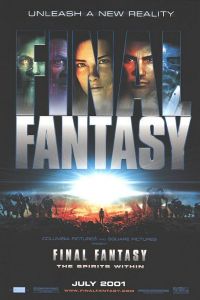 Originally released July 11, 2001:
Final Fantasy is an exciting venture in the history of animation. It’s the second video game to be turned into a feature film this summer, though exponentially better than Tomb Raider. It took the makers of Final Fantasy four years and the creation of new technology to capture what will be a benchmark in animation for years to come.
The story concerns a future Earth where aliens have crashed and invaded long ago. These “phantoms” are slightly invisible energy creatures of different size and roam around various areas with the ability to suck the life force or soul from a human being. General Hein (James Woods) is trying to convince the Earth council to allow him to fire a satellite called the Zeus Cannon to obliterate the alien menace. In opposition to Hein is Dr. Sid (Donald Sutherland) who believes with his adventurous pupil Aki Ross (Ming-Na) that the Zeus Cannon will obliterate the “spirit” of Earth. Their solution it to collect eight spirits in whatever forms they might be including plants and small animals to gather together and… do something that will send the alien life force repelling.
 Now I know Hein is supposed to be the bad guy as he’s a military man complete with the evil looking black leather cloak, but I couldn’t help but find myself agreeing with his logic. He wants to use something that has already been proven to kill the aliens whereas these two new age scientists want to collect a bunch of plants and animals and have their collective spirits ward off the interplanetary menace. I’d stand in my chair and say thank you to Hein when he dismisses the doctor’s plot. I know that Aki and Sid are the heroes and of course whatever theories they have will be proven true, but hell, I found myself agreeing more with General Hein than these two.
Complicating matters Aki is infected with a piece of the alien phantom that is slowly taking control over her body. Along in her quest to discover the final spirits is aided by a military commander Grey (Alec Baldwin) and his company of men. Turns out Grey and Aki are former sweethearts, so of course expect them to reconcile before the end credits.
The plot consists of something that could be an average episode on Star Trek: Voyager but does meander along at times. The dialogue is typical sci-fi buzzwords like “Fire in the hole” “The perimeter’s been breached” and the sort. Final Fantasy does have great excitement to it and some terrific action sequences better than most anything this summer. The ending is a disappointment as all the action hinges on two globs of energy propelled against one another. Globs or energy are not exciting. I thought we would have learned this by now.
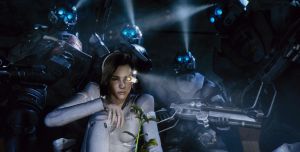 Final Fantasy is a landmark in animation. Never has so much detail been put into a movie and pulled off so amazingly well. To the nit-pickers out there the animation isn’t exactly the Holy Grail of photo-realism, but it’s closer than anything ever before. At times the characters come off as too plasticy (like Jude Law in A.I.) and tend to move too much, notwithstanding that their mouths don’t always follow the words coming out of them. Put aside these small grievances and what you have is stunning animation that makes one constantly forget it is animation. There are numerous moments of eerie precision like when a character’s nostril flares and their nose scrunches up in response, and the movement of every one of Aki’s 60,000 strands of gorgeous hair, to even a kiss between two characters. Even inanimate objects like a crumbled wall, a glass of alcohol, or a gun and its rounds are given startling accuracy. Backgrounds and scenic vistas are beautifully rendered with great care. There has been nothing ever like Final Fantasy before and it is the first movements toward an exciting area in animation.
The discussion must be raised can actors be phased out by computers now and will they ever? No, never. Actors can portray nuances that computers will never be able to master. Despite some actors best attempts to prove otherwise, we will always need actors. Now that you have the near photo realism one might be led to question what is the greatness of creating a fully realistic looking CGI tree when one can just be shot on film for millions of dollars cheaper. The all CGI world will not replace the real world of film making.
The mediocre story can be excused by the awe-inspiring animation. Despite the clunker of a plot Final Fantasy is entirely enjoyable because it always gives the viewer something to sit in wonder and take in. There’s always something to mesmerize the eyes on screen.
Nate’s Grade: B
——————————————————
WRITER REFLECTIONS 20 YEARS LATER
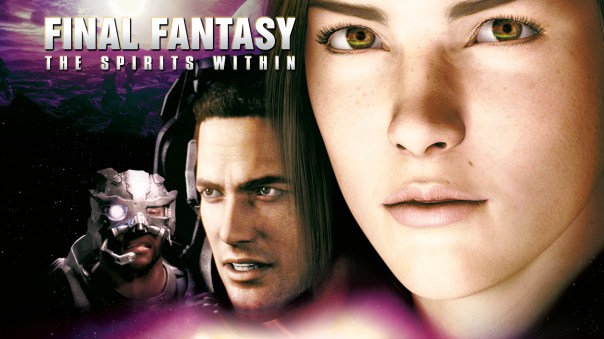
There was a time where the world wondered whether 2001’s Final Fantasy: The Spirits Within was going to put actors out of business. The Columbia/Sony animated feature, the first the studio released theatrically since the second Care Bears Movie, was a big technological leap. Square Studios, the makers behind the extremely popular video game RPG series, opened a new studio stationed in Hawaii to enter the realm of Hollywood, and they devoted four years and countless hours of processing to create photo-realistic visuals. This was still at the dawn of CGI animated features taking over the landscape and the leap was impressive. None other than Roger Ebert wrote in his review that he considered the movie a milestone along the lines of the first talkies. Before its release, there was scuttlebutt whether or not this was the wave of the future and actors would be replaced with computer versions, never mind that vocal actors were still being employed. The lead “actor,” Aki, was depicted in a swimsuit on a Maxim cover as an icky promotion. The 2002 movie S1mone satirizes this concept further, with Al Pacino fed up with temperamental industry actors so he secretly uses a photo-realistic computer program instead.
 I don’t really know why people got so worried. There are nuances that humans can convey that machines cannot, but even beyond that distinction, it’s simply a lot cheaper to hire an actor, put a costume on them, and record them than to build a model from scratch in a computer and toil for hours just to get the right look of the character raising an eyebrow. The listed budget for Spirits Within is $137 million, though has been rumored to be as high as $170 million (even more than Waterworld). For reference, the budgets of other 2001 movies include $125 million for the first Harry Potter, $93 million for Jurassic Park 3, $100 million for the Tim Burton Planet of the Apes, and $93 million for The Fellowship of the Ring. Even if you view Spirits Within as paving the way for motion-capture animated movies, the kind Robert Zemeckis spent a decade of his career slaving over, even those were eventually deemed too expensive for their returns. I think we can, at least for the time being, put this question to rest. Beyond the complexity that real actors can bring to performances, there’s the ease and cost that cannot be beat by a computer. Maybe in time this will change but for now rest easy Tom Hanks. You’re not going anywhere.
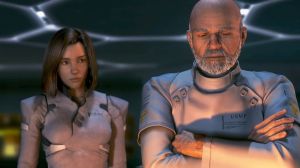
Twenty years later, the animation that once inspired awe now feels dated and surpassed. That’s the nature of the speed of technological advancement; even the company had to redesign scenes from the movie as they finished because the tech improved dramatically over the four-year development process. The visuals of the movie have become the norm for modern-day video games. There are aspects of the animation that are missing or just unable to be fully formed at the time. The faces look too slick and plastic, absent grooves and pores and imperfections that provide texture to people’s faces. The human appendages move like rubber. The hair seems to flow like it’s captured from a bouncy shampoo ad (apparently a fifth of the processing power went to animate the lead heroine’s 60,000 follicles). The character’s mouths look to be wired shut and unable to articulate their words. From a 2021 standpoint, the animation looks more like an extended video game cut scene from late 2000s. Its innovation has become commonplace.
 It should be no surprise that the script went through numerous rewrites. All the attention for Sony and Square was on the technical achievements and much less so on the story, which I guess they assumed would come together at some point. The project began with the Final Fantasy writers coming up with the initial plot, which would make sense until you realize the RPG fantasy series isn’t known for its sense of realism or cohesion. The plot of Spirits Within is not very in keeping with the more fantastical Final Fantasy series world. Screenwriter Jeff Vintar (I, Robot) was asked to read the script because the studio reportedly did not understand the project at all. His analysis was that they should completely start from scratch. The studio asked if he wanted to rewrite the script and gave him three weeks. His words were translated from English to Japanese and then back into English, which left something lost in translation a couple times over.
It’s surprising that the movie is even slightly coherent with everything it’s been through. It’s still a mess of a plot, with aliens having crashed onto Earth and made parts of the planet uninhabitable by their presence. They’re also revealed to be ghosts. So… alien ghosts. And there are eight horcruxes, I mean, um, spirits that need to be found to… something. The screenplay, under all of its laborious mutations, is really about a military team and a pair of scientists collecting MacGuffins and trying to use dreams to thwart a fascist from using a doomsday laser. It is simultaneously overly simplistic and overly complicated and quite silly. The villain, voiced by James Woods, even gets the full Nazi wardrobe but his viewpoint seems logical considering he’s pitted against scientists saying they need to break through to the “spirit of the Earth.” It’s hard to take their claims and wild speculation seriously in this more realistic world. Apparently, there was a plot development where Aki was revealed to be pregnant and her unborn child was the eighth and final spirit needed. You can still see its place in the plot. Reportedly, this storyline was cut because it was deemed “too Japanese” and I have no idea what that means.
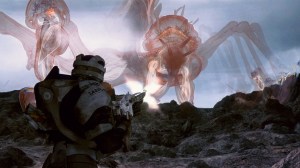 The real reason to ever watch The Spirits Within has come and gone. It’s now a footnote in animation history and a mild curiosity at best. I suppose you can still try and think how cool everything must have been to experience in 2001, and then your mind will wander because the nonsensical story will do little to hold your attention. It was such a financial disaster that Square Studios closed down and the company went back to focusing on video games full time with the occasional CGI direct-to-DVD movie (2004’s Advent Children and 2016’s Kingsglaive). Square Studio did make one of the CGI animated segments for 2003’s Animatrix, a concept paving the way for other ambitious animated anthologies like Netflix’s Love, Death, and Robots. The entire emphasis of this expensive production was slated onto its visual decadence, but the story was muddled, confusing, trite, and alien to the source material and the fanbase it was appealing to. I want to give my 2001 self a high-five because I’m happy that even at 19 years old in my original review I could see the evident faults of the mediocre storytelling as well as the arguments for replacing real actors with virtual facsimiles. Back in 2001, I said Final Fantasy: The Spirits Within had the benefit of always giving the viewer “something to sit in wonder and take in.” Twenty years later, that lone benefit has all but disappeared. Conversely, video games have become so much more ambitious, artistic, and emotionally engaging since 2001. So skip the movie and just play a game instead.
Re-View Grade: C
Share this:

Black Mamba (2019)
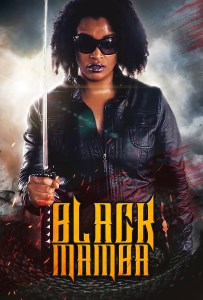
William X. Lee is an Ohio filmmaker who has found credible success on his own terms and over decades, a fact that deserves celebration. The writer/director knows the business of filmmaking as a genre specialist and has even become an adjunct professor of film at two different universities. With his many years on the fringes of the indie business, I expect Lee has a lot of wisdom about the particulars of the industry and finding a market that is welcoming to content that can be messier in execution. His latest movie in pre-production is called Bulletproof Jesus and, sight unseen, I legitimately love that title with my every fiber. His 2020 film, Black Wolf, literally involves a 58-year-old man having to track down and kill his high school bullies, all of whom miraculously grew up to become terrorists. That sounds hilarious. I believe Lee’s personal story is compelling and acknowledge that genre filmmaking could use more voices and visions from under served perspectives. However, the results on film show indifference or even disdain for accessible storytelling and entertainment value. Black Mamba is a 2019 supernatural action revenge available on Tubi, as many of Lee’s films currently are for free, and it’s indicative of the man’s sense of style and storytelling, both of which I have plenty to talk about in excrutiating detail.
Kyiera Stone (Angela D. Williams) was killed by local criminals. She’s brought back to life by angels who give her a second chance to exact revenge. Kyiera is pitted against an endless assembly line of villains that all want to return Kyiera to her state of decay.

I may sound like a scold, but it is near inexcusable that this movie is two hours long. Far be it from me to instruct a creative how much time they need to tell their story, but you have to think about an audience when you intend a platform for your efforts. What is going to keep someone glued to that screen and justify their investment in every one of your minutes? This is the kind of movie that can barely creak over the 80-minute feature-length finish line, and to push forward to two hours is excessive without an engaging story that needs that extra room to grow.
There is no real plot to speak of beyond our main character coming back to life to wreck vengeance. The movie is patterned after Quentin Tarantino’s Kill Bill, itself patterned over hundreds of genre movies, but it’s like Lee said, “Well, why stop with five bad guys to overcome when you can have 100!” Black Mamba (also the code name for the lead in Kill Bill) is stuffed to the breaking point with villainous characters and some of them are even being introduced with ten minutes left. The critical hit involves like a half dozen bad guys, and then there are more bad guys, and then hell is introducing its own bad guys, and then there’s like a fighting champion from hell, and witches, and I stopped caring because every scene played out exactly the same. The settings may vary, the person might be different, though with a cast list of rogues as long as this one good luck keeping them straight, but the scene plays out exactly the same. Some evil character gets the jump on Kyiera and within a minute she will kill them. That’s it. That’s all there ever is in these confrontations, many of which are hilariously short-lived. At no point will you fear or doubt Kyiera because she never seems to be in danger of losing. It makes the entire two hours extremely boring and repetitive. It also makes the majority of its two hours expendable. Rare is a two-hour movie where I could legitimately say that you could cut it down by 90 minutes, and yet that is the case with Black Mamba. It’s a movie of treading water.

Some of this could be mitigated by providing characters with big personalities, memorable flaws or quirks, or even interesting killing utensils, but Black Mamba feels more like a ramshackle improv fest where actors are entering scenes as “characters” with props or costumes they just assembled off-screen. I love genre movies and I love the way characters can be written for genre. Watch the TV series Justified because it is a masterclass in writing for character. Every character, even the bit-part villain of the week, is written with a distinct voice, an identifiable trait, an angle, something to make them stand out and feel more like a flesh-and-blood person in the stylized, hard-boiled universe of the show. The movie’s extended running time could have devoted scenes to showing why we should fear certain characters, their killing techniques that we would then anticipate seeing how they are applied to our heroine. Think of every movie you can with crazy killers and you see them apply their killer skills early because that’s how you get to fear them. Just being told, “so and so is deadly,” without seeing them in action is dull. In Black Mamba, often characters are over explaining things for the sake of the audience or seeming to narrate what is happening on screen. The dialogue is filled with profanity because it feels like nobody knew what else to say from scene to scene. There aren’t any tense exchanges and showdowns or clashes of viewpoints. It’s all just yelling, boasts, and non-clever insults.
The story doesn’t make much sense. There are angels that bring back Kyiera because it’s “not her time,” but then they want to use her in a celestial war? Was she lied to by the higher authorities in order to manipulate into an ongoing and endless war between heaven and hell? Is this a high-concept version of Munich and Kyiera is being used to perpetuate endless conflict regardless over culpability? No, well at least I doubt it. The larger workings beyond our heroine are left vague and seemingly shifting. The first thirty minutes could have been consolidated to ten to introduce the premise of Kyiera dying and being resurrected, but then there’s nary a section that couldn’t be consolidated, like the litany of interchangeable supporting characters.

Can you tell there are three people in this scene?
Halfway through the movie, we suddenly jump to hell and it doesn’t really alter the direction of the story but only provides more witnesses to commentate on the action. This is where Esmerelda comes in. She’s the queen of hell and played by Dawna Lee Heising, a 65-year-old actress who got her (un-credited) start as a stripper in Blade Runner and has a long list of campy T&A roles in low-budget genre fare. She feels like the production’s big “get” and so she gets a lot of unnecessary screen time. The character is annoying and the entire addition of hell as an environment feels tacked-on. I thought I knew who the big bad final boss was, and then hell is introduced with its own cadre of damned killers, and I didn’t know who the final boss should be. There’s no feeling of a direct line for Kyiera’s goals. Think again to Kill Bill as a prominent example. She had a small list, each name crossed off brought her closer to her biggest target, but each became harder to accomplish and more personally reverent as she climbed the ladder of revenge. There was a feeling of progression and payoff as The Bride worked through her bloody vengeance. With Black Mamba, she’s inundated with one face after another, but you never feel progression because the movie only feels like it’s stuck in a Sisyphean loop of disposable foes. The structure of this movie doesn’t have the groundwork to provide forward momentum.
The first thing you’ll notice about Black Mamba right away is the choice to up the contrast so high that it may hurt your eyes at time. There are times where the color contrast is so extreme that it obfuscates what is happening on screen. You’ll see faces disappear into shadow in a room, and not in a way that feels intentionally ominous, and every time a character is driving outside it looks like an atomic bomb is going off in the background. It’s chiefly a distraction and an ugly one and one that feels like it was done to make the footage look more like a grungy grindhouse movie of old. Going for a specific visual aesthetic is a fine marker, but when it harms the clarity of what is happening then maybe it’s worth revisiting. There are simple things that could have been done to better orient the viewer. The color contrasts and color palette could have better been paired with specific locations so that the audience knows exactly where they were or whose story they were following, much like in Steven Soderbergh’s Traffic. We even literally have the denizens of hell as one frequent setting, so why not crank the contrast high and more fiery in colors, favoring oranges and reds, and then go for a cooler color palette for action on Earth? Or even have a section that isn’t contrasted to death? It’s a stylistic choice that grates severely.
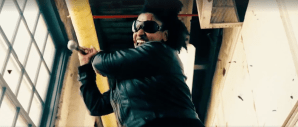
I would be forgiving of some of the obvious technical limitations for a low-budget indie aiming for the feel of other classic low-budget indies, except that, reportedly, Black Mamba had a budget of $250,000. When I read that I burst out in incredulous laughter. Maybe it was a decimal error, or maybe Lee was very generous and paid his sizeable cast and minimal crew handsomely, or maybe there are other reasons why a quarter of a million dollars does not, in the slightest, look to have been translated onto the finished product. Where did all that money actually go?
I’ve been watching enough micro-budget indies in my pursuit of reviewing homegrown cinema that I feel more adept at better gauging a potential budget. There are locations to consider, though Black Mamba seems to reuse a lot of empty warehouses, alleyways, and church parking lots, and there is action to consider, though Black Mamba uses a lot of plug-in special effects and limited fight choreography, and there are actors to consider, which Black Mamba has in excess, and there is the general professionalism of the look and sound of the movie, which Black Mamba is definitely lacking. There are persistent sound issues (the louder yelling is so screechy and high-pitched that I had to cover my ears) and there is a dearth of editing coverage. Apart from the fight scenes, it feels like every scene was designed with one shot in mind to connect directly to the next. This can make things awkward in conversations that would flow better with alternate angles rather than one person with their back to the camera or in extreme close-up. I geuss it just didn’t matter or they didn’t have the time, and yet with the budget being reportedly a quarter of a million dollars? This movie feels far more like a $10,000 budget indie than $250,000. To be blunt, I have watched movies with budgets under $15,000 look and sound much better than this quarter-million-dollar movie.
I thought about watching other Lee original movies available on Tubi but I only watched about 15 minutes each of 2017’s Six Feet Below Hell, 2016’s King Killer, and 2008’s Kill Every Last One. I don’t think I could take watching all of these movies even for objective review purposes, each of which appears to have the same faults and high contrast value as Black Mamba (one of those films is an astounding 133 minutes long!). While designed to be sold, these movies do not feel designed to actually be watched and enjoyed. There are no real characters to fall in love with, conflicts to draw intrigue, or well-developed plots to thrill and surprise. These movies feel like empty product to line an endless array of schlock DVD shelves.

This brings me to my final complaint registered at Black Mamba. More than halfway through the movie, yet another character is introduced, this time a formidable fighting champ from hell. Upon hearing the man’s name, the queen of hell falls onto the floor and begins gyrating in pleasure, moaning the man’s name and declaring him to be an amazing god among men. This character is played by none other than… the writer/director himself. I almost walked away from the movie at that point. It’s difficult to critique something like Black Mamba. The people involved don’t seem to have any aspirations that what they were making was serious, and yet maybe they should have taken it more seriously. Because of the punishing two-hour length, because of the repetitive and stretched thin plot, because of the over population of unmemorable and disposable characters, because of the technical flaws that still persist after a decade of filmmaking, because of the lack of accessibility for providing an engaging story and characters for an outside audience, and because of its reportedly sizeable budget, I regret to deliver my first failing grade for an Ohio-made indie. I wish Mr. Lee and his team well but this is assuredly a case where if you’ve seen one of the man’s movies, you’ve seen every one of the man’s movies, and unless you were in these movies, you shouldn’t watch them even for irony.
Nate’s Grade: F
Share this:

Luca (2021)
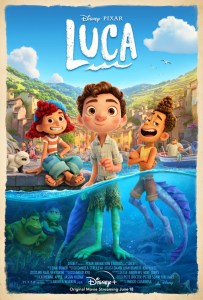 Pixar’s second straight direct-to-Disney-plus outing, Luca, is a decidedly lesser movie from the creative powerhouse. It’s more in keeping with the low stakes and minimal characterization of something like the Cars franchise or Monster’s University. It has its gentle charms and important themes about acceptance, accessibility, and identity, but Luca feels a bit too shallow and lacking in magic. Two sea monster boys want to feel the thrill and freedom of living on land, and it just so happens they transform into looking like humans as long as they don’t get wet. They must learn the ways of blending in, keep their secret, and win the local triathlon to achieve their dream of owning a Vespa scooter. Yes, ostensibly it’s about two kids, and a third once they become friends with a rambunctious redheaded girl in town, wanting to win a race to get a scooter, and you can see the larger theme about friendship and self-acceptance in the name of intolerance, but the movie feels like Ponyo meets The Little Mermaid with the setting of Call Me By Your Name (with maybe some of its coming-of-age queer coding?). The movie barely gets to 84 minutes long, pre-credits, and even that feels very lackadaisical and padded, stretching a thin storyline with minimal development. The animation is expectantly gorgeous and colorful, the lovely daubs of light are so soothing to watch, though I didn’t care for the Gravity Falls-style character designs. The stakes are low and personal but I didn’t really care about the broad characters. There are some fun farcical hijinks trying to hide their monster selves from being seen, and the conclusion has a sweet message without being overtly sentimental, but Luca is little more than a fitfully amusing yet slight seaside vacation for your hungry eyes.
Nate’s Grade: B-
Share this:

The Conjuring: The Devil Made Me Do It (2021)
 Three movies in, plus four spinoff films and more on the way, and The Conjuring franchise is losing some of its luster. The original director, James Wan, is still involved in an advisory capacity but his absence is felt in the director’s chair, not that The Devil Made Me Do It is poorly directed by Michael Chaves (Curse of La Llorona), but it’s starting to feel stale. The Warrens (Patrick Wilson, Vera Farmiga) are a husband-and-wife team of paranormal investigators traveling the country and solving 1970s/80s mysteries. This third entry feels the most like an expanded episode from a TV series, like X-Files, and maybe that’s because of its inherently procedural nature. The Warrens are defending a young man accused of murder but who says, as the subtitle describes, that he is not guilty by reason of demonic possession. From there, the Warrens are investigating to prove the demon exists and then trace its demonic history. The scares are low although the intensity feels cranked just as high; there are lots of scenes of gale force winds, shattered windows, characters yelling, and loud music. I miss the perfectly executed Old School horror sequences that were the hallmark of the earlier movies. It set up its rules, wound up the scene, and you just squirmed in anticipation. This franchise has never been revolutionary but more an expertly polished and honed tension machine. However, when the calibrations are off, then the franchise has even less going for it. There are some interesting ideas and elements, like Lorraine (Farmiga) being able to see from the eyes of the demonic killer, but the franchise feels more repetitive and stalled, with multiple exorcisms and Ed (Wilson)’s health being a motivating factor for his wife to prevent, again. The supporting characters are bland or broad and the mystery itself isn’t that interesting, nor is the ultimate villain. In the realm of Conjuring as weekly TV show formula, this feels like an acceptable middle episode with the expectations that they can improve the next week. The “based on true cases” selling point is also starting to grate in light of the reality that a man blamed his own actions on the devil and these controversial people sought to exonerate a murderer. The real-life version is morally abhorrent. The junky horror version can work as long as it doesn’t take itself too seriously. If the other Conjuring movies were gourmet entries, then this is more the fast food version. It may still satisfy fans but it’s definitely not as well made and with questionable ingredients.
Nate’s Grade: C+
Share this:

Wolfwalkers (2020)
 Beautifully animated with painterly water color visuals, Wolfwalkers is another treat from the acclaimed Irish studio that is single-handedly trying to bring back hand-drawn animation. The visuals are a delight and styled in a flat dimensional space reminiscent of Medieval tapestries (and Wes Anderson movies). The story brings to life 17th century Celtic mythology in a way that is still relevant today and concerns weighty themes about family identity, female independence, religious persecution, prejudice, colonial occupation and exploitation, and environmental conservation. It’s part Miyazaki and Brave and also reverent to its own cultural heritage, and it’s emotionally affecting and engrossing as well as being a treat for the eyes. We watch a young girl befriend a wild “wolfwalker,” a girl who can transform into a wolf when she sleeps. their bond will push each other to fight against forces trying to dominate the forest and morality. The filmmakers have carefully laid out the rules of their story and the implementation of the special powers so that everything happens through gradual circumstances where the plot feels as if it is following an entirely organic path. The voice acting is excellent and heartrending and perfectly paired for the exaggerated, wood-block-styled character designs. It’s a lovely and entertaining supernatural fable with enough thematic relevance, girl power, and visual grace to reaffirm just how magical traditional animation can still be.
Nate’s Grade: A-
Share this:

Mortal Kombat (2021)
 Mortal Kombat is video game royalty, and if you were a Millennial that grew up in the 90s, then you likely have your own personal connection to this bone-crunching franchise. Released in 1992, the halcyon decade of fighting games, the arcade game gained notoriety and parental infamy for its photo-realistic fighters and for the over-the-top violence. Players could finish off their opponents in brutal and bloody fashion, drawing the condemnation of parents and politicians and only making teenagers want to play the games even more. I can recall my disappointment over the Super Nintendo port of the first game lacking the blood and gore of the arcade, something my Sega Genesis friends could lord over me with their faithful port (there was a code where you could turn the copious amount of sweat red, but it wasn’t the same). This was corrected with the release of Mortal Kombat II, and I think I devoted two whole years of my teenage life to playing that game, memorizing every player’s special moves and deadly finishes. I never really kept up with the franchise after the third game, and from what I’ve seen with the newest versions, I can safely say they just aren’t for me anymore. The gore of the 90s games was campy and ridiculous and the gore of the current games is too medically graphic for me (I’m not alone; apparently the game developers also needed therapy as they suffered trauma from their research and detailed recreation of the intensely destructive violence upon human bodies).
 I can recall seeing the 1995 Mortal Kombat movie at the local drive-in with my friend and fellow fan of the franchise, and we lapped it up eager to see any live-action version of our video game obsession. We were so excited and ignored the faults of the film, and we weren’t alone. It gained the reputation as one of the “better video game movies,” which is a criminally low bar to clear. I never watched the 1997 sequel, Annihilation, but it’s widely regarded as a so-bad-it’s-good farce and definitely an insult to fans of the games. From there, fans have been savoring the day another Kombat film could find its way to the big screen, something to wash away the taste of the cheesy 90s movies that were both PG-13 and lacking the signature gore of the series. The new 2021 Mortal Kombat movie is firmly rated R and is chiefly made for the diehard fans. It’s a fun and bloody movie with some flaws, but I don’t know what more I should have expected from a franchise that, from its very beginning, has literally spelled “combat” with a K.
The plot is straightforward for a game centered around a super-powered inter-dimensional fighting tournament. The Outworld has won nine tournaments in a row and with one more victory they will gain control over Earthrealm. Sorcerer Shang Tsung (Chin Sun) is the ruler of the Outworld and has the bright idea that if he kills all of Earth’s chosen fighters ahead of time, it will make his next tournament victory that much easier. He sends powerful assassins to Earth to locate the Chosen One, an MMA fighter named Cole Young (Lewis Tan) who doesn’t know he’s the descendant of a destined family line of warriors. Cole is taken under protection by Sonya Blade (Jessica McNamee) and Lord Raiden (Tadanobu Asano), where he is trained to reach his true potential. He needs to unleash a hidden superpower to compete with the best of Outworld.
First off, if you’re looking for a Kombat movie that is faithful to the atmosphere of the games, then you should walk away happy. Nobody is going into this movie and expecting Oscar-level material. We’re here for the fights, the crazy characters, and the gasp-inducing gore effects, and to that end the third film incarnation of Mortal Kombat mostly delivers the goods. Compared to the 1995 movie, populated with majority white actors with varying degrees of martial arts skills, and “varying” might be charitable, this is a clear winner. These are actors here from The Raid, Wu Assassins, Into the Badlands, The Twilight Samurai, Mongol, and plenty other worthy martial arts spectacles, so the filmmakers clearly valued having actors who could credibly perform the complex fight choreography. It’s also worth noting that we have Asian actors playing Asian characters, so that’s a bonus for authenticity and reverence as well.
 The opening six minutes of the movie really sets up how serious and potentially great it can be. It’s the early 1600s, and we’re introduced to the quiet family man, Hanzo Hasashi (Hiroyuki Sanada), a member of a Japanese ninja clan that is being hunted by Bi-Han (Joe Taslim), a dangerous warrior from a rival Chinese ninja clan. The opening is patient, thoughtful, and eerie, and when the fighting breaks out it’s done in longer takes where we can watch the actors strut their physical stuff. The fighting makes specific use of each character’s skills and is a satisfying start. The movie never quite lives up to these artistic heights again, at least for a sustained duration, but this taste of a legitimately good Mortal Kombat movie is enough to make you believe we can return here again.
The rest of the movie is decidedly fun and clearly doesn’t take itself too seriously (they even make fun of the “combat” with a K spelling). It’s got characters that can shoot lasers from their eyes, invisible monsters, four-armed strongmen, metal arms, and just about every character introduction is another opportunity for the movie to shrug and just accept its inherent weirdness of its rogue’s gallery. There’s a lady with dinosaur wings and another guy with a really sharp hat. What you want is for the filmmakers to present a world where these characters work, something that didn’t succeed with the goofy 1990s movies. I think the script by Greg Russo and Dave Callahan (Wonder Woman 1984) accomplish this feat and presents a world that finds a credible middle ground between campy indulgence and self-serious blather. It’s serious enough to not break out into derisive laughter but it’s still not too serious that the filmmakers have forgotten what the audience has paid to see. The gore effects are sticky and impressive and gross without being offensively so. The creative process for this movie was likely crafting a list of all the red-strewn finishing moves from the games and figuring out how best to squeeze them into the royal rumble. Every character gets a signature move, along with plenty of clunky catchphrases also crammed in for fan approval. If you’re a fan of the games, they’ve designed this movie with your demands primarily in mind.
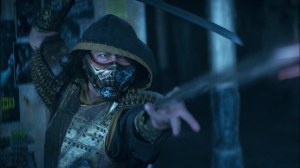 Where the movie falters are with decisions of pacing, structure, and some editing. Centering the story on a newcomer seems odd when any other established character could have sufficed, until you realize they’re setting up Cole Young to inherit the legacy of his ancestor and likely become the Scorpion we know so well from the games. Except that’s not quite what happens, which makes the decision to center him as an entry point perspective more confusing. It’s not like Cole is that interesting on his own. He’s a boring MMA fighter who wants to protect his family and that’s about it. He needs to summon his special power, and when he does, prepare to be underwhelmed. Another issue is that the second act is far too long and protracted. It’s mainly comprised of training exercises and people being told, “You’re not ready,” and vague force fields and teleportation powers that invite questions over whether they could have been used earlier. It’s too much training without the bloody reward of the gnarlier fights. This leaves the final act to be rushed and many of the climactic one-on-one fights are pushed into a measly montage. Finally, the editing of the fighting can become too choppy and jumbled to fully appreciate the onscreen action. The opening sequence is an example of where careful edits can highlight the choreography.
The new Mortal Kombat movie is fun, cool, bloody, and probably exactly what diehard fans would hope for from a big-screen rendition. It’s ridiculous but not tongue-in-cheek in tone. The visuals and special effects can often be weirdly beautiful especially with the crystalizing powers of Sub-Zero, the game’s popular ninja with the power to freeze and create deadly daggers of ice. There are some standout “wow” visual moments, like when Sub-Zero freezes a bullet firing from the blast of a rifle, or when he freezes his opponent’s spurting blood to form a knife. There were as many moments that brought a smile to my face as made me check the time. The dialogue is flat and the only actor who seems to really be enjoying himself is the proudly profane Josh Lawson as Kano. But when it comes to the fighting, the fatalities, and the franchise’s glorious selling point, it might not be a flawless victory but it’s still a victory nonetheless for fans.
Nate’s Grade: B-


 nathanzoebl
You must be logged in to post a comment.