Blog Archives
Fantastic Four (2015)
 Few movies have had such a prominent stink of negativity attached to them as Fox’s Fantastic Four reboot, a movie that is already being considered amongst the worst superhero movies of all time. Director Josh Trank (Chronicle) was given the freedom to go darker, emphasize more science fiction, and select a cast of respected actors rather than bankable names. Then came rumors of aloof and secluded behavior on set from Trank. Then came rumors that Fox and producer/co-writer Simon Kinberg (X-Men: Days of Future Past) effectively shuttered Trank from his own movie, reshooting 40-minutes of a 90-minute film to salvage the wayward production (get ready for plenty of stuff in trailers not to be in the finished film). Not quite the room-clearing disaster of rampant speculation, the new Fantastic Four is a superhero movie that never really gets started and has constant battles with tone, characterization, and plot. It seems like the real villains of the movie are the Fox executives who signed off on the “gritty, gloomy” rendition and then interfered when they got too scared, managing to undercut the original vision, muddy an already messy film, and make things even worse. The behind-the-scenes drama is easily more interesting than anything that happens in this movie.
Reed Richards (Miles Teller) is a science genius recruited by Dr. Storm (Reg E. Cathey). Reed invented a makeshift teleporting device as a young child with the help of his friend, Ben Grimm (Jamie Bell). At Dr. Storm’s lab, Reed works with Storm’s children, Sue (Kate Mara) and Johnny (Michael B. Jordan), and a morose computer programmer, Victor Von Doom (Tony Kebbell). The group transports to another dimension but is attacked by a strange green energy cloud. Victor is left behind. The surviving foursome exhibits unique abilities. Reed can stretch his body. Sue can turn invisible and create force fields. Johnny can fly and set his body on fire. Poor Ben is a hulking rock monster. Reed promises to find a way to reverse what happened to them, but the re-emergence of Dr. Doom puts the fate of the entire world at risk.
 It should be of little surprise that Fantastic Four feels like two different movies awkwardly and inarticulately smashed together. For the first hour, the movie follows the path of our heroes and their contraction of their powers. Rather than the gee-whiz fun of getting superpowers, the characters view themselves as freaks, their bodies turned against them, and their colleagues deeply afraid of them. It’s a far moodier antidote to the vicarious thrills of gaining special abilities. There are some effective sequences that channel David Cronenberg’s The Fly and Scanners, and it’s these brief moments where you feel Trank’s vision connect the most. Doom walking down a hallway and making heads explode, in a PG-13 way, is horrifying and cool. The problem for Trank, and the movie as a whole, is that this first hour still isn’t a very good movie. It takes far too long for these characters to get blasted by green space goo and become supers. The setup is so protracted and needless. Did we need to see how these characters came together? Did we need to see their childhoods? It’s not essential to see the team come together when we can already start from that point. In a sense, it reminded me of how needless I felt Pixar’s Monsters University was; did we need to see how these colleagues became friends? Despite this action-free opening half, the screenplay could have fleshed out the four main characters to justify the added time, but it’s hard for the movie to justify much.
These are some of the most boring and underdeveloped characters in recent comic book lore. If these versions of the Fantastic Four existed in the 1960s, they wouldn’t have made it to issue number two. Reed is smart. Sue is smart too but also standoffish (and adopted). Johnny likes fast cars. Ben is tough and loyal. Victor is a pessimist who called dibs on flirting with Sue. That is really about it, folks. Ben disappears for most of the film, called in to make the trans-dimensional jump because Reed feels like Ben deserves to be there since he helped create an early prototype with Reed. Actually, let’s talk about that scene. It’s a high school science fair yet the only other displays we see are clearly for much younger children, and yet Dr. Storm is visiting an all-ages school science fair to groom talent? That seems weird. Why does Dr. Storm not make the same offer to Ben, who helped Reed design and build his early teleporting machine? Regardless, Reed leaves his childhood pal behind with Ben’s abusive family. That’s because he’s a good friend. Then, once the horrible transformations occur and Ben gets the worst of it, Reed runs out on him again. Sure it’s in the pursuit of finding a cure, but who’s to say he couldn’t do that in the already constructed government super science lab? Sue doesn’t even go on the first trans-dimensional voyage; it’s just a boy’s club. Sue spends more time in this movie staring at computer screens and looking intently than any action. It’s probably for the best, though, because the scenes of her flying around in a bubble made me think of Glinda the Good Witch. I’m not a Kate Mara fan. I’ve found the majority of her performances to be stilted, but even I can admit she’s given nothing to do here but move her eyes from the left to the right and inform Miles Teller about Portishead, a band that’s only 20-plus years old. It’s sad but the most interesting part of Johnny is that a black actor, a point that caused certain more irritable fans to foam at the mouth at the adaptation, is playing him. If these super heroes aren’t going to be super until halfway through the movie, they better be interesting characters. They are not even close.
 It’s with the return of Dr. Doom that the Fantastic Four makes its inept transition into the second movie, the one reshot by the producers and the studio. In an implausibly fast amount of time we’re given our villain of the movie and he sets off to open a black hole to destroy Earth because… we’re self-destructive? So humanity is self-destructive so Doom is going to destroy humanity? I would also like to know exactly how Doom survived for over a year in the alternate dimension when it clearly looks like there is nothing of substance for miles, unless green goop is edible. Did he just lose the need to go to the bathroom? Doom’s powers are rather nebulous, which makes it even less interesting when the Fantastic Four decides to, get this, work together to beat the bad guy. For a movie that hasn’t had one action sequence until its final act, now our characters must band together to stop Doom and his giant flashing blue light black hole thingy. The special effects are pretty undistinguished and hard to read at times. I’d also like to remark how hideously this other dimension looks. It’s all rocky crags and dark clouds; it’s like a less successful timeshare for the residents of Mordor. It doesn’t quite look like the paradise that Doom describes it as (the brochure lied to us!). This jumbled conclusion feels so ham-fisted and rushed, a villain and a typical world-destroying fate that must be thwarted at the last minute. Things just sort of happen rather than storylines finding payoffs, and then it’s all sort of over and the resolution echoes the very end of Avengers: Age of Ultron, even with the credits cutting off the vocal iteration of the title heroes. It’s so transparently different in tone, sloppy in development and execution, and so quickly introduced and resolved, that the whole conclusion comes across as forcibly laughable.
At the end of watching the dire Fantastic Four reboot, I felt more sympathy for Josh Trank. He still deserves blame for helping to conceive and develop such a misshapen story and squander his actors. After three duds and whatever you want to call the 1994 Roger Corman adaptation, it feels like maybe this franchise is just cursed. Maybe these characters are too dated and their powers are too silly. Then again we know that these characters can work in the format of a movie because a good Fantastic Four movie already exists, and it’s called The Incredibles. It doesn’t seem like anyone is going to come away completely clean from this misfire and financial flop, especially now that Trank and executives are engaging in a P.R. blame game. Fox was hoping for a rekindled franchise. Now they may be hoping to work out a deal for Marvel to buy back the rights to the characters. I would have been interested to see the full vision of what Trank was going for, especially since the one scene that feels most adamant is the best sequence in an admittedly mediocre superhero film. At least the movie would feel cohesive. It probably wouldn’t be good but at least it would be committed to trying something different. Instead, the movie tries to be different from the superhero blockbusters populating the landscape and then, at the last minute, tries to follow their lead and become one of them, becoming its own misshapen and poorly developed blob. It’s not the worst superhero movie in history (that honor still has to belong to the atomic bomb of taste, Batman & Robin), but even achieving sustained mediocrity is too much to expect.
Nate’s Grade: C-
Share this:

Ant-Man (2015)
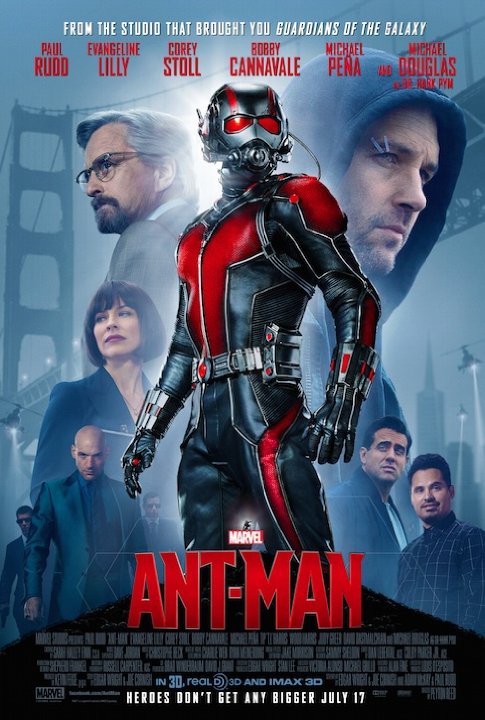 For the longest time it looked like Ant-Man might be the first dud of the runaway successful Marvel cinematic universe (MCU), a film franchise that was practically printing money at its leisure. It’s a strange setup and the man responsible for the movie even existing, writer/director Edgar Wright (Scott Pilgrim vs. the World), walked away six weeks before cameras were going to roll. Wright was a big fan of the character and has been working on and off on a screenplay with Joe Cornish (Attack the Block) for the past eight years. Before there was an MCU, there was Wright pushing for Ant-Man. I’m pretty sure Marvel execs weren’t thinking the relatively unknown character was worth sinking money into, but Wright kept pushing. I was far more excited for an Edgar Wright superhero movie than I ever was for Ant-Man, and then it all went away. Neither side has spilled too many details but it appears the divorce was a result of “creative differences,” which is odd since Marvel approved Wright’s script through eight years of development. Several directors were auditioned and Peyton Reed won the spot. The fact that Marvel has gained a rep for being a formula-driven creative committee and they literally hired a director with a film credit called Yes Man is an irony I don’t know that fully sank in. If Marvel was going to miss, this was the film. A funny thing happened in the ensuring year. Ant-Man is a visually engaging, energetic, and funny superhero caper that stays fun from start to finish and is a more entertaining movie than Avengers: Age of Ultron. Didn’t see that coming.
Scott Lang (Paul Rudd) is a master cat burglar just finishing the end of his prison term. Lang was punished for a “cool crime,” stealing millions a large corporation had illegally bilked form customers and returning it to the very victims, but it makes it hard to secure gainful employment. Scott falls back with his old crew, lead by his pal Luis (Michael Pena), and break’s into Hank Pym’s (Michael Douglas) safe. Expecting cash and jewels, Scott is disappointed to only find a weird looking suit, which he takes anyway. Hank observes Scott and communicates with him about the power of the suit. The wearer can shrink down to the size of n ant with the push of a button in the glove. Hank needs a protégée to wear the suit now that he’s too old. His estranged daughter, Hope (Evangeline Lilly), is working for Darren Cross (Corey Stoll), a scientist close to breaking through on replicating the amazing shrinking formula of Pym’s. As soon as Cross cracks the code, he’s going to sell the technology to the highest bidder (hail HYDRA). Hank must convince Scott to become the Ant-Man and sneak inside Cross’ secured workshop and steal his technology before it gets in the wrong-er hands.
 Arguably weirder than last summer’s Guardians of the Galaxy, which had a talking tree and space raccoon amongst its main characters, Ant-Man is the hardest property to sell by Marvel yet, and it smartly aims its sights lower and succeeds with the modest goal of just being a fun and enjoyable time at the movies. It helps that the movie doesn’t take itself too seriously and has characters pointing out the absurdity of its premise and developments, but not past the point where it would be detrimental. Let’s face it, a guy who can shrink down to ant-size isn’t that weird when you consider the applications, especially in espionage. The filmmakers do an admirable job of selling a superpower that pales in comparison to most other heroes on the market. However, the weirder power is that Scott has the ability to communicate and control ants via brainwaves. That seems like the even bigger superpower but it also begs the question, why simply ants? Of all the animals or living creatures who could be harnessed with this technology, we go with the tiny ones. There may be an explanation in the history of Ant-Man comics I’m missing but that doesn’t matter when we’re talking about the execution of the movie. The guy is able to control different species of ants with his mind. He is no Ant-Man but the Ant-King. Anyway, I think this power could be much more effective applied elsewhere. The ants are Scott’s friends and he has to train himself training them, getting them to coordinate and assist him properly, or else… there’s not much else at stake because they’re expendable. Perhaps their queen could have eaten Scott if he were unsuccessful.
On its surface, this movie should not work and is too goofy and insubstantial to engage, and yet that’s precisely what appealed to me. Not every superhero film needs to be averting a cataclysm that will destroy the planet. If the stakes feel big to our characters, and if the audience cares, then the stakes feel plenty big for us too. Scott simply foiling the corporate bad guy to be in a better position to see his daughter, that’s workable. Then the storyline is told through a heist, one of cinema’s most enjoyable plot mechanics. Heists are programmed for audience pleasure because it requires teamwork, which utilizes our cast in different and fun ways, it brings plenty of conflict and complications, and it lays out its steps one-by-one and provides a series of payoffs with the completion. It’s a tribute to Reed and the filmmakers that the heist portion of the film isn’t even the most fun part of the story. The majority of the middle is Scott coming to terms with the suit, his powers, his relationships in his life, and the mission. There’s probably one too many training montages (yeah, you get those sugar cubes you ants!) but the pacing is so breezy and the sense of fun so palpable, I didn’t mind. The use of humor never diminishes and Rudd is such a charismatic anchor for the movie, and yet he’s actually somewhat underplayed. He has it within him to be much funnier, but I guess he had to dial it down to effectively be seen as an action hero, hence the presence of newfound abs.
I didn’t have a lot of hope for the film once Wright left but I have to credit Reed for what he has achieved. It’s impossible for me to divorce myself from Wright’s involvement, and what kind of kinetic fireworks he would have birthed, but Reed manages to make Ant-Man come alive visually. Reed’s prior history shows an affinity for comedy but the films have never needed to be visually stylish, though I’d argue my super not-guilty pleasure Bring it On had an above average sense of visual spunk. Still, Ant-Man is a consistently visually immersive film that manages to find new perspectives. Scott’s first foray as a shrunken Ant-Man is an entertaining adventure through the dangers of a house party. The action sequences in miniature are treated just as we would expect a large-scale superhero epic to be treated, and then Reed pulls back at times for prime comic effect, like a battle atop a train that’s really just a child’s toy set. The visuals grandeur is patterned after the typical Hollywood action epic but the movie pulls back repeatedly to remind us how silly everything can be. The small world perspective opens up the movie in its storytelling and definitely in its action choreography. Because the Ant-Man has super strength when small, it behooves him to shift between small and human sizes when fighting. We’ll watch Scott race across the barrel of a gun in one second and then full-sized and hurling a security guard through a plate glass window the next. It provides a new sense of dynamism to basic fisticuffs. Reed takes advantage of the visual possibilities of his pint-sized super hero, like a clever battle that takes place entirely inside the contents of a briefcase. I chose not to watch this film in 3D, as my preferred option, but this is one I would almost consider going 3D. The shrunken worlds use a lot of macro photography to maximize the effect of depth.
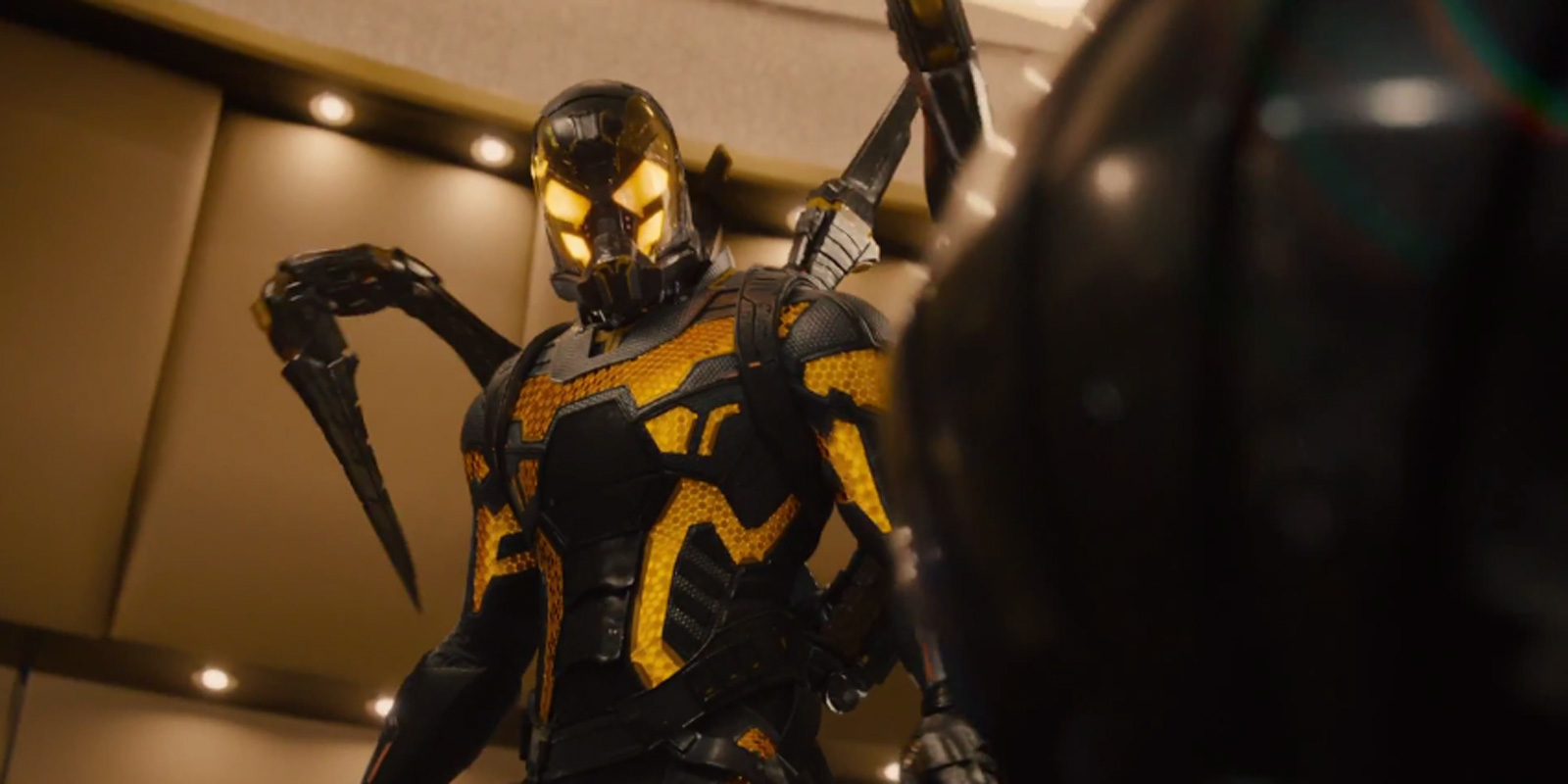 The cast also seems to be perfectly attuned to the comic rhythms of the story and several supporting players make the most of their moments to shine. Pena (Fury) is hilarious as the easily excitable friend given to lengthy diversions when retelling his tales of intrigue. The two instances where Pena breathlessly recaps what so-and-so said to so-and-so are two of the most playful and comically fulfilling sequences in the movie. I also enjoyed the fact that he’s always making waffles for his friends but this is never overtly commented upon. While Pena provides another dose of humor, the heart of the movie is really the father-daughter relationship, and it’s nice that Lilly (The Hobbit: Battle of the Five Armies)’s character is given such prominence. She resents Scott because she feels like by every right she should be the Ant-Man; the movie presents the two like bickering rivals fighting for the approval of a father figure. Hope’s credible grievances with her father are treated with weight and her reconciliation is given as much screen time as Scott’s training, pairing the two more as equals. Douglas (Last Vegas) is a warm and welcoming presence as a mentor working through his regrets late in his life. The de-aging CGI effects are amazing early on, showing a 1989 version of Douglas that looks pristine. He looks like he just stepped off the set of Ruthless People. The only weak point is Stoll (TV’s The Strain) but that’s because his underwritten villain is just too generic to blend in amidst all the colorful characters and comic mayhem.
It’s impossible to watch Ant-Man and not try to imagine what it would have been like had Wright remained as its director. Wright’s presence is still felt in stretches and he and Cornish are still the top-billed screenwriters, with the addition of Adam McKay (Anchorman) and Rudd himself performing a rewrite. I’d love to one day read what Wright’s full script was like and what Marvel eventually decided they could not abide. Whatever the case may be, the Ant-Man that made it to the big screen across the world is a surprisingly entertaining and spry piece of work. Reed provides a nice dash of visual flavor without losing its sense of the comedy or drama, Rudd is effortlessly charming, and the structure provides plenty of payoffs. Above all else the movie maintains a sense of fun and a lightness in an arena too often overwrought with doom and gloom. I don’t imagine there will be any Ant-Man sequels soon since the character is rather limited, but expect to see Rudd popping up in other MCU titles (he’s already been spotted filming Captain America 3). Ant-Man is a fun diversion but even Marvel knows not to push its luck too far.
Nate’s Grade: B
Share this:

Avengers: Age of Ultron (2015)
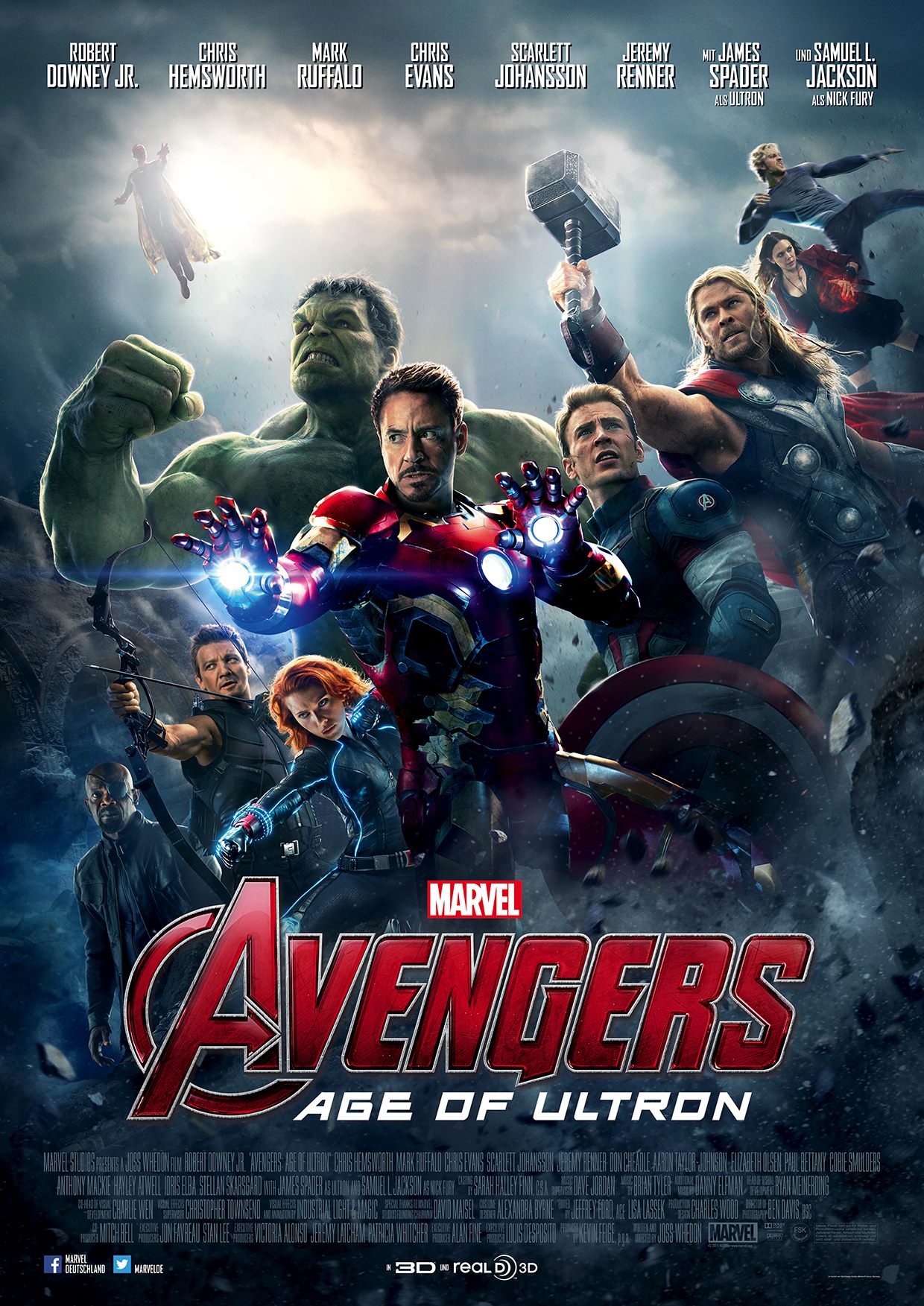 The Avengers wasn’t just a blockbuster it was a mega-blockbuster and rewrote the Hollywood playbook in the summer of 2012. It wasn’t just about powerful franchises anymore. Now it was about franchises that would link into a super franchise. Sony got anxious to expand their Spider-Man universe in a similar fashion as Marvel had done in buildup to The Avengers. After one poor movie, that plan was scuttled and now Spider-Man is being rebooted for the second time in five years, this time with active help from Marvel itself (look for Spidey to appear in Captain America 3). Writer/director Joss Whedon (TV’s Buffy the Vampire Slayer) was the mastermind behind the jaunty smash-em-up fun of The Avengers and was quickly signed on for a sequel after the billion-dollar mark was crossed. With great success comes great risk of upsetting that continued success. It feels like Whedon’s hands were tied to the greater forces at work. As a result, I shouldn’t be surprised but I’m still disappointed with how muddled and overstuffed as Age of Ultron comes across.
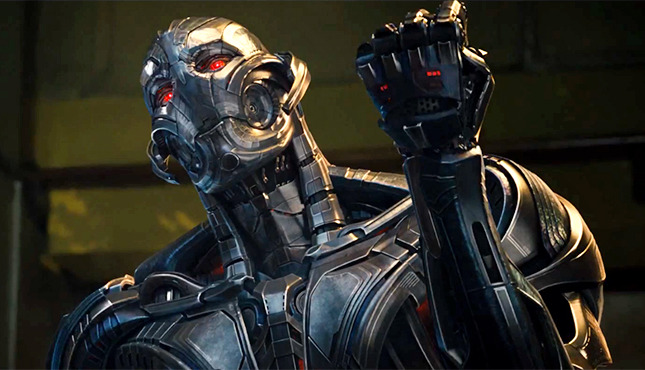
The Avengers are cleaning up the last remnants of HYDRA, taking them to a castle in a fictional Eastern European country. The HYDRA doctor has been genetically experimenting on volunteers, birthing Wanda “Scarlet Witch” (Elizabeth Olsen) and Pietro “Quicksilver” Maximoff (Aaron Taylor-Johnson). She can tap into people’s minds and he can run super fast. They’ve got a grudge against the Avengers, particularly industrialist Tony Stark/Iron Man (Robert Downey Jr.). Stark takes a piece of alien technology and plugs it into his home system to build a super fleet of automated robots to patrol the world. In no time, the A.I. has taken form in the shape of an insane robot named Ultron (James Spader) whose mission is to save the planet by eliminating mankind. He builds an army of robotic soldiers with the assistance of the Maximoff twins. Tony, along with Captain America (Chris Evans), Thor (Chris Hemsworth), Hawkeye (Jeremy Renner), Black Widow (Scarlett Johansson), and Bruce “The Hulk” Banner (Mark Ruffalo), must stop Ultron while not destroying much of the world themselves with their collateral damage.
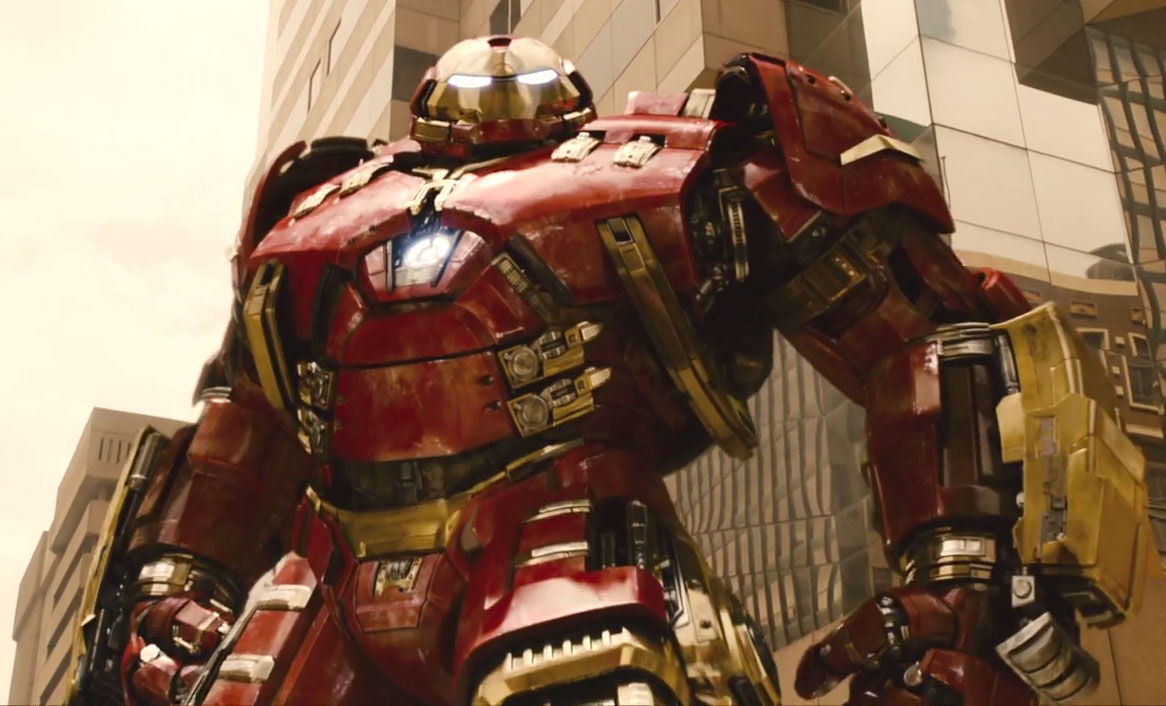 Eleven movies into the Marvel Cinematic Universe (MCU), a movie of the size of an Avengers sequel cannot simply be a movie. It’s too important to the overall vision of the MCU, and so it has to set up and establish other characters, franchises, and the many monetary tributaries that keep the world of superheroes going. It’s already got a slew of superheroes and it adds even more new faces into the mix (I guess we needed an Avengers B-Team). The development of Ultron is also far too rushed; it’s literally minutes from being plugged in that he’s already settled into kill-all-Avengers mode. The movie barely has any time to even contemplate the perils of artificial intelligence before Ultron is already proving their fears correct. While Ultron is a fun villain (more on that later) his plan feels quite haphazard. His biggest strategic advantage is his duplication, the fact that he can exist without a physical body and can inhabit many bodies at once. Except for a hasty escape via the Internet and a climax stuffed with CGI robot mayhem, this advantage isn’t really explored. Why does a self-replicating creature beyond the bounds of physicality need or even desire a physical body? If you’re made from a nigh indestructible metal and can control numerous beings at once with a hive-mind intelligence link, why would you want to be turned into flesh thanks to what amounts to a 3D printer? The introduction of The Vision (Paul Bettany, this time in the flesh) is quite muddled and confusing. The incorporation of the Maximoff twins is awkward and they feel more like accessories than needed additions. This Quicksilver doesn’t come anywhere close to the memorable prankish Quicksilver from Days of Future Past. The pacing of the film is so ramped that it feels like the movie is falling over itself to get to the next large-scale action set piece. At 140 minutes, they could have removed one or two action pieces and devoted more time to streamlining and cleaning up the narrative.
And the action sequences start off with a bang but they invariably fizzle out. The opening sequence begins with a Birdman-styled tracking shot to connect all our fighters, and it’s a fun way to kick things off while visually tying together the team. The Hulk vs. Iron Man brawl is fun for a while, partly because it harkens back to the pleasures of the first film, namely watching our heroes battle each other as much as the villains. After a while, the CGI onslaught becomes overwhelming and just dulls the senses. You’re watching CGI smash into other CGI and then keep smashing, with little variation. The disappointment with the action is that it too often feels weightless and hollow. It has glimmers of fun but it can’t hold onto these glimmers because the action doesn’t change. It gets bigger and more chaotic, yes, but it doesn’t develop with organic complications and real attention to setting. These big battles could happen anywhere because they almost all descend into simply fighting amidst rubble. Even Iron Man 3 found ways to spice up its action set pieces through complications, limitations, and clear differentiation. Perhaps this is a larger outcry of fatigue with the overall state of CGI overkill in effects-driven films. The concluding fight versus Ultron and his many copies just feels like the same scene on repeat but in slightly different locations. Whedon has shown an affinity to coordinate exciting and satisfying action sequences, but you just feel like the pressure and demands get the better of him.
However, every moment with Ultron onscreen is a highpoint because of the malicious cattiness of Spader (TV’s The Blacklist). He’s a perfect fit for a character who is at turns childish and petty, bonkers, and condescending. In some ways he’s like a giant robotic teenager who thinks he’s just above the rest of these so-called adults. It’s such an enjoyable villain, an area of real need in most MCU films (Loki can’t be everywhere for every movie), that I wanted more and more of him. My friend and critical colleague Ben Bailey describes Ultron as the villainous alternative Tony Stark, and Whedon does a fine job of laying out the parallels, especially with regards to ego. It’s a weird reunion for the stars of 1987’s Less Than Zero.
The most boring characters, i.e. the humans, are the ones that get the biggest expansion for character development, with mixed results. Let’s face it, Hawkeye is never going to be anyone’s favorite Avenger. I think even he acknowledges this in a moment that almost breaks down the fourth wall (“None of this makes sense. I’m fighting with a bow and arrow.”). Hawkeye’s personal life is given a spotlight and it sets up an obvious worry that he’s going to bite it by film’s end. If there was an expendable member of this team, it would have to be Hawkeye. The added attention and personal attachments seem like a dead giveaway that he’s going to be dead. I don’t think I was any more invested in his character knowing about his hidden life outside the Avengers, but I certainly played a game of, “Is this gonna be it?” as the film continued. Black Widow started as an interesting character, a spy trying to make amends for her bloody past, or the “red in [her] ledger,” as they referred in the previous film. Her budding romance with Banner makes some sense but it still feels like the character is being forced into Romantic mode not because of her character but mostly because she has a vagina. Any romance with a guy who turns green and monstrous seems like it might be best as unrequited. She’s also defined by a past trauma that, while upsetting and cruel, is also a bit too tied into her identity as Woman/Mother. It’s an unfortunate positioning for what is an inherently interesting character (the slut shaming of the character in promotional interviews by certain Avengers cast members is also highly unfortunate). Can’t we get a Black Widow movie yet, Marvel?
 An aspect of Age of Ultron I did enjoy was how conscious the heroes are about mitigating collateral damage and especially human casualties. At every turn, the Avengers are thinking about saving those caught in the cross-hairs first. They go out of their way to save those left behind. I think, and I’m not alone in this conclusion, that Whedon is directly responding to the disaster porn that was Zack Snyder’s miserly Man of Steel. The latest Superman movie bothered me with how callous it was with human life, treating devastating city-wide 9/11-style destruction as mere entertainment. As Superman and Zod were colliding through every damn building in Metropolis, you knew thousands if not millions of unseen people were perishing in this rather pointless melee. Whedon’s band of heroes places a priority on human life regardless of region.
It would be disingenuous of me to say Age of Ultron is not entertaining. Whedon is still a terrific storyteller and that still shines through the troubled areas and spotty plotting. The action makes good use of the various heroes and their abilities, providing fun combos like Cap hurling his super shield so Thor can redirect it further with his hammer. The use of humor was one of the bigger enjoyments of the first Avengers, and while it’s still abundant and enjoyable here as well I’d say it’s overdone. When every character is cracking quips every fourth line of dialogue, it pulls you out of the movie and the stakes feel lesser. The running joke where the Avengers make fun of Captain America for his prudish sensibilities on profanity is a joke that works at first but then loses all sense of fun as it’s pounded into the ground on repetition. The larger set pieces each have their moments to delight, especially the opening and the Hulk vs. Iron Man battle. Age of Ultron isn’t a bad movie and it has some truly great moments and great character moments and payoffs, but it’s only moments. The plot meant to connect the dots is too labored with the burden of setting up several Marvel franchises. In the MCU pecking order, I’d place Age of Ultron right around Iron Man 2 quality (another movie compromised by the extra burden of setting up other movies, namely The Avengers).
It’s sure to set box-office records and I imagine fans of the original will happily lap up another super team-up, but Avengers: Age of Ultron is something of a disappointment for me. The more I think about it the fun parts become a little duller and I find more areas of criticism. It’s just not as fun a movie experience, and that’s due to the rushed and muddled story and too many characters. After the critical and commercial success of the first film, I doubt that Whedon could have produced a film that would live up to the sky-high expectations, but that doesn’t excuse the finished product. It feels like Whedon had to struggle to pull this one off, especially with the added demands, and I can’t blame him for wanting a break from the MCU. The Russo brothers who so dazzled audiences with their direction of Captain America: The Winter Soldier will be stepping in to direct the next Avengers sequel(s). I hope they’re up to the task because the burden of carrying a billion-dollar franchise with its tendrils connected to other franchises appears to have been overwhelming for one of the greatest storytellers of a generation. Enjoy Age of Ultron but be wary of what the future holds for the larger MCU.
Nate’s Grade: B-
Share this:

Big Hero 6 (2014)
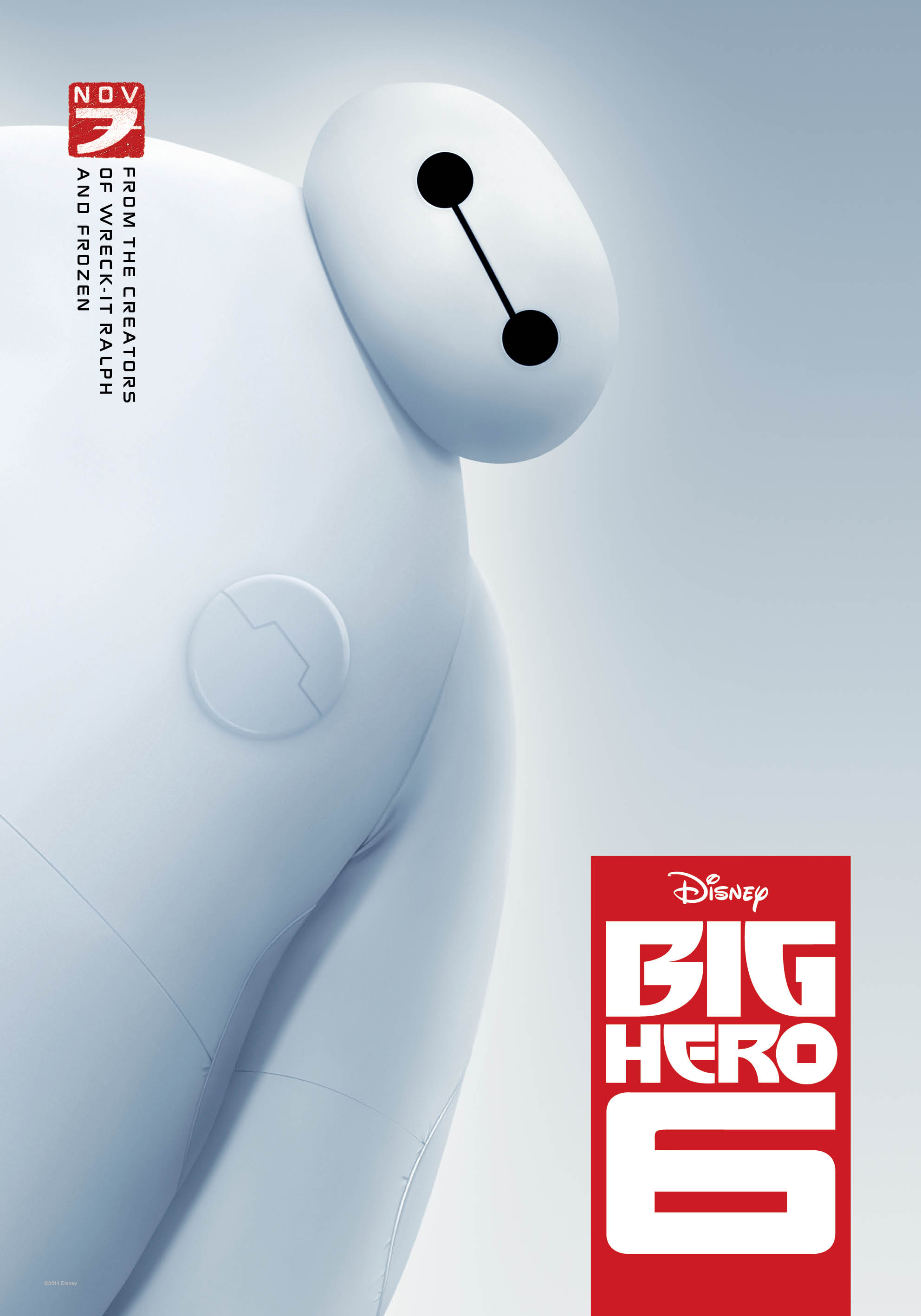 Disney’s first adaptation of a Marvel property, it’s essentially a superhero origin tale mixed in with the “boy and his robot” formula borrowed from The Iron Giant. The story is fairly predictable but charming and unafraid to deal with loss and grief. The real star, though, is the inflatable robot Betamax (voiced by Scott Adsit), whose unfailingly optimistic and helpful nature is a loveable addition to a genre plagued with doom and brooding. The action sequences are colorful and well developed and paced. It’s an agreeable pilot film for a new animated franchise, and the characters are likeable and fun while still having enough emotional resonance to make the hard choices of sacrifice hit you in the gut. It’s a welcome change of pace to have a character interested, first and foremost, in the mental health of others. You just want to hug Betamax (parents, your children will be begging for the toys). The plot does follow many similar plot beats of the superior Iron Giant but this film is still enjoyable enough on its own terms.
Nate’s Grade: B
Share this:

Birdman or (The Unexpected Virtue of Ignorance) (2014)
 Expecting a comedy from Mexican director Alejandro Gonzalez Inarritu would have preposterous. The man was known for his cinema verite of suffering, notably Babel, 21 Grams, Biutiful, and his best film, Amores Perros, roughly translated to Love’s a Bitch. Perhaps there isn’t much of a shift going from tragedy to comedy. Inarritu’s newest film, Birdman or (The Unexpected Virtue of Ignorance), has been wowing critics and audiences alike, building deafening awards buzz for its cast, Iarritu, and the superb cinematography, but will it fly with mainstream audiences? This may be one of the weirdest Oscar front-runners in some time.
Riggan (Michael Keaton) is an actor best known for playing the superhero Birdman in the early 1990s and walking away from the franchise. He’s still haunted by that role (sometimes literally) and struggling to prove himself as an artist. He’s brokered all his money into directing, adapting, and starring in a theatrical version of Raymond Carver’s short story, “What We Talk About When We Talk About Love.” The show is in previews and about to open its run on Broadway but it’s already got a rash of problems. The leading man needs to be replaced immediately. The supposed savior is famous actor Mike (Edward Norton), an undeniably talented but temperamental actor who pushes buttons to find some fleeting semblance of “truth.” Mike’s girlfriend, Lesley (Naomi Watts), is growing tired of his antics and desperate for her own long-delayed big break. Laura (Andrea Riseborough) is Riggan’s “girlfriend” and co-star and may be pregnant. Sam (Emma Stone), Riggan’s personal assistant and also his detached daughter, is fresh from rehab, and spiteful against her neglectful dad. Toss in Riggan’s best friend/manager/play producer (Zach Galifianakis), Riggan’s ex-wife (Amy Ryan), and a feared theater critic (Lindsay Duncan) who is determined to kill Riggan’s show to send a message to the rest of Hollywood polluting the integrity of the theat-tah. Oh, and throughout all this, Riggan hears an ominous voice that alternating encourages him and humiliates him.
 It’s an industry satire, a bizarre comedy, a father/daughter drama, an examination on identity and the complicated pulls of affection and admiration, and a stunning virtuoso technical achievement. As a movie, Birdman is hard to pin down or categorize. It’s a movie that you definitely need to experience on your own rather than have described (don’t stop reading, come back…), and that is a reason enough to see the film, a rare aspect among modern movies. It’s an artistically offbeat movie and yet it ultimately is about one has been actor looking back on his career and coming to terms with his own impact with pop-culture, art, and his family. It’s about a man struggling to find his place in his own life, beset at all odds by doubters and traitors and obstructionists. The refreshing aspect about Riggan is that he’s a has-been but not a sad sack; he’s fighting from the beginning, sometimes pathetically and sometimes in vain, but the man is always fighting to regain his dignity, to reclaim his life’s narrative, and to fight for his legacy. Riggan, after all, set the stage for the modern superhero industry that currently dominates Hollywood bean counters. He was too just soon, and the parallels with Keaton (Batman) are superficially interesting but there’s more of an original character here than a reflection of the actor playing him. He’s neurotic, egotistical, hungry, and fighting for respect, like many actors, and the film flirts with the façades people inhabit. Many of the characters are emotionally needy, desperate for validation wherever they can find it.
Another strength of the film is that it finds a moment for each of its talented ensemble players to shine, chief among them Keaton. The actor hasn’t had a showcase like this in some time and he is a terrific guiding force to hold the entire story together. Whether it’s marching in his tighty whities or working through his complicated degrees of neuroses, Keaton is alive in a way that is electrifying. We see several highs and lows over the course of two hours, some moments making us cheer on Riggan and others making us wince, but he comes across more like a person than just the butt of a joke. It’s also just fun to watch him adopt different acting styles when he steps on stage, including one early on where he’s purposely too stilted. It’s so comforting to watch Norton (The Grand Budapest Hotel) get to be great again, not just good but great. Early on, you see the appeal of Mike, his allure, and Norton keeps pushing the audience, as well as the characters, back and forth with his wealth of talent. Stone (Amazing Spider-Man 2) spends most of the film as the sulky daughter but she gets to uncork one awesomely angry monologue against her loser dad. The thawing father/daughter relationship ends up supplying the film with its only degree of heart. Watts (The Impossible) is comically frazzled for the majority of her time but gets a memorable character beat where she breaks down in tears, realizing her dream of “making it” might never materialize. Riseborough (Oblivion) also has moments where he sadness and vulnerability cut deep. The supporting characters aren’t terribly deep but they all have a moment to standout.
It’s a decidedly offbeat film that dips into the surreal though never dives completely inside. The movie is rather ambiguous about whether or not the fantastical flourishes are a result of Riggan being mentally ill, or at the least overtaxed with stress. Is there really a Birdman or is it a voice in his head, a manifestation of his ego or a ghost to remind him of the past when he was a star? Does Riggan really have the powers he seems to believe he does, including the ability to make objects move with his mind? Innaritu playfully keeps the audience guessing, treating the bizarre in an offhand manner reminiscent of magic realism. The bizarre embellishments blend smoothly with the film’s darkly comic tone. It’s a funny movie but one that you laugh at between clenched teeth.
 Is it all the unblinking camerawork a gimmick? I don’t think so. While the story can engage with its weirdness and surreal unpredictability, the long tracking shots bring a heightened reality to the unreal, they bring a larger sense of awe to the proceedings, watching to see the magic trick pulled off to the end. If anything, it’s an extra thrill to the script and greatly compounds the artistic audaciousness of the film, but I think it also channels the live-wire energy of theater, of watching actors have to walk that tightrope of performance and blocking, weaving together to pull off the ensemble. It makes the film medium feel more like live theater. Thematically I think the style also connects to the anxious mentality of Riggan. In the end, I don’t truly care that much whether it’s a gimmick or not (though I vote it is not) because the camerawork is rapturous. Made to resemble an entire two-hour tracking shot, it is a joyous thrill to watch these technical wizards do their thing, to watch the best in the business perform a visual magic trick over the duration of two hours. Even if you don’t care for the overall movie you can at least be entertained by the imaginative and thoroughly accomplished cinematography by Emmanuel Lubezki, fresh from his Oscar for Gravity and who should be clearing shelf space for the next bushel of awards he’s destined to win with this film. It’s an intoxicating experience to behold, though the film is structured into 10-minute or so chunks for feasibility. If you want to watch a real cinematic magic trick, check out the film Russian Ark, which is an entire movie, performed in one uncut single tracking shot.
I’m still wrestling with the debate over whether Birdman is an artistically ambitious romp or a truly great movie. Much like the characters in the film, I’m wrestling with whether I have confused my admiration with adoration. It’s a movie that I feel compelled to see a second time, and maybe a third, just to get a handle on my overall thoughts and feelings. That may be a sign that Birdman is a film for the ages, or maybe it’s just a sign that it’s not as approachable and denied a higher level of greatness by its obtuseness. Inarritu’s surreal showbiz satire is plenty entertaining, darkly comic, and a technical marvel thanks to the brilliant camerawork. The percussion-heavy musical score is another clever choice, naturally adding more urgency and anxiety to the proceedings. Birdman is a strange and beguiling movie, one that deserves to be seen, needs to be experienced, and stays with you rolling around in your brain. That sounds like a winner to me.
Nate’s Grade: A
Share this:

Lucy (2014)
 If you’re looking for one of the more fun summer movies that have no intention of taking itself seriously at all, might I suggest Lucy, which is one part superhero origin tale and one part wonky French existential drama. It starts off quickly, with the titular character being forced into a being a drug mule. The substance breaks in her bloodstream and the concoction transforms her from meek to a kickass vigilante of science. Lucy can now access far more of her brain’s potential, not just that meager 10 percent we plebs utilize, and who knew that we could all be superheroes if we really put our minds to it? Despite the presence of Morgan Freeman as really a talking head to let us know about the potential of the human brain, none of this really makes any sense, and thankfully the movie doesn’t pretend that it should. Lucy literally gains a new superpower every time we see her, from telekinesis to manipulating radio waves to eventual manipulation of matter and time travel. Yeah, it gets weird, but thankfully it’s also relatively entertaining, funny, fun, and short and sweet at a briskly efficient 90 minutes. The plot doesn’t exactly feel fully developed, more a gallop between events as we charge up the percentages from 10 to 20 to 30 percent, and so on. The criminals don’t seem like much of a threat despite their numbers. I’m shocked nobody assessed what happened to Lucy and said, “Hey, maybe I should ingest this drug into my bloodstream and become a super powerful being too.” While the action is well orchestrated, there is less of it than advertised, as Lucy spends a good amount of time adjusting to her new self-actualized human superiority, played by a detached yet amusing Johansson. I can’t even explain the bonkers ending except to note that maybe there’s a very good reason why human beings were not capable of using a maximum percentage of their brain’s capacity. It doesn’t make much sense but it’s pretty, entertaining with its messiness, and short enough not to waste your precious time.
Nate’s Grade: B
Share this:

Guardians of the Galaxy (2014)
 Who would have guessed that a movie that featured a talking tree and an anthropomorphic raccoon would be one of the best films of the year and one of the top grossing films of the summer? At this point for audiences, the Marvel name can do no wrong, but really it’s the degree of latitude given to Guardians of the Galaxy, an admittedly weird movie with strange characters, that allows this unique film to shine. Attaching offbeat director James Gunn (Super, Slither) to be writer and director was a risk that paid off tremendously, as Guardians is the Marvel film most entrenched with the particular personality of its creative director. This is a gleefully imaginative film that enjoys wading deep into weirdness, dancing to its adventurous Star Wars throwback beat, always with its focus set on comedy but not at the expense of quality drama or character development. Really, the characters are the focus of this entry into the franchise, and Gunn and his actors do a bang-up job of gathering the team and getting you to care about each and every one of them. Each one of these characters has a goal, several payoffs, and each is given their proper attention. In an ordinary superhero film, the archetypes would be ironclad. With Guardians, the tough guy made of muscle can also be a source of unexpected comedy with his literal-minded speech patterns. With Guardians, the talking raccoon can also be an emotionally disturbed victim of genetic experimentation who doesn’t know how to play well with others. These are damaged characters and their formation of an unconventional family unit is deeply satisfying and rather touching. I have seen the film twice and gotten teary-eyed both times. The real star of the film is Chris Pratt (TV’s Parks and Recreation), and what a breakout role he is afforded; he’s like Han Solo’s more juvenile nephew. But like the others, the part is surprising in its depth, with a well of sadness and displacement he still hasn’t processed while he scavenges the galaxy. The plot can be a bit unwieldy at times but pays off better for repeat viewings. This is a world I want to spend far more time exploring and with these characters as my merry prankster guides. With a movie this action-packed, thoroughly entertaining, and gratifying, why come back to Earth?
Nate’s Grade: A
Share this:

X-Men: Days of Future Past (2014)
 Ever since Marvel’s Avengers destroyed the box-office in 2012, every studio with super hero franchises has been looking to follow suit. It’s not just about comic book franchises; it’s about building a comic book universe. It’s been a long dark period for the X-Men ever since the regrettable 2006 debacle The Last Stand, which callously killed characters, butchered others, and botched the most famous storyline in the history of the comic. In 2011, Matthew Vaughn proved there was still life to be found in the franchise with his terrific 60s-era prequel, X-Men: First Class. Now, post-Avengers, Fox is salivating at combining the past X-Men and the present X-Men into one colossal movie with a colossal budget. Back on board is director Bryan Singer, the director of the first two X-Men films and the man who helped kickstart the modern superhero era. If that wasn’t enough riding on the film, X-Men: Days of Future Past also follows the second most famous storyline in the history of the comic.
In the horrible future, killer robots known as Sentinels hunt down mutants. These are the invention of Dr. Boliver Trask (Peter Dinklage), a military scientist who was killed back in 1973 by the vengeful shape-shifting mutant, Mystique (Jennifer Lawrence). The murder convinced humans to subsidize Trask’s killer robot plan of defense. Thanks to experiments replicating Mystique’s mutant ability, the Sentinels have the ability to adapt to any power, turning them practically indestructible. In the future, the Sentinels are eradicating all mutants, mutant sympathizers, and eventually human beings. Magneto (Ian McKellen) and Professor Xavier (Patrick Stewart) have teamed up with a small band of surviving mutants, including Wolverine (Hugh Jackman). Thanks to the phasing powers of Kitty Pryde (Ellen Page), they can send Wolverine’s consciousness back to 1973 so that he can prevent the Trask assassination. The only ones who can help Wolverine is the younger Xavier (James McAvoy) and Magneto (Michael Fassbender), former mentors to Mystique. Except Xavier is a recluse and strung-out on drugs to dull his powers and Magneto is locked away underneath the Pentagon.
 The X-Men films have always had a topical advantage to them that provided a weightier sense of drama than your typical story about a reluctant soul blessed with amazing powers. The mutant allegory automatically applies to any sub-group facing oppression mostly through fear and ignorance. What other superhero franchise has two opening scenes in a German concentration camp? The stakes are even larger with this movie because of the Horrible Nightmare Future that must be prevented. Now we all assume said Nightmare Future will be avoided by film’s end, so the movie provides a proverbial reset button that the filmmakers can have fun with, and they do (look out future mutants). Excluding the Nightmare Future framing device that becomes an unnecessary parallel storyline, the majority of the film takes place in 1973. If X-Men: First Class tapped into the groovy optimism and “take me for what I am” sense of social justice of the time, then this film certainly taps into the disillusionment of the 1970s, where the promise of reform and hope morphed into anger and cynicism (hey, that’s like us today!). This loss of innocence is typified in Mystique, who becomes the central figure of the movie in many ways. Her seething desire for vengeance is what animates her, as well as the pain of betrayal from the men closest in her life, as well as the world who once held such promise. Also, Jennifer Lawrence (The Hunger Games) has become one of the biggest female stars on the planet, so it makes sense to bolster her role. The central conflict is stopping an assassination, one domino that leads to many others, but it’s emotionally about Mystique having to confront her feelings of hate. It’s another platform for the ongoing conflict of perspectives between Xavier (restraint, tolerance) and Magneto (strong defense, eye for an eye). But as I found in First Class, it’s hard not to agree with Magneto as human overreaction leads to rash and thoughtless actions, like Horrible Nightmare Future.
That’s not to say that X-Men: Days of Future Past fails to deliver when it comes to the popcorn thrills and action highs we crave in our finest summer blockbusters. The action set pieces are large without dwarfing the characters, playful and imaginative without losing a sense of edge and danger. I loved how the character Blink (Bingbing Fan) would utilize her mutant power of opening portals as a fighting strategy. It makes action sequences so much more inventive and visually exciting to throw a series of portals. The pacing is swift short of the second half of Act Two, gearing up for the climactic showdown in D.C. that dominates Act Three. The time travel story starts with a lot of exposition but it gets smoothed out as it goes, the rules of the story fall into place. Every action sequence hits, some admittedly better than others, but it’s the small touches that Singer injects that made me smile most. I enjoyed Magneto pointing a gun, being toppled, but still using his power to have the gun fire in midair. I enjoyed the animalistic nature of the Beast/Wolverine brawl. Jackman is looking even veinier than usual in his bulked out form. Thankfully the fish-out of-water timeline jokes are kept to a minimum. Wolverine is the perfect glue to hold both timelines together. And then there’s that standout Pentagon prison break sequence (more on that later). Singer might not have the most natural instincts developing and staging action, but the man is a surefire talent when it comes to staging eye-catching visuals (I would say the same about Christopher Nolan). Even his unfairly maligned Superman Returns is proof of the man’s cinematic gifts. As far as entertainment value, this is right up there with X-Men 2. I still view Vaughn’s savvy First Class as the best X-film of the bunch, which has only gotten better the more I’ve watched it.
 And if that wasn’t enough, Singer’s new film does what every fan has been hoping for: (spoilers) it erases all the crummy X-Men movies, namely 2006’s Last Stand and the first Wolverine solo effort, from the official timeline. It’s time to start anew, toss out the old stuff nobody liked, and forge ahead with a new unified timeline. There can be two parallel X-Men franchises, one present/future and one with the prequel casts, and they can go on forever as desired, or until the prequel cast prices itself out. In one fell swoop, Singer and company have reset the mother franchise and given fans new hope about the possibilities. Make sure to stick around to the very end of the credits for a scene that indicates directly who the next major villain will be in the 2016 sequel.
Let me take time to single out just how expertly Evan Peters (TV’s American Horror Story) steals the entire mutant-heavy movie. First, he’s the most comically attuned character, which is a nice break from how serious, and rightly so, every character is so often. Quicksilver provides a whole new jolt of entertainment, and when he checks out after the prison break sequence you’ll dearly miss him. The character is a rapscallion (as my late grandmother might have termed) that enjoys using his super speed powers to mess with people, to test his limits, to see what he can get away with, and a Pentagon jailbreak is right up his alley. Ignore the silly yet period appropriate outfit and ignore what initially seems like Peters’ smirking self-involvement from trailers and ads. When this character is onscreen the movie has a joyful sense of irreverence. He is instrumental to freeing Magneto and the onscreen depiction of his super speed is the best illustration of the power ever conceived in film and TV. There is a segment sent to Jim Croce’s “Time in a Bottle,” and some wonderful special effects, which is just so playful, so giddy, and so cool that it very well might be my favorite moment in any superhero movie… ever. It is definitely an applause-worthy moment and my audience responded in kind. Quicksilver is a perfectly utilized supporting player in a movie stuffed to the gills with characters.
The time travel geek in me has a few quibbles with the parallel lines of action from past and present. Wolverine’s consciousness is sent back in time but he film plays out like it’s happening simultaneously to the events of the future. So if Wolverine is pulled out in the middle of the movie, he’ll have failed his mission to change the future, even though by going back in time he’s already, blah blah blah butterfly effect. Anyway, I understand how they want to make the future story have a sense of urgency but it’s not like waking Wolverine from a dream; the times are not happening concurrently. He’s in the past, meaning that the moment he goes back there, the future will already be altered due to the consequences of his actions, for better or worse. There is no race against time to keep his consciousness back in time until he complete his mission. I can see why they went this route for a summer blockbuster, but that doesn’t quell the quibbles.
 X-Men: Days of Future Past is a time-hopping, unabashedly fun time at the movies; well as fun as preventing nightmarish futures built from the consequences of oppression and prejudice can be. With Singer back in the saddle and the bridging of the two X-Men universes, the series is back on track and once again the promising font of stories and characters. The newest X-film is one of the most entertaining, funny while still being dramatic, and while burdened with the largest cast of any super franchise, finds notable moments for its characters big and small to remind us that these people matter. While less philosophical and funky than First Class, this is one of the best films in the franchise, on par with X2. The action sequences and visual eye-candy are great fun with some inventive and memorable touches. It’s also nerdy fun getting to watch the past and present interact, and for many this is their first return since 2006’s crappy Last Stand. It’s not a perfect movie; I wish there was more early Sentinel action, I wish Dinklage had much more to do, and I wish that the plot didn’t so transparently hinge on Xavier not having his powers. The slate is clean and all X-Men fans can breathe a sigh of relief. The future is once again rosy. The X-Men, and not just Wolverine, are relevant once again.
Nate’s Grade: B+
Share this:

Captain America: The Winter Soldier (2014)
 A welcome addition to the Marvel Cinematic Universe, the second Captain America film brings the square superhero to our modern-day and presents a complicated national setting where the enemy is the U.S government. The challenge with a Captain America (played by Chris Evans) movie is just how outdated his whole sensibility seems, an irony-free nationalistic hero. Smartly, the filmmakers have pushed his loyalties to the test, and the movie transforms into something along the lines of a Jason Bourne thriller, where the government is hunting down a rogue fugitive. It’s certainly the most timely superhero film since 2008’s The Dark Knight, and the political commentary on the NSA spying and drones is a welcome big screen subversion. But the action is still what people come for and in that the Winter Soldier is quite an entertaining movie. Directed by the Russo brothers, known mostly for their comedy work in TV like Community, the movie packs quite a punch with a variety of action/thriller sequences, each well staged and well developed. My favorite might be Nick Fury under assault and desperate to escape in his car from overwhelming enemy forces. An opening sequence rescuing hostages on a boat serves as a great reminder why Captain America is indeed so super. The movie does have some issues but nothing so large as to derail the enjoyment. First off the villain is way too obvious, but also the movie lets the U.S. government off the hook, falling back on a select evil group that has been undercover perverting the government. Secondly, the Winter Soldier of the title is one plotline that doesn’t feel needed or well integrated. It’s another super soldier for Cap to combat and this guy has a mysterious link to our hero. It feels like one plotline too many, a story that deserves better attention on its own. Still, Captain America: The Winter Soldier is an engaging, thrilling, intelligent, and altogether entertaining addition into Marvel’s sprawling cinematic canvas.
Nate’s Grade: B+
Share this:

The LEGO Movie (2014)
 Highly creative, cheeky, frenetic, and bursting with visual splendor, The LEGO Movie will likely surpass all expectations you had for what was assumed a 90-minute LEGO commercial. I cannot even tell if it’s actually a commercial or a subversive consumerist satire, or perhaps a blending of both. Writer/directors Phil Lord and Christopher Miller take their same anarchic, comic rambunctious absurdity exhibited in Cloudy with a Chance of Meatballs and 21 Jump Street and produce another movie so fast-paced, so freewheeling in energy, and so comically alive that you feel rejuvenated by the end. These are gentlemen who fully know the storytelling power with animation and they create worlds that are astounding to watch. While completely computer generated, the world looks like it was stop-motion. In fact, the detail that everything in the physical world is made of LEGOs was a nice touch, including fire, water, and smoke. The story of an unremarkable guy (slyly stupidly voiced by Chris Pratt) mistaken for The One, and the complications that arise, is a fitting satire of superhero fantasy mythos filmmaking. The social commentary on conformity and the media is cutting without distracting from the plot’s ongoing mission. The characters are fun, the jokes land assuredly, and the action sequences are mesmerizing. But then it takes a meta turn in the third act that gives the movie a whole other prism that helps define its previous outrageousness while leading to a poignant message about the inclusiveness of play. It’s a movie that celebrates imagination and individuality, and while it will more than likely also sell a crapload of toys, it’s an animated film with more on its mind. To paraphrase the top radio hit in the world of LEGOS, everything is just enough awesome.
Nate’s Grade: A-


 nathanzoebl
You must be logged in to post a comment.