Blog Archives
Children of Men (2006)
 Alfonso Cuaron is a master filmmaker and a gifted storyteller. He excels at telling entertaining stories whether they be about kids or adults. His Harry Potter film is still the most watchable and imaginative, and his earlier children’s movie, 1995’s A Little Princess, has enough power to still get me misty. Even when Cuaron sets his sights on a sex comedy (Y Tu Mama Tambien) he can’t help but turn it into an affecting art movie. This man just knows how to tell a good story. Children of Men, a bleak science fiction thriller, is just the latest example of how effortless Cuaron makes it all blissfully appear.
In the year 2027, and the world is on the brink of annihilation. It’s not plague or rampant warfare that are the obvious culprits. The reason for mankind’s end is something more natural and depressing — women have stopped being able to make babies. England seems to be the lone country with some fraction of stability. Illegal immigrants are rounded up and housed in refugee camps for deportation. Cages full of crying and pleading foreigners are on many street corners. In a world of danger and hopelessness, always count on the kindness of xenophobia.
Theo (Clive Owen) is a bureaucrat that combats the future with cynicism. He can barely escape getting blown up for his morning coffee. Theo used to be an activist and married to Julian (Julianne Moore), the current leader of the Fishies, deemed a terrorist group by those in power. She finds him and asks for one last favor. Her people need transit papers to get Kee (Claire-Hope Ashitey), a refugee, and Miriam (Pam Ferris), a former mid-wife, to safety. Then Theo discovers the importance of his assistance. Kee is eight months pregnant. The government would never admit that that the first baby in 18 years belongs to a refugee, and political groups would like to use Kee and her baby as a rallying point for an uprising. But first Theo must get her out of harm’s way.
 The idea of a world of infertile women is fascinating and full of big questions. This dystopian future must confront its own mortality in a very real way. Theo asks a friend hoarding classic art why he bothers. There will be no one alive in 100 years to even see them. Miriam says strange and heartbreaking things happen to a world that forgets the sound of children’s voices. Plenty of heady discussion is generated from a premise that affects every person on the planet. Why can’t women have babies? No explanation is given and none would seem credible. A religious faction believes this is the punishment of a vengeful God. People forget what babies even look like and what is commonly done for their care. The film also has a stark and timely portrait about the treatment of illegal immigrants. Children of Men is an intellectually stimulating movie that never rubs your nose in it. It trusts the intellect of the audience enough to leave many unanswered questions left to chew over and debate long after the movie ends.
The answers Children of Men finds seem reasonable and appropriate. Home suicide products exist for people that want to take back some control over their life, or at the least, are sick of waiting for the even more inevitable. It also seems entirely likely that this future world would turn the youngest living person (“Baby Diego” at 18-years-old) into a celebrity worthy of incredible mourning upon his untimely demise. These coping elements feel dead-on and only enhance the realistic tone of the film.
The film is a beguiling think piece but it also succeeds magnificently as a straightforward thriller. The majority of the second half is built around chase scenes and navigating to perilous outposts of safety that eventual crumble. Cuaron has a dizzying sense of believability as he puts together his world, and his roving camera feels like an embedded reporter on the front lines of chaos. The gorgeous cinematography and realistic set design contribute to the visceral sensation Cuaron sets alive with his visuals. There are long stretches where the camera continues rolling for nine minutes uninterrupted. I was left spellbound and felt trapped in this world just like the people onscreen. I was also wondering how much planning it took to coordinate and choreograph these long takes.
There are two very memorable scenes to quicken the pulse and both of them involve Cuaron’s mobile unblinking camera. The first involves a car chase perhaps unlike any I’ve ever seen before. Theo is leading an escape at dawn and robs the other cars of their keys. However, his own escape car refuses to start and the bad guys take notice. The sequence seems to last forever as Theo is forced to literally roll the car down a hill to outrun his pursuers who continually catch up with him. The second sequence follows Theo making his way through a refuge camp in the midst of a violent uprising being put down by heavily armored government troops. We watch every excruciating second of his survival as he navigates past gunfire, tanks outside a hotel, and then climbs through the different levels of the hotel being bombarded until we see, at a distance, where Theo’s trek all began. Exhilarating might just be the best word to describe Children of Men.
 But nothing feels cheap or too sentimental in this world. This is a harsh and dark world where anything can happen, so the audience is left in constant peril worrying about the fates of every person onscreen. Like Casablanca, it strips away idealized notions of bravery and duty and just shows humanity for what it is and what it can be. That is gutsy but then that’s Cuaron as a filmmaker.
Speaking of Casablanca, Owen seems like a modern-day Bogart in this role. He’s ruggedly good looking but also a sly charmer. I’ve stated before my undying man-crush on Owen and Children of Men has only added to it. Owen has a remarkable way of playing detached but still noble and conflicted. He has the best slow burn in movies. The moments of wonder for him become our moments of wonder and worry. The rest of the actors appear in limited functions but provide good work. Michael Caine practically steals the movie as a crude yet philosophical hippie.
This is science fiction at its best. Children of Men is stark and realistic and truly immersive; you really feel like a member of this tumultuous future. It works simultaneously as a thought-provoking what-if scenario and as an exciting thriller. Simply put, this is a highly engrossing movie that separates itself from the pack. Cuaron has created a disquieting and entertaining sci-fi think piece that succeeds on its numerous merits. I knew half way into the movie that the newly minted wife, Mrs. Me, was only going to want a baby more from what we were watching. At least she now has a new argument: “It’s for the good of humanity.”
Nate’s Grade: A
Share this:

Pan’s Labyrinth (2006)
 Fantasy has a naturally cheerful tone. Someone did not tell that to Mexican writer/director Guillermo del Toro. The Hellboy director is obsessed with all things creepy, crawly, and gooey, and his films all seem to revel in the things that go squish in the night. Pan’s Labyrinth is a children’s tale not intended for children. It’s more in line with the fairy tales of old that were violent, sickening, and something to strike fear in disobedient kids.
Ofelia (Ivana Baquero) travels with her pregnant mother to live in a cottage along the Spanish countryside. Her mother has remarried The Captain (Sergi Lopez), a brutal officer in the ruling fascist government. He’s a stern and unforgiving man and plotting to eliminate the remaining scattered resistance soldiers. Ofelia discovers a series of stone stairs that lead to an underground labyrinth. Inside is a faun (the titular Pan) who recognizes the spirit of his world’s missing princess inside Ofelia. He gives her tasks to complete that will prove whether or not she can return to the other world.
This is a fabulously dark Alice in Wonderland for a more mature set. Pan’s Labyrinth is very similar to del Toro’s 2002 The Devil’s Backbone, a smart and affecting ghost story set against Spain’s bloody civil war. del Toro has set his supernatural fantasies against some very real and very dangerous backdrops. The Devil’s Backbone was more than just a ghost story, and now Pan’s Labyrinth is more than just a fairy tale. The real world is a violent and cruel place and worthy of a magical escape. However, the fairy tale creatures are not from the Disney school of kinder, gentler folklore. The faun is evasive and prone to outbursts when he/it does not get his hooved way. The other creatures, like a giant slimy toad, are all after their own gain and don’t much care for a little girl’s interference. There is no escape to safety.
 There are plenty of staples commonly found in fairy tales. Ofelia has to complete three tasks before the cycle of the moon. She has to complete trials of courage and prove her purity of heart. The characters look familiar but they definitely don?t behave the same. Pan’s Labyrinth has a continuing sense of dread. People die vicious deaths and the threat of violence is ever present.
The real world segments are just as engaging as the grander flights of fantasy. del Toro spins a very worthy tale of secrecy and suspicion at the dawn of Franco’s Spain. Several members of The Captain’s quarters are aiding the remaining resistance officers and risking their lives to hide their allegiance. It also draws the viewer in because these characters are the kind ones that look after Ofelia, who accidentally stumbles upon their secrets. The Captain is an earthly monster equal to the horrors of the fairy tale world. He has a deadly fixation with wasted time and punctuality (another Alice in Wonderland homage – the ticking pocket watch). Whether he’s torturing or shaving, the man seems peeved in all that he does. He tells the doctor that if a choice must be made, save the baby over the mother. His legacy demands an heir.
del Toro straddles differing genre lines like few artists out there. He has a great love for monster movies and horror but he also has great feel for human drama and a child’s wide-eyed point of view. Ofelia rests her head on her mother’s pregnant belly and speaks to her unborn brother. When her mother is experiencing complications she implores her brother to be gentle. It’s a little action but comes across as so honest and heartfelt from a child. The film is touching and exciting and pretty scary when it wants to be. Pan’s Labyrinth is a genre-bending gem that?s exceptionally well executed. The production design and make-up effects are terrific and lend to the otherworldly feel. The special effects are mostly a mix of practical designs and creepy make-up work, especially with the “Pale Man.” I especially enjoyed how the fawn moved and sounded, all clicks and creaks like he hadn’t moved his bones in ages. del Toro and his movie magicians do an excellent job of transporting you to two distinct worlds.
I could have used more labyrinth in my Pan’s Labyrinth. As it stands, the movie is divided as 15% fantasy world and 85% real world. That?s not enough for me. Maybe I just loved the fantasy elements too much or was expecting more of a live-action Spirited Away. Then again, del Toro has his mind set on an ambiguous ending that will divide the skeptics from the believers. Are there opposing worlds? Is Ofelia just making it up to escape reality? Whether what’s happening is real or not is irrelevant; Ofelia believes it is real. I feel that the movie could have been even greater had it utilized its fantasy side more.
 Take for instance the “Pale Man,” a grotesque monster that has to place its eyeballs in the palms of its hands to see. When Ofelia enters his realm its covered in ancient art showing this faceless creature devouring children. A giant pile of shoes sits in a corner as a constant reminder of the creature’s appetites. However, the creature sits at the head of a table motionless, unless some irresponsible child takes a bite from the illustrious feast of food at the table. Then the “Pale Man” springs to life. The imagery is horrifying but beautifully sickening, and it’s just too regrettable that Pan’s Labyrinth only gives such a memorable monster one single scene. I kept hoping that the movie would revisit the world it had begun establishing, all for not. I thought at least del Toro would have a fascist officer chasing after Ofelia and she would trace a portal back into the “Pale Man’s” world. Then she would escape but the officer would be trapped. He’s take a bite from the feast and then our occularly-challenged friend would go, “Well, you’re a little older than I like, but hey, beggars can’t be choosers.” CRUNCH! You must judge a movie for what it is, not what it could be, but I am certain Pan’s Labyrinth would have been even more remarkable had it just done more with its wild imagination. Oh well.
2006 has been something of a revelatory year for Mexican directors working within the Hollywood system. Alejandro Gonzalez Inarritu released Babel (bleh); Alfonso Curaon released Children of Men (wonderful), and now del Toro’s dark fantasy Pan’s Labyrinth is just starting to get a wider release. The film straddles the lines of genre, touching upon horror, human drama, fairy tale, historical action, and still finds time to be invigorating and moving. The production design and make-up effects do wonders to bring del Toro’s mordant imagination to chilling life. del Toro reigns supreme in the realm of sticky and icky things. Had the film actually spent more time interacting with its twisted fantasy creatures, I would gladly call Pan’s Labyrinth the best film of 2006. But alas we can’t all have our wishes comes true no matter how many fauns we encounter.
Nate’s Grade: A
Share this:

Babel (2006)/ Blood Diamond (2006)
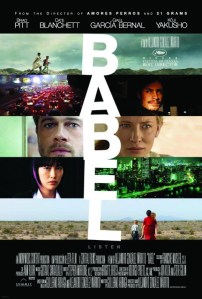 The world is a global community. It is increasingly difficult to shut out unpleasant news just because it happens to an unfortunate few we’ll never know. Hollywood has reminded us through the years that our actions do have sound repercussions, including our indifference. Babel is Mexican-director Alejandro Gonzalez Inarritu’s examination on the fragility of human relationships in the world. Blood Diamond wishes to shine the spotlight on America’s love of diamonds fanning the flames of genocide in Africa. Both movies wish to convince the public that they matter, and not just in box-office, though that would be appreciated. Both of these films have good intentions but the results are sloppy and leaden.
In typical Inarritu fashion, the different storylines of Babel converge, blend, criss-cross, and crash together. The timeline isn’t as disruptive as it was in 21 Grams, so that is a welcome relief. The storylines offer wide-eyed views into different worlds and cultures. A Morocco goat herder purchases a riffle for his sons to protect the herd. The two brothers turn sharp-shooting into a competition, with the one betting the other he cannot hit a bus far in the distance. On that bus is Richard (Brad Pitt) and Susan (Cate Blanchett), a married couple at odds with each other. Suddenly a shot whizzes through the window and into Susan’s neck. Richard panics and struggles with his options being far removed from advanced medical care and being unable to speak with the natives.
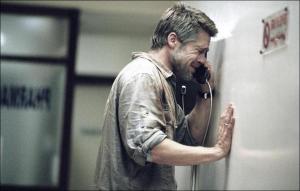 The incident becomes the shot heard round the world. The U.S. government is quick to suggest a terrorist link (who didn’t see that one coming?) but caught up in red tape to rescue the couple. Their nanny, Amelia (Adriana Barraza), cannot find someone to watch the kids so she can attend her son’s wedding in Mexico. Santiago (Gael Garcia Bernal) agrees to drive her and the kids south of the border where the blonde moffetts can learn things like how to kill a chicken. Things take a sour note when reentering the United States at a border crossing manned by suspicious patrolmen.
And half a world away, a deaf-mute Japanese schoolgirl (Rinko Kikuchi) deals in the aftermath of her mother’s suicide by flashing her vagina at boys and throwing herself at older men. Therapy might also be a workable alternative.
The strong ensemble acting is what kept me watching. Babel is filled with many talented actors that each get a turn to look pained, incredulous, and helpless. This is a movie primarily built around sadness and misfortune, and actors jump at those chances. Exhibit A: Brad Pitt. I’ve always thought his serious acting credentials get cast aside because of his good looks (the man even played a Greek god), but he’s into his 40s now and weathering some grown-up gray and wrinkles that, I don’t know how, add a mature sexiness to the man, much like George Clooney. Pitt was serviceable in Babel but failed to impress. He gets to pace a lot and look haggard but he still seems like a distant character. The whole American tourist storyline cannot outrun the sense of pointlessness it seems to be circling. The greatest moments of acting come from the extreme anxiety of Barraza and the dissatisfied yearning of Kikuchi. I expect both women to get nominated for many awards.
The most frustrating aspect of Babel is how little it matters. It’s hard to connect with the characters. And in the end, nothing all that tragic happens to reach anything profound. Most characters leave their shadowy places and only a small number are changed for the worst, mostly the victims of some very bad decision making. But when the movie concludes there is only one dead body and one displaced person. That’s it, and Babel doesn’t even hang on to let us feel that pain. It just skips from story to story never settling in and never evoking any human emotion except for that of morbid curiosity. These people are victims of fate and not much else. Babel is a letdown of a letdown.
 The Japanese schoolgirl storyline has no place in this film. The other three storylines all have a pertinent relationship, but the only thing that ties the schoolgirl into this web of international kerfuffle is that her father once owned the gun in question. Wow. It might have made better drama, and more sense, had this riffle had some significance, like it was the weapon of choice for her suicidal mother. Nope, it’s just another object with no more bearing to this family than a stapler. I think the deaf-mute Japanese schoolgirl is a terrific character and intensely intriguing, especially as she battles the trials of teenage life and feeling like even more of an outcast than usual, but this story needs its own separate movie. It has no business being here and, like much of Babel, adds little understanding or significance. So much of the movie isn’t even told to the audience, like character back-stories and written catharsis, so any distraction feels like a waste of time for a 140-minute movie.
The ending is symptomatic of the film in general; it just kind of peters out and thinks its message has been well-received. What message? What the hell is Babel saying? Stop, look, and listen? The world stage is at such a precarious time and is, for better or worse, unified; someone else’s problem has ripples that will become our problem. Isolationism is dead. But Babel squanders any attempts at a deeper message by playing it safe; never pushing further than the scene descriptions it has confined itself to. The title refers to the Biblical story where God punished man’s arrogance by creating multiple languages. Most of the conflicts revolve around communication issues, but they really only seem like a small portion of the story. When Amelia takes the kids to Mexico, there really aren’t any communication problems. When the car is stopped by the Border Patrol there aren’t any slip-ups in communication, but Santiago freaks out and bolts. The central idea of Babel, lost communication, never really feels properly executed except with the Japanese schoolgirl, who, like I said, doesn’t even belong here.
When Babel does have something political to dwell upon it is usually very lazy. Law enforcement treats illegal immigrants like crap. The U.S. government is more interested in punishing perceived threats than medically helping those in need. American tourists are boorish and see dusty places like Morocco as a place to be alone, despite all the impoverished people shuffling about. Give me a break. There’s nothing within Babel that makes it worth more than one viewing. Once you know the outcome for characters than the film ceases to have a point. This is a true surprise and disappointment from the team that had so much emotional vitality and open humanity with Amores Perros and 21 Grams. I guess a lot must have gotten lot in translation.
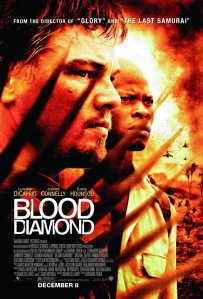 On the flip side, while Babel is a mildly interesting movie desperately needing a message, Blood Diamond is a message in desperate need of an interesting movie. The message rings loud and clear in the film?s opening moments: conflict diamonds are bad. They account for 15 percent of all diamond sales and help finance genocide, civil war, and child brainwashing in Africa. The diamond industry says they cannot decipher which diamonds are which, but come on, they know. They use their market share to control world prices, thus creating a windfall for African rebels. They come up with more diamonds, and the diamond industry purchases them to take them off the market. Got it. But now what?
The short answer is, “‘Just say no’ to conflict diamonds, that is.” The long answer is one very trite movie that wears its liberal idealism on its sleeve with a bit too much fondness. Africa has become the cause celebre of recent films, but have any of them really made a difference? Did The Constant Gardener make us think twice about why drugs are so cheap (because Africans are exploited)? Did Syriana make us think twice why oil was comparatively cheap for Americans (because Africans AND Middle Easterners are exploited)? I doubt it. I may sound a pinch too cynical but I believe that the Unites States of America just generally doesn’t care as long as prices stay nice and low. I applaud filmmakers for attempting to open eyes and change hearts and minds, especially for many thought-provoking and worthy causes. But if you’re going to sponsor a message movie than you need a spoonful of sugar to help the medicine go down.
 Blood Diamond will make you gag, that’s how heavy the message is. It displays a depressing showcase of Africa recycling violence, but it always manages to stay on point. The movie is supposed to be concerned with the well being of Africa, but yet it hangs its attention on a pair of white people. Danny (Leonardo DiCaprio) is a South African diamond smuggler who gets the classic Hollywood redemption arc, courtesy of Solomon (Djimon Hounsou) an enslaved mine-worker that has found a pink diamond the size of a bird egg. Danny and Solomon form a reluctant partnership to get recover the diamond, rescue Solomon’s lost son, and get everyone out of the raging gunfire. But the film is focused on Danny’s arc as he goes from scoundrel to savior, with all those black faces in the background just becoming that — background. The film’s climax involves Danny running through a mining camp looking to rescue Solomon’s lost son. However, Danny shoots and kills all the other kids holding weapons as he dances in between explosions. You cannot root for that as a moral audience member, can you? Danny may save one child but he’ll blow away all the rest, and to the pounding score of Hollywood glory. If this was meant to seem meditative than God help us all.
Jennifer Connelly plays a photo journalist that?s a self-described action junkie. She says she just can’t go through her day sipping lattes and reading Ziggy in the funny papers, not with knowing how cruel the world is to one another. Did she just become aware of this? The world has always had people getting treated poorly and will forever. Her character is an outlet to the Western world, a lens that can capture and broadcast the horrors of Africa which she flippantly predicts will be a minute on CNN “between sports and weather.” She’s your prototypical bleeding heart and the not-so-subtle outlet for the righteous indignation of the filmmakers. There’s nothing to her character except a camera for proof, an unyielding moral compass, and a pair of breasts for Danny to improbably snuggle up to.
 The message of Blood Diamond is what we’re reminded of time and again, including tidbits to clue us in on how it all began (where did Africa learn some brutality? Why white colonists of course). The movie is built as an action vehicle, but it’s an action vehicle going in the wrong direction. The bursts of action are frequent but never anything well imagined or exciting. Usually the film follows two, or more, characters talking and then they’re interrupted by bouts of gunfire. Danny starts uttering “GO!” and “MOVE!” every other breath and they escape. This formula is repeated for the rest of the movie. It hampers getting to know and feel for the characters and sure as hell doesn’t amount to a lot of interesting action. There’s the main problem: we can’t feel for the characters because the movie doesn’t spend enough time with them, and yet we can’t get excited because the movie doesn’t spend enough time to build effective suspense. Blood Diamond finds its way into a balancing act it is hopelessly ill-prepared for.
Director Edward Zwick (Glory, The Last Samurai) is used to fashioning mass-friendly entertainment with cultural issues bubbling to the surface. Perhaps, though, he should have taken a cue from Andrew Niccol’s Lord of War. That film had an easily identifiable message (guns can be bad) but found ways to engage an audience. It had a lot of political ire and troubling statistics to dish, but Niccol knew that an audience must be entertained first and foremost. He found inventive camera angles, stirring monologues, and fascinating true-life anecdotes about arms trading. The main character wasn’t likeable but you just wanted a longer peek into this world behind the curtain. Blood Diamond lacks the biting insights that made Lord of War powerful and enjoyable. Even Lord of War handled the subject of turning children into a blood-thirsty army better. Zwick seems adrift and too close to his message to care about sharpening a good movie.
The movie has a handful of odd moments. In our introduction to Danny he is negotiating a weapons deal. He speaks to the head of a militia in a highly accented speech and subtitles pop up on the screen. Naturally, you would assume the language currently being spoken is not English. Danny is actually just impersonating an African’s English speaking voice. If you listen to what they’re saying they speak English the entire time. And the line, “In America, it’s bling-bling, but over here it’s bling-bang?” No. A thousand times no.
 DiCaprio is muscling his way into a riveting and meaty actor of prominence. His accent is near flawless, just like his Bah-stun accent was in The Departed. He gives more simmer to his role than deserved. Hounsou is a great actor but his most emotive scenes involve a lot of yelling that just seems like yelling. A lot of high-volume yelling doesn’t work when the character is so flimsy. Both of these actors are victims of playing characters with little else to them besides the title of Victim and Victimizer. Connelly and DiCaprio have no chemistry to them, not that the film’s neutered sensuality and agitated story help much. It’s as if Blood Diamond expects that by smashing the two characters together long enough their romance will be plausible. It isn’t. The romance is a distraction at best and eye-rolling at worst.
Babel and Blood Diamond are both pieces of misguided Oscar-bait. Innaritu and his writer for three films, Guillermo Arriaga, have said to have clashed since Babel‘s release and may no longer work again together in the near future. I welcome this trial separation because their film collaborations seem to be dulling. Babel has all the technical skills evident in 21 Grams and Amores Perros, but nothing substantial or contemplative. Conversely, Blood Diamond is a message movie posing as an action flick. It can’t succeed with poorly constructed action sequences and archetypal characters posing as openings for outrage and shameful finger-wagging. The movie is crushed to death by a message. Blood Diamond is a message movie that’s so weighted down it never gets very far. Both films are marginally interesting but nothing transcendent or demanding. Hollywood has its heart in the right place. They just need to make better movies.
Nate’s Grades:
Babel: B-
Blood Diamond: C
Share this:

The Departed (2006)
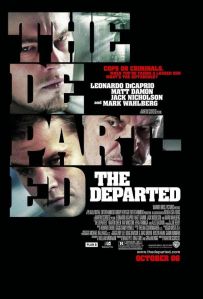 “I don’t want to be a product of my environment,” growls Frank Costello (Jack Nicholson) in the opening seconds of The Departed. “I want my environment to be a product of me.” Without question, the filmmaker that has shaped the environment of movies more than any other in the last 30 years is Martin Scorsese. No one does the cops-and-robbers territory better than Scorsese, and it’s great to have him back on familiar turf. It’s not that Gangs of New York and The Aviator were lacking in directorial skill, it’s just that they felt so labored and reeking of classy awards envy. With The Departed, it all feels so artistically effortless, like Scorsese settled in a zone of brilliant filmmaking. I just hope Marty bangs out more of these excellent gangster flicks before trying again to woo Oscar. In fact, his return to his violent stomping grounds might finally be his long-overdue ticket to the winner’s circle.
The premise is appealingly simple. The Boston State Police Department is desperate to nail local crime lord Costello. They pluck a young recruit, William Costigan (Leonardo DiCaprio), who has a shady family history of small-time crooks. He agrees to infiltrate Costello’s mob and report back to the Boston PD. To make is situation credible, Costigan is expelled from the force and sent to prison to earn a rep. Only two other people know Cosigan’s real identity, the police chief (Martin Sheen) and the head of undercover work (Mark Wahlberg). On the other side of the law, Costello has a mole all his own working inside the Boston State police force. Colin Sullivan (Matt Damon) has quickly risen through the ranks and has a prime position working with the state?s FBI crack force. He’s also an acolyte of Costello’s ever since he was a young Southie kid seeing the draw of power. Now full grown, Sullivan tips Costello and tries to redirect the ongoing investigation to bring the man to justice.
 The real sparks come when both moles try to discover the identity of the other, without compromising their own precarious identities.
The Departed is a bruising, bristling return to form for Martin Scorsese and his most entertaining film since his last Great Movie, 1990’s gangster-rific Goodfellas. This is a movie that crams multiple characters, storylines, and histories into one tight, focused setting, but then the flick glides smoothly on electric storytelling and intense performances. The movie’s twists and turns are, at times, of a knockout variety, and there’s a stretch of late surprises that each feels like a shot to the gut. I was possibly winded from gasping so hard. This is a film so fantastically alive with feeling and vigor that you cannot help but get ensnared. It sets up all the players and back-story before we even get the opening titles set to the blaring wails of the Dropkick Murphies. The thrills are real because we feel the danger, and the onslaught of brutal violence is another rhythmic piece in Scorsese’s masterful conduction. Adding to the feeling is the sure-handed, quick-fire editing of longtime Scorsese collaborator Thelma Schoonmaker and the ominous cinematography of Michael Ballhaus. Even though this film is based on a 2002 Hong Kong film, Scorsese has firmly made The Departed a movie all its own in spirit and personality. No one so easily brings us into the sordid lives of criminals better than this man, who, when in that creative zone of his, brings such palpable energy to his melding of image, song, and consequence, that the results are simply intoxicating. The Departed reminds you why Scorsese is still our greatest living director, no matter what Oscar thinks.
What elevates The Departed from the clutter of other macho men-with-guns crime capers is its studious attention to character. This is a film that works beyond a concept. The movie’s central moral theme is the price of identity. Frank opens the film asking what does it matter who’s holding the gun to your head, cop or crook. Costigan is tormented from wearing too many faces. He’s having trouble justifying his deeds and actions and is scared he may lose his own soul at the price of his lost identity. Sullivan, on the other hand, has gladly sold his own soul for a pittance. He’s a class conscience yuppie that craves power and will cut any throat if it gets him ahead. The movie steamrolls ahead with intrigue but it’s our connections to these characters that elevate the life-and-death stakes. You have a real emotional investment in this story, therefore when things get murky you really feel the danger. My heart was racing with excitement and dread. There may still be impressions from where I was squeezing the movie chair.
 Complimenting these complex characters are brilliant performances. DiCaprio may have been nominated for a Best Actor Oscar for his second Scorsese collaboration, The Aviator, but he turns in his strongest work here. DiCaprio expertly bares a gnawing moral conflict with equal parts desperation and the hunger to do good. He’s trying to finally do right and step out of his family’s criminal past, and DiCaprio brings sharp intensity to this plight. You really feel every stomach churn this guy goes through to do what he does and stay alive. I knocked the boy for being too boyish a gangster in Gangs of New York, and let me say I take back my words. On the flip side, Damon utilizes his angelic, choirboy good looks and masterfully downplays his character’s pragmatic villainy. The character has to hide so much from the outside world, be it the police, his true bosses, his girlfriend, and even himself. Damon goes about his deceitful business with slickly sick ease, tapping a killer’s instinct for self-preservation. You may shudder from how methodically cold and manipulative he comes across. He’s a mesmerizing rat bastard of a human being and yet Damon presents an almost seductive portrait of evil.
Nicholson is equally good though at times can be a distraction to the storytelling. There are a handful of moments where Nicholson seems to go too far off the page, indulging his crazier tendencies. Costello is supposed to be a scary, unpredictable, potentially unhinged man, and Scorsese has plenty of moments that bring home this point. It just feels inappropriate then for Nicholson to, in a few small moments, transform into a goofy cartoon. With that said, it’s great to see Nicholson cracking some heads for Scorsese. He has devilish fun and is insanely watchable while definitely going for broke. After some nice guy roles it’s nice to have back an unrestrained Nicholson to play the film’s abyss of evil.
 The collected supporting players all leave some mark. Baldwin and Wahlerg are perfectly profane hardass characters that you warm up to. Sheen, free from the Oval Office, displays nice touches of weariness and, in one moment, practically breaks my heart with his brave resignation. Breaking up this boy’s club is Vera Farmiga (Running Scared) as a somewhat contrived plot point to connect Costigan and Sullivan as the police shrink to one and the girlfriend to the other. There’s a perceived sadness to her willowy eyes and slender face that she plays to great effect. She?s a captivating new face and gives an extra ladling of emotion to the tale.
It’s been over a week since I’ve seen the movie and I still can’t get it out of my head. There are only a handful of flaws that separates The Departed from Scorsese’s rich pantheon of mythically Great Movies. This is a complex, gritty, amazing crime thriller stuffed to the gills with entertainment. Making the bloody body count resonate are the incredibly intense performances, particularly Damon and DiCaprio. This is a gripping gangster thriller pumping with the blood of a sterling character piece. The unexpected twists and turns will shake you, and the movie goes well beyond a snappy premise. The Departed is a moviegoing experience that will thrill you, stir you, sadden you, exhilarate you, and firmly plant itself in your memory banks. Welcome back Marty.
Nate’s Grade: A
Share this:

An Inconvenient Truth (2006)
 Al Gore is possibly the least likely movie star in the history of movies. The former Vice President and 2000 presidential candidate has been making the scene with An Inconvenient Truth, a potent documentary warning about the impending perils of global warming. Gore has traveled all over the globe giving a well-honed Power Point presentation on the topic. An Inconvenient Truth is a 90-minute big screen version of this presentation. Consider it more concert film than documentary. An Inconvenient Truth is equal parts spellbinding and terrifying. Best of all, it’s that rare film that could quite honestly change the world for the better.
This is like sitting through an impassioned lecture by your favorite college professor. Gore smartly turns the issue of global warming from a political issue to a moral issue and asks how can we let this happen to our planet. He delivers a highly persuasive science show that should shake everyday Americans out of complacency and galvanize them to action. But what’s best about An Inconvenient Truth is that it doesn’t crush you to death with data. Gore explains the perils of climate change in general, easily graspable terms and uses choice pictures to service his message. It’s downright startling to see photos of glaciers and lakes that have gone dry in such a short span of time. As the film continues, Gore gains momentum and the facts, graphs, and charts multiply, and you’ll be hungry for even more. An Inconvenient Truth is a great learning tool because it really whets your appetite for knowledge and follows through on its convictions. Gore climbs an elevated lift to illustrate on a chart where carbon dioxide emissions will be heading. The moment is both grand theater and a stupendously straightforward visual demonstration that there will be far, far, faaaaaar greater carbon dioxide emissions in the near future than there has even been in 650,000 years.
 Gone is the hectoring, emotionless Al Gore that people seem to recall from his political days. An Inconvenient Truth displays a Gore rich with humor, command, and most surprising of all, guile and charm. Old Gore might have harrumphed at his critics and come across like a walking stiff, stick firmly entrenched in rear. The Gore on display here seems candid, spirited, and easily engaging, plus he never comes across as preachy. It helps when he’s presenting on a topic he’s devoted much of his life to being a cheerleader for. Nevertheless, he’s a disarming speaker and it’s easier to swallow his spoonfuls of science when he’s turning on the charm.
Gore presents an overwhelming case for the existence of steady global climate change. But why then is there still much hand wringing about whether scientists can even agree? An Inconvenient Truth seems to have the answer. We see a ten percent sample, around 900 peer-edited scientific reports, concerning the topic of global warming. Not one of the 900 reports concluded that the proof of global warming was inconclusive. However, we then see that over 50 percent of all media reports mentioning global warming cite scientific wavering, saying the jury’s still out in the scientific community when it is anything but. Perhaps this is why people still see global warming as inauthentic hippie alarmism. Gore tackles his critics and presents very levelheaded reasoning. You can tell this man believes strongly and genuinely in the topic.
Let me put aside my film critic hat, if I may for one moment. I am getting fed up with how flippantly people dismiss science when it conflicts with their own belief system or agenda. There was a time when people looked at scientific findings and accepted them, saw their extensive testing and recalculating, and chalked it up to truth. Nowadays we have people trying to define their own versions of science, whether it be a new opening to slip religion into a classroom (Intelligent Design), a new way to control behavior (suppressing FDA-approved birth control studies), or simply a way of turning back time and civil rights (erroneous abstinence only sex ed). This stuff really irritates me. Let’s trust the science to the scientists, not Pat Robertson when he says he knows condoms are unreliable. When I get a cold I don’t consult my pastor, do you? That’s why I too am frustrated by what Al Gore sees. There’s a cabal of special interests trying to turn the issue of global warming from fact to theory, and in the process delaying serious response because it affects their cash flow. Okay, rant completed.
The science side of the equation is open and shut. Global warming is taking place but what can we do about it? We learn in the movie that the United States is the biggest polluter in the world. Thankfully, An Inconvenient Truth actually suggests ways of cutting down on energy that the average American can do. The end credits are full of helpful do-good aphorisms and suggestions to combat climate change. One of those suggestions just happens to be telling your friends to see An Inconvenient Truth. Surely the makers of this film get nothing out of that option.
 Less effective are the minor asides the film takes to look into Al Gore’s personal and political past. The point I suppose is to show how we can turn personal tragedy or setbacks into a rallying point to save the planet. I don’t really know. These segments clog up the engrossing horror story Gore is dictating. I don’t want to learn about Gore’s tobacco farming family or how he handled losing the 2000 presidential election, I want to get back to the doom, the gloom, the graphs, and the pictures! It’s the equivalent of listening to a grand ghost story by camp light and having the storyteller occasionally stopping to mention they once caught an eight-pound bass. Get back to the good stuff already.
You don’t have to agree with Gore’s politics or even like him to be strongly affected by An Inconvenient Truth. As a film, it’s little more than a bigger stage for Gore’s patented, visually friendly slideshow, but as a message movie its aim is true and striking. Gore lets the science speak for itself and to that end the case seems closed. Global warming is happening, despite what media reports, skeptical business big wigs, and energy polluters might say. It’s saying something about the reach and importance of a documentary when actual oil companies are releasing smear commercials to discredit its message. Gore’s impassioned science lecture is fascinating, incredibly informative, and easy on the eyes with lots of stark pictorial examples. Al Gore is right; global warming is too big to be deemed a matter of political right and wrong. It demands attention and action, and An Inconvenient Truth demands to be seen; it’s not the best movie of 2006 but it’s certainly the most important.
Nate?s Grade: B+
Share this:

Little Miss Sunshine (2006)
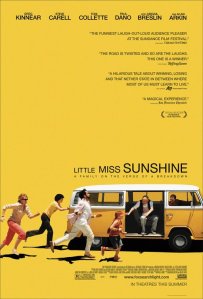 Slowly but surely, Little Miss Sunshine is gaining momentum as the breakout comedy of the summer. It’s gotten some of the most glowing reviews of the year and is poised to capture the hearts of not just fans of indie cinema but also patrons of the big suburban multiplexes, your red state soccer moms and NASCAR dads. After having seen Little Miss Sunshine, I feel like I must have missed the bandwagon.
Little Olive (Abigail Breslin) is bursting with shriek-worthy excitement. She just found out she’s a regional contestant in the national Little Miss Sunshine child beauty pageant. Her family crams into a beaten down, canary yellow Volkswagen bus and heads off on a cross-state journey for Olive. Along for the ride are Olive’s fractured family — older brother (Paul Dano), who has taken a vow of silence until he becomes a fighter pilot, stressed-out but supportive mom (Toni Collette), ambitious self-help failure dad (Greg Kinnear), a potty-mouthed, heroin-snorting grandpa (Alan Arkin), and a suicidal gay uncle (Steve Carell). It’s a long road to the pageant, especially with such an eclectic group of people whose only thing in common are their chromosomes.
 I just couldn’t shake the overwhelming feeling that Little Miss Sunshine should be more. It’s not really much of a comedy. There are some funny moments, and pushing the bus is a running gag with better legs than I would have guessed, but the film has a lot of stretches where the laughs are low to nonexistent. It’s not really much of a character piece either. None of the characters are that well defined or allowed to stretch out. The family members are all archetypes of indie film weirdness: the gay intellectual, the verbally inappropriate grandparent, the self-deluded father, the frazzled mother, the loner brother, and the precocious tyke. Little Miss Sunshine does a fine job of setting up its family of cracked characters but then seems to twiddle its thumbs when it comes to development. The only character insights come in a scattered few small moments with Olive. Dad is essentially poisoning his family with his self-help claptrap, casting the world into “winners” and “losers.” There’s a heartfelt moment brilliantly played Breslin where she confesses to grandpa that she doesn’t want to be a loser because her dad would stop loving her. Aside from that, Little Miss Sunshine seems to wind its characters up and then leave them be. I wanted more of just about everything but the movie wouldn’t budge.
The movie spends quite arguably too much time at the Little Miss Sunshine beauty pageant. Child beauty pageants are a well deserved, albeit easy, satirical punching bag, and they creep the hell out of me. Seriously, turning little girls into highly sexualized Barbie dolls seems cruel, unnatural, and very very creepy to me. There was a stupendous documentary that aired on HBO years ago called Living Dolls that traced the life of a six-year-old girl and her stage mother. It was a harrowing film, and the obsessive mother is one of the most disturbing villains I’ve ever seen in a movie, scripted or otherwise. In the film you see how people transform little girls into flirty, overly made-up little adults. It’s sickening.
The reason I bring this up is because Little Miss Sunshine because they lift a direct metaphor. In Living Dolls the main girl is playing one of those tiny slide puzzles where the finished result is an honest to God yellow smiley face. It’s a perfect metaphor of this child attempting to find happiness when no one seems to want her to live as a child. And then I saw the exact same moment in Little Miss Sunshine. Rip-off or accidental homage, you decide. In the same vein, every time Kinnear invokes the name of his literary agent, Stan Grossman, I kept thinking of Fargo.
In Sunshine, the family is aghast at the pageant scene but support Olive anyway. Then things get way too easy. The film concludes with the 5,785th rendition of the weirdos celebrating what makes them who they are, their weirdness, and sticking it to the thumb-nosing naysayers. Then the movie abruptly ends. That’s all, folks. Little Miss Sunshine was already built on the aching backs of two very familiar indie staples, dysfunctional families and road trips, and offers little else to justify its existence.
 It’s hard to really drag this film through the mud. It was proficiently made by the music video directing team of Jonathon Dayton and Valerie Faris (Smashing Pumpkins’ Tonight Tonight). The acting is generally good. The better actors rise to the top despite their limited character depth. Carell is a big name in comedy right now, and he gives a rather subdued, sarcastic performance that will resonate best with audiences. Kinnear is better at playing smug types than pathetic types. His character really is the villain of the piece, so it’s nice to see his transformation even if it is awfully spontaneous. Collette always looks to be on the verge of a nervous breakdown. Breslin (Signs) is pretty cute and will pierce your heart during the aforementioned talk with grandpa.
There are some amusing moments and fun pieces of dialogue, and the film has its heart in the right place. The screenplay needed to go through a few more drafts to strengthen character and story. I can honestly say my favorite part of Little Miss Sunshine was listening to its very Sufjan Stevens-like soundtrack full of meloncholic horns, cellos, violins, squeezebox and electronic whispers. I would recommend the soundtrack ahead of the movie.
I feel some shades of guilt as I gather my opinion, however I cannot deny the overwhelming urge that Little Miss Sunshine should have been more. It needed more comedy, more character depth, more attention to story, and more opportunity for its ensemble of actors to sink their teeth into the material. This appointed indie darling is intermittingly amusing, has some laughs, and may be worth a free afternoon or as a rental. To me, it’s also a big example of wasted potential. Little Miss Sunshine is a beauty that needs more work before it can shine on a greater stage.
Nate’s Grade: C+
Share this:

The Devil Wears Prada (2006)
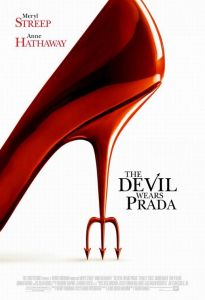 One part fantasy, one part incisive satire on the fashion industry, The Devil Wears Prada, on paper, may not be more than another formulaic entry where a young innocent gets caught up in the temptations of power and influence. I know little about the fashion industry other than what I can gleam from TV’s insanely watchable Project Runway and even I was charmed. Andrea (Anne Hathaway) is an idealistic journalism student paying the bills working as the assistant to Runway magazine’s ferocious editor in chief, Miranda (Meryl Streep). Andrea’s plain style of dress draws sneers and snickers from her rail-thin, nose-raising colleagues, and some smart snark from Miranda, who always seems to eviscerate people without raising the timber of her voice. The movie is typical with its rise-and-fall power structure, but even though it may be lightweight, The Devil Wears Prada is lots of fluffy fun, and all signs of life point to Streep. It’s almost a foregone conclusion that you’ll get a worthy Streep performance, but she’s totally unleashed in The Devil Wears Prada. Every time she sweeps into a scene she commands attention and steals the movie. We’re all just living in this woman’s world on borrowed time, and she knows it. Streep is in grand comedic form, dominating the movie with glares; just an inching of her facial expression can cause titters. It’s a juicy role and, mark my words, the most Oscar-nominated actress in history is going to get another nom for this performance. Hathaway proves to hold her own as well beyond those dark doe-eyes and cherry stem lips. The movie starts to drag in a third act trip to Paris, and Andrea’s empathy seems to get a bit out of tune (she feels worse about being better at her job than a co-worker than missing her boyfriend’s birthday). The Devil Wears Prada is an enjoyable, easily digestible piece of high-gloss fluff elevated by Streep’s dominating turn as a fashion lioness.
Nate’s Grade: B
Share this:

United 93 (2006)
 I’ve heard a lot of talk about whether America was ready for United 93. Almost every magazine or newspaper article you’d read about director Paul Greengrass’ real time account of 9/11 began with the question, “Is it too soon?” That’s mostly a personal decision. My response: of course not. They were making World War II movies while Europe was still burning and while Pearl Harbor was still recovering. Speaking of which, doesn’t anyone feel that a 9/11 movie would be much more powerful and respectful now, five years removed from one of the worst days in American history? We can still remember that awful day, and most importantly, we can use art as a means of catharsis when the subject remains relevant. Does anyone seriously want to wait 20 years down the pipe for a 9/11 movie to be produced by Jerry Bruckheimer? Was 2001’s Pearl Harbor the kind of movie we’ll get when it’s “not too soon?” While I’d never insist people see United 93 if they weren’t ready, I will say it’s definitely a movie that demands to be seen sooner rather than later.
On September 11, 2001, four planes were hijacked in the sky by members of the terrorist group Al-Quaeda. Two crashed into New York’s World Trade Center building. Another crashed into the Pentagon in Washington, D.C. A fourth plane, United 93, was delayed on its initial takeoff, meaning the four hijackers on board were already behind schedule. After the hijackers had taken control of the plane and turned it back around, presumably headed toward the White House, the passengers started making phone calls from the flight and piecing together the scenario. They weren’t going to land at any airport; they were a bomb on wings. The passengers came together with a heroic plan to take back the plane and use a fellow passenger, with flying experience, to help them land. Their valiant effort ended in United 93 crashing in Shanksville, Pennsylvania.
 United 93 is one of the most nerve-racking movie going experiences I have ever seen. Because of our prior knowledge of the events, every little thing carries so much dread, from a man who just makes the plane to simple phone calls, unknowingly their last, that end so regularly in “I love you.” Hitchcock said tension was watching a happy couple unaware of a ticking bomb below their picnic table, and he was right. United 93 is grueling to sit through, but that doesn’t mean the film isn’t rewarding. We’re going through the same situation and harrowing steps of realization as the passengers. The final phone calls on board may be the most emotionally wrenching thing I’ve seen in a movie since 2000’s Requiem for a Dream. The final 30-minutes of the film, concentrating on the passengers retaking the plane, is some of the most intense cinema I’ve seen in years. My heart was beating outside of my chest and I was shaking, even after I got out of the theater. I spent the next hour at my house walking around trying to shake it off but I couldn’t. This is an incredibly powerful and sobering film that will stay with you like a bad dream.
Witnessing the unfolding events of United 93, a spellbinding example of you-are-there cinema verite, you really feel like you’re watching a living documentary. There’s nothing sensational or overly political that happens within United 93. Greengrass even has the temerity to present the hijackers as human beings, granted human beings capable of ferocious acts of horror. The first moments of the movie are the hijackers preparing, praying, reciting the Koran, and going about their plot. You see them sweat, get antsy, and the lead hijacker evens seems a bit hesitant about following through, especially since this coordinated attack was botched by United 93’s delay on the tarmac. Some would call such a portrayal ludicrous, citing a scene where a hijacker calls his girlfriend to say his last “I love you” as apologetic claptrap. Some would take offense that the hijackers are not demonized, have horns sprouting from their heads, or laugh maniacally at spilled blood. But just like Spielberg’s portrayal of Palestinians in Munich, human evil is much more nuanced than simply painting a mustache on. United 93 shows every side to 9/11 like what a good documentary should do. This isn’t propaganda, this isn’t exploitation, this is respectful filmmaking. Yes, we?ll never know what happened on flight 93, and much of the film is speculation, but it’s speculation built around research and reverence.
 Greengrass is in fine form, recreating the same sense of building desperation and terror that he so elegantly assembled in 2002’s Bloody Sunday. The antic handheld camerawork may give people some headaches, but no filmmaker does a better job of putting you in the moment than Greengrass. His decision to use real people portraying themselves, like FAA head Ben Sliney, creates a greater feel for authenticity, even having the film’s stewardesses played by real United stewardesses. None of it feels gimmicky, nor is Greengrass interested in telling a jingoistic, hyperbolic action adventure. The famous “Let’s roll” line is just another line said amongst many in the planning process for taking back the flight. The violence is sudden and shocking but never sensationalized. United 93 ends exactly as it should too. You?ll probably hear sobbing in your theater at that point; I did.
There have been complaints that the character development in United 93 is lacking. But really this is a story about 2 hours on one morning, told in real time, and how much talking do strangers do on a flight? Some, sure, but not a lot. To answer critics, if we’d gotten to know these characters extensively it would either break the fabric of reality and turn these people into eagerly sharing, easily emotive figures, not people, or would require extensive flashbacks which would remove us from the visceral feeling of the story. That’s why Greengrass cuts back to NORAD and the FAA, because there’s stuff happening there; the slow realization of fright, the disbelief, the staggering amount of confusion and miscommunication. They can’t even get anyone from the White House on the phone to even establish a chain of command. If we had staid onboard we would be watching people read magazines or eat peanuts for 30 minutes. I never once felt less for these people because of the characterization concerns.
 The “ordinariness” of the passengers is what works best, because it just as easily could have been you or me, but would we have reacted the same? Had it been “Tom Cruise starring in United 93″ then it never would have worked. This excels on how realistic everything comes across, and any Hollywood moment that would shatter that realism is absent (thank God there’s no product placement). One of the more amazing aspects of United 93‘s conclusion is just how fast everything came about. These people had little time to act, much less take stock of the waking nightmare the day was turning into and formulate a plan. The movie is a touching tribute to a group of ordinary people that became something more on one of our darkest days.
Naturally, United 93 is not going to be a film for everyone. It’s unflinching, grueling, and altogether hard to sit through. It does a stupendous job of recreating that tragic day and allowing our own knowledge of the events to build an overwhelming sense of dread. Greengrass excels in this arena of storytelling and he’s worked his docu-drama magic once more, painstakingly allowing the viewer feel like they are a participant, to the point where we even get a rush of hope that maybe the passengers could take back their plane and save themselves. The question of whether it’s too soon for a major 9/11 movie has to be decided on an individual level. I don’t recall anyone griping about the thousands of documentaries and the A&E Flight 93 TV movie, all of which, yes, made money off 9/11 too. I think for us as a society, we need this movie to remind ourselves of the heroism and sacrifice of a few. It’s very easy to get lulled back to complacency, but the masterful United 93 will not allow that. This is a powerful story told without a hint of melodrama and it will be guaranteed to be near my Best of the Year list when 2006 rolls to a close.
Nate’s Grade: A
Share this:

Match Point (2005)
 This is an excellent return to form for Woody Allen and his best film since 1987’s Crimes and Misdemeanors. The first half is deliberately slow, yes, but it is justified by the second half which more than makes up for it. The first half needed to be as slow as it is to set up the incredible minutia of this rich, elite world that former tennis pro Chris (Jonathon Rhys-Myers) has been adopted into. We need to see how comfortable this life is to understand why he doesn’t want to give it up and why he goes through the machinations he does in the second half. The characters and dialogue are spot-on and Allen has transported his world of the upper crust New York elite so well over to London, and the change of scenery has reawakened his writing. Allen knows the privileged world very well and their disconnected view point. However, he rightly centers his film not on the neurotic upper crust but on his social climbers Chris and Nola (Scarlett Johansson), a beauty engaged to Chris’ prospective brother-in-law. It is the second half of Match Point that makes it great. Allen tightens the screws on his social climbers and the tension is superbly taut. The dark turns and in the final act are greatly entertaining, as Allen delves further into his look at a universe built around chance and disorder. The returning imagery of the ball hitting the tennis net elicited gasps from my audience, and I was one of them. I love that Allen lets his story continue to unfold after the dark twists. The film’s biggest flaw is anchoring the entire point of view on Rhys-Myers, a somewhat limited actor that reminded me of Jude Law’s character in Closer. Johansson is an excellent noir femme fatale, her husky voice perfectly suited. Frankly, if ever there was a Scarlett Johansson nude scene, this movie was crying out for it. She has her tawdry affair with Chris and there’s even a sequence where we see her laying on her stomach nude while he applies baby oil to her. Their sex is supposed to be so impassioned and carnal, in contrast to his boring but stable relationship with Chloe (Emily Mortimer). And yet no nudity? Woody Allen, you’ve let me down. Your film, on the other hand, is intelligent, sharp, dark, taut, and wonderfully entertaining.
Nate’s Grade: A
Share this:

Enron: The Smartest Guys in the Room (2005)
 The brilliance of this Oscar-nominated documentary is how distills a complicated, math-heavy scandal and makes it so easily digestible. The Enron tale really is a story calling out for the medium of film, relying on sound bytes, testimonials, public statements, interviews, video clips, and director Alex Gibny masterfully orchestrates the telling. The film is insightful, informative, and incredibly entertaining. It’s a real pleasure to watch, and you’ll be left scratching your head at how certain economic laws are even possible. If you are confused by the Enron scandal or know little to nothing about the biggest corporate scandal of our times (Enron was the seventh biggest corp. at one point), spend two hours of your life and watch this excellent film.
Nate’s Grade: A


 nathanzoebl
You must be logged in to post a comment.