Blog Archives
Double Walker (2021)
 After watching so many nominal Ohio-made indies, it’s a welcomed surprise to come across one that falls into the category of an “almost” movie, and by that I mean one with clear ambition and talent that almost fully works as a legit movie without any lingering qualifiers. Double Walker, filmed partially in Columbus and now given a national digital release, comes so tantalizingly close to being a full recommendation without hesitation. I can see what it’s going for, and with a little more careful development and clarity I think it would have achieved all of its genre-busting goals.
Sylvie Mix plays Ghost, a young woman who appears in a white nightgown in the woods. Who is she? What does she want? She is escorted by a young man into his home, disrobes, and then murders him. We come to learn that this adult woman is the ghost of a deceased child, and she’s chosen to walk the Earth as a spirit to seek vengeance. She’s only able to be seen by believers and sinners, though technically every person is a sinner unless there is an unspecified threshold to pass. The Ghost makes a friend, visits with her grieving parents, and reevaluates what it means to be human.
 The first thing to know about this movie is that it is only 65 minutes long, short of the 80 minutes typically seen as the minimum expectation for a theatrical release. It’s not that far from meeting that goal, though the airy nature of the movie also makes it feel already stretched out. The other thing you should know about the movie is that you could describe it as Promising Young Woman meets The Crow, an avenging angel targeting the bad men responsible for her death, except tonally it’s not really a hard-hitting revenge thriller. It has those elements where our Ghost is stalking her very bad men, luring them into positions of vulnerability, and striking back for justice, but the movie seems more aligned in tone with something more ponderous and poetic like 2017’s A Ghost Story (though absent ten minutes of Rooney Mara eating a pie – thus fulfilling my obligation to mention this dumbfounding cinematic moment whenever I have the opportunity, you’re welcome).
For those people looking for sundry exploitation thrills, seized by the striking central image of its poster, you may be left checking your watch, but I found this middle ground between thriller and art film to be an interesting space for Double Walker to inhabit. The screenplay drops you into its bizarre scenario and unfolds slowly, which I think worked to the film’s potent atmosphere. You don’t really know what’s going on or what the character relationships are like. At first you see a grieving family, and next we cut to a man discovering a pale woman who seems lost in the woods. She comes across ethereal and mysterious. Then there is a murder, and from there we’re trying to identify the character connections and back-story, which comes across at a gentle yet assured pace that trusts the audience to put the different pieces together to form a whole. This works well except for an ending that comes across as too confusing, muddling an already convoluted system of supernatural rules that the movie seems to be undercutting, unless the whole thing is presented as a hopeful but passing dream, and if that’s the ending then I’m going to be quite disappointed. Still, this is a movie at its core more interested with the question over being human, being remembered, and personal identity than as a blood-soaked revenge thriller.
 Again, it has its moments of blood, but there’s a somber tone poem quality to the movie that elevates its ambitions and also ties down its ultimate execution. Director and co-screenwriter Colin West is using the structure of an exploitation film to do more than deliver sleazy thrills. He devotes much more time to watching our Ghost character adjust to life as a spirit. The Ghost is the same spirit as the little girl we saw being eulogized in the opening. This presents some awkwardness for the character and the viewer. For the character, she’s gone from the mind of a child to being in the body of an adult, and it’s not determined whether this adult body is what she would have eventually grown into being or whether it’s just a default model. This allows for an even more curious performance as a character that feels alien in their own skin but also fascinated by that change in perspective, like Scarlet Johansson in Under the Skin. I understand the Ghost studying her adult body with curiosity. However, for the viewer, the numerous nude scenes can make you uncomfortable with the understanding that this is a little girl transported into the body of an adult and she is using her sexuality to lure men to their perverted doom. Maybe I’m just more sensitive to this connotation, and “using her sexuality” seems like an overstatement as she’s simply a woman being present with predatory men. I will say the nude scenes are tastefully portrayed where the camera doesn’t feel like it’s going to painful lengths to feature flesh. I was about to accuse the movie of possibly being skeevy with its plurality of nude scenes (does the Ghost need to run out into the woods in the buff?) when I noticed that Mix is also the producer and co-screenwriter. I assume she approved of her depiction.
Because of her newfound identity, and separation from most living beings, Double Walker presents a main character who is trying to form connections but cannot. The Ghost tries to console her grieving mother but is unable to be seen or felt by her. She does meet a kind man (Jacob Rice) at a movie theater who helps her out and who is not looking to take advantage of her. He shares his family’s home movies, which is a slightly strange thing to do so soon with a nearly mute stranger, and compares the images captured on film like ghosts, crystalized memories of people no longer with us. I have thought of this comparison myself and will morbidly watch background extras in old movies and think, “Here they are, alive once more, but likely gone for some time.” The direct connection of ghosts and memory allows the movie another layer to provide additional meaning. However, Double Walker feels more like a stretched out short film than a fleshed-out feature. With a few extra wrinkles and plot development, this could have readily afforded a larger story. Later on, the Ghost makes a rash decision and an innocent is harmed in her path to vengeance. I think that’s an interesting direction and questions the righteousness of her cause, while at the same time the script finds a personal way to make that mistake even more grueling. Again, the script really could have gone into this consequence and pushed the character into more inner turmoil, to question the cost of her mission, and to question her perception of human life. There are areas where the movie could have gone into further deliberation, but they feel short-changed. Double Walker is settled being the extra long version of the movie it presents in its first act.
 This is a very professional looking and sounding movie and probably has the best photography of any Ohio-made indie I’ve watched yet. West also served as his director of photography, and his eye for visuals is crisp and pleasing. The use of light, shadow, foreground and background, composition, movement, it was very deliberate as well as being artistic in a way that didn’t feel like it was overly self-indulgent. West achieves an artistry without making it flashy, and that’s even harder to accomplish. The score and sound design are also polished as well. When the Ghost is luring a victim, the eerie sound is reminiscent of metallic scraping to elicit unease. The costuming keeps our Ghost in white outfits, noting her innocence but also visually connecting you to the associated color of traditional spirits (an also, maybe, A Ghost Story). It makes her standout on the screen. Speaking of that, Mix (Poser) is a natural actor. She has a presence to her and ably communicates the curiosity and otherworldly nature of her character’s dilemma. She doesn’t talk much, nobody really does in this movie, but there’s a melancholy to her that feels more pained than forced. The other actors do well with their minor roles, including other Ohio actors I’ve covered before like Justin Rose (False Flag) and Ralph Scott (Constraint) playing bad men who become ghostly prey.
By the end of Double Walker, I was left feeling almost satisfied, one of those film experiences where you can see the better movie just on the peripheral, the one that was so close. As it stands, it’s an arty and contemplative movie that uses the exploitation formula as a vehicle to explore more existential questions. I wish the movie had developed the story more from the potential on display, and what potential is on display. The filmmakers here feel like they are headed for great things. West has already filmed another movie he wrote, Linoleum, starring Jim Gaffigan and Tony Shalhoub about a science teacher who always wanted to be an astronaut and builds his own rocket ship in his garage. That sounds amazing and it has big names to fill out the cast. I’m rooting for West. This guy has the talent and ability to be a rising indie director and can do Ohio proud. Double Walker could end up being the flawed but promising start to a burgeoning film career. It’s worth watching but be warned that it might not be the movie you anticipate at first glance.
Nate’s Grade: B
Share this:

Escape from Death Block 13 (2021)

Gary Jones is no stranger to schlock. The writer and director’s feature debut was 1994’s Mosquito about killer mosquitos that have fed on the blood of dying aliens. His filmography also includes such amusing titles as Crocodile 2: Death Swamp, Jolly Roger: Massacre at Cutter’s Cove, Planet Raptor, and 2013’s Axe Giant: The Wrath of Paul Bunyan, which was filmed in Ohio and featured several actors that have appeared in other Ohio indies I’ve reviewed, like Dan Kiely (Bong of the Living Dead), Kristina Kopf (The Street Where We Live), and Thomas Downey (Evil Takes Root). Jones knows his schlock. Escape from Death Block 13 is the man’s ode to the prison escape thrillers of the 1970s, and it even stars a lead actor who looks remarkably like Charles Bronson. I hoped that Death Block 13 was going to be the good kind of low-budget indie, the one that swerves into its schlocky genre trappings and limitations. However, too many of its creative limitations felt more notable, from limited actors, the limited location shoot, and especially the limited plot development for payoffs and action goodness.
Mick (Robert Bronzi) is a recent immigrant trying to set right his brother’s fate. He visits his dead brother’s boss, Renda (Nicholas Turturro), and demands the money cheated from his brother. Renda’s goons rough up Mick, and in the scuffle, Mick shoots a gun in defense and he’s the one arrested and charged with attempted murder. Inside the deadly prison, life is rough that the guards will let the prisoners fight to grievous harm because they have bets on who will win. Mick becomes a favorite of Warden Jack (Debbie Scaletta) who pressures him to go along and assist with her lucrative smuggling business of guns and drugs. Mick refuses and makes himself a target. He’ll need to adjust to life behind bars, stand up to the bullies, and plot his escape with the secret tunnels located under the grounds of the prison.

The question arises how far a Charles Bronson lookalike can get you as far as entertainment value, and that’s going to be a question for the soul of every viewer. The movie feels like it was a Cannon production, where the poster and title were the selling point and the rest, well we’ll get to that when we need to. The central image of a man that looks like Charles Bronson, holding a gun, looking grimaced, with a title about a prison break, it all feels meant to target a certain audience’s favorable memories of Bronson and his own popular action filmography. Low-budget exploitation genre movies have been made for less, so it’s not a damnable sin, but it sure means that the movie’s transparent intention to rest on its familiar elements needs to be overcome with story, characters, and most importantly, memorable action and ridiculous moments to satiate an audience’s genre appetites. Escape from Death Block 13 mostly gets there when the escape part happens, but beforehand, it’s a sloppy action movie that can test your patience because there are too many reminders of its own scaled-down shortcomings.
Chief among them is casting Bronzi as the lead. It feels like the mere casting of this Hungarian acrobat, stuntman, and Judo player, as per his bio, was the starting and ending point for his character. He’s an immigrant looking to avenge his brother and immediately gets thrown into the middle of a conflict as everyone seems to be incorrectly judging him (subtle commentary on the audience expectations?) based on his appearance. The gang thinks he’s up to no good, the other prisoners and the warden think he’s a troublemaker, and the law thinks he could be their missing piece and assist to bring down the corrupt warden. It could almost be self-parody the way every new batch of characters project an identity onto this blank hulk of a man. I think even Bronzi is leaning into this helpful projection and association with Charles Bronson. His real name is Charles Kovacs, but Bronzi sure sounds closer to Bronson. He also starred in Once Upon a Time in Deadwood, working to associate Bronson’s Once Upon a Time in the West, as well as the HBO Western series, and Death Kiss, working to associate Bronson’s Death Wish. Again, congrats to Bronzi for finding himself a career as a Charles Bronson stand-in. I look forward to the man’s continued career of kind of reminding people of the departed Bronson.

However, Bronzi is not a terribly good actor. His line readings are resolutely stiff, and his accent is thick, so it can be hard to understand what he’s saying with his flat affect. There’s one joke where he makes fun of another prisoner for not understanding his accent, but I didn’t quite understand the joke because I was having trouble with his vocal articulation. To the man’s credit he definitely has a presence and can convincingly strike an intimidating pose. He’s comfortable with the fight choreography though it’s nothing too complex to be strenuous. His emotional acting range and vocal delivery is another matter. I think the limited nature of Bronzi’s ability forced the filmmakers to minimize the number of lines and dramatic scenes for his character, thus making him even less distinct and relying more on his passing impression.
I legitimately think the movie could have been improved had everyone been dubbed. Bronzi is not the only actor of limited range in the movie, he’s just the one with the most screen time. There are many supporting actors who were clearly hired for their physical prowess rather than thespian abilities. These actors would say lines and it would make me giggle at points. There are other actors who take one note, like the police officer in an interrogation scene trying to go full intense exasperation mode, and then deliver every line in this narrow acting space. It’s moments like this where the movie feels destined to willfully drift into unintentional self-parody. I think having a purposely dubbed audio track would provide two benefits: 1) it would allow better vocal actors to lift some of the lackluster performances, and 2) it would further cement the movie’s silly schlock factor and give the audience permission to laugh along with. The best actor in the entire movie is the prison doctor and just for the one scene where he dies. After being injected with a deadly dosage, he goes into cardiac arrest and the actor is so dedicated, so over-the-top, and so prolonged in his death throes that I had to celebrate the man’s gumption. Here was a guy who took what was handed to him and found a way to make it delightful. I wish every actor was on this same tonal wavelength of good-bad rather than just dull-bad.
Once the titular escape happens, the movie jolts to a new life, enough so that I wish we could have gotten things moving faster. The last twenty minutes of the movie is replete with chaotic violence and over-the-top blood shots. The action is adequately choreographed and fast-paced enough to offer several different set pieces and cross-action to keep your attention. It’s all over the place, it’s more whole-heartedly schlocky, and the frantic pacing is a definite bonus. The problem is that as a prison break movie there wasn’t really any definite reasons why the characters had to wait until this late moment to stage their escape. Usually, these kinds of movies introduce the system of the prison so we understand the routines so that they can then be exploited, like a con or a heist job. We need to know the particular steps for the payoff to feel rewarding. Otherwise, like in Death Block 13, it just feels arbitrary. The evil warden doesn’t come across as too formidable. The guards are not too formidable. These people are not the smartest criminals in the world of smuggling. And the inmates could have banded together at any point and easily overthrown this weak power dynamic. Even the heavy-duty Gatling gun attached to the lookout tower isn’t too hard to overcome. The obstacles are vague or weak, thus making it feel like the big escape could have happened as soon as Mick was thrown into this pokey.
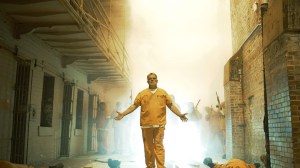
The movie was filmed in the Mansfield Reformatory, the same famously depicted in 1994’s Shawshank Redemption, but at points it sure doesn’t feel that way. I don’t know the exact budget-conscious decisions of the production or the shortcuts they had to work through, but there are several sequences inside and outside the prison that are obviously green screen. It made me start to meticulously examine the visuals and see if it was indeed the famous penitentiary or some other set meant to be stitched together through the power of editing. It’s possible the movie had a very limited availability to shoot inside the prison, so they took extensive pictures to recreate as a more convenient green screen background. I’m uncertain. The green screen work isn’t bad by any means but pretty obvious to the eye and limits the potential visual arrangements for staging the action, which can often resort to shot-reverse shot redundancy.
If the rest of the movie was like its concluding act, I would be recommending Escape from Death Block 13 to fans of low-budget schlocky action and fans of Charles Bronson. It’s strange to think part of the major appeal of this movie is that it stars a guy who strongly resembles another guy that was in movies decades ago that people mostly remember liking. The general association of other, better movies seems to be much of the creative backbone of this movie. The story isn’t packed with careful setups and payoffs, built upon a foundation of obstacles and mini-goals that need to be accomplished before the big escape finish. It relies too heavily on cliched genre moments, like multiple prison yard fights, and the riot ends in a hostage negotiation that could have been its own movie itself rather than a pat conclusion. The movie is weighed down by the acting limitations of its lead who looks the part but fails to do much more on screen. It’s an action movie that, even with caveats and understanding of its limits, manages to disappoint. I wish this had been crazier, or better plotted, or filled with more colorful and arresting characters, or bigger villains, or anything really. It’s an action movie that feels like the ghosts of other, better action movies starring a man who might as well be the living ghost of Charles Bronson.
Nate’s Grade: C
Share this:

Black Mamba (2019)
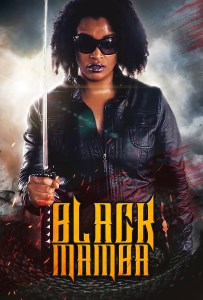
William X. Lee is an Ohio filmmaker who has found credible success on his own terms and over decades, a fact that deserves celebration. The writer/director knows the business of filmmaking as a genre specialist and has even become an adjunct professor of film at two different universities. With his many years on the fringes of the indie business, I expect Lee has a lot of wisdom about the particulars of the industry and finding a market that is welcoming to content that can be messier in execution. His latest movie in pre-production is called Bulletproof Jesus and, sight unseen, I legitimately love that title with my every fiber. His 2020 film, Black Wolf, literally involves a 58-year-old man having to track down and kill his high school bullies, all of whom miraculously grew up to become terrorists. That sounds hilarious. I believe Lee’s personal story is compelling and acknowledge that genre filmmaking could use more voices and visions from under served perspectives. However, the results on film show indifference or even disdain for accessible storytelling and entertainment value. Black Mamba is a 2019 supernatural action revenge available on Tubi, as many of Lee’s films currently are for free, and it’s indicative of the man’s sense of style and storytelling, both of which I have plenty to talk about in excrutiating detail.
Kyiera Stone (Angela D. Williams) was killed by local criminals. She’s brought back to life by angels who give her a second chance to exact revenge. Kyiera is pitted against an endless assembly line of villains that all want to return Kyiera to her state of decay.

I may sound like a scold, but it is near inexcusable that this movie is two hours long. Far be it from me to instruct a creative how much time they need to tell their story, but you have to think about an audience when you intend a platform for your efforts. What is going to keep someone glued to that screen and justify their investment in every one of your minutes? This is the kind of movie that can barely creak over the 80-minute feature-length finish line, and to push forward to two hours is excessive without an engaging story that needs that extra room to grow.
There is no real plot to speak of beyond our main character coming back to life to wreck vengeance. The movie is patterned after Quentin Tarantino’s Kill Bill, itself patterned over hundreds of genre movies, but it’s like Lee said, “Well, why stop with five bad guys to overcome when you can have 100!” Black Mamba (also the code name for the lead in Kill Bill) is stuffed to the breaking point with villainous characters and some of them are even being introduced with ten minutes left. The critical hit involves like a half dozen bad guys, and then there are more bad guys, and then hell is introducing its own bad guys, and then there’s like a fighting champion from hell, and witches, and I stopped caring because every scene played out exactly the same. The settings may vary, the person might be different, though with a cast list of rogues as long as this one good luck keeping them straight, but the scene plays out exactly the same. Some evil character gets the jump on Kyiera and within a minute she will kill them. That’s it. That’s all there ever is in these confrontations, many of which are hilariously short-lived. At no point will you fear or doubt Kyiera because she never seems to be in danger of losing. It makes the entire two hours extremely boring and repetitive. It also makes the majority of its two hours expendable. Rare is a two-hour movie where I could legitimately say that you could cut it down by 90 minutes, and yet that is the case with Black Mamba. It’s a movie of treading water.

Some of this could be mitigated by providing characters with big personalities, memorable flaws or quirks, or even interesting killing utensils, but Black Mamba feels more like a ramshackle improv fest where actors are entering scenes as “characters” with props or costumes they just assembled off-screen. I love genre movies and I love the way characters can be written for genre. Watch the TV series Justified because it is a masterclass in writing for character. Every character, even the bit-part villain of the week, is written with a distinct voice, an identifiable trait, an angle, something to make them stand out and feel more like a flesh-and-blood person in the stylized, hard-boiled universe of the show. The movie’s extended running time could have devoted scenes to showing why we should fear certain characters, their killing techniques that we would then anticipate seeing how they are applied to our heroine. Think of every movie you can with crazy killers and you see them apply their killer skills early because that’s how you get to fear them. Just being told, “so and so is deadly,” without seeing them in action is dull. In Black Mamba, often characters are over explaining things for the sake of the audience or seeming to narrate what is happening on screen. The dialogue is filled with profanity because it feels like nobody knew what else to say from scene to scene. There aren’t any tense exchanges and showdowns or clashes of viewpoints. It’s all just yelling, boasts, and non-clever insults.
The story doesn’t make much sense. There are angels that bring back Kyiera because it’s “not her time,” but then they want to use her in a celestial war? Was she lied to by the higher authorities in order to manipulate into an ongoing and endless war between heaven and hell? Is this a high-concept version of Munich and Kyiera is being used to perpetuate endless conflict regardless over culpability? No, well at least I doubt it. The larger workings beyond our heroine are left vague and seemingly shifting. The first thirty minutes could have been consolidated to ten to introduce the premise of Kyiera dying and being resurrected, but then there’s nary a section that couldn’t be consolidated, like the litany of interchangeable supporting characters.

Can you tell there are three people in this scene?
Halfway through the movie, we suddenly jump to hell and it doesn’t really alter the direction of the story but only provides more witnesses to commentate on the action. This is where Esmerelda comes in. She’s the queen of hell and played by Dawna Lee Heising, a 65-year-old actress who got her (un-credited) start as a stripper in Blade Runner and has a long list of campy T&A roles in low-budget genre fare. She feels like the production’s big “get” and so she gets a lot of unnecessary screen time. The character is annoying and the entire addition of hell as an environment feels tacked-on. I thought I knew who the big bad final boss was, and then hell is introduced with its own cadre of damned killers, and I didn’t know who the final boss should be. There’s no feeling of a direct line for Kyiera’s goals. Think again to Kill Bill as a prominent example. She had a small list, each name crossed off brought her closer to her biggest target, but each became harder to accomplish and more personally reverent as she climbed the ladder of revenge. There was a feeling of progression and payoff as The Bride worked through her bloody vengeance. With Black Mamba, she’s inundated with one face after another, but you never feel progression because the movie only feels like it’s stuck in a Sisyphean loop of disposable foes. The structure of this movie doesn’t have the groundwork to provide forward momentum.
The first thing you’ll notice about Black Mamba right away is the choice to up the contrast so high that it may hurt your eyes at time. There are times where the color contrast is so extreme that it obfuscates what is happening on screen. You’ll see faces disappear into shadow in a room, and not in a way that feels intentionally ominous, and every time a character is driving outside it looks like an atomic bomb is going off in the background. It’s chiefly a distraction and an ugly one and one that feels like it was done to make the footage look more like a grungy grindhouse movie of old. Going for a specific visual aesthetic is a fine marker, but when it harms the clarity of what is happening then maybe it’s worth revisiting. There are simple things that could have been done to better orient the viewer. The color contrasts and color palette could have better been paired with specific locations so that the audience knows exactly where they were or whose story they were following, much like in Steven Soderbergh’s Traffic. We even literally have the denizens of hell as one frequent setting, so why not crank the contrast high and more fiery in colors, favoring oranges and reds, and then go for a cooler color palette for action on Earth? Or even have a section that isn’t contrasted to death? It’s a stylistic choice that grates severely.

I would be forgiving of some of the obvious technical limitations for a low-budget indie aiming for the feel of other classic low-budget indies, except that, reportedly, Black Mamba had a budget of $250,000. When I read that I burst out in incredulous laughter. Maybe it was a decimal error, or maybe Lee was very generous and paid his sizeable cast and minimal crew handsomely, or maybe there are other reasons why a quarter of a million dollars does not, in the slightest, look to have been translated onto the finished product. Where did all that money actually go?
I’ve been watching enough micro-budget indies in my pursuit of reviewing homegrown cinema that I feel more adept at better gauging a potential budget. There are locations to consider, though Black Mamba seems to reuse a lot of empty warehouses, alleyways, and church parking lots, and there is action to consider, though Black Mamba uses a lot of plug-in special effects and limited fight choreography, and there are actors to consider, which Black Mamba has in excess, and there is the general professionalism of the look and sound of the movie, which Black Mamba is definitely lacking. There are persistent sound issues (the louder yelling is so screechy and high-pitched that I had to cover my ears) and there is a dearth of editing coverage. Apart from the fight scenes, it feels like every scene was designed with one shot in mind to connect directly to the next. This can make things awkward in conversations that would flow better with alternate angles rather than one person with their back to the camera or in extreme close-up. I geuss it just didn’t matter or they didn’t have the time, and yet with the budget being reportedly a quarter of a million dollars? This movie feels far more like a $10,000 budget indie than $250,000. To be blunt, I have watched movies with budgets under $15,000 look and sound much better than this quarter-million-dollar movie.
I thought about watching other Lee original movies available on Tubi but I only watched about 15 minutes each of 2017’s Six Feet Below Hell, 2016’s King Killer, and 2008’s Kill Every Last One. I don’t think I could take watching all of these movies even for objective review purposes, each of which appears to have the same faults and high contrast value as Black Mamba (one of those films is an astounding 133 minutes long!). While designed to be sold, these movies do not feel designed to actually be watched and enjoyed. There are no real characters to fall in love with, conflicts to draw intrigue, or well-developed plots to thrill and surprise. These movies feel like empty product to line an endless array of schlock DVD shelves.

This brings me to my final complaint registered at Black Mamba. More than halfway through the movie, yet another character is introduced, this time a formidable fighting champ from hell. Upon hearing the man’s name, the queen of hell falls onto the floor and begins gyrating in pleasure, moaning the man’s name and declaring him to be an amazing god among men. This character is played by none other than… the writer/director himself. I almost walked away from the movie at that point. It’s difficult to critique something like Black Mamba. The people involved don’t seem to have any aspirations that what they were making was serious, and yet maybe they should have taken it more seriously. Because of the punishing two-hour length, because of the repetitive and stretched thin plot, because of the over population of unmemorable and disposable characters, because of the technical flaws that still persist after a decade of filmmaking, because of the lack of accessibility for providing an engaging story and characters for an outside audience, and because of its reportedly sizeable budget, I regret to deliver my first failing grade for an Ohio-made indie. I wish Mr. Lee and his team well but this is assuredly a case where if you’ve seen one of the man’s movies, you’ve seen every one of the man’s movies, and unless you were in these movies, you shouldn’t watch them even for irony.
Nate’s Grade: F
Share this:

Holler (2021)
 In the time I have spent making a concerted effort at reviewing Ohio-made indie movies, I have yet to watch one that amazed me and earned an A-grade. There are several that are enjoyable, others admirable for their technical professionalism, and many that have glaring factors beyond limited budgets that hold back whatever the intended artistic intent was. I was excited with genuine hope for Holler, a small movie shot entirely in Jackson, Ohio and following the lives of a struggling band of small-town metal scrappers looking to survive. It’s the debut feature from writer/director Nicole Riegel (based upon her 2016 short film of the same name) and has recognizable TV actors involved like Jessica Barden (End of the F***ing World), Pamela Adlon (Better Things), Austen Amelio (Dwight from The Walking Dead) and Becky Ann Baker (Girls, Freaks and Geeks). It’s even getting a wide release nationwide through IFC Films, who graciously provided me a screener link. If any movie felt like it was going to breakthrough and become the first truly outstanding Ohio indie, this seemed like a major possibility. Unfortunately, Holler doesn’t merit hollering.
Ruth (Barden) is a high school senior in a small southern Ohio town wracked by poverty, factory closures, and the aftereffects of the opioid epidemic. Her mother (Adlon) is serving time in prison for her drug offenses when she should be in a treatment center. Her older brother Blaze (Gus Halper) is resigned that he’ll work himself to nothing, but he wants a better life for his bright sister and submitted her college application. Ruth and her brother join Hank (Amelio), a local scrapper who offers extra work for side projects stripping the parts from closed buildings.
 While watching Holler, I noticed my heart was sinking because, even with all this professionalism and authenticity on board, I kept waiting for the actual movie to kick in, and then I noticed an hour had passed and I realized, “Oh, this is the movie.” I have seen this artistic calculation with indie movies before and articulated it succinctly with 2012’s Beasts of the Southern Wild: “sacrificing story to the altar of realism.” This feels like a very authentic movie as far as its hardscrabble details about how impoverished people in small towns eke out a life on the peripheral of society. I know people have been pushed to the brink because of desperation, whether economic or psychotropic or beyond, and that scrapping can be a dangerous and competitive landscape to make a few bucks. When you’re struggling to get by, it’s all about what can lighten that struggle. If stripping the copper wire out of an abandoned building is more profitable, and less time-consuming, than bagging aluminum cans all over town, then it seems like a natural attraction to those with limited options. However, Holler feels less like a movie with a story needing to be told than a stark setting with an impression to leave.
The characters are too interchangeable and one-dimensional here to really invest in beyond general well-wishing. These small-town Ohioans have been hit hard by circumstances and as I was watching I wanted them to find some degree of happiness or improvement by the end, but that was because they were simply people in need and I am an empathetic creature and not because of their personal stories or characterization. It would be the same as if I had watched 90 minutes of a lost puppy trying to find shelter and then, at long last, that puppy got to sleep inside a coffee shop. I’m happy, and relieved on a general level, but am I personally invested in this specific animal and this specific story? Could it have been any living being at all?
 The characters of Holler are far too generalized where they keep repeating that same nub of characterization they’ve been given. The entire dynamic seems to be a universe of characters who exist to try and convince Ruth that she is better than everyone and deserves to leave. In an early scene, we watch Ruth sit down and write an essay for a friend to use as her own homework. It’s an early indication that Ruth is smart and not fulfilling her potential. It’s not her homework she’s completing but a friend’s and for money, money she initially refuses from pride. Unfortunately, the movie forgets to continue moments like this to provide further insights. Ruth is too often a walking cipher, taking in her dilapidated surroundings with alternating pensive and glum stares. She is more a symbol than a character, meant to serve as a face of those held back by economic anxieties and limited opportunities. Her mother is a symbol of the wreckage of the opioid crisis and how it has decimated rural communities. Her brother is a symbol of generational sacrifice. These characters don’t have complicated internal drama or intriguing contradictions or anything beyond the surface description because they’re designed to be specific voices meant to convey a Greek chorus of opinion. They’re sides of conversations made flesh rather than interesting or complex people. I wanted to become attached to Ruth’s plight especially as she embarks on performing more dangerous tasks for money with her scrap crew, but you never feel any real added danger or for that matter any real change. When Ruth is out scrapping in the middle of the night, the movie treats it no differently. When Ruth finally makes her decision about her life, it doesn’t feel like the culmination of her emotional journey and more so the character finally accepting the pleas of others over the course of 85 minutes.
The obvious artistic comparison point for Holler is 2010’s Winter’s Bone, another movie that explored in unflinching detail the degenerative disease of systemic poverty. Once again, we follow a young woman trying to provide for her broken family in the wake of a parental drug addiction and trying to stay one step ahead of debt collectors and eviction. Another artistic influence seems to be 1970’s Wanda, an indie featuring a housewife walking away from the malaise of her life in small-town coal country Pennsylvania. The difference with both chief artistic influences is that they had, quite simply, movies to tell with their big screen canvas. With Winter’s Bone, there’s an urgency where the protagonist has to find her absent father in short order to save her family home but also because he has made some very scary meth dealers very angry, so the way to save her family is literally to turn over the man who abandoned them to ruin. There’s a strong sense of personal stakes, there’s a ticking clock, and the themes tie into the emotional journey of our main character. With Wanda, the main character is the one abandoning her husband and children and she takes refuge with a bank robber on the run. With each of those descriptions, you can see the movie there, the reason why this story deserves your time.
 With Holler, I kept waiting for some turn or escalation or something to draw out the movie. The movie feels stuck in an expository gear I would associate with Act One territory and then it ends. I really thought more would be made of the illegal scrapping-for-money angle and whether this would present our lead character with increasingly fraught choices over her well-being. I thought maybe her descent into the criminal side of desperation would force more confrontations or consequences. Maybe there would be another crew that didn’t take too kindly to an entrepreneur muscling in on their hard-won turf. Maybe she would have to hide her injuries as she got more reckless. Maybe she’d even risk getting caught by the law and serving time in prison. Anything to offer insight into this less known world of scrapping. I regret to say that the angle that gives this low-budget indie its very hook could have been replaced with any other arbitrary plot element. Ruth could have been finding lost dogs or stealing cars or selling her bath water to perverts on the Internet. The circumstances of her personal choices are so generalized and don’t produce enough direct cause-effect relationships. The events fail to feel meaningful. The solution to Ruth’s dilemma also seems as generalized – go to college. What is she going to study? Does she have a career in mind? Does she even have personal interests? She rejects one teacher’s recommendation to avoid a crushing load of student debt and to learn a skill and work up, so then what is she going to do with tens of thousands of dollars in debt attached to her name? I understand that education is aspirational and one of the few things in life that, once gained, cannot be taken away, and I champion education as a person working within that sphere. However, “get out of economic desperation by just going to college” seems naively simplistic.
Holler is admirable for its grit and empathetic with the struggles of its people. It’s professionally made with a strong score by Gene Beck (Cowboys), all mournful strings applied to lived-in details that feel authentic to the region and these inhabitants. Even the angle of scrapping-for-money seems ripe for exploration to separate this little movie from the pack of poverty pictures. It’s the storytelling that cannot live up to the good intentions of those involved. The characters are too one-note, symbolic, and disposable, and the story elements are likewise too interchangeable and lacking in meaningful connections. It’s a small-town girl who must decide to leave home to take on massive student debt (happy ending?). Anything that happens in the prior 85 minutes feels like variations on the same point being made repeatedly and without nuance or complication or contrast. It feels less like a movie and more like an expanded short absent the substance to justify its expansion. I think Riegel has promise as a filmmaker and I hope more attention goes to her characters and plot for future projects. I must continue to wait once again for that elusive Ohio-made amazing indie.
Nate’s Grade: C+
Share this:

Immortal Combat: The Code (2020)
 In many ways, the Cleveland-made indie Immortal Combat feels like a bigger version of what a bunch of little kids might accomplish with a camera, a backyard, a bunch of pretend weapons, and a lively imagination fed from martial arts epics and actions movies of old. There is a certain charm to it, escaping into the pure play of childhood, including wrist devices that are merely tapping your bare wrist, but as an actual movie, it might have some problems. Look, this is a martial arts action movie. You watch a martial arts action movie to be entertained with the feats of action, and that’s what you should be looking for with any movie with “combat” in the title (albeit in a misguided font that looks like a child’s chalk). On that front, Immortal Combat is flawed but still passable entertainment, though it feels like a project that was never intended to entertain more than its own select cast and crew.
Neil (Ben Zgorecki) is a member of the villainous Four 11 gang. He’s tasked with infiltrating the rival Five Elements gang but he turns against his former gang. The Five Elements have come into possession of a code that will save humanity from environmental disasters. The world is running low on breathable air and implantable medical devices are malfunctioning. The gangs are going to war to control this code and thus control the trajectory for mankind’s future.
 The performers have physical skills they have honed over years, and director Johnny K. Wu (Innserself) emphasizes angles and cuts to fully appreciate those skills. There are extended shots where you can admire how much the performers practiced and memorized their routines. However, that deference also comes at the expense of the vitality of the action as depicted on screen. Because we’re at a medium range or farther distance, because there are longer takes, we’re watching the actors perform and realizing just how slow everyone is with their pacing. Without quicker cuts, the energy level of these fights comes across as too often lackluster, with many of the fighters just kind of hanging around and treating these battles as less life and death and more like a grocery aisle they cannot commit to. I can appreciate someone doing a fancy spin kick from a technical standpoint, but it feels less impressive when everyone else around them seems gassed or drugged in response. There is a lot of fighting in Immortal Combat but the editing and staging choices make it feel less believable, exciting, and potent. That’s why it feels like a bunch of grown-up kids running around, falling over, and continuing their pretend fighting rather than something, say, along the lines of a John Wick, an action franchise that is built around the appeal of expertly executed fight choreography.
The plot of Immortal Combat, written by Wu, Andras Zoid, and Linda Robertson, ignores the first rule of hidden conspiracies and alternate fantasies, which is to shepherd your audience gradually and not to make assumptions. I see this plenty of times with fantasy films that incorrectly assume an audience has as much understanding as the filmmakers do about the histories of their world, the intricacies, the rules and challenges, etc. A new world, or a conspiracy, needs to be unraveled slowly and in pieces to be accessible, to not overwhelm the audience. We need the right components as if they were building blocks, creating a sturdy foundation to attach new information and new rules and lessons. If you have a mysterious Chosen One, you don’t vomit up every last bit of expositional know-how right away, you have to draw things out at a natural, inclined pace. With Immortal Combat, we have an entry point into this new world through the rather non-intimidating character Neil (a.k.a. “Cloud”). He’s our learning curve. The problem is that Neil just runs with any information at once and this presents a confusing overload. The world of Immortal Combat resembles ours except there are martial arts gangs, some of them with elemental powers, or at least names, and a vast corporate conspiracy with implanted medical devices and environmental disaster, but the communication of these elements is so muddled that I kept having to rewind the movie to try and follow. Take the opening narration as an example:
“IN OUR future, one simple breath could mean life or death. As we search for a solution, pollution engulfs our world. If we don’t find an answer fast, all living things shall perish. We are the Five Elements, we strive to protect humanity… Years ago, many warriors came to us seeking change, joined our way of life. Right after, A Code was discovered that could save the world and was injected into one of us. We even lost one of our clan’s mate. Now we must fight for our lives to bring the code – to the world…or die trying. With the MediCan Research Corporation and The FOUR 11 gang on our tails….We must protect the code….AT ALL COSTS.”
 I guess the pollution is killing everyone, yet we don’t really get a sense of this impending and immediate danger because life seems pretty normal; people are hanging out at bars, strolling around, not rationing what might be their final breath. Because of this pollution, a corporation is looking for a solution for its implantable medical devices, yet why is this even introduced except to provide another batch of shadowy bad guys with a plot crowded with shadowy villains? The corporation wants a solution, a code, which is what the heroes have, and the heroes want to get the code out to save humanity, so why aren’t they actively working together? Why introduce two sides who have the same goal if they are never going to meaningfully interact? I suppose the evil corporation would exploit the code for profit, but why not express this through actions? Also, why is this world-saving code only injected into one person rather than, say, uploaded to the Internet? Why risk your only vessel containing the world-saving magic code getting hit by a bus? If the goal is proliferation, there seems to be more safety in diversifying the code-carriers. The rival evil gang, the Four 11s, are a criminal syndicate but their leader has a sick child. Wouldn’t this code also help cure this child? Why are all these organizations working against one another? The world building of this universe feels cluttered and confusing and lacking narrative purpose. It resembles a little kid making up the rules as they go for a game you didn’t recognize.
As Neil is introduced into the Five Elements gang, we’re inundated with names but not so identifying personalities and things to better cement the deluge of characters. We have Cloud, Water, Earth, Fire, Wood, Gold, and if you forced me to identify who was who I would not even under penalty of law. There are so many characters in this movie and very few, if any, leave a favorable impression at all. They are repositories of kicks and punches and the occasional grunt. Water (the exquisitely named Crystle Paynther Collins) keeps bringing up her dead sister to the point that I waited for her to reference it every time she was onscreen, and she did not disappoint. Naming your main character Neil, and sticking him in khakis to perform martial arts, made me laugh. It’s not that his code name “Cloud” is that much more intimidating. When you introduce characters in movies, it’s a good idea to give them a moment to set them apart, and through action, which will better convey who they are and through visual storytelling. This is one of those movies where a character says, “You need to see Earth and Gold or else Wood and Fire will combust,” and you just shake your head and try and determine who these people are and what are their connections. It’s clumsy writing and there are too many characters to keep track of without stronger involvement. After watching 80 minutes, everyone just blurred together into People Who Kick (except for Neil and his mighty fighting khakis).
 The problem with Immortal Combat is the same I’ve seen with other low-budget indies, namely that these movie projects were not made for a mass audience. They play like an insular group project for friends and family of the production, people who are already in the know and on board, and the writing and development are tailored for this narrow band rather than a broader outside audience. To make a movie for others, you’d have to carefully explain your plot in a way that would be engaging, clear, and escalating, with characters distinguishable by personality, goals, and choices, and you’d want to integrate them in meaningful ways that also push our protagonist or heroes to victory. You’d have to put the work in to make it an actual movie. Immortal Combat feels like it was made strictly for its friends and family, like finding excuses to squeeze in extras for gang group shots despite the fact that the very presence of “non-threatening-looking” members calls into question the hiring practices and determination of this vicious martial arts gang. When people who look like your ordinary neighbors are in a martial arts gang, do you fear them? This also extends to our invisible special forces team. Some of these guys have a noticeable deficit in their effort or duty to their job. There’s nothing wrong with creating art with a small intended audience. I’m sure corporate offices make little videos all the time only intended to play to their employees. If you’re thinking beyond your immediate circle, however, then you must put more thought into your storytelling choices and make the plot and characters matter rather than finding room for everyone to fit onscreen.
Immortal Combat plays like an overextended martial arts demo reel and a plot was strung together to justify more and more exercises, resulting in a calamitous collection of confusing characters that are nearly interchangeable and often extraneous and expendable. The impact and excitement of all that martial arts choreography is blunted somewhat by the choices how to present the fighting and revealing the lackluster energy levels of some of the performers. I know in reality that fight sequences are often at a slower speed when filmed, same with car chases that typically only go at speeds of 30 miles per hour, but you make choices to obscure those nagging parts of reality to maintain the illusion that these kicks are furious and these cars go fast. It’s the same thinking when it comes to casting and crafting a story that naturally widens rather than simply polluting it with more names and faces that will only leave a dent for making dents. It looks like the actors and people behind Immortal Combat had fun making a movie, and to that end I have no qualms with any of them. Unfortunately, it doesn’t have the elements to reach beyond its circle.
Nate’s Grade: C-
Side note: the poster for this movie is wildly inaccurate. Like amazingly inaccurate. There are no characters in the movie resembling those on the poster, which definitely seems designed to be the Asylum version of Mortal Kombat.
Share this:

Ride or Die (2021)
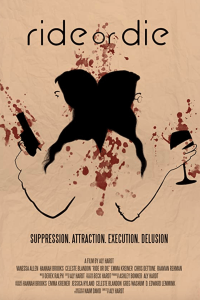 As I’ve been tackling more Ohio-made indies recently, I’ve gotten to know local filmmakers and started having films suggested for me by people within he local film industry, and as I’ve watched more and more that do not work, I’ve begun to dread writing these reviews. Nobody wants to be the killjoy after so many people have sacrificed time and money to bring a movie to life. It’s hard work. Ride or Die is a low-budget indie written and directed and edited by Aly Hardt (Lilith) and filmed in Cincinnati. It’s currently available on Amazon streaming but I wouldn’t advise a casual viewing. It’s confused and meandering and hard to process what is happening frequently without attachment to compelling characters.
Ashley (Vanessa Allen) is willing to do whatever it takes to protect her bestie, Mandy (Hannah Brooks). When a boyfriend mistreats Mandy, that’s when Ashley takes matters into her own hands. She kills an abusive (ex?)boyfriend (Raavian Rehman) and the witness, a girl he was dating called Lemonade (Celeste Blandon) too. Ashley hides the bodies and learns shocking secrets from Mandy that make her reconsider everything she knew about her BFF.
 Ride or Die could support a hasty drinking game because scene-to-scene you have no idea what to expect. That can be a bonus if your tone allows for it like a mystery that keeps you upended or a wacky comedy, and for a short period of time I thought that this indie was headed in a black comedy direction. After our protagonist has killed two people within ten minutes, she’s beset by another interloper, a woman who works at a café delivering food (without a car?) and needing a ride. Ashley, who has just stashed bodies in her trunk, reluctantly agrees to help, and as this new woman is yammering away about any topic that enters her brain, I started to wonder if this was what the rest of the movie would be like, a series of outrageous pile-ups that result from the opening murder, becoming harder and harder to cover-up. Nope. After this scene, and the “comedy” of mistaking the blood on Ashley’s fingertips as a sign of her menstruation (“It must be a bad period. I just finished mine.”), we will never see this self-involved whipped cream-loving woman again, and we will never really cover the tone of intentional comedy again short of a no-nonsense Uber driver. Ride or Die wobbles severely from tone to tone, never settling down, and feeling inauthentic whatever the current tonal footing featured. As things were getting serious, I knew it was only a matter of minutes before something ridiculous would happen to ruin it. As things were crazy, I knew it was only a matter of minutes before something self-serious and disjointed would happen to ruin it. If you’re expecting constant tonal self-sabotage, then you won’t be disappointed with the results of this wildly messy 76-minute experiment. Tone switches can work, even serious to darkly funny as demonstrated so skillfully in Promising Young Woman. This movie just can’t manage the abrupt shifts.
The worst part for me was how these tonal shifts and creative decision-making harmed the thematic implications around domestic violence. There are serious subjects at play with Ride or Die and I don’t want to say that humor cannot be found in even the most uncomfortable of topics. It just requires a deft touch, a touch sorely lacking from this movie. In the first TEN MINUTES alone, we endure watching Mandy get assaulted by her bad boyfriend, Ashley gets assaulted by her bad father or step-father (Chris Dettone, Confiend), and then Ashley murders two people, one of whom admits to being a victim of rape from high school before inexplicably falling head-over-heels for Ashley. The first three women introduced onscreen are all victims of sexual abuse. It’s a lot to handle, and I was worried this path was going to continue and every female character introduced would have their own story, not because this would be unlikely from a statistical standpoint of unreported assaults but because it would possibly approach self-parody through blunt overuse.
 However, the good intentions of highlighting the struggle to reclaim your identity after sexual abuse is seriously compromised by a late revelation (spoilers to follow, you are warned). After getting drunk, Mandy reveals that she really appreciated the ferocity of protection from her bestie, so she would lie about past abuse from past boyfriends so that Ashley would “take care of her.” She even admits to giving herself the black eye she sports for most of the movie. In a post-Me Too era where victims are fighting to be heard, it’s morally queasy to have a main character falsify numerous assaults for attention. Any good feelings I had for this movie vanished after that point. I don’t know if Mandy fully understood what Ashley would do in response but she had to pick up some disconcerting theory considering all these people went mysteriously absent after Mandy’s accusations. Either her selfish ignorance has led to all these supposedly innocent people being harmed and/or killed or she knew what the consequences would be and set them up for deadly retribution. Whatever the scenario, Mandy is an irredeemably bad person and I couldn’t care about her whatsoever, not that the prior development meaningfully rounded her out. This happens at the halfway mark and the movie cannot sustain itself with 40 minutes after to spend. For a movie that features so many victims of sexual abuse dealing with the long-term effects, it seems very irresponsible to go this route while also trying to treat the topic with reverence.
Another ongoing problem that really tears apart Ride or Die is that there are so many moments that well and truly make no sense. The entire character of Lemonade is getting her own paragraph of confusion. Why does Lemonade respond at all like she does? Ashley has a gun against her head and threatening her if she doesn’t forget her face, providing an out, and Lemonade chooses this moment to come onto her attacker (“What if I don’t want to forget your face?” she coos). I accepted her confessing her own abuse as a means of eliciting sympathy from her attacker, but to get a horny case of Stockholm syndrome instantaneously is beyond bizarre. The kiss triggers Ashley to think about her father (or stepfather) and she kills Lemonade. This scene made me scream “what?” to my TV screen for several prolonged utterances. The entire Lemonade character makes no sense to me. Ashley is haunted by Lemonade’s pale ghost because, we’re told much later, she was her first innocent she killed. However, this confession is occurring directly after she learns about Mandy’s secret, meaning this is entirely false. Maybe beforehand she thought she was an innocent, fine, but why does this woman who spent exactly two minutes on camera before being killed merit such attention? Lemonade then becomes a personification of Ashley’s guilt or self-destruction, or maybe she is a ghost and looking for payback, either would be credible here. I laughed when ghost Lemonade brings it to Ashley’s attention that driving around in the stolen car of the person she may have just killed might not be the best decision. In this moment, the literal ghost trying to murder Ashley is also trying to be the voice of reason, because inexplicably Ashley needs to go dancing and find herself a companion at this exact moment. “I need this for me,” she says, trying to guilt the ghost whose job it is to guilt her. What is going on?
 I kept expecting there to be, you know, consequences for the trail of bodies, but apparently the police in this universe can’t be bothered to investigate crimes with scads of physical evidence. I guess no detective has bothered to put together the coincidental nature of all of the men who Mandy goes on dates with or forms relationships with winding up missing. No worried family member? No nosy neighbor? If Ashley were like a professional at murder and body disposal, maybe I’d give her more leeway because she’s demonstrated that she knows what she’s doing after a wealth of experience. This is not the case. She chooses to store the dead bodies in her home, and not buried in the yard but in an accessible space where it’s only a matter of time before the smell spreads. The conflict of covering up the dead bodies feels resolved far too easily and without necessary tension. Because of this, the girl time spent between Mandy and Ashley can become insufferable and filled with awkward dialogue exchanges like, “Why don’t you ever talk about why your parents left you behind?” and, “Maybe this question’s more for me because I don’t know how to deal with losing my mom, and I know it’s not the same thing, but when my mom died, I was just crushed. I mean, your parents might as well be dead with what happened.” Characters explain things they obviously would already know with their years of BFF-ing, like asking to talk about your happiest childhood memory, which happens to be when they first met. The inauthentic, overly expositional dialogue is often a bad sign that a screenplay needs a few more drafts of work.
So much of this movie is built upon a friendship we’re repeatedly told is super close, but they interact less like friends who have known one another since the fourth grade and more like sorority sisters who have shared the same floor for a couple of weeks. The writing just isn’t there to sustain anything character-centric with Ride or Die, which is why the characters seem to flip flop at random in frustrating and annoying ways, when they too aren’t being frustrating and annoying. It’s a clear case of being told relationship importance and bonds rather than witnessing them. There are no real supporting characters. The off-screen grandmother is always heard and never seen and a one-joke character where the joke was never even funny. There are propagators of trauma, like the bad men of the past, and there are victims, like the all-purpose ghost, but it’s the story of these two women and they are so boring together even with repeated murder and cover-ups.
 Ride or Die is unlikely to win over any fans who aren’t already personally connected with the indie production. There are definite technical limitations given the budget was only $16,000. The sets never seem to feel lived in. The dialogue often sounds like it was dubbed over. The music drones on and on and at a volume that needs to be dialed back. The acting is flat across the board, with Allen (Girl/Girl Scene) sounding overwhelmingly monotone no matter the intensity of the scene. Scrolling through the end credits, I noticed the same names appearing over and over. Most everyone on this crew worked four or five jobs to see Ride or Die get made. That’s commendable, but I have to ask what about this story deserved all their hard work and dedication? It’s the script that sinks this movie. We get stuff like a ten-second “in media res” opening when we simply get caught up within eight minutes. That’s not how that should work. Likewise, why even bother with a three months earlier/three months later timeline that only muddles things? Was it Ashley’s stepfather or father who committed her abuse? The movie needs clarity but it really needs a driving plot to tie things together. The confusing fantasies, the wildly fluctuating characters and tone, the meandering plot, the overwrought dramatic elements, it all starts to coalesce into a sporadically baffling example of modern camp. I hope everyone involved enjoyed working on this. I don’t think many others will find much to enjoy on the merits of its storytelling and execution. Unfortunately, it’s best left in the rear view.
Nate’s Grade: D
Share this:

The Turn Out (2018)
 Indie drama The Turn Out frustrated me because I got excited by its premise and thought, “Here might be the first truly great Ohio indie I’ve watched for review,” and alas it let me down. It’s not a bad movie but it has such promising storytelling elements and to see them misused feels like a bigger regret than if the movie had never even had those important building blocks.
Jeff (James J. Gagne Jr.), a.k.a. “Crowbar,” is a hard-living truck driver also addicted to crack. He’s got a teen daughter, Amanda (Katie Stotllemire), and an exasperated wife, Kelly (Heather Caldwell), back home in southern Ohio. Crowbar is no stranger to the prostitutes that call truck stops their corner, but one young lady makes him reconsider his assumptions. He learns that Neveah (Regina Westerviller) is still in high school as well as in his own daughter’s class, and this revelation makes him contemplate whether he should get involved and help her.
Let’s take the central story of Crowbar and his relationship to the teenage prostitute, Neveah. If I were to tell you the movie was about a truck driver addicted to drugs who wrestles with what to do when he stumbles upon the reality of sex trafficking connected to truck stops, your mind already starts putting that movie together with clear arcs. It becomes something like a modern-day Western, where Crowbar is a man of the road, a contemporary high-plains drifter, and he makes the decision to reject his isolation in order to help this one girl. I asked my girlfriend, after describing the basic premise, what kind of relationship that Crowbar would have with his own teenaged daughter. “Oh, it’s got to be bad or non-existent, right?” she commented. You would think that but nope. He actually has a great relationship with his daughter, who is constantly trying to call and talk with dear old dad. See, if his relationship was poor and perhaps he had even elected to a life on the road rather than being a present father, this would force the character to confront his own life choices and legacies and see Neveah as a surrogate daughter he can save. You could argue it’s cliché and been portrayed in other neo-Westerns, but it works. The same confusion applies to Crowbar’s relationship with his wife. Our introduction to her is with the local police imposing a restraining order, which nobody throughout the movie takes seriously. The daughter frequently breaks it. The uncle who admonishes Crowbar about the restraining order will then enable Crowbar to break it to see his daughter at choir practice. He even meets up with his wife in a bar to reminisce about their relationship, which means even she is breaking her own restraining order. If everyone is going to be this flippant then why even bother with including it? A strained relationship between husband and wife can be communicated through other means. These are the kind of things that pecked away at the consistency, coherency, and natural dramatic potential.
 As it stands, I don’t really know what the motivation is for Crowbar throughout The Turn Out. What is his motivation for getting better? He already has a positive relationship with his daughter and apparently a workable relationship with her mother, and that’s while he’s smoking crack. He is already in a good place with the people that he cares about, so now what? You could say his motivation is to save this girl he comes into contact with through chance, but this is hard to argue as well considering the amount of time he takes to take fledgling steps to intervene. For a solid hour of the 74-minute movie (pre-end credits), Crowbar meets with Neveah and even visits her home but her situation isn’t any different from the start. It should be obvious that her family knows about her and is supporting her prostitution or forcing her to turn tricks. Even that description is a disservice because it’s not like Neveah has much of a choice in these matters. She’s a victim too, and the fact that our protagonist just kind of hangs around until the very end when the bad people get even more obvious about being bad, it questions his thinking. Why does he take so long to call the police? Is it because of his own personal fear of getting caught as a drug user? Well, that could be avoided with an anonymous tip. When he eventually elects to kick his drug habit, your guess is as good as mine why this is the moment for him. It feels too arbitrary, like any of these events could have happened earlier as they lack direct cause-effect connectivity.
It takes far too long for Crowbar to actually assert himself and try and make a difference but we’re absent the inner turmoil to justify the delay. I think there was a character arc here where Crowbar had to reconcile with his own contribution to a culture that has allowed truck stop prostitution to flourish. He’s partaken with these woman (all adults, mind you, but did they start as adults?) and he even argues, “They make good money.” His own guilt could be a worthy exploration but it takes a vision of his daughter in a predator’s van and the entreaty of child prostitution to finally shake him from his doldrums, and then the movie is pretty much over (again, only 74 minutes total). Otherwise, it feels like we spend a lot of redundant time watching the man drift through his life, smoking plenty of crack, and occasionally running into Neveah and conversing with her. There are points that prove he’s changing, like brandishing his fellow drivers over the CB radio for their gross demeaning chatter, and he even gets that Big Movie Moment of Symbolic Torment, sitting in a shower. The problem with The Turn Out is that these momentary glimpses don’t feel consistent enough to matter. As a character, Crowbar is too dependent on his substance abuse as a defining characteristic, and yet it feels less like a burden or addiction to the man and more like a hobby to pass the time. It doesn’t feel consequential.
 Again, the storytelling possibility was right there within reach, with his decision to save this young woman as the Act One break and not the climax of a relatively short movie. Then Act Two would have been them bonding and finding parallels and a genuine surrogate father-daughter affection over the course of a long road trip as Crowbar attempts to return her to the last vestige of her family that she left. Then, upon leaving her with this family in Act Three, Crowbar learns it’s just not as easy as that and that Neveah’s family might not be icky sex traffickers but they’re not helpful, and so he helps her set up an independent life and realizes he must now return home to mend his own relationship with the daughter he has left behind. Amanda should want nothing to do with her father rather than try and call him every chance she gets. Crowbar has nothing really to repair on this front, and the daughter is portrayed as a fawning fan who only jogs, tries to call dad, and sings in the choir. The same shrift characterization is given to every supporting player. Neveah wants to be an artist. She goes out looking for johns as a means of protecting her younger sister. That’s all we get as far as her inner life. It seems like a disservice to make this character so blank. I don’t understand Crowbar’s wife at all. I don’t understand why Amanda jealously cyber bullies Neveah because she sees her in a diner one time with her father, especially when dad hasn’t been playing favorites. I don’t understand why Crowbar seems to only be at the same local truck stop despite the nature of his job taking him all over.
The acting is a highlight of the movie and Gagne Jr. (When Skies Are Gray) delivers a convincing, lived-in performance. The very look of his hangdog face is enough to communicate what the screenplay doesn’t, the past years weighing on him, the accumulation of good times coming due. He’s also simply just got a great face for the part. He has some moments that test his resolve and I wish he had even more to push his acting prowess further. Stottlemire (Tragedy Girls) has plenty of talent which is why I wish her character had some actual anguish to her relationship with her father. Caldwell (After) likewise gives a solidly conflicted performance that made me wish she factored more into Crowbar’s interaction and turmoil. My favorite actors ended up the one-scene characters that provided a dose of vibrant local color, the tweakers and addicts and vagabonds, the diner owners, the other truckers, the people that feel genuinely authentic and well chosen. Unfortunately, I was not as big a fan of Westerviller in her debut film role. I can’t tell if her performance is very monotone and inexpressive because of the actress’ limited range or as a directing note from director Pearl Gluck (Divan) to convey the numbness that Neveah felt. Either way, it presents a dilemma as her relationship is the most essential.

Director Pearl Gluck on set.
From a technical standpoint, The Turn Out is a very professional looking and sounding movie. The usual sound design headaches I find with local low-budget indies are nowhere to be found here, and the frequent introspective, country-styled songs by Chris Rattie add a really nice impression that makes the whole enterprise feels accomplished. The reported $200,000 budget might be the highest of all the Ohio indies I’ve reviewed. There are some beautiful shots from the cinematography of Stephen Balhut, Jon Coy, and Daniel Garee, especially at sunset and twilight. The look of the movie is rich with details, like the run-down stores, and the dilapidated Rust Belt small towns providing a broader sense of economic desperation. I was expecting the movie to tap into its own Hillbilly Elegy-style social commentary on the decline of the American worker through the reality of this truck stop and the women who work it. Gluck handles her directorial duties with sensitivity but without flinching from harsh truths either.
It may sound like I’m more negative than intended with The Turn Out, and this is merely because I’m disappointed by the squandered potential. A truck driver deciding to do right and help a young girl, the victim of sex trafficking, has so much dramatic potential it hurts. Even if you wanted to avoid a more traditional thriller route, this could have been a powerful character study of two lonely, hurt souls finding a comfort with one another over a long journey and being able to start a healing process to pick up the pieces of their lives. It would be the kind of character examination that thrives in indie film, and from a topic I cannot recall other movies touching, namely the rings of prostitution trapping women along truck stops. I’m sure everyone involved was coming from a good place and wanting to highlight and not exploit the reality of sex trafficking. Gluck even based her script on her extensive research with trafficking survivors. Alas, the storytelling miscues and dawdling pacing make the movie feel like an overextended news article. This is still a decent movie with authentic details, good intentions, and solid acting with some exceptions. However, it’s the screenwriting shortcomings that drag down The Turn Out from its real potential and turn it into a message in search of a stronger narrative.
Nate’s Grade: C+
Share this:

The Wager (2020)
 The Wager is a gob smacking example about the utmost significance of screenplay structure and a lesson for others to learn and avoid. I was beside myself with frustration from this 90-minute movie available on Amazon streaming, occasionally yelling at my TV screen, but mostly I was dumbfounded by the storytelling choices. The wager of the title, which is also prominently noted in the synopsis attached for the film, doesn’t even occur until 78 minutes in. That’s right, you don’t get the hook of the movie until the very end. This astounds me. The Wager is an Ohio-made faith-based indie that generally bored me and occasionally made me guffaw or scream in bafflement. I’d wager unless you’re already among the faithful flock, you’re going to be unmoved and more than a little mystified by this tone-deaf drama.
Bruce (Ty Shelton) is a young man abandoned as a child and raised in the foster system. He gets into trouble at school and eventually gets plunged into a life of crime against his will. As an adult (Jim Gloyd), he’s strung out on drugs and resorting to petty robbery to find his scores. His childhood friend Suzy (Stephanie Haff) runs into him at a casino and offers spiritual outreach, but Bruce wants nothing to do with God. That is until an angel enters his life with a big bet about reliving Bruce’s tortured past with a new perspective.
 If you’re going to present a Christian spin on the classic It’s a Wonderful Life formula, having a guardian angel intervene in a person’s life to show them a highlight reel of memories and what could have been, why wait until there’s only ten or so minutes left in your entire movie? Once Bruce does review his tortured life, it includes scenes we’ve already seen, including his birth, which begs the question why we needed to see these moments twice. It’s not like what came before this celestial review needed 78 minutes of undivided attention. For the first 15 minutes, all that happens is that an abused woman gives birth, drops the baby on the doorstep of the police, and the officers call social services. Did we need that to take up 15 minutes? From there we witness young Bruce getting in trouble at school and then being kidnapped (oh, there will definitely be more on this later) and living life as a drug dealer. We spend an hour establishing Bruce’s life as being awful, from child to adult, and it’s repetitive and deflating. How many scenes do we need to see of Bruce sleeping on the ground or shooting up drugs or being pushed around? Not only could the far, far majority of this plotting have been condensed considerably, it would have been more impactful to watch Bruce reflect on his experiences by re-living them rather than dwelling in the extended misery that made me wonder if this was going to be a modern-day passion play. Truly, imagine It’s a Wonderful Life but we spent an hour of watching George Bailey haggle over business practices with Mr. Potter. This central screenwriting miscue is just so catastrophic to the entertainment factor.
We could have easily established adult Bruce being a troubled man and the people of his past having difficulty recognizing the man they thought they knew from the movie’s start. This would establish that bad things have happened, and he could hint at more that he doesn’t want to reveal, and then the end of your first act could be him hitting rock bottom and getting his angelic intervention. We don’t need more than 20-25 minutes to establish how crummy this man’s life is. When given an hour, it just becomes too crushing and risks undercutting the message of personal redemption. Learning with the character about his life’s hardships would be more engaging with him having to come face-to-face with the them and his guardian angel partner. It also allows us to not have to be dependent on chronology and jump around to the major events we need to best define Bruce. This obvious structure makes so much sense that I am shocked the filmmakers missed out. Having an angelic guide would also force the character into conversation and confrontation and potential reflection, giving us better insight into the man than simply watching the events on our own without commentary. Simply put, you shouldn’t name your movie after a key plot event that happens in the last 15 minutes unless you’re a disaster movie and the Big One is finally striking.
 The mistakes in plot structure also harm the overall slack pacing. The pacing is practically nonexistent for long portions. The energy level is so subdued that I thought I might just fall asleep. The camera movements will often utilize long takes and slow pans with minimal cuts, which just makes the lack of energy that much more palpable. So many dialogue exchanges sound like people are just reanimated zombies, and so much dialogue feels needlessly expositional. People talk in that phony way where they’re constantly repeating what the other person says but turning it into a question. It’s an inauthentic way of conversing that reminded me of Neil Breen’s silly films. Take these examples of poor onscreen conversations and see what I’m talking about:
“I have no clue what we’re going to do in Science today.”
“Me neither. I guess we’ll find out soon.”
“You’re right. See you there.”
Wow, did we need to be privy for that vital information? Or how about:
“I know you have your troubles, but I know you.”
“No, you don’t. That’s just how I act around you. I don’t think you know.”
“Just stop. I know what you’re trying to do. You’re trying to make excuses rather than accepting yourself for who you really are.”
Isn’t writing better when characters just blurt out another person’s internal dilemma for the audience? Or:
“He asked me for Herb’s Garage.”
“Oh yeah. I remember that place.”
“We all did. So, I didn’t expect a thing.”
We needed less time with scenes like these, where it feels like characters are detached and drifting with excess time to fill. There’s one long hallway exchange between a young Bruce and Suzy that lasts over a minute of chit-chat that feels like they’re just reading off the script. The performances have that rushed feeling, of sentences starting immediately after the next, but lacking an energy level that would justify the delivery. Simply put, when two or more characters are sitting down and talking, you might as well go get a refill or hit the bathroom. The chances will be good they will still be in that same sedate conversation and you will have missed little. This is why the structural choice to spend 78 MINUTES OF MOVIE on establishment scenes is so maddening, because writer/producer/co-star Gloyd did not have the material to cover the time.
 Let’s get into what I think is the most egregious portion of The Wager and that is the lengthy middle where Bruce gets kidnapped and coerced into a life of crime. I thought we were headed for some Oliver Twist territory and we’d watch Bruce’s struggles over the pressure to commit criminal acts he was uncomfortable doing, maybe even while he schemed to escape. First off, the fact that the criminals are stereotypical depictions of black males made me sigh. I also was confounded why they placed so much emphasis on kidnapping teenagers and runaways to serve as drug dealers. When you have access to money and power, you have people that will come to you for opportunities (you’re a job creator). You don’t need to kidnap children and hold them hostage to sell your wares, especially having to worry whether they will run away or whether someone will recognize them as missing. It’s stupid risk. Considering these men just sit in the car and watch young Bruce make his first street corner deal, it’s not like they’re being terribly conspicuous.
And then there’s the undetermined time jump, which is revealed during one of those static camera angle montages. It’s a nice surprise; however, it means that Bruce has been sleeping on this same dirty mattress in the same room for, like, twenty or thirty years (also none of the items on the shelves moved in that same time, meaning Bruce never touched a thing in his living quarters or he is very, very particular about where things should go). The same crime bosses are still alive and in their same position of leadership. Bruce is now played by Gloyd in a horrendous looking ratty wig and I needed to know desperately how much time has passed. Gloyd definitely looks to be in his 40s, and this significant jump in time raises so many irksome questions. The police haven’t found adult Bruce in 30 years but the same officer who found him as a baby, who is still alive and working as a security officer, can recognize him on the spot? How old are these same criminal leaders then, and Bruce hasn’t ascended higher up the organization than street dealer? If we’re jumping that far ahead, wouldn’t it make more sense for Bruce to be the new leader, letting us know he has been molded under the negative influence of his captors? If he’s just going to be a drug-addicted adult then why do we need to jump so far ahead in time? The answer, it seems, is so that the writer/producer can have a starring role. That’s fine, but we could have done more structurally to maximize the drama rather than dwelling in redundant misery.
Let’s analyze the spiritual message at the heart of The Wager. Bruce’s life is pretty bad. He’s in and out of foster homes, gets abducted and held hostage as a criminal lackey, becomes addicted to drugs and desperate, and then homeless and contemplating suicide. He’s had, by all accounts, a hard go of things. He’s understandably resentful about the forces he feels have conspired to lock him into agony, so when other characters raise the notion of a loving God that has his back and watches over him, Bruce scoffs and views his life as refutation. There’s even a nature versus nurture argument to be had. In fact, the first time Bruce went to Suzy’s church was when he was abducted. The cop character tells Bruce he’s been praying for him since the moment they first crossed paths, but considering what Bruce has endured, that’s not exactly a ringing endorsement for the power of prayer. Now obviously Bruce will conclude with accepting the love of God and finding a greater purpose with his life, but why did we need to wait so long? The end is never going to be in doubt with a Christian-themed indie any more than whether or not James Bond will get out of his latest scrape. That’s why refocusing the structure onto Bruce having to confront an angel over his feelings of abandonment from God would be far more dynamic, powerful, and I’ll say it, even Christian than the message as presented. Don’t get me wrong. I’m not questioning the faith and credentials of the filmmakers. I’m saying the way they go about telling their story makes the overall message less believably impactful.
 The acting in The Wager is typically rather flat, given that energy-sapping direction that makes each scene feel twice as long. However, there is one actor I want to single out and that’s Cameron Arnett (Overcomer) as the unfortunately named Gabe Angelus (get it?). Arnett reappears in different roles, my favorite being a batty homeless man that helps out Bruce from time to time. In that moment, Arnett is so believable and arguably natural even while playing a highly mannered character. He immediately drew my attention and I remarked, “Here’s a good actor.” As for the other thespians, it’s hard for me to tell whether they just didn’t get the material to showcase their skills or whether those skills are in need of polishing. I know KateLynn Newberry (Widow’s Point, Dark Iris) as the queen of Ohio indies, and she’s pretty much wasted as a doting wife who lives to ask her husband what he wants for dinner. Fun fact: one of the crime lords is played by former Columbus resident and famous boxer James “Buster” Douglas.
With The Wager, I couldn’t believe what I was watching. Obvious dramatic setups seem to be sorely missed, a structural reformatting was in dire need to maximize the hook, because without that it’s like watching one poor man spiral and suffer for an entire feature-length film. It feels like overwrought overkill. Do we need a half-hour of a guy slinging drugs and sticking needles in his arm, without any supporting characters to interact with, or can this information be conveyed with practiced brevity? I am amazed at so many choices that left me scratching my head. The movie ends with our guardian angel staring into the screen and laughing maniacally for several prolonged seconds, even over the cut to black. What? This is the kind of behavior we associate with evil beings. Why do we need a flashback of a young girl running out the door when the adult version could have just relayed this event in words? I know Christian movie audiences aren’t exactly the most discerning audiences, prioritizing message over storytelling and technical achievement, but the decisions that the filmmakers make impair that faithful message. You don’t make an It’s a Wonderful Life story and just reserve it for the last 15 minutes. I advise select people to watch The Wager simply to learn what not to do with the importance of screenwriting structure. That’s its ultimate cautionary tale.
Nate’s Grade: C-
Share this:

Traffic (2000) [Review Re-View]
 Originally released December 27, 2000:
The war on drugs may be one worth fighting but it’s a battle that every day seems more and more impossible. Traffic is a mirror that communicates the fruition of our current procedures to stop the illegal flow of drugs.
Traffic is told through three distinct and different narratives. One involves an Ohio Supreme Court justice (Michael Douglas) newly appointed as the nation’s next Drug Czar. While he accepts his position and promises to fight for our nation’s children, back at home, unbeknownst to him, his daughter is free-basing with her bad influence boyfriend. Another story involves a wealthy bourgeois wife (Catherine Zeta-Jones) awakened to her husband’s arrest. Her shock continues when family lawyer Dennis Quaid informs her of her husband’s true source of income. He’s to be prosecuted by two DEA agents (Don Cheadle and Luis Guzman) unless she can do something. The final and most compelling narrative involves Benicio Del Toro as an honest cop in Tijuana battling frustration with the mass corruption surrounding the city. Each story weaves in and out at various points in the film.
 Traffic was photographed and directed by the man with the hottest hand in Hollywood, Steven Soderbergh. He uses a documentary feel to his filming that adds to the realism. Different color tones are assigned toward the three narratives as reflections of the emotional background. Soderbergh expertly handles the many facets of the drug industry and pulls out his typical “career best” performances from his onslaught of actors.
Benicio Del Toro is the emotional center of Traffic. His solemn demeanor and hound dog exterior reflect a good man trying to fight the good fight in a corrupt environment. He effortlessly encompasses determination, courage, and compassion that you’ll easily forget the majority of his lines are in Espanol. Benicio is an incredibly talented actor and one with such vibrant energy whenever he flashes on screen. It’ll be wonderful watching him collect all his awards.
Catherine Zeta-Jones also shows strong signs there may well indeed be an actress under her features. Her role is one of almost terror as you watch her so easily slip into her imprisoned hubby’s shoes. The ease of transformation is startling, but in an “evil begets evil” kind of fashion. The fact that she’s pregnant through the entire movie only makes the shift from loving house wife to drug smuggler more chilling.
 The entire cast does credible acting performances with particular attention paid toward the younger actors deservingly. Don Cheadle throws in another terrific performance showing he’s sublimely one of the best actors around today.
Traffic oversteps its ambitions and aims for a scope far too large. It is based on a 6 hour BBC mini-series, so trying to cram that material into a two hour plus format is taxing. As a result we get an assembly of characters, but too many with too little time in between to do any justice. Screenwriter Stephen Gaghan (Rules of Engagement) condenses the towering impact and influence drugs have well enough, but he intercuts the stories too sporadically that attachment never builds for either of the three narratives. He does balance the Douglas Drug Czar one carefully as not to fall into the cliched vigilante metamorphosis. But the mini-series had more characterization and depth to its tale.
Traffic is a good film but it has edges of greatness never fully visioned. Soderbergh shines bright yet again and all accolades will be deserved. Traffic is undeniably a good film, but it’s one you may not want to watch a second time.
Nate’s Grade: B
——————————————————
WRITER REFLECTIONS 20 YEARS LATER
So twenty years later, how is that war on drugs going? Considering the billions of dollars and countless lives that have gone into trying to stop the intricate infrastructure of supply and demand for the drug trade, the United States has little to show for its efforts. If anything, there has been a dawning realization of the futility of playing cartel whack-a-mole, removing one leader just for another to take their place in the supply chain. There have also been movements toward treating addicts rather than incarcerating them. The country has stubbornly become more accommodating and understanding of the ravages of addiction; it only seemed to take the spread of the opioid crisis where affluent families in the suburbs were affected personally. Tragically, it seems too many Americans have to have an “it could happen to me!” moment before their empathy for another person’s struggles kicks in. These relaxing attitudes have translated into recreational marijuana being legal in 15 states as of this review. Many other states have decriminalized marijuana, and Oregon has recently voted to decriminalize all drugs. It seems that in 2020, our concept of the war on drugs has dramatically changed. Some may find these developments an admission of giving up, of retreating from some moral duty, but others have concluded that maybe we’ve been fighting all wrong for 50 years and the only thing we have to show for our blood-soaked efforts is that multiple criminal elements got much richer.
 It’s an interesting social and cultural landscape for going back and re-watching 2000’s Traffic, the last film on my re-watch of 2000 cinema. Times have changed and this is felt in Steven Soderbergh’s Oscar-winning ensemble covering the globe-trotting scope of the war on drugs. Traffic won four Oscars, including for Soderbergh for Director, Benicio Del Toro for Best Supporting Actor, and for editing and adapted screenplay. The only Oscar it was nominated for that it didn’t win was Best Picture, losing to Ridley Scott’s sword-and-sandals epic, Gladiator. It was an ambitious movie and had over 100 speaking roles. Soderbergh served as his own cinematographer and cameraman, bringing a docu-drama versatility to the movie that added its own sense of realism. 2000 was the year Soderbergh hit his critical peak. He was an indie darling from 1989’s influential sex, lies, and videotape and puttered throughout the 90s with small, personal, weird movies (I loved Schizopolis as a teenager), and then in 1998 he gained a new level of credibility providing sheen and heat to Out of Sight, the movie that cemented George Clooney as a major movie star. The one-two punch of Traffic and Erin Brockovich in 2000 earned Soderbergh two Oscar nominations for director, a feat not accomplished since 1938, and after 2001’s highly successful Ocean’s 11 remake, Soderbergh had jumped to the top of the industry while maintaining his indie artistic credentials. He’s been dabbling and experimenting since (A movie shot on an iPhone!) with mixed results, but the man’s track record is hard to digest into simple categorization. He can jump from an action showcase for an MMA fighter, to a gleeful male stripper romp, to a four-hour epic covering the life of Che Guevera. With Traffic, Soderbergh was working with his biggest budget and cast yet. The decision to use different color tones is smart to easily distinguish the various storyline locations so that an audience can be immediately oriented when jumping around from place to place. It’s also extremely hard on the eyes at times. The Mexican storyline is so washed out in bleached colors that it looks like an atomic bomb just went off in the distance and is filtering the world with an excess of bright light to make you squint. Soderbergh also has a penchant for natural light coming through windows to be seen as giant blocks of white. Again, it achieves its artistic purpose but it also makes you want to avert your gaze.
The 150-minute movie is based on a sprawling 1989 BBC miniseries that totaled six hours. Stephen Gaghan (Syriana) adapted the screenplay and he does a fine job of condensing the major plot points of the mini-series into a manageable feature length. He also does a fine job of articulating the many intertwined players and motivations and contradictions of the drug trade. However, I can’t help but feel like some of the nuance and character development is lost by condensing everything into the body of a manageable American feature production. Take for example the character Catherine Zeta-Jones (Chicago) plays, Helena Ayala. She’s a rich southern California housewife who has her life upturned when she discovers her husband, recently arrested by the DEA, is one of the chief distributors for a Mexican cartel. Her character is in disbelief and shock at first, then she tries to make due with legal bills and mortgage payments. Things get considerably worse when the cartel threatens her children if Helena can’t pay her husband’s outstanding debts that have now fallen onto her. Her character arc goes from an ignorant, privileged housewife into a ruthless co-conspirator willing to do whatever it takes to protect her family and maintain the cushy lifestyle they have become accustomed to. Over the course of the BBC miniseries, you watch that version of the character undergo significant changes in six hours. In the 2000 film, the character undergoes significant changes in a matter of scenes. Helena goes from desperate to duplicitous in literally minutes, and the jump feels too unearned. The rushed storytelling caps some naturalism. A character can go from not trusting the DEA to providing damning evidence to the DEA in three scenes. A character can go from bored, privileged teenager to junkie prostitute in three scenes. For a movie about gritty realism, these character leaps can feel overly forced and inauthentic. There are so many characters and storylines and political points to make that the overall narrative can feel crowded, so while it’s always interesting, it can inadvertently fashion its own ceiling for emotional engagement because the many characters feel like impressions hitting their marks rather than as fully developed portrayals of people.
 The storyline that has aged the worst is Michael Douglas (Ant-Man) playing Robert Wakefield, a newly installed Drug Czar learning the ropes. For the majority, he’s akin to a 60 Minutes journalist just sitting in rooms and asking various professionals about their experiences and advice from their unique positions. From there, the storyline takes up the “it could happen to me!” trapping with Robert’s private school daughter (Erika Christensen) becoming an addict. It may have been surprising for a high-profile politician to have a child as an addict, but now this kind of irony feels passe. We’re used to politicians having ironic skeletons in their closet. The ongoing plot of her descent doesn’t really humanize her even as she makes some drastic decisions to chase that next high. She’s more an ironic counterpoint to shake her father, and the audience, of their preconceived mental imagery of what an addict might look like. It feels slightly retrograde and pearl-clutching, not simply that she goes through hell but that it’s set up to register that, oh my, WHITE PEOPLE, even RICH WHITE PEOPLE, can also be junkies. In 2000, this story might have been jolting and scared some older adults into wondering if this drug menace could find its way into their hallowed gated homes too. Nowadays, it seems obvious. If the storyline of a father dealing with his addict daughter had reveled more about one another as characters it would be worth the attention, but the daughter is kept as an example, a symbol, and Robert just has to take his lumps before the inevitable conclusion that his job is a lot harder than he would have imagined. His speech at his introduction at the White House has the hallmarks of drama ready and waiting, as he chokes over the political boilerplate he no longer believes in, but he simply walks out rather than sharing what he’s learned.
The best storyline in Traffic is, no surprise, the one closest to the action with Benicio Del Toro (Sicario) playing what feels like the only honest cop left in Mexico. Obviously that’s an over simplification, but the police force and political class are heavily corrupted by the cartels and their money. The character Javier Rodriguez has to navigate this tricky world without making himself as a target for those corrupt officials who think he’s an impediment. He’s trying to do good in a deeply flawed system and maybe even he knows he’s fighting a losing battle but he’s decided to keep his integrity while trying to fight what he considers is a worthy cause. A high-ranking general seeking his services reminds him of his lowly pay as a police officer, yet Javier Rodriguez is unmoved. Del Toro made a career of playing oddballs and sleazes, so it’s interesting to watch him play a fairly noble, straight forward role and in a language he didn’t speak before production (while born in Puerto Rico, he moved early and grew up in the U.S. and knew little Spanish). I don’t know if I would have awarded him the Oscar (my favorite for 2000 was Willem Dafoe as a vampire) but it’s certainly an understated performance with real gravitas. Del Toro is the quiet, churning contemplation of this movie and I would have been happy if the whole enterprise had been devoted to his south of the border exploits. I appreciated that the moves in this storyline would have larger effects on others, like a crackdown on a cartel being a reason why they need more money and the reason they now step up the pressure on Helena to pay up or else. It best encapsulates the knotty, interconnected framework that Gaghan and Soderbergh are going for.
 Traffic is one of those movies you know are good. It’s well written, well acted, and has a definite vision it’s going for that it mostly achieves. It’s also a movie that engages more intellectually than emotionally. There are some deaths and downturns but I doubt you’ll feel much regret or catharsis. The movie unfolds like an in-depth journalistic article, and the leaps in rushed characterization feel like a result of a looming deadline and a hard cap with its word count. It’s unfair for me to continue comparing the movie to its miniseries when that project had almost three times the length to fill out its tale (about poppy trafficking and heroin manufacturing in tribal Afghanistan) but it’s a clear-cut case of crammed plotting. My initial review back in 2000 keeps mostly to the plot and the many actors, though I think I overstated Zeta-Jones being “chilling” and I think my love of Del Toro in Way of the Gun that year transferred some extra praise for his performance here. It’s hard to remember but I was really anticipating this film my freshmen year of college. Traffic is a good movie but it’s not exactly one people get excited over. Every aspect is professional, proficient, but there isn’t exactly a lingering takeaway that changes your perception of the war on drugs. I’ll hold to the same grade and say it’s an admirable accomplishment but one better suited for a mini-series (it was adapted back into a TV miniseries in 2004).
Re-View Grade: B
Share this:

Alan and the Fullness of Time (2020)
 I don’t think I’ve come across a movie with a title as curious in recent years as Alan and the Fullness of Time. This Ohio-made indie was created for a predominantly Christian marketplace so, fairly or unfairly, I went in expecting more emphasis on the message than the storytelling. I figured the titular “fullness of time” would be a larger lesson about using the time God has given you, seizing the day and such, or maybe even related to time travel (no such luck). What I got certainly felt like it was far from the fullness of its own meager running time and ideas.
Alan (Brooks Harvey) is a normal teenage boy except he isn’t. His parents belong to a Christian sect that has for generations plotted to protect a special savior. Alan wants to live a normal life, hanging with friends and going to parties, but he is thrust into a war between heaven and hell. After an attack at home, Alan is on the run to learn about his identity and accept his destiny.
This movie is maddeningly unclear in just about every aspect of storytelling. It feels like you’re watching a Mad Libs version of a story with missing blanks where there should be essential information. It seems like Alan is a classic Chosen One archetype along the lines of a Christian Harry Potter or Percy Jackson. Writer/director Markus Cook (The Deceived) repeatedly reminds the viewer how important Alan is in the larger scheme and how special he is but this is never fully explained except in very general terms meant to apply to any person watching, contributing to the idea that every life is important. That works as a comforting message but it doesn’t work explaining why Alan alone is so special. Likewise, if he’s so special and in hiding, why was he allowed to leave the house or go to a public school? The character would be far more compelling if he was a recluse not allowed to leave the house because his parents were overly protective with good reason. Sending the Chosen One that demons are looking for to a public school just seems careless (not an indictment on the quality of education). For that matter, why do these demons even bother waiting to attack? The Act One break involves demons attacking Alan’s parents and forcing him on the run, but if they’ve already infiltrated his school and are posing as his friends, why are they waiting? These are the kinds of things that add up and make a plot feel careless and under developed, and it starts early and often with Alan.
 This lack of clarity extends beyond the first act and muddles so much of the conflict and characterization. After Alan’s parents are harmed, why does he not go to the police? What reason would he have for hiding at his school? He doesn’t know his fellow students were demons, at least not in a fully confirmed way of this hidden world of monsters. For that matter, why is Alan on the run and there is national media attention given to what happened to his parents? What reason does he have to not resort to the police? It would make far more sense for the demons to frame Alan for the violence at his home. That way he would have a reason not to turn to the authorities and make him feel more isolated and hunted. He would be limited seeking out help and refuge. This would also better explain why anyone even remotely cares about finding this kid from a media standpoint. I can’t imagine round-the-clock media updates on where the son of one crime has been if he is not clearly the chief suspect. Alan spends much of the rest of the movie learning about his parents’ hidden life and his own part in a larger war, but the world-building is far too vague for a story involving hidden conspiracies of good guys and bad guys. I think the movie is presenting an alternate world where some Christianity is outlawed by the government but this too is flagrantly unclear. Are these people being persecuted for their beliefs? It doesn’t feel like it onscreen aside from a few snarky comments from Alan’s teenage peers about his perceived boring life (and remember, they were really demons). Regardless, there is a branch of the NSA (or some other acronym) that is being run by a a centuries-old demon with Jedi mind trick powers, and yet even this is unclear too. What are the rules here? What are the limitations? What are the objectives? What are the stakes? If you’re presenting a “hidden world” story with powerful creatures and faith as a weapon, then we need a lifeline to grasp.
Alan is a fairly boring blank of a character. He’s angry because he keeps moving schools and feels like he doesn’t fit in, but once he’s on the run Alan becomes a receptive set of ears for people to fill him in on the power of faith, God, and his divine place in the world. Will Alan triumph? You know the answer but I can’t exactly explain it beyond him simply having more faith. Frankly, this character is not interesting enough to warrant a franchise. Even his vague powers as a Chosen One are not interesting enough to warrant further adventures. The most interesting character, by far, is Weston (Lucas Bentley) and he could have been cut completely from the narrative. He’s introduced early, apparently trying to escape to… the Chinese border for… reasons I’m still unsure about from the opening that literally begins with footage and audio of 9/11 (this inclusion is never fully earned and, at best, quite tacky). He was part of the same splinter group that Alan’s parents belong to, but Weston lost his faith after his wife was killed. He seems like he’s on a redemptive arc, the old gunslinger being called into one last battle to save a youth and find something worth fighting for. This doesn’t exactly happen but this setup made Weston the character I knew the most about, who had the most accessible struggle, and who could have easily been the lead perspective of the movie rather than the vacant Alan.
I think the filmmakers were going for a combination of an indie Christian YA character and their own version of a Jason Bourne spy thriller (you better believe I’m trademarking the term “Jesus Bourne” for future franchises). This would not have been the first indie to treat a Christian protagonist as a fugitive being hunted down for their beliefs, an externalization of a self-persecution complex I’ve never personally understood when a majority of Americans identify as some form of Christian. This scenario plays into the fears of its ready-made audience and it at least also provides a ready-made story for danger and intrigue. Rarely, however, have I seen a Christian indie that seems so taken with providing the “other half” of a Bourne movie, and by that I mean the desk jockeys clacking keyboards. With every Bourne movie, there is the Chief Chaser and his or her team of NSA agents manning banks of computer terminals and tracking down the whereabouts of our target. In normal spy thrillers, these moments provide scene changes and exposition, but they can also ratchet up tension as we, the audience, know how much closer these antagonists are getting to our hero. With Alan and the Fullness of Time, there are numerous check-ins with the agent half of this pursuit but it never raises tension or provides helpful clarity about the world or this agency. Part of this is because the boss Malkam (no first name, just… Malkam) is established as supernatural too early. Do the other agents know they’re working for a demon? Detective Lowell (Brittany Picard) pushes back occasionally saying they are misusing their government office, but nobody else seems to give much mind. I even think the end involves a siege of a church with literal gunshots and people killed, but again, the movie is too vague to clarify whether or not this escalation and the consequences made much sense.
 It’s not like there wasn’t room to better develop this story, its world, the history and lore, and the characters. Alan and the Fullness of Time clocks in at 82 minutes, but for my online screening, the first three was an introduction by the lead actor, and if you wanted to discount opening credits and a minute of closing credits before a mid-credits sequence (why?), that means that Alan is actually approximately 76 minutes of material. There was more than enough space there to better flesh out, well, anything. If it was a concern about budget limitations, I don’t fully accept that because budget doesn’t limit how well you write for characters and conversations. The movie concludes with “Alan will return” and the promise of a sequel with a very Percy Jackson-sounding string of subtitles, Alan and the Rulers of the Air. If I had paid good money to watch this movie, I might be chuffed that the movie wants to carry over into a sequel when they didn’t even have enough material for 76 paltry minutes.
The dialogue can often be painful and stilted. For an action movie, there isn’t very much action. Most of the scenes from the Act One break onward are people chatting in cars, people chatting in churches, people chatting in homes, people chatting on the street. That would be great opportunities for the needed clarity and characterization lacking. It doesn’t help when these conversations include clunkers like, “At least we have that in common – dead parents. At least half of mine.” Dear reader, that line made me outwardly wince in pain. At another point the villain shows up with armed guards and says, “This is real lead and real brass, and they will pump you full of it.” Alan says he doesn’t have time and another character says, “Time has you, Alan. It has all of us. And it’s squeezing.” In reference to his school friends, who I remind you were demons that harmed his parents, he says, “They’re not my friends anymore.” Well, that’s good to know given the circumstances. Alan turns on a turncoat and says, “You sold me out. No wonder you can’t call us family.” I was a little worried about the implications of the line, “If you can pray, then you can fight.” At the conclusion, a character asks Alan how to teach her how to fight, and he hands her a bible, and we cut to credits. These are just the examples that stood out to me of bad dialogue. If we’re left with these characters and their thoughts, it is apparent that the filmmakers just were not equipped to provide them with appealing words to speak.
I don’t blame the performers because it feels like they were all following the same poor direction. Everyone in this movie is so subdued that I thought they would slip into a coma. This is intended to be a spy thriller, a chase movie, a world where demons can take human form and hunt the Chosen One, and nobody seems to be acting like it’s urgent. This does a tremendous disservice to establishing and maintaining tension. It completely saps the energy out of the movie. If the characters aren’t anxious or worried, then why should we be watching them? It’s too early to land a verdict on Harvey as an actor as this is his debut. I hope the future adventures of Alan provide the actor a better showcase and more energy. I want to single out one actor who was only onscreen for a few minutes but left quite an impression. In a movie filled with vague evildoers that seem too low-key, Kira Wilson (The Right to Remain) is definitely felt as the spooky principal to Alan’s school. She has a fun malevolence that is missing from the other bad guys and I can tell the actress is enjoying her wicked side. We could have used more of her.
 I will credit the filmmakers for making a film that looks and sounds like a professional movie. The cinematography by Josh Bedsole doesn’t have a lot of focus depth but it looks crisp. The persistent hand-held camerawork provides an extra dose of energy to the proceedings and is another reminder of the film’s aspirations to be its own Bourne-style escapade. It’s a low budget movie, all things considered, but it doesn’t feel glaringly so that it’s distracting or compromising. The best part about the movie is the score by Josh McCausland and Jake Halm that adds excitement when it’s not being felt otherwise from the writing and direction. At points the electronic-infused score even reminded me of the work of Trent Reznor and Atticus Ross.
Alan and the Fullness of Time doesn’t really justify your own investment of time. When you don’t provide enough explanation for your world when it’s different, when you don’t make it clear what the rules and limitations are, and when you don’t produce relatable and engaging character arcs, then you’re not really making a movie and more so making an inaccessible puzzle for the audience to piece together for their own fledgling entertainment. Alan and the Fullness of Time is not exactly an audience-friendly movie, despite the fact that its core audience will likely ignore its storytelling pitfalls because it admires its core message. I can feel the lack of storytelling finesse, as if the filmmakers shrugged and said, “It only has to be good enough to get us the next one.” I’ll even admit that the clips for the upcoming sequel look much more enticing and action-packed, but I haven’t been given enough from the first movie to hold out faith the second will deliver. This could have been Jesus Bourne, people.
Nate’s Grade: C-


You must be logged in to post a comment.